3.6.1 Government intervention
 Call Kai
 Learn
Learn Practice Test
 Spaced Repetition
 Match
Match Flashcards
 Knowt Play
1/11

There's no tags or description
Looks like no tags are added yet.
Name | Mastery | Learn | Test | Matching | Spaced | Call with Kai |
|---|
No analytics yet
Send a link to your students to track their progress
12 Terms
What is the role of the Competition and Markets Authority (CMA)
Promote competition for the benefit of consumers and investigate mergers and breaches of UK competition law
They can impose financial penalties, prevent mergers taking place and force businesses to reverse actions
Government intervention to control mergers
Mergers are assessed as to whether there will be a substantial lessening of competition if it happens and whether its potential benefits are greater than its costs
A merger is investigated if it will result in market share greater than 25% (monopoly)
The aim is to prevent two large companies merging and exploiting customers by raising prices, offering poorer quality and reducing choice (e.g. CMA blocked merger of Sainsbury’s and Asda in 2019)
However, very few mergers are investigated each year and the CMA can suffer from regulatory capture or asymmetric information
Government intervention to control monopolies
A monopoly is deemed to be anti-competitive, when it exploits its power to stifle competition - monopolies are allocative and productively inefficient and so it can be argued that they need to be controlled (mostly natural monopolies)
Price regulation
RPI - X (retail price index - expected efficiency gains) - ensure firms pass on their efficiency gains to consumers, charging a price below profit maximising price (e.g. government froze train prices in 2026 to prevent price increases by operators)
Incentives firms to improve efficiency to maintain profitability by lowering costs by more than X - prevents excessive prices
RPI - X + K (K represents level of investment) is even better (e.g. water industry allowed investment of 130 billion pounds)
Allows firms to increase prices above inflation to fund necessary improvements
Profit regulation
Manipulating corporation tax rates - reduction can help encourage investment, but increase helps reduce supernormal profits (e.g. UK corporation tax increased from 19% to 25%)
Quality standards
Prevents firms from exploiting their customers with poor quality, improving economic welfare (e.g. food hygiene for restaurants, testing for electrical appliances and cars, etc.)
Performance targets
Setting targets over price, quality, consumer choice and costs of production, etc, helps improve service and benefits consumers - also leads to increased competiton (e.g. train punctuality of different train operators, Thames water leakage reduction, NHS shorter waiting times)
Problems with government intervention to control monopolies
Price regulation
Difficult to know what X is (expected efficiency gains) because information comes from firm itself - asymmetric information
Distorts price signals , creating shortages and surpluses - could lead to black markets and illegal trade
Less dynamic efficiency, as firms unable to maximise profits to reinvest - leading to reduced quality, etc.
Profit regulation
Higher tax rates reduces firm’s incentive to invest and be efficient - less dynamic efficiency
Asymmetric information - may set rates too high or too low
Quality standards
Regulatory capture - regulators become lenient with the firms they are supposed to regulate (e.g. letting restaurants off with unhygienic practices) - leads to lower quality and less incentive for firms to be efficient
High administrative costs to monitor quality of each and every firm
Performance targets
Firms will find ways to meet targets without actually improving services (e.g. changing train timetables to prevent trains from arriving late, rather than improving actual efficiency of service)
Without fines or punishment firms will just fail to meet their performance targets
Problems like regulatory capture and high administrative costs
Government intervention to promote competition and contestability
Promotion of small businesses
Through tax incentives or subsidises, it encourages the start up of small firms and help them grow to compete with incumbent firms - also increases innovation and efficiency, with new ideas/products and less X-inefficiencies
Deregulation
The lowering of barriers to entry allows more private firms to enter the market, making the market more contestable and increasing competition - this increases efficiency (e.g. The Deregulation Act of 2015)
Competitive tendering
A process where private firms bid for government contracts to provide public services (e.g. Private Finance Initiatives (PFI), road construction, hospital cleaning, G4S security services, etc.) - government is still the provider of merit good/service, but private sector produces it
This promotes competition between firms as they are incentivised to be efficient and innovate in order to win the bid, leading to better quality services and value for money - firms also incentivised to cut costs, leading to more competitive prices
It is also cost-saving for government, as service is passed onto more specialised private firms - better management
Privatisation
Problems with government intervention to promote competition and contestability
Promotion of small businesses
Tax incentives and subsidies incur an opportunity cost and worsens government budget
Small businesses and start ups are not always successful and tend to fail
Deregulation
Barriers to entry, like required licensing, are important to ensure high standards - therefore, removing them can lead to poor business behaviour (e.g. deregulation of financial markets was a major contributor to the 2008 financial crisis)
Too many firms in market can lower incentive to improve and innovate
Competitive tendering
Process of collecting bids from private firms is costly and time-consuming
Private sector may not aim to maximise social welfare like the government does
Government intervention to protect suppliers
Anti-monopsony and anti-competitive laws
Regulatory bodies, like the CMA, limit the power of monopsonies to dictate unfair terms, suppress prices, or exclude competitors
Fines are put in place for those who exploit their power
Minimum price schemes
Provides a price floor above free-market equilibrium of monopsony - ensures suppliers are paid a fair amount
Vertical integration control
Supplier acquires retailer, which means they can directly access final consumers - avoiding exploitation by monopsonies and lower incomes
Government intervention to protect employees
Trade union representation
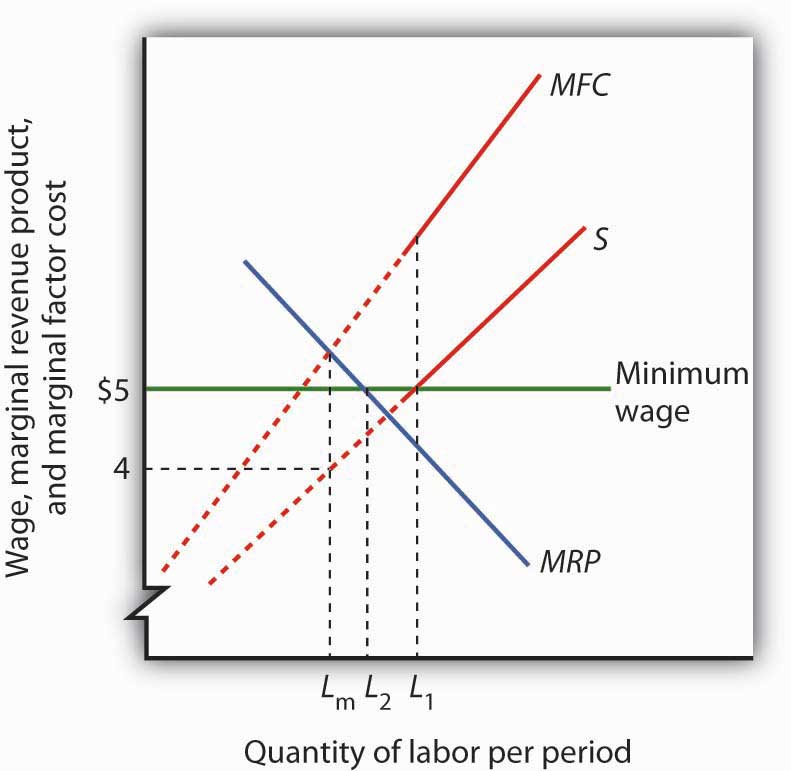
Through collective bargaining wages can be pushed closer to MRP and increases employment in monopsony labour markets (e.g. NHS workers)
However, if workers rights are too strong, employers will be unwilling to take on new workers due to extra costs
Minimum wage
Sets a wage floor closer to MRP=MC - higher and more fair wages for workers and employment increases from Lm to L2
Other factors like health and safety laws, employment contracts, redundancy processes, maximum working hours, etc.
What is privatisation? Advantages?
The sale of government assets in nationalised industries to private investors - with the aim of revitalising inefficient industries.
Advantages:
Encourages greater competition, which reduces X-inefficiency and ensures lower prices and higher quality as firms have to be productively efficient to be competitive (reduces dead weight loss on monopoly diagram)
Increased economic welfare from increased consumer and producer surplus
Government revenue generated from sale of assets, which reduces fiscal burden and national debt, with more revenue coming from additional corporation tax in the long run - also more money to be spent on public services
Ownership of shares spread across many individuals creating shareholder democracy, reducing inequality - if shares rise in value, can lead to positive wealth effect, increasing consumption from increased wealth
Reduced bureaucracy means greater level of investment with greater certainty - more technology and productivity
Private firms can benefit from dynamic efficiency, increasing investment and innovation spending
Managers/employees become more accountable and productive, since poor performance is reflected in a fall in share prices, therefore shareholders will want them gone
Disadvantages of privatisation
Natural monopolies are better run by state, as if privatised, monopolies can abuse monopoly power (e.g. Thames water, National Railway, telecommunications, etc.) leading to more inefficiencies and reduced social welfare
Some industries such as electricity, water, transport are very important as they directly affect other industries too - so maybe better off run by government properly (e.g. National Rail was privatised in the 90s, but is in the process of being re-nationalised due to private franchise failures)
Government loses out on future dividend income from any future profits made by firm
Public sector assets are often under-priced/under-valued when sold (e.g. water companies handed to private companies almost free of debt in 1989)
What is nationalisation? Advantages?
When a private sector company is brought under state control, to be owned by the government.
Advantages:
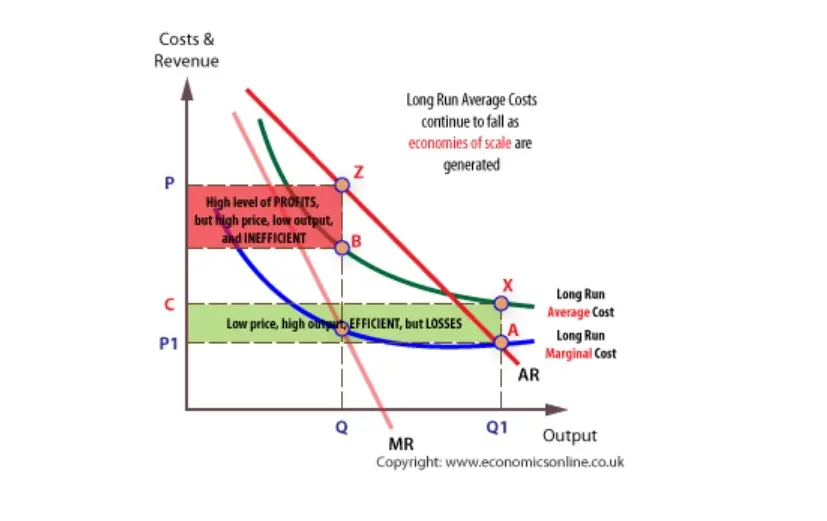
Natural monopolies are better run by state (e.g. Thames water, National Rail, National grid, etc.) than multiple private firms - as they can benefit from significant EoS and lower average costs as output increases, lowering prices for consumers
Government also focuses on maximising social welfare not profits for shareholders, operating at allocative efficiency, minimising negative externalities of production, and providing merit goods (e.g. healthcare, education, etc.) previously under-provided
Greater control of the economy, especially key industries, when private organisations cut corners to profit maximise - guarantees a minimum level of service
For privatisation, those who cannot afford to invest in ownership of assets lose out on dividend profits - while those who can, earn dividends while they can reinvest those profits again to make more, leading to increased inequality
Disadvantages of nationalisation
Nationalised industries suffer from X-inefficiencies and a lack of competition - leading to higher prices and poor quality of services
Government does not receive revenue and government spending increases providing service - opportunity costs rise
High levels of bureaucracy and no incentive to innovate or improve, so stagnates - no dynamic efficiency either
Burden on taxpayers increases, as they have to fund the operation of nationalised services
Prime example: NHS suffers from a lack of funding and competition, leading to poor quality (e.g. long waiting times). They also suffer from uncertainty as spending always changes depending on government.

