IS310--Chater 6 Network Design
 Call Kai
 Learn
Learn Practice Test
 Spaced Repetition
 Match
Match Flashcards
 Knowt Play
1/11

There's no tags or description
Looks like no tags are added yet.
Name | Mastery | Learn | Test | Matching | Spaced | Call with Kai |
|---|
No analytics yet
Send a link to your students to track their progress
12 Terms
Traditional Network Design Pros and Cons
Traditional network design is an approach that carefully analyzes network needs and selects specialized hardware to minimize equipment costs, typically suited for stable, slowly changing environments, but often requiring more staff time to manage and maintain.
Pros
Useful for static and slowly evolving networks
Cons
Costly
Time-consuming
This approach may not be adequate today due to
Rapid changed in tech
Escalating network traffic demands
Decrease in hardware costs and increase in staff costs
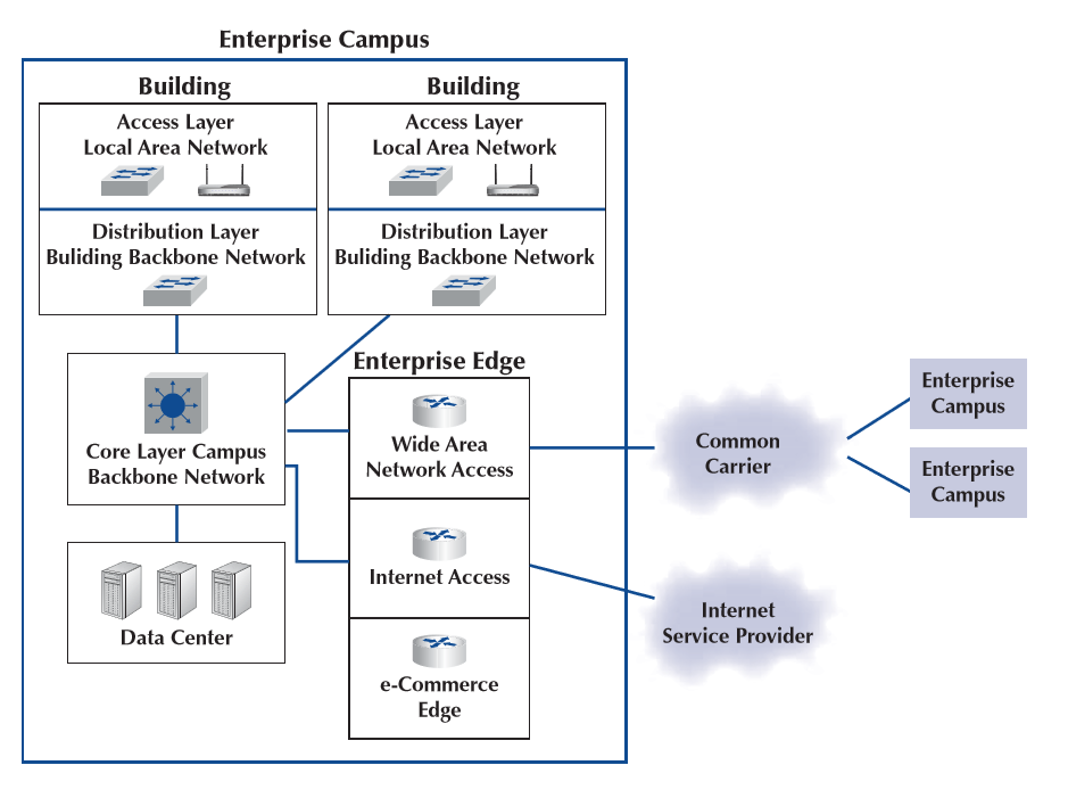
Network Architecture Components
Local Area Network
Enables users to access the network (access layer)
Building backbone network (or distribution layer)
Distributes network traffic to and from the LANs (carriers more traffic than the LAN)
Campus backbone (or core layer)
Usually faster than the backbones inside buildings, carriers more traffic
Data center
Contains orgs servers
Enterprise edge
Wide Area Network (WAN)
Internet access
e-commerce edge
Specialized LAN with a group of servers that enables data exchange with orgs and external entities
Building Block Network Design
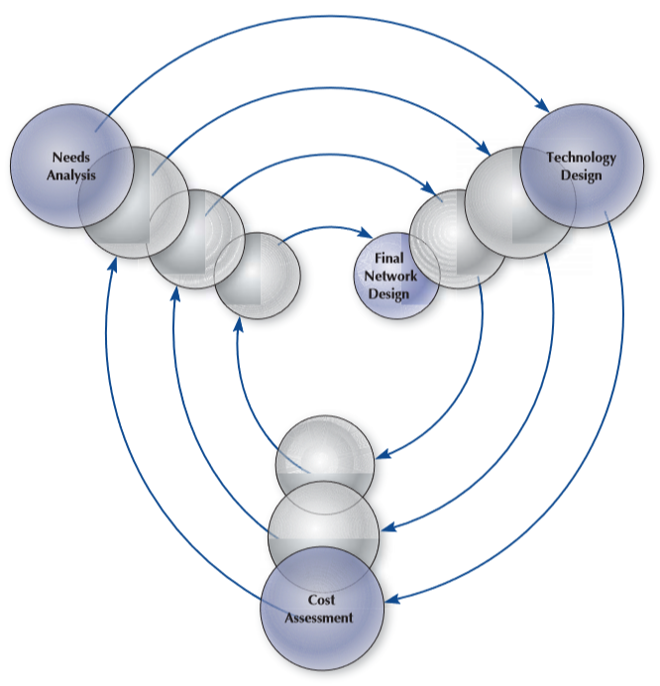
Uses a few standard components to simplify design and reduce costs
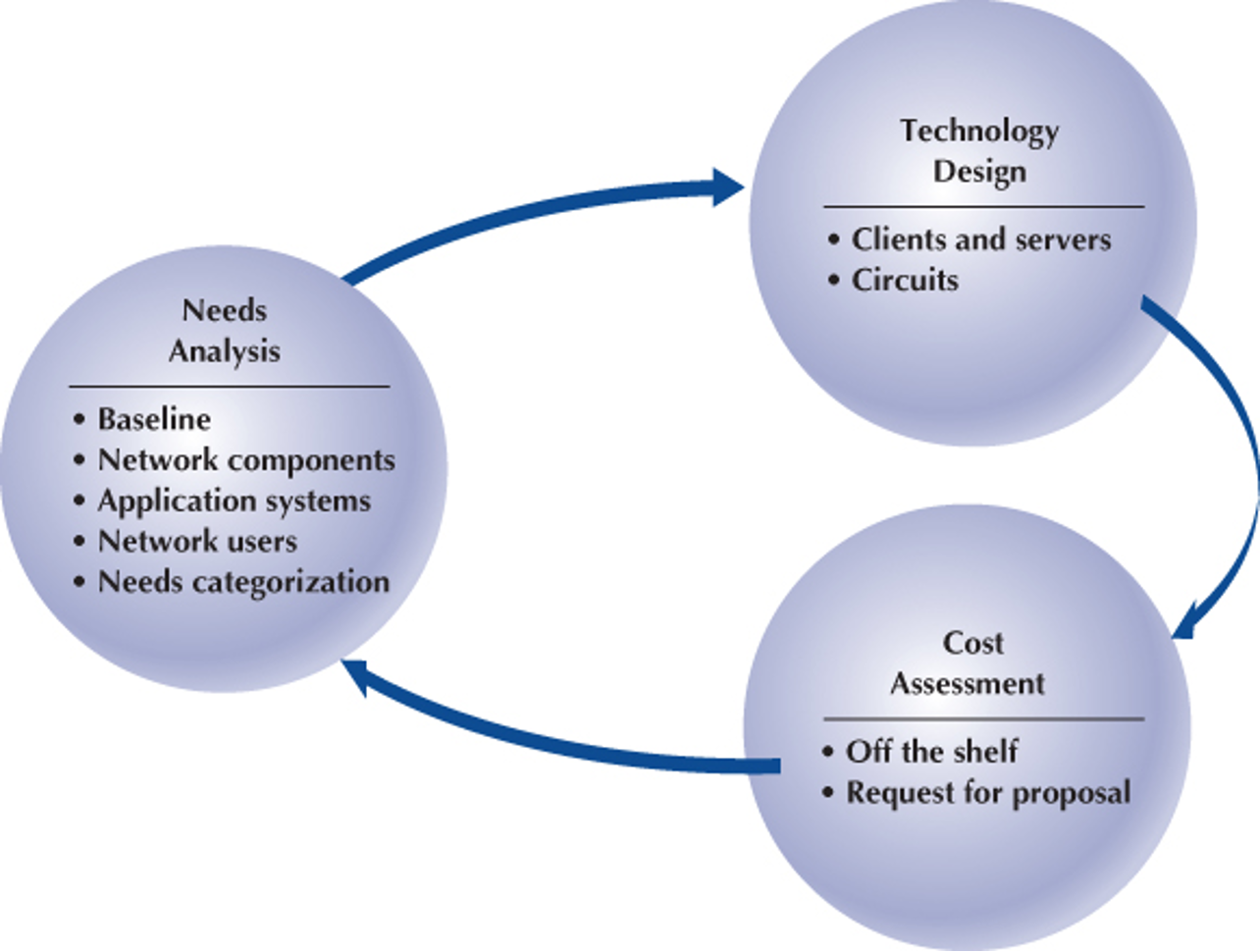
Iterative design phases
Needs analysis
Understand current and future network needs (users and apps)
Technology Design
Examine available technologies to determine which meet or exceed needs
If needs are difficult to estimate, build higher capacity
Cost Assessment
Evaluate the financial costs of technology
Needs Analysis
Goal: Understand (1) the geographic scope of the network and (2) the users and applications that will use it
Baselines
create metrics of current operations to compare design requirements against
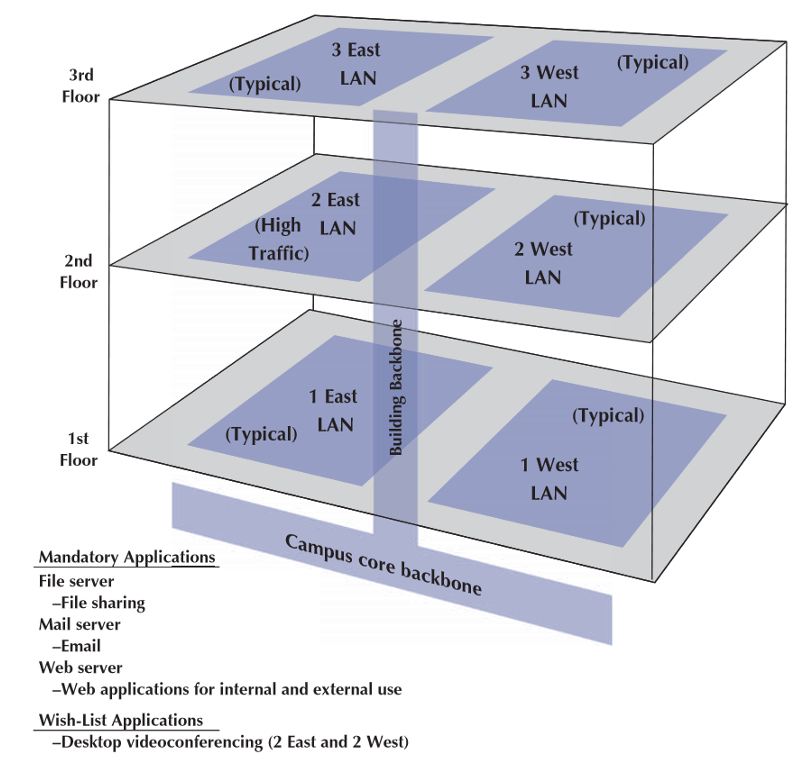
Deliverable: One or more logical network design
showing the applications, circuits, clients, and servers
Each is categorized as either typical or high traffic
Not consider the physical elements
Needs Analysis Steps
Break down the network into architectural components
Evaluate all seven components - define geographic scope
Review the existing and expected applications that will use the network
Identify hardware and software requirements for these applications
Identify protocols used by applications
Identify and assess network users
Some users may have very different needs
How many of each type of user?
Categorize network requirements
Mandatory
Desireable
Wish List
Technology Design
Design includes clients, servers, circuits, and networking devices (routers, gateways, access points, switches, etc)
Designing clients and servers
Specify the clients devices needed in standard units
Servers are similarly allocated based on application needs
Designing circuits and network devices
Capacity planning
The estimation of circuit size and type required for each network architecture component
Circuit Loading
An assessment of the future amount of data transferred across a circuit (currently or in the future)
Can design for average circuit traffic or peak circuit traffic (highest data volume on link)
Deliverable: One or more physical network design
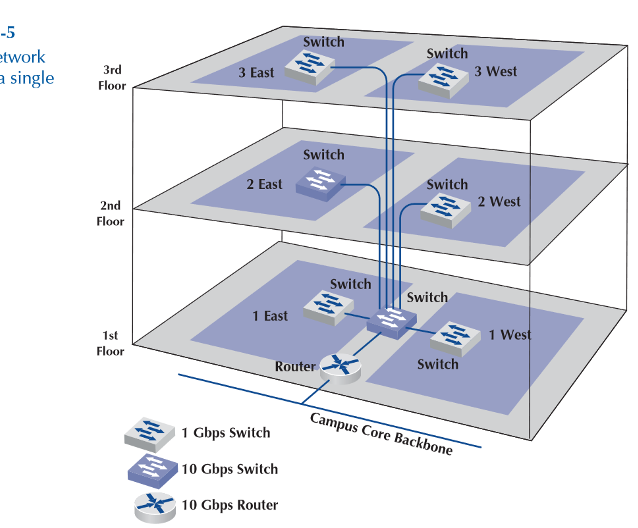
Technology Design circuit traffic
Estimating circuit traffic
average traffic vs peak traffic
designing for peak traffic is ideal
Precision may not be the major concern
Obtaining precise estimates is difficult and expensice
traffic typically increases more than anticipated
Should network designers plan for excess capacity?
Upgrading costs 50-8-% more than designing higher capacity time
Very few complaints about overcapacity
Most organizations intentionally overbuild
Turnpike effect
Occurs when traffic increases faster than forecasted
When network are efficient and fast, users will use them more frequently
Cost Assessment
Financial analysis of the various technology design alternatives
Complex process that requires the analysis of many factors
Circuit costs (cabling and installation)
Internetworking devices(switches and routers)
Hardware costs (clients, servers, power supplies)
Software costs (OS, app software, middleware)
network management and maintenance
WAN and Internet Circuits
Deliverables:
Finalized RF sent to vendors
Revised tech design with detailed specifications including products and cots
Business case for network deisgn
Request for Proposal (RFP)
Detailed specification of equipment, softwarem and services desired from vendors
Typically used in large network purchases
Allows the org to evaluate offerings from different vendors
Multi-vendor proposals
May provide better performance
May be less $$
May be more difficult to manage

