C3.2 DEFENCE AGAINST DIESEASE
 Studied by 3 people
 Call Kai
 Learn
Learn Practice Test
 Spaced Repetition
 Match
Match Flashcards
 Knowt Play
1/21

Earn XP
Description and Tags
some notes for me ot remember: pathogens cause disease, antigens are specific molecules that trigger the immune system's response to those pathogens.
Name | Mastery | Learn | Test | Matching | Spaced | Call with Kai |
|---|
No analytics yet
Send a link to your students to track their progress
22 Terms
state the role of pathogens as the cause of infectious diseases (also state what pathogens are)
disease causing agents that disrupts the normal physiology or metabolism of the infected organism
done through invading the body through multiplication and disrupting normal physiological functions
4 main types of pathogens
bacteria - unicellular prokaryotes
fungi - unicellular/multicellular eukaryotes
protists - unicellular eukaryotes
viruses - non living organisms (require a host cell in order to replicate)
state features of the innate immune system
response time : immediate response (minutes to hours)
specificity : responds to broad categories of pathogens
memory : no memory; response does not change over time
components : general components (e.g., phagocytes)
mechanism of action : physical barriers, phagocytosis, and general inflammatory responses
adaptation : does not adapt or evolve during an organism’s life
state features of the adaptive immune system
response time : delayed response (days to weeks)
specificity : responds specifically to particular pathogens
memory : builds immunological memory; response improves with repeated exposure
components : specific components (e.g., T cells, B cells)
mechanism of action : antibody production, cell-mediated responses
adaptation : adapts and evolves with exposure to specific pathogens
explain the first line of defense against infections diseases
first line of defense = physical and chemical barriers
eg) surface barriers (skin/mucous membrane)
SKIN
physical: consists of external cells of dead cells that provide protection when intact (prevents entry of microorganisms)
chemical: skin secretes enzymes and oils, acting as a chemical barrier to prevent growth of micoorganisms
MUCOUS MEMBRANE
physical: mucous membrane line internal surfaces which contain thin layer of living cells secrete sticky mucus that traps pathogens
some mucous membrane contain cilia that brush and expel the pathogens
chemical: mucous contains lysosome (the enzymes help digest bacterial wall)
eg. respiratory tract, digestive tract, mouth, nose, eyes
explain the sealing of cuts in skin by blood clotting
cuts in skin are sealed by blood clotting in order to prevent the entry of pathogens
platelets group together at the damaged cells and become sticky to form a temporary plug
the platelets then release protein clotting factors which initiate a series of reactions
clotting factors convert inactive prothrombin enzyme to the active thrombin enzyme
thrombin catalyses the reaction of soluble fibrinogen protein into insoluble fibrin protein
fibrin forms a tangled mesh around the platelet, trapping the blood cells to form a temporary clot
explain the second line of defense against infections diseases
second line defense = innate immune response (non specific)
eg) phagocytes (type of WBC) → primarily function in engulfing and destroying pathogens
phagocytes recognise pathogens using receptors on plasma membrane
the binding of the pathogen to the receptor triggers the formation of a pseudopodia, a temporary arm like extension of cell membrane, allowing for ingestion of the pathogen (THIS IS CALLED PHAGOCYTOSIS)
the pathogen is engulfed through pseudopodia by endocytosis into a phagosome vesicle
once the pathogen is inside the cell, it fuses with the lysosome so its enzymes can digest the pathogen
once this process finishes, the pathogen fragments, now antigens are release by exocytosis
NOTE: phagocytes move through amoeboid movements in the blood to reach the sites of infection
explain lymphocytes as cells in the adaptive immune system and how they circulate in the body
lymphocytes circulate in the bloodstream and are also stored in lymph nodes.
lymphocytes are a type of WBCs in the adaptive immune system (they have are 2 types)
T lymphocytes (helper/killer T-cells): mature in thymus gland, signal B cell to tell them to produce antibodies
B lymphocytes (B-cells): mature in bone marrow, produce antibodies specific to the antigen
NOTES:
individuals have a very large and diverse quantity of B lymphocytes (B-cells)
each type of B-cell produces an antibody specific to the antigen fragments from the phagocytes to target that specific pathogen
lymphocytes have the ability to distinguish between body cells (self cells) and invading pathogens (non-self cells)
what are antigens and antibodies
antigens: non-self cells
substance that triggers the immune system (and antibody production)
proteins or glycoproteins located on outersurface of pathogen
antibodies:
protein molecules that identify, bind and neutralise antigens
specific b cells will produce specific antibodies that target specific antigens
using blood transfusions, explain antigens as recognition molecules that trigger antibody production
individual’s blood types are determined by specific antigens on the surface of RBC's
explain the third line of defense against infections diseases
third line of defense = adaptive immune response (specific)
eg) lymphocytes (type of WBC) → involved in specific immune responses and the development of immunological memory
antigens are presented on the surface of antigen-presenting cells to helper T lymphocytes
when they bind, this releases cytokines that stimulates B lymphocytes to differentiate and produce antibodies
helper T cells activate B cells specific to the same antigen (from “naive” to
“activated” B cell)
upon activation by antigens, the activated B cells will divide by mitosis to form more clones that will differentiate into
plasma cells: short lived cells that are responsible for synthesising and secreting large quantities of antibodies that will specifically target the antigen
memory cells: long living cells that remain in the bloodstream and lymph notes, retaining memory of the specific antigen to produce a faster and more effective response upon re-infection
explain immunity as a consequence of retaining memory cells
due to the long-term survival of lymphocytes, specifically memory B lymphocytes, re-exposure to the same antigen will result in a quicker formation of plasma cells and large quantity of antibodies secreted to quickly fight of the infection
memory cells prevent delay between initial exposure to pathogen and production of antibodies
upon secondary infection, memory cells will be able to react more vigorously to produce faster plasma cells which will delay the pathogens capacity to reproduce in sufficient amounts
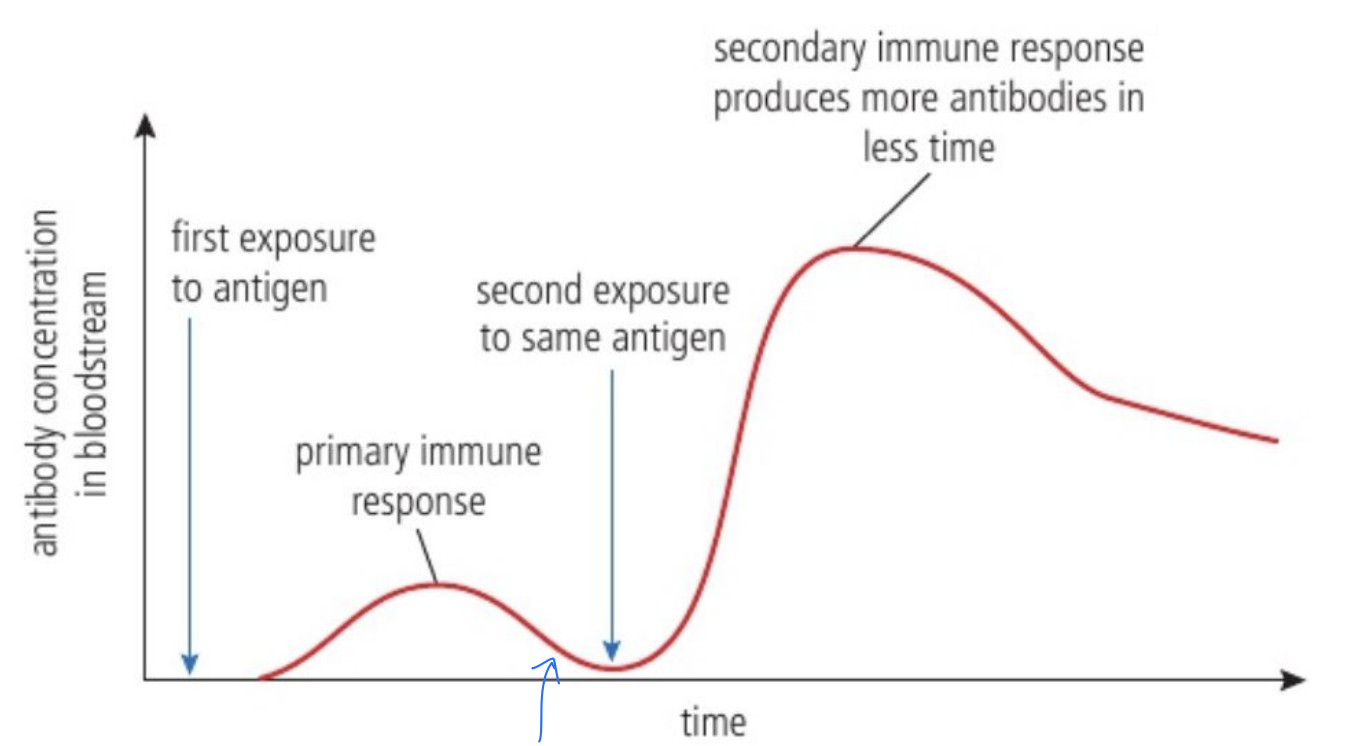
describe this graph
first exposure to antigen:
first exposure to antigen, immune system recognises the antigen and activates B cells, producing antibodies to fight against the antigens
second exposure to same antigen:
response produces more antibodies in less time due to the presence of memory cells generated during the first exposure
memory cells allow for a quicker and more vigorous activation of B cells upon re-exposure to the same antigen
explain how vaccines are used to immunise an individual
vaccines contain antigens of a specific pathogen or nucleic acid that code for those antigens
exposes the immune system to the specific antigen of the pathogen without causing the disease
vaccines stimulates body’s adaptive immune system so the specific B cells are activated and then stored as memory cells
upon actual exposure to the pathogen, the body has already built up an adaptive immunity against it
allows for a stronger and quicker immune response since the memory cells are able to divide into plasma clones to produce antibodies
outline what herd immunity is and how it plays a role in prevention of epidemics
herd immunity : group protection against a pathogen when a sufficient percentage of a population is immunised (through vaccination or previous infection)
some individuals with weak immune systems are not able to get vaccinated however they are protected from the exposure of pathogens due to herd immunity
transmission of pathogen is reduced due to less hosts for the pathogen to infect and decreases the risk of an epidemic
outline how antibiotics are used to treat bacterial infections
antibiotics contain chemicals which can destroy bacterial cell wall, inhibit protein synthesis, DNA resplication and metabolic pathways
does not affect eukaryotic cells as they have a different cell structure and metabolic pathway
cannot control viral infections such as viruses as they are “non-living” so they do not have the cell structures or metabolic pathways or antibiotics to disrupt
outline what HIV is and AIDS as a consequence of HIV
human immunodeficiency virus infects helper T cells and uses their cell machinery to replicate viruses
increased # of helper T cells infected → lysis of helper T cells → decreased activation of B cells → decreased production of antibodies → decrease in overall function of immune system
HIV can lead to AIDS
limits the ability to fight opportunistic infections
infections that are more likely to occur due to weakened immune system
explain how HIV is transmitted
HIV is transmitted through bodily fluids
unprotected sexual intercourse with an individual with HIV
transfusion of infected blood
sharing needles
from mother to child during pregnancy or breastfeeding
explain zoonoses as infectious diseases and how it can be transferred from other species to humans
zoonosis: disease transmitted between other species like animals and humans
pathogens in other species enter humans through varied modes of transmissions
direct contact: animal interaction, bites
indirect contact: consuming contaminated animal products/water
using tuberculosis as an example of zoonosis, explain how it affects humans
tuberculosis (TB) is caused by mycobacterium tuberculosis and is transmitted through respiratory droplets which directly affects the lungs
individuals with weakened immune systems (eg. HIV) are more susceptible to this infectious disease
can be treated with antibiotics but can be fatal if left untreated
using rabies as an example of zoonosis, explain how it affects humans
rabies are diseases that are transmitted via saliva (through animal bites or scratches) which directly affects the central nervous system (CNS)
can lead to hallucinations, paralysis, cardio respiratory arrest and death
99% of rabies cases caused by dog bites (other animals carry this too)
vaccinated dogs can prevent the transmission of disease
humans can be vaccinated pre/post exposure
using japanese enciphalitis as an example of zoonosis, explain how it affects humans
japanese enciphalitis is a virus transmitted to humans from mosquito bites which directly causes the brain, causing it to be inflamed
humans cannot transmit this virus (only exists in a transmission cycle between mosquito, pigs and water birds)
symptoms include fever, neck stiffness, seizures, coma, paralysis or death
there are vaccines that are able to prevent the disease/virus however there is no antiviral treatment to cure it
using covid-19 as an example of zoonosis, explain how it affects humans
covid-19 is a disease caused by the SARS-COV-2 virus and is transmitted through respiratory droplets which can directly affect the lungs as it causes respiratory illnesses
hypothesis of origin: bats are primary host, pangolins as intermediate hosts
 Note
Note  Flashcards (64)