Enzymes: Biology Edexcel: GCSE (9:1)
 Call Kai
 Learn
Learn Practice Test
 Spaced Repetition
 Match
Match Flashcards
 Knowt Play
1/18

There's no tags or description
Looks like no tags are added yet.
Name | Mastery | Learn | Test | Matching | Spaced | Call with Kai |
|---|
No analytics yet
Send a link to your students to track their progress
19 Terms
Enzyme
Biological catalysts which speed up reactions without being used up
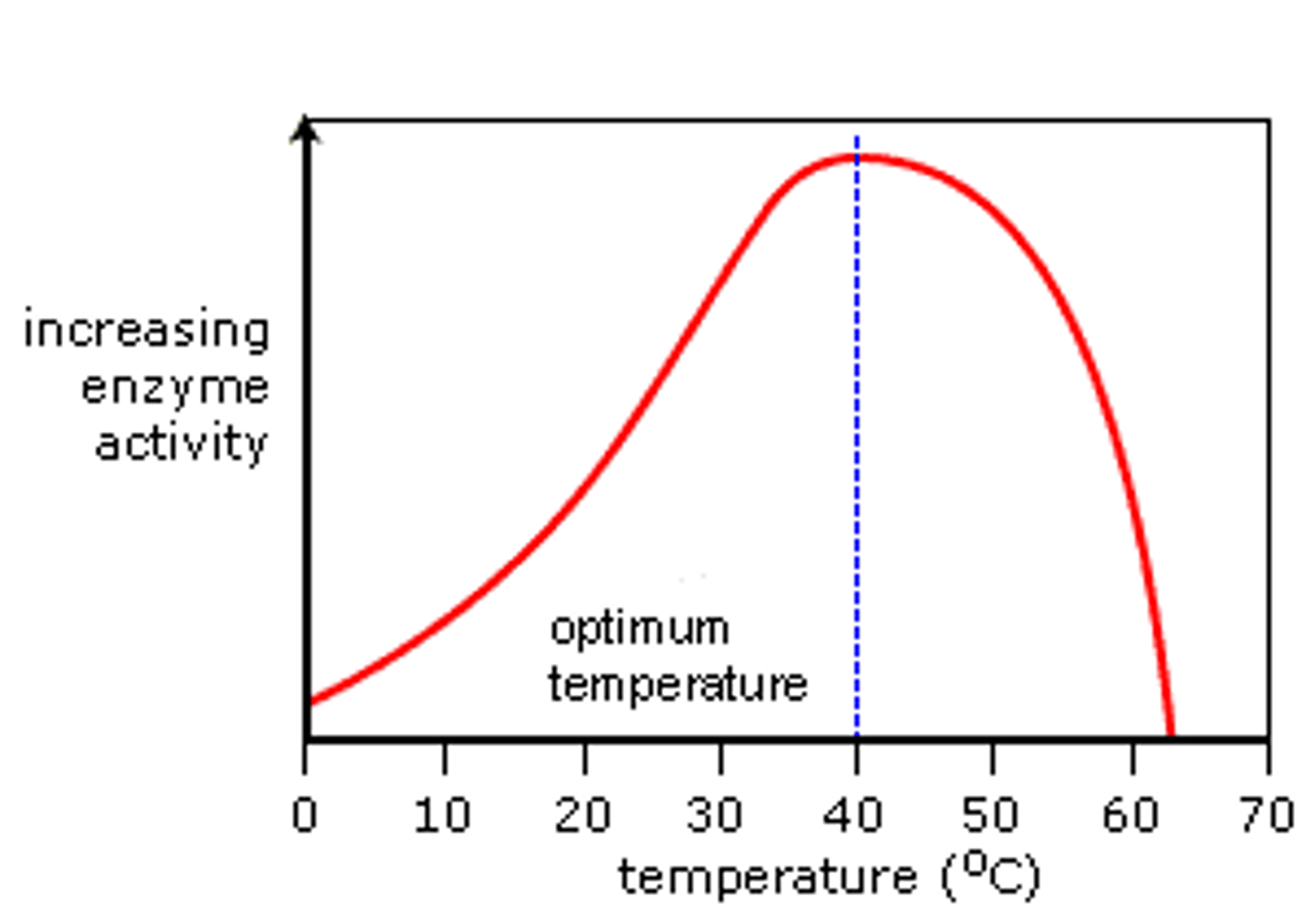
Enzymes and temperature
The enzyme rate increases as temperature increases up to an optimum, after which the enzyme becomes denatured
Low temperatures and enzymes
Reduced chances of successful collision between enzymes and their complementary substrates
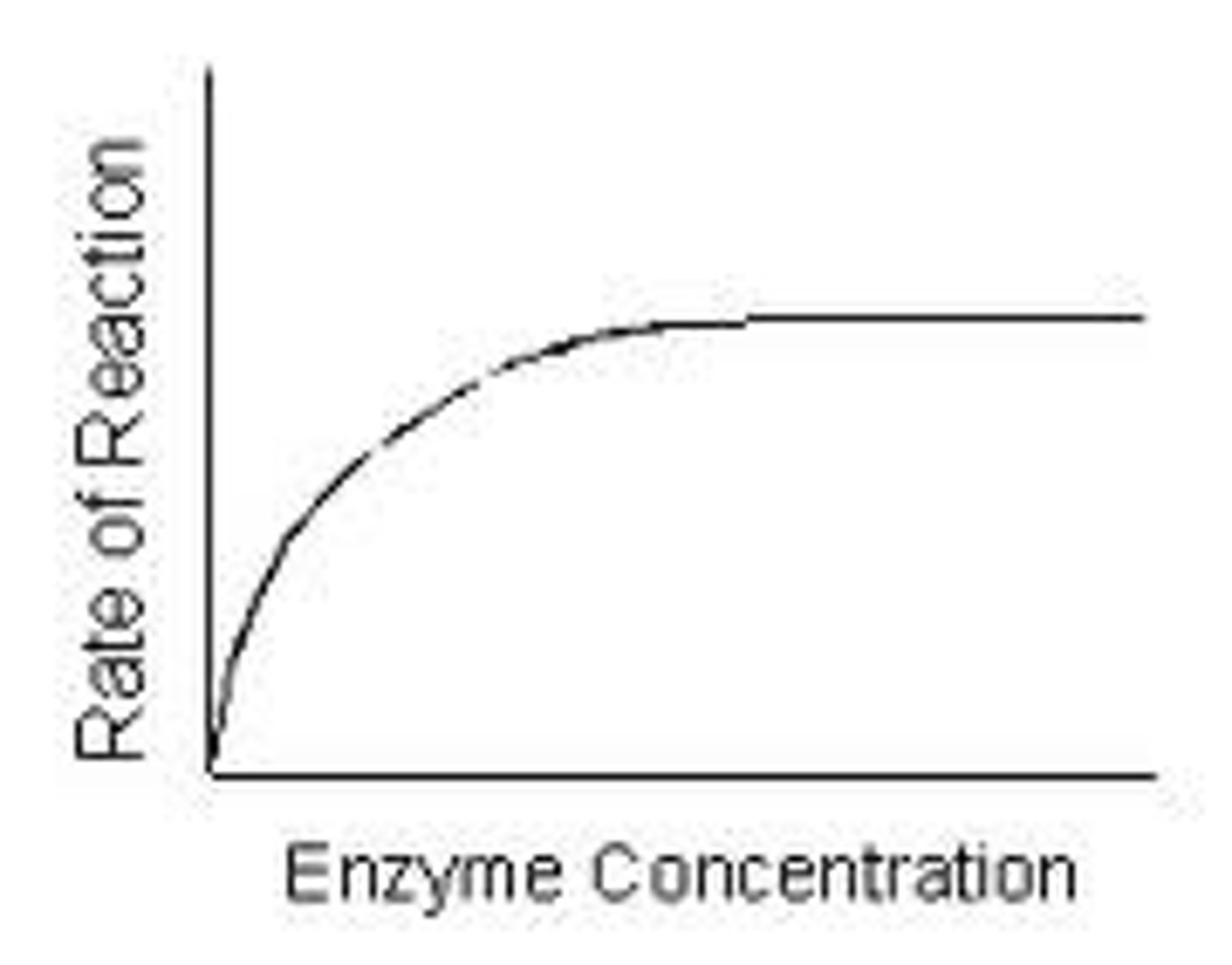
Effect of enzyme concentration
As enzyme concentration increases so will the rate of reaction, until saturation is reached
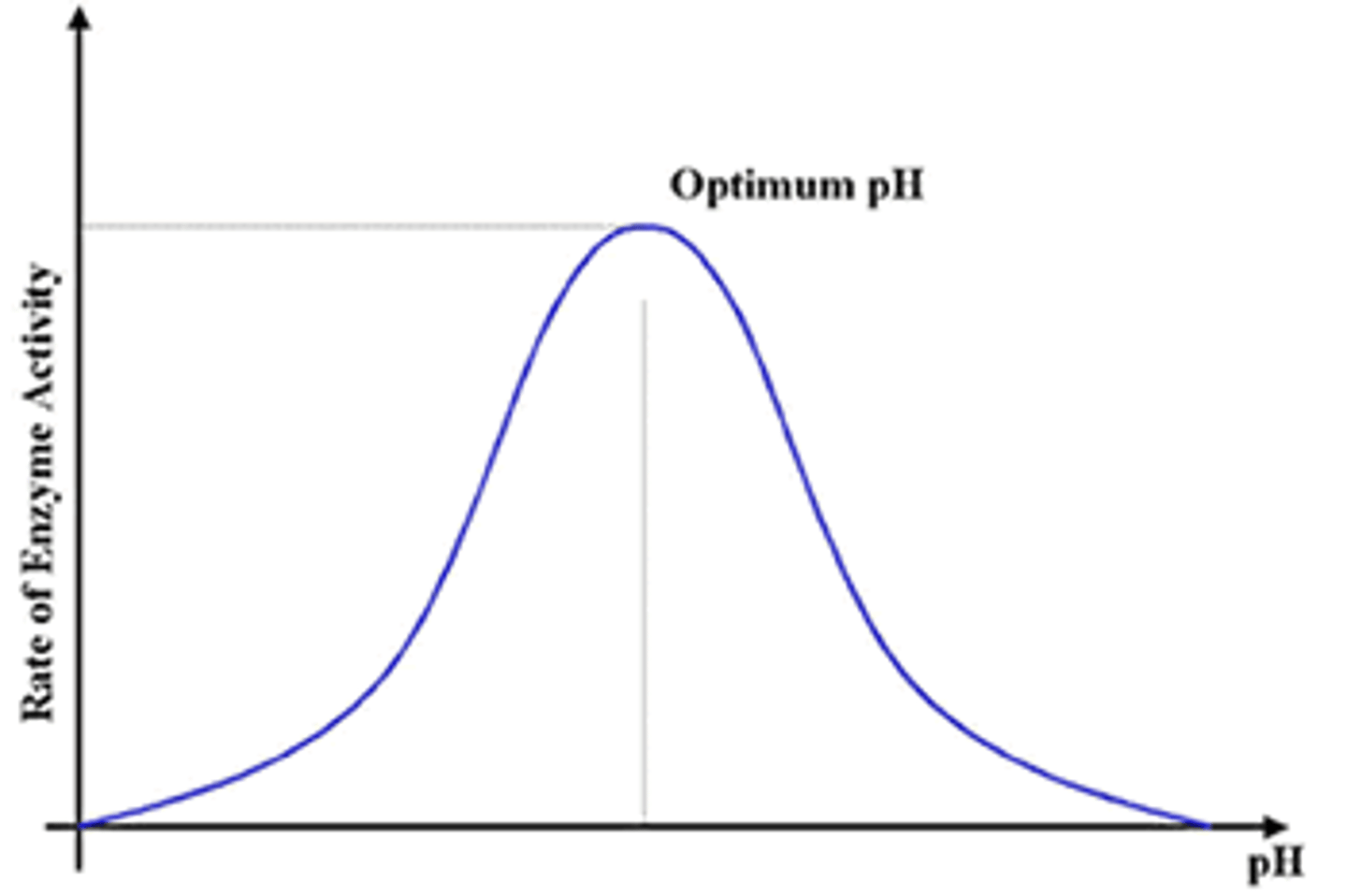
Enzymes and pH
The reaction rate decreases as the pH moves away from the enzyme's optimum pH
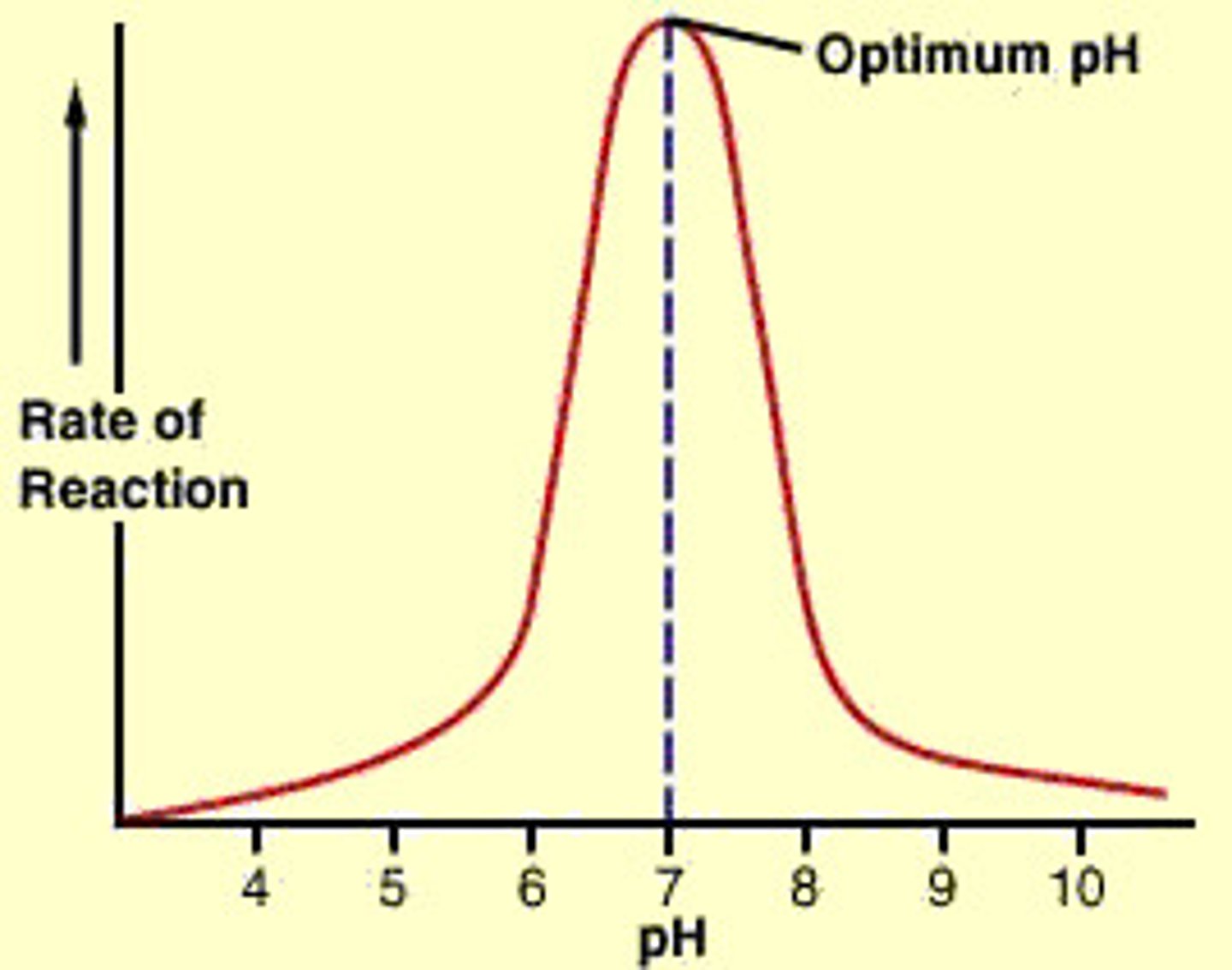
Optimum rate
An ideal pH or temperature value that results in maximum enzyme activity
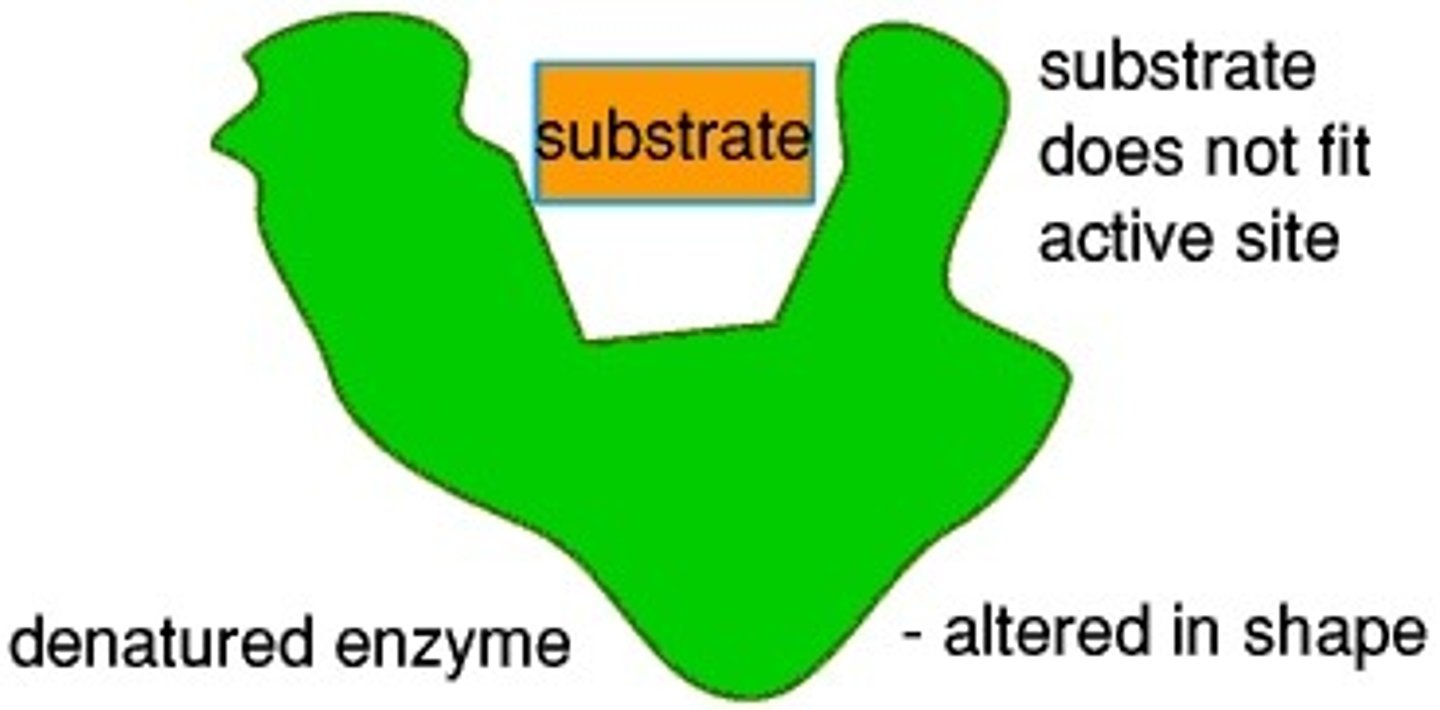
Denature
When the active site irreversibly changes shape and can no longer bind to a substrate due to high temperature or unsuitable pH
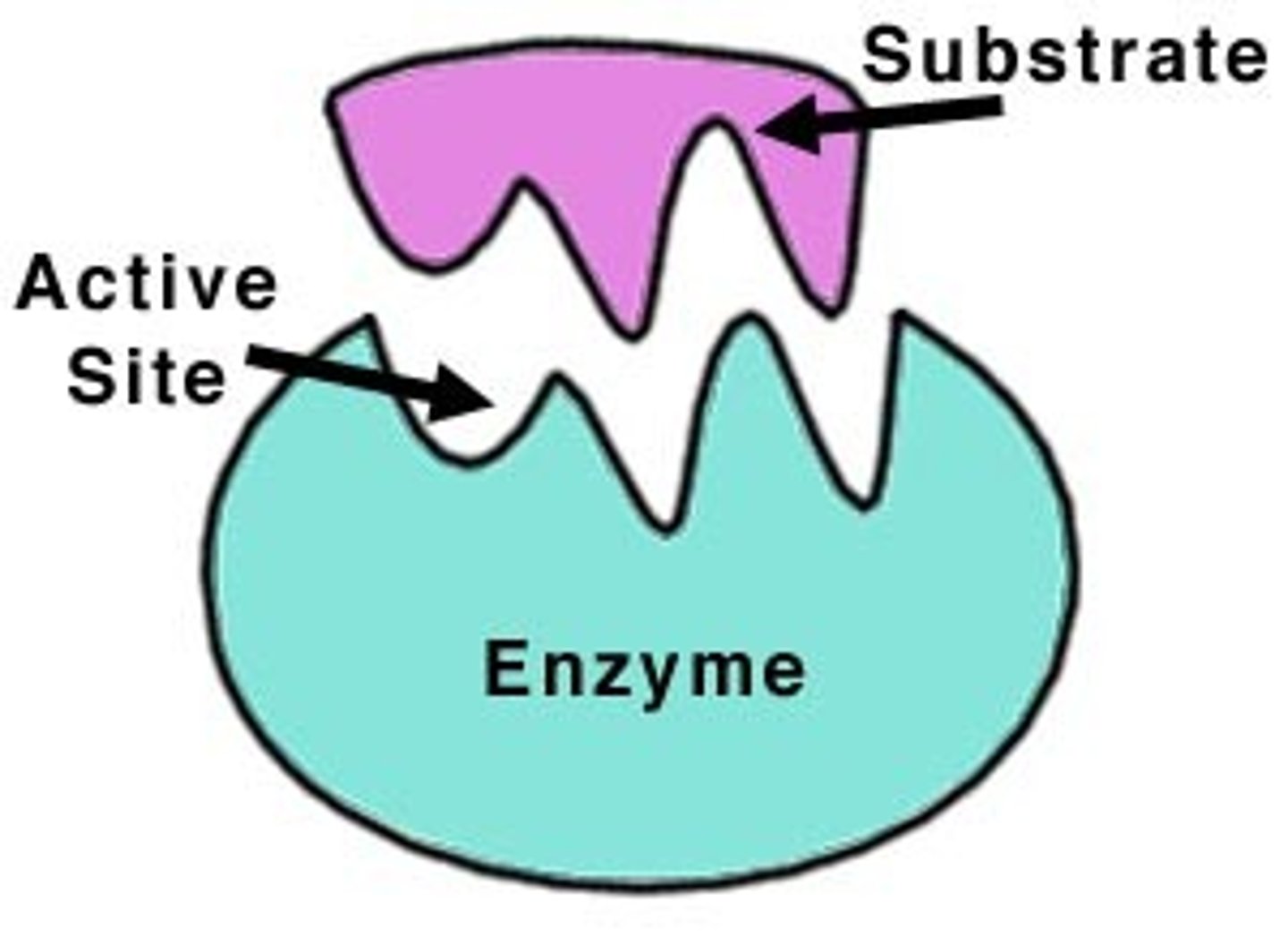
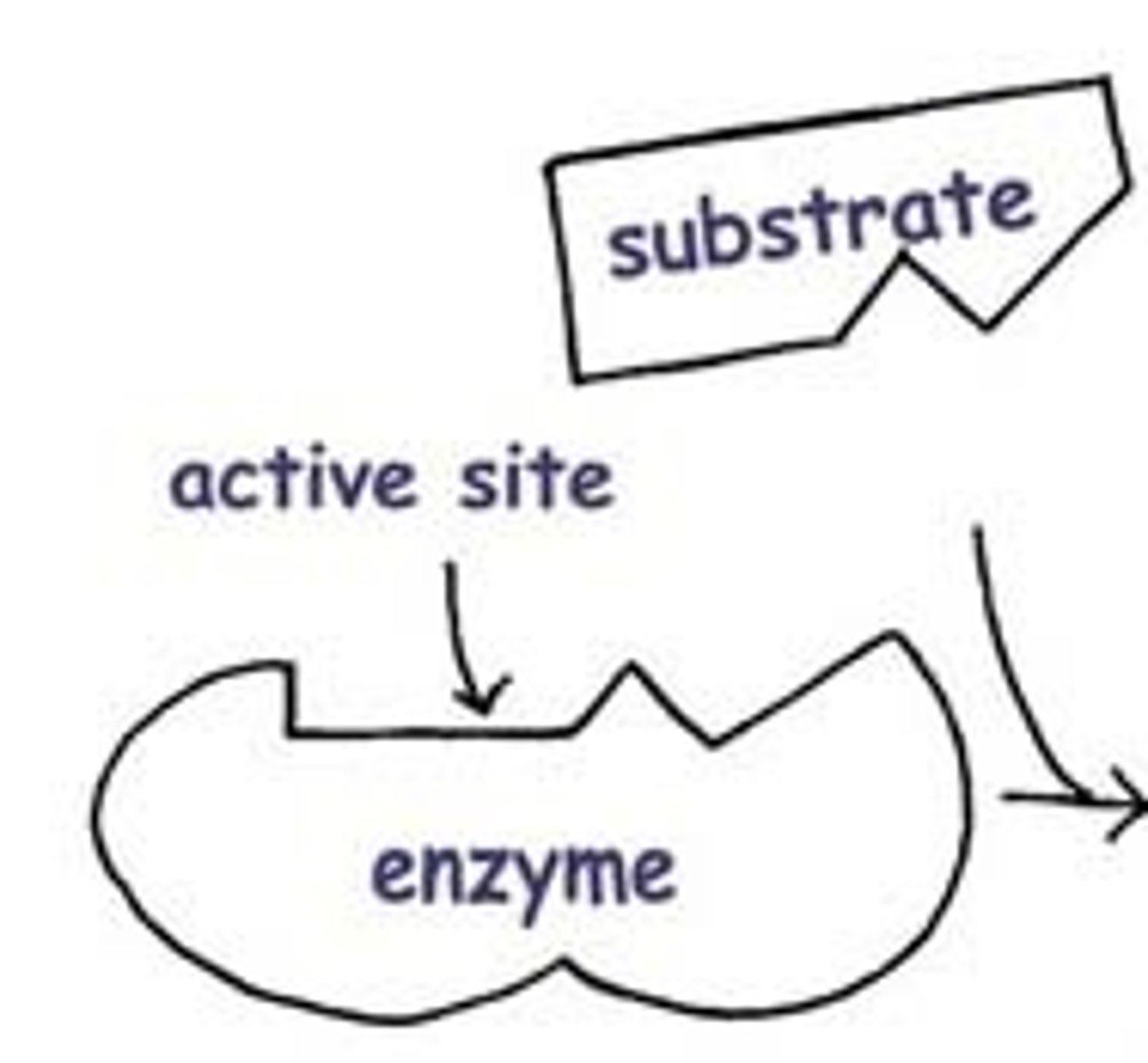
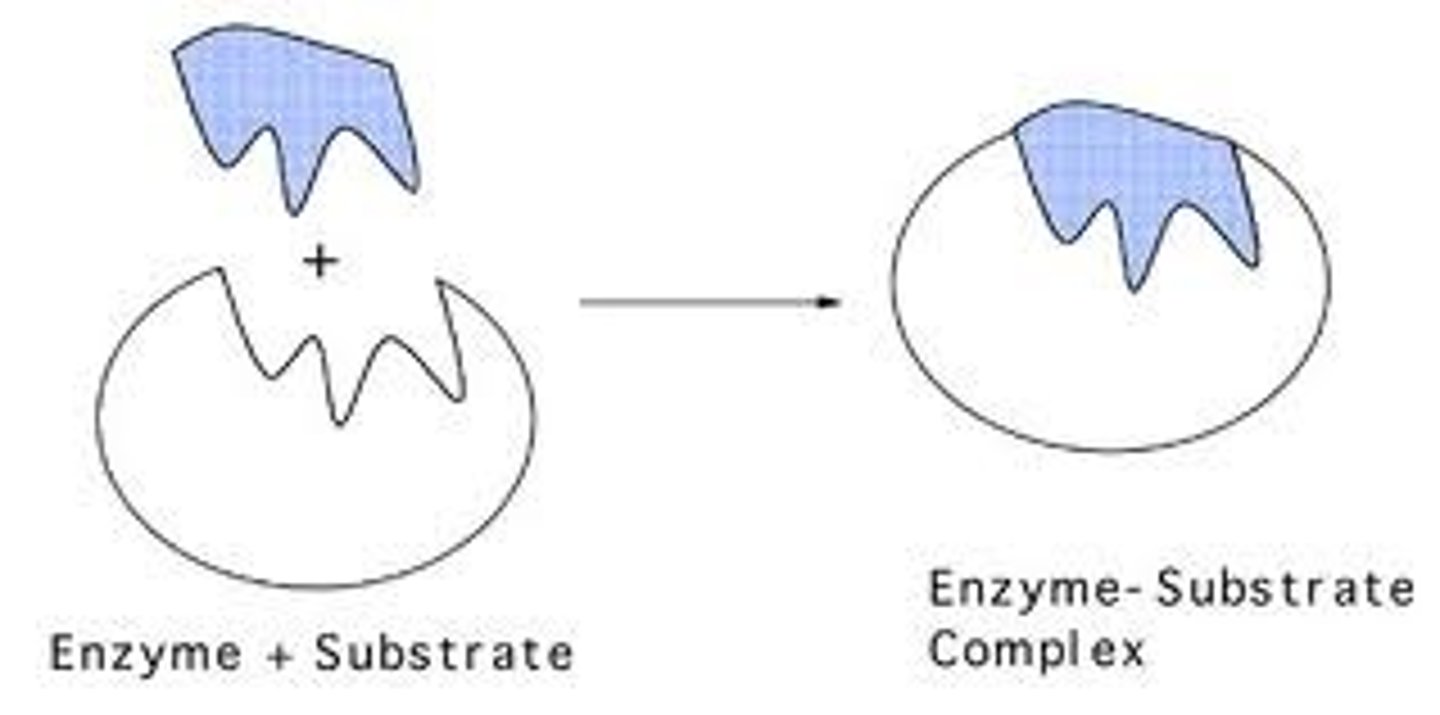
Active site
The part of an enzyme where the substrate binds
Substrate
Reactant of an enzyme catalysed reaction
Product
A substance produced in a chemical reaction
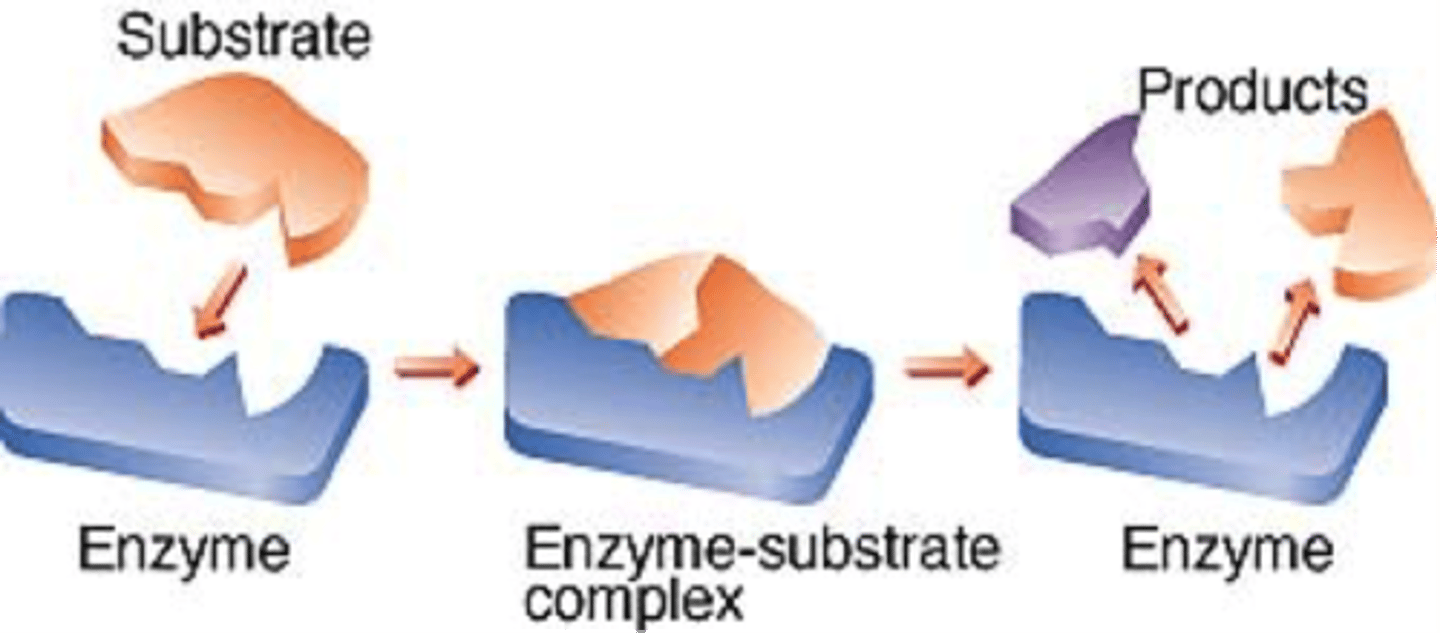
Lock and key theory
When a substrate fits into its enzyme just like a key fits a lock
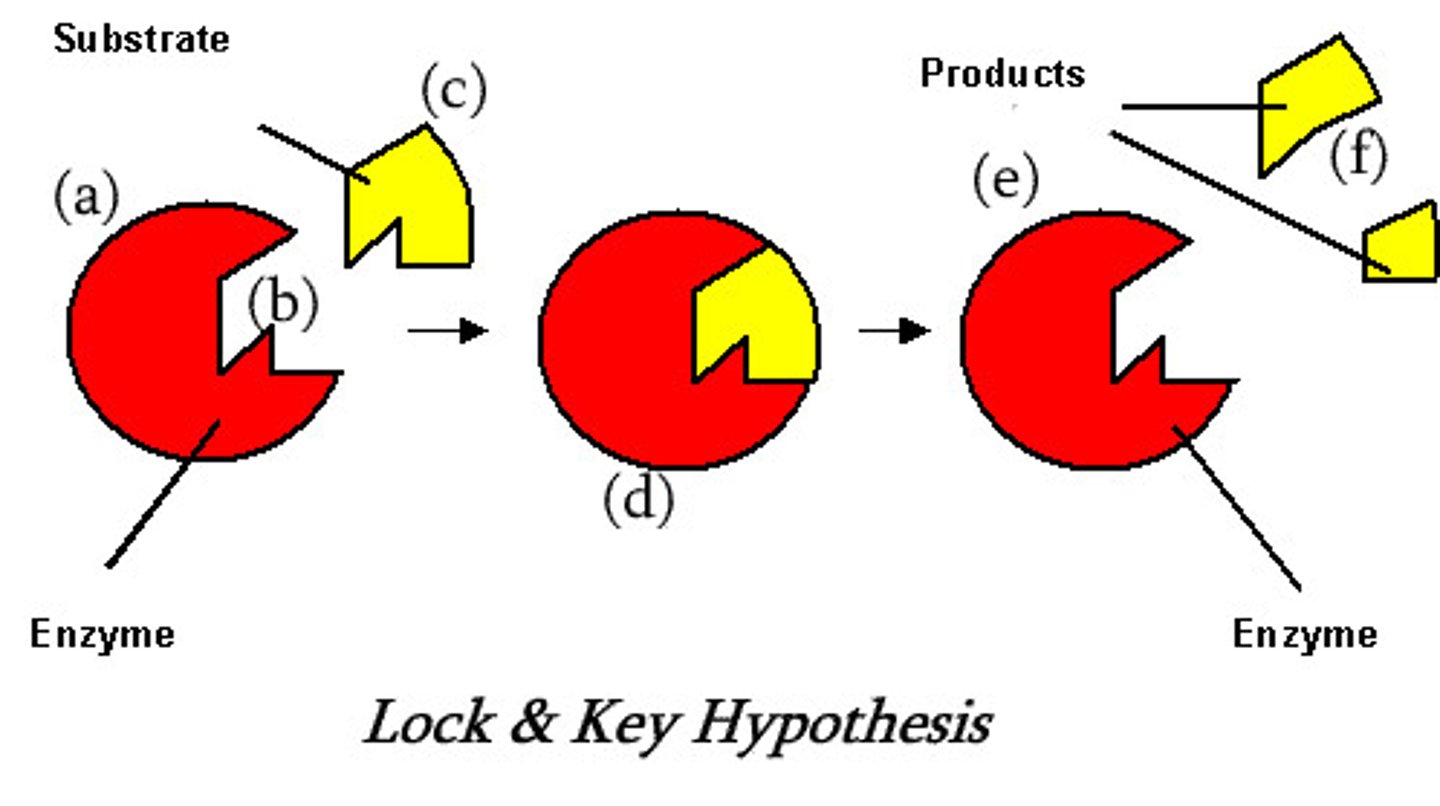
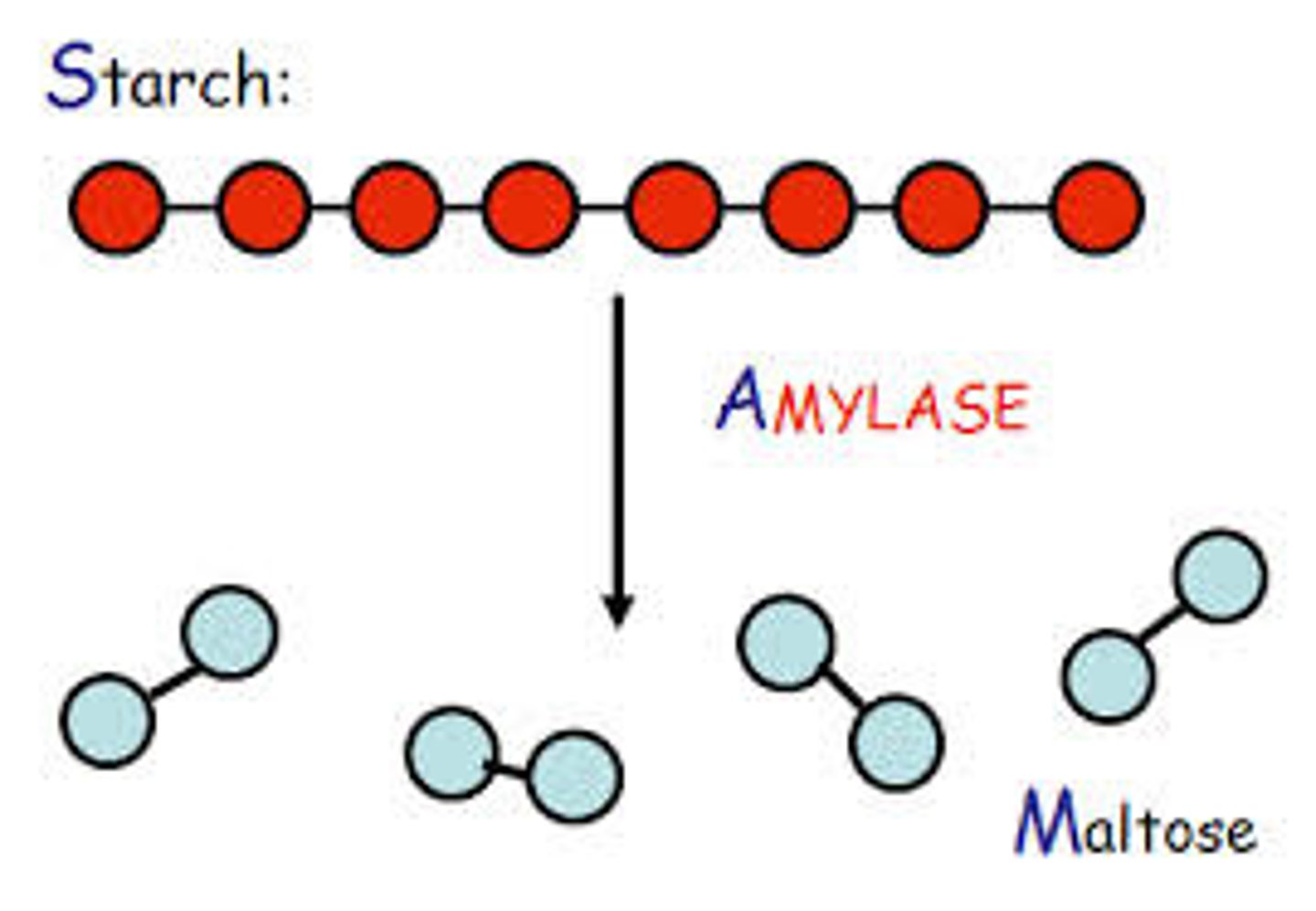
Amylase
A carbohydrase enzyme found in saliva and the small intestine that breaks the chemical bonds in starches
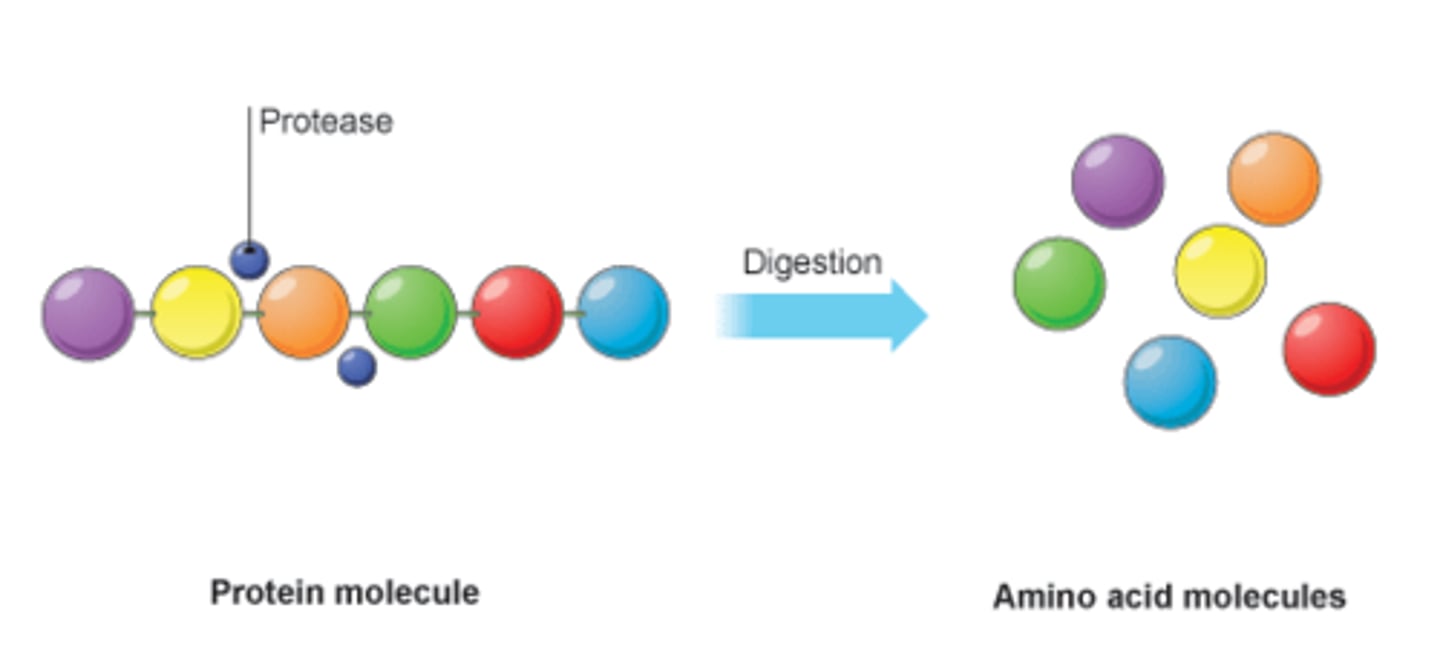
Protease
Enzyme found in the stomach and small intestine that breaks down proteins into amino acids
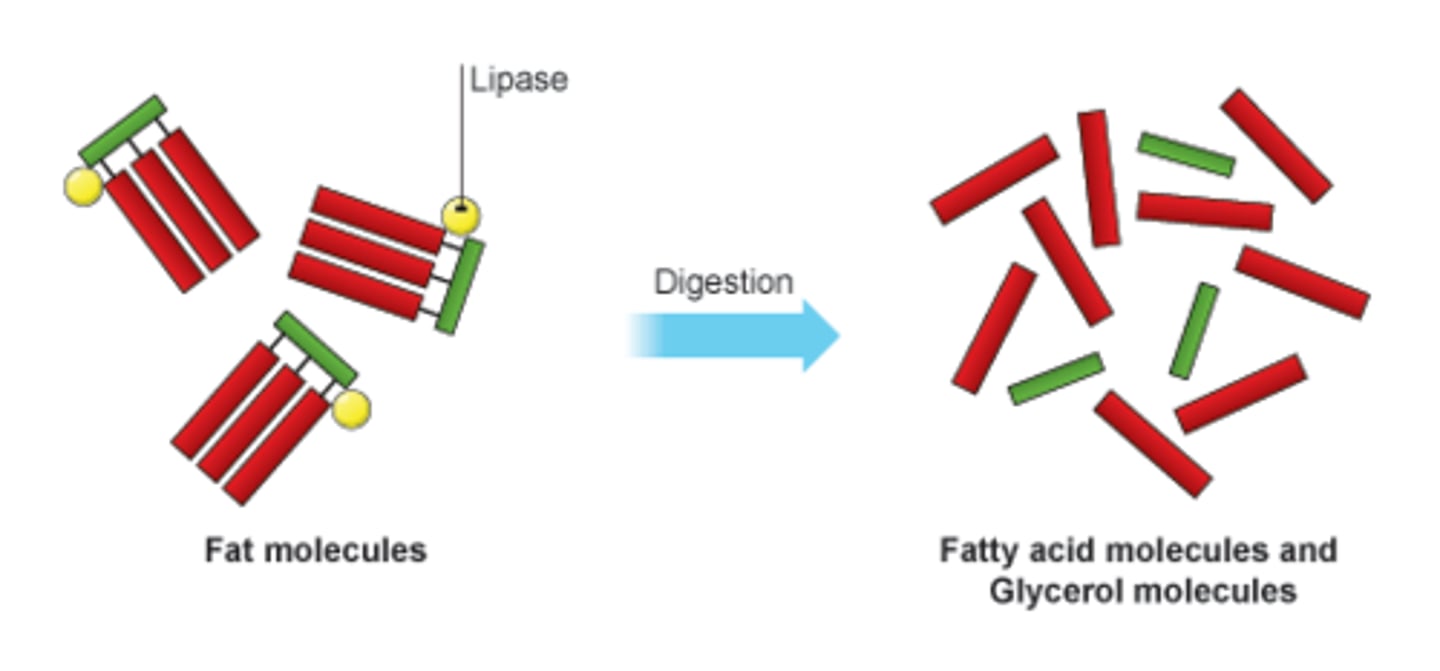
Lipase
Enzyme found in the small intestine that breaks down lipids into glycerol and fatty acids
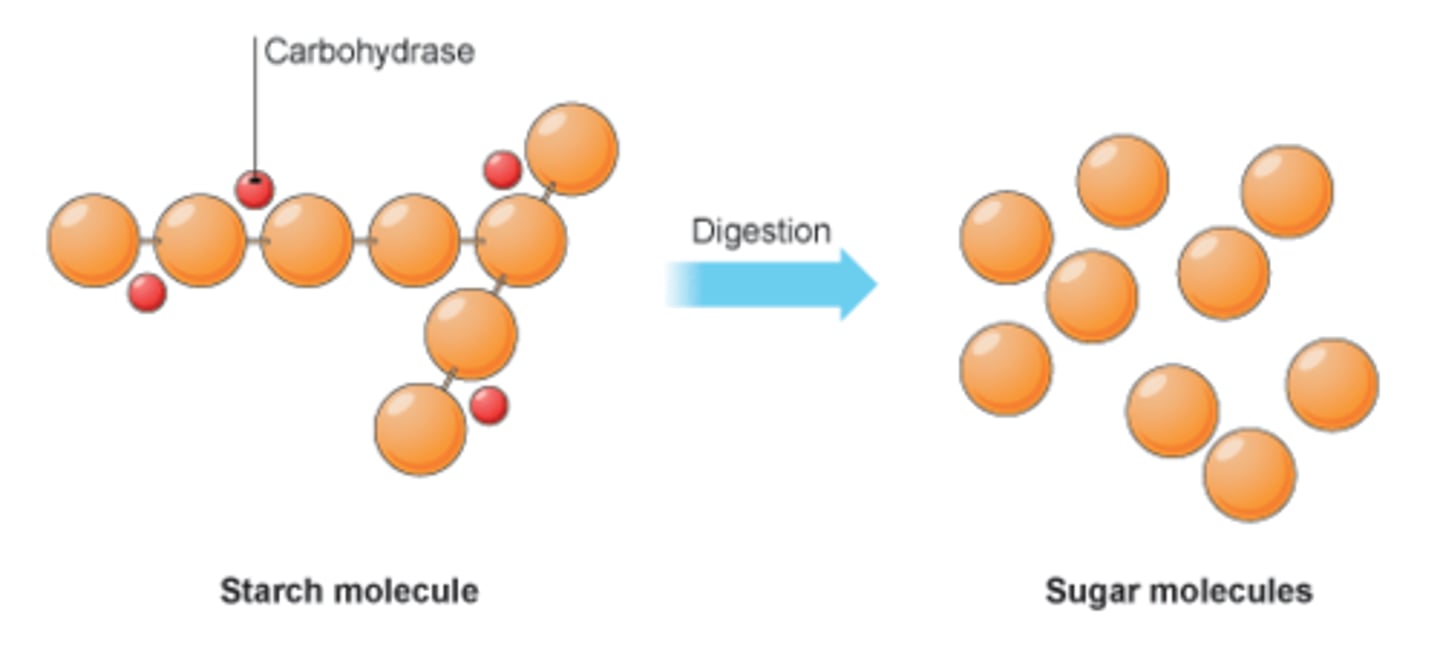
Carbohydrases
Enzymes that speed up the breakdown of carbohydrates into simple sugars
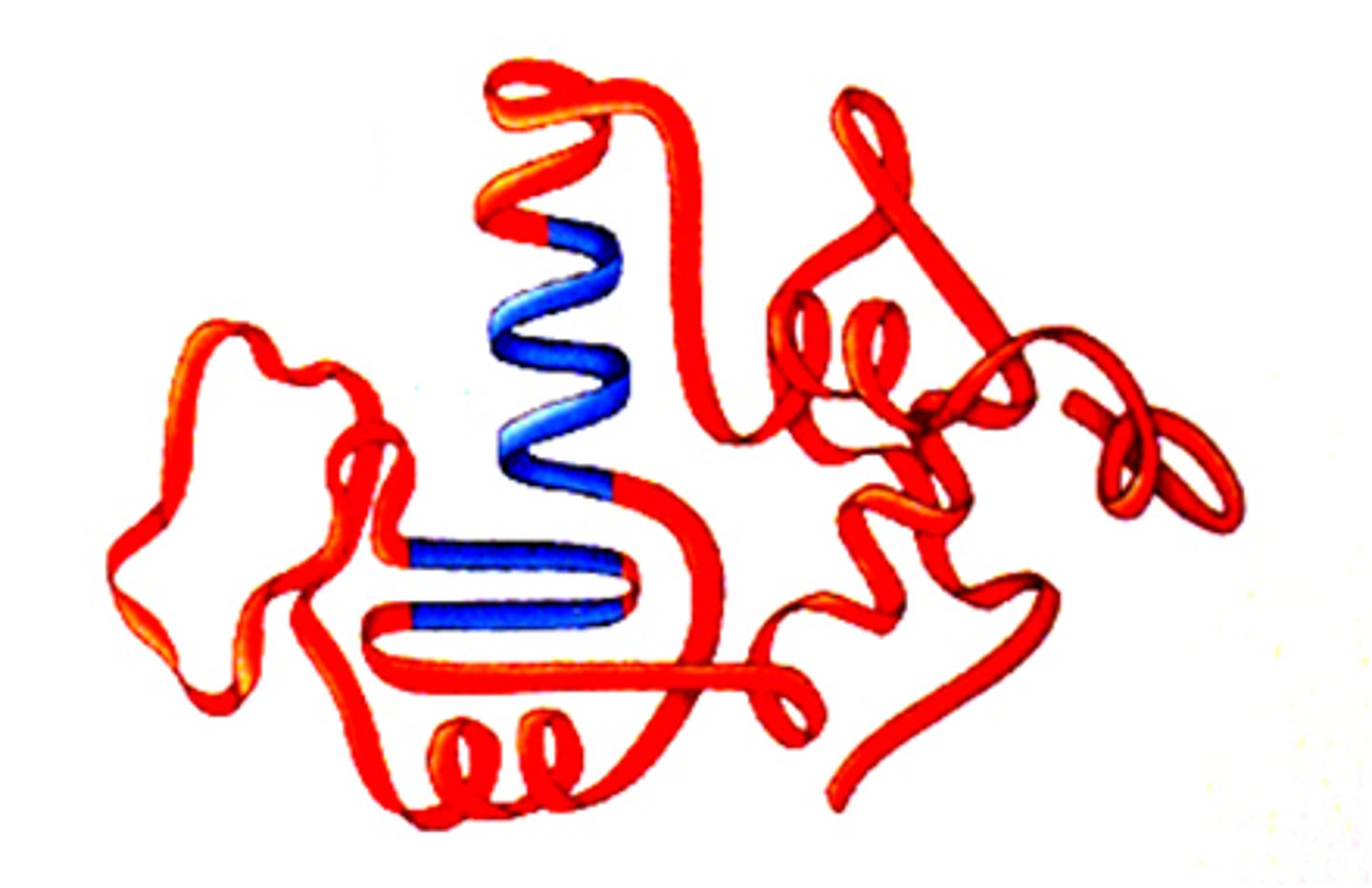
Proteins
Building blocks of cells and tissues
Carbohydrates
Provide energy for chemical reactions
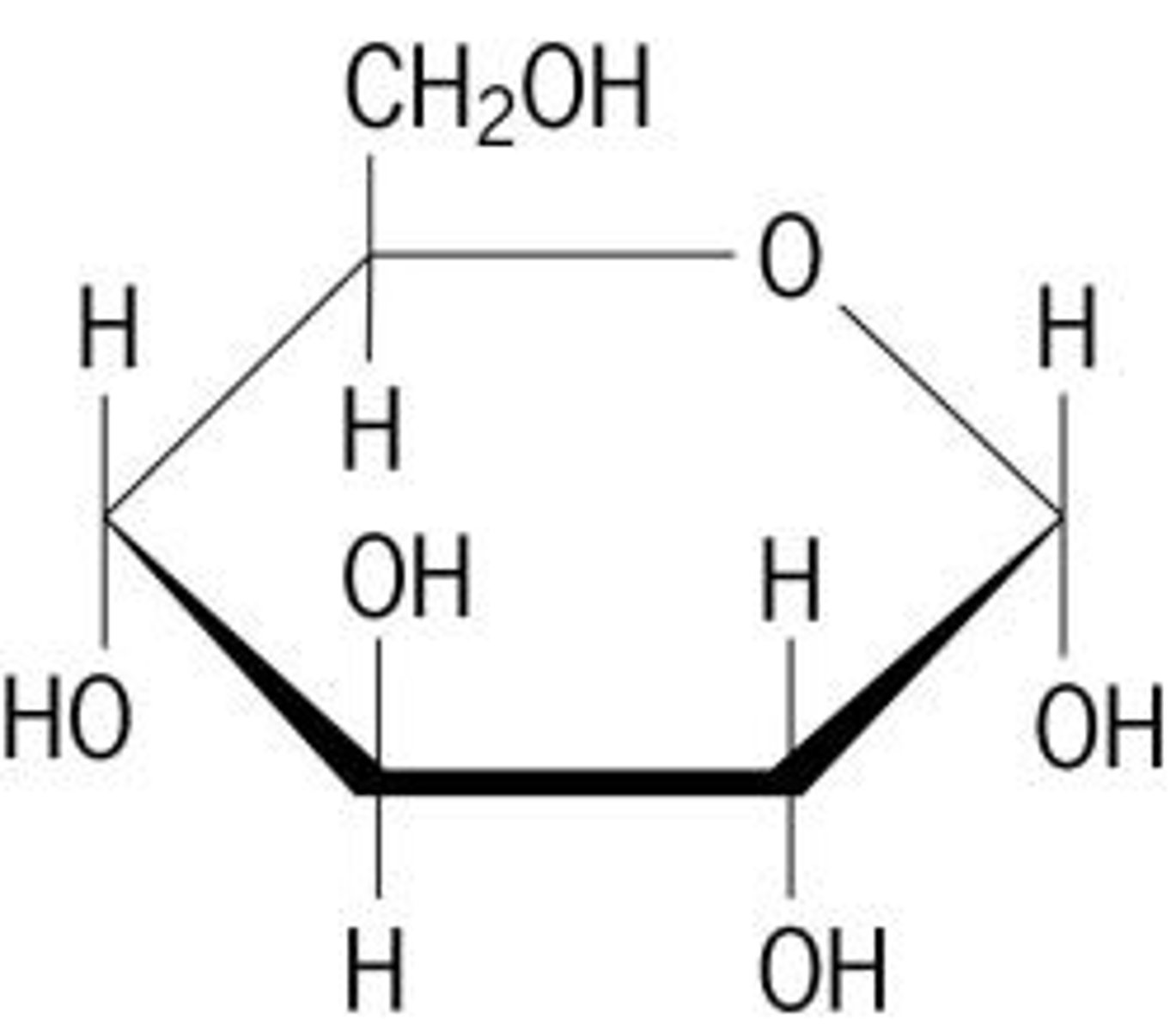
Lipids
Fats and oils which store energy
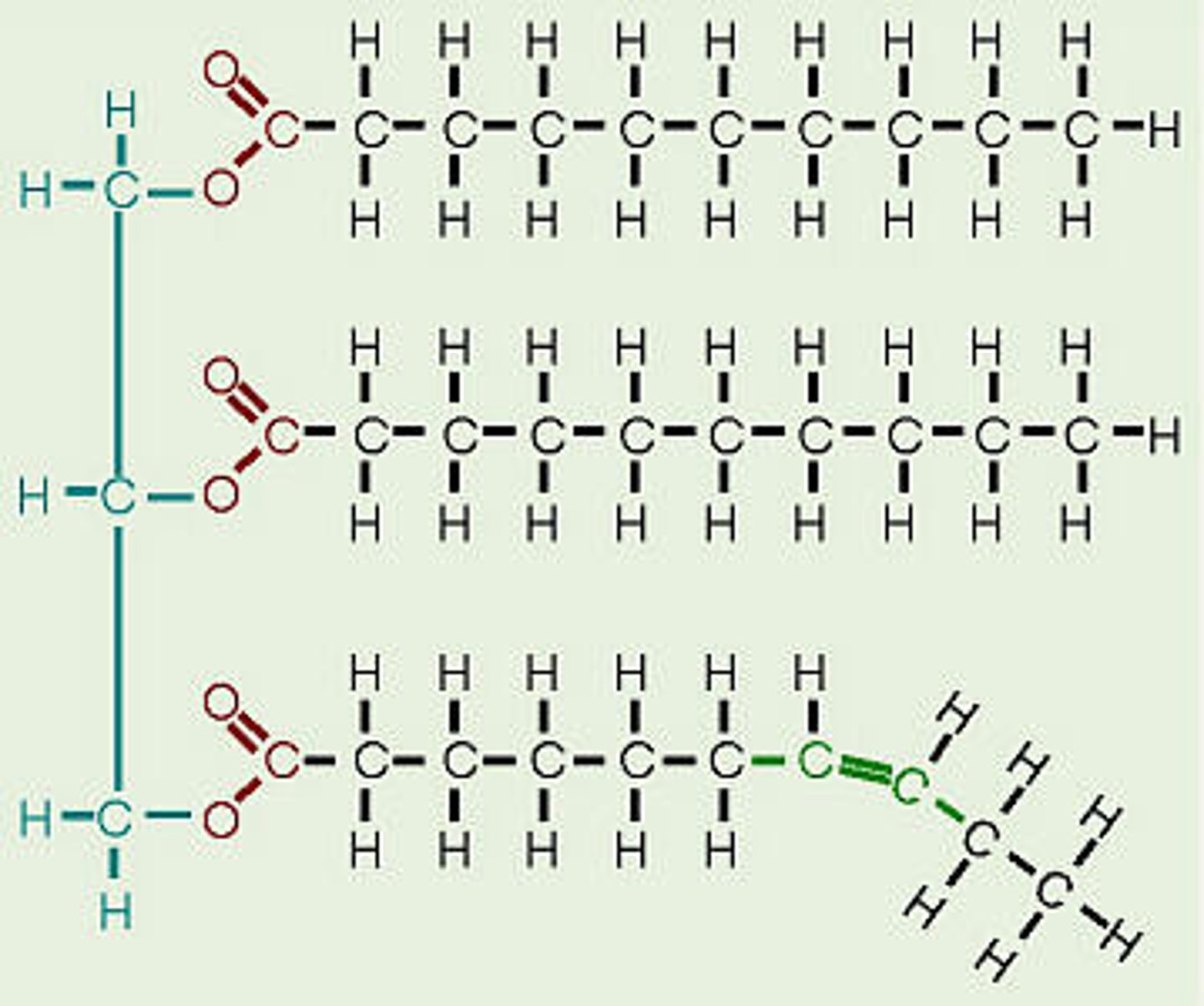
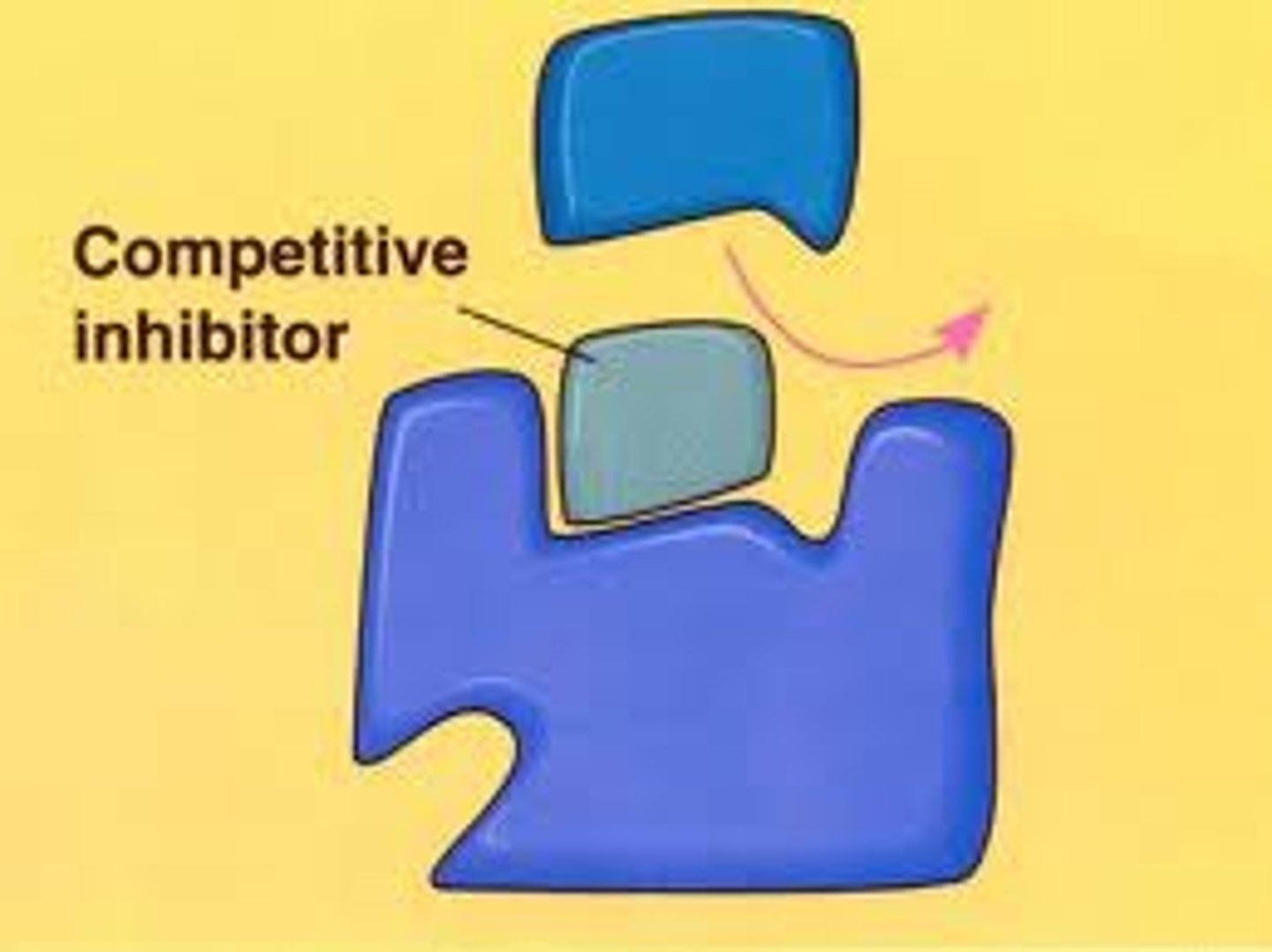
Inhibitors
Molecules that fit the active site of an enzyme but are not broken down, inhibitors reduce the rate of enzyme reactions