Data normalization (A3.2 Database design)
 Studied by 0 people
 Call Kai
 Learn
Learn Practice Test
 Spaced Repetition
 Match
Match Flashcards
 Knowt Play
1/5

There's no tags or description
Looks like no tags are added yet.
Name | Mastery | Learn | Test | Matching | Spaced | Call with Kai |
|---|
No analytics yet
Send a link to your students to track their progress
6 Terms
Data normalization
Process of organizing data to reduce data redundancy and improve data integrity
= smaller tables with less info per row = v input/output/transfers = CPU can work at full capacity (v chance CPU activities being suspended)
I. Functional dependency
Relationship: one set of attributes (determinant) determines values of another set and table (dependent)
Relationship between PK attribute and non-key attribute
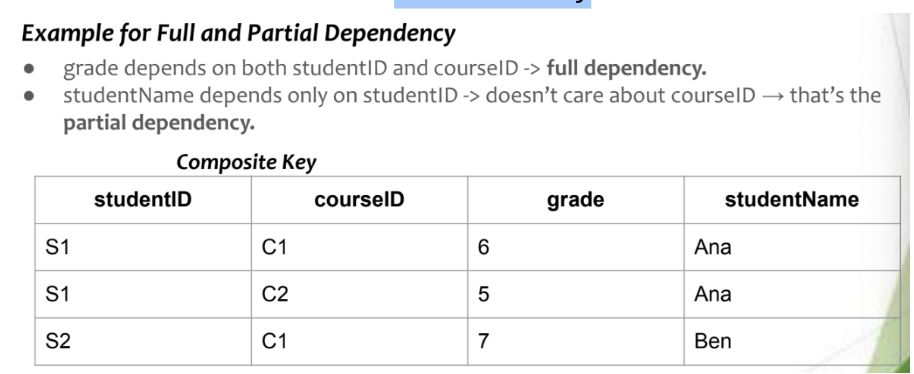
Full functional dependency (I)
Dependent attributes are COMPLETELY determined by determinant attributes
E.g StudentID fully determines student’s attributes

Partial functional dependency (I)
Dependent attributes are PARTIALLY determined by determinant attributes
E.g. StudentID could partially determine STUDENTS table’s FirstName, LastName, DateOfBirth, but not course instructor or club
Transitive dependency (I)
Dependent attributes determined by set of attributes not included in determinant attributes
E.g. EMPLOYEES table’s EmployeeID determines DEPARTMENTS EmployeeDepartment which determines SALARY salary

First normal form (1NF)
Traits:
Primary key
No duplicate attributes from same table
No repeated groups of attributes
Data in each field must be atomic (as necessary) - attribute contains indivisible values (can’t be broken down further)
Create separate tables
 Note
Note  Flashcards (117)