Pre-lab quiz 9: Limb OIA, brain anatomy & fxnal areas.
 Studied by 0 people
 Call Kai
 Learn
Learn Practice Test
 Spaced Repetition
 Match
Match Flashcards
 Knowt Play
1/70

There's no tags or description
Looks like no tags are added yet.
Name | Mastery | Learn | Test | Matching | Spaced | Call with Kai |
|---|
No analytics yet
Send a link to your students to track their progress
71 Terms
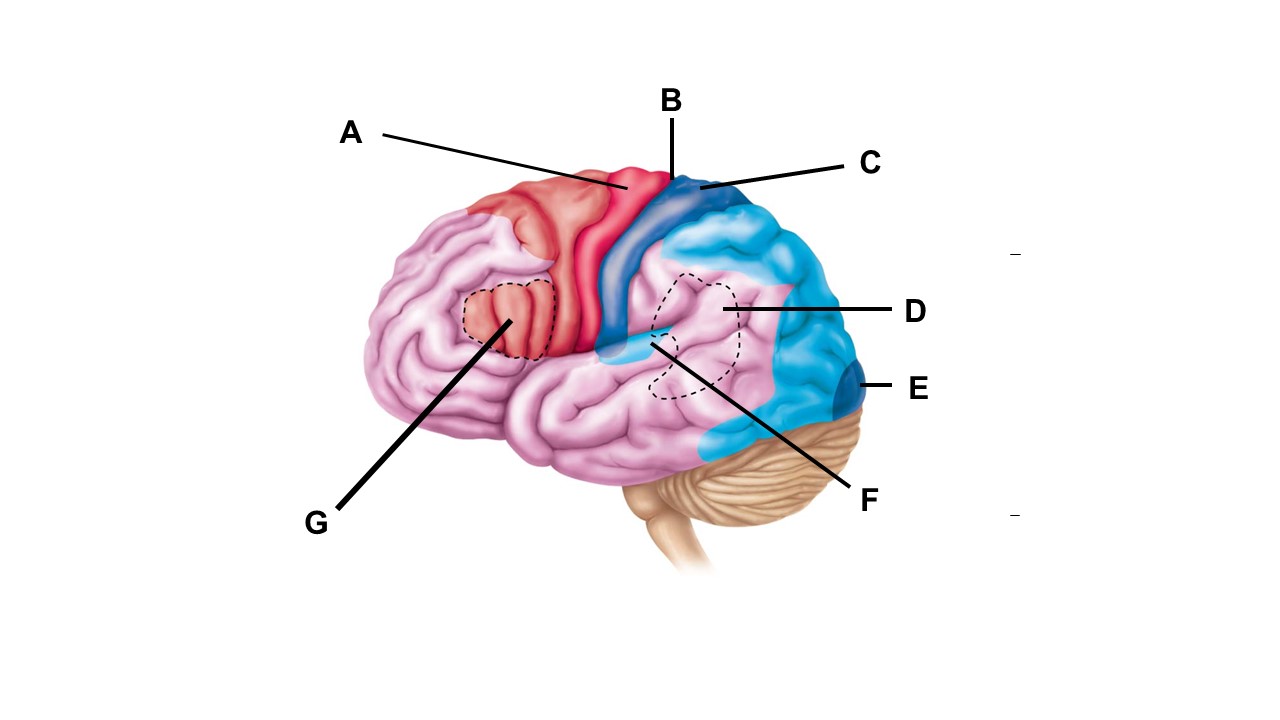
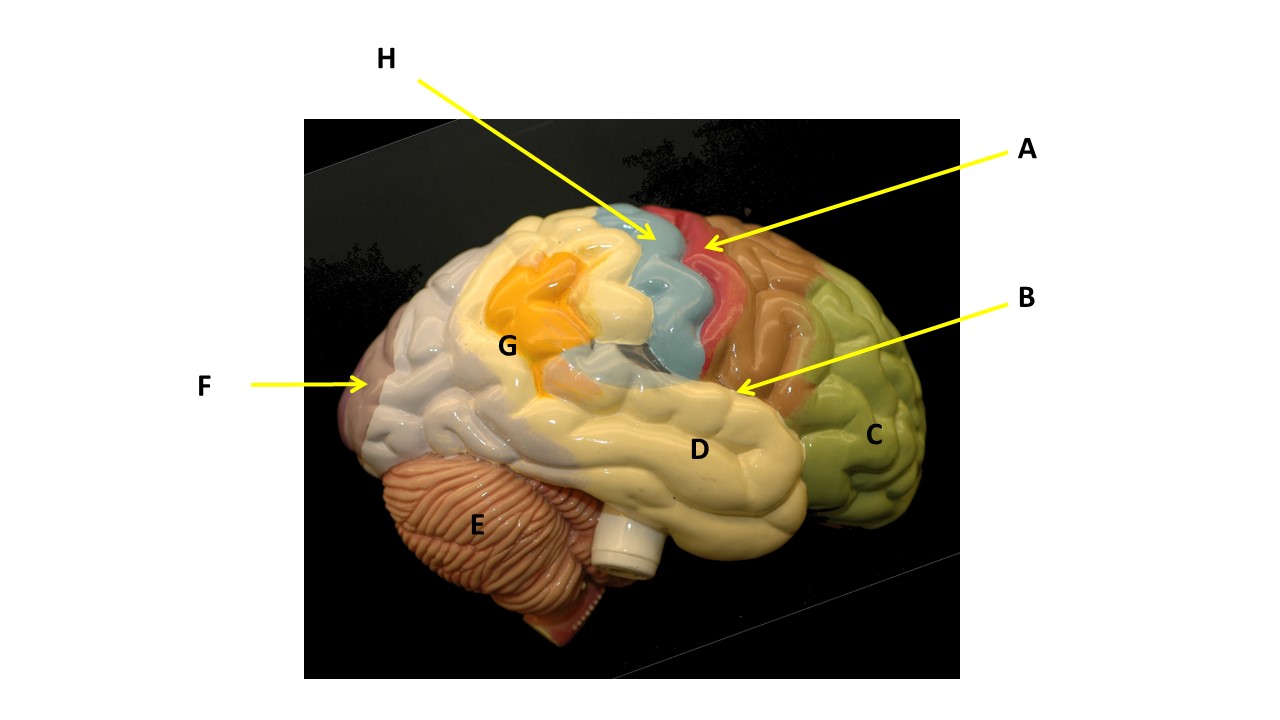
Name A
Primary motor cortex
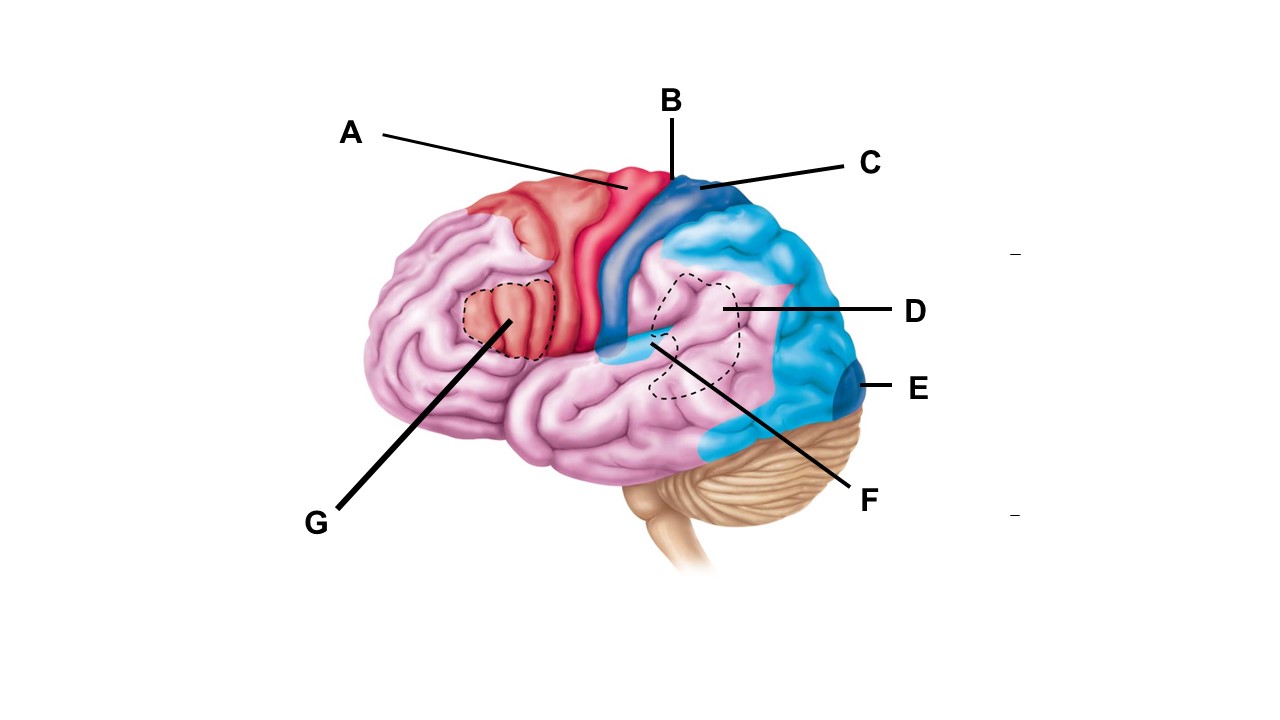
Name B
Central Sulcus
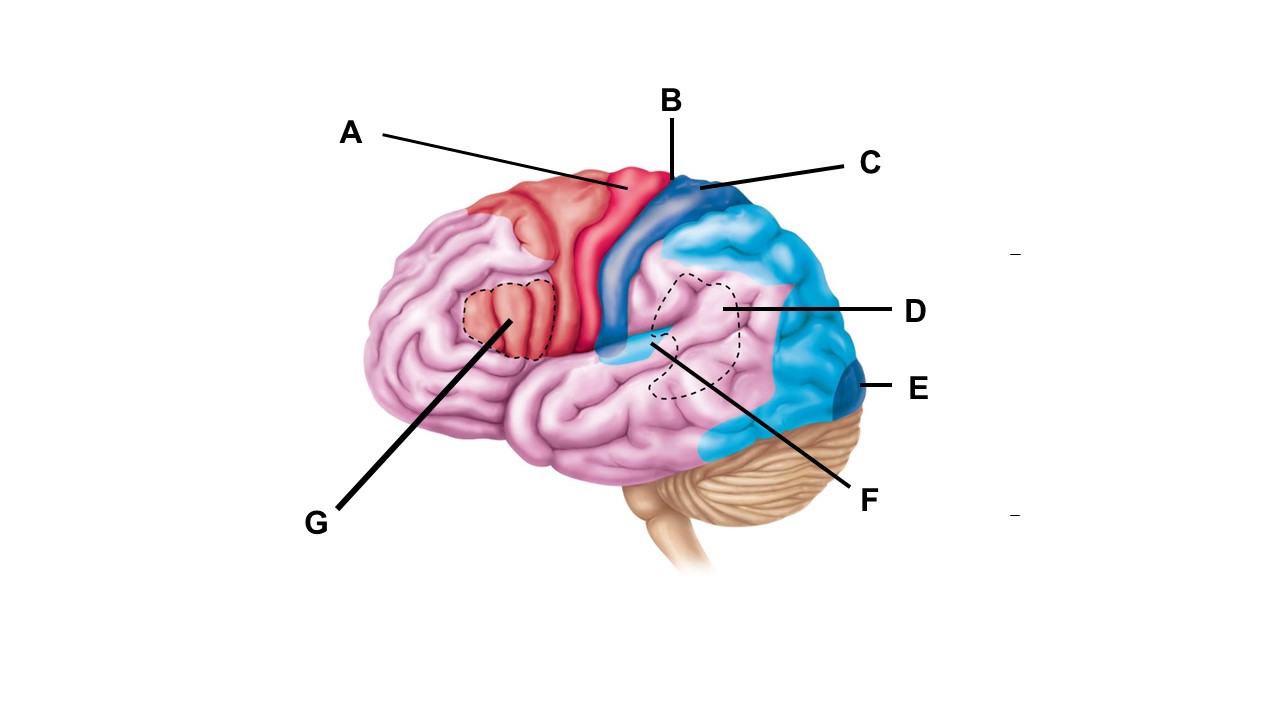
Name C
Primary somatosensory cortex
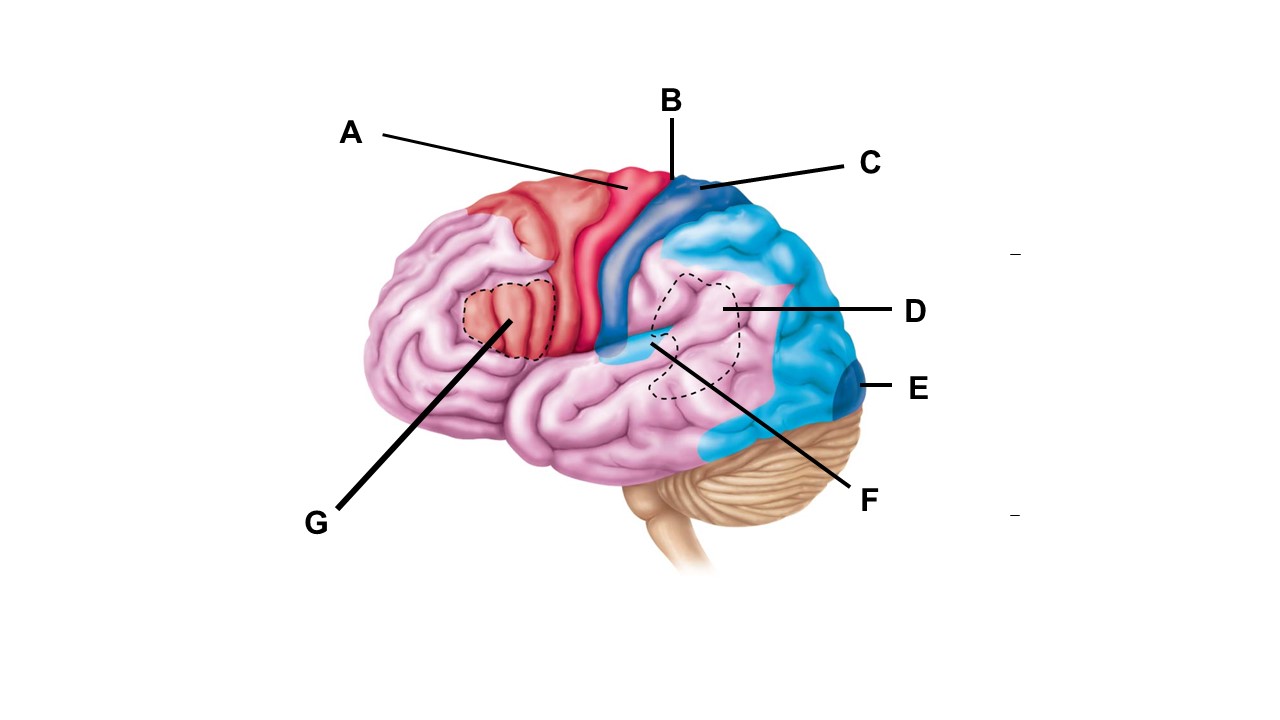
Name D
Wernicke’s area
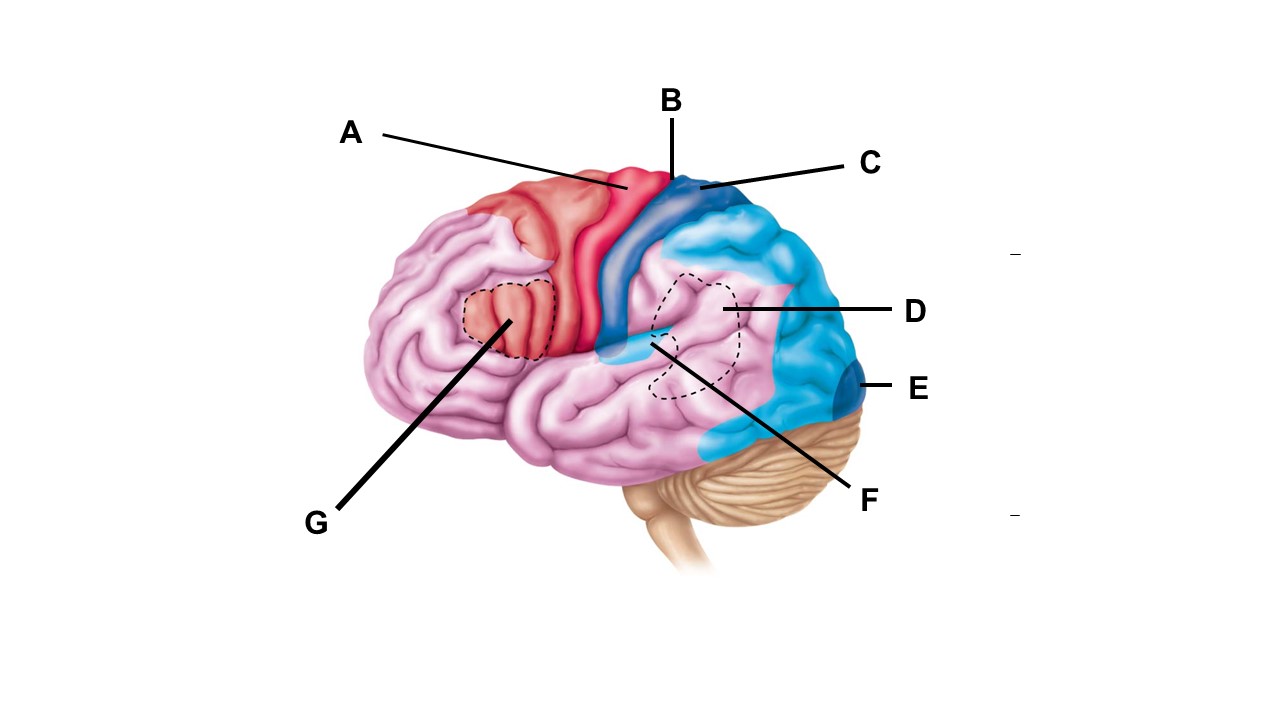
Name E
Visual/Vision area
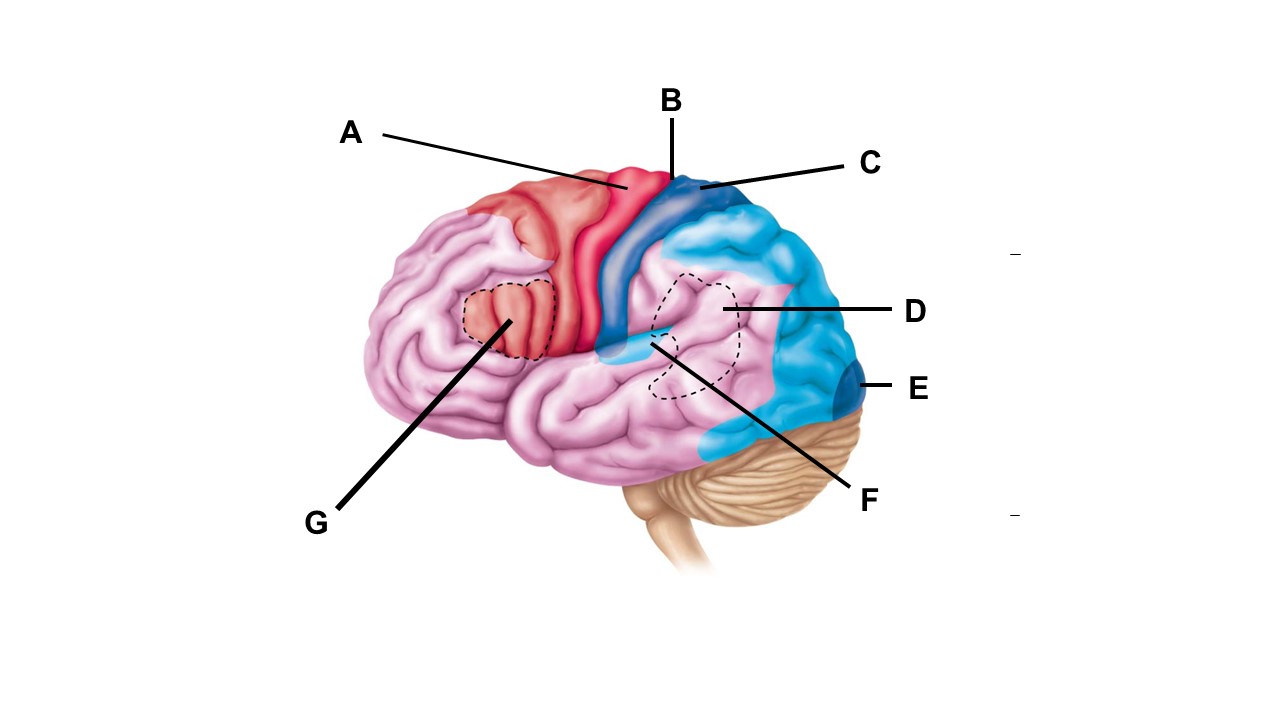
Name F
Auditory/Hearing area
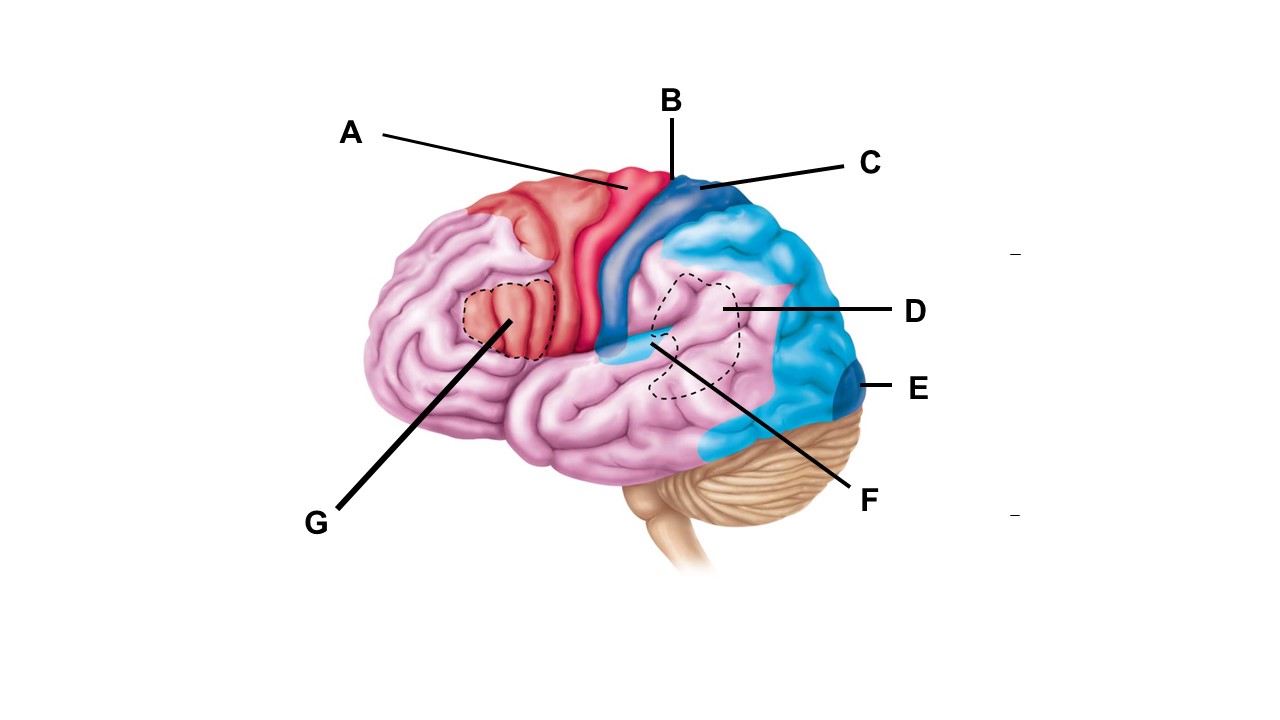
Name G
Broca’s area (motor speech)
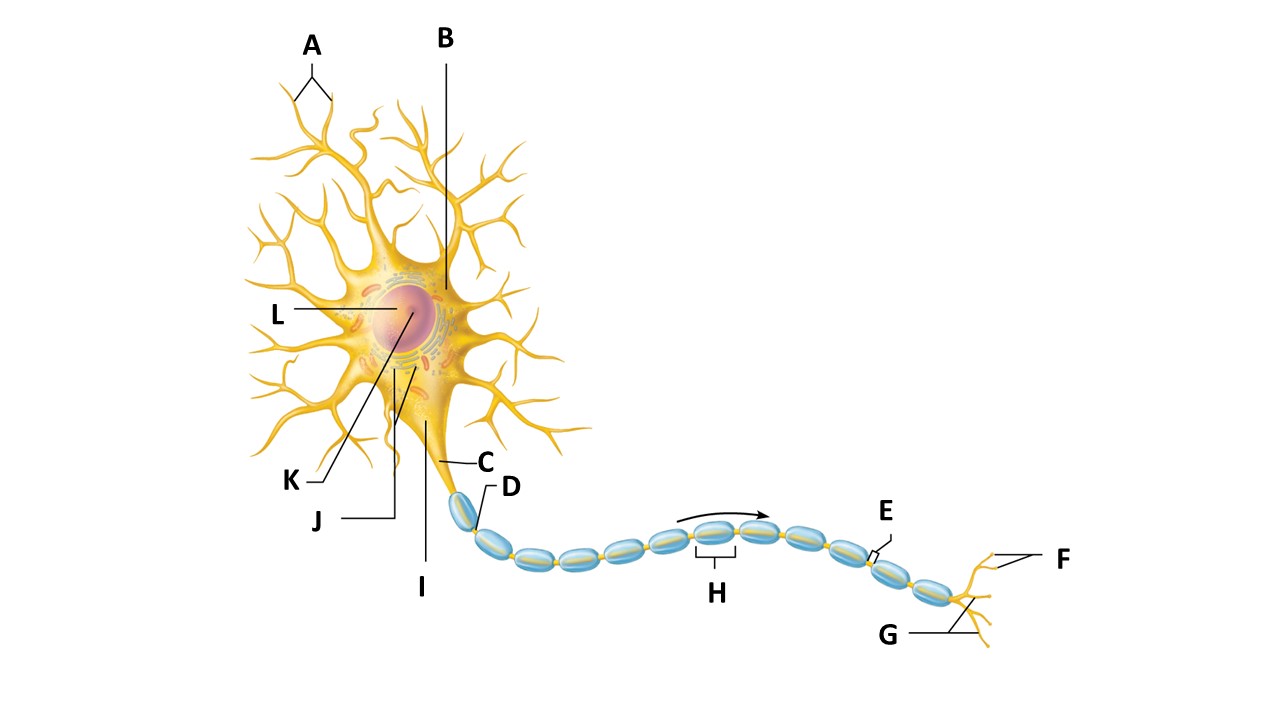
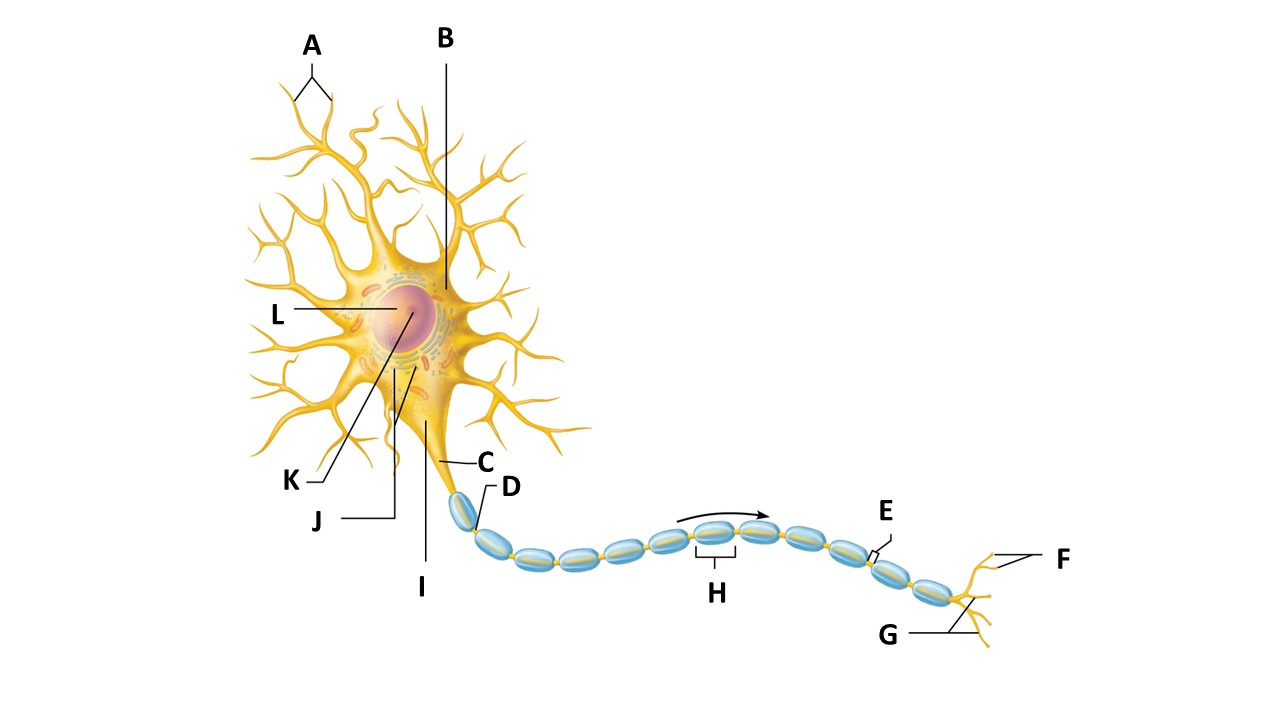
Name A
Dendrites
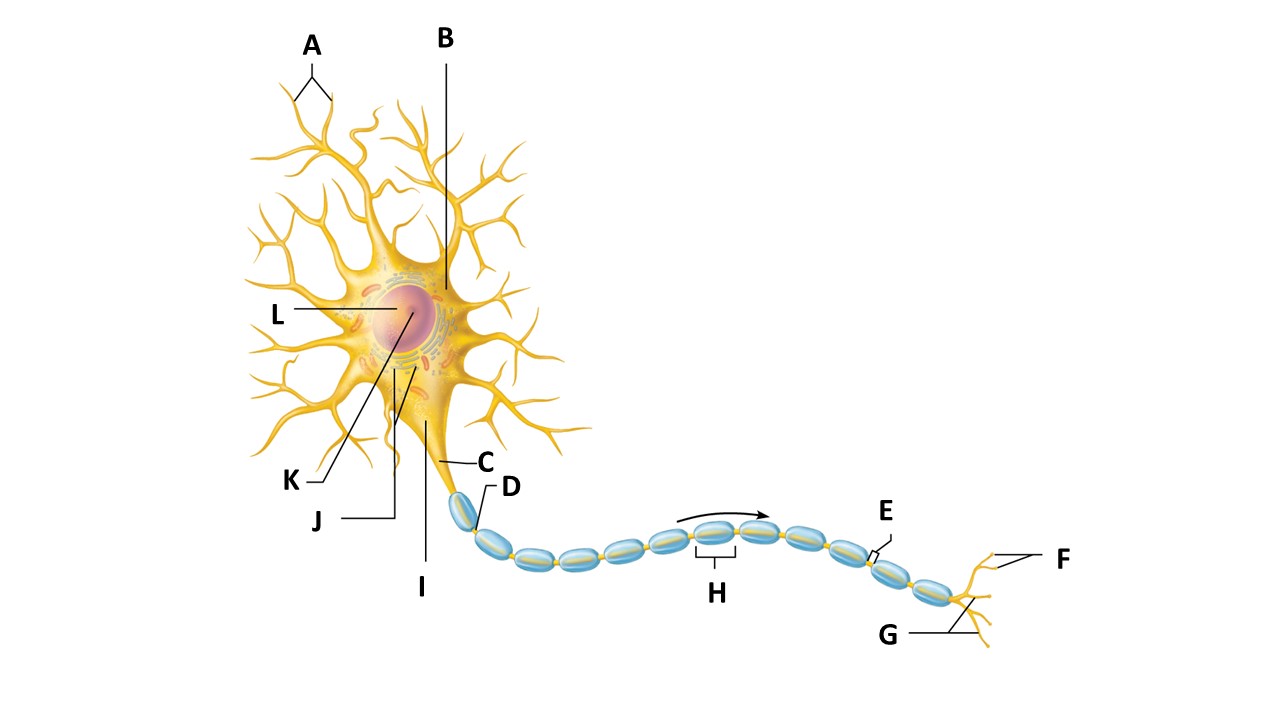
Name B
Cell Body
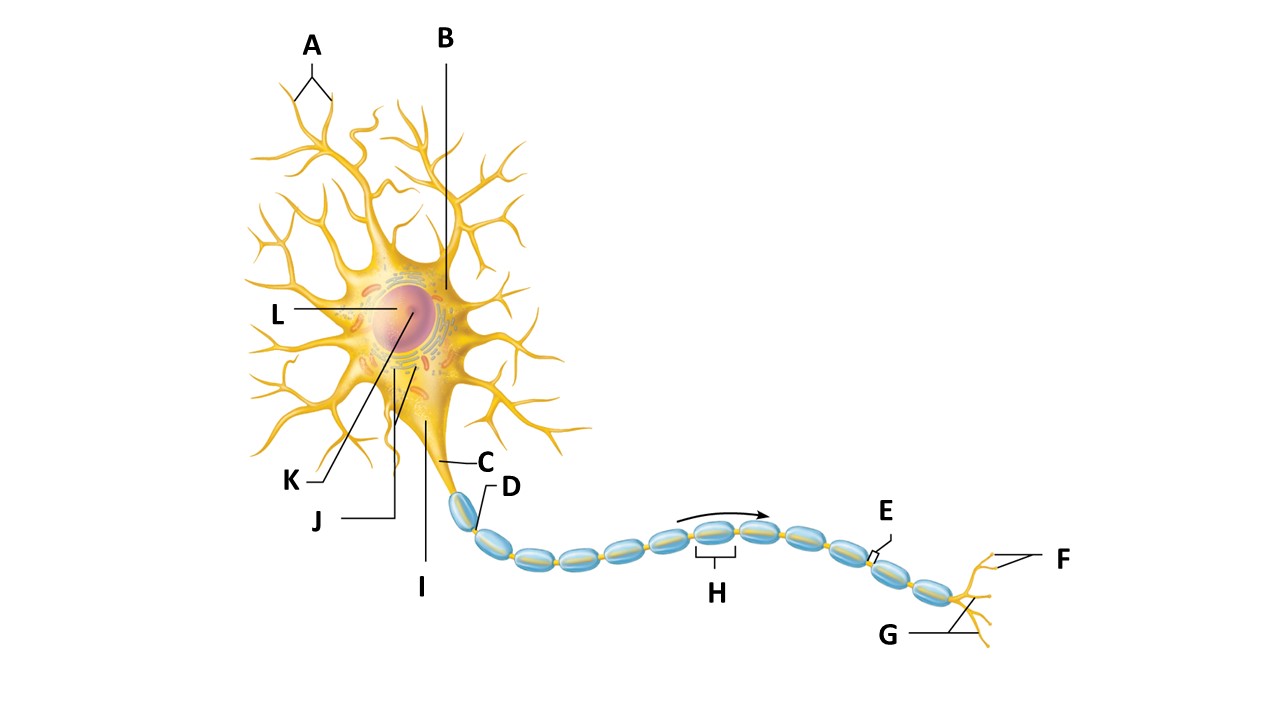
Name C
Axon
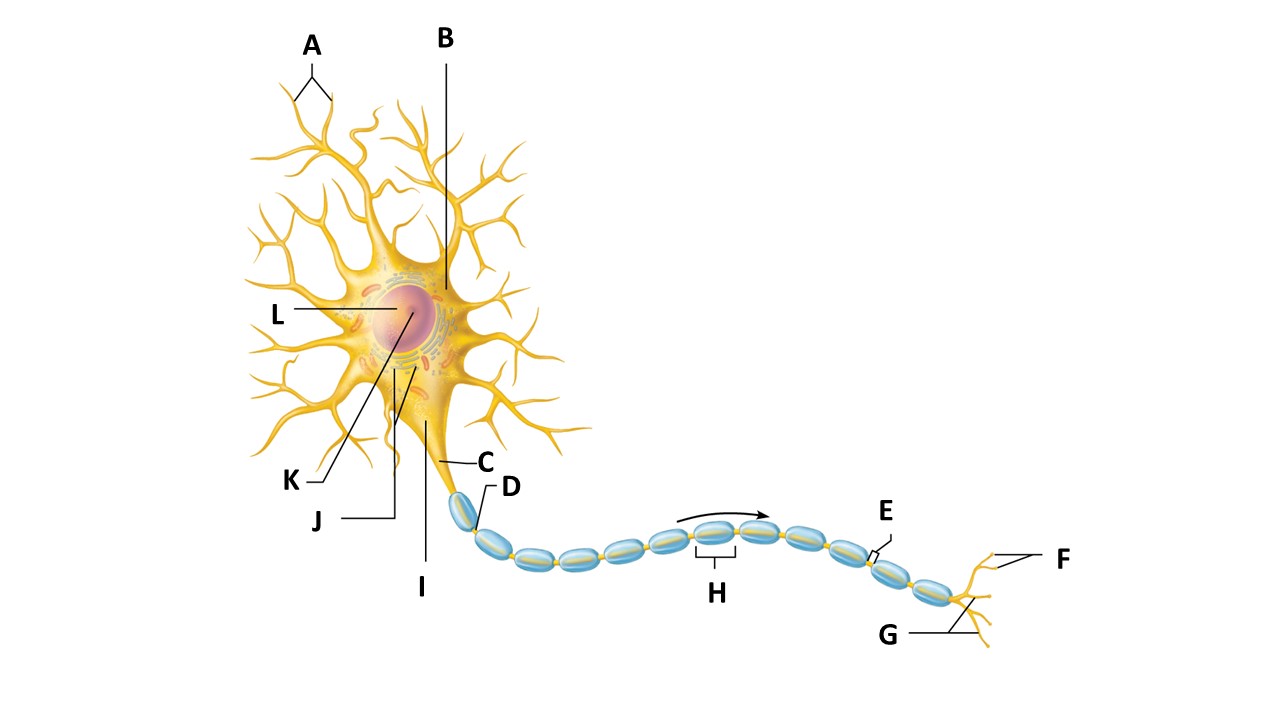
Name E
Node of Ranvier
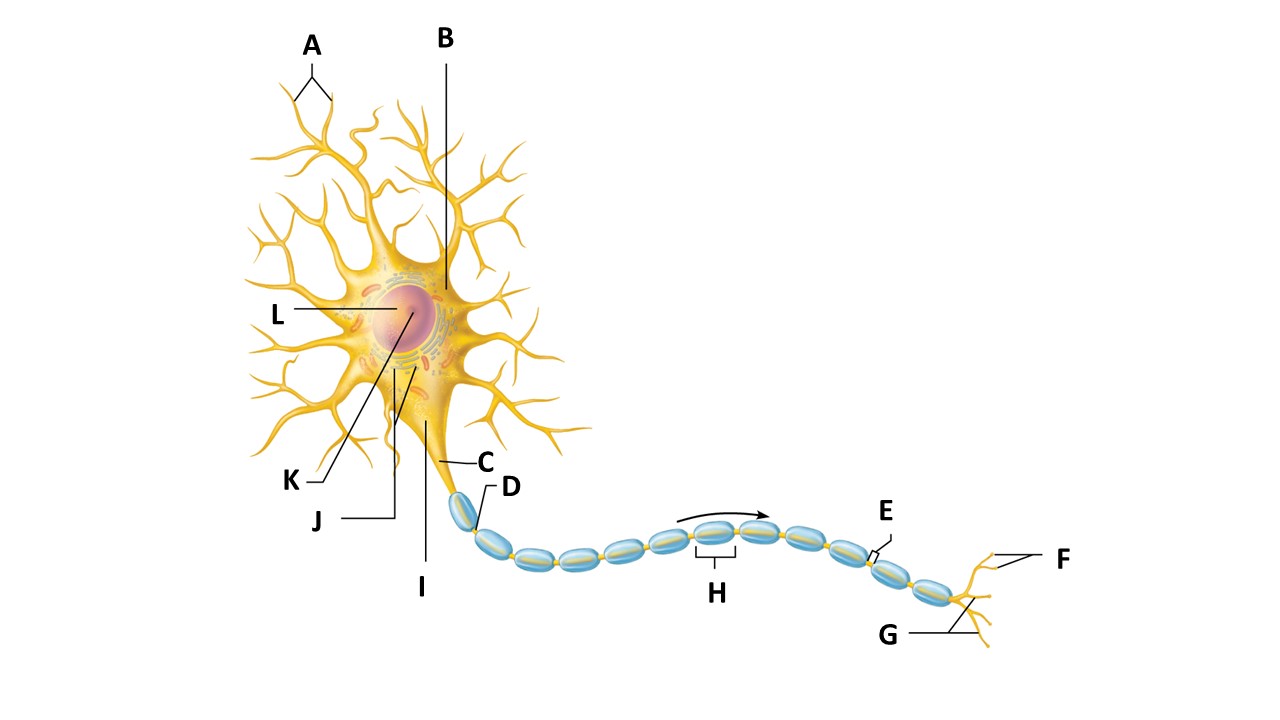
Name F
Axon terminals
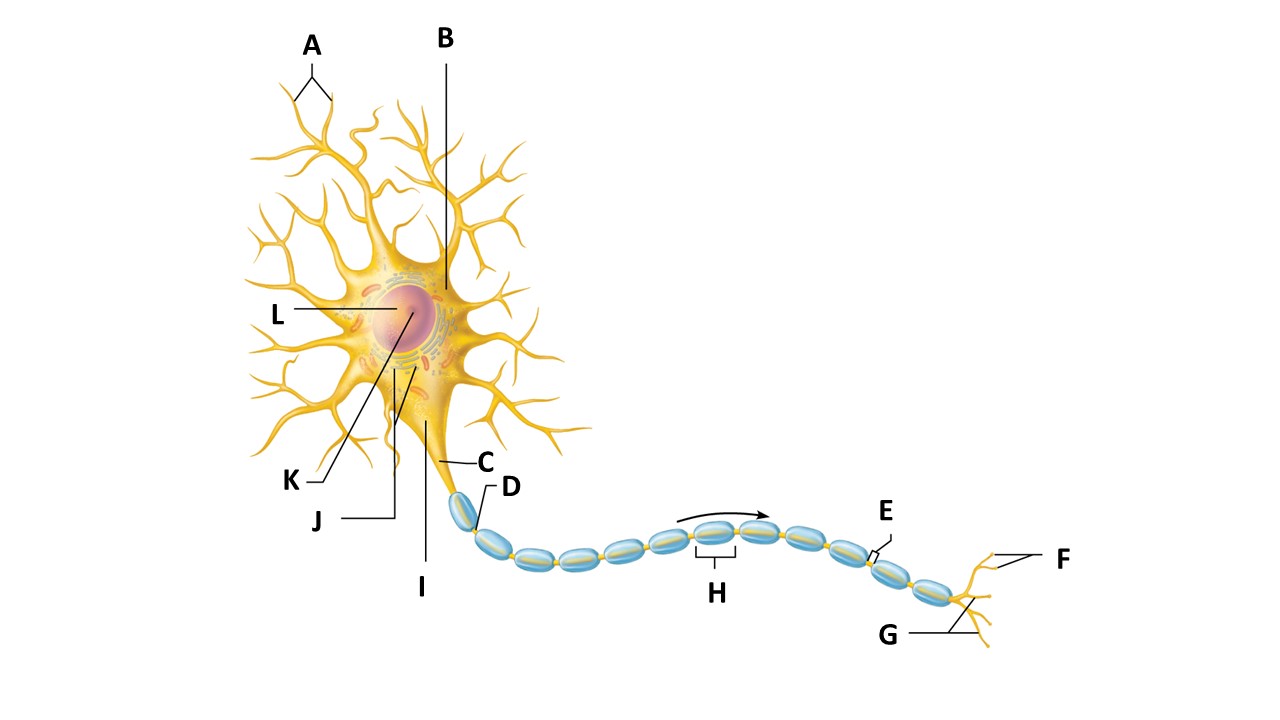
Name G
Terminal branches
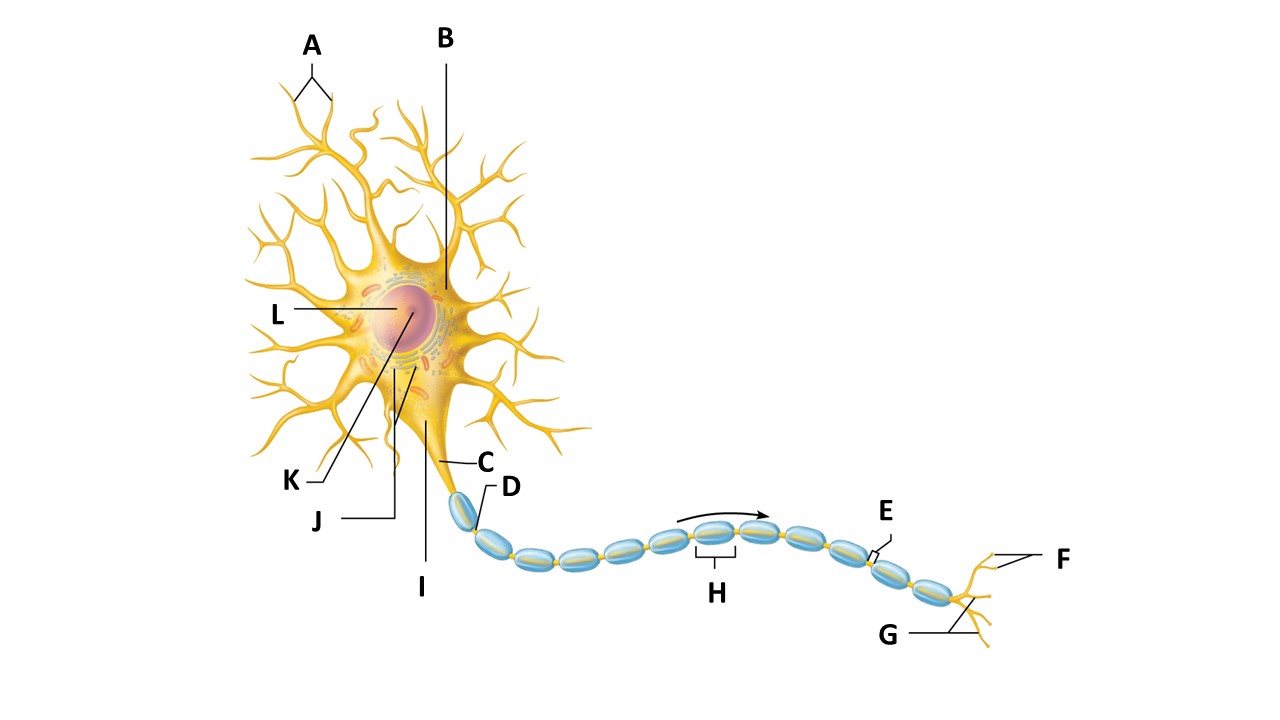
Name H
Schwann cell
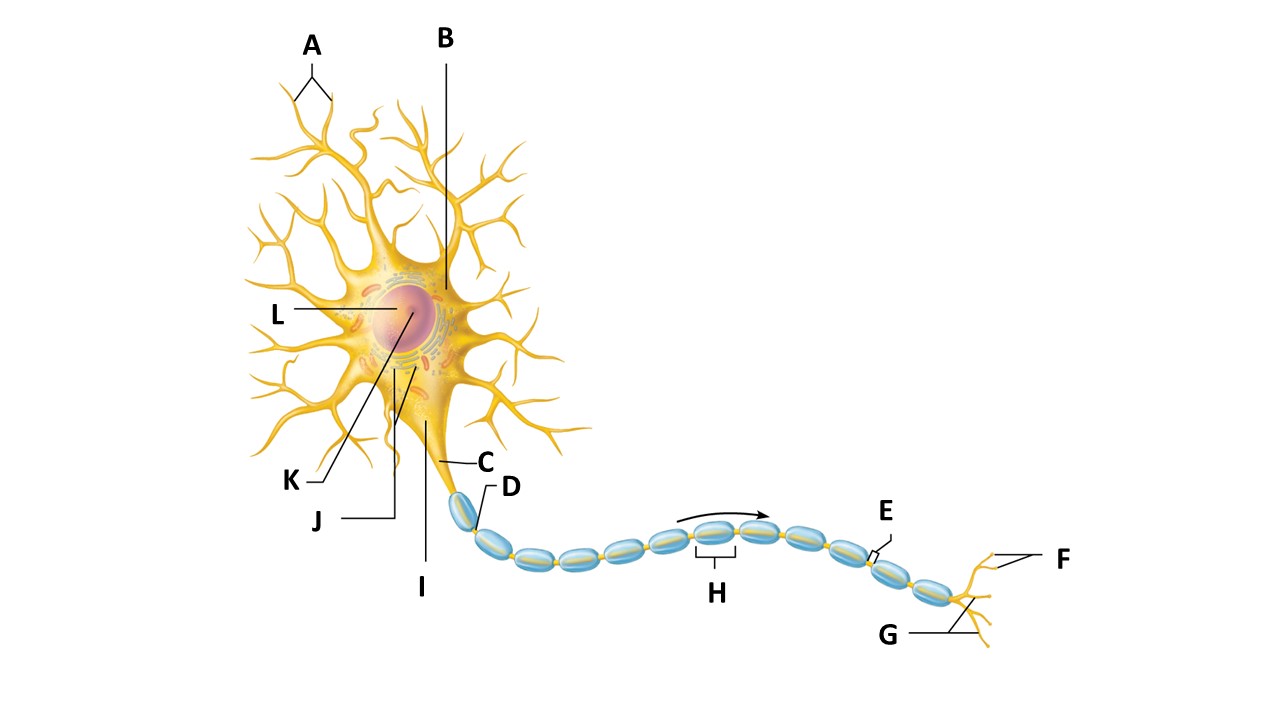
Name I
Axon hillock
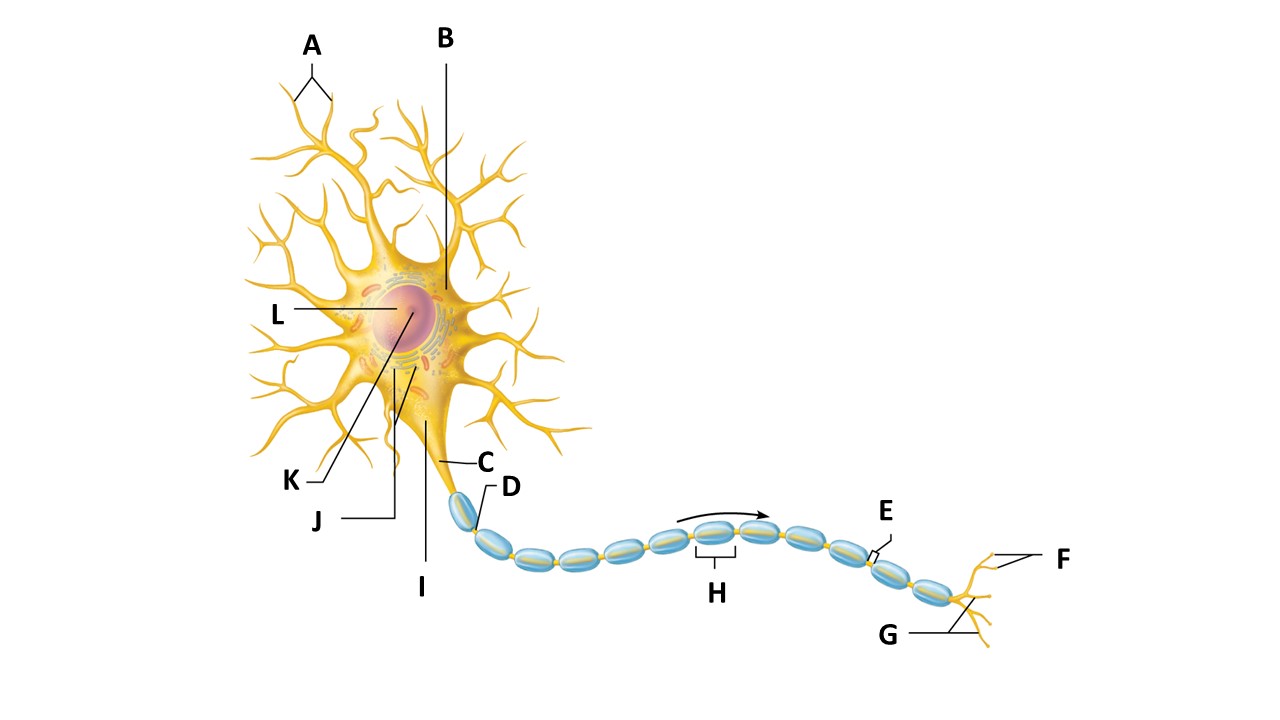
Name J
Nissl bodies
Name K
Nucleus
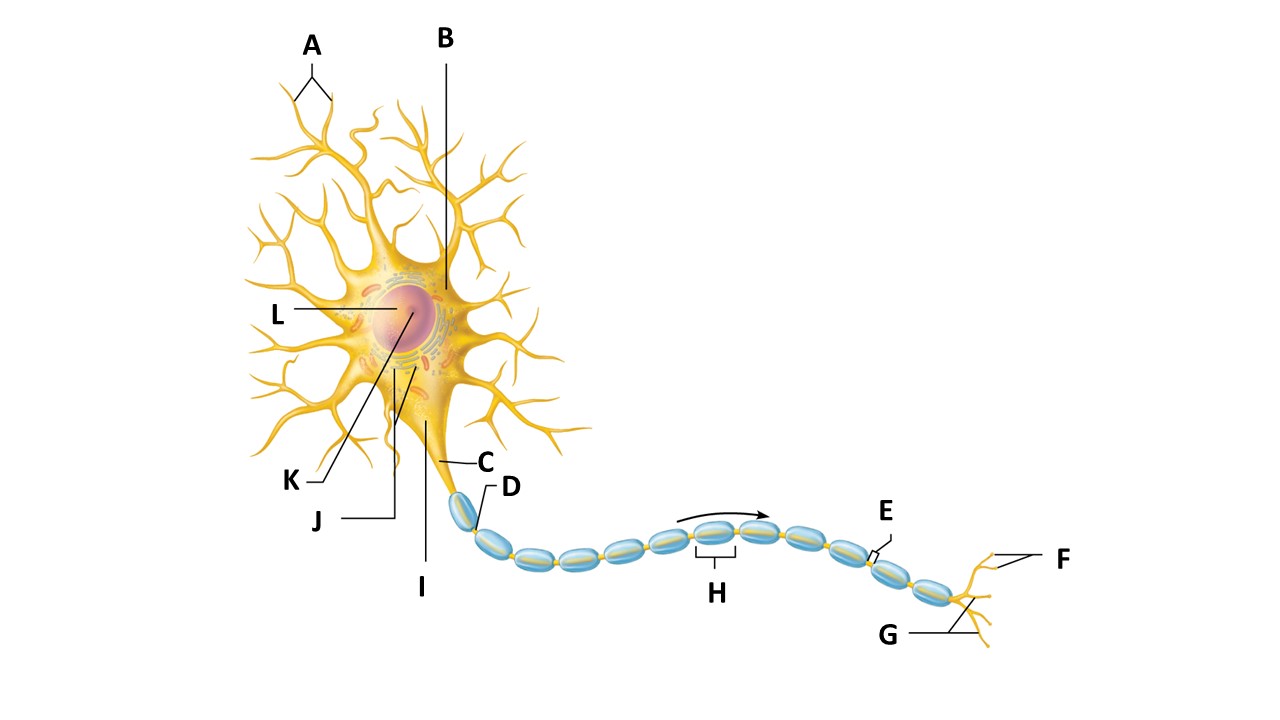
Name L
Nucleus
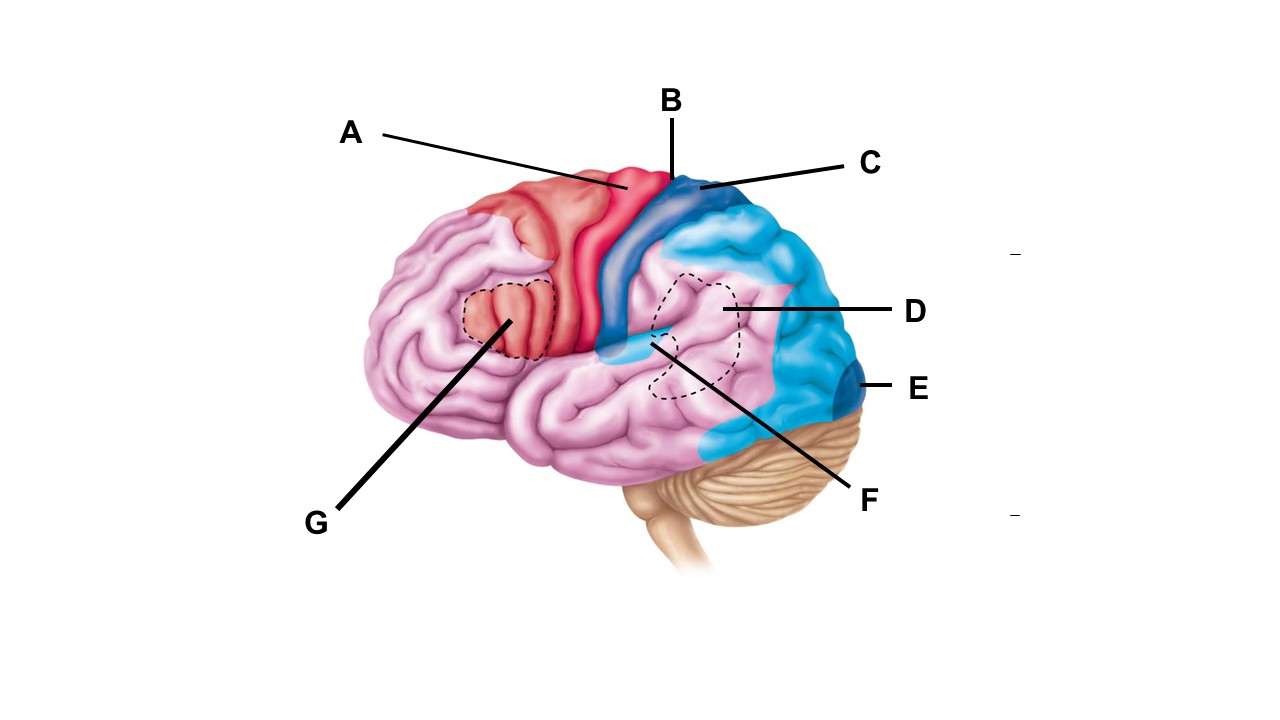
Name the raised area at the tip of line A.
Precentral Gyrus
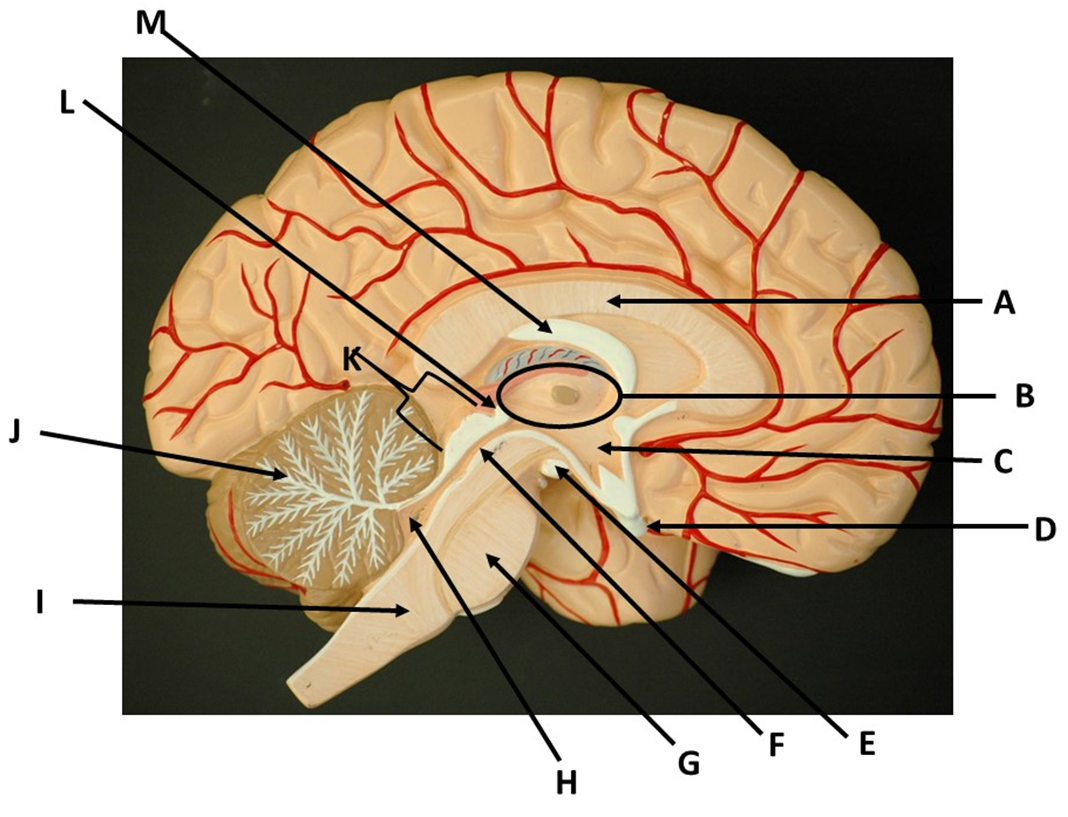
What is the function of the structure labeled J?
produces smooth, coordinated skeletal muscle activity
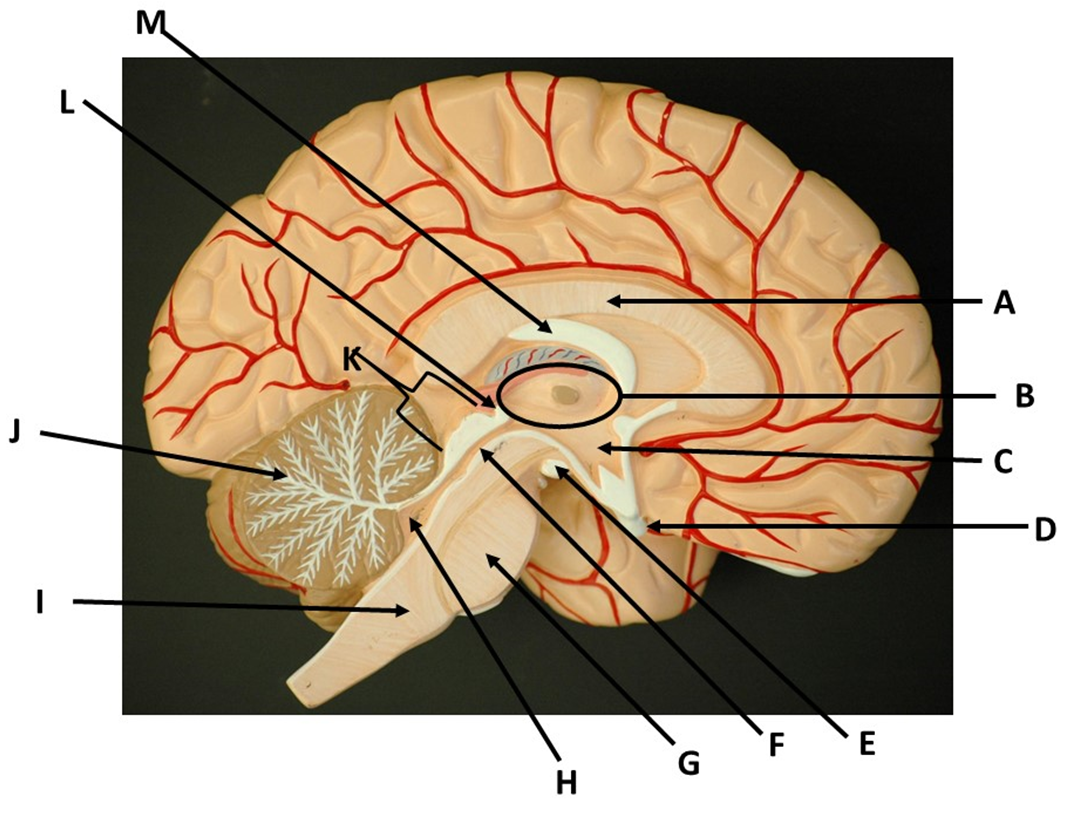
What is the function of the structure labeled I?
assists in controlling heart rate, blood vessel diameter, vomiting
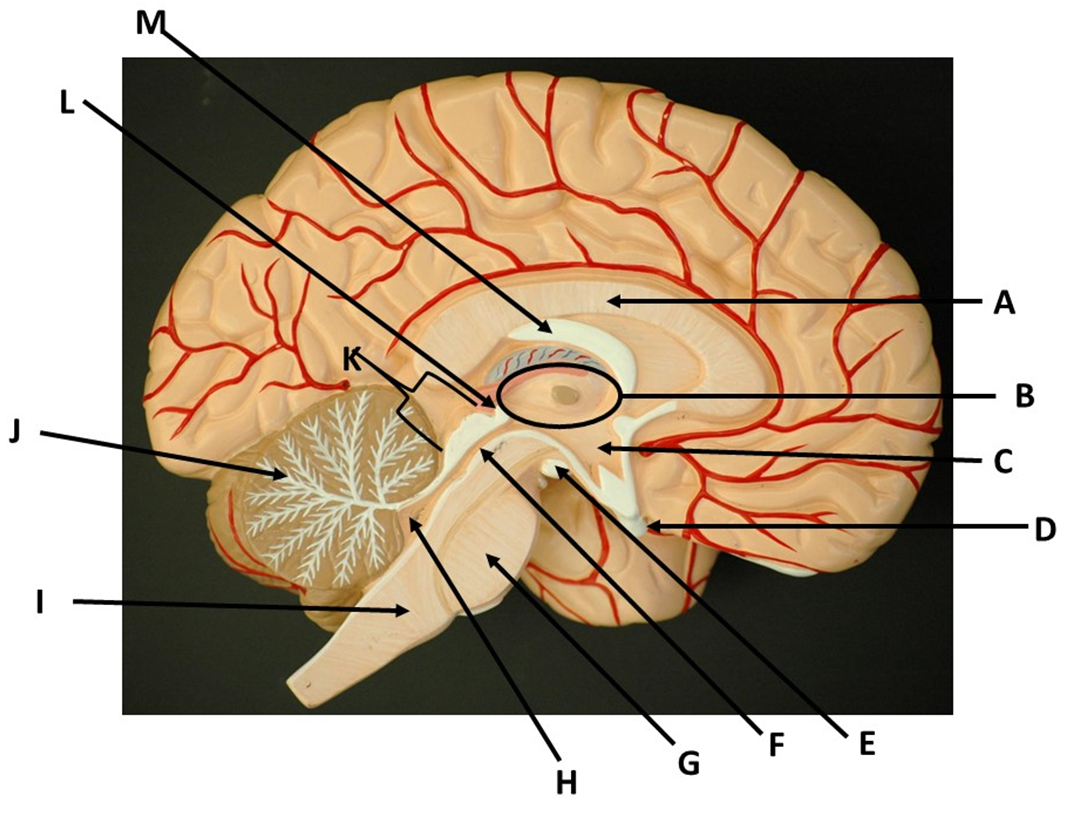
What is the function of the structure labeled C?
important autonomic center involved in regulation of body temperature, water balance
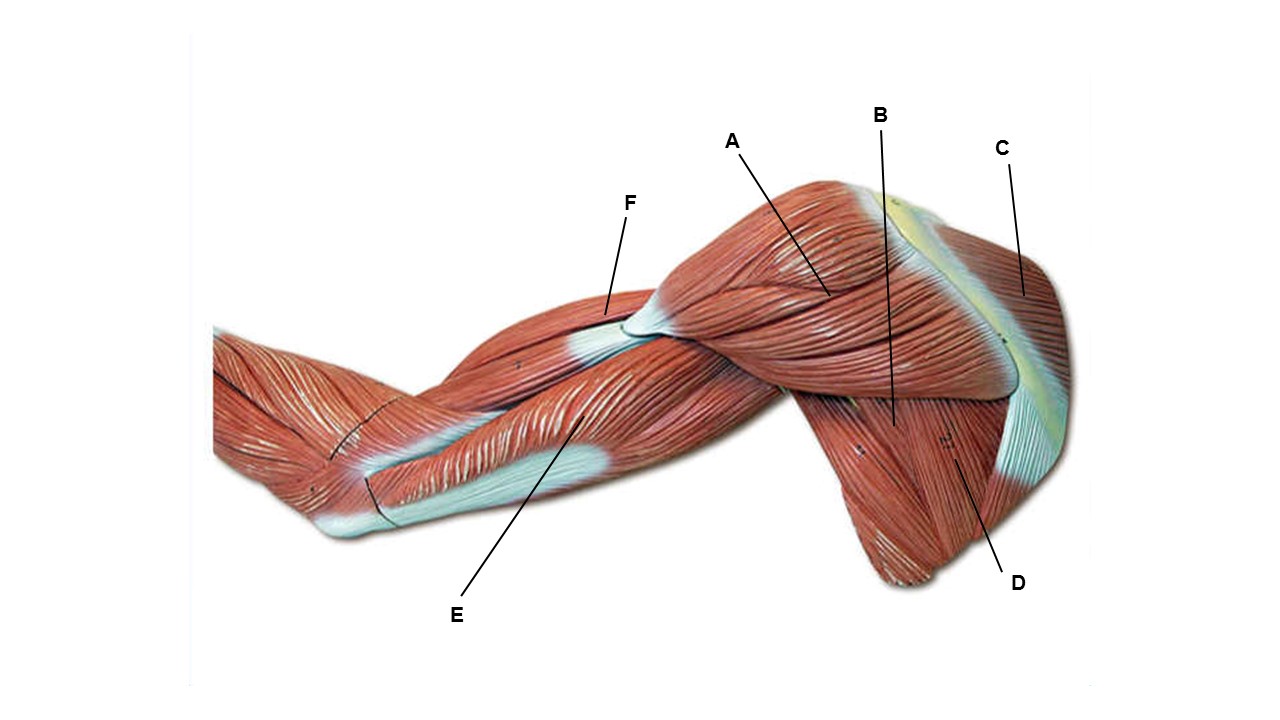
What is the insertion of the muscle labeled D?
Humerus
Name the entire brain structure labeled E.
cerebellum
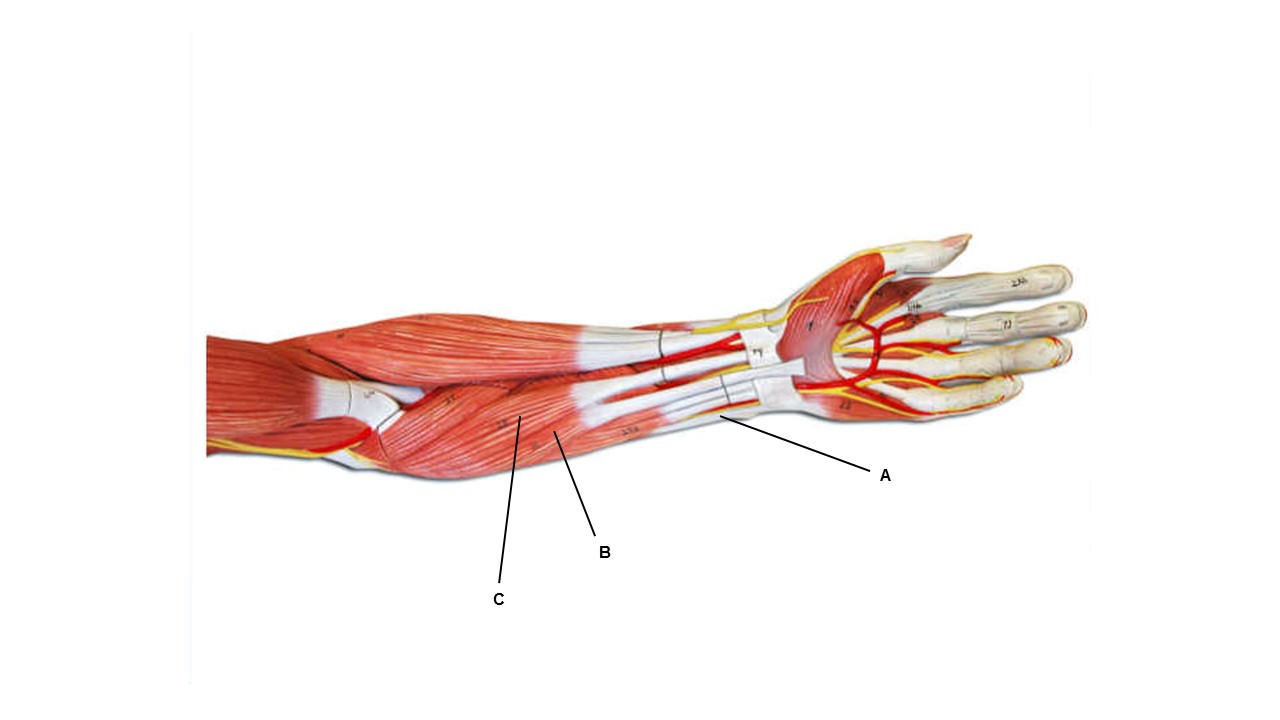
What is the origin of the muscle labeled C.
Humerus
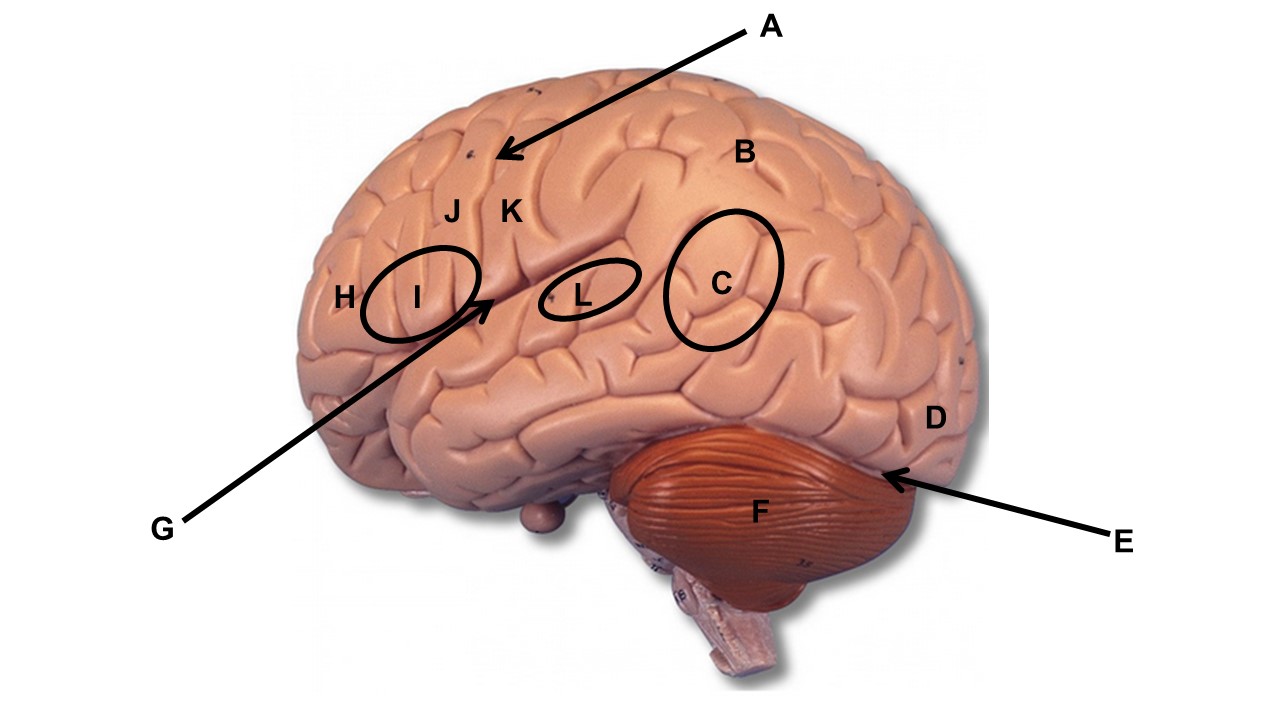
If the superficial area labeled L was damaged the individual would ____.
be deaf
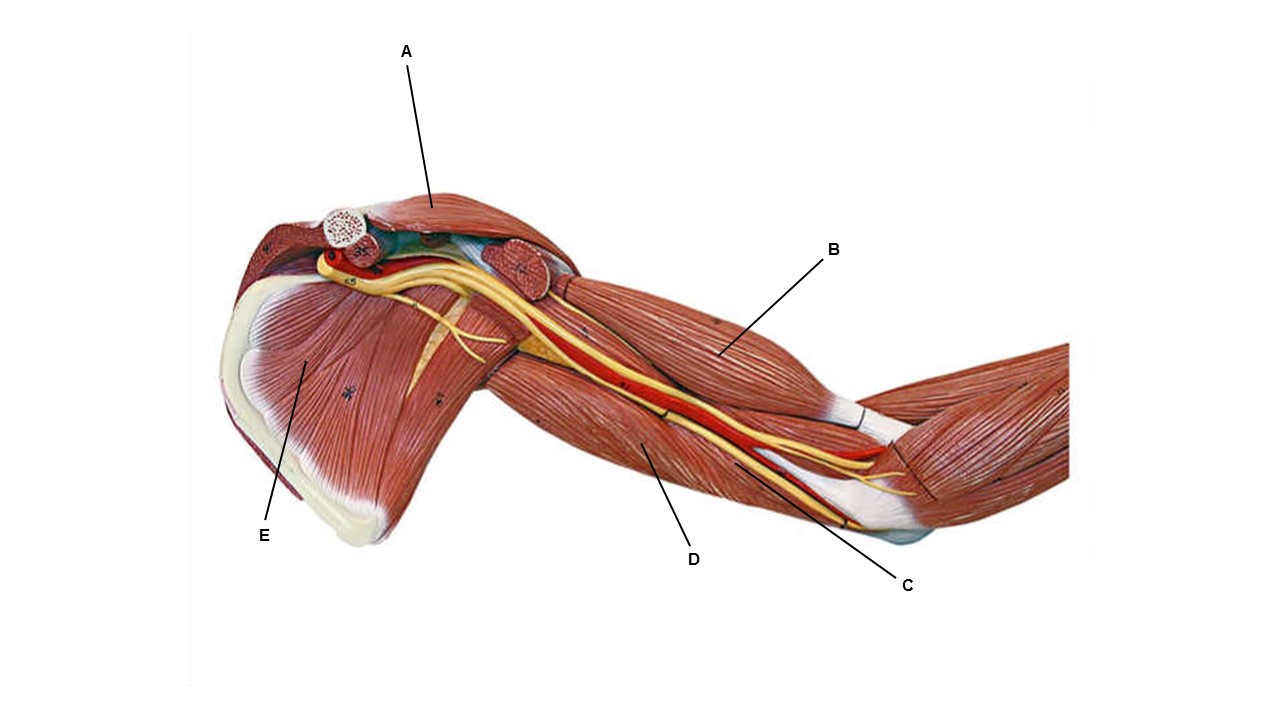
The action of the muscle at the tip of line E is ______.
Rotates the arm medially
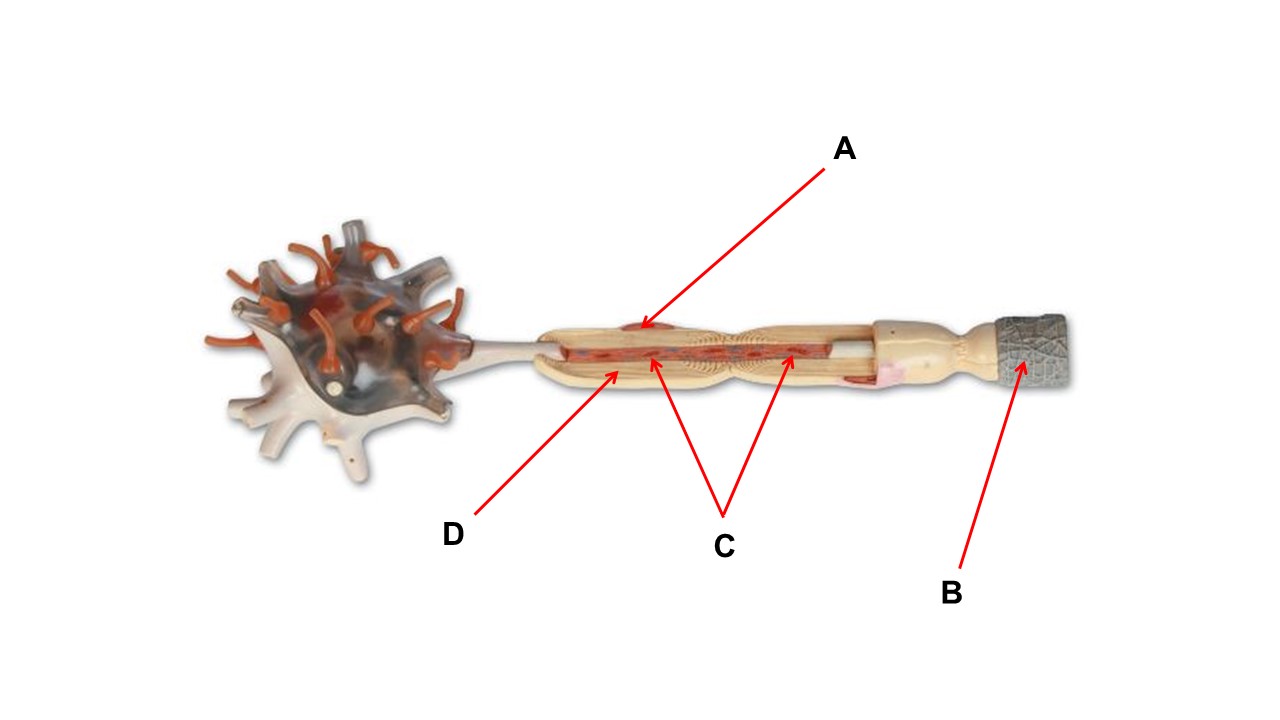
The gray sheath at the tip of arrow B is a(n) ____.
endoneurium
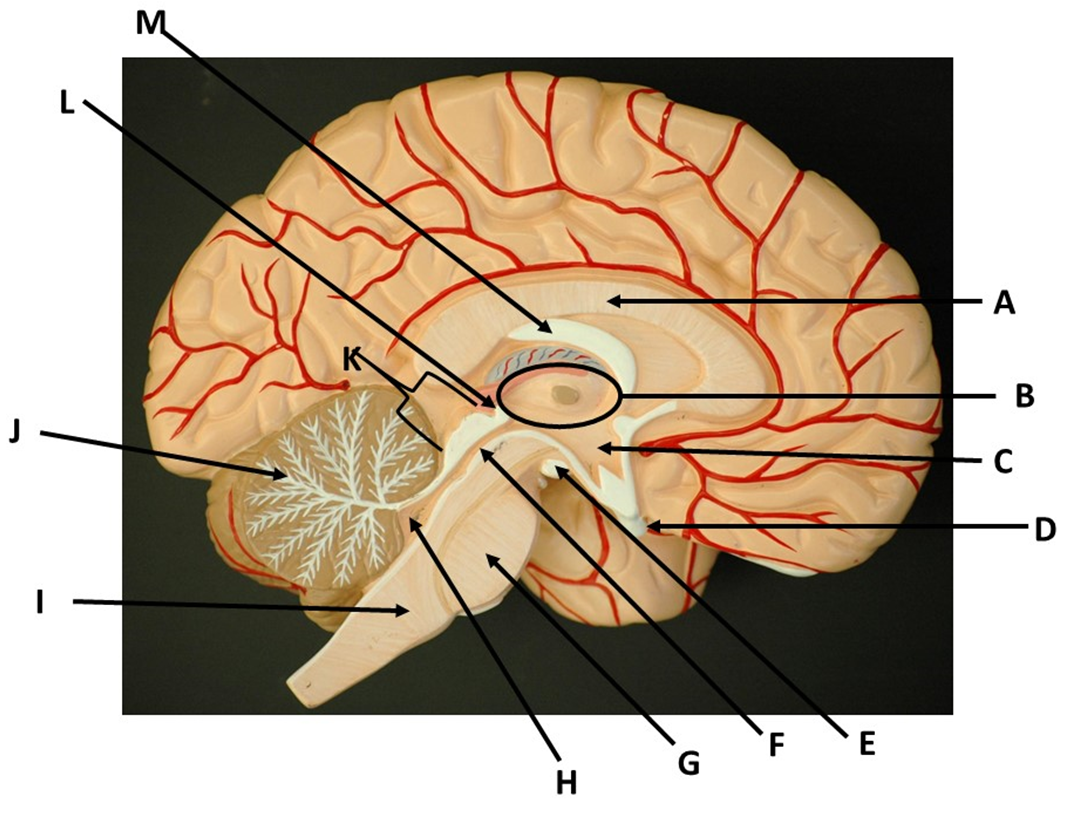
What is the function of the structure labeled B?
relays information coming into the CNS
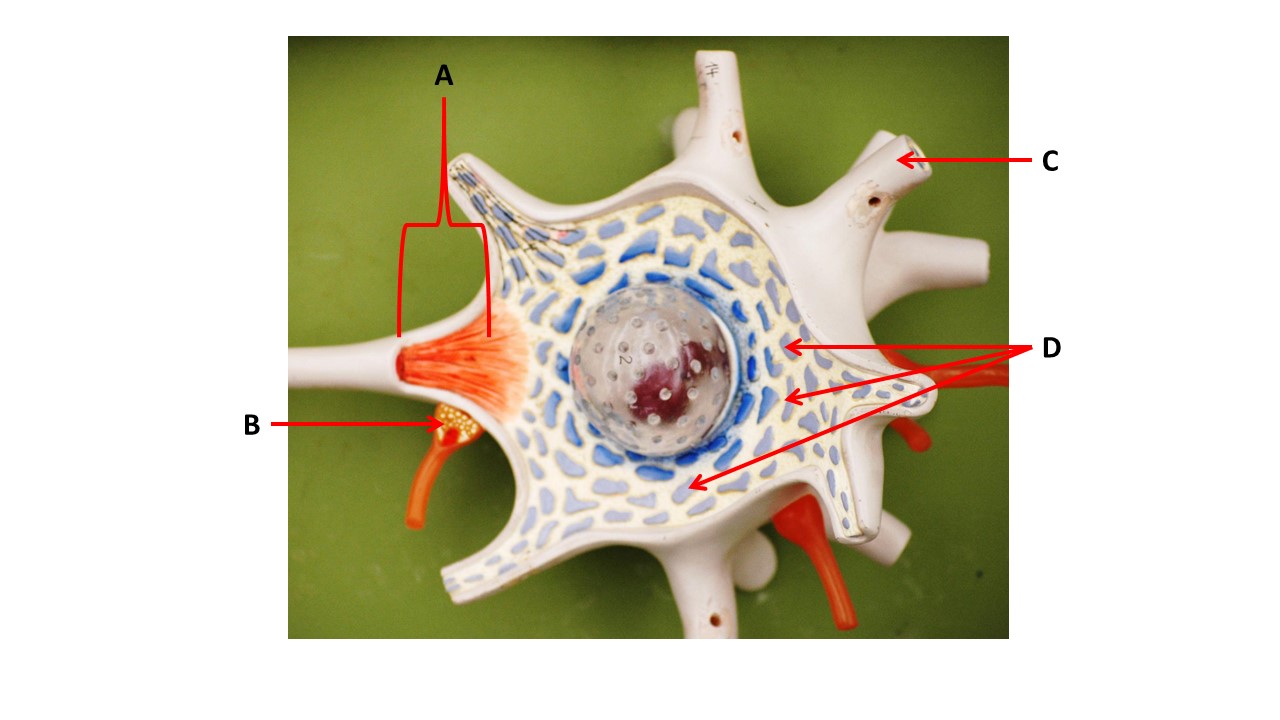
The structure at the tip of arrow B is a(n)
synaptic terminal
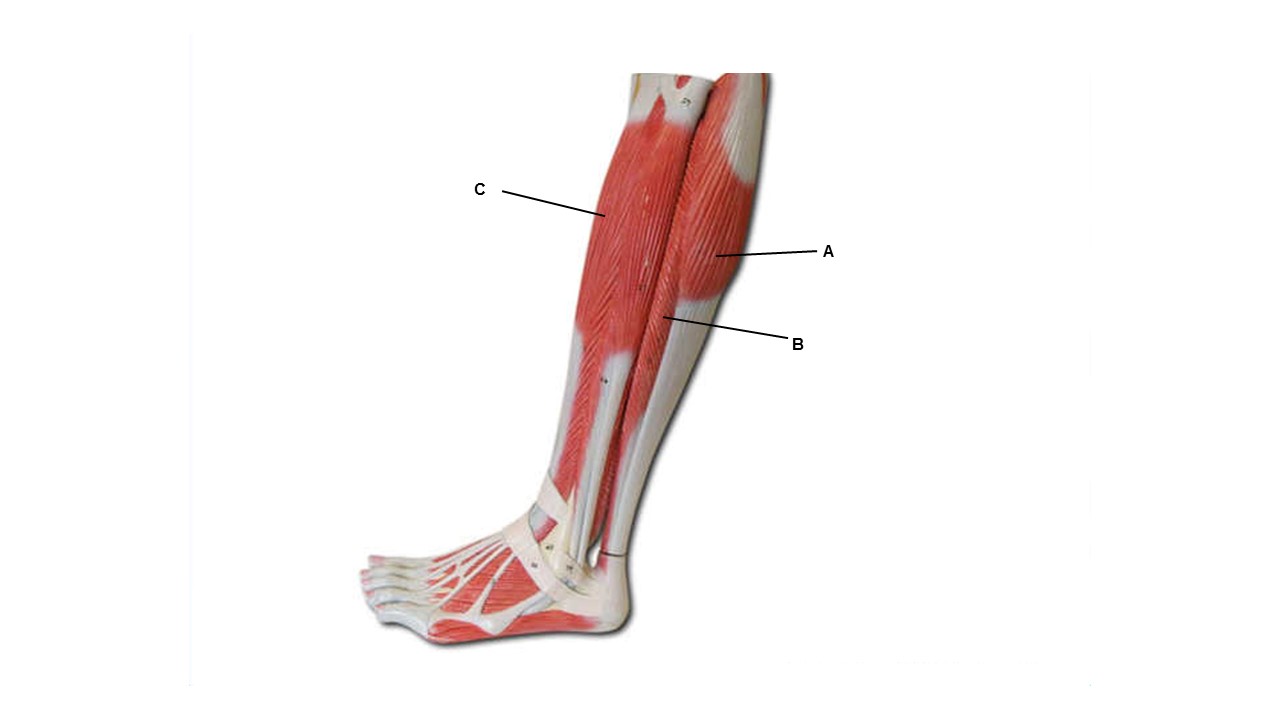
Muscles B and C function as synergistic muscles.
False
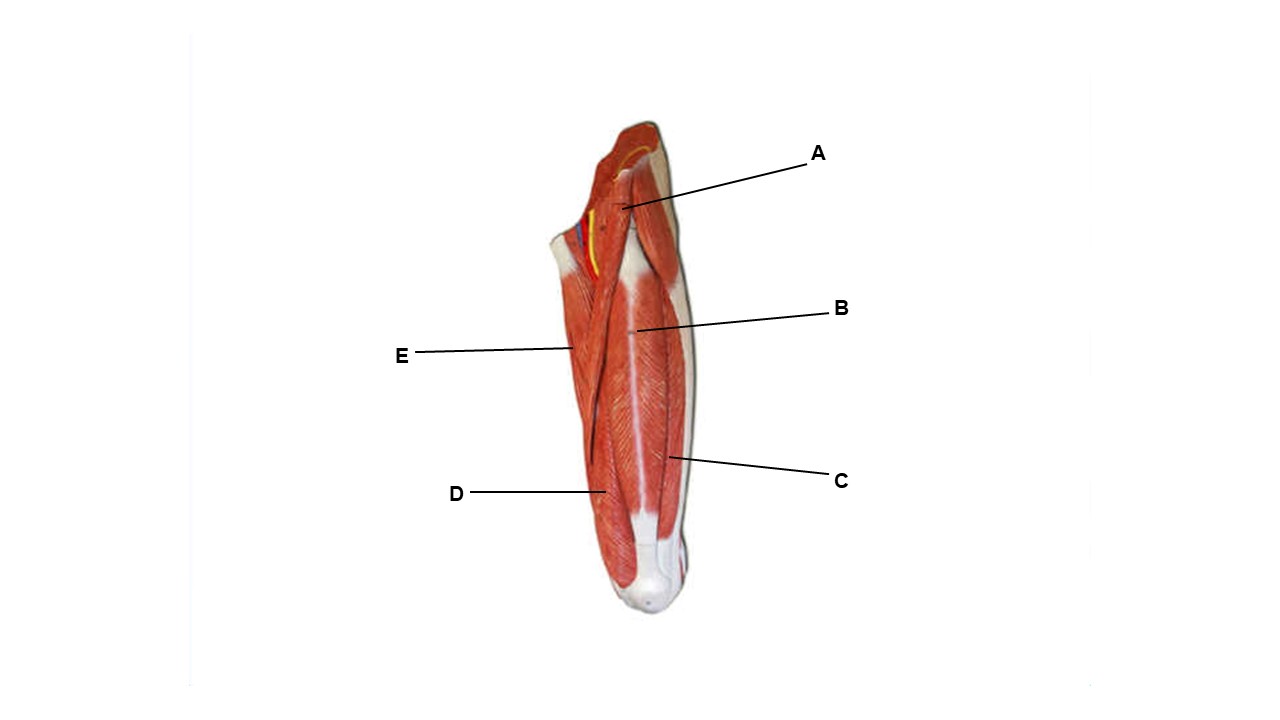
The muscle labeled B inserts on the ______.
tibia
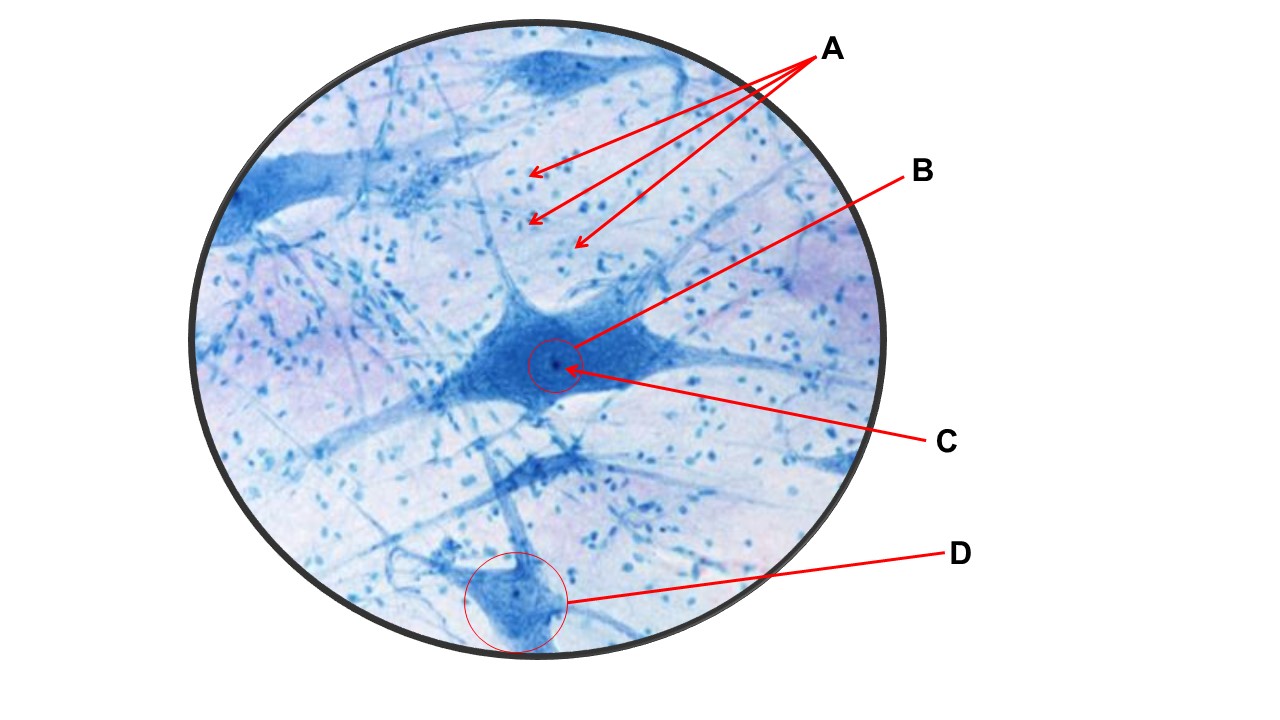
The entire structure within circle B is called the _____.
nucleus
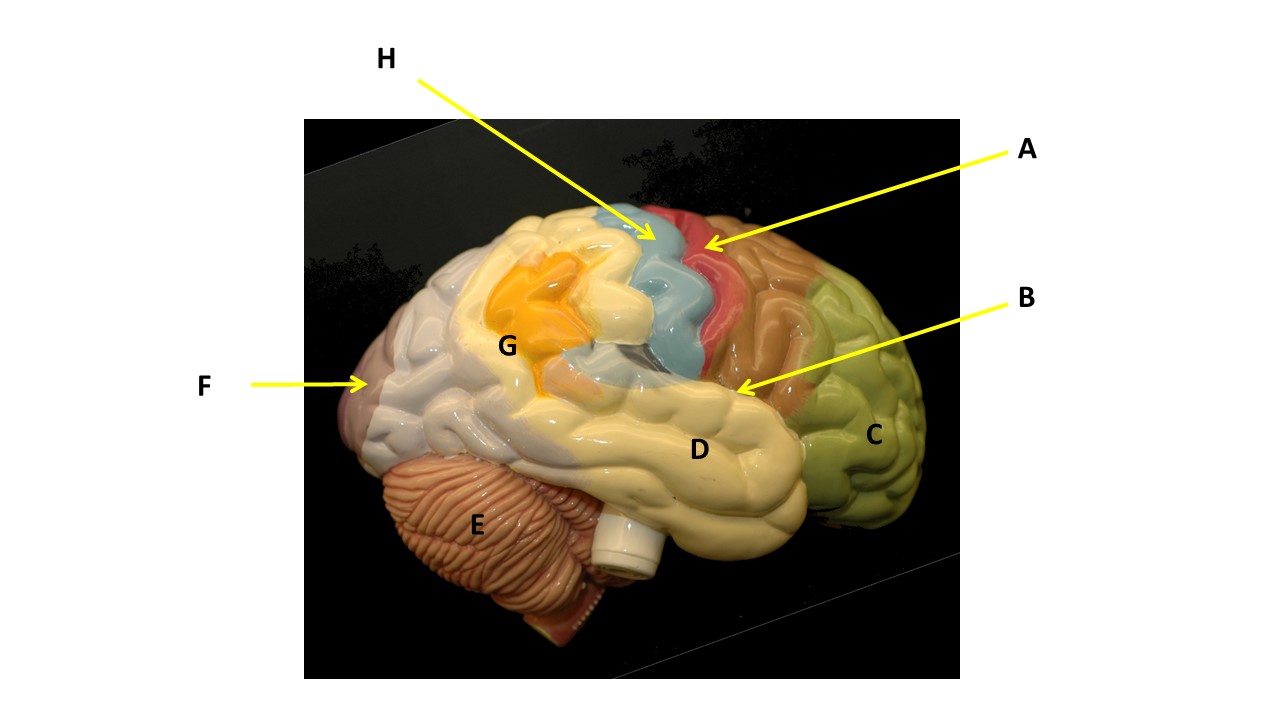
Name the lobe of the brain labeled G.
parietal
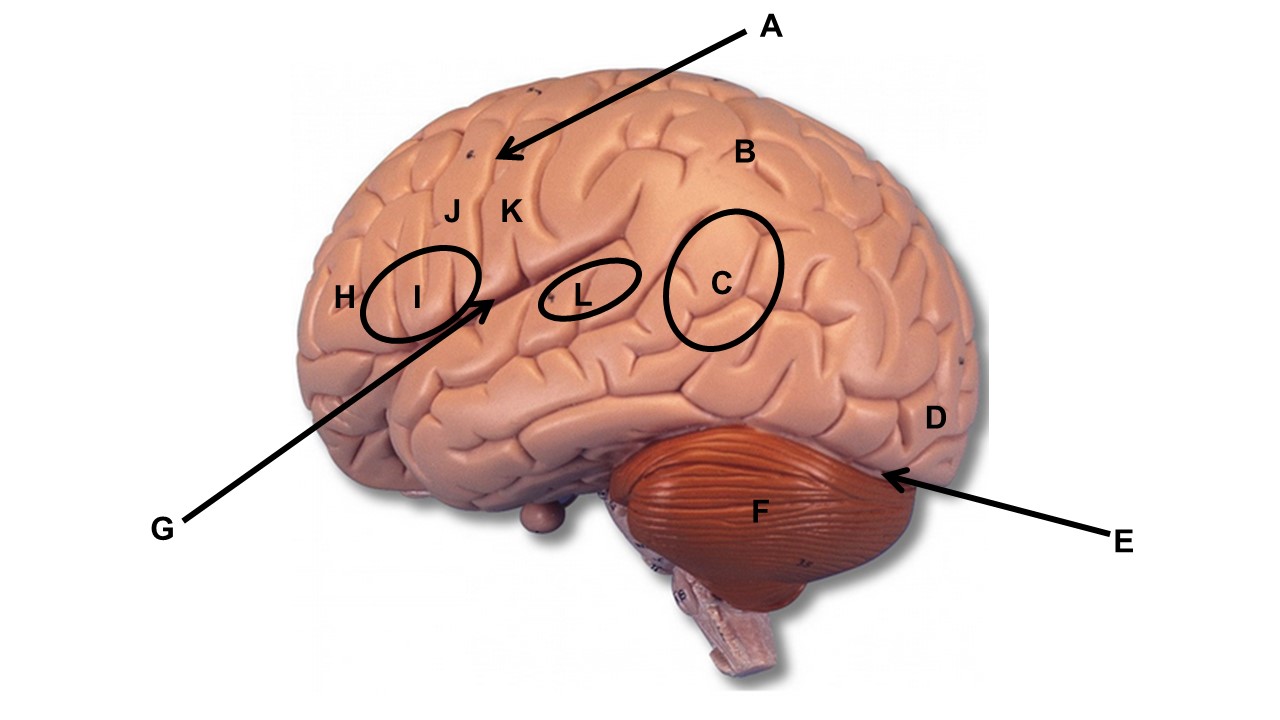
Name the deep groove at the tip of arrow E
transverse fissure
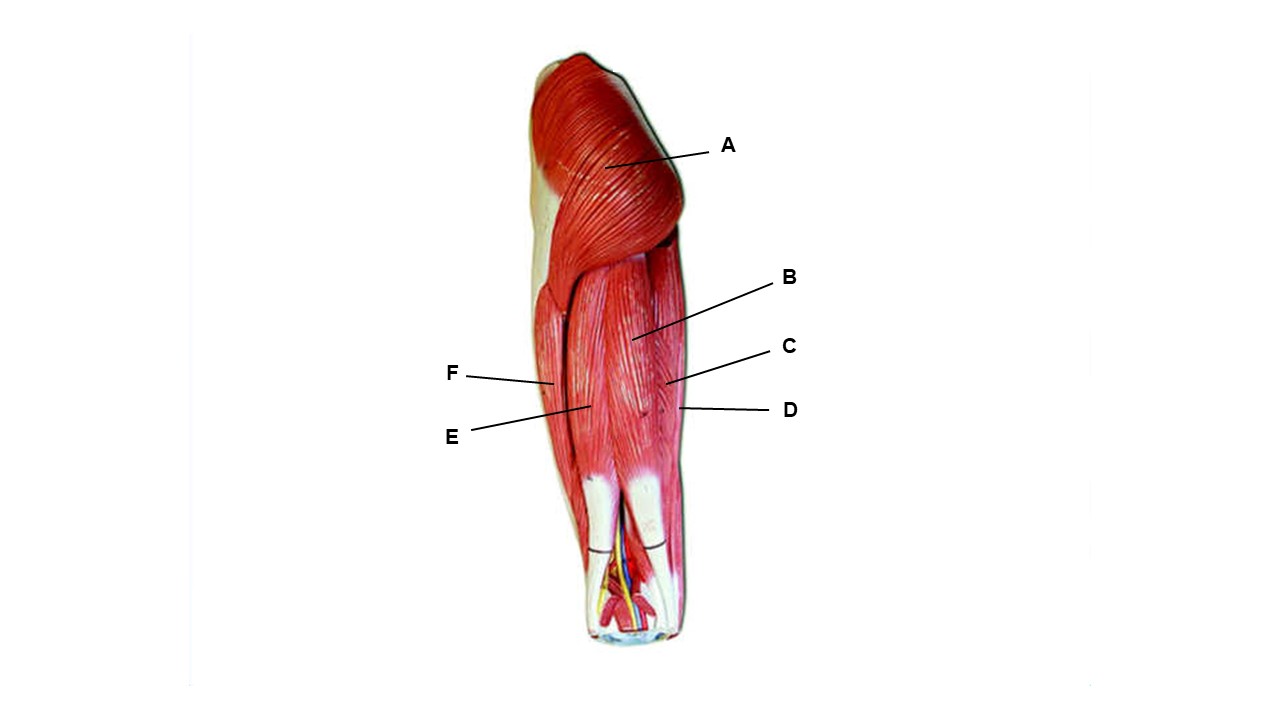
What is the origin of the muscle labeled B?
Ischium
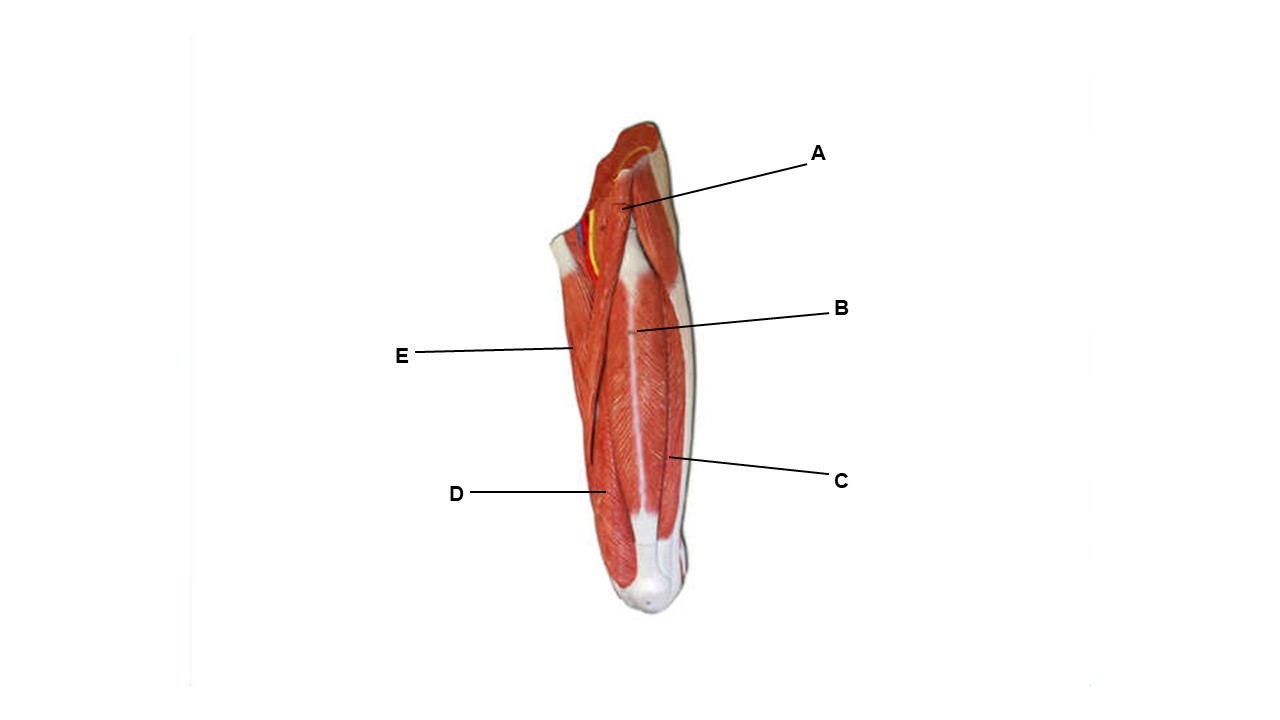
The function of the muscle at the tip of arrow B is to _____.
Extend the knee and flex the thigh
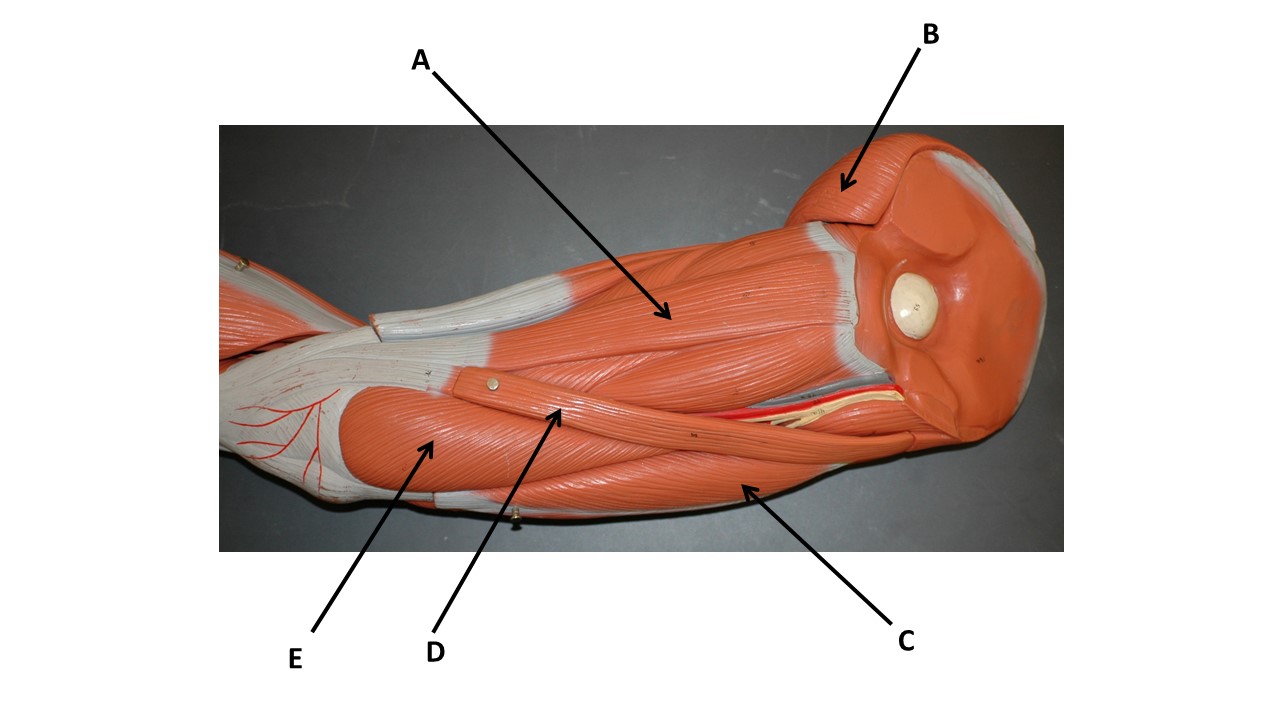
Name the muscle at the tip of line C.
Rectus femoris
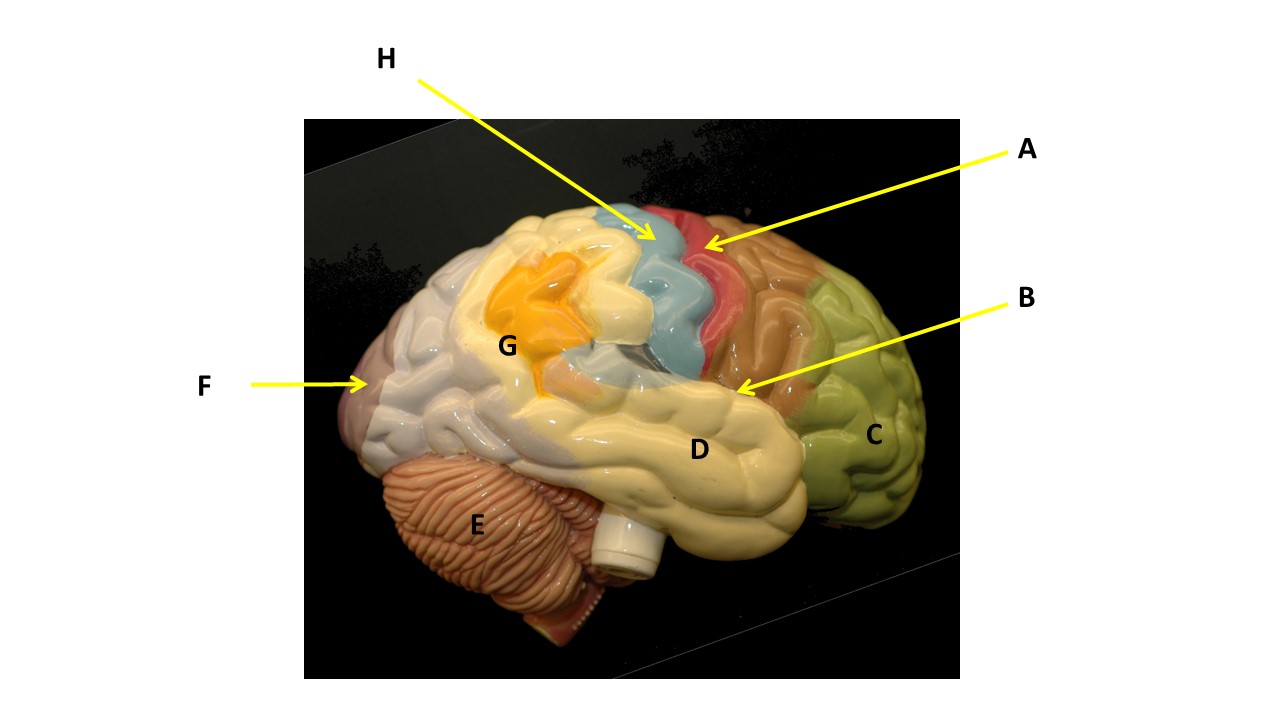
Arrow F is pointing to which lobe of the brain?
occipital
In nervous system physiology, the definition of a reflex is a ________.
rapid, predictable, involuntary motor response to a stimulus.
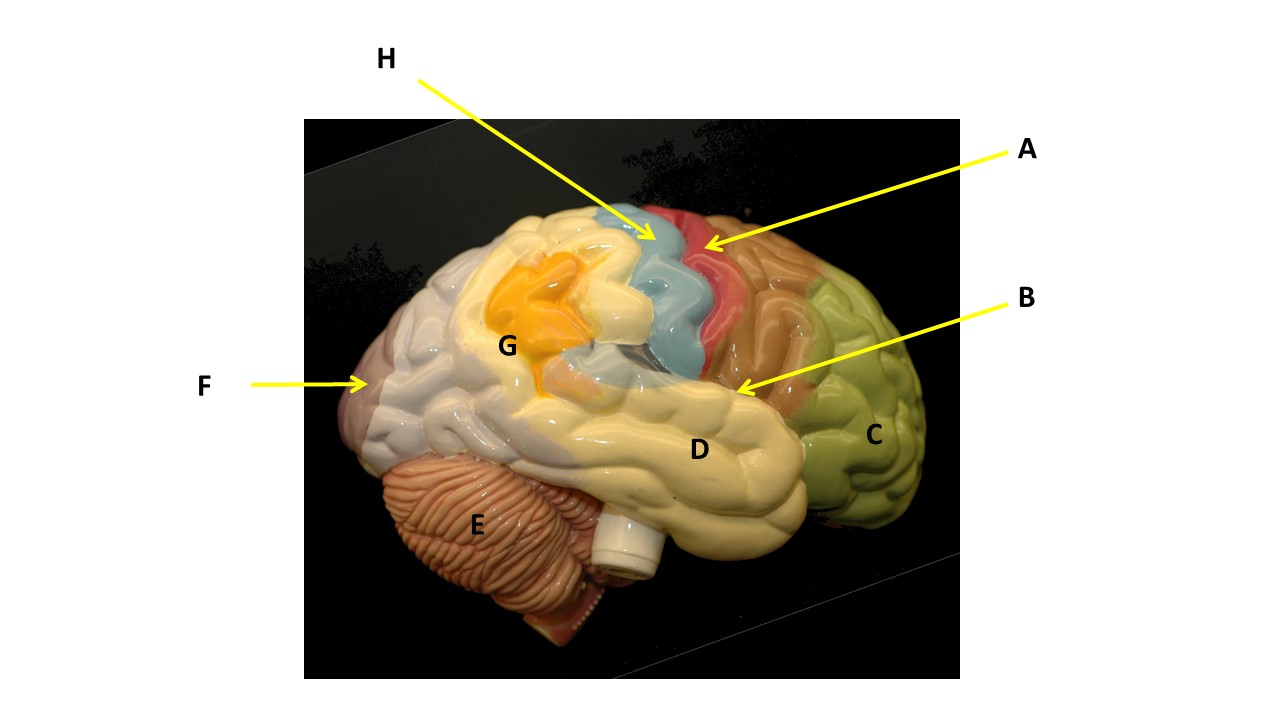
Name the lobe of the brain labeled D.
temporal
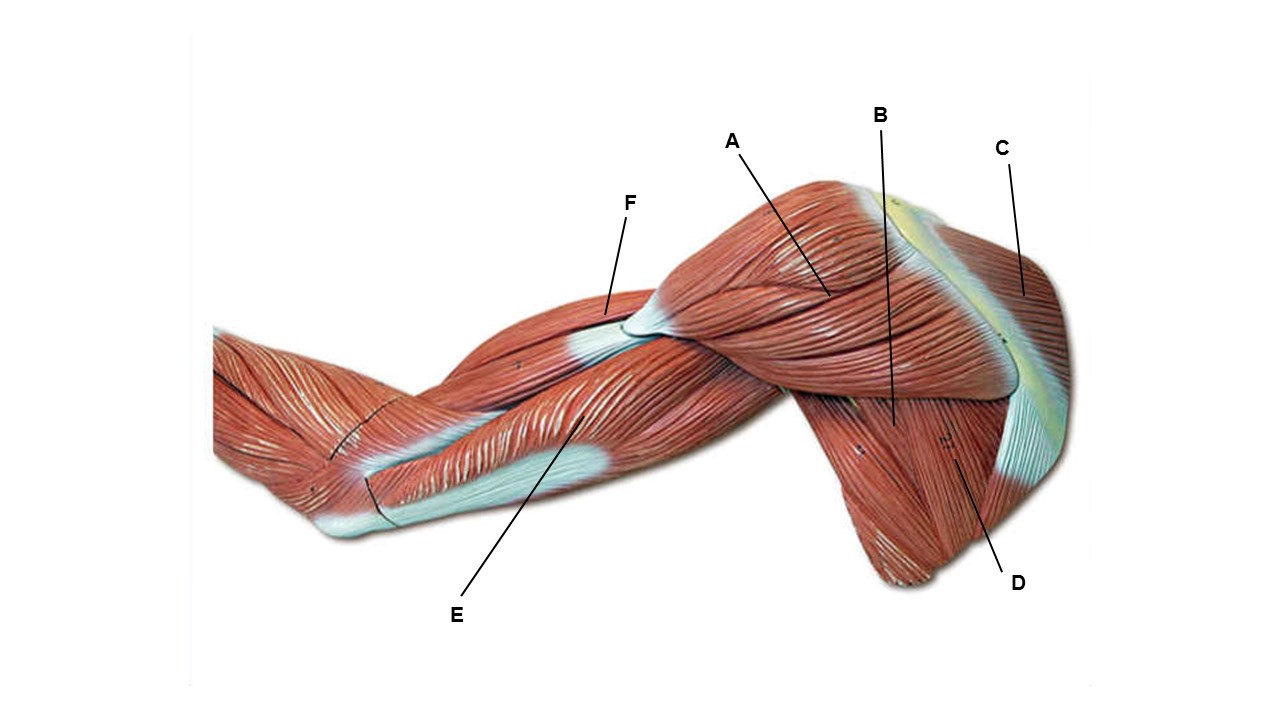
What is the origin of the muscle labeled C
Scapula
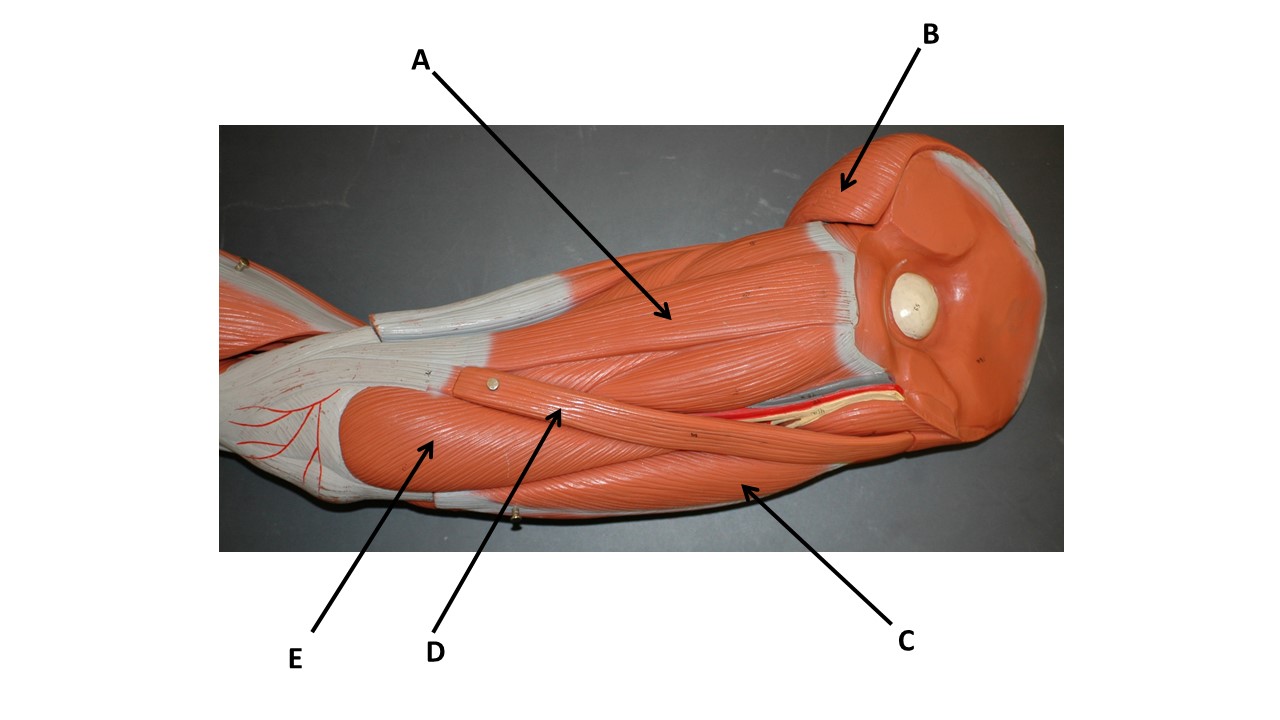
Name the muscle at the tip of line A.
Gracilis
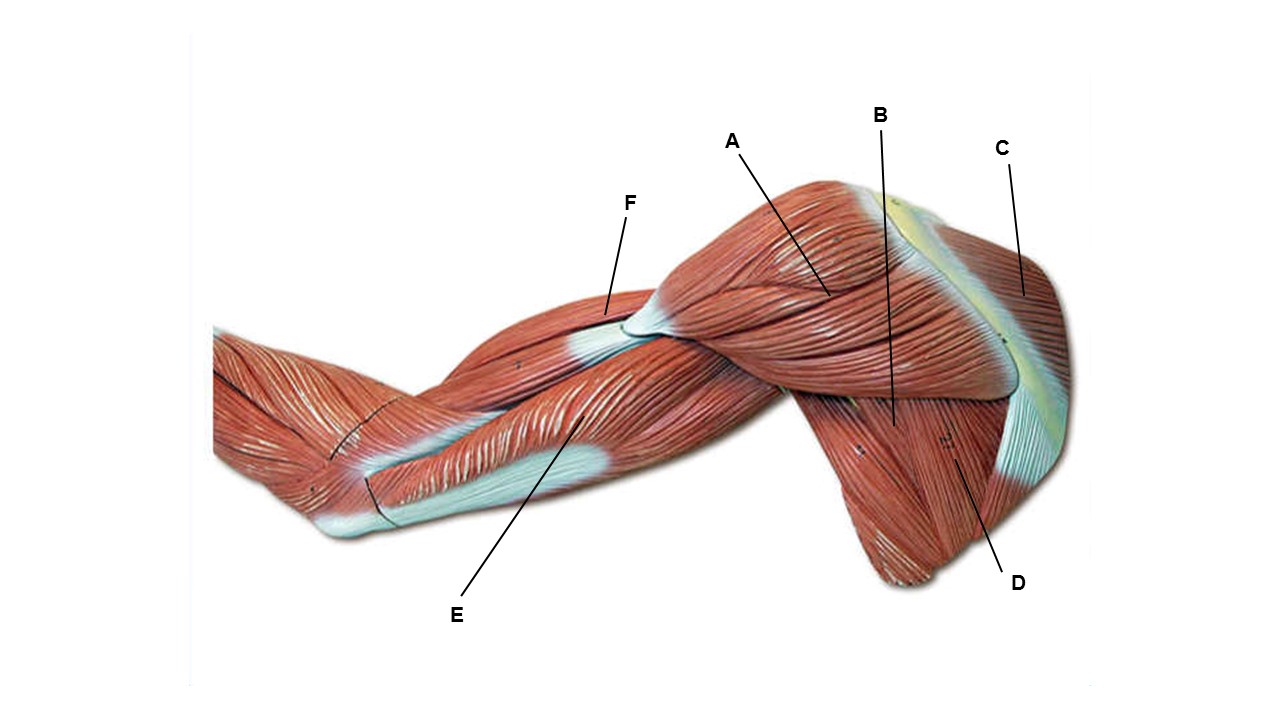
Name the muscle at the tip of line E.
Triceps brachii
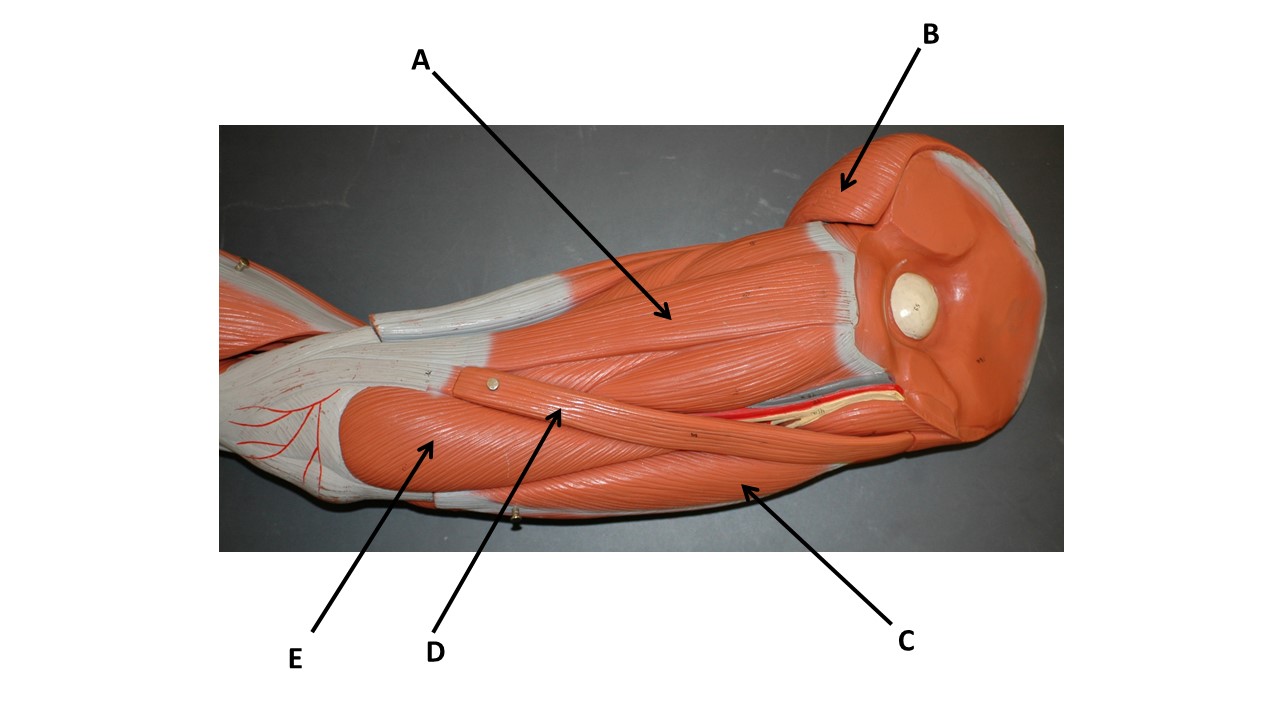
Name the muscle at the tip of line B.
Gluteus maximus
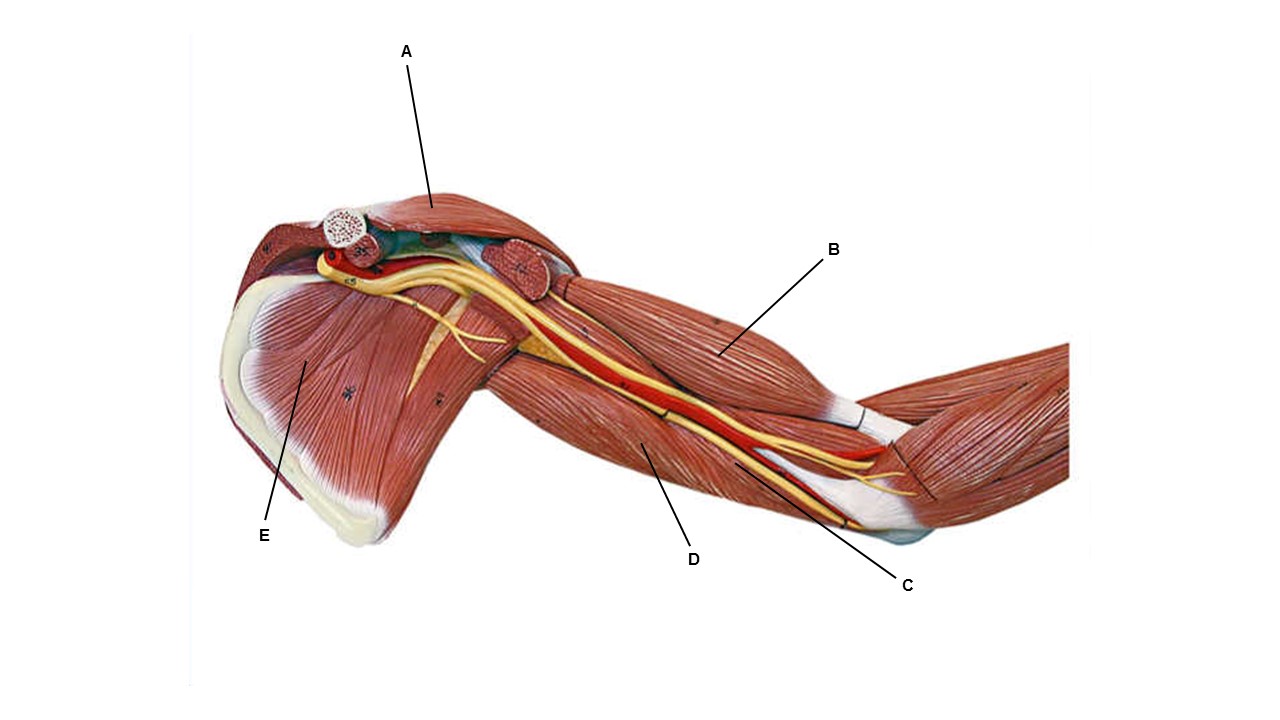
The action of the muscle at the tip of line B is _____.
Flexion of the elbow
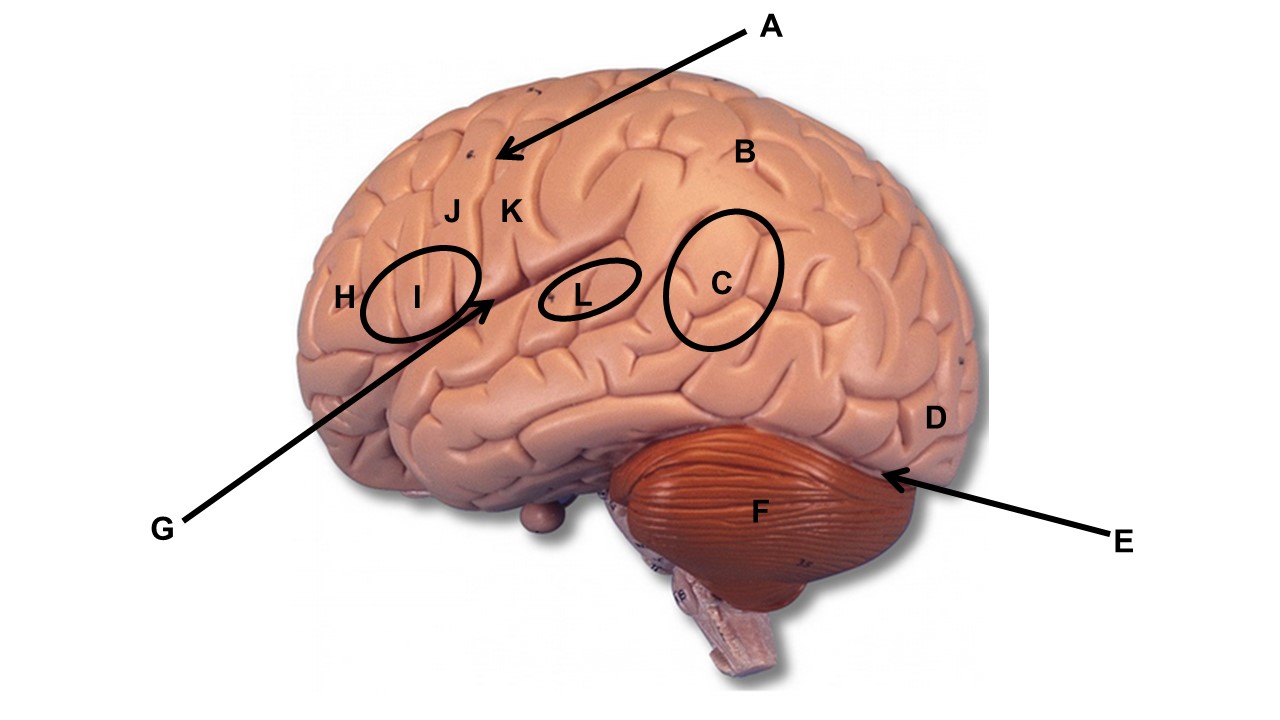
Name the deep groove at the tip of arrow E.
Transverse Fissure
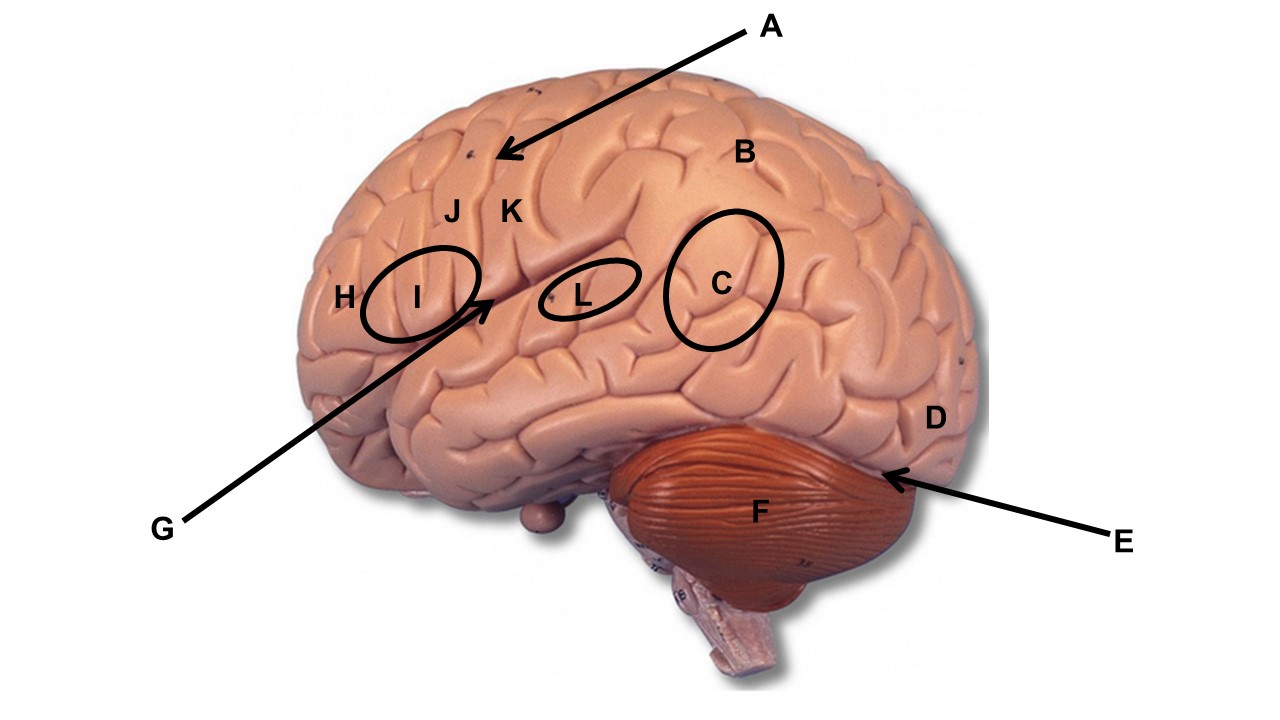
If the area labeled D was damage the individual would _____.
be blind
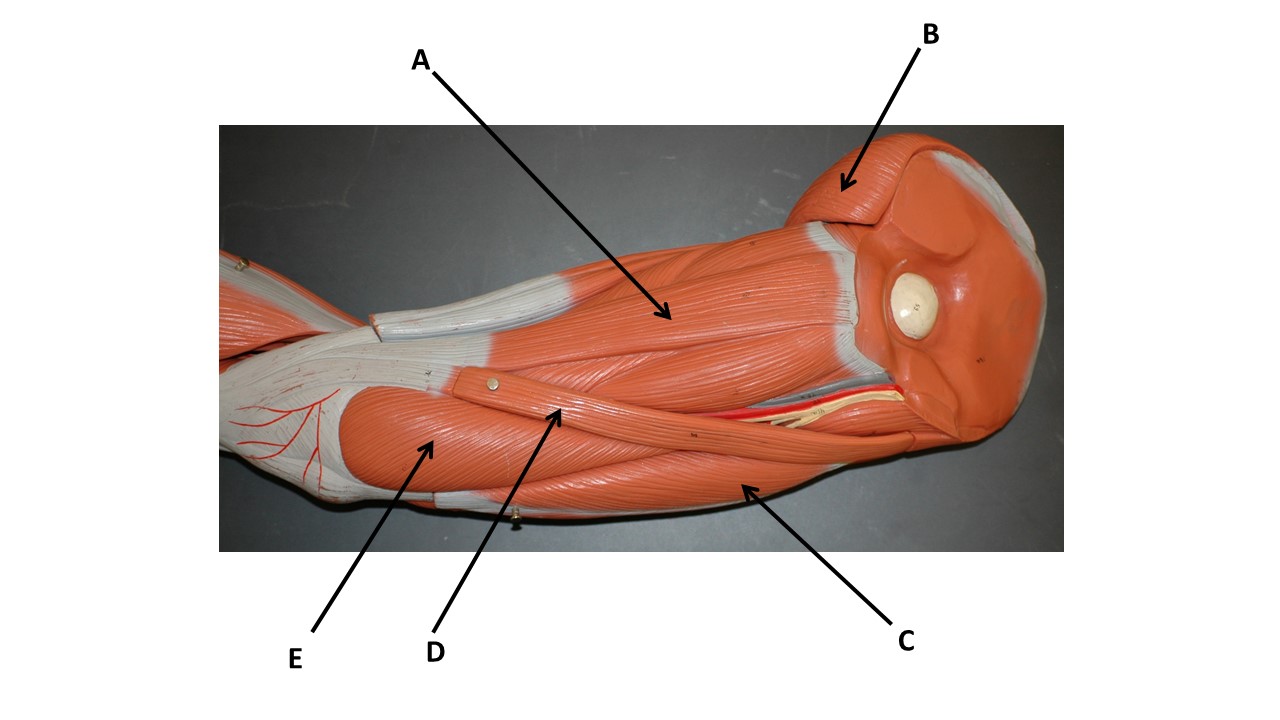
What is the origin of the muscle labeled B?
Ilium
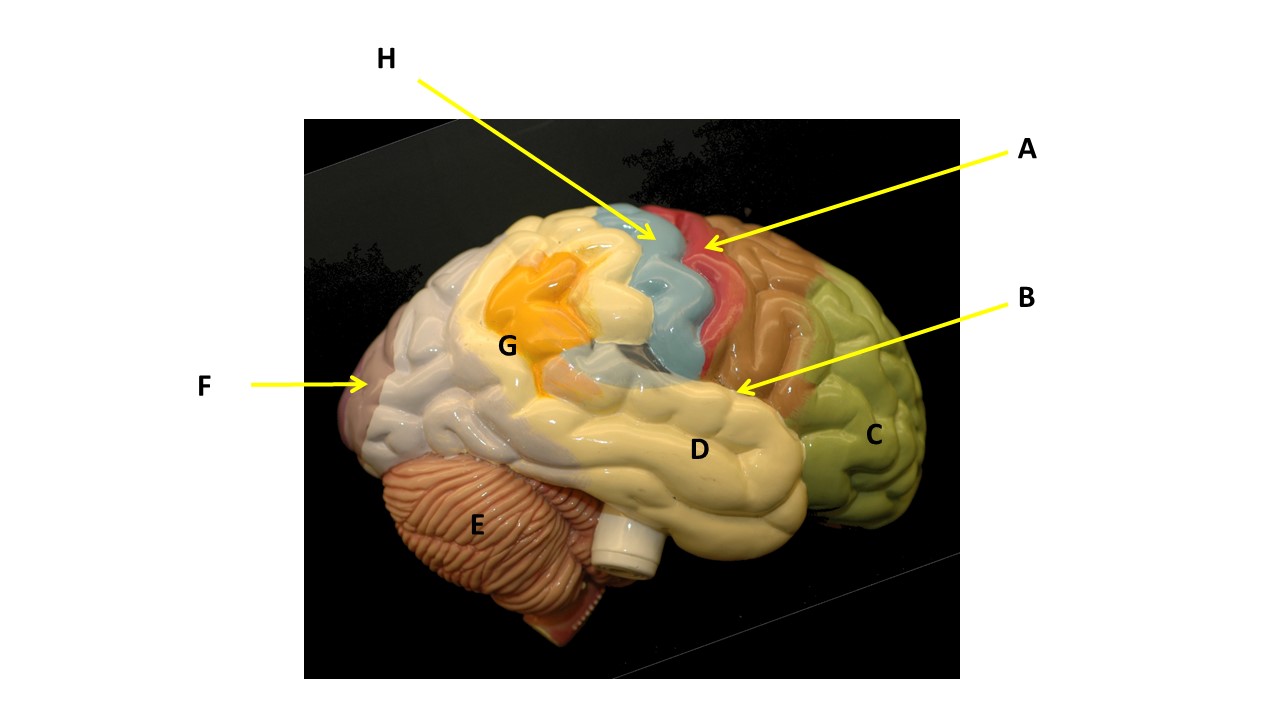
Name the entire brain structure labeled E.
cerebellum
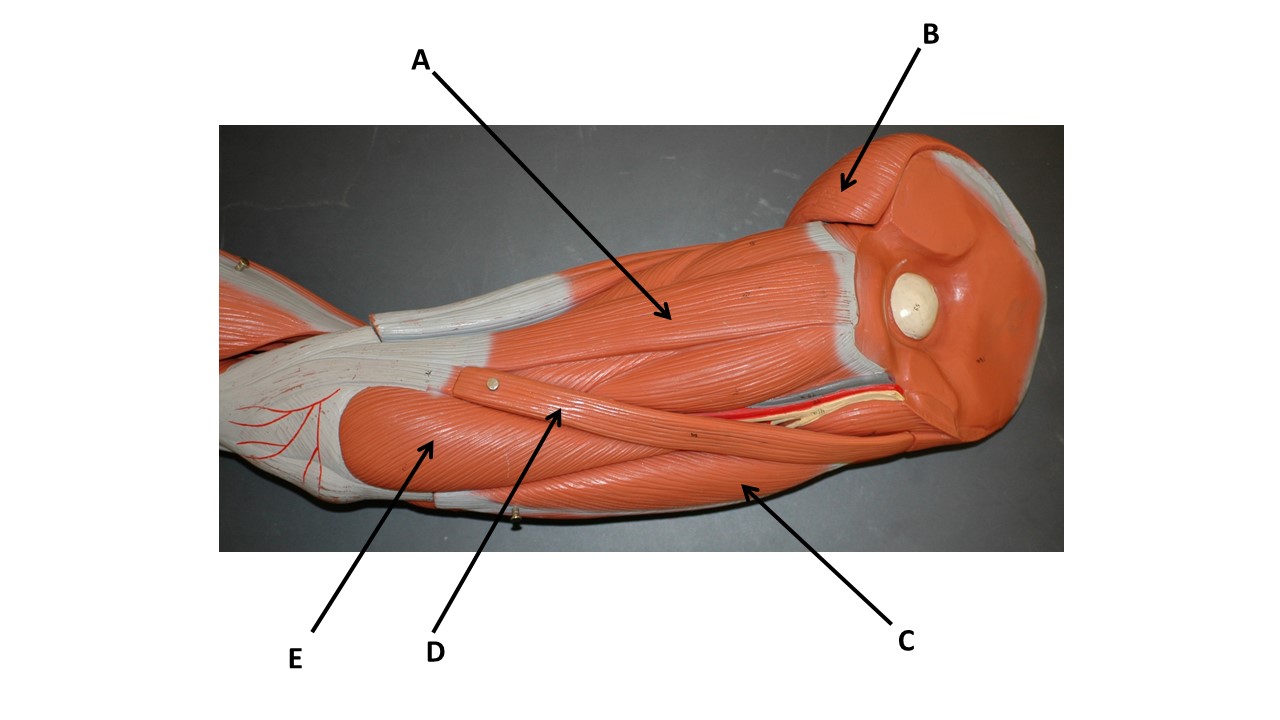
Name the muscle at the tip of line C.
Rectus femoris
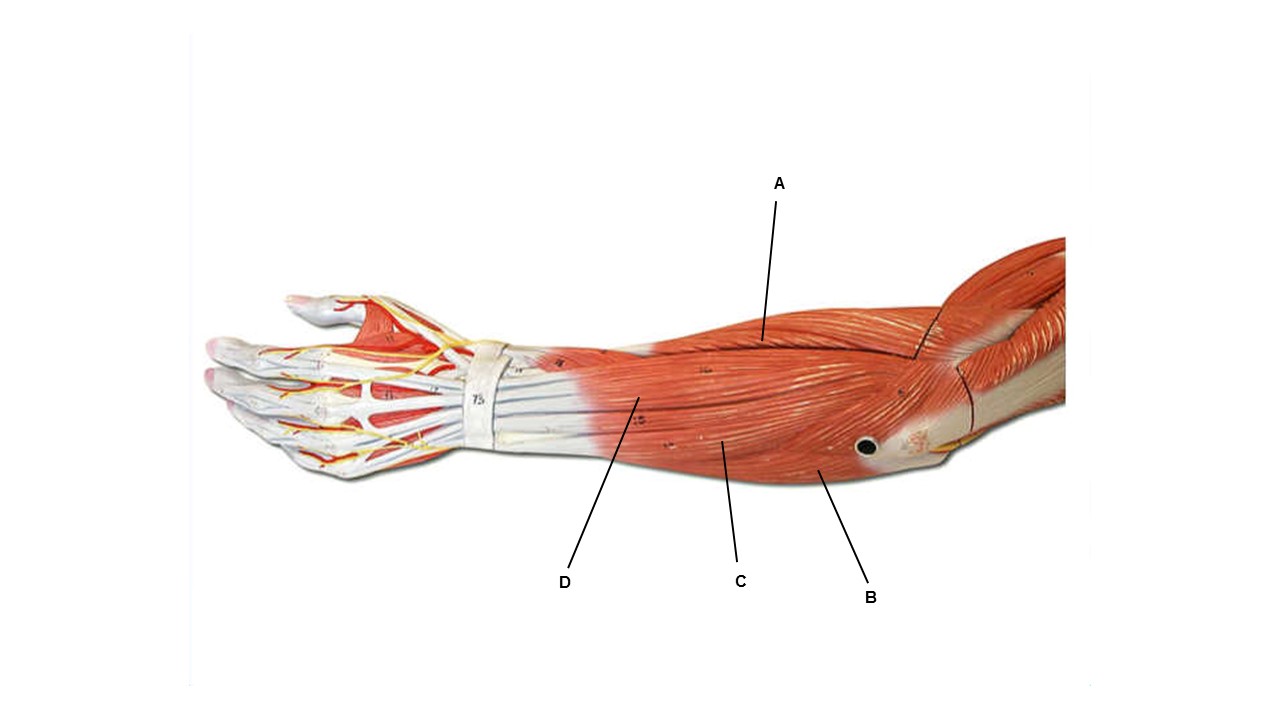
The action of the muscle at the tip of line C is _____.
Extension of the hand
Which nerve innervates the posterior portion of the thigh?
sciatic
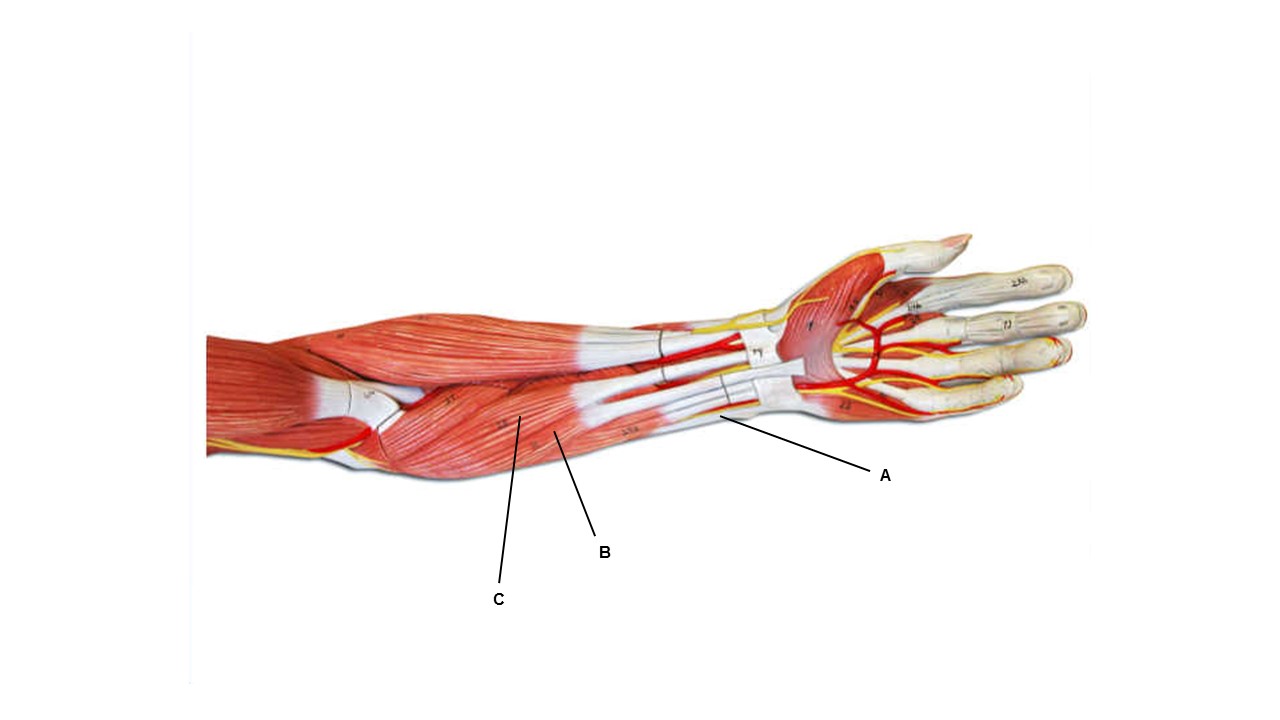
Name the muscle at the tip of line C.
Flexor carpi radialis
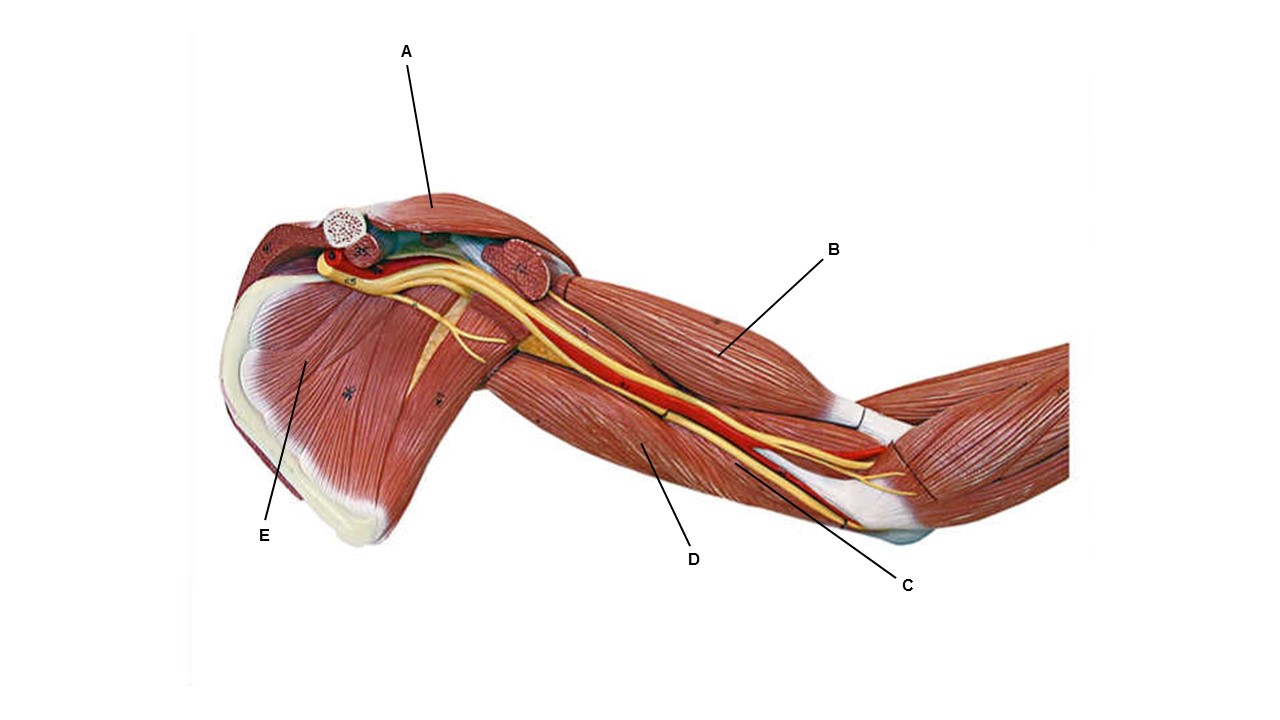
What is the insertion of the muscle labeled E?
humerus
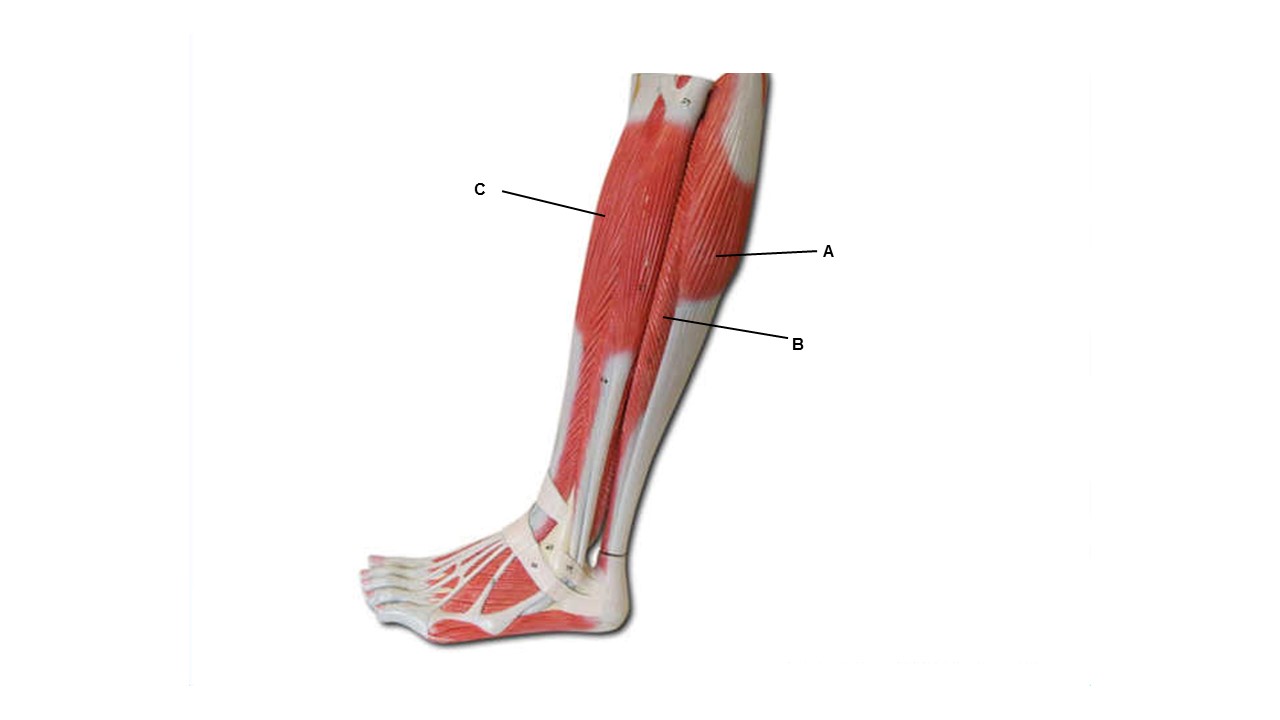
Name the muscle at the tip of line B.
Soleus
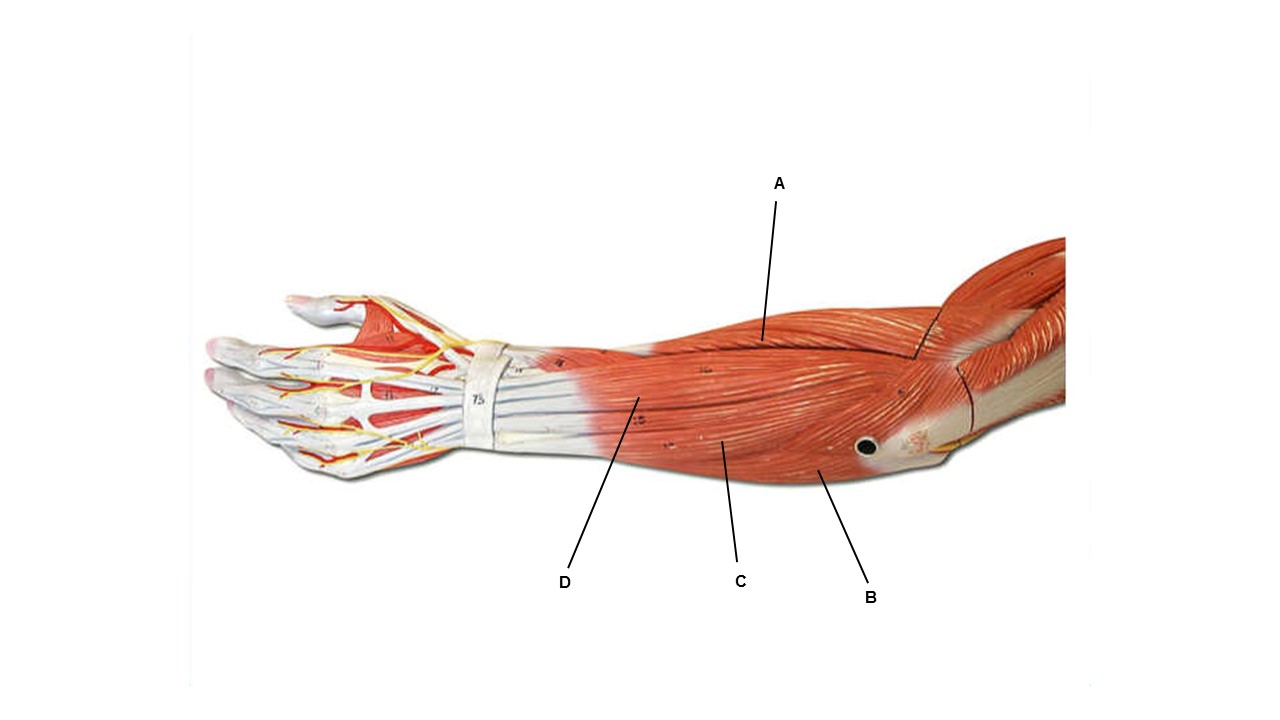
Name the muscle at the tip of line A.
Extensor carpi radialis
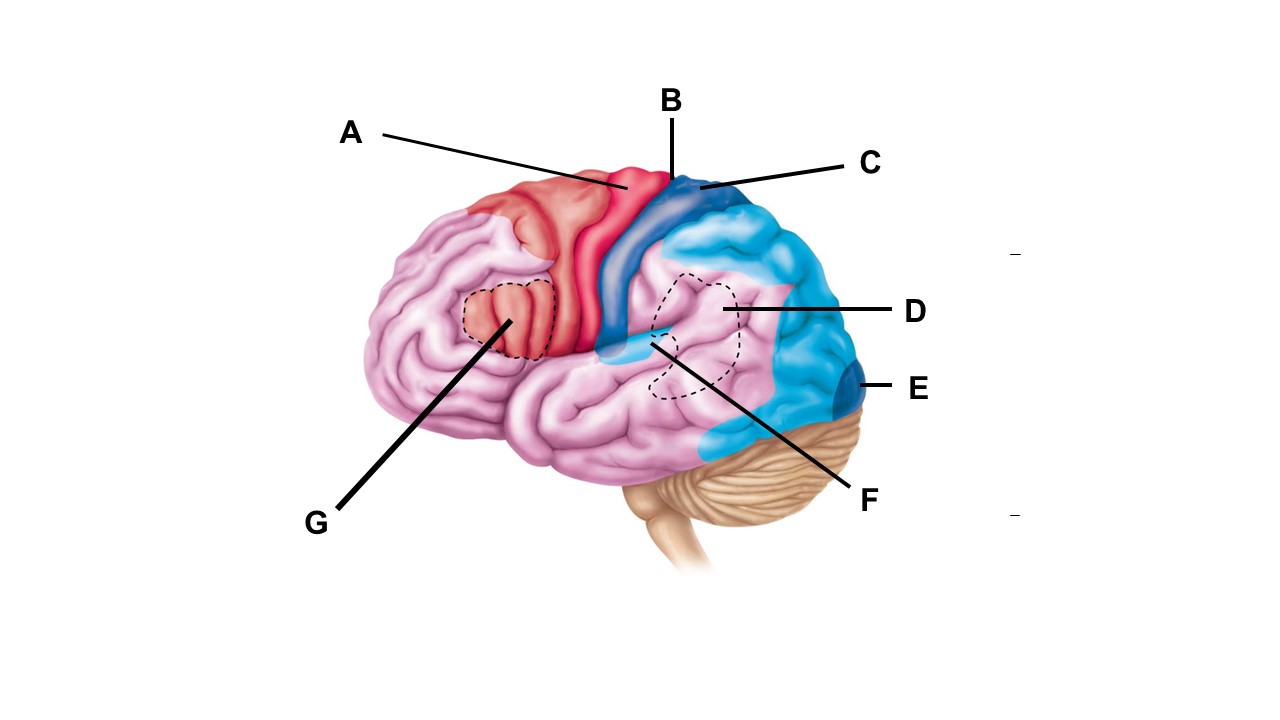
If the area at the tip of line A was to be damaged the individual would _____.
lose the ability to consciously move their skeletal muscles.
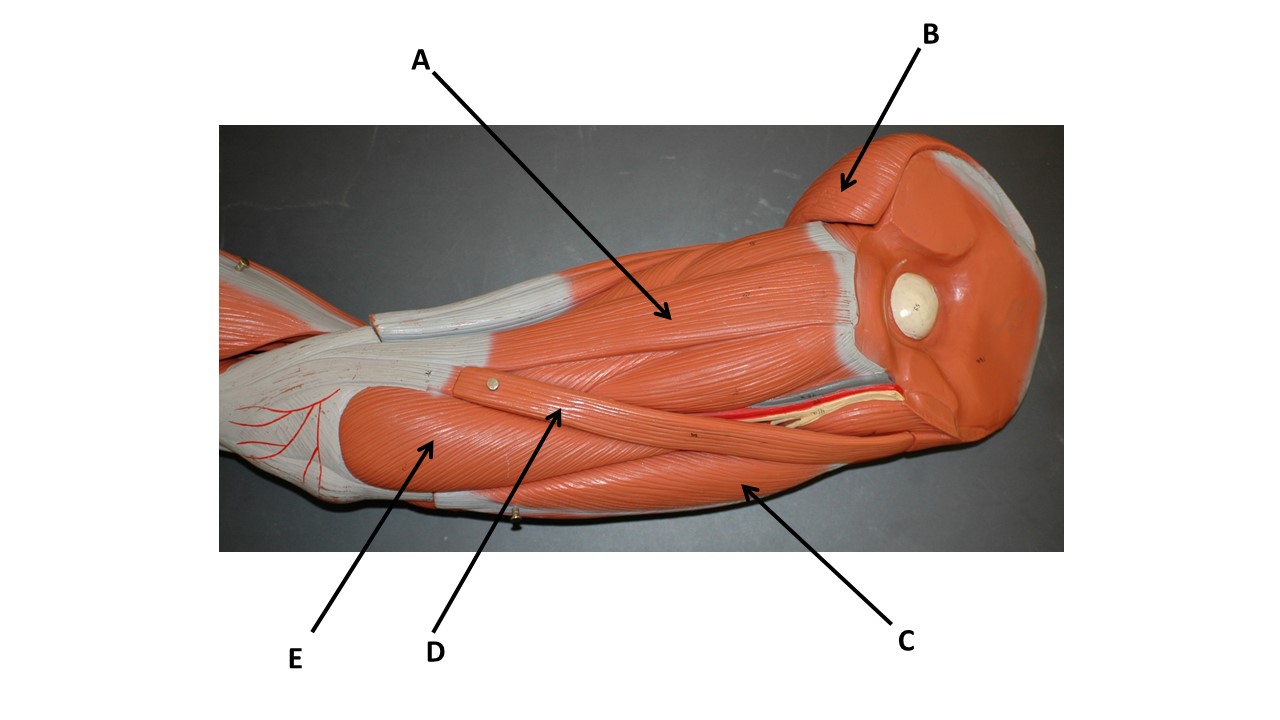
The function of the muscle at the tip of arrow C is to _____.
Extend the knee and flex the thigh
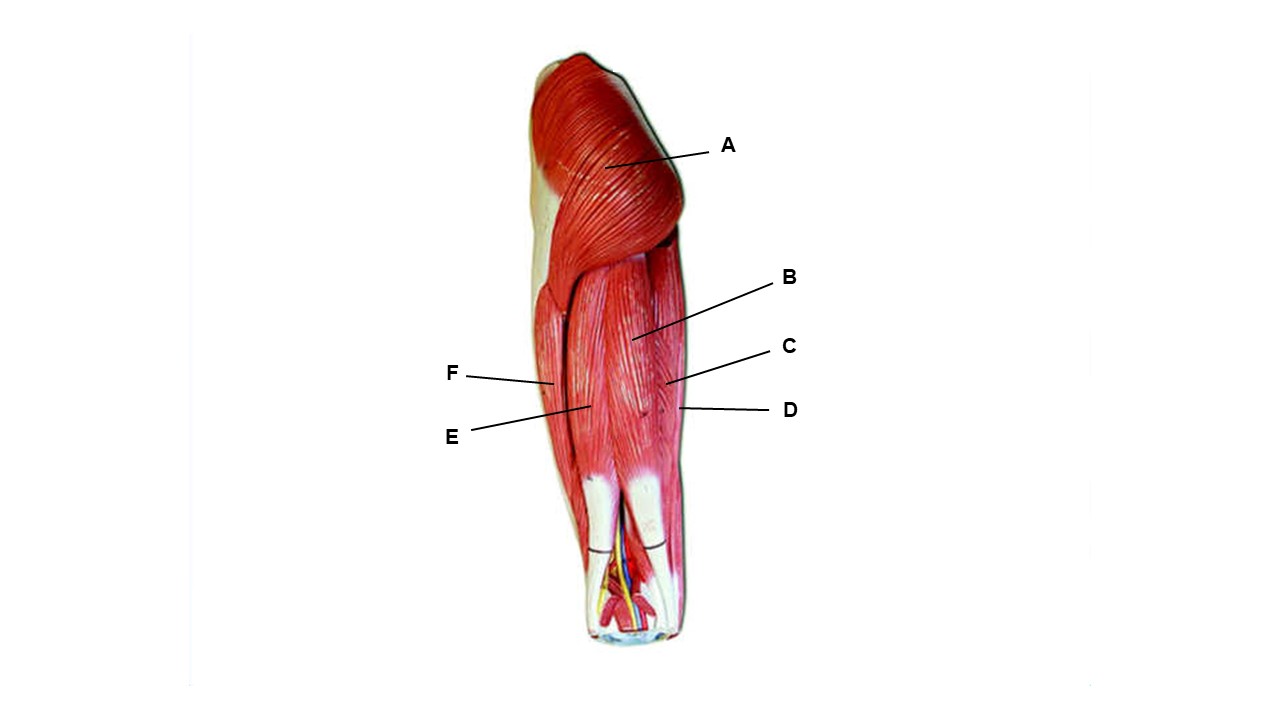
The muscle labeled B inserts on the _____.
tibia
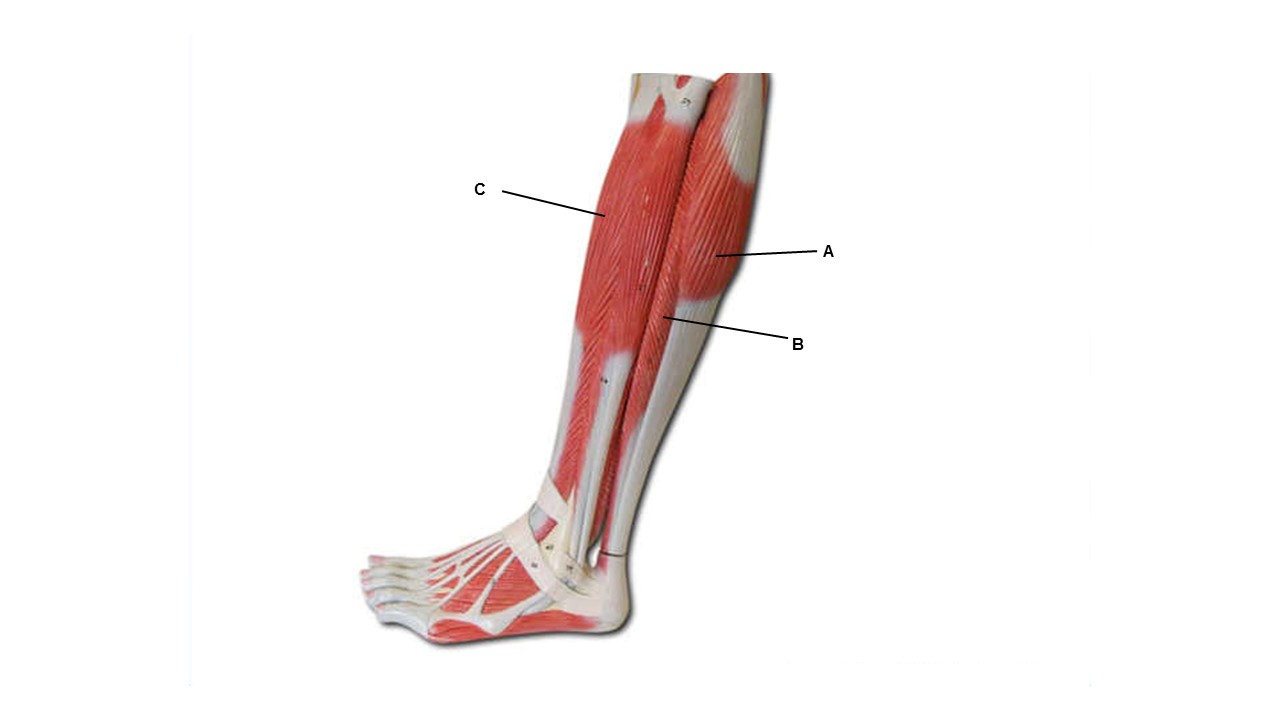
The muscle at the tip of line A inserts on the _____.
Calcaneous
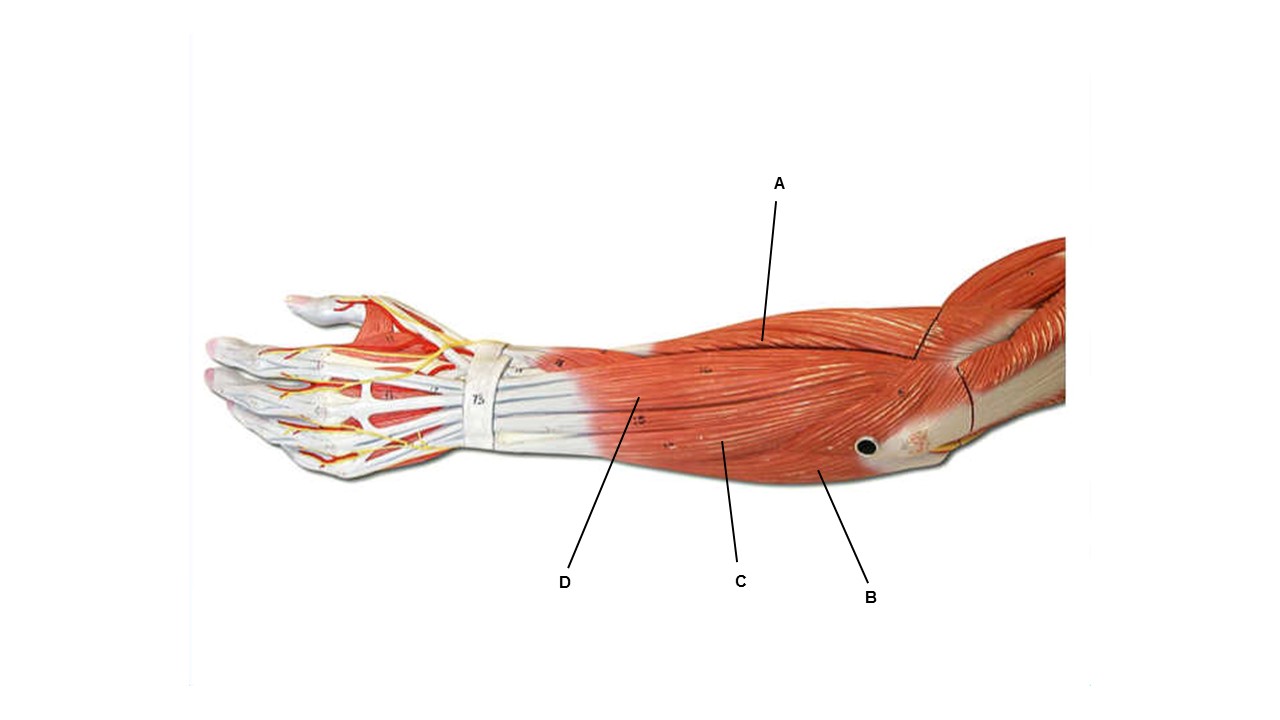
The muscle at the tip of line A inserts on the _____.
Extensor digitorum
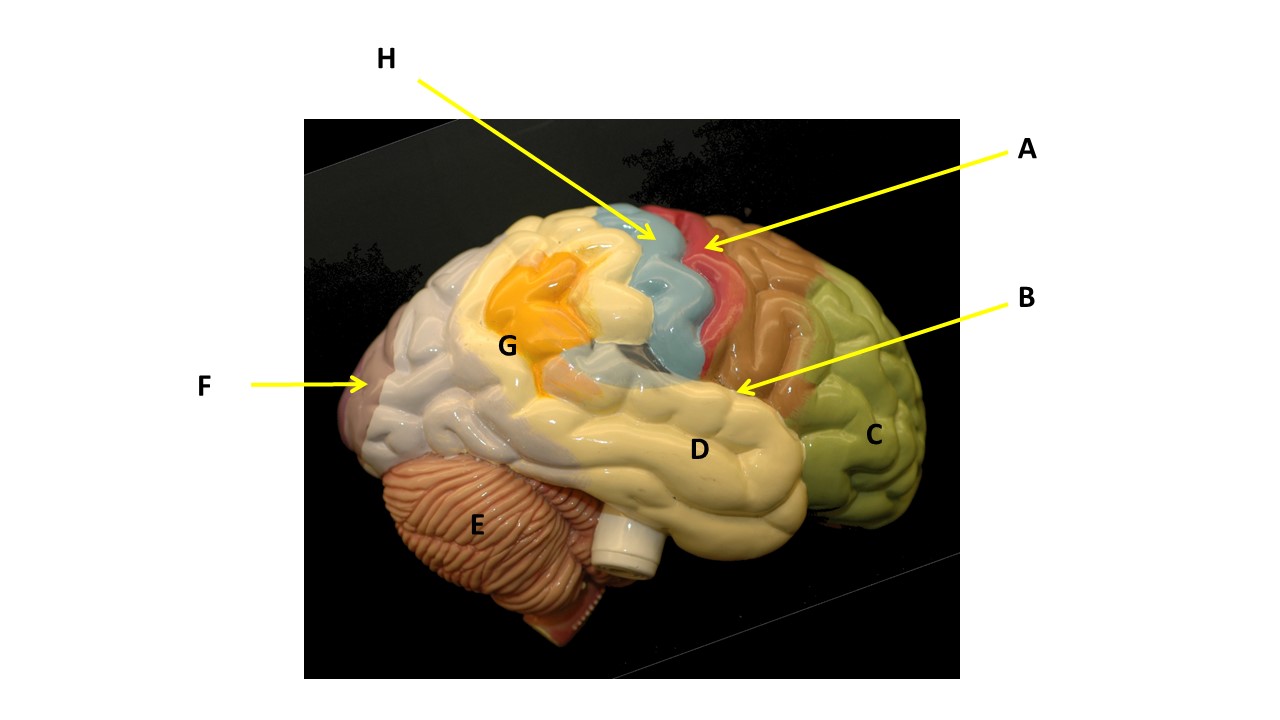
Name the lobe of the brain labeled C.
frontal
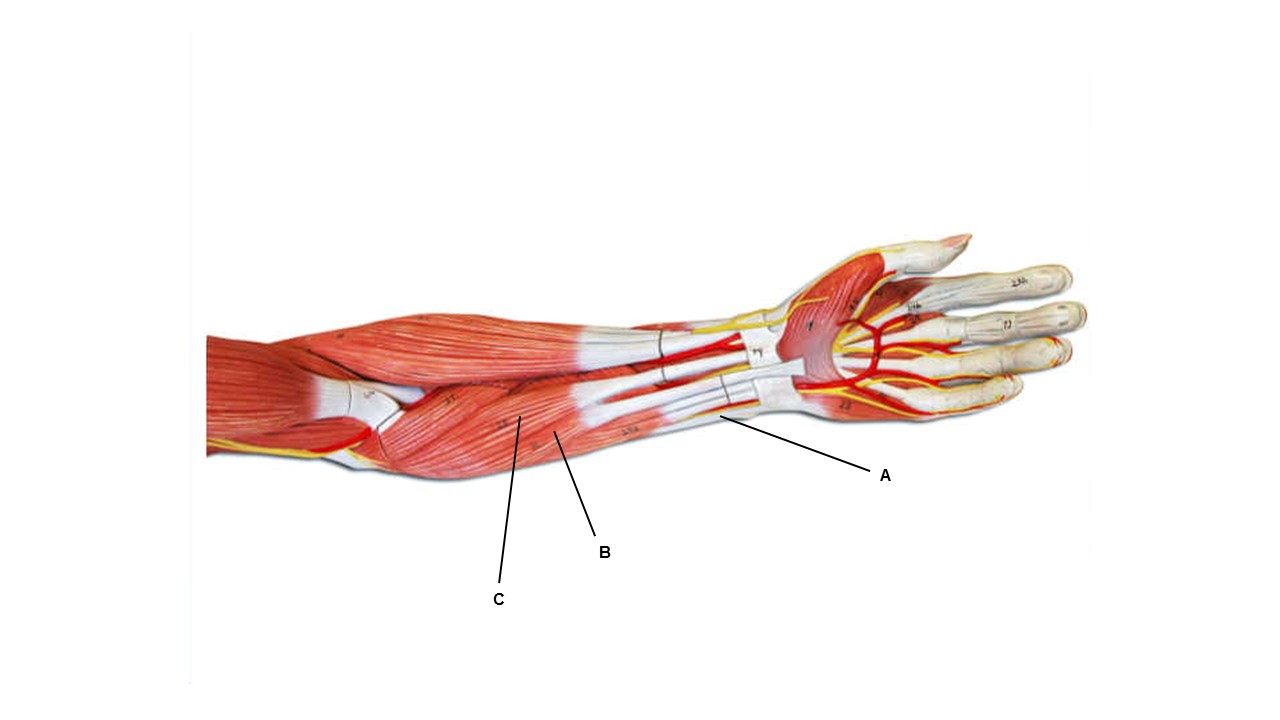
Name the muscle at the tip of line B.
Palmaris longus
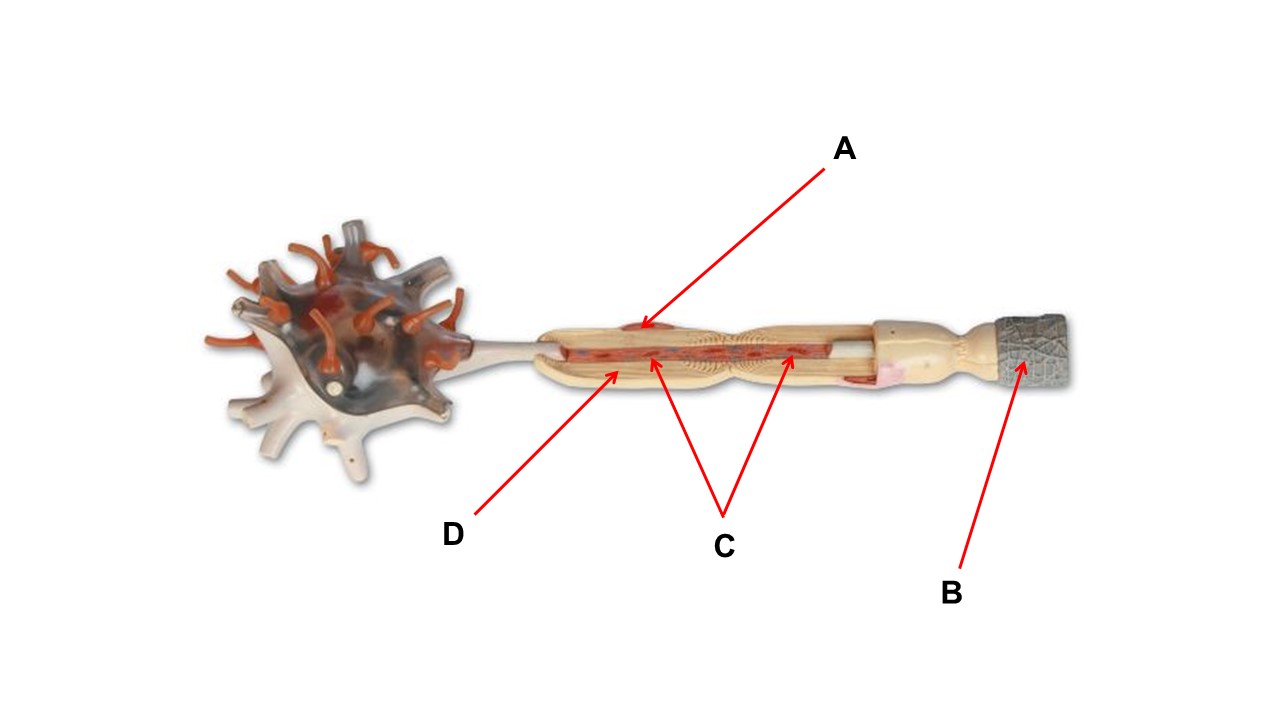
The structure at the tip of arrow A is a nucleus of a(n) _____.
neurolemmocyte
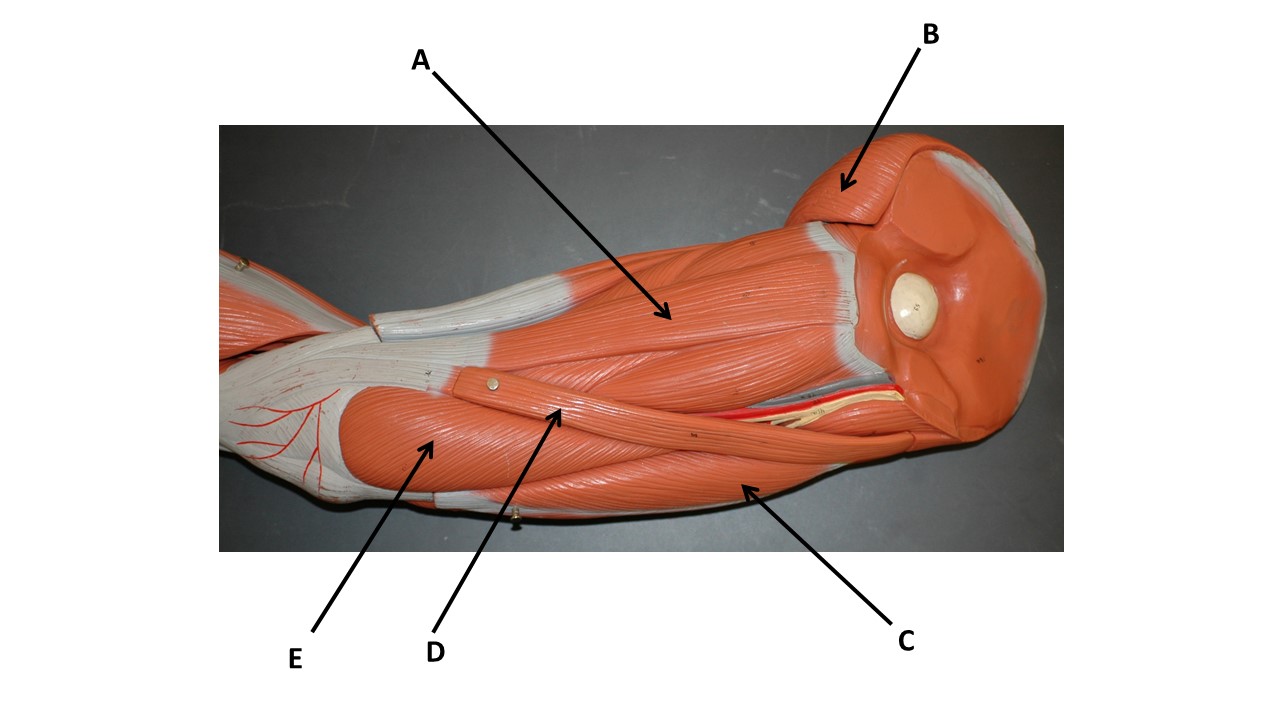
What is the origin of the muscle labeled C?
Femur
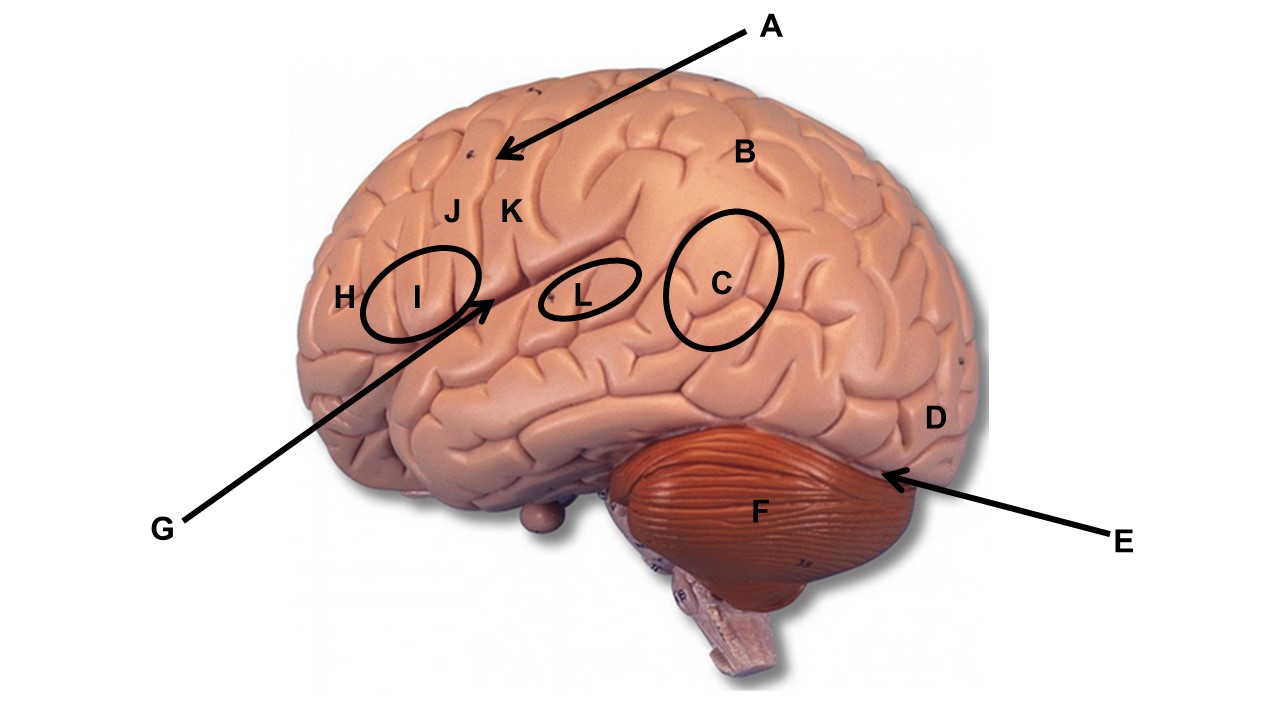
Name the groove at the tip of arrow G.
Lateral Sulcus
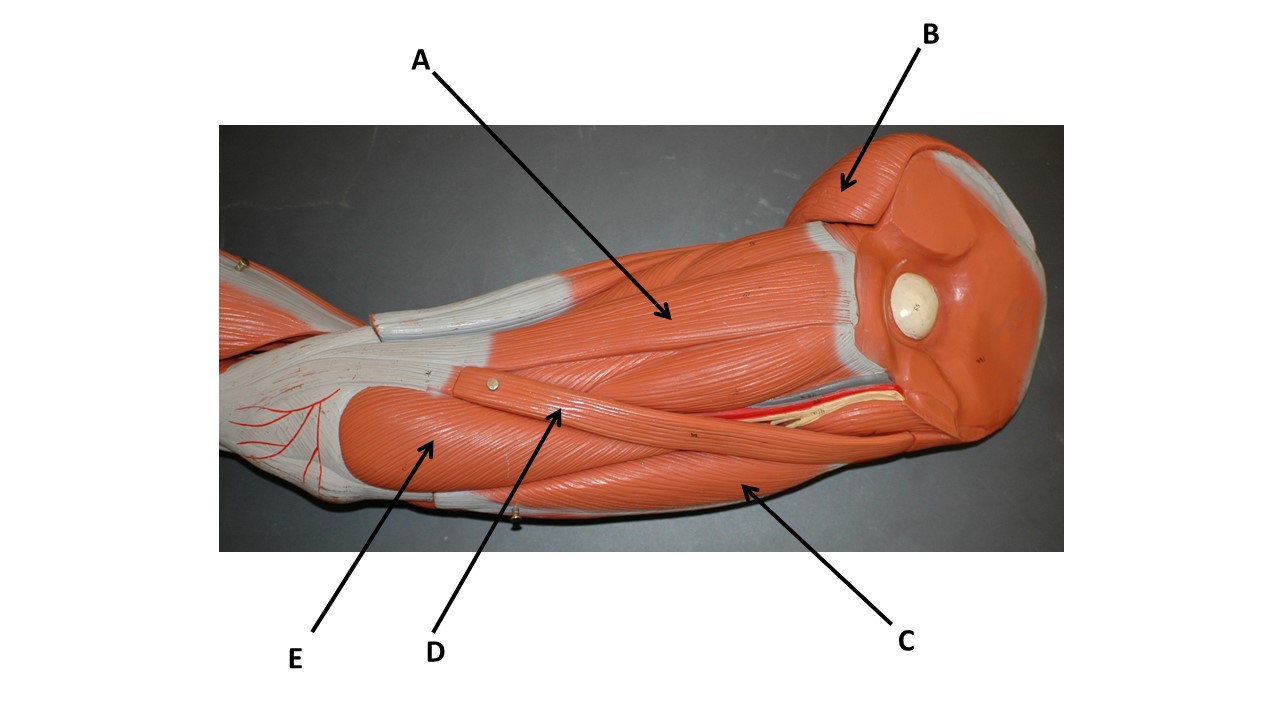
The action of the muscle at the tip of arrow D is to _____.
laterally rotate the thigh
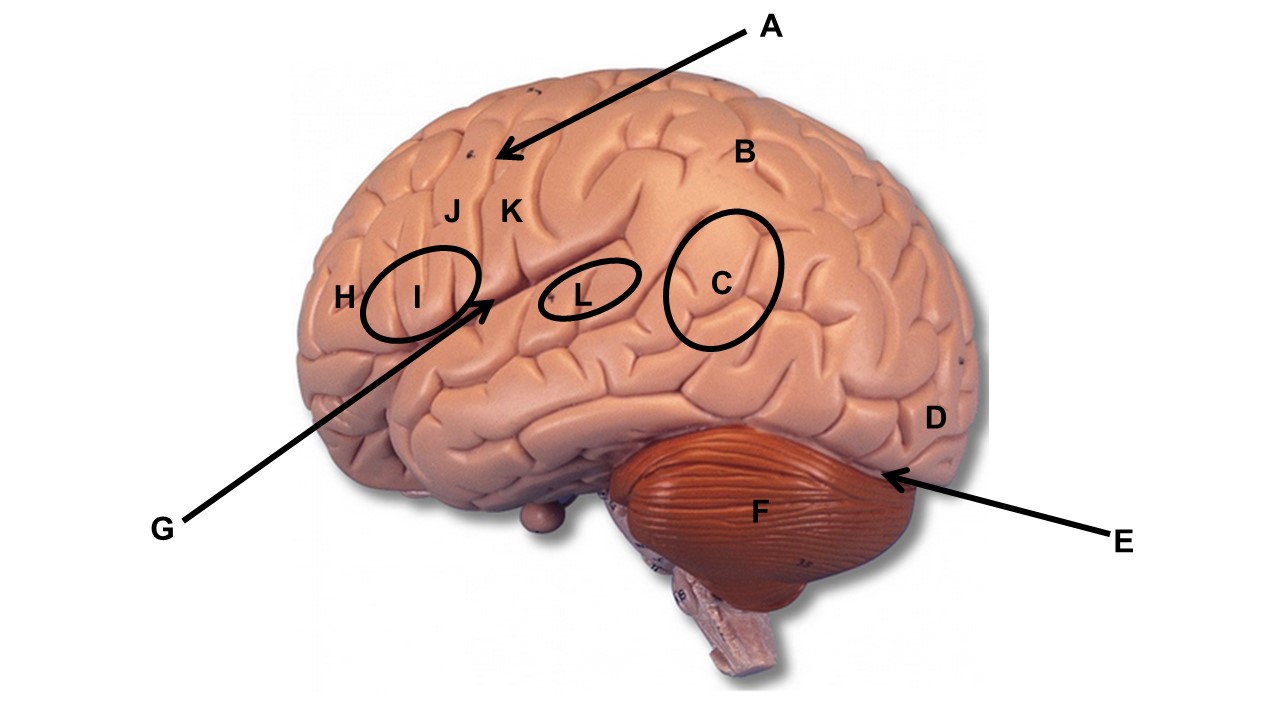
If the area labeled K was damage the individual would lose the ability to _____.
perceive sensations from the skin.
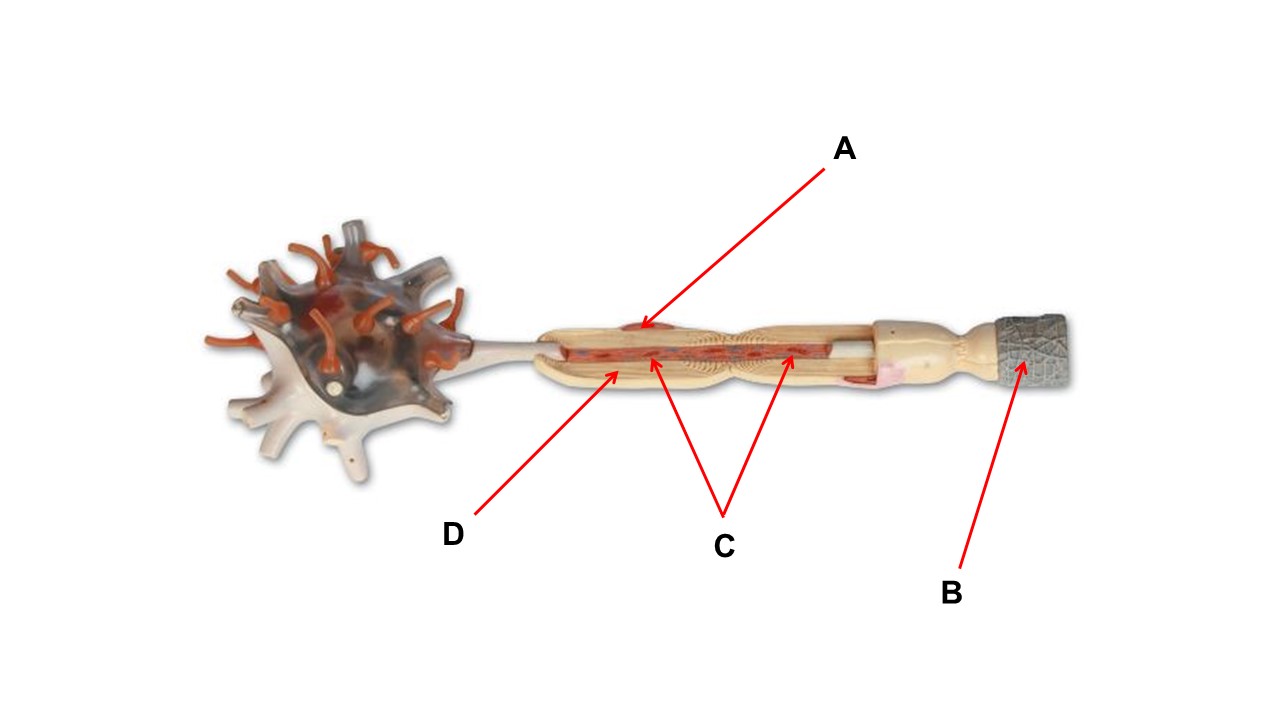
The red structures at the tips of arrows C are _____.
mitochondria
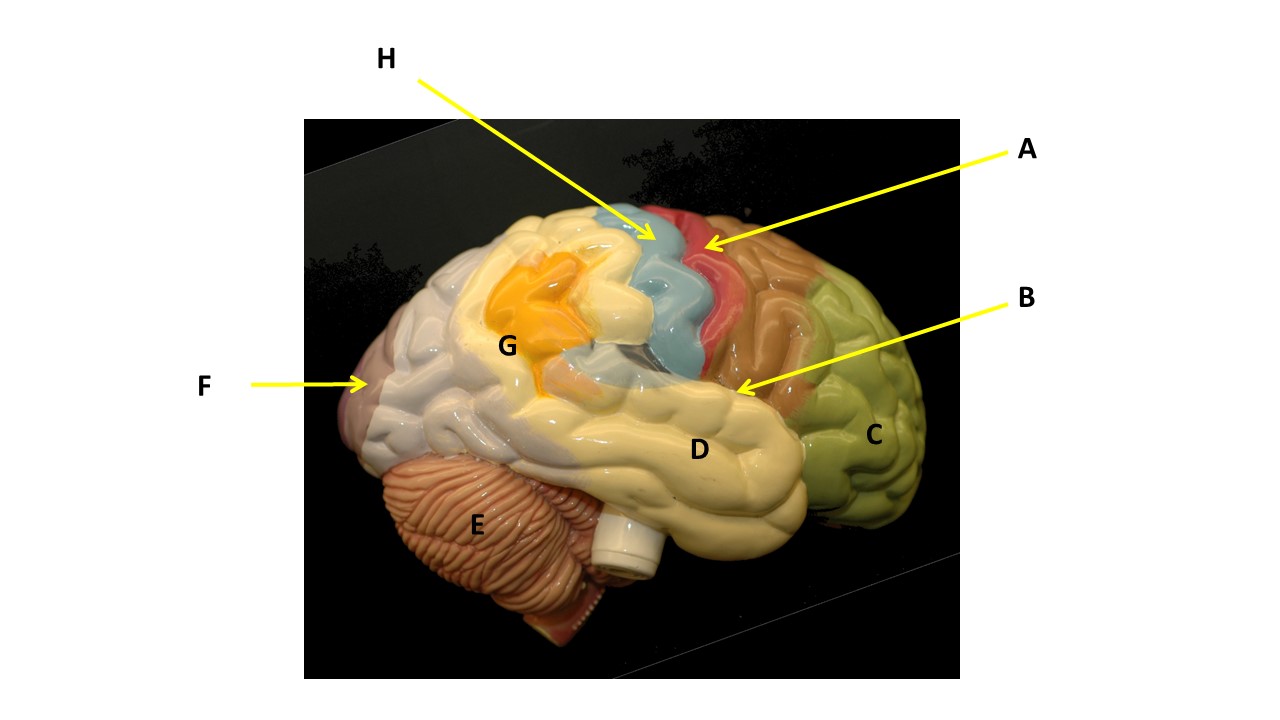
The raised area at the tip of arrow H is called the _____.
Post Central Gyrus
 Note
Note  Flashcards (26)