Microbiology Exam 3
 Call Kai
 Learn
Learn Practice Test
 Spaced Repetition
 Match
Match Flashcards
 Knowt Play
1/146

There's no tags or description
Looks like no tags are added yet.
Name | Mastery | Learn | Test | Matching | Spaced | Call with Kai |
|---|
No analytics yet
Send a link to your students to track their progress
147 Terms
Metabolism
Sum of all chemical reactions within a living organism
Catabolism
breakdown of compounds
release energy
provide building blocks
Anabolism
building compounds
require energy
use up building blocks
Enzymes
Sum of all enzymes → metabolism of cell
size = 300 amino acids
10 - 1,000 kilodaltons (110 Da = 1 a.a.)
are proteins
specific targets for antibiotics
end is -ase
Catalyst
Lowers activation energy without being permanently altered (allows reaction to happen easier)
Enzyme composition (apoenzyme)
Protein (main part) may act on its own (depending on the enzyme)
Enzyme composition (coenzyme)
Organic molecule (nonprotein) might be required
ex: vitamins
Enzyme composition (cofactor)
inorganic molecule (nonprotein) might be required
ex: minerals
Enzyme composition (active site)
Where substrate binds and shape of sight is essential (interact with enzyme)
Enzyme structure (protein levels)
Primary
Determined by DNA
Held together by peptide bonds
Secondary
Alpha (α) helix – coiled shape
Beta (β) pleated sheet – folded, sheet-like shape
Tertiary
Formed by interactions between R-groups (side chains)
Includes hydrogen bonds, ionic bonds, disulfide bridges, and hydrophobic interactions
Determines the protein’s specific function
Quaternary
The structure formed when two or more polypeptide chains (subunits) combine
Not all proteins have this level.
Enzyme denature
Loss in conformation or shape
no longer active
caused by high temperature or extreme pH
Enzyme production (constitutive)
Produced all the time and activity doesn’t change
Enzyme production (inducible)
Environment causes increased production or activity
Enzyme production (repressible)
Environment causes decreased production or activity
Exoenzymes
Virulence factors and bacteria secrete outside of cell
ex: DNase, amylase
Enzyme activity
active site (can bind substrate)
forms enzyme (substrate complex)
substrate is transformed to products
products are released
enzyme is “recycled”
Factors influencing enzyme activity (temperature)
Low temperature: molecules move more slowly; enzyme becomes rigid
High temperature: protein denatures or unfolds because noncovalent (and hydrogen) binds are broken
Factors influencing enzyme activity (pH - high H+ or OH-)
Extreme pH can cause enzymes to denature
Factors influencing enzyme activity
temperature
pH
substrate
inhibitors
Factors influencing enzyme activity (substrate)
substrate concentration
saturation: all active sites are filled with substrate
Factors influencing enzyme activity (inhibitors)
competitive
noncompetitive
Competitive inhibitors
binds the ACTIVE SITE
does not undergo any reaction or change (the enzyme)
Irreversible: an inhibitor that binds permanently to an enzyme
Reversible: an inhibitor that binds temporarily to an enzyme
antimicrobial agent sulfanilamide
Noncompetitive inhibitors
binds the ALLOSTERIC site - some OTHER place on the enzyme
causes active site to change shape
can be reversible or irreversible
feedback inhibition - an end product in a series of reactions inhibits the first enzyme in the series (keeps the cell from wasting resources
Energy production (oxidation-reduction reactions)
oxidation → lose an electron
reduction → gain an electron
these are coupled
dehydrogenation - movement of hydrogen atom and an electron
Energy production (generation of ATP)
substrate level phosphorylation - the high energy phosphate is transferred from a substrate to ADP to produce ATP
oxidative phosphorylation - electrons are transported down a chain of proteins and energy is produced by chemiosmosis (osmotic gradient drives it)
Energy production (energy is released in a series of steps)
too fast → heat → cell damage
energy produced by passing electrons through oxidation reactions
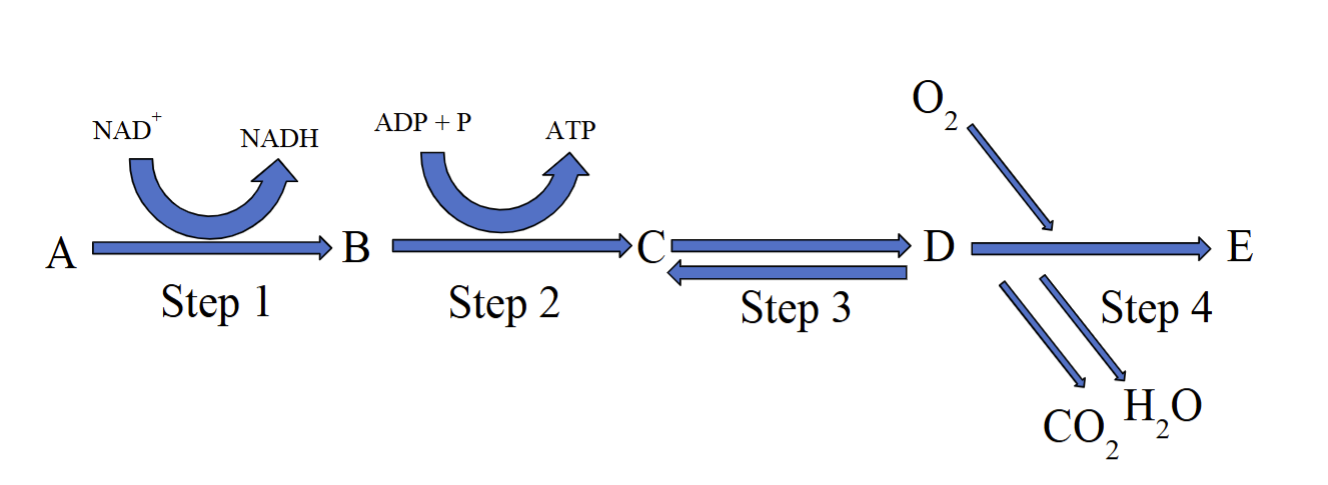
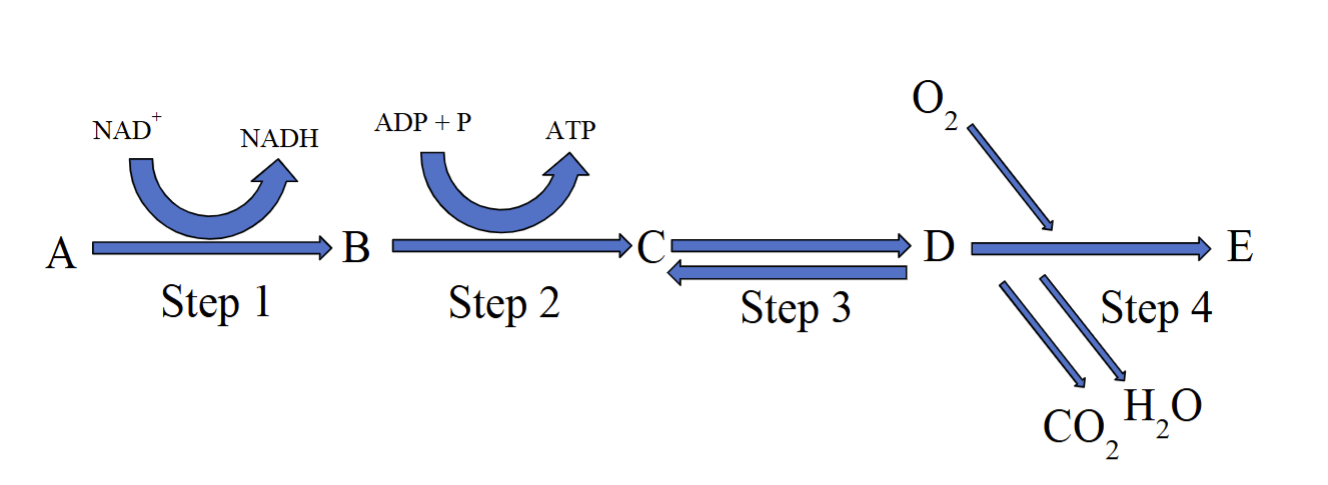
What is the substrate in reaction step 1?
A
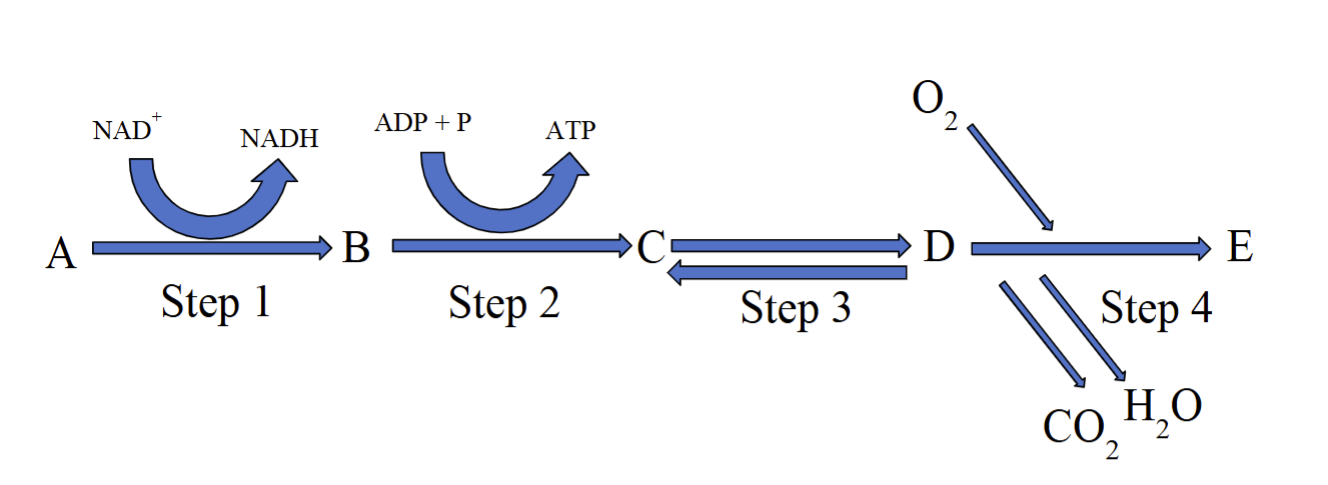
What is the main product in reaction step 1?
B
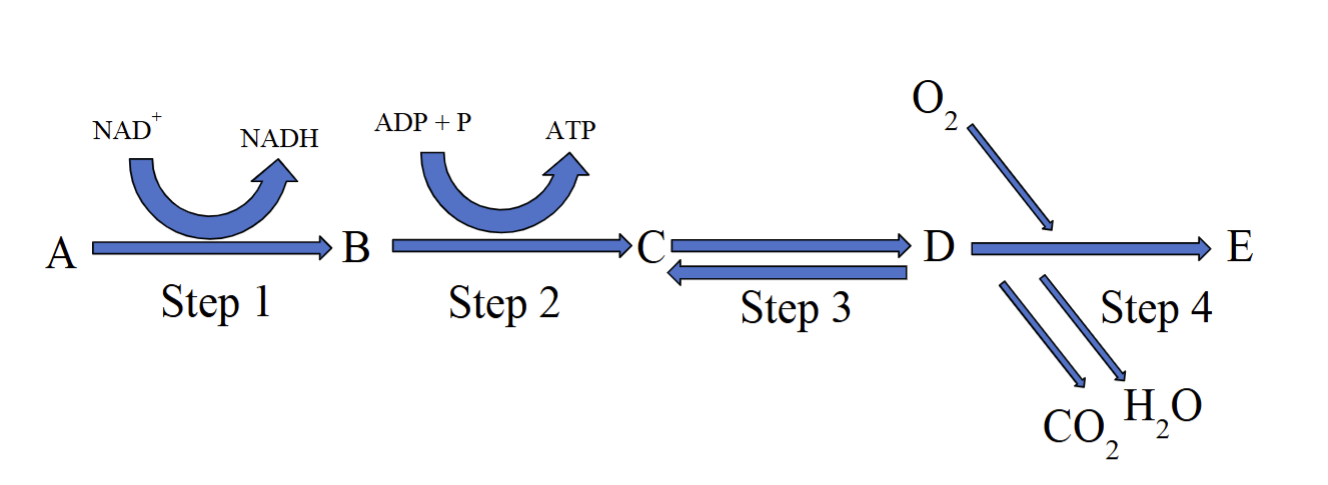
What does the curved line mean in reaction step 1?
Coupled or joined reaction
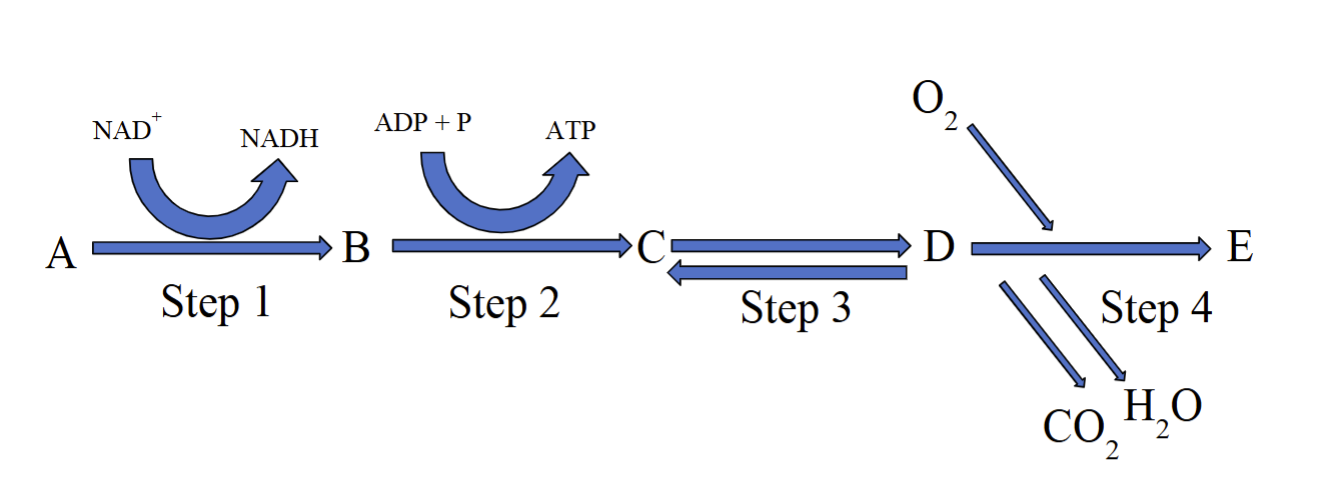
Is coenzyme NAD+ reduced or oxidized in reaction step 1?
Reduced (gained an electron)
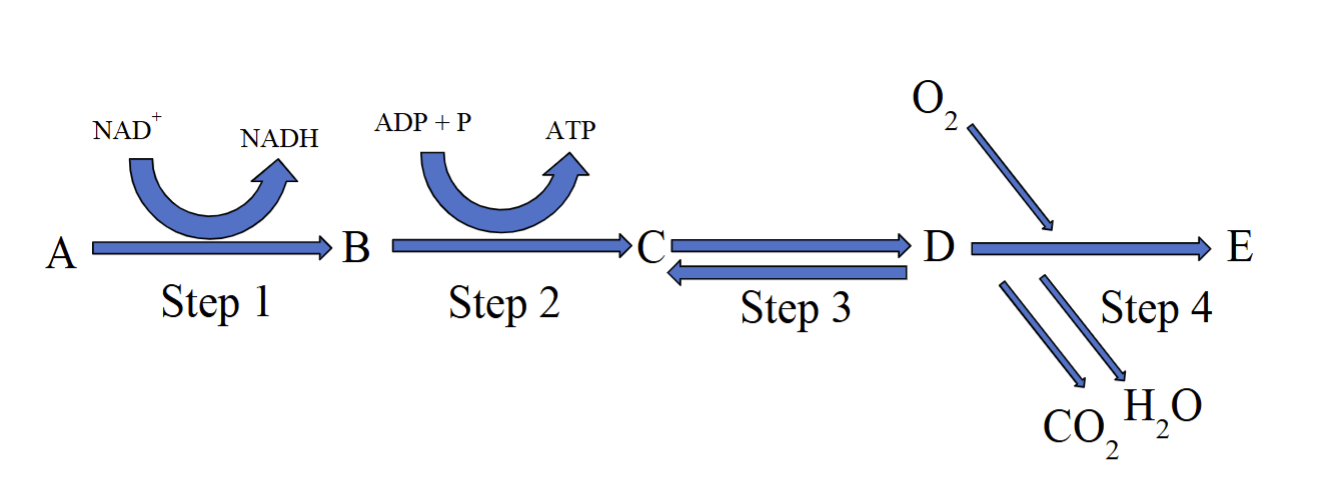
Is substrate A reduced or oxidized in reaction step 1?
Oxidized (gave electrons to NAD+)
What is also involved with this pathway (#1)?
Enzymes
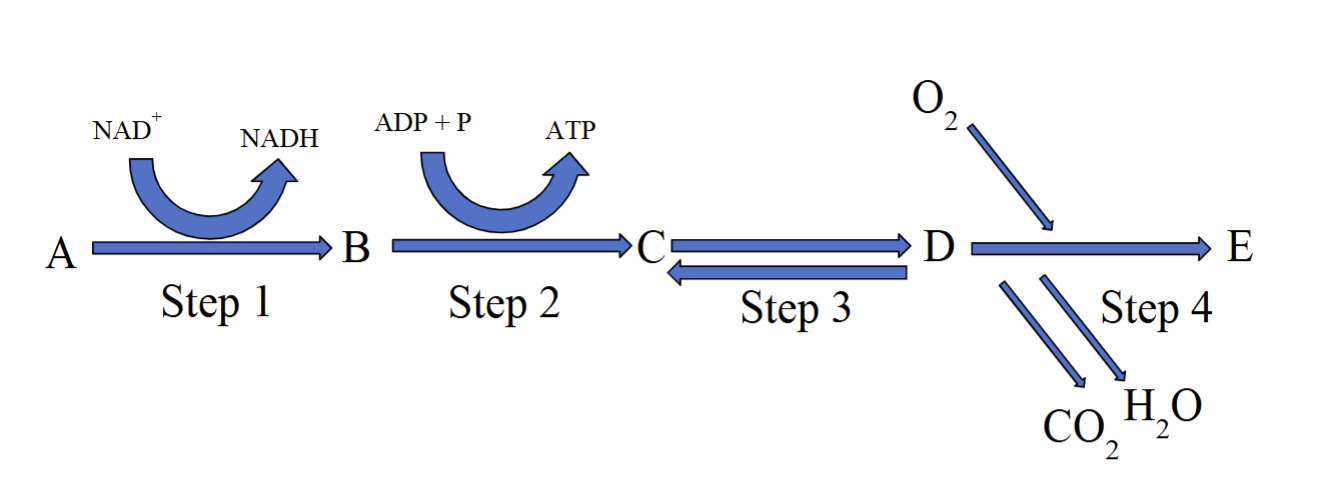
In reaction step 2 changing B substrate coupled to get ATP (form it). Where did the phosphate come from?
Comes from B (enzyme is allowed B + ADP to exchange)
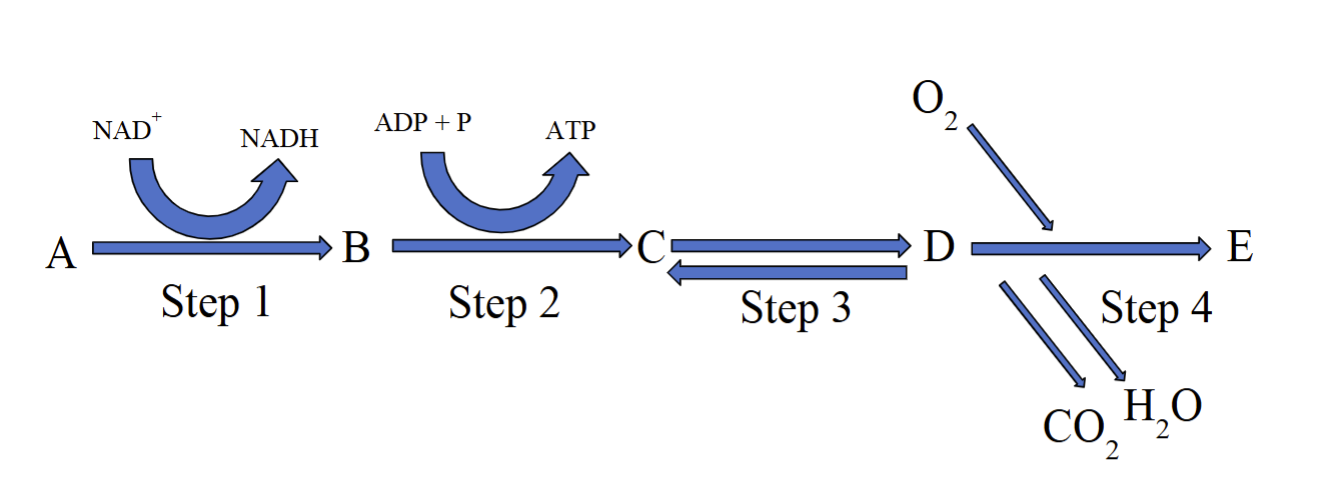
Where is a reversible reaction in reaction step 2?
Step 3
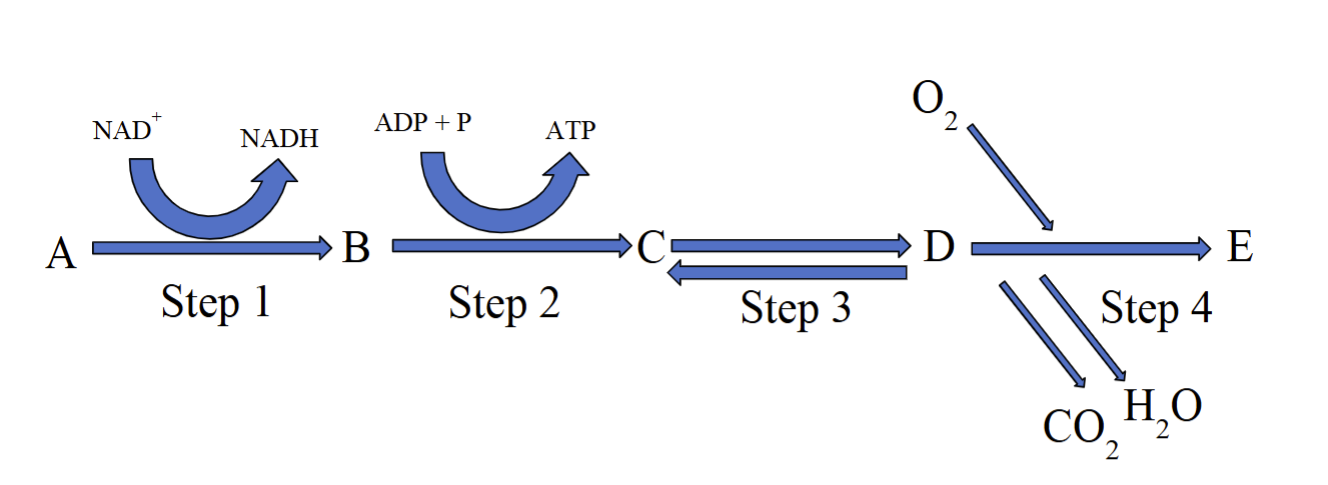
What is O2 at reaction step #4?
Reactant (for step 4 to work it needs O2)
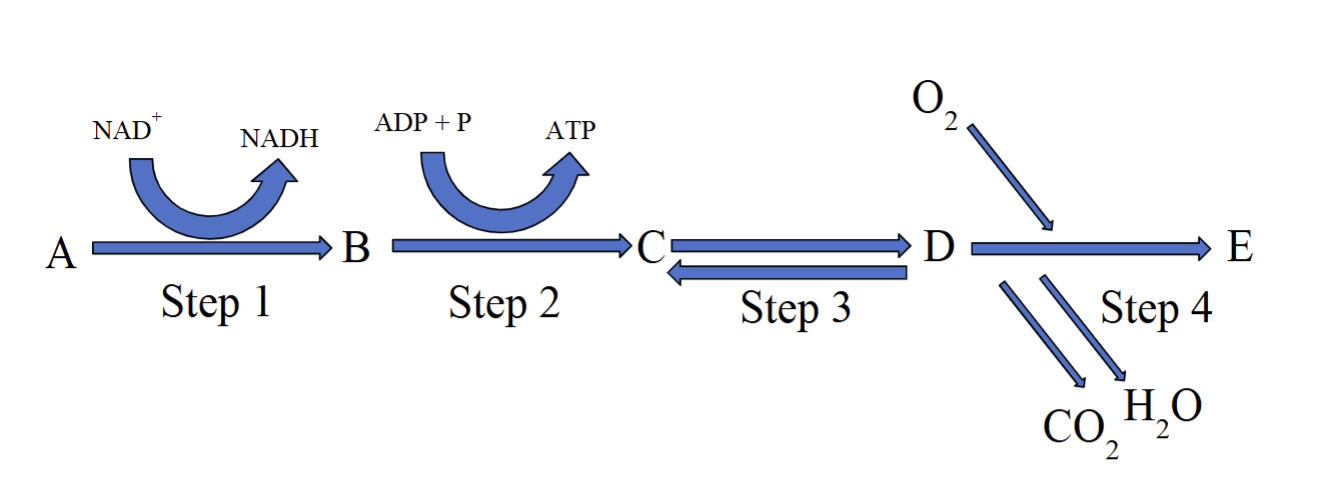
What is the main end product (of the pathway)?
E
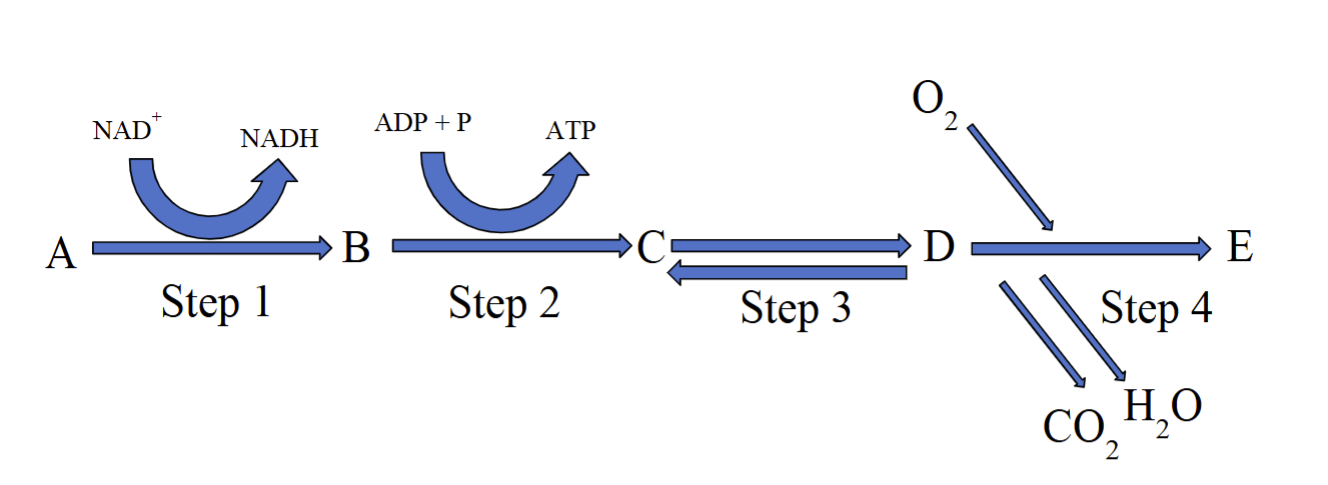
What are the by products or waste products?
CO2
H2O
Carbohydrates
The primary energy source for most microorganisms
Glucose
Most common carbohydrate energy source used by cells
Cellular respiration
aerobic respiration: O2 as final electron acceptor in process (ends at O2)
anaerobic respiration: another inorganic molecule as the final electron acceptor in process (ends at a inorganic molecule)
Fermentation
Organic molecule as the final electron acceptor in process (ends at organic molecule)
2 processes to get energy from glucose
cellular respiration
fermentation
3 pathways for aerobic respiration
glycolysis
Krebs cycle
Electron transport chain
Glycolysis
means splitting sugar
also called Embden-Meyerhoff pathway
most organisms use this pathway
glucose (starts with oxidation of this) → lots of reactions → 2 pyruvic acid (end product of pathway)
net gain of 2 NADH + 2 ATP for each glucose
step doesn’t require O2
occurs in the cytoplasm (prokaryotes and eukaryotes)
Krebs cycle
also called the tricarboxylic acid cycle (TCA cycle) or citric acid cycle
generally doesn’t occur in anaerobic organisms
2 pyruvic acid (starts to with oxidation of this) → lots of steps → cycles
net gain of 8 NADH, 2 ATP, 2 FADH2, and 6 CO2
CO2 (by-product) lost in humans during exhaling
occurs in the cytoplasm of prokaryotes and the mitochondria matrix of eukaryotes
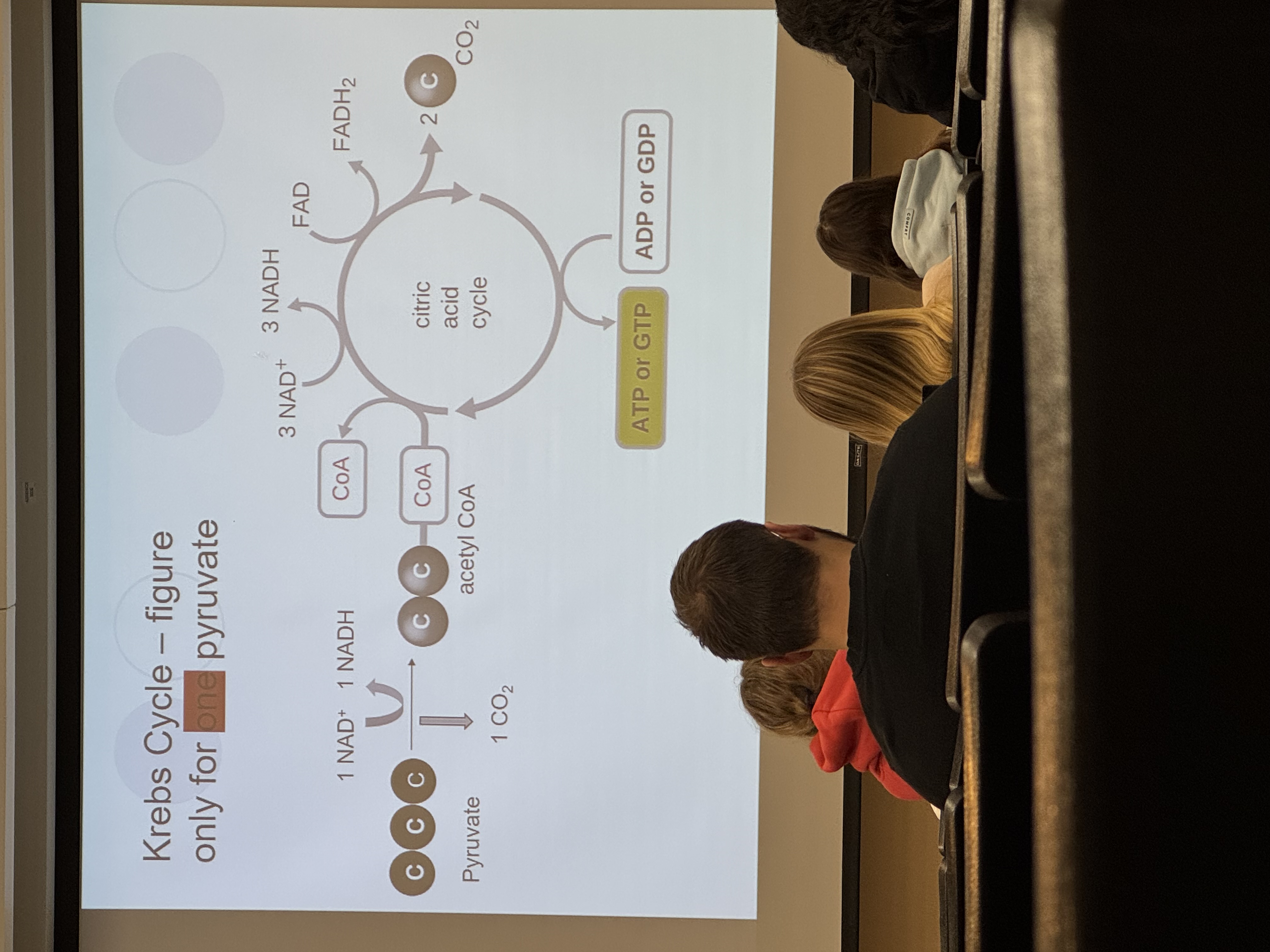
In Krebs cycle
ATP made from substrate level phosphorylation - the high energy phosphate is transferred from a substrate to ADP
In Glycolysis
ATP made from substrate level phosphorylation - the high energy phosphate is transferred from a substrate to ADP
What is NAD+ and FAD in Krebs cycle?
Electron acceptor (get electrons and take them somewhere and dump off)
What is NADH+ and FADH2 in Krebs cycle?
Electron carrier
Electron transport chain
reduced coenzymes/electron carriers are now oxidized (lose electrons) at this step → OR the pass electron to start of chain and then electrons are passed down a chain of carrier molecules
energy (ATP) produced by chemiosmosis via a proton gradient created by carrier molecules
after gradient made - protons rush back into the cell through the enzyme ATP synthase to produce TP
O2 as a final electron acceptor can produce oxygen radicals
inhibited by cyanide, carbon monoxide, or the antibiotic Antimycin A
occurs on the plasma membrane of prokaryotes and the mitochondria membrane of eukaryotes
net gain of 34 ATP molecules/glucose
anaerobic respiration
CHEMiosmosis
Chemical gradient due to pH
ChemiOSMOSIS
Osmotic gradient due to higher concentration outside the cell than inside
Anaerobic respiration in electron transport chain
-Use something other than O2 (final electron acceptor)
NO3-
SO4 2-
CO3 2-
-Not as efficient as aerobic respiration
-Use parts of pathways
How many electron carriers from Krebs cycle?
10
How many electron carriers from Krebs cycle + glycolysis?
12
How many net ATP made during glycolysis/glucose molecule?
2
How many ATP made from aerobic respiration/glucose molecule (prokaryote)?
38
Eukaryotes total ATP?
36
Fermentation
Free up coenzyme to continue glycolysis
releases energy from organic molecules (glucose)
steps:
glycolysis
some fermentation cycle (depends on organism as to which cycles they do)
does not require O2 (can occur when around)
use organic molecules as a final electron acceptor
small amount of ATP produced (step 2/glycolysis)
main end products (depends on the fermentation cycle)
acid
alcohol
gas (waste products)
The glycolysis step/pathway does produce ATP (but it is a very small amount). So why is fermentation (step) important?
O2 is usually not around and the organisms need some energy production → recycles coenzymes (oxidizes them) and can keep them doing glycolysis
How much ATP is produced in the fermentation step/pathway?
0
Latic acid fermentation
first step is glycolysis
2 pyruvic acid → steps →
fermentation step oxidizes the reduced coenzymes
Alcohol fermentation importance
food industry - bread and beer production
gasohol - part of NE’s economy (ethanol plants)
cheese (propionic acid and carbon dioxide)
Fats
good storage form of energy
break down to form fatty acids and glycerol
beta oxidation of fatty acids
lipase → enzyme to breakdown
feed into glycolysis and Krebs cycle
huge amounts of energy released
Protein catabolism
start with enzyme protease and peptidase
amino acids transported across plasma membrane
converted to other molecules to enter glycolysis and Krebs cycle
deamination - remove amino group off amino acid
decarboxylation - remove - COOH
Dehydrogenation - remove H
Coronavirus
coronavirus is common animal virus
many strains of coronavirus that circulate constantly
for most species-specific coronaviruses, the disease process is mild
when coronavirus from one species gain the ability to infect a new species (an emerging virus) the disease can be severe
Coronavirus in humans
many strains that circulate constantly and cause the common cold (15-30% of colds)
most of the rest are rhinovirus infections
deadly strains have emerged previously - which did not persist or don’t spread well
SARS
2002-2004
bats to masked palm civets (animals) to humans
8000 infected (600-800 dead)
MERS
2012
bats to camels to humans
2575 cases (886 deaths)
COVID-19
Bats (horseshoe) to pangolins to humans
Why bats?
common infectious disease reservoir
internal nose shape of a horseshoe
infects same cells
high core body temperature with flight
special immune systems (interferon always on)
SARS COVID-2 pathogenesis
incubation period 2-14 days
like other human coronaviruses, target cells are respiratory epithelial cells
receptor is angiotensin converting enzyme 2 (ACE-2)
ACE-2 is present in lower respiratory tract cells (deep in the lungs)
COVID-19 disease
flu-like, loss of taste/smell
destruction of lung tissue
severe pneumonia-like symptoms
shortness of breath
acute respiratory syndrome
heart attack-like symptoms
acerbation of underlying disease-heart disease, lung problems
secondary infection
Prevention
mask, social distance, avoid poorly ventilated, wash hands, avoid sick folks
vaccine - make artificial immunity to spike protein
mRNA version (Pfizer, Moderna)
viral vector version (J & J)
Why is COVID-19 such a problem?
virus better adapted to human receptors
80% of cases have few or mild symptoms
about 30-50% may have no symptoms
Cholera signs/symptoms, complications
acute, diarrheal illness
rice water stool
12-20 liters of water a day
dehydration
no fever
vomiting
Death from cholera
dehydration - loss of fluids
electrolyte imbalance
mortality: 50% left untreated
Cause of Vibrio cholerae
found in brackish water (mix between fresh and salt)
produce enterotoxin
makes epithelial cells highly permeable to water
serotype 01 or 0139
Infectious does of cholera
10^6 in water
10^4 in food
a high dose to get past stomach acid (don’t like acidic environments)
Transmission of cholera
fecal-oral
water
raw foods
undercooked foods
washing foods in contaminated water
found in copepods
Treatment for cholera
IV fluids
ORT (oral rehydration therapy)
vaccination (oral)
Trace minerals are needed in low amounts as enzyme cofactors for growing bacteria.
True
What is the order of pathways for alcohol fermentation?
Glycolysis, ethanol fermentation
Lactic acid fermentation is common in muscle cells that have run out of oxygen.
True
What category of bacteria based upon their optimal growth pH would inhabit the human blood (around pH 7.4)?
Neutrophiles
Which of the following is the reason jams and dried meats often do not require refrigeration to prevent spoilage?
Low water activity due to hypertonic conditions
What category of bacteria based upon their optimal growth temperatures would include most human pathogens?
Mesophile
Only eukaryotic cells can grow by anaerobic respiration using other inorganic molecules as final electron acceptors.
False
Fermentation can be used to preserve foods like dairy and fruits.
True
What category of bacteria would not contain any enzymes to inactivate oxygen radicals?
Obligate anaerobes
Epidemiology of cholera
John Snow - mid 1800s
London outbreaks
disassembling water pumps in certain areas to clean up cholera
Some bacteria grow by fermentation because they are able to get more ATP/glucose than in aerobic respiration.
False
Public health measures put into place to prevent cholera
cleaned up refuse
contained animals
instituted water treatment
Background of EHEC (Enterohemorrhagic Escherichia coli)
caused by Escherichia coli O157:H7
cause of illness in 1982 during outbreak of severe bloody diarrhea
most strains of E. coli are harmless and live in the intestines of healthy humans and animals
part of normal microbiota
Escherichia coli O157:H7
gram negative
rod shaped
facultative anaerobe
has flagella
O refers to the antigen associated with the lipopolysaccharide
H refers to the flagellar antigen
Toxin (E. coli)
strain produces a “shiga-like” toxins
toxin starts by destroying cells which line the large intestine
escapes into the blood stream and kills erythrocytes
damages endothelial cells lining the blood vessels
only need about 100 organisms to cause disease - can resist acidic conditions of stomach
Symptoms/signs E. coli
abdominal cramps and diarrhea
progress to bloody diarrhea (hemorrhagic colitis)
maybe fever and vomiting
illness resolves in 5-10 days
severe - heamolytic ureamic syndrome (HUS)
Haemolytic uraemic syndrome (HUS)
5-10% of all infections develop into this
children under 5 years o age and the elderly
red blood cells are destroyed and the kidneys fail
Diagnosis (E. coli)
isolation of E. coli in stool sample grown with Sorbitol MacConkey (SMAC) agar
Selective - inhibit the growth of the gram + microbial and flora
Differential - cannot utilize sorbitol on plate, therefore, not red
Source (E. coli)
reservoir of this pathogen appears to be mainly cattle - can be up to 50% of feedlot cattle
organisms can be mixed into beef when it is ground
dried cured salami
unpasteurized fresh-pressed apple cider
yogurt, cheese and unpasteurized milk
fruits and vegetables (sprouts, lettuce, coleslaw, salad)
swimming in or drinking sewage-contaminated water
petting zoos

