Motor Development Exam 1
 Studied by 0 people
 Call Kai
 Learn
Learn Practice Test
 Spaced Repetition
 Match
Match Flashcards
 Knowt Play
1/109

There's no tags or description
Looks like no tags are added yet.
Name | Mastery | Learn | Test | Matching | Spaced | Call with Kai |
|---|
No analytics yet
Send a link to your students to track their progress
110 Terms
what is development?
the process of continuous sequential change to a specialized functional capacity
-related to, but not dependent on, age
cognitive development
the process of continuous sequential change to specialized functional capacity in the cognitive domain
social development
the process of continuous sequential change to specialized functional capacity in the social domain
motor development
the development of movement abilities as well as the factors underlying those changes (individual, environment, & task)
-continuous, age-related
motor learning
movement changes that are relatively permanent but related to experience or practice rather than age
motor behavior
an observable or measurable motoric action
-doesn't distinguish between motor learning or development; includes both
motor control
the nervous system's control of the muscles that permits skilled and coordinated movements
physical growth
a quantitative increase in size or magnitude
physiological maturation
progress toward physical maturity (optimal functional integration of a body's systems); qualitative advance in biological makeup
aging
the broad sense of growing older, regardless of chronological age; also refers to changes that lead to a loss of function and eventually death
what are Adolph and Hoch's four features of infant motor development that demonstrate the close relationship between motor development and psychology?
-embodied (generating forces)
-embedded (in the environment)
-enculturated (socially impacted)
-enabling (allows for advancement in motor, perception, & cognition)
newell's model of constraints
provides a framework to understand motor development. examines interactions between three factors: individual, environment, & task
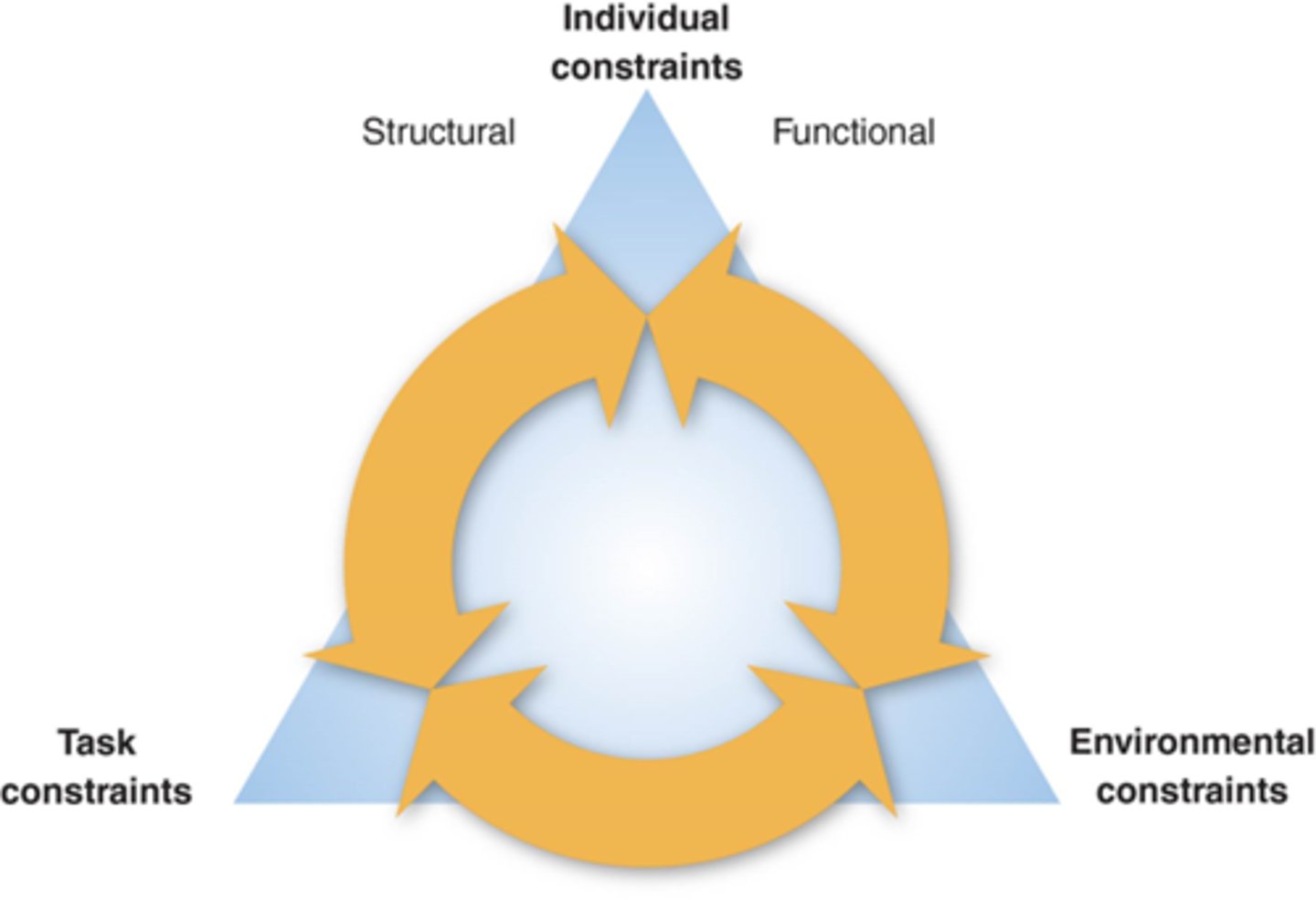
constraints
limits or discourages some movements & permits or encourages other movements
-not negative/bad
individual constraints
a person's unique mental and physical characteristics (height, limb length, strength, motivation)
-structural or functional
-INTERNAL
structural constraint
relate to an individual's body structure (height, weight, muscle mass, etc)
functional constraints
relate to an individual's behavioral function (motivation, fear, experiences, attentional focus)
environmental constraints
constraints related to the world around us
-physical (temperature, amount of light, floor surface, etc.)
-sociocultural (football more likely to be gifted to a boy than a girl)
-EXTERNAL
task constraints
constraints that include the goals and rules of an activity, including equipment (having to dribble in basketball rather than carry the ball, using a strung racket rather than a wood paddle, etc.)
-EXTERNAL
modifier
an adaptation that may help overcome a negative constraint
developmental trajectory
The curve plotted in describing developmental change
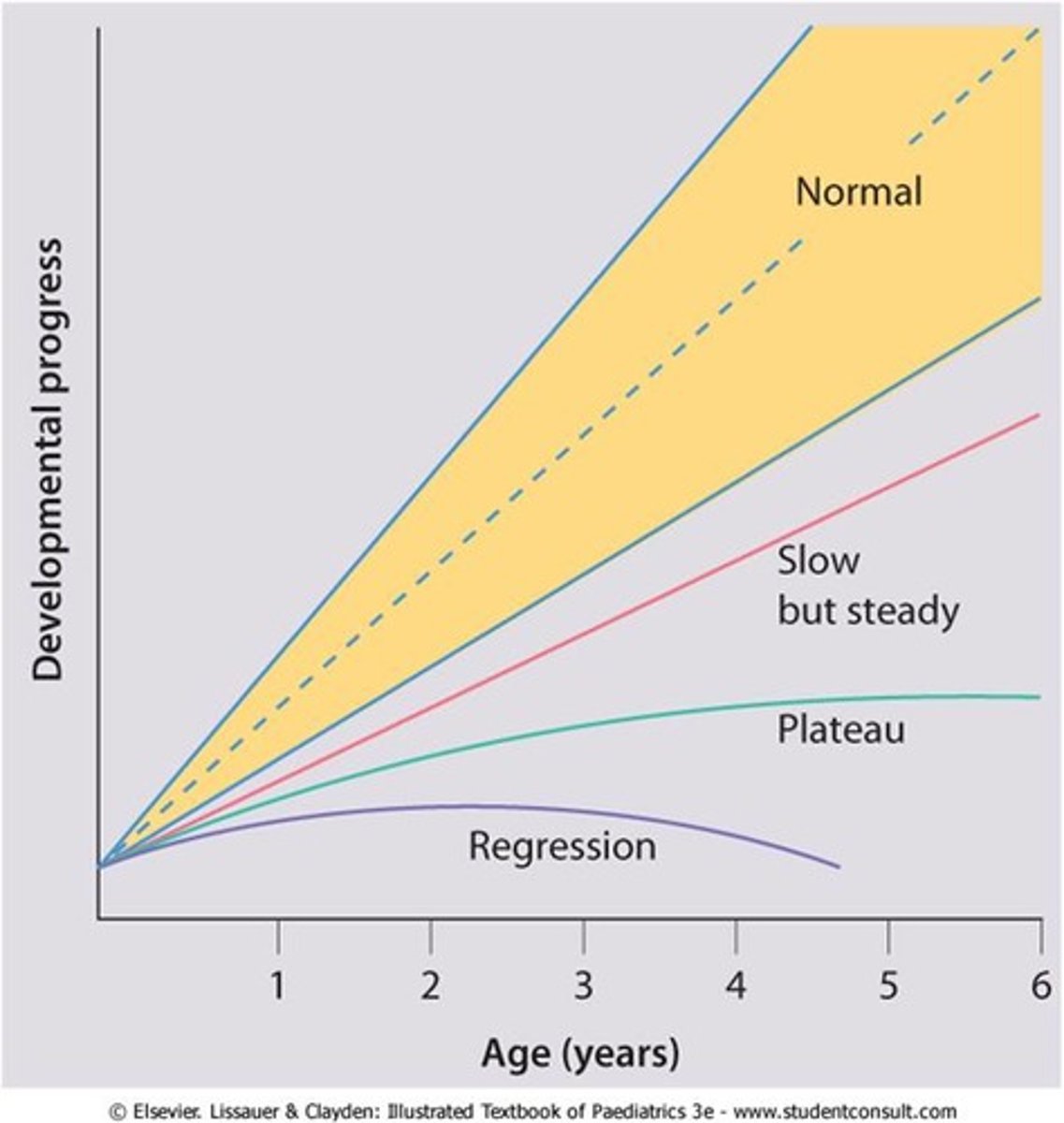
arrested development
a failure to develop beyond a particular point of development
proficiency barrier
a hypothetical barrier used to describe a threshold; assumes that if the barrier is not crossed by a certain age, subsequent development would be difficult
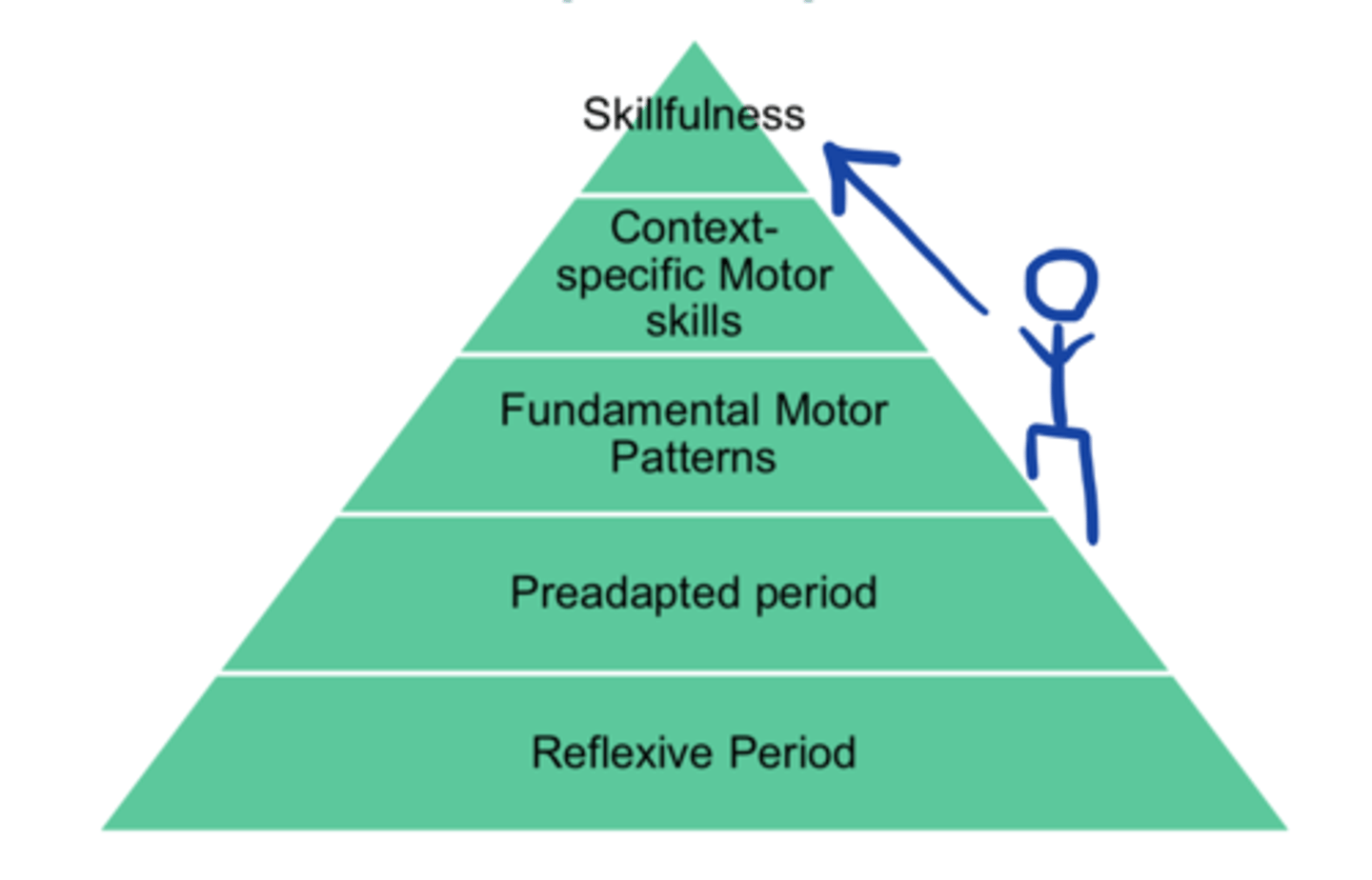
mountain of motor development
Bottom to top ---
Reflexive: birth-2 weeks
Preadapted: 2 weeks-1yr
Fundamental Motor Patterns: 1-7yrs
Context-Specific: 7-11yrs
Skillful: 11+ yrs (after puberty)
longitudinal research study
a developmental study in which one group of participants is studied over a long time
-accurate, but takes a long time
cross-sectional research study
a developmental study in which change is inferred by observing multiple groups (of varying ages/stages) at one point in time
-can be done in a short amount of time, but does not observe ACTUAL change - just infers it
cohort
a group whose members share a common characteristic, such as age or experience
mixed-longitudinal/sequential study
a developmental study in which multiple mini-longitudinal studies are conducted with overlapping ages
-permits observation of an age span that is longer than the observation period (ex: age groups 4, 6, and 8 years of age are observed over 2 years)
meta analysis
integrates the effects observed in many studies into one more generalizable estimate of an effect
review paper
compares and contrasts many studies on a topic
universality versus variability
the idea that individuals in a species show great similarity in development, but individual differences also exist
maturational perspective
explains developmental change as a function of maturational processes (in particular, through the CNS). assumes that motor development is an internal or innate process driven by a biological time clock
Johnny and Jimmy Study
twin study testing the environmental factors on motor development in infants
-johnny received "training", while jimmy did not. results showed that johnny was advanced in certain skills but not others. therefore, were open to interpretation and did not help solve the nature-versus-nurture debate
what were the two descriptive methods of the maturational perspective?
normative descriptive & biomechanical descriptive
normative descriptive period
focused on identifying the quantitative, average ages at which children achieved specific developmental milestones
-prioritized the PRODUCTS (outcomes) of development rather than the processes that led to it
biomechanical descriptive period
focused on qualitative, sequential data about HOW children moved
-focused on the PROCESS of movement rather than the product
information processing theory
the view of behavior as mental operations (perception, information retrieval, memory, response selection) on sensations so that a response can be made
-compares the brain to a computer that takes in info and outputs movement
ecological perspective
stresses interrelationships between the individual, the environment, and the task
-considers the interaction of all constraints to understand the emergence of a motor skill
-two branches: dynamical systems and perception-action
when do maturationists feel that development ends? when do motor ecologists believe that development ends?
maturationists: believe that motor development ends at the end of puberty or at adulthood
motor ecologists: believe that motor development is a lifespan process
dynamical systems approach
an ecological viewpoint that believes that body systems spontaneously self-organize (not driven by CNS)
-coordinated behavior is "softly assembled" and flexible rather than hardwired
-ex: as you mature, your body is more suited to walk upright rather than crawl, which encourages you to choose walking as a means of movement
rate limiters
an individual constraint that holds back the emergence of a motor skill because it develops more slowly than other systems
-concept of the developmental systems approach
rate controller
a constraint that changes or ages more quickly than others. causes a loss of skills towards the end of life
-concept of the developmental systems approach
perception-action approach
an ecological viewpoint that the "perception" and "action" systems are related and evolve together
-movement is necessary to explore the environment and obtain information for further action
affordance
the function that an environmental object provides to an individual (related to the size and shape of the object and the individual)
-ex: a heavy baseball allows an adult, but not an infant, to throw it
body scaling
when an individual considers their own body proportions (intrinsic dimensions) when making movement decisions rather than extrinsic dimensions
-or, can refer to changing the dimensions of the environmental object to the structural constraints of the performer
is an embryo/fetus sensitive to extrinsic factors?
YES!!
-nutrients delivered via placenta/mother's circulation
-amniotic sac in uterus
-abnormal external pressure applied to mother's abdomen
-presence of viruses or drugs
embryonic development
conception-8weeks
-ovum & spermatozoon fuse
-cells differentiate into tissues/organs
-limbs formed at 4 weeks
-human form noticeable at 8 weeks
fetal development
8weeks-birth
-characterized by hyperplasia & hypertrophy
-growth is cephalocaudal and proximodistal
hyperplasia
an increase in the NUMBER of cells
hypertrophy
an increase in the SIZE of cells
cephalocaudal growth
growth begins at the head and extends to the lower body
proximodistal growth
growth begins centrally and moves outward toward the extremities
plasticity
the ability of a cell to take on a new function
how does a fetus receive nourishment?
via diffusion of the blood/O2/nutrients of the mother and baby in the placenta
congenital defects
anomalies present at birth, regardless of whether their causes are genetic or extrinsic
what are common causes of a congenital defect?
-dominant or recessive disorders
-gene mutation (alteration or deletion of a gene during the formation of an egg or sperm cell)
-teratogens (medications or chemicals)
-external or internal pressure on the infant
-extreme internal environmental temperature (hyperthermic or febrile mother)
teratogen
any drug or chemical agent that causes abnormal prenatal development
-ex: alcohol
why is lower socioeconomic status more likely to lead to lower weight babies?
a low SES-status mother may not be able to meet the nutrition needs of the fetus
-may also be at higher risk for illnesses and infections that may compromise birth weight
-less likely to receive prenatal care
sigmoid curve
describes the pattern of whole-body growth (rapid growth after birth, followed by gradual and steady during childhood, then by rapid growth during early adolescence, then finally leveling off)
-normal growth curve is always sigmoid, but timing may vary
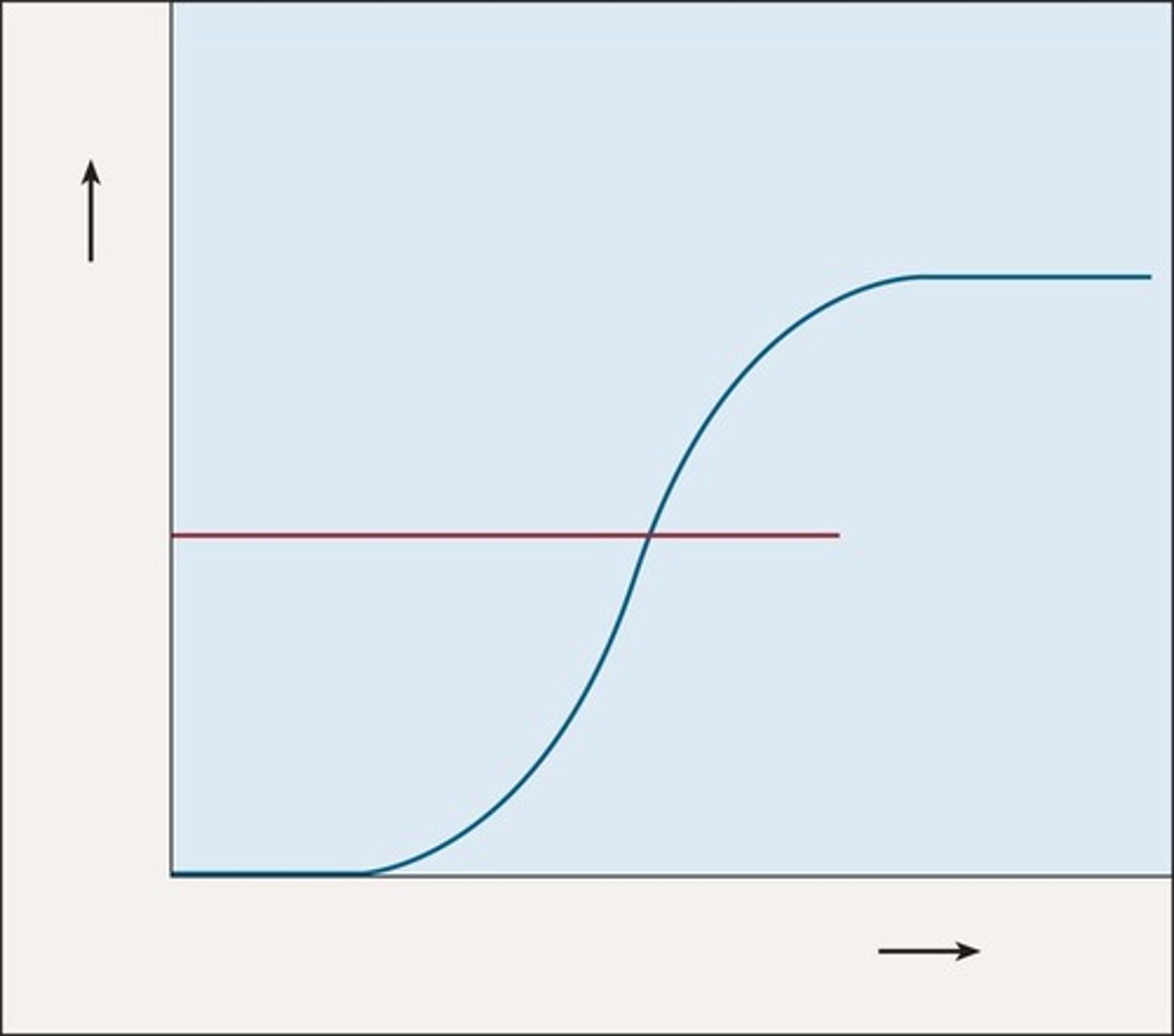
age at takeoff
the age at which growth starts to increase
-average age 9 for girls; 11 for boys
how does weight growth compare to height growth?
weight is much more susceptible to extrinsic factors
physiological maturation
advance in the biochemical composition of body systems (not necessarily just an increase in size)
-leads to a state of full function
-size doesn't necessarily indicate maturity
secondary sex characteristics
appear during the adolescent growth spurt: female breasts and hips, male voice quality, and body hair
anthropometric measurements
measures of growth & size
"catch-up growth" phenomenon
a period of accelerated growth in which children who have experienced growth deficits grow very rapidly to "catch up to" the growth trajectory that they are genetically programmed to follow
-occurs once the negative extrinsic influence is removed
how does growth change in the 20s?
height plateaus; weight may increase due to lifestyle changes
Why might height decrease in older adulthood?
-compression of cartilage pads
-osteoporosis
why do people "grow up, then fill out"?
peak weight velocity follows peak height velocity (by 2.5-5 months in boys and 3.5-10.5 months in girls)
what extrinsic forces are most likely to affect growth during infancy? what about during the adolescent growth spurt?
infancy - nutrition, drug/substance exposure, illness
adolescence - nutrition, illness
how does the skeletal system develop?
begins as a cartilage model; ossification centers then develop and begin to form bone cells (around the fetal age of 2months)
primary ossification centers
areas where bone cells are FORMED; appear in the midportions of long bones
-ossification continues outward until the full bone is formed
secondary ossification centers
cartilaginous site of long bone growth/LENGTHENING; also called EPIPHYSEAL PLATES or growth plates
-on the ends of bones
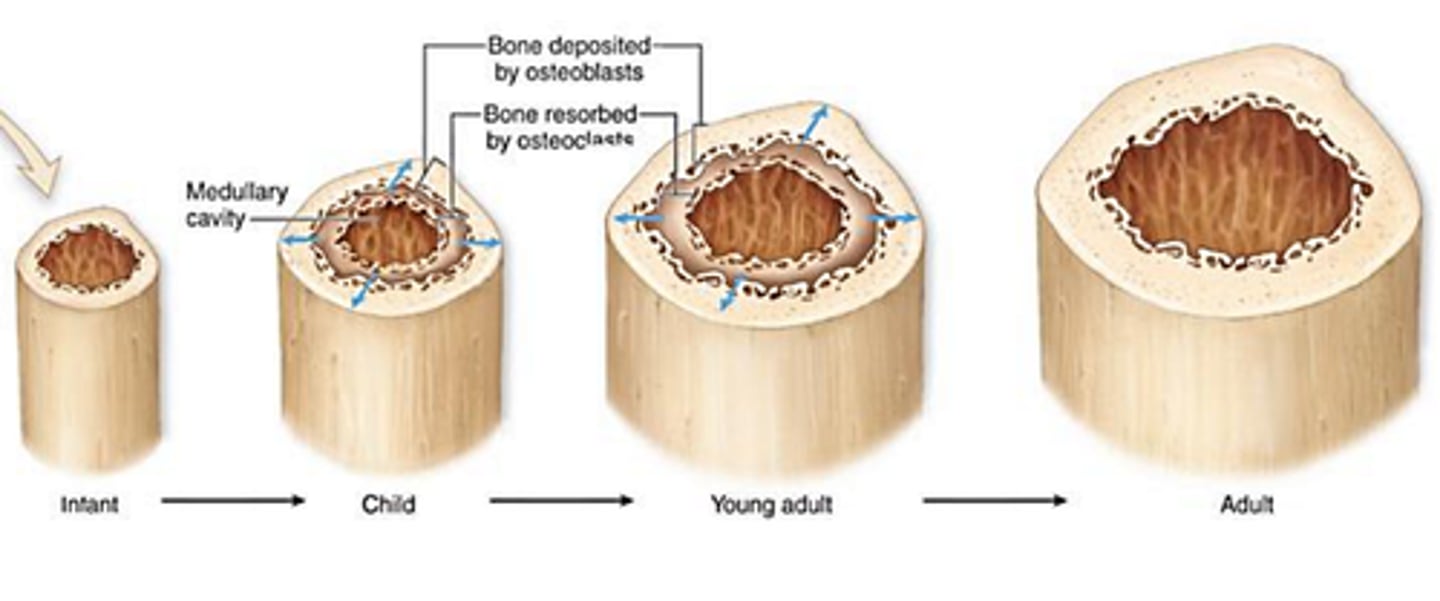
appositional growth
growth in bone width; continuous throughout the lifetime
-occurs due to the addition of new tissue layers under the periosteum
traction epiphyses
Growth areas where muscle tendons attach to bones.
when does bone growth typically stop?
around age 18-19
-on avg, epiphyseal plates close earlier in girls than in boys
how does bone growth change throughout adulthood?
bone remodeling continues throughout the lifespan; as you age, your bone production fails to keep up with bone reabsorption (leading to more brittle bones)
osteoporosis
loss of bone density
what factors may lead to more significant losses of bone mass? what helps preserve it?
-hormonal: deficiency in estrogen (in post-menopausal women)
-diet: deficiency in calcium (also has an especially large effect in post-menopausal women)
preservation:
-physical activity
how do prenatal muscle cells grow? what about after birth?
prenatal: both by hyperplasia and hypertrophy
postnatal: muscle growth continues predominantly by hypertrophy
how do muscle cells increase in size?
both in diameter & length due to addition of sarcomeres
type 1 fibers
slow twitch; endurance activities
type IIa, IIx, and IIb fibers
-fast twitch; intense short duration activities
At what age is the muscle fiber distribution typically determined?
1
how does cardiac muscle develop?
heart and blood vessels grow to scale with the rest of the body
-prenatally: hypertrophy & hyperplasia
-postnatally: follows a sigmoid growth pattern
what happens to skeletal muscle mass with age? what about cardiac?
skeletal:
-decreases only ~10% between ages of 20-50
-decreases up to 50% by very old age
*number and size of fibers decrease
cardiac:
-heart may lose elasticity and valves can become more fibrotic
how does the adipose system develop PREnatally?
first appears in fetus ~3.5 months; increases rapidly during last 2 months, but still only accounts for ~0.5kg (14%) of body weight at birth
how does the adipose system develop during childhood/adolescence?
-increases rapidly until 6 months, then gradually until 8 years
-growth is by both hyperplasia and hypertrophy, with hypertrophy being more prominent in adolescence
-in adolescence, girls increase fat more dramatically than boys
internal fat
fat around the viscera (internal organs)
subcutaneous fat
fat under the skin
children have more _______ than _______ fat
internal; subcutaneous
-subcutaneous fat increases from ages 6-13 in boys and girls. then it continues to increase in girls, but decrease in boys
how does subcutaneous fat change in adulthood?
it increases in the trunk and decreases on the limbs
-abdominal fat is associated with a higher risk of cardiovascular disease
how does overall body mass change with old age? how does adipose tissue mass change?
overall body mass decreases (due to loss of bone & muscle), but body fat continues to increase
how does the endocrine system regulate prenatal growth?
the placenta produces its own hormones and serves as a barrier to prevent the mother's hormones from overloading the fetus's system
what are the 4 major hormones that regulate growth?
growth hormone, thyroid hormone, gonadal hormones (androgens & estrogen)
-excess or deficiency may alter growth
anabolism
tissue building
-stimulated by hormones
what role does insulin play in growth?
facilitates the uptake of glucose for carbohydrate metabolism
-indirect role in growth
growth hormone
secreted by the anterior pituitary gland; necessary for normal growth
thyroid hormones
secreted by the thyroid gland; influence whole-body growth
-one plays a role in skeletal growth
what are the two gonadal hormones? where are they individually secreted and what do they do?
androgens: secreted by testes (boys) and adrenal glands (boys/girls)
-promote epiphyseal growth plate closure
-promote muscle mass growth
estrogens: secreted by ovaries (girls) and adrenal cortex (boys/girls)
-promote epiphyseal plate closure
-promote accumulation of fat
how might aging impact the endocrine system?
-thyroid disorders are more common
-decreasing gonadal hormone levels cause loss of bone/muscle tissue
how do genetics and extrinsic factors interplay in the development of the nervous system?
genes direct development of the structure, but extrinsic factors fine-tune the connections
 Note
Note  Flashcards (123)