BCS 111 Lecture 6.4/7.1
 Studied by 0 people
 Call Kai
 Learn
Learn Practice Test
 Spaced Repetition
 Match
Match Flashcards
 Knowt Play
1/23

There's no tags or description
Looks like no tags are added yet.
Name | Mastery | Learn | Test | Matching | Spaced |
|---|
No study sessions yet.
24 Terms
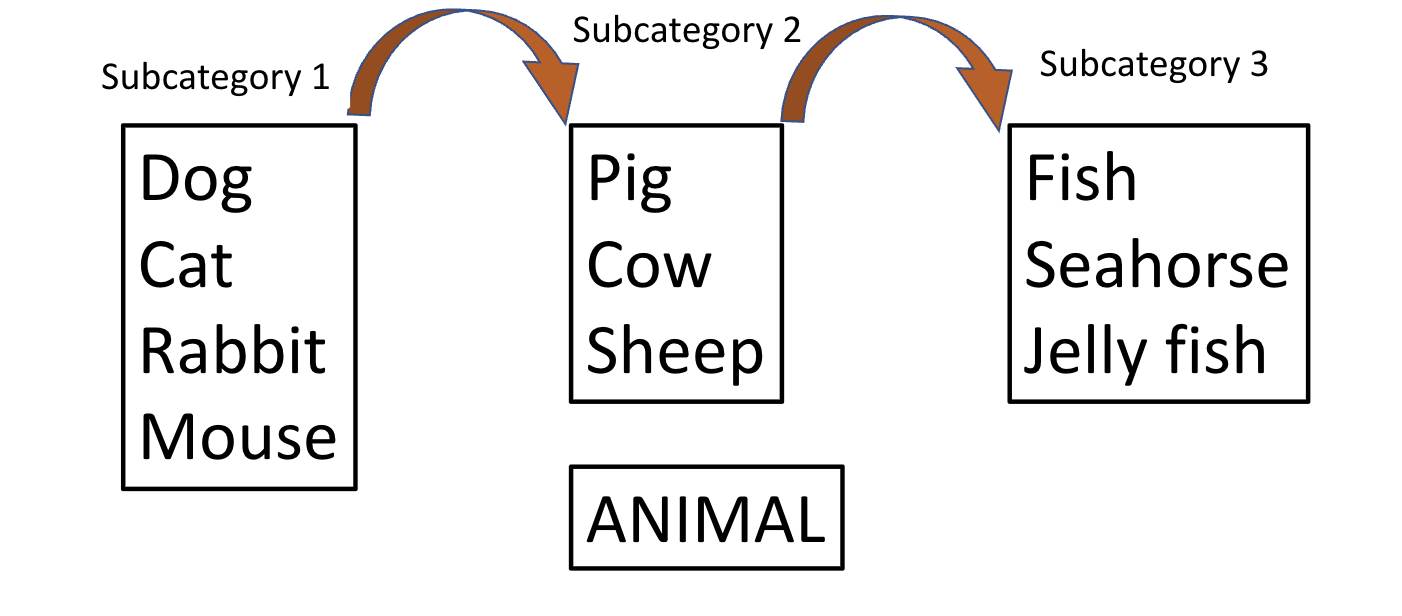
Long-term memory retrieval
Bousfield (1953): free recall
Recall a list of 60 words
Ss recall words in clusters
Similar to foraging (as discussed in Ecological Approach)
Ecological approach to the study of LTM retrieval
Memory search: verbal fluency task: recall as many words as possible in a given category.
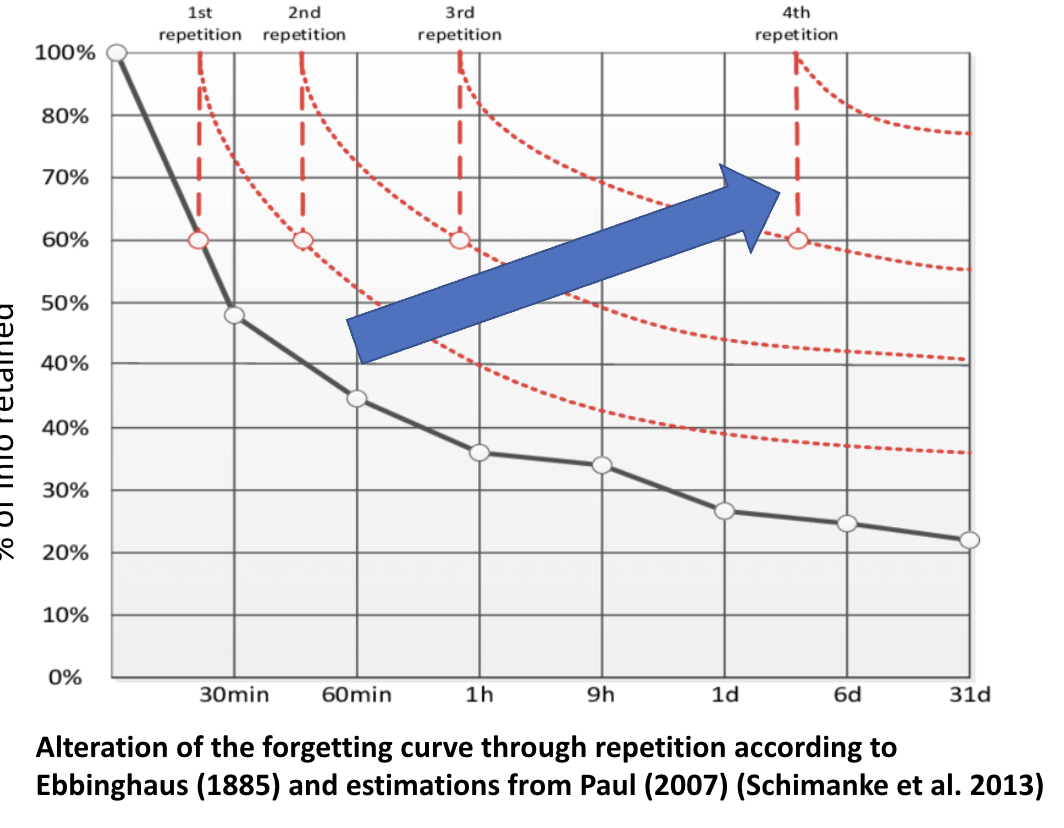
Long-term memory - forgetting
How do you ”flatten the curve”?
Study, study and study!
Mechanisms underlying forgetting?
Interference vs. decay (as in STM)
Proactive interference
stronger if old pair has stronger connection than new
(old pairing) Science – experiment
(new pairing) Science – dinner
Q: Recall the new pair.
A: Science - experiment
Retroactive interference
new replaces old
(old pairing) Science – cat
(new pairing) Science – rain
Q: Recall the old pair?
A: Science - rain
Retroactive interference PLUS (old) information decay
stronger if the old one learned a long time ago
(old) Science – cat
… after 2 weeks
(new) Science – rain
Q: Recall the old pair?
A: Science - rain
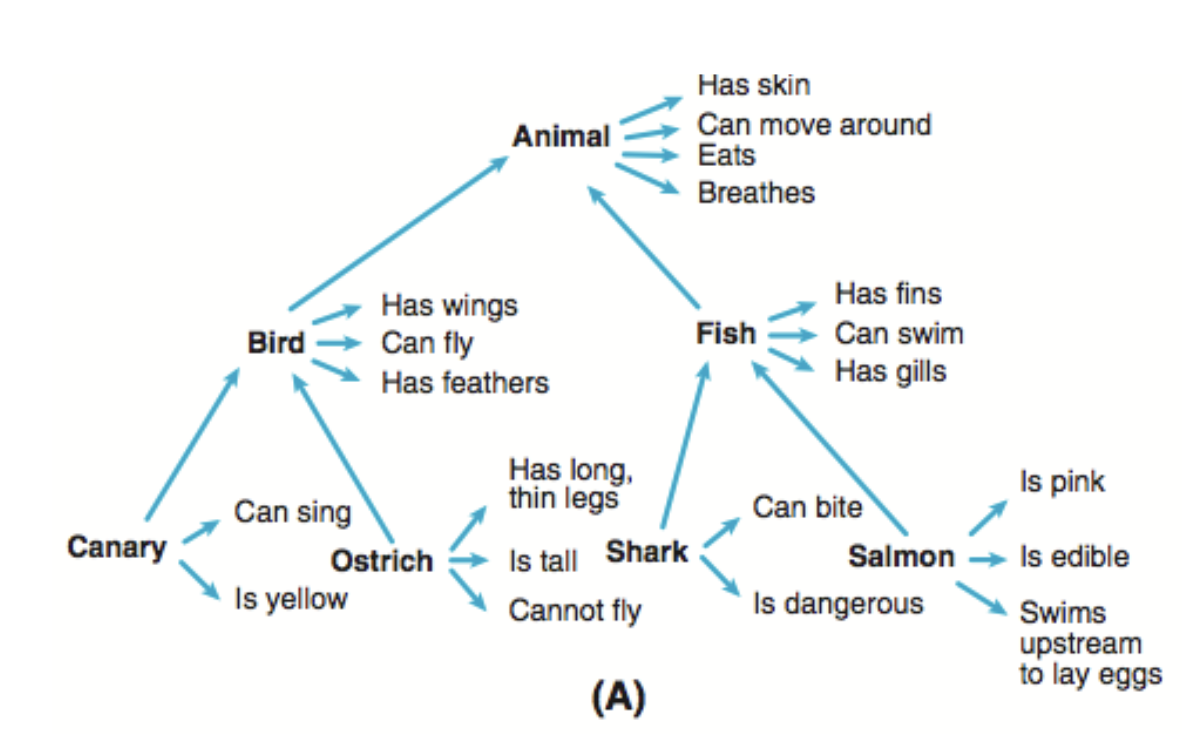
Our knowledge and concept are organized like a hierarchy of categories in semantic memory
Hierarchical network model (a connectionist model)
Two types of nodes
(Sub-)Category labels
Features
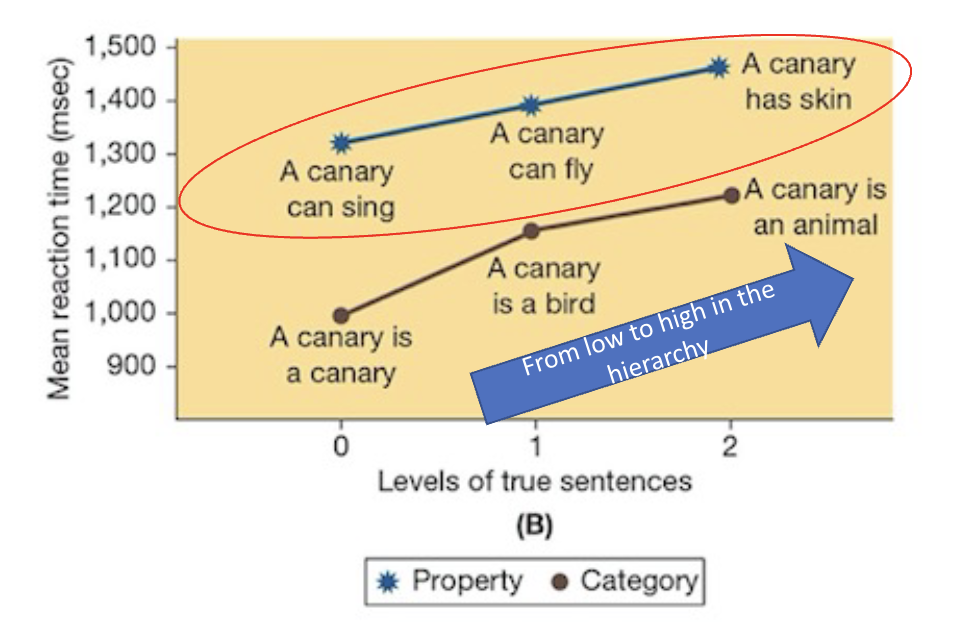
Results supporting the hierarchical model
Slower responses to feature description than category name
Slower responses to features from the top level
Slower responses to category members from the top level
Concept and categorization
Classical view
Knowledge-based
Similarity comparison
Prototype
Exemplar
Classical view
List of features
Binary distinction: either belongs or doesn’t belong to the category
No goodness-of-fit: no good or bad member --> No prototype!!
Knowledge-based view of categorization
New years eve example
Concept and imagery
Do you have a mental image for every concept?
Can you form an image of an abstract idea?
Your mental image for the concept “abstract”?
Imagery and words
How do we link word with the thing that the word represents?
Concreteness of the word: hard to form mental images for abstract concepts
Language-specific: pictorial vs. non-pictorial words
Brain activation of concrete vs. abstract words
Jessen et al. (2000) fMRI study of German words
Concrete vs. Abstract words
Task: simply remember each word while being scanned in MRI
Jessen et al. fMRI result: activation in parietal lobe for concrete words: image of object in space (the “where” stream)
Implications:
Mentally “sense” the concrete objects even if the actual object is not presented
Mental rotation: Cooper & Shepard (1973)
Letter identification with various types of cues (conditions)
Main task: identify whether the letter in the Testing trial is a normal letter or mirror image of the letter
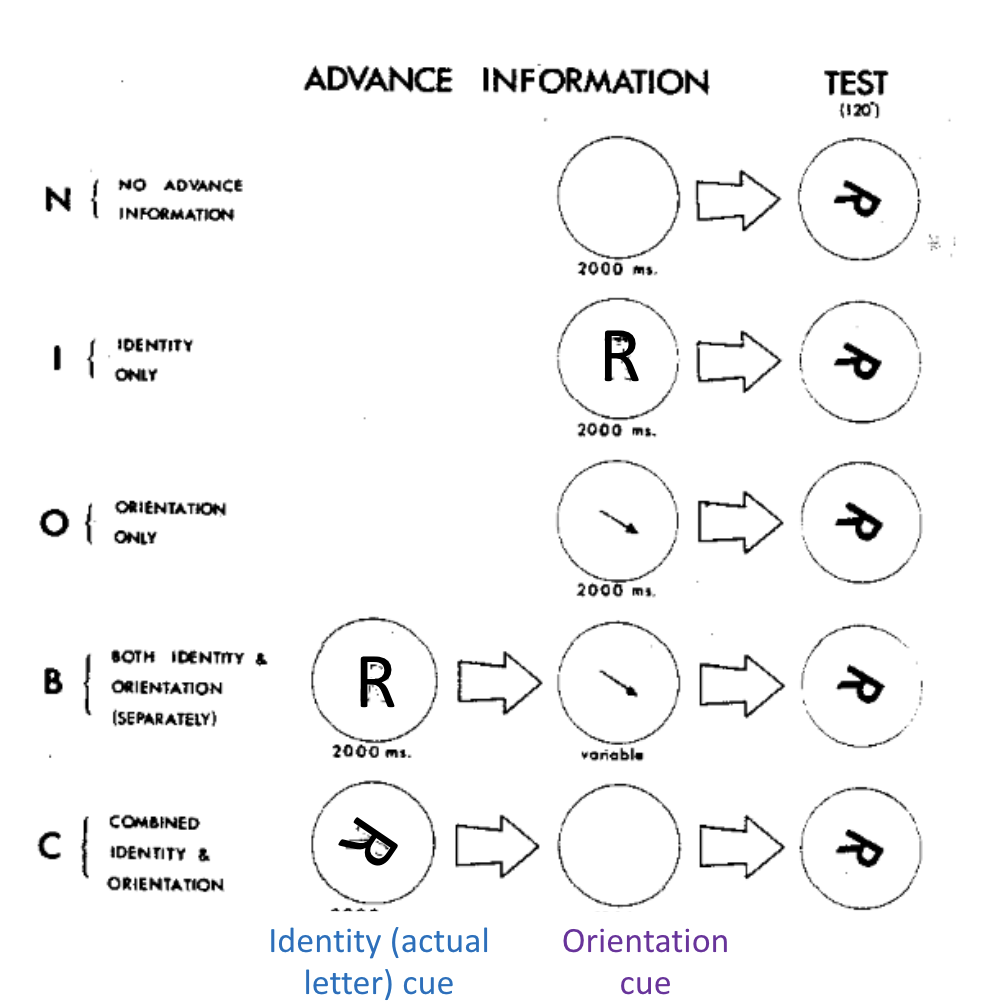
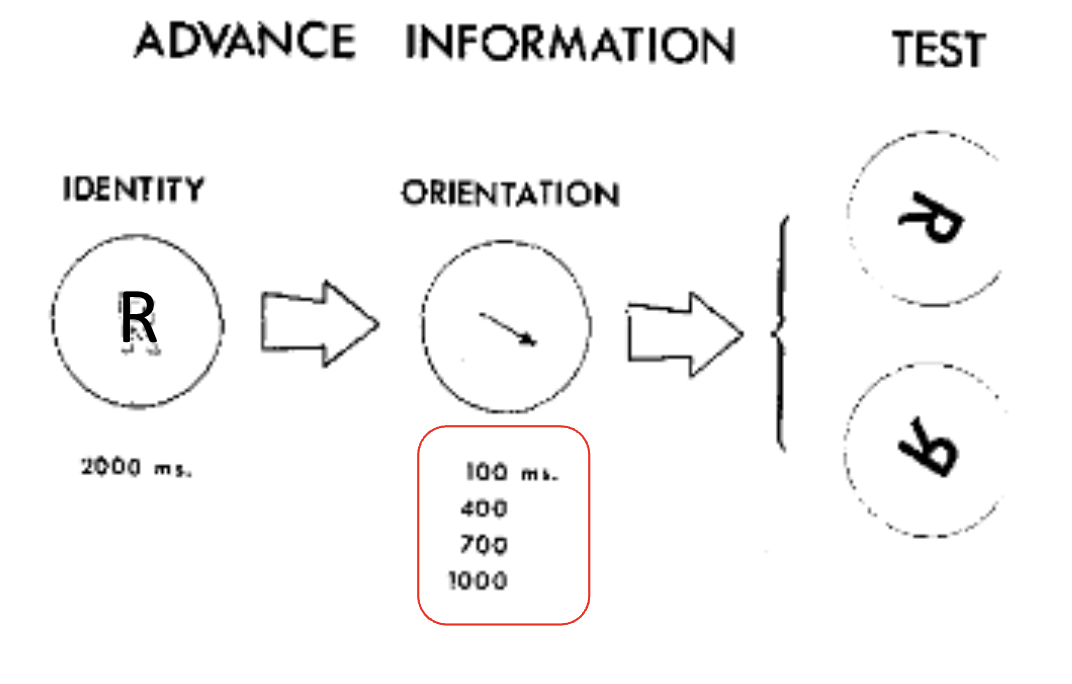
(cont)
Condition type B (both identity and orientation cue) : with an additional factor- 4 different durations of the cue
Mental rotation: Cooper & Shepard (1973)
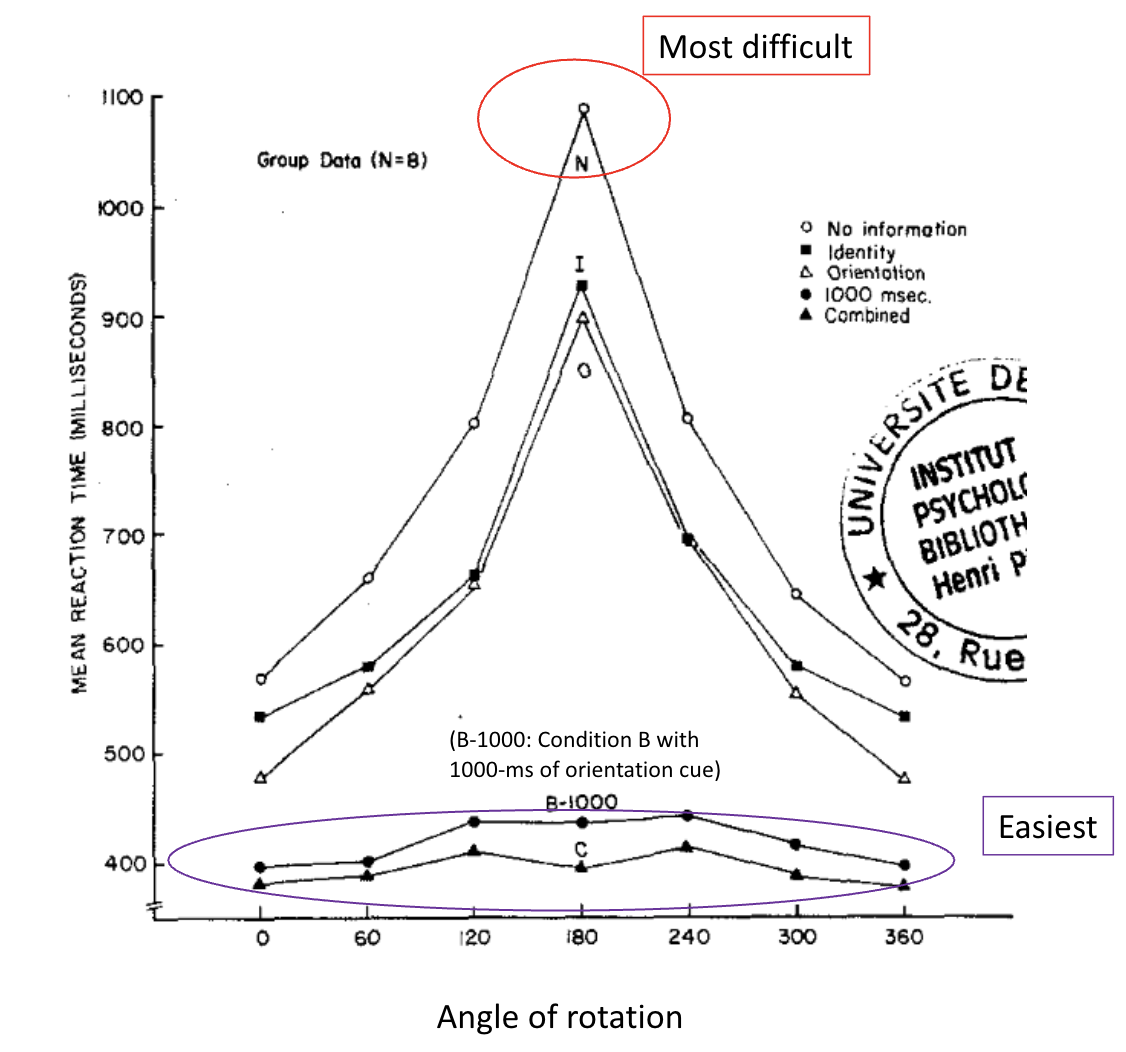
Time needed to make judgments in 5 different conditions
No cue: most difficult (slowest RT)
Both cues available and combined cues (condition B & C): easiest (faster RT)
(cont)
Time needed to make judgments in Condition B (both cues available) with 5 different cue durations
The longer the duration, the faster the RT
Pardo-Vazquez & Hernandez-Rey (2012)
The same letter judgment task (but only Condition N, aka. no cues available)
Working memory task divides Ss into high vs. low span groups
What factors may contribute to the performance on mental rotation task?
In both groups: The larger the rotation angle, the higher the error rate and RT.
HighSpan group outperformed the LowSpan group
Mental rotation highly correlated with working memory capacity (related to visual rehearsal)
Localization of mental rotation in the brain (Lamm 2007)
parietal lobe and premotor cortex
1. Encode: remember what the shape looks like
2. Indicate: showing the direction of rotation
(the side with the orange bar should be on the bottom after rotation)
3. Rotate: mentally rotate the shape
4. Match: judge if the rotated result is correct
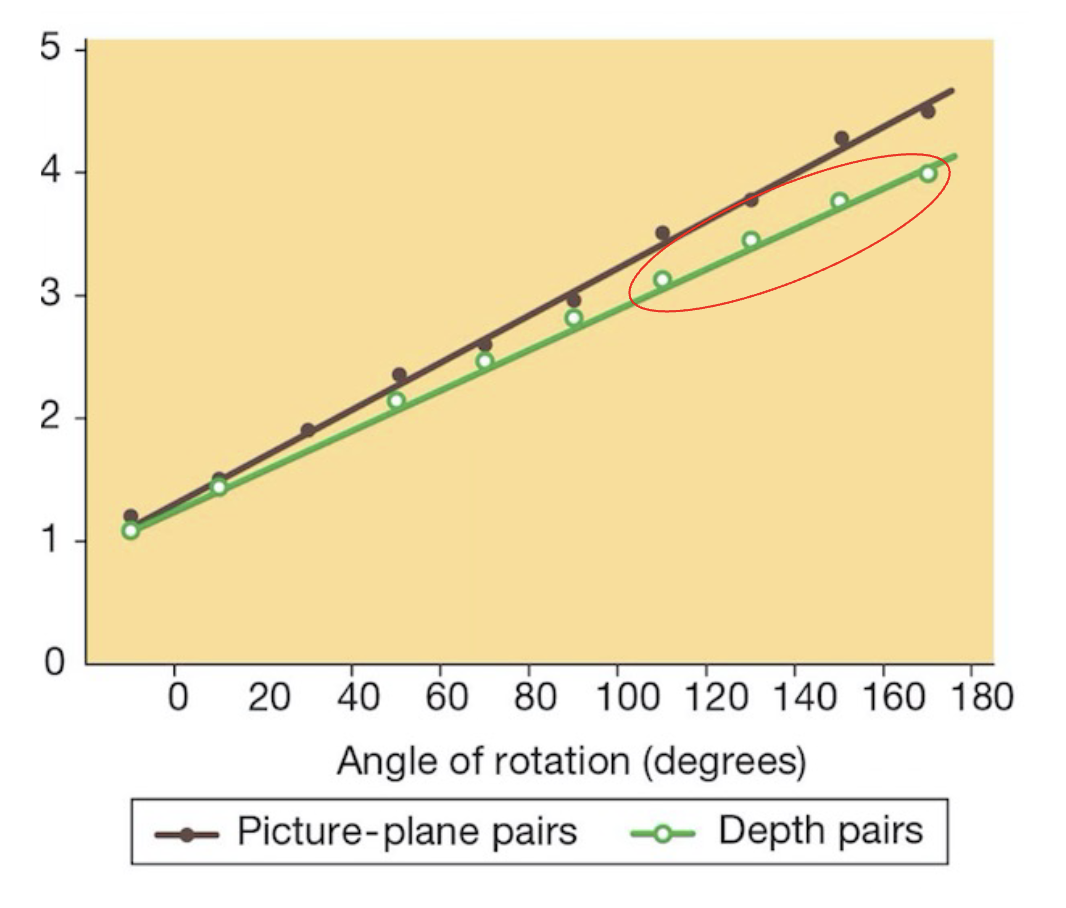
Mental rotation: Shepard & Metzler (1971)
First condition:
Picture-plane pairs
Second condition:
Depth pairs
(cont)
The larger the rotation angle, the larger the RT (slower)
Rotating by depth a bit easier when rotating by a large angle (although the difference is not very significant)
Implication: we mentally rotate not only 2D but also 3D images!
 Note
Note  Flashcards (24)