Eduqas alevel Ethics Theme 4B hard and soft determinism
 Studied by 0 people
 Call Kai
 Learn
Learn Practice Test
 Spaced Repetition
 Match
Match Flashcards
 Knowt Play
1/38

There's no tags or description
Looks like no tags are added yet.
Name | Mastery | Learn | Test | Matching | Spaced | Call with Kai |
|---|
No analytics yet
Send a link to your students to track their progress
39 Terms
What is hard determinism?
The view that all behaviour can be predicted and there is no free will. The two are incompatible.

what are the three types of hard determinism
Biological determinism
Environmental determinism
Psychic determinism
who supported philosophical determinism
John locke
what is philosophical determinism
hard determinism states that all human behaviour is caused by something external to us, so that there are no free decisions. This is a materialist approach that operates according to the principle of universal causation and that everything has an antecedent cause. The incompatibility theory maintains free will to be illusory
what is materialism
the only things that exist are matter and energy
what is universal causation
every event proceeds from another event without exception
what does antecedent mean
previous or pre existing
what does incompatibilism mean
free will and determinism cannot bee held to be true at the same time
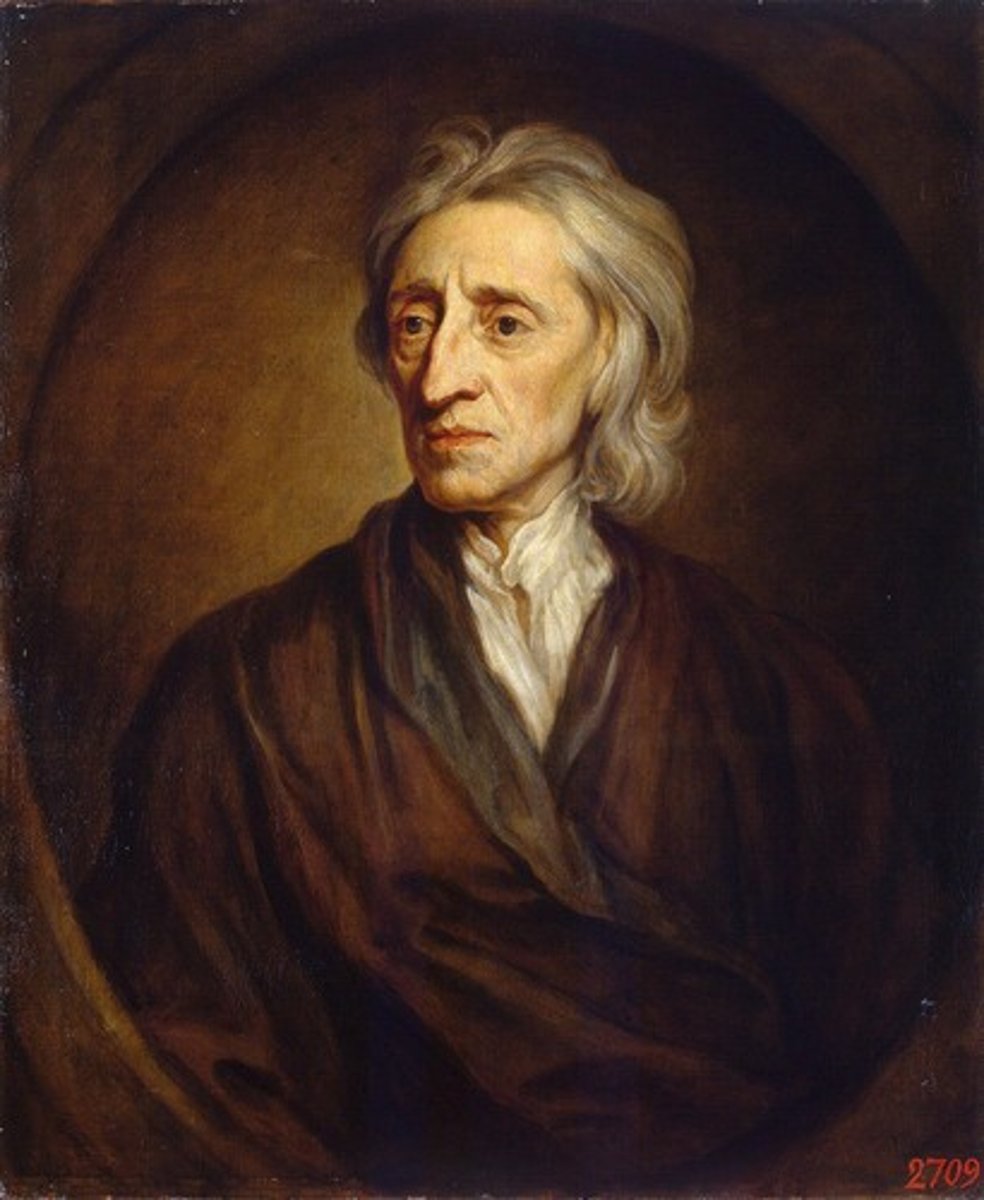
who was John locke
An English philosopher
what are the past causes according to John locke
Locke developed a philosophical determinism theory based on the theory of past causes aka universal causation such as the belief previously stated by Aquinas in the cosmological argument that all actions and choices have a past cause. Therefore Locke believed that all events that happen are determined by an unbreakable chain of past causes that cannot be escaped from. for example I was ultimately late to class because of this which happened because of this and so on and so on. Therefore if the above is correct and expanded out to every then we can say that the future must be logically fixed and unchangeable as the past, because we cannot change the past causes so that will affect the forward events
what did William James say about philosophical determinism
any other future set out of outcomes than the one fixed from eternity is impossible
what is the idea of free will is an illusion from John Locke
he says this to suggest that people who think that they have free will are deluding themselves, people think they have free will because they think they can pause to reflect before making a choice. But he thinks that it is the ignorance of the causes of our actions that make us think that are free.
what analogy did John Locke use to support his free will is an illusion idea
the man in the locked room:
It starts with the idea that a man wakes ip in a room, the room unknown to him is locked from outside, he chooses to stay in the room and have more rest but he believes that he freely made that choice to stay there. However in reality he had no option to stay there it was only his ignorance to the door being locked that it meant that he thought he had freedom. Locke says that our action is preceded by our will which comes from our desire for pleasure.
what is biological determinism
The belief that behaviour is caused by biological (genetic, hormonal, evolutionary) influences that we cannot control. It isa based upon the observation of cause and effect in the universe. When a physical event occurs it is as a result of an external cause or force.
how does biological determinism link DNA
DNA is the building blocks of all living creatures and instructs a living organism on how to grow/ behave. The implications of this is that humanity is not free but instead determined by their genetic formula which has been inherited from their parents.
1. physical appearance: DNA controls a person's physical features e.g the size of their nose, eye colour. Therefore a person has no control of their physical appearance
2. physical and mental capacity: there is a clear link between faults in a person's DNA and various physical and mental differences such as person who is born with down syndrome
3. behaviour: some scientists believe that human behaviour Is determined by DNA such as behaviour traits such as friendliness ad confidence which is controlled by the genetic make up.
what is genetic fixity
all human behaviour is determined by genes inherited from parents, an idea put forward by Daniel Dennett. Therefore a child characteristics and lifelong behaviour is determined at the moment they are conceived rather than developed by nurture. This received a boost from the HGP where it mapped out the whole of the human genome. It is set the way we act because we cannot change our genetics.
what is an example of genetic fixity
complex relation ships between genetics and environment that impacts upon humans behaviour. 900 offenders revelled two genes associated with violent crimes, those with these genes were 13% more like to be or have been violent.
what was the impact of genetic fixity
in the early 1990s Francis Galton coined the phrase 'eugenics' to describe selective breeding and he called for the regulation of marriage and family size to remove the 'undesirable' physical characteristics and behavioural traits from the human population. this lead to many regimes being set up to prevent people from passing on their genes that were seen as unwanted.
what is psychological determinism
all thoughts, emotions, and behaviors have causes
Unsatisfied drives and unconscious wishes.
what is classical conditioning
a type of learning in which one learns to link two or more stimuli and anticipate events. Pavlov noticed that dogs began to salivate when food was presented, and this would happen before the food arrived if the dog recognised the stimulus before the food arrived. He concluded that the dogs had been conditioned to produce the unconditioned reflex of salvia to the neutral stimulus.
what is the definition of conditioning
the sub conscious repeating of behaviour to a certain environment conditions such as the dogs subconsciously salivating at the stimulus
what is the conclusion drawn from classic conditioning
Pavlov postulated that all human reactions are also just conditioned response, associated with the environmental conditions of ones surroundings
what is operant conditioning
Skinners experiment to look at the behaviour of children, rewarding them when they acted the correct way in the hopes that it will be repeated, and those we wish not to be repeated are punished for.
what was skinners argument for operant conditioning
all humans reactions come from operant conditioning, therefore all human reactions are determined by conditioning
Is free will compatible with determinism?
only soft determinism not hard determinism
who supports soft determinism
Thomas Hobbes
what is soft determinism
soft determinism, also known as compatibilism, accepts both determinism and free will and says that they can coexist through the idea that we exist with the liberty of spontaneity.
How do soft determinists allow hard determinism and free will
they accept the hard determinism view of philosophical universal causation, that everything now has been caused by as series of casual events, but also that the free will enables someone to act in accordance with one's nature such as family and society
what are the internal causes of soft determinism
those actions caused as a result of inner wishes and desires, these are the result of free will. For example I leave home because I desire to go for a walk
what are the external causes of soft determinism
those actions we are forced to take because of external influences. Such as I am forced to leave the country because I am forced to by the government.
what is the result of the internal and external causes of soft determinism
it is the distinction between these tow types of causes which explains why soft determinism requires free will. Acting with free will means when he acts according to his nature, but not according to external pressures upon his situation. This is called the liberty of spontaneity, and is central to soft determinism. Although our nature is determined externally by factors described in psychological determinism, family, society and environment for example we have free will because we have the freedom of spontaneity. Our choices are decided by our nature and circumstances but which choice we take is decided by our free will.
what is the liberty of spontaneity
the ability to act as we choose without constraint
who is AJ Ayer
a advocate for soft determinism and believed that free will and hard determinism works together easily. He says 'it is only when I believed that I could have acted otherwise that I am held morally responsible for an action that it was not in his power to avoid' He believes that we are morally free but that there are casual laws in place.
what problem does AJ Ayer have with defining free will
He suggests two options: either an act is uncaused such events are random accidents and so not free, or an act is causes and this leads us back to determinism.
- if it is an accident then it is a merely a matter of chance that I did not choose otherwise and if it is surely irrational to hold me morally responsible for choosing as I did.
- If it is not an accident that I choose to do one thing rather than another, then presumably there is some casual explanation of my choice and in that case we are lead back to determinism.
what is Ayers alternative to fee will
a soft determinist definition of freedom is that freedom is a consciousness of necessity (the idea that we are aware of ourselves and there is an aspect of cannot not, its needed. You can have come wiggle room but it isn't completely free - you have to choose one of the given choices). He suggests that there is nothing stopping us from redefining the word free how ever we want.
what is Ayers example to look at freedom
If I was being controlled by a scientist with a chip in my brain controlling my decisions then I cannot decide not to act in that way meaning I am not free. Similarly with a kleptomaniac if they decided not to steal their compulsion would take over and they would force him to override his desire
what does Ayer think freedom is then
someone is free just in case, if they choose to do otherwise, they would have. They are free provided that:
- there is a choice in how to act
- I can act according to my own desires
- I am not constrained or forced.
Ayer aims to give us a picture of free will that is constant with determinism, if my actions are all determined by the past and laws of nature the I will make this particular choice. For example the moral agent was caused by an external cause such as genetic reaction to heat to take off their jumper, they didn't have to but due to genetics they had the choice too and they did. Hard determinism would say that the moral agent was forced to keep their blazer on by the teacher
what are the strengths to soft determinism
- it provides a basis for universal, enforceable laws; this strength is based on reason. The causes behind our choices are internal to the agent. Our choices flow from our desires and are not determined by any other factor. This gives us a certain degree of responsibility
- without determinism, we could never be morally responsible because our choices would be random - they would be uncased and therefore meaningless, taking away our moral responsibility.
- soft determinism gives us the right to punish people, this in effect enables us to protect society and provide justice. For instance soft determinism would argue that a man who commits murder ought to be prison, by doing this society is protected an justice is safeguarded
- soft determinism explains why we feel free and responsible. We feel that we could have acted differently after choosing a course of action. This is a more satisfactory and conniving response than arguing that choices are mere illusions
- soft determinism argues for the uniqueness of humanity. Many might argue that the point that without human will and responsibility we are all denies humanity. We are separated from animals because we can choose, by denying the distinction we loose that essential part of what makes us different
what are the weaknesses of soft determinism
- it is difficult to see how one can be both free and determined, it is a contradiction of terms
- the liberty of spontaneity is a key idea that soft determinists and it is arguably not enough to make us morally responsible. In the absence of constraints is all that is needed to make free choices then surely this should apply to inanimate objects such as rocks boulders to clouds. If a rock was to fall ad kill a person you would not be right to morally blame the rock.
- in the words William James it is a 'quagmire of evasion', James claims that there is a fundamental contradiction in claiming that we are morally free and responsible and also claiming that it is ultimately our nature that will define our morality. Sure them, we can only be fully morally responsible if we had been the designer of our own being. As this Is not the case, we are therefore not morally responsible
 Note
Note  Flashcards (132)