Trauma and resilience
 Call Kai
 Learn
Learn Practice Test
 Spaced Repetition
 Match
Match Flashcards
 Knowt Play
1/20

There's no tags or description
Looks like no tags are added yet.
Name | Mastery | Learn | Test | Matching | Spaced | Call with Kai |
|---|
No analytics yet
Send a link to your students to track their progress
21 Terms
Trauma
event or series of events that involve fear or threat
Traunatisation
when both internal and external resources are inadequate to cope with threat.
causes and nature of trauma
happens when experiencing or witnessing:
abuse
neglect
accident
natural disaster
conflict, war, genocide
can be a single event, recurring, complex (prolonged multiple) or intergenerational
Acute Stress Disorder
a brief period of intrusive recollections occuring within 4 weeks f witnessing or experiencing an overwhelming traumatic event
=or>9 symptoms for 3 days - 1 month
must cause impairment and dysfunction not by substance or other disorder
Post traumatic stress disorder
recurring intrusive recollections of an overwhelming traumatic event, >1 month within the 6 months of event
PTSD prevelance
3% of population
lifetime prevalance 1.9-8.8%
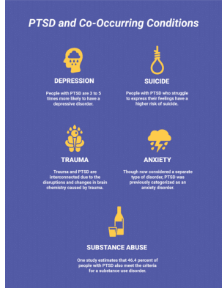
PTSD and co-occuring conditions
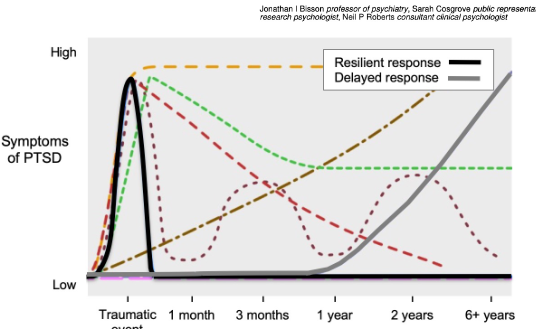
Variable reactions to trauma
Post traumatic growth PTG
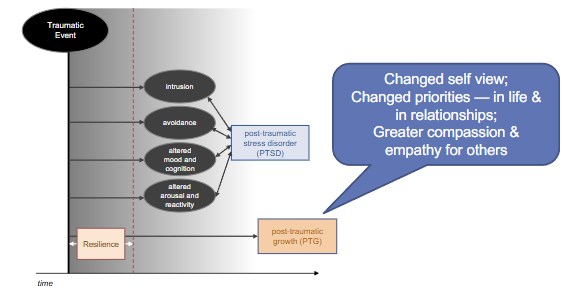
positive change experienced from struggled with major stress, typically trauma
greater appreciation of life
improved relationships
changed priorities
changed self/personal strength
spiritual growth
reactions to trauma
PTG in response to trauma is common 30-80%
PTG does not mean no symptoms of stress/trauma
resilience vs growth
resilience = ability to recover, adjust to adversity
growth = a new level of functioning and way of being
Biological approach: Physiology memory (explain symptoms not the cause)
negative stress reactions are due to physiology, more likely in those:
increased adrenaline
elevated blood pressure during certain stimuli
elevated cortisol
negative stress reactions are due to faulty memory/limbic systems, affecting retrievability of info:
heightened amygdala responding
hippocampal atrophy
Cognitive and behavioural models
learning model: trauma symptoms are learned responses - sounds, smells & objects trigger memories → cond response
cognitive model: dysfunctional information processing treatment
educate
target trauma thoughts/emotions
develop adaptive appraisals
manage anxiety
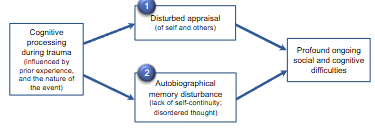
social identity approach
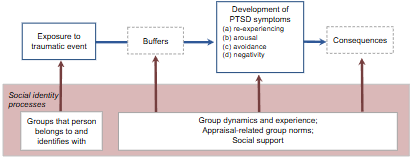
Social identity is central to the experience and appraisal of trauma
Trauma has group-based dimensions - experience as a consequence of group membership eg soilder in war
Individual trauma is more common in particular eg minority groups
social identity approach - intergenerational trauma
creation of indian residential schools 1863-1996
aim to eliminate indians
forced assimilation
shamed culture, language and physical, sexual & emotional abuse
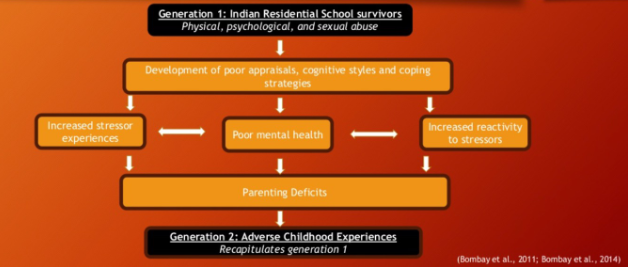
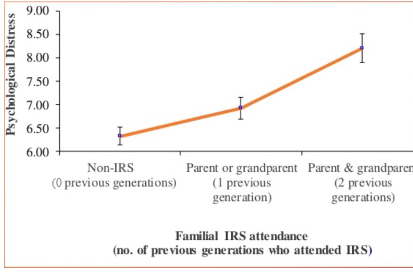
Results intergenerational trauma
to the extent that indigenous heritage more central to identity, then
more likely to be exposed to discrimination
feels the effects of discrimination and abuse more strongly
experience greater psychological distress and trauma reactions
social identity approach: resilience and growth
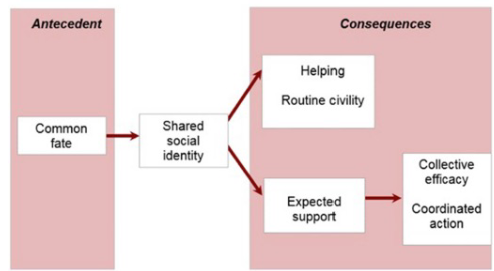
resilience and growth is more likely when an emergent sense of common fate and collective identity develops
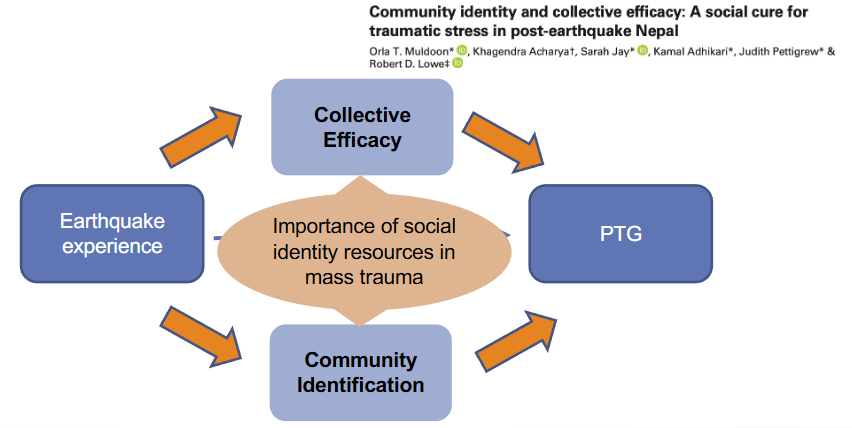
resilience and growth following trauma - earthquake
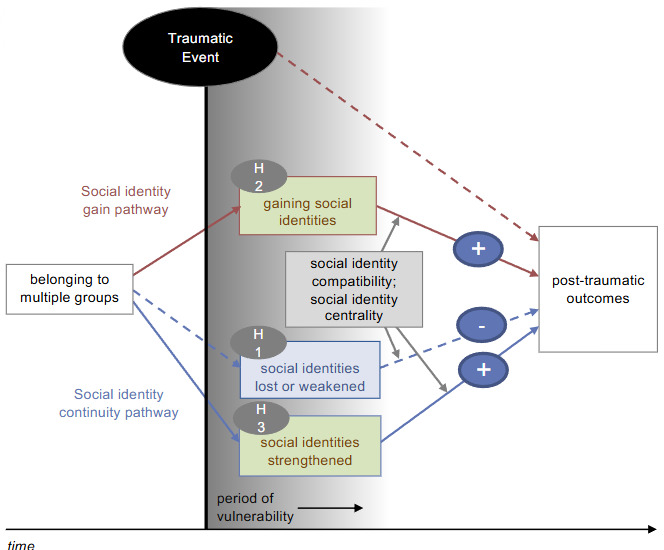
social identity approach: as a process for change
trauma as a process of social identity change
The social identity model of traumatic identity change SIMTIC
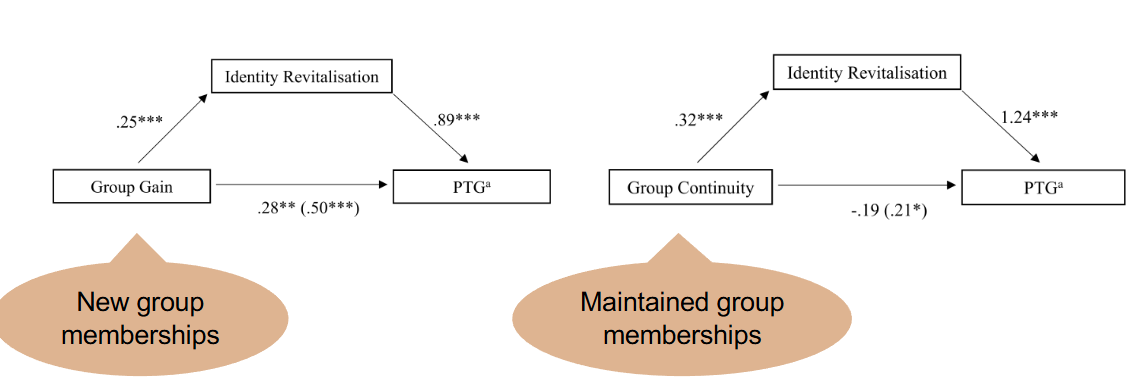
Social identity revitalization
qualitative change in the meaning, purpose & value of emergent group memberships and identities post-trauma
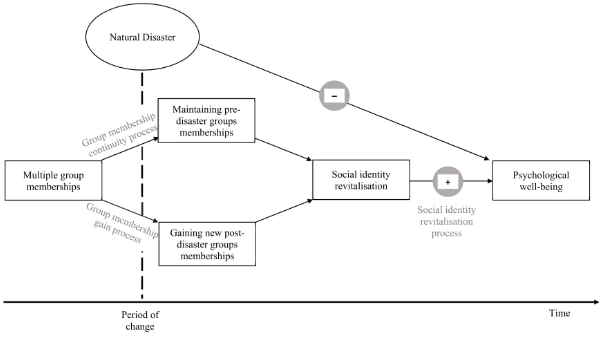
identity revitalisation