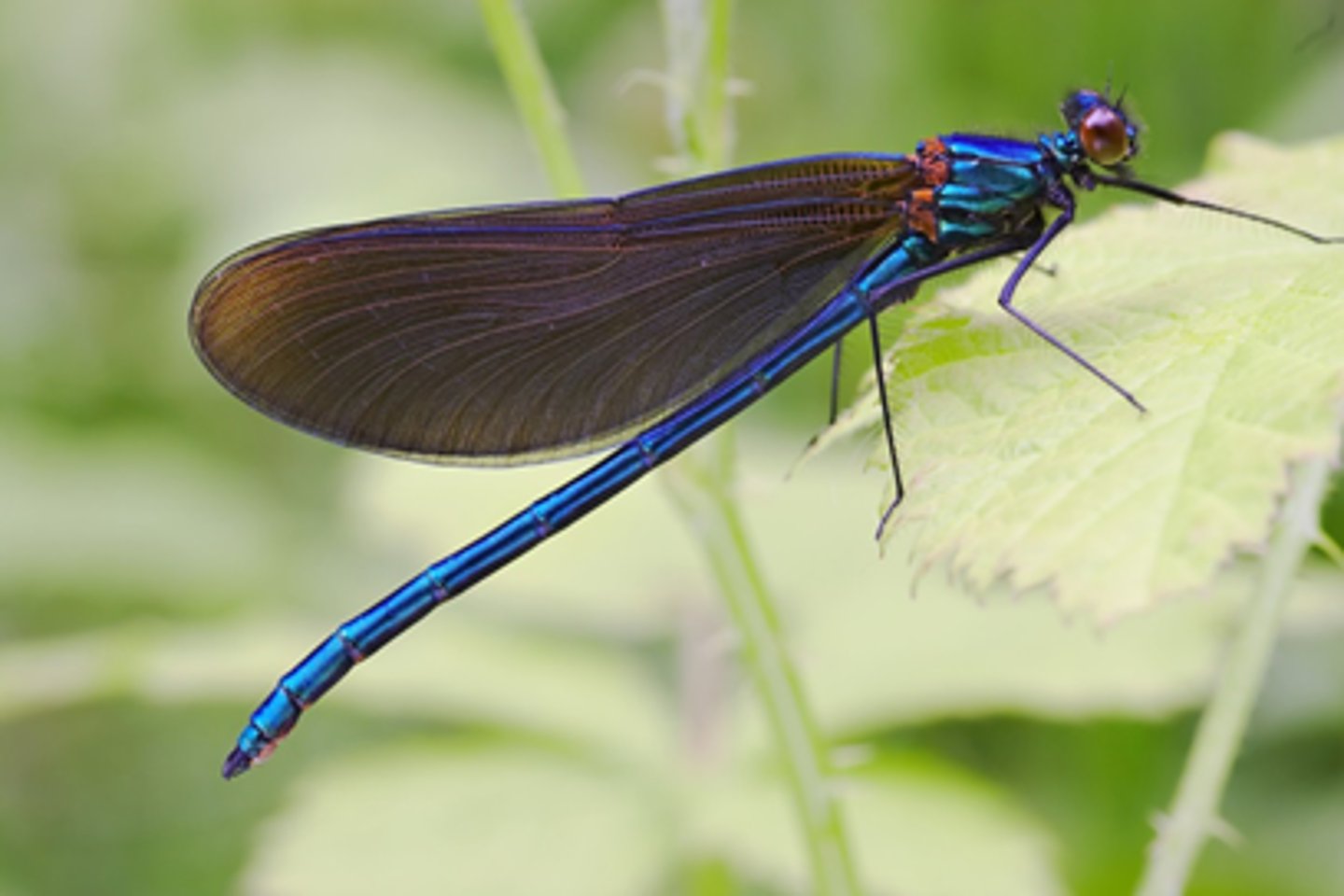
Odonates
 Call Kai
 Learn
Learn Practice Test
 Spaced Repetition
 Match
Match Flashcards
 Knowt Play
1/9

There's no tags or description
Looks like no tags are added yet.
Name | Mastery | Learn | Test | Matching | Spaced | Call with Kai |
|---|
No analytics yet
Send a link to your students to track their progress
10 Terms
Odonata
•Dragonflies and Damselflies
•Ancestral winged insects
•Aquatic juveniles
•Incomplete metamorphosis
•Predaceous in all life stages
•Nymphs are bioindicators of water quality
•Long abdomen with tilted thorax
•Stiff wings, about the same size, with many crossveins
•Pterostigma near tip of wing
•Aristate antennae
•Very large eyes
Suborder Anisoptera
•Dragonflies
•Stout bodies
•Wings open at rest, large and broad, hindwing larger than forewing
•Very large eyes
•Super duper fast bois
Suborder Zygoptera
•Damselflies
•Slim bodied
•Wings held over back at rest, approximately the same size, narrow at base
•Eyes are always separated
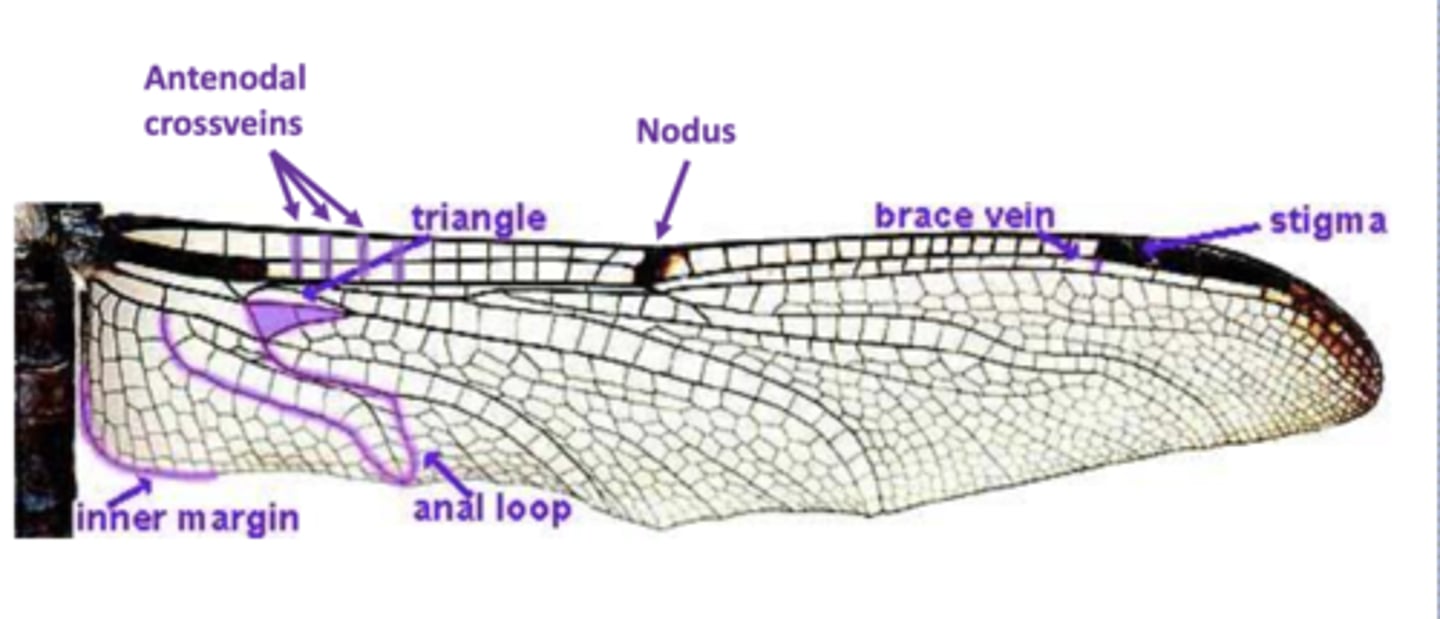
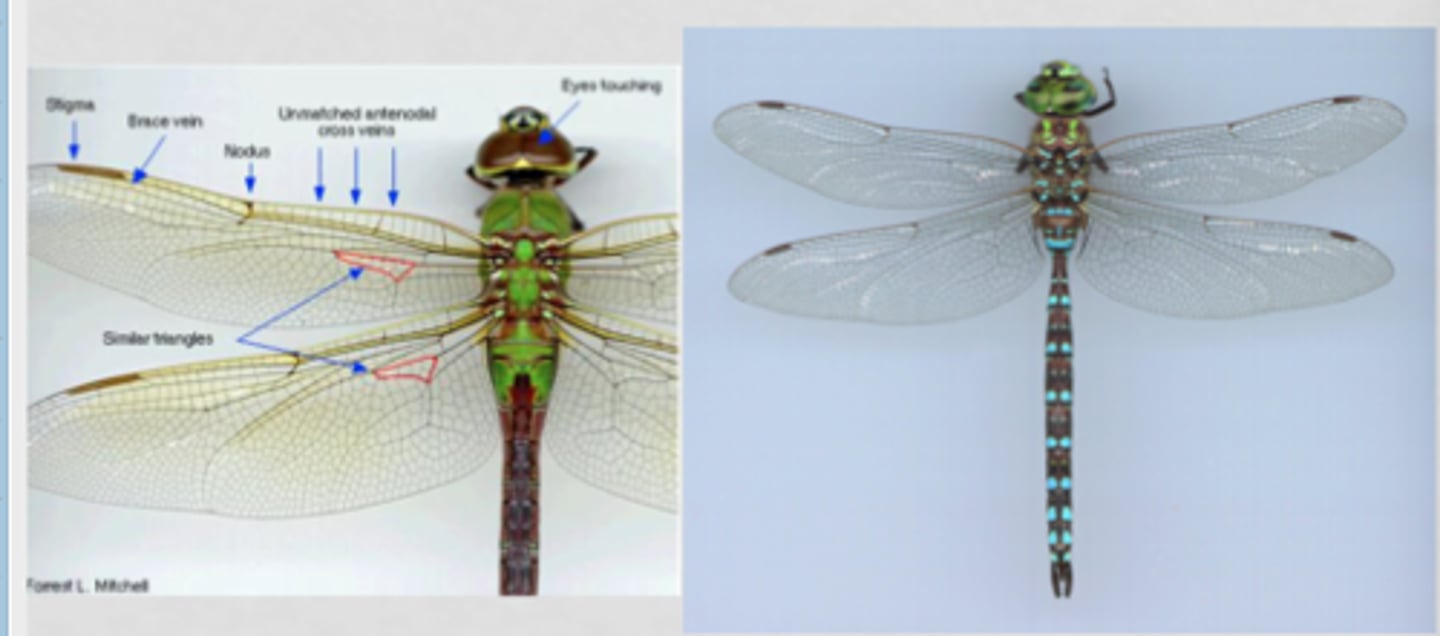
Odonota wing terms
See picture
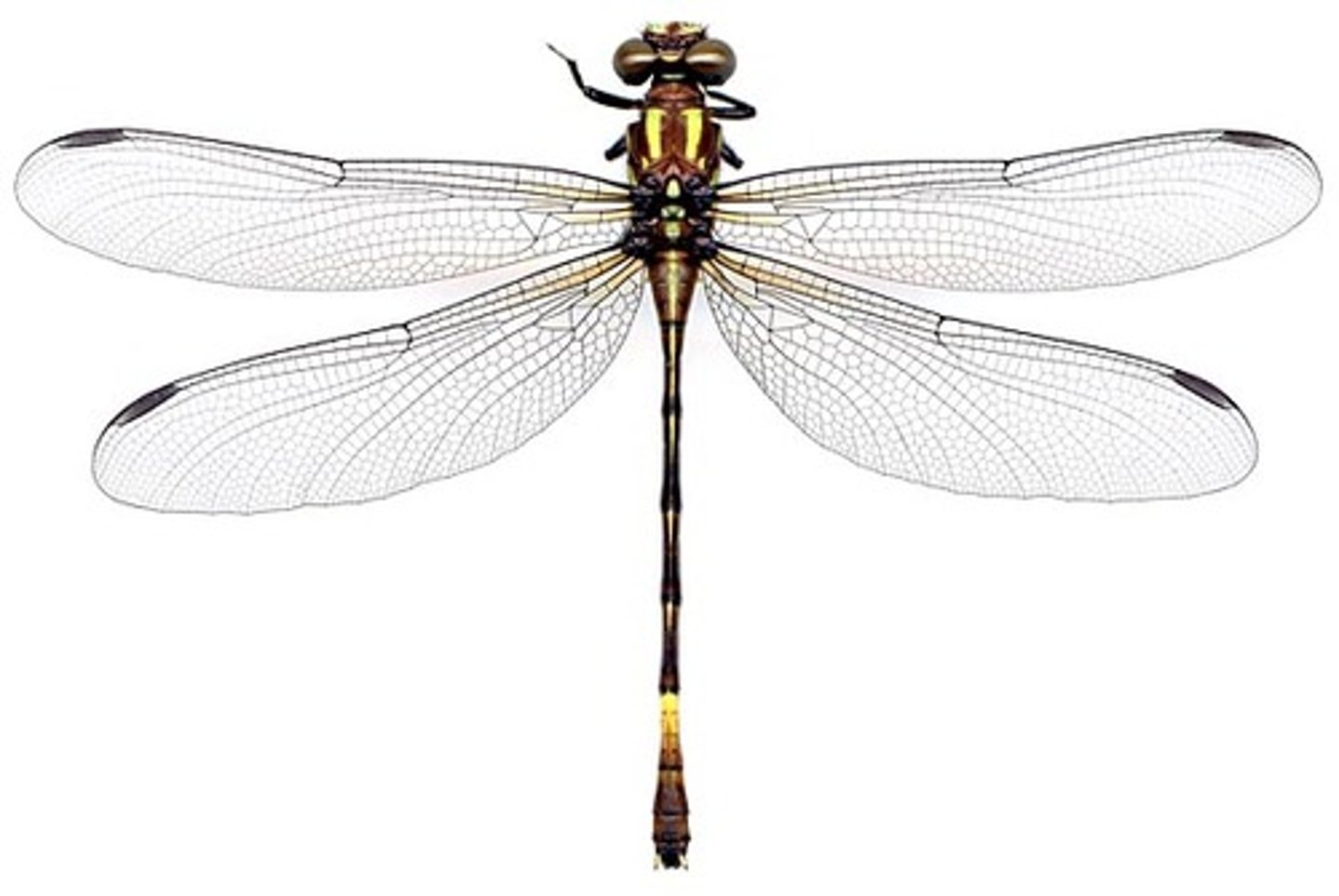
Family Gomphidae
•Suborder Anisoptera
•Clubtails
•Eyes do not meet, widely separated
•Triangles in fore- and hindwings similar in shape and location
•Brace vein present at proximal end of pterostigma
•Some specimens have a club-like tail
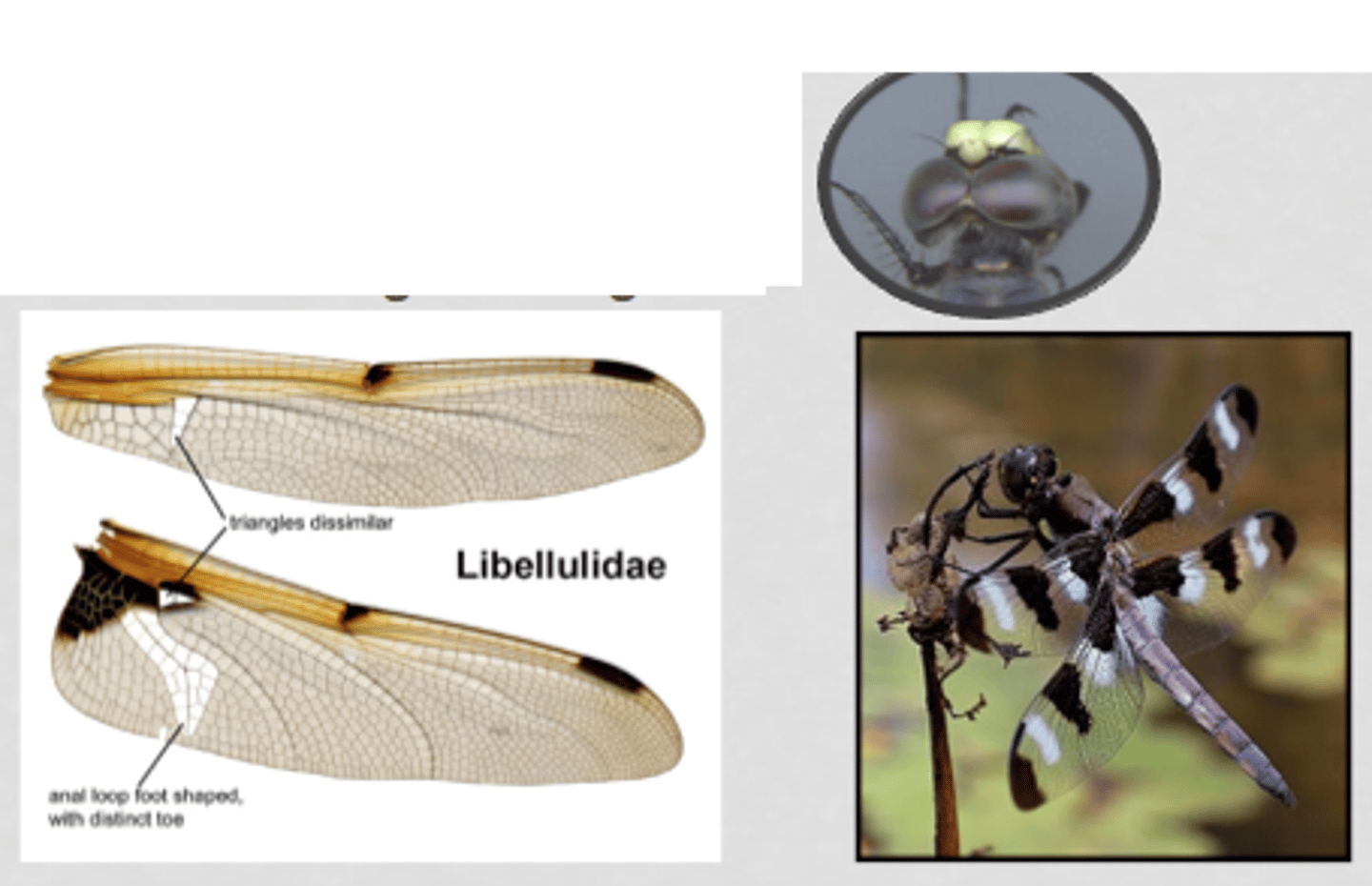
Family Libellulidae
•Suborder Anisoptera
•Skimmers
•Eyes touch, separate at posterior end
•Triangles are different sizes and shape
•No brace vein at proximal end of pterostigma
•Anal loop is a boot-like shape
Family Aeshnidae
•Suborder Anisoptera
•Hawkers, Darners
•Eyes are continuous
•Triangles are similar in shape
•Brace vein present at proximal end of pterostigma
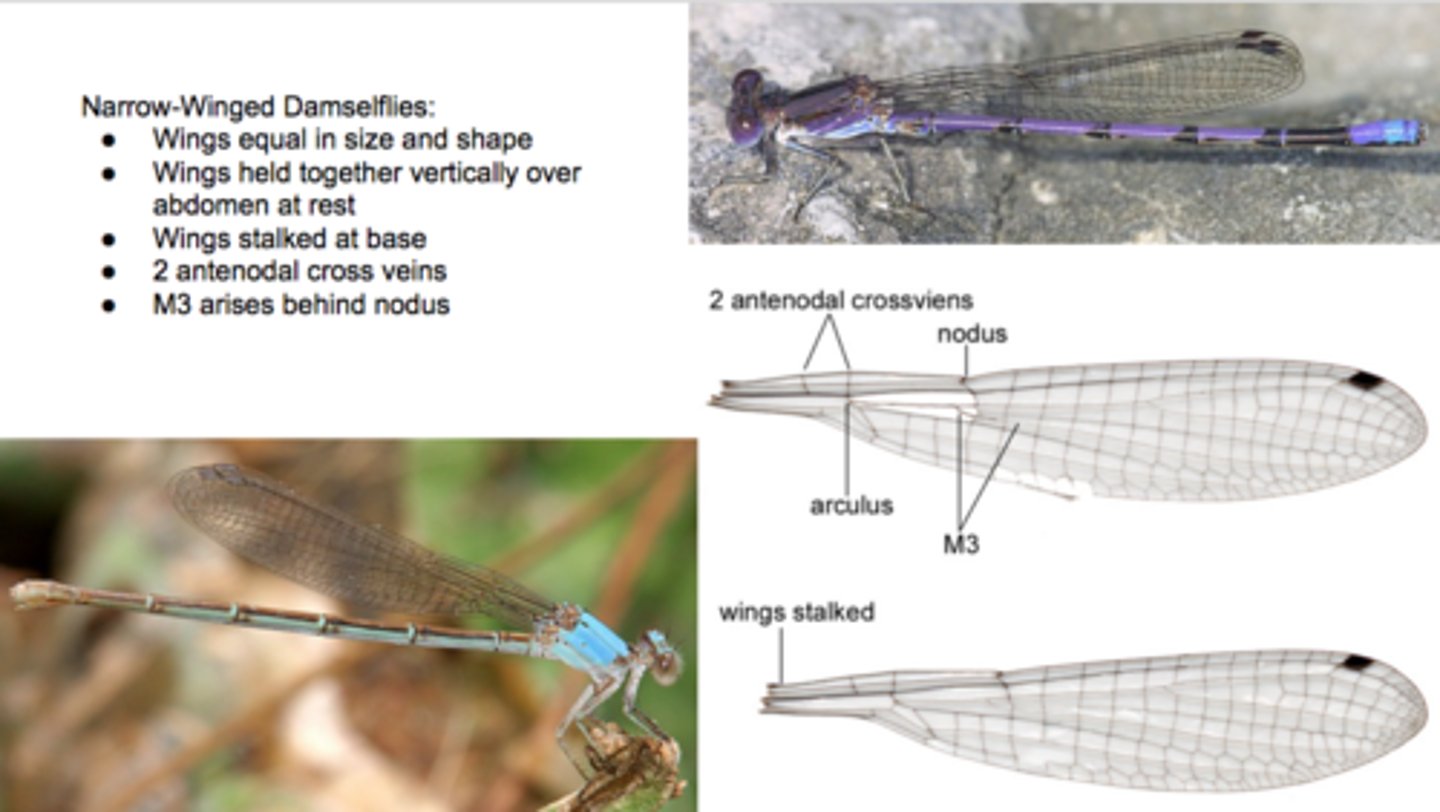
Family Coenagrionidae
•Suborder Zygoptera
•Pond Damsels
•Wings are stalked
•2 antenodal crossveins
•Triangle cell is trapezoidal
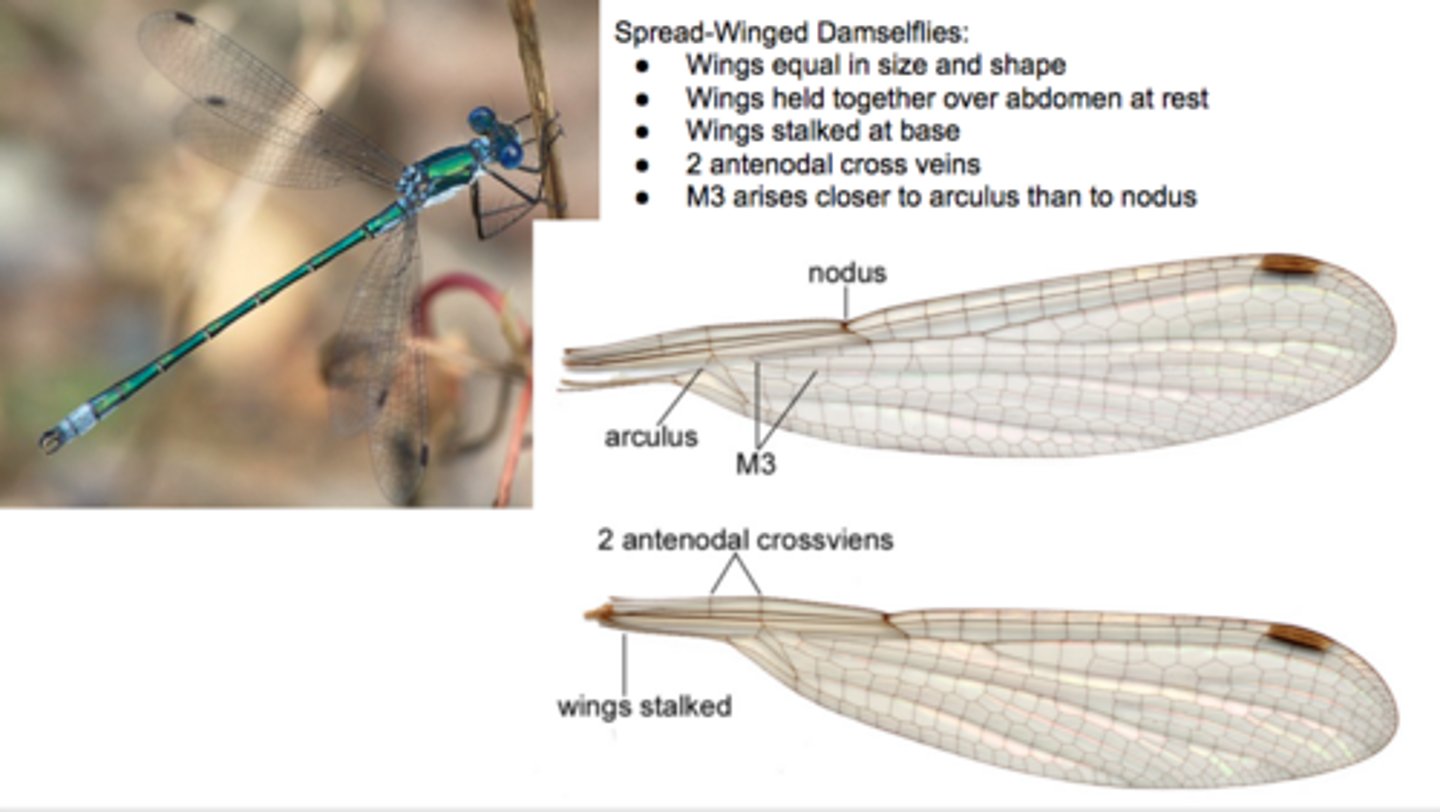
Family Lestidae
•Suborder Zygoptera
•Spreadwings
•Wings are stalked
•Wings may be held partially open or at an angle away from body at rest
•2 antenodal crossveins
•Triangular cell is triangular
Family Calopterygidae
•Suborder Zygoptera
•Broad-winged damselflies
•Wings not stalked at base
•Wings similar in shape, appear broad
•More than 10 antenodal crossveins
•Wings often with brown, black, or red markings
•Often metallic