Genetics, Seedless Plants, Gymnosperms
 Studied by 1 person
 Call Kai
 Learn
Learn Practice Test
 Spaced Repetition
 Match
Match Flashcards
 Knowt Play
1/25

There's no tags or description
Looks like no tags are added yet.
Name | Mastery | Learn | Test | Matching | Spaced | Call with Kai |
|---|
No analytics yet
Send a link to your students to track their progress
26 Terms
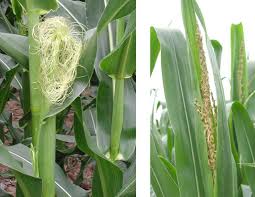
Female & Male Corn Flowers
males: tall, narrow and pointy; sperm is haploid (1n)
females: long, hair-like strands; egg is haploid (1n); zygote (fertilized egg) is diploid (2n)
Phenotype vs Genotype
pheno: observable traits (ex: corn kernel smooth, wrinkled, purple, yellow)
geno: the set of genes (homozygous dominant: PP; homozygous recessive: pp; heterozygous: Pp)
Corn Documentary
main idea was geneticist believed teosinte plant was an ancestor of modern corn; F2 generation form crossbreeding teosinte and maize proved his hypothesis was correct
Corn Model
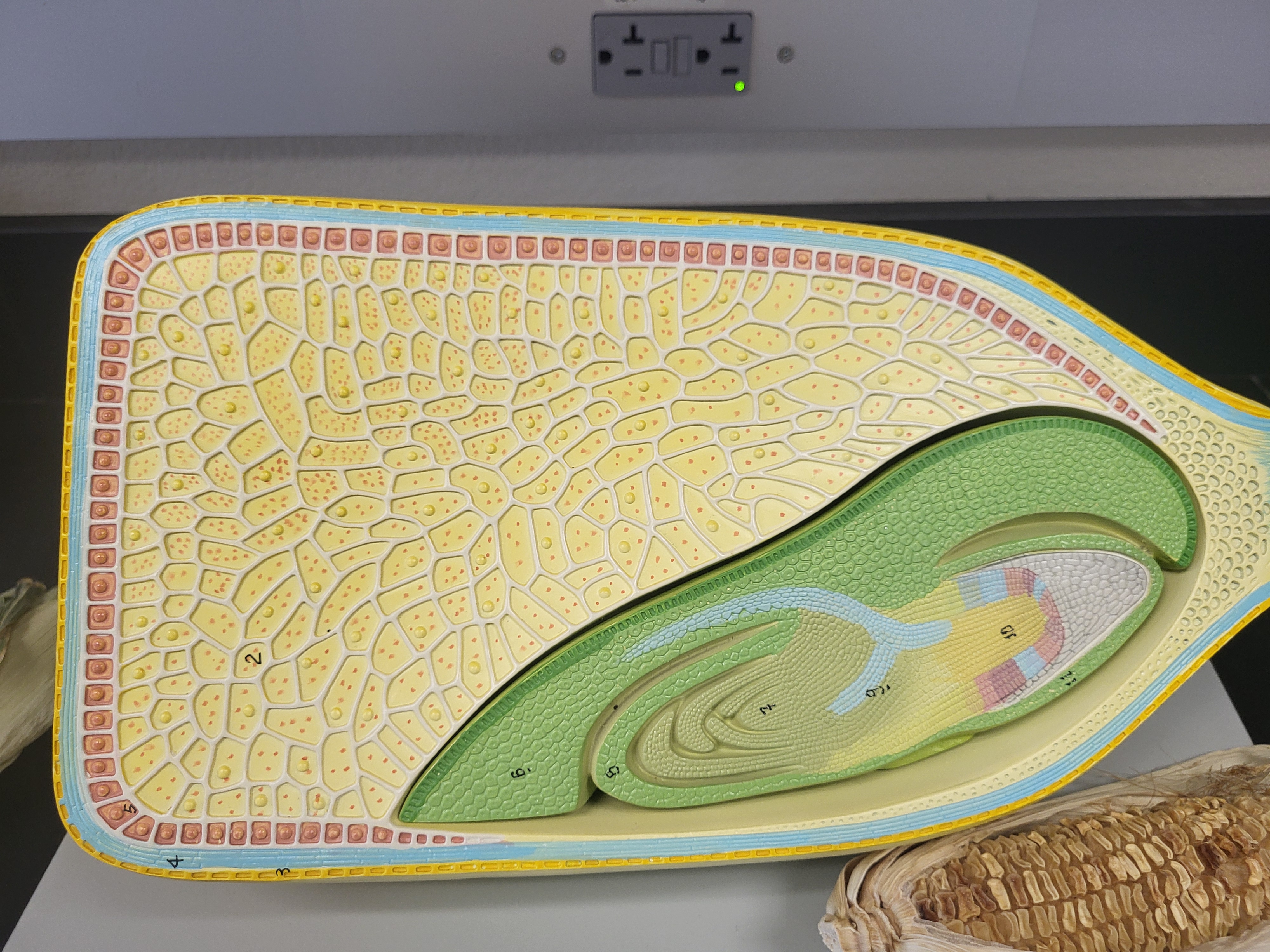
1: embryo
2: endosperm: nutritive part for seedling
3: pericarp- outer layer or kernel
4: seed coat- layer between pericarp and aleurone
5: aleurone- inner layer around endosperm
Punnett Squares
practice monohybrid using F1 of SS and ss; find F2 by crossing two offspring from F1 (Ss and Ss);
practice dihybrid cross- Punnett square that looks at two characteristics: use PPSS and ppss; use foil method to find genotype for F2 from F1 offspring
look at corn lab for help
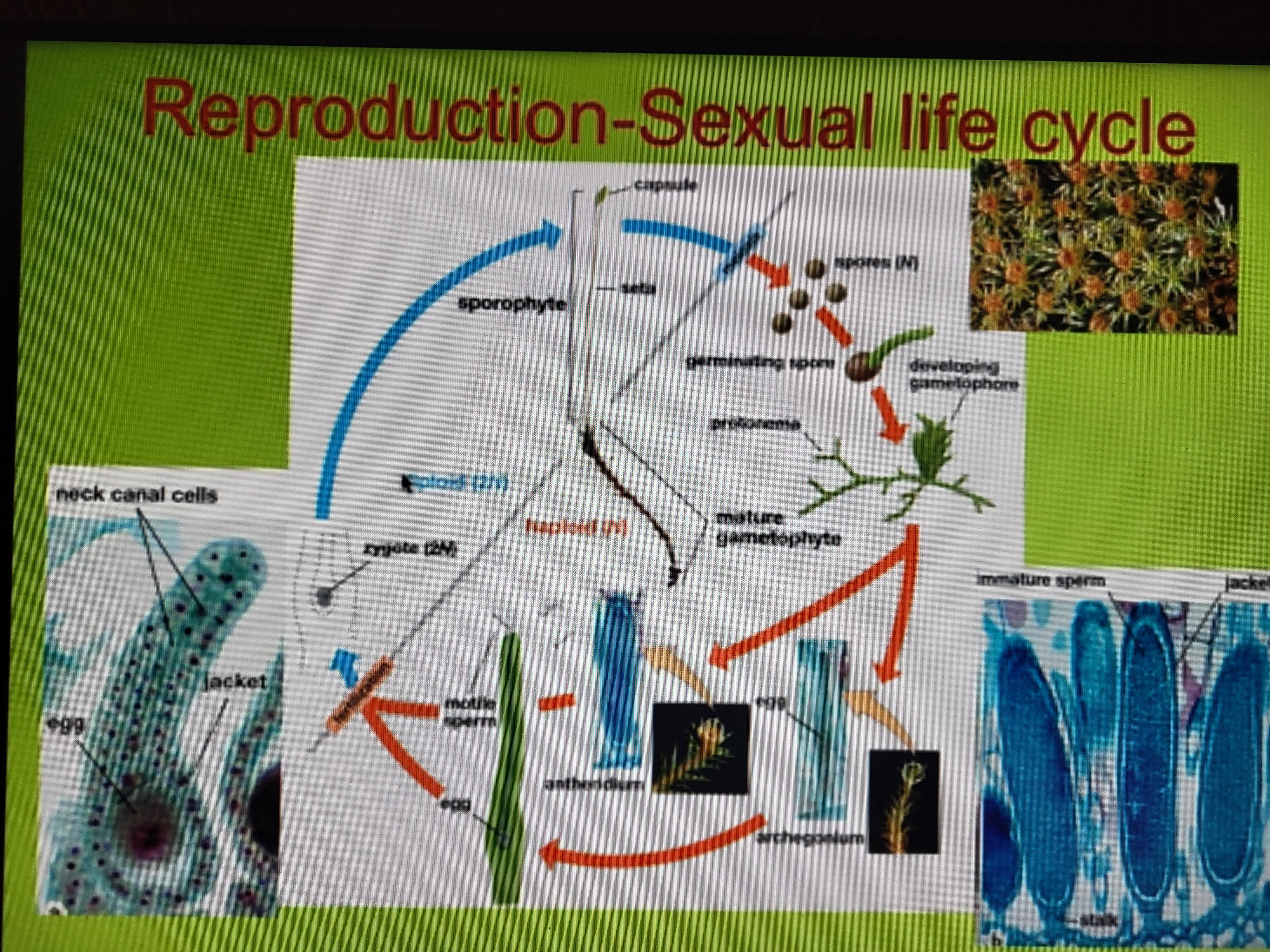
Bryophyte Lifecycle
diploid stage: fertilization produces zygote; becomes sporophyte with capsule and seta attached to haploid mature gametophyte
haploid stage: meiosis produces spores; spores germinate; motile sperm from antheridium swim down neck canal of archegonium
rewatch lifecycles from week 12 lecture
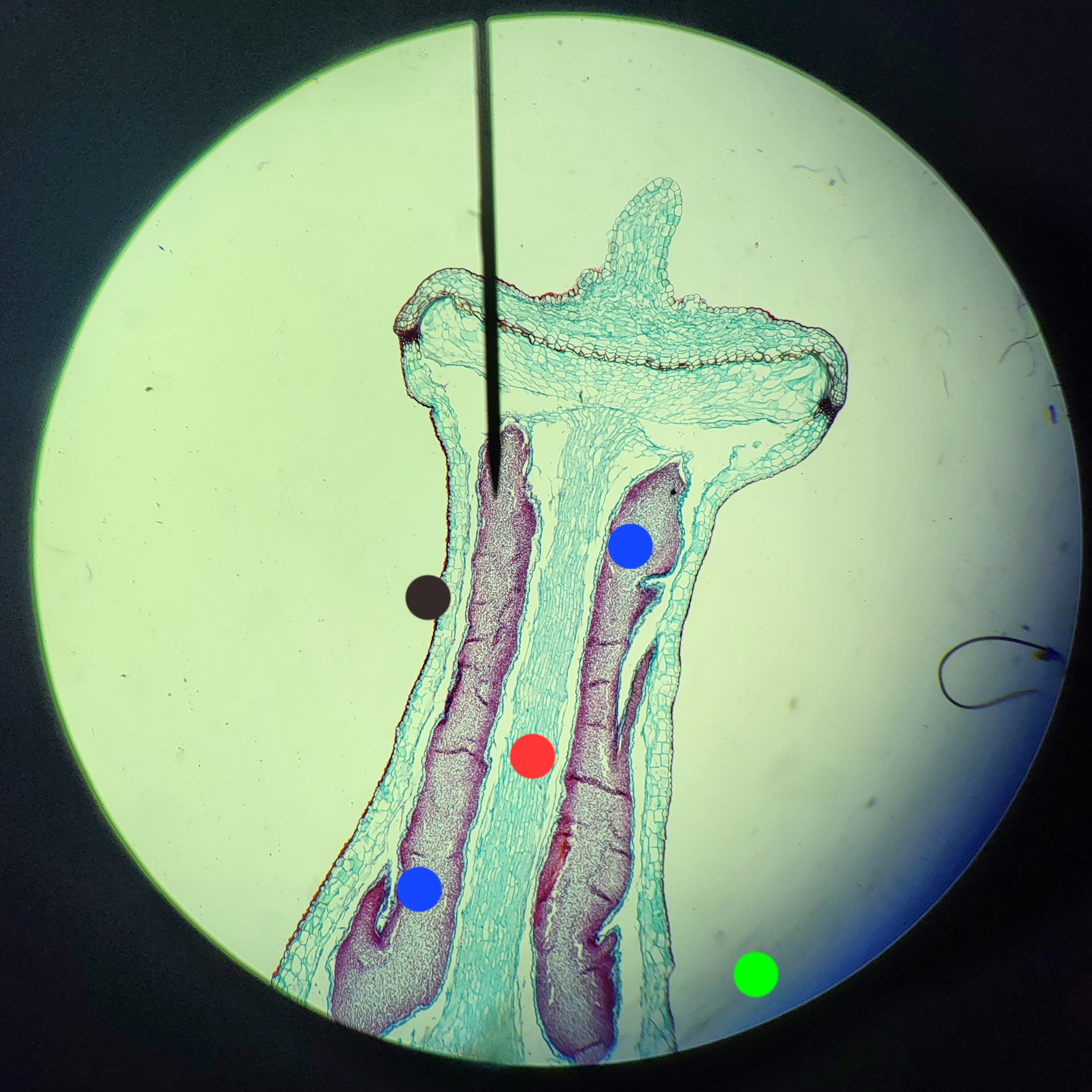
Polytrichum Capsule
black: epidermis (outermost layer)
red: columella
blue: spores
green: photosynthetic tissue is out of FOV but is above the seta near the bulge-y part
diploid
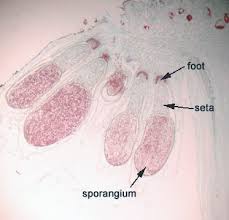
Marchantia Sporophyte
Lunularia (Liverwort)
thallus is fleshy green area
rhizoids are delicate root-hair-like structure that function in anchorage and absorption
moon-shaped cups that contain gemmae
gemma is a small outgrowth of tissue that becomes detached from the parent body and is capable of developing into a complete new plant or other organism
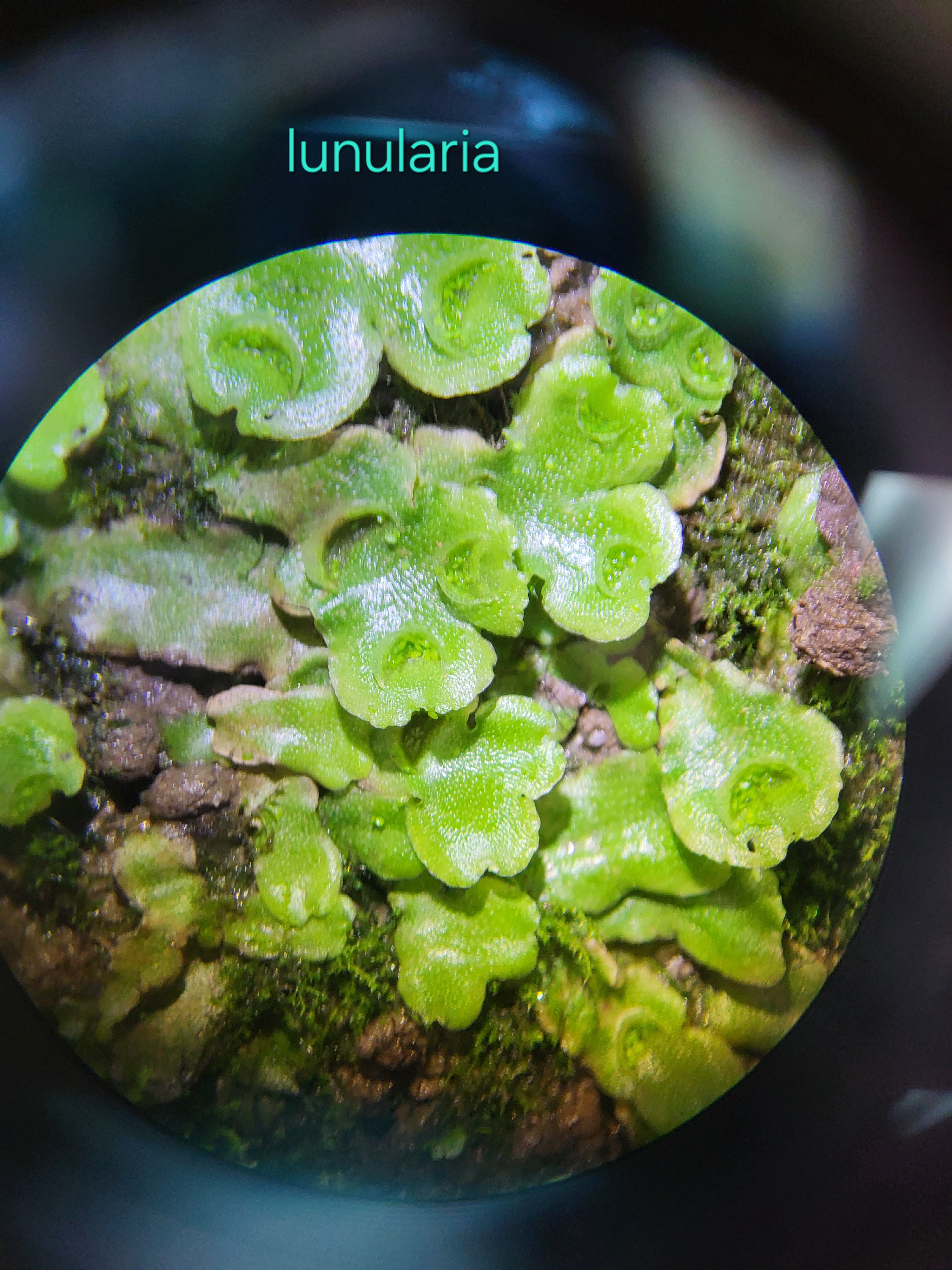
Gemmae Cup Dissection
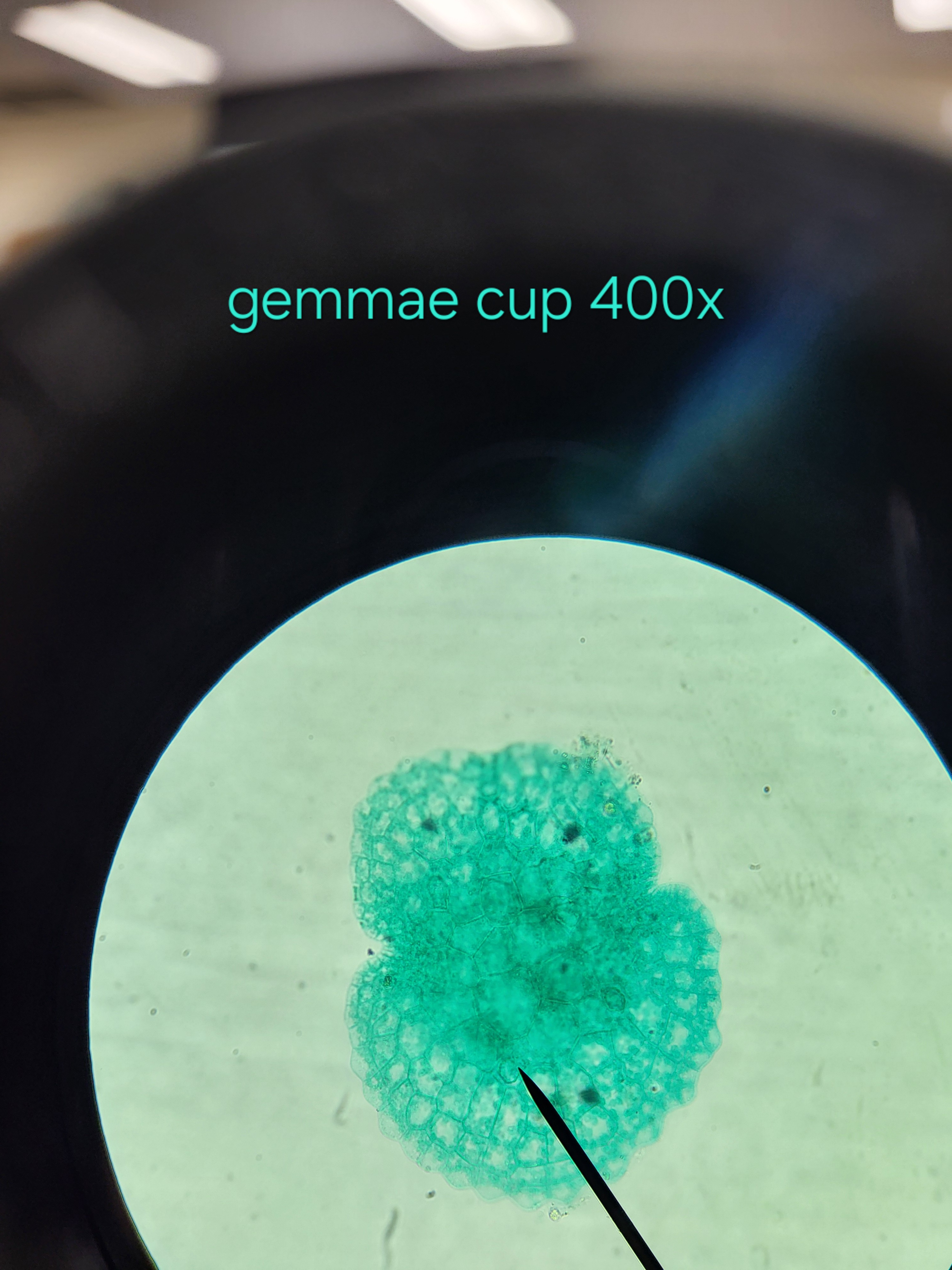
Selanginella Stem
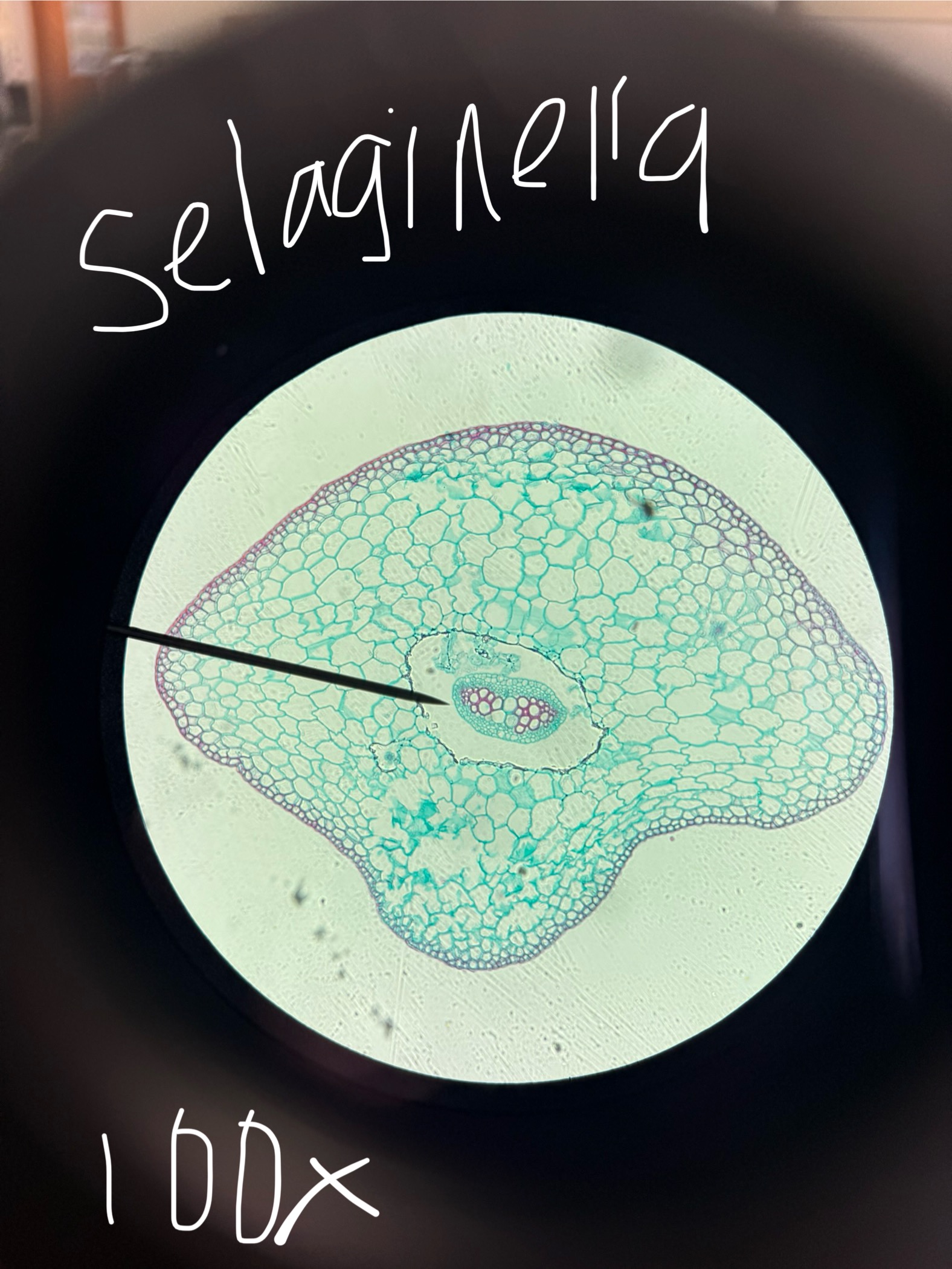
Strobilus (Lycophyte Cone)
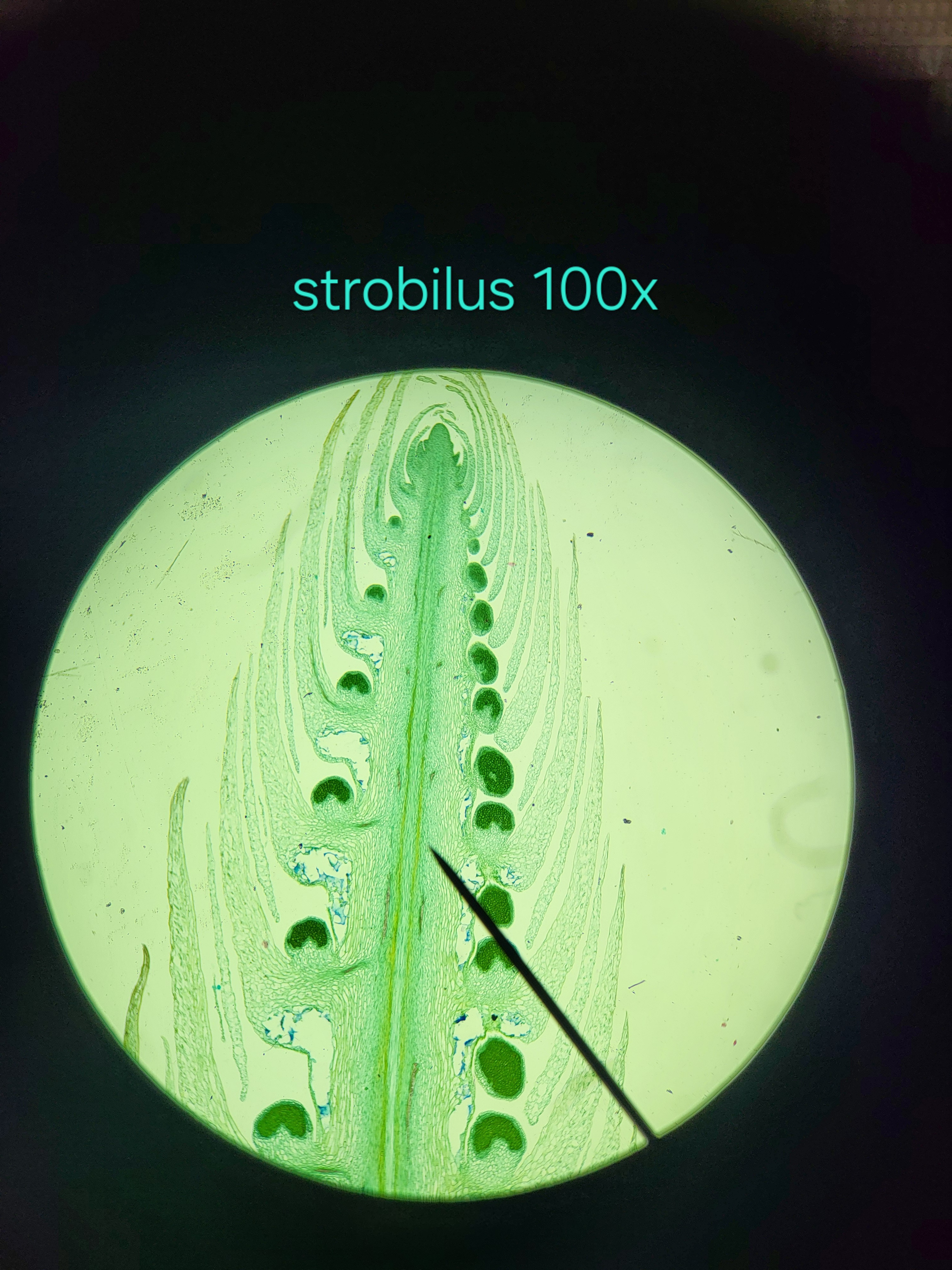
sporangium: contain spores; the darker green splotches
sporophyll: sporangium-bearing modified leaf
Bryophyte Antheridia and Archegonia
Gymnosperm Overview
produce seeds that are “naked” i.e. not protected by fruit
woody trees, shrubs, or lianas (woody vines)
members: conifers, gnetophytes, cycads, and gingko
Pine Ovulate (Female) Cone 1 Year
label/define megasporocyte, ovule, ovuliferous scale
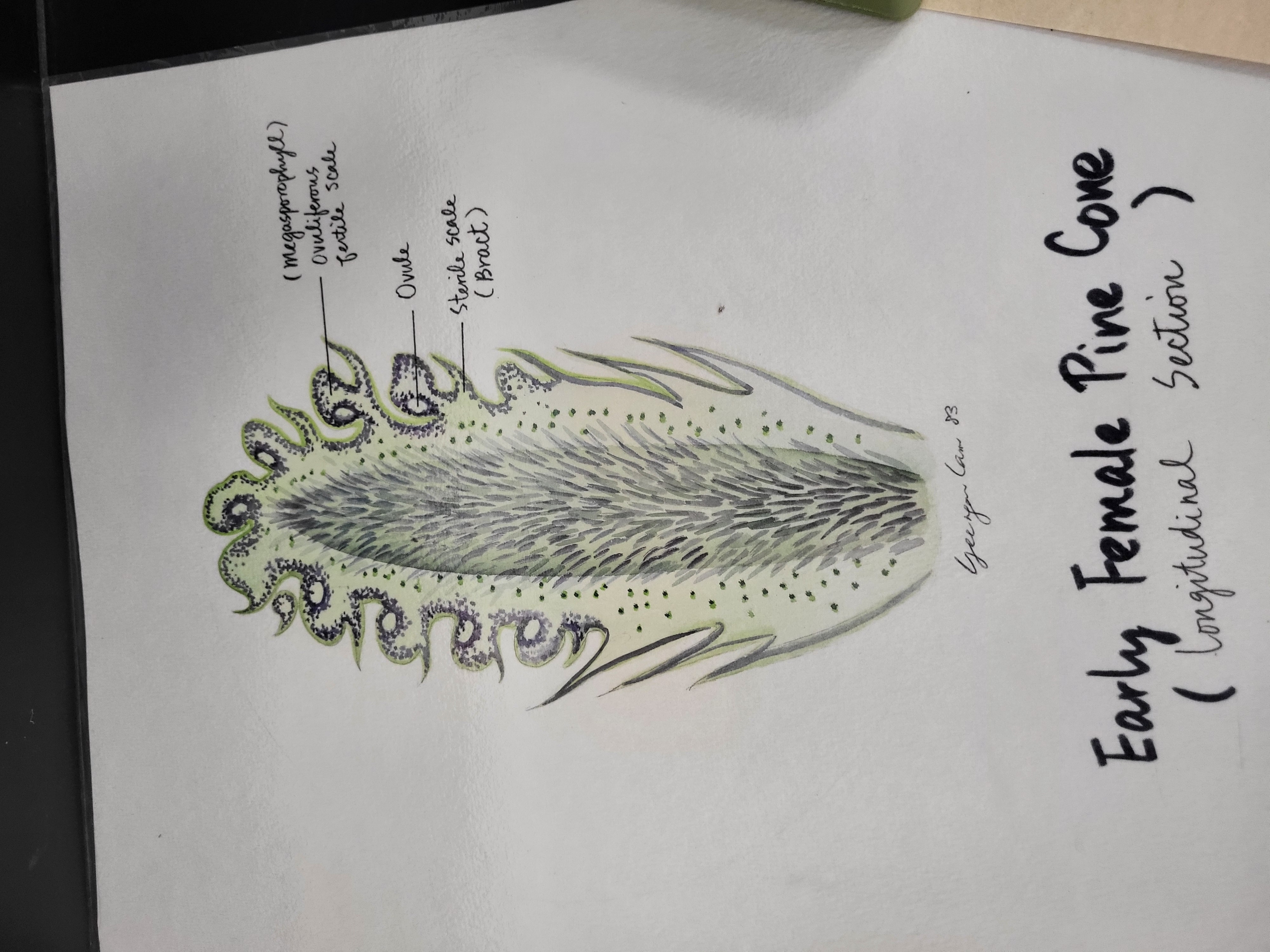
Ovulate Cone Dissection Scope
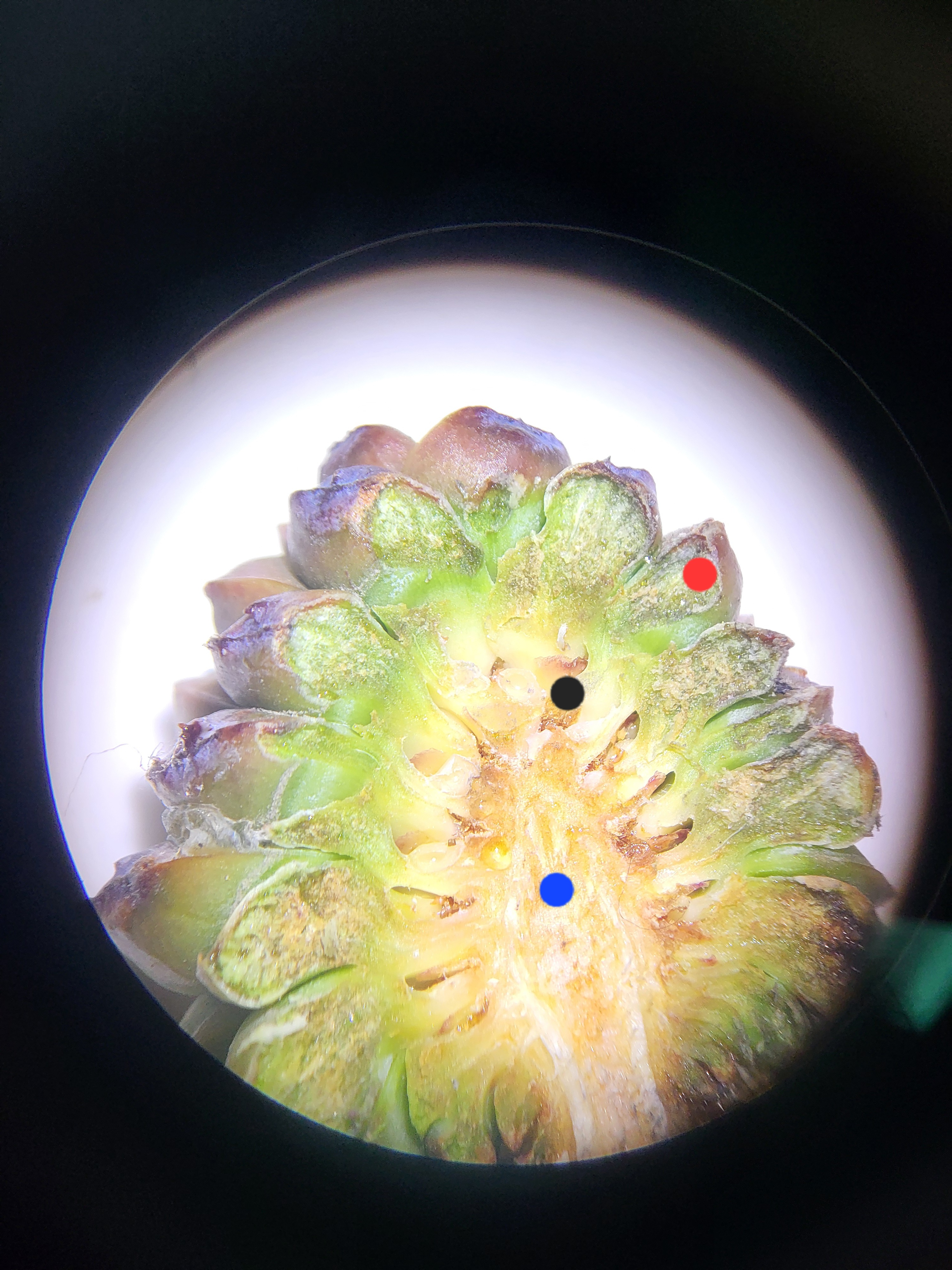
blue: cone axis
red: ovuliferous scale
black: ovule
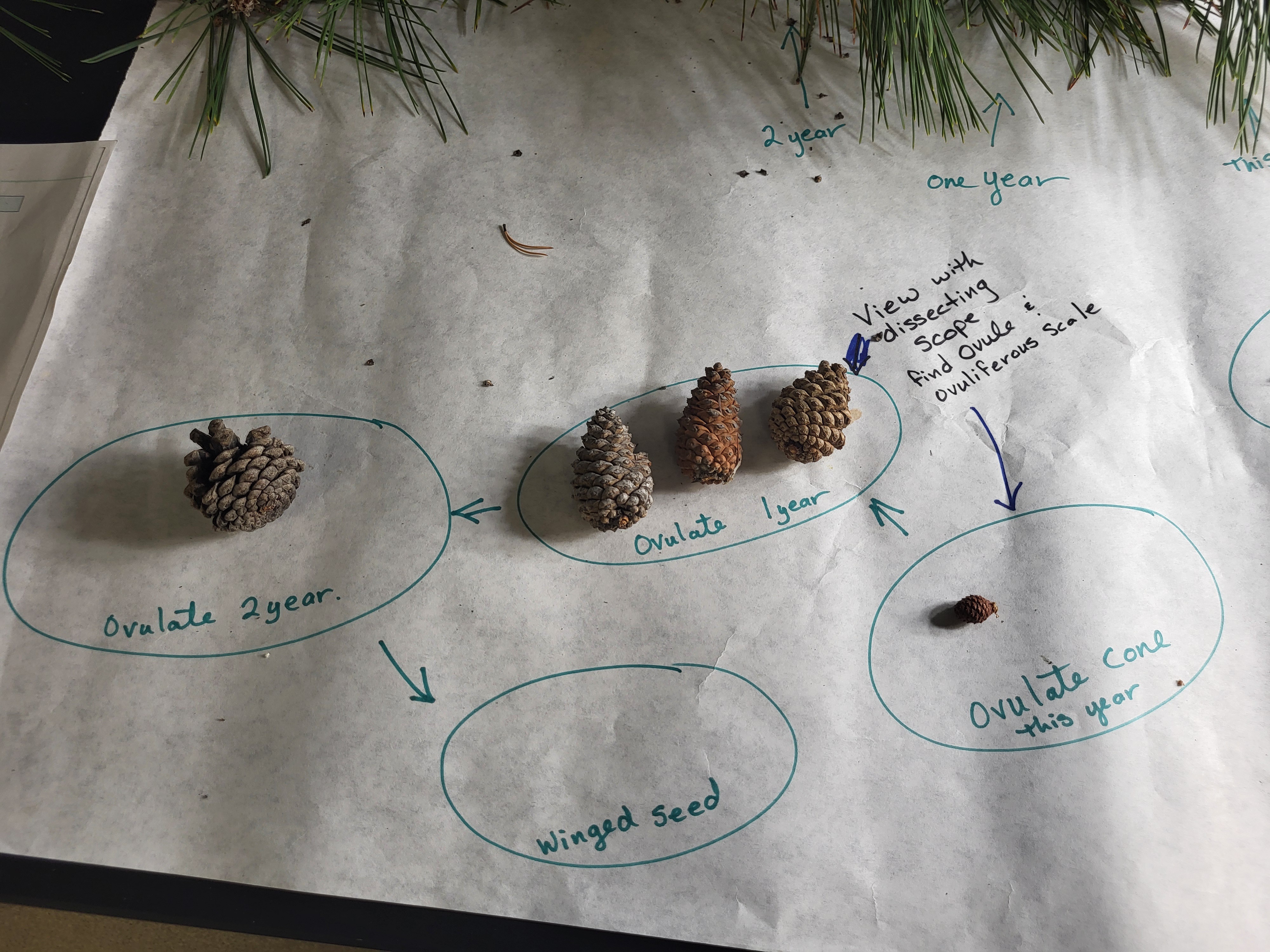
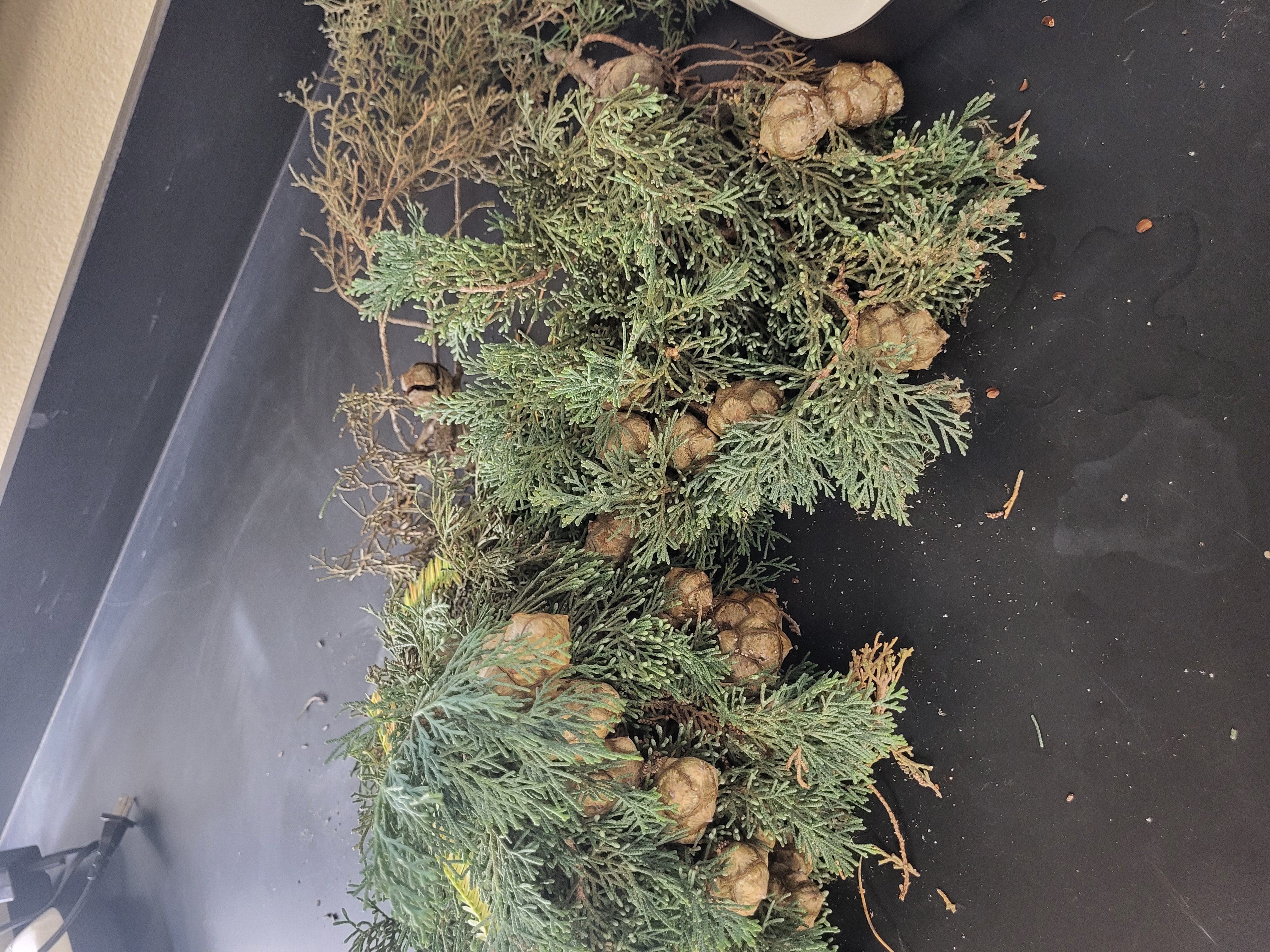
Cones at Different Years
Pine Staminate (Male) Cone
label/define microsporangium and microspores
what do microsporangia develop into?
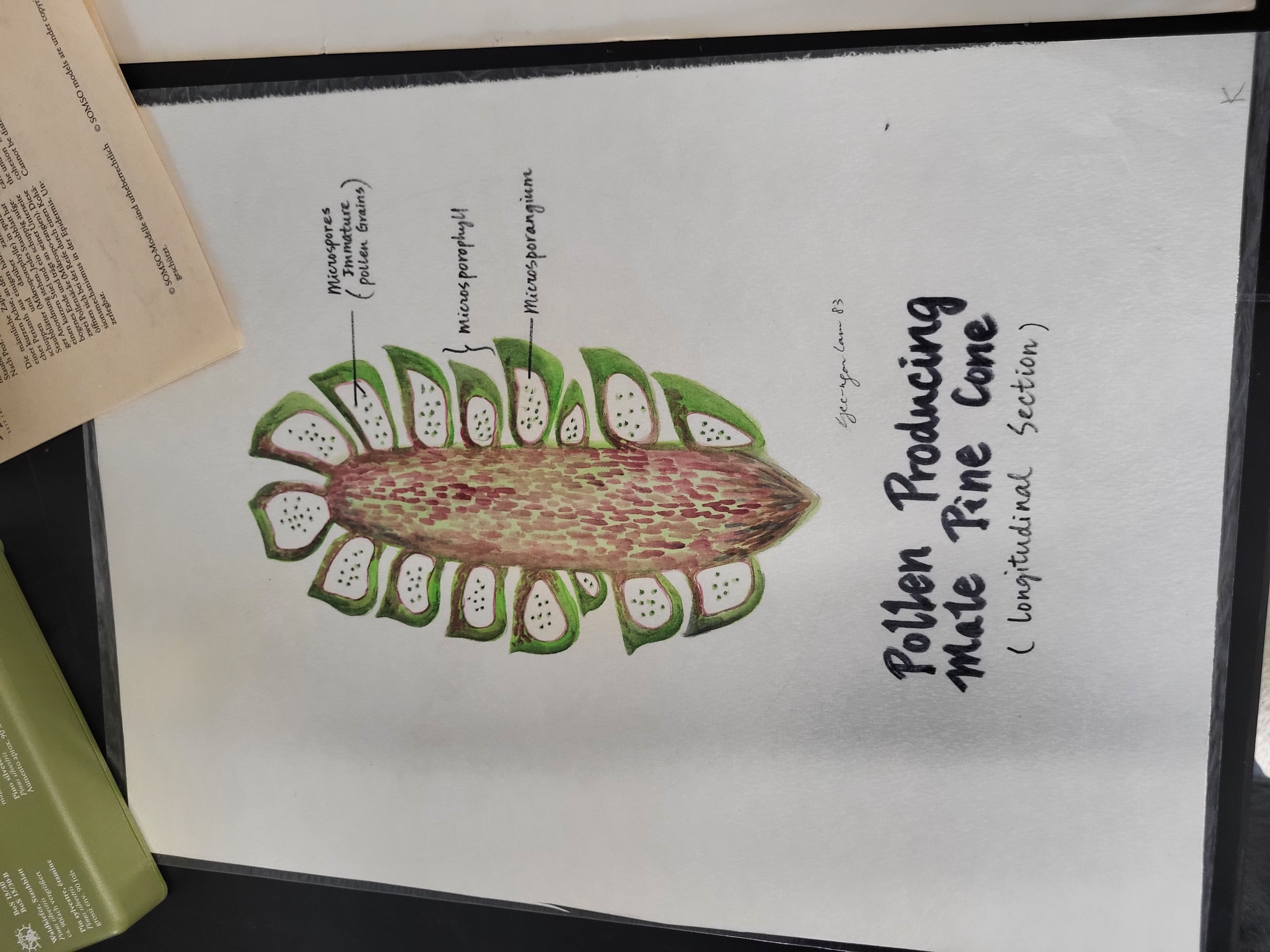
microsporangia develop into pollen grains
Pine Lifecycle
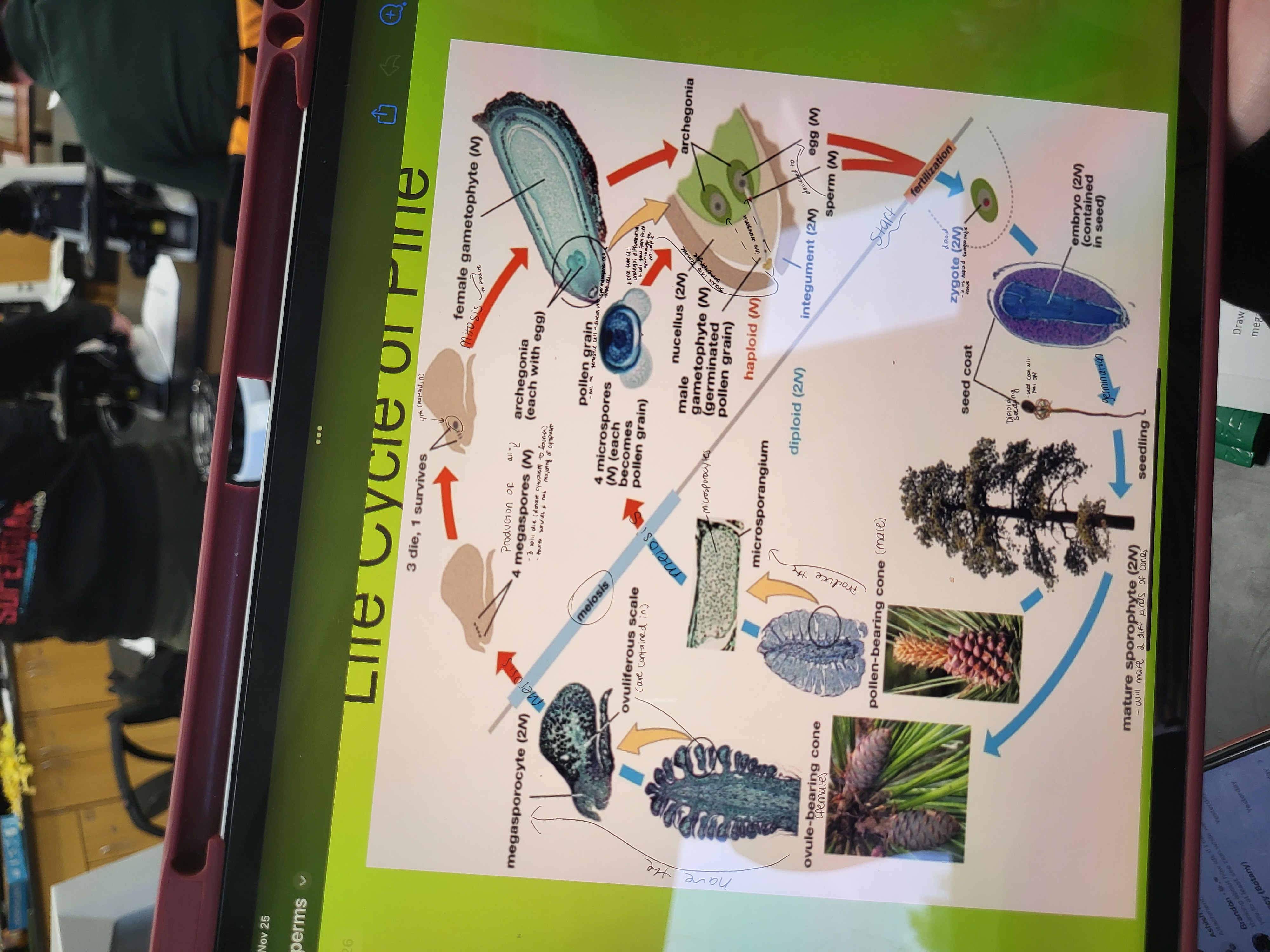
Pollen Grains
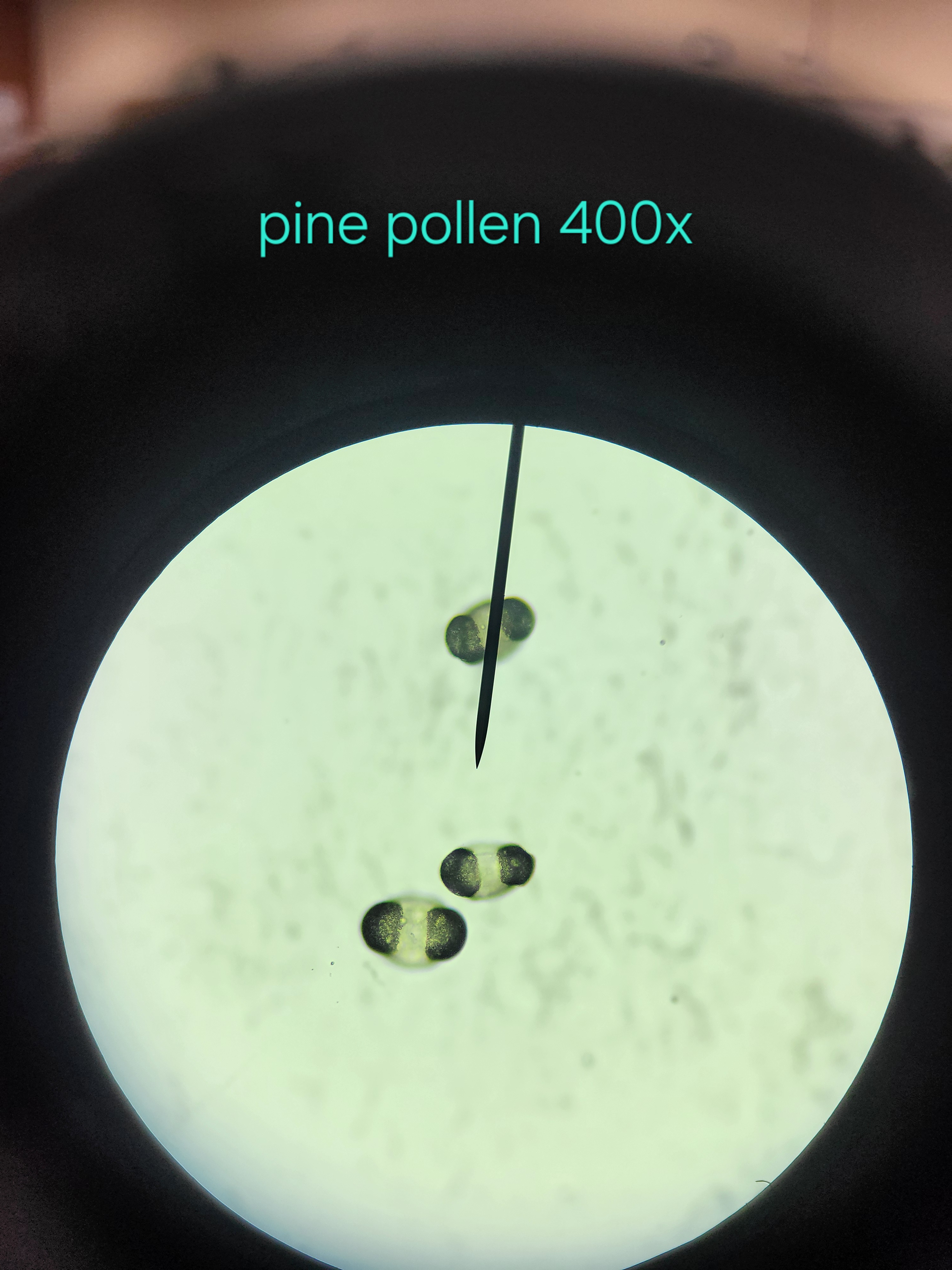
haploid
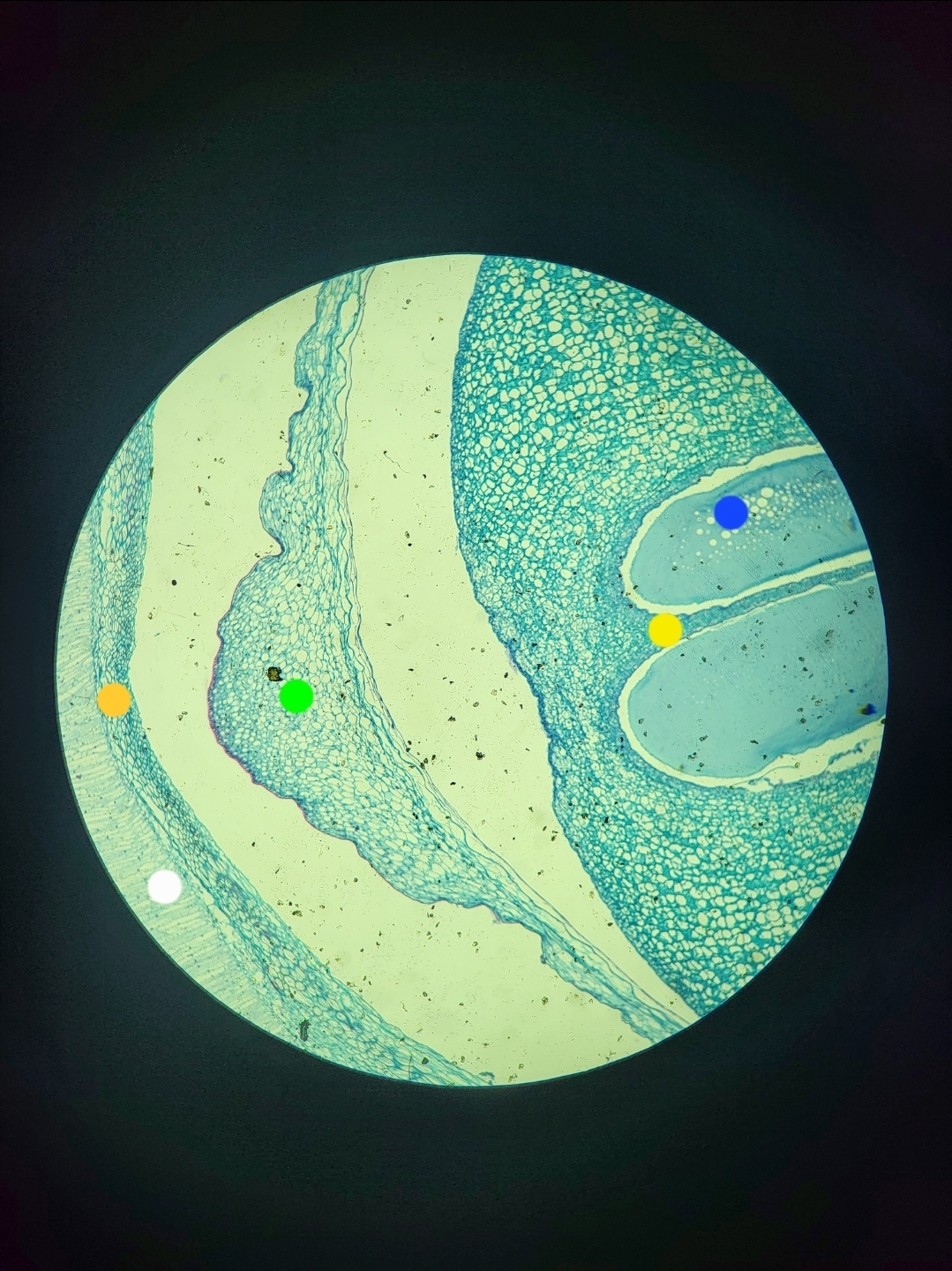
Zamia Ovule
green: megasporangium; yellow: archegonia; blue: egg; pinkish: integument; orange: micropyle (check atlas for better pic of last two)
Ginkgo Catkins & Fruit
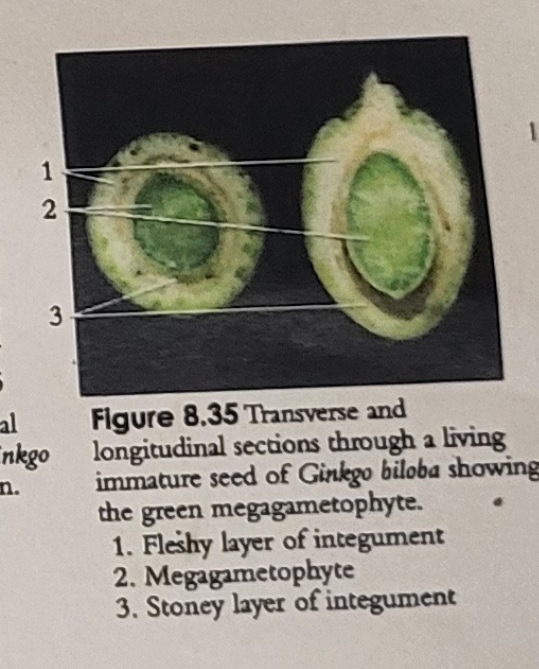
identify female gametophyte, embryo, seed coat
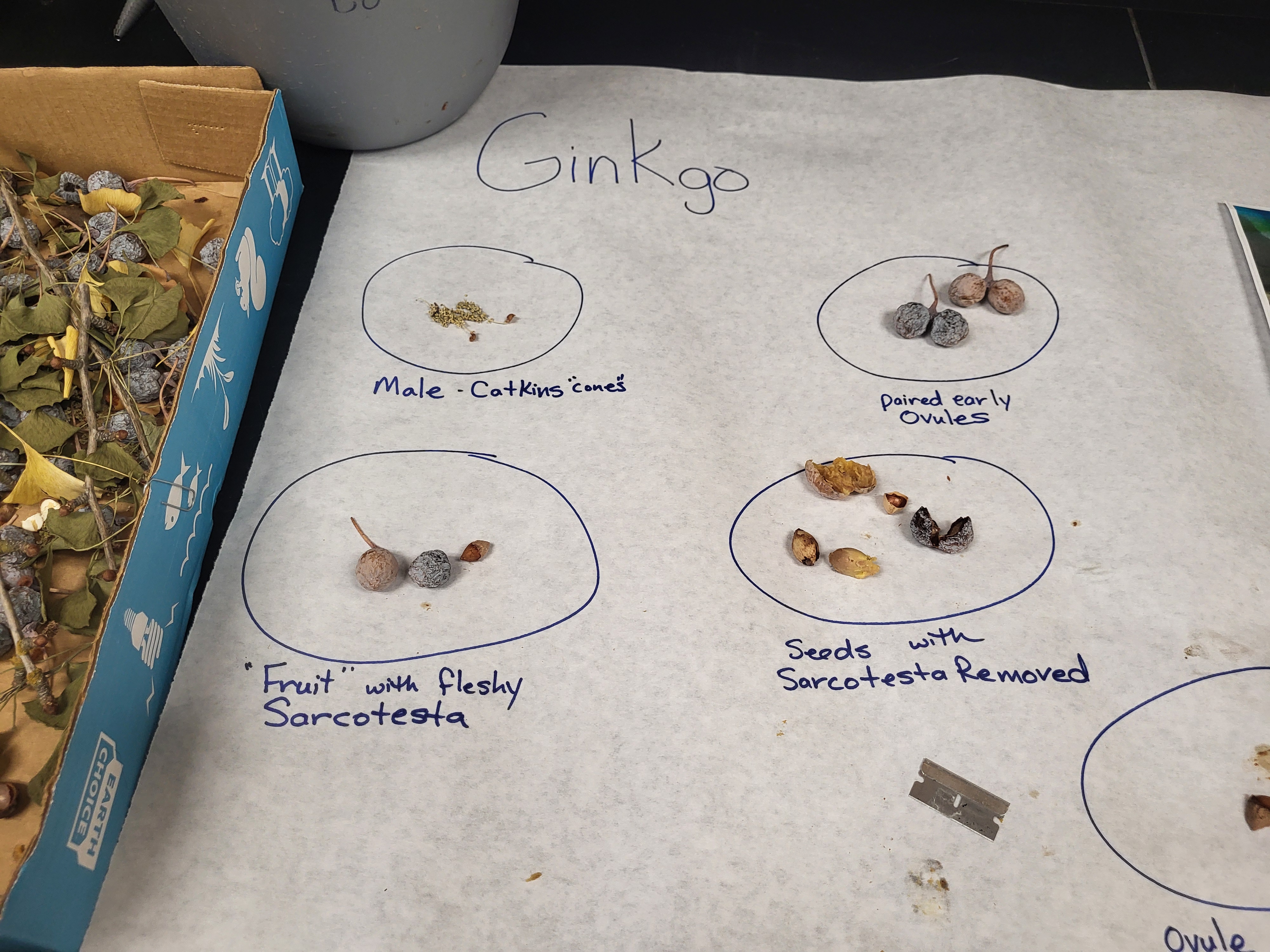
Dissected Gingko Fruit
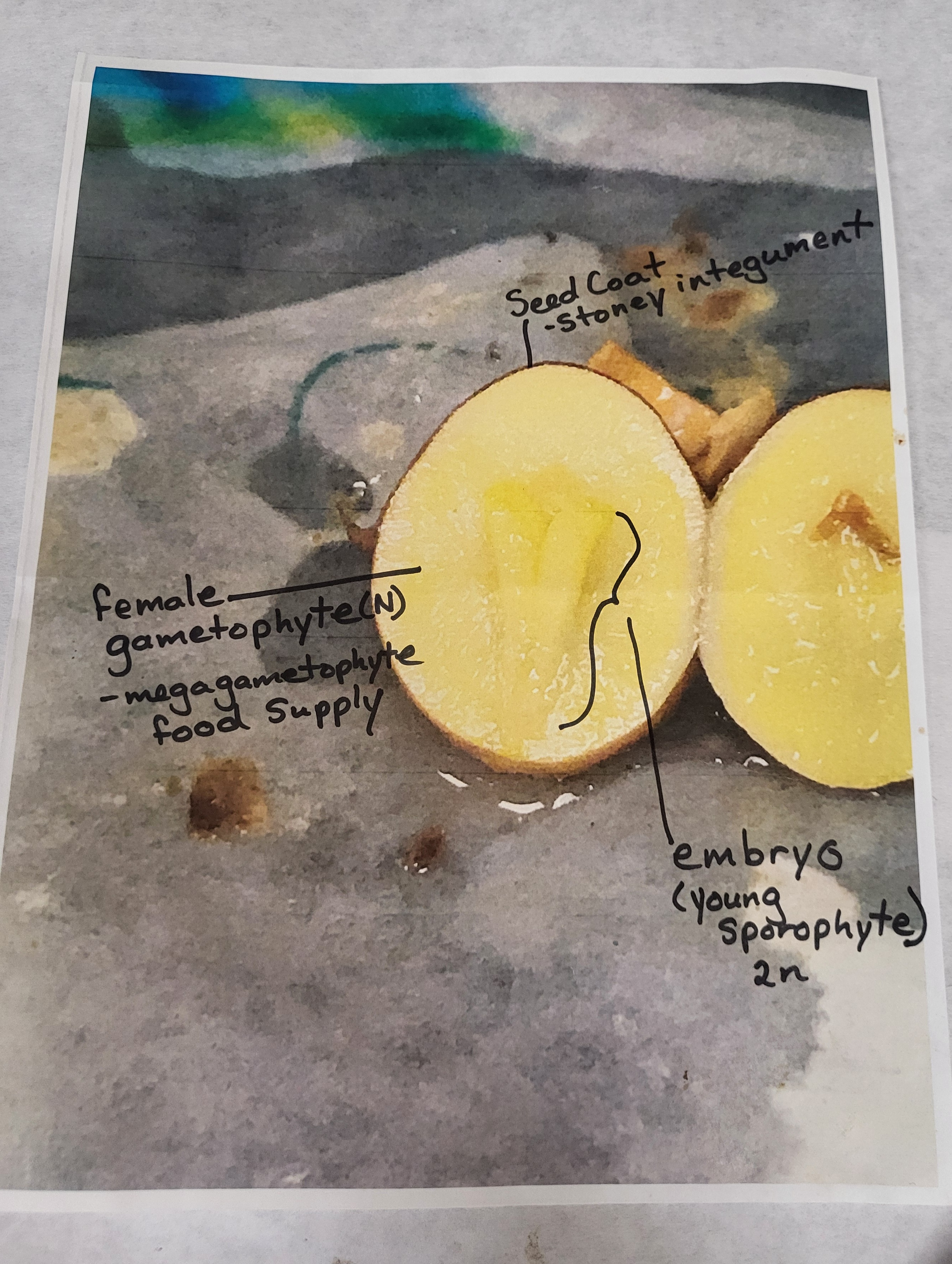
Parts of Ginkgo Fruit
Cycads
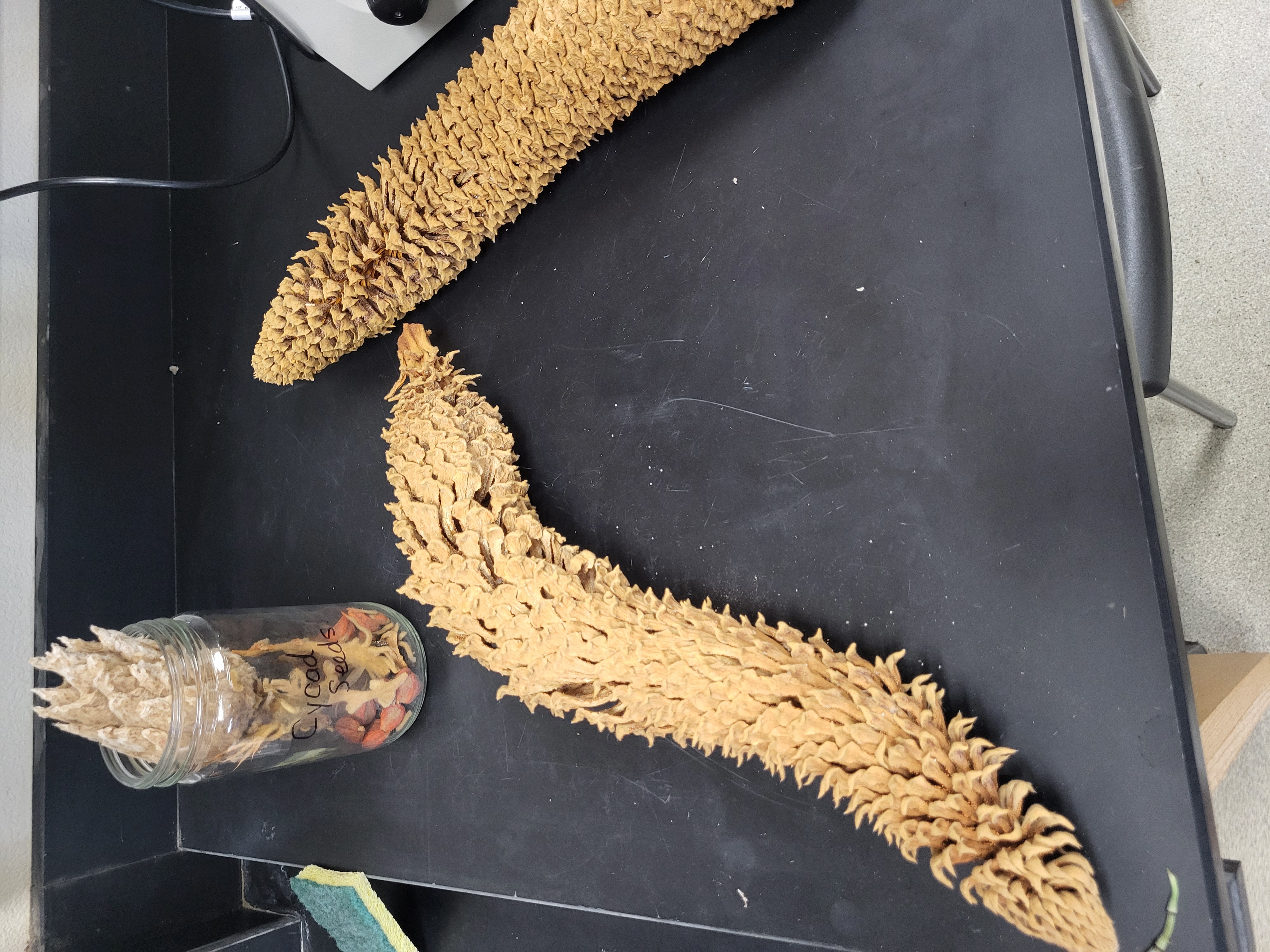
from one of those plants that look like palm trees but aren’t
Juniper Berries
 Note
Note  Flashcards (57)