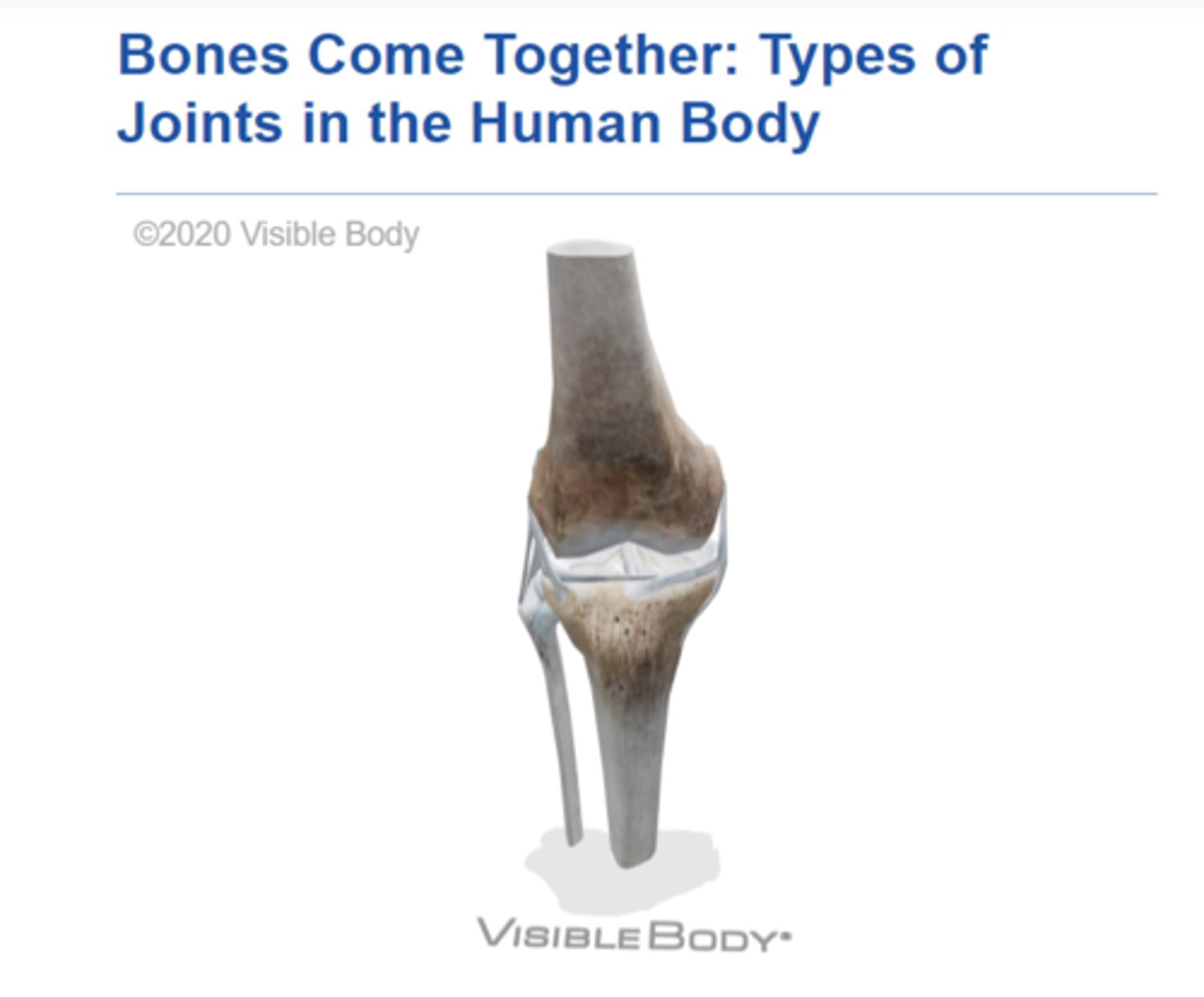
Topic 4.1: Types of Joints in the Human Body Diagram | Quizlet
 Call Kai
 Learn
Learn Practice Test
 Spaced Repetition
 Match
Match Flashcards
 Knowt Play
1/20

There's no tags or description
Looks like no tags are added yet.
Name | Mastery | Learn | Test | Matching | Spaced | Call with Kai |
|---|
No analytics yet
Send a link to your students to track their progress
21 Terms
joint or articulation
the place of contact between bones, between bone and cartilage, or between bones and teeth
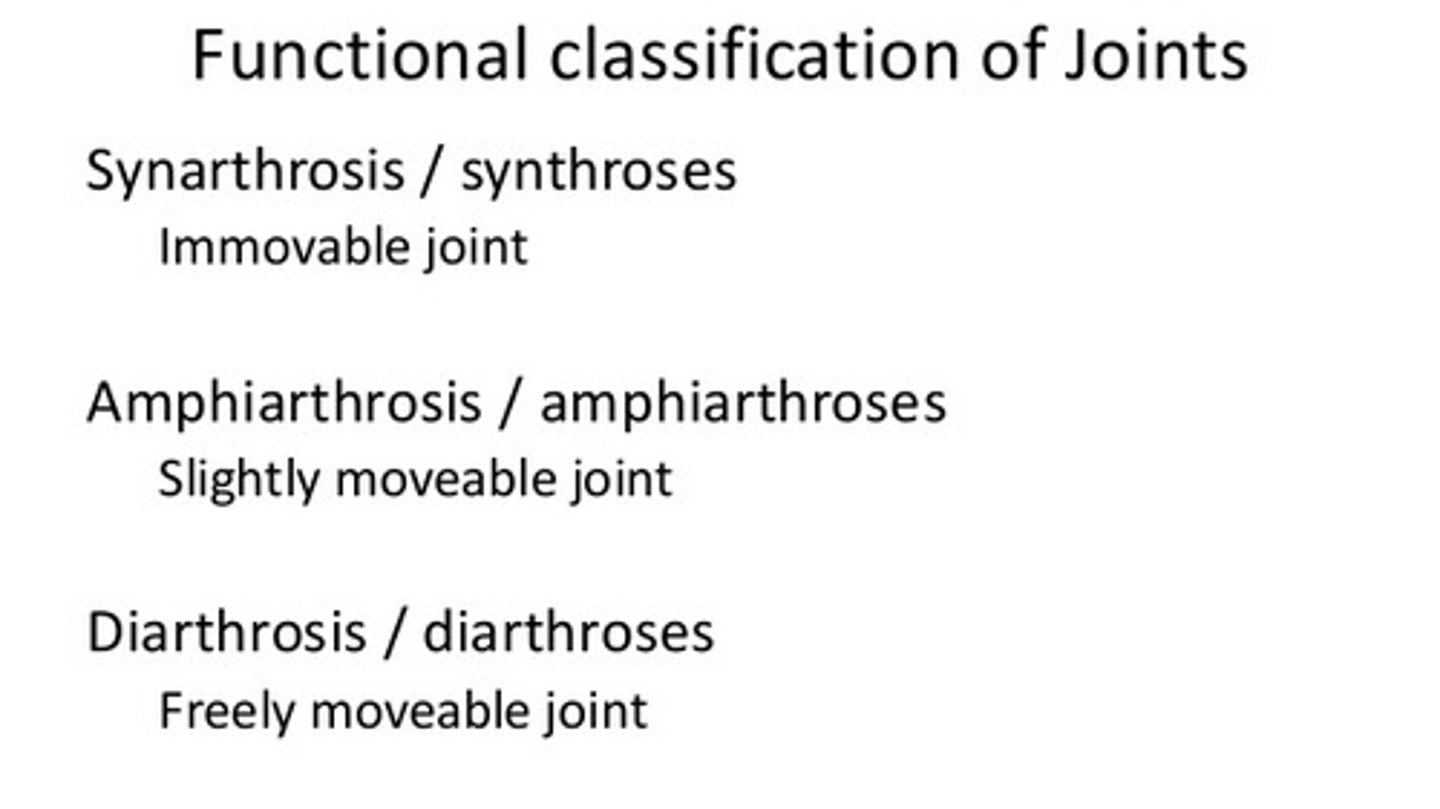
functional classification of joints
is made on the basis of the amount of movement the joint allows-Range of Motion.
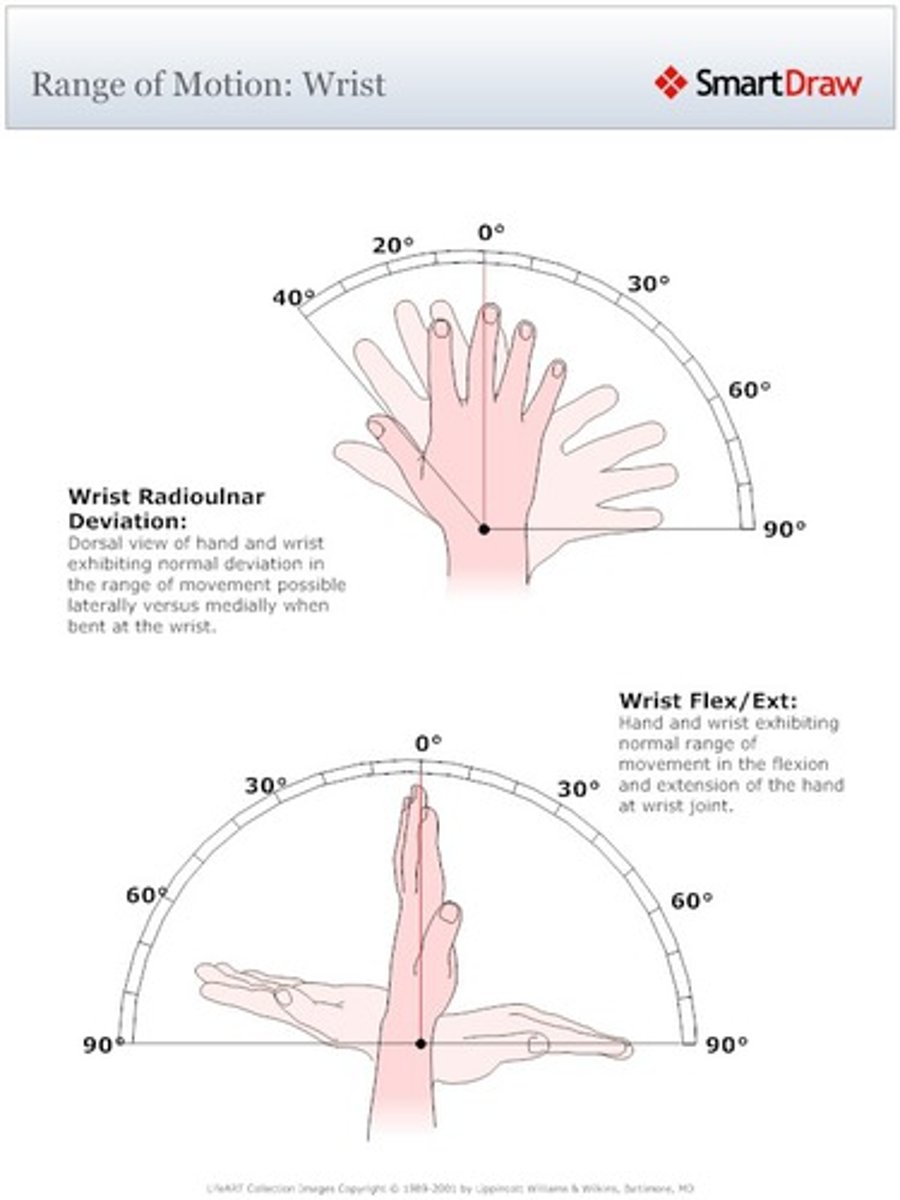
Range of Motion (ROM)
the movement of a joint to the extent possible without causing pain
synarthroses
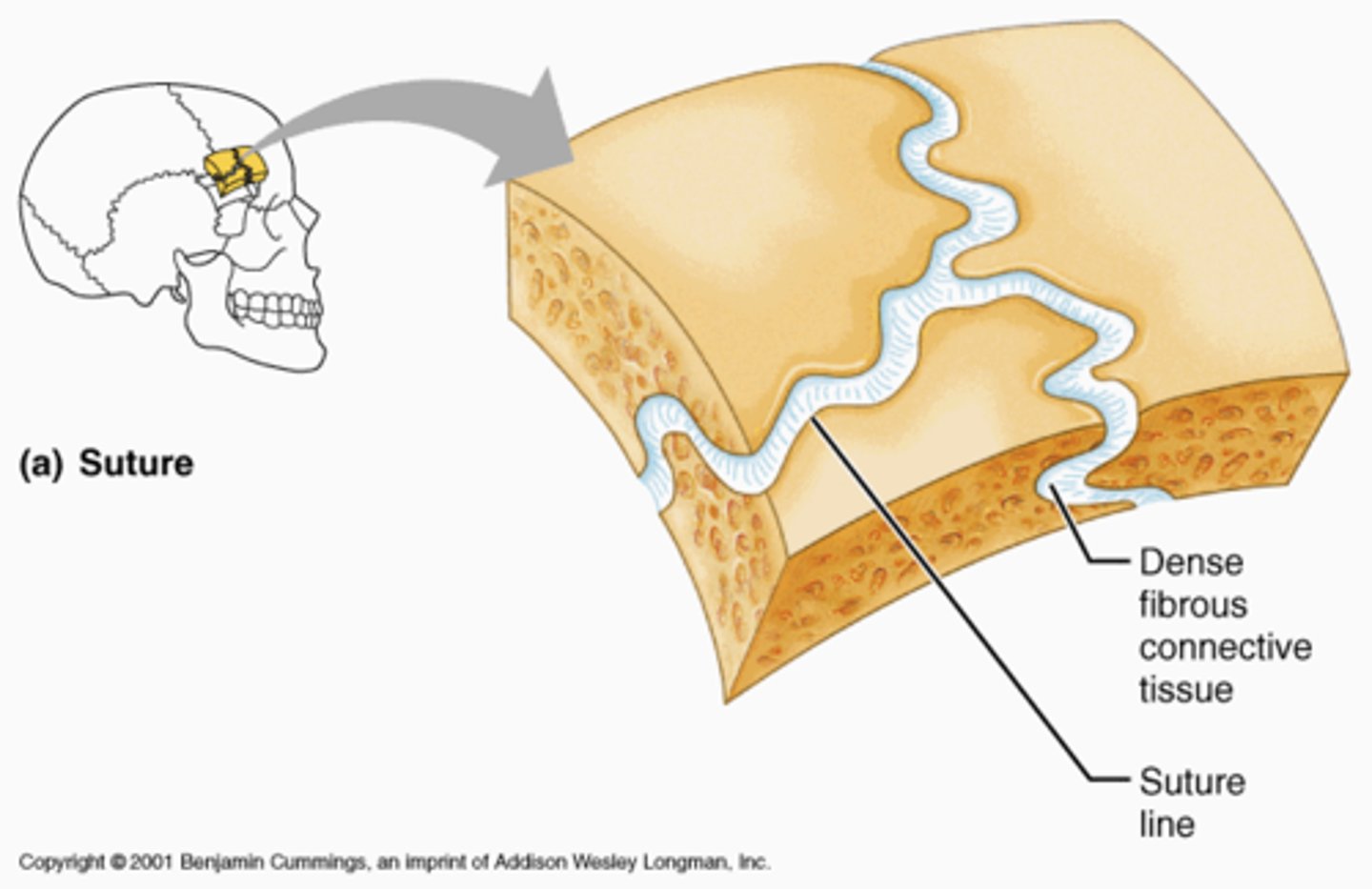
immovable joints; include the sutures between the skull bones and the teeth sockets
amphiarthroses
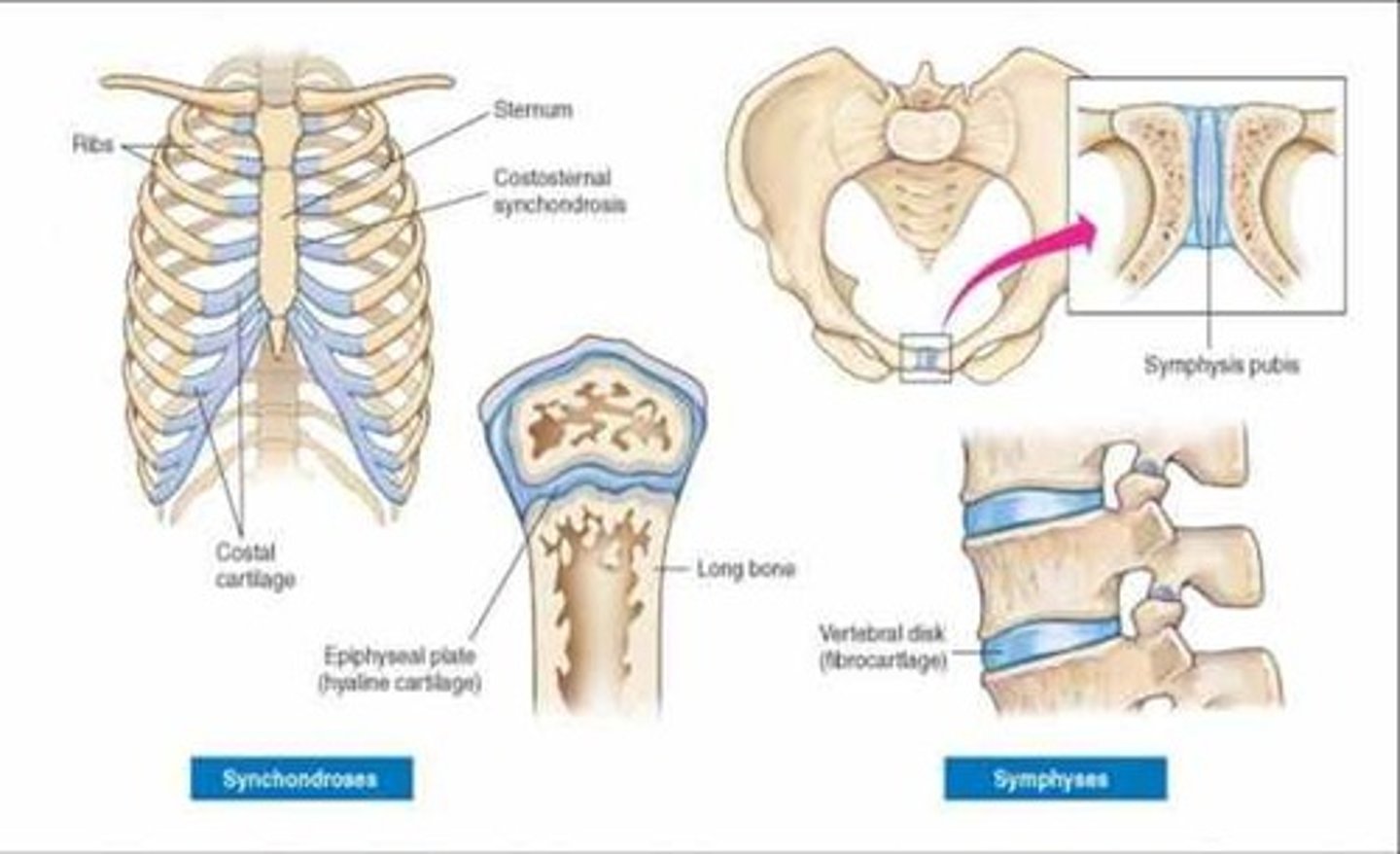
slightly movable joints; intervertebral joints, the tibiofibular joint, and the pupic symphysis are examples.
diarthroses
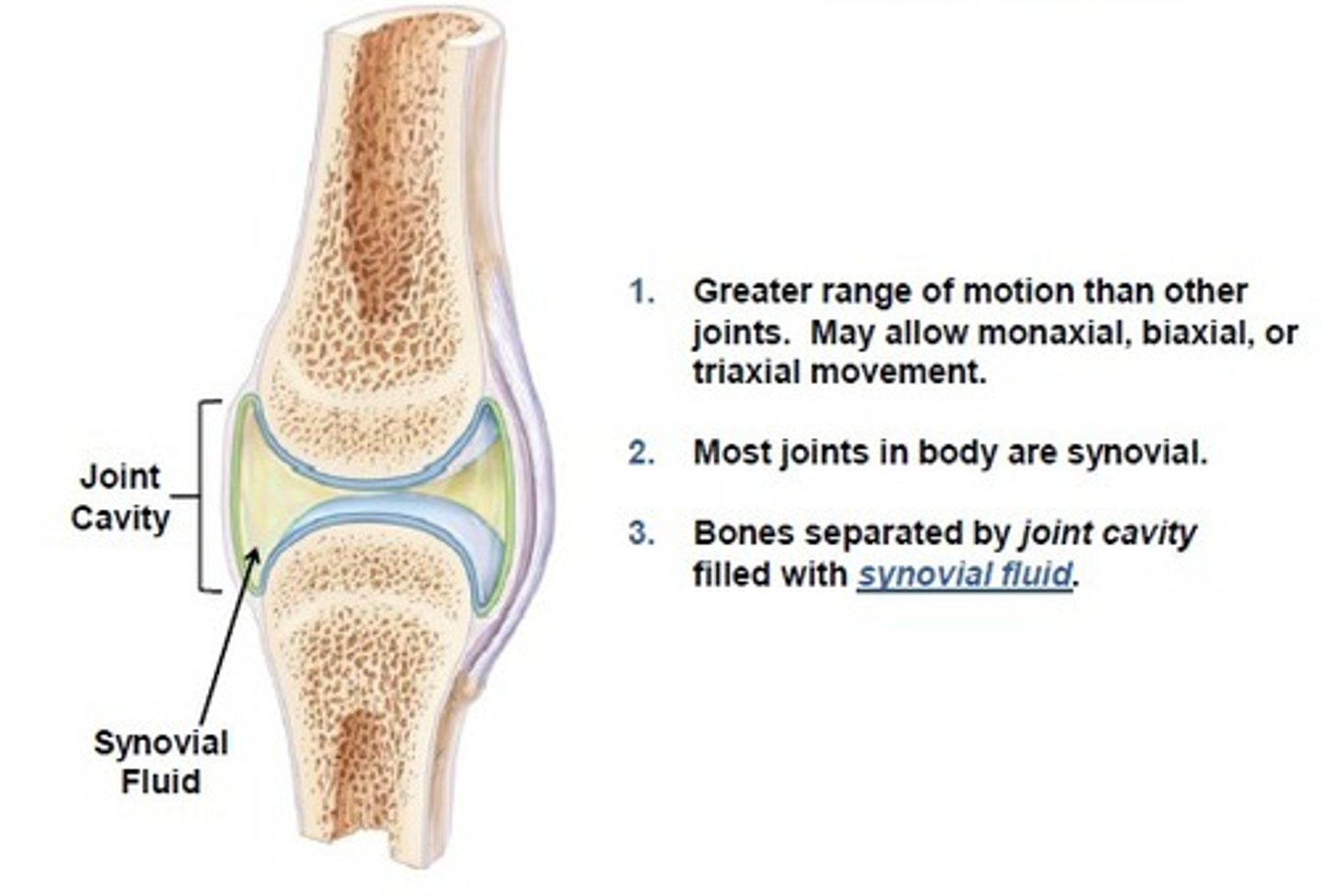
freely movable joints; about 90% of the joints in the body; all synovial joints.
structural classification of joints
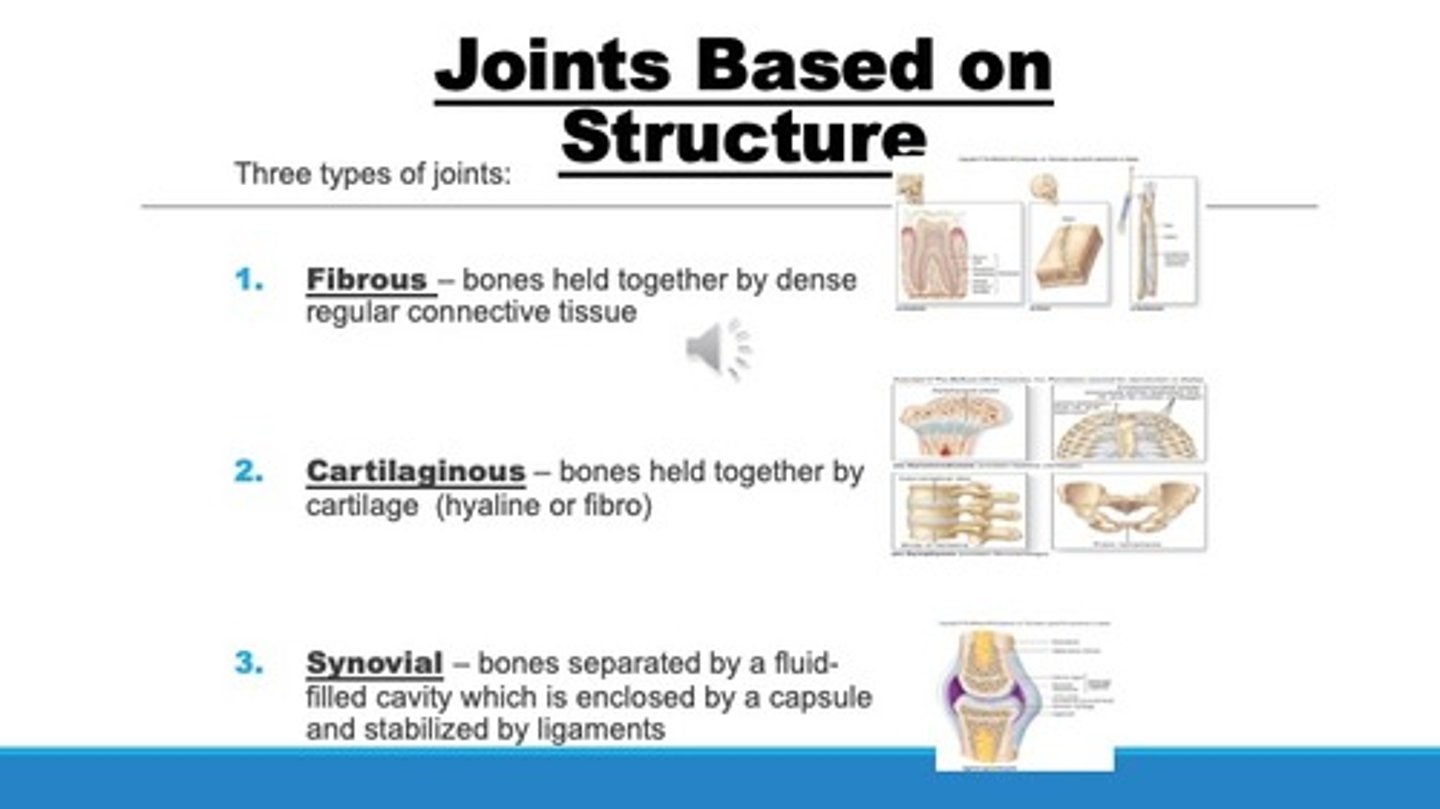
a way to categorize joints by the material that holds the bones of the joints together. They include; fibrous, cartilaginous, & synovial.
TERM
Fibrous joints
DEFINITION
have dense fibrous connective tissue with strong collagen fibers that hold the joints firmly together with no synovial cavity. Permits little to no movement.
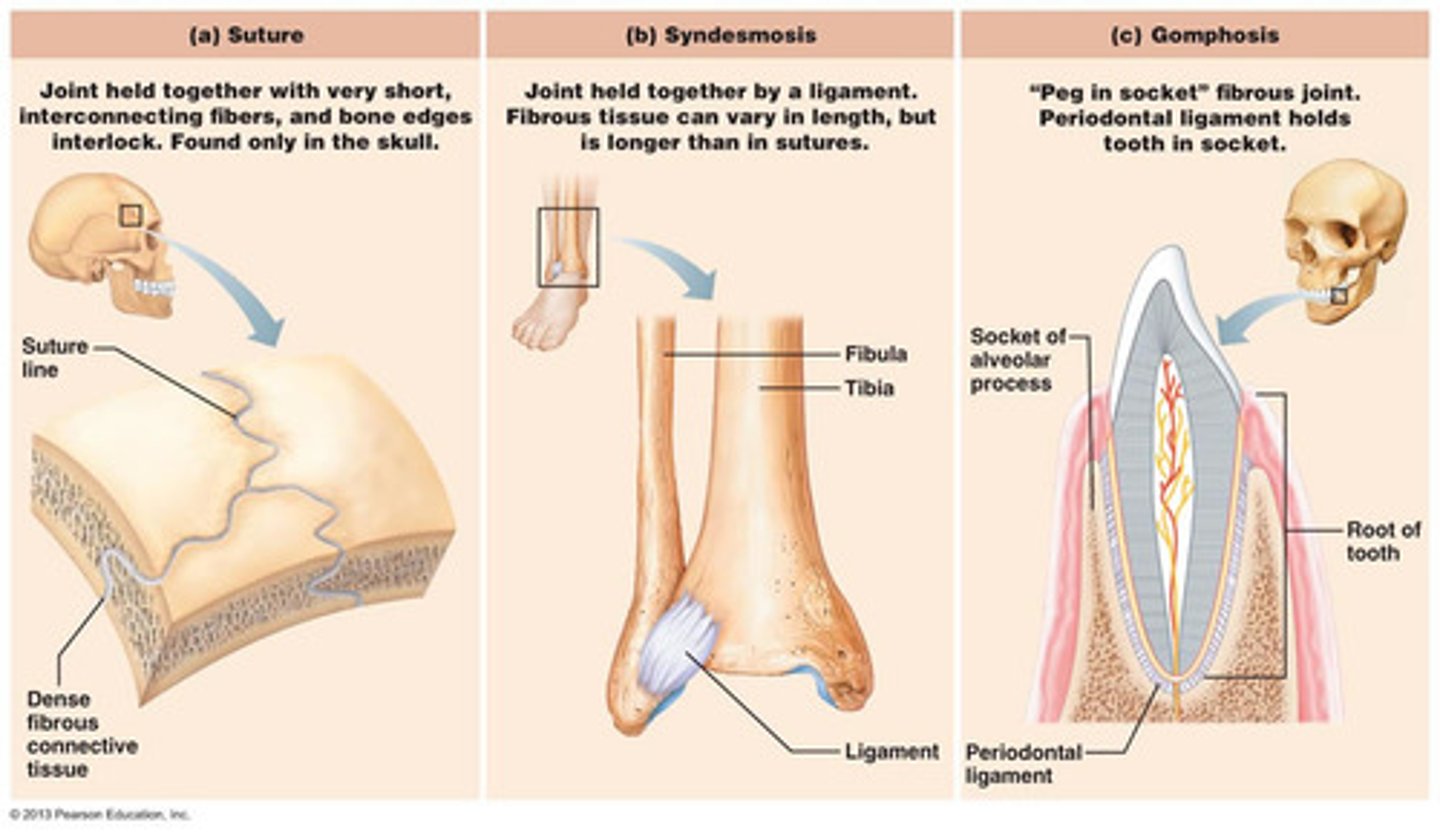
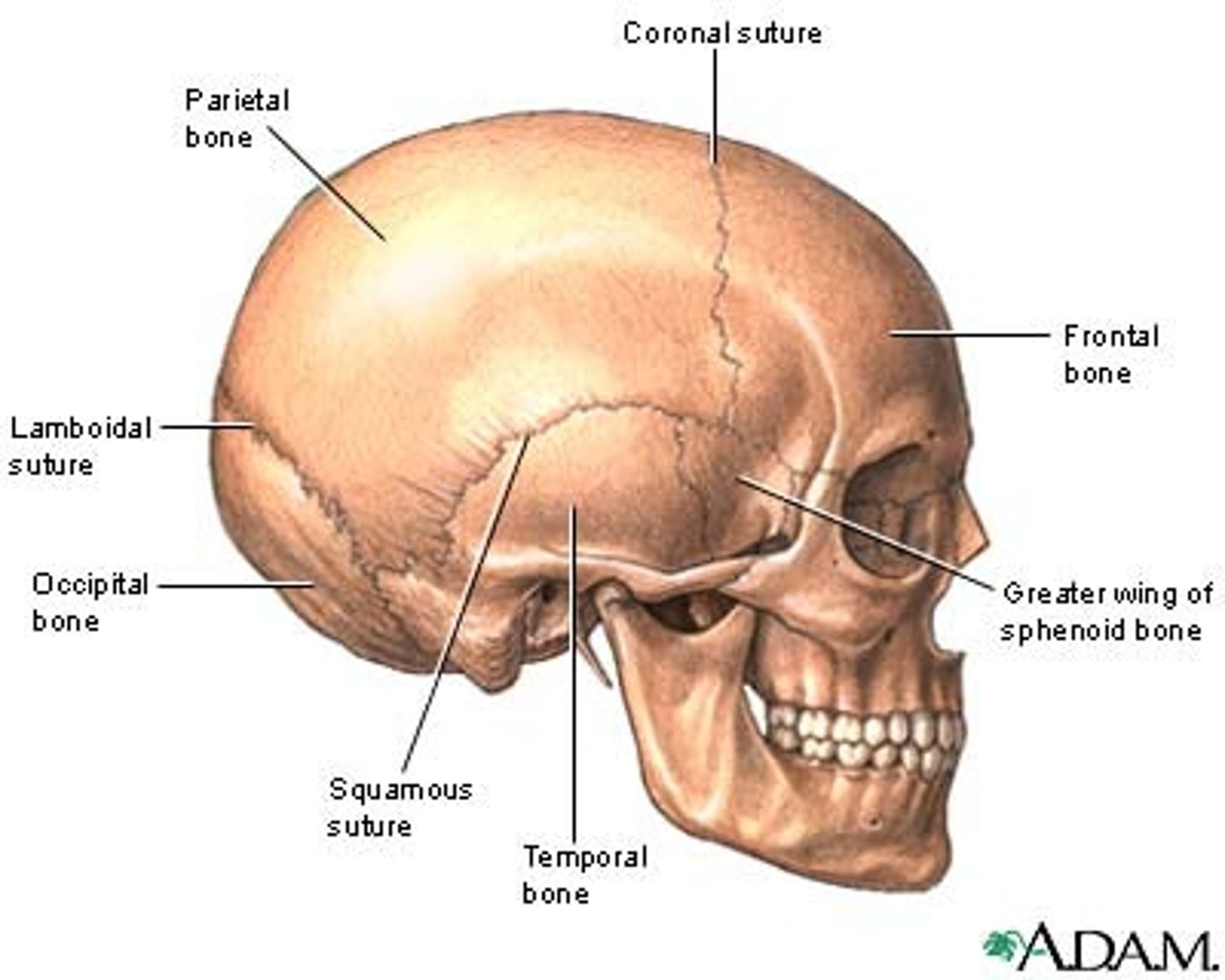
Sutures
fibrous nonmoving joints that connect bones of the skull.
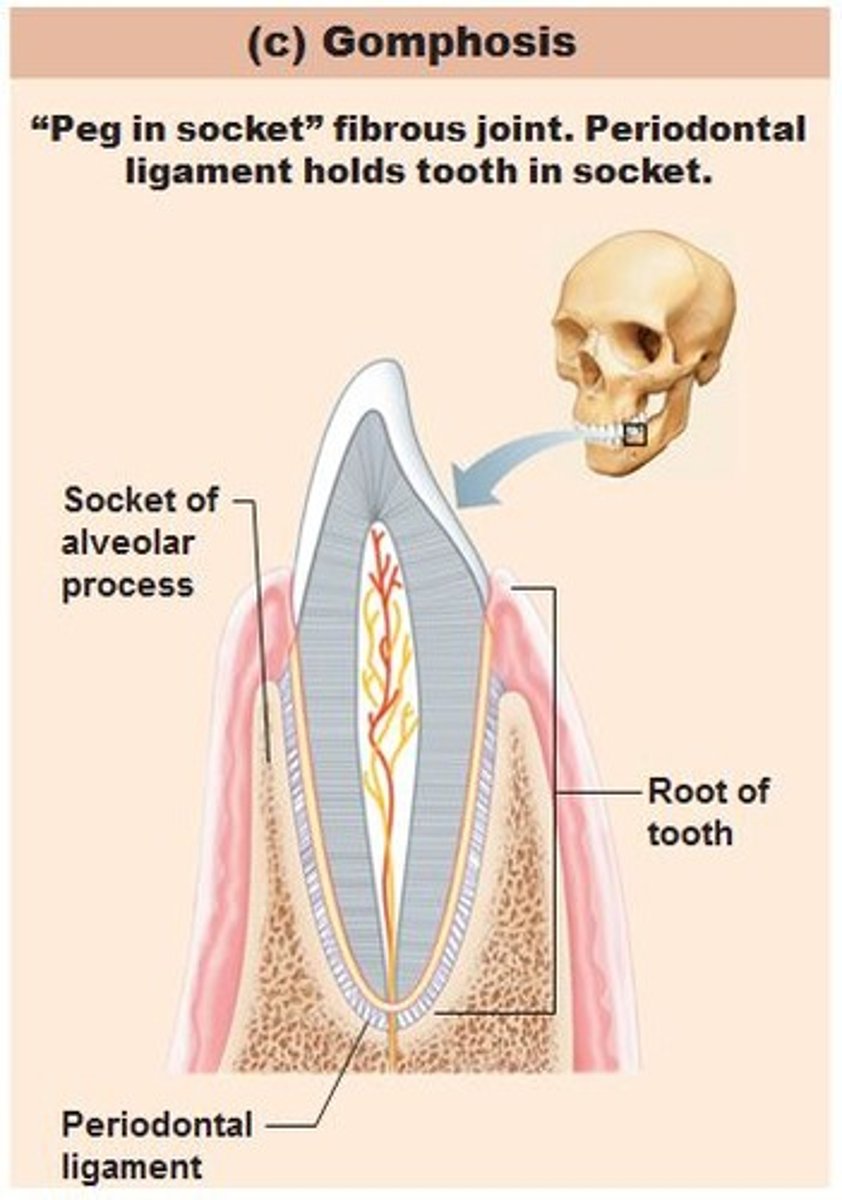
Gomphoses
fibrous articulations between the teeth and the mandible (lower jaw bone) or maxilla (upper jaw bones).
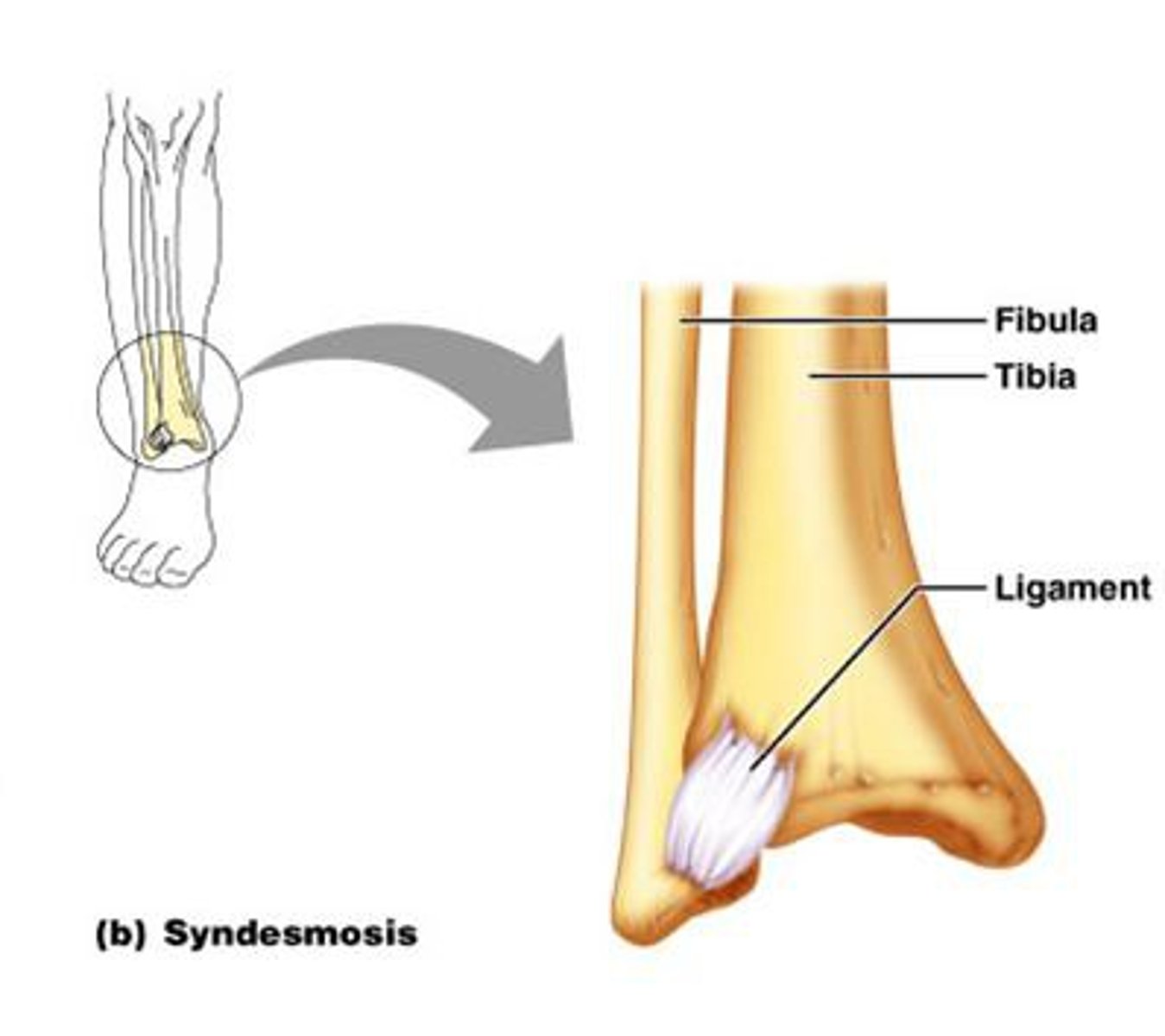
Syndesmosis
a fibrous joint at which two bones are bound by long collagen fibers
TERM
Cartiliaginous joints
DEFINITION
have either hyaline cartilage or fibrocartilage connecting the bones with no synovial cavity. Usually, their is a small degree of movement.
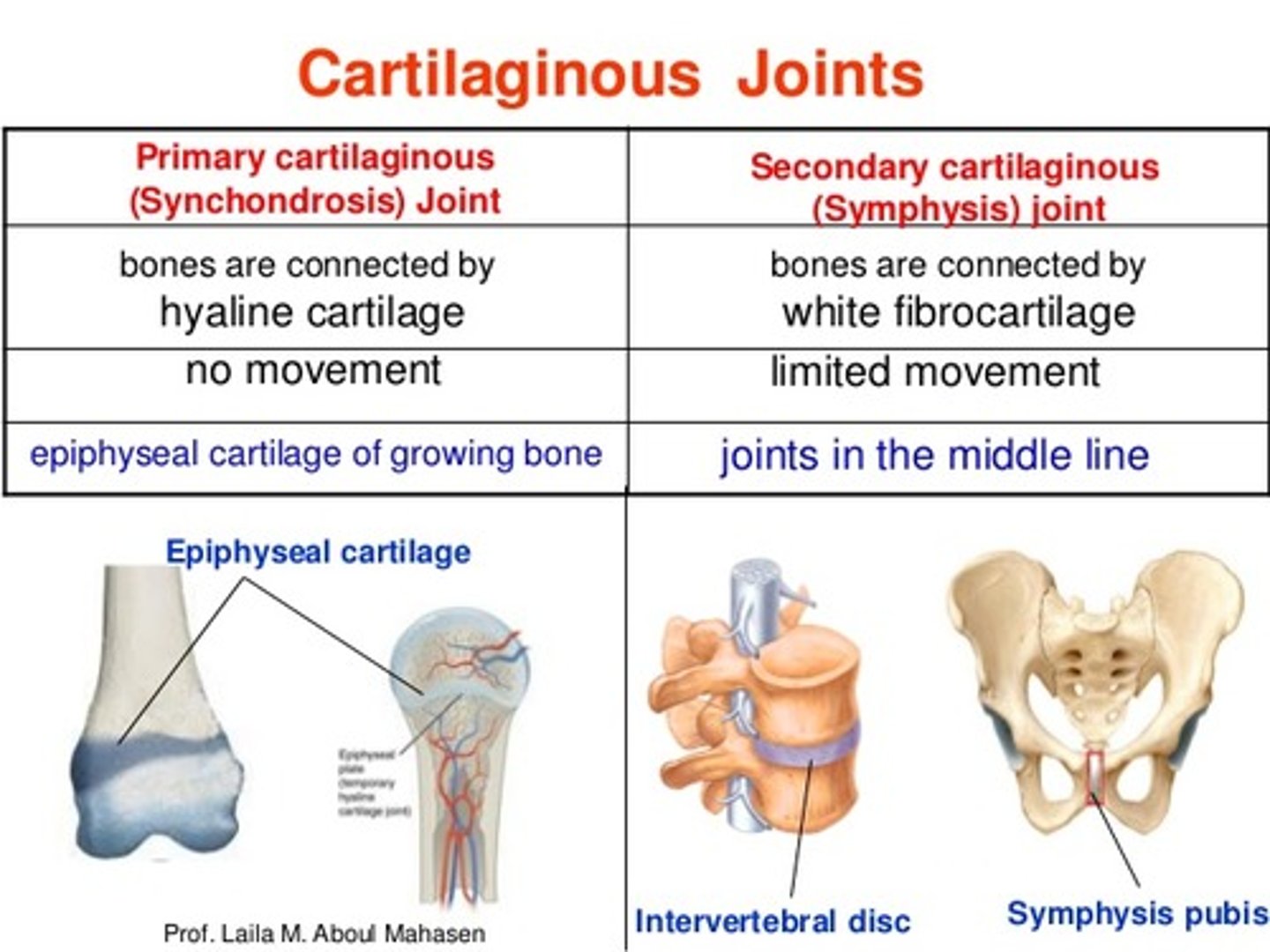
Synchondrosis
cartilaginous joint in which the connecting material is hyaline cartilage. This type of joint allows for little movement.
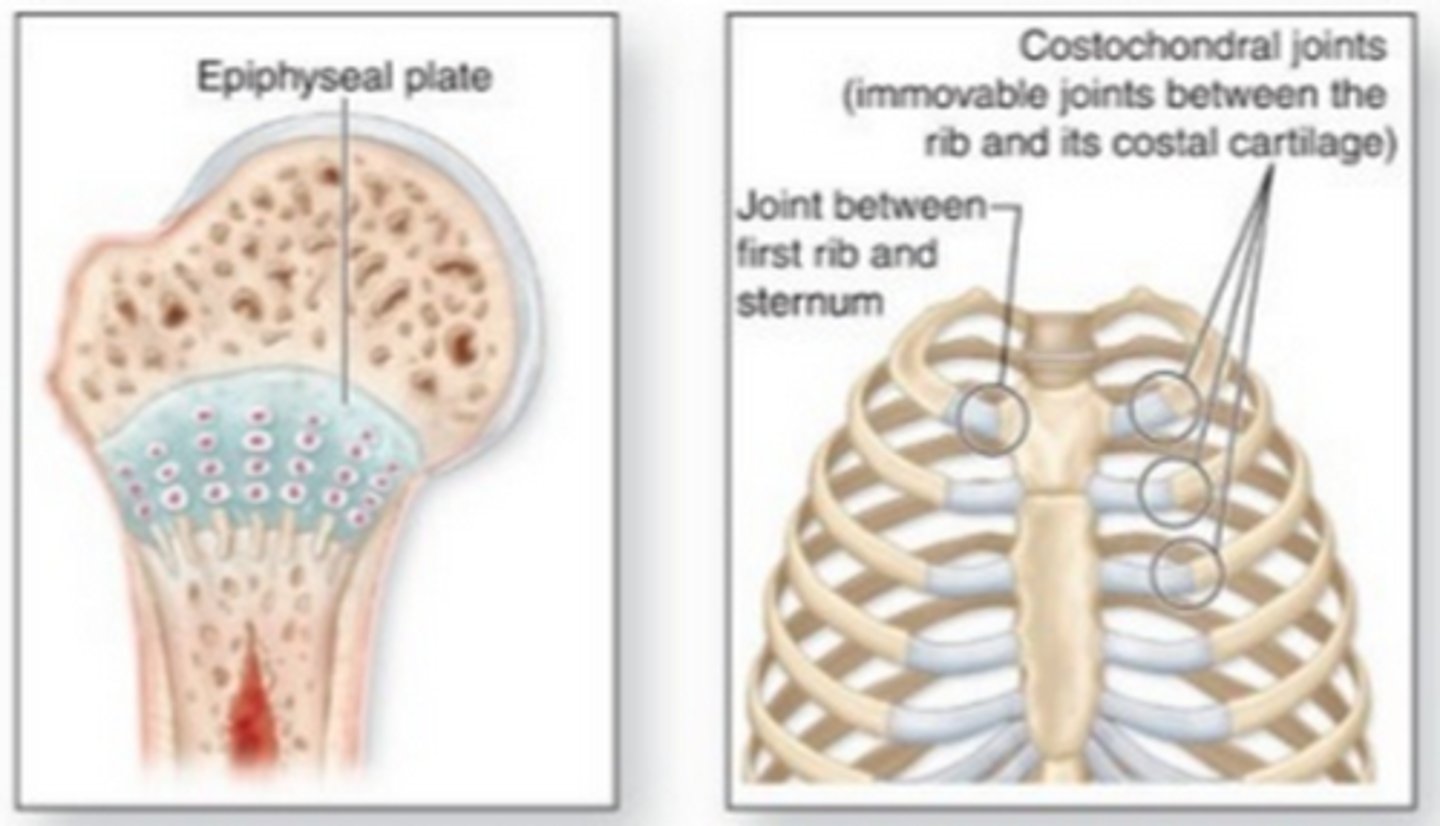
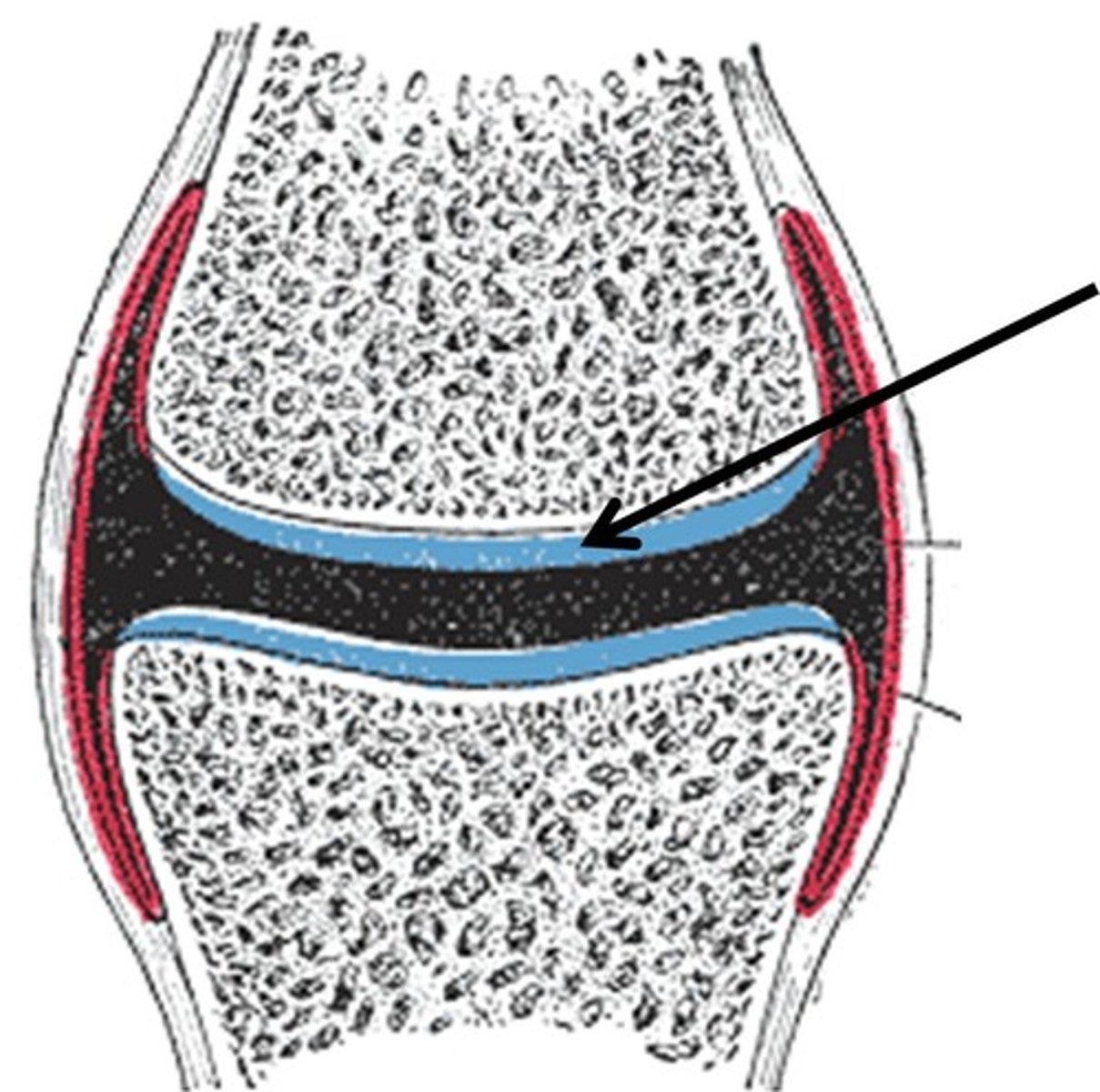
hyaline cartilage
Most common type of cartilage; it is found on the ends of long bones, ribs, and nose
symphysis
two bones joined by fibrocartilage. This type of joint allows for some movement.
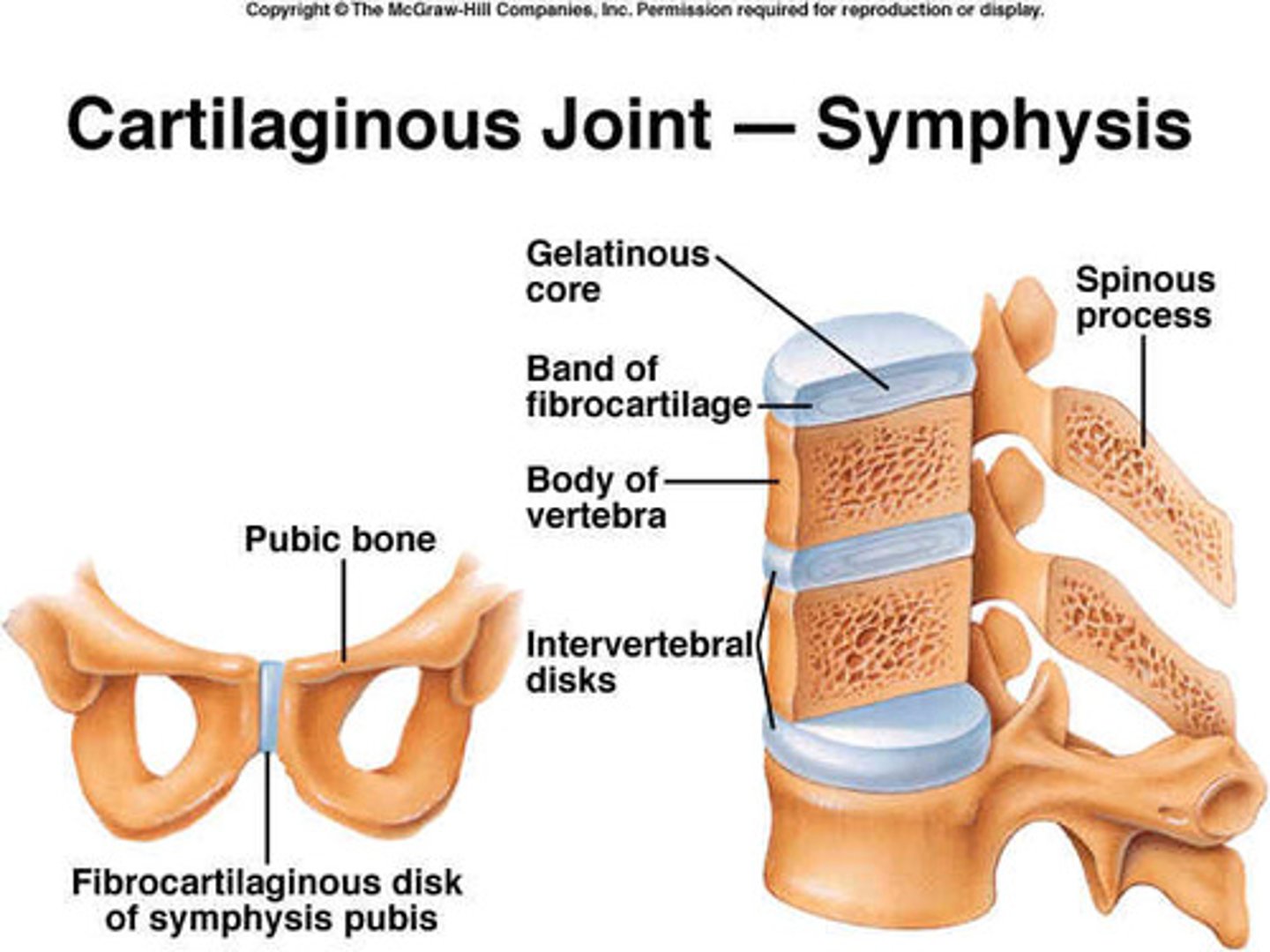
Fibrocartilage
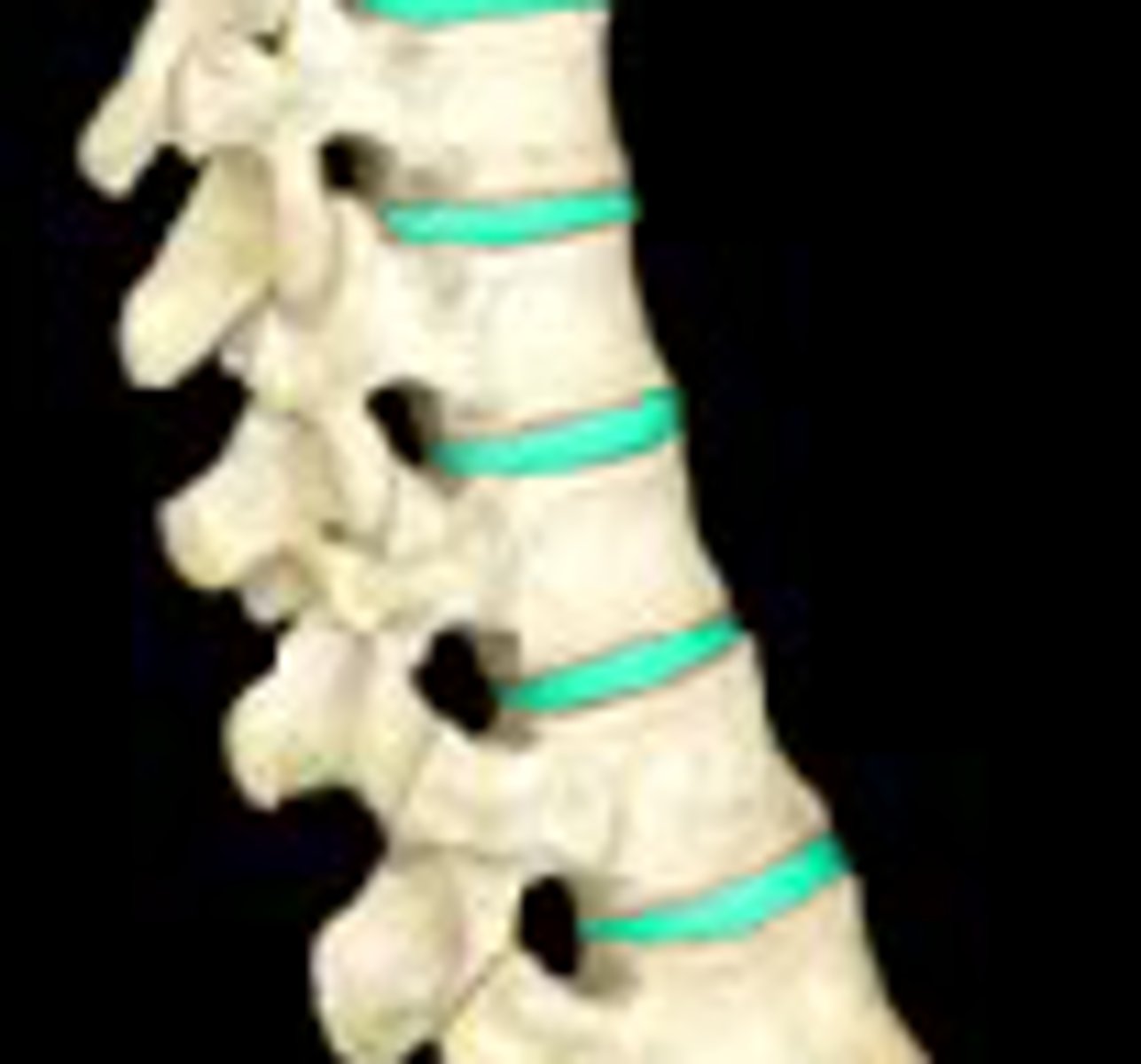
cartilage that contains fibrous bundles of collagen, such as that of the intervertebral disks in the spinal cord.
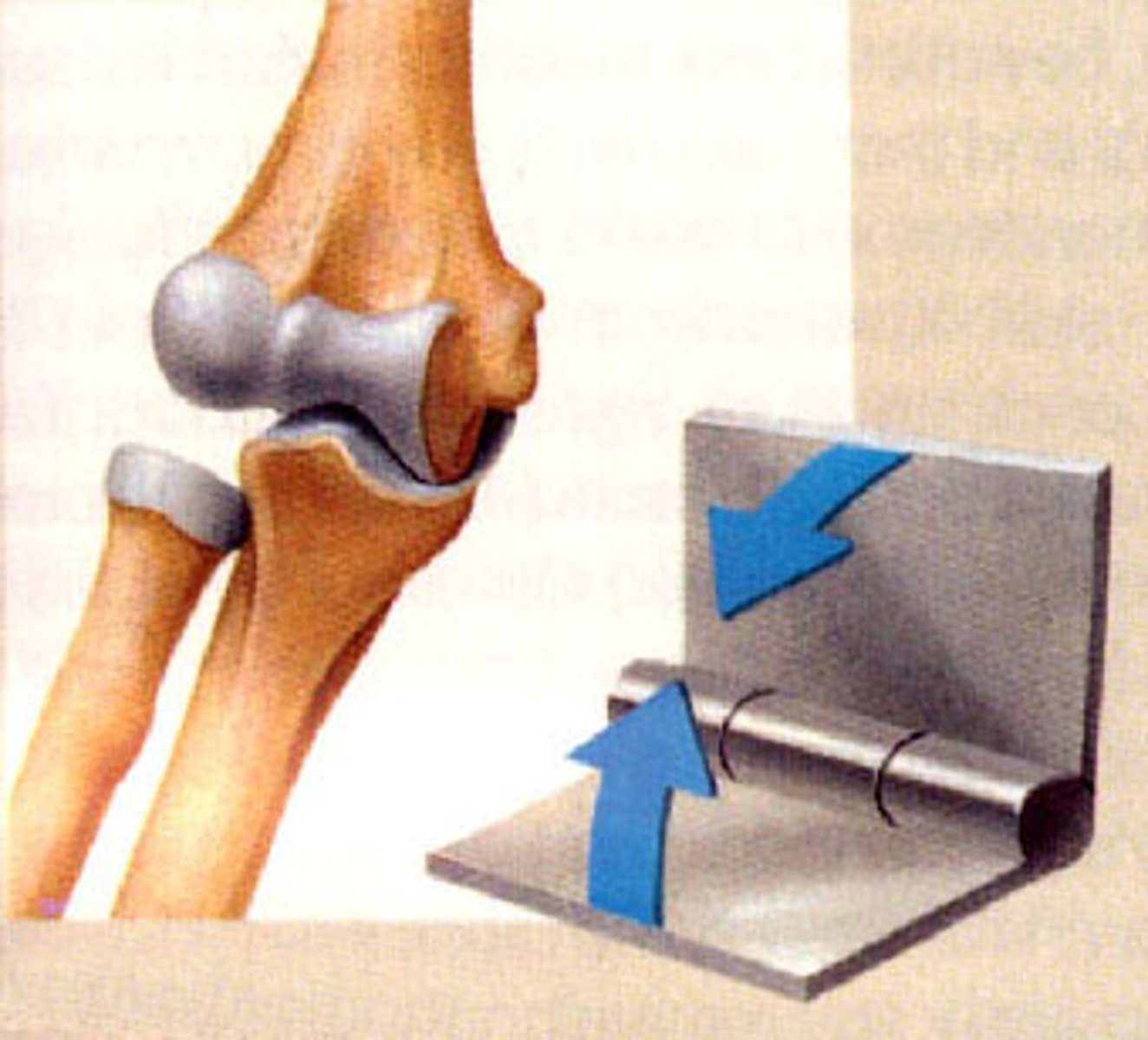
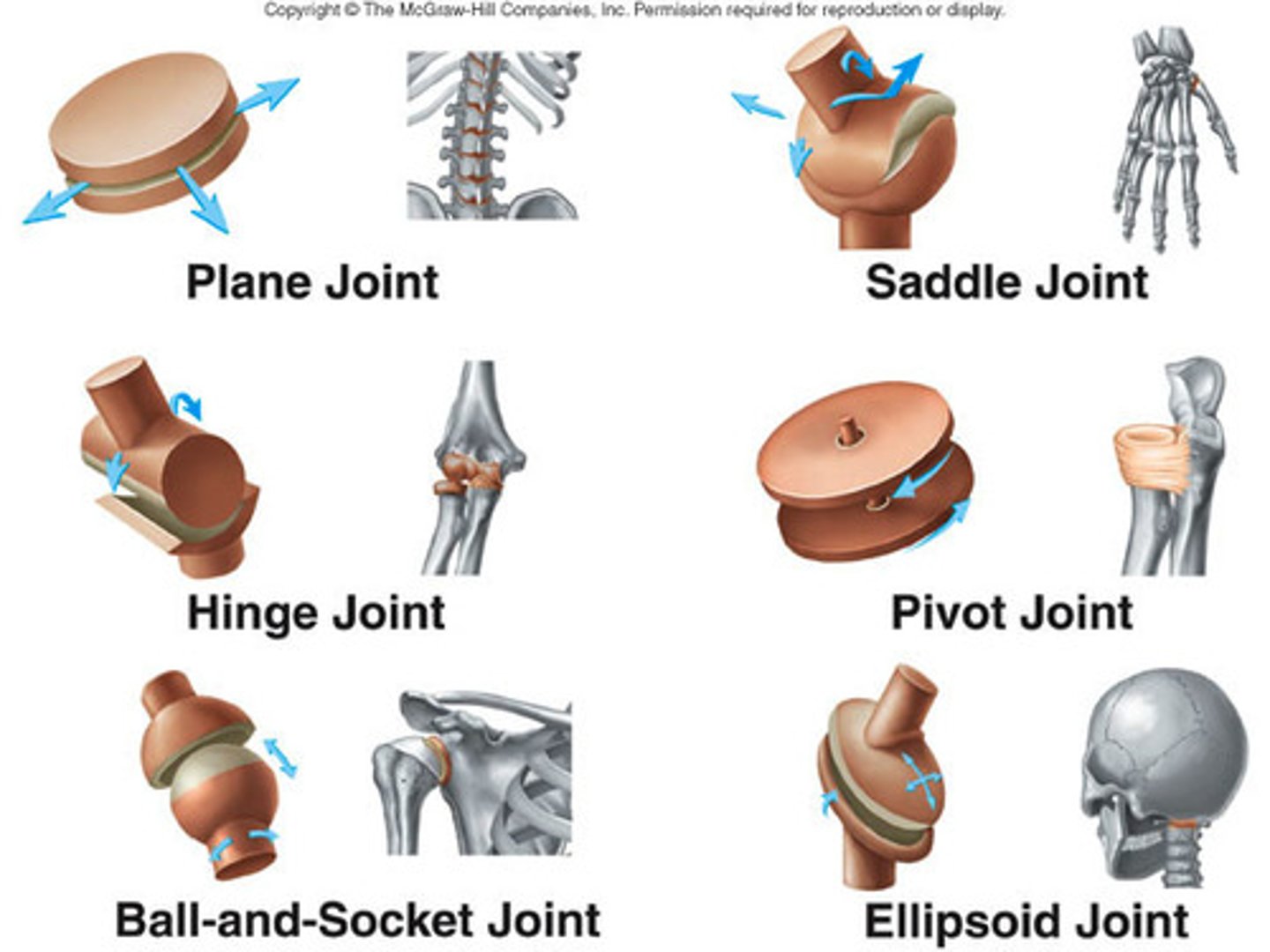
Synovial joints
have a small synovial cavity between the two bones that permits a greater amount of movement than fibrous or cartilaginous joints. Majority of the joints in the human body
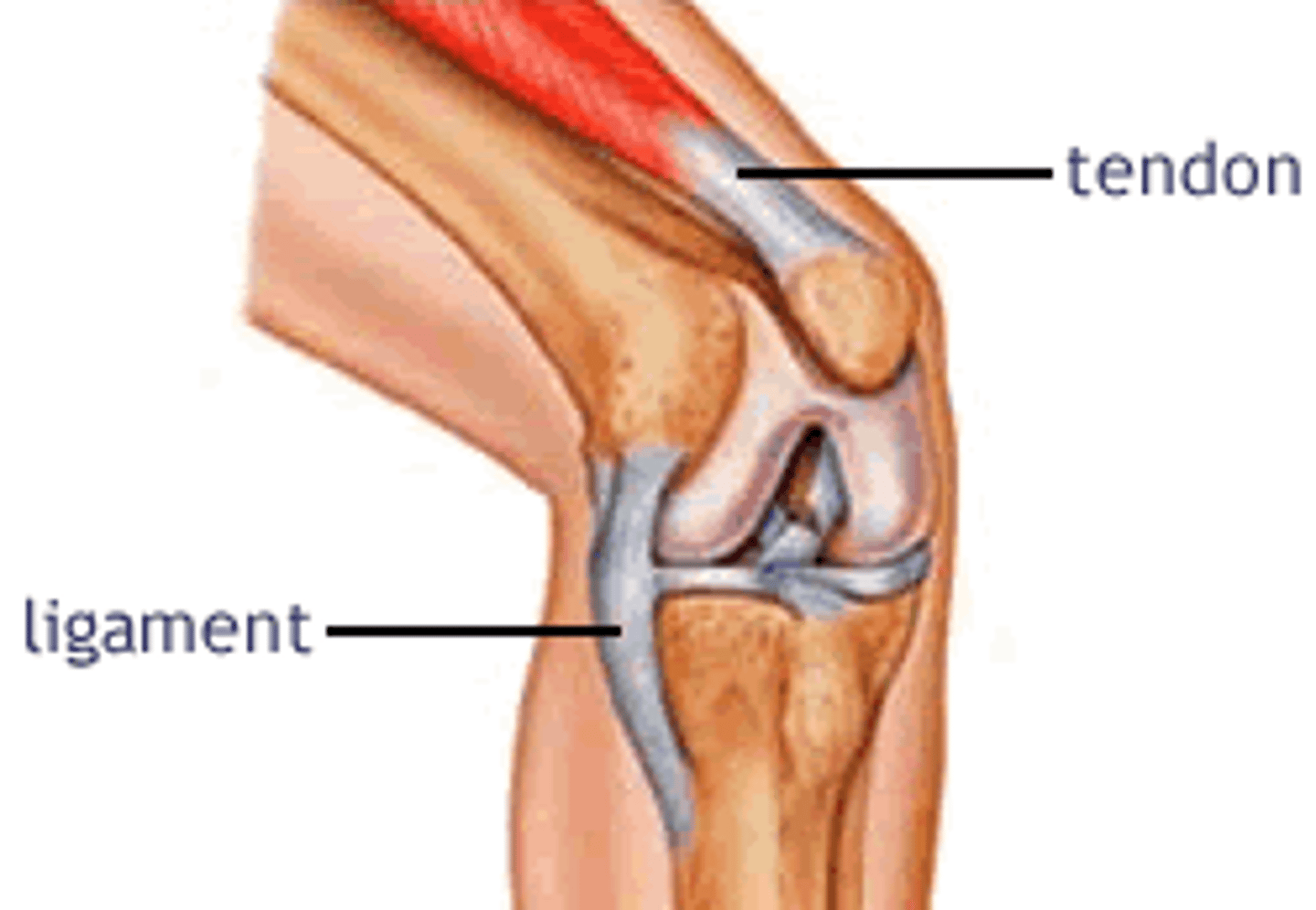
Ligaments
bands of tough elastic connective tissue around your joints. They connect bone to bone, give your joints support, and limit their movement.
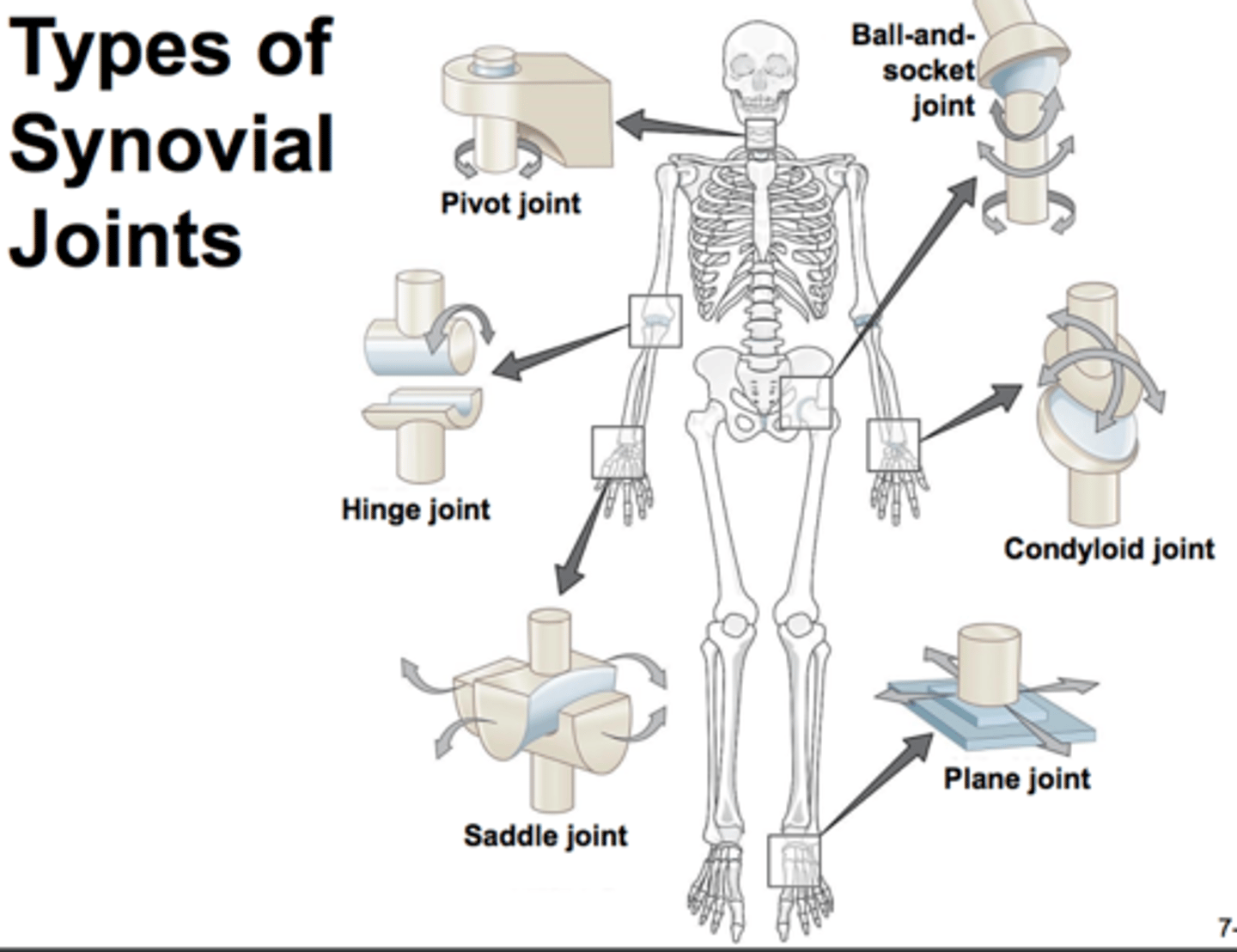
Examples of Synovial joints
shoulder, elbow, hip, and knee joints.
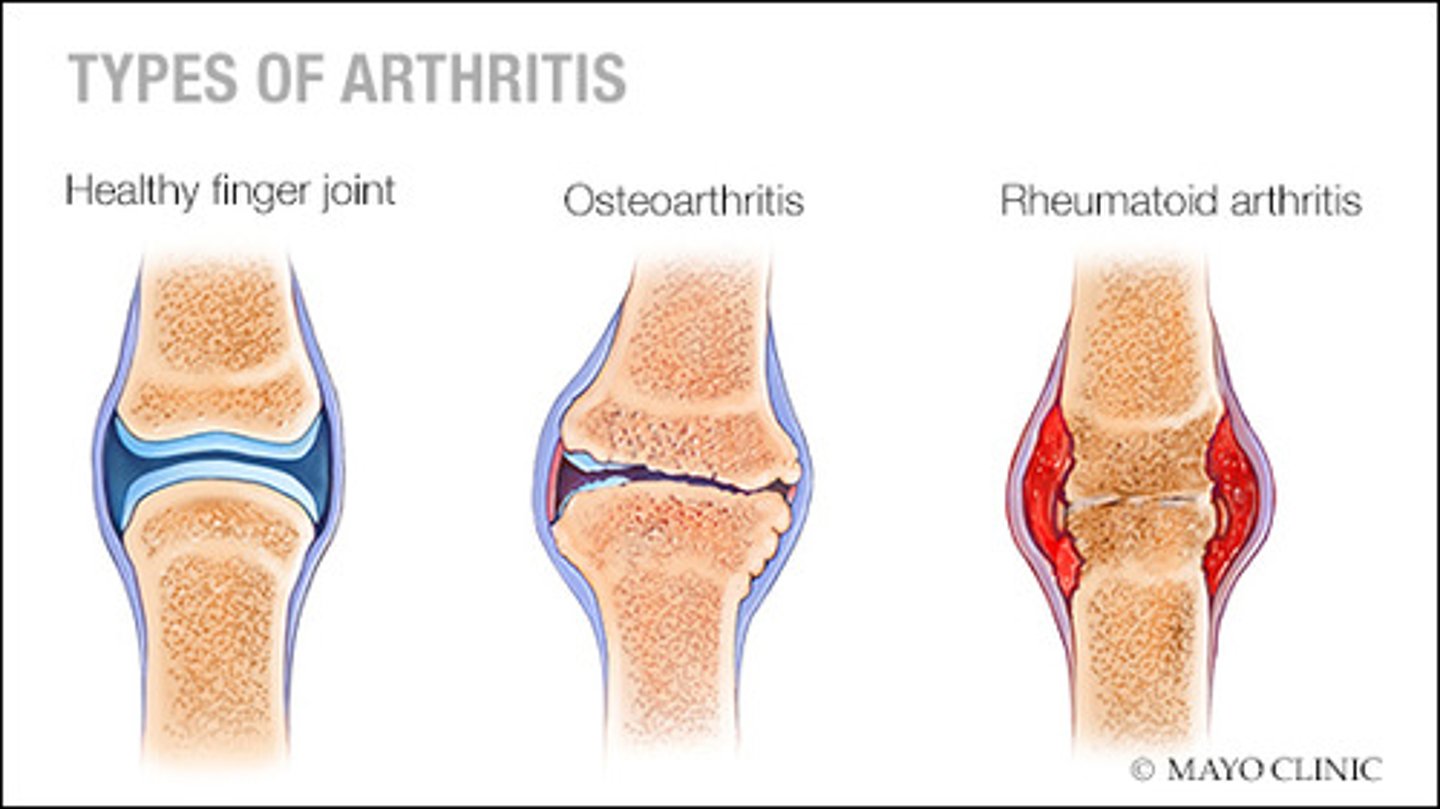
arthritis
Inflammation of one or more joints, causing pain and stiffness that can worsen with age.
Read and take notes on this online article
https://www.visiblebody.com/learn/skeleton/joints-and-ligaments