module 3: directional terms, positions, and imaging
 Studied by 0 people
 Call Kai
 Learn
Learn Practice Test
 Spaced Repetition
 Match
Match Flashcards
 Knowt Play
1/67

There's no tags or description
Looks like no tags are added yet.
Name | Mastery | Learn | Test | Matching | Spaced | Call with Kai |
|---|
No analytics yet
Send a link to your students to track their progress
68 Terms
When directional terms are applied, it is assumed that the body is in the standard neutral position of reference known as the
anatomic position
The abbreviation of the term that means pertaining to the back and to the front is
PA
The meaning of the prefix bi- is
two
The combining form meaning back, behind is
poster/o
In the medical term ventral, the word root means
belly (front)
The word part that completes the medical term meaning toward the head, _______/ad, is
cephal
The combining form super/o means
above
The combining form meaning near (the point of attachment) is
proxim/o
In the medical term medial, the word root means
middle
The word part that completes the medical term meaning pertaining to the back, poster/_______, is
-ior
The meaning of the suffix -ad is
toward
The combining form meaning side is
later/o
The combining form that means front is
anter/o.
The combining form dist/o means
away (from the point of attachment).
When referring to humans, ventral is interchangeable with the term
anterior
The medical term that is a synonym for posterior is
dorsal
The medical term meaning pertaining to below is
inferior
The medical term dorsal means
pertaining to the back
The medical term that means pertaining to the tail is
caudal
The medical term anteroposterior means pertaining to the
front and to the back
The medical term meaning pertaining to a side is
lateral
The correct spelling of the medical term meaning pertaining to one side (only) is
unilateral
The medical term mediolateral means pertaining to the
middle and to the side
The correct spelling of the medical term meaning toward the head is
cephalad
The meaning of the medical term anterior is
pertaining to the front
pertaining to the front
distal
The abbreviation of the medical term meaning pertaining to the front is
ant
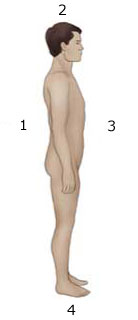
On the image below, what is the directional term indicated by label 1?
dorsal
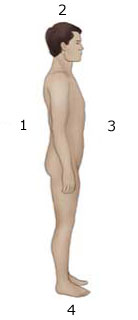
On the image below, what is the directional term indicated by label 2?
cephalic
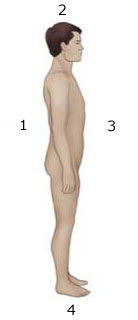
On the image below, what is the directional term indicated by label 3?
Anterior
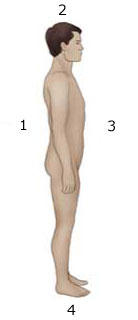
On the image below, what is the directional term indicated by label 4?
Caudal
Frontal, coronal, sagittal, and transverse refer to
anatomic planes
Imaginary vertical and horizontal lines drawn through the umbilicus form the
abdominopelvic quadrants
The horizontal plane dividing the body into superior (or upper) and inferior (or lower) portions is the
transverse plane
A vertical plane passing through the body from front to back, dividing the body into right and left sides is a
sagittal plane
The coronal plane is also called the
frontal plane
The parasagittal plane could best be described as an imaginary plane passing through the body and dividing it into
unequal right and left sides
The frontal plane could best be described as an imaginary plane passing through the body and dividing it into
anterior and posterior portions
The medical term meaning to the right and left of the umbilical region, near the waist is
lumbar regions
The umbilical region refers to
around the navel (umbilicus)
The correct spelling of the region referring to the right and left of the epigastric region is
hypochondriac
The epigastric region refers to
the region superior to the umbilical region
The medical term referring to the area that contains the right lobe of the liver, the gallbladder, part of the pancreas, and portions of the small and large intestines is the
right upper quadrant
The medical term referring to the area that contains portions of the intestinal tract, the left ureter, the left fallopian tube and ovary in women, and the left spermatic duct in men is the
left lower quadrant
RLQ abbreviates
right lower quadrant
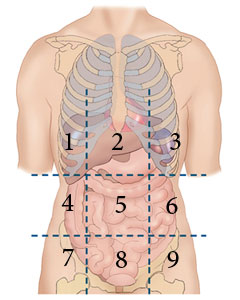
Identify term 1 in the abdominopelvic region shown.
right hypochondriac region
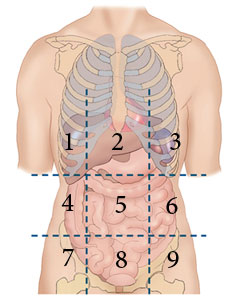
Identify term 2 in the abdominopelvic region shown.
epigastric region
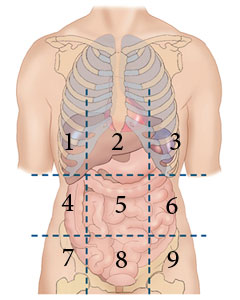
Identify term 3 in the abdominopelvic region shown.
left hypochondriac region

Identify term 4 in the abdominopelvic region shown.
right lumbar region
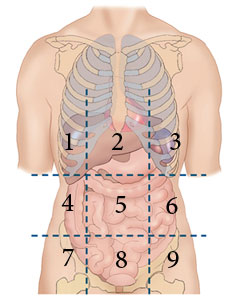
Identify term 5 in the abdominopelvic region shown.
umbilical region
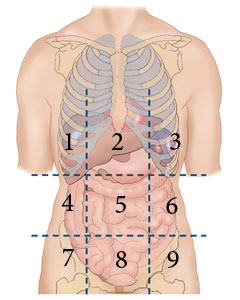
Identify term 6 in the abdominopelvic region shown.
left lumbar region
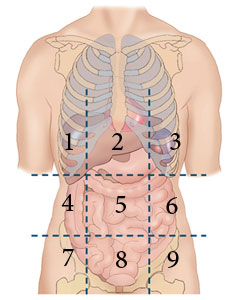
Identify term 7 in the abdominopelvic region shown.
right iliac region
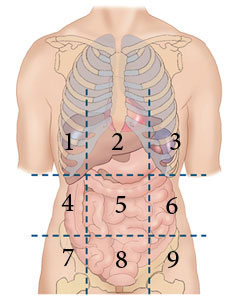
Identify term 8 in the abdominopelvic region shown.
hypogastric region
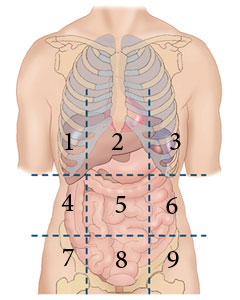
Identify term 9 in the abdominopelvic region shown.
left iliac region
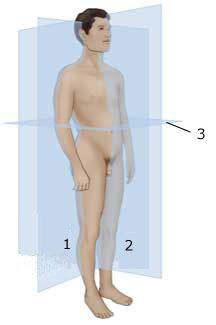
Identify anatomic plane 1 in the following illustration.
Frontal, or coronal plane
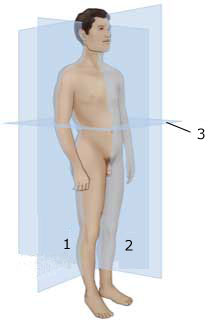
Identify anatomic plane 2 in the following illustration.
Sagittal plane
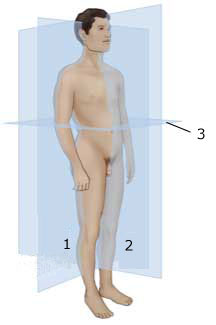
Identify anatomic plane 3 in the following illustration.
Transverse plane
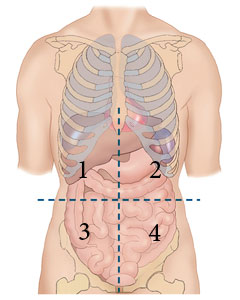
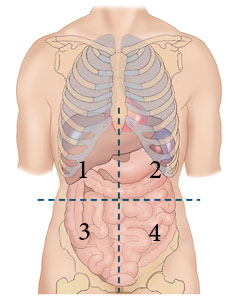
Identify the abbreviation for quadrant 1 on the illustration.
RUQ
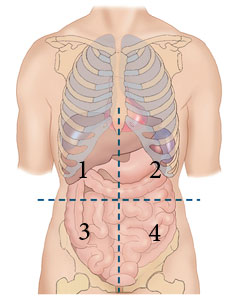
Identify the abbreviation for quadrant 2 on the illustration.
LUQ
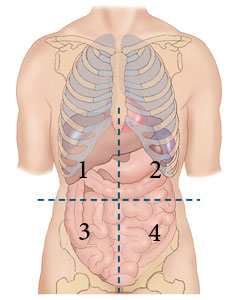
Identify the abbreviation for quadrant 3 on the illustration.
RLQ
Identify the abbreviation for quadrant 4 on the illustration.
LLQ
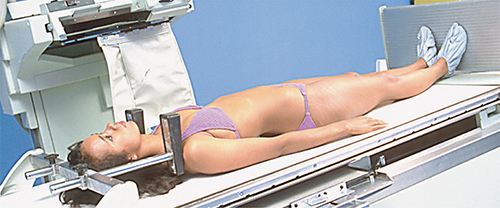
In the Radiology Department, Patient A is directed to lie face up on the exam table, whereas Patient B is directed to lie face down. Both of these patients can be said to be in the _________ position.
recumbent
Mr. B is recovering from a head injury, so the Emergency Department physician orders that he be positioned in a semi-sitting position with slight elevation of the knees. From this, we know that Mr. B is being placed in the ________ position.
Fowler
Identify body position 1 in the following illustration.
Trendelenburg
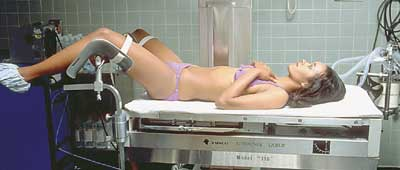
Identify body position 2 in the following illustration.
Lithotomy
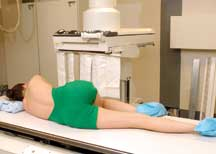
Identify body position 3 in the following illustration.
Sims
Ms. T arrives at the Physical Therapy Department for her therapeutic massage to relieve her sciatica. She is directed to lie on her abdomen, facing downward. Mrs. T is being placed in the ________ position.
prone
Mr. H arrives at the outpatient surgical center to have a benign tumor removed from the top of his head. The pre-op nurse directs Mr. H to a chair and asks him to sit erect, with a pillow behind him for support, and lean forward on two large pillows. Mr. H is being arranged in the _________ position.
orthopnea
 Note
Note  Flashcards (39)