UT 505 Final Study Guide

0.0(0)
Studied by 3 people
call kaiCall Kai
learnLearn
examPractice Test
spaced repetitionSpaced Repetition
heart puzzleMatch
flashcardsFlashcards
GameKnowt Play
Card Sorting

1/43

flashcard set

Earn XP

Description and Tags

UT 505 - MSK

Last updated 12:40 AM on 3/23/26
Name
Mastery
Learn
Test
Matching
Spaced
Call with Kai

No analytics yet

Send a link to your students to track their progress

44 Terms

1
New cards

Triangulate

Imaging in two perpendicular planes to determine location of FB

2
New cards

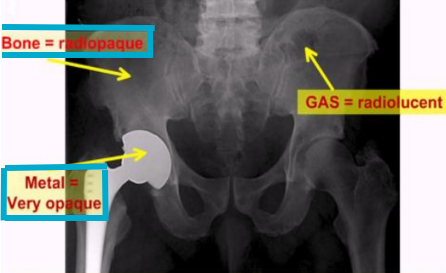
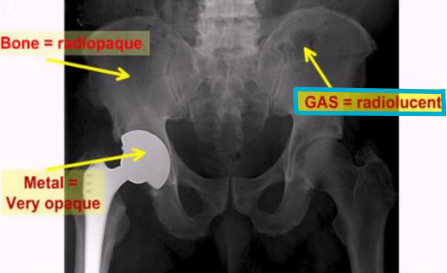
Radiopaque

  • FB or structure in which radiation cannot pass through easily

  • Blocks radiation → appears white/gray

  • Ex: metallic FB

<ul><li><p><span style="background-color: transparent;">FB or structure in which radiation cannot pass through easily</span></p></li><li><p><span style="background-color: transparent;">Blocks radiation → appears white/gray</span></p></li><li><p><span style="background-color: transparent;">Ex: metallic FB</span></p></li></ul><p></p>
3
New cards

Radiolucent

  • FB or structure that allows radiation to pass through easily

  • Appears black or dark gray

  • Ex: air, soft tissue, abscesses, dental pulp
<ul><li><p><span style="background-color: transparent;">FB or structure that allows radiation to pass through easily</span></p></li><li><p><span style="background-color: transparent;">Appears black or dark gray</span></p></li><li><p><span style="background-color: transparent;">Ex: air, soft tissue, abscesses, dental pulp</span></p></li></ul><p></p>
4
New cards

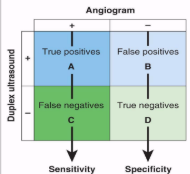
Specificity

  • How well an exam documents normal findings for people without disease or pathology

  • Exam’s ability to identify “normal” and confirms absence of disease
<ul><li><p><span style="background-color: transparent;">How well an exam documents normal findings for people without disease or pathology</span></p></li><li><p><span style="background-color: transparent;">Exam’s ability to identify “normal” and confirms absence of disease</span></p></li></ul><p></p>
5
New cards

In vivo

Biological process that occurs within a living organism or natural setting

6
New cards

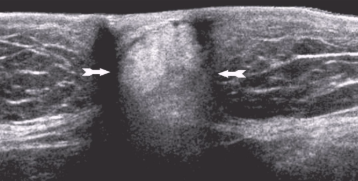
Strangulated hernia

  • Contents compressed → compromised blood supply → ischemia, necrosis, obstruction

  • Increased mortality & morbidity

  • US appearance 

    • Thickened bowel wall, absent vascular flow, free fluid, no peristalsis
<ul><li><p><span style="background-color: transparent;">Contents compressed → compromised blood supply → ischemia, necrosis, obstruction</span></p></li><li><p><span style="background-color: transparent;">Increased mortality &amp; morbidity</span></p></li><li><p><span style="background-color: transparent;">US appearance&nbsp;</span></p><ul><li><p><span style="background-color: transparent;">Thickened bowel wall, absent vascular flow, free fluid, no peristalsis</span></p></li></ul></li></ul><p></p>
7
New cards

Valsalva maneuver

  • Increases intra-abdominal pressure

  • Have patients “bare down” like they’re preparing to take a punch to the abdomen

  • Contents move distally → hernia widens

    • Contents move back toward abdomen and sac narrows during relaxation

  • Key maneuver when looking for hernia due to dynamic study
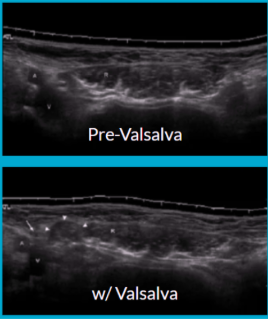
<ul><li><p>Increases intra-abdominal pressure</p></li><li><p><span style="background-color: transparent;">Have patients “bare down” like they’re preparing to take a punch to the abdomen</span></p></li><li><p><span style="background-color: transparent;">Contents move distally → hernia widens</span></p><ul><li><p>Contents move back toward abdomen and sac narrows during relaxation</p></li></ul></li><li><p><span style="background-color: transparent;">Key maneuver when looking for hernia due to dynamic study</span></p></li></ul><p></p>
8
New cards

Lipoma

  • Most common benign tumor of abdominal wall

  • Fatty and benign

  • Soft, palpable, painless

  • US appearance: 

    • Strongly echogenic - isoechoic

    • Difficult to distinguish from subcutaneous fat
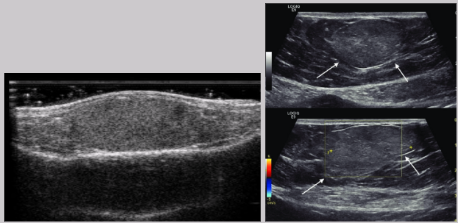
<ul><li><p><span style="background-color: transparent;">Most common benign tumor of abdominal wall</span></p></li><li><p><span style="background-color: transparent;">Fatty and benign</span></p></li><li><p><span style="background-color: transparent;">Soft, palpable, painless</span></p></li><li><p><span style="background-color: transparent;">US appearance:&nbsp;</span></p><ul><li><p><span style="background-color: transparent;">Strongly echogenic - isoechoic</span></p></li><li><p><span style="background-color: transparent;">Difficult to distinguish from subcutaneous fat</span></p></li></ul></li></ul><p></p>
9
New cards

Sarcoma

  • Malignant tumor of abdominal wall

  • Types: liposarcoma, rhabdomyosarcoma, fibrosarcoma

  • Limited clinical symptoms → very large upon discovery

  • Ultrasound appearance: 

    • Hypoechoic or isoechoic to muscle

    • Heterogeneous

<ul><li><p><span style="background-color: transparent;">Malignant tumor of abdominal wall</span></p></li><li><p><span style="background-color: transparent;">Types:&nbsp;liposarcoma, rhabdomyosarcoma, fibrosarcoma</span></p></li><li><p><span style="background-color: transparent;">Limited clinical symptoms → very large upon discovery</span></p></li><li><p><span style="background-color: transparent;">Ultrasound appearance:&nbsp;</span></p><ul><li><p><span style="background-color: transparent;">Hypoechoic or isoechoic to muscle</span></p></li><li><p><span style="background-color: transparent;">Heterogeneous</span></p></li></ul></li></ul><p></p>
10
New cards

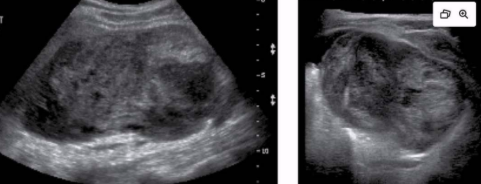
Hematoma

  • Collection of blood in tissue 

  • Indication: trauma, pain, palp mass, ecchymosis, decreasing hematocrit

  • Can be uni or bilateral

  • US appearance:

    • Heterogeneous 

    • Hypoechoic to hyperechoic

    • Fluid-fluid levels

      • Fluid can contain echogenic debris

  • Blood work is used to differentiate between hematomas and abscesses
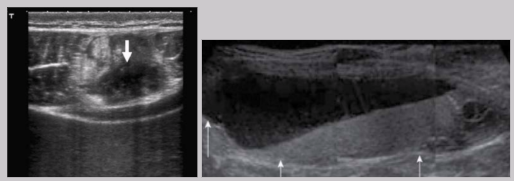
<ul><li><p><span style="background-color: transparent;">Collection of blood in tissue&nbsp;</span></p></li><li><p><span style="background-color: transparent;">Indication: trauma, pain, palp mass, ecchymosis, <u>decreasing hematocrit</u></span></p></li><li><p><span style="background-color: transparent;">Can be uni or bilateral</span></p></li><li><p><span style="background-color: transparent;">US appearance:</span></p><ul><li><p><span style="background-color: transparent;">Heterogeneous&nbsp;</span></p></li><li><p><span style="background-color: transparent;">Hypoechoic to hyperechoic</span></p></li><li><p><span style="background-color: transparent;">Fluid-fluid levels</span></p><ul><li><p><span style="background-color: transparent;">Fluid can contain echogenic debris</span></p></li></ul></li></ul></li><li><p>Blood work is used to differentiate between hematomas and abscesses</p></li></ul><p></p>
11
New cards

T/F: hematomas and abscesses appear similarly on US

True

12
New cards

T/F: decreasing hematocrit is associated w/ hematoma formation

True

13
New cards

T/F: decreasing white blood cell count is associated w/ abscess formation

False

14
New cards

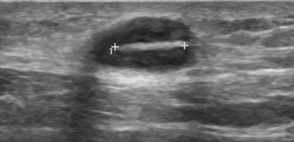
Acute phase of foreign body

  • Foreign body present < 3 days

  • Immediately after injury → air or dirty shadowing

  • 24 hrs after injury → hypoechoic ring/halo develops
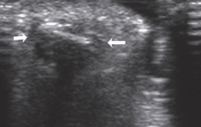
<ul><li><p><span style="background-color: transparent;">Foreign body&nbsp;present &lt; 3 days</span></p></li><li><p><span style="background-color: transparent;">Immediately after injury → air or dirty shadowing</span></p></li><li><p><span style="background-color: transparent;">24 hrs after injury → hypoechoic ring/halo develops</span></p></li></ul><p></p>
15
New cards

Intermediate phase of foreign body

  • Foreign body present 3 - 10 days

  • Fluid replaces air

  • Most pronounced hypoechoic halo

<ul><li><p>Foreign body present 3 - 10 days</p></li><li><p><span style="background-color: transparent;">Fluid replaces air</span></p></li><li><p><span style="background-color: transparent;">Most pronounced hypoechoic halo</span></p></li></ul><p></p>
16
New cards

Chronic phase of foreign body

  • Foreign body present > 10 days

  • Dense granular material develops around FB

  • Inflammatory response → clean shadowing similar to bone
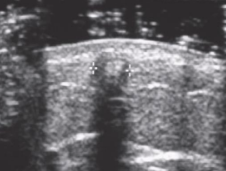
<ul><li><p><span style="background-color: transparent;">Foreign body present &gt; 10 days</span></p></li><li><p><span style="background-color: transparent;">Dense granular material develops around FB</span></p></li><li><p><span style="background-color: transparent;">Inflammatory response → clean shadowing similar to bone</span></p></li></ul><p></p>
17
New cards

Organic foreign bodies

  • Made of biological plant material or animal products

  • Ex: thorns, wood, bee stinger, barb

18
New cards

Inorganic foreign bodies

  • Man-made products made of minerals

  • Ex: glass, gravel, plastic, pencil lead

19
New cards

Metallic foreign bodies

  • Products w/ metallic alloy

  • Ex: wires, needle, fish hook, etc.

20
New cards

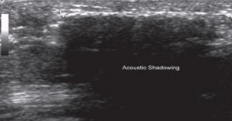
Clean shadowing

  • Caused by attenuation of an object 

  • Ex: stones, metals, bone, needle

<ul><li><p><span style="background-color: transparent;">Caused by attenuation of an object&nbsp;</span></p></li><li><p><span style="background-color: transparent;">Ex: stones, metals, bone, needle</span></p></li></ul><p></p>
21
New cards

Dirty shadowing

Caused by refracting properties of gas bubbles or impedance of gas
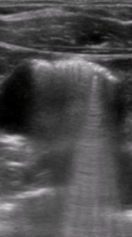
<p><span style="background-color: transparent;">Caused by refracting properties of gas bubbles or impedance of gas</span></p>
22
New cards

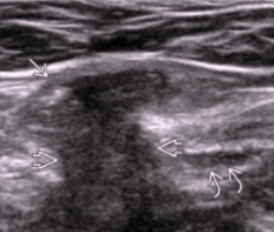
Hernia

  • Protrusion of part/structure through the tissue normally containing it

  • Cause: anything that increases pressure in abdomen

    • Ex: obesity, heavy lifting, coughing, straining

  • Dynamic US study - diagnosis requires movement of hernia contents via Valsalva maneuver

23
New cards

Hernia characteristics

  • Reducible

  • Irreducible

  • Incarcerated

  • Strangulated

24
New cards

Reducible hernia

Hernia contents can be pushed back in w/ pressure

25
New cards

Irreducible hernia

Hernia contents cannot be pushed back in w/ pressure

26
New cards

Incarcerated hernia

Hernia is irreducible but still has vascularity

27
New cards

Strangulated hernia

Hernia is irreducible and has no vascularity

28
New cards

Parts of a hernia

  • Sac - consists of diverticulum of peritoneum

  • Sac covering - intestines, fat, omentum, etc.

  • Contents - layers of abdominal wall

29
New cards

Two main types of hernias

  • Ventral

    • Anterior and lateral abdominal wall

    • Types: umbilical, paraumbilical, epigastric, hypogastric, and incisional (subtype is parastomal)

  • Groin

    • Ilioinguinal crease and adjacent areas

    • Types: indirect inguinal, direct inguinal, femoral, and Spigelian
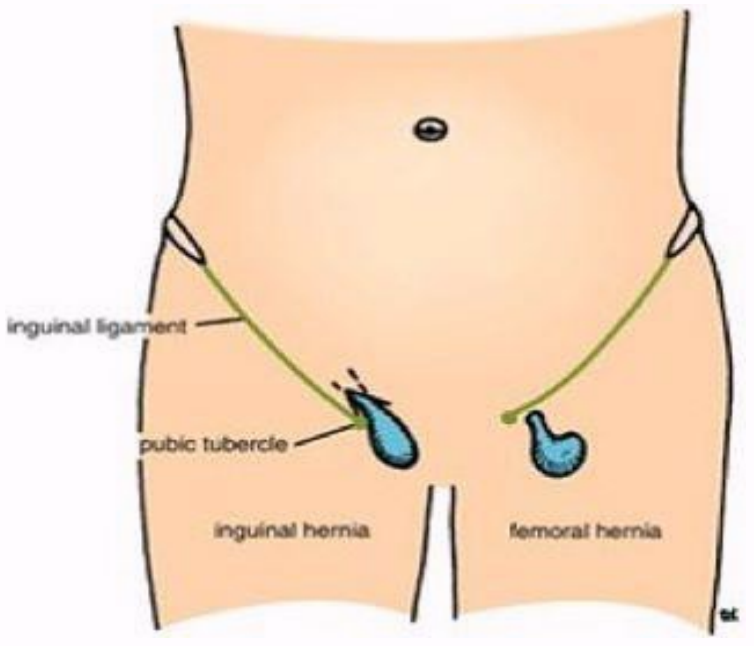
<ul><li><p>Ventral</p><ul><li><p>Anterior and lateral abdominal wall</p></li><li><p>Types: umbilical, paraumbilical, epigastric, hypogastric, and incisional (subtype is parastomal)</p></li></ul></li><li><p>Groin</p><ul><li><p>Ilioinguinal crease and adjacent areas</p></li><li><p>Types: indirect inguinal, direct inguinal, femoral, and Spigelian</p></li></ul></li></ul><p></p>
30
New cards

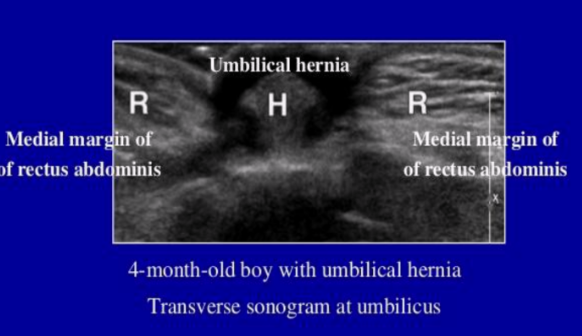
Umbilical hernia

  • Most common ventral hernia

  • Common in women and children

<ul><li><p>Most common ventral hernia</p></li><li><p>Common in women and children</p></li></ul><p></p>
31
New cards

Epigastric hernia

Occurs in the linea alba above umbilicus

32
New cards

Hypogastric hernia

Occurs in the linea alba below umbilicus

33
New cards

Incisional hernia

  • Delayed complication from surgery

  • Most commonly occur due to vertical incisions

  • Subtype: parastomal

34
New cards

Complications of ventral hernias

  • Strangulation

  • Incarcerated or non-reducible

35
New cards

Inguinal hernias

  • Most common location for a hernia (~75% of all hernias)

  • Location: near internal inguinal ring, surrounding inferior epigastric vessels (IEV)

    • Medial to IEV: direct inguinal hernia

    • Lateral to IEV: indirect inguinal hernia
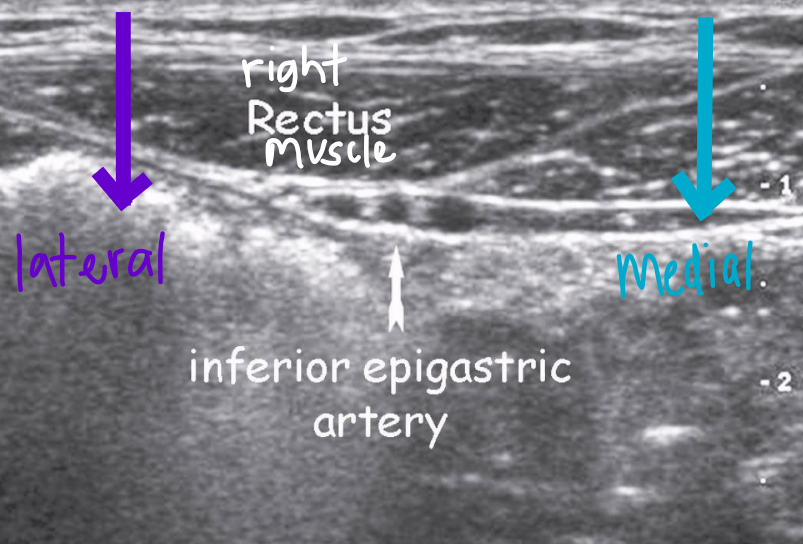
<ul><li><p>Most common location for a hernia (~75% of all hernias)</p></li><li><p>Location: near internal inguinal ring, surrounding inferior epigastric vessels (IEV)</p><ul><li><p>Medial to IEV: direct inguinal hernia</p></li><li><p>Lateral to IEV: indirect inguinal hernia</p></li></ul></li></ul><p></p>
36
New cards

Direct inguinal hernia

  • Occurs medial to IEV

  • Acquired hernia

  • Affects elderly men w/ weakened transversalis fascia

  • Appear immediately when standing

<ul><li><p>Occurs medial to IEV</p></li><li><p>Acquired hernia</p></li><li><p>Affects elderly men w/ weakened transversalis fascia</p></li><li><p>Appear immediately when standing</p></li></ul><p></p>
37
New cards

Indirect inguinal hernia

  • Most common form of hernia

  • Occurs lateral to IEV

  • Congenital hernia

  • 20x more common in men than women

  • Can extend into the scrotum in men and labia majora in women

  • More likely to become strangled than direct inguinal

  • ⅓ are bilateral, but are more common on the right side if unilateral
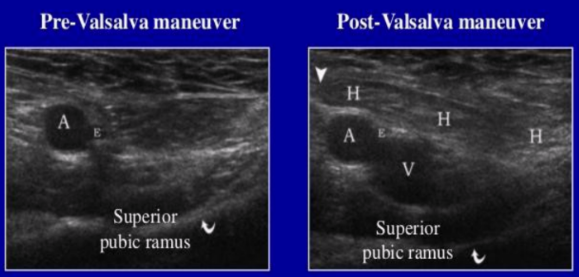
<ul><li><p><u>Most common form of hernia</u></p></li><li><p>Occurs lateral to IEV</p></li><li><p>Congenital hernia</p></li><li><p>20x more common in men than women</p></li><li><p>Can extend into the scrotum in men and labia majora in women</p></li><li><p><span style="background-color: transparent;">More likely to become strangled than direct inguinal</span></p></li><li><p><span style="background-color: transparent;">⅓ are bilateral, but are more common on the right side if unilateral</span></p></li></ul><p></p>
38
New cards

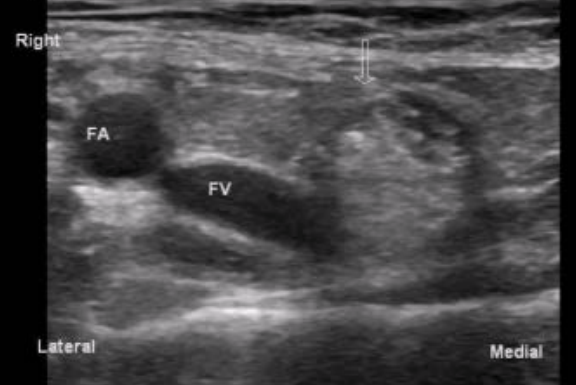
Femoral hernia

  • Protrusion of transversalis fascia - medial to CFV

  • More common in women (especially w/ pregnancy)

  • High risk of incarceration and strangulation

    • Because they are long w/ narrow neck

<ul><li><p><span style="background-color: transparent;">Protrusion of transversalis fascia - medial to CFV</span></p></li><li><p><span style="background-color: transparent;">More common in women (especially w/ pregnancy)</span></p></li><li><p><span style="background-color: transparent;">High risk of incarceration and strangulation</span></p><ul><li><p><span style="background-color: transparent;">Because they are long w/ narrow neck</span></p></li></ul></li></ul><p></p>
39
New cards

Spigelian hernia

  • Rare

  • Almost all occur at the inferior end of semicircular line, inferior to arcuate line where posterior sheath is absent 

    • ~ About 2 cm from the inguinal crease

  • High frequency of incarceration

  • Hard to diagnose because it occurs between the muscle or fascial layers of the wall rather than protruding through the wall
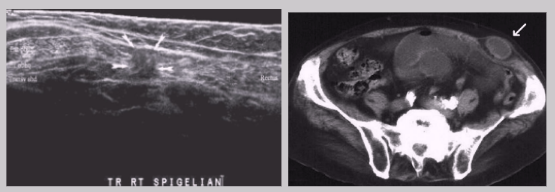
<ul><li><p><span style="background-color: transparent;">Rare</span></p></li><li><p><span style="background-color: transparent;">Almost all occur at the inferior end of semicircular line, inferior to arcuate line where posterior sheath is absent&nbsp;</span></p><ul><li><p>~ About 2 cm from the inguinal crease</p></li></ul></li><li><p><span style="background-color: transparent;">High frequency of incarceration</span></p></li><li><p><span style="background-color: transparent;">Hard to diagnose because it occurs between the muscle or fascial layers of the wall rather than protruding through the wall</span></p></li></ul><p></p>
40
New cards

Linea semilunaris

Curved line on the ventral abdominal wall parallel to midline and halfway between side of the body that marks the lateral border of the rectus abdominis muscle
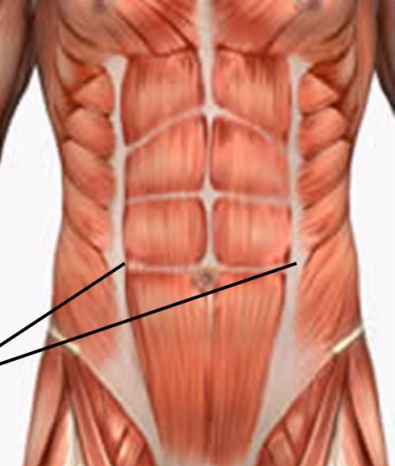
<p>Curved line on the ventral abdominal wall parallel to midline and halfway between side of the body that marks the lateral border of the rectus abdominis muscle</p>
41
New cards

Abdominal wall complications after hernia repair surgery

  • Hematoma

    • Most common reason for abdominal lump after hernia repair

  • Abscess

  • Seroma

  • Recurrent hernia

42
New cards

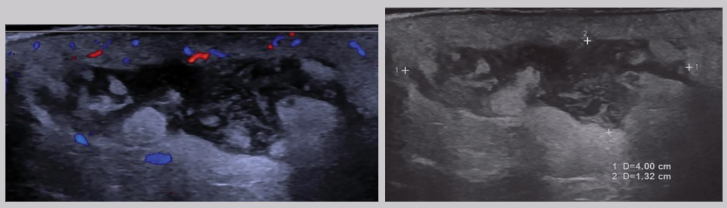
Abscess

  • Caused by cuts, scrapes, crushing injuries, surgical trauma, etc.

    • Abdominal wall abscesses are usually a surgical complication

  • Clinical presentation - redness, pain, swelling, elevated WBC (AKA leukocytosis)

  • US appearance:

    • Heterogeneous

    • Hypoechoic fluid w/ echogenic debris

    • Irregular borders

    • Posterior enhancement

    • Peripheral hypervascularity

<ul><li><p><span style="background-color: transparent;">Caused by cuts, scrapes, crushing injuries, surgical trauma, etc.</span></p><ul><li><p><span style="background-color: transparent;">Abdominal wall abscesses are usually a surgical complication</span></p></li></ul></li><li><p><span style="background-color: transparent;">Clinical presentation - redness, pain, swelling, <u>elevated WBC (AKA leukocytosis)</u></span></p></li><li><p><span style="background-color: transparent;">US appearance:</span></p><ul><li><p><span style="background-color: transparent;">Heterogeneous</span></p></li><li><p><span style="background-color: transparent;">Hypoechoic fluid w/ echogenic debris</span></p></li><li><p><span style="background-color: transparent;">Irregular borders</span></p></li><li><p><span style="background-color: transparent;">Posterior enhancement</span></p></li><li><p><span style="background-color: transparent;">Peripheral hypervascularity</span></p></li></ul></li></ul><p></p>
43
New cards

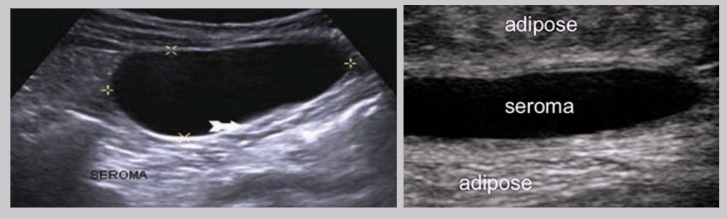
Seroma

  • Collection of serum in the tissue 

  • Results from a surgical incision or liquefaction of a hematoma 

  • Distinct from hematomas because they contain no red blood cells 

  • US Findings: 

    • Anechoic cystic structure

    • Well-circumscribed

    • Posterior enhancement

<ul><li><p><span style="background-color: transparent;">Collection of serum in the tissue&nbsp;</span></p></li><li><p><span style="background-color: transparent;">Results from a surgical incision or liquefaction of a hematoma&nbsp;</span></p></li><li><p><span style="background-color: transparent;">Distinct from hematomas because they contain no red blood cells&nbsp;</span></p></li><li><p><span style="background-color: transparent;">US Findings:&nbsp;</span></p><ul><li><p><span style="background-color: transparent;">Anechoic cystic structure</span></p></li><li><p><span style="background-color: transparent;">Well-circumscribed</span></p></li><li><p><span style="background-color: transparent;">Posterior enhancement</span></p></li></ul></li></ul><p></p>
44
New cards

Scrotal hernia

Indirect inguinal hernia → can extend down to the scrotum
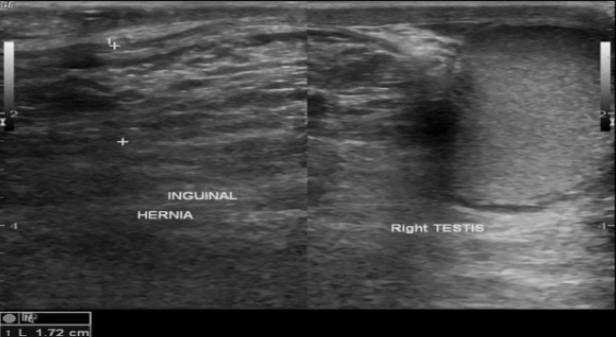
<p><span style="background-color: transparent;">Indirect inguinal hernia → can extend down to the scrotum</span></p>

Explore top flashcards

flashcards
Mankind: the story of all of us
49
Updated 597d ago
0.0(0)
flashcards
APUSH Chapter 20
49
Updated 1130d ago
0.0(0)
flashcards
English 1h Semester two Final
149
Updated 1047d ago
0.0(0)
flashcards
Cardiovascular System
58
Updated 1140d ago
0.0(0)
flashcards
Lenses
21
Updated 29d ago
0.0(0)
flashcards
frans - vocabulaire p18-20
61
Updated 545d ago
0.0(0)
flashcards
Mankind: the story of all of us
49
Updated 597d ago
0.0(0)
flashcards
APUSH Chapter 20
49
Updated 1130d ago
0.0(0)
flashcards
English 1h Semester two Final
149
Updated 1047d ago
0.0(0)
flashcards
Cardiovascular System
58
Updated 1140d ago
0.0(0)
flashcards
Lenses
21
Updated 29d ago
0.0(0)
flashcards
frans - vocabulaire p18-20
61
Updated 545d ago
0.0(0)