Feed Analysis | Animal Nutrition Exam 3
 Call Kai
 Learn
Learn Practice Test
 Spaced Repetition
 Match
Match Flashcards
 Knowt Play
1/104

There's no tags or description
Looks like no tags are added yet.
Name | Mastery | Learn | Test | Matching | Spaced | Call with Kai |
|---|
No analytics yet
Send a link to your students to track their progress
105 Terms
Feed Ingredients
We can describe animal diets in two ways
_______ of diets (corn, alfala silage, soybean meal, etc.)
Ingredient listed first is more concentrated than the other ingredients, but we don’t know by how much/magnitue → not super relevant
Nutrient
We can describe animal diets in two ways
______ composition of diets (chemical)
Concentrated
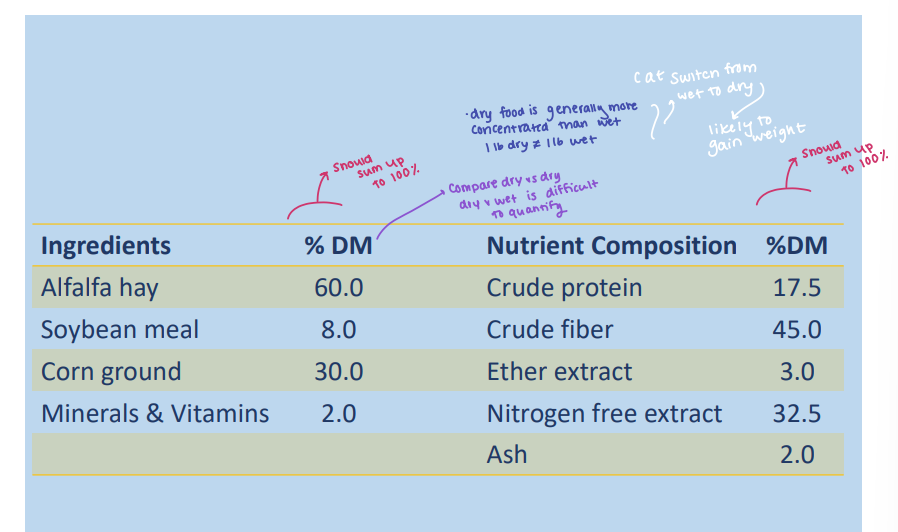
The comparison of Dry v Wet is difficult to quantify due to that dry food is generally more _______ than wet food.
1 lb dry =/= 1 lb wet
Ex) If you switch a cat from wet to dry food (same quantity) the cat is likely to gain weight
6
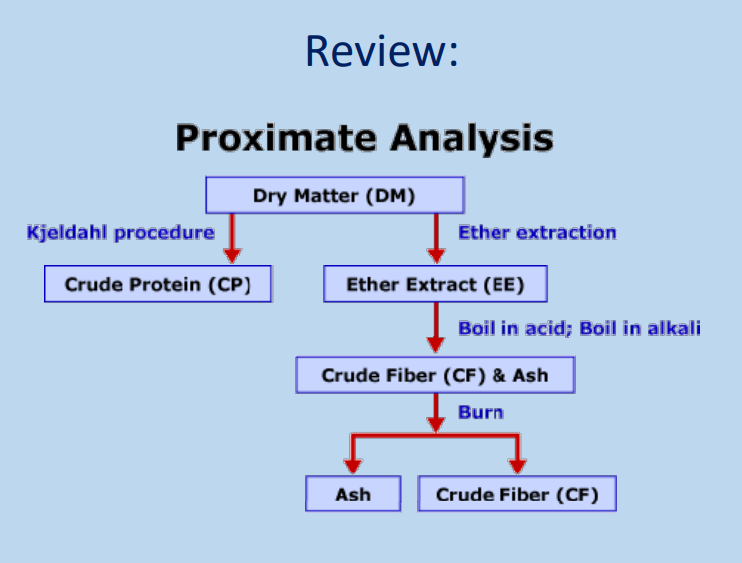
Proximate Analysis
Describes ____ feed components. They do not overlap
So in THEORY, there is no redundancy between the composition of each component
When summed, they add up to 100%
Water
Proximate Analysis
_____ - moisture content
homogeneous
only includes H2O
Ether Extract (EE)
Proximate Analysis
________ - lipid content
boiling removes lipids
Crude Fiber (CF)
Proximate Analysis
________- fiber content
Nitrogen Free Extract (NFE)
Proximate Analysis
________ - most digestible CHO
Sugar
Starches
Place where errors start to occur: lignin ends up here
Crude Protein (CP)
Proximate Analysis
_______ - protein content
Ash
Proximate Analysis
_____ - mineral content
All minerals combined
Still Uses
Proximate Analysis
Many of the original analyses used to describe these fractions have been replaced by newer methodologies
However, the feed industry ____ these orginal analyses for listing the nutrient composition of feeds on feed labels
Diet formulation
Proximate Analysis
The major reason for using the proximate analysis is to describe feeds in terms that can be used for _________
20lb
MATH IMPORTANT**
Proximate Analysis - Example
If an animal requires 3lb of protein per day, and we analyze the diet and find that it contains 15% protein
Then we know that we need to feed _____ (3/.15) of the diet to meet the animals protein requirement
Water
Water
Every feed has two major components: ____ and Dry Matter (DM)
DM components should add up to 100%
The percentage of water and perecentage DM must add up to 100%
Dry Matter Intake (DMI)
We express feed intake as pounts of _______
Dry-matter-basis
We describe nutrient content of feeds as “____________”
Water
“As-fed” basis means with ____
Water Content
Dry Matter
This allows for the comparison of feeds on a common basis since ______ of feeds or diets can vary dramatically
As fed
Feed the same amount of dry matter regardless of water content → “_____” water is not real esentially (remove water so you can compare nutrients)
diets
Why use dry matter?
Compare/ formulate ____
differences in water concentration → feed on as fed basis
dramatically
Water content allows for comparisons amongst feeds
Water content varies _______
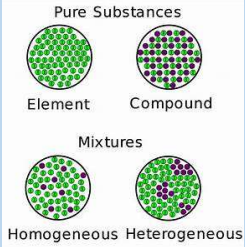
Homogenous
Water is the only ______ component of the proximate analysis (when we measure water we are only measuring water)
It is comprised of only one compound (H2O)
Other components of the proximate analysis are heterogenous, i.e., those fractions contain many different compounds
Dried
Water is usually determined by measuring the loss in weight of the feed after it has been _____
Volatile Compounds
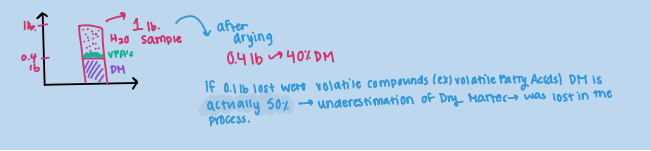
However, when a feed is dried (in an over), there may be loss of ______ other than water. Since these other compounds are not water they must be DM (dry mater)
50%
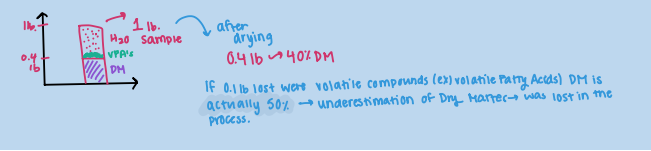
Look at the example:
1lb sample, after drying 0.4 lb → 40% DM
If 0.1 lb lost were volatile compounds (VFAs) DM is actually _____
Underestimation of DM (lost in the process)
Overestimated
Underestimated
Loss During Drying
If loss of these compounds is substantial, the water content will be _____, and conversely, the dry matter content of the feed will be _____
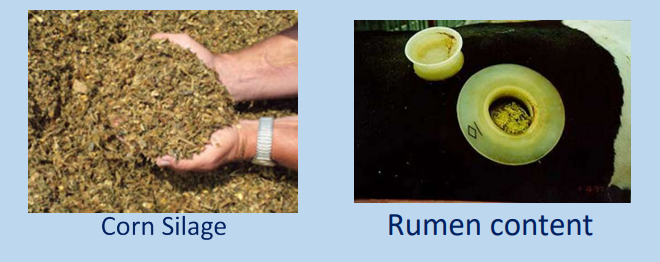
Silage
EX) _____ has volatile compounds that are lost in drying process
Fermented
Loss During Drying
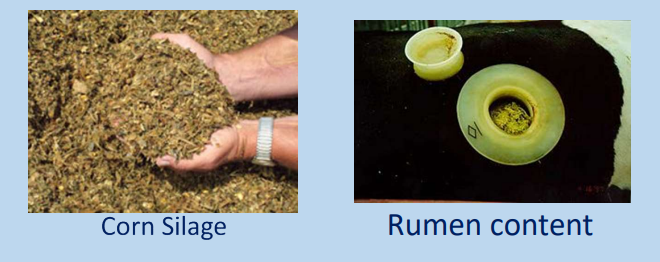
Most feeds are not high in volatile compounds. The exception is _____ feeds such as silage and high moisture corn
Lower Temperatures
Loss During Drying
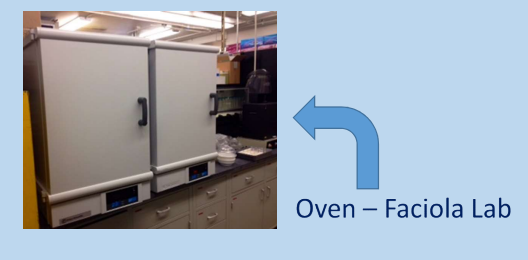
Therefore, if one is drying silage to estimate the moisture content, they need to be dried at _______ than other feeds.
Typically, silages are dried at 55C to minimize the loss of volatile compounds; other feeds are usually dried at 100C (16hr)
Lyophilization
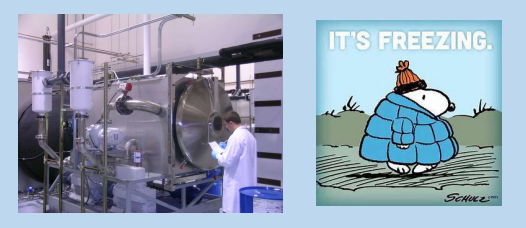
To minimize loss of volatile compounds even more, moisture content can be determined by an alternative method referred as ________ (freeze drying)
35 lb.
DMI Calculation - Example
A diet is analyzed for mositure and it is determined that it contains 65% moisture
We know that it is 35% DM. So if an animal consumes 100 lb of the diet per day (as-fed basis), we known the animal’s dry matter intake (DMI) is _________
Ether
Ether Extract (EE)
EE, often referred to as crude fat
EE analysis measures materials that are soluble in _____ (triglycerides, phospholipids, and galactolipids)
Waxes
Pigments
Ether Extract (EE)
Unfortunately it also includes some non-nutritive compounds such as ____ and _____
Counted as lipids even though they do not have nutritional value
Nutritive
EE can be a very meaningful measurement if the majority of compounds extracted in ether are ____
Cereal Grains
EE is good for ______ such as corn, oats, wheat, and barely and oilseeds such as soybeans and cottonseeds
Low
However, in forages, up to 50% of EE can be non-nutritive. Fortunately, forages tend to be ____ in EE.
Large
For ruminants, forages may comprise a _____ part of the diet; therefore, contribute to a large portion of the total dietary EE.
Pigments
**Grazing animals: eat alot of grass/chlorphyll and thus _____
Therefore Crude Fat may not be the best analytical method
Non-nutritive
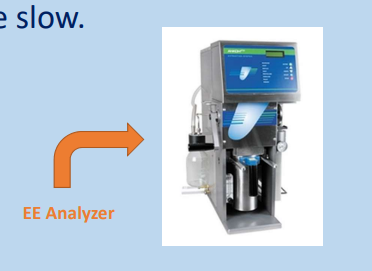
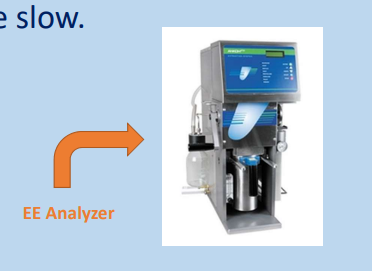
EE has been replaced by direct measurement of fatty acids in several research laboratories. This avoids the problem of measuring ________ lipids.
Expensive
Measurement of fatty acids is more complex and _____ than measuring EE, so its adoption by the feed industry may be slow.
Underestimation
Crude Fiber is an _____ of fiber content
Underestimates
Crude Fiber (CF)
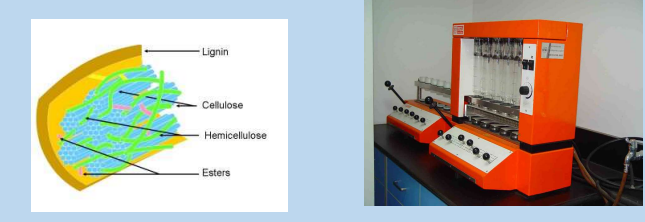
Aims at measuring cell wall content; however, acid and basic treatments also remove parts of hemicellulose and lignin. Therefore, CF _________ fiber content
Van Soest
Crude Fiber (CF)
Has been replaced by ______ method
Review Slide
Correction
Crude Fiber (CF) - NDF/ADF
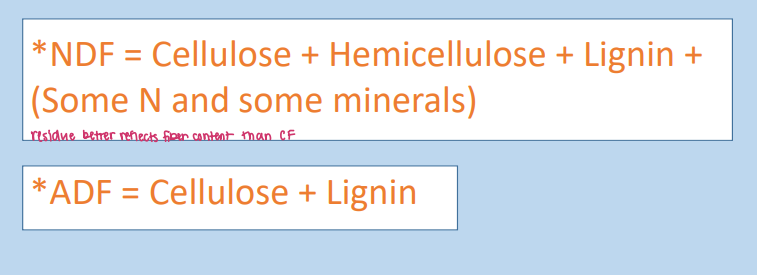
**NDF = Cellulose + Hemicellulose + Lignin + (Some N and some minerals)
_____ for N and minerals is needed!
Protein
NDF and ADF
NDFICP corrects for _____ to account for true fiber content
Nitrogen
NDF and ADF
NDIN (ADIN) corrects for _______ to account for true fiber content
Ash
NDF and ADF
NDFash corrects for ____ to account for true fiber content
Sulfuric Acid
Acid Detergent Lignin (ADL)
Lignin is the residue that is left after the ADF residue has been digested with ________.
Anything that can withstand sulfuric acid must be pretty tough stuff!
Polyphenolic
Lignin is a _________ complex, NOT CHO
Fiber
Lignin is not digestible. Not only is it indigestible, but it reduces the digestibility of ________ (hemicellulose and cellulose)
*High lignin values on feeds means that they will not be utilized well by the animal
Difference
Nitrogen Free Extract (NFE) → Soluble Carbohydrates
This component of proximate analysis is NEVER measured
It is determined by ______

High Energy
Nitrogen Free Extract (NFE)
Sugars and Starches → _________: calculated by difference meaning issues with other values like CF will end up as sugars → can be an overestimation

Non-fiber carbohydrate
NItrogen Free Extract (NFE)
In theory it represents more digestible CHO fraction, often referred to as _________
Obviously any errors made in the other measurements are reflected in this measurement
Nitrogen
Crude Protein (CP)
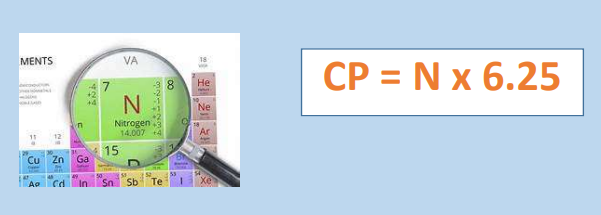
Based on the amount of ____ in a sample, not necessarily protein! If lots of NPN in the sample, CP will overestimate true protein content!
Kjeldahl’s
_____ Method
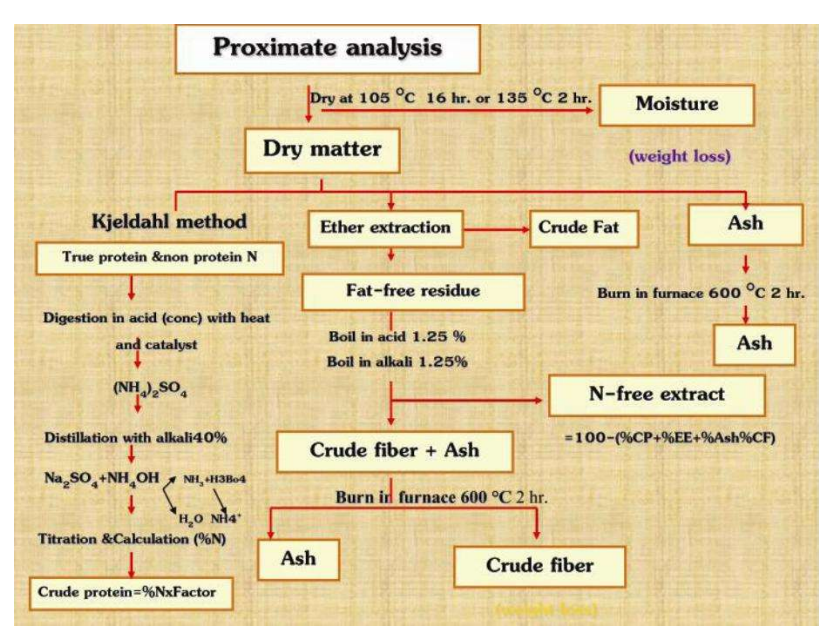
Methodology for Crude Protein/ Determining Nitrogen Content
How we get Nitrogen Content
Ammonium Sulfate
Steps to Kjeldahl’s Method
Sulfuric Acid (H2SO4) digestion and __________ [(NH4)2SO4] production
Distillation
Steps to Kjeldahl’s Method
_______, which converts the ammonium sulfate to ammonia (NH3)
Titration
Steps to Kjeldahl’s Method
______: NH3 reacts with boric acid (H3BO3) with pH indicator
Ash
_____
Combines all minerals together (inorganic material)
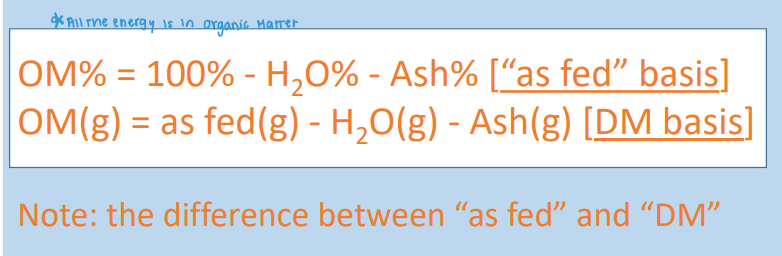
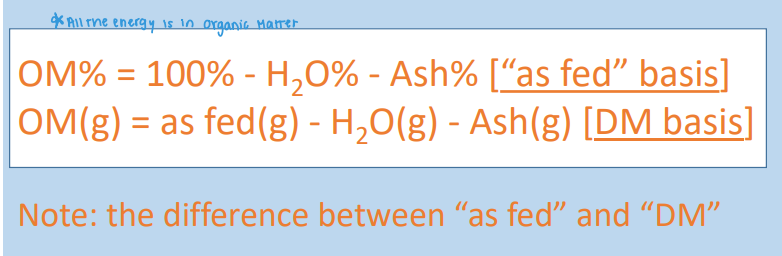
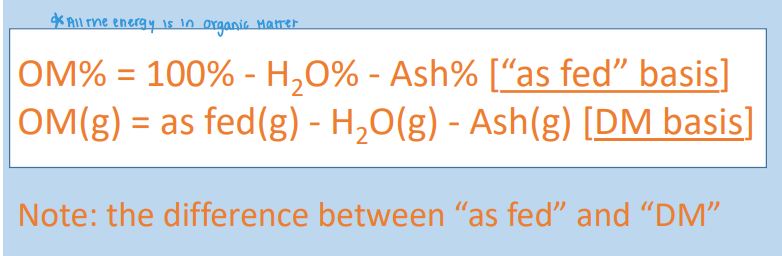
**Calculate so we can find out the amount of ORGANIC MATTER (energy based → ex, table salt has no energy)
Inorganic Material
Ash
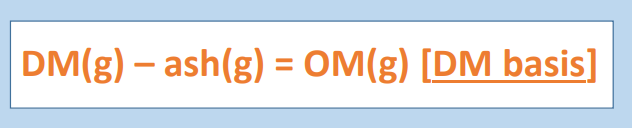
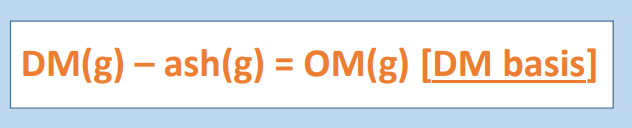
Dry matter (DM) is comprised of Ash and Organic Matter (OM). Ash is the ________ of the feed (mineral)
Review
Review
Organic Matter
______ is comprised of the last four components of the proximate analysis system:
Ether Extract
Nitrogen Free Extract
Crude Protein
Crude Fiber
Ex: water → no energy, black coffee - no energy
Total Combustion
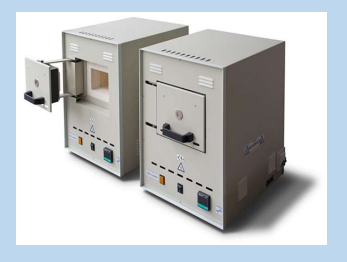
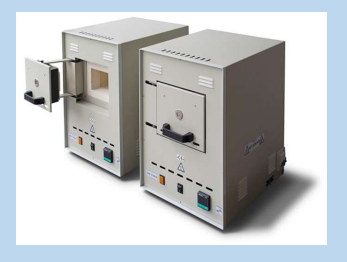
Ash is the material that is left over after ________ of the feed.
To determine ash content of the feed, it is heated at a sufficiently high temperature (ex; 550C for 2hr) ro combust (burn) the organic matter
Energy
Because ash does not burn, it does not contain any ____
From that point it is similar to water
Total Ash
The ash content for a feed or diet is pretty meaningless. Although animals have requirements for specific minerals they do not have requirements for ________
OM
***Just like water is measured in large part to determine the DM content of a feed, ash is measured in large part to determine the ____ content of a feed.
Energy Content
Although the feed industry does not commonly measure OM on feeds, it is a crude estimate of the _______ of the feed (it is combustible and, therefore, contains energy) and it is used in nutrition research as such.
Review
Review
Review
Review
Underestimate
Overestimate
Limitations of Proximate Analysis
CF analysis doesn’t recover all of the structural CHO; some hemicellulose and lignin are lost. Therefore, CF is an ________. Conversely, NFE (determined by difference) becomes an _____ of the non-fiber content
Overestimates
LImitations of Proximate Analysis
EE measures non-nutritive materials and therfore ______ the energy-rich lipid content of the feed. This is particularly true for forages. A more meaningful analysis would be for fatty acids, but it is more difficult and expensive


Review Fatty Acid Content Estimation

VFA’s
Gas Chromatography → to analyze ____
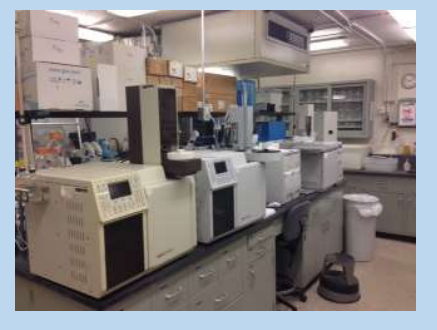
Peaks
Gas Chromatography (GC)
There is a mobile phase which is a carrier gas (helium). The stationary phase is a microscopic layer of liquid on an an inert solid support, inside a piece of glass column.
The gaseous compounds being analyzed interact with the walls of the column. This causes each compound to peak at different times. The comaprison of ____ is what gives GC its analytical usefulness
Tiny = shows up fast
high concentration = peak
1%
Limitations of Proximate Analysis #1-2
For soybean, EE% is usually around 20% and %FA would be 19.
For forage EE% is 2% the estimate for FA becomes ___. (about 50% is non-nutritive waxes and pigments)
Protein
Limitations of Proximate Analysis #3
CP doesn’t measure ______! It includes NPN. Non-ruminants poorly utilize NPN. Therefore, a feed that is high in NPN will be grossly overvalued as a protein supplement for non-ruminants when evaluated for protein by the CP method.
No
Limitations of Proximate Analysis #4
There is ___ measurement of specific vitamins and minerals.
NFC
The term ____ should not be confused with non-structural carbohydrate (NSC). The terms seem identical and are incorrectly interchanged.
Non-fiber Carbohydrate (NFC)
________ refers to the difference calculation
It is similar to NFE in proximate analysis in that it is calculated by difference
NFC = wet sample - H2O - Ash - EE - NDF - CP
Note: this is the same calculation as that for NFE, except that NDF has been substituted for CF. Therefore, if NDF is a better measure of fiber than CF, this should be a better measure of the non-fiber carbohydrate than CF
Non-structural Carbohydrate (NSC)
_______ refers to the starch, sugars, and other soluble CHO that are measured by fairly complex chemical produres
Very expensive
Actual/direct chemical analysis
Rarely Done
Minerals, Vitamins, and Amino Acids
***Chemical analysis for minerals, vitamins and amino acids are _____ because the cost is prohibitive
EX) Small businesses (family owned dog food company) may not be able to do this and get an exact measurement as to what is in their food to formulate diets.
*Bigger is sometimes better → larger businesses have more resources for equipment/analysis to develop “better” feeds
Can know intimately what is in their feeds and make it consistently
Near Infrared Analysis
Minerals, Vitamins, and Amino Acids
Ash analysis is not particularly useful because animals do not have requirements for total ash
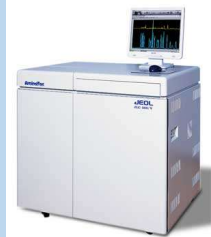
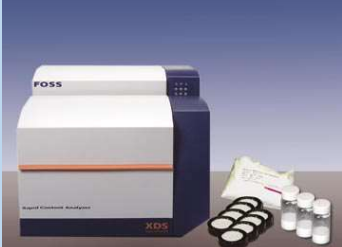
They have requirements for specific minerals. Individual minerals are usually analyzed by _________. (NIRS)
Book Values
Minerals, Vitamins and Amino Acids
Often Vitamins are supplemented assuming the diet has none or “_____” for feeds are used
Database that gives vitamin concentration in specific feeds → many become outdated and cannot be used on novel ingredients.
Destroyed
Minerals, Vitamins, and Amino Acids
Vitamin content can vary considerably within a particular feed and many vitamins are ____ during storage (ex, vitamin E), therefore, book values may be of little value.
Near Infrared Analysis (NIRS)
Chemical analysis used in the proximate analysis detergent system is tedious and expensive; an alternative method of analysis has been developed that is much quicker and less expensive → ________
Nutritional Value
Near Infrared Reflectance Spectroscopy (NIR or NIRS) is a technique developed to produce rapid and accurate predictions of the _________ (Ex, CP, EE< NDF, ADF, Ca, P, Mg, NFE, or NFC) of feeds.
Scan that can read the bonds between molecules in feeds → glycosidic, peptide
Issue may be that this system requires really good calibration
Near Infrared Analysis
How it works: _______
A single feed ingredient is ground, placed in a feed cup and placed in the NIR instrument. It is scanned with light in the near infrared spectra, 800 to 2500nm. The energy can be absorbed by the feed or reflected and quantified with detectors in the NIR instrument.
Chemical bonds ( -CH, -OH, -NH, -SH) within the feed will absorb specific wavelengths of light, thus modifying the intensity of the energy reflected from the sample. Computers must be used to analyze the spectra and predict the nutritional value.
Chemical Analysis
Near Infrared Analysis is never really used in experiments as it is not as accurate as ________
NIR not accepted in research journals
Cereal Grains
Terminology to Describe Feeds
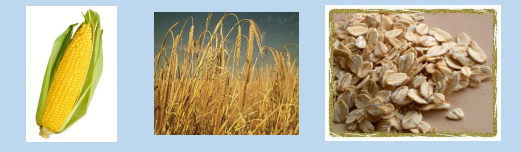
______: Are high in energy and low in fiber. They are rich in non-fiber CHO (NFC), usually starch. CP content is usually 20%
Examples: corn, barely, wheat, oats, and rye.
Energy
Protein Supplements
Moderate to high in ____, with greater than 20% CP
Examples: soybeans, canola, cottonseeds, sunflower seeds and its meals (after oil extraction)
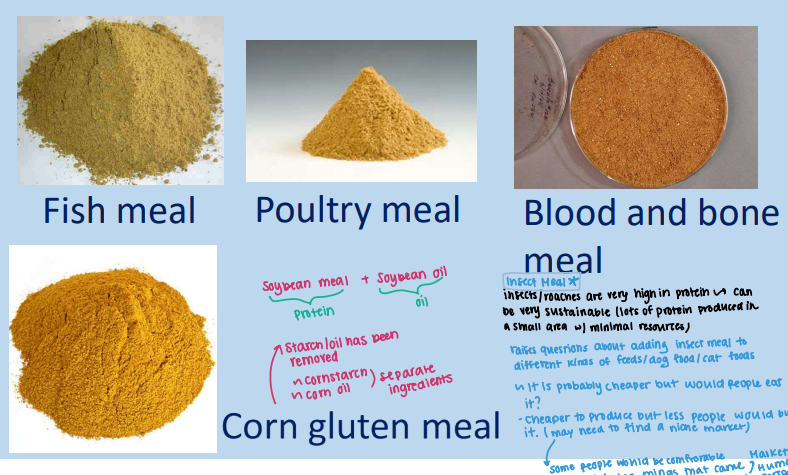
Also: corn gluten meal, meat and bone meal, fish meal, blood meal, poultry meal, etc.
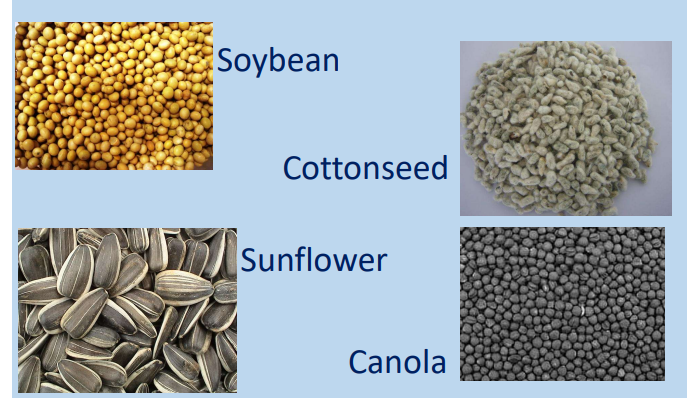
Protein
Protein Supplements
Soybean Meal (protein) + Soybean Oil (oil)
Starch oil has been removed → cornstarch, cornstarch oil: separate ingredients
Insect Meal***
Insects/roaches are very high in ____ → can be very suitable (lots of protein produced in a small area with minimal resources)
Raises questions about adding insect meal to different kinds of feeds/dog food/ cat foods
It is probably cheaper but would people eat it?
Cheaper to produce but less people would but it (may need to find a niche market) → some people may be comftorable eating it.
Energy
High Fiber Byproducts
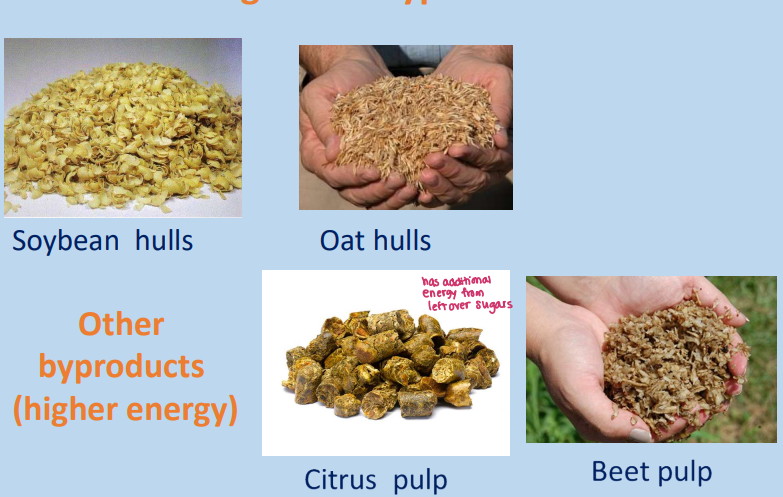
Low in ____ and protein.
Examples: oat hulls and soybean hulls. “Waste” products of human food products.
Attractive feeds for ruminants because they are relatively inexpensive and microbes can utilize the fiber.
Many places give you materials for free as long as you come pick it up.
Sugars
High Fiber Byproducts
Cirtus Pulp: has additional energy from left over _____
Legumes
Roughages/Forages
Low to moderate in energy and protein. Usually protein is low except in _____ (forage plants that fix nitrogen, alfalfa, beans, peas, lentils, clover, peantus, tamarind)
They are usually fed to ruminants because of their high fiber content
Ferment
Roughages/Forages
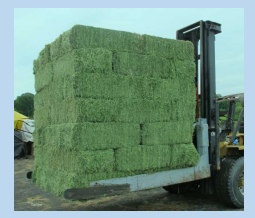
Include alfalfa harvested as silage or hay, corn silage, oat straw, and corn stalks.
Silage refers to feed that is stored with a high moisture content (~70-55%) and is allowed to _______ (want lactate to accumulate, lower pH and keep material good for up to a year)
During fermentation, the pH drops and the feed is preserved to the high acid content
Drying
Hay or straw refers to roughages that are stored after _____ has reduced to moisture content to ~10%
Because the feed is so dry, no fermentation takes place and the feed does not deteriorate
Not better than the original substance due to losses (lost leaves → lost protein: can add additives to make silage better)
Exotics
Mineral Supplements
Feed to ensure the animal is getting all of its nutrients
Some animals, like _____, need supplementation
ex: lettuce alone is not enough to sustain a turtle
It is possible to oversupplement → depends on animal and base diet
Expensive
Vitamin Supplements
Can be very _______, but little is needed so its generally not a high cost overall
Lipid-Soluble Vitamins
Vitamin Supplements
______: can accumulate in the body (vitamin A,D) → possible to get toxicity but it is not very common
Water-soluble Vitamins
Vitamin Supplements
______: such as Ca, are peed out/excreted in urine.

