Chapter 8 Embryology and Histology
 Call Kai
 Learn
Learn Practice Test
 Spaced Repetition
 Match
Match Flashcards
 Knowt Play
1/56

There's no tags or description
Looks like no tags are added yet.
Name | Mastery | Learn | Test | Matching | Spaced | Call with Kai |
|---|
No analytics yet
Send a link to your students to track their progress
57 Terms
Germinal Period (Zygote)
The first two weeks of prenatal development after conception, characterized by rapid cell division and the beginning of cell differentiation.
Embryonic Period (Embryo)
Development from 2-8 weeks after conception, when the brain, spine, major organs, and bodily structures form. This is the most critical time because cells begin to proliferate, differentiate, and integrate into specialized systems
Fetal Period (Fetus)
From eight weeks to birth
Increased growth and "fine detailing"
conception/fertilization
the union of the ovum and sperm
Stomodeum
The embryonic invagination that becomes the oral cavity. It merges with the primitive pharynx during the fourth week of development
Odontogenesis
Formation of new teeth. The first signs of tooth development are found in the lower anterior region, followed shortly by the upper anterior, and then progressing toward the posterior in both jaws
Bell stage of tooth development
The cells differentiate and become specialized in a process called histodifferentiation. (4th stage)
Initiation Stage of tooth development
At 6th to 7th week, Induction. Ectoderm lining stomodeum gives rise to oral epithelium and then to dental lamina; adjacent to deeper ectomesenchyme, which is derived from the neural crest cells. Both tissue types are separated by a basement membrane. (1st stage)
Cap stage of tooth development
9th and 10th week, Proliferation, differentiation, morphogeneisis. Formation of tooth germ as enamel organ forms into cap shape that surrounds inside mass of dental papilla, with an outside mass of dental sac, both from the ectomesenchyme. (3rd stage)
Bud stage of tooth development
At the 8th week, Proliferation. Growth of the dental lamina into a bud shape that penetrated the growing ectomesenchyme. (2nd stage)
anatomical crown
Portion of the tooth that is covered with enamel
Clinical crown
That portion of the tooth that is visible in the oral cavity
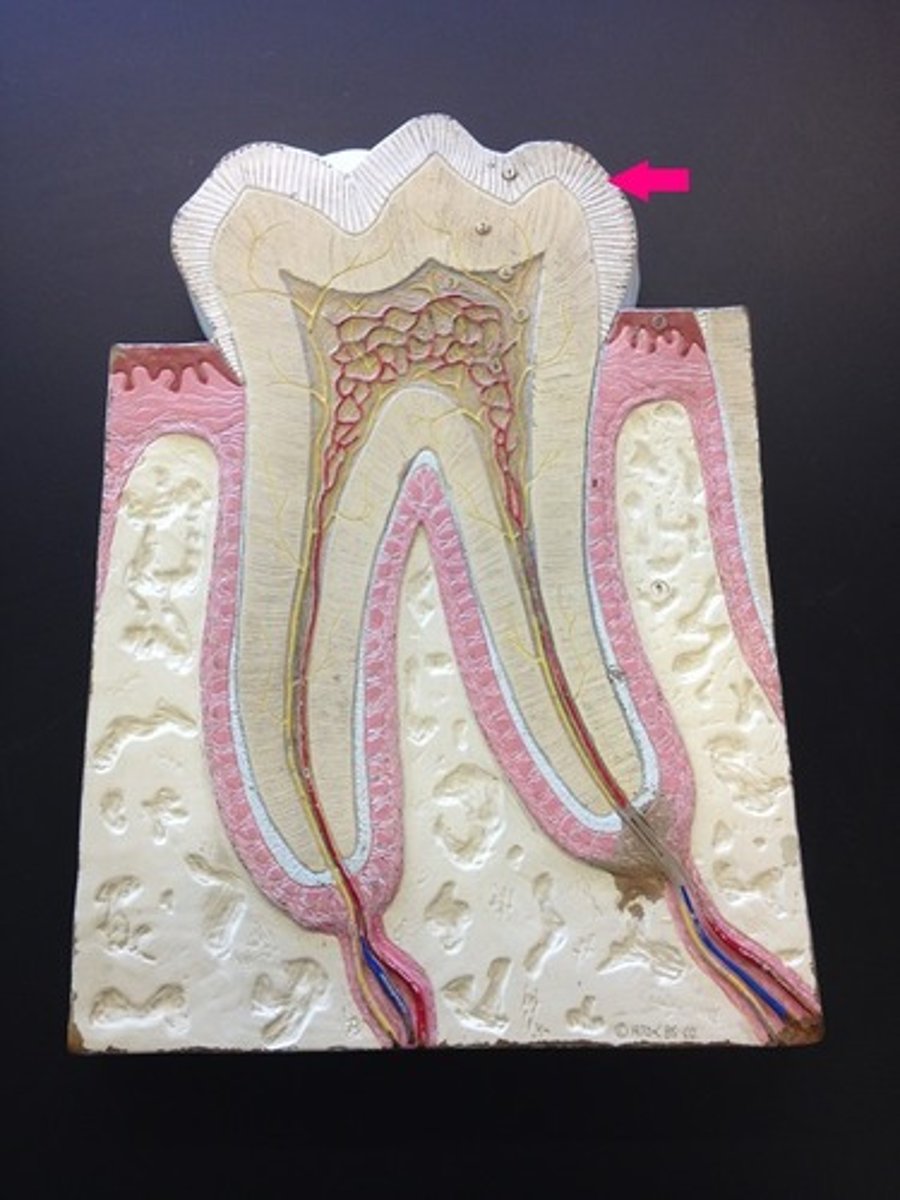
enamel
hard, outermost layer of a tooth. hardest substance in the human body. its primary mineral component is Hydroxyapatite.
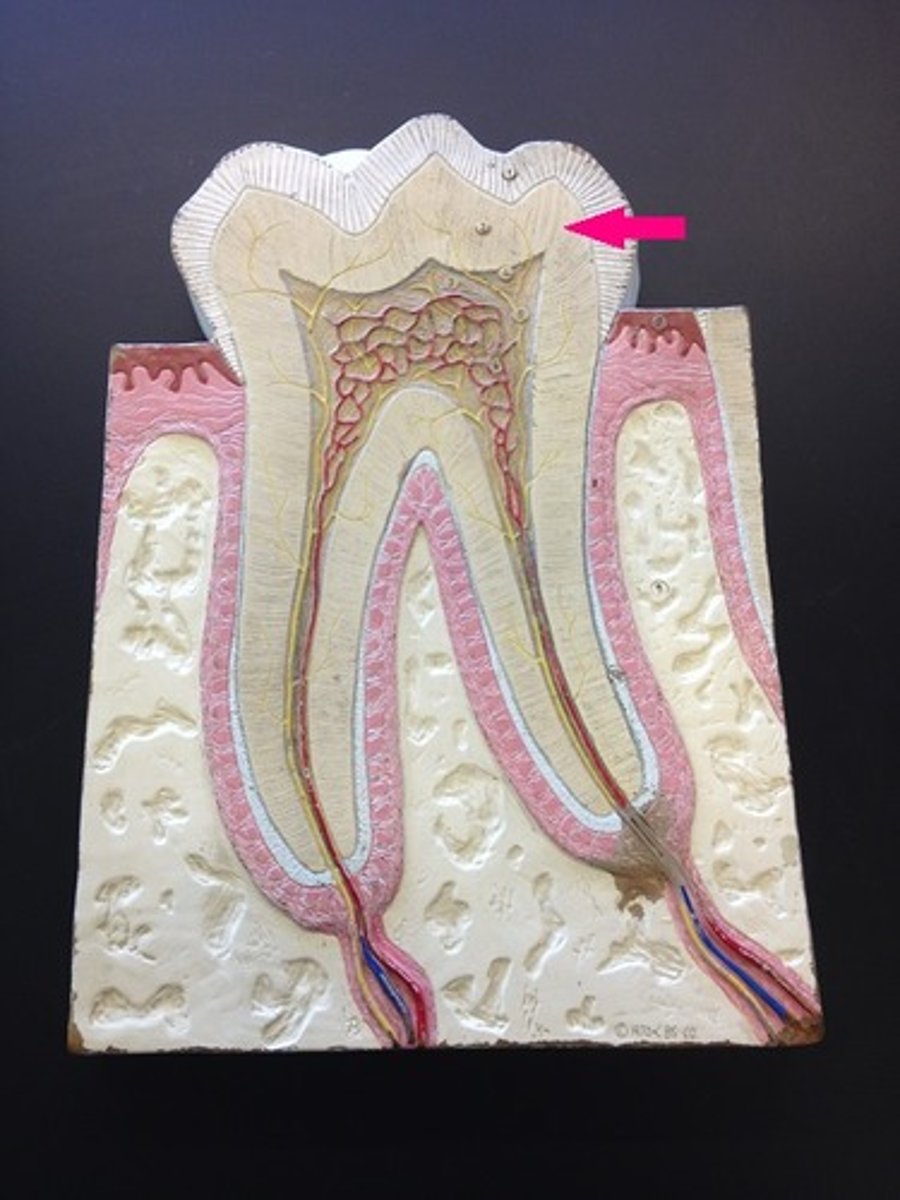
Dentin
Dense tissue forms the bulk of a tooth. contains microscopic canals called dentinal tubules.Each tubule contains a dentinal fiber that transmits pain stimuli, making dentin a living, sensitive tissue
Ameloblasts
Cells that form enamel
Osteoblasts
bone forming cells
Odontoblasts
Cells that form dentin
Osteoclasts
Bone-destroying cells
Cementoblasts
Cells that form cementum
Fibroblasts
In connective tissue, cells that secrete the proteins of the fibers.
Zygote Period of Prenatal Development
2 weeks, fertilization, implantation, start of placenta
natal teeth
teeth present at birth
Neonatal teeth
Erupt within the first 30 days of life
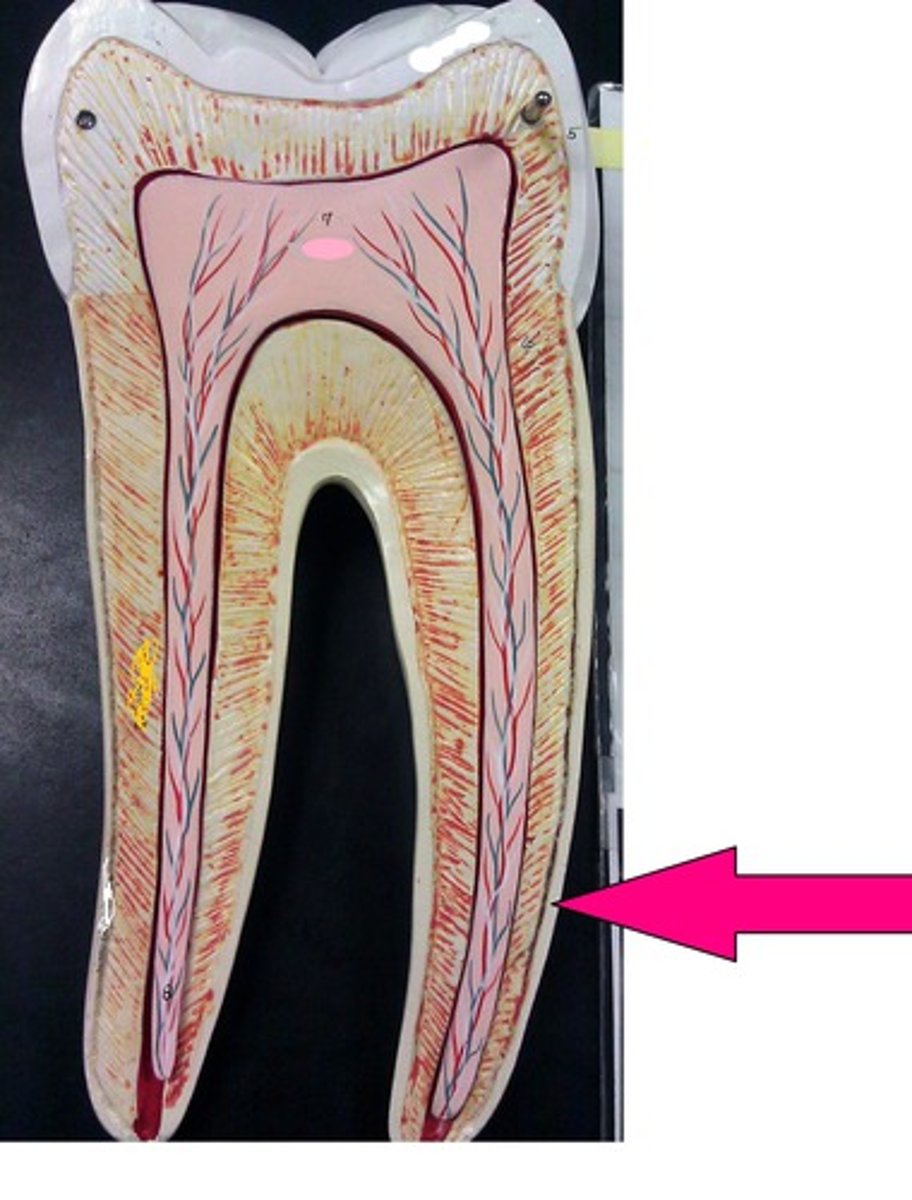
Cementum
material covering the tooth root
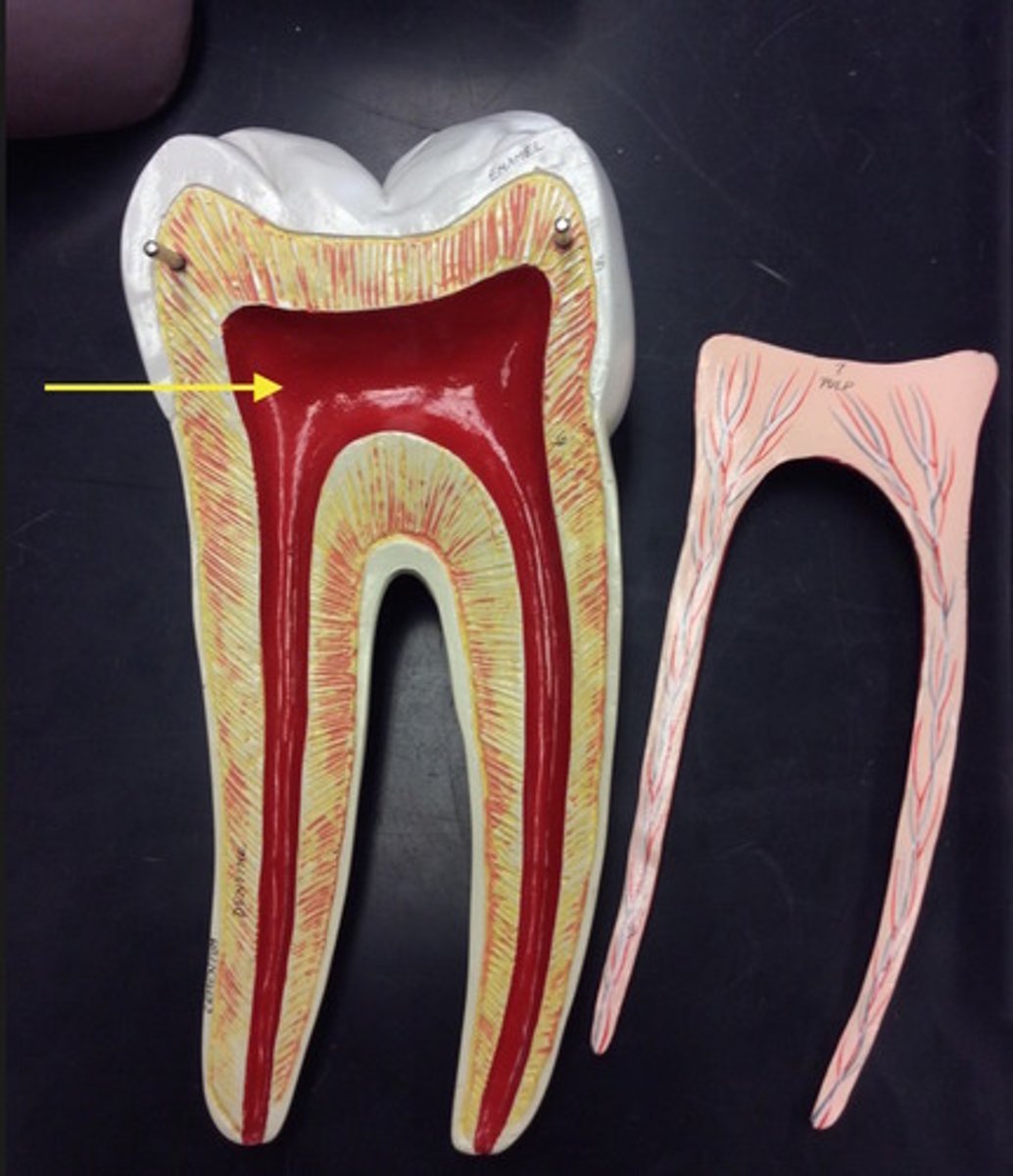
pulp cavity
contains blood vessels and nerves
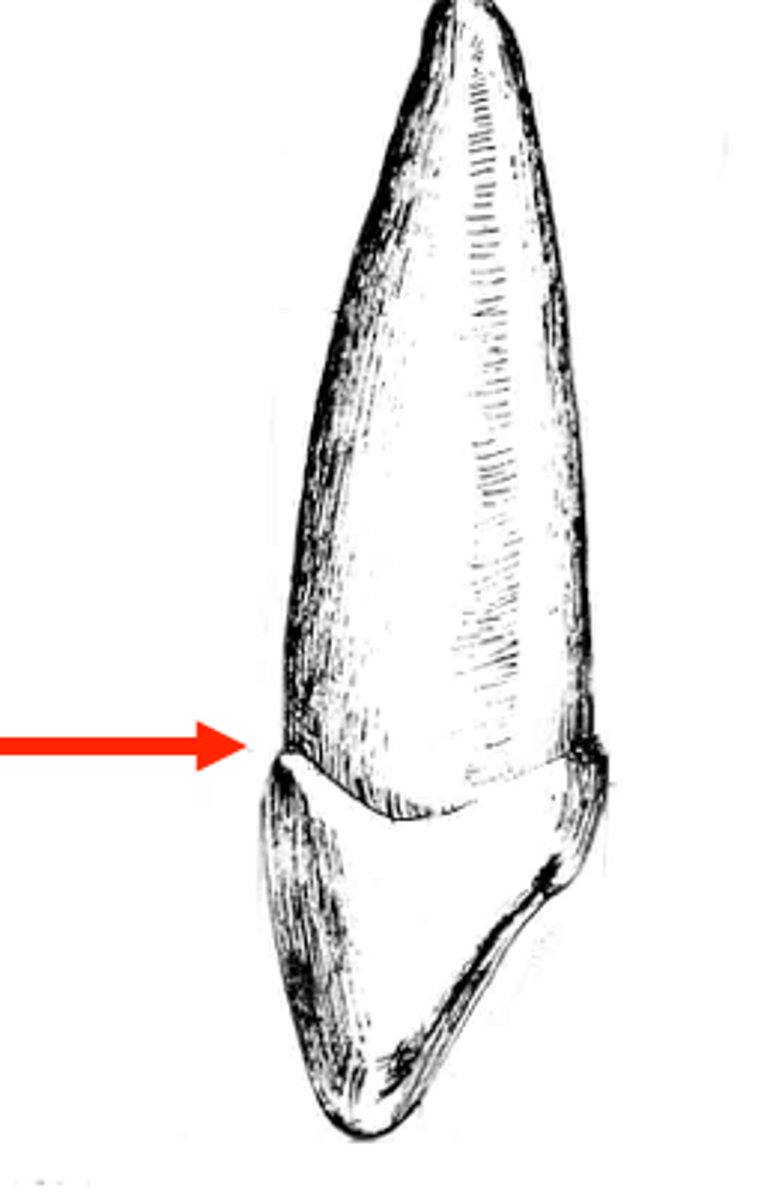
CEJ (cementoenamel junction)
Where enamel of crown and cementum of root meet
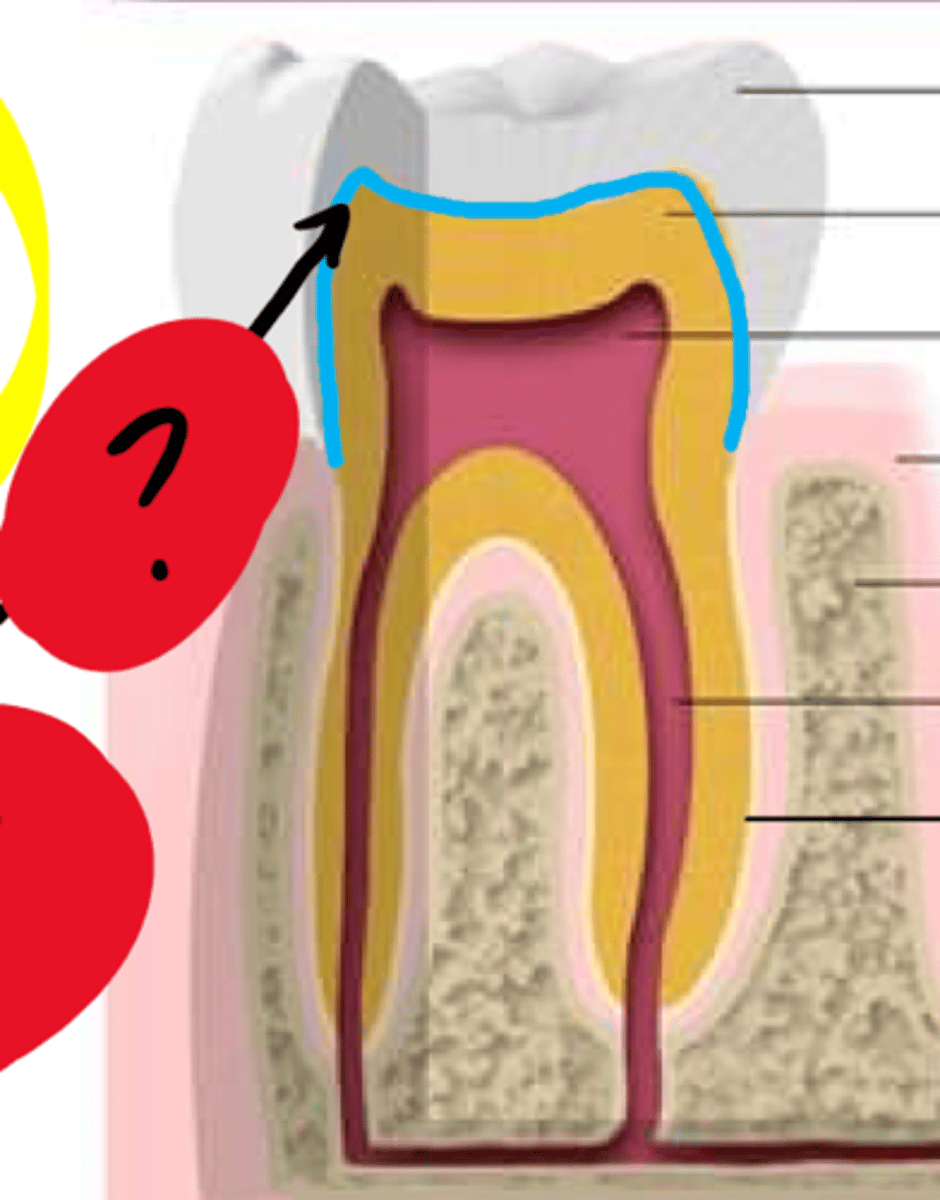
DEJ (dentinoenamel junction)
Where the dentin and enamel meet
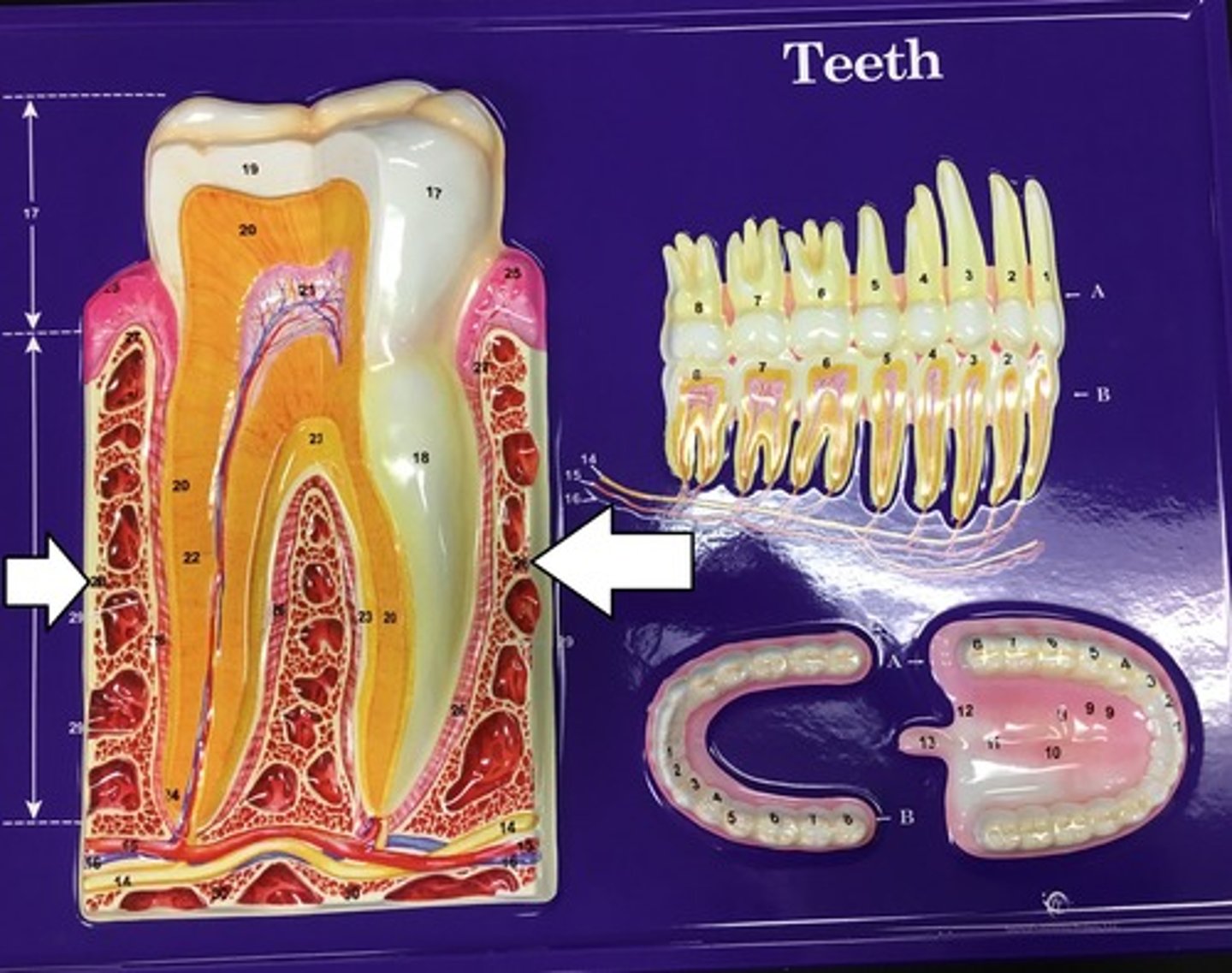
alveolar bone
bone that supports and encases the roots of teeth
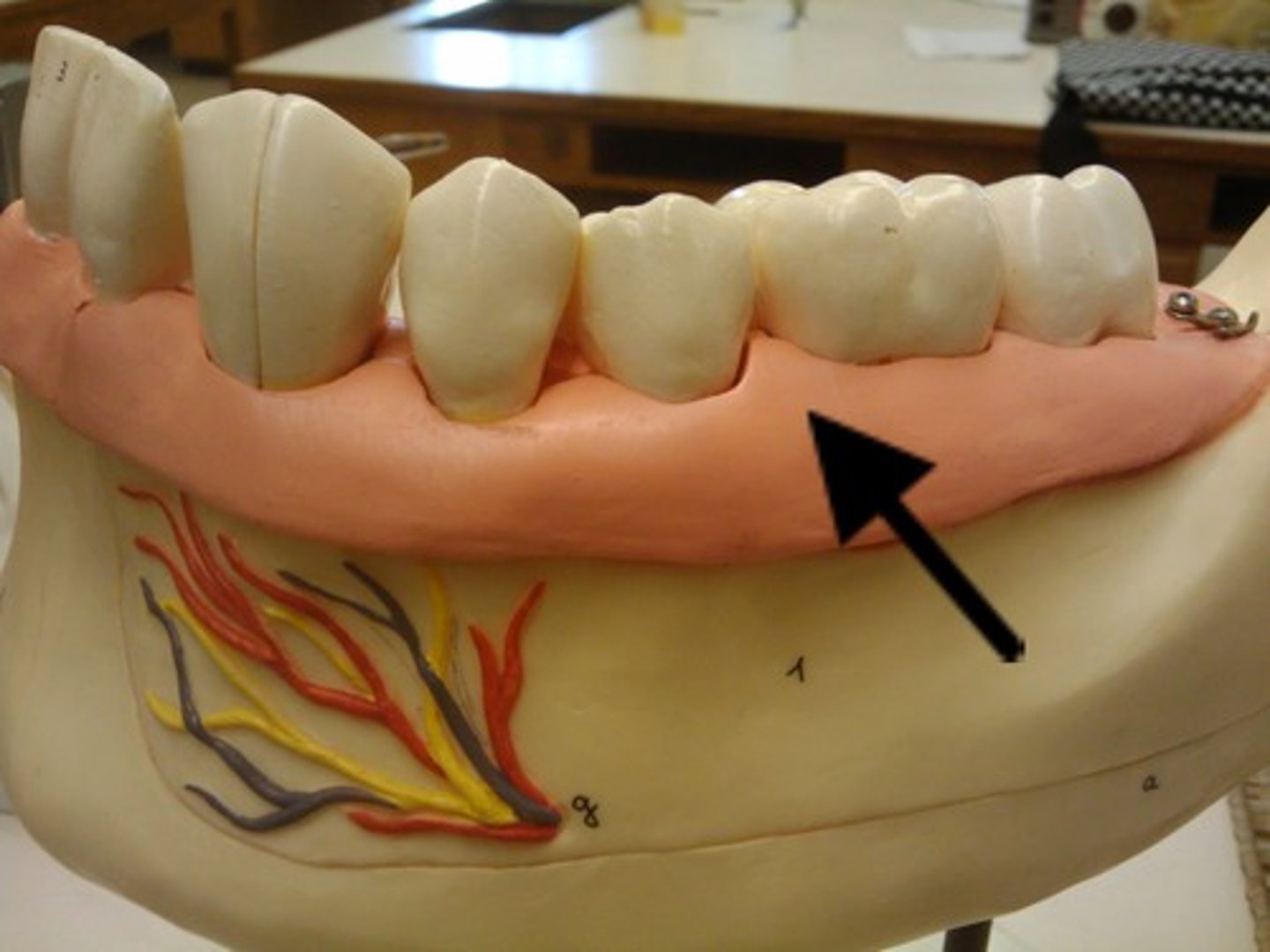
gingiva
tissue surrounding the teeth and covering the jaw
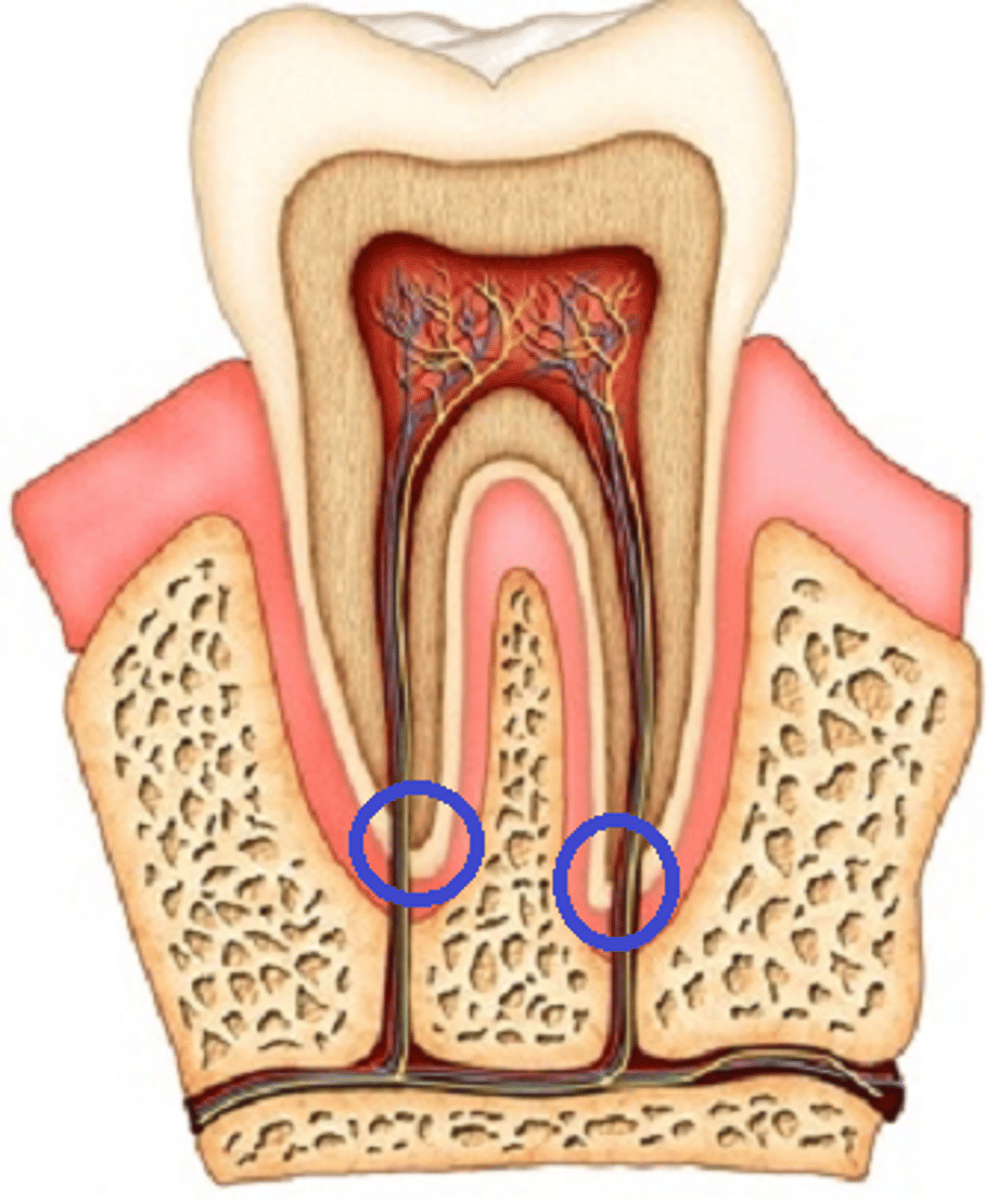
apical foramen
the hole at the tip of the root where nerves and blood vessels enter the tooth
Maxillary Central incisor (Primary)
Eruption Date: 6-10 months; Exfoliation Date: 6-7 years; #1
Maxillary Lateral incisor (Primary)
Eruption Date: 9-12 months; Exfoliation Date: 7-8 years; #2
Maxillary First molar (Primary)
Eruption Date: 12-18 months; Exfoliation Date: 9-11 years; #3
Maxillary Canine (Primary)
Eruption Date: 16-22 months; Exfoliation Date: 10-12 years; #4
Maxillary Second molar (Primary)
Eruption Date: 24-32 months; Exfoliation Date: 10-12 years; #5
Mandibular Central incisor (Primary)
Eruption Date: 6-10 months; Exfoliation Date: 6-7 years; #1
Mandibular Lateral incisor (primary)
Eruption Date: 7-10 months; Exfoliation Date: 7-8 years
Mandibular First molar (primary)
Mandibular First molar (primary)
Mandibular Canine (primary)
Eruption Date: 16-22 months; Exfoliation Date: 9-12 years
Mandibular Canine (primary)
Eruption Date: 12-18 months; Exfoliation Date: 10-11 years
Mandibular Second molar (primary)
Eruption Date: 20-32 months; Exfoliation Date: 10-12 years
Maxillary Central incisor (Permanent)
Eruption Date: 7-8 years; Order of Eruption: #2
Maxillary Lateral incisor (Permanent)
Eruption Date: 8-9 years; Order of Eruption: #3
Maxillary Canine (Permanent)
Eruption Date: 11-12 years; Order of Eruption: #6
Maxillary First premolar (Permanent)
Eruption Date: 10-11 years; Order of Eruption: #4
Maxillary Second premolar (Permanent)
Eruption Date: 11-12 years; Order of Eruption: #5
Maxillary First molar (Permanent)
Eruption Date: 6-7 years; Order of Eruption: #1
Maxillary Second molar (Permanent)
Eruption Date: 12-13 years; Order of Eruption: #7
Maxillary Third molar (Permanent)
Eruption Date: 17-21 years; Order of Eruption: #8
Mandibular Central incisor (Permanent)
Eruption Date: 6-7 years; Order of Eruption: #2
Mandibular lateral incisor (Permanent)
Eruption date: 7-8 years; order of eruption: #3
Mandibular canine (permanent)
Eruption Date: 9-10 years; Order of Eruption: #4
Mandibular first premolar (permanent)
Eruption Date: 10-11 years; Order of Eruption: #5
Mandibular second premolar (permanent)
Eruption Date: 11-12 years; Order of Eruption: #6
Mandibular first molar (permanent)
Eruption Date: 6-11 years; Order of Eruption: #1
Mandibular second molar (permanent)
Eruption Date: 11-13 years; Order of Eruption: #7
Mandibular third molar (permanent)
Eruption Date: 17-21 years; Order of Eruption: #8

