Dramatic Conventions and Techniques (The Tragedy of Macbeth)
 Studied by 0 people
 Call Kai
 Learn
Learn Practice Test
 Spaced Repetition
 Match
Match Flashcards
 Knowt Play
1/36

There's no tags or description
Looks like no tags are added yet.
Name | Mastery | Learn | Test | Matching | Spaced | Call with Kai |
|---|
No analytics yet
Send a link to your students to track their progress
37 Terms
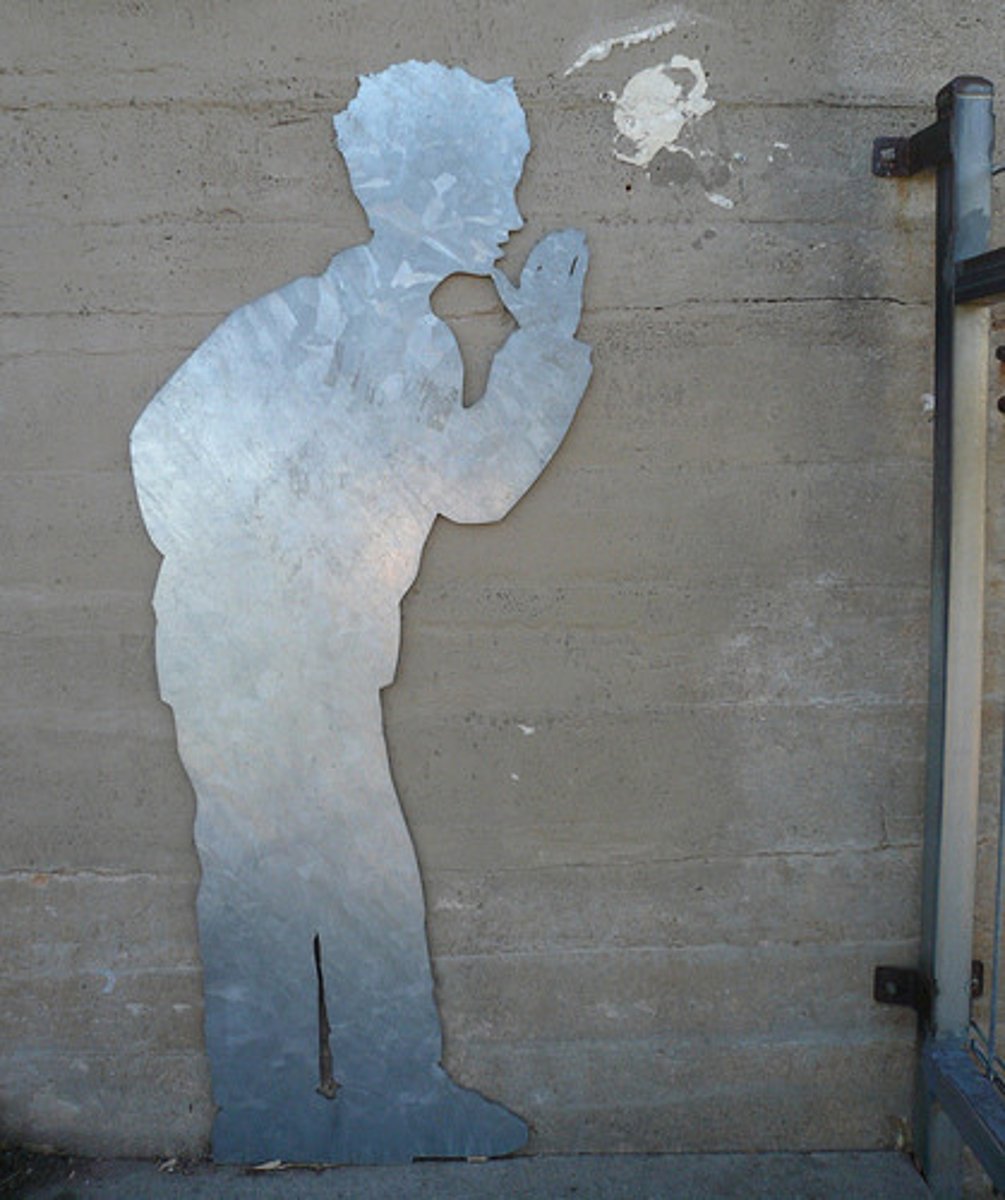
Aside
A dramatic convention by which an actor directly addresses the audience but it is not supposed to be heard by the other actors on the stage.
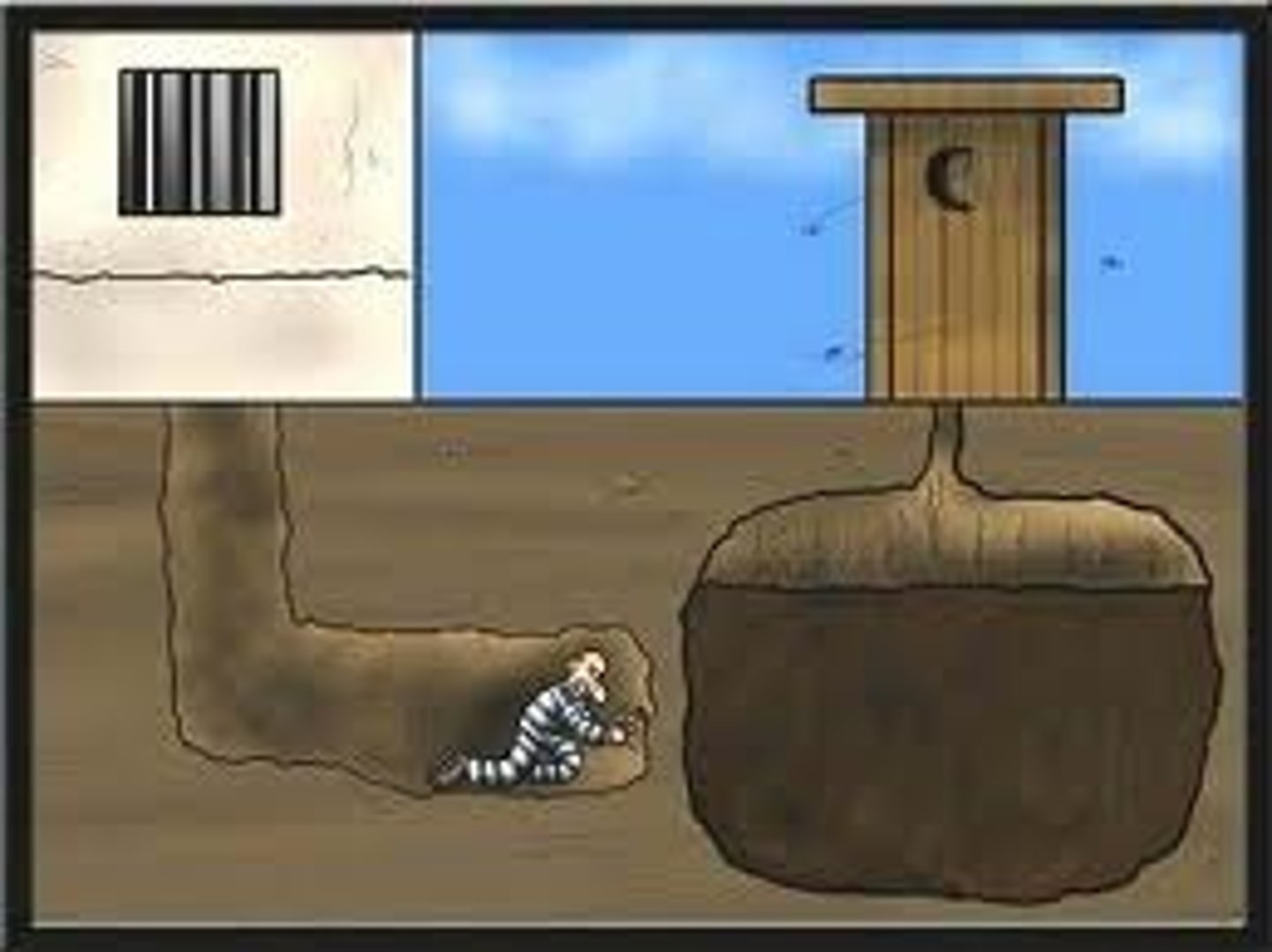
Dramatic Irony
Occurs when another character(s) and/or the audience know more than one or more characters on stage about what is happening
Soliloquy
A speech given by a character alone on stage (or who thinks he/she is alone on stage) - TRUTHFUL
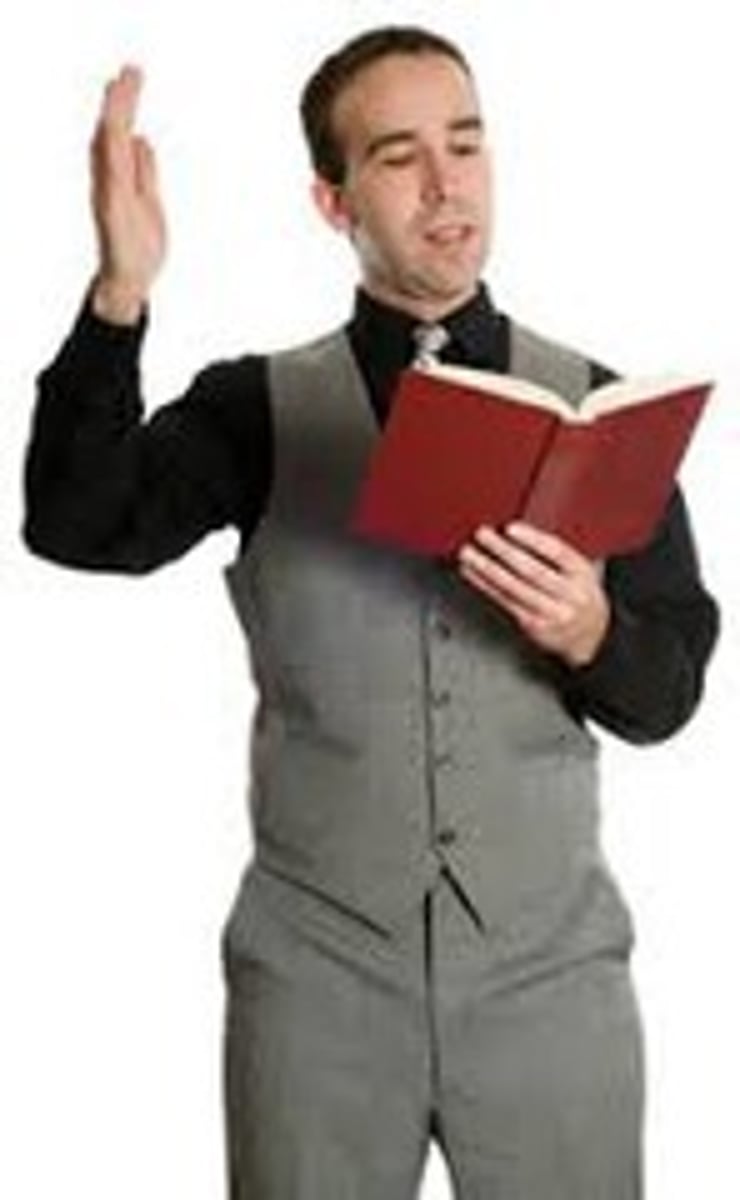
Monologue
A long speech made by one performer or by one person in a group.
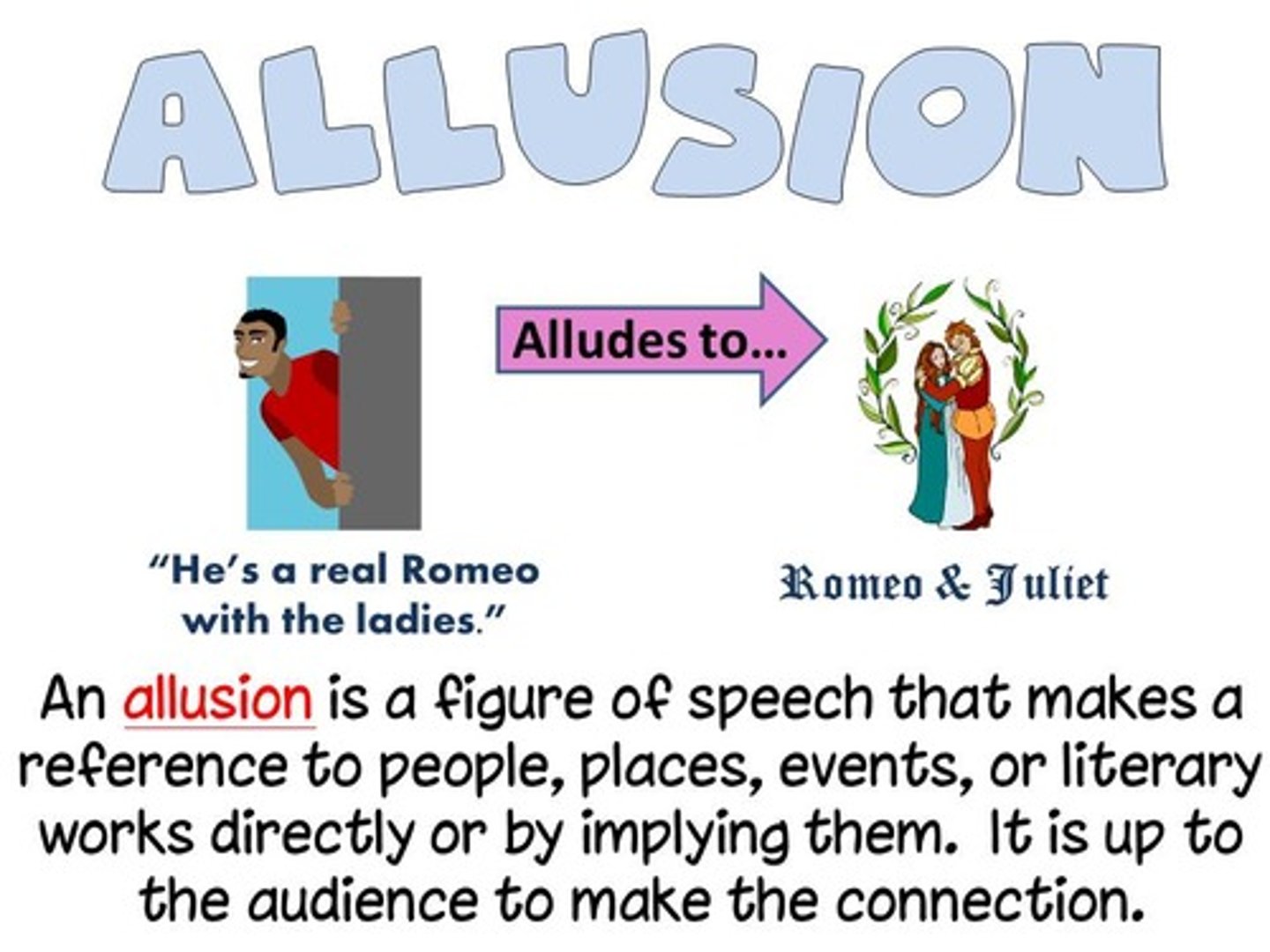
Allusion
A reference to a well-known person, place, event, literary work, or work of art
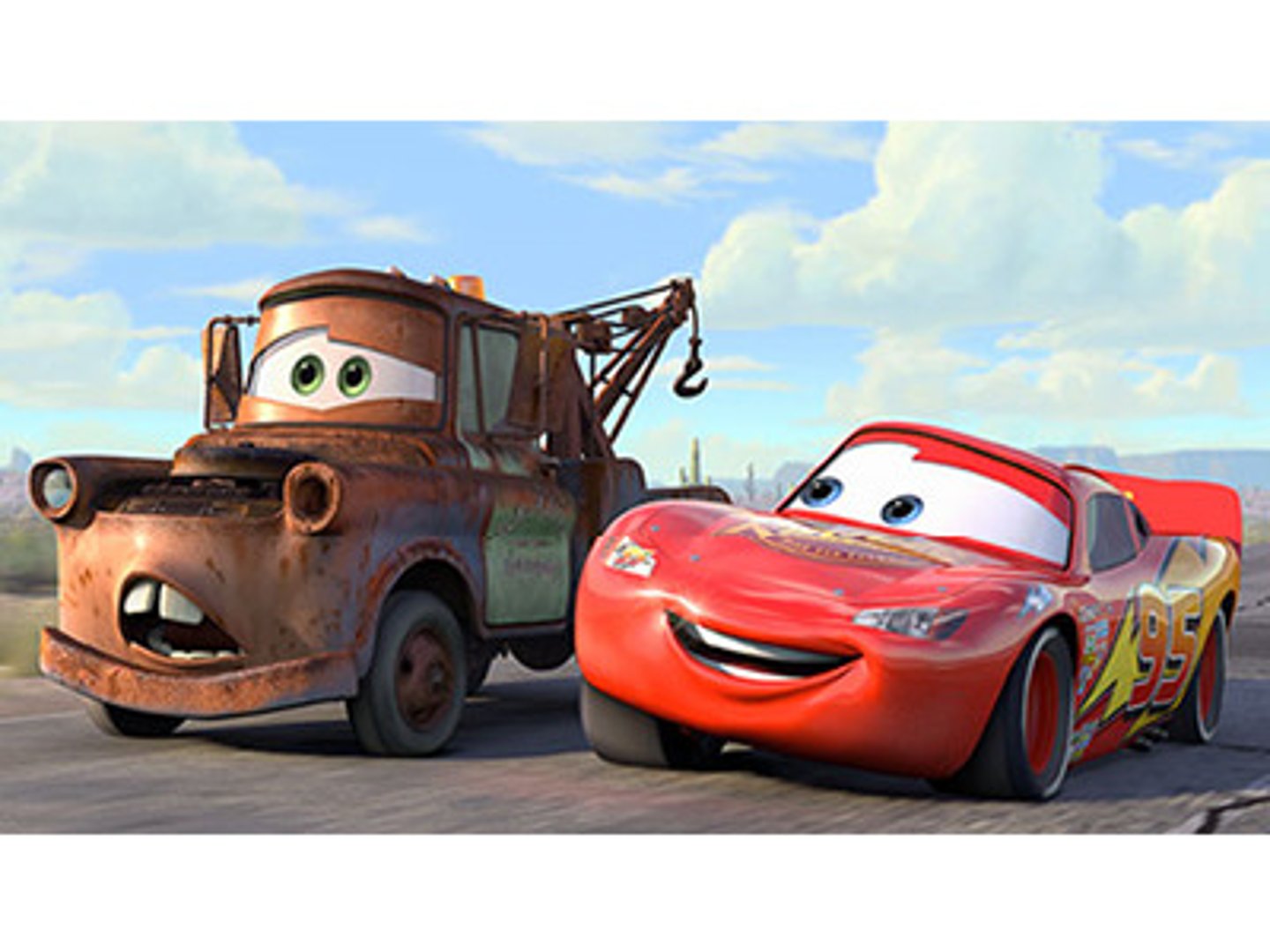
Personification
A figure of speech in which an object or animal is given human feelings, thoughts, or attitudes
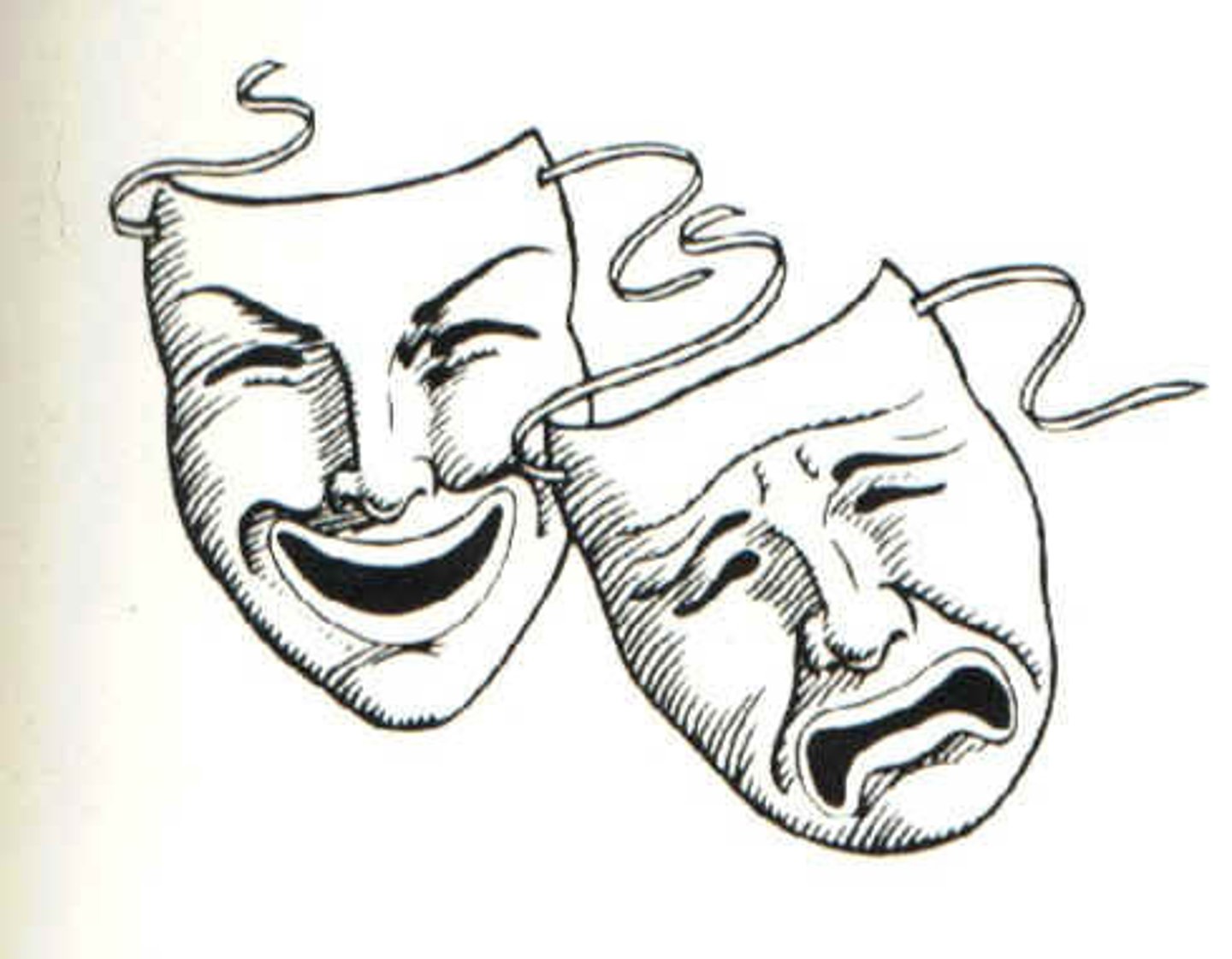
Drama
a story written to be performed by actors
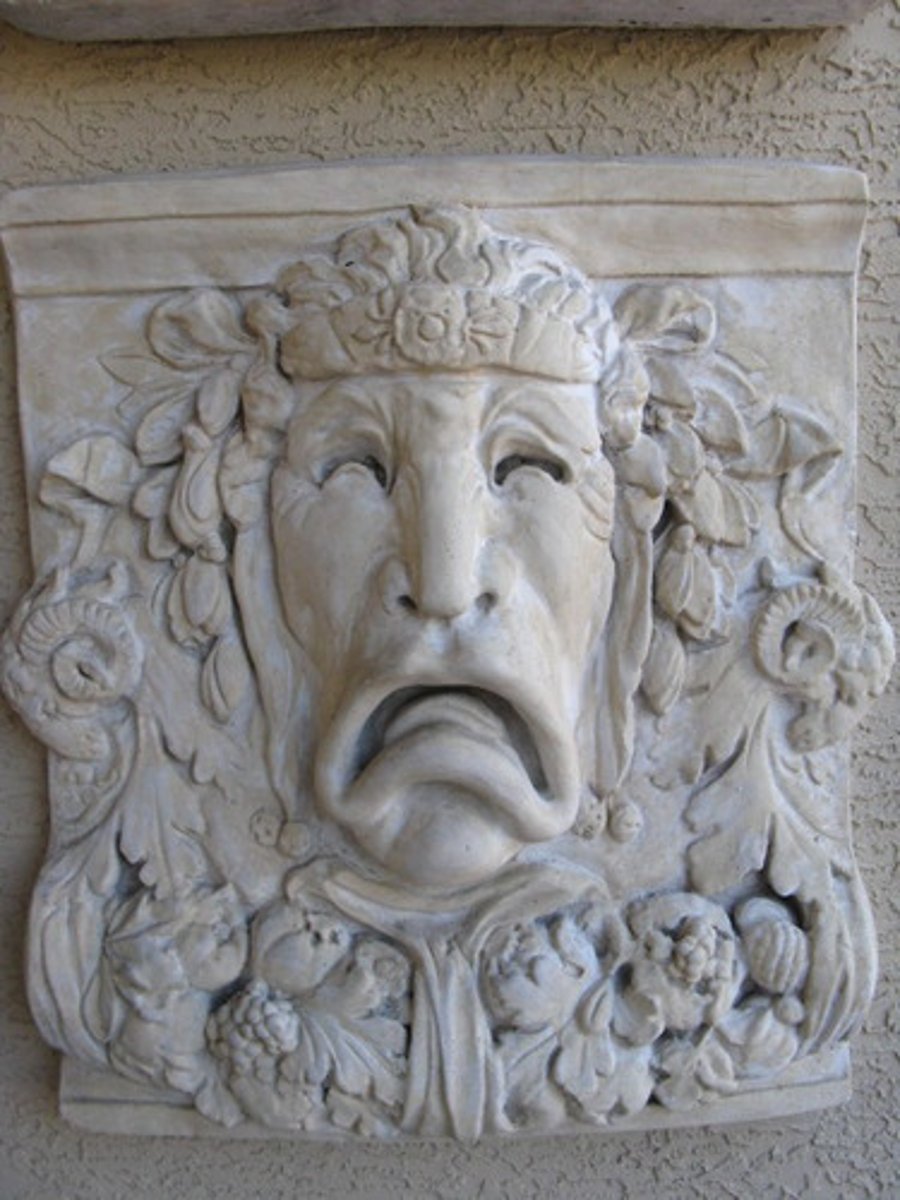
Tragedy
A drama or literary work in which the main character is brought to ruin or suffers extreme sorrow due to a fatal flaw
Tragic Hero
A protagonist who experiences catastrophe due to his own tragic flaw
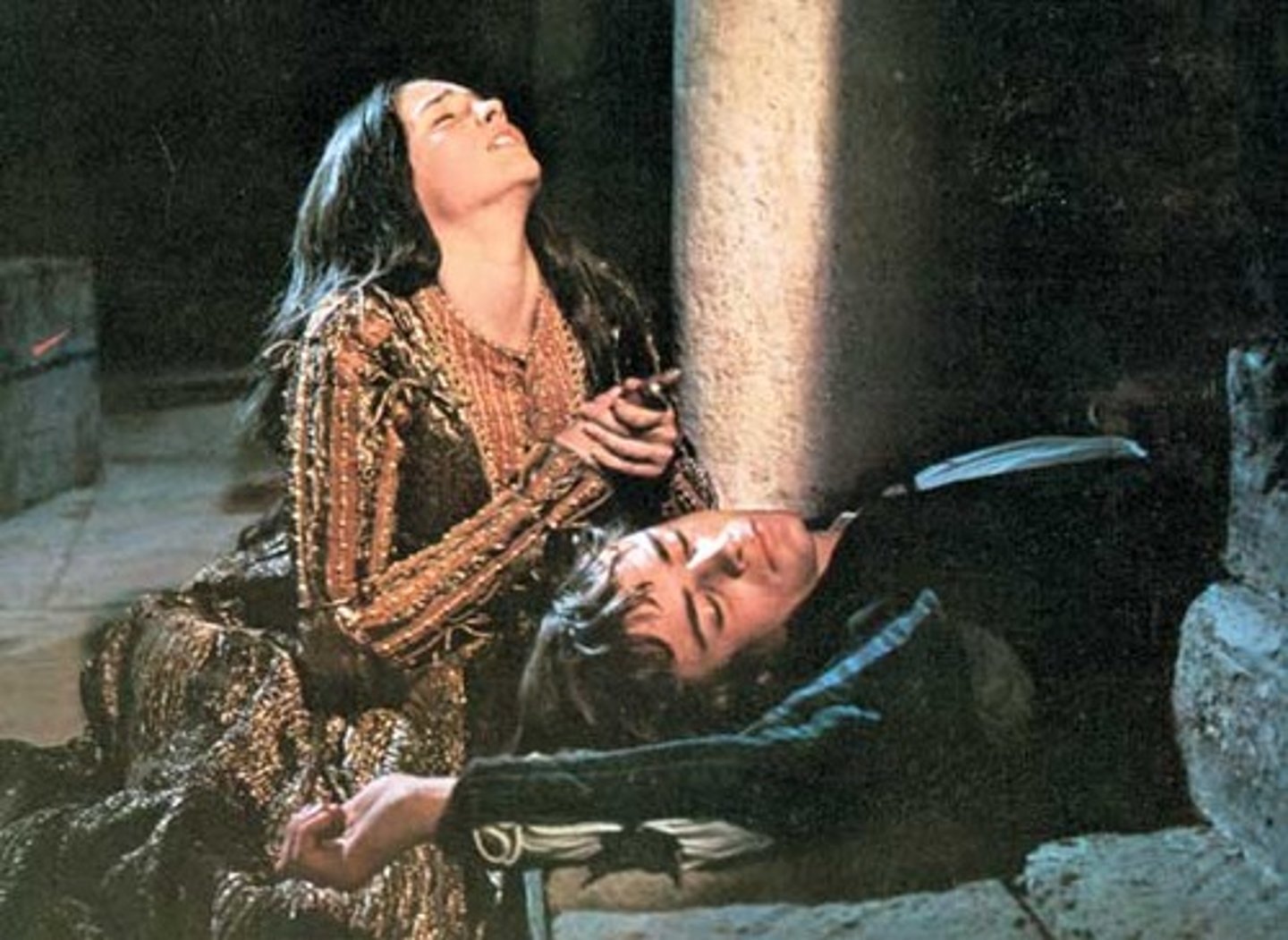
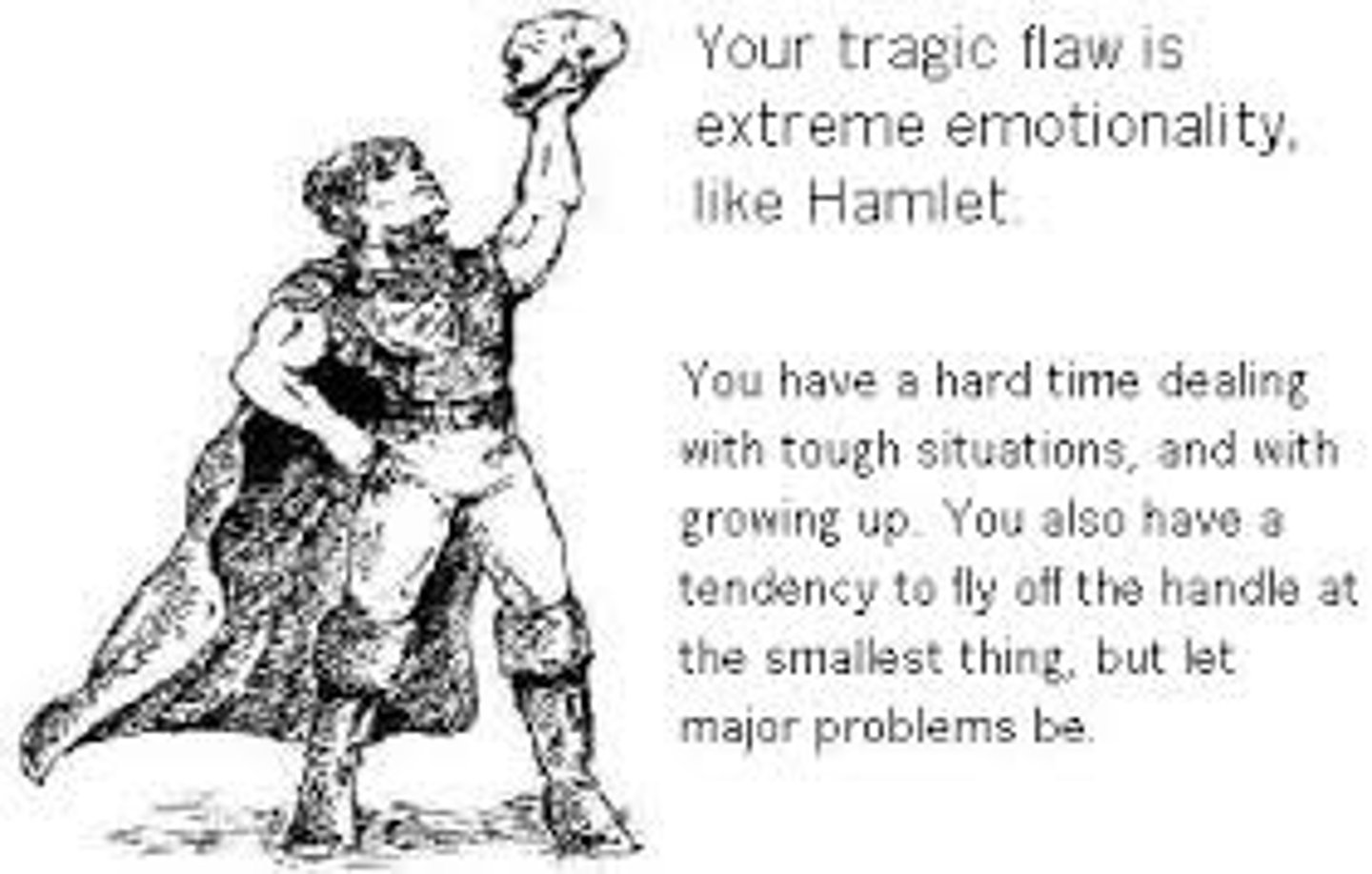
Tragic Flaw (Hamartia)
A weakness or limitation of character (character/personality flaw), resulting in the fall of the tragic hero.
Script
the written part of a play

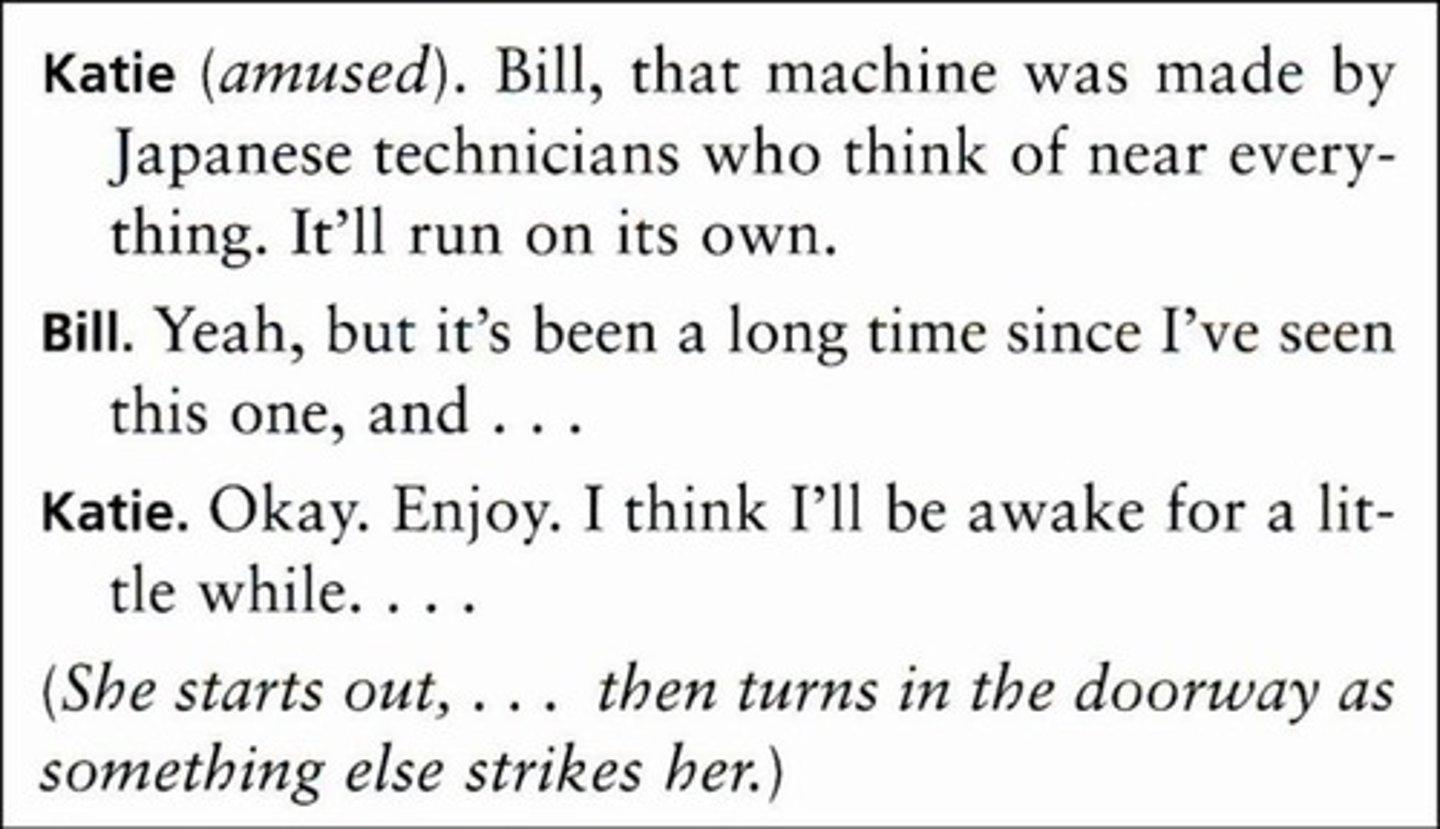
Stage directions
A playwright's descriptive or interpretive comments that provide readers (and actors) with information about the dialogue, setting, and action of a play.
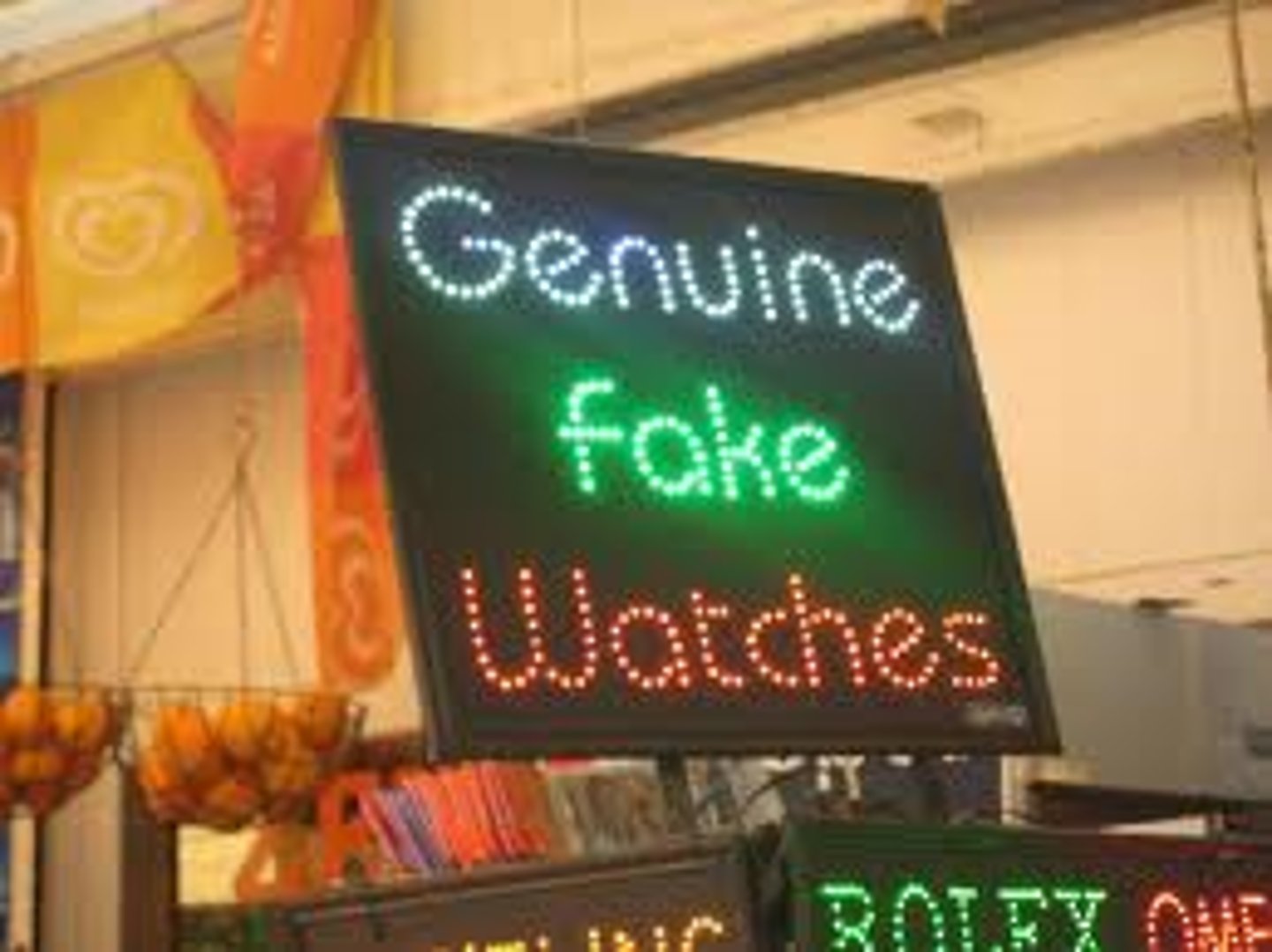
Oxymoron
a set of contradictory terms used to illustrate a character's state of mind
Verbal Irony
irony in which a person says or writes one thing and means another, or uses words to convey a meaning that is the opposite of the literal meaning.
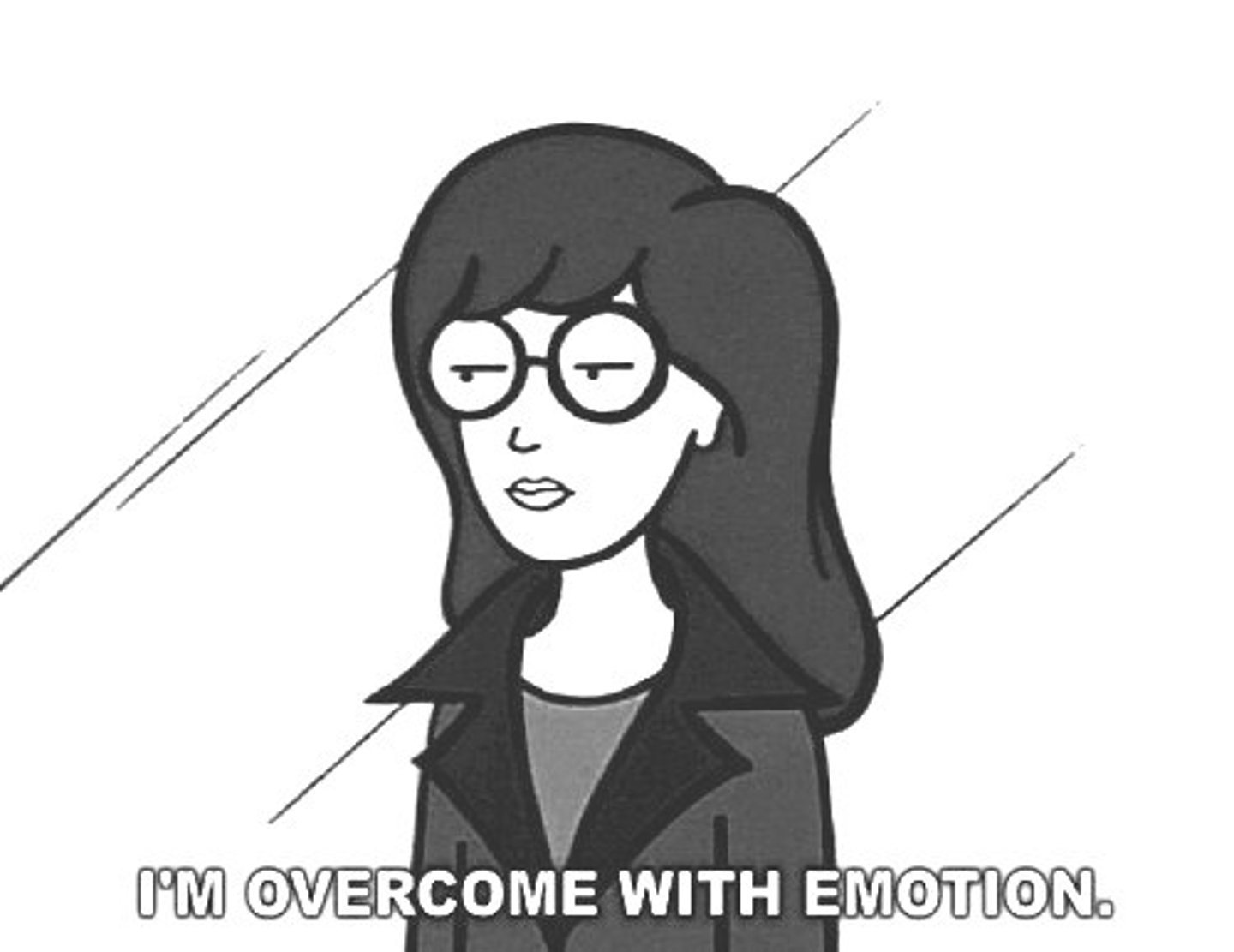
Situational Irony
occurs when the outcome of a work is unexpected, or events turn out to be the opposite from what one had expected
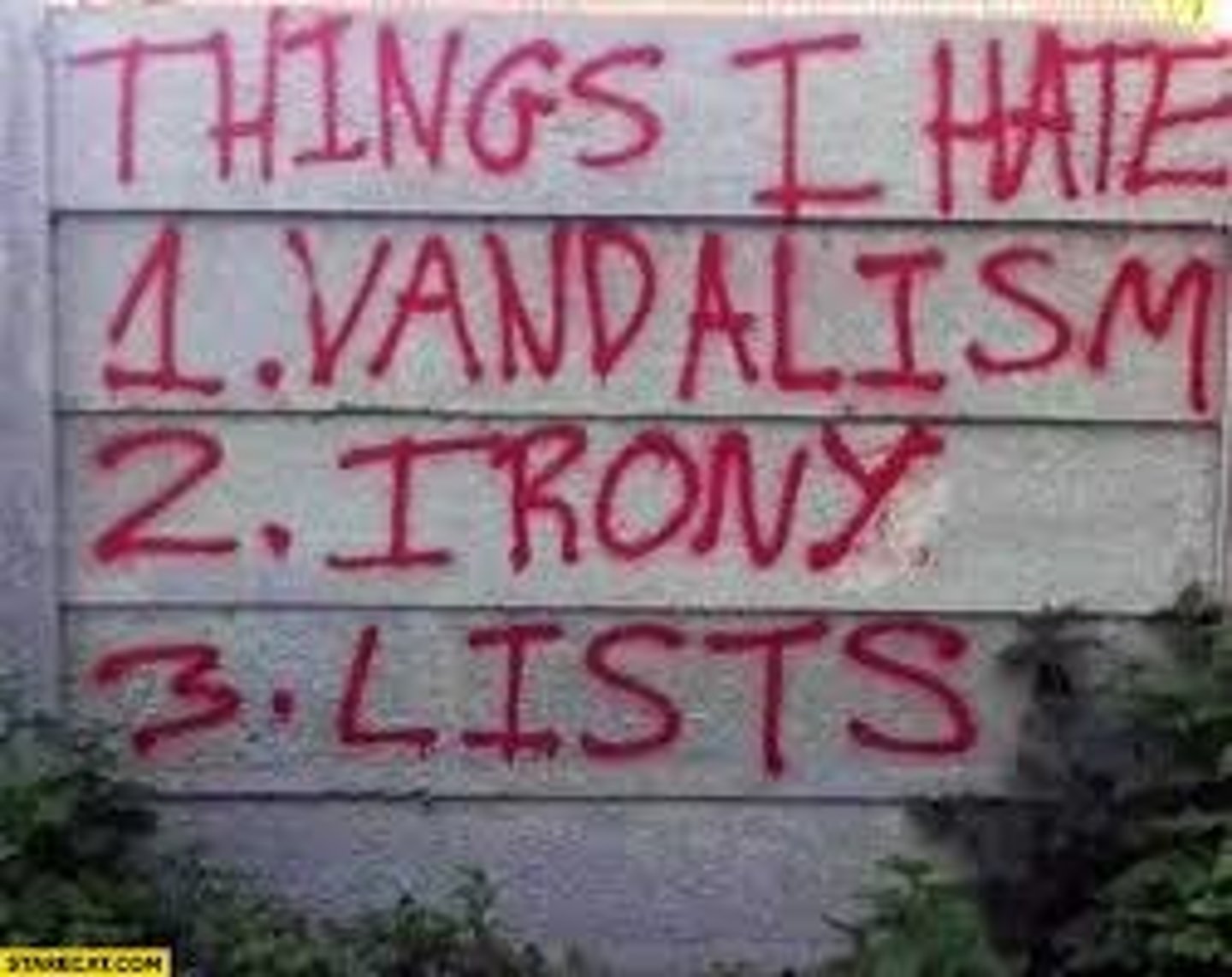
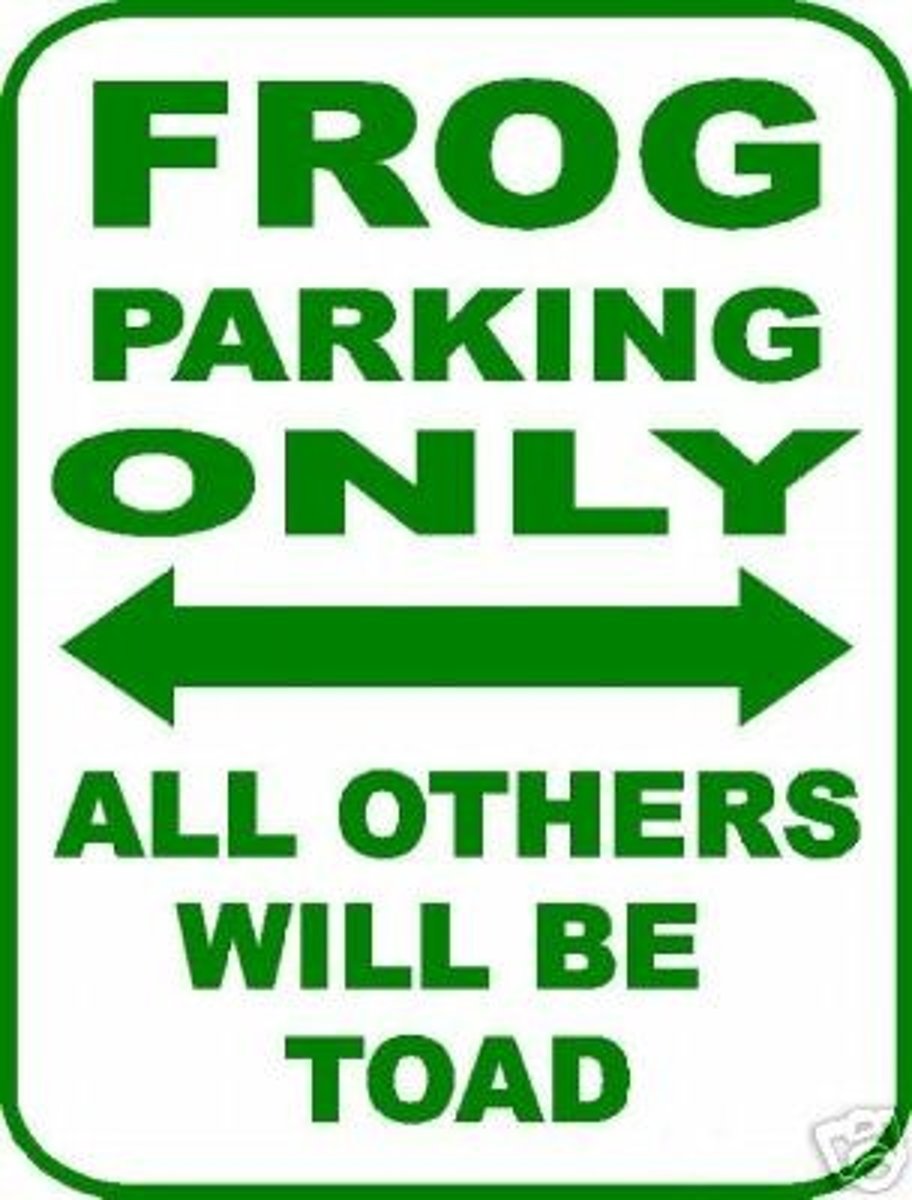
Pun
a joke exploiting the different possible meanings of a word or the fact that there are words that sound alike but have different meanings.
Motif
A recurring theme, subject or idea
Character Foil (Dramatic Foil)
A person whose character traits are the opposite and therefore accentuates the traits of another character.

Catharsis
the purging of emotion at the end of the play

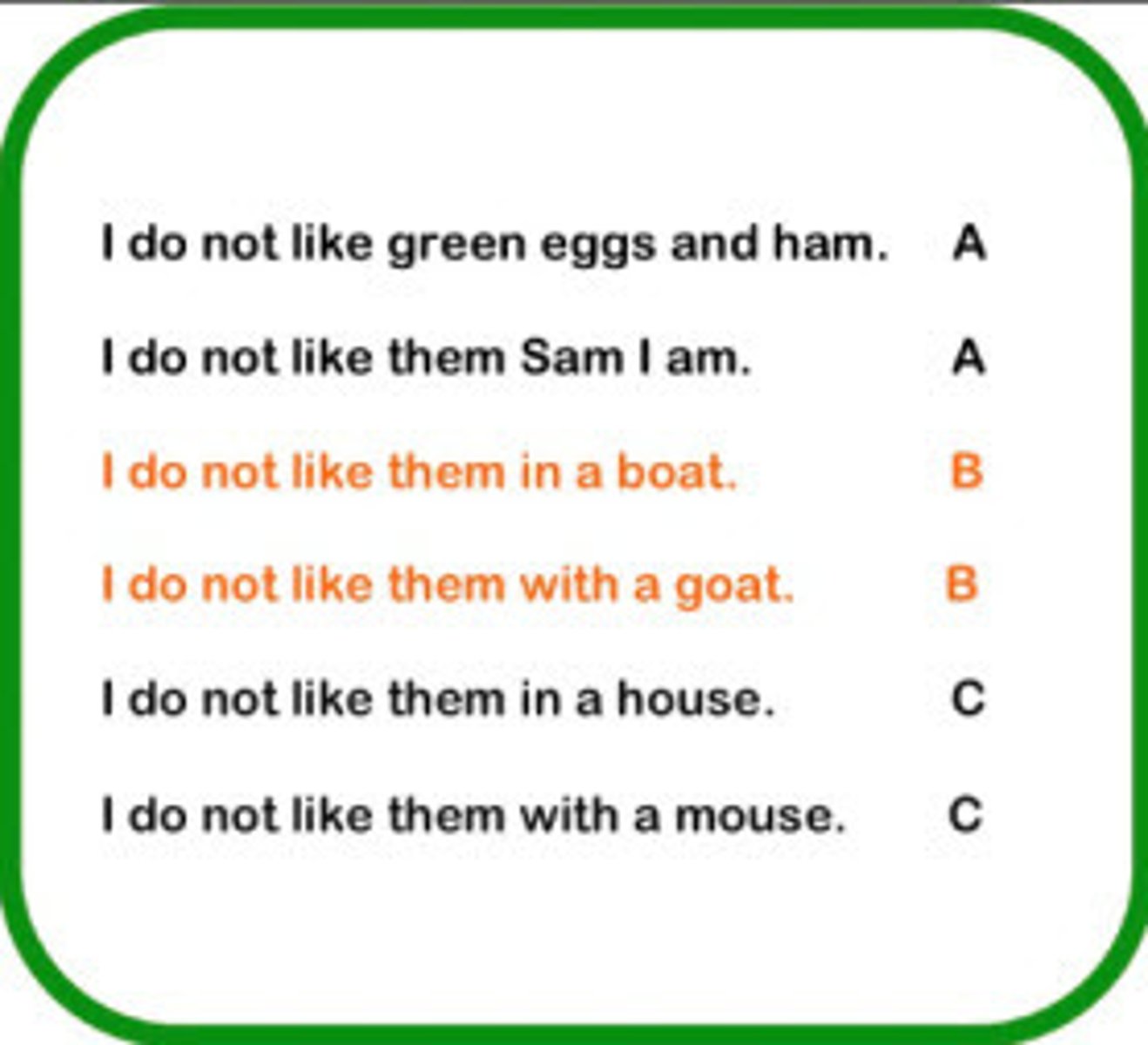
Rhyming Couplet
Two consecutive lines of poetry that rhyme
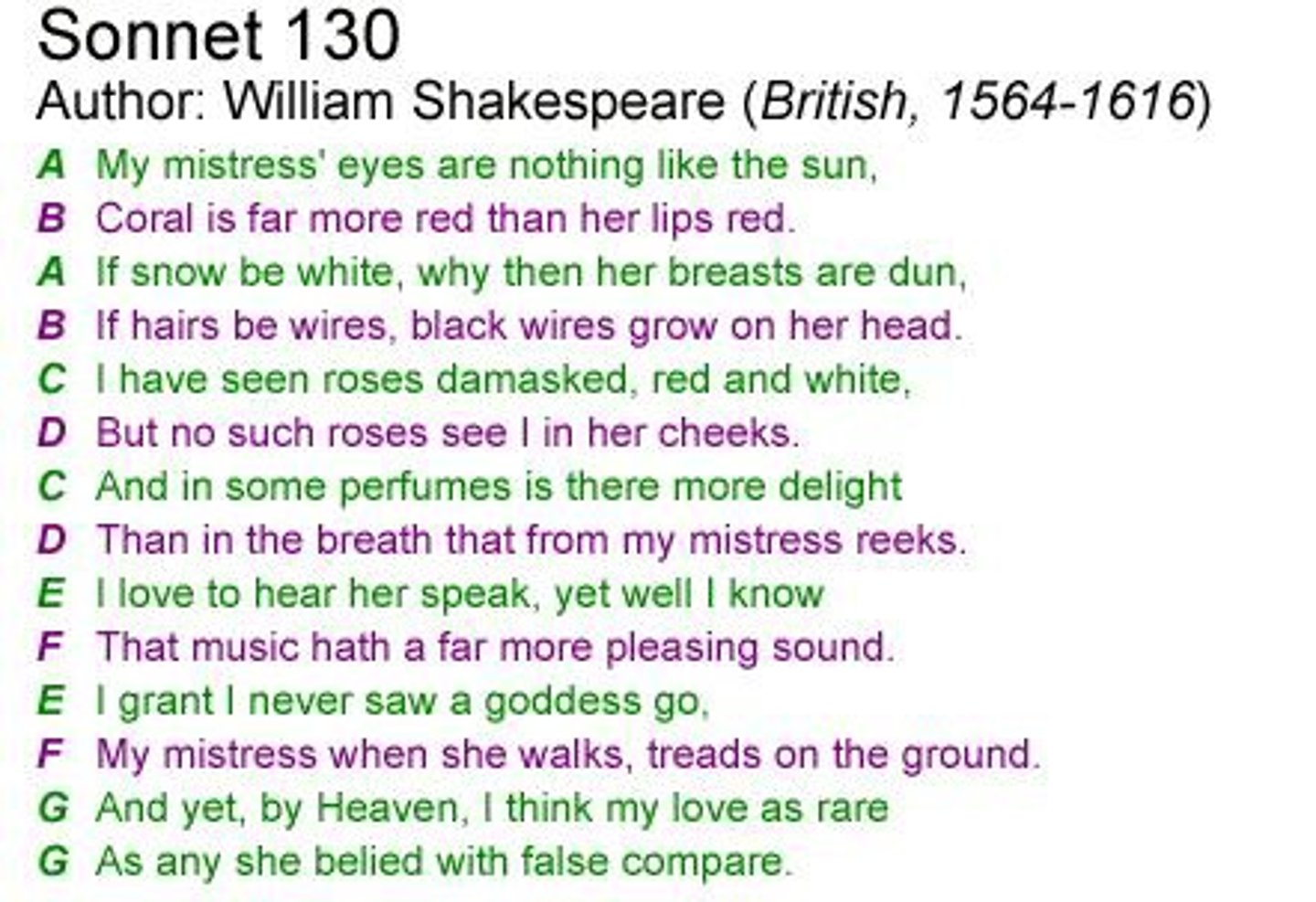
Sonnet
14 line poem
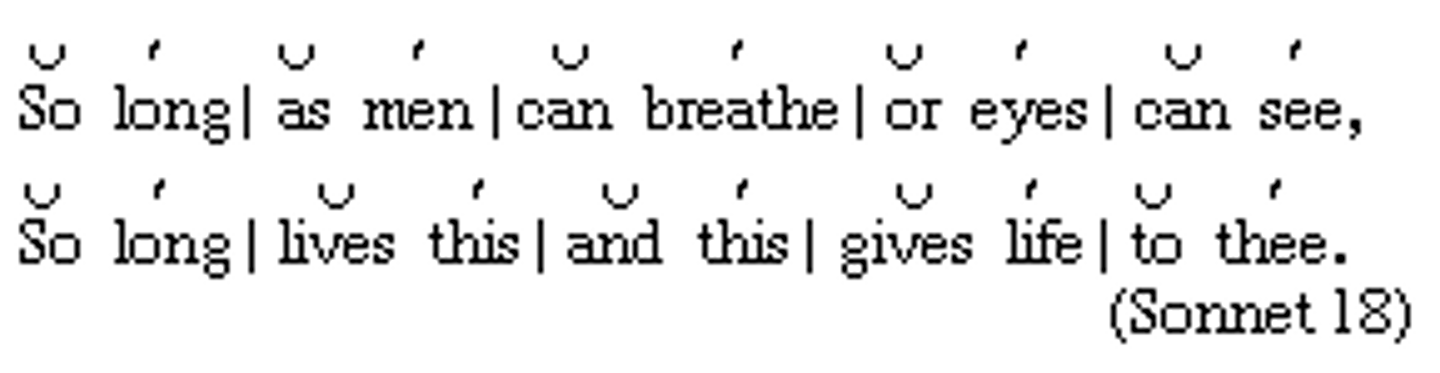
Iambic pentameter
a poetic meter that is made up of 5 stressed syllables each followed by an unstressed syllable
Kairos
The opportune moment/time/situation to take action

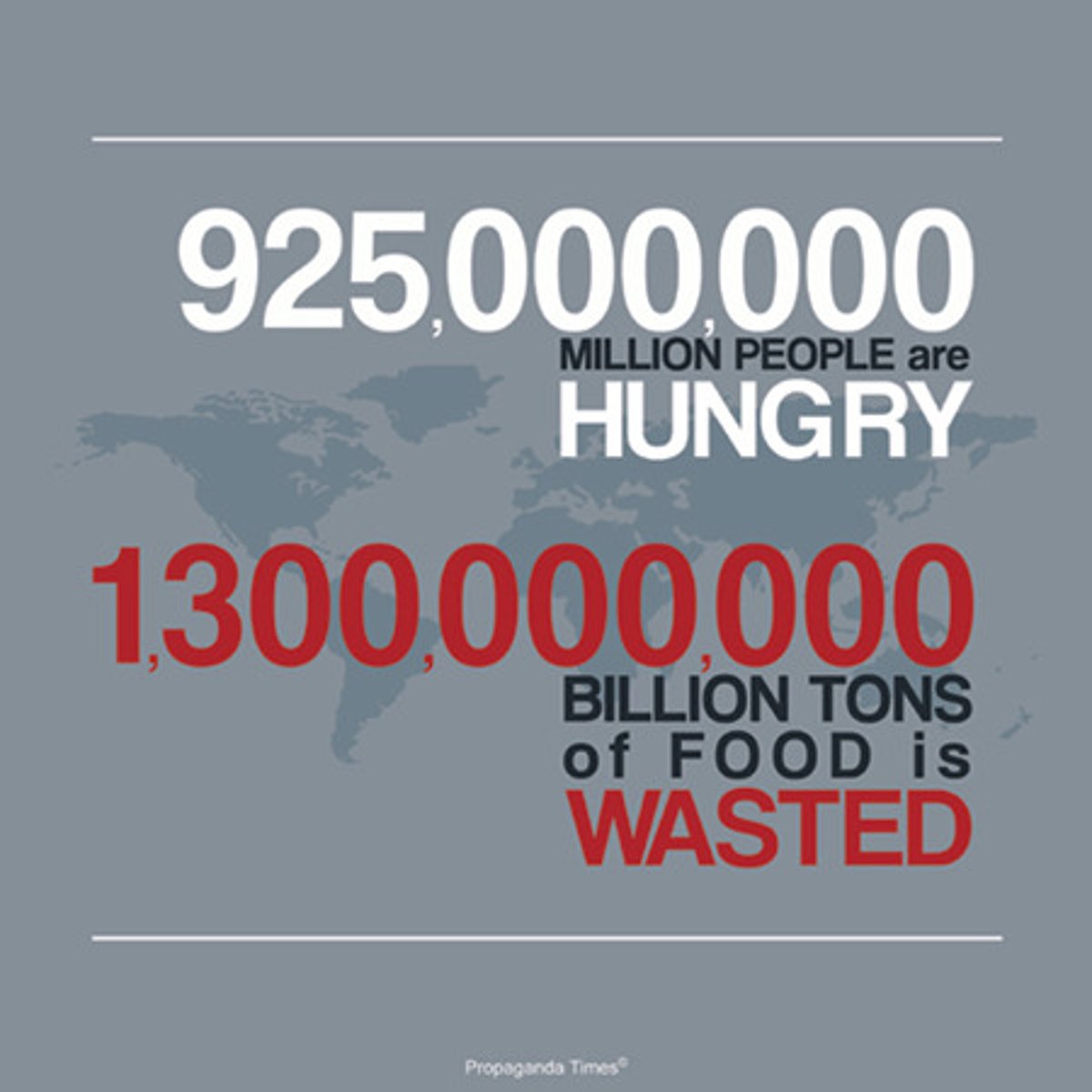
Logos
The use of evidence, statistics, and logical reasoning to persuade
Ethos
The use of personal character, expertise/credibility/authority to persuade

Anaphora
In rhetoric, the repetition of a word or phrase at the beginning a multiple lines of poetry or prose to create emphasis/balance/harmony.

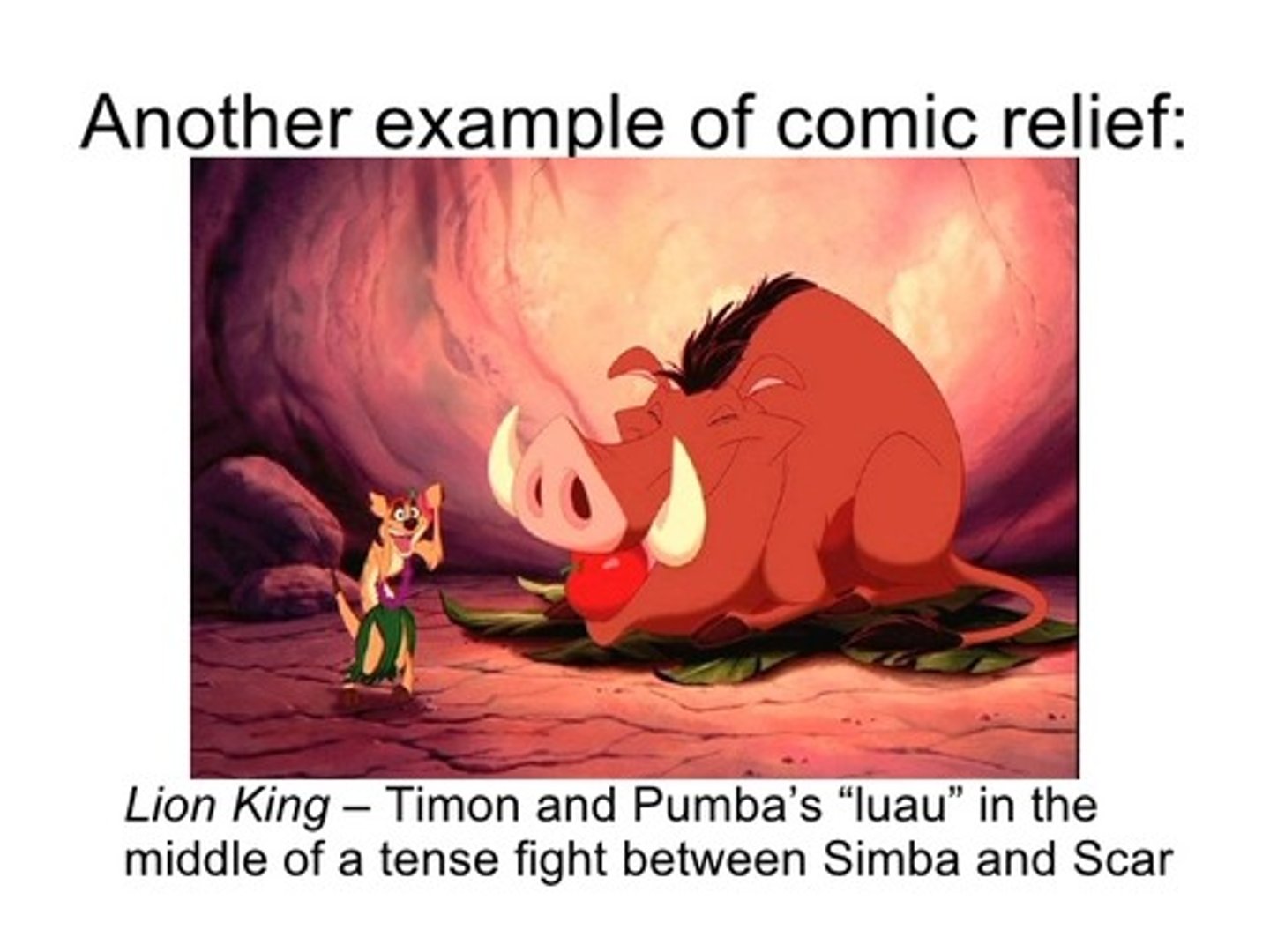
Comic Relief
The incorporation of a humorous scene or event meant to provide a moment of relief from the intensity of the play
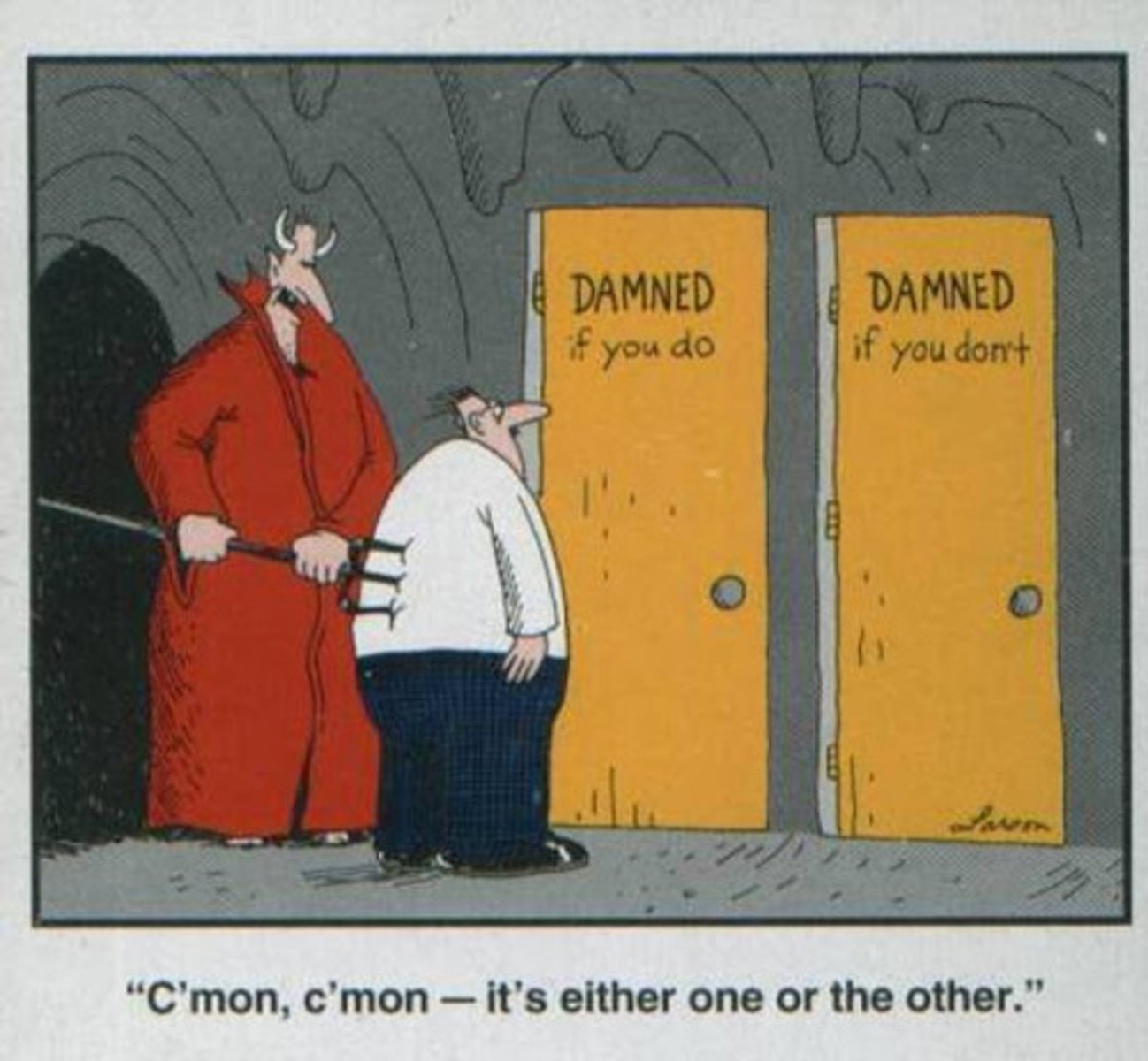
Equivocation
the use of ambiguous language to conceal the truth or to avoid committing oneself; prevarication.
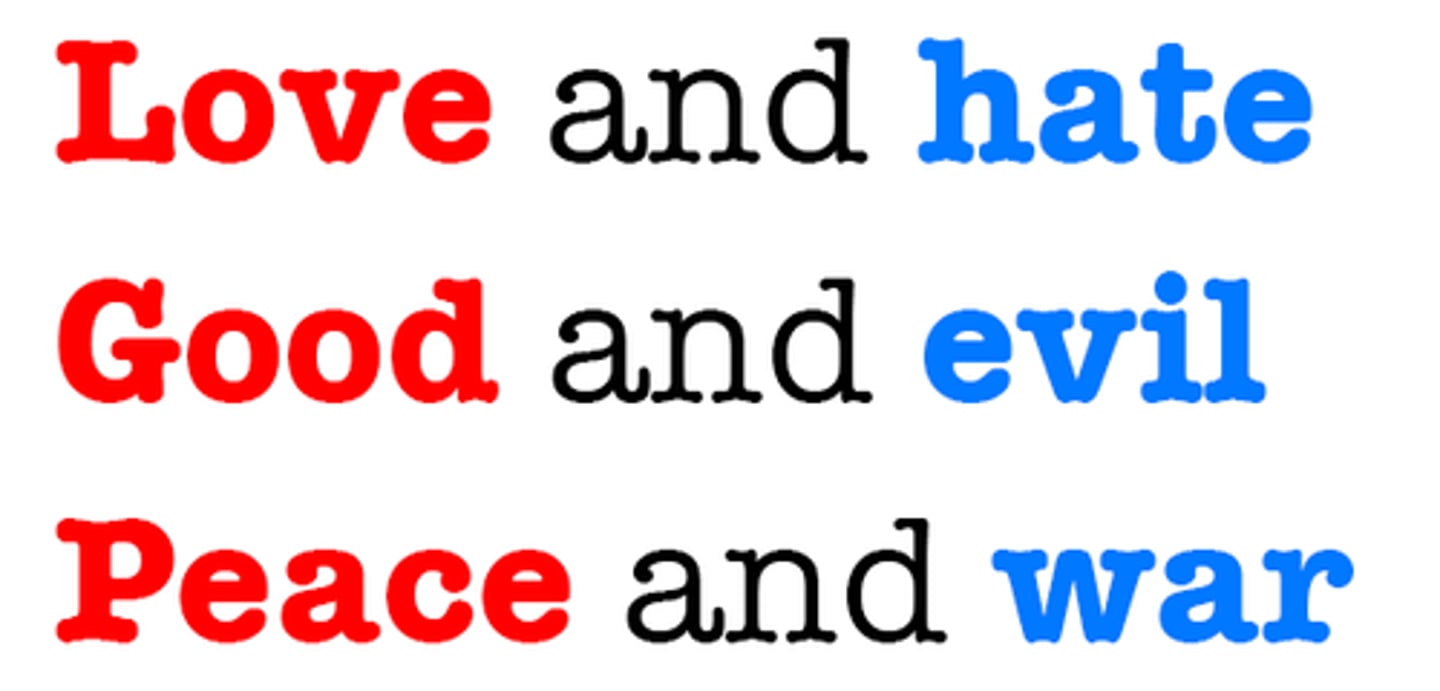
Antithesis
Antithesis is a literary device that contrasts opposing ideas through parallel grammatical structures.
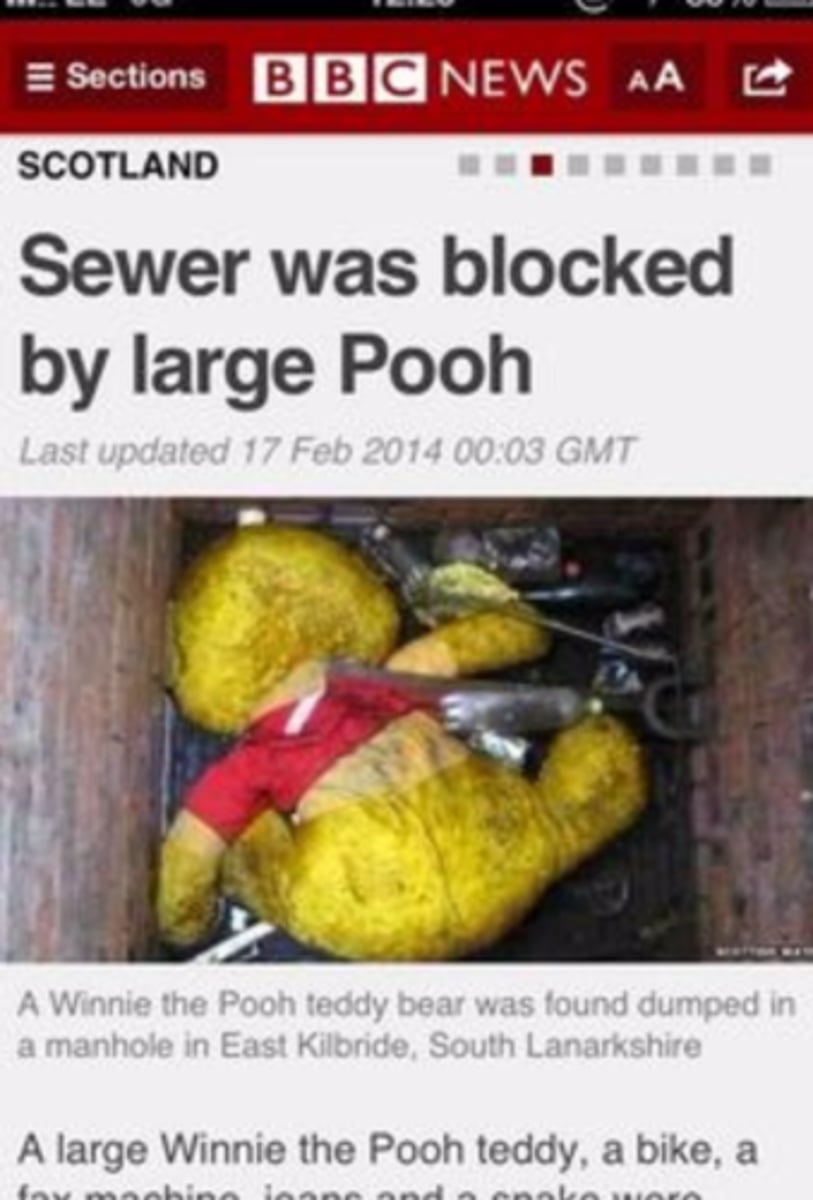
Double entendre
a word or phrase that is open to two interpretations, one of which is usually risqué or indecent.
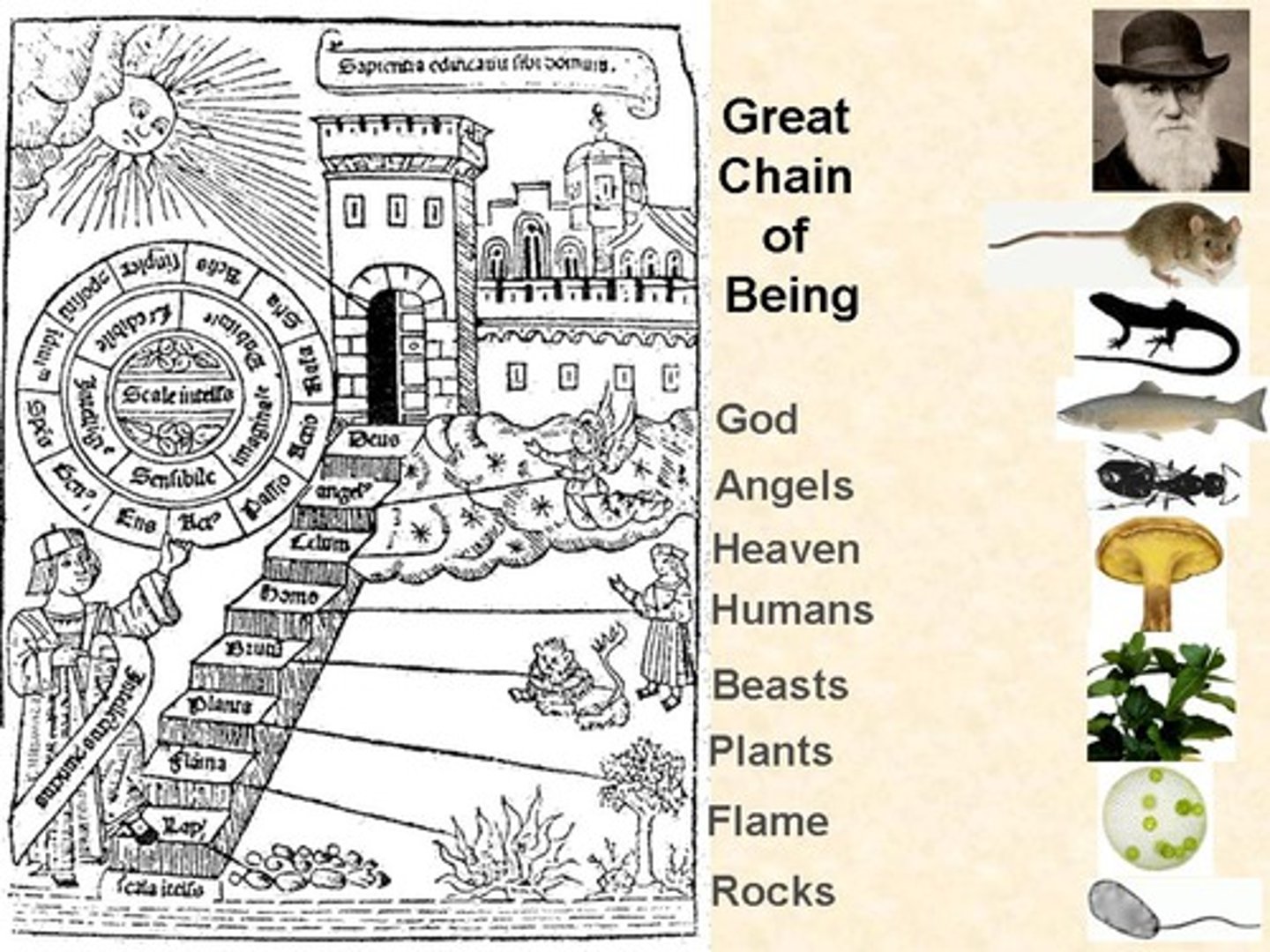
Great Chain of Being
The medieval belief that society was organized by God into a natural and rigid hierarchical structure.
Paradox
A statement that seems contradictory but contains a complex truth.

Pathos
In rhetoric, the use of inflammatory language or imagery to appeal to the emotions.

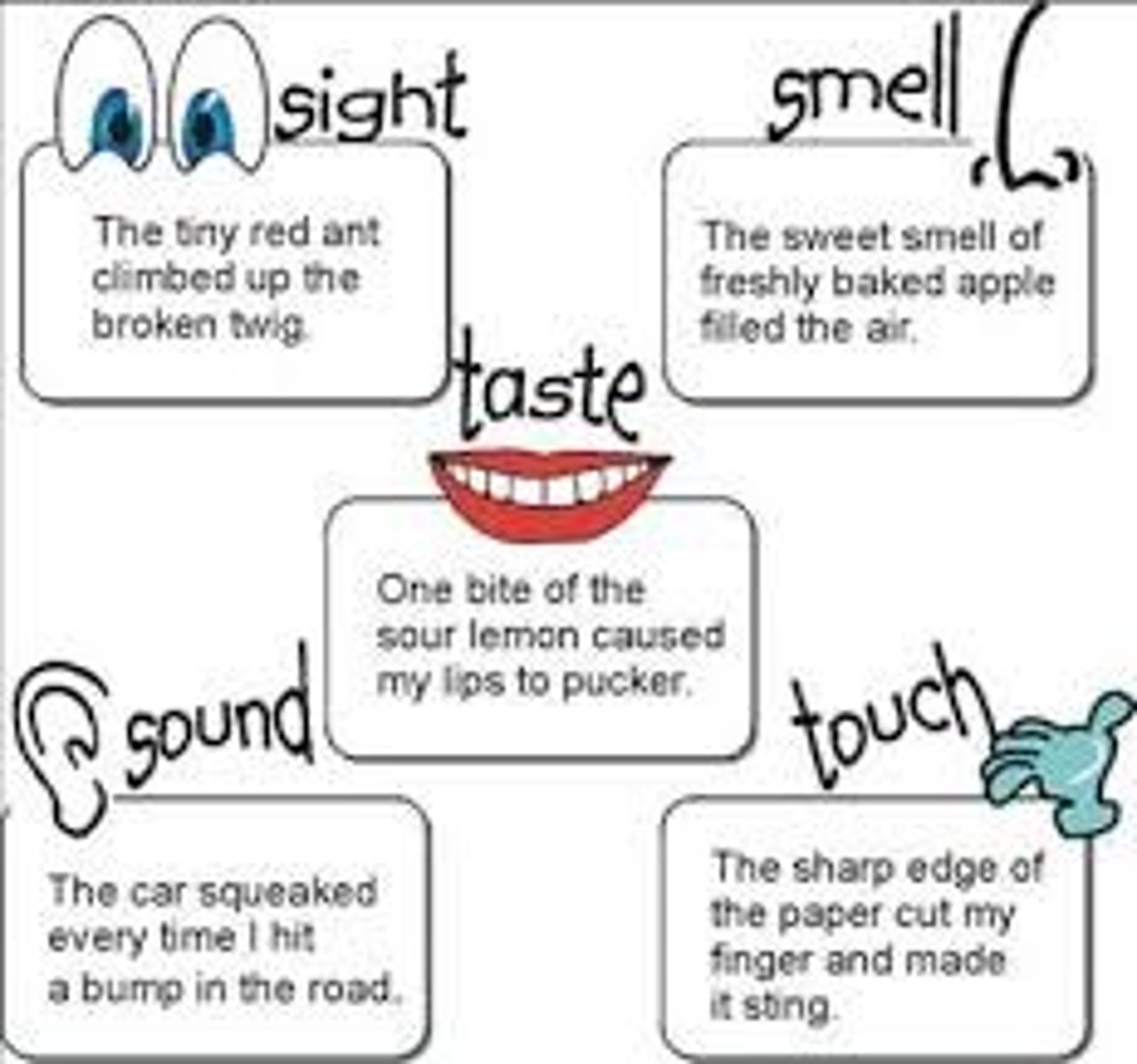
Imagery
The use of language to stimulate any one or all of the five senses.
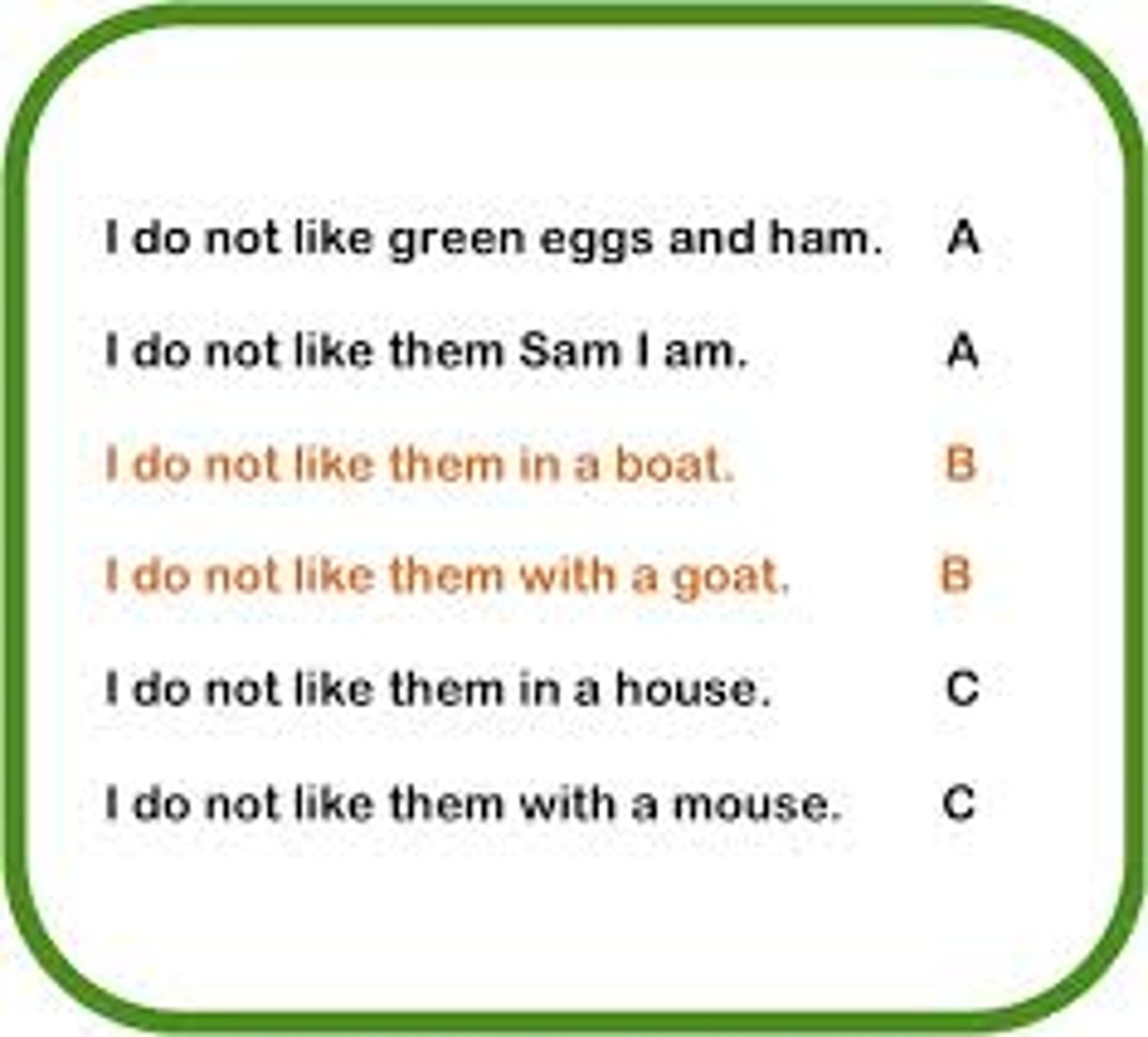
Rhyme Scheme
The pattern of rhyme a poem follows.
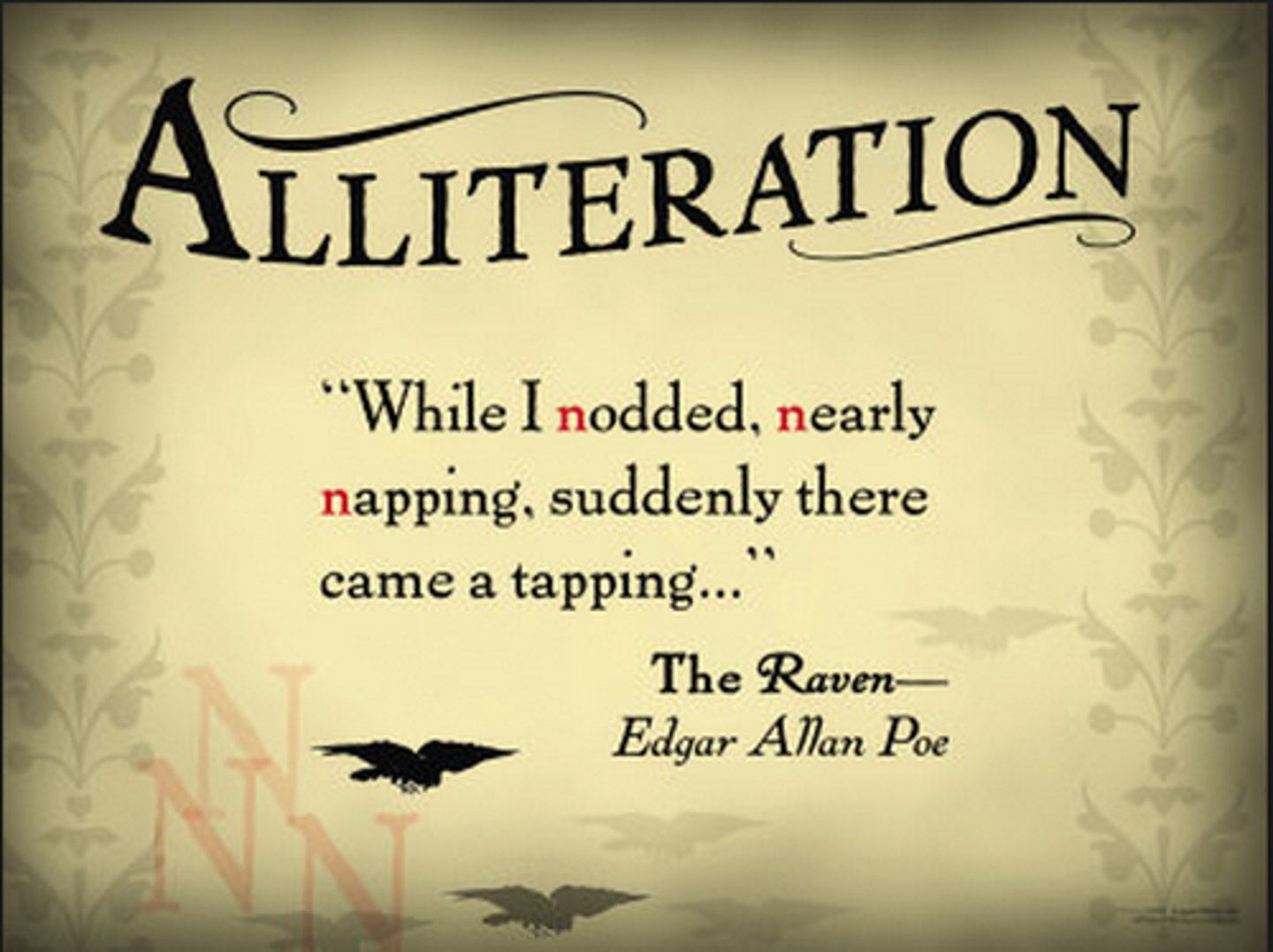
Alliteration
The repetition of consonant sounds in prose or verse.
Blank Verse
Blank verse refers to poetry that does not rhyme but follows a regular meter, most commonly iambic pentameter.
 Note
Note  Flashcards (123)