Macroeconomics Exam 2 Vocabulary
 Call Kai
 Learn
Learn Practice Test
 Spaced Repetition
 Match
Match Flashcards
 Knowt Play
1/58

Earn XP
Description and Tags
ECON 2305
Name | Mastery | Learn | Test | Matching | Spaced | Call with Kai |
|---|
No analytics yet
Send a link to your students to track their progress
59 Terms
labor force
employed + unemployed people looking for work
unemployed
no job but actively looking for work
not in labor force
not working and not looking (students, retirees, discouraged workers)
unemployment rate
% of labor force that is unemployed
labor force participation rate
% of adult population in the labor force
discouraged workers
people who stopped looking for a job (NOT counted in unemployment rate)
frictional unemployment
short-term unemployment during job search
structural unemployment
mismatch between skills and job requirements
cyclical unemployment
unemployment caused by economic downturns
natural rate of unemployment
frictional + structural unemployment
inflation
sustained increase in overall price level
deflation
sustained decrease in overall price level
purchasing power
what money can buy
nominal value
value in current dollars
real value
value adjusted for inflation
market basket
fixed bundle of goods/services used to measure prices
base year
reference year for price comparison
price index
measure of price level relative to base year
consumer price index (CPI)
measures price changes for consumers
producer price index (PPI)
measures price changes for producers
GDP Deflator
measures price changes for all goods/services in GDP
anticipated inflation
expected inflation
unanticipated inflation
unexpected inflation
nominal interest rate
market interest rate
real interest rate
nominal interest rate adjusted for inflation
= nominal interest rate - inflation rate
product market
market for goods and services
factor market
market for inputs (labor, capital, land)
where businesses buy the resources they need to produce goods and services
determines wages, interest, and rent based on derived demand
derived demand: demand for inputs depends on the demand of the final output
Gross Domestic Product (GDP)
total value of final goods/services produced in a country
final goods
goods sold to end users
intermediate goods
goods used to produce other goods (NOT counted in GDP)
expenditure approach
GDP = C + I + G + X
C: consumer expenditure = household spending
I: gross domestic product investment = business spending on capital
G: government expenditures = government purchases
X: net exports = total exports - total imports
income approach
GDP calculated by summing all income paid to the four factors of production
GDI = wages + rent + interest + profit
→ GDP = GDI + indirect business taxes + depreciation
wages: salaries and labor income
rent: farms, houses, and stores; implicit rental value of owner-occupied houses, royalties received
interest: interest received (savings accounts) - interest paid (mortgages)
profits: gross corporate profits, proprietors’ income
depreciation
loss of value of capital over time
nominal GDP
GDP using current prices
real GDP
GDP adjusted for inflation
economic growth
increase in real GDP over time
real GDP per capita
GDP per person (standard of living measure)
labor productivity
output per worker
human capital
skills and education of workers
physical capital
machines, tools, infrastructure
technology
new methods of production
saving
income not spent
investment
spending on capital goods
rule of 70
years to double = 70 / growth rate
property rights
legal ownership of resources
economic development
improvements in living standards + quality of life
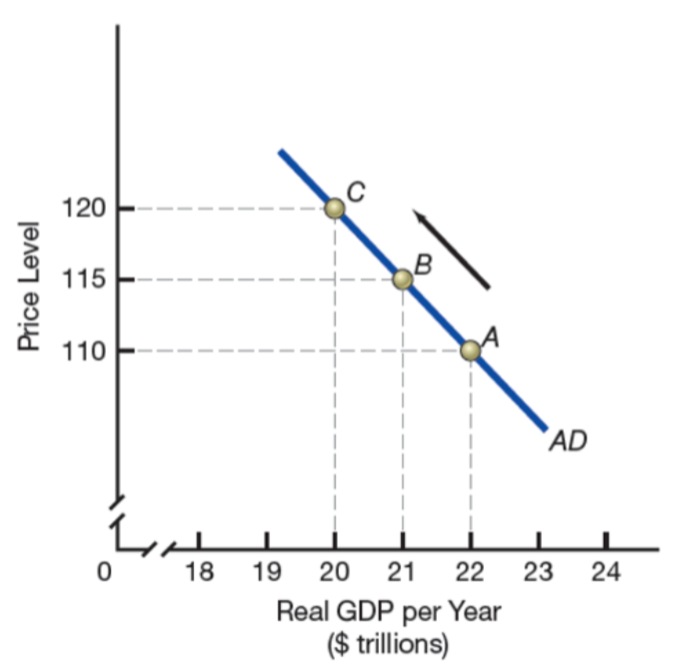
aggregate demand (AD)
total quantity of goods/services demanded across an entire economy at a given price level
total of all planned expenditures in the entire economy
aggregate supply (AS)
total production in the economy
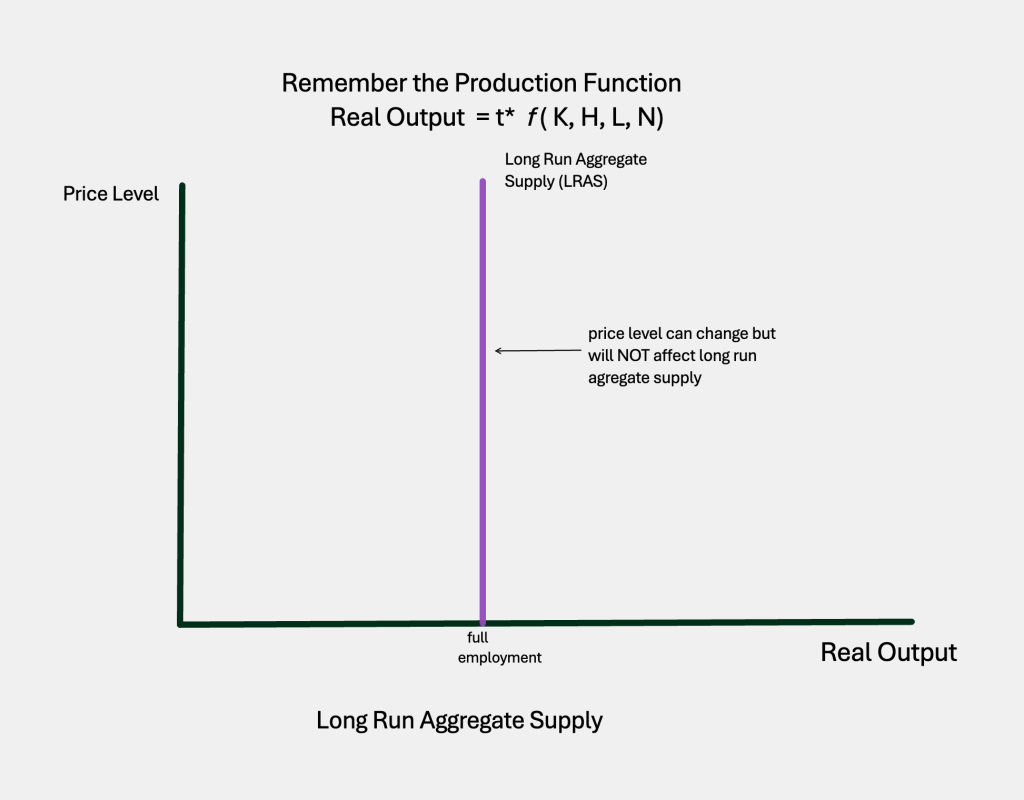
long-run aggregate supply (LRAS)
the maximum sustainable output an economy can produce when all resources are fully employed and prices have adjusted
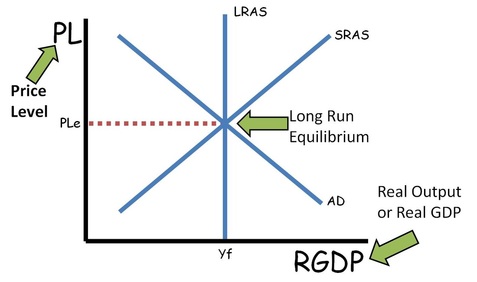
equilibrium (AD = LRAS)
where economy is stable (GDP vs. price level)
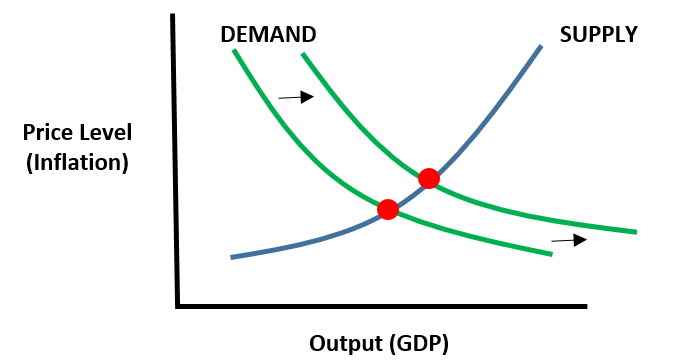
demand-pull inflation
inflation caused by increase in AD
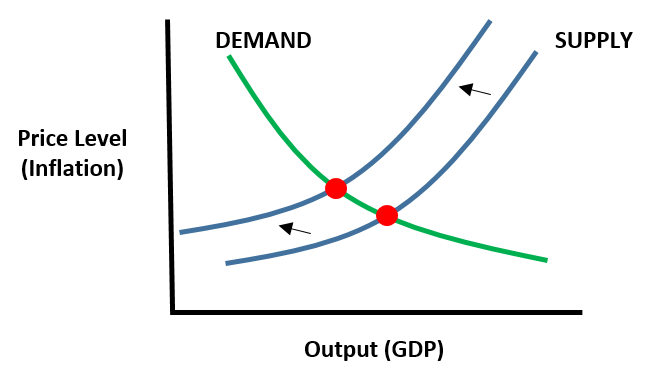
cost-push (supply-side) inflation
inflation caused by decrease in supply (LRAS left)
secular deflation
falling prices due to economic growth (LRAS right)
driven by:
rapid technological advancement
aging demographics
overcapacity
results in:
low growth
low interest rates
stagnant demand

wealth effect
lower prices → people feel richer → spend more
interest rate effect
lower prices → lower interest → more spending
higher prices → higher interest → reduced spending
causes aggregate demand curve to slope downward
open economy effect
lower prices → exports increase
higher prices → exports decrease
policy changes (i.e., government spending) have less of an effect on output because some demand “leaks” into imports, but have a greater effect on inflation in comparison to a closed economy
shifts in AD
caused by changes in spending (C, I, G, X)
shift in LRAS
caused by changes in resources, technology, productivity
non-income expense items
indirect business taxes and depreciation
indirect business taxes: all business taxes except the tax on corporate profits; includes sales and business property taxes

