Greenhouse Gases & Winds - Earth Science Unit 7
 Call Kai
 Learn
Learn Practice Test
 Spaced Repetition
 Match
Match Flashcards
1/30

There's no tags or description
Looks like no tags are added yet.
Name | Mastery | Learn | Test | Matching | Spaced | Call with Kai | Chat |
|---|
No analytics yet
Send a link to your students to track their progress
31 Terms
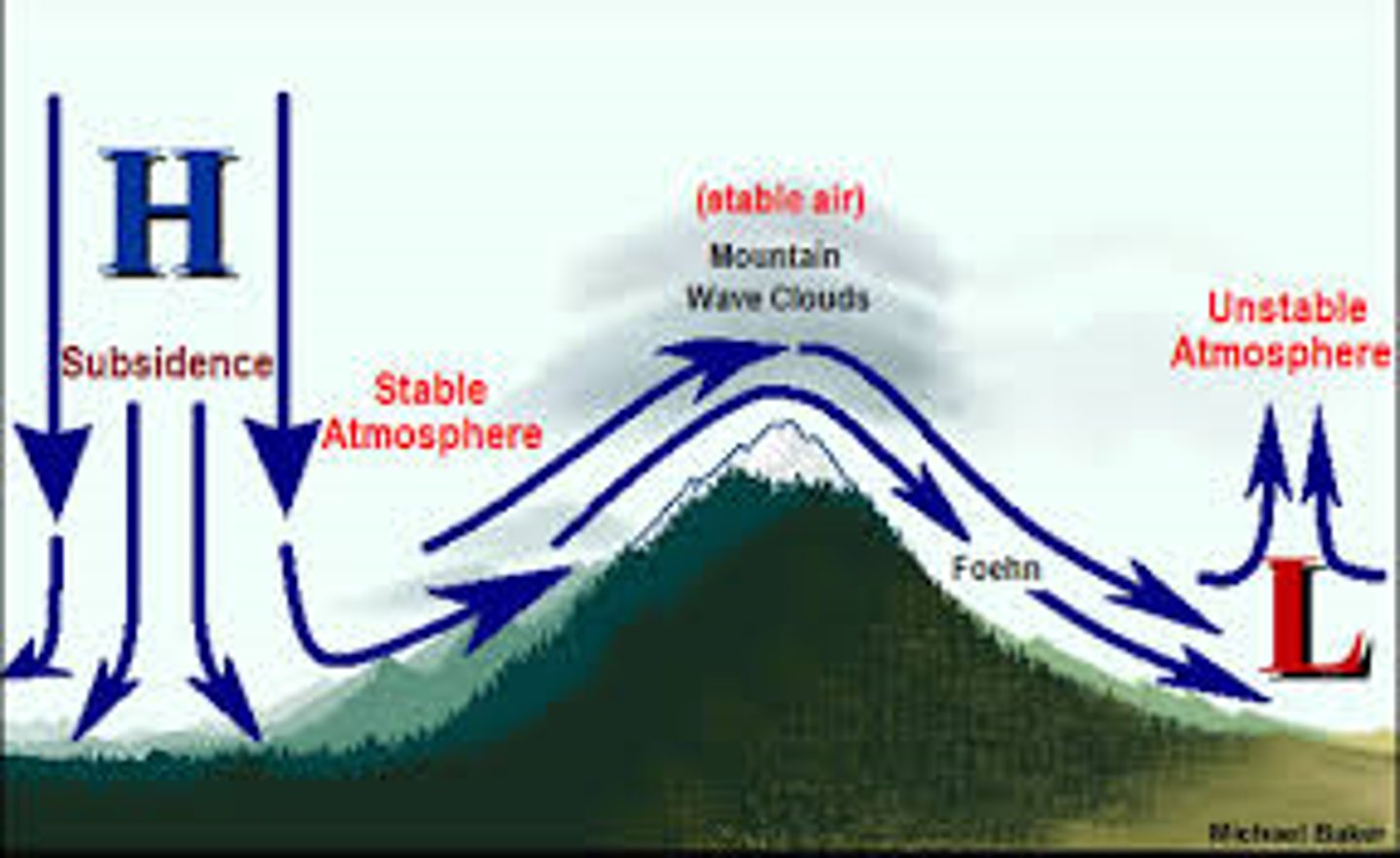
High Pressure
A mass of sinking cool air that usually brings fair weather.
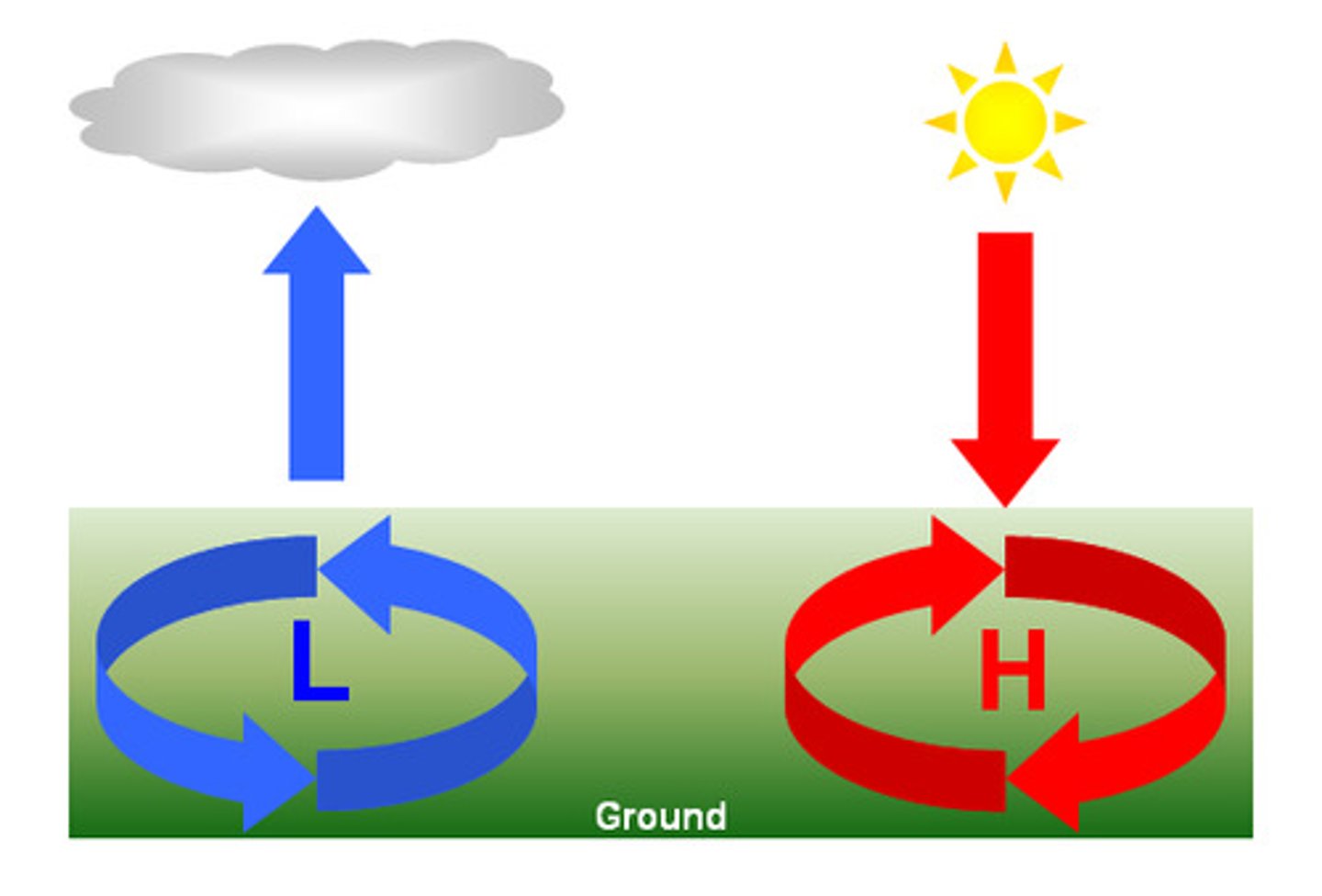
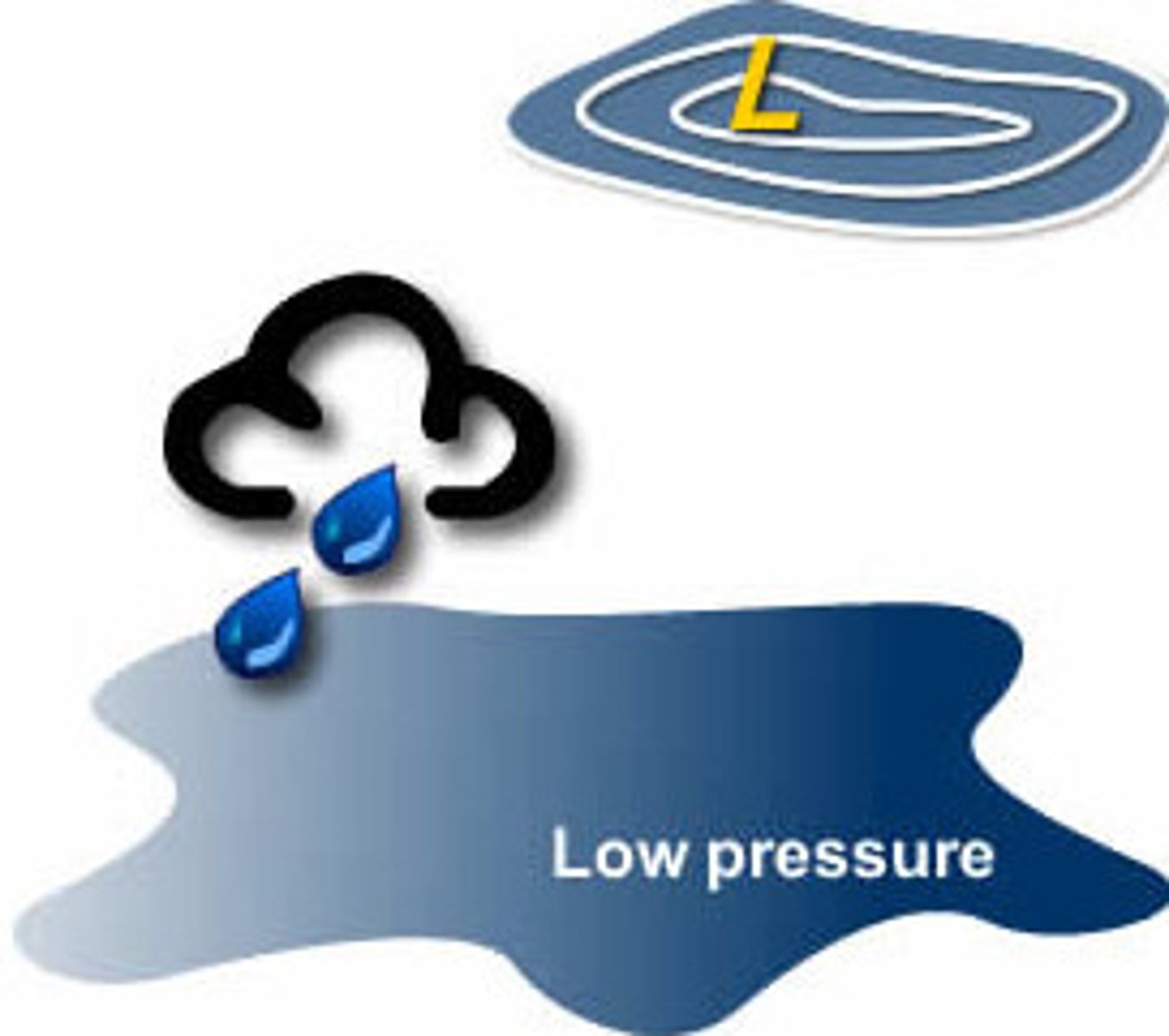
Low Pressure
A mass of rising warm air that usually bring wet, stormy weather.
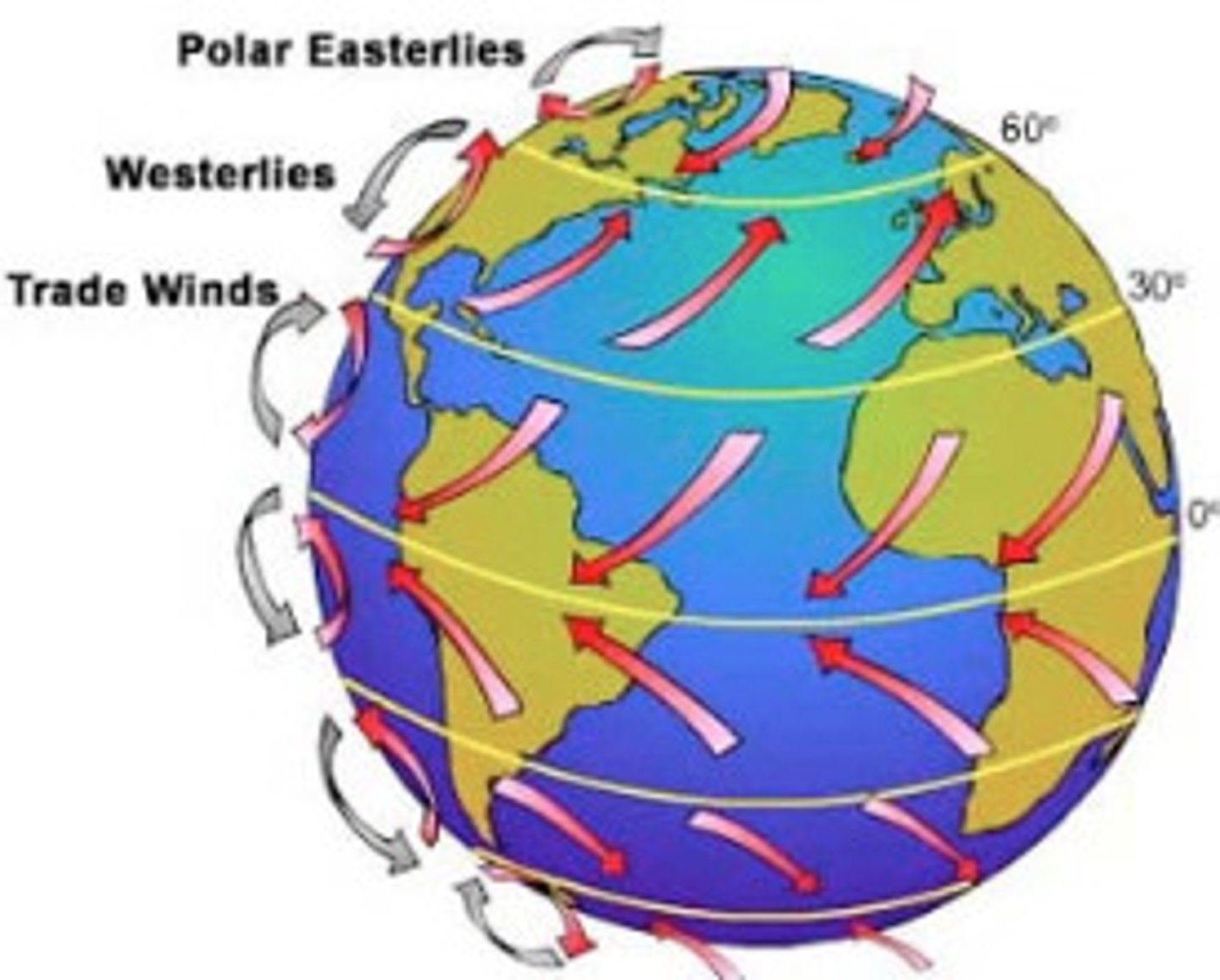
global winds
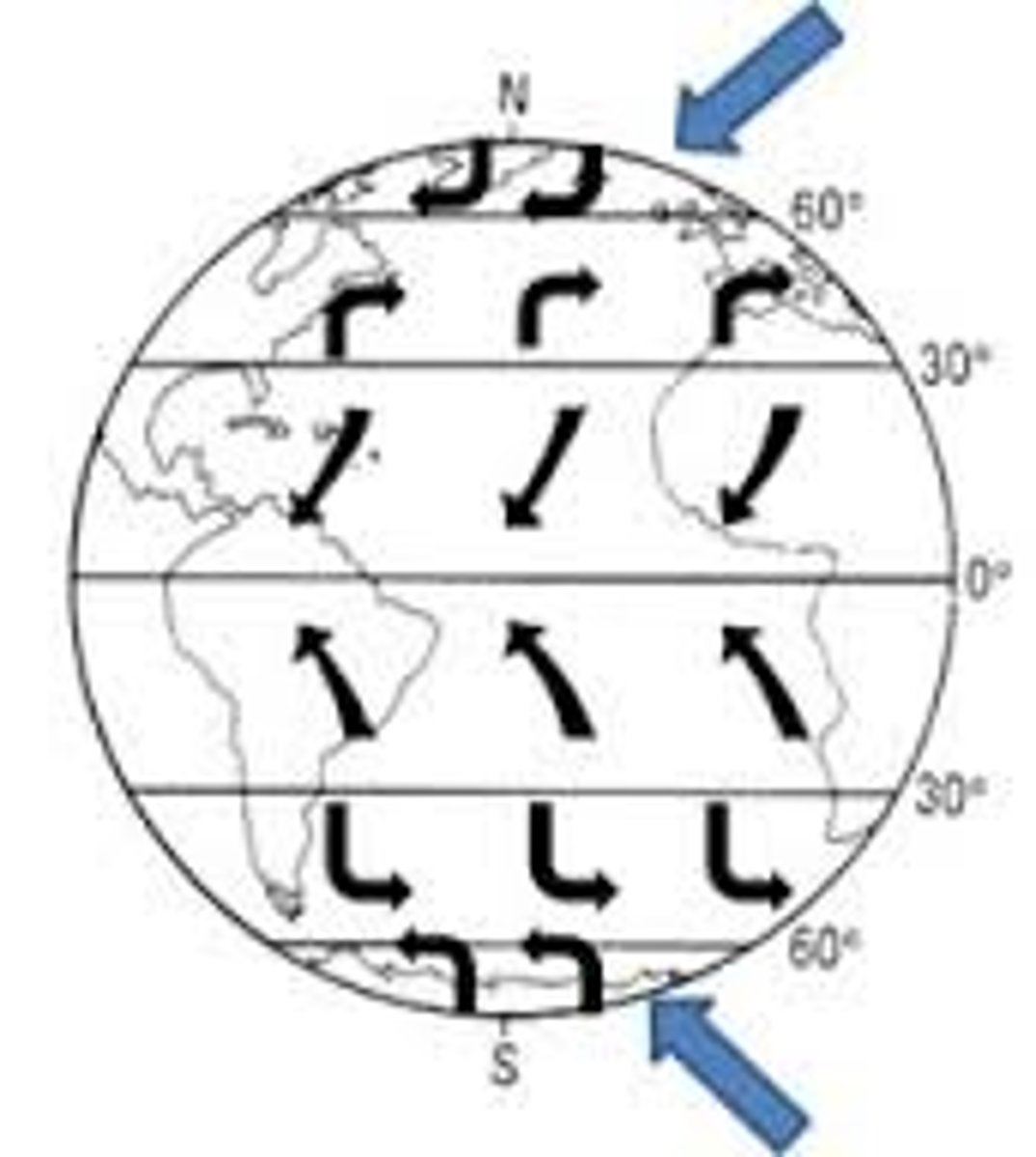
Patterns of air circulation produced by the combination of pressure belts and the Coriolis effect.
wind
The movement of air caused by differences in air pressure and uneven heating and cooling of Earth's surface.
convection cells
The circular patterns that air travels in between pressure belts.
Coriolis effect
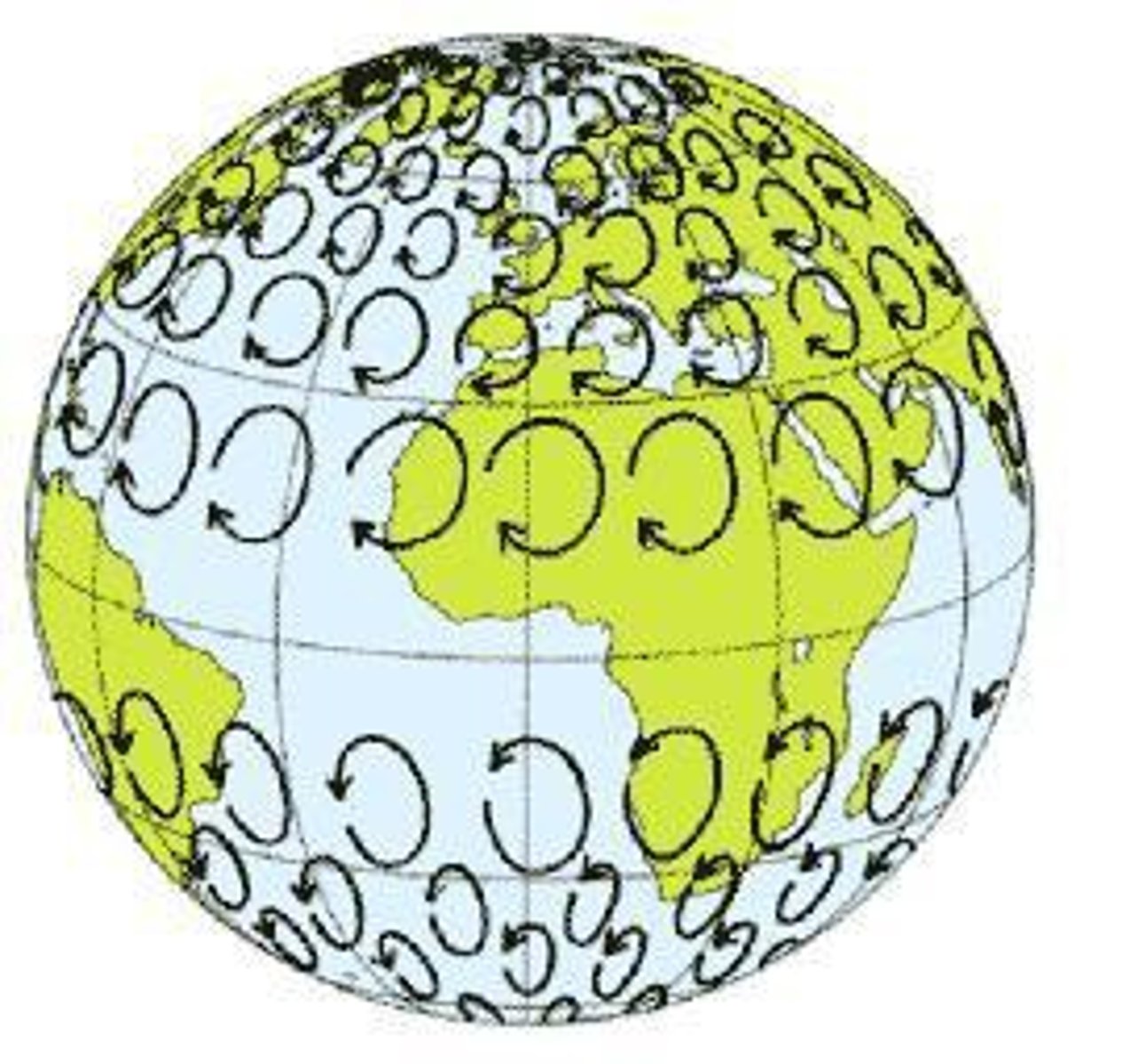
The apparent curving of the path of winds and ocean currents due to Earth's rotation.
Polar Easterlies
This global winds extends from the poles to 60 degrees latitude; carrying cold, arctic air over the US-producing snow and freezing weather.
Westerlies
Wind belts found between 30 degrees and 60 degrees latitude; blow from the west toward the poles; carrying moist air over the US-producing rain and snow.
Trade Winds
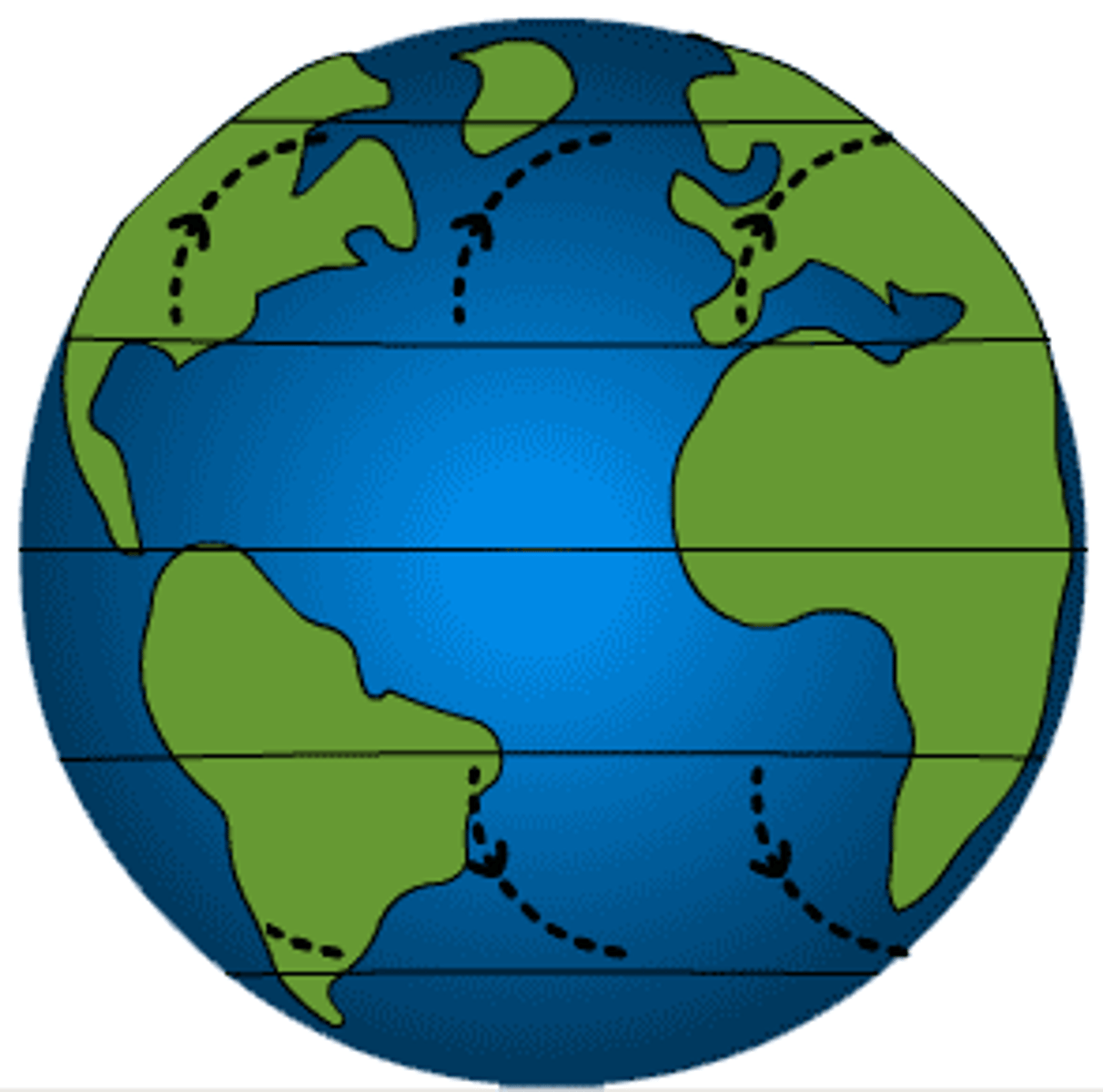
Blowing winds from 30 degrees latitude to the equator; curving to the west in the northern hemisphere; their name comes from the fact that they were used by early sailors to sail from Europe to the Americas.
Doldrums
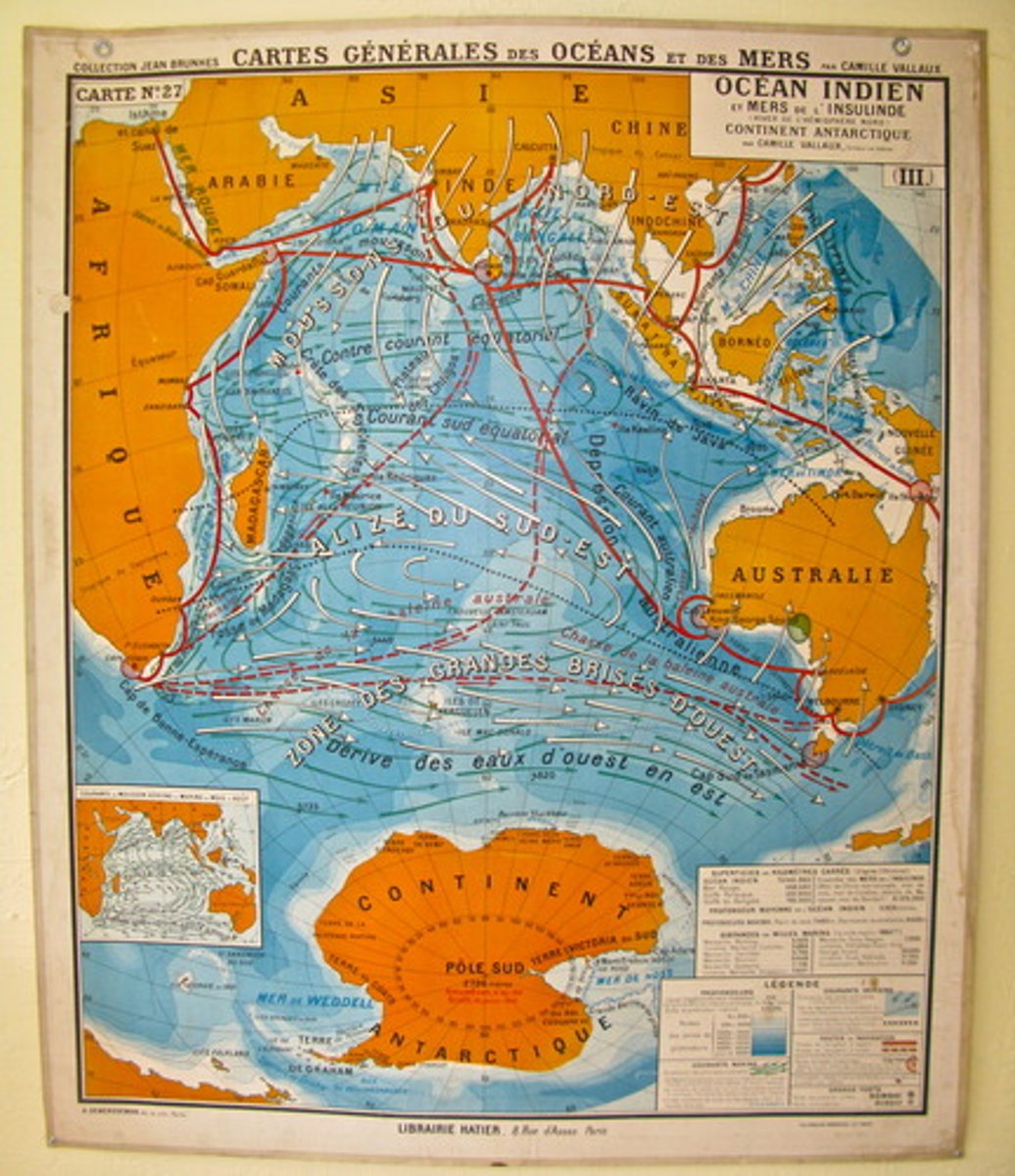
An area around the equator where the trade winds from each hemisphere meet; the warm rising air causes an area of low pressure, so there is very little wind.
Horse Latitudes
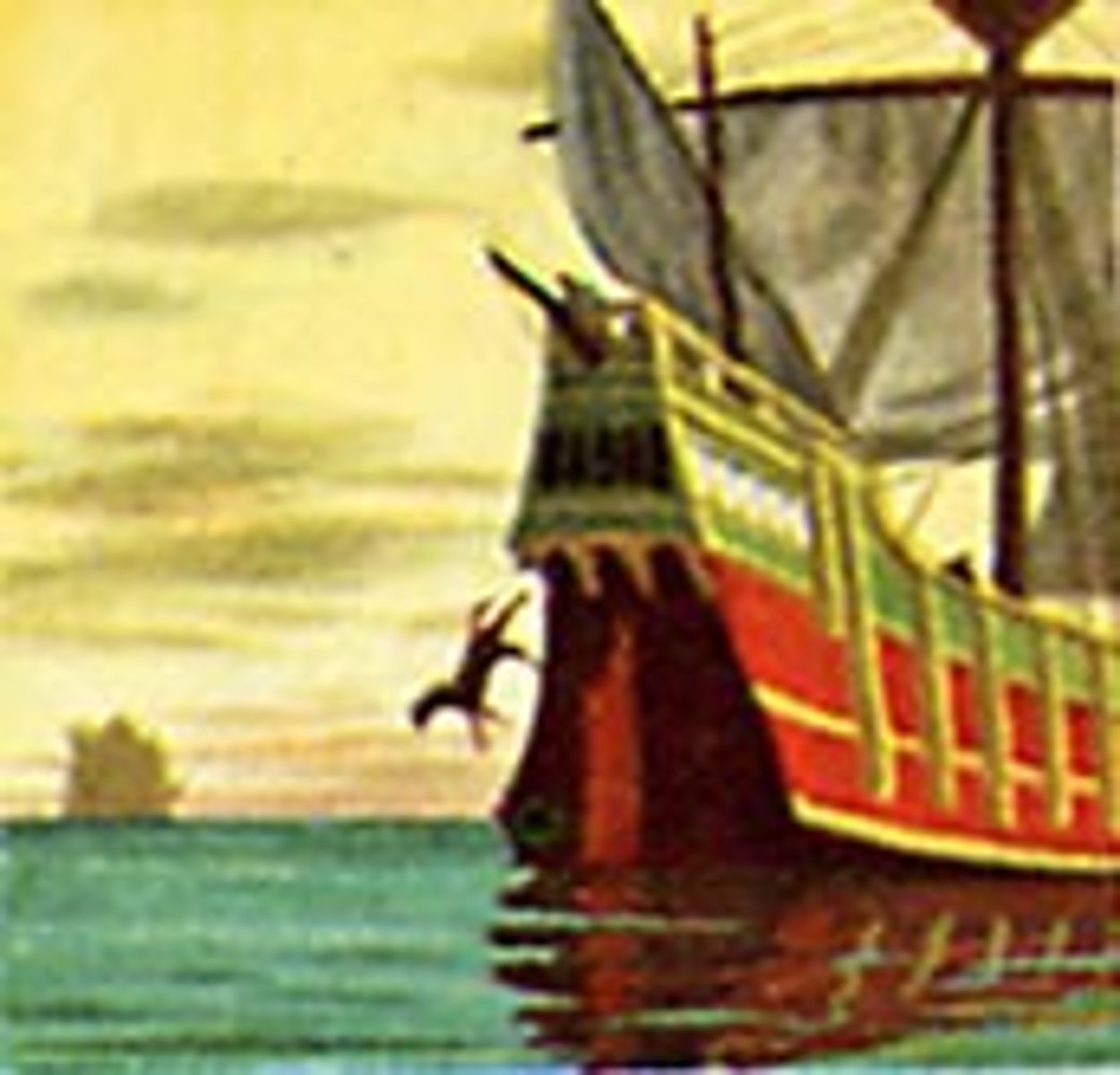
At 30 degrees latitude, dry, sinking air creates high pressure with weak winds; their name comes from the way sailors would attempt to reduce weight on their ship and conserve water.
Local Winds
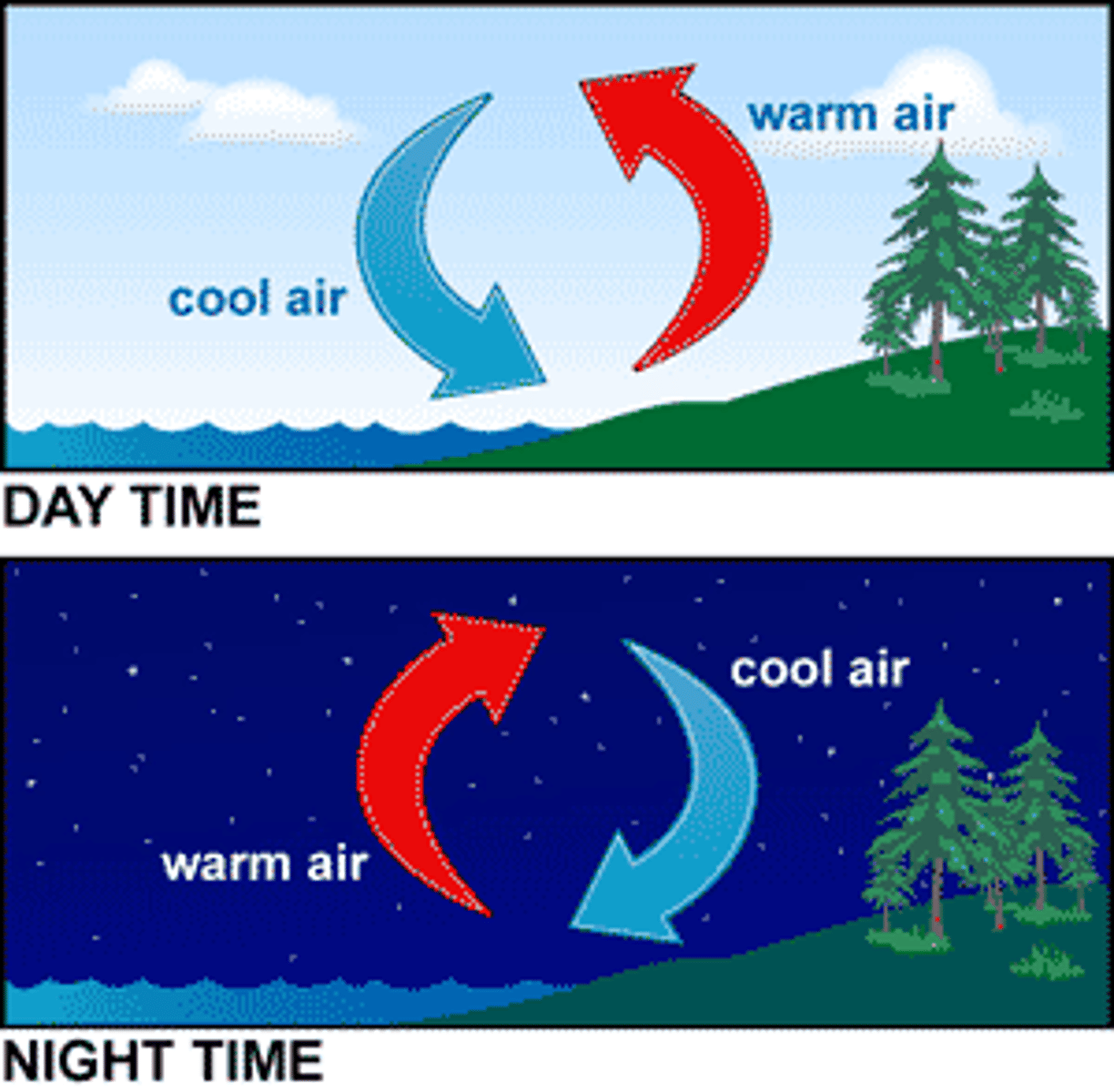
These winds move short distances and can blow from any direction; can be produced by the temperature changes due to local geographic features.
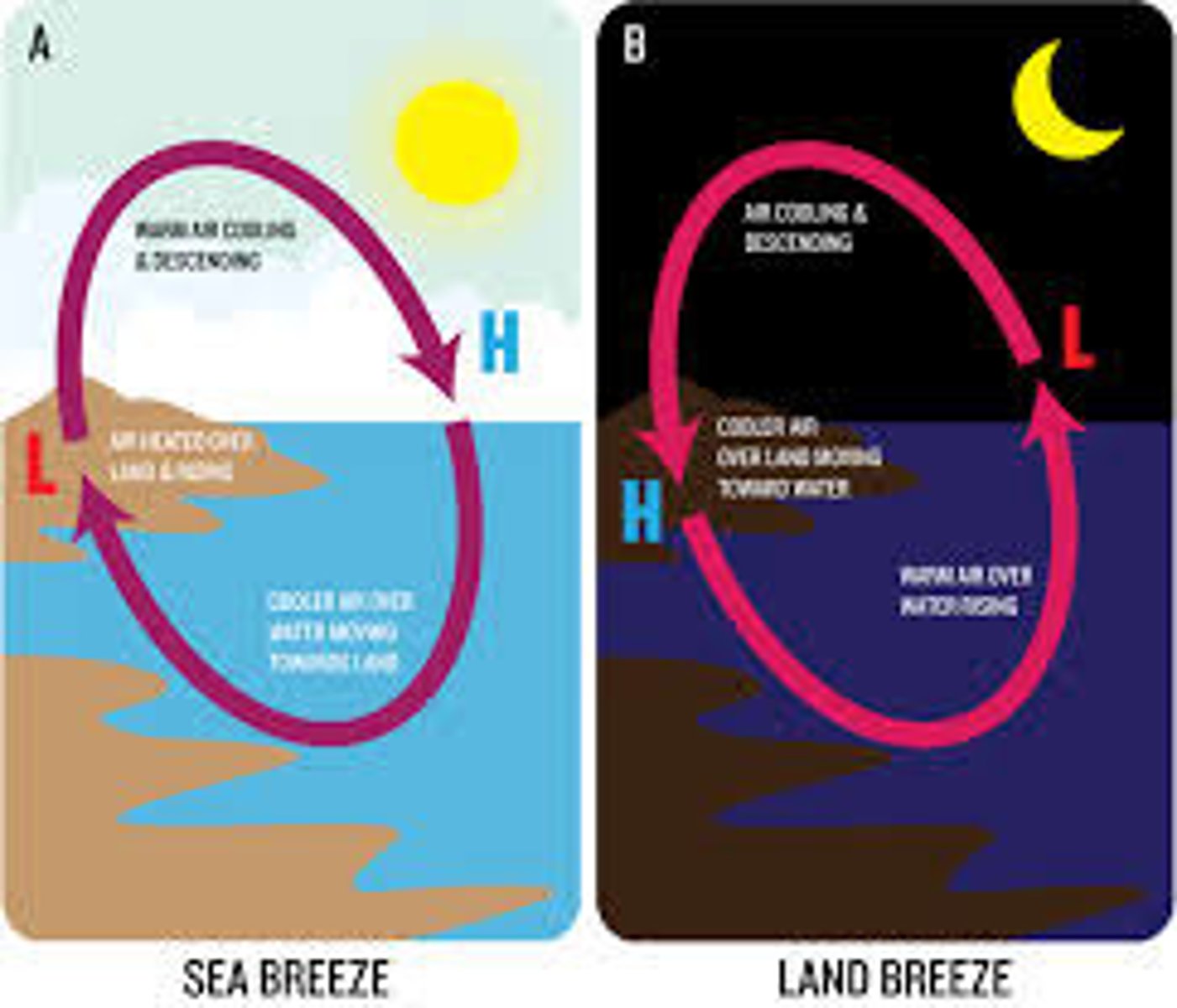
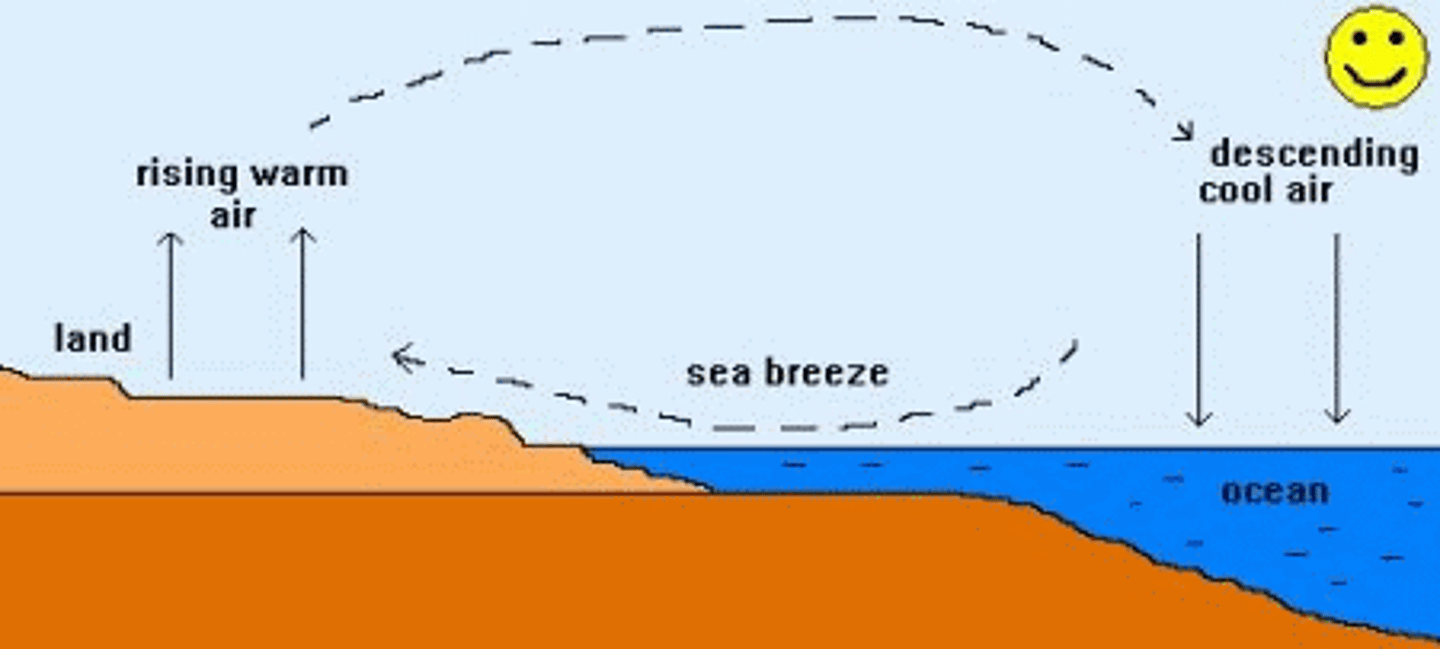
Sea Breeze
This wind happens during the day when cooler air over the ocean flows toward warmer air over land.
Land Breeze
This wind happens at night when cooler air over land flows toward warmer air over the ocean.
Greenhouse Gases
Gases such as carbon dioxide, methane, nitrous oxide, water vapor, and ozone in the atmosphere.
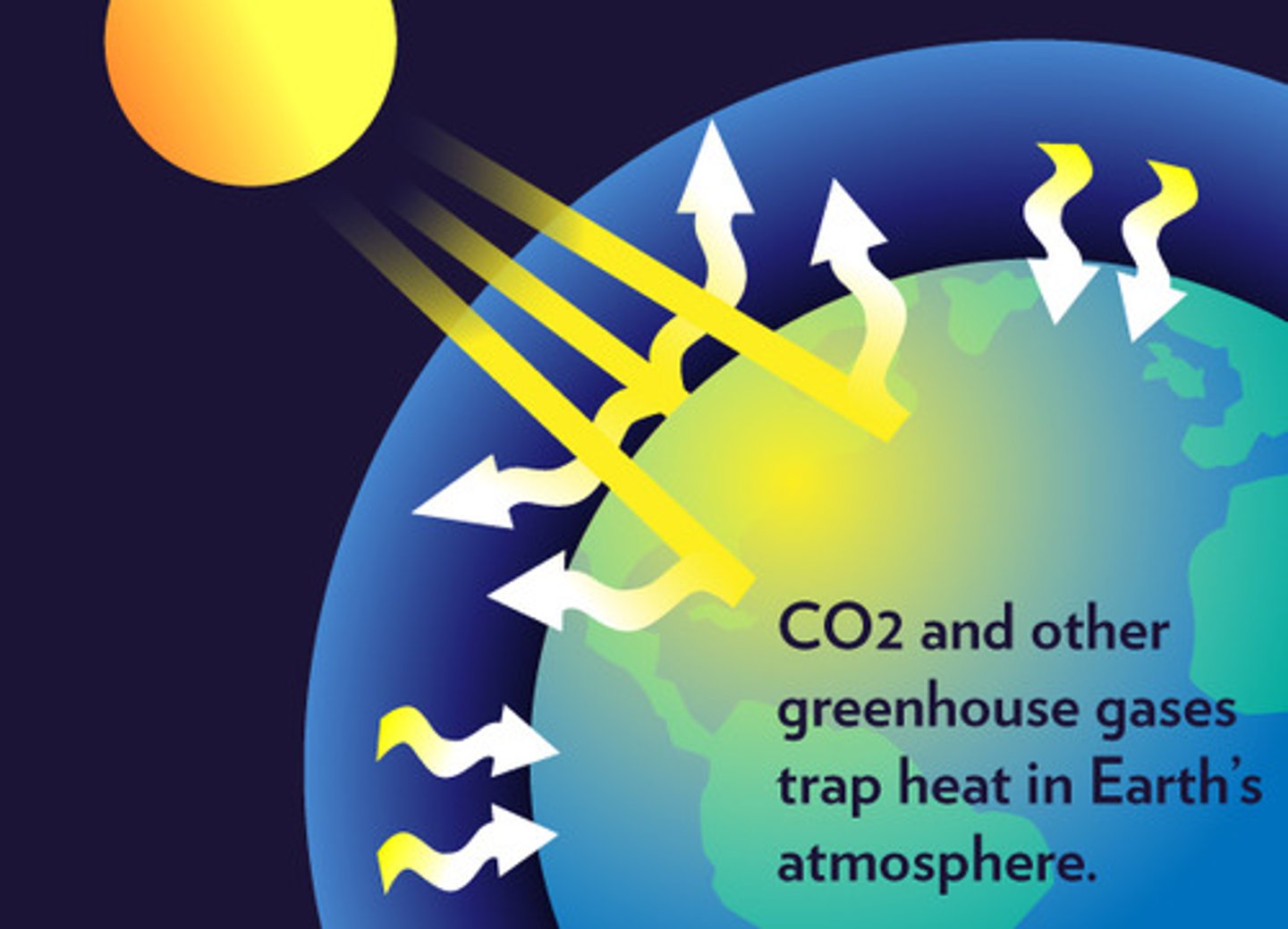
Greenhouse Effect
Natural situation in which heat is retained in Earth's atmosphere by carbon dioxide, methane, water vapor, and other gases.
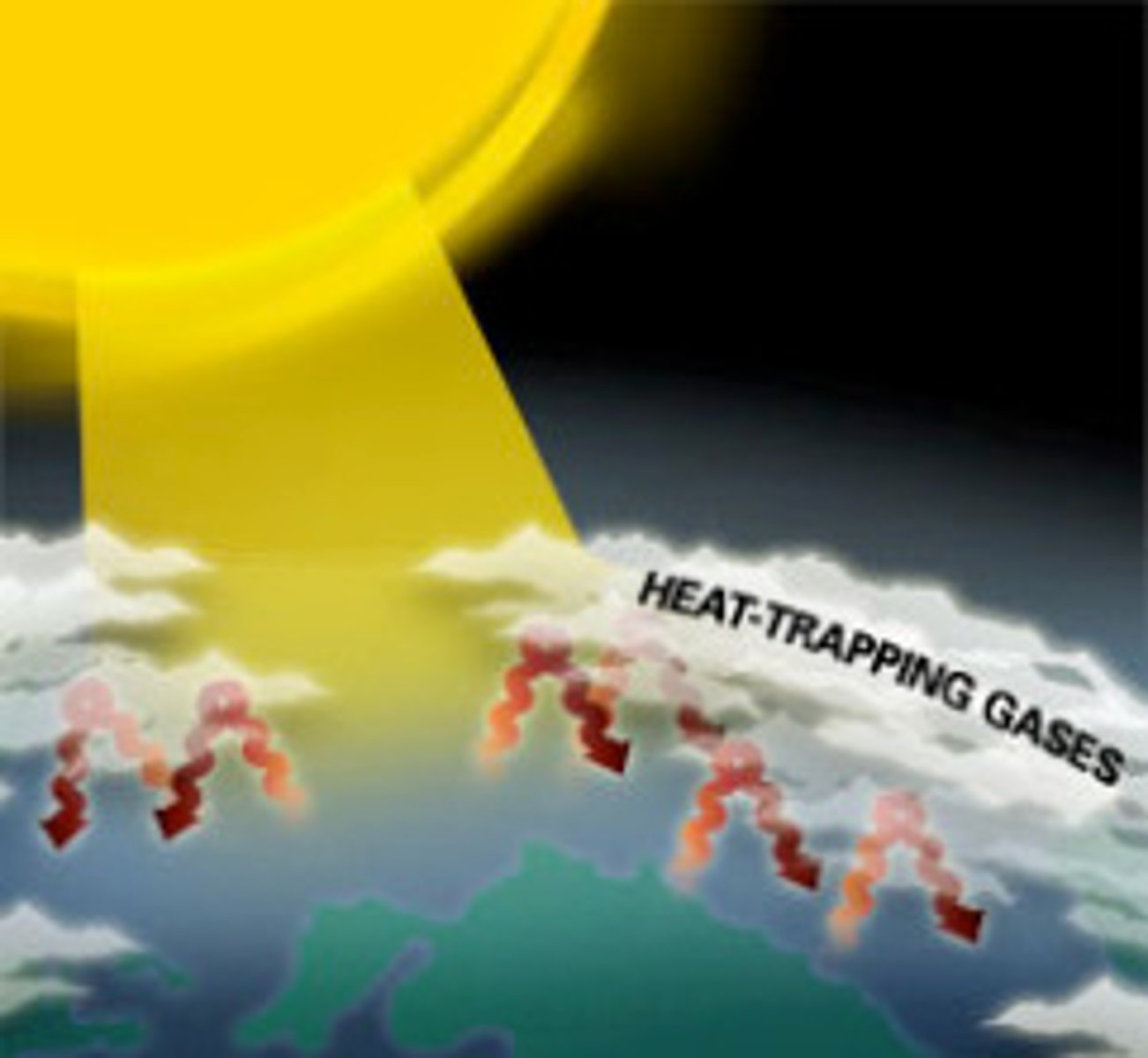
Global Warming
A gradual increase in the overall temperature of the earth's atmosphere caused by increased levels of carbon dioxide, chlorofluorocarbons, and other pollutants.
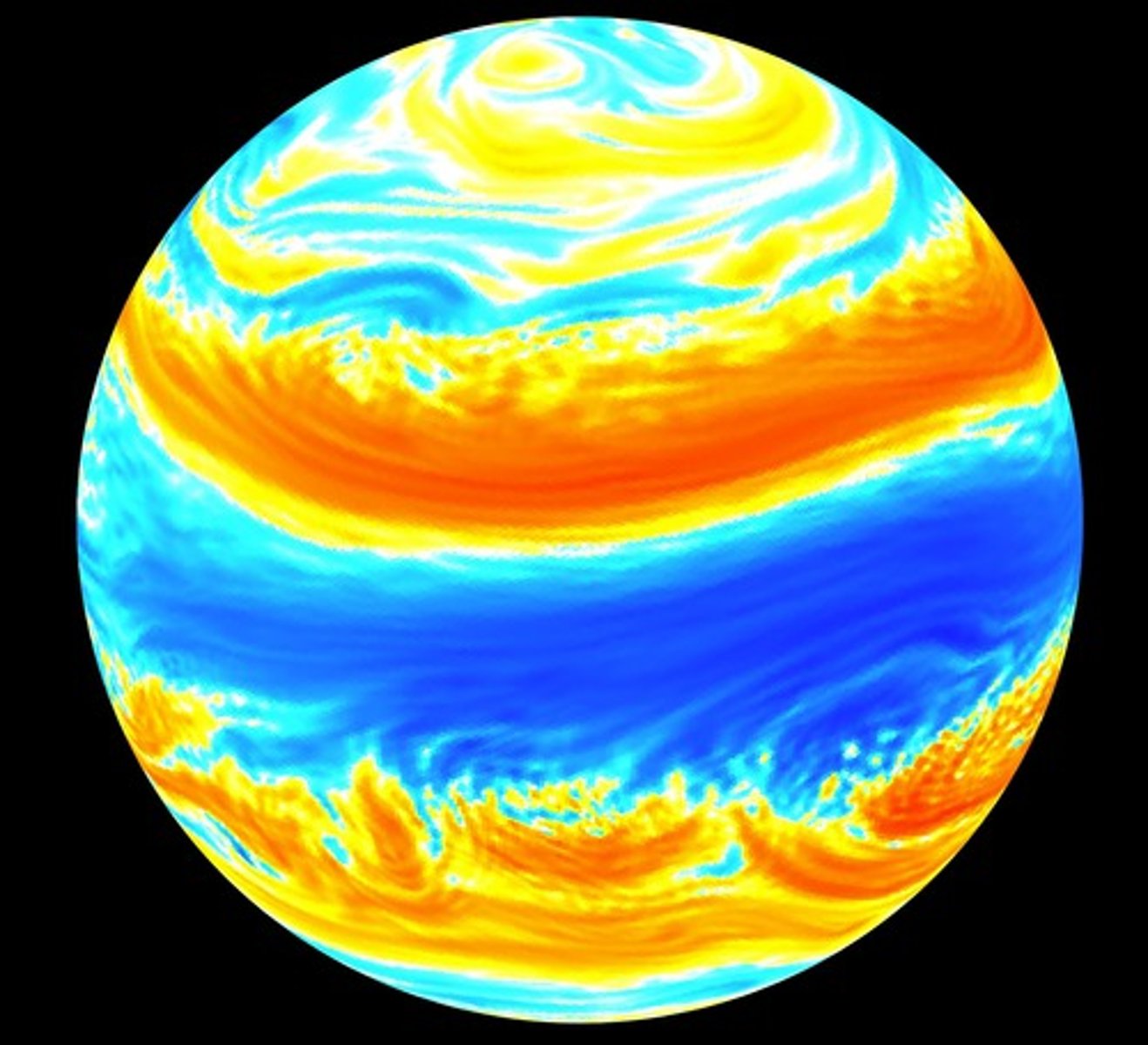
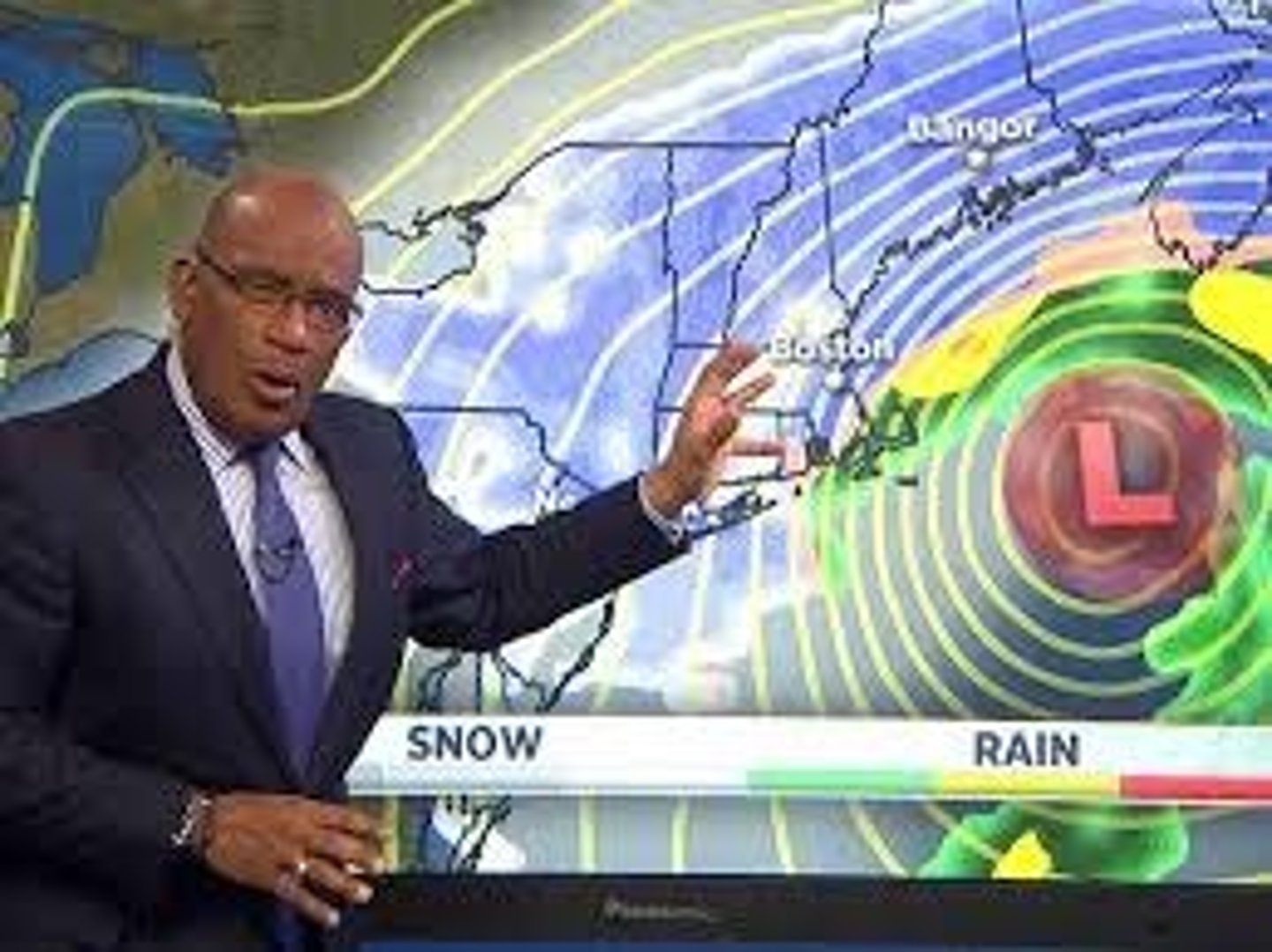
Meteorology
The science dealing with the atmosphere and weather.
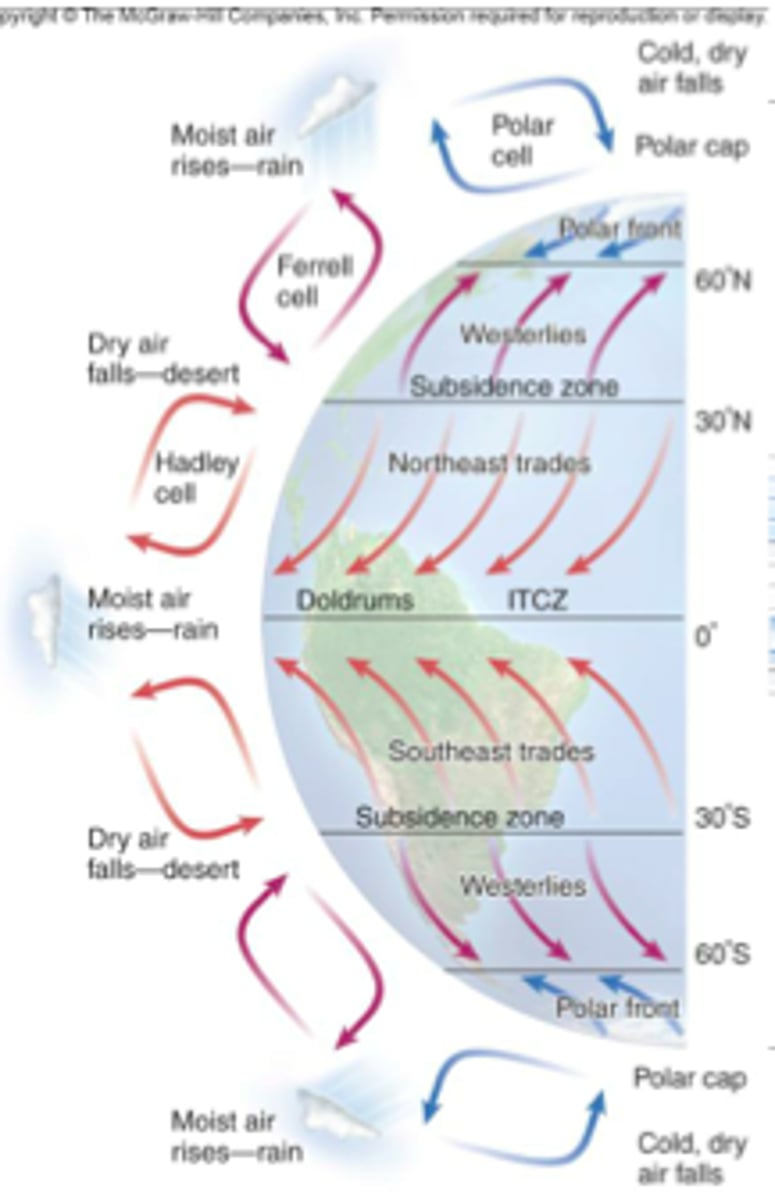
Pressure Belts
Areas of high pressure and low pressure found about every 30 degrees latitude.
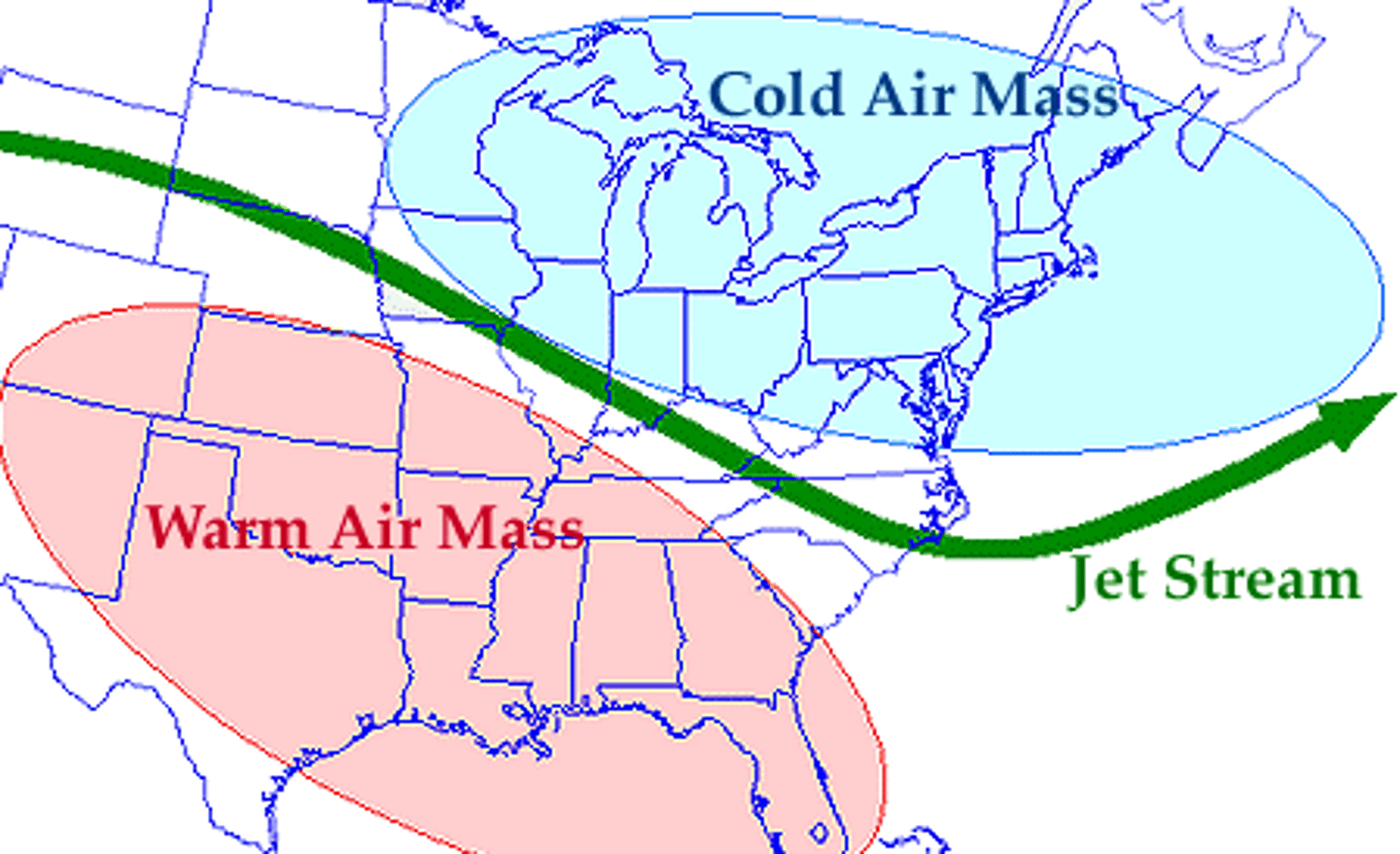
Jet Streams
Narrow belts of high speed winds that blow in the upper troposphere and lower stratosphere; they do not follow regular paths; pilots use them to speed up their flight; meteorologists track them to predict where storms will move.
Air Pressure
The force exerted on a surface by the air above it as gravity pulls it to Earth.
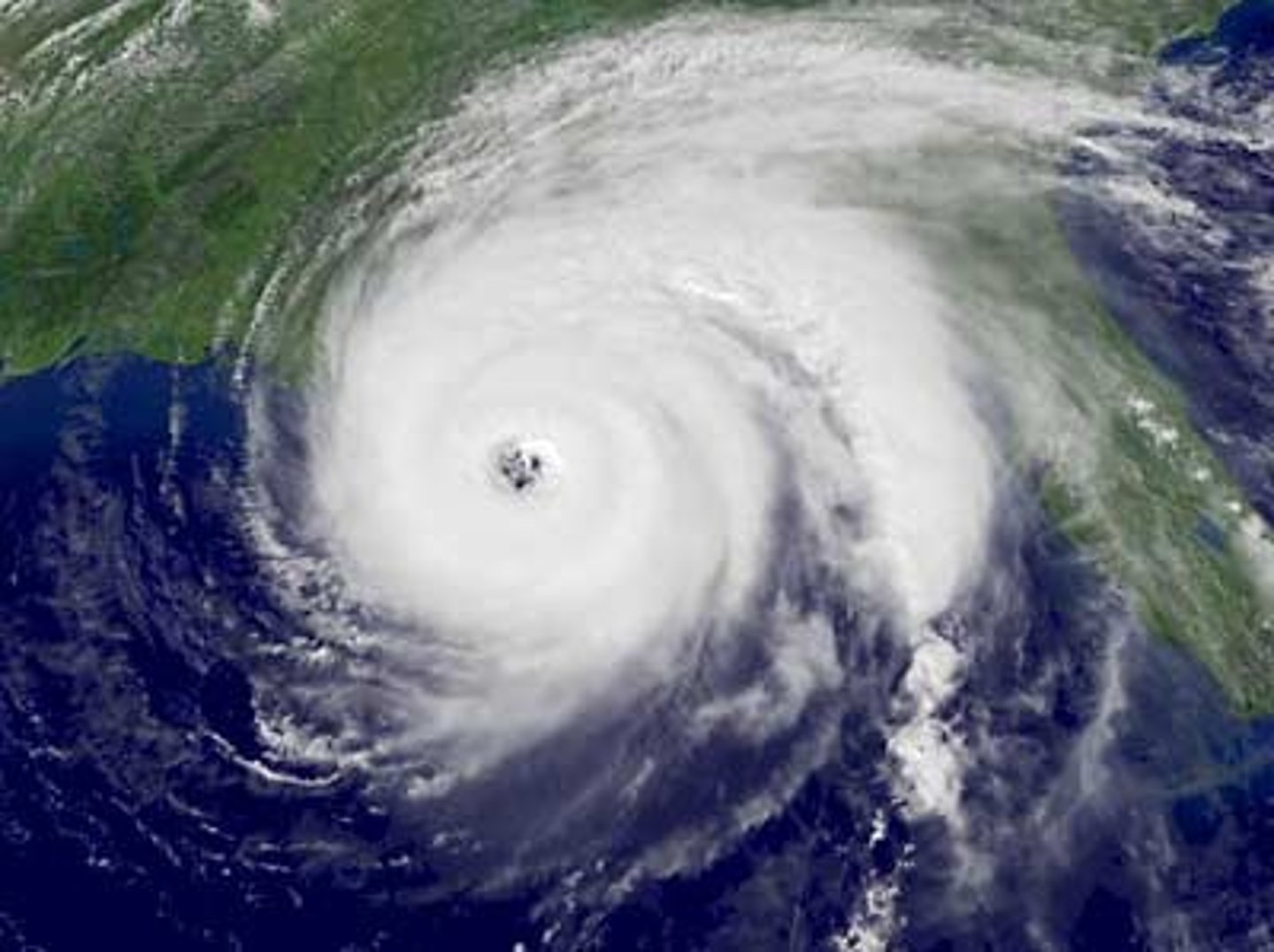
Hurricane
A severe storm that develops over tropical oceans and whose strong winds of more than 120 km/h spiral in toward the intensely low-pressure storm center.
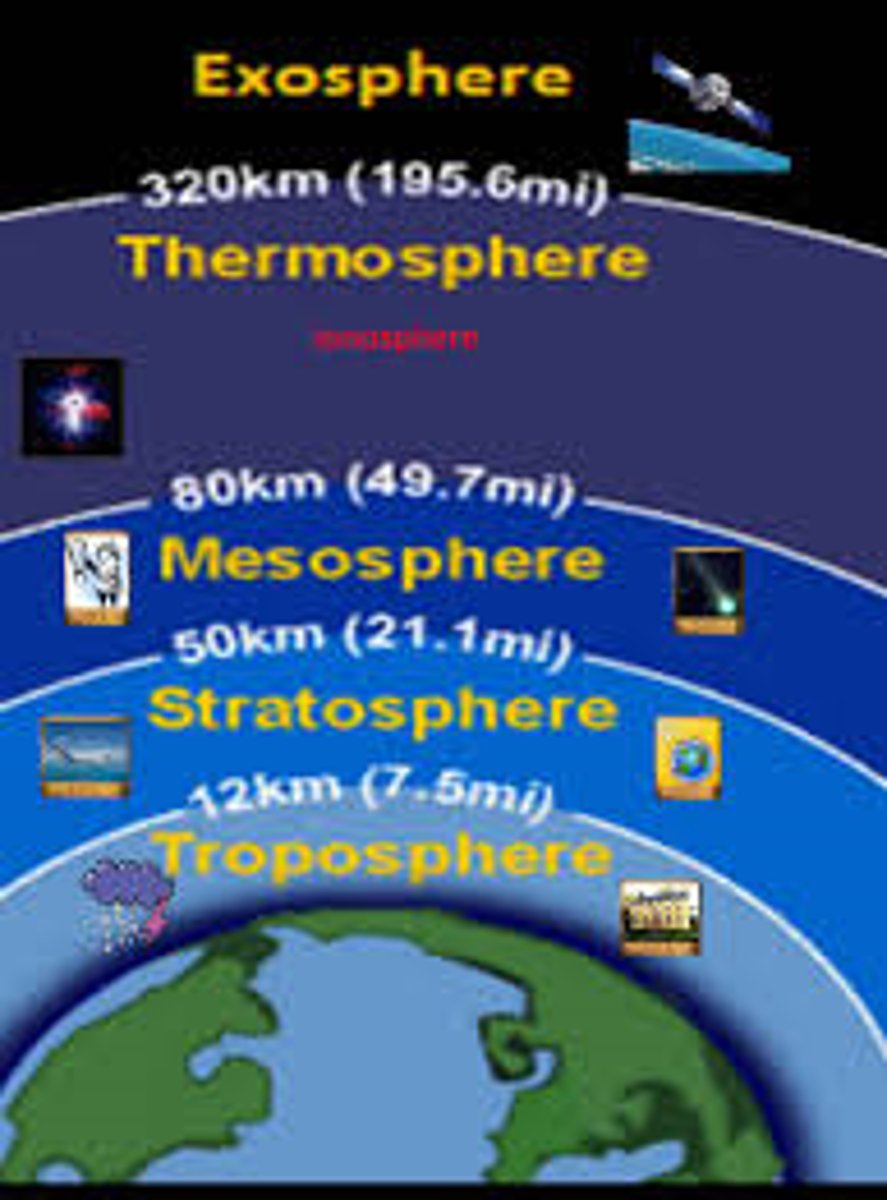
Troposphere
0-17 km above Earth's surface, site of weather, contains most atmospheric water vapor. (temperature decreases with increasing altitude, pressure decreases)
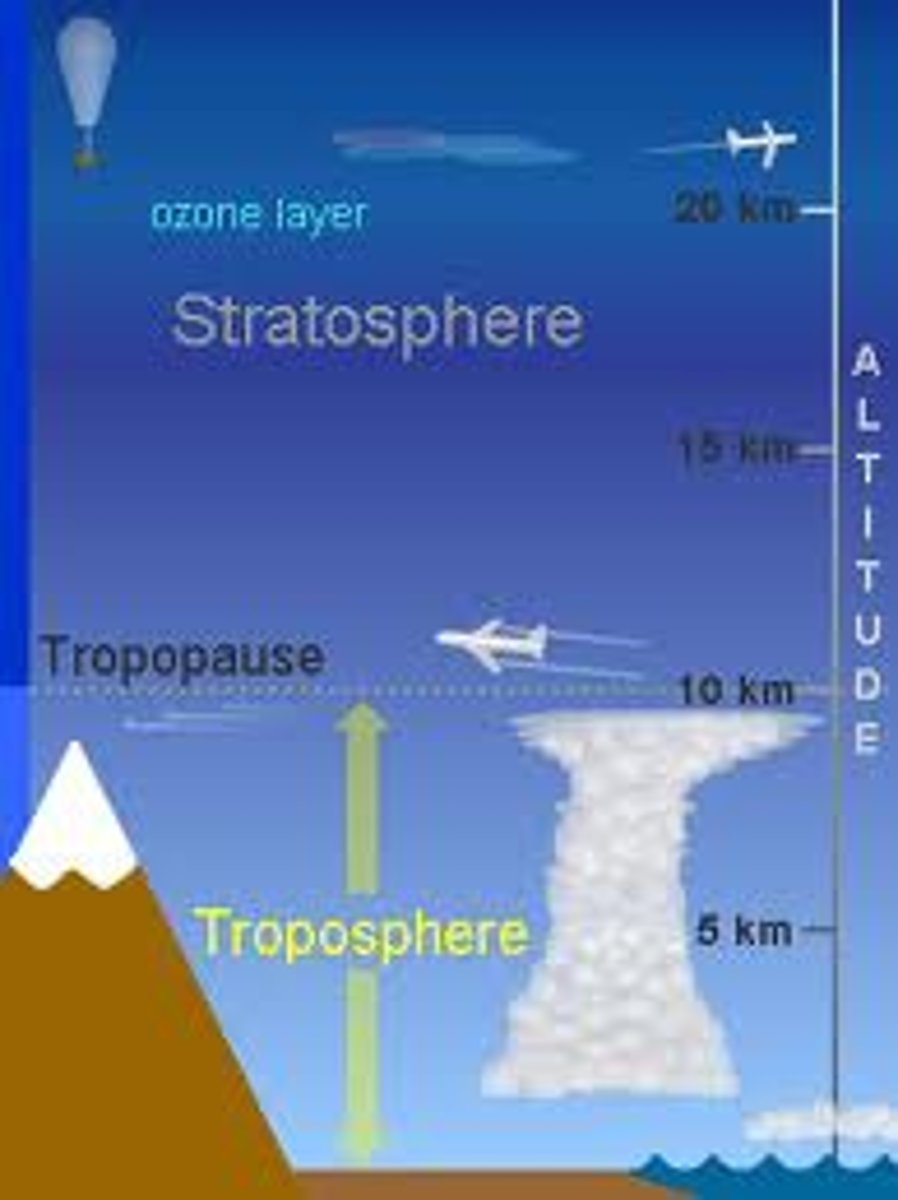
Stratosphere
2nd layer of atmosphere; extends from 10 to 30 miles up; location of ozone layer; absorbs 95% of Ultraviolet radiation; temperature increases with altitude increase.
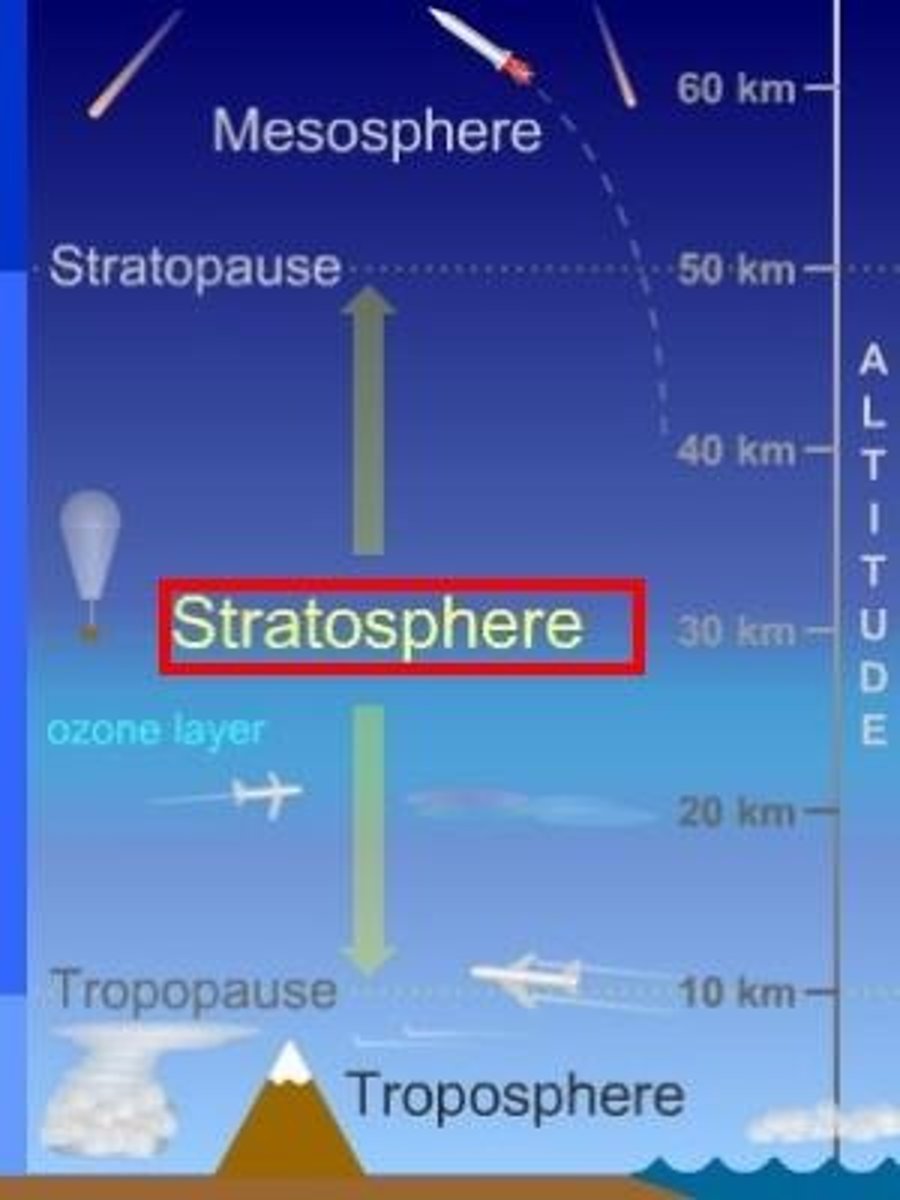
Mesosphere
The layer of Earth's atmosphere immediately above the stratosphere. Meteors burn up in this layer of the atmosphere.
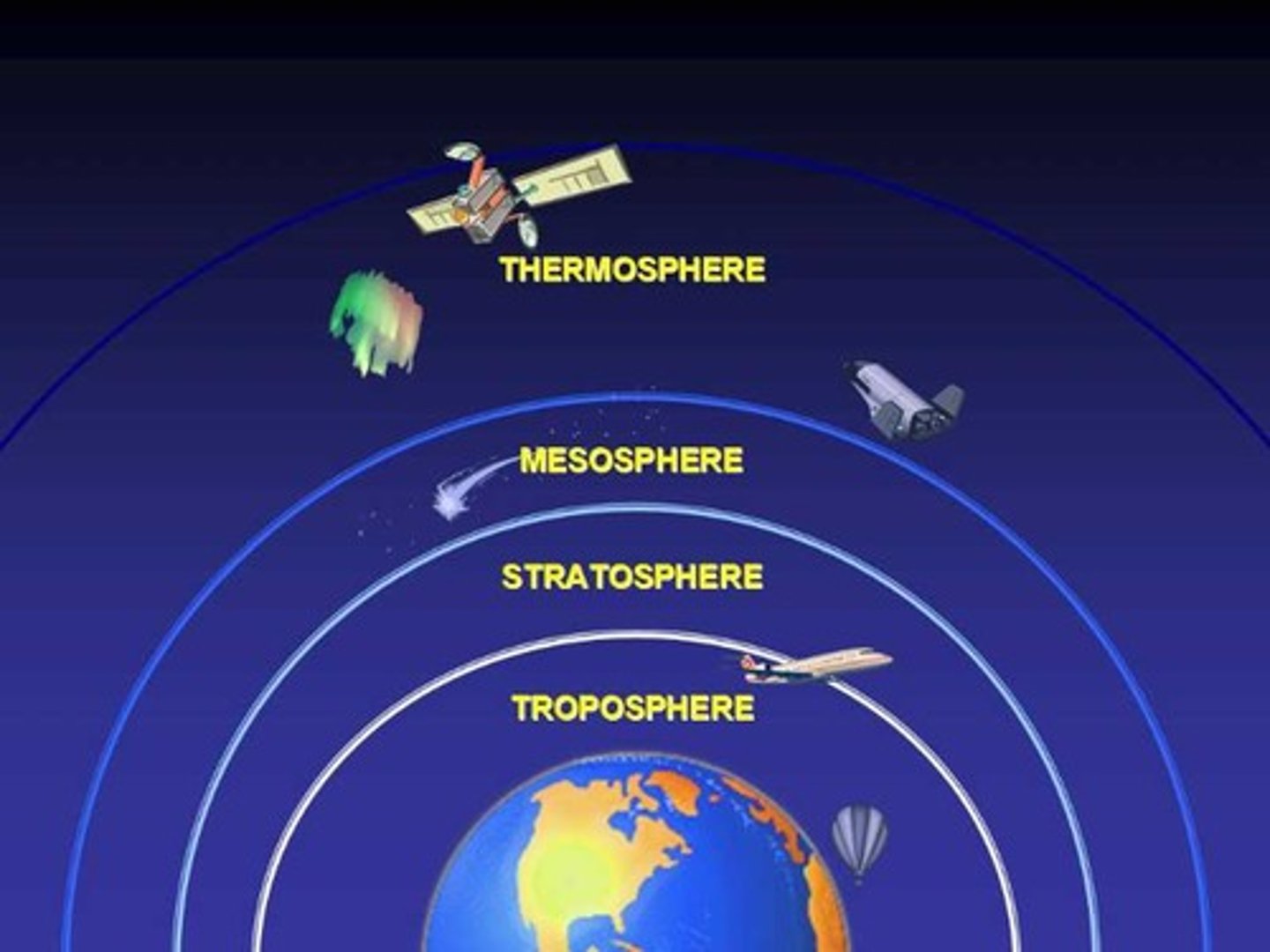
Thermosphere
The uppermost layer of the atmosphere, in which temperature increases as altitude increases.
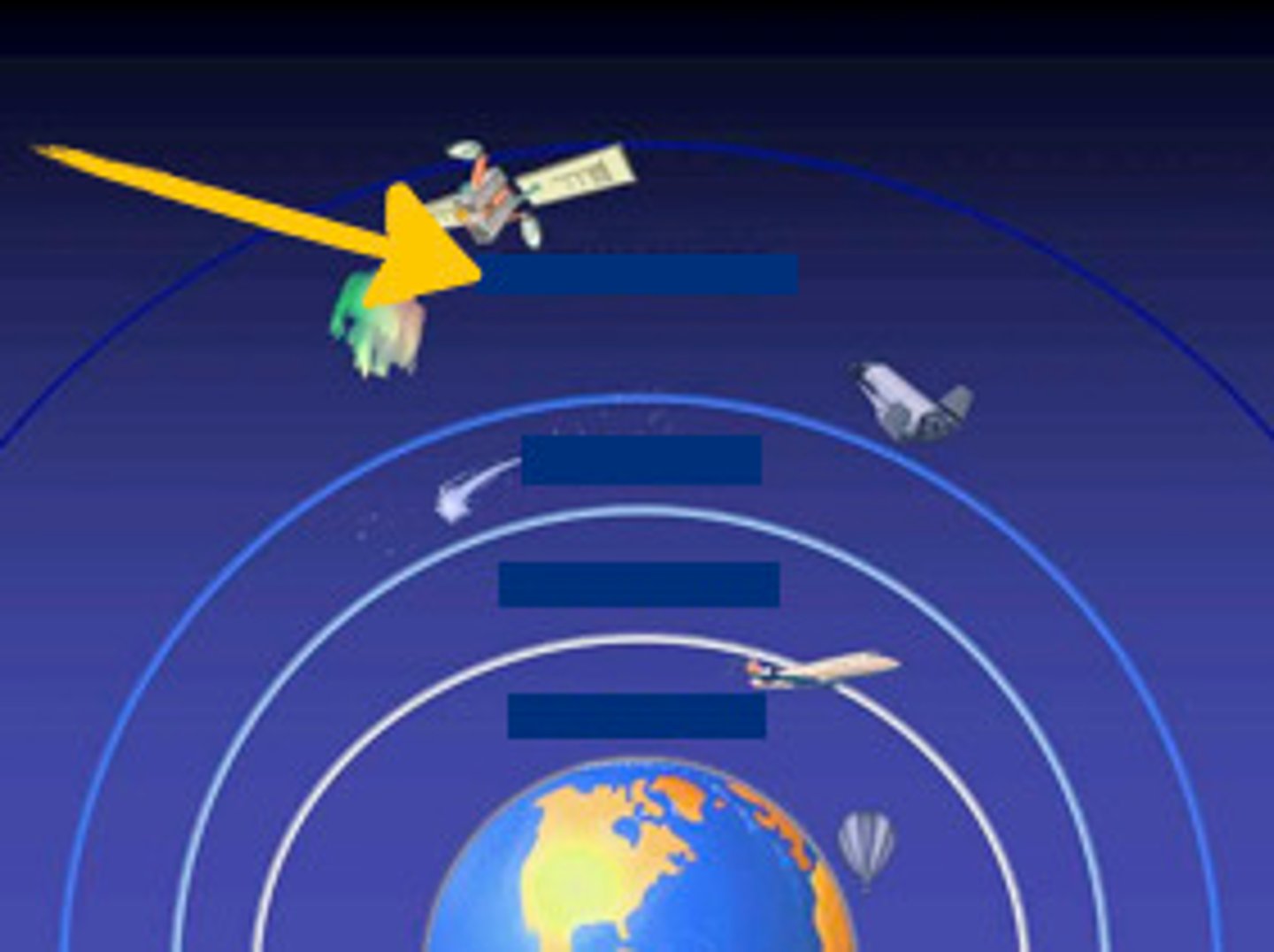
Exosphere
The outer layer of the thermosphere, extending outward into space.
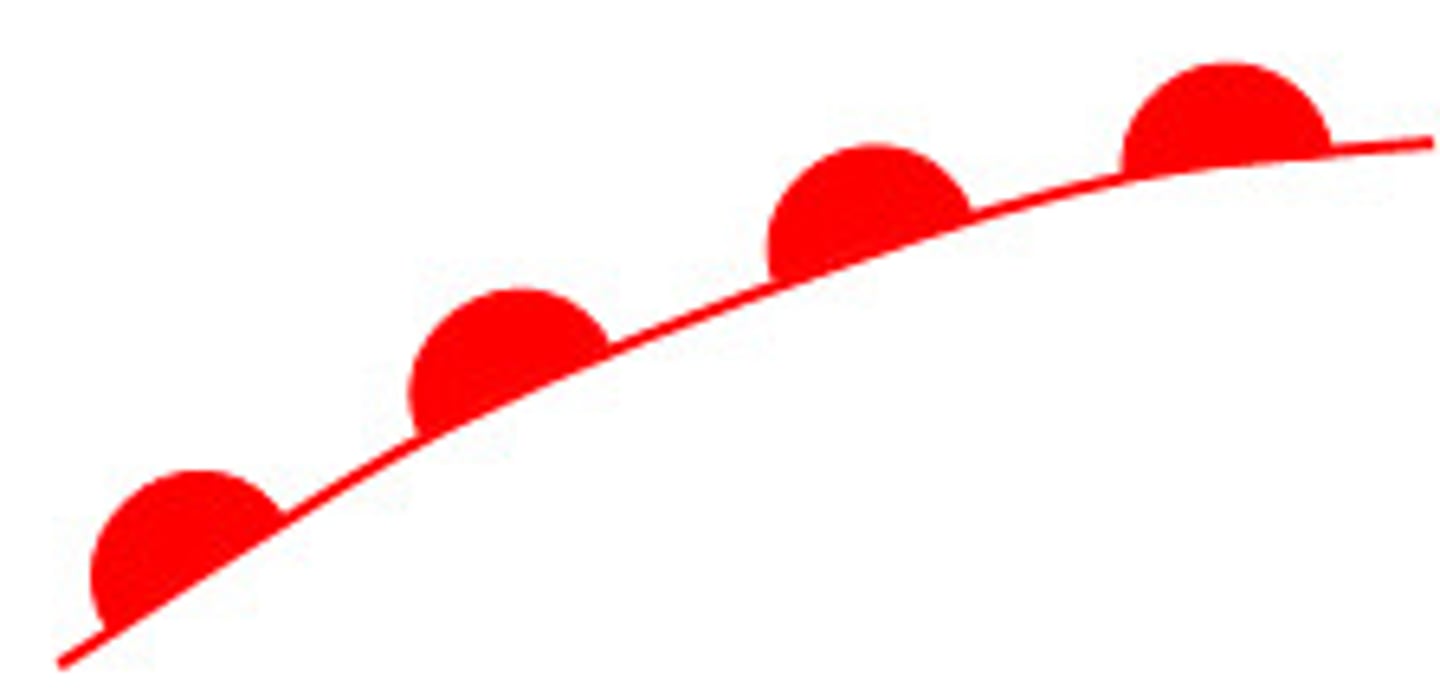
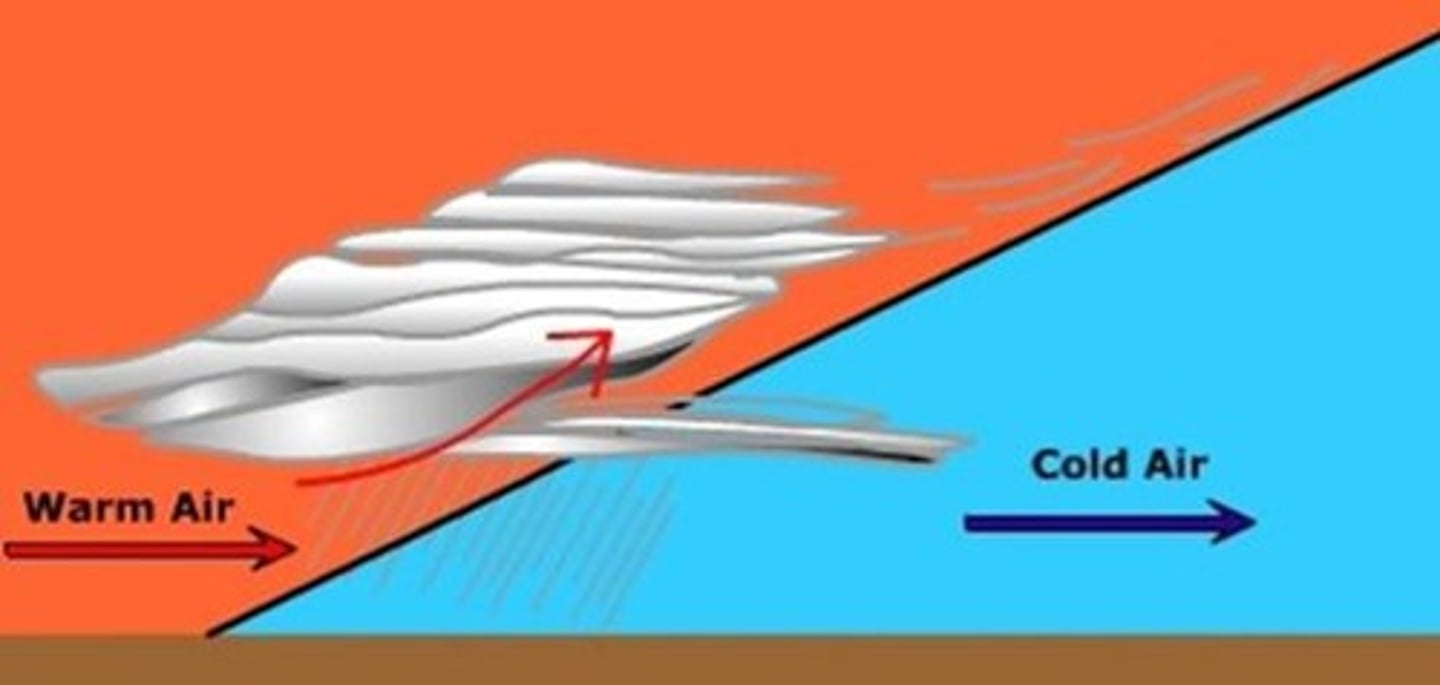
Warm Front
A front where warm air moves over cold air and brings drizzly rain and then are followed by warm and clear weather.
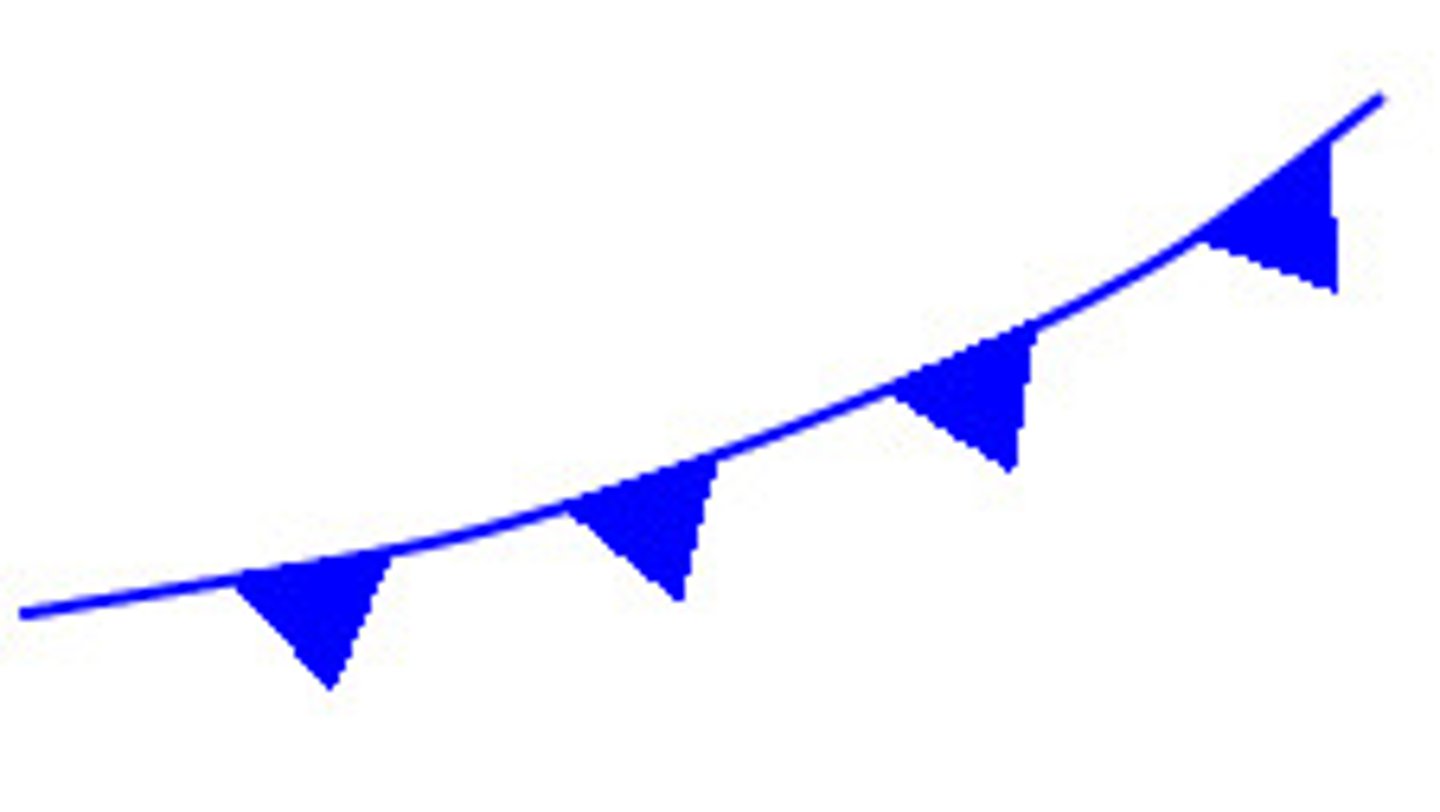
Cold Front
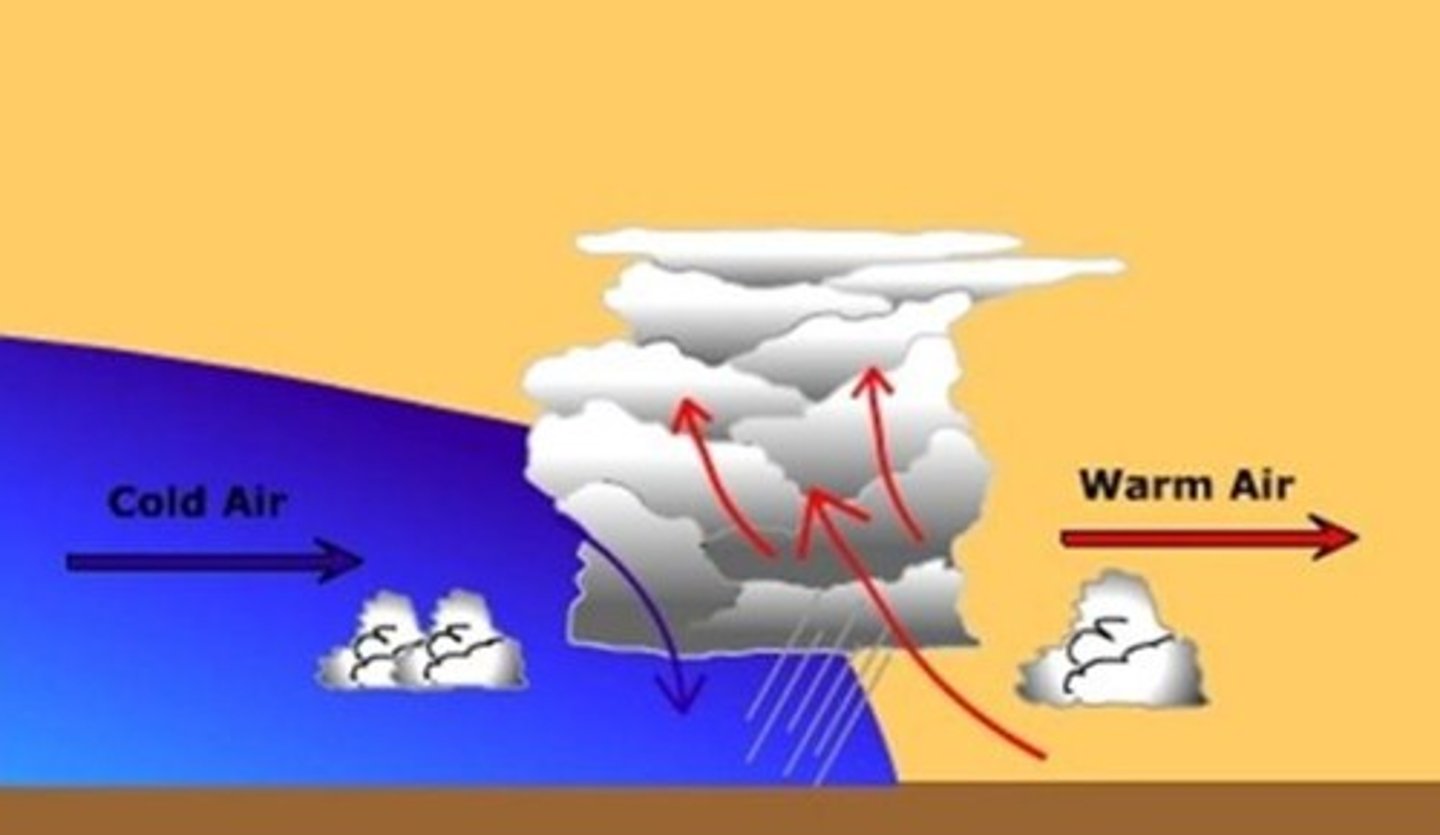
A front that forms when cold air moves under warm air which is less dense and pushes air up (produces thunderstorms heavy rain or snow).
Warm Air Mass
An air mass that is warmer than the surface over which it moves.
Cold Air Mass
A body of air in which air particles have little energy and high density