Molecular Pharmacology of Opioid Receptors and Pain Management
 Call Kai
 Learn
Learn Practice Test
 Spaced Repetition
 Match
Match Flashcards
 Knowt Play
1/18

There's no tags or description
Looks like no tags are added yet.
Name | Mastery | Learn | Test | Matching | Spaced | Call with Kai |
|---|
No analytics yet
Send a link to your students to track their progress
19 Terms
Where are opioid receptors predominantly found?
In the central nervous system (CNS) and some peripheral neurons like the gastrointestinal tract.
What is the main function of opioid receptors?
To provide analgesic effects, or pain reduction.
What is nociception?
The sensory response to harmful stimuli that sends signals to the brain.
What is hyperpolarization?
The opposite of depolarization, characterized by a decrease in membrane potential.
What is opium derived from?
The liquid contained in the seed pods of the Papaver somniferum plant.
What are some alkaloids found in opium?
Morphine, thebaine, and codeine.
What is laudanum?
A mixture of opium in either alcohol or water used historically to treat pain.
Why is morphine often purified from opium?
Because it is expensive to synthesize morphine artificially.
What are the three well-accepted families of opioid receptors?
Mu (μ), kappa (κ), and delta (δ) receptors.
What is the endogenous agonist for opioid receptors?
Opioid neuropeptides such as endorphins, enkephalins, and dynorphins.
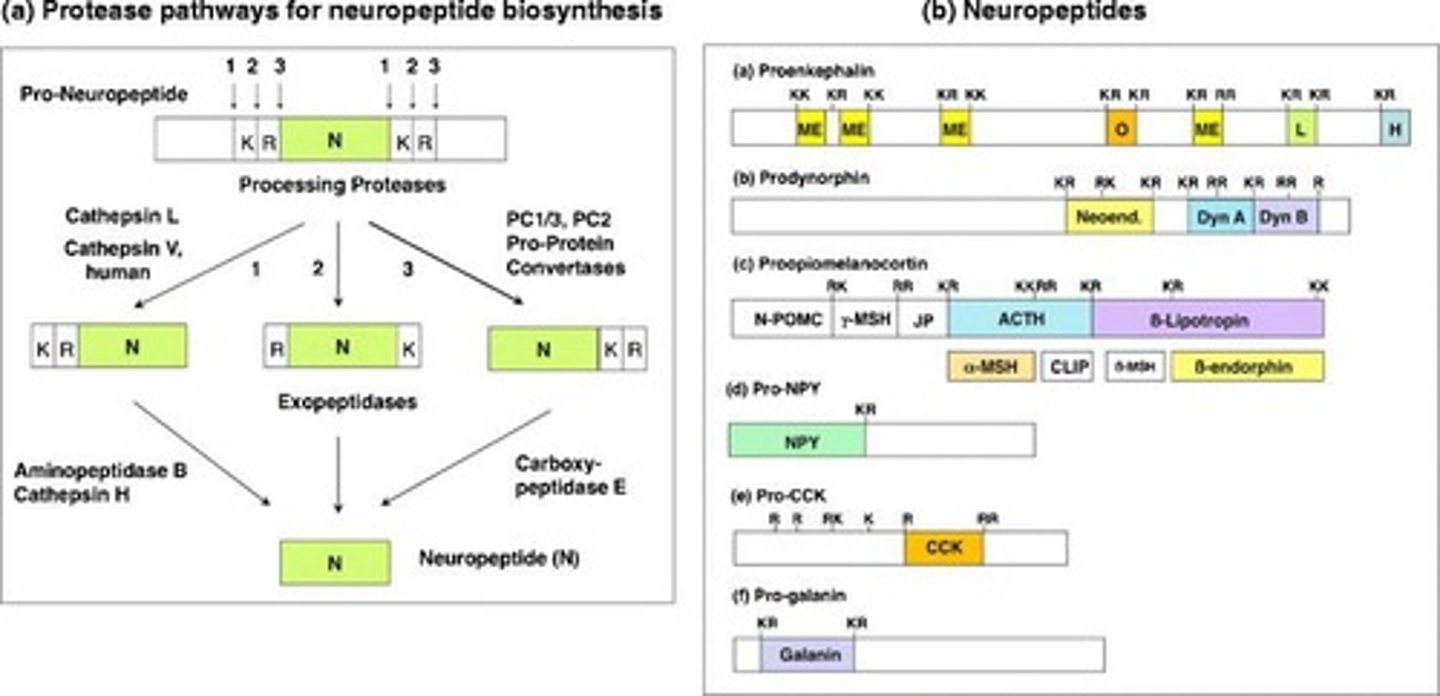
What is the significance of 'prepro-' in neuropeptide precursors?
It indicates inactive precursors with a signal sequence present.
What role do protease enzymes play in neuropeptide processing?
They digest precursor proteins and can lead to post-translational modifications.
What is naloxone used for?
As a competitive antagonist to treat opioid overdose by halting signaling from opiates.
How quickly does naloxone act when administered intravenously?
Within 2 minutes.
What is the effect of opioids on respiration?
Opioids can cause respiratory depression.
What is BIMU8?
A 5-HT4A agonist that activates the same intracellular pathway inhibited by opioids in respiratory neurons.
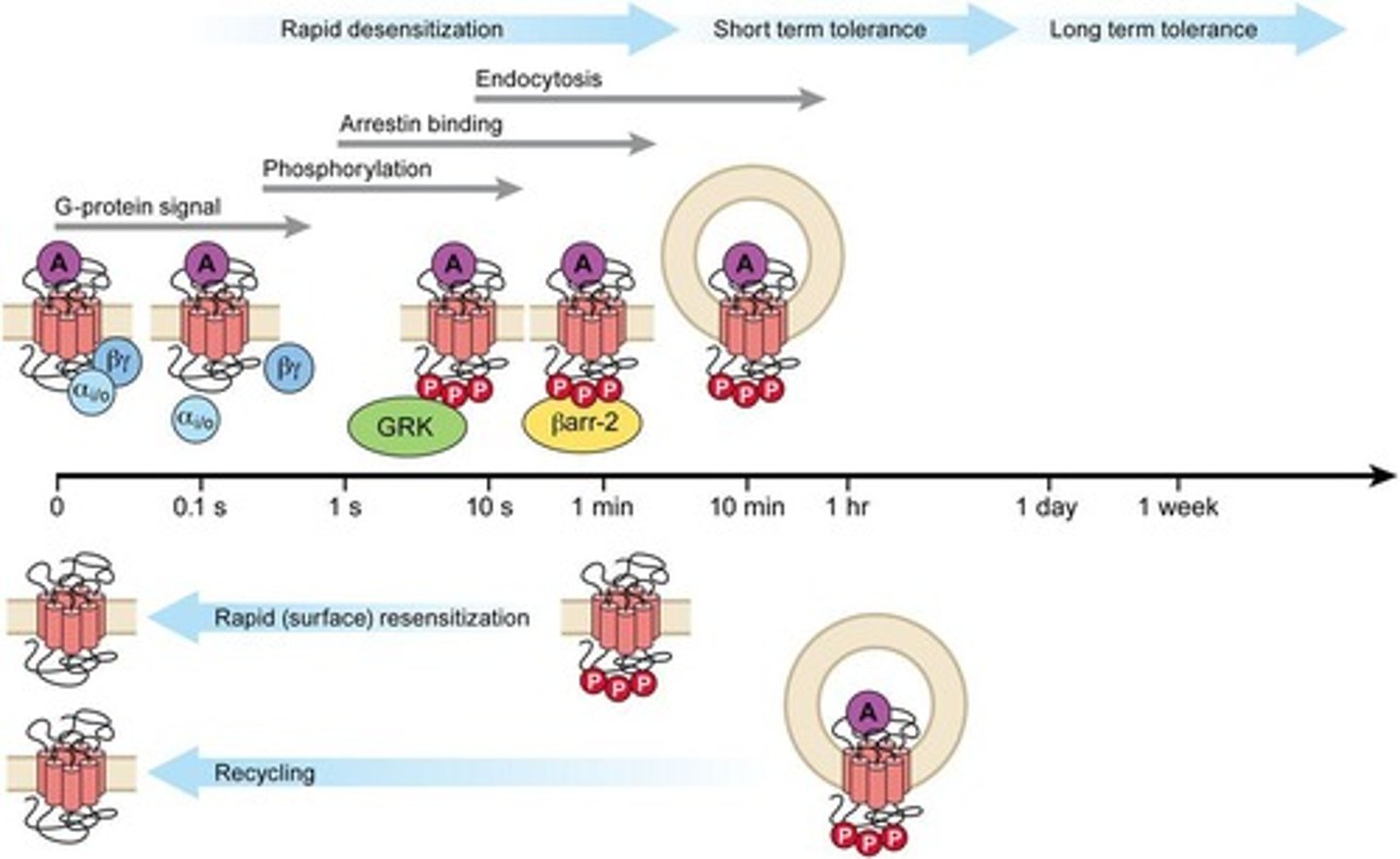
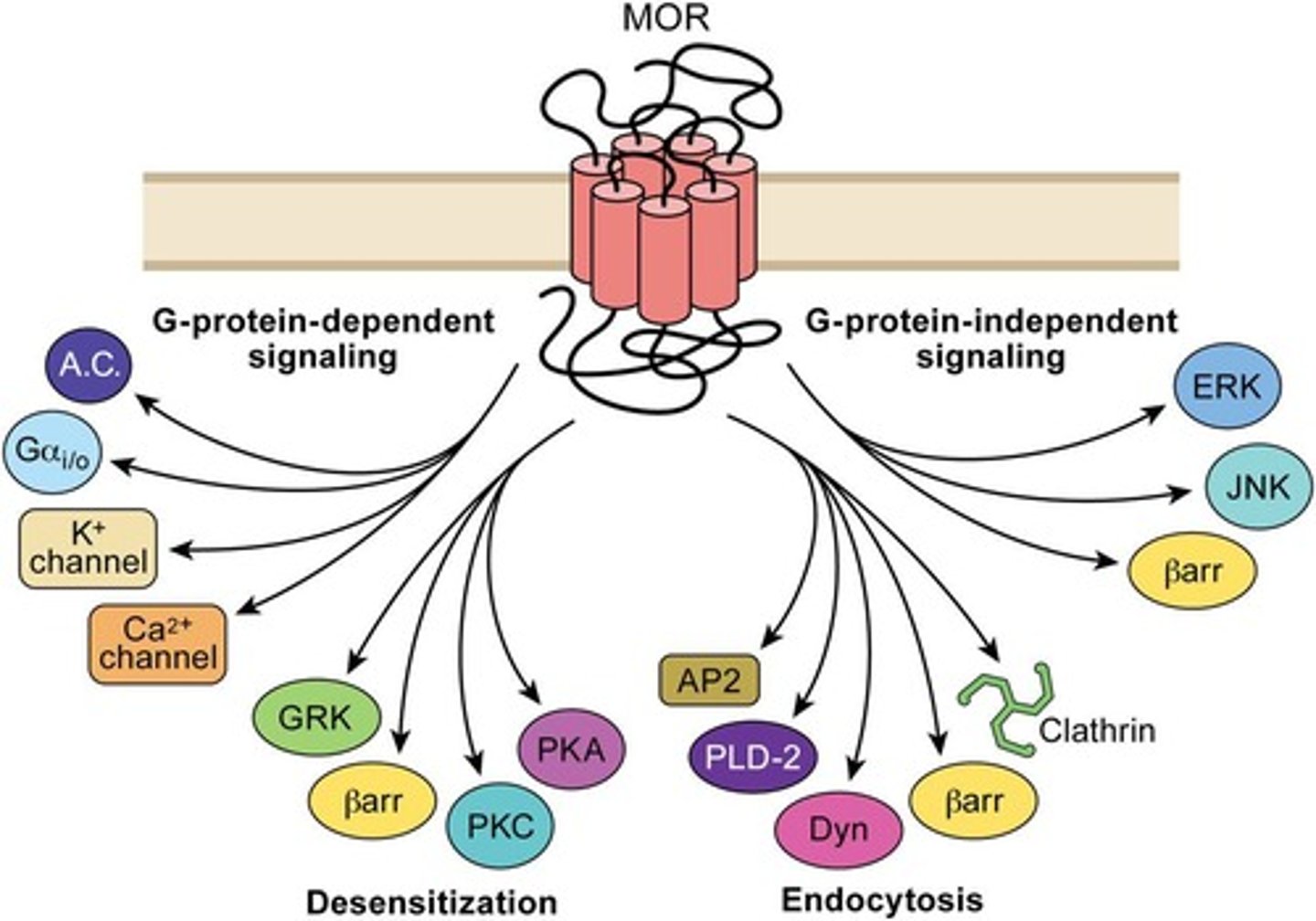
What is the GRK-arrestin pathway associated with?
Short-term tolerance to opioids.
What is β-FNA?
An irreversible μ-opioid receptor antagonist that forms a covalent bond.
What structural difference affects receptor selectivity between μOR and δOR?
A tryptophan in μOR clashes with naltrindole, but not in δOR.

