(3.4bChanges in DNA)L1-Meiosis-and-Genetic-Variation
 Call Kai
 Learn
Learn Practice Test
 Spaced Repetition
 Match
Match Flashcards
 Knowt Play
1/8

There's no tags or description
Looks like no tags are added yet.
Name | Mastery | Learn | Test | Matching | Spaced | Call with Kai |
|---|
No analytics yet
Send a link to your students to track their progress
9 Terms
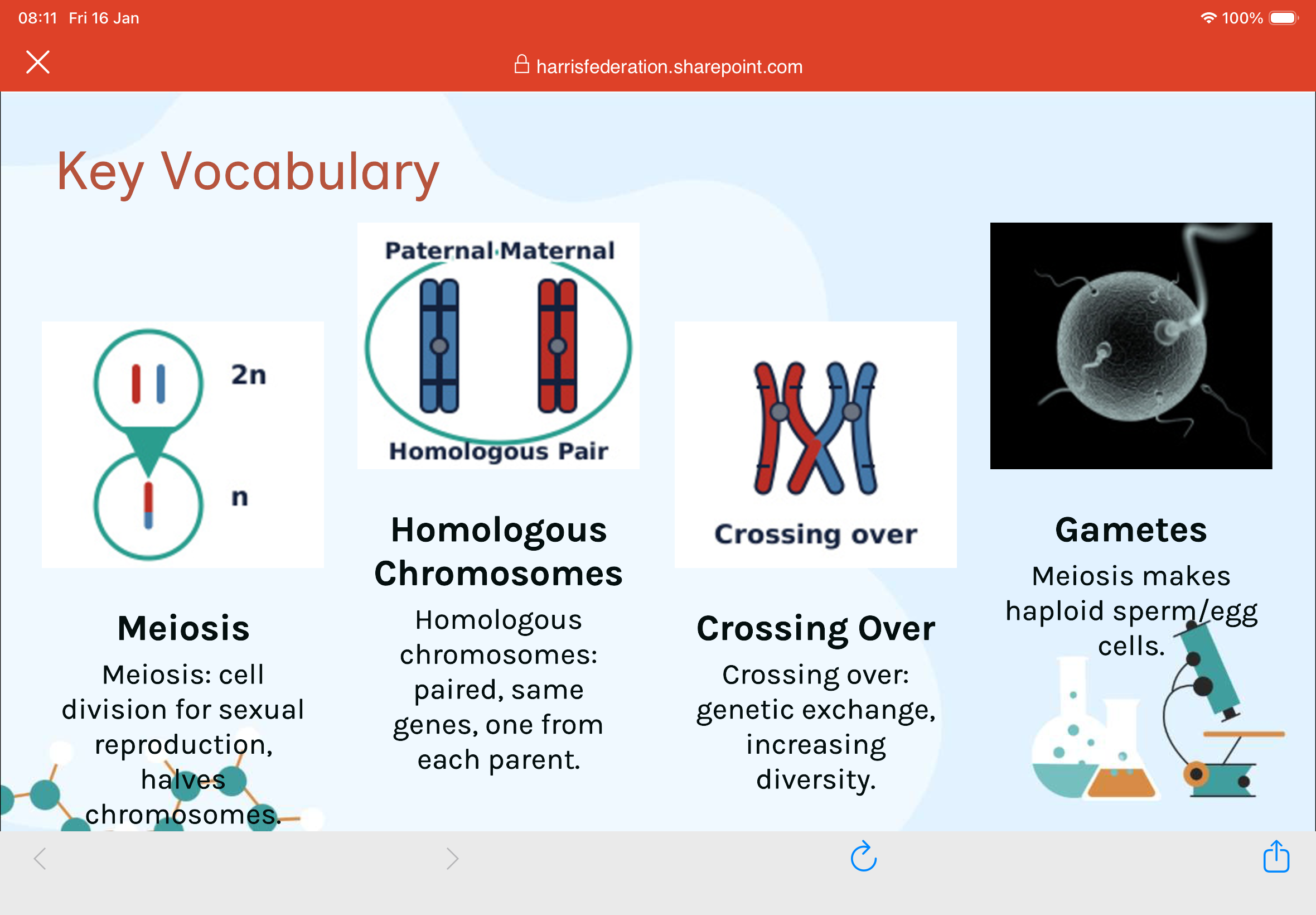
1.What is meiosis?
2.What are homologous chromosomes?
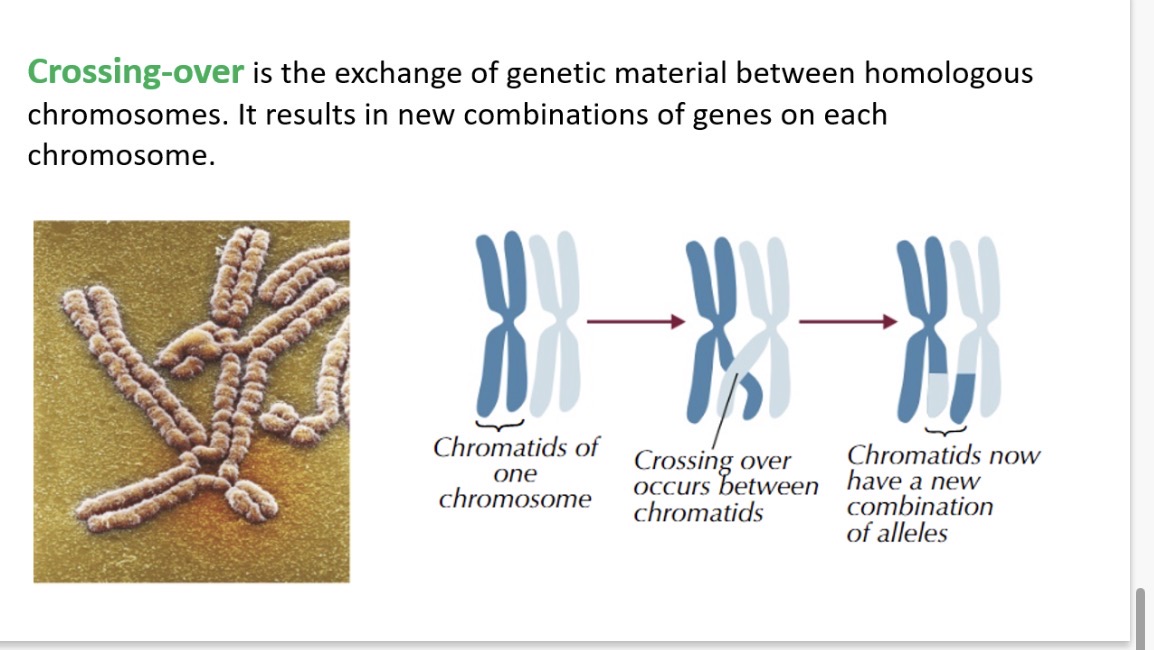
What is crossing over?
What are gametes?
What is the definition of loci?
Define homologous chromosomes and explain their role in meiosis?
Explain how crossing over contributes to genetic diversity?
Why is it essential that meiosis reduces the chromosomes number by half, and what would happen if it didn’t?
What is a gene and what is an allele?
WHY MEIOSIS MATTERS:
The Need for Chromosome Reduction-
In sexual reproduction, two gametes fuse to form a …10?. If gametes had the full chromosome number, the zygote would have …11? the amount-leading to errors.
Maintaining Chromosome Number- Meiosis halves the chromosome number from diploid (2n) to …12? (n), so fertilisation restores the diploid number.
Real-World Impact
Errors in meiosis can lead to conditions like Down's syndrome (trisomy 21)
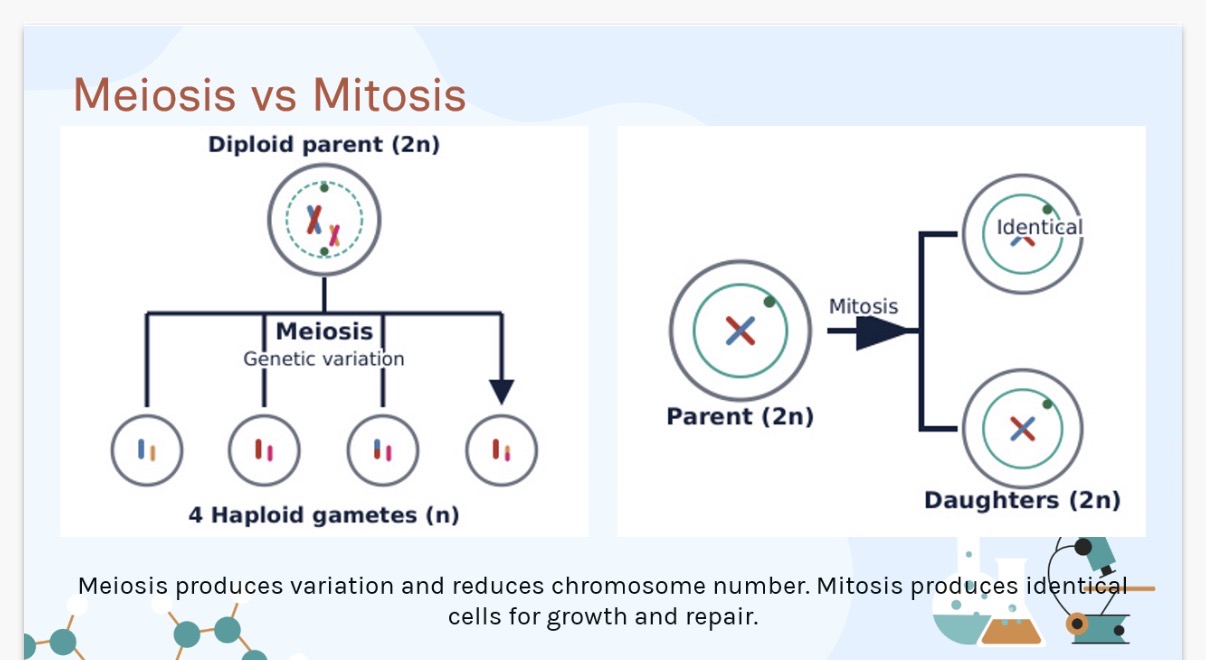
Cell division for sexual reproduction that halves chromosomes and produces 4 genetically different daughter cells
Paired chromosomes which have the same genes with 1 chromosome coming from each parent.
When the genes of non-sister chromatids exchange genetically which increases diversity
Haploid sperm/egg cells which are created by meiosis
The position of a gene/allele on a chromosome
A pair of chromosomes (one from each parent) that are similar in size,shape and carry genes for the same traits at corresponding loci.
By exchanging segments of DNA between non-sister chromatids during prophase I, resulting in new combinations of alleles on each chromosome.
If meiosis didn’t reduce chromosome number, fertilisation would double the chromosome count in each generation, disrupting genetic stability and leading to developmental abnormalities.
Gene: (A section of DNA )A base sequence that codes for the amino acid sequence of a polypeptide
Allele: different forms of genes
Zygote. 11. Double 12.haploid
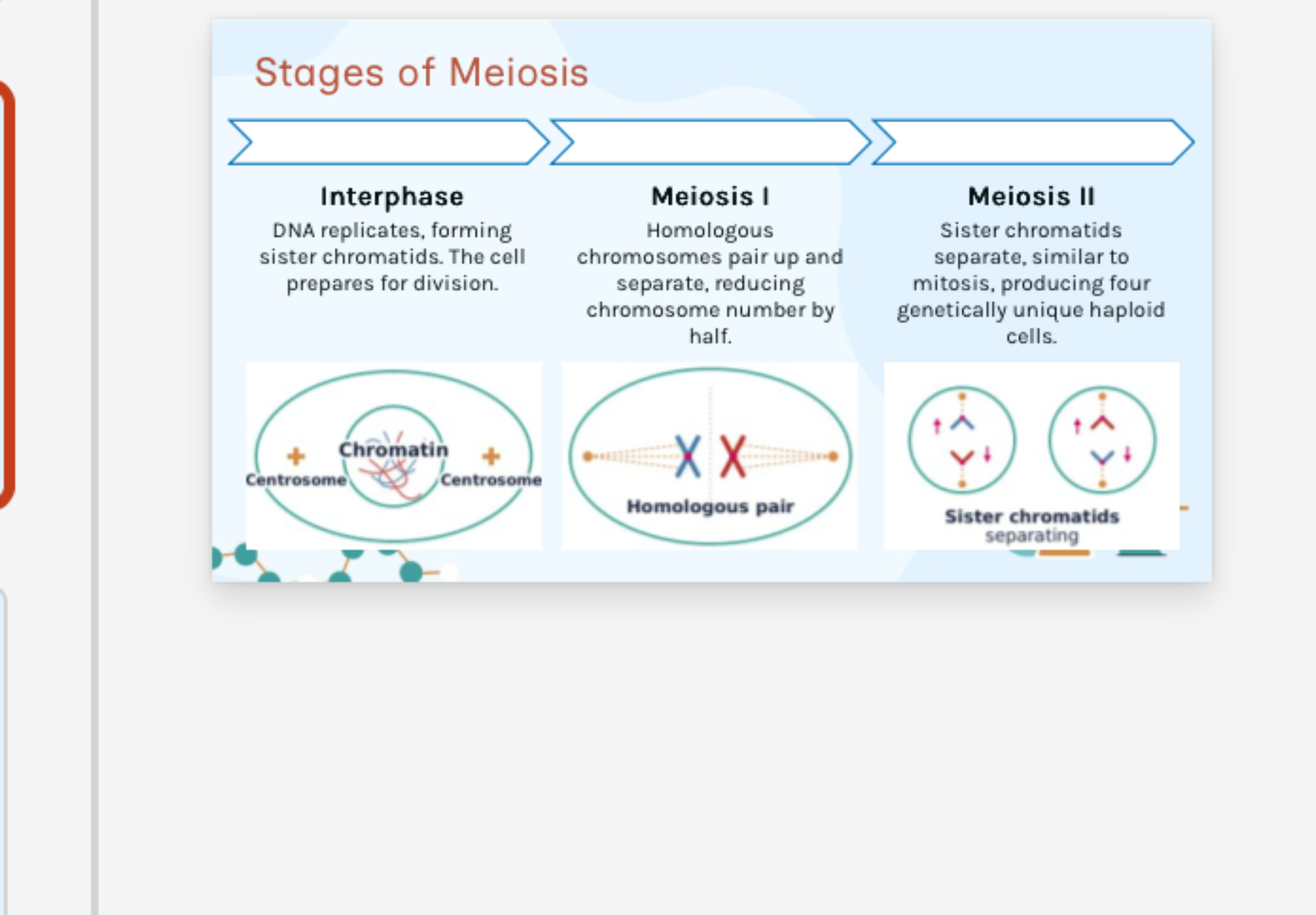
Brief stages of meiosis:
Interphase-DNA …1?, forming …2? chromatids and the cell prepares for division.
Meiosis I- …3? chromosomes pair up and separate, reducing chromosome number by …4?
Meiosis lI- …5? chromatids separate, similar to mitosis, producing …6? genetically …7? haploid cells.
1.replicates. 2.sister. 3.homologous. 4.half. 5. Sister. 6. Four. 7.unique
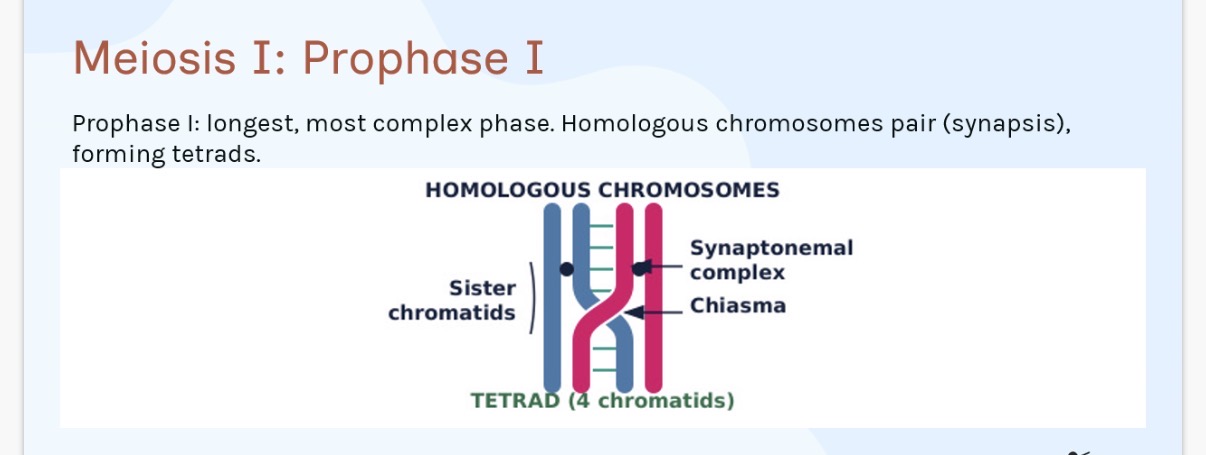
Meiosis I: Prophase I
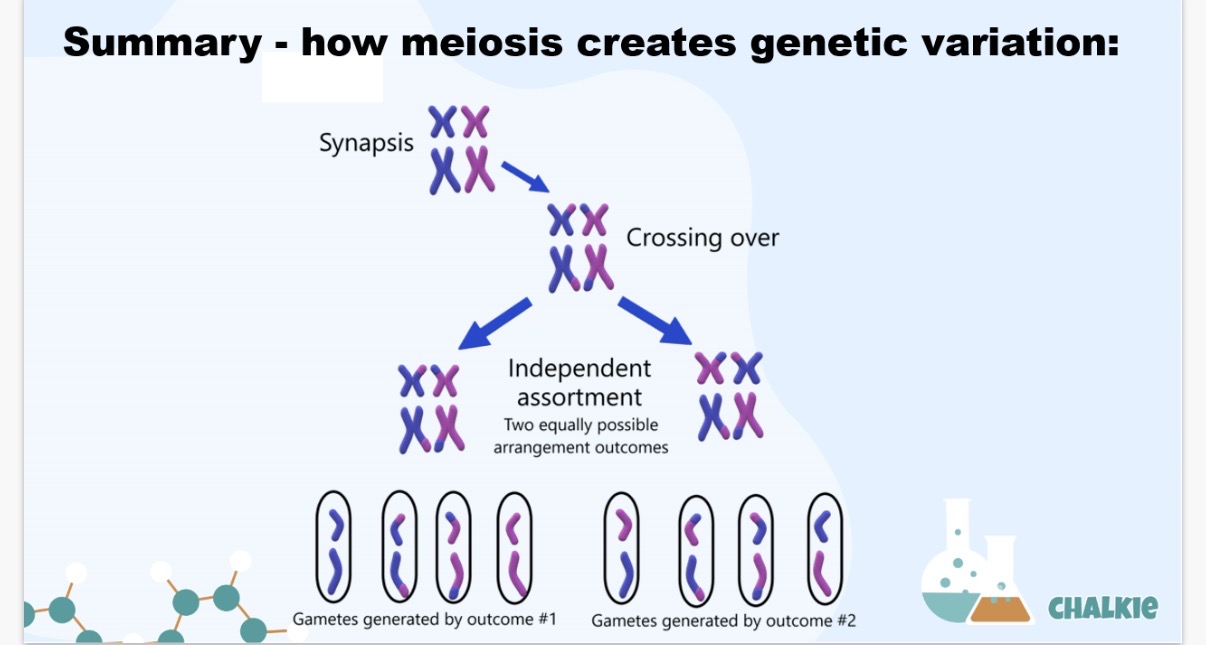
Prophase I: The longest, most complex phase where Homologous chromosomes …1? (synapsis) forming tetrads/ a bivalent structure.
…2? over occurs after, where genetic material is exchanged between non-sister …3?, creating new allele combinations. This is a major source of genetic variation.
1.pair. 2.crossing. 3.chromatids
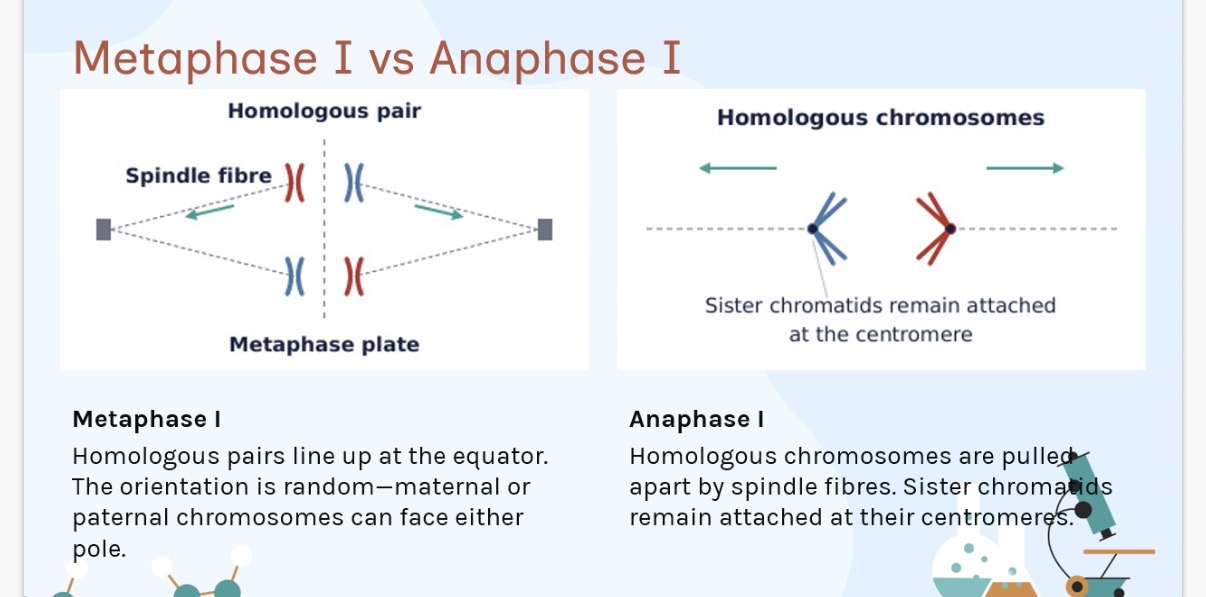
Metaphase I:
Homologous pairs line up at the …1?. The orientation is …2? so maternal or paternal chromosomes can face either pole(independent assortment)
Anaphase I:
Homologous chromosomes are pulled apart by …3? but the Sister chromatids remain …4? at their centromeres.
Genetic Variation in Meiosis:
Three Key Mechanisms:
1. Crossing Over - Recombines DNA between …5? chromosomes.
2. Independent Assortment/segrergation - Random alignment of homologous pairs leads to …6? possible combinations in humans.
3. Random Fertilisation - Any …7? can fertilise any …8?, multiplying genetic possibilities.
Info• Together, these ensure no two siblings (except identical twins) are genetically identical. *
Independant assortment:
During metaphase I, each homologous pair aligns …9? of others. This means the combination of maternal and paternal chromosomes in gametes is …10?. In humans (n=23), this creates 8,388,608 possible chromosome combinations in gametes-just from independent assortment! (Image at the back)
Equator. 2.random. 3.spindle fibres. 4.attached. 5.homologous. 6. 2*23
7.sperm 8.egg 9.independently
Random
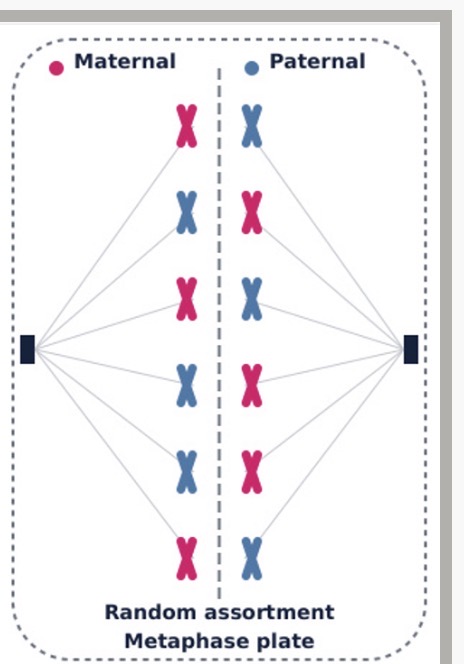
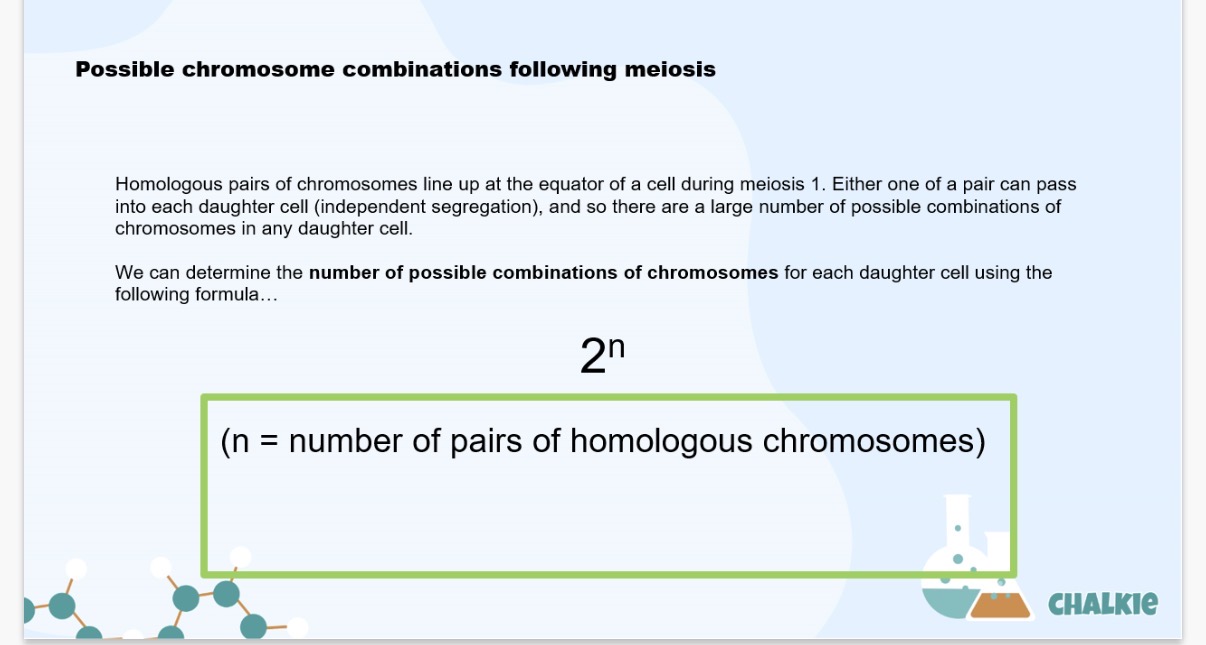
Possible chromosome combinations following meiosis:
We can determine the number of possible combinations of chromosomes for each daughter cell using the following formula...1?
Possible chromosome combinations following sexual reproduction:
Genetic variation is also further increased through the random pairing of male and female …2? during sexual reproduction. Again, we can calculate the number of possible combinations of chromosomes in the offspring produced using the …3?
State 2 reasons why genetic variation may be an advantage to a species?
2*n(n=number of pairs of homologous chromosomes)
Gametes
(2*n)*2
•It helps species survive diseases because some individuals might have resistant genes
•It allows populations to adapt to changing environments over time For example, peppered moths changed colour during industrialisation due to genetic variation
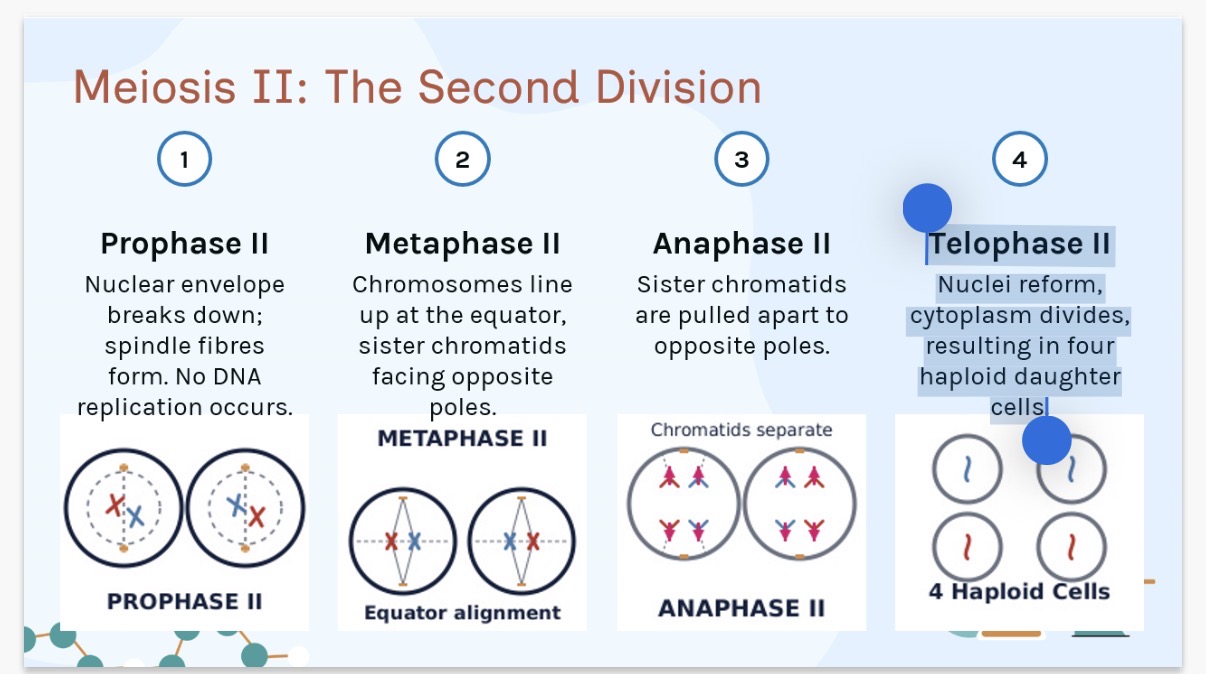
Meiosis II: The Second Division
1.Explain what happens in prophase,metaphase,anaphase and telophase II?
Now full explain the process of meiosis in full detail?(include interphase)
Prophase I|: Nuclear envelope breaks down and spindle fibres form. No DNA replication occurs.
Metaphase I|: Chromosomes line up at the equator with sister chromatids facing opposite poles
Anaphase II: Sister chromatids are pulled apart to opposite poles
Telophase II: The Nuclei(plural) reform, cytoplasm divides, resulting in four haploid daughter cells
Interphase: DNA replicates and so second chromatids are formed therefore,chromosomes consist of 2 identical sister chromatids.
Meiosis I (Reduction Division):
This is where homologous chromosomes separate.
* Prophase I: Chromosomes condense and become visible. Homologous chromosomes pair up, in a process called synapsis, forming bivalents (or tetrads). Crossing over occurs between non-sister chromatids at points called chiasmata, leading to the exchange of genetic material and increasing genetic variation. The nuclear envelope breaks down.
* Metaphase I: The bivalents align independently along the metaphase plate(the equator of the cell). Independent assortment occurs which is the process where the orientation of each homologous pair is random and independent of other homologous pairs.
* Anaphase I: Homologous chromosomes separate and are pulled to opposite poles of the cell by spindle fibers. (Crucially, sister chromatids remain attached to each other.)
* Telophase I and Cytokinesis: The chromosomes arrive at the poles, and the cell divides into two haploid daughter cells. Each chromosome in these daughter cells still consists of two sister chromatids. The nuclear envelope may reform.
Meiosis II (Equational Division):
This is similar to mitosis, where sister chromatids separate.
* Prophase II: The nuclear envelope breaks down again (if it reformed), and chromosomes condense.
* Metaphase II: The chromosomes, each still made of two sister chromatids, align individually along the metaphase plate in each of the two daughter cells from Meiosis I.
* Anaphase II: Sister chromatids separate and move to opposite poles of the cell via spindle fibers , becoming individual chromosomes.
* Telophase II and Cytokinesis: The chromosomes arrive at the poles, and each of the two cells divides, resulting in a total of four haploid daughter cells. Each of these cells contains a single set of unreplicated chromosomes and is genetically distinct due to crossing over and independent assortment.
(The overall result is four genetically unique haploid cells, which in humans are sperm or egg cells)
State 5 differences between meiosis and mitosis?
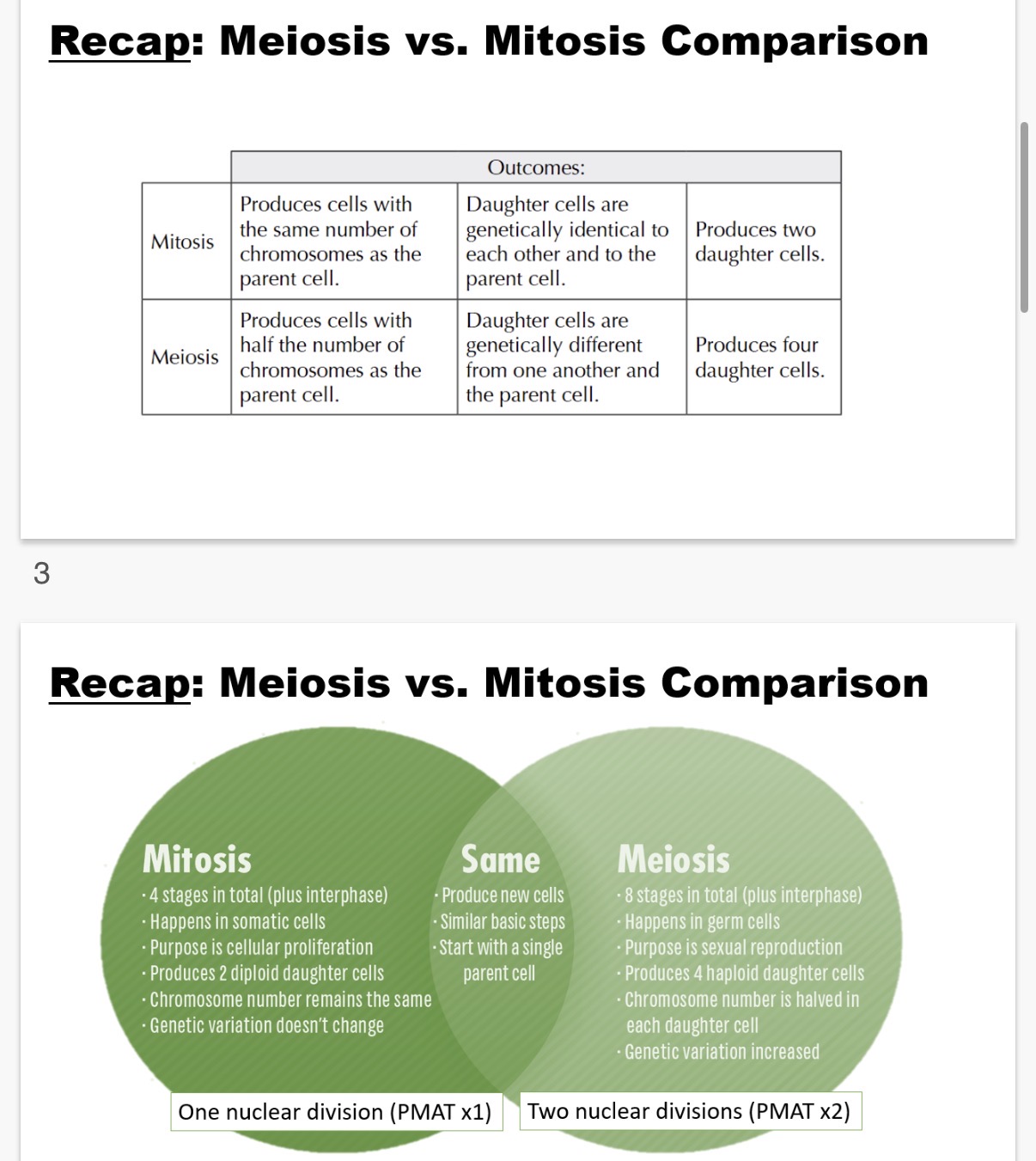
Meiosis
• Two divisions (Meiosis I and II)
• Produces four haploid gametes
• Genetically non-identical cells • Involves crossing over and independent assortment
• Occurs in gonads (testes and ovaries
Mitosis
• One division
•Produces two diploid somatic cells
• Genetically identical cells
• No crossing over (rare)
• Occurs in all body tissues for growth and repair
Errors in Meiosis:
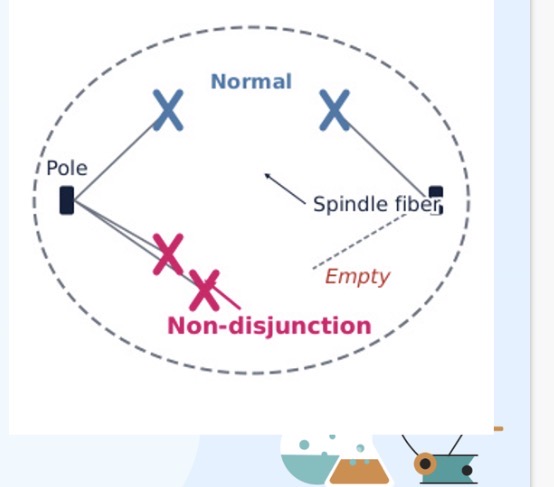
1.What is non-disjunction?
Consequences of non-disjunction:
Can result in gametes with extra or …2? chromosomes.
Example: Down's syndrome (trisomy 21) - an extra chromosome 21.
Other examples: Klinefelter's (XXY), Turner's (XO). Risk increases with maternal age, particularly over …3?.
1.When chromosomes fail to separate properly during anaphase I or ll.
2.missing 3. 35
Real-World Applications:
Genetic Counselling:
•Meiosis understanding predicts inherited condition …1?.
IVF and PGT:
•Preimplantation genetic testing screens embryos for …2? abnormalities.
Evolutionary Biology:
•Meiosis-driven genetic variation fuels …3?
Agriculture:
•Selective …4? uses meiosis-shaped inheritance patterns.
1.risks. 2.chromosomal. 3. Natural selection 4.breeding