ESS - Topic 1
 Call Kai
 Learn
Learn Practice Test
 Spaced Repetition
 Match
Match Flashcards
 Knowt Play
1/66

There's no tags or description
Looks like no tags are added yet.
Name | Mastery | Learn | Test | Matching | Spaced | Call with Kai | Chat |
|---|
No analytics yet
Send a link to your students to track their progress
67 Terms
EVS
a world view that shapes how individuals or societies precieve and respond to enviormental issues.
broad values
life goals, general principles towards the world that are informed by peoples beliefs and world views
specific values
judgment regarding natures importance in particular situations
value indicator
quantitive measures and qualitative descriptors that reflect natures importance to people
intrinsic value
the belief that something has value simple because it exists, not because its useful to humans, for example a tree in a forest
instrumental value
the usefulness an entity has for humans. The value comes from providing goods (food and water), services (decomposers processing waste), or opportunities for human development (knowledge or creative inspiration)
technocentrism
assumes all environmental issues can be resolved through technology
anthropocentrism
humans are central to any decision being made, and them being the most important element of existence.
ecocentrism
nature is important on its own, not just because it helps humans, but because all living things and ecosystems have value.
changes in perspective caused by…
influence by government or NGO’s
models
simplified representation of reality: used to understand how a system works and to predict how it will respond to change
evaluation of model points: advantages
allows scientists to simplify complex systems and use them to predict what will happen if there are changes to inputs, outputs or storages
allows inputs to be changed and outcomes to be examined without having to wait a long time, as we would have to if studying real events
allows results to be shown to other scientists and to the public and are easier to understand than detailed information about the whole system
evaluation of model points: disatvantages
may be very complex, and over simplified= less accurate
different models show different effects using same data/different people interpret it in different ways
many assumptions must be made about these complex factors, for example models like climate change may not be accurate
models rely on the expertise of the people making them biased
systems def
set of interacting or independent components
systems include…
can be open or closed
have parts
have connections between those parts
have a function or purpose
exhibit emergent properties
emergent properties
characteristics that arise when smaller components combine to form larger systems. Interactions between components in systems can generate emergent properties.
emergent properties example
Nutrition cycles, food webs, climate regualtion.
emergent properties are possible when…
each part has a specialized function
similar parts are grouped together
groups cordinate functions
the whole can do things the individual parts cannot
regional ecosystems
networks of organisms and their environment within specific areas
diversity
surrounding varies habitats like forests, deserts and aquatic environmental
ecological balance
plays a key role in maintaining biodiversity and ecological health
human benefits
provides essential services including clean air, water and resources for development
global circulation
the movement of air around the earth that spreads heat from the equator to the poles. It happens because the sun heats the earth unevenly, and the spinning of the earth affects how air moves
environmental system contains:
abiotic components ( water, sunlight, temp, air, soil, nutrients )
biotic components ( plants, animals, fungi)
societal system contains:
value systems
economic systems
social systems
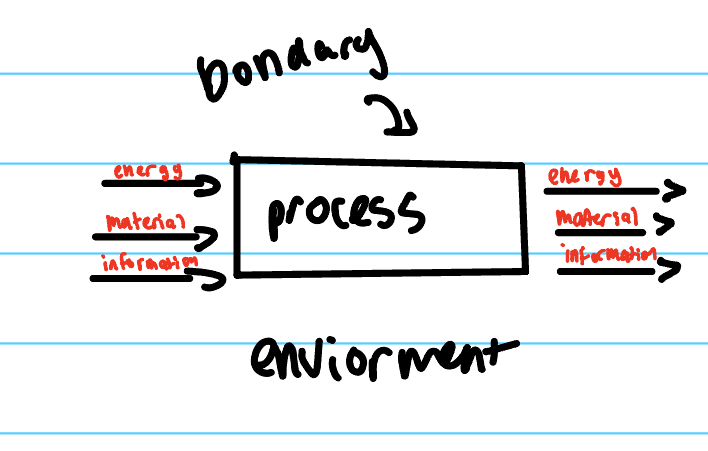
systems diagrams consists of:
storages
flows
procceses
aswell as
inputs : energy/matter enters systems
outputs : something produced at the end of the system
storage: areas where energy or matter are accumelated
flow: movement of energy or matter within a system from on location to another
boundries: outside/ edge of a system
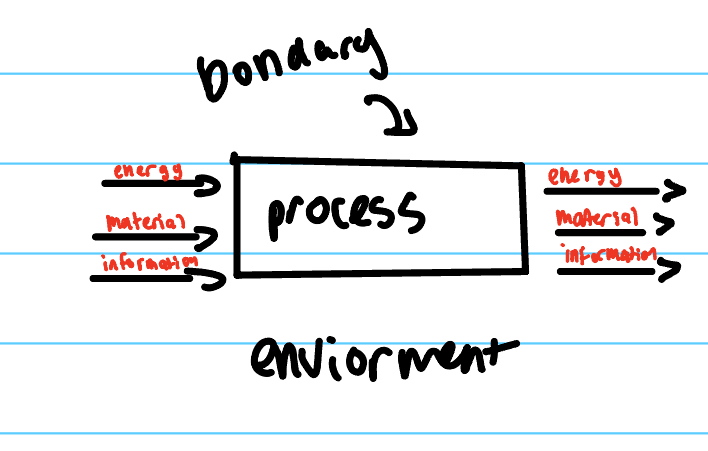
system diagram external factor
the systems external environment is not part of the system but can affect the system or be affected by the system
flow and storages difference
flows can be adjusted more quickly than shortages, storages change slowly because flows take time to flow.
flows and storages sum and outflows
sum of all inflows to a storage is greater than sum of all outflows from a storage, then the level of storage will increase
sum of all outflows from a storage is greater than sum of all inflows from a storage, then the level of storage will decrease
if the sum of all inflows to a storage is equal to the sum of all outflows from a storage, then the level of the storange will not change
1st law of thermodynamics
energy cannot be created or destroyed, only changed from one form to another ex: absorbed by the plants for photosynthesis (a conversion of energy)
2nd law of thermodynamics
when energy is transformed, some of it becomes less useful, usually released as heat because of if this the total disorder (entropy) of a system and its surroundings always increases. ex: there is less energy as it moves through the system
entropy def
a measure of disorder or randomness in a system ex: it will naturally over time increase
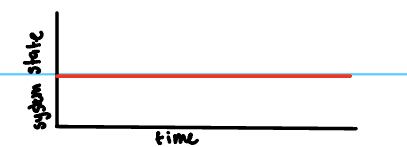
static def and example
there is no change overtime, doesnt apply to natural systems as there are no inputs or outputs so no change occurs ( always in balance ) ex: a pile of rocks, non living things
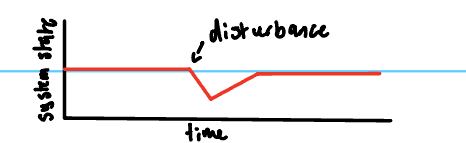
stable def and example
the system tends to return to the same equilibrium after a disturbance. ex: after running outside your body temp increases, you start sweating and return to a normal body temp
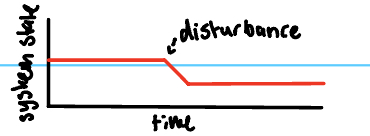
unstable def and example
the system returns to a new equilibrium after disturbance. ex: greenland glacier melting and not refreezing to return to the equilibrium
feedback loops
systems are affected by info from outside and inside the system
negative feedback def and example
return it to its original state
stabilizing as they reduce change
ex: human body temp
positive feedback
change a system to a new state
destabilizing as they increase change
after tipping point, it moves away from equilibrium
ex: as the temp rises, the ice melts, the temp rises and causes more water, which goes down to the bed of the iceberg and causes more ice to melt
feedback mechanism def
a proccess in which a change in one part of a system causes changes in other parts, which then either amplify(increase) or dampen(reduce) the original
resilience and tipping points def
the resilience of a system measures how it repsonds to a disturbance, the more resilient a system, the more disturbance it can deal with. It is the ability of a system to return to its original state after a disturbance (more complex system = more resilient)
affects of resilience (increase)
greater diversity of compnents/ species
complexity of interactions/developed food webs
establishment of keystone species
larger storages/productive resources (ex: nutriens, water, sunlight, reproductive rates, biomass )
larger size of the system
strong negative feedback systems
a steady state equilibrium/ balanced inputs and outputs
affects of resilience (decrease)
strong positive feedback mechanism
human impact degrading structure/diversity/abundance
systems being close to a tipping point
factors that can affect resilience of an eco system:
increase in biodiversity
climate
large ecosystems
reproductive strategies
human intervention
size and number of storages
genetic diversity (some number of species have a better chance to survive)
tipping points def
an ecological tipping point is reached when an ecosystem experiences a shift to a new state in which there are significant changes to its biodiversity and the services it provides.
tipping points example
its the point where an ecosystem or earth system changes so much that it cant go back to how it was before ( like melting sea ice or coral reef colapse )
trophic cascade def:
when a change in one level of a food chain (like predators) causes big changes in the levels below it (like herbivours and plants)
trophic cascade example
removal of the top predator (wolf). when the top predator is removed, the population of deer is able to grow unchecked, which causes over consumption of the primary producer.
ecosystem equilibrium def
a state of balance in an ecosystem where the inputs (like energy,nutriens) and outputs (like waste) are relativly stable overtime, and the populations of organism remain relativly constant around a long-term average. Open systems(inputs, outputs, and procces of energy matter).
albedo
measure of how much incoming solar radiation (sunlight) a surface refelcts back into space
natural capital
a stock of natural resources and the ecosystems they comprimise. ex: forests, soil, minerals, fossil fuels, renewable or non-renewable
non profital
ecosystem services. ex: shade or pressence of trees.
global vs local
local veiw point is normally better
global ex: demand for salmon universally
sustainablity development
meeting the needs of the present without compromising the ability of future generations to meet their own needs
3 dimensions of sustainabilty
enviormental, social, economic/ governence
sustainable practices
renewable energy, sustainable agriculture, preserving and protecting biodiversity
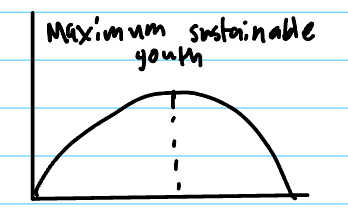
Maximum sustainable youth graph and how long it takes to go back to normal example
short term ex: agricultrue
medium term ex: ground water (there until a certain extent)
long term example: renewable resource (fisheries)
unsustainable development def
when present progress is at the expense of future generations
natural income def
the flow of goods and services. ex: timber, clean water, crops, fish and climate regulation (eurosion control, flood prevention) those resources generate annually for human use and well being. its the “interest” or yield from the natural capital.
to be sustainable:
natural income must be the result of the sustainable management of renewable natural capital, allowing for the full replenishment of the resources exploited and recovery of ecosystems.
enviormental justice
laws to ensure that no group or community is made to bear a disproportionate share of the harmful effects of pollution
enviormental racism
ex: union carbide gas release in bhopal, india, the gas leakage still has intoxicated waters 40 years later-
biocapacity
capacity of a given biologically productive area to generate an ongoing supply of renewable resources and to absorb its resulting waste
ecological footprint
area of land required to sustainably provide all resources for population
ecological footprint depends on…
population size
consumption per capita
cropland
increase biodiversity by…
importing recources
strengths of ecological footprint
popular symbol for raising awareness of environmental issues
useful snapshot of the sustainability of a population’s lifestyle
limitations of ecological footprint
does not include all info on the environmental impacts of human activities
does not show types of resources only total resource