02 Ore Mineralogy
 Call Kai
 Learn
Learn Practice Test
 Spaced Repetition
 Match
Match Flashcards
 Knowt Play
1/15

There's no tags or description
Looks like no tags are added yet.
Name | Mastery | Learn | Test | Matching | Spaced | Call with Kai |
|---|
No analytics yet
Send a link to your students to track their progress
16 Terms
Sulfides, Oxides, Hydroxides, Halides, Carbonates, Nitrates, Borates, Sulfates, Chromates, Molybdenates, Tungstates, Phosphates, Arsenates, Vanadates, Silicates
15 Chemical Composition of Minerals
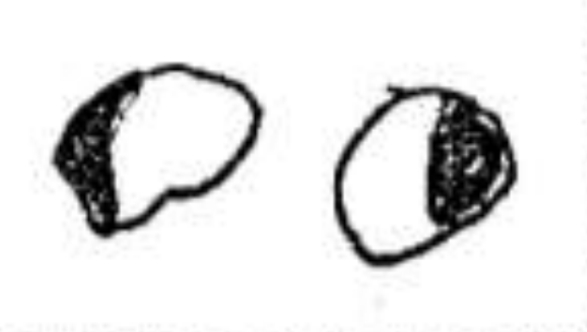
Structural Description:
Coarse structure, simple shape
Liberation:
Easy

Structural Description:
Coarse structure, complex shapes
Liberation:
Relatively easy
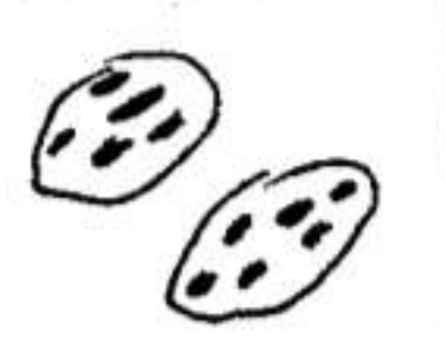
Structural Description:
Fine structure
Both phases having continuous complex shapes
Liberation:
Very difficult
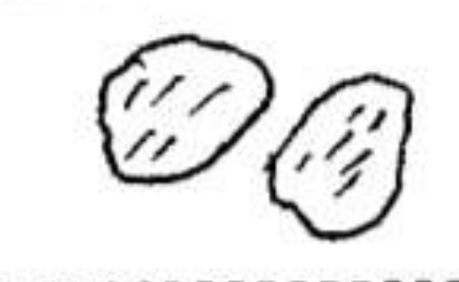
Structural Description:
Fine isolated phases in continuous matrix
Liberation:
Difficult
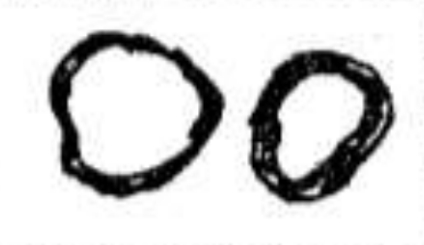
Structural Description:
Rimmed particles
Liberation:
Difficult
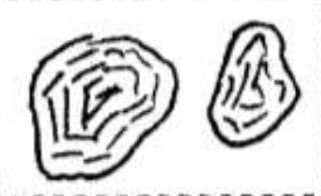
Structural Description:
Concentric layered structure
Liberation:
Difficult
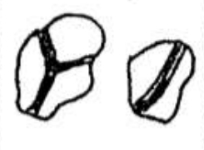
Structural Description:
Larged veined particles
Both phases continuous
Liberation:
Relatively easy
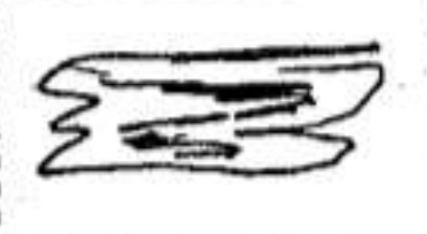
Structural Description:
Fine layered structure, both phases continuous
Liberation:
Difficult
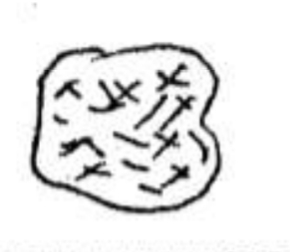
Structural Description:
Fine network struture
Both phases continuous
Liberation:
Difficult
Rational of Mineralogy
Ore is composed of valuable and gangue minerals
There are complex ores that contain >1 valuable minerals
Each ore is unique, as a consequence, no standard MP procedure!
Plant Design, Research Programs
A thorough knowledge of Mineralogy is essential for two reasons:
Mineralogical Knowledge
Grade in terms of valuable mineral
Grain size
Combination of minerals present
Relative form and minerals association
Existence of trace minerals from the valuable mineral lattice
Occurrence of minor amounts of potentially valuable minerals
Occurrence of environmentally hazardous minerals
Mineralogical Examinations
Optical Microscopy:
Thin-section
Polished section
Electron Proble Analysis:
EDX
Ore Microscopy
Laboratory investigation wherein the output is the mineral form of the valuable minerals and its liberation size
Involves identification of the mineral form by comparison with known samples of minerals and linear testing under the microscope
Electron Probe Analysis
A beam of electrons is focused on to a point on the surface of the sample
The elements being detected both qualitatively and qualitatively by their resulting x-ray spectra

