Midterm 2 Statics
 Call Kai
 Learn
Learn Practice Test
 Spaced Repetition
 Match
Match Flashcards
 Knowt Play
1/39

Earn XP
Description and Tags
moments, couple moments, distributed force, scalar/vector analysis, truss, machines maybe
Name | Mastery | Learn | Test | Matching | Spaced | Call with Kai |
|---|
No analytics yet
Send a link to your students to track their progress
40 Terms
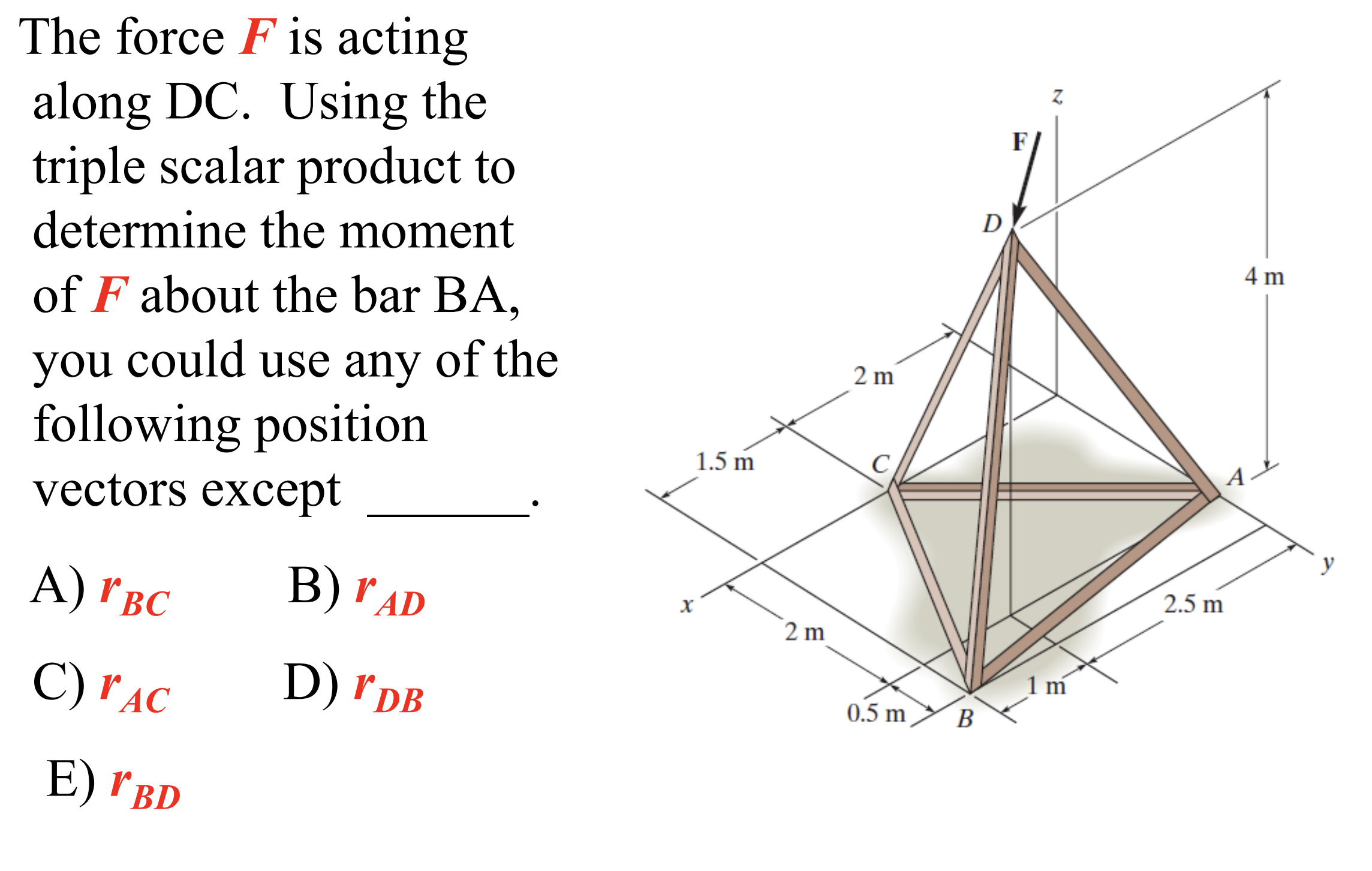
What is the correct answer and why?
rDB, because the position vector must start at the bar BA (from axis to force).
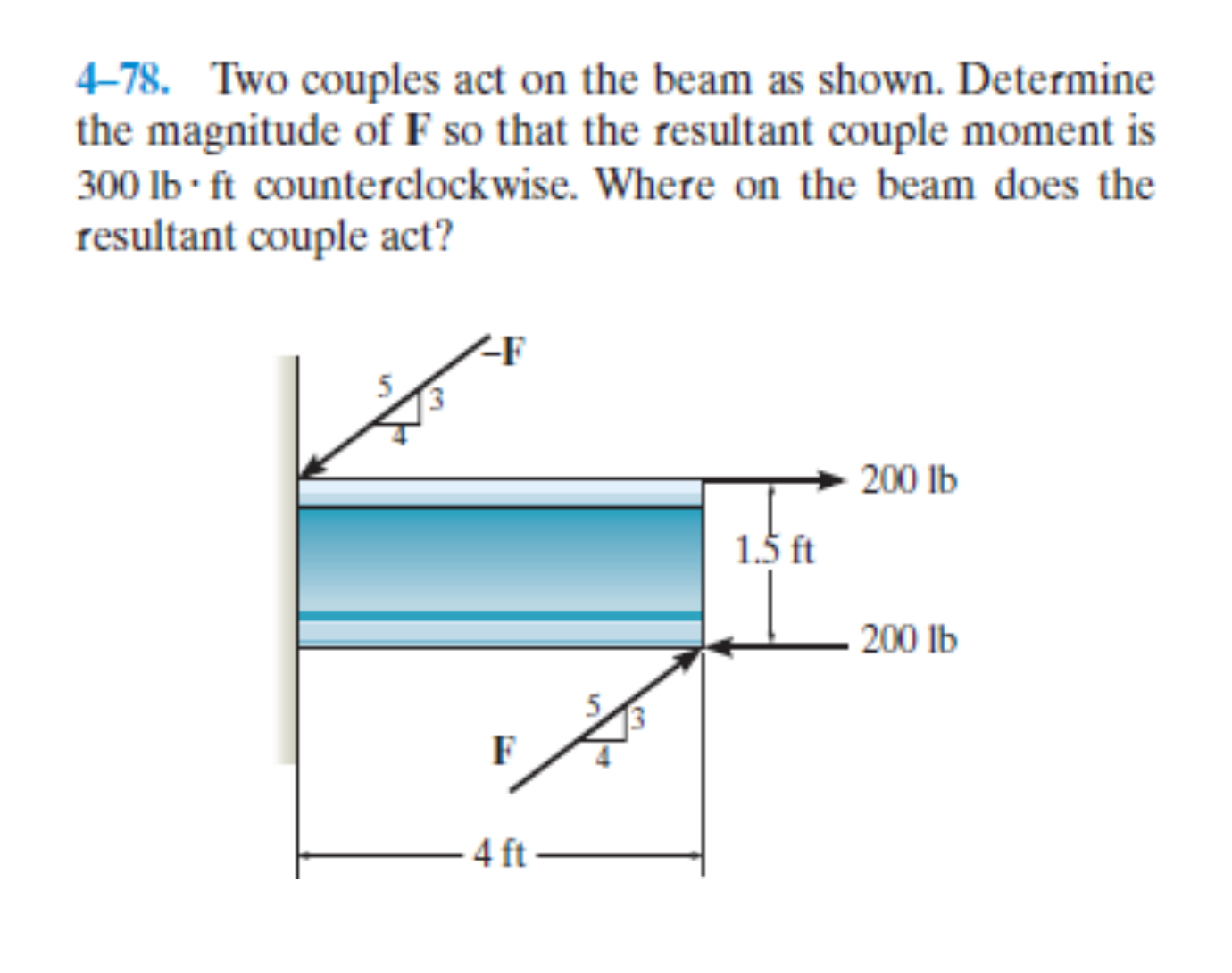
What are the steps to solve this problem? Solve
Draw the direction of the moments (CW or CCW)
Split F into X and Y components, multiply by their perpendicular distances
Multiply the 200 lb couple moment by 1.5
Combine into an equation that equals 300
Solve for F
F = 166.67 lb CW
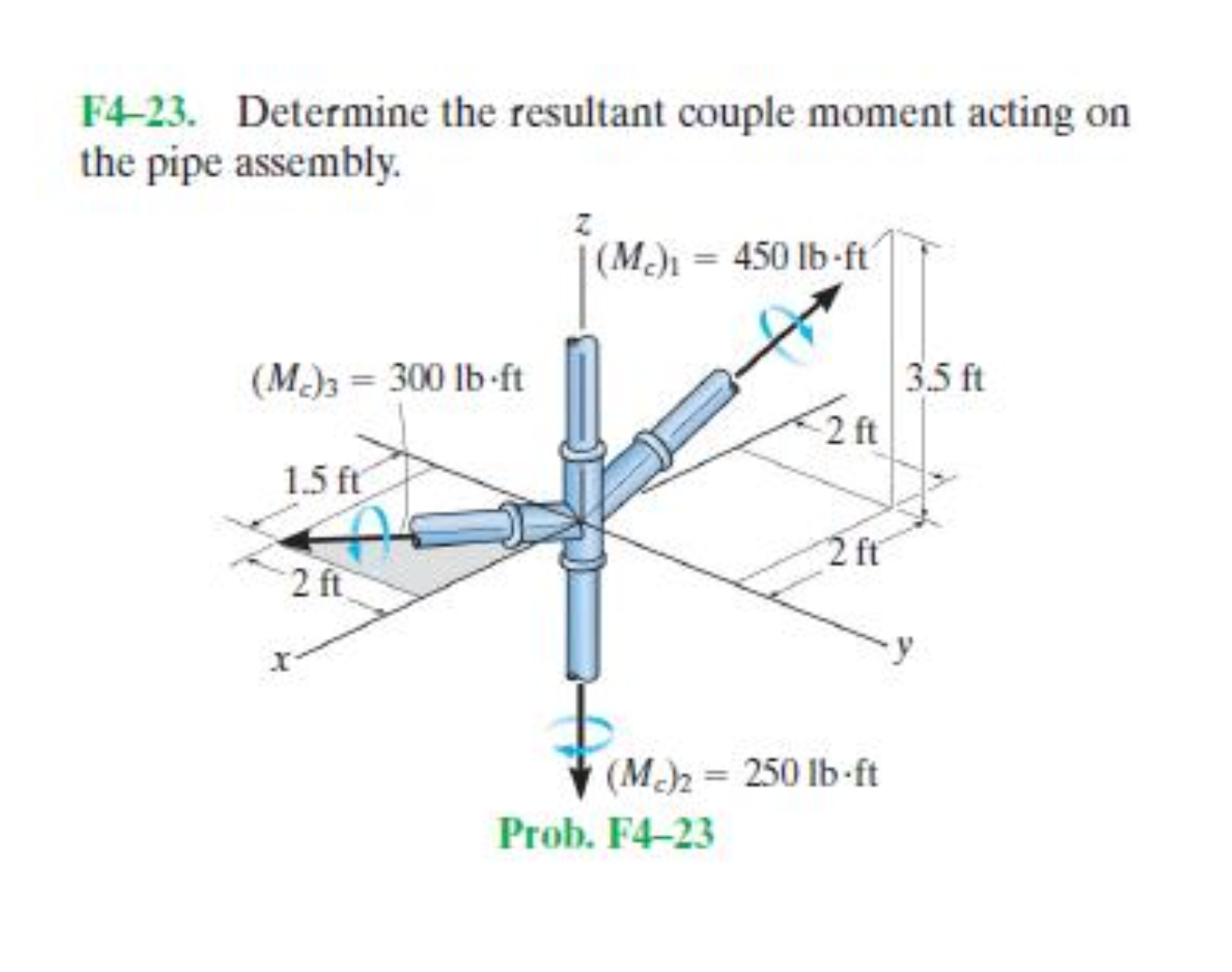
What are the steps to solve this problem? Solve (Hint: use at least 3 decimal places).
Write the coordinates for A and B
Solve for UA and UB (UA and UB correspond to Mc1 and Mc3 respectively)
Multiply Mc1 by UA and Mc3 by UB to get cartesian coordinates
Resultant moment is MR = Mc1 * UA + Mc3 + UB + Mc2
MR = - 20i - 40j + 100k
What does a moment represent?
how effective a force is at making an object rotate about a point
What does the magnitude represent?
The strength of rotational tendency
A large moment means the force is…
more effective and has more leverage
Force = “…” and Moment = “…”
Force = “how hard I’m trying” and Moment = “how much I’m actually achieving”
Formula for magnitude in 3D
Magnitude = sqrt(x² + y² + z²)
Formula for directional angles in 3D
cos alpha = Fx/F
cos beta = Fy/F
cos gamma = Fz/F

Moment formula for scalar analysis:
MO = F*d
Moment formula for vector analysis:
MO = r x F
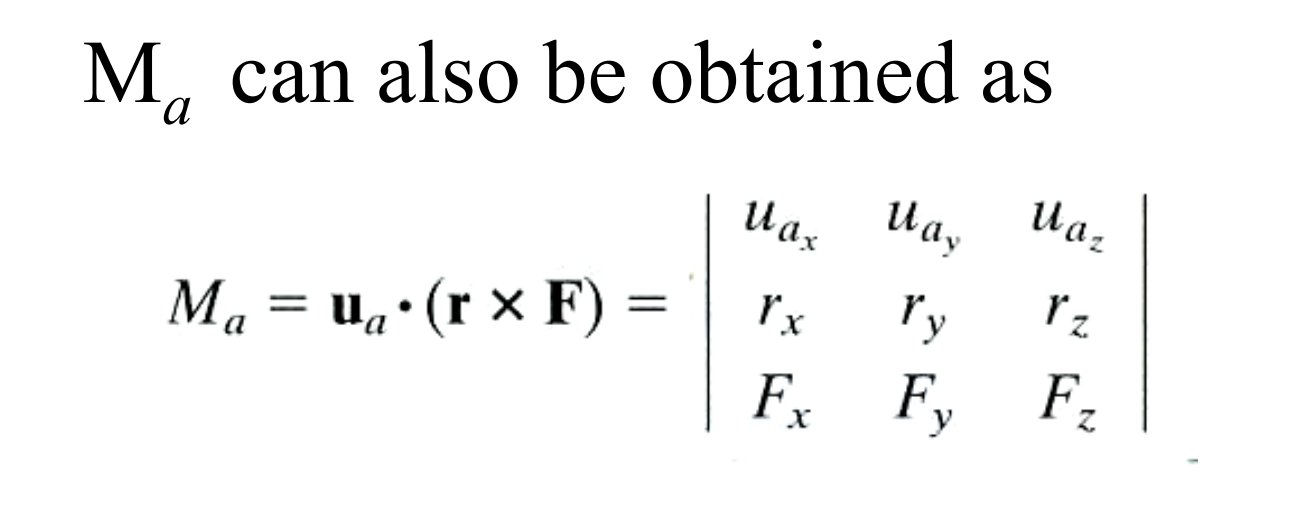
What is equation known as?
triple scalar product
What is a couple moment?
two parallel forces with the same magnitude but opposite directions, separated by a perpendicular distance “d’’
Since the moment of a couple depends only the distance between the forces, the moment of a couple is a
free vector (can move anywhere on the body)
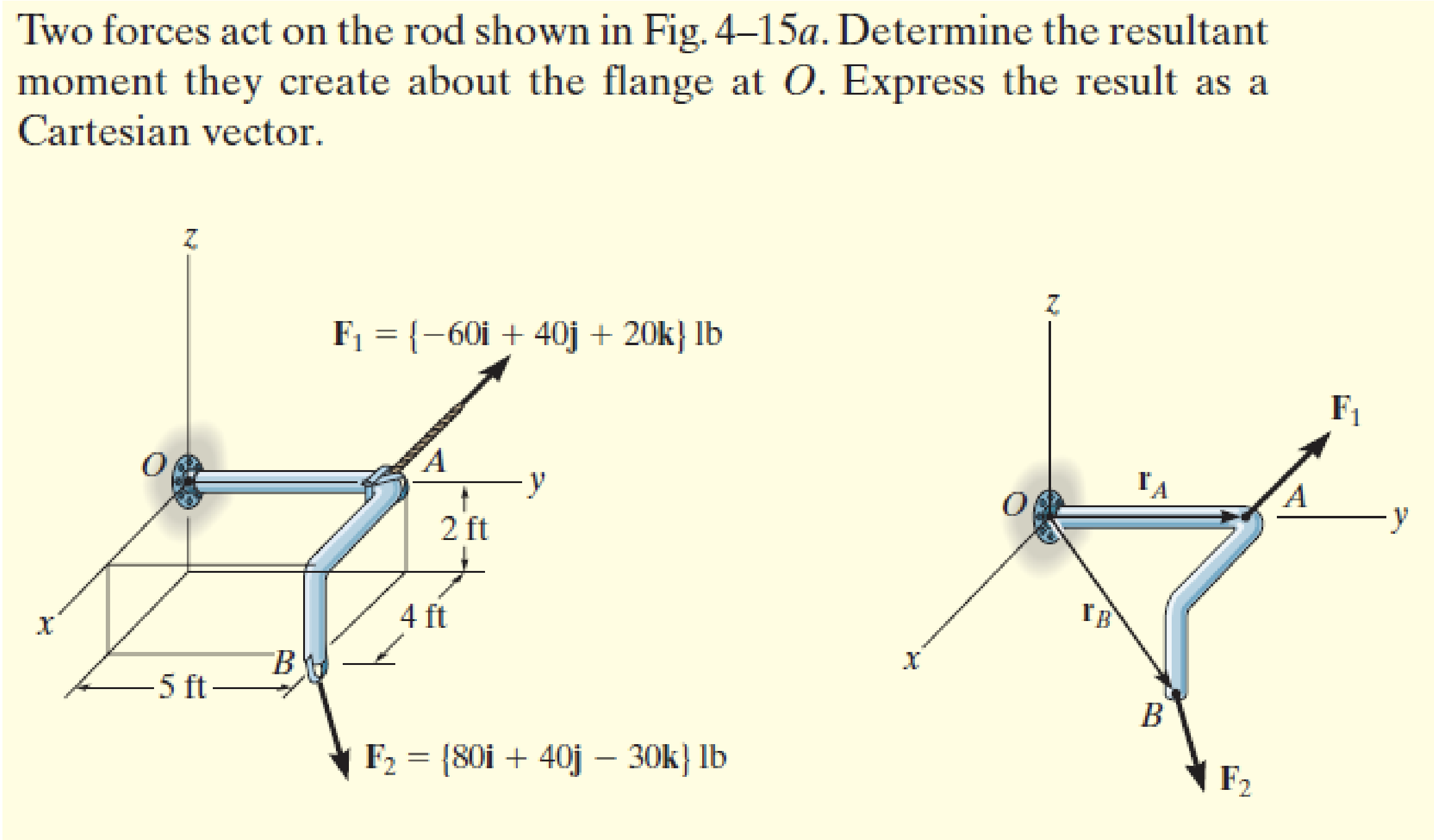
Solve.
{30i - 40j + 60k} lb ft
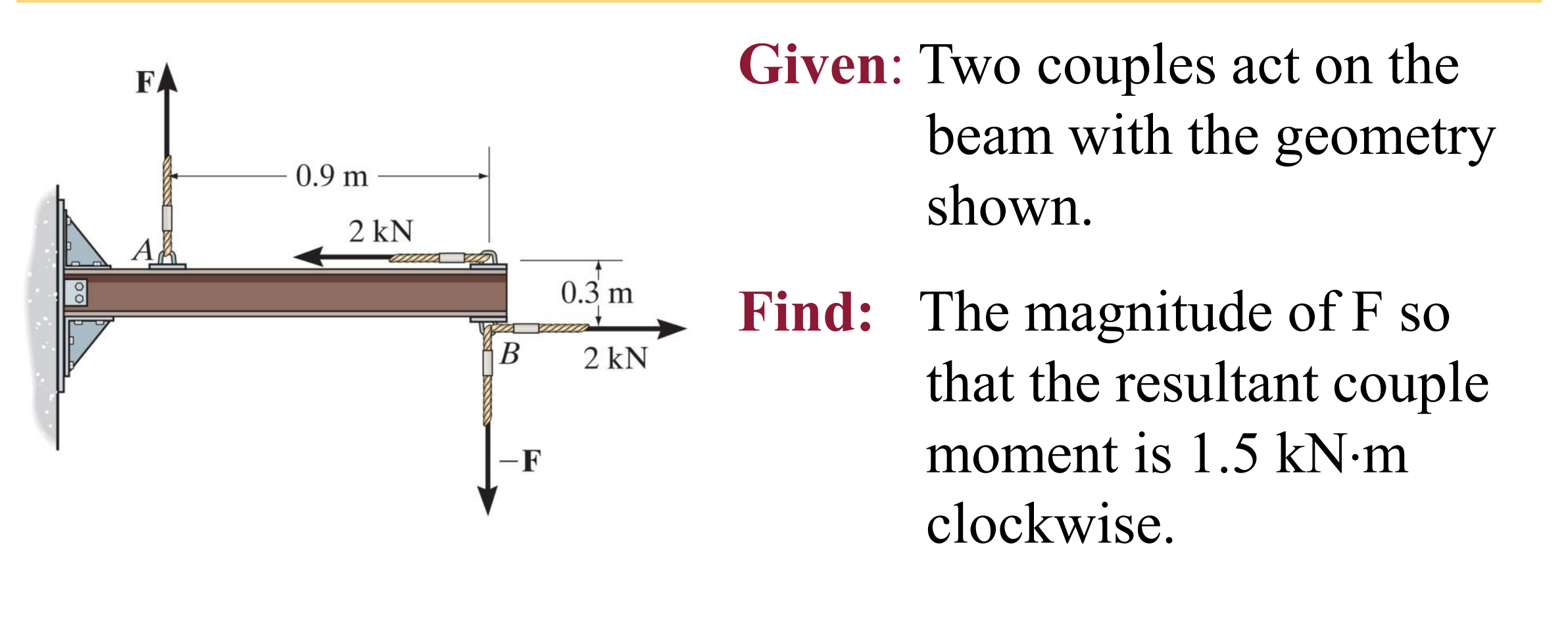
Solve.
F = 2.33 kN
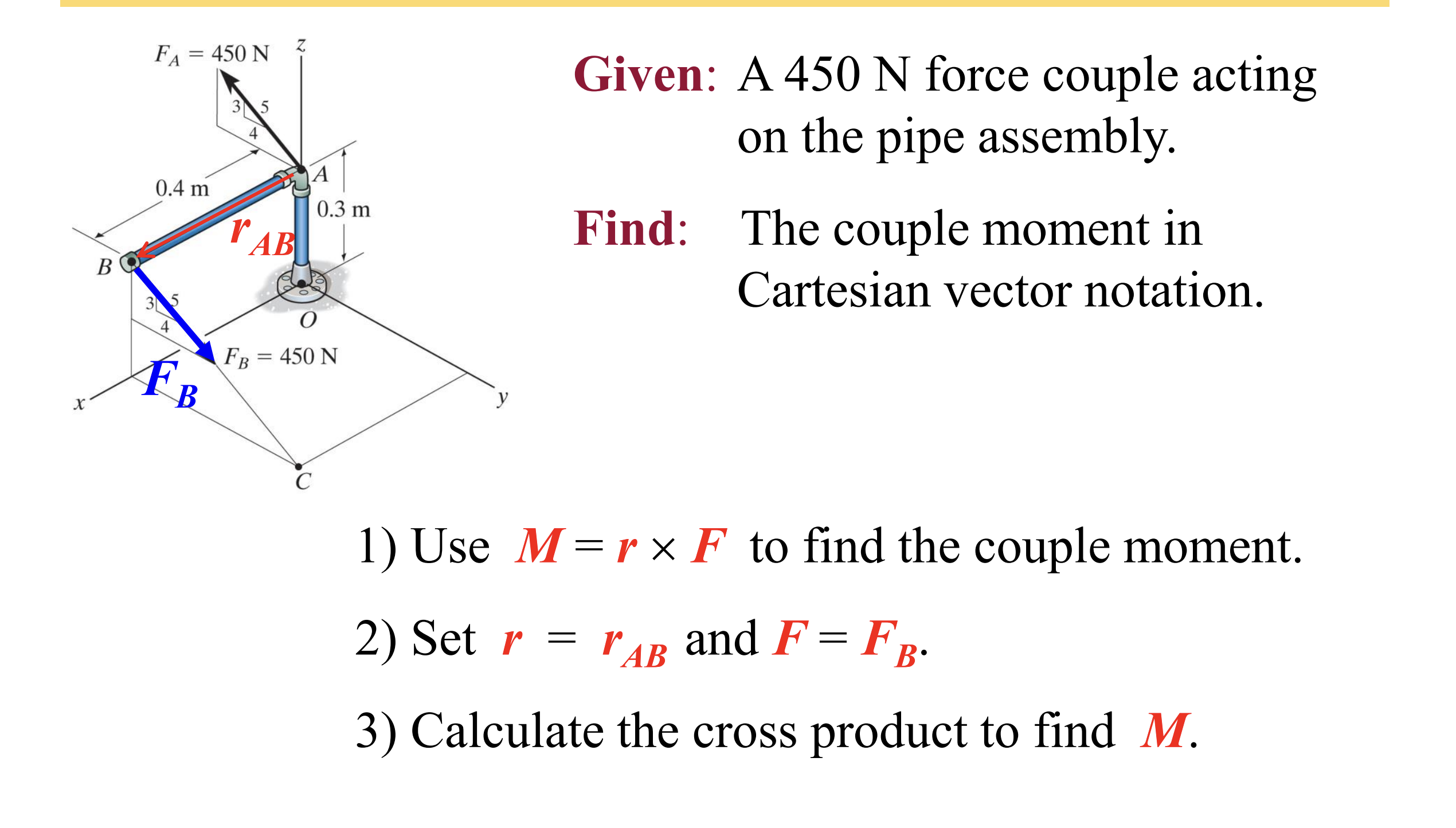
Solve
{oi + 108j + 144k} Nm
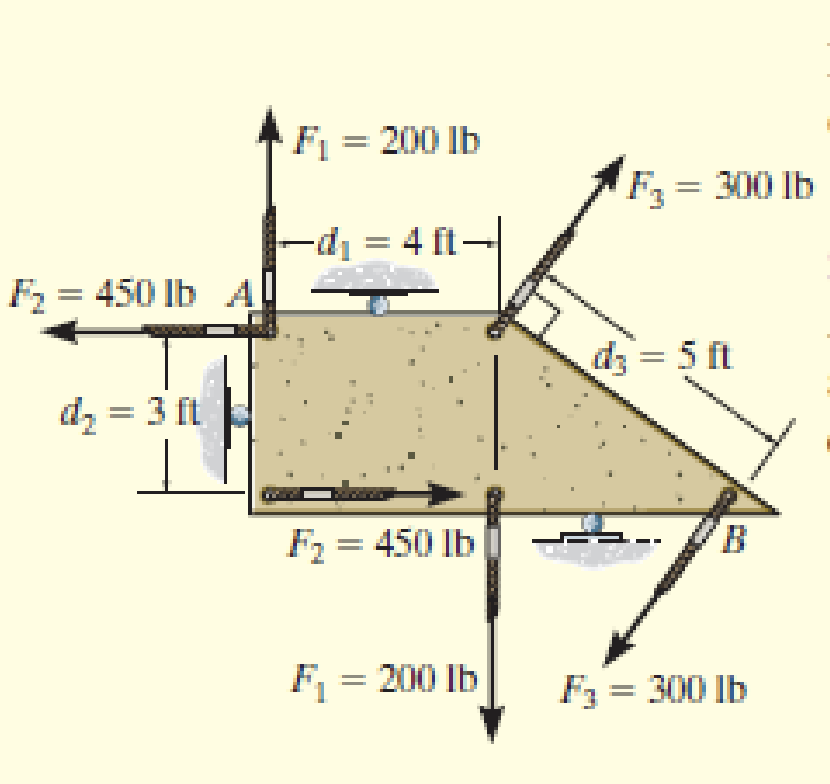
Determine resultant couple moment
-950 lbft or 950 lbft CW
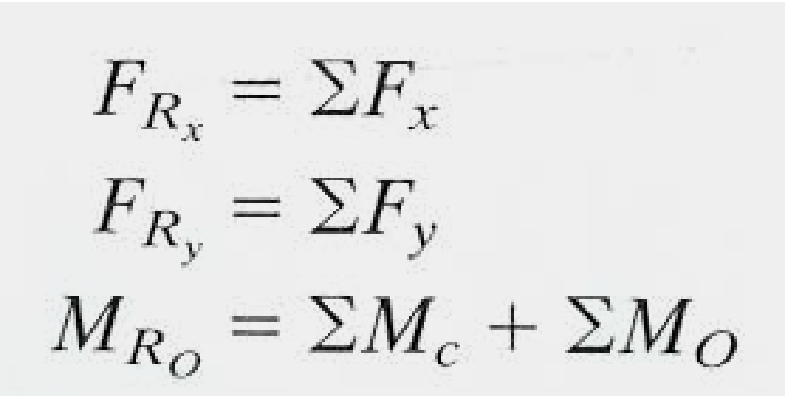
What do you use the equations in the image for?
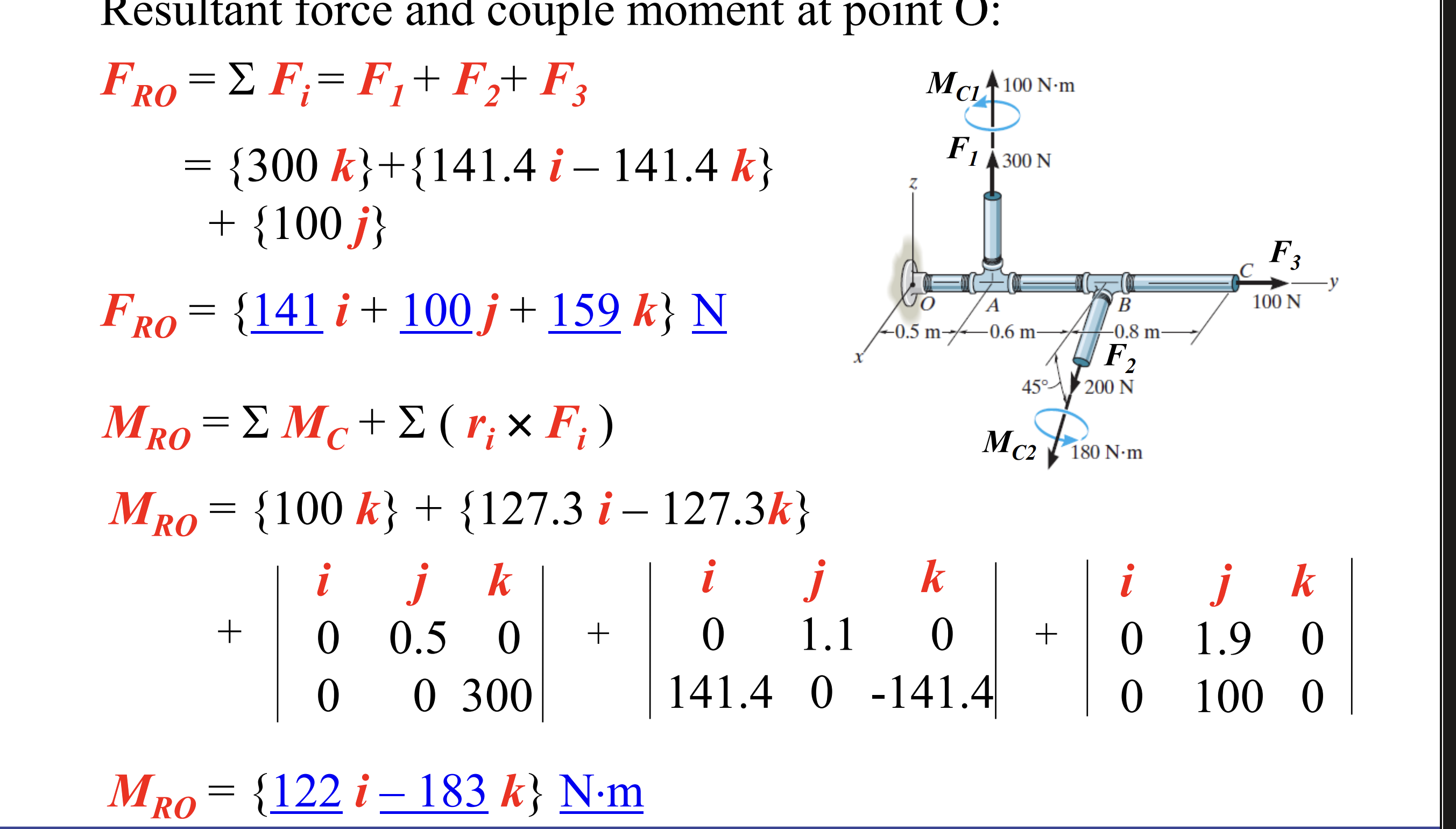
Reduced equivalent system in 2D
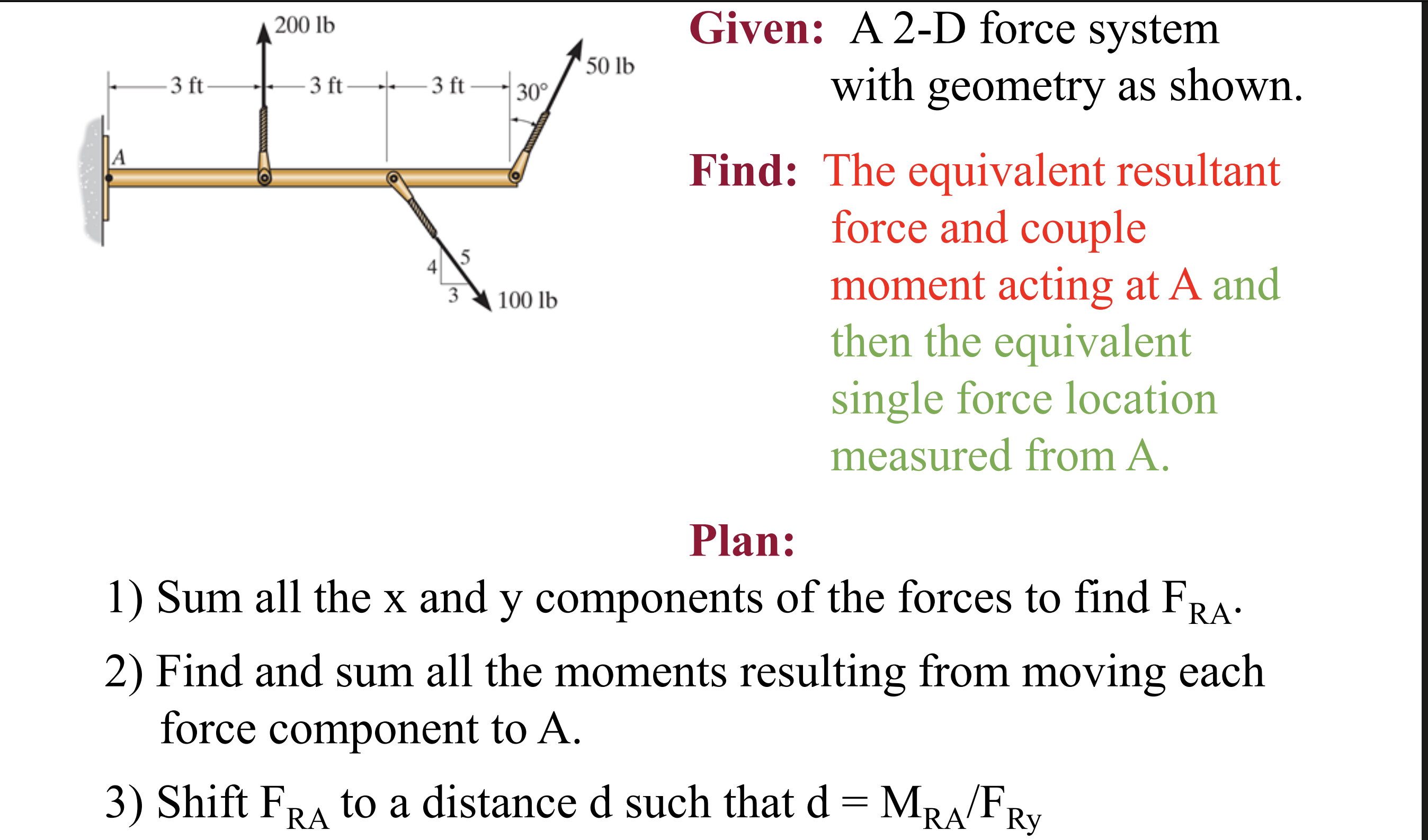
Solve
Refer to image
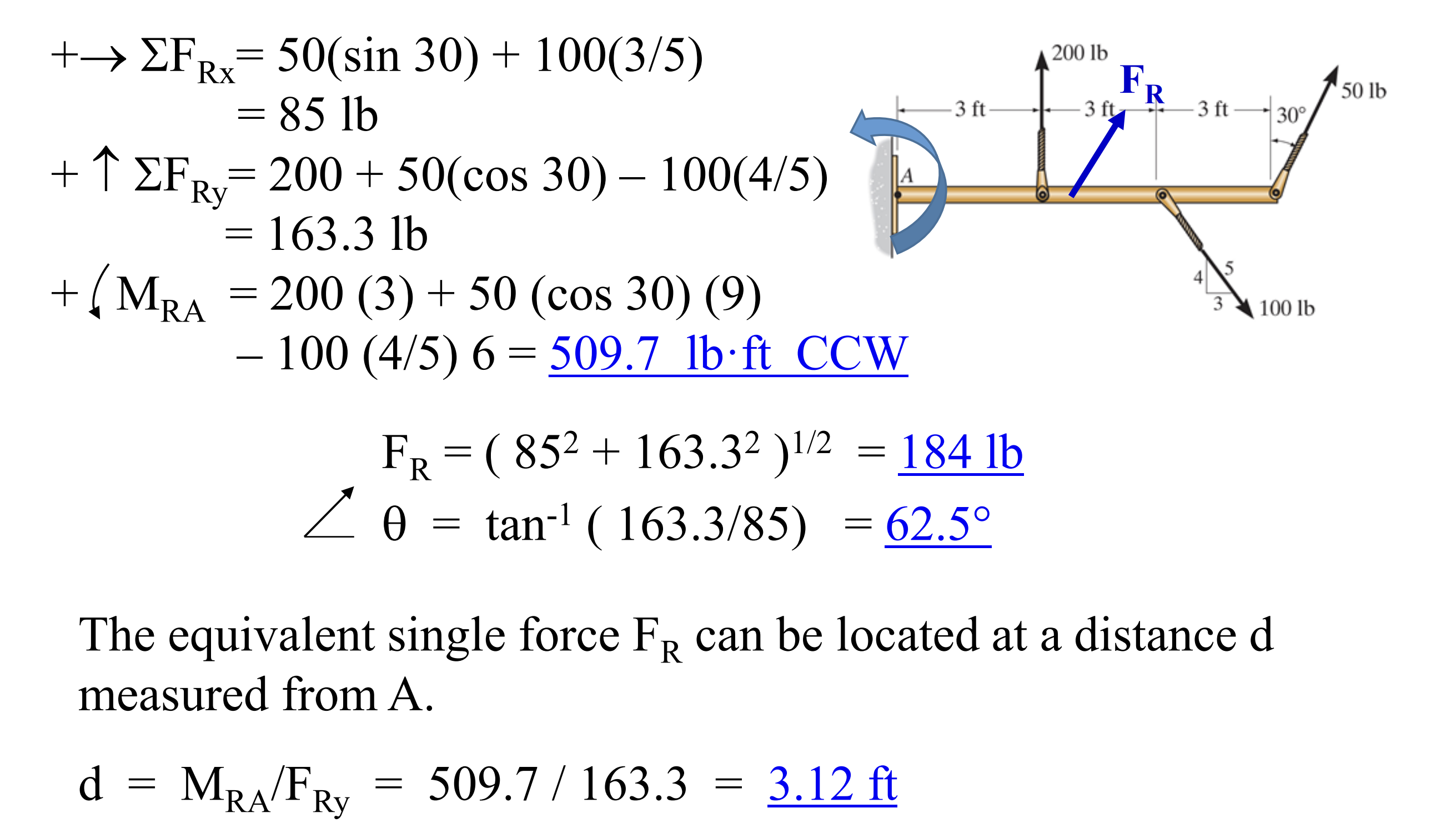
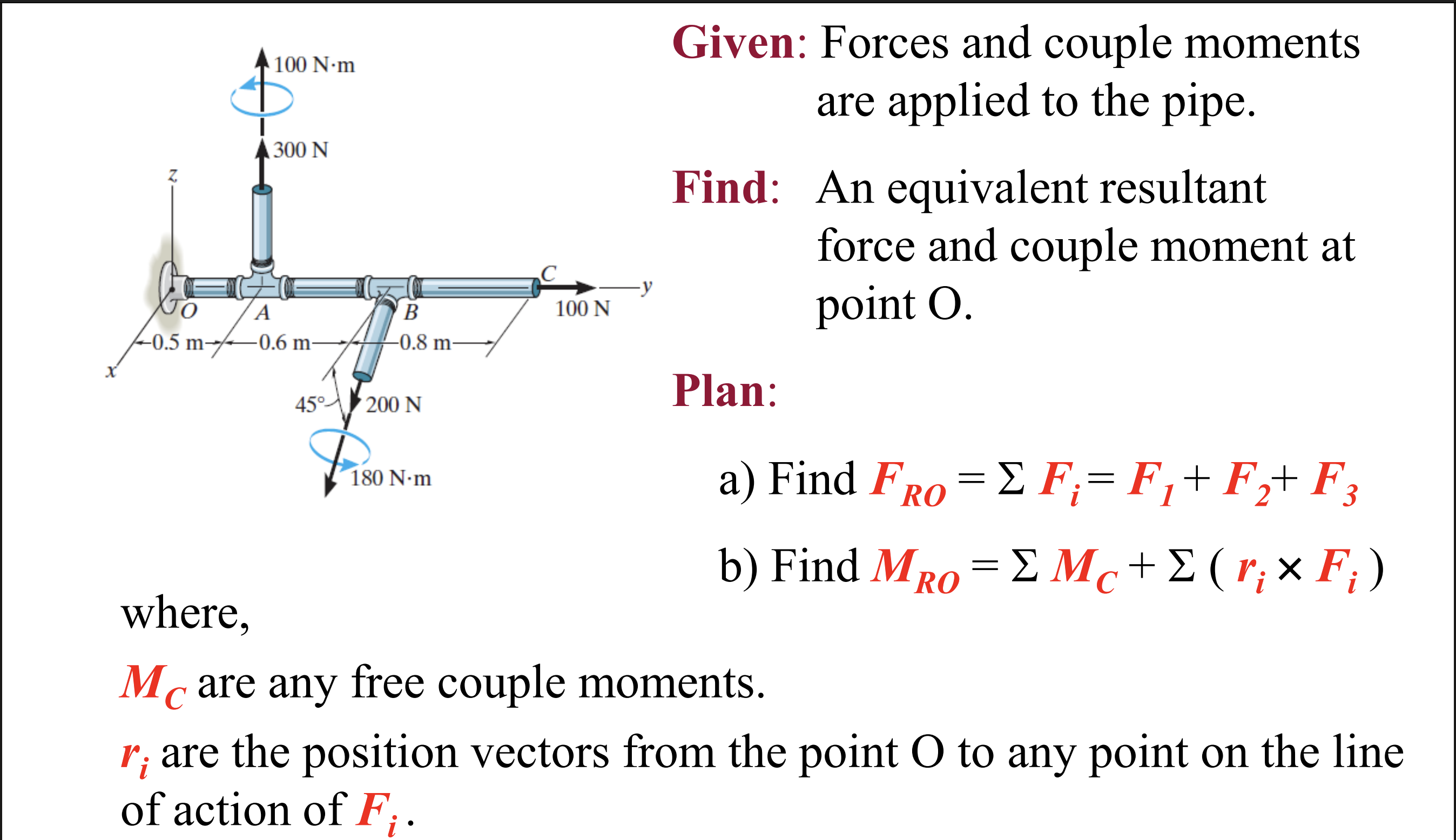
Solve
Refer to image
The centroid of a right triangle is measured ____ the width of the triangle from its base. What is the base?
One-third (1/3). The base is the tall/fat part of the triangle.
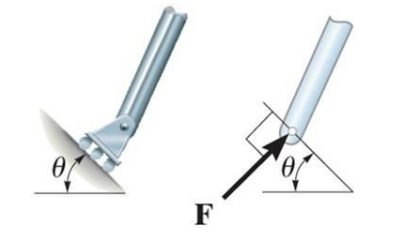
What type of support is this and how many reactions does it have?
Roller, one reaction (the reaction is perpendicular to the surface on which it rests)
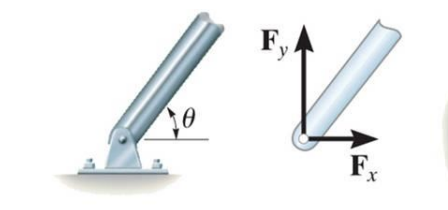
What type of support is this and how many reactions does it have?
Pin, two reactions (x and y)
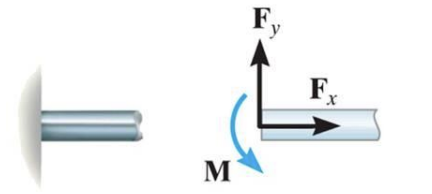
What type of support is this and how many reactions does it have?
Fixed, three reactions (x, y, and a moment) ← (2D)
If a support prevents translation of a body in a given direction…
a force is developed on the body in the opposite direction
If a rotation is prevented…
a couple moment is exerted on the body in the opposite direction
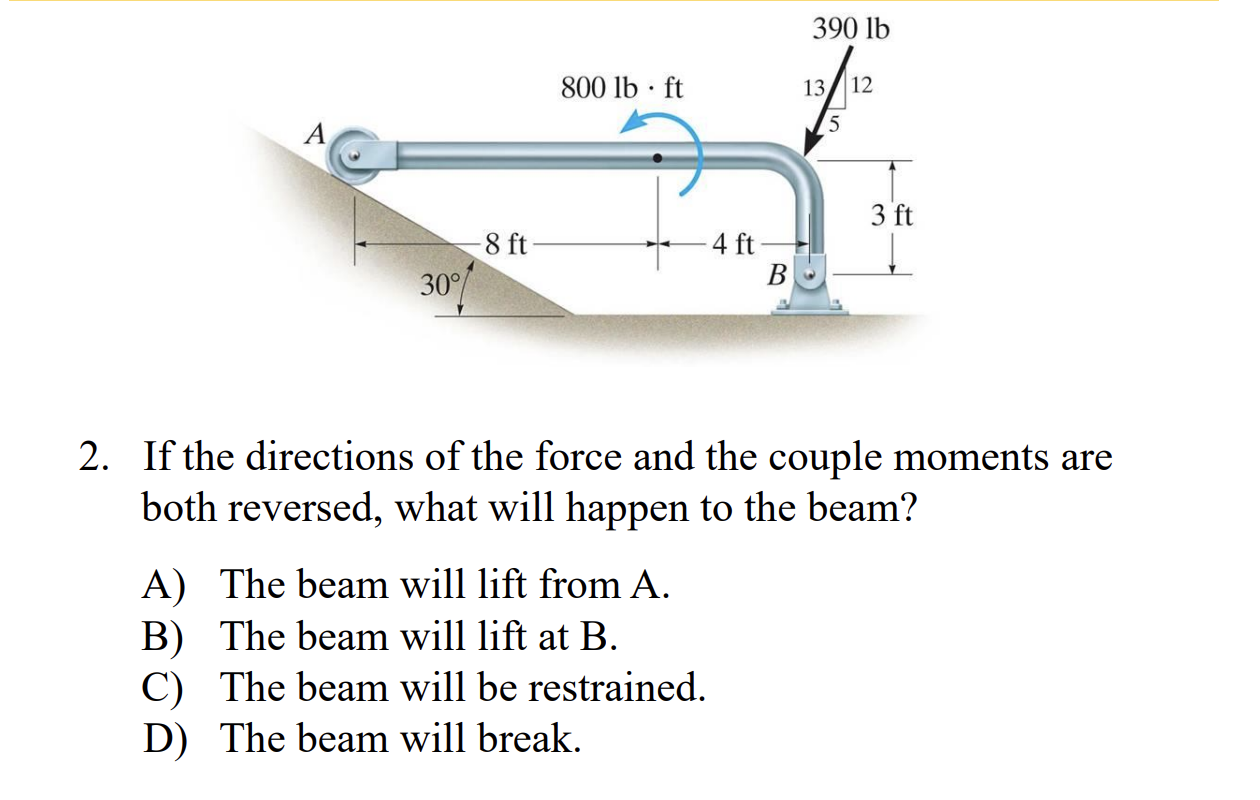
Refer to picture
The beam will lift from A
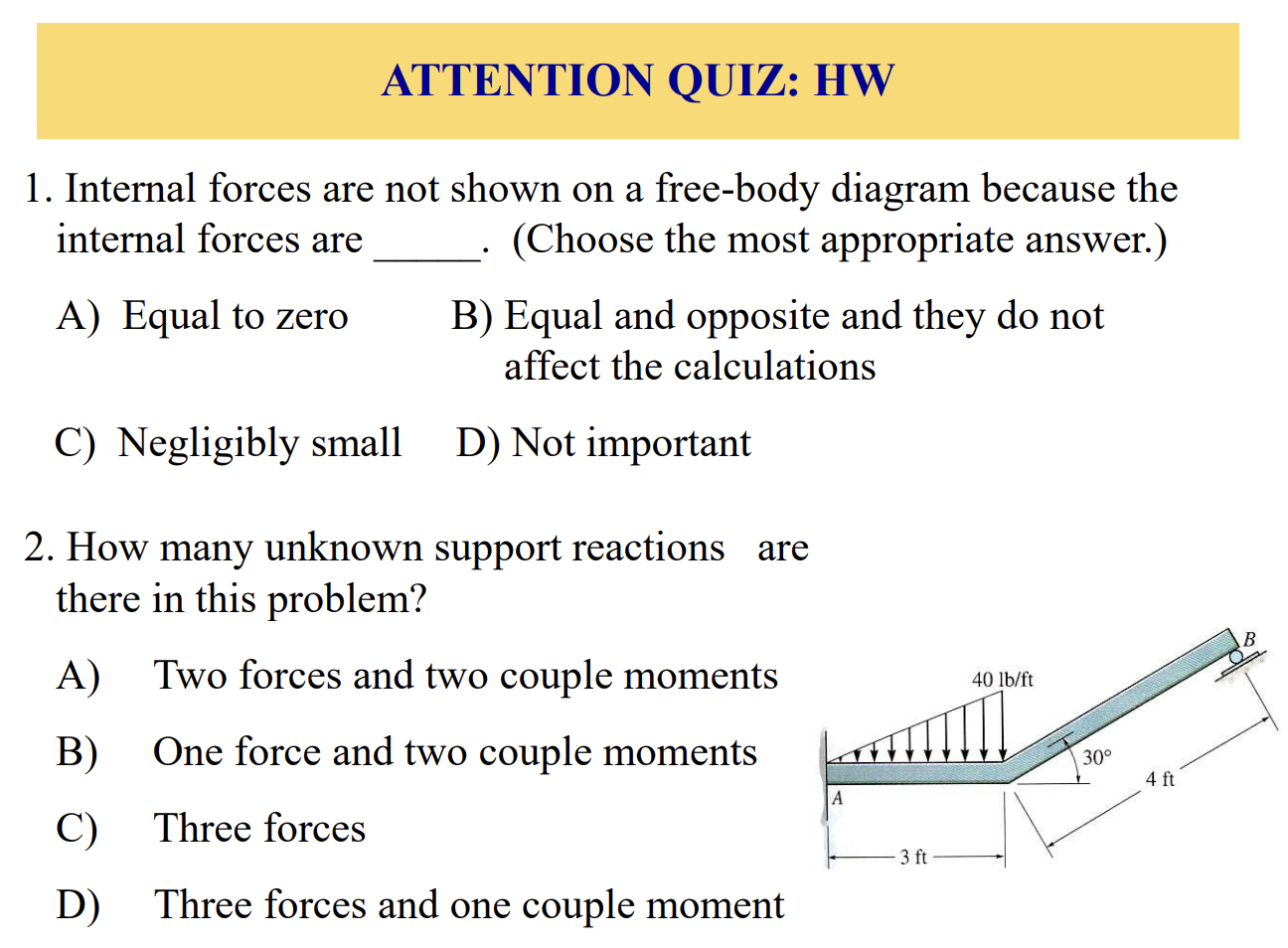
Refer to image
B
D
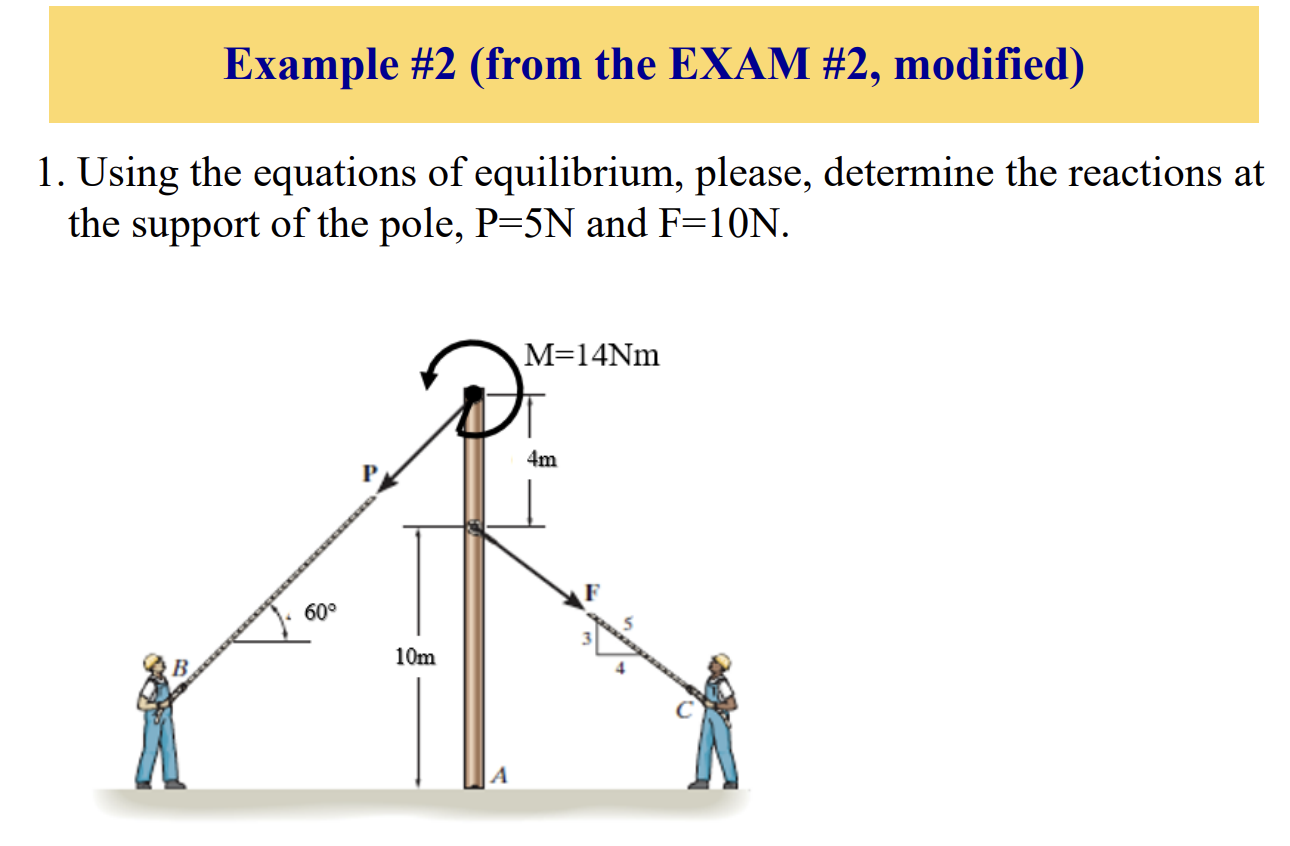
Solve
Refer to image
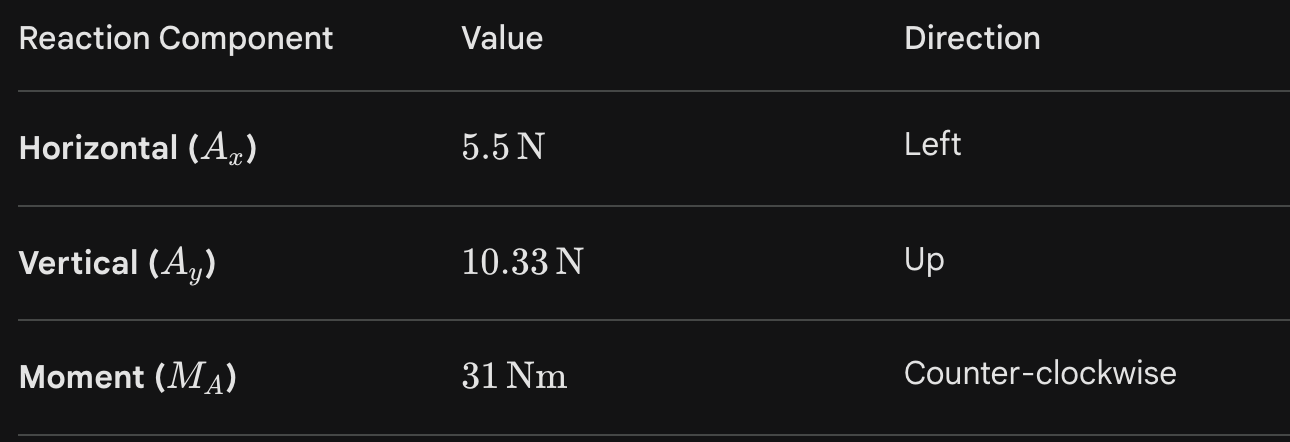
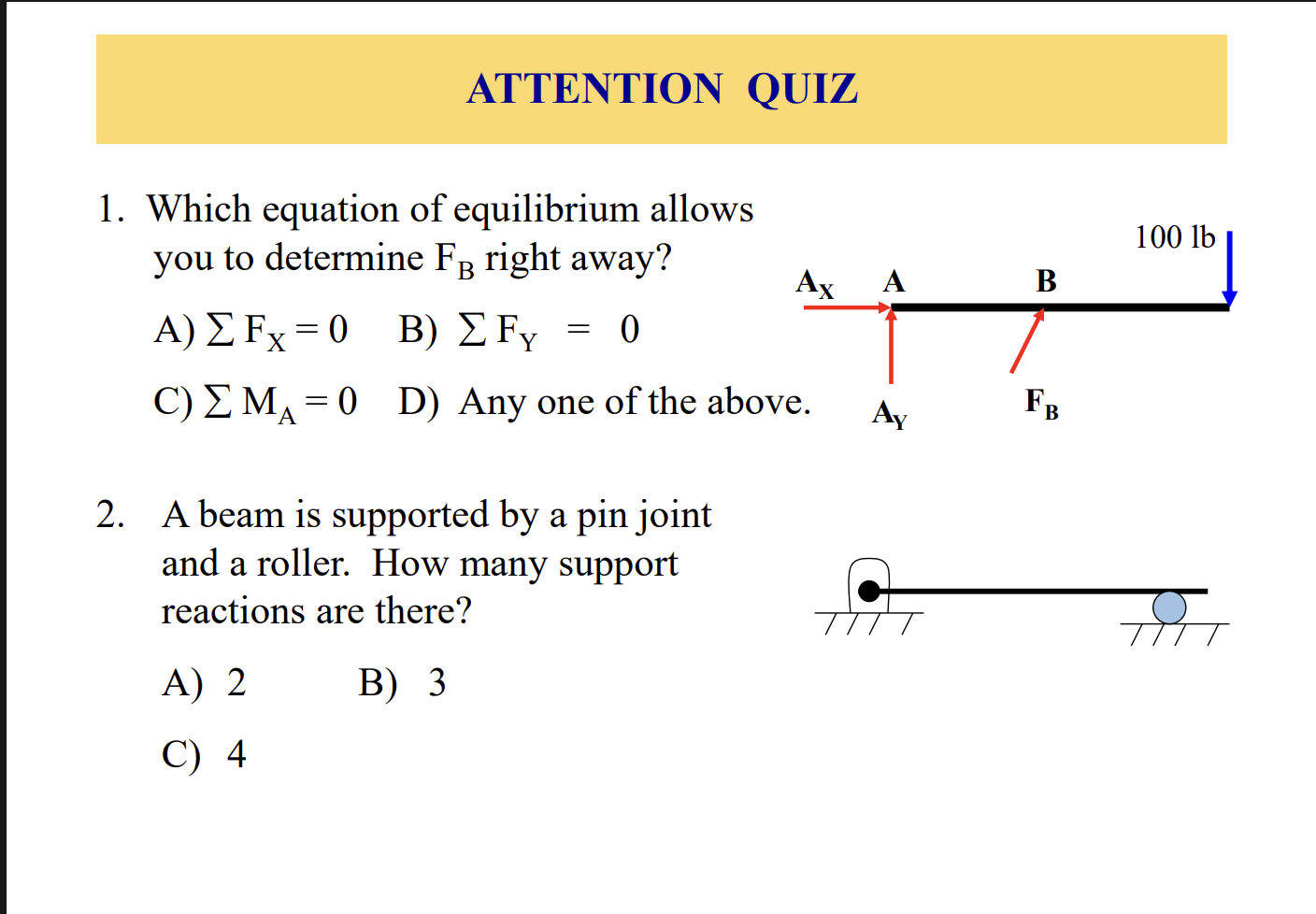
Refer to image
C
B
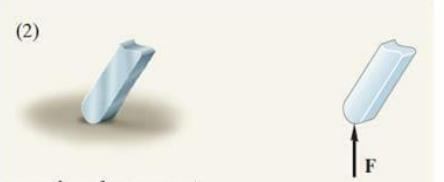
What type of support is this and how many reactions does it have?
Smooth surface support, 1 reaction
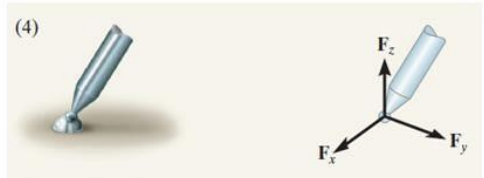
What type of support is this and how many reactions does it have?
Ball and socket, 3 reactions
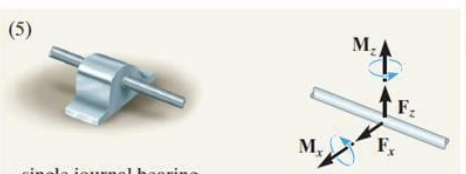
What type of support is this and how many reactions does it have?
Single journal bearing, 4 reactions
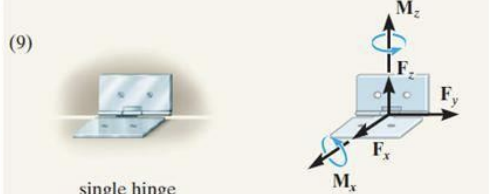
What type of support is this and how many reactions does it have?
Single hinge, 5 reactions
Choosing the point where the max number if unknown forces are present…
simplifies the solution
What are redundant constraints?
When a body has more supports than necessary to hold it in equilibrium
A problem that is statistically indeterminate has…
more unknowns than equations of equilibrium
(3D) When 2 or more aligned bearings/hinges are used…
only force members are generated and no moments are created

