Technical Design - Exam 2
 Studied by 0 people
 Call Kai
 Learn
Learn Practice Test
 Spaced Repetition
 Match
Match Flashcards
 Knowt Play
1/49

There's no tags or description
Looks like no tags are added yet.
Name | Mastery | Learn | Test | Matching | Spaced | Call with Kai |
|---|
No analytics yet
Send a link to your students to track their progress
50 Terms
Hem
Turns under a raw edge and secures it to the garment
Lockstitch Machines
Most frequently used sewing machines that use a top thread and bobbin thread that interlock together
Chainstitch Machines
Sewing machine that uses looper threads instead of bobbins. These are larger cones of thread, making them a faster machine that makes stitches that look like chains.
Safety Stitches
Combines a row of overedge stitches with a row of straight lock stitches or chainstitches, creating a very durable seam.
Coverstitches
Covers top and bottom of seams of flat seams (FS class). Very strong and stretchable, but uses large amounts of thread.
Stitches per Inch
SPI
Seamline
Place marked on the pattern piece where the stitching line will be to bring the seams together
Seam Allowance
Distance from the seamline to the cut edge (raw edge) of the fabric
Seam
Stitched joint between two or more pieces of fabric
Busted Seam
A plain seam where the seam allowances have been pressed open and are flat
Superimposed Seams
Created by stacking fabric plies and sewing together near the edges
Enclosed Seams
The second most common seam type that requires two separate stitchings, join and topstitching. Fabric plies are sewn face sides together, opened out, and topstitched.
Plain Seams
The most common seam type, general seaming.
Reinforcing Seams
Stayed Seams: Taped seams, Strapped seams, and Stripped seams
French Seams
Seam within a seam, a narrow seam encased in a wider seam. Good for thin, lightweight, or sheer fabrics.
Lapped Seams
Constructed by joining all thicknesses from the face side. Seam allowances of two or more fabric plies are sewn together (fabrics extend in opposite directions).
Flat Seams
Joins fabrics along the edges, butting them together, or overlapping them slightly.
Bound Seams
Requires a separate piece of fabric that encompasses the edge of one or more plies of fabric. This can only be used at the edge of a garment.
Stayed/Stripped Seams
Tape covers the join the seam.
Stayed/Strapped Seams
Strip is used to cover a raw seam. Can be used inside to cover raw edges or outside as a decorative trim over a seam.
SSa
Plain Seam
SSe
Enclosed Seam
LSbm
Mock Flat Felled Seam
SSae
French Seam
SSab
Taped Seam
SSag (decorative)
Strapped Seam
SSf (neckline)
Stripped Seam
LSc
Flat Felled Seam
FSa
Flat Seam
BSe
Bound Seam
101
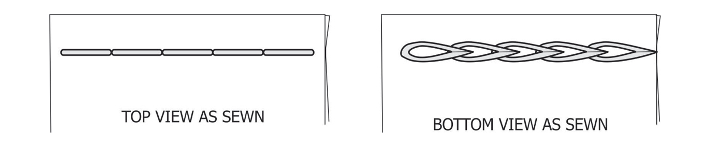
301
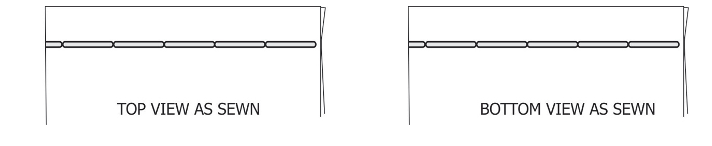
301 Twin Needle
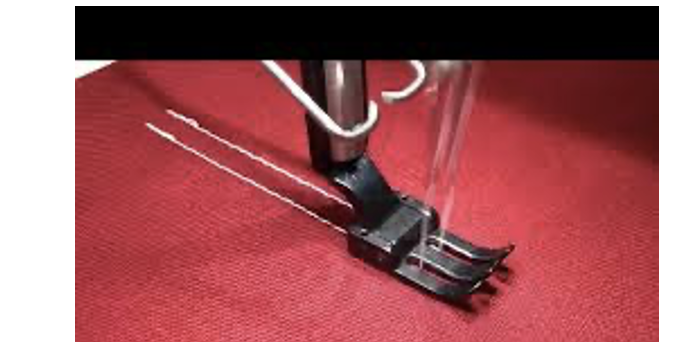
304
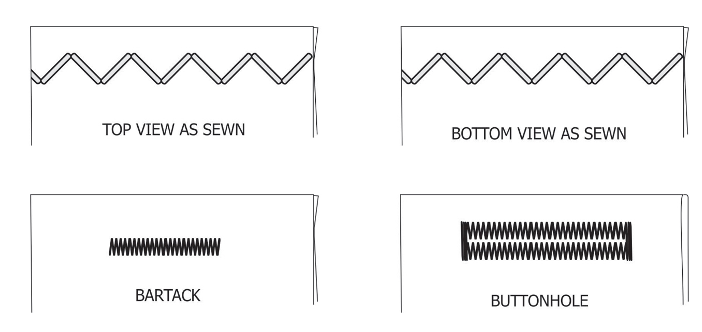
401

401 Twin Needle
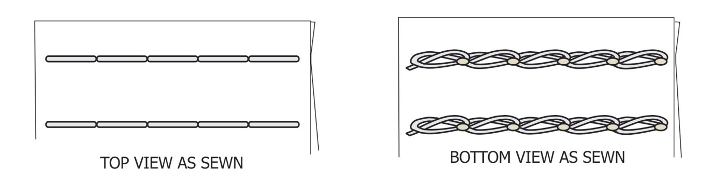
406
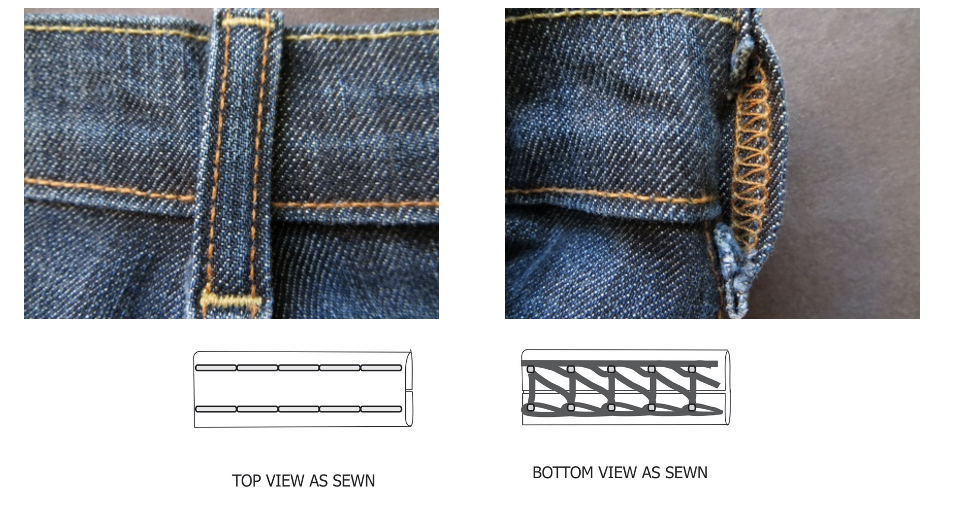
504
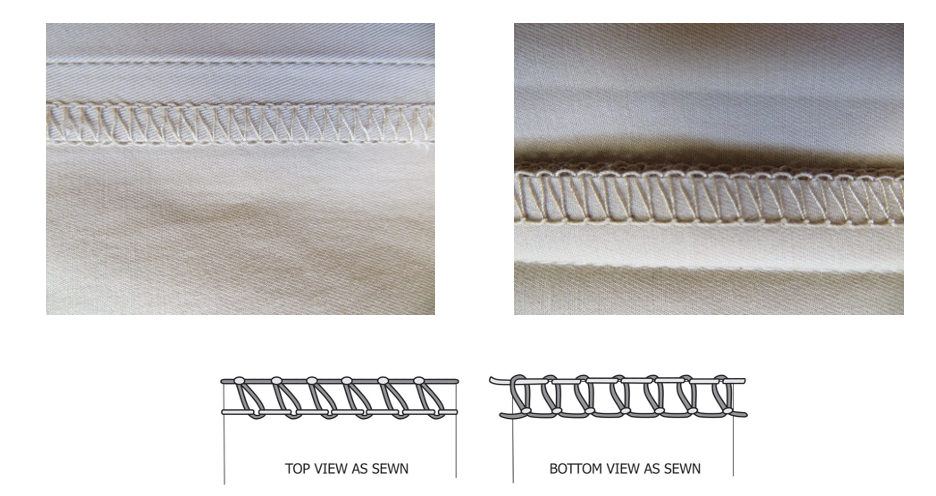
505
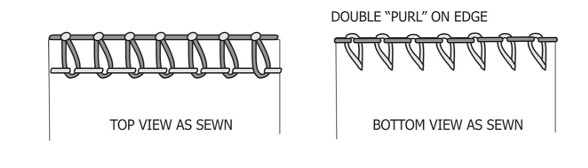
512
Mock Safety Stitch
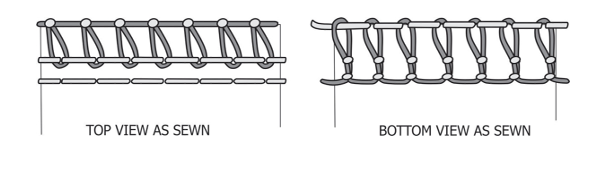
514
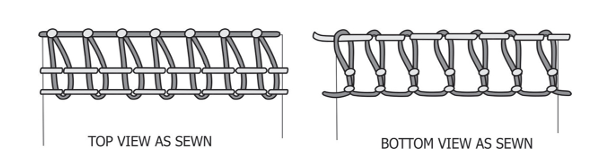
516
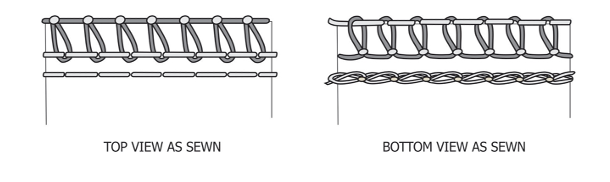
602
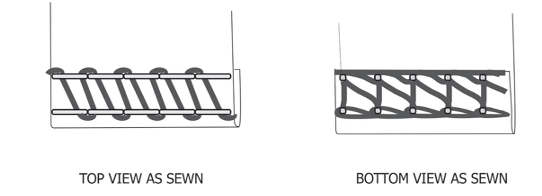
605
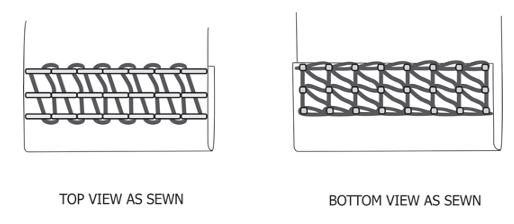
EFa
Single-fold hem
EFb
Double-fold hem
EFc
Blind-stitched hem
EFu
Spaghetti straps
EFh
Belt loops
OSa
Topstitching
 Note
Note  Flashcards (22)