IS265 Ch 10 - Information Based Business Processes
 Call Kai
 Learn
Learn Practice Test
 Spaced Repetition
 Match
Match Flashcards
 Knowt Play
1/12

There's no tags or description
Looks like no tags are added yet.
Name | Mastery | Learn | Test | Matching | Spaced | Call with Kai |
|---|
No analytics yet
Send a link to your students to track their progress
13 Terms
What is a process?
Series of steps or tasks required to achieve a specific goal.
A process may
o extend across many organization boundaries
o involve a large number of individuals
o require many decisions and actions along the way
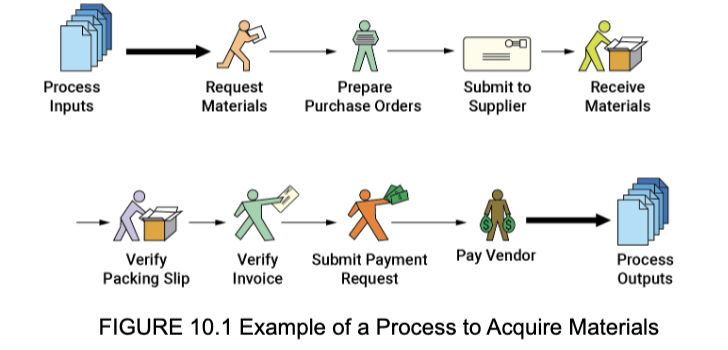
all-or-nothing concept of processes
a process needs to be completed or not done at all
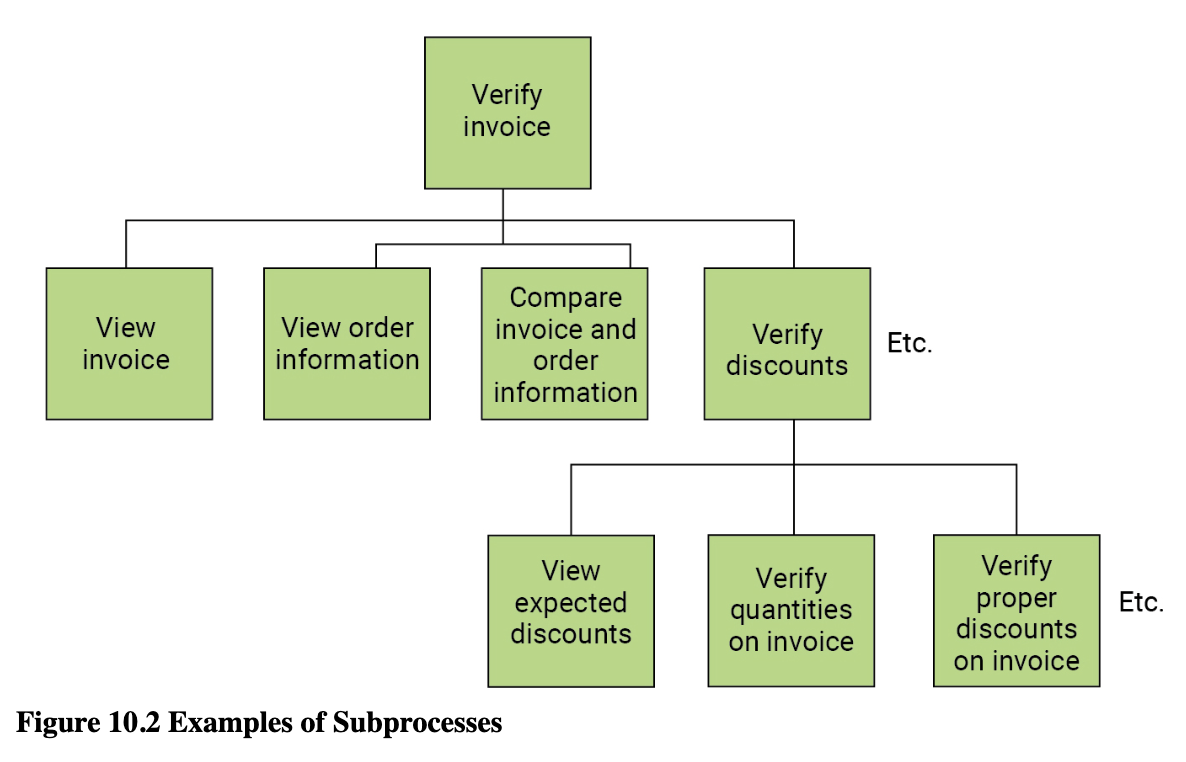
Sub-processes what is it
a task or process that is part of a larger process
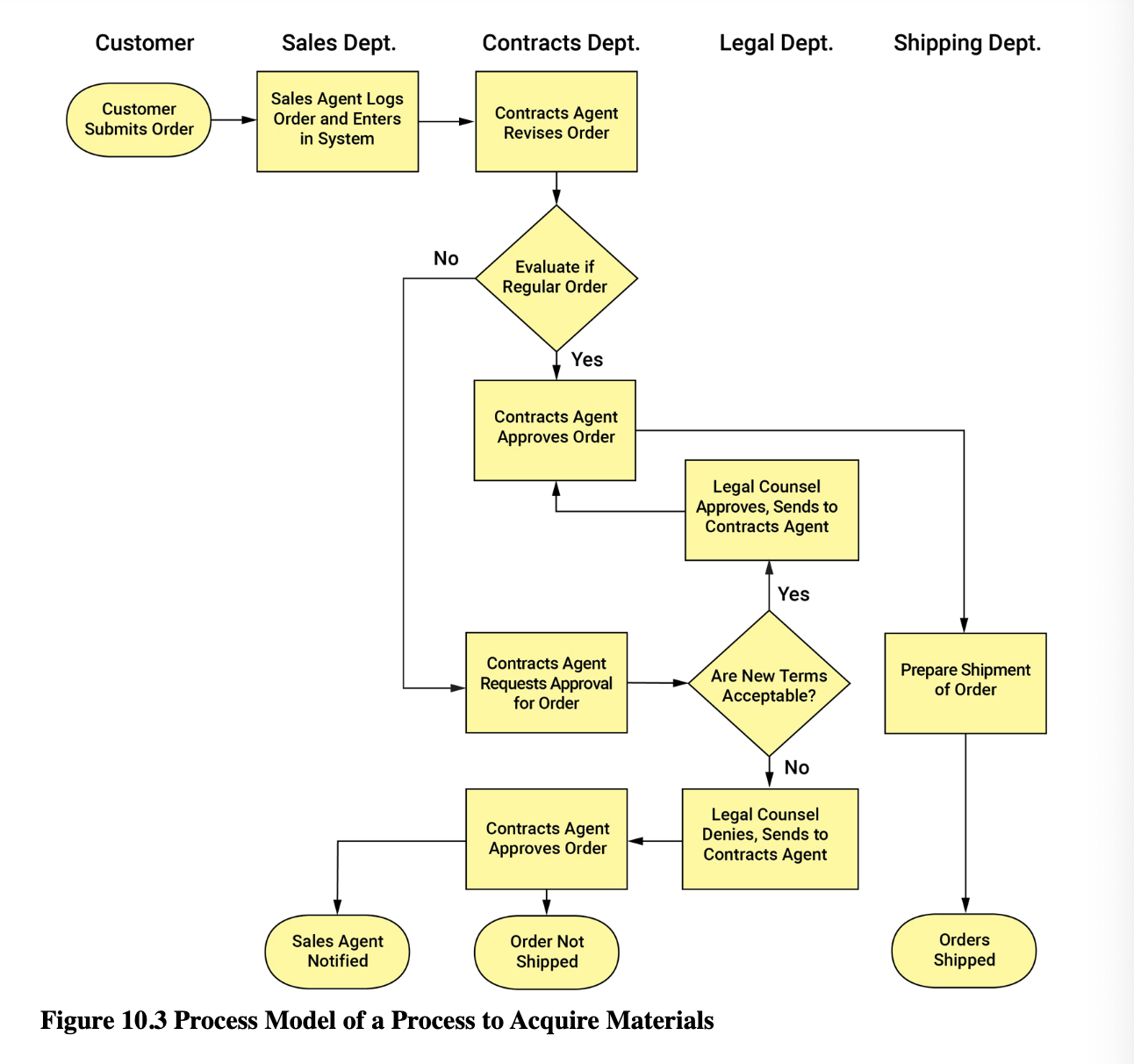
what is process modeling
o Mapping processes and sub-processes
o Helps understand the various processes that occur at different levels in organizations and how they interrelate
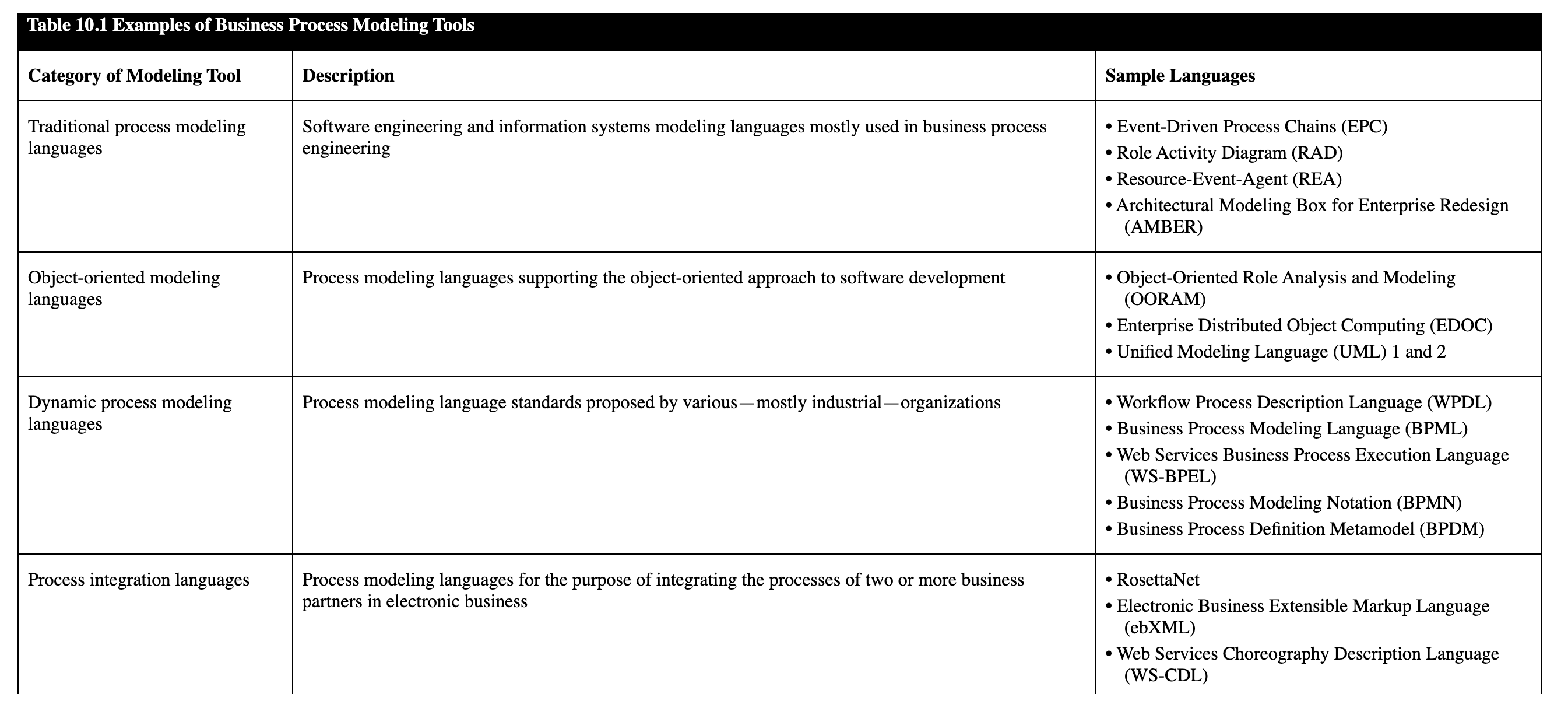
what are process modeling tools and four types
software available to help analysts describe business processes and create business process models or diagrams
four types of tools
traditional process modeling languages
Object oriented modeling languages
dynamic process modeling languages
process integration languages
how do technology and processes relate
Technologies play an ever increasing role in how business processes are performed and modified.
Technology can also be a barrier or constraint to business process improvement
what are legacy systems
older, large applications that may be mission critical
are hard to replace and are somewhat inflexible
used to support key business processes
general characteristics of process improvement
Business processes are inherently cross-functional
Business Process Reengineering or Business Process Improvement seeks to break down organizational silos by redesigning business processes
what is business process reengineering (BPR) vs business process improvement (BPI)
business process reengineering (BPR)
the redesign of business processes to improve how work is done across many functions within the organization
fundamentally rethink how the whole process is gonna go
Instead of just improving what already exists
business process improvement (BPI)
the redesign of a business process that is simple enough that it can be done with one function of the business or without significantly involving other business functionality
Take a process and make it better
Ex. checking out on a site → every extra click needed = a cart abandoned and a sale lost
reengineering = extreme
improvement = smaller part improvement
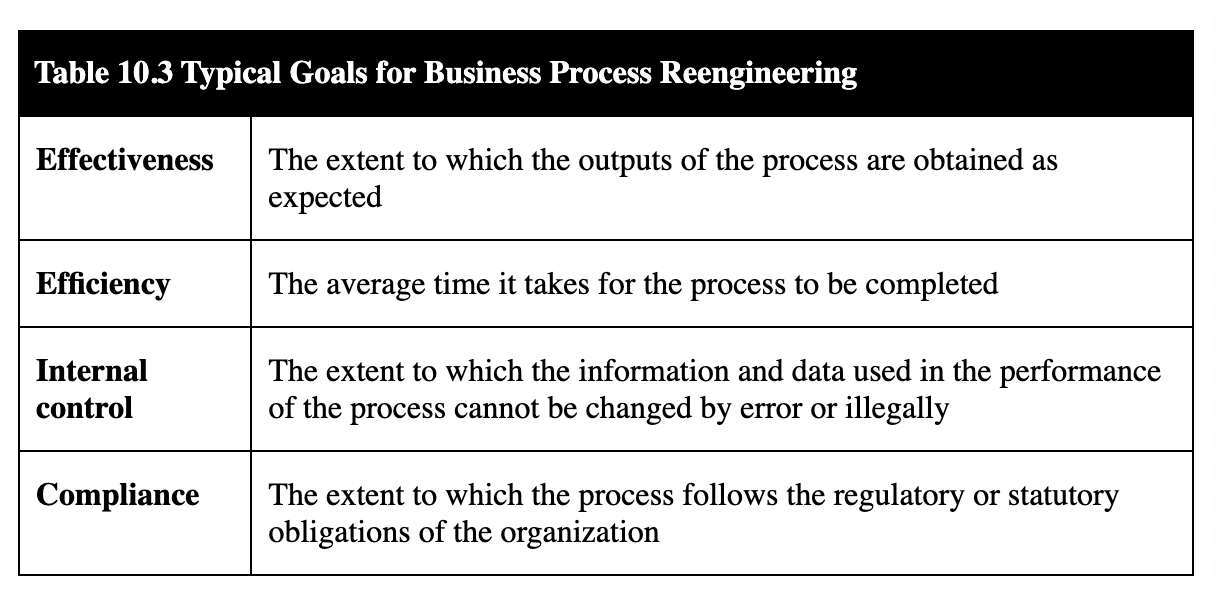
four typical goals for business process reengineering
AI in process automation and two specific types that are popular
Robotic process automation (RPA)
software that can be used to earily develop and manage toold that can replace humans or automate repetitive or routine workplace tasks that are based on rules
ex. invoice creation, managing inventory updates, customer service
Hyperautomation (Intelligent Process Automation)
uses AI to automat processes and augment what humans can do
automate processes that do not always follow rules for repetitive tasks
3 levels of reengineering/process improvement
Fundamental (rethinking)
Why does the firm do things a certain way?
what can be done better?
Ex. do we acc have to physically driver around the entire refinery or can be measure it and motorize it with a button?
Radical (redesign)
reinvention or re-creation as opposed to making superficial changes or minor enhancements
Can we reinvent something?
Ex. instead of engineer who comes and checks the thing in the refinery, what if we just take the word of the inspector and no try to optimize the design? (just an example of smtg extreme)
Ex. what if we have a computer send money back and forth instead of using the regular mail?
Dramatic (improvements)
focuses on achieving significant improvements in performance
3 levels of change
Automate - first order
technology performs process more efficiently
ex. replacing human labor with technology, usually easy to justify because benefits can be quantified
Informate - second order
technology informs people
this can result in change in how business processes are performed
Transform - third order
fundamental change of process
most difficult level of change
ex. Changes in technology can lead to layoffs of majority of staff
Explore top notes

