12. Human impacts biodiversity
 Call Kai
 Learn
Learn Practice Test
 Spaced Repetition
 Match
Match Flashcards
 Knowt Play
1/41

There's no tags or description
Looks like no tags are added yet.
Name | Mastery | Learn | Test | Matching | Spaced | Call with Kai |
|---|
No analytics yet
Send a link to your students to track their progress
42 Terms
What is biodiversity?
ndication of the number of different species in a habitat & how evenly balanced
the numbers of individuals are across the species
Agricultural practices that reduce Biodiversity (4)
Increased use of monoculture
Nutrient enrichment of soils
And loss of hedgerow (and woodland)
Increased use of pesticides
What is monoculture?
One crop being grown in a field / large area of farmland
What are the disadvantages of monoculture?
Reduces biodiversity
Increase in pest population specific to the crop
Reduction of particular mineral content in soil (specific to needs of the crop)
‘Why is nutrient enrichment of soils used
To maximize crop yield / growth
(nitrate = aa & protein, phosphate = ATP, nucleic acids)
Why is the use of artificial fertiliser harmful?
Extra nitrate stimulates fast growth of a crop in comparison to other plants
(outcompetes them) = less biodiversity,
What else is nutrient enrichment used for and what are the other disadvantages?
Maintain high stocking rates (lots of grass to feed higher numbers of livestock)
Loss of soil crumb texture (soil particles less varied in size which reduces air spaces in soil) & makes erosion of fine soil particles easier
What are disadvantages to Loss of hedgerow (and woodland)
Reduces biodiversity (less habitats & food for many species)
Species at higher trophic levels In food chains lack food
Hedgerows act as wildlife corridors. What are these and why are they so important?
Areas linking woodland areas or habitats that are species rich
Allow movement & dispersal of species
Why might removal of hedgerows take place?
Make more land available for agriculture (& use of larger machines in larger sized fields)
Greater soil erosion – lack of protection from wind & rain, less roots of trees / shrubs to help hold soil in ground by binding
What are pesticides?
Kill organisms of many species not just target pest
If soil organisms killed – less decomposition & aeration of soil possible
Natural predators of pest may be killed – lead to increased numbers of pests (pest resurgence) as a result
Herbicides – (kill weeds) – reduces biodiversity of non-crop plant species & less variety of food for animals = less animal biodiversity
Some pest species may become resistant to pesticide
Bioaccumulation of pesticide in food chain – animals at higher trophic levels eat other organisms containing pesticide that the levels in their bodies is now toxic
What is polyculture?
Growing a variety or range of crops at same time / over a period of time in an area
What are the advantages?
Greater range of habitats & sources of food
More complex food webs & biodiversity
What is crop rotation and why is it beneficial?
Planting different crops in turn, in the same field over a period of years
Conserve soil fertility (each species has own different nutrient
requirements)
Improve soil fertility (legumes, like pea, clover – add nitrate to soil due presence of nitrogen fixing bacteria in their root nodules)
Reduces build-up of pest populations for a specific crop
What are the advantages of using organic fertiliser? (farmyard manure)
Promote soil fertility
Preserve soil crumb texture (greater humus – organic content in manure) to hold soil together
Slower release of nutrients into soil – less chance of run off & loss of nutrients when it rains & plants will absorb more nutrients over a longer timeframe)
Promote soil fertility
Preserve soil crumb texture (greater humus – organic content in manure)
to hold soil together
Slower release of nutrients into soil – less chance of run off & loss of
Promote soil fertility
Preserve soil crumb texture (greater humus – organic content in manure)
to hold soil together
Slower release of nutrients into soil – less chance of run off & loss of
nutrients when it rains & plants will absorb more nutrients over a longer
timeframe)
What are the disadvantages of using organic fertiliser?
Bulky & difficult to store or spread evenly
Variable nutrient content
3. Hedgerow conservation and maintenance. What are the advantages?
Supports / promotes greater biodiversity – especially if plant species in hedgerows have a range of heights / age so that greater number of habitats & food sources are provided for nesting birds & other animals
Biodiversity hedgerow trimming will further increase biodiversity through:
Biodiversity hedgerow trimming will further increase biodiversity through
Allow hedgerow tress to mature at intervals along the hedges
Trim hedges at intervals over 2-3 year cycle (shrubs can flower& produce berries which are food for birds in winter)
Trim in late winter – avoid destruction of bird nests in spring & allow berries to grow for winter food
Stagger trimming – will provide a range of hedge heights & widths – maintain wide range of habitats for different species of birds & light penetration for plant species under hedges
It is important to protect the young hedgerow trees/shrubs from grazing. How can this be achieved?
New hedge should have mixture of woody plant species – trees & shrubs – to provide a wide range of habitats & avoid monoculture of hedge (not just one species of tree)
Plant hedge between double fence – provides a boundary that grazing animals find hard to penetrate
When hedge matures fence can be removed
What type of pesticides are used in place of broad spectrum pesticides and why?
Narrow-spectrum pesticides – only target & affect pest species
How does crop rotation help prevent the build-up of large pest populations?
Pest species cannot complete their life cycle or breed each year to build up population numbers (their preferred plant species is absent for a number of years as crops are changed each year in the cycle)
An alternative to pesticide us is Biological control. What is biological control?
Deliberate introduction of a species that will target the pest species – it could be a predator which feeds on the pest / a parasite that may attack a particular stage in the Life cycle of the pest so it can’t survive / it could be a pathogen that causes a disease to kill off the pest
What are the advantages of biological control?
No chemical damage that may cause ecological harm to the environment or no bioaccumulation in food chains
Targets only pest species – reducing chances of other species being killed or have their numbers decreased
unlikely that pests will develop resistance (which could happen if a chemical insecticide is used – which can lead to only enabling individuals with resistance to the insecticide to survive but they can multiply rapidly)
unlikely for pest resurgence to occur
if successful – saves money in the long term & requires only careful monitoring not intervention for the most part as it is self regulating
What are the limitations of biological control?
not always successful
pest numbers fall below the level that can cause economic harm but are still present
predator may not adapt to the environment & not thrive in enough numbers to reduce pest population enough
What are predator strips and what effect do they have?
small areas of rough grass / meadow left undisturbed at field edges – encourage increase numbers of natural predators of the pest species
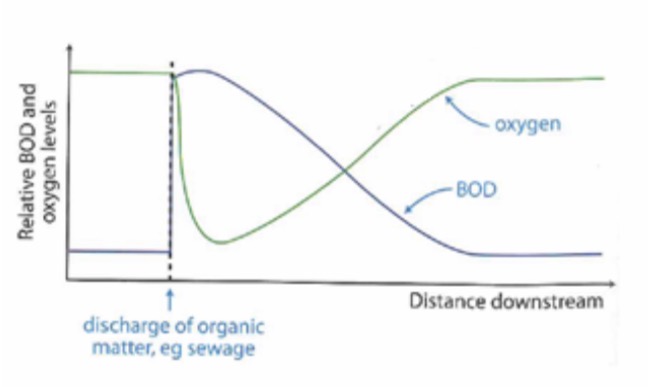
Outline the steps leading to organic pollution(isolated & specific event)
Organic material – sewage, slurry & silage effluent - pollutes waterways
Rich source of nutrients for saprophytic bacteria involved in decay /decomposition
Bacterial numbers rapidly increase – population explosion – of saprophytic bacteria that use up oxygen in water for aerobic respiration
What is Biological Oxygen Demand (BOD)?
BOD – biological oxygen demand - gives indication of water quality (measures how much oxygen in the water is being used by organisms present)
More bacteria = more aerobic respiration = higher BOD (opposite occurs if less bacteria) see grap
>pollution leads to less oxygen present in water due to high numbers of bacteria feeding on & decaying organic substances
Outline the steps leading to eutrophication
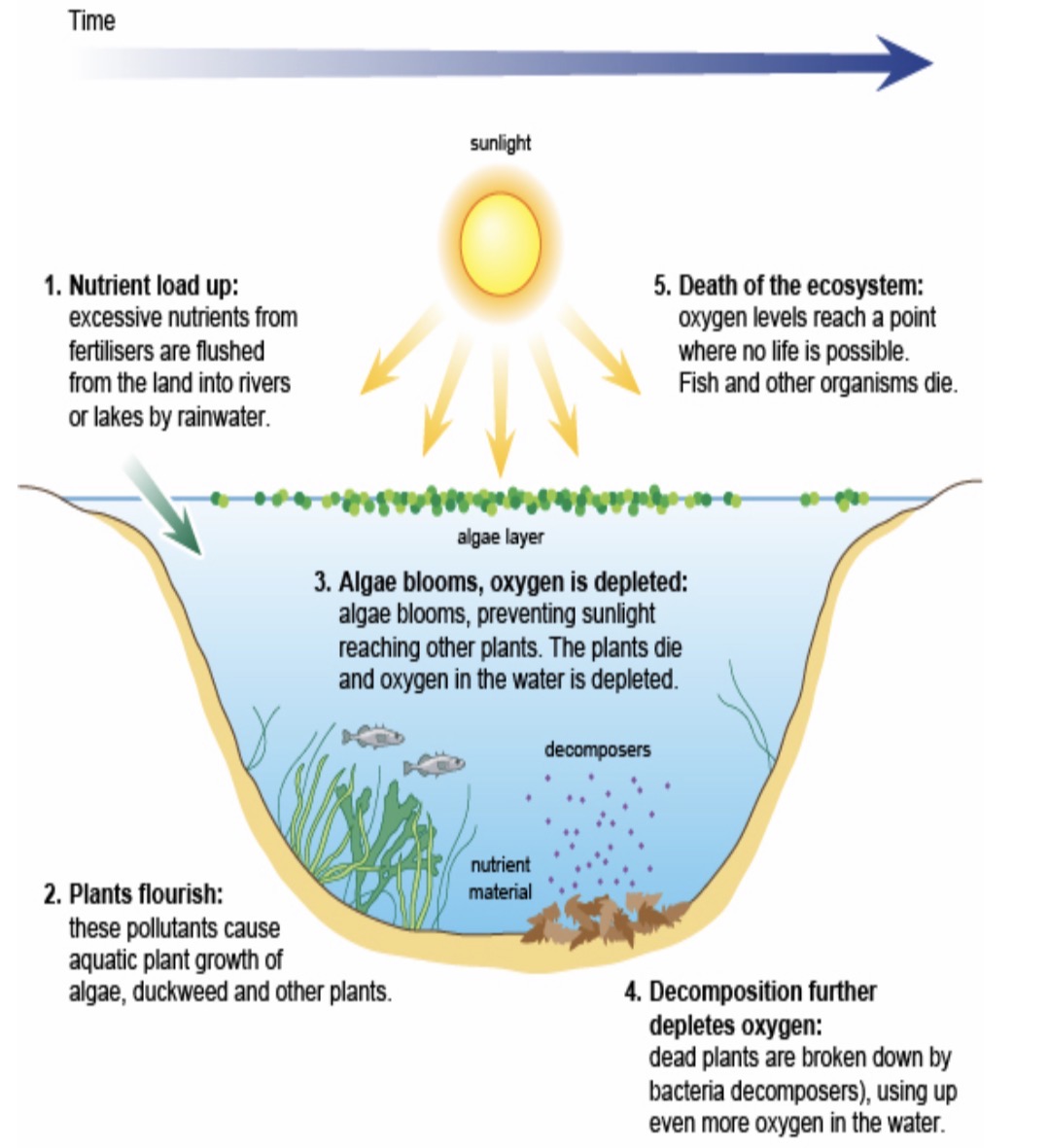
Gradual & long term nutrient enrichment of waterway
Sequence of events
Excess nitrates / phosphates taken up by algae that use it for protein formation & growth algae number s increase rapidly (algal bloom) – that cover the surface which prevents light penetrating through water - aquatic plants deeper down will not be able to photosynthesize (shading effect)
algae use up the excess ions
aquatic plants & algae die then decomposed by saprophytic / saprobiotic bacteria in water
bacteria respire & use up oxygen in water
aquatic animals (fish, invertebrates) die due to suffocation (can’t respire aerobically)
reduction in biodiversity in water
What is the difference between organic pollution and eutrophication?
organic = quick & one specific event, eutrophication = gradual & long term pollution
Reducing eutrophication of waterways. What strategies have been taken to reduce eutrophication?
test mineral ion content of soil prior to applying fertilizer (ensure correct amount & balance of nutrients)
application of fertilizer restricted to periods of crop growth (set closed periods when not allowed to apply = avoid excess application / nutrients that can leach)
if heavy rain forecast do not apply fertilizer
avoid applying fertilizer close to waterways (especially if sloping land)
proper storage for slurry & farm waste to avoid leaks
follow government guideline
Areas of Specific Interest (ASSI) Details
ecologically important areas with high conservation value managed in co-operation with land owners
Special Areas of Conservation (SACs)
areas given special protective status
under EU habitats directive
to protect threatened habitats or the species they contain
Biodiversity Action plans
policies & activities (meetings, design of information leaflets about conservation initiatives in local area)
organised at local council level in NI
Department of Agriculture, Environment and Rural Affairs (DAERA) agri- environment schemes
provide financial & other support to farmers & landowners to help support biodiversity & conservation of rare habitats
Northern Ireland priority habitat and species lists
identification of priority habitats & species which are most important from conservation or biodiversity standpoint by DAERA (due to Wildlife Act)
DAERA must inform
changes due to global warming and climate change
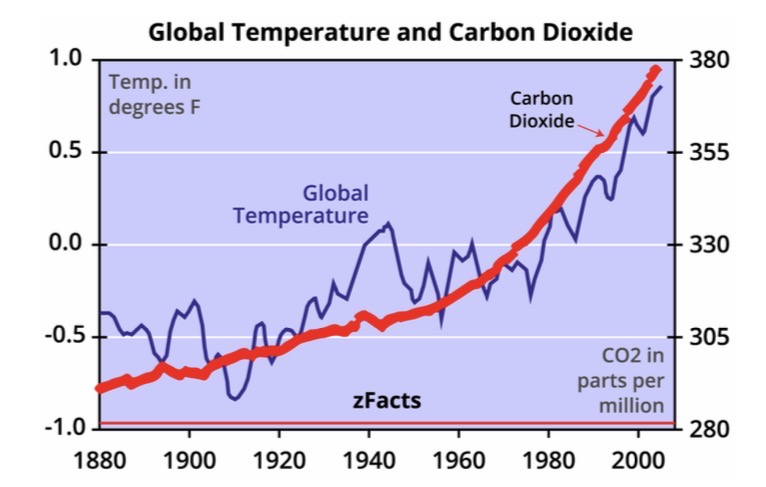
increased combustion of fossil fuels = > CO2 released into the atmosphere
deforestation on large scale (for farming, industry or urbanization) = <photosynthesis (less CO2 removed)
What is the link between co2 and global warming
close positive correlation between increased CO2 levels & global temperature
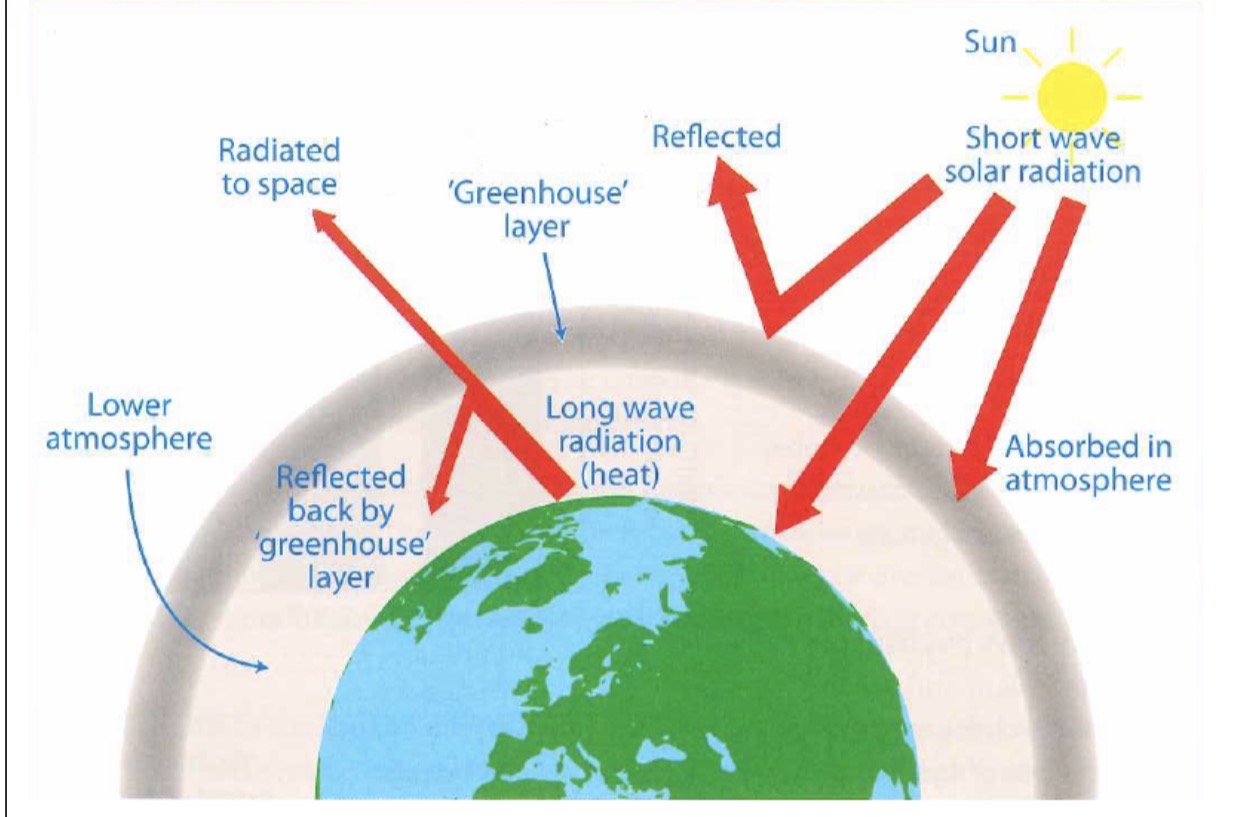
Explain what the greenhouse effect is and how it causes global warming.
short wave solar (visible & UV light) radiation given off by the Sun
reaches Earth’s surface
radiated back as longer wave heat radiation
some radiate out into space
some is absorbed by gases in atmosphere (CO2, methane, nitrous oxide) & trapped by this greenhouse layer (this ability has increased over a number of years)
then reflected back towards Earth & kept within Earth’s atmosphere
this leads to atmospheric temperatures increasing
Global warming on Melting of ice caps
raises sea levels
increased risk of flooding in coastal areas
polar ice thickness has reduced over time
extra water in oceans can disrupt ocean currents
Global warming on climate change
summers are getting warmer & wetter
What are the effects of global warming and climate change on ecosystems?
distribution of plant & animal species changes as temperature changes
loss of species typically found in northern regions
introduction of some species that not normally found in UK
increased desertification in warm areas
increased flooding
food chains affected by loss of species that are food for higher trophic levels
more rapid spread of disease in warmer conditions
one in ten species may be in danger of extinction in next few decades as their habitats are removed or changed
Explore top notes

Explore top flashcards
