exam 3 Marine Science
 Call Kai
 Learn
Learn Practice Test
 Spaced Repetition
 Match
Match Flashcards
 Knowt Play
1/61

There's no tags or description
Looks like no tags are added yet.
Name | Mastery | Learn | Test | Matching | Spaced | Call with Kai |
|---|
No analytics yet
Send a link to your students to track their progress
62 Terms
phylogeny
tree of evolutionary descent of species
choanoflagellates
closet living relatives to animals
individual choanoflagellates are very similar to choanocytes, sponge cells
protist
a eukaryotic organism that is not an animal, plant or fungus
protista
not a monophyletic group, but a taxa used for convenience
choanocytes
sponge cells
What two groups make up metazoa, how do they compare
Parazoa—sponges
no distinct tissue types
body cells have a high degree of independence
Eumetazoa—other animals
body symmetry
gut and nervous system
tissues which are organized into organs
What is metazoa
animals
Poriferans general characteristics
sponges
asymmetrical
no true tissues (lack organs)
benthonic-epifauna
sessile
found worldwide, abundant in temperate waters but diverse in tropics
The 3 sponge classes and what defines them
Calcareous—made of calcium carbonate
Demosponges and Hexactinellids —silicon dioxide
what are sponges made of
spicules
sponge anatomy and functions
chonaocytes—generates water currents to filter food, then engulfs bacteria/food particles by phagocytosis
mesohyl—gas exchange, support, and waste removal
amoebocytes—take up food, digest it, carry nutrients to other cells, manufacture spicules, and can become gametes
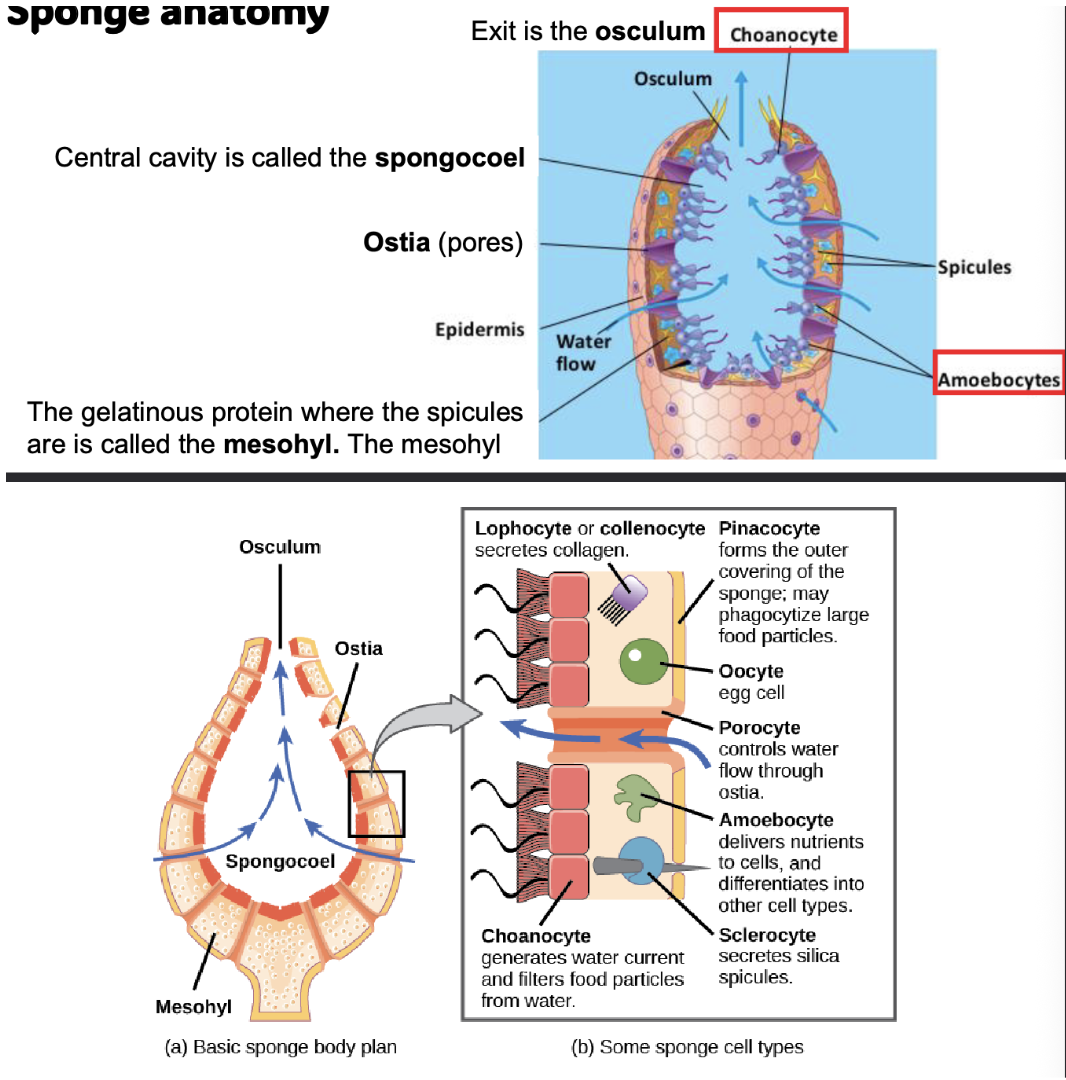
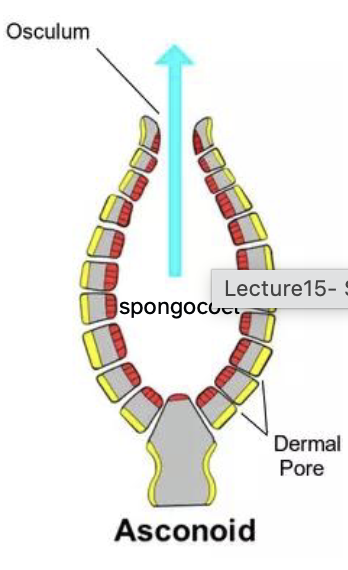
Asconoid
sponges shaped like a simple tube perforated by pores
has a single opening (the osculum)
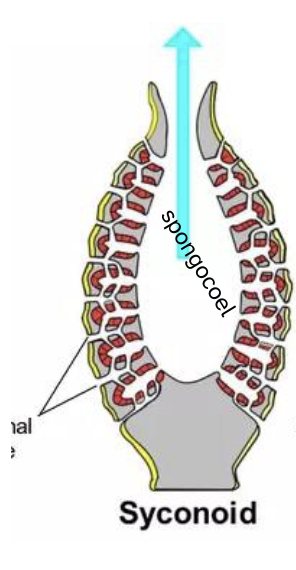
syconoid
larger than asconoid
tubular body with a single osculum and clear spongeocoel cavity
has a thicker body wall, and the pores that penetrate it are longer, forming a system of simple canals
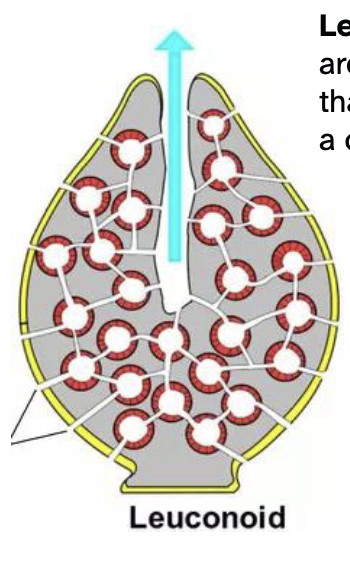
leuconoid
largest and most complex sponge
made of masses of tissue penetrated by numerous canals that lead to small chambers lined with collar cells, and lead out to a central canal and osculum
how do sponges reproduce?
asexually and sexually
sponge sexual reproduction
hermaphrodites—most sponges, produce eggs and sperm but they do not self-fertilize
water currents carry sperm between individuals
occurs in the mesohyl
produces free swimming larvae
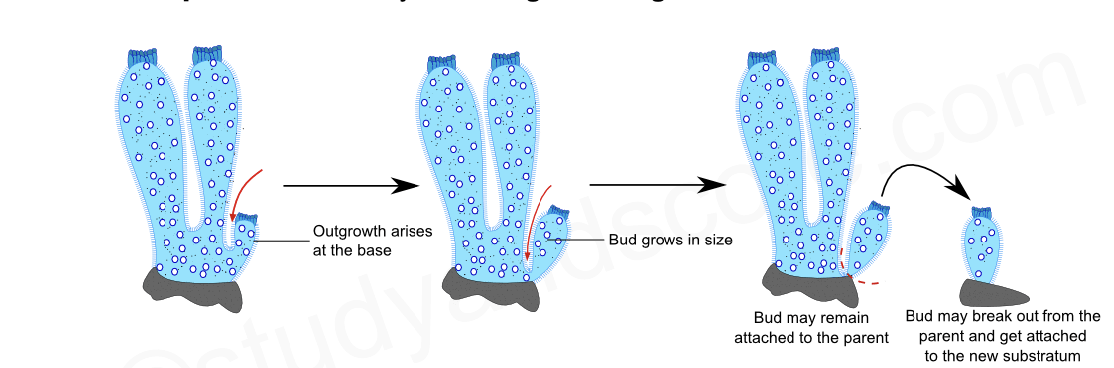
sponge aseuxal reproduction
budding and fragmentation
factors driving sponge distribution
only live in areas where there is substrate they can attach to, and avoid areas with high exposure to wave energy, because sediment can clog pores
attracted to clear waters and currents
similar nutrient availability and temp ranges to coral
why are sponges in the tropics brightly colored?
symbionts
sponge nutrient loop
they facilitate the transport of organic matter
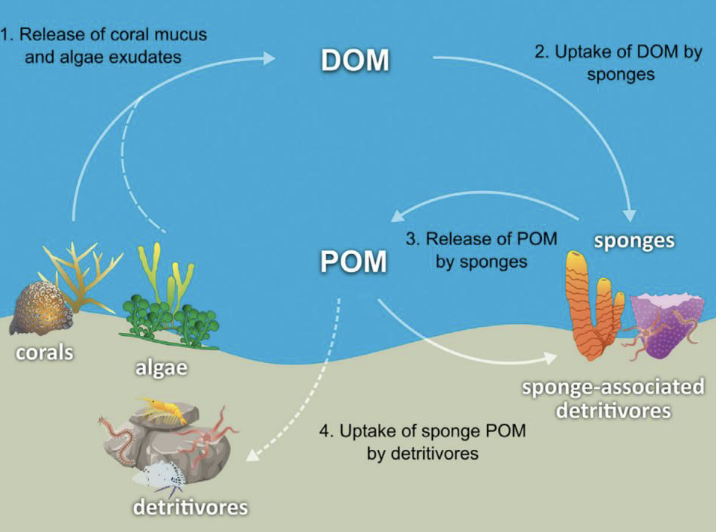
holobiont relationship
sponge hosts a diverse community of microbes i.e bacteria, fungi
how do sponges protect themselves, and from who
predators, competitors, parasites, and harmful bacteria
they produce secondary compounds
Azidothymidine
AZT, breakthorugh HIV drug produced from sponge chemicals
Two major ways sponges feed
filter feeding and carnivorous
Where is the death ball sponge found
southern ocean
how do warming temps and acidity affect bio-eroding sponges?
does not directly impact them, but it destabilizes their microbiome
similarity between ctenophores and cnidarians
diploblastic animals with a mesoglea
mesoglea
acts as a hydrostatic skeleton, supports body shape, buoyancy and movement
Cnidarians vs ctenophores: body structure, cels, and lifestyle
Cnidarians
radial symmetry
incomplete gut
mouth is connected to the gastrovascular cavity, a blind sac
digestion, circulation. gas exchange, and hydrostatic skeleton
cnidocytes with stinging cells
tentacles capture and ingest food
cnidocytes have large stinging organelles called nematocysts which have toxins
nektonic and benthonic
Ctenophores
complete gut
no stinging cells
instead use colloblasts—produce a sticky substance to trap prey
8 comb like plates for swimming—ctenes
Nektonic
Cnidarians body plan
sessile polyp (aseuxal phase) and motile medusa (sexual stage)
some are dimorphic—exhibit both body plans during their life cycle
life cycle of dimorphic cnidarians
mature polyps produce medusas via asexual budding
medusas reproduce sexually and produced ciliated larvae called planulae
the planulae settles to the bottom and develops into polyps
Hydrozoa
have polyps and medusa
medusas are called hydromedusas
have a muscular value below the margin of the bell
what is the most famous hydrozoan, and describe it how it functions and how it’s dispersed
Portuguese man o’ war
it is not an individual but a colony (siphonophore) made of individuals called zooids-clones,, female and male colonies
pneumatophore—floating device that primarily consists of carbon monoxide
gonozooids—reproduction
gobodendra—released from colony when mature
gastrozooids—digestion
dactylozooids—catching prey
coiled stinging tentacles that are up to 30m long
traps food with menatocysts
Found in tropical and subtropical seas, dispersed by winds and ocean currents
Blue dragon sea slug
eats man o war’s, and repurposes their stinging cells for own defense by storming them in the cerata
Scyphozoa class
though it has a polyp stage, it’s most prominent stage is medusa
free swimming, solitary carnivores
separate sexes
gonads formed in the gastrodermis, and expelled through the mouth
Lion’s mane medusa
Scyphozoa class
appear in the Northern Atlantic between April and May
grow rapidly in the summer, becoming very large by august
during this time they drift with wind and tides into aggregations with others and reproduce
male or female
eggs are storied in the oral tentacles of the female, where they are fertilized and develop into planulae larvae
What controls cnidarian behaviors
no brain or centralized nervous system
instead, they have a large nerve net controls swimming and a small nerve net controls all other behaviors
Rhopalia
sensory organs located in the medusa of Scyphozoa and Cubozoa
contains ocelli which are photoreceptors (sense light)
also contains statocysts—equilibrium, balance, sensory receptor
Cubozoa class
box-shaped medusa
50 species within tropical waters
15-25 cm
differ from Scyphozoans in arrangement of tentacles in muscular pads called pedalia
pedalium—one or more tentacles
separate sexes, fertilizations occurs within females
planula larvae develop inside female or are released
planula develop into a polyp, which bud into more polyps to create a colony
polyps transform into medusas
rophalium—houses eyes that have a lens, retina, iris and cornea
most dangerous jellyfish—box jellyfish aka sea wasp
toxin affects heart, nervous system and skin cells
Mollusks body sections
Foot—a muscular structure originally used for locomotion and support for internal organs
Visceral mass—heart, digestive, excretory, and reproductive organs
Mantle—fold of tissue covering the visceral mass, it secretes the calcareous shell
mantle cavity—where the mantle extends beyond the visceral mass, within it is gills for gas exchange and filter feeding
defining feature of mollusks
calcareous shell
radula
protruding, rasping, lounge-like organ with rows of tiny teeth used to eat algae
in some species it can deliver a lethal sting to neuroreceptors to capture prey
venom is conotoxin
in some snails it is used as a drill or poison dart
reduced in cephalopods
instead, they have a beak which is connected to a venom producing gland
mollusk head region
well-developed, contains simple to complex eyes, tactile organs, chemoreceptors
eyes vary from simply containing photoreceptors to a complex eye with a lens and cornea
do all mollusks have a shell?
no, nudibranchs and sea slugs of Cephalopods have lost thier shell
Are cephalopods nektonic?
yeth
evolution of the shell in cephalopods
lost in octopuses, internalized in squids and cuttlefish
shell shifted from defense to a flotation device
cephalopods general characteristics
cephalopod sexual reproduction
once in a lifetime event
male uses specialized arms called hectocotlyus to transfer spermatophores or or in the family
however, not found in Nautilus
instead, they engage face to face with females for 24-30 hours
in octopuses, females guard the eggs, but squid and cuttlefish do not
where are Nautiluses found
found in South Pacific waters of Indonesia and the Indian Ocean
Nautilus anatomy
only shelled member of mollusks
shell divided into chambers which are penetrated by tubes through which gases and liquids are moved to control the animals buoyancy
tentacles do not have suckers
two longer tentacles for olfaction
radula
where are squids found
North Atlantic, Southern Oceans, Eastern Pacific
squid anatomy
Humboldt squid speical ability
has thousands of photophores throughout its body, which highlight the color-changing chromatophores in the skin
where are cuttlefish found..not found?
found in tropical and temperate ocean waters
shallow costal areas, reefs, and seagrass beds in the eastern Atlantic, Mediterranean, Africa, and Asia
not in the Americas!
cuttlefish anatomy
8 arms with suckers
2 tentacles with suckers at the end
internal shell—cuttlebone is made of aragonite (carbonate)
camouflaging organs in Cephalopods
Chromatophores
neuromuscular organs that allow them to change color instantly
contains a structure with pigment that is attached to muscles, each with its nerves and glia
when excited the muscles contract, expanding the chromatophore
pigments associated are black, red and yellow
Iridophores—iridescent greens. blues, silvers and golds
leucophores
where are octopuses found
worldwide
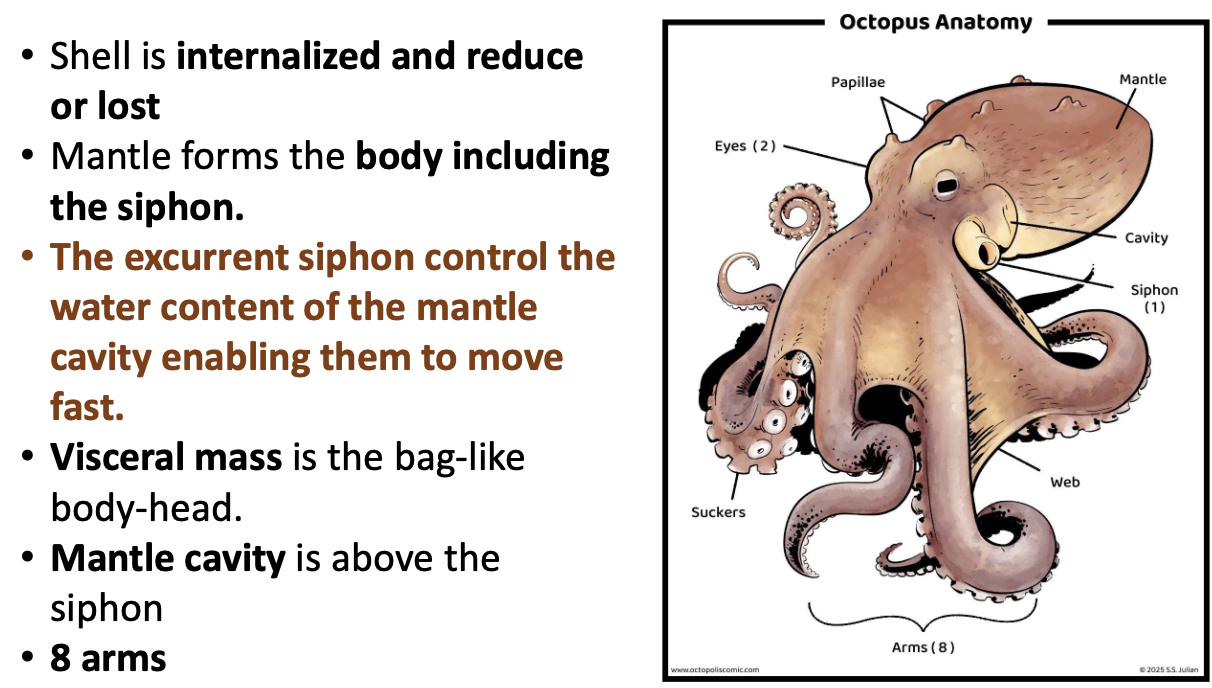
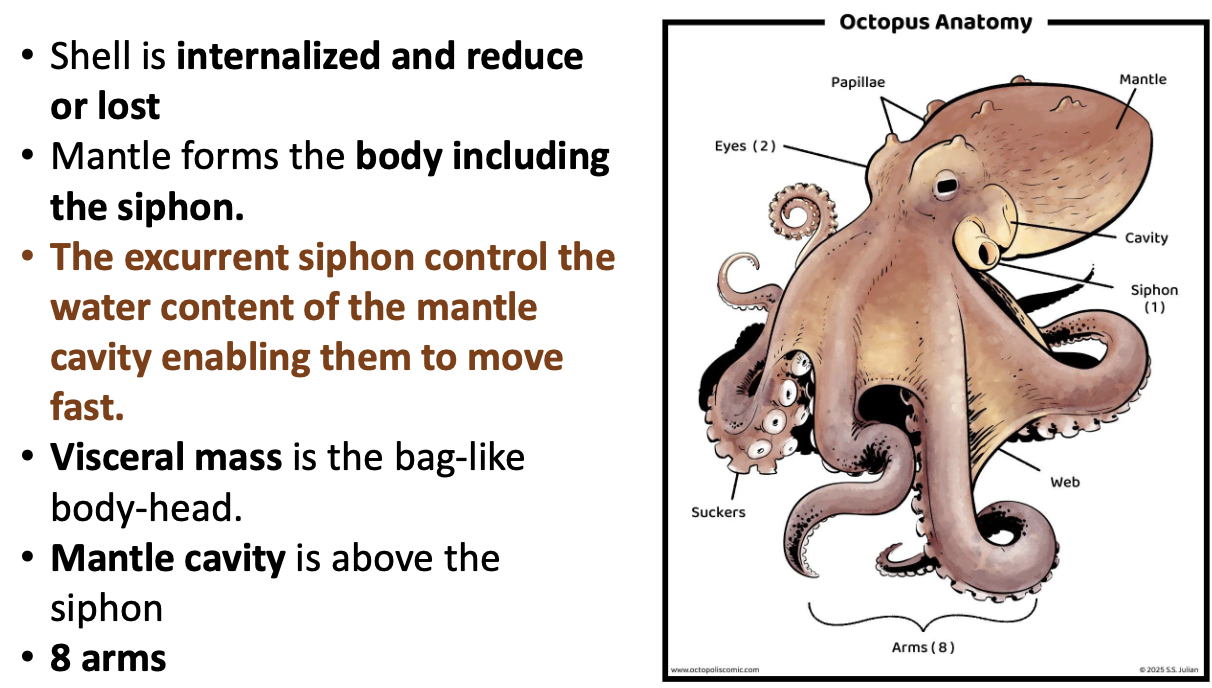
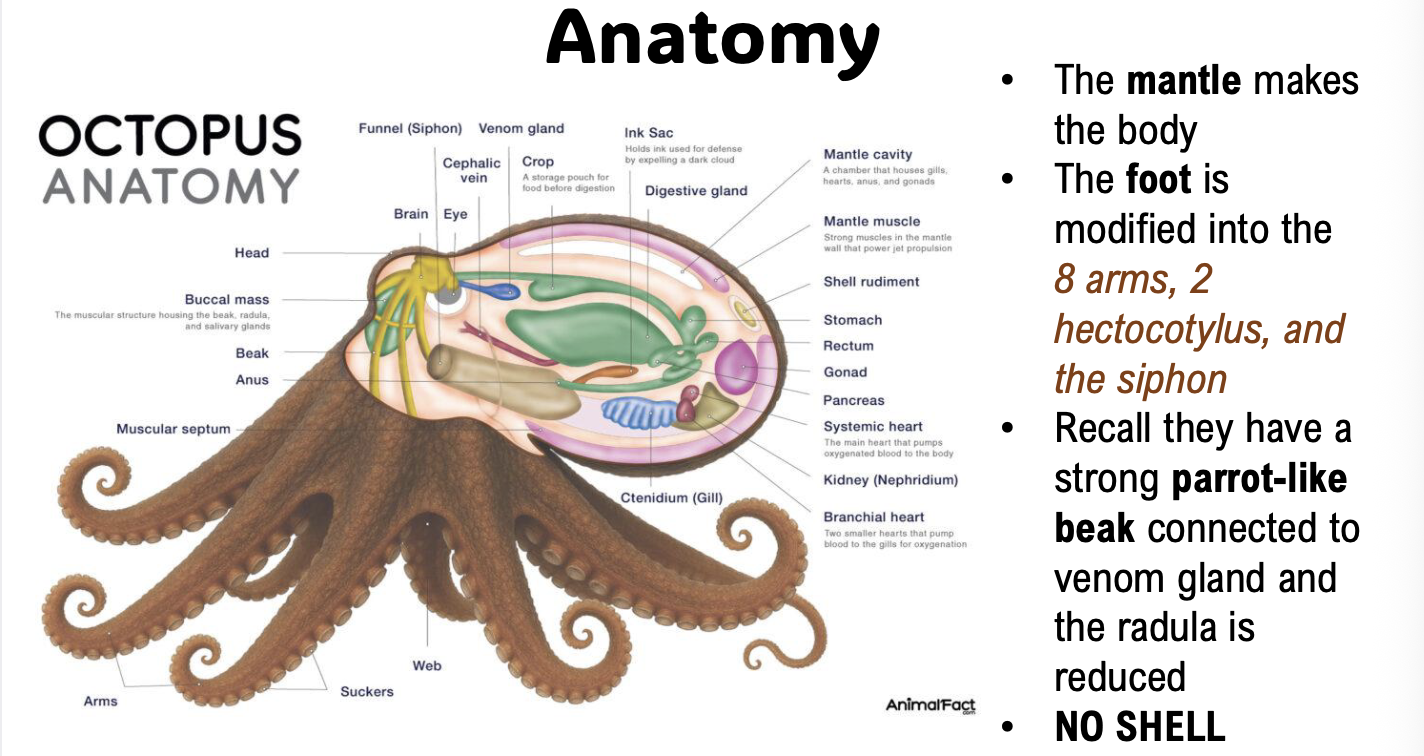
octopus anatomy
in addition,
they have 3 hearts
and thier blood contains copper-rich protein, hemocyanin
what poison is associated with the Blue Ringed Octopus
Tetrodotoxin, no anti-venom
do male octopuses die after mating
immediately or up to a few months after
Cephalopod sense organs
good eyesight though colorblind
either have U0shaped, W0shaped or dumbbell shaped pupils which allows light to enter through lens from many directions
excellent sense of touch, their suction cups are equipped with chemoreceptors to taste what it is touching

