L17 - TCA cycle
 Call Kai
 Learn
Learn Practice Test
 Spaced Repetition
 Match
Match Flashcards
 Knowt Play
1/63

There's no tags or description
Looks like no tags are added yet.
Name | Mastery | Learn | Test | Matching | Spaced | Call with Kai |
|---|
No analytics yet
Send a link to your students to track their progress
64 Terms
what is the TCA cycle
the citric acid cycle - a set of 8 reactions in which an acetyl group is condensed with oxaloacetate, 2 CO2 are lost, and oxaloacetate is regenerated
what does each round of the citric acid cycle generate
3 NADH, 1 FADH2/QH2, and 1 GTP
where do the reduced coenzymes go from the TCA cycle
go onto the electron transport system, initiating oxidative phosphorylation and ATP synthesis
how is flux through the citric acid cycle regulated
primarily by feedback inhibition at three steps - the intermediates of the TCA cycles are precursors for other pathways or replenished by outside pathways
what is the major oxidative pathways
TCA which oxidizes acetyl CoA in a series of oxidation-reduction reactions that move electrons to carriers
what can also generate acetyl CoA
glucose metabolism, fatty acids and amino acids - acetyl CoA is at the center of the entry into the TCA cycle
what is are the simplified 8 steps in the citric acid cycle
acetyl CoA (2 C molecule) enters the cycle and electrons are transferred to NAD+ or FAD - regeneration of a 4 C molecule allows the cycle to restart
where are the 2 carbons lost as CO2
between isocitrate and alpha-ketoglutarate and between alpha-ketoglutarate and succinyl-CoA
what is the starting step of the citric acid cycle and what is the enzyme
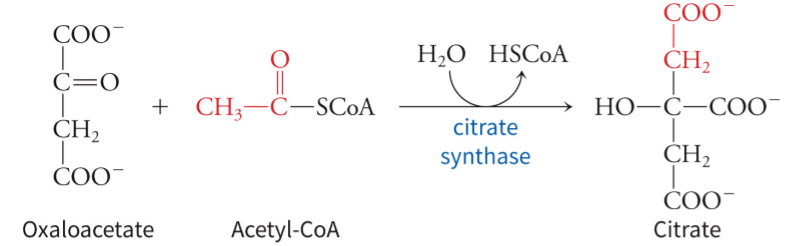
acetyl-CoA converts to Citrate
what enzyme converts acetyl-CoA to Citrate
citrate synthase
what does citrate get converted into and what enzyme does the conversion
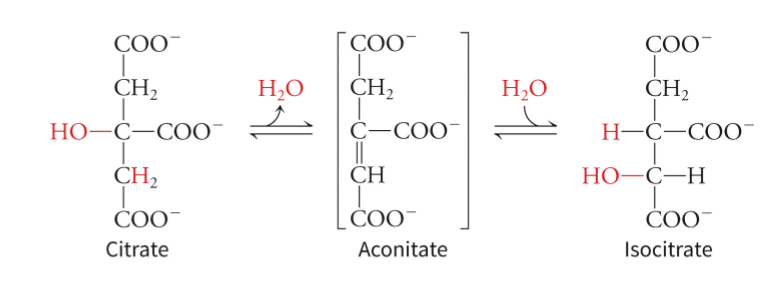
isocitrate via aconitase (there’s a CON posing as citrate in the CIA)
what does isocitrate get converted into and what enzyme does the conversion
alpha-Ketoglutarate via isocitrate dehydrogenase and NADH produced here, as well as the first release of CO2 (named after the molecule is acts on - sometimes you can get dehydrated on keto)
mnemonic for TCA cycle intermediate
CIKSSFMO? - can I keep selling s*x for money, officer? - citrate, isocitrate, alpha-ketoglutarate, succinyl-CoA, succinate, fumarate, malate, and OAA
what does alpha-ketoglutarate get converted into and what enzyme does the conversion
succinyl-CoA via alpha-ketoglutarate dehydrogenase (named after what it acts upon) - NADH produced here
what does succinyl-CoA get converted into and what enzyme does the conversion
succinate via succinyl-CoA synthetase - GTP made here (remember the S’s)
what does succinate get converted into and what enzyme does the conversion
fumarate via succinate dehydrogenase - QH2 and FADH2 produced here (succulents are fragile when dry)
mnemonic for citric acid enzymes
S,AD,DSDFD - So, at dawn, Devil sipped down five drinks - citrate Synthase, Aconitase, isocitrate Dehydrogenase, alpha-ketoglutarate Dehydrogenase, succinyl-CoA Synthetase, succinate Dehydrogenase, Fumarase, malate Dehydrogenase
what does fumarate get converted into and what enzyme does the conversion
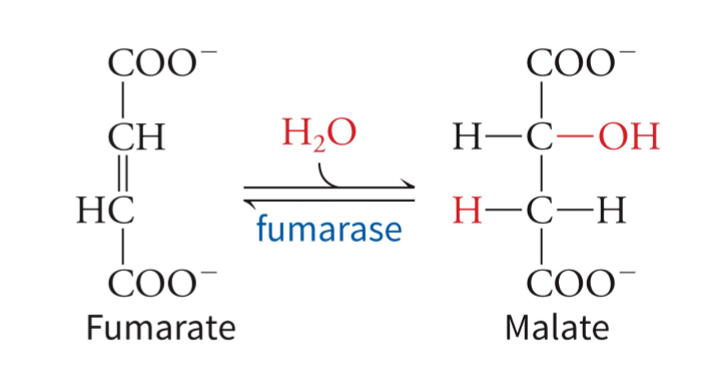
malate via fumarase - water is invested here
what does malate get converted into and what enzyme does the conversion
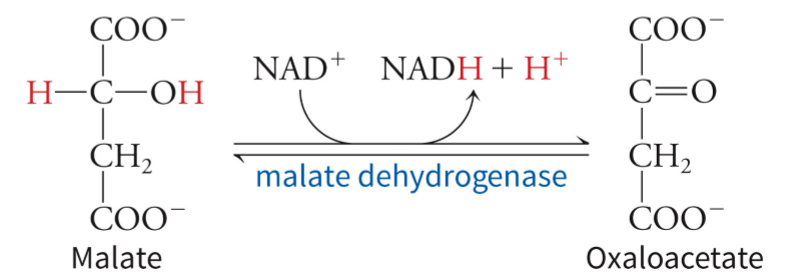
OAA via malate dehydrogenase which is an equilibrium-controlled step in the mitochondria - NADH is produced here
what happens to acetyl CoA in the TCA cycle
becomes fully oxidized - 4 electron pairs of acetyl-CoA that are ultimately used to reduce NAD+ (3) and FAD (1) in the citric acid cycle
why is the TCA cycle needed
it is difficult to cleave between the 2 C of acetyl CoA because it is a high-energy thioester bond, so it gets condensed with OAA to make 6 carbon citrate which is easy to rearrange in order to perform a beta-cleavage reaction
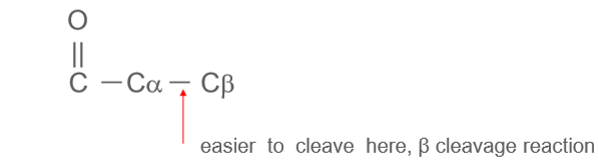
what does the beta-cleavage look like in glycolysis - why does the cell need to turn glucose into fructose
in the phosphgluco isomerase reaction between G6P and F6P, the isomerization moves the carbonyl group from C1 to C2 which is necessary to get DHAP and G3P from beta-cleavage instead of a 2C and 4C product, which would require 2 separate metabolic pathways to work with instead of one (glycolysis)
what does citrate synthase do to acetyl-CoA and OAA
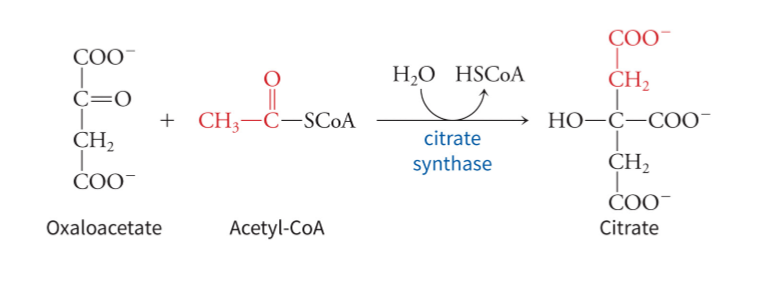
adds an acetyl group to OAA - one of the few enzymes that can synthesize a C-C bond without a metal ion cofactor because the thioester bond provides the energy needed
what does aconitase do to citrate
isomerizes it to isocitrate - citrate is a symmetrical molecule, yet only one of its two carboxymethyl arms undergoes dehydration and rehydration during the aconitase reaction
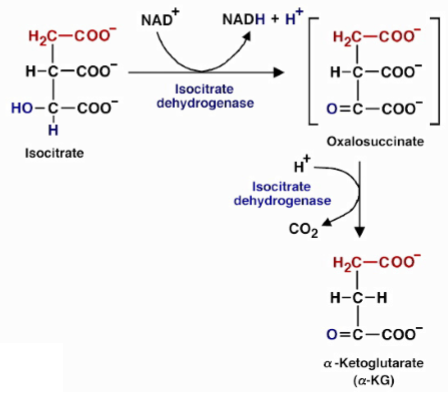
what does isocitrate dehydrogenase do to isocitrate
oxidizes it and reduces NAD+, releasing the first CO2 - uses an intermediate (oxalosuccinate) which has a carboxyl group on the beta-C which is eliminated as CO2 - this is an oxidation decarboxylation reaction
what does alpha-ketoglutarate dehydrogenase complex do to alpha-ketoglutarate
oxidative decarboxylation to yield succinyl CoA and releases the second CO2 - substrate is oxidized and NAD+ is reduced, resulting in a carboxylate group being lost as CO2 - the 4 C molecule that remains is transferred to Coenzyme A which creates the high energy thioester bond
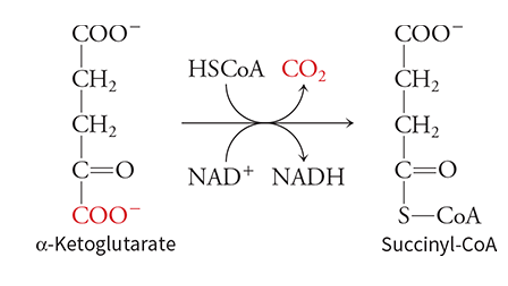
what mediates the reaction of alpha-ketoglutarate conversion to succinyl-CoA
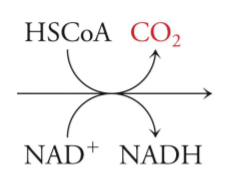
alpha-ketoglutarate dehydrogenase complex - multi-enzyme complex that resemble pyruvate dehydrogenase complex - uses CoA and releases CO2 and NADH
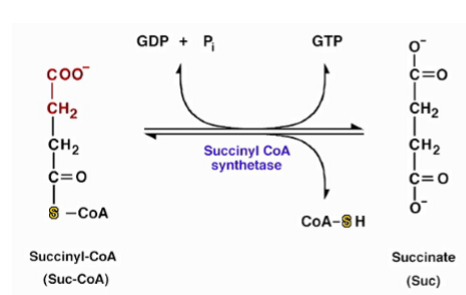
what does succinyl-CoA synthetase do
cleaves succinyl CoA’s high energy thioester bond, making it an exergonic, substrate-level phosphorylation reaction - this is the ONLY substrate-level reaction in the TCA cycle - the overall change in free energy for the net reaction is zero
what is substrate-level phosphorylation
an exergonic reaction coupled to the transfer of a phosphoryl group to a nucleoside diphosphate - distinguished from oxidative phosphorylation
difference between substrate level and oxidative phosphorylation
Substrate-level phosphorylation is the direct transfer of a phosphate group from a high-energy molecule to ADP to form ATP, while oxidative phosphorylation is the indirect production of ATP using energy from electron transport and a proton gradient across the mitochondrial membrane
what does succinyl CoA synthetase require
a reversible reaction that requires energy from GTP or ATP to form a bond - this is in contrast to synthases that don’t require an input of energy like citrate synthase
where does QH2 come from
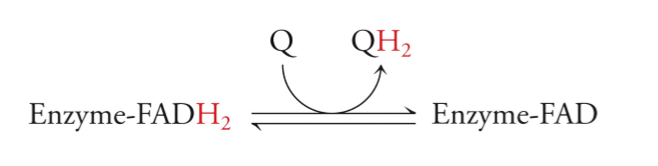
succinate to fumarate requires Q, and the conversion releases QH2
what does succinate dehydrogenase require
FAD as a prosthetic group in order to catalyze the reversible dehydrogenation of succinate to fumarate - FAD it tightly bound to the enzyme and is reduced to FADH2
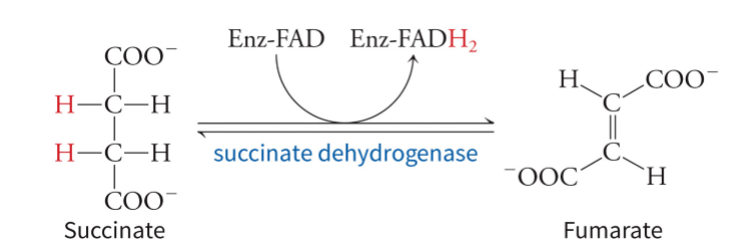
what must happen to FADH2 to convert succinate to fumarate
it must be oxidized to permit regeneration of the enzyme
what does succinate dehydrogenase produced besides FADH2
ubiquinol (QH2) - ubiquinone (Q), a lipid-soluble electron carrier in the ETC, can accept the electrons, and is reduced to form ubiquinol
what does fumarase do to fumarate
catalyzes the reversible hydration of a double bond to form malate
what does malate dehydrogenase do
regenerates OAA via an oxidation reduction reaction where the standard free energy is positive (unfavorable) but the product enters the highly exergonic reaction of citrate synthase into citric acid, which pulls it forward - releases NADH+ and H+
what does citrate synthase do
a highly exergonic reaction that keeps the substrate OAA low by continually converting it
where does the TCA cycle occur
in the mitochondria, allowing direct access of reduced electron carriers to the ETC - despite their mitochondrial location, all TCA enzymes are encoded by nuclear (not mitochondrial) genes
how many molecules of cully oxidized CO2 are produced per acetyl group
for each acetyl group that enter the cycle, 2 molecules of fully oxidized CO2 are produced
what is the total overall electron loss in TCA
4 pairs of electrons (8 total), which are used to reduce 3 NAD+ to NADH and 1 FAD to FADH2
how much ATP is produced by the citric acid cycle
1 GTP is generated directly by substrate-level phosphorylation, and about 12 ATP equivalents are generated for each turn of the cycle
what are the fates of carbons in the citric acid cycle
the 2 Cs released in the first round of the citric acid cycle did not come from acetyl-CoA (comes from OAA combining with acetyl-CoA) - the net result of each round of the citric acid cycle is the loss of two C as CO2 for each acetyl-CoA that enters the cycle
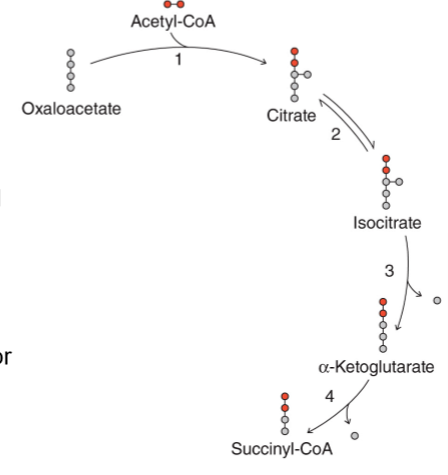
what are net numbers per turn of the citric acid cycle
3 NADH out, 1 GTP out, FADH2 out, 1 CoA-SH, and 2 CO2
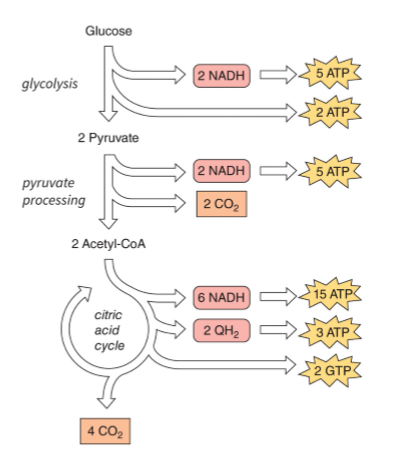
how are the 6 carbons of glucose lost as CO2
pyruvates processing (2 CO2 are released from the 2 pyruvate) and 4 CO2 are released throughout - In the context of the Citric Acid Cycle, Succinate Dehydrogenase (Complex II) reduces Coenzyme Q to QH2 using electrons from FADH2 which is why QH2 = FAHD2
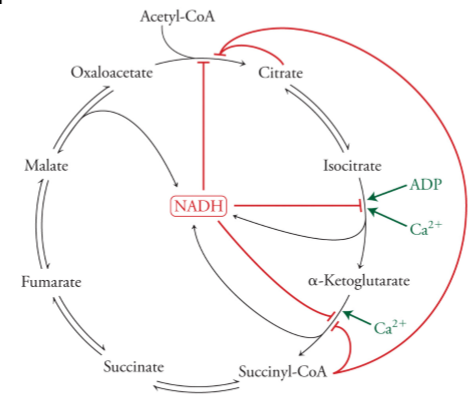
where does regulation occur in the citric acid cycle
at citrate synthase, isocitrate dehydrogenase, and alpha-ketoglutarate dehydrogenase which are all allosterically regulated vis negative feedback inhibition by NADH and activated by ADP and/or Ca+
what citric acid cycle intermediates are precursors of other molecules
fatty acids, cholesterol, amino acids, nucleotides, heme, pyruvate, and glucose
what are anaplerotic reactions
metabolic "filling-up" reactions that replenish intermediates of the citric acid (TCA) cycle that have been removed for biosynthesis - pyruvate + CO2 + ATP + H2O → OAA + ADP + Pi
what can pyruvate be converted into to boost the activity of the citric acid cycle
alpha-ketoglutarate and it is likely to happen during exercise - being converted into TCA intermediates provides both fuel to run (acetyl-CoA), and by replenishing (anaplerosis) the necessary components to keep it turning when intermediates are removed for other metabolic pathways
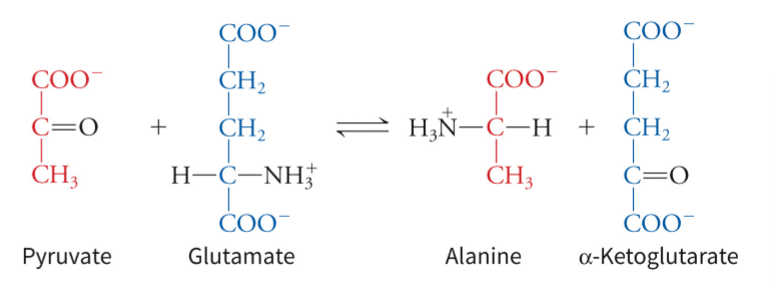
what does amino acid formation look like in the citric acid cycle
intermediates like alpha-ketoglutarate can be used in processes to form amino acids - when paired with amino and the enzyme glutamate dehydrogenase, glutamate, a precursor of the amino acids glutamine, arginine, and proline, and water are formed
what pathways take place in the cytosol
glycolysis and lactate fermentation
what pathways happen in the mitochondrial inner membrane (MIM)
pyruvate transport via the mitochondrial pyruvate carrier - how pyruvate enters the mitochondria
what pathways happen in the mitochondrial matrix
pyruvate processing (pyruvate dehydrogenase and pyruvate carboxylase), TCA, and oxidative phosphorylation
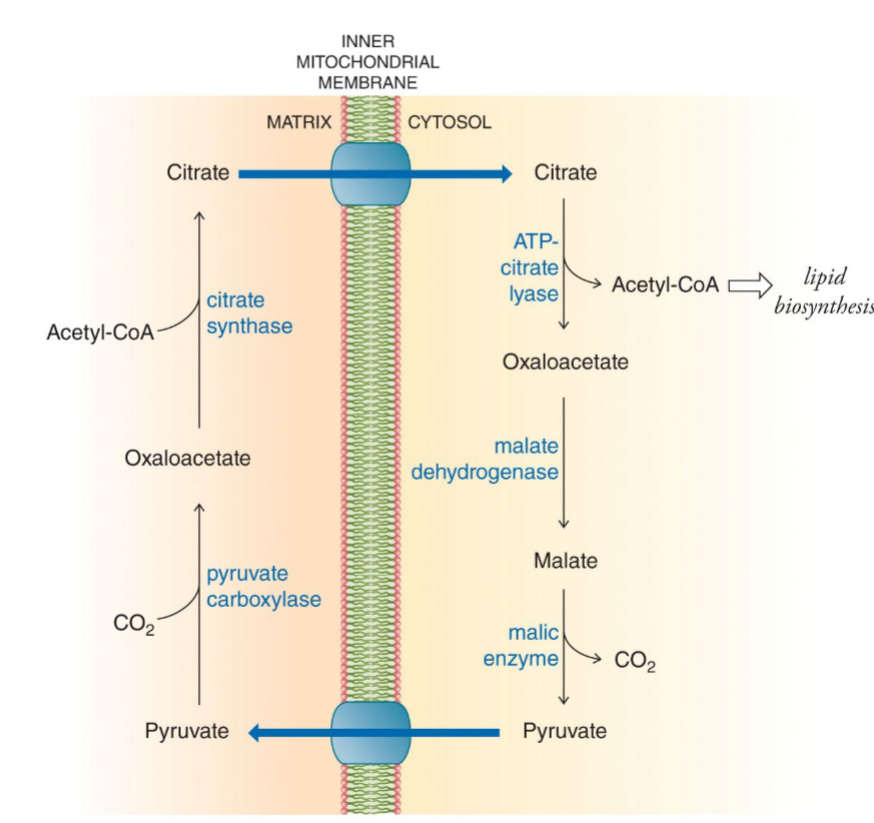
what is the citrate transport system
citrate and pyruvate can cross the mitochondrial membrane via specific transport proteins - citrate-malate or citrate-pyruvate shuttle - since acetyl-CoA can’t travel freely across the inner mitochondrial membrane - lipid biosynthesis
where is NAD+ used as a cofactor
isocitrate dehydrogenase, alpha-ketoglutarate dehydrogenase, and malate dehydrogenase (MIA is such a NAD)
where is FAD used as a cofactor
covalently bound to succinate dehydrogenase and is reduced to FADH2
where is Coenzyme A used as a cofactor
essential for the formation of the high--energy intermediate, succinyl-CoA which is catalyzed by alpha-ketoglutarate dehydrogenase complex
where is TPP and lipoic acid used as cofactors
required by alpha-ketoglutarate dehydrogenase complex to facilitate oxidative decarboxylation of alpha-ketoglutarate
where is Fe-S clusters used as a cofactor
acting as a metal cofactor for aconitase
where does GDP/AFP get used as a cofactor
succinyl-CoA synthetase
what is alpha-ketoglutarate
a 5 c dicarboxylic acid
how is succinate converted in three steps of OAA
the succinate is oxidized to yield fumarate, a 4 C dicarboxylic acid and FADH2, and then water is added to fumarate to make malate which is then oxidized to yield OAA and NADH
what is the TCA cycle the final oxidation of glucose
the glucose is oxidized in the mitochondria as far as it can go to CO2 and water which results in a very high energy yield - here, NADH can be regenerated to NAD+ by transferring electrons (in cytoplasm in orokaryotes)
what are the simplified 4 steps of TCA
oxidation of pyruvate
the production of isocitrate (step 1 and 2)
two decarboxylation reactions (step3 and 4)the
the regeneration of OAA (step 5,6,7,8)

