[13] Radicals, Oxidative Stress, and Antioxidants - Biochemical Basis of Diseases
 Call Kai
 Learn
Learn Practice Test
 Spaced Repetition
 Match
Match Flashcards
 Knowt Play
1/7

There's no tags or description
Looks like no tags are added yet.
Name | Mastery | Learn | Test | Matching | Spaced | Call with Kai |
|---|
No analytics yet
Send a link to your students to track their progress
8 Terms
What are reactive oxygen species (ROS) and how does the body protect against their damage?
Reactive oxygen species (ROS) are highly damaging oxygen radicals such as superoxide (O₂⁻), hydroxyl (•OH), and perhydroxyl (•O₂H) that cause oxidative damage to tissues; the body protects against this damage using antioxidants
What is oxidative stress?
imbalance between excess free radicals (ROS) and insufficient antioxidants in the body
Why is oxygen considered a paradox in biological systems?
although oxygen is essential for energy metabolism, its partially reduced forms can damage cells and contribute to diseases such as aging, arthritis, and cancer
How does the body defend against oxidative stress and what types of antioxidants are involved?
The body defends against oxidative stress by producing antioxidants that neutralize free radicals;
antioxidant capacity is influenced by genetics and environmental factors like diet and smoking,
includes:
endogenous antioxidants (enzymatic and non-enzymatic)
exogenous antioxidants such as trace elements and drugs
What are 3 antioxidant defense systems?
Inhibition of production of abundance RONS
Capture of radicals (scavengers, trappers, quenchers)
Correction mechanism of destroyed biomolecules
What are the important enzyme-catalyzed reactions?
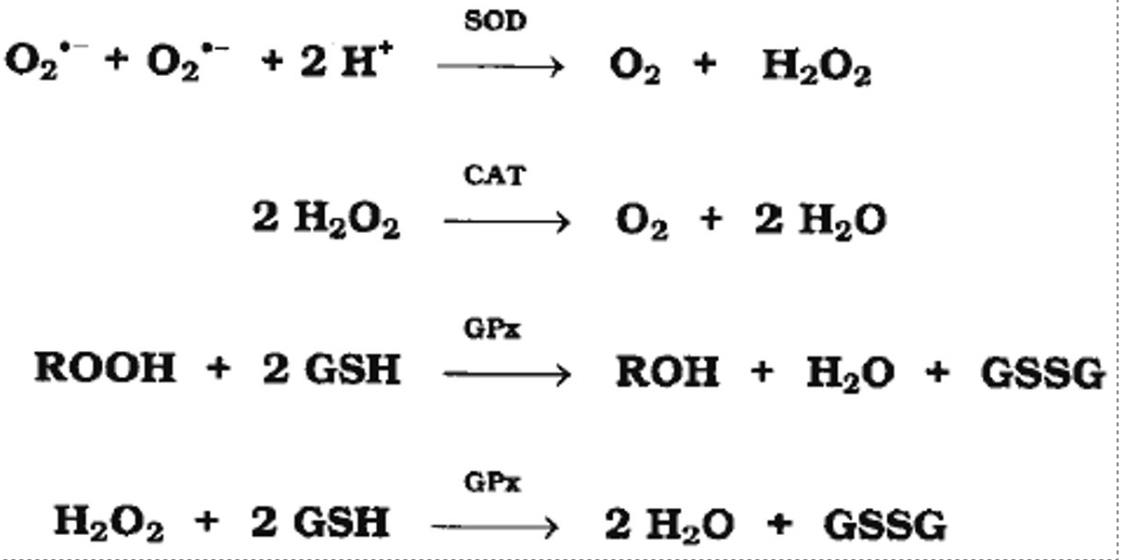
What are high-molecular endogenous antioxidants?
transferrin
ferritin
haptoglobin
hemopexin
albumin
What are low-molecular endogenous antioxidants?
Ascorbic acid (vitamin C)
Tocopherol (vitamin E)
ubiquinone (coenzyme Q)
carotenoides, β-carotene, vitamin A
Glutathione
Lipoic acid
melatonin
uric acid (urates)
bilirubin
flavonoids

