Topic 9: Genetic diversity
 Call Kai
 Learn
Learn Practice Test
 Spaced Repetition
 Match
Match Flashcards
 Knowt Play
1/22

There's no tags or description
Looks like no tags are added yet.
Name | Mastery | Learn | Test | Matching | Spaced | Call with Kai |
|---|
No analytics yet
Send a link to your students to track their progress
23 Terms
What is a mutation?
● An alteration to the DNA base sequence.
● Often arise spontaneously during DNA replication.
Why might a mutation not lead to change in the amino acid sequence?
● Genetic code is degenerate so mutation may end up coding for same amino acid as the original triplet.
● Mutation may occur in intron.
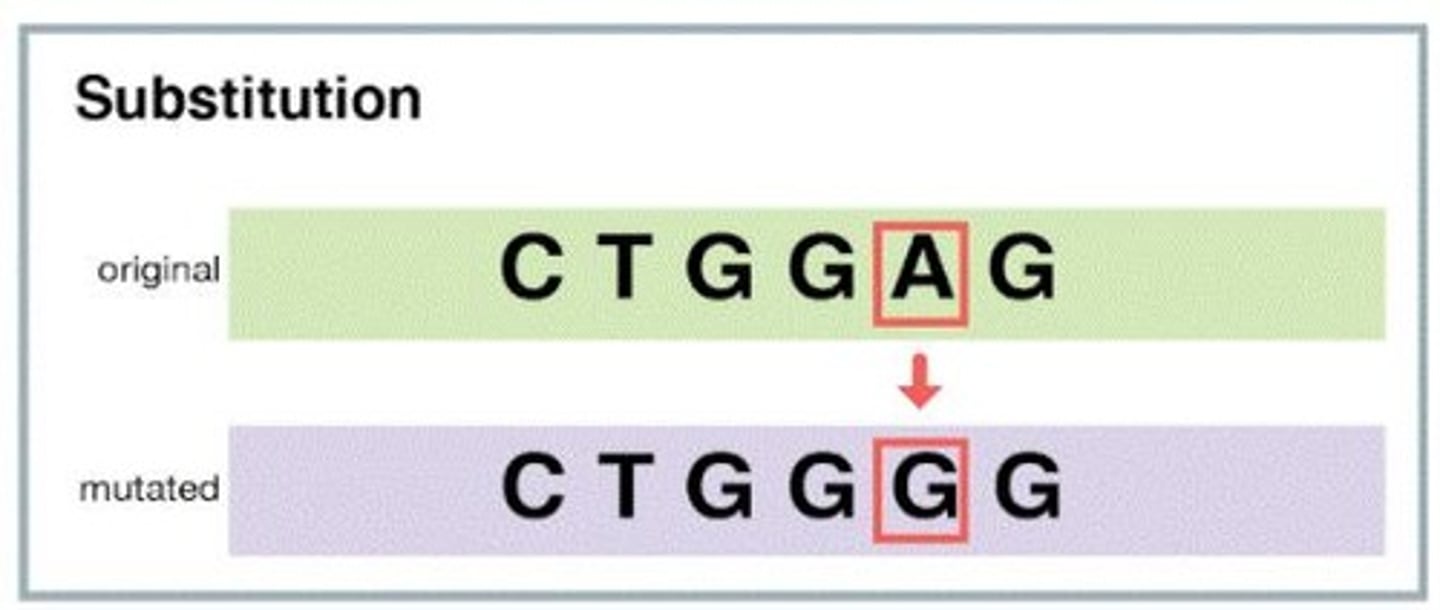
What is a substitution mutation?
● When a nucleotide in the DNA sequence is replaced by another.
● This is more likely to be a quiet mutation, meaning no change occurs in the amino acid sequence.
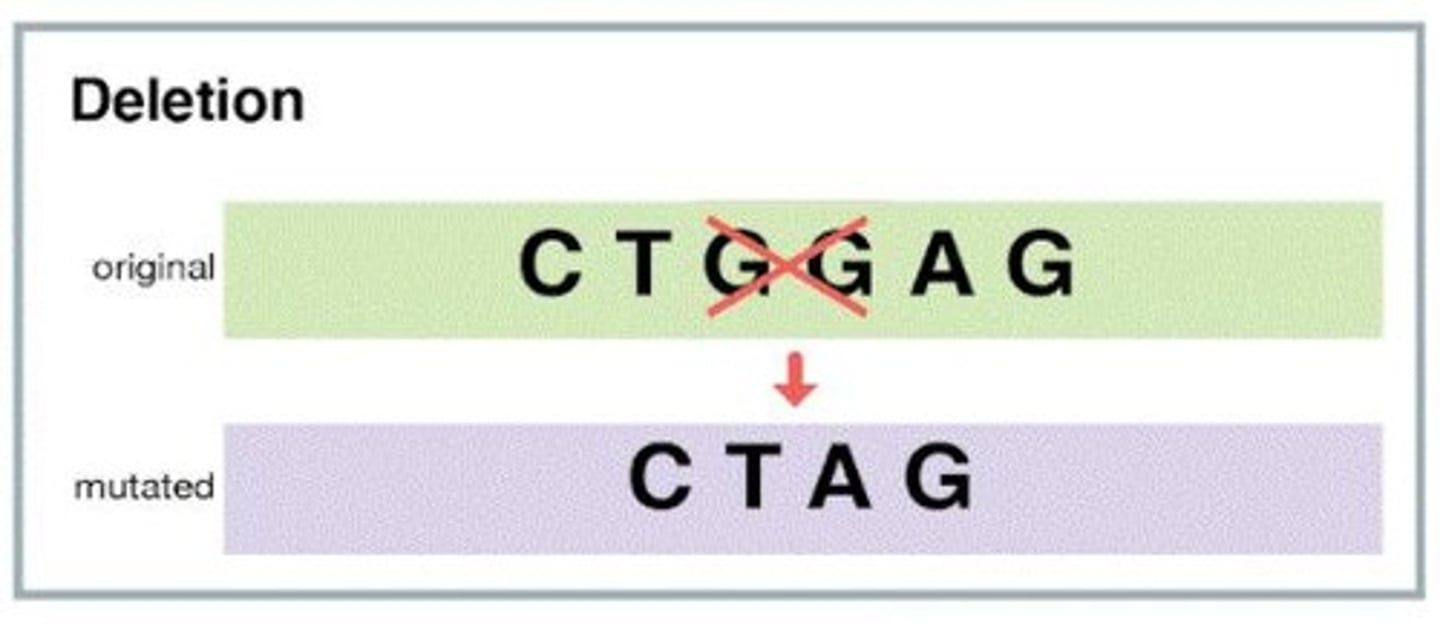
What is a deletion mutation?
● When a nucleotide in the DNA sequence is lost.
● This is more likely to be harmful and significant, as it leads to a frame shift which means the entire amino acid sequence will be different.
What is a mutagenic agent? Give examples of this.
● Factors that increase the rate of gene mutation.
● X-rays, UV light, gamma rays, certain chemicals e.g. in alcohol and tobacco.
What is a polyploidy chromosome mutation?
Where an individual has three or more sets of chromosomes instead of two.
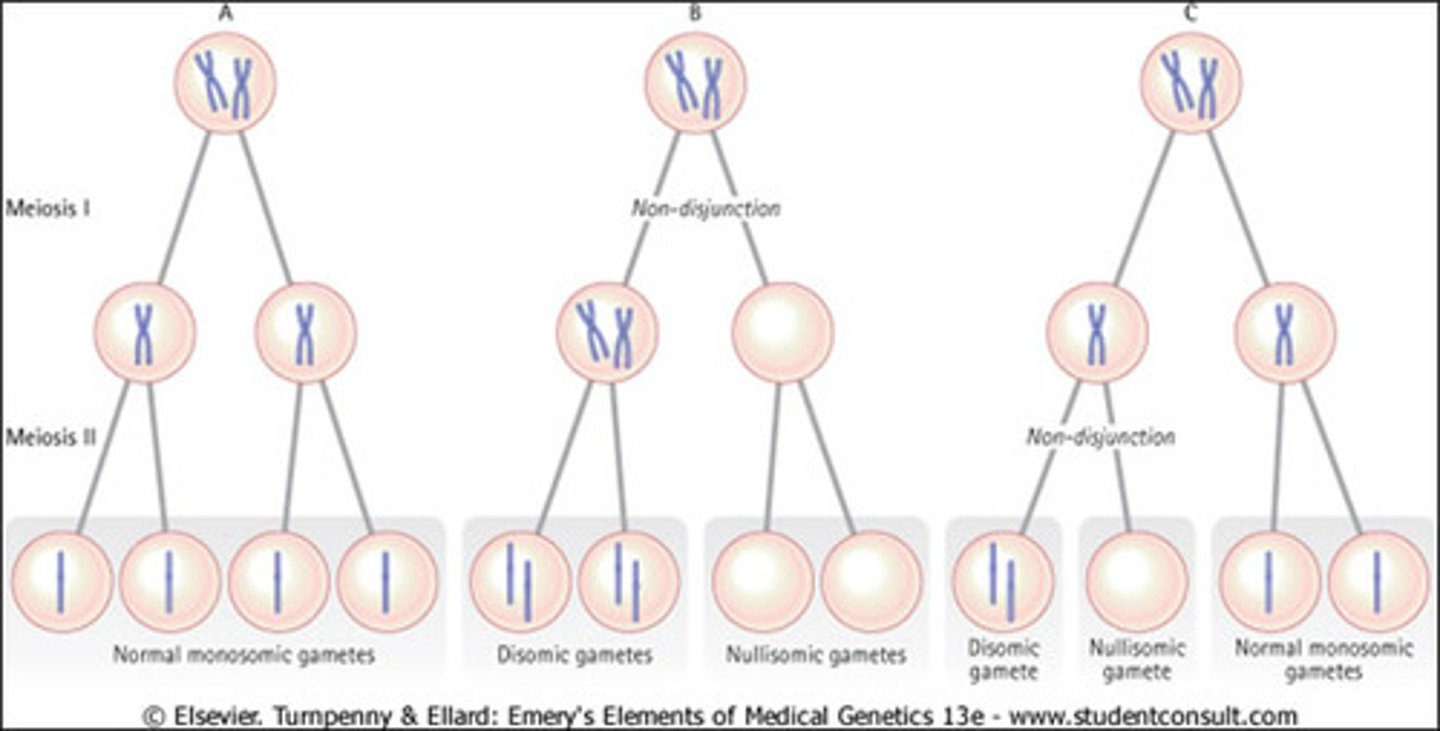
What is chromosome non-disjunction?
When chromosomes fail to separate correctly in meiosis, resulting in gametes with one more or less chromosome than normal.
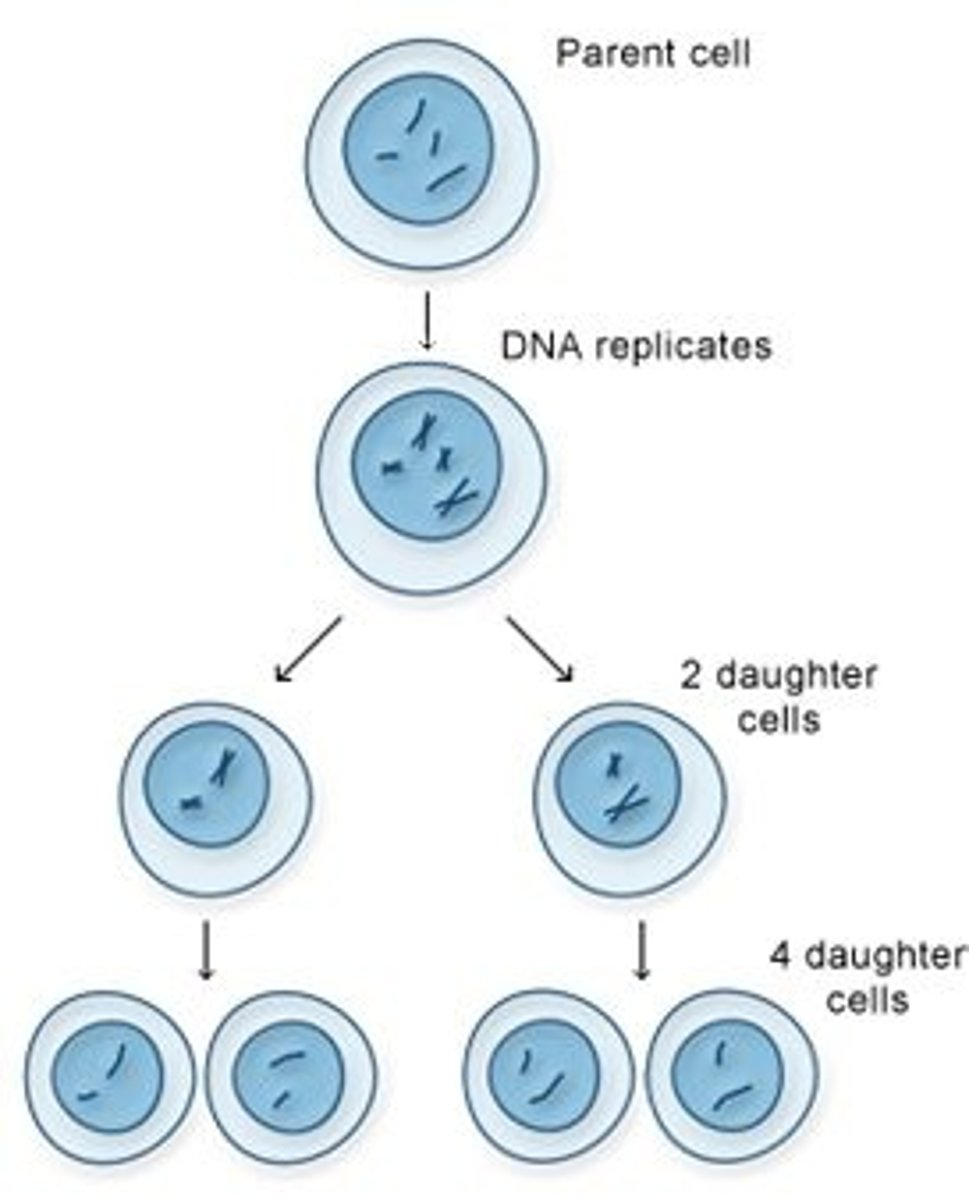
What is meiosis?
A form of cell division that produces four genetically different haploid cells (cells with half the number of chromosomes found in the parent cell) known as gametes.
How does meiosis differ from mitosis?
● Meiosis produces four genetically different cells with half the number of chromosomes as the parent cells.
● Mitosis produces two genetically identical cells with the same number of chromosomes as the parent cells.
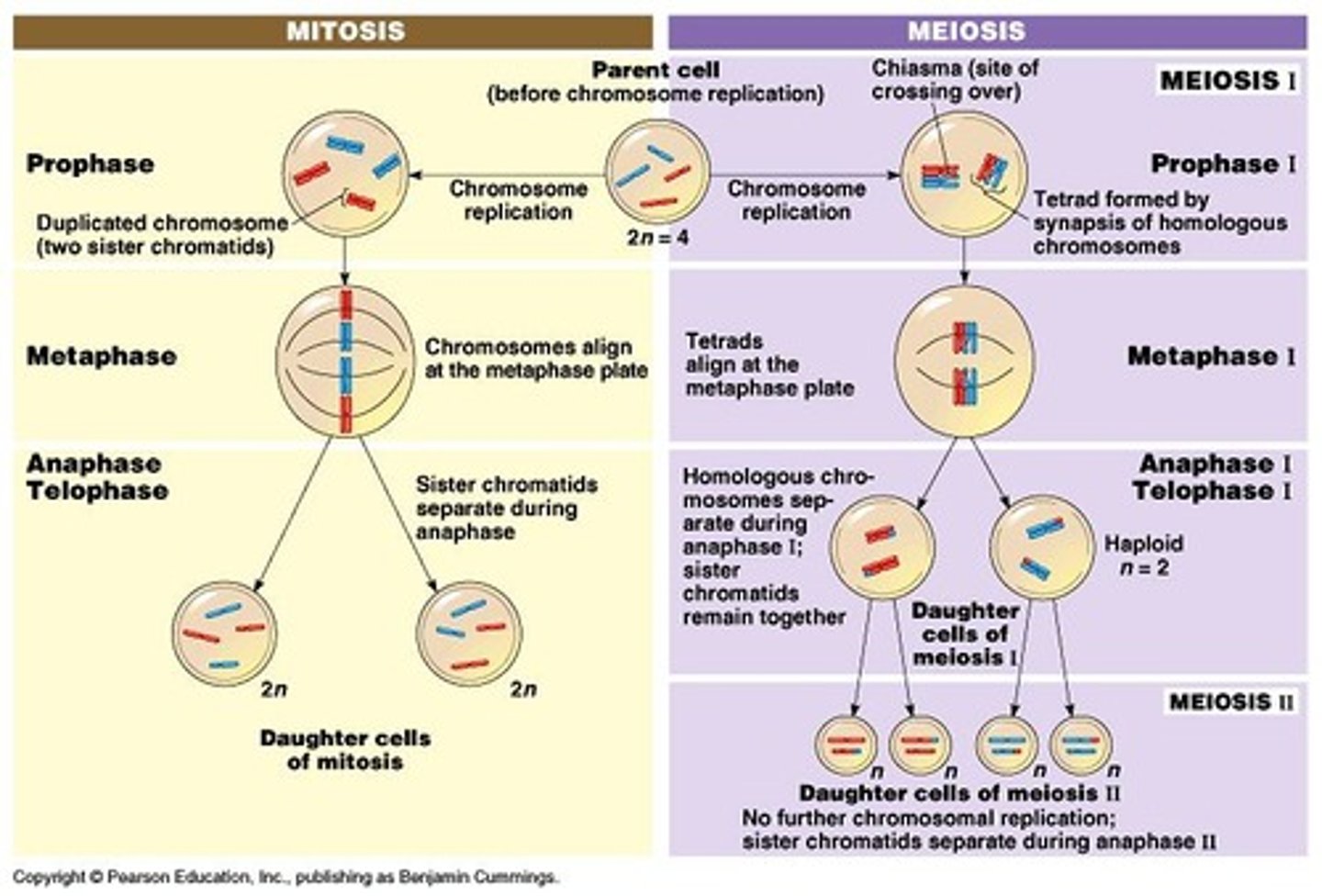
What happens during meiosis I?
1. Homologous chromosomes pair to form bivalents.
2. Crossing over (exchange of sections of genetic material) occurs at chiasmata.
3. Cell divides into two. Homologous chromosomes separate randomly. Each cell contains either maternal or paternal copy.
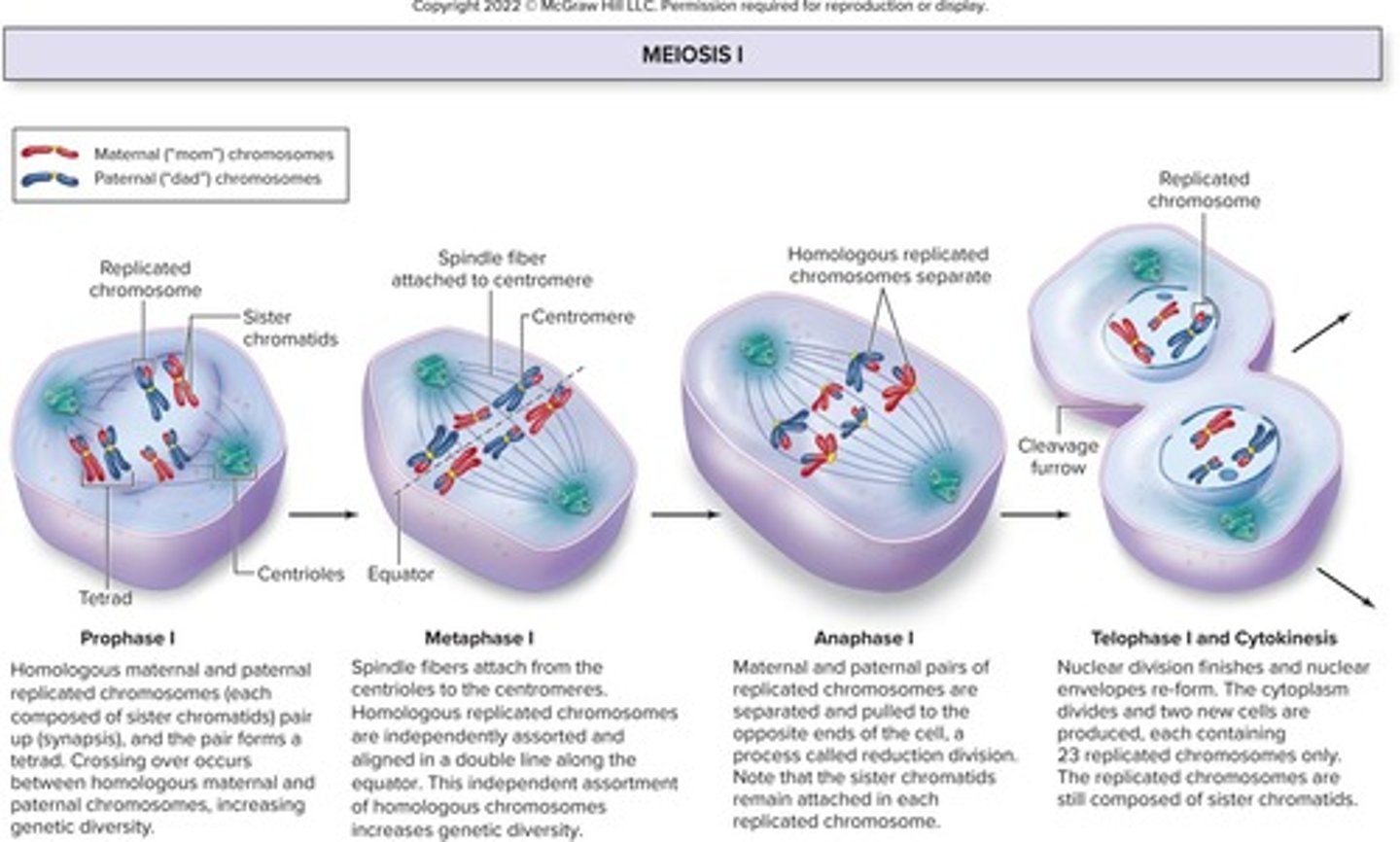
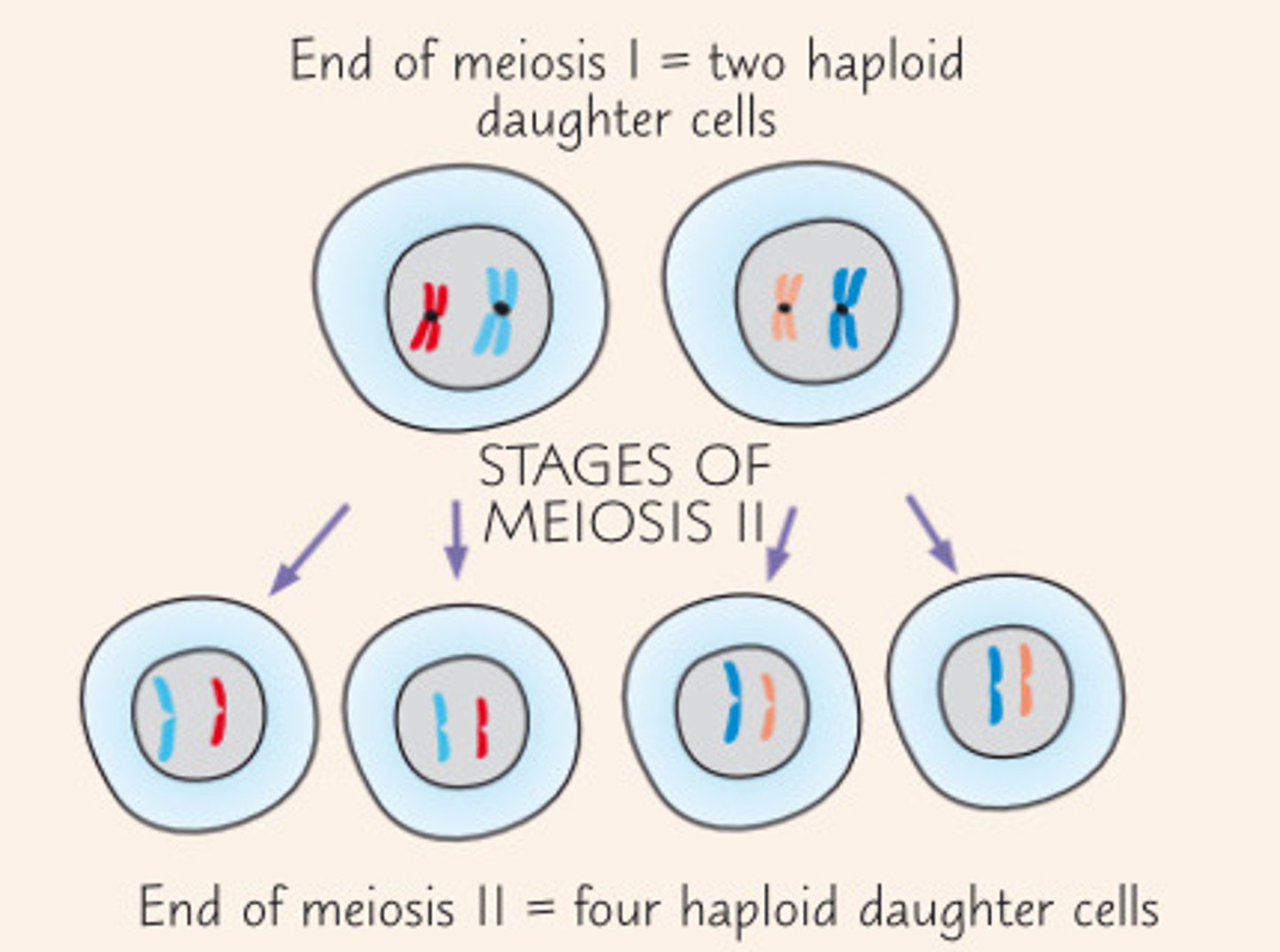
What happens during meiosis II?
1. Independent segregation of sister chromatids.
2. Each cell divides again, producing 4 haploid cells.
In which two ways does meiosis produce genetic variation?
1. Crossing over during meiosis I.
2. Independent assortment (random segregation) of homologous chromosomes & sister chromatids. Result in new combinations of alleles.
Define population.
All the organisms of a particular species that live in the same place.
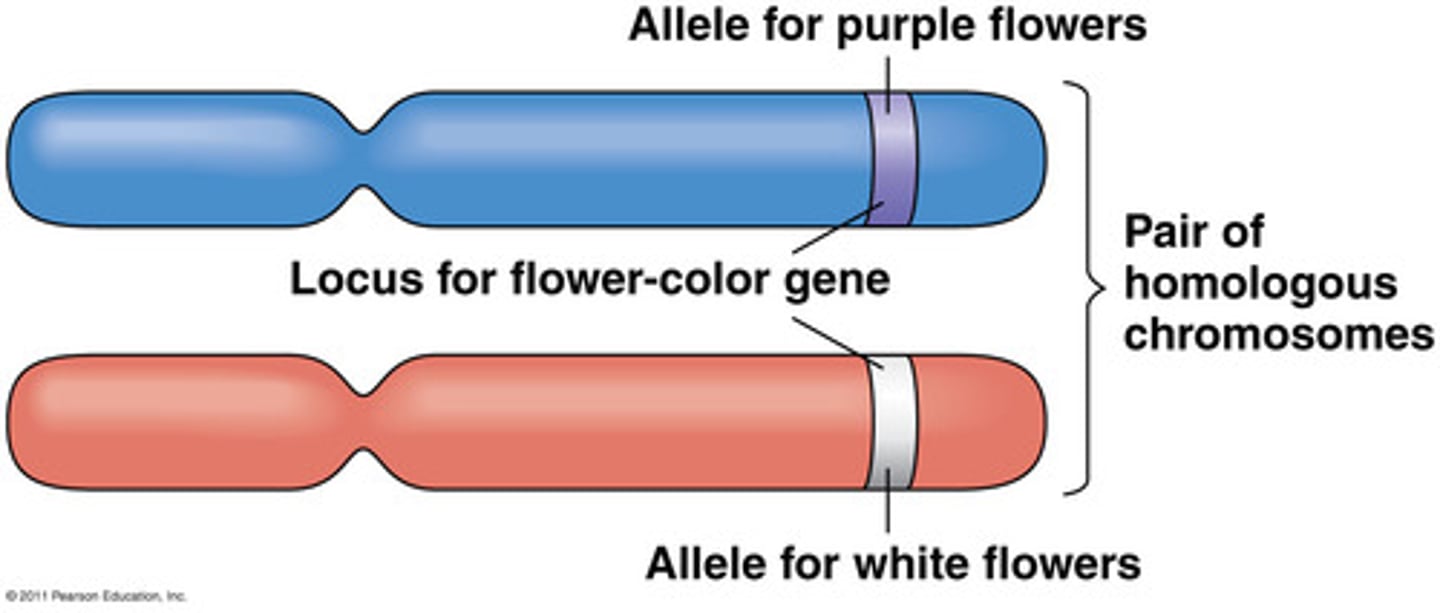
What is an allele?
Different forms of a particular gene, found at the same locus (position) on a chromosome. A single gene could have many alleles.
Define genetic diversity.
The total number of different alleles in a population.
What advantage does a high genetic diversity provide?
Ability to adapt to a change in environment; allows natural selection to occur.
Explain how natural selection results in development of new characteristics.
● Random mutations result in new alleles.
● Some alleles provide an advantage, making an individual more likely to survive and reproduce.
● Their offspring receive the new allele, and frequency continues to increase over many generations.
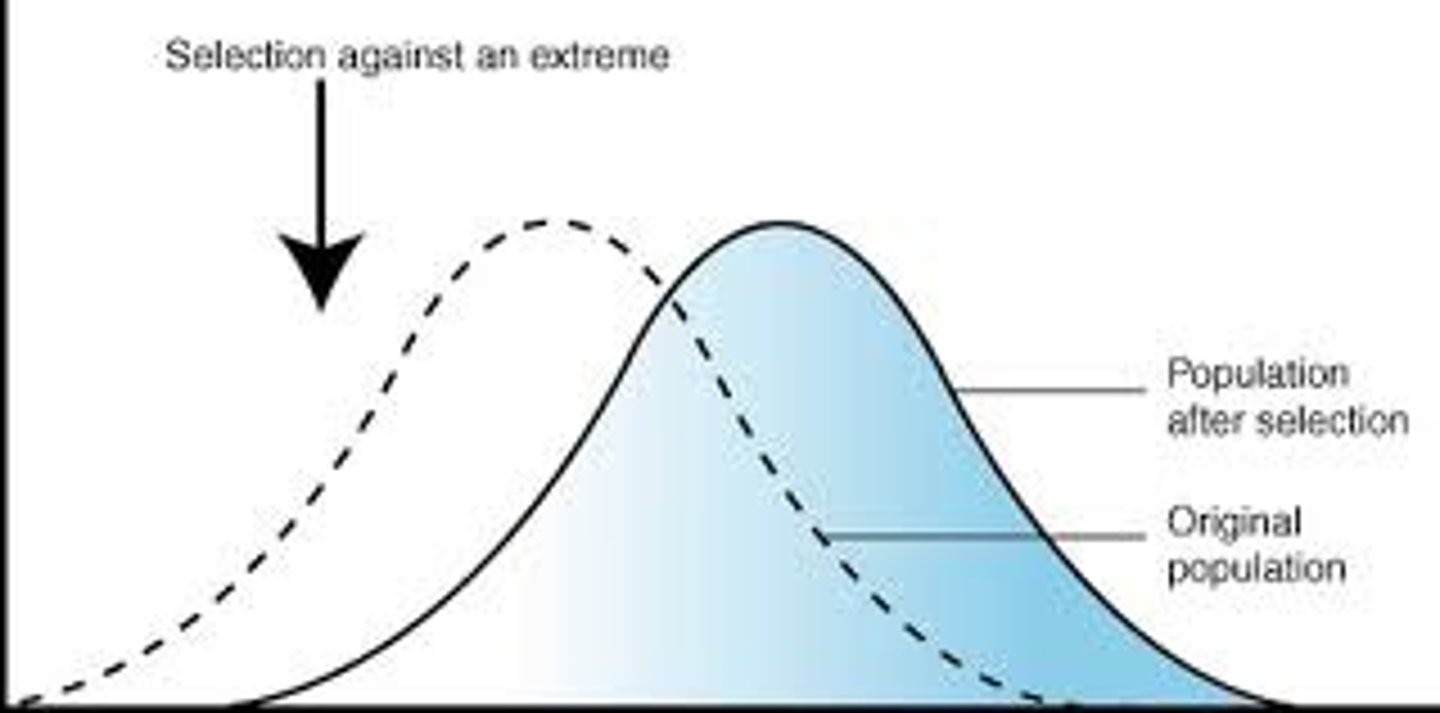
What is directional selection?
● Occurs when environmental conditions change.
● Individuals with phenotypes suited to the new conditions will survive and pass on their genes.
● Over time the mean of the population will move towards these characteristics.
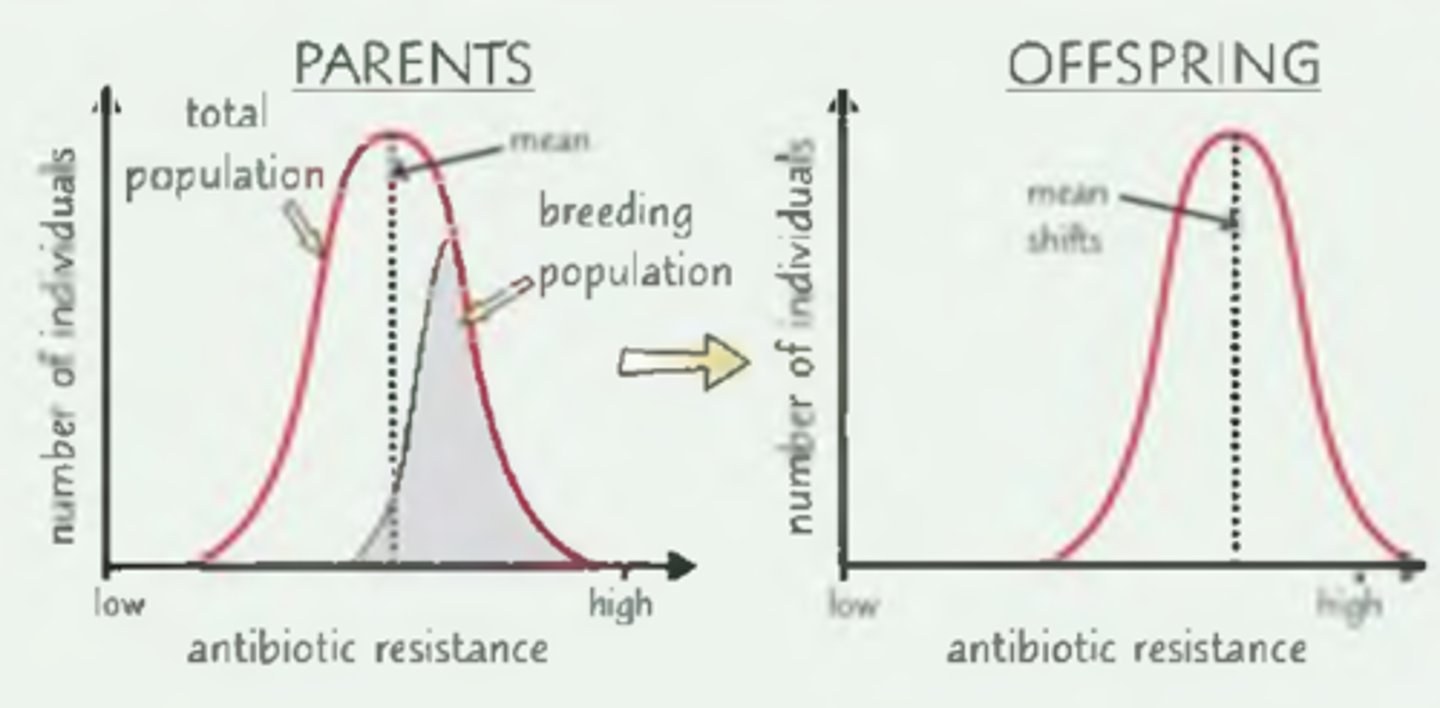
Give an example of directional selection.
● Antibiotic resistance.
● Bacteria with a mutation allowing them to survive in the presence of antibiotics will reproduce.
● Therefore frequency of this allele will increase and the population will shift to have greater antibiotic resistance.
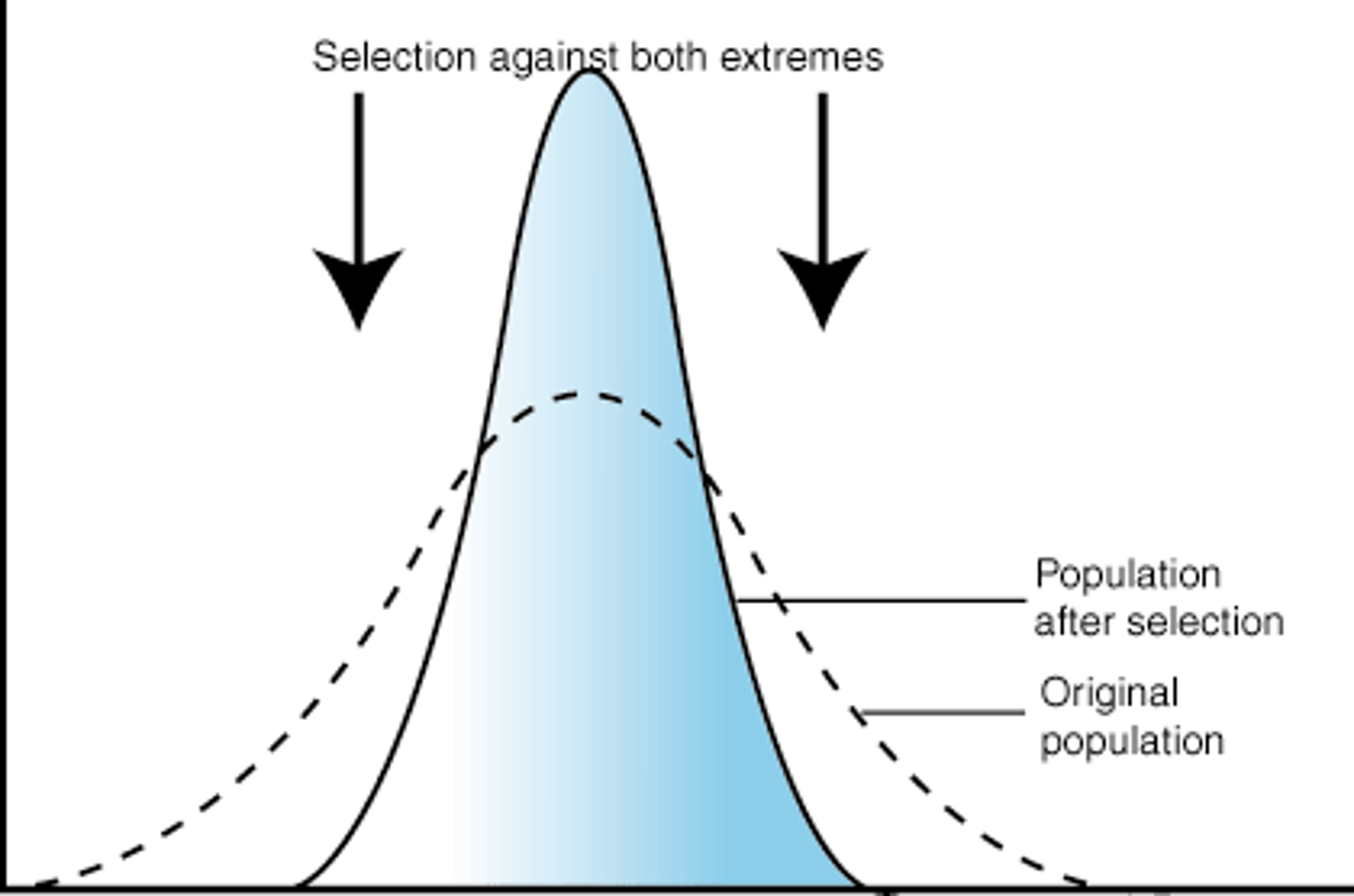
What is stabilising selection?
● Occurs when environmental conditions stay the same.
● Individuals closest to the mean are favoured, and any new characteristics are selected against.
● Results in low diversity.
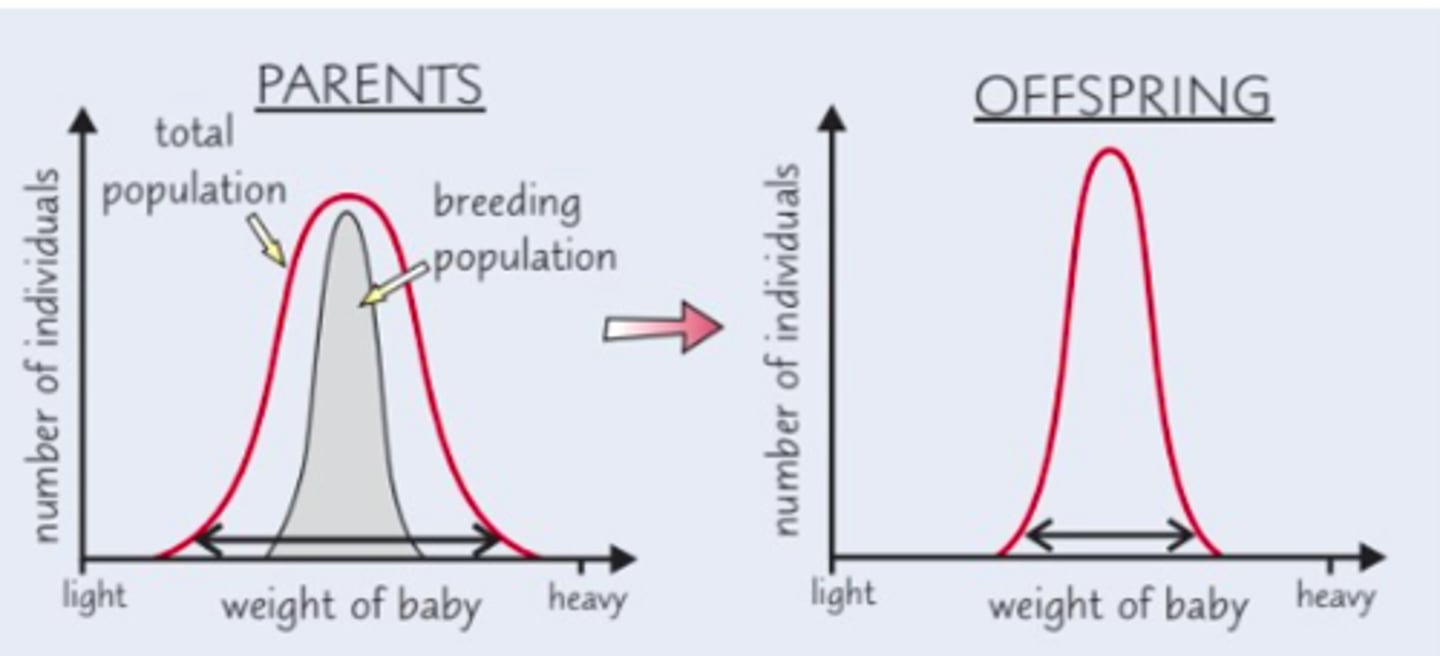
Give an example of stabilising selection.
Birth weight; babies that weigh around 3kg are more likely to survive than those at lower or higher weights.
Define a niche.
The role of a species within its environment. Species sharing the same niche will compete with each other.
What are the three types of adaptation? Give examples of each.
● Anatomical (changes to body structure) e.g. oily fur.
●Physiological (changes to bodily processes) e.g. venom production.
● Behavioural (changes to actions) e.g. hibernation.

