Lecture 9 - Decision Making
 Studied by 0 people
 Call with Kai
 Learn
Learn Practice Test
 Spaced Repetition
 Match
Match Flashcards
 Knowt Play
1/70

There's no tags or description
Looks like no tags are added yet.
Name | Mastery | Learn | Test | Matching | Spaced | Call with Kai |
|---|
No study sessions yet.
71 Terms
Define reasoning.
Coming to a conclusion based on a given premise/observation which we assume to be true.
What does decision making involve?
It involves making a judgement amongst a set of options (ie. reasoning).
What are the 2 ideas behind reasoning?
Rationalisation
Empiricism
Explain what rationalism is and what its basis is.
Rationalism stems from ‘a priori truths’ which are truths about the world that we just innately understand as truth.
This is because people used to think that all souls are all knowing. Hence, since all humans have a soul, all humans are also all knowing. But, when we are born and a soul enters our body, the soul forgets a lot of its knowledge.
Therefore, rationalism is the process we use to access that knowledge and apply it to different situations.
What process do we use in rationalism to gain access to knowledge?
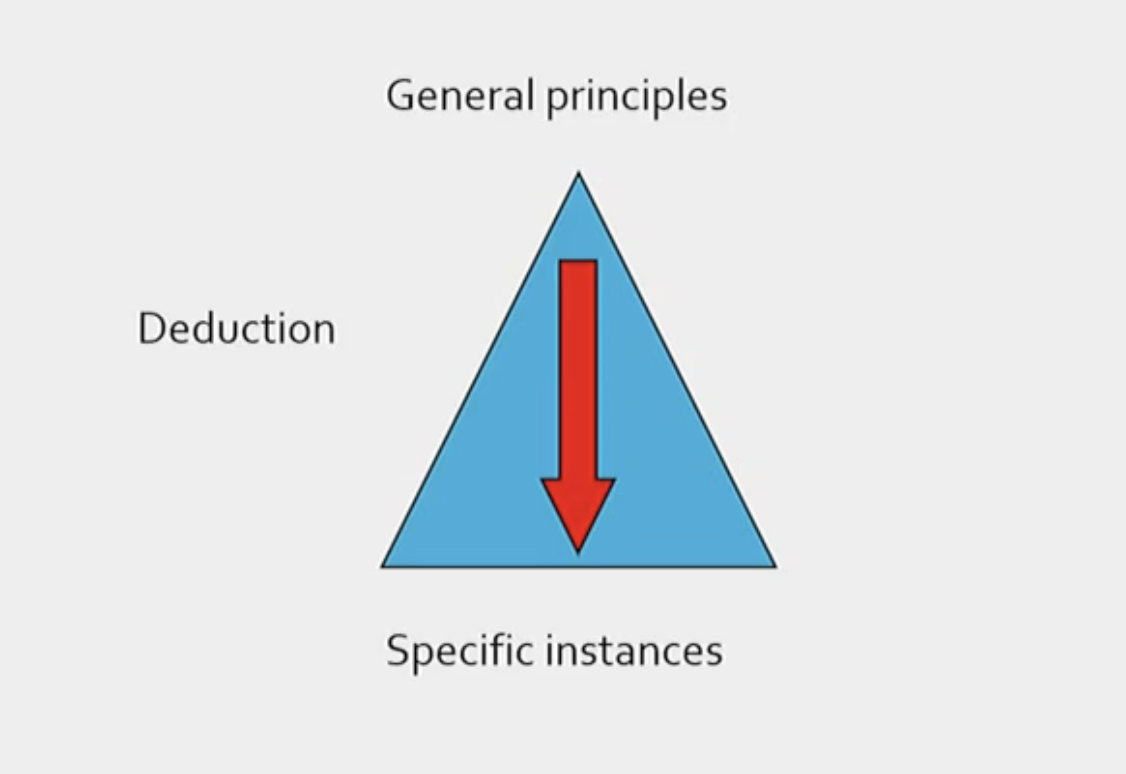
Deduction:
When we access a small number of truths (general principles) about the world and apply those truths to specific instances.
Explain empiricism.
This is the idea that there are ‘a posteriori truths’ where we must experience the world in order to gain knowledge.
What process do we use in empiricism to gain access to knowledge?
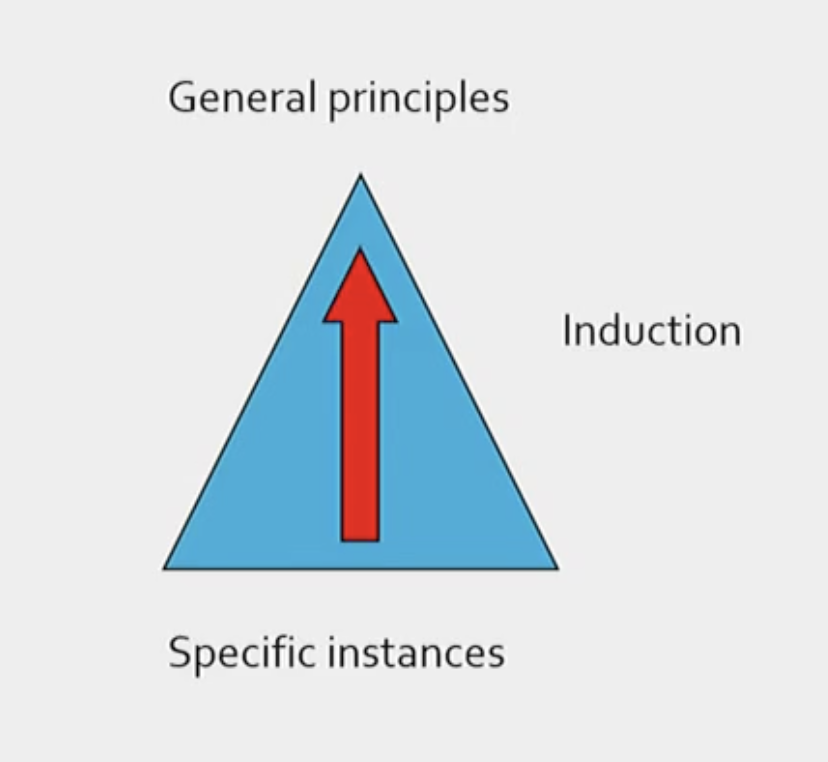
Induction:
When we observe many specific instances in the world and come up with an idea of what is likely true in the world (general principles) based on those observations.
Define categorical syllogisms.
A type of deductive reasoning where a conclusion is drawn from two premises we assume to be true.
How are categorical syllogisms identified?
They are identified through quantifiers.
What are quantifiers?
Words like all, some or none.
What are the easiest syllogisms to solve?
The one’s with definite quantifiers (ie. all, none).
What syllogisms are harder to solve?
The one’s with negations (aka. negative quantifiers—the absence of something).
What term do we use when we cannot draw a logical conclusion from a syllogism? Provide an example sentence.
Indeterminate.
ie. Some birds can fly. Some things that can fly are airplanes. Therefore, some birds are airplanes???
(not enough info to draw logical conclusion, indeterminate)
What do we use to solve categorical syllogisms?
Mental models.
What is a mental model? How do we use it to solve categorical syllogisms?
A complete mental representation of what is and what might be.
Hence, we form mental models for every syllogism and compare them to find the best conclusion.
Explain an example of using mental models to solve a categorical syllogism.
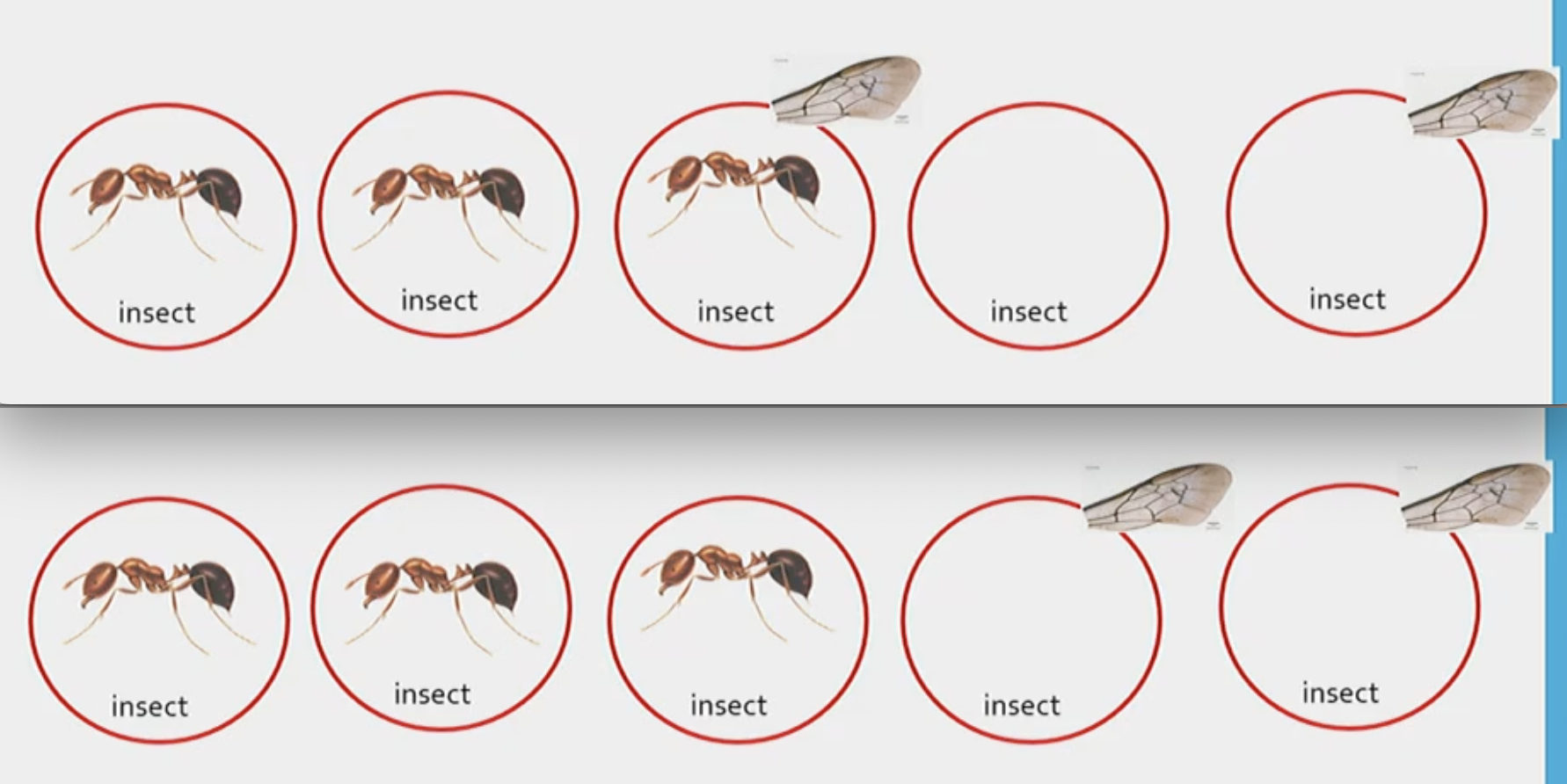
You are given 2 statements, what’s the logical conclusion?
All ants are insects
Some insects have wings
In the picture are 2 possible mental models. From the top mental model, you might come to conclusion that some ants have wings. From the bottom mental model, you will have an indeterminate conclusion. Therefore, from the mental models you compare the outcomes to see find the logical conclusion.
What are the limitations of using mental models (reasoning) to solve categorical syllogisms? Explain using the ant example again.
Most people will get the ant conclusion wrong because they will stop making mental models after the first mental model (the one where some ants have wings).
This is because we know that some ants do have wings in real life. Therefore, the fact that our mental model matched our knowledge of the world, we were happy and we were done making mental models. However, making a valid conclusion is not the same thing as truth in the world. Because although some ants in the world do have wings, that is not a logical conclusion based on the statements provided. Instead the logical conclusion is indeterminate.
Hence, a limitation with using reasoning for categorical syllogisms is our prior knowledge. If our prior knowledge doesn’t match the logical conclusion, we are likely to not bother the reason logically, but instead use our knowledge and come up with an invalid conclusion.
Overall, what factors impact logical reasoning?
Prior Knowledge
Working memory
Visual imagery
How does working memory affect logical reasoning? Why?
Higher working memory increases our ability to logically reason for categorical syllogisms.
This is because memory is required to create and store multiple mental models, so people with higher working memory spans can hold more mental models and compare them.
How does visual imagery affect logical reasoning? Why?
People who are better at creating visual imagery in their minds have a better ability to solve categorical syllogisms.
This is because it is easier to keep track of information visually than to have a long verbal presentation of the information.
Define conditional syllogisms (aka conditional reasoning).
A type of deductive reasoning where we are given a set of propositions that use an “if…then…” structure, and are asked to draw a logical conclusion from the propositions.

Explain the structure of conditional syllogisms. Provide an example.
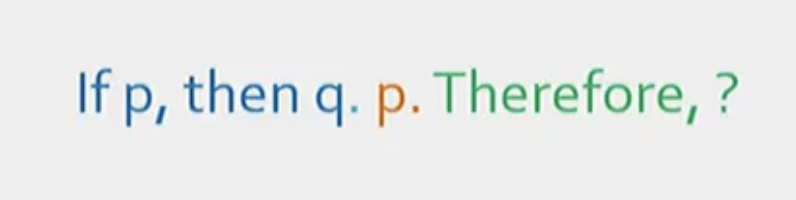
Conditional Statement:
If p = if something happens
Then q = then something happens
Observation:
p = i observe that this happened
Logical Conclusion:
Therefore = therefore i think this will happen based on the conditional statement earlier
ie. If you don’t take out the garbage (if p), then the kitchen will smell (then q). You didn’t take out the garbage (p). Therefore, the kitchen smells (therefore).
How does the accuracy of the conditional statement impact the accuracy of your conclusion? Provide an example.
If the given information is not true, then the conclusion you make based off that information will not be true.
ie. If you have big feet, then you are smart. Andrew has big feet. Therefore, Andrew is smart.
This example is logically valid but the given information that feet size and intelligence are connected is not really accurate. Thus, the conclusion made based on that info is not necessarily true.
What is the antecedent in conditional syllogisms?
It is the if p statement in the conditional statement.
What is the consequent in conditional syllogisms?
It is the then q statement in the conditional statement.
What are the 2 types of observations you can have after the conditional statement (p)?
Affirm part of the conditional statement (say its true)
Deny part of the conditional statement (say its false)
What are the 4 possible kinds of reasoning from conditional syllogisms (aka conditional reasoning)?
Affirm the antecedent (if p true)
Affirm the consequent (then q true)
Deny the antecedent (if p false)
Deny the consequent (then q false)
*only 2 of those outcomes will result in a logical conclusion
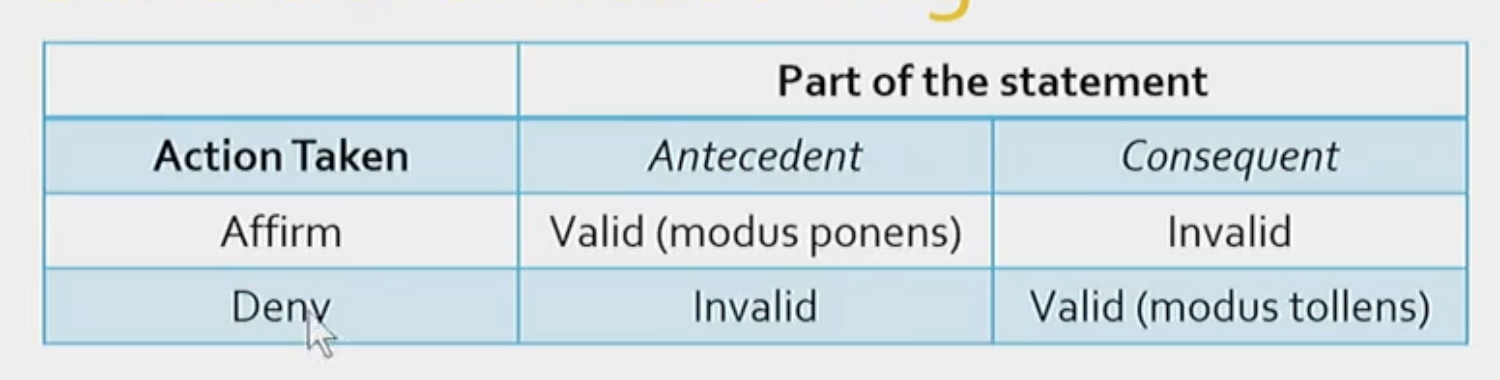
Which 2 of the 4 outcomes will lead to a logical conclusion? Why?
Affirm the antecedent
Deny the consequent
This is because, conditional statements can only go in one direction. For example, if someone says “if this is a cat, then it is an animal,” the item being an animal is conditional to the item first being a cat. Hence, even if you have an animal, you cannot flip the statement around and conclude that it is a cat, because you must first have a cat.
Therefore, when you affirm the antecedent by saying ‘this is a cat” then you can affirm the consequent and say “therefore it is an animal” because your given statement was correct, so you can affirm the following conclusion.
Similarly, when you deny the consequent by saying “this is not an animal” then you can also deny the consequent and say “therefore it is not an cat.” This is because if the thing is not an animal, it definitely cannot be a cat.
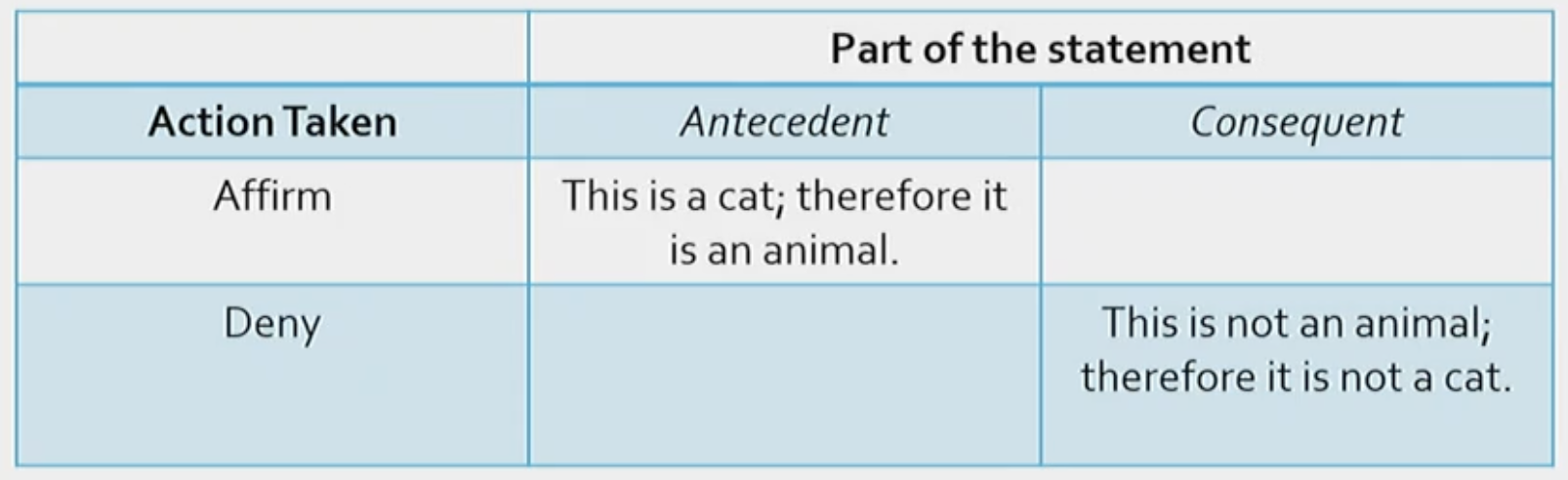
If conditional statements only go in one direction, how come we can go backwards when we deny the consequent?
Because we are still focusing on cats when we rule out the idea that it is an animal. We are not talking about animals.
How come there are only 4 possible kinds of reasoning during conditional syllogisms (aka conditional reasoning)?
Because if you apply an action onto the antecedent, you must apply the same action onto the consequent.
Which 2 of the 4 outcomes will lead to invalid conclusions? Why?
Affirm the consequent
Deny the antecedent

Explain the Wason Selection Task.
In this task, there are 4 cards on a table. Each card has a letter on one side and a number on the other. If a card has a vowel on one side, then it has an even number on the other side.
Then, participants are asked to select the fewest number of cards necessary to discover whether the rule is valid of invalid.
You should flip “E” because you are affirming the antecedent. You should also flip “7” because it denies the consequent which says there is an even number, but there 7 is not an even number (only 25% of participants tend to pick this option).
However, 62% of participants pick “6” but this affirms the consequent so it is invalid reasoning. Only 16% of people choose “J” which denies the antecedent so is also invalid reasoning.

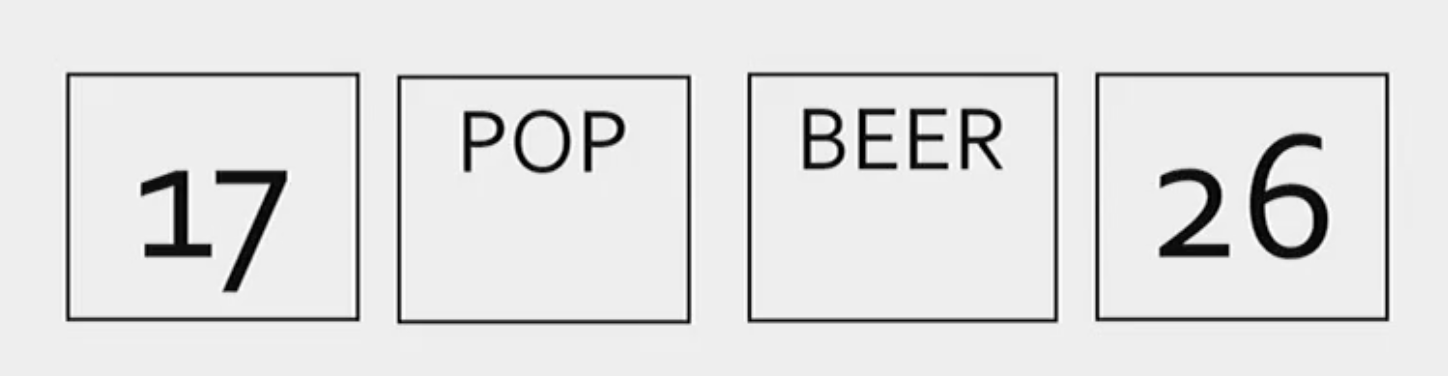
Explain another example using the Wason Selection Task about conditional reasoning (about pop and beer).
If a person is drinking beer, they must be over 19 years old. Which cards do you need to turn over to determine whether the statement is true or not.
You want to affirm the antecedent so you should pick “beer,” and you want to deny the consequent so you should pick “17.”
In real terms this makes sense because if you are drinking beer, you must be over 19. However, it does not say that if you are 19 you must be drinking beer. Therefore, if you turned over “pop” it wouldn’t disprove anything about the statement because people are free to drink pop at any age.
What does our tendency to choose invalid reasoning in the Wason Selection Task indicate about our internal biases?
It indicates that people have the tendency to look for information that supports their claims, and not look for information that refutes it. This is confirmation bias.
***we tend to want to use strategies that affirm the antecedent or affirm the consequent
Which type of reasoning task is easier to solve? Why?
Concrete reasoning tasks tend to be easier to solve than abstract tasks (ie. the pop and beer Wason selection task was easier to understand than the number and vowel task because it was more contextualised and we were already familiar with the rule of beer and being 19 years old).
This is because we can use pragmatic reasoning schemas (our knowledge about reasoning). Hence, we do not need to reason in such scenarios because we’ve already been in this situation before. Therefore, we only need to retrieve memory of the reasoning from our pragmatic reasoning schemas to logically reason.
Why do people prefer using pragmatic reasoning schemas?
This is because it requires less resources to remember something than solve something from scratch, so its easier.
Explain the belief bias effect. Provide an example.
If your own knowledge does not match logical reasoning, you will often come up with an invalid conclusion.
For example:
“If my finger is cut, then it bleeds. My finger is bleeding. Therefore, my finger is cut.”
This is invalid logical reasoning because it affirms the consequent. The statement only says that if your finger is cut, then it will bleed. But it does not say anything about your finger bleeding and then something happening.
However, this exemplifies the belief bias effect because logically we know that our finger cannot just bleed without it being cut, we know that someone looking at our finger, or bumping our finger on something will not cause it to get cut. Therefore, our knowledge on what causes our finger to bleed does not match logical reasoning. Hence, leading us to form an invalid conclusion.
Compare how pragmatic reasoning schemas and belief bias effect affect with logical reasoning?
Pragmatic reasoning schemas helps with logical reasoning.
Belief bias effect hurts logical reasoning.
Define inductive reasoning.
Reasoning that is based on our observations of the world in order to infer what is and is not true.
Can you be logically certain with inductive reasoning? Why?
No.
Because your inferences on what is true in the world are based on past experiences, but you never know what is going to happen next time.
ie. you wake up and see the sun has come up. Everyday I have seen the sun rise. Therefore, the sun rises everyday. However, this is not guaranteed to happen everyday.
Why do we use inferential statistics?
Because all experiments are based on induction where you observe something and then you make inferences on what will happen in the future (though these inferences are not guaranteed).
Hence, we use inferential statistics to tell us how likely that outcome is going to happen again.
What are people’s daily decisions usually based on? Why?
Inductive Reasoning:
Because we usually don’t have access to all the knowledge in the world, so we make decisions based on our past experiences.
Explain the Expected Utility Theory (normative model).
A model that makes a decision based on the most likely outcome.
What are the assumptions of the Expected Utility Theory?
It assumes that people are rational and make the optimal choice.
However, if everyone is rational and wants to make the most optimal choice, how come people still come to different conclusions?
Because expected utility theory suggests that people base their decisions off of:
subjective utility
subjective probability
which can alter what people deem to be the most optimal choice.
Define subjective utility. Provide an example.
How much an individual values a certain outcome.
ie. Amanda likes pizza more than subs. She thinks there is a 90% chance that Pizza Pizza and Subway will be open. Amanda decides to eat Pizza because she values pizza more than subs (more subjective utility), and the probability of both being open is 90% (equal subjective probability).
Define subjective probability. Provide an example.
The likelihood of a certain outcome.
ie. Jason likes subs more than pizza. He thinks there is a 90% chance that Pizza Pizza will be open and a 30% chance that Subway will be open. Jason decides to eat pizza because he values his time more than taste (more subjective utility for time, more subjective probability for pizza).
What is a limitation to the expected utility theory?
According to the expected utility theory (normative model), all decisions should be made methodically and rationally. However, this does not apply to everyday circumstances as people often use rough estimates.
Explain the cognitive approach.
The idea is that we make the best decisions we can with limited cognitive resources, time and environmental resources. Hence, we do not always use the most rational idea, and instead we use short cuts (heuristics) and best guesses (biases) to make decisions.
Explain framing and why it influences the decisions we make?
When the words used influence people’s decision’s because it makes two equal choices seem ‘psychologically different.’
Explain prospect theory.
When we evaluate an outcome by comparing it to a reference point (which is now) in order to achieve the greatest perceived gain, and least perceived loss.
***avoiding perceived loss is the most important in our decision making.
Explain an example about prospect theory and framing.
Imagine you are a health advisor for the PHAC. A contained disease is expected to kill 600 people in a small town. 2 vaccine programs are being researched which could help save those 600 people. You can only fund one program, which do you pick?
There are 2 conditions where the two vaccine programs are framed differently, either via:
gain
loss
People were risk averse when the vaccine was framed by gain. However, the same people were risk taking when the decision was framed by losses.
Therefore, indicating that we do not always form rational decisions due to the influences of framing.
Define representativeness heuristic.
When we judge the likelihood of something based on how similar it is to the population from which it was drawn or the process that produced it.
Provide an example of the representativeness heuristic.
When asked if the blue circle is from A or B, most people pick A because they see that there are more blue circles in A than B.
Hence, the blue circle is more similar to the population of circles in A than B so people use their representativeness heuristic.
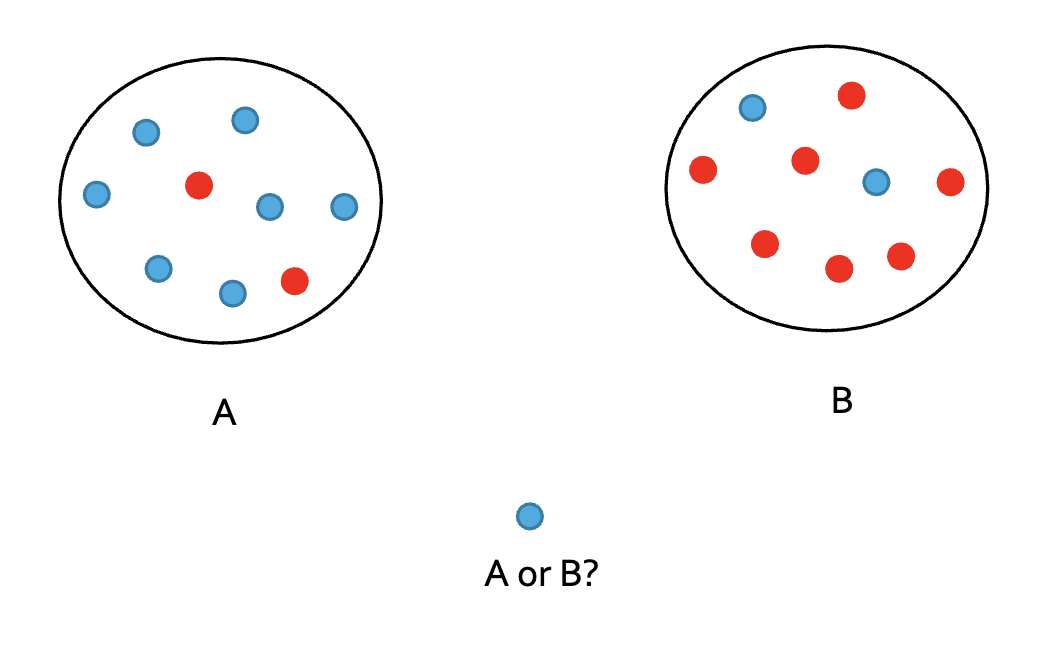
Do small or big samples demonstrate more extreme results? Why?
Small samples because small samples are not representative of the entire population.
Define small sample fallacy.
When people believe that small samples are representative of the population.
Why does the small sample fallacy play a role in prejudice?
Because people may form prejudices based on their interactions with a small sample of people from a certain group and falsely believe that the small sample is representative of the entire population. Therefore, perpetuating prejudices/stereotypes.
What do we rely on the most when judging someone’s membership to a specific category, and what do we ignore?
We rely on category representativeness and ignore the base rate—this is called the base rate fallacy.
Provide an example of the base rate fallacy.
The base rate is that there are 30 engineers and 70 lawyers.
Jack is a 45 year old with 2 kids and has no interest in political science or debating. Is Jack most likely an engineer or a lawyer?
Most people say engineer because they use the representativeness heuristic where they think Jack’s description sounds more like an engineer than lawyer.
However, we are given the base rate where the probability of being an engineer is much lower than being a lawyer. Therefore, Jack is more likely to be a lawyer compared to engineer. Hence, this exemplifies the base rate fallacy as even with knowledge of the base rate, people use representativeness heuristic to make a judgement instead.
Conjunction fallacy.
The tendency for us to judge a combination (conjunction) of two events as more probable than a single event occurring due to the representativeness heuristic.
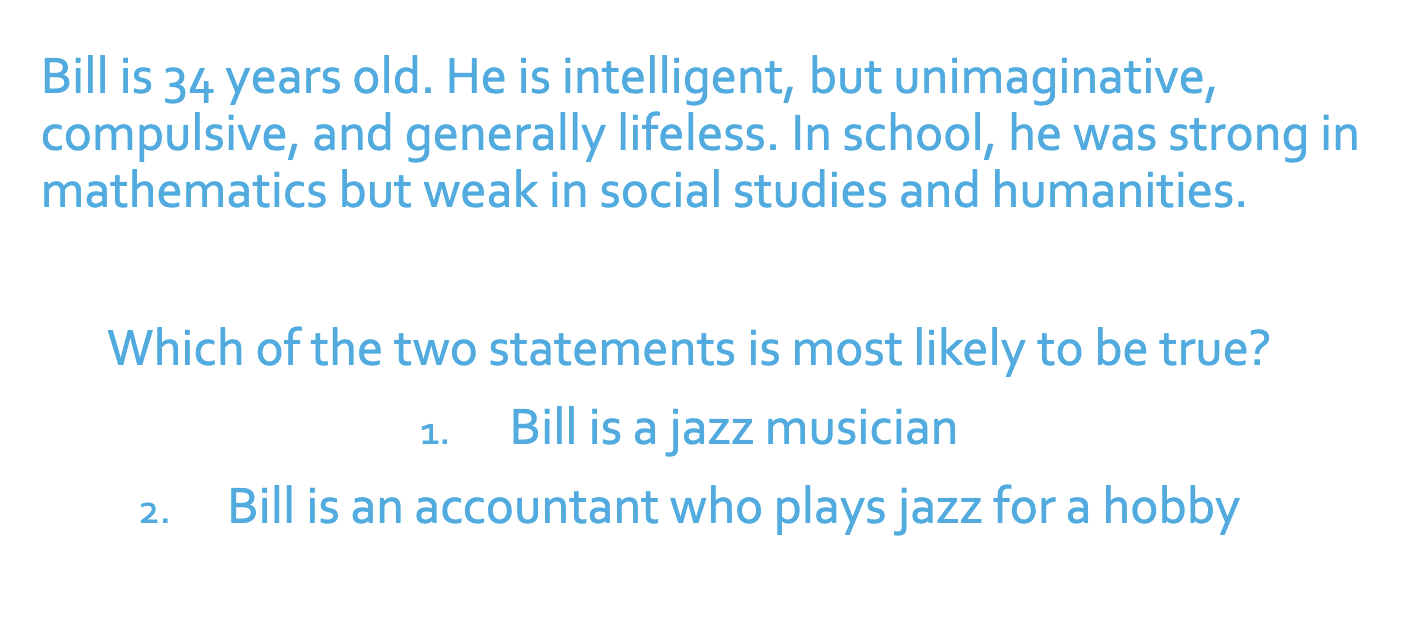
Provide an example for the conjunction fallacy.
Bill is a jazz musician is more likely because it is more likely for one thing to occur, than 2 things together.
However, people usually pick option 2 because of the representativeness heuristic.
Explain a study about conjunction fallacy. How does this highlight the power of representativeness heuristic?
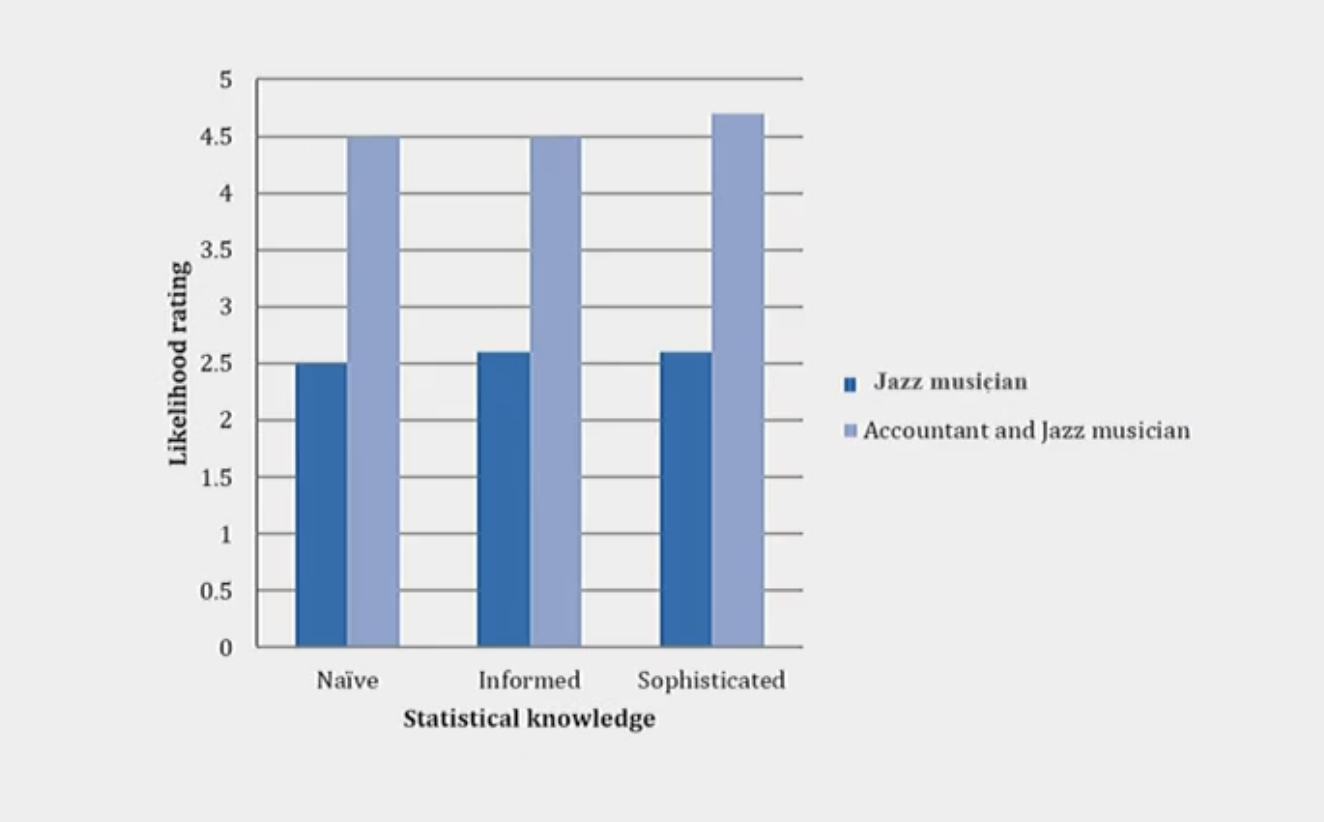
Participants from 3 groups were sampled:
Statistically naive groups - psychology undergrads
Intermediate knowledge group - psychology graduate student
Sophisticated group - PhD in statistics
When given the same problem about the Jazz musician, regardless of people’s stats backgrounds, everyone committed the conjunction fallacy.
This highlights the power of the representativeness heuristic as people violated basic probability rules due to the representativeness heuristic clouding their judgements.
Define the availability heuristic.
When we judge the frequency of an outcome based on the ease of retrieval from memory.
What factors influence the ease of retrieval of events from memory? Explain why.
Recency
The more recent, the easier the memory is to retrieve in someone’s mind, increasing its perceived likelihood
Familiarity
The more familiar, the more knowledge you have making it easier to come to mind, increasing its perceived likelihood
Saliency
The more salient, the more likely we will pay attention and remember it later, increasing its perceived likelihood
Define the simulation heuristic.
When people judge an event's likelihood based on how easily they can imagine that scenario occurring.
Provide an example about the simulation heuristic.
It is much more frustrating to miss a bus by 10 seconds rather than 30 minutes because you can easily imagine what would have happened if you walked a little bit faster or the bus driver looked up at you.
Explain dual-process theory.
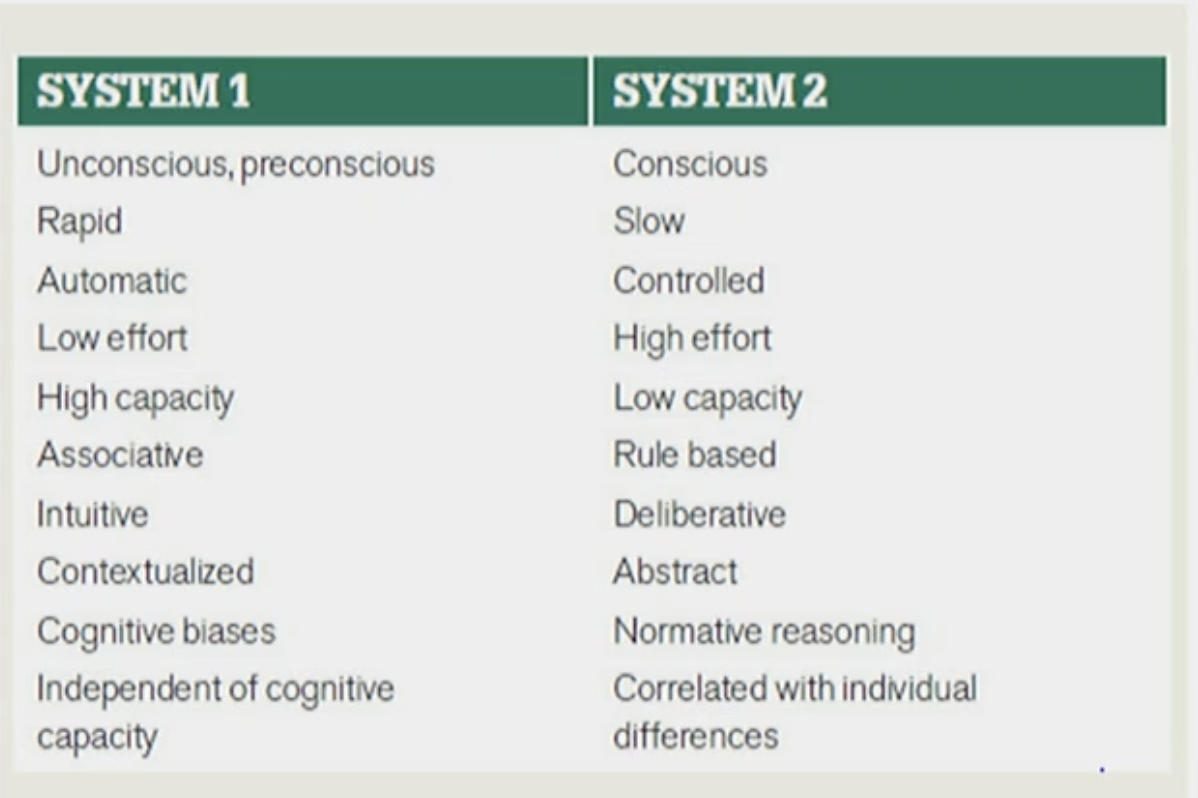
This is the idea that there are 2 systems involved in decision making:
system 1 - automatic and implicit (heuristic)
system 2 - controlled and conscious (reasoning)
What are the characteristics of system 1 and system 2?
When do we use system 1 and system 2 according to dual process theory?
In dual process theory it argues that people intuitively use system 1. However, in order to logically reason, they must use inhibit system 1 and apply system 2.
Hence, people must:
firstly, recognise that they need to use system 2 (logic) instead of system 1 (heuristics)
then, people need to have the ability to inhibit that instinctive response
lastly, people need to have the knowledge and ability to actually use system 2.
Does using heuristics always have to be bad? Why?
No, experts are more likely to use heuristics more than novices because experience has taught people to interpret certain situations more effectively, which might not always abide by probability.
Do you know all the learning objectives?

 Note
Note  Flashcards (120)