Week 2- Excitable Tissues and Membrane Dynamics
 Call Kai
 Learn
Learn Practice Test
 Spaced Repetition
 Match
Match Flashcards
 Knowt Play
1/29

There's no tags or description
Looks like no tags are added yet.
Name | Mastery | Learn | Test | Matching | Spaced | Call with Kai |
|---|
No analytics yet
Send a link to your students to track their progress
30 Terms
REVIEW
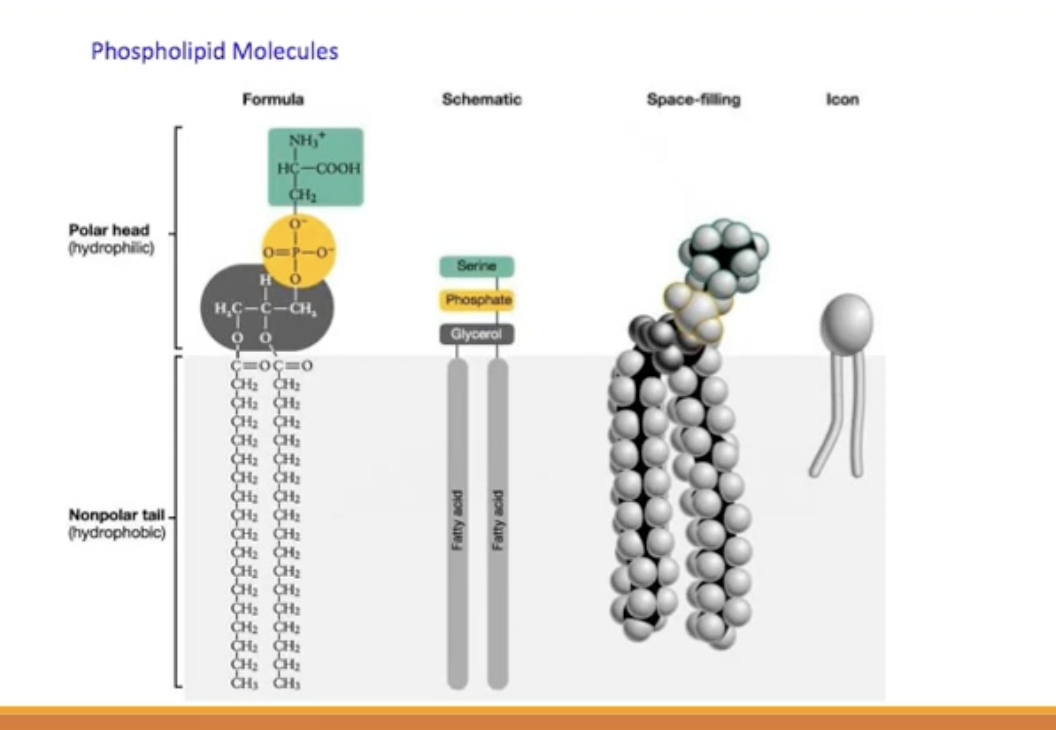
Phospholipid molecules arranged in lipid bilayer is called?
____ head and ____ tail.
Phospolipid has a ___ head and 2 ____.
Fluid-Mosaic Model (1972)
Polar, nonpolar
glycerol-phosphate, fatty acid tails.
REVIEW
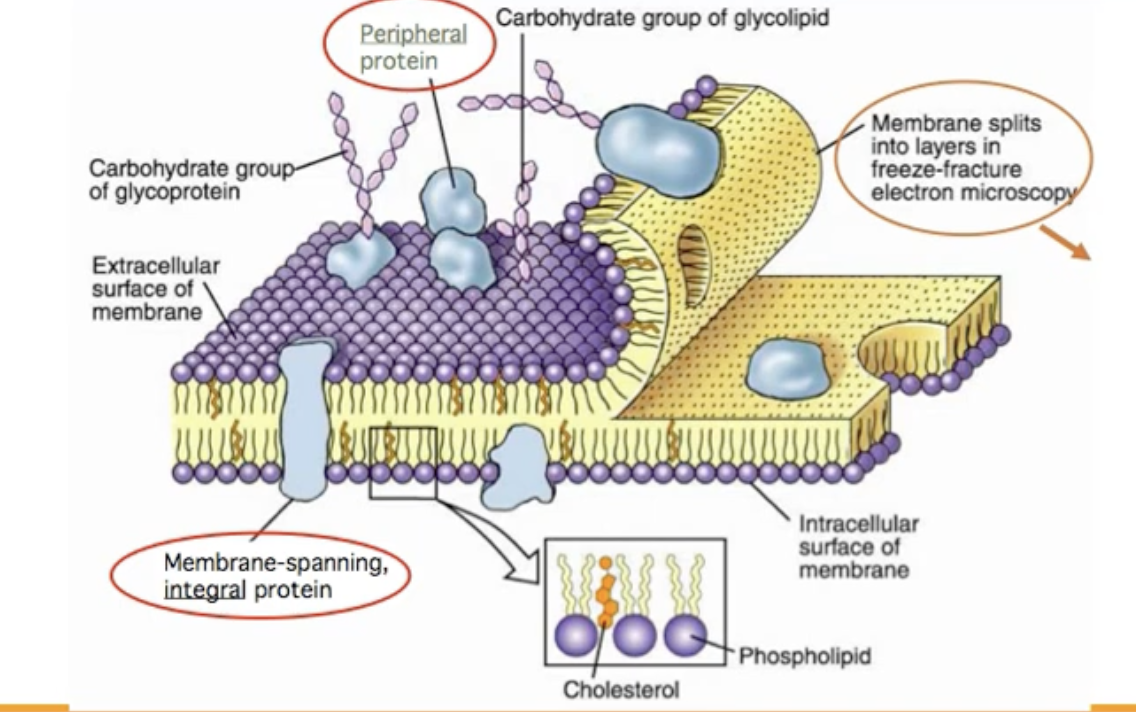
There are ____ proteins that are only on the surface and ______ proteins that go through the membrane.
peripheral, membrane spanning
REVIEW
Types of Membrane proteins (functionally):
structural proteins (cytoskeleton)
enzymes
receptors
transporters (channels, carriers, pumps)
REVIEW
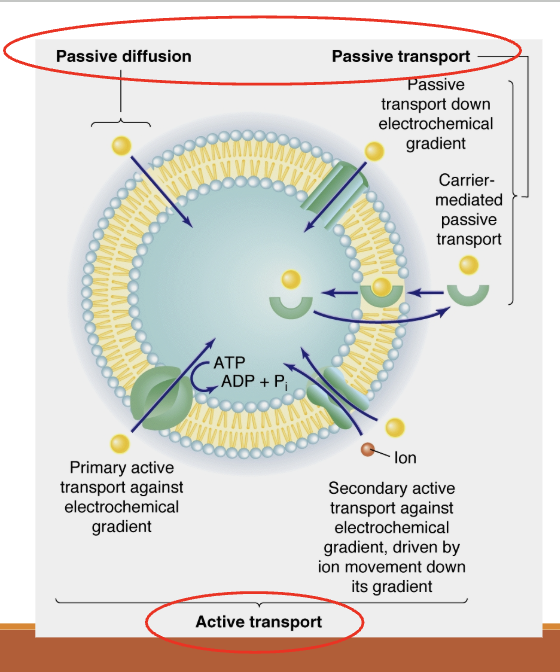
Types of Transport?
Passive
simple diffusion
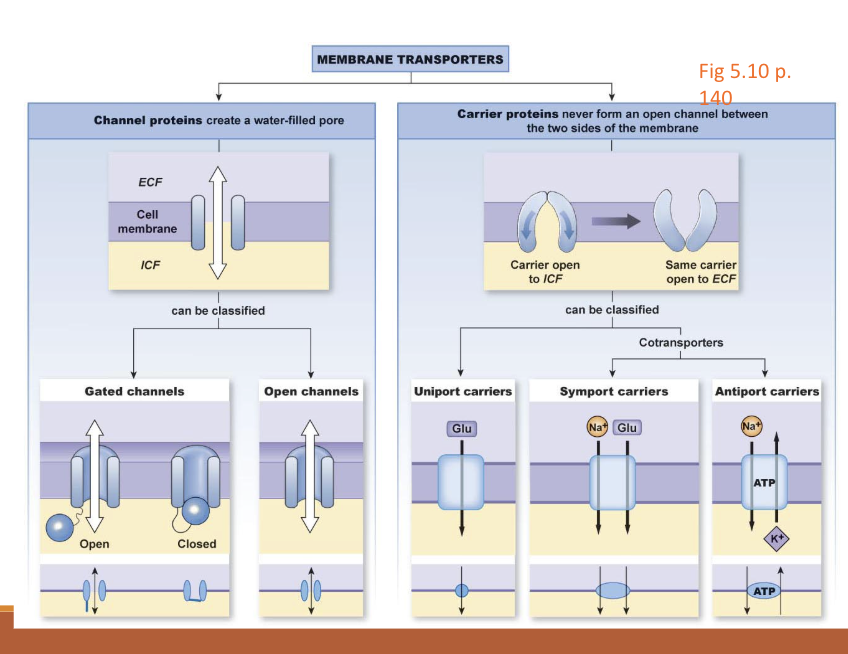
facilitated diffusion (channels/carriers; protein-mediated)
Active
primary
secondary
vesicular transport
REVIEW
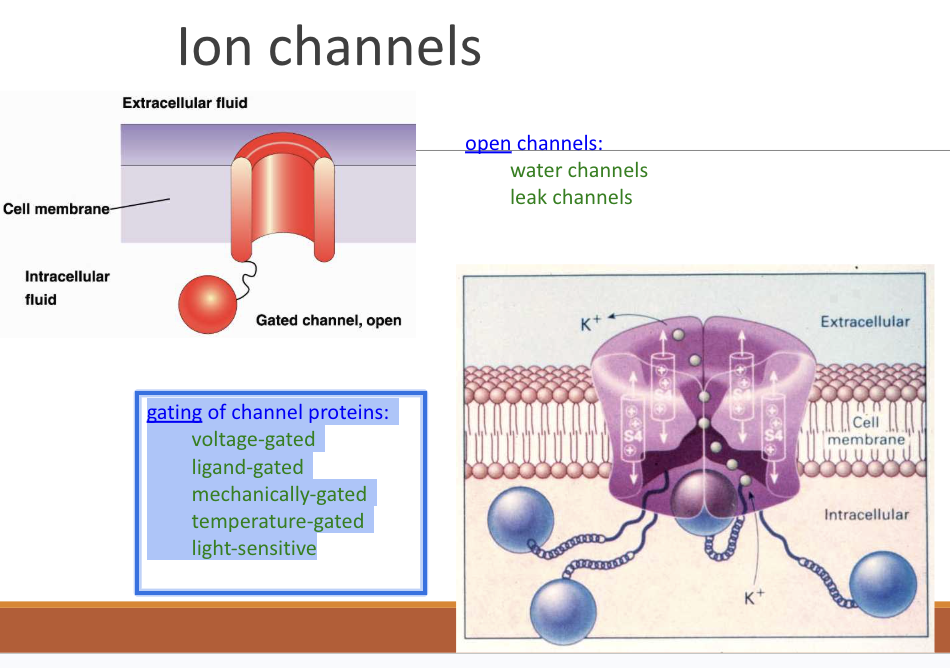
Facilitated Diffusion
Gating of channel proteins:
voltage-gated
ligand-gated
mechanically-gated
temperature-gated
light-sensitive
REVIEW
Facilitated Diffusion
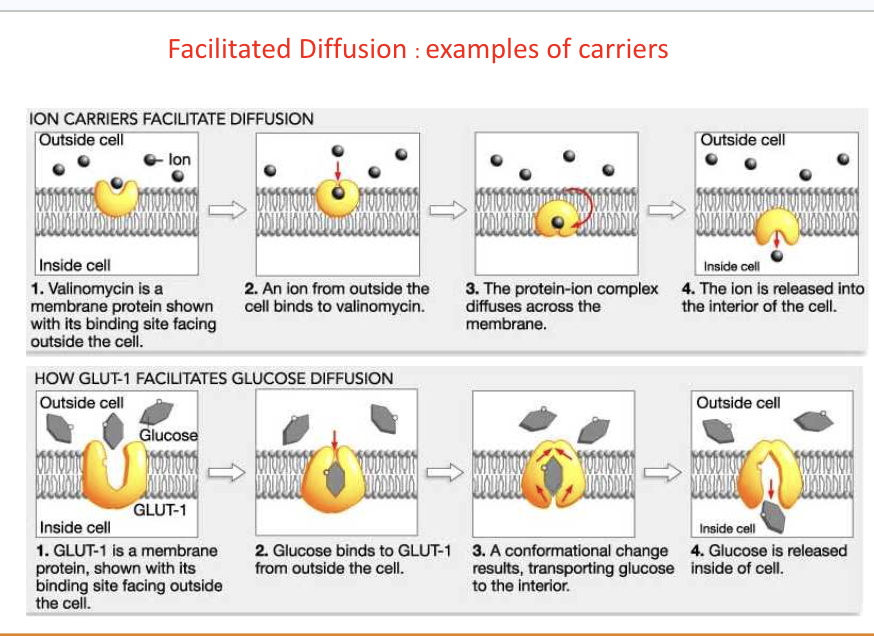
Carrier proteins review:
REVIEW
Facilitated Diffusion
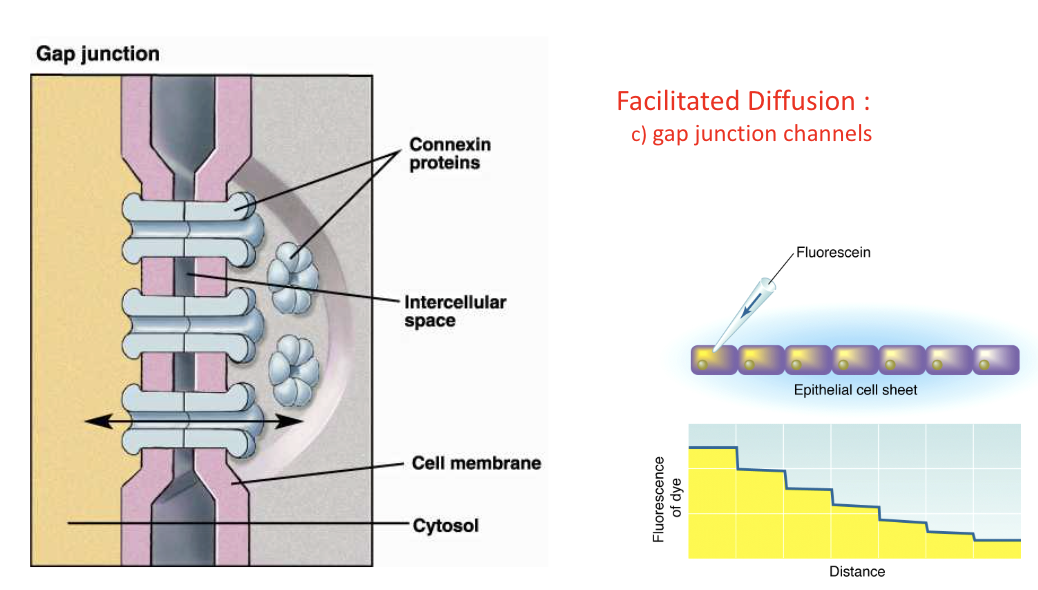
Gap Junction review:
REVIEW
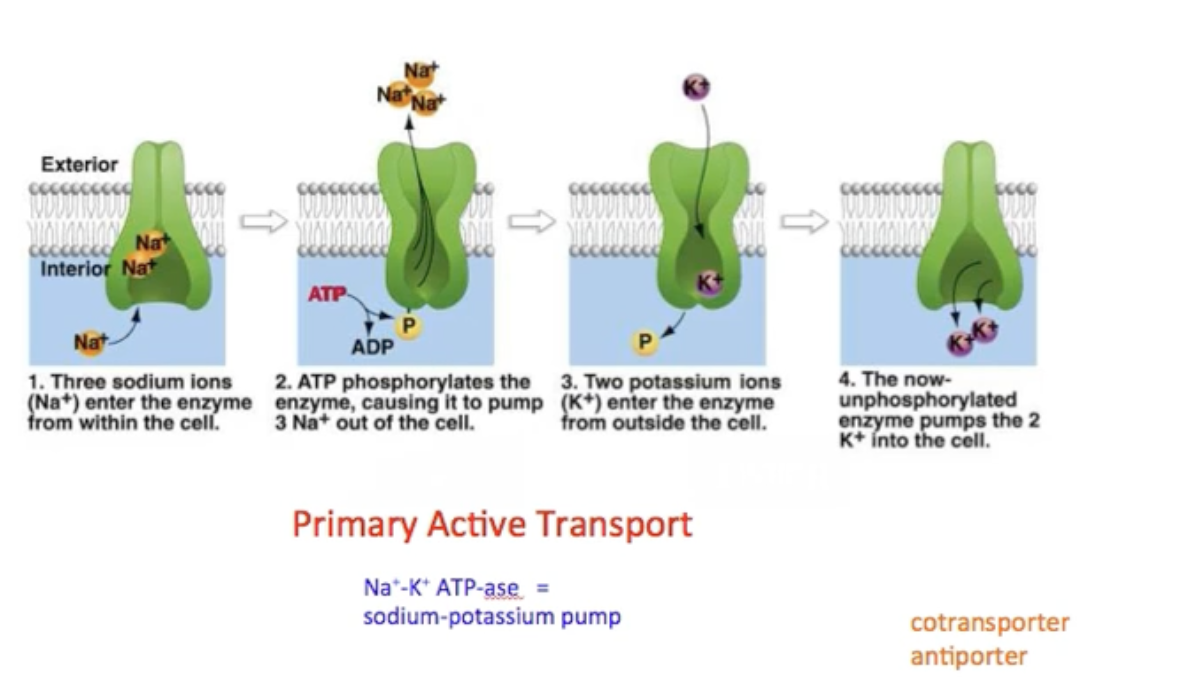
Primary Active Transport:
Example:
uses ATP to transport sodium out and potassium into the cell against their concentration gradients.
Na+-K+ ATP-ase = sodium-potassium pump
This is an antiporter which means it moves two different ions in opposite directions.
REVIEW
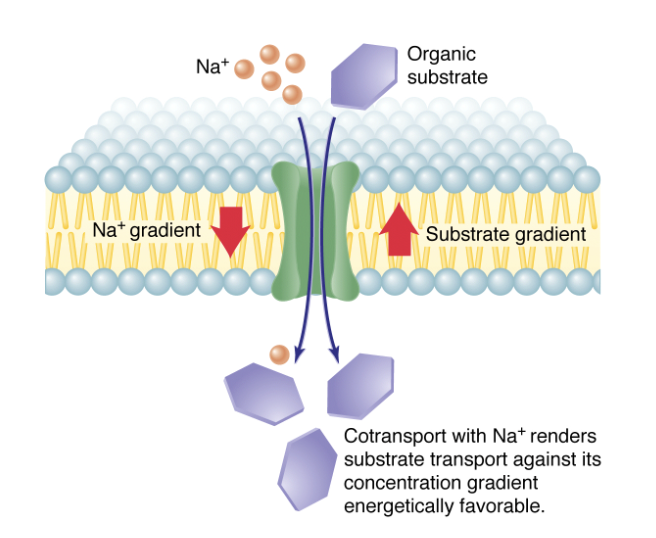
Secondary Active Transport:
utilizes the energy from the movement of one ion down its concentration gradient to move another ion against its gradient. It often involves symporters and antiporters for different ion transport.
An example of this is the sodium-glucose transport, where sodium ions move into the cell driving glucose against its gradient.
This picture is example of symporter which means it simultaneously transports two different substances in the same direction.
REVIEW
Membrane Transporters Summary
REVIEW
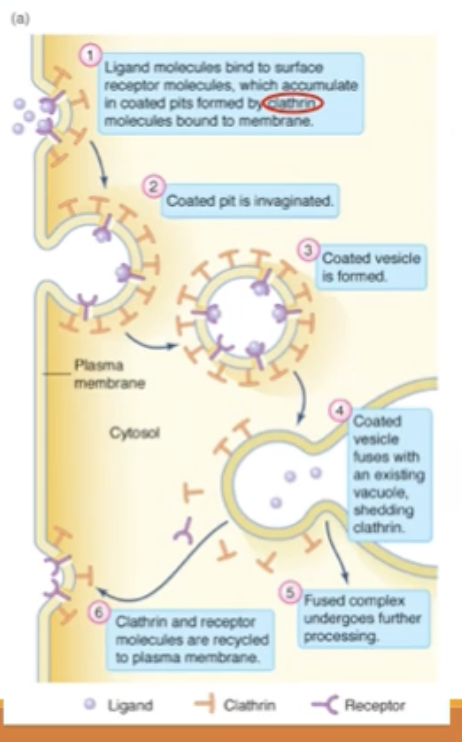
Vesicular Transport:
Includes:
Under endocytoces is transcytosis which is:
What is paracellular transport?
a type of transport that involves the movement of substances into and out of the cell via vesicles.
This process can include mechanisms such as phagocytosis, where large particles are engulfed, or receptor-mediated endocytosis, which is specific to certain molecules.
Transcytosis is the process of moving substances across a cell by capturing them in vesicles on one side and releasing them on the other.
Paracellular transport is a mechanism that allows substances to pass between cells, typically occurring through tight junctions, facilitating the movement of ions and small molecules across epithelial layers.
REVIEW
Glucose traverses cell membranes by means of:
A carrier that moves two substrates in opposite directions across a membrane is called:
The transport system often used in cross-epithelial transport is:
Most secondary active transport systems use the potential energy of which ion’s concentration gradient(s)?
Facilitated diffusion
Antiporter and cotransporter
Both paracellular transport and transcytosis
Na+
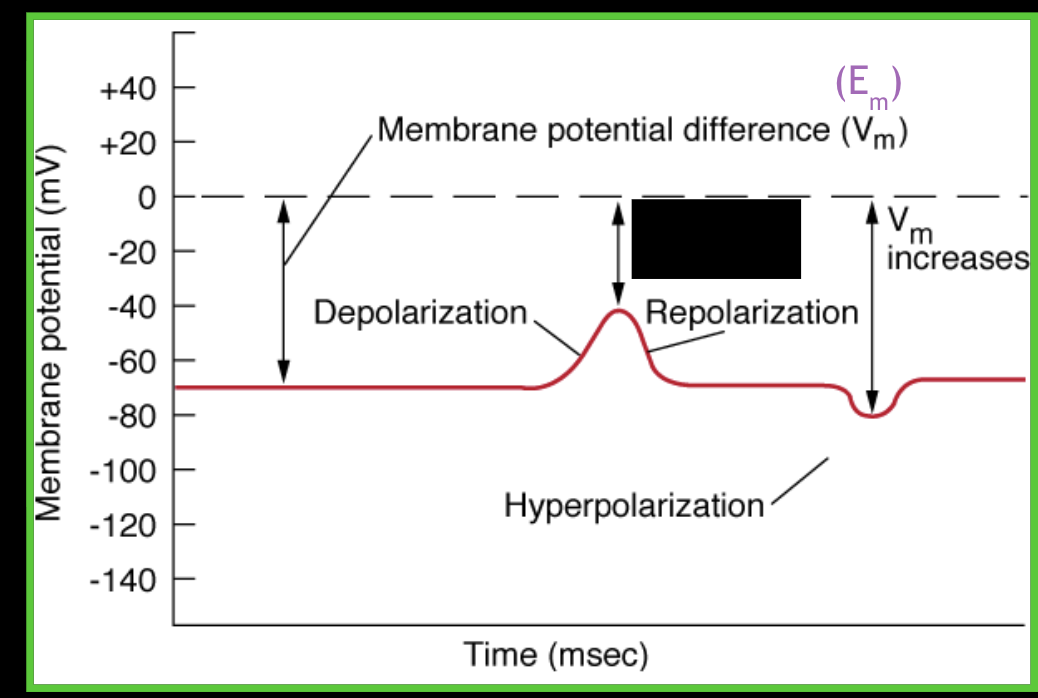
E potential difference (E) =
Resting membrane potential (Em or Vm)=
The difference in voltage across a cell membrane, typically measured in millivolts. It is critical for the function of excitable tissues like neurons and muscle cells.
The voltage difference that exists across a cell membrane at rest, resulting from the distribution of ions, particularly Na+ and K+.
For a resting membrane potential to be -70 milivolts, the outside of the cell _____.
must have a higher concentration of Na+ ions compared to the inside, while K+ ions are more concentrated inside the cell.
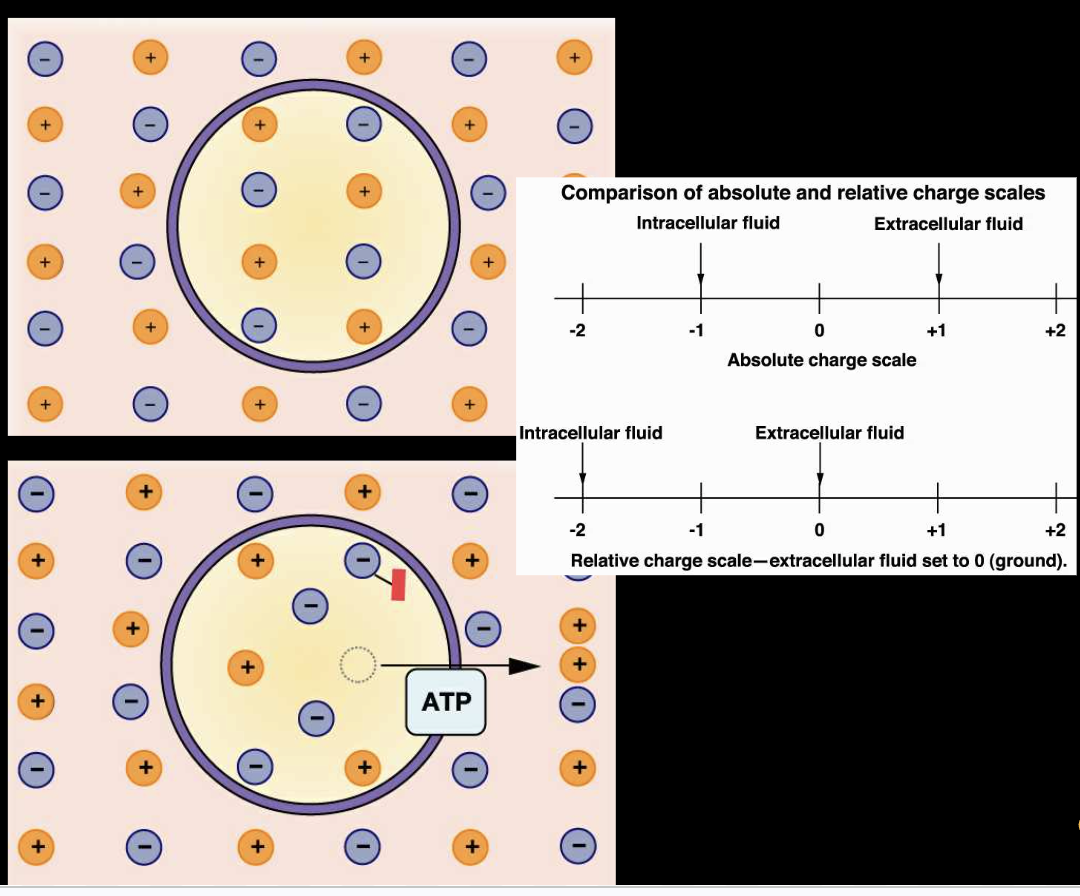
The resting membrane potential is due mostly to ____.
potassium (K+)
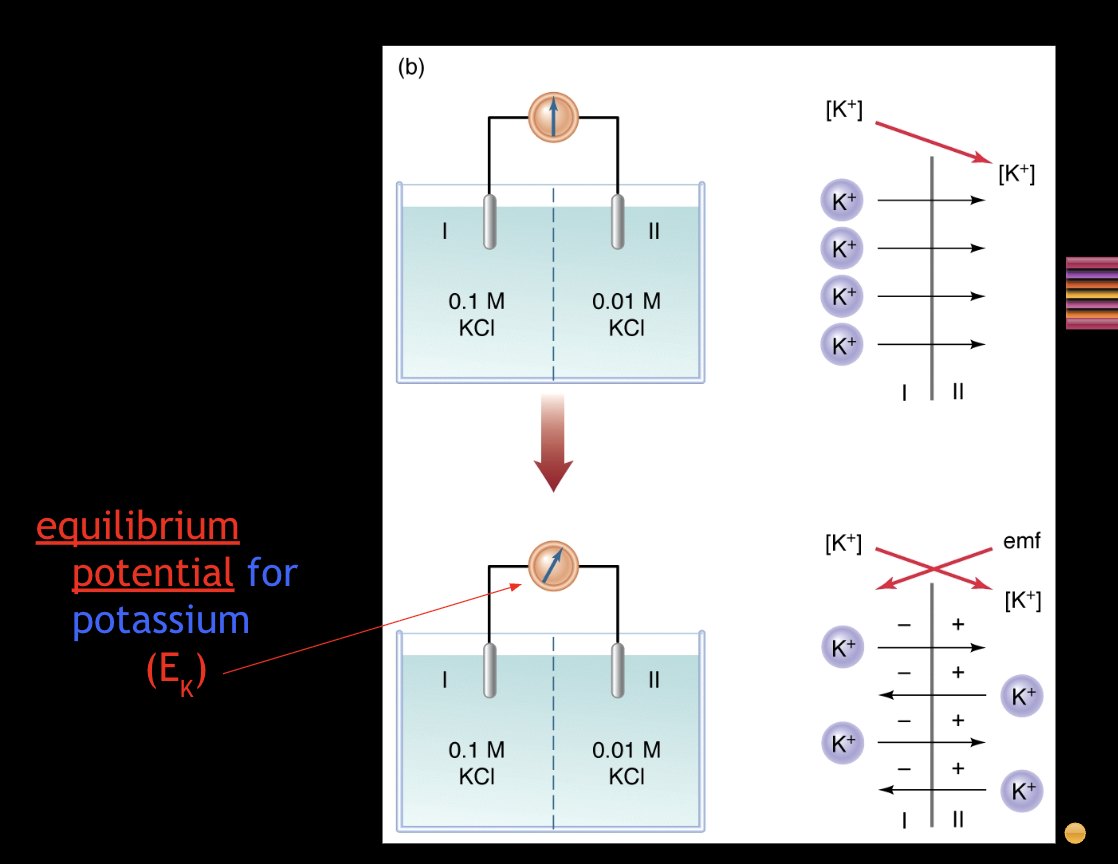
Equilibrium potential:
The membrane potential at which there is no net movement of a particular ion across the membrane, balancing the concentration gradient and electrical gradient.
Concentration vs electrical gradient:
The difference in the concentration of ions across a membrane compared to the opposing force of electrical charge that influences ion movement.
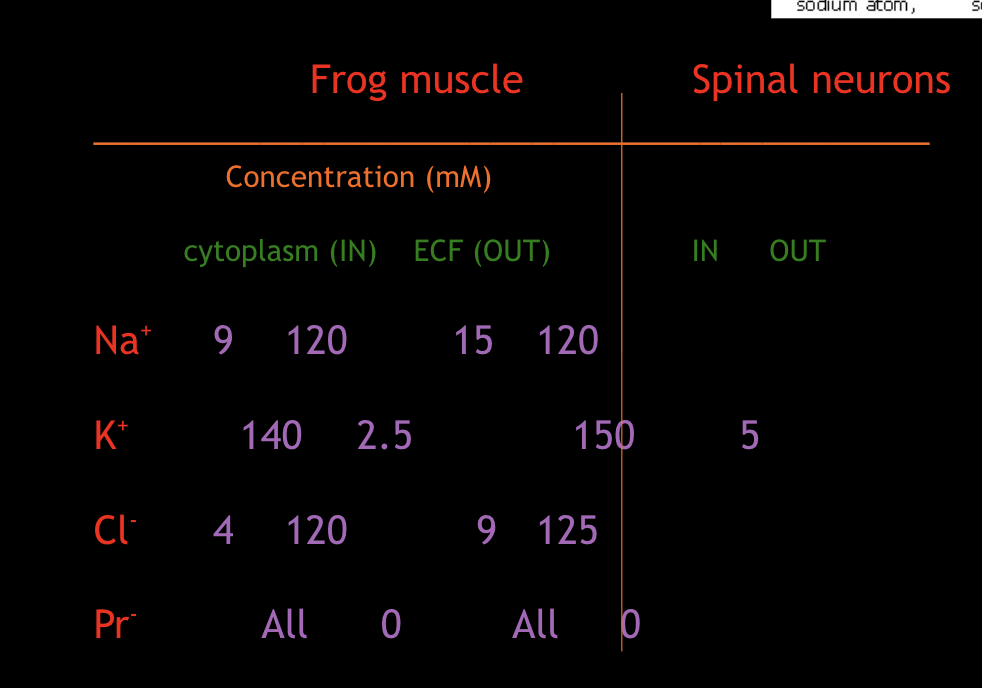
Example of ion distribution in excitable tissues:
Terminology associated with membrane potential changes
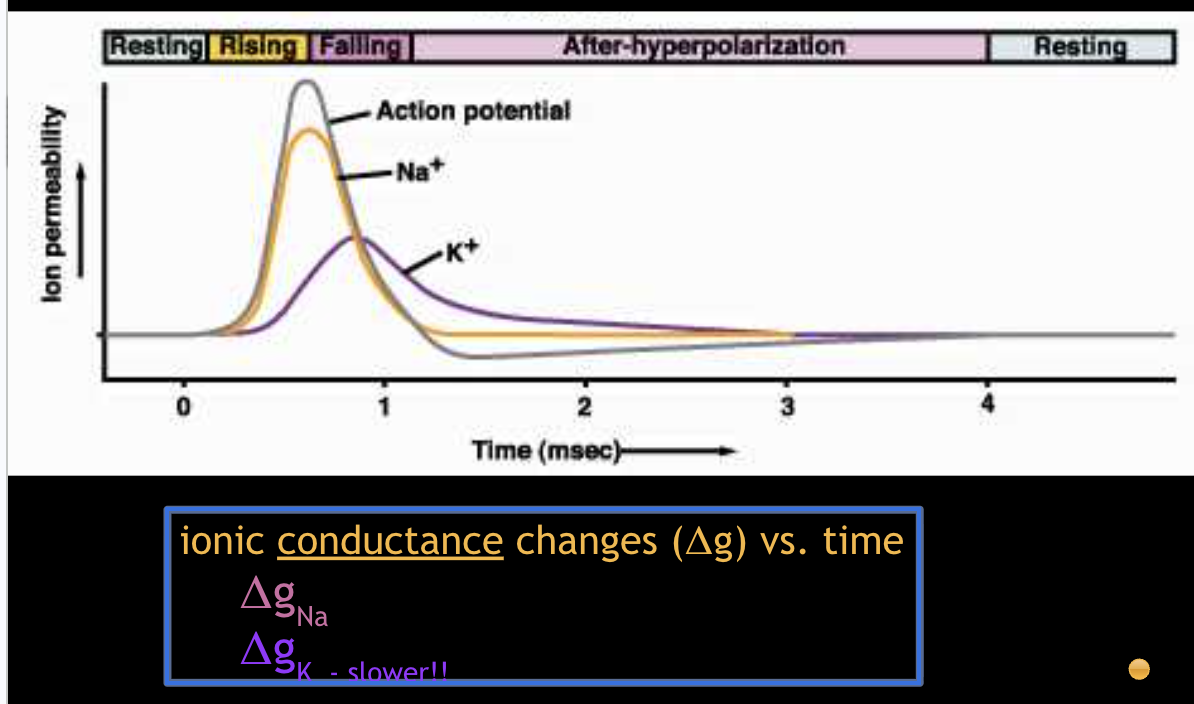
In excitable tissue, Action potentials changes in Em cause changes in _____.
membrane conductance (g) to various ions.
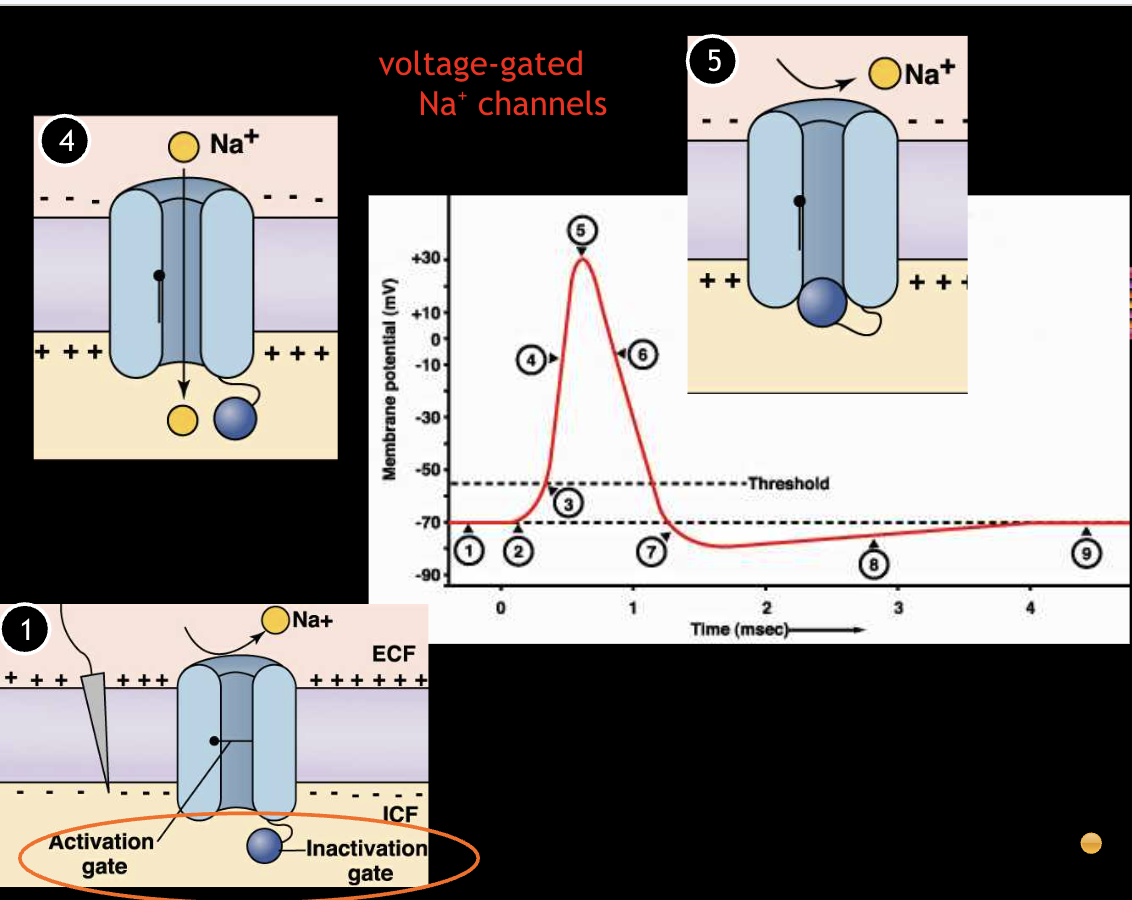
VOLTAGE GATED ION CHANELS
Conductance of ____ is slower than that of ____.
potassium, sodium
QUESTIONS
The membrane resting potential is (mostly) due to which ion(s)?
Hyperpolarization of the cell membrane occurs when:
The electrical gradient of a cell membrane:
The potential difference between the inside and outside of a cell:
K+
Both the potential difference between the inside and outside is greater than normal and the membrane potential becomes more negative than at rest
Is the difference between the net charge on the inside and that of the outside and implies movement of charged atoms without regard to their concentration
Is about -70 mV, Permits work to be done, and Can power movement and communication by the cell
Connective Tissue:
A type of tissue that supports, binds together, and protects other tissues and organs in the body.
Cells in connective Tissue:
Resident Cells
adipose cells
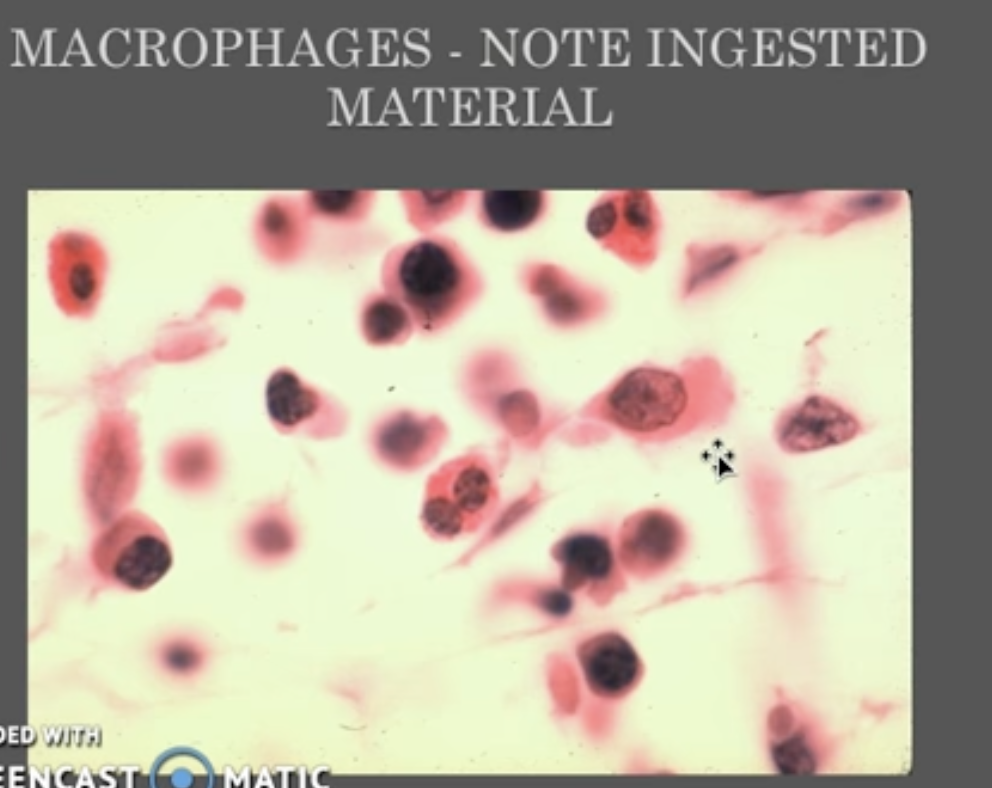
macrophages
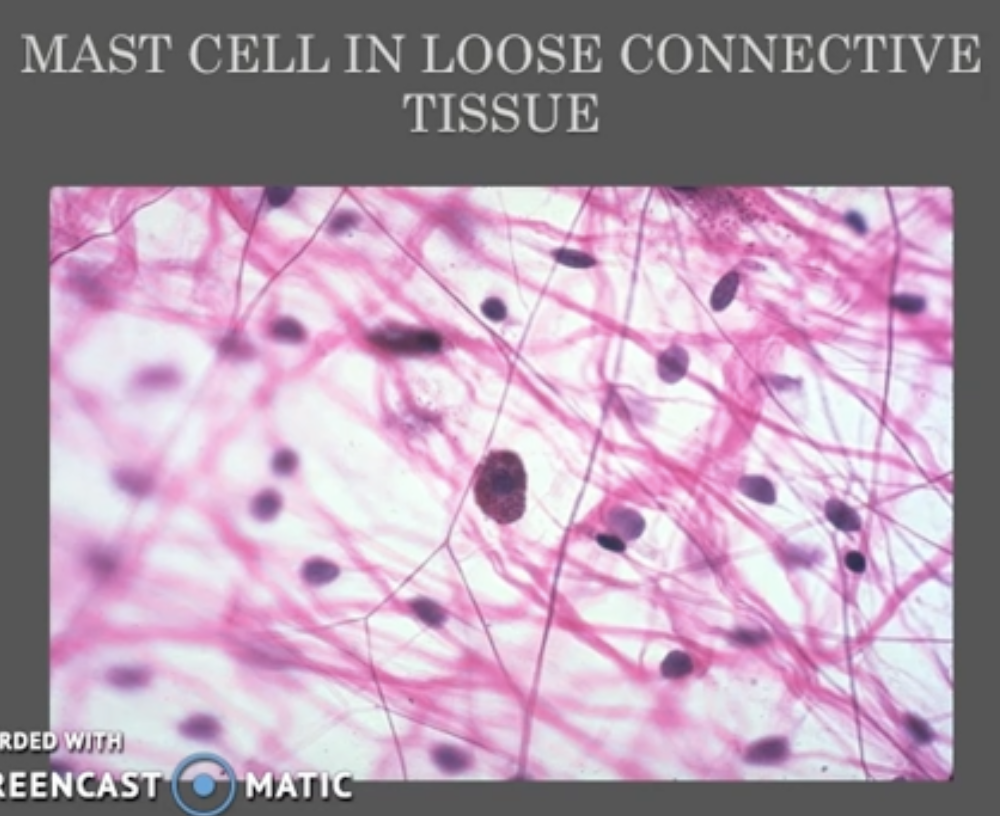
mast cells
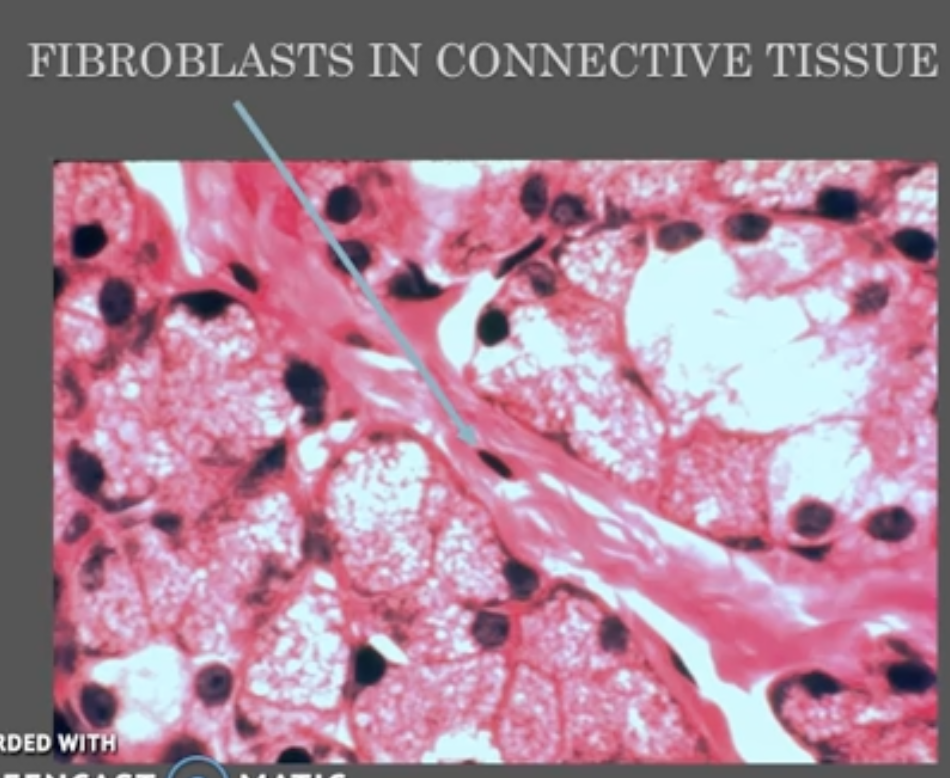
fibroblasts
Immigrant cells
Macrophages:
Mast cells:
Fibroblast:
eat pathogens and cellular debris, helping to protect the body from infection and facilitating tissue repair.
type of immune cell that play a key role in allergic reactions and defense against pathogens by releasing histamine and other chemicals.
specialized cells that make collagen, providing structural support to tissues.
Extracellular Matrix:
Made of:
A network of proteins and molecules that provide structural and biochemical support to surrounding cells in connective tissue.
Collagen fibers, elastic fibers, and ground substance
Collagen is very ___.
Elastic fibers are very ____.
strong
stretchy
Ground Substance:
A gel-like material that fills the spaces between cells and fibers in connective tissue, providing support and facilitating the exchange of nutrients and waste.
Classification of connective tissue:
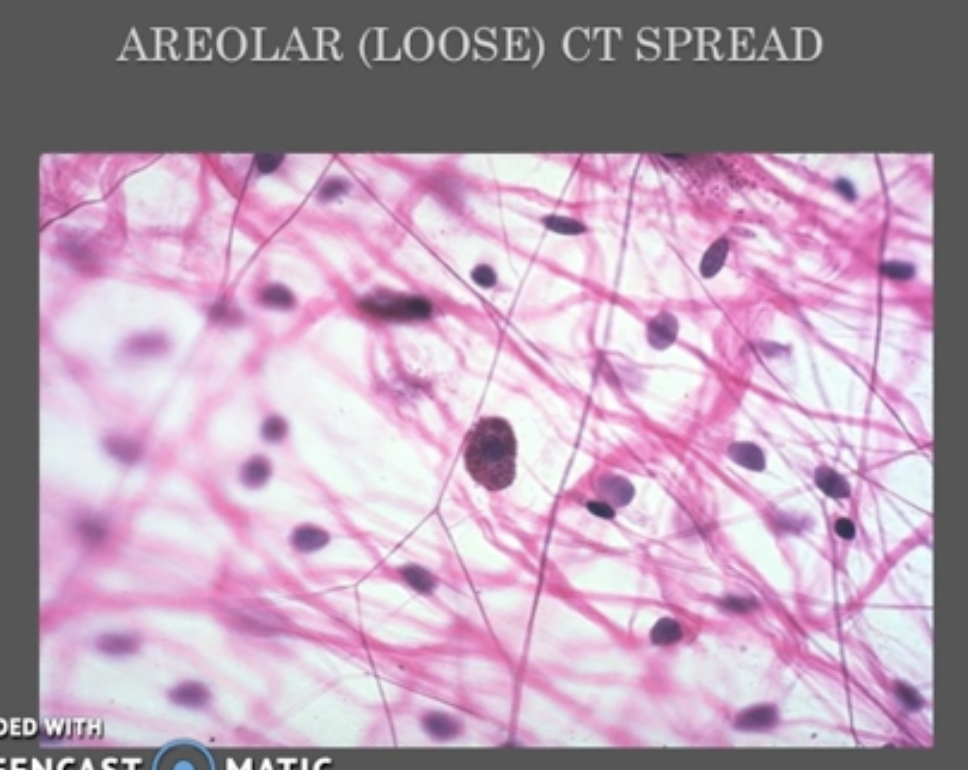
Loose (areolar)
A few fibers, loosely arranged
Dense
Abundance of fibers, compactly arranged, very little ground substance
Dense irregular- support in different directions
Dense regular- support in one direction
Learning Outcomes
Identify the components of a cellular (plasma) membrane
Explain how ion traffic creates a resting potential across a cell membrane
Distinguish among mechanisms for moving ions, water, and other molecules through a membrane
Categorize pumps, transporters, and channels that govern traffic across a cell membrane
Understand how a cell membrane serves as a capacitor

