Simply Thai Menu

0.0(0)
studied byStudied by 0 people
call kaiCall Kai
learnLearn
examPractice Test
spaced repetitionSpaced Repetition
heart puzzleMatch
flashcardsFlashcards
GameKnowt Play
Card Sorting

1/59

flashcard set

Earn XP

Description and Tags

Practicing memorizing menu items and details

Last updated 7:22 PM on 12/3/25
Name
Mastery
Learn
Test
Matching
Spaced
Call with Kai

No analytics yet

Send a link to your students to track their progress

60 Terms
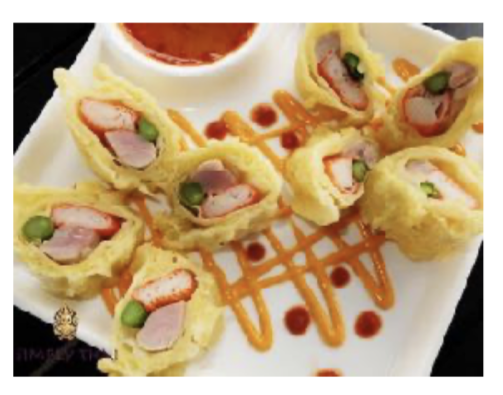
1
New cards
<p>Simply Roll</p>

Simply Roll

Appetizer:
Fresh sushi-grade tuna, asparagus, and Imitation crab rolled in an egg roll wrapper, battered and lightly fried. Tuna is served medium rare unless otherwise requested. Spicy mayo and a spicy sriracha. Sweet and sour sauce makes this appetizer a little spicy!

CANNOT be gluten-free or vegan (egg roll wrapper and batter, tuna and

crab)
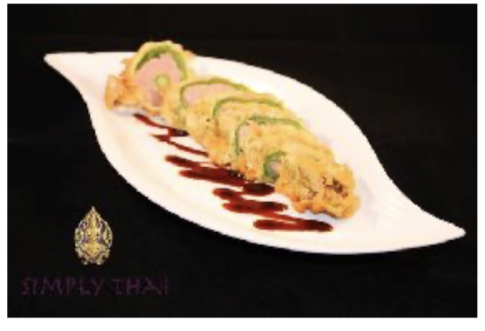
2
New cards
<p>Thai Pepper</p>

Thai Pepper

Appetizer:
Fresh, spicy banana pepper stuffed with seasoned ground pork and shrimp, then we slide an asparagus stock in there to represent the stem, tempura batter and fry it, and slice it into bite-sized pieces. Served with our house-made dumpling sauce.

CANNOT be gluten-free (batter)
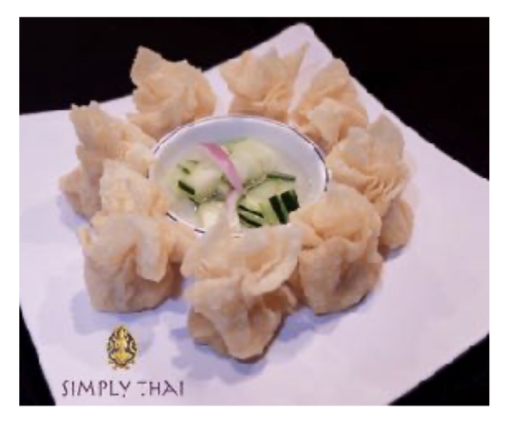
3
New cards
<p>Shrimp Package</p>

Shrimp Package

Appetizer:
Bite-sized wonton wrappers are stuffed with a seasoned ground shrimp and fried for a flavorful, crispy bite of shrimp served with our fresh cucumber sauce.

CANNOT be gluten-free (wonton wrapper)
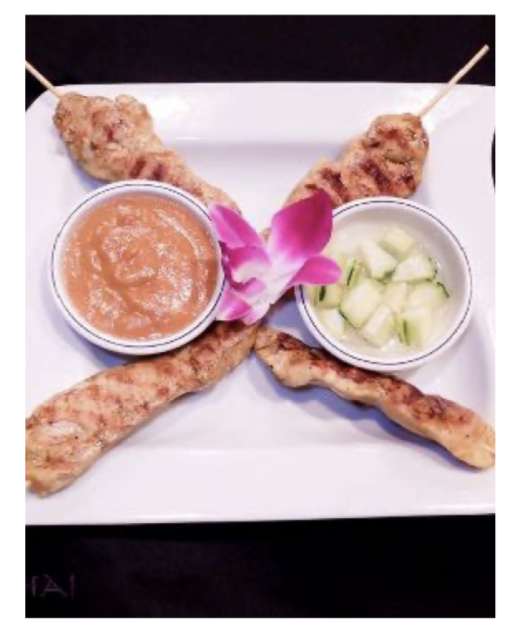
4
New cards
<p>Satay</p>

Satay

Appetizer:
Pictures with chicken (also offered with beef or shrimp) seasoned with curry spices and grilled on the skewer. Served with creamy peanut sauce and cucumber sauce.

GLUTEN FREE!
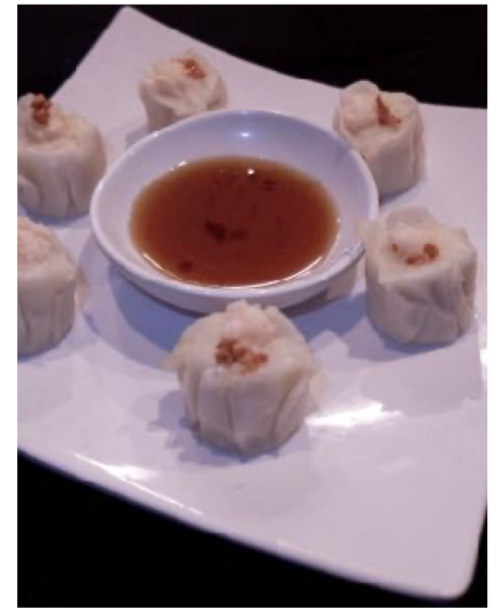
5
New cards
<p>Shrimp Dumplings</p>

Shrimp Dumplings

Appetizer:
Steamed shrimp dumplings topped with fried garlic and served with homemade dumpling sauce.

CANNOT be gluten-free or vegan.
6
New cards
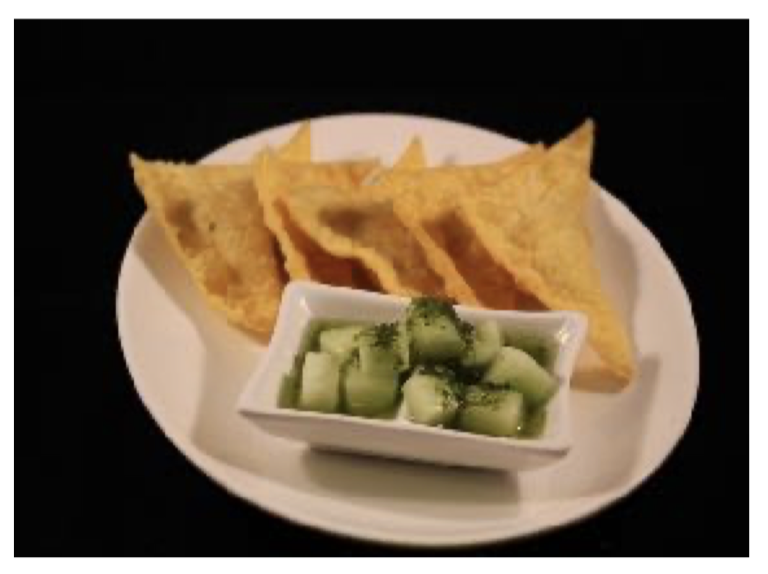
<p>Curry Puffs</p>

Curry Puffs

Appetizer:
A curry-spiced, creamy potato, chicken, and onion filling, stuffed into a wonton wrapper and fried to a crisp. Served with our cucumber sauce.

CANNOT be gluten free (wrappers)

7
New cards
<p>Spring Roll</p>

Spring Roll

Appetizer:
Pictured with shrimp (also offered with vegetable, tofu, or chicken). Similar to a LETTUCE WRAP! NOT FRIED! Rolled in a rice paper wrapper and served with our homemade sweet & sour with crushed peanuts.

GLUTEN FREE!

8
New cards
<p>Egg Roll</p>

Egg Roll

Appetizer:
Fried vegetarian Egg Rolls with noodles, cabbage, carrots, and celery. Served with a fresh mango sauce.

CANNOT be Gluten-free
9
New cards
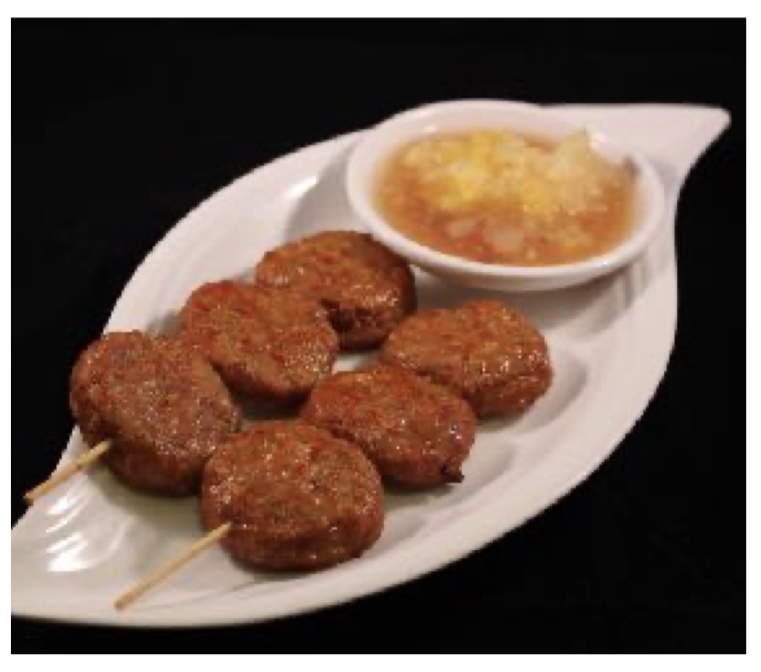
<p>Tod Mon Moo</p>

Tod Mon Moo

Appetizer:
Delicious, flavorful, and slightly spicy pork meatballs are served with our pineapple sweet and sour sauce. “Moo” in Thai is PORK!
10
New cards
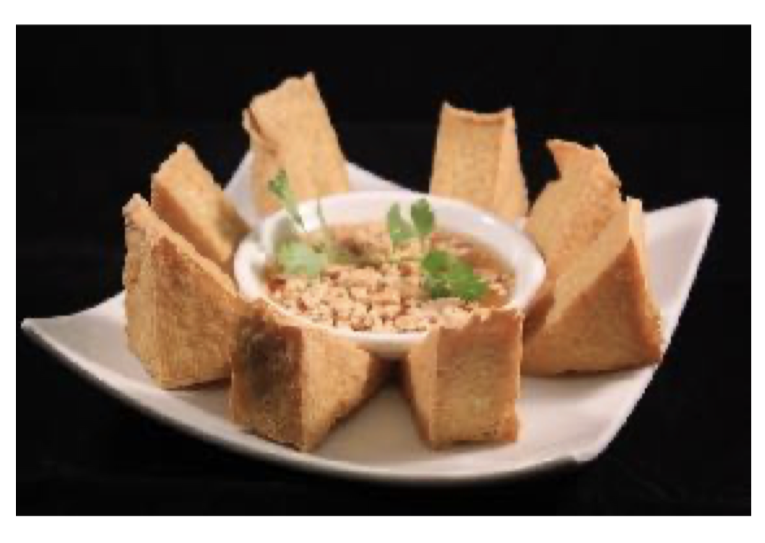
<p>Crispy Tofu</p>

Crispy Tofu

Appetizer:
Fried triangles of tofu served with our house sweet & sour sauce with crushed peanuts.

Sauce is NOT VEGAN! (Sub: peanut sauce or cucumber sauce, or any other vegan-friendly sauces -dumpling sauce, etc.)
11
New cards
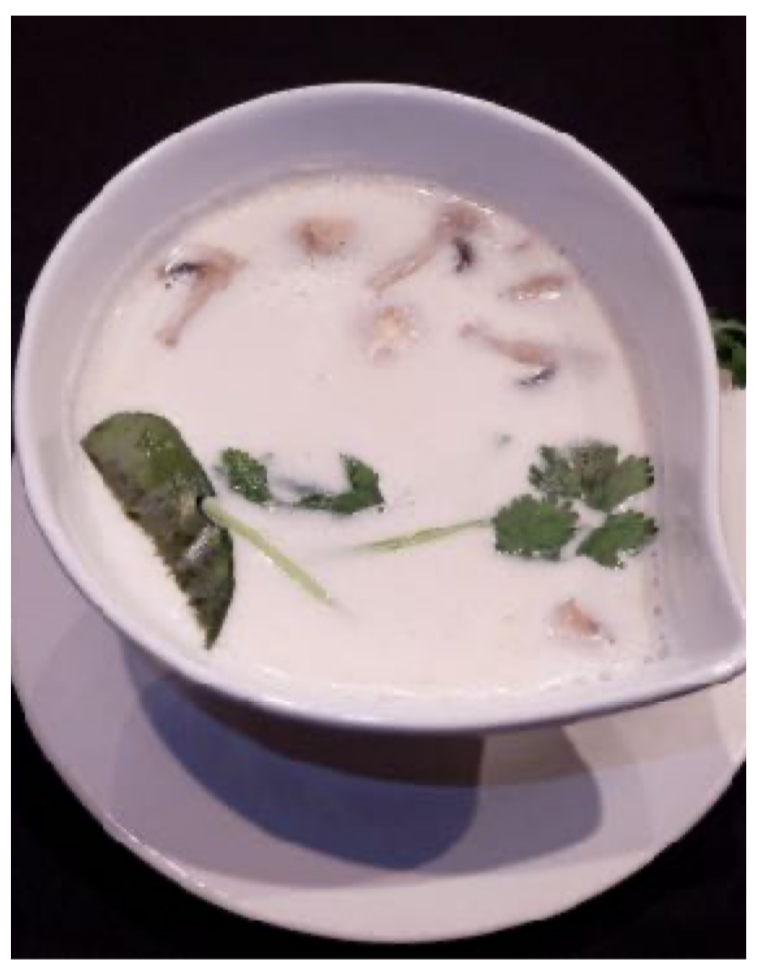
<p>Tom Kha</p>

Tom Kha

Soup:
Creamy coconut milk-based soup with fresh squeezed lime juice, lemongrass, and galangal (spiced root similar to ginger used for flavor), mushrooms, and your choice of protein or fish, topped with cilantro.
12
New cards
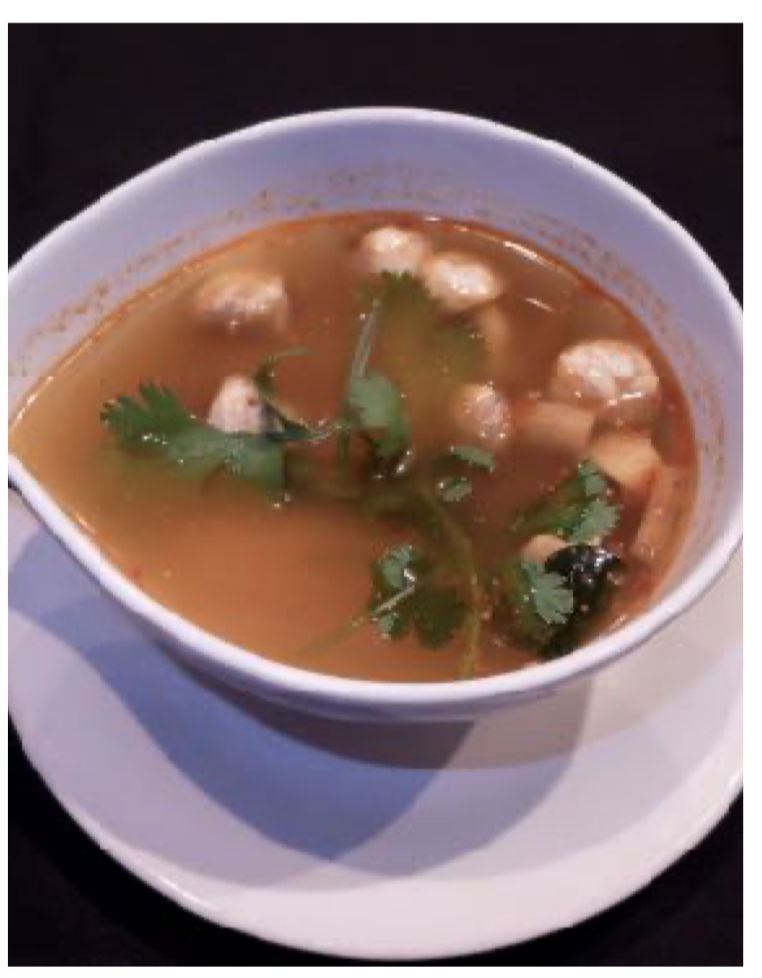
<p>Tom Yum</p>

Tom Yum

Soup:

Slightly spicy broth also with fresh-squeezed lime juice, mushrooms, lemongrass, and galangal (spiced root similar to ginger used for flavor) served with your choice of protein or fish, topped with cilantro.

Vegan?
Gluten Free?
13
New cards
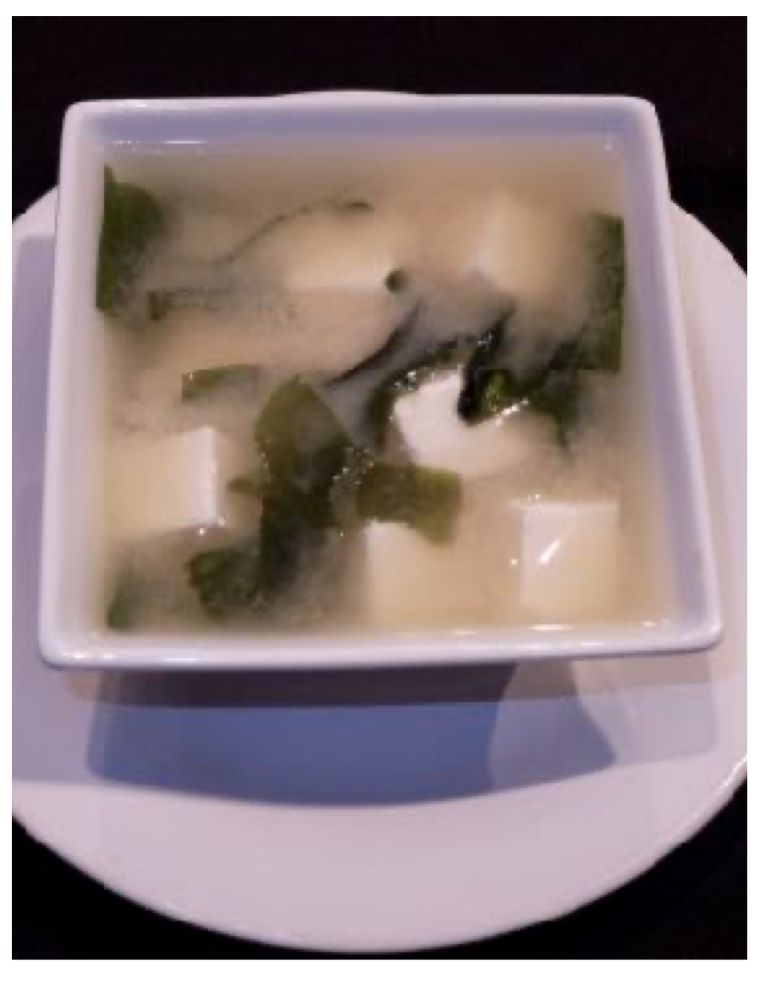
<p>Miso Soup</p>

Miso Soup

Traditional miso soup served with seaweed and soft tofu.

CANNOT be vegan (base is made with fish- cannot be altered)
NOT Vegan
GLUTEN FREE?

14
New cards
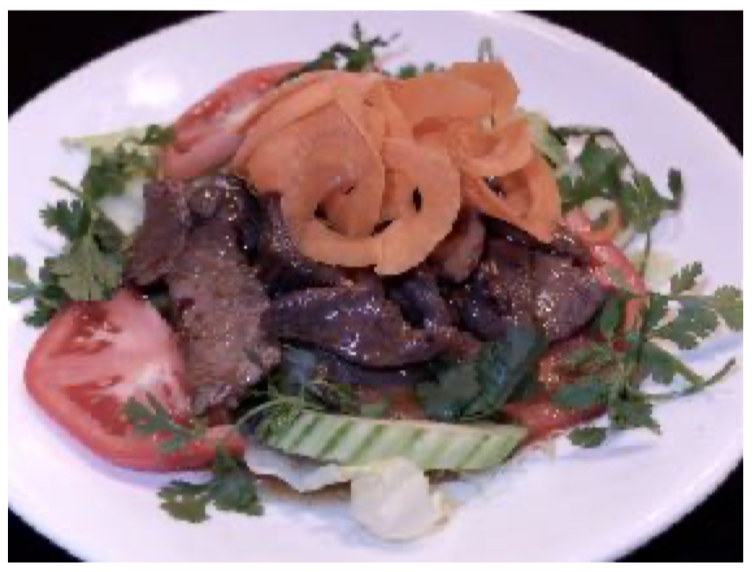
<p>House Salad</p>

House Salad

Fresh spring mix, sliced cucumber, tomato, red onion, and curly carrots. Served with either ginger or peanut dressing.

Peanut Dressing: vegan and gluten free

Ginger Dressing: NOT vegan but IS gluten free.
15
New cards
<p>Spicy Beef Salad</p>

Spicy Beef Salad

Perfect blend of sweet, salty, and sour, fresh sliced and cooked beef sirloin. Served over crispy iceberg lettuce and topped with cucumber, tomato, cilantro, red onion, and curly carrots. (Or with chicken or tofu, *shrimp for an up-charge)

CANNOT be made Vegan.

GLUTEN FREE?
16
New cards
<p>Grilled Chicken Salad</p>

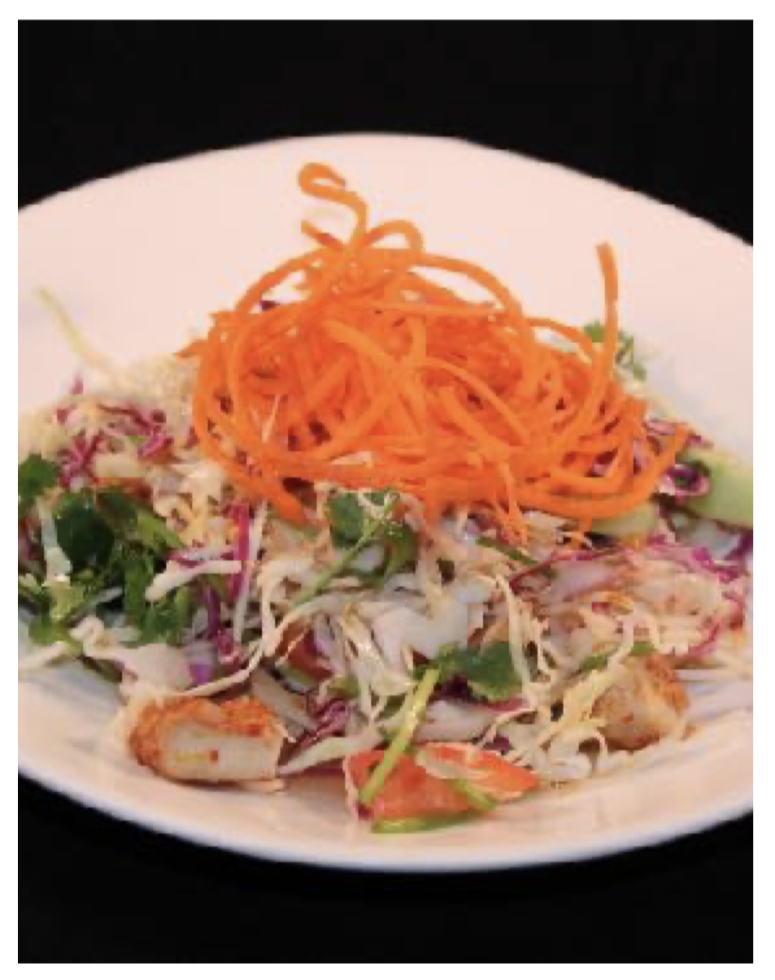
Grilled Chicken Salad

Shredded red and green cabbage make up the base of this salad. It’s tossed with a fresh-squeezed lime juice and fried garlic dressing, cucumber, red onion, tomato, cilantro, and diced marinated chicken breast, topped with curly carrots.

CANNOT be vegan

GLUTEN FREE!
17
New cards
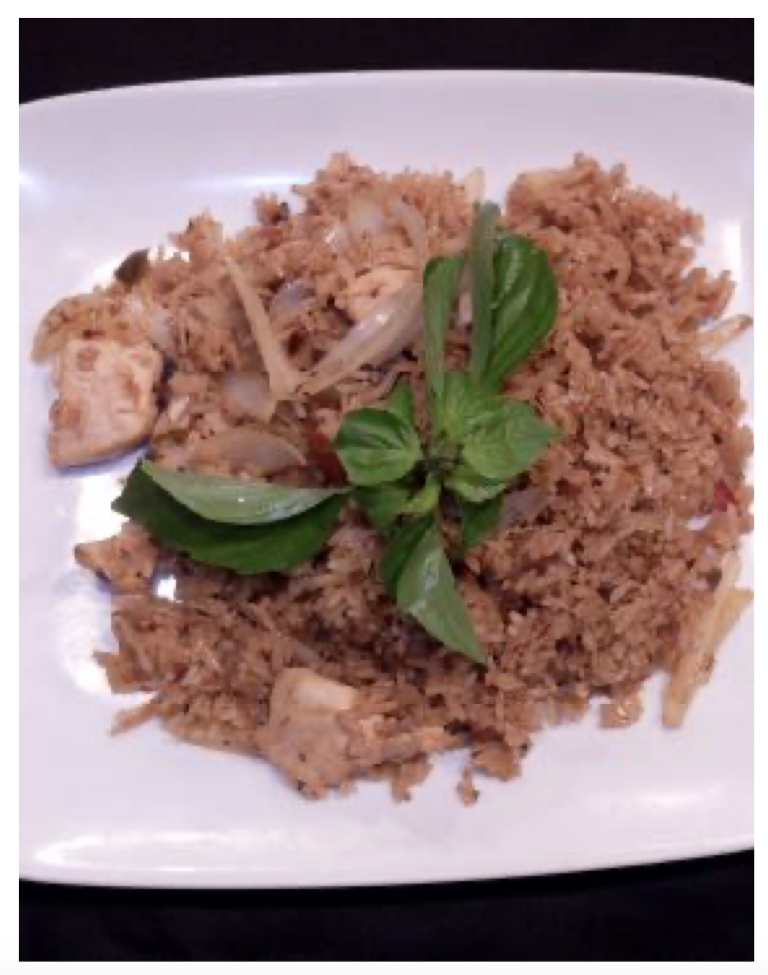
<p>Basil Fried Rice</p>

Basil Fried Rice

Traditional fried rice with an added basil paste made with red and green bell peppers and basil. Served with onion and your choice of protein. It can be a little spicy naturally.

CAN be made Vegan?
GLUTEN FREE?
18
New cards
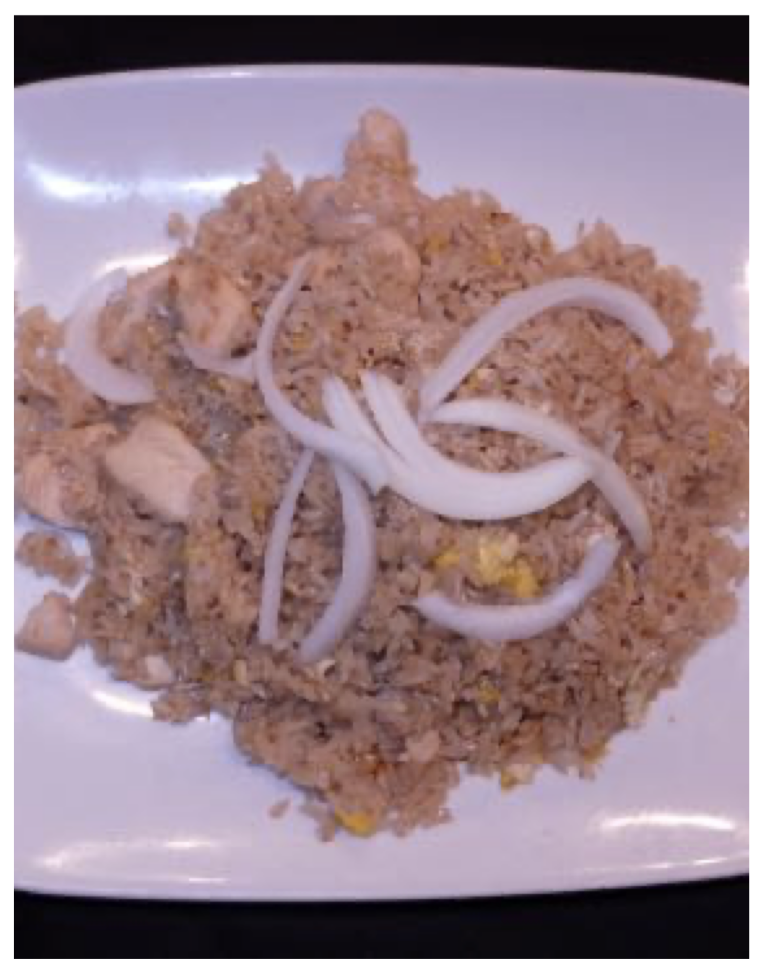
<p>Fried Rice</p>

Fried Rice

Traditional Fried rice that has egg and onion in it, and served with your choice of veggie or protein.

CAN be made Vegan?
GLUTEN FREE?
19
New cards
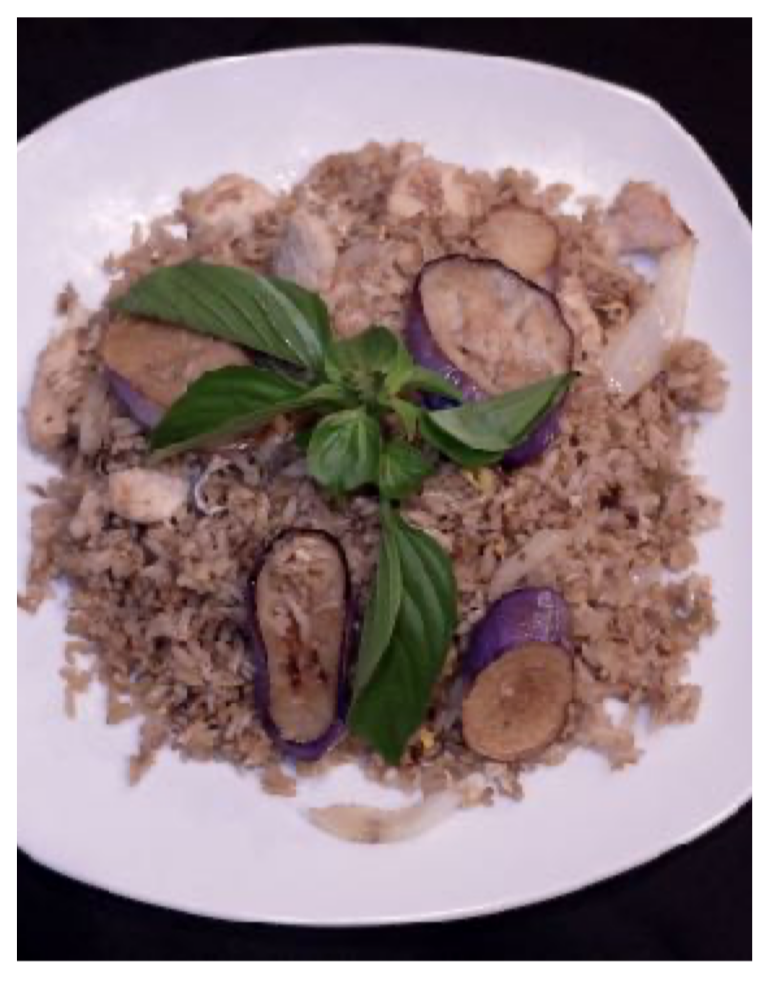
<p>Green Curry Fried Rice</p>

Green Curry Fried Rice

Traditional fried rice with a twist! Green curry paste, coconut milk, and spices make up this fried rice. Served with eggplant, onion, and egg with your choice of protein or vegetables.

CAN be made Vegan?
GLUTEN FREE?
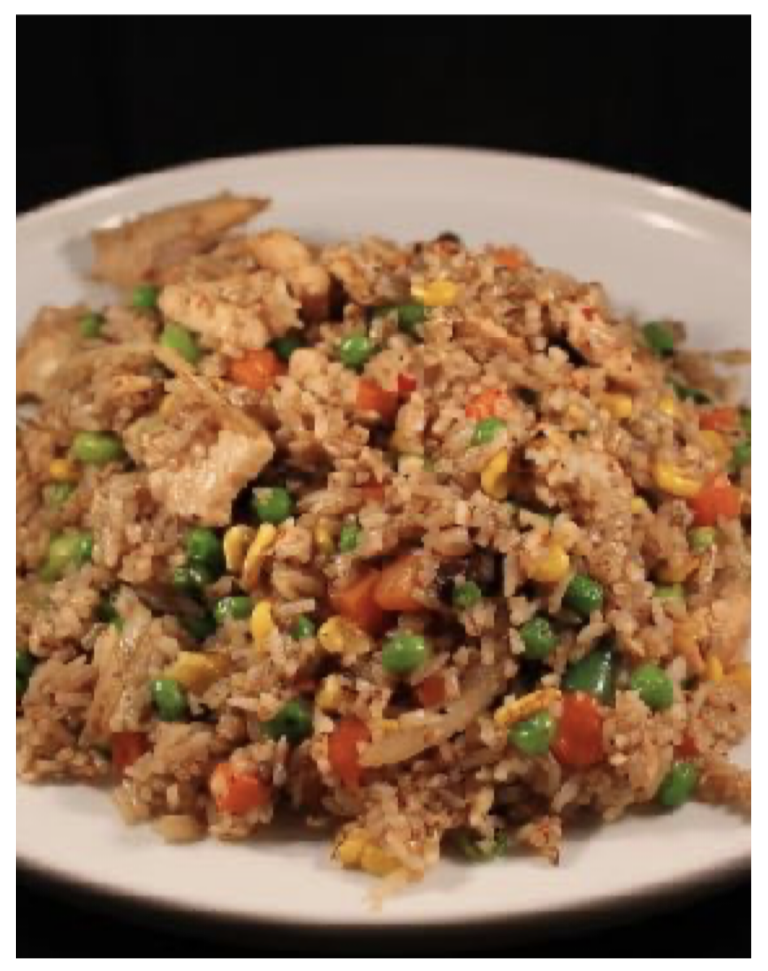
20
New cards
<p>Loaded Fried Rice</p>

Loaded Fried Rice

Traditional fried rice with mixed vegetables (carrots, peas, green beans, and corn—they come pre-mixed, so there is no way to split them up), edamame beans, black beans, and onion with your choice of protein or vegetables.

CAN be made Vegan?
GLUTEN FREE?
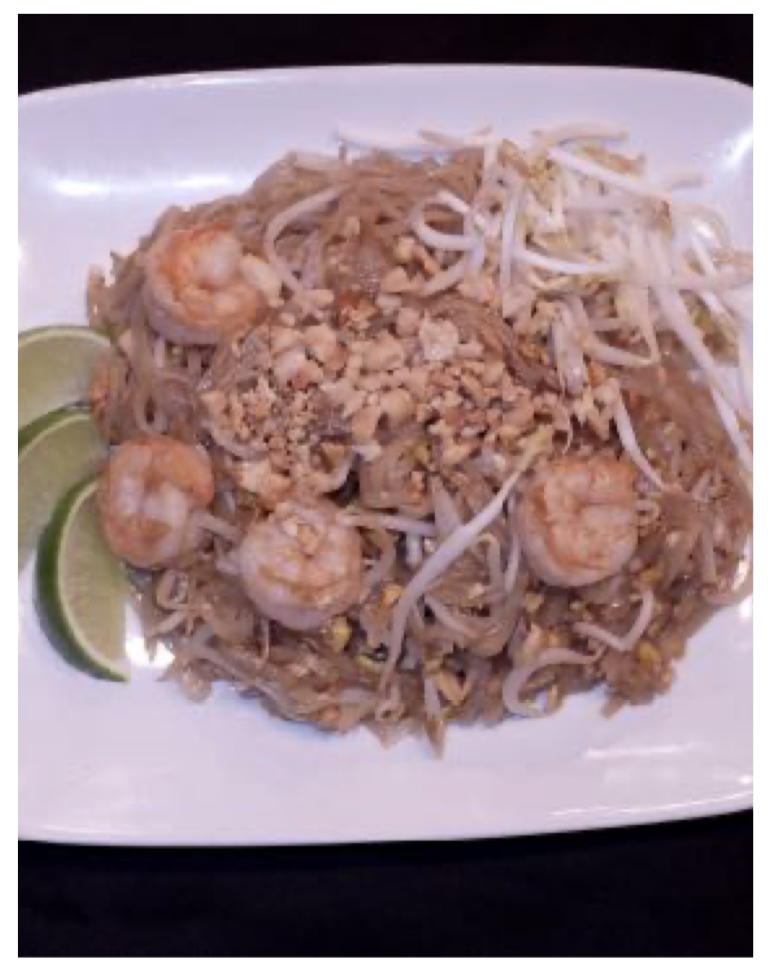
21
New cards
<p>Pad Thai</p>

Pad Thai

Most Popular Menu item:

These rice noodles are stir-fried in a sweetened soy sauce with egg, bean sprouts, and crushed peanuts. Served with your choice of protein or vegetables.
CAN be made Vegan?
GLUTEN FREE?

22
New cards
<p>Woo Sen Pad Thai</p>

Woo Sen Pad Thai

Sister dish of the Pad Thai made exactly the same, except with sweet potato noodles instead of rice noodles! These noodles are stir-fried in a sweetened soy sauce with egg, bean sprouts, and crushed peanuts. Served with your choice of protein or vegetables.

Can be made Vegan?
GLUTEN FREE?

23
New cards
<p>Pad See Lew</p>

Pad See Lew

Wide rice noodles stir-fried in a sweet soy sauce and served with fresh-cut broccoli, scrambled egg, and your choice of protein or vegetables.

Can be made Vegan?
GLUTEN FREE?

24
New cards
<p>Pad Kee Mow</p>

Pad Kee Mow

In other words, “Drunken Noodle” because it is cooked in an amazing sweet basil sauce with onion, bean sprouts, and fresh cut broccoli, and served with your choice of protein or vegetables.

Can be made Vegan?
GLUTEN FREE?
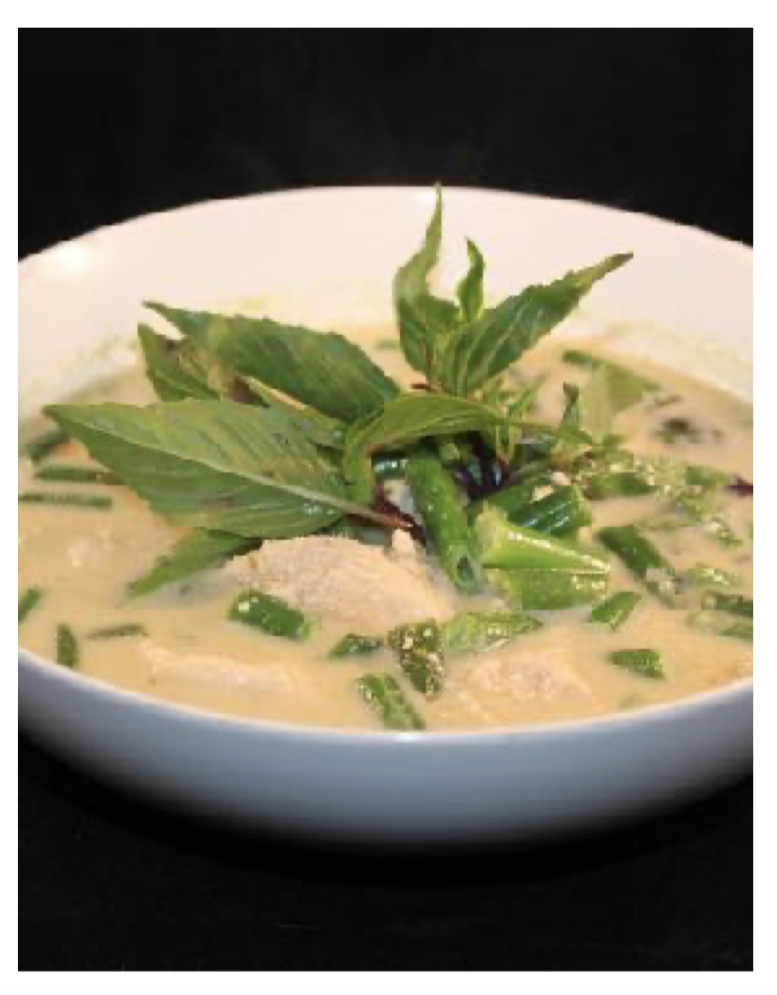
25
New cards
<p>Green Curry</p>

Green Curry

Traditional Green curry with a coconut milk base. Served with green beans and fresh basil. This and all curries are packed with flavor and spices!

Vegan?
GLUTEN FREE?
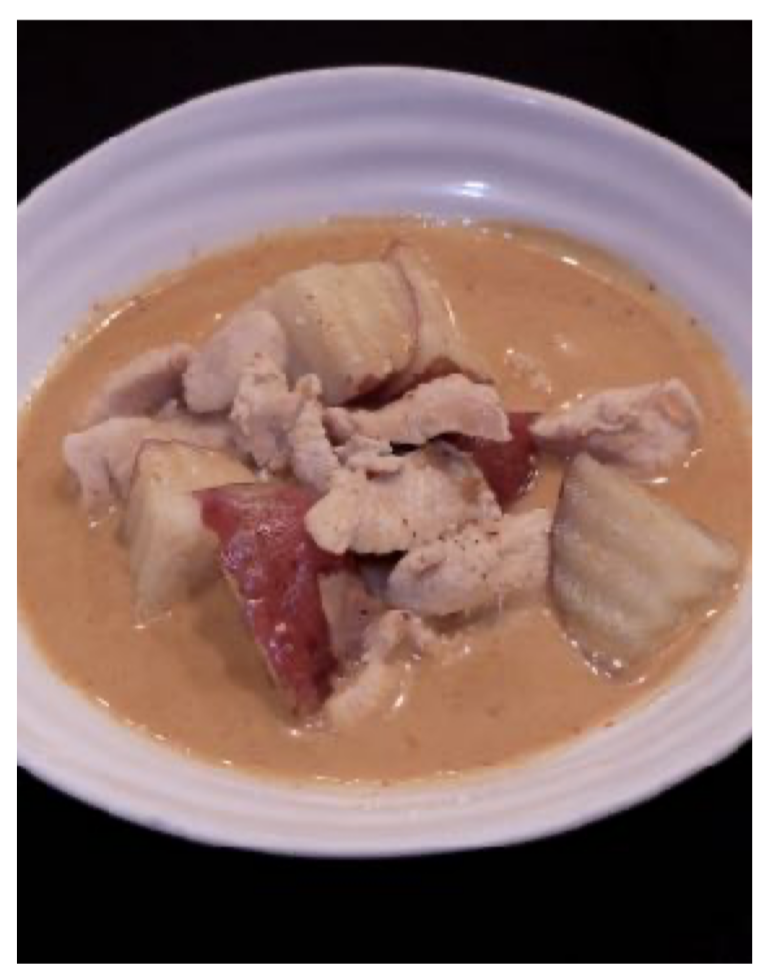
26
New cards
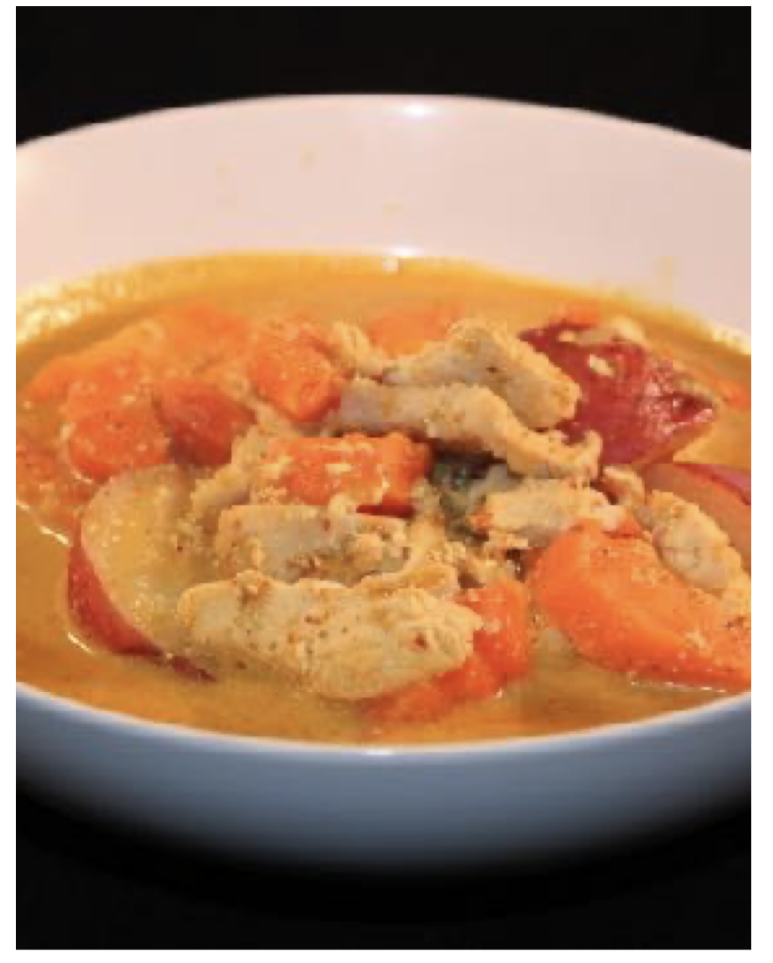
<p>Massaman Curry</p>

Massaman Curry

This type of Curry was named #1 on CNN’s “50 world’s best foods.” It is very flavorful and served with potatoes.
Vegan?
GLUTEN FREE?
27
New cards
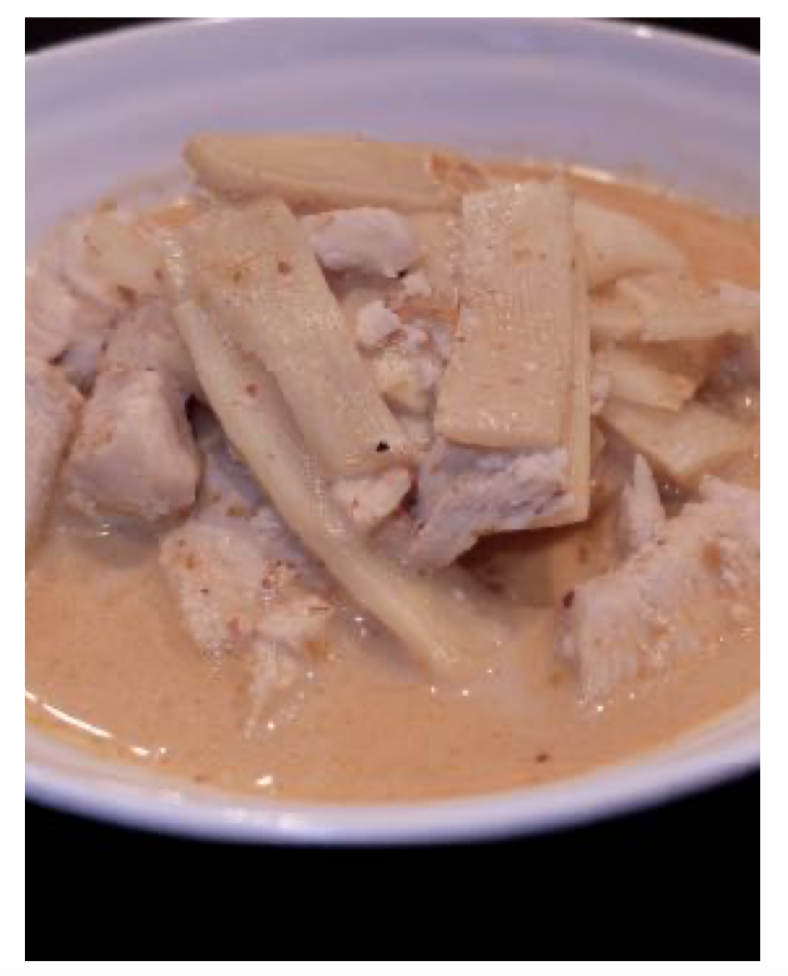
<p>Yellow Curry </p>

Yellow Curry

This is the mildest curry besides the Kaow Soi on the entree page. It has more of a traditional curry spice flavor and is served with carrots and potatoes.
Vegan?
GLUTEN FREE?
28
New cards
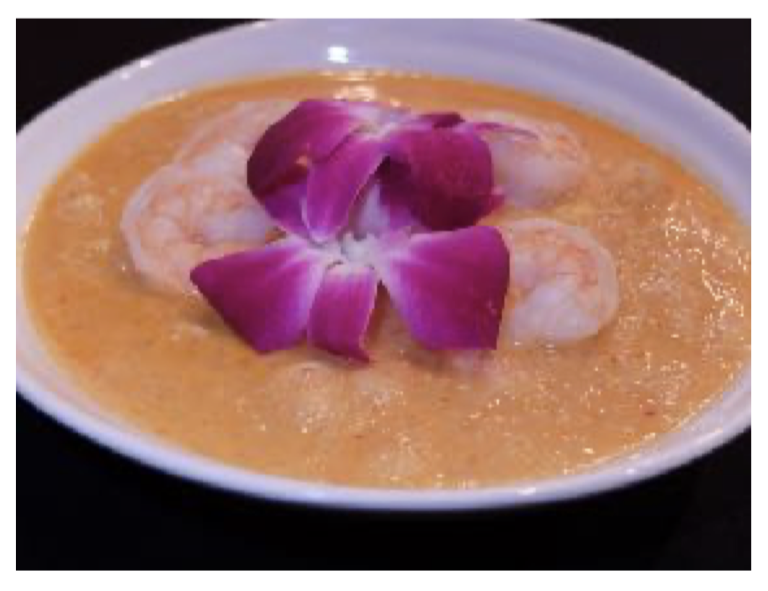
<p>Red Curry </p>

Red Curry

One of the most popular curries at Simply Thai is served with bamboo shoots. Packed with spice and flavor, this one is naturally pretty spicy.

Vegan?
Gluten Free?
29
New cards
<p>Pineapple Curry</p>

Pineapple Curry

Perfect blend of spicy, salty, and sweet! Served with pineapple and your choice of protein!

Vegan?
Gluten Free?
30
New cards
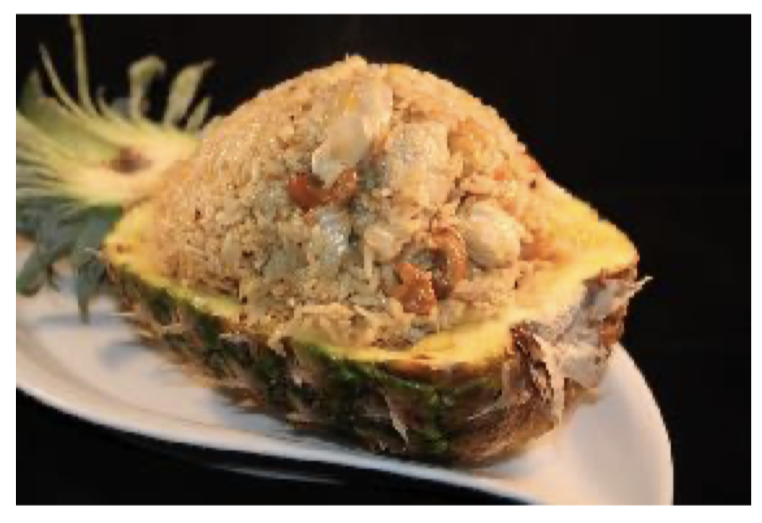
<p>Pineapple Fried Rice</p>

Pineapple Fried Rice

Served in a half pineapple shell, this dish is sure to catch customers’ eyes and packs a unique flavor with cashews, raisins, and onions, sure to catch a lot of palates!! CAN be naturally spicy.
Vegan?
Gluten Free?

Can you get it without raisins, cashews, or onions?
31
New cards
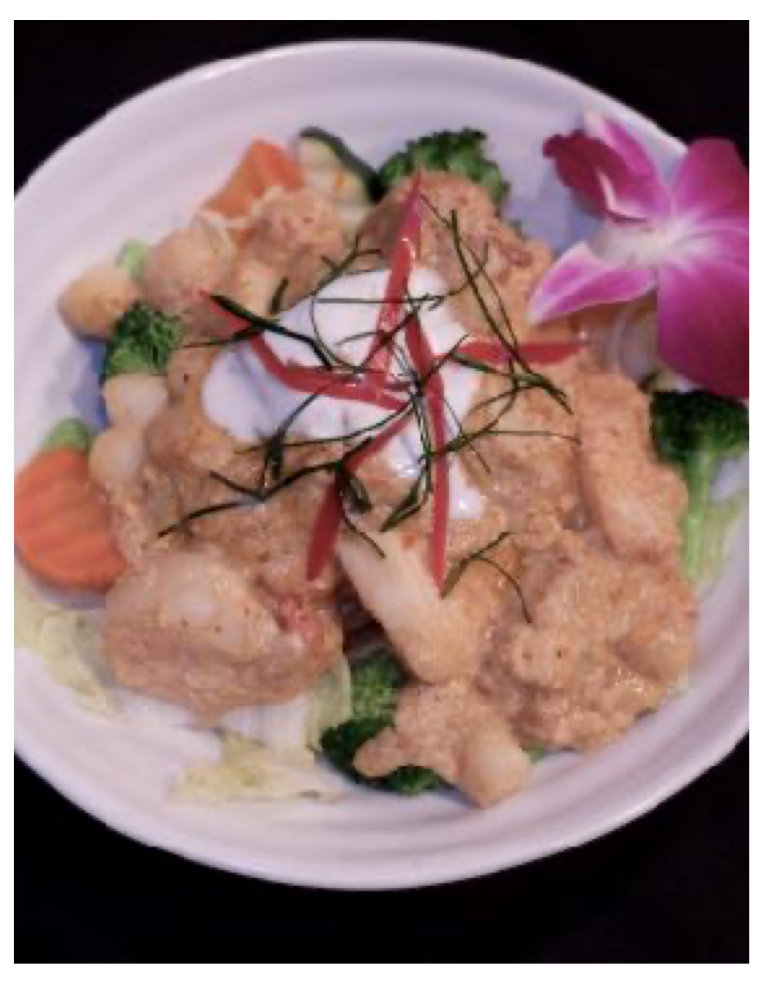
<p>Hawmok Talay</p>

Hawmok Talay

This dish is normally served in a clay pot with a lid. It is a seafood dish made with red curry and topped with fresh kaffir Lime leaves and served with rice and vegetables.

Gluten Free?
32
New cards
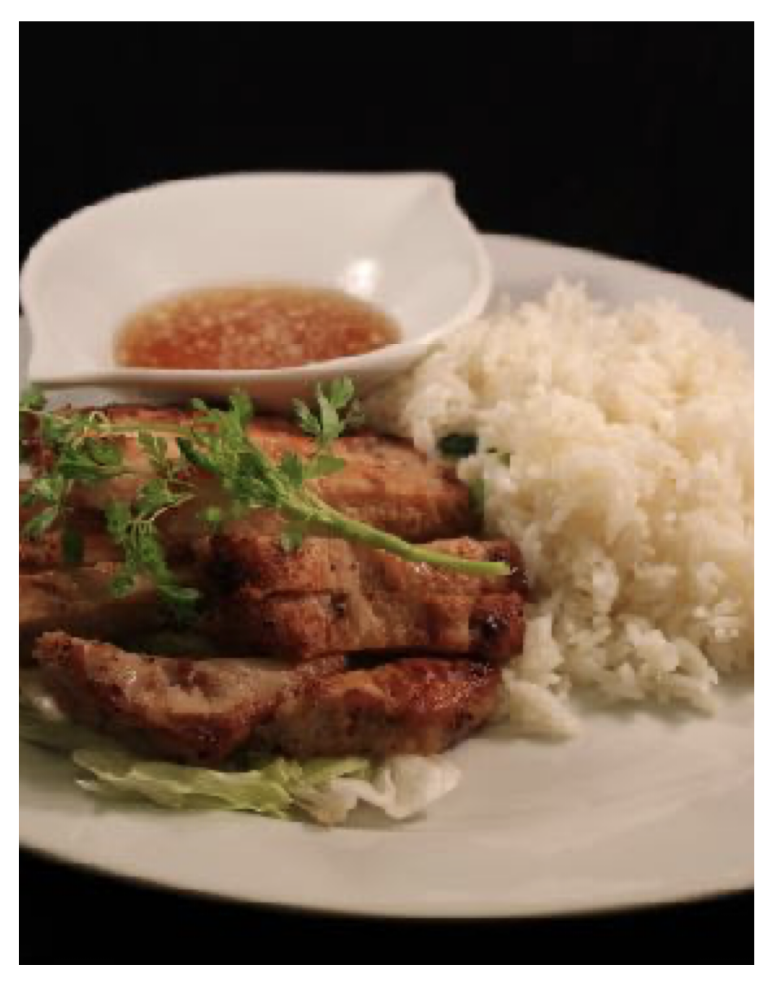
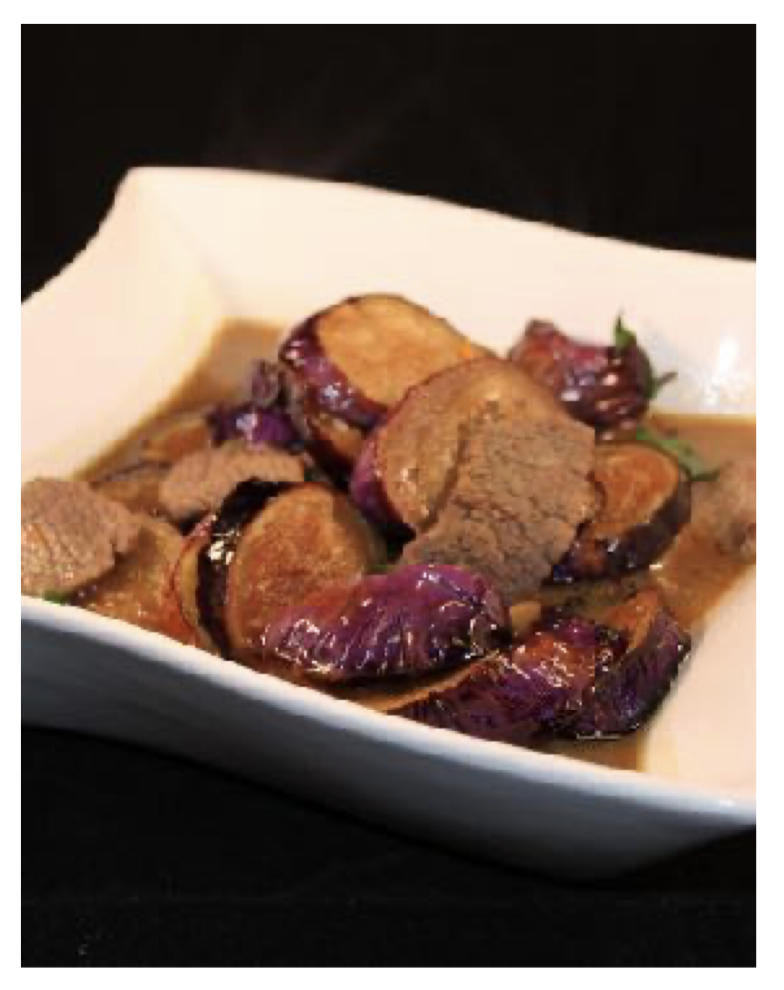
<p>Herbed Porkloin</p>

Herbed Porkloin

Marinated pork loin is pan-fried, sliced, and

served with a fresh garlic, sweet and sour, and

cilantro rice.

NOT Vegan
Gluten Free?
33
New cards
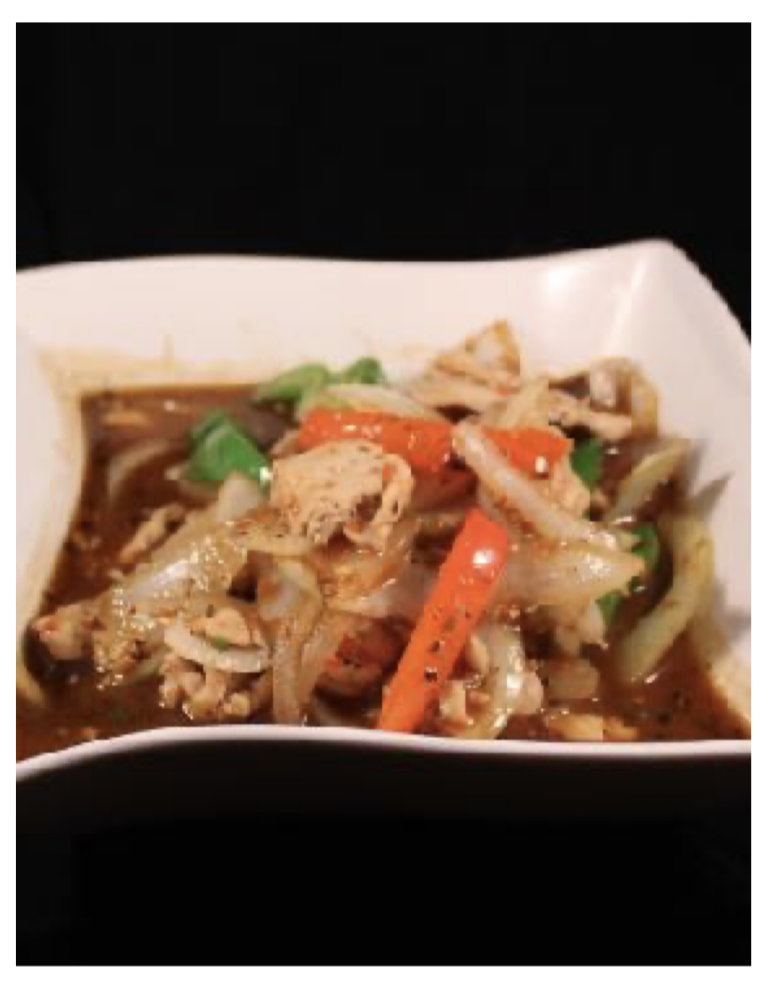
<p>Basil Entree</p>

Basil Entree

Served with sautéed green and red bell peppers and onions. We used to have a “Basil

Sauce” dish that was served as a lunch portion on a bed of rice, but we just stuck with this one portion size and rice on the side. Very flavorful basil sauce broth served with your choice of protein or vegetables.

Vegan?

Gluten Free?
34
New cards
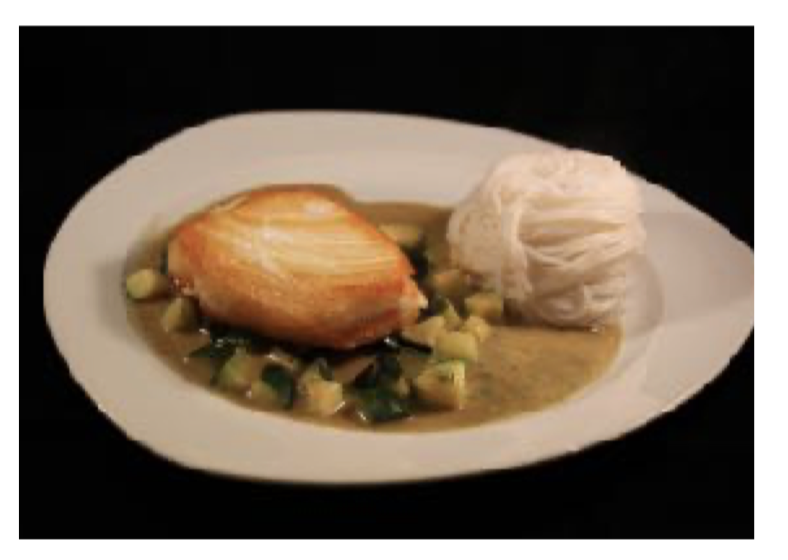
<p>Amazing Seabass</p>

Amazing Seabass

8-oz piece of Chilean Seabass pan-seared to a crisp and served over a bed of zucchini, smothered in a green curry sauce with fresh thai basil. Served with a side of white rice noodles.

Gluten Free?
35
New cards
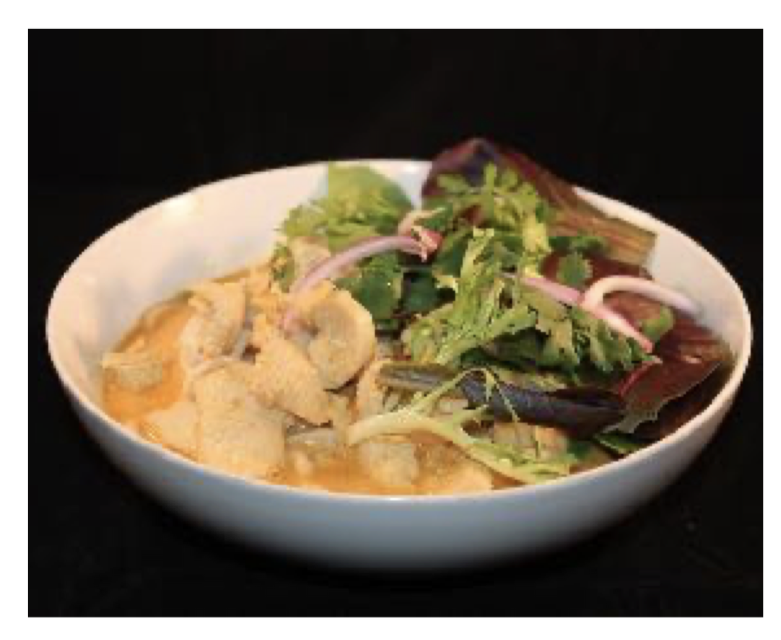
<p>Thai Eggplant</p>

Thai Eggplant

This stir fry has a wonderfully sweet and salty thai basil sauce with sliced purple eggplant and your choice of protein or vegetables!

Can be made Vegan?
Gluten Free?
36
New cards
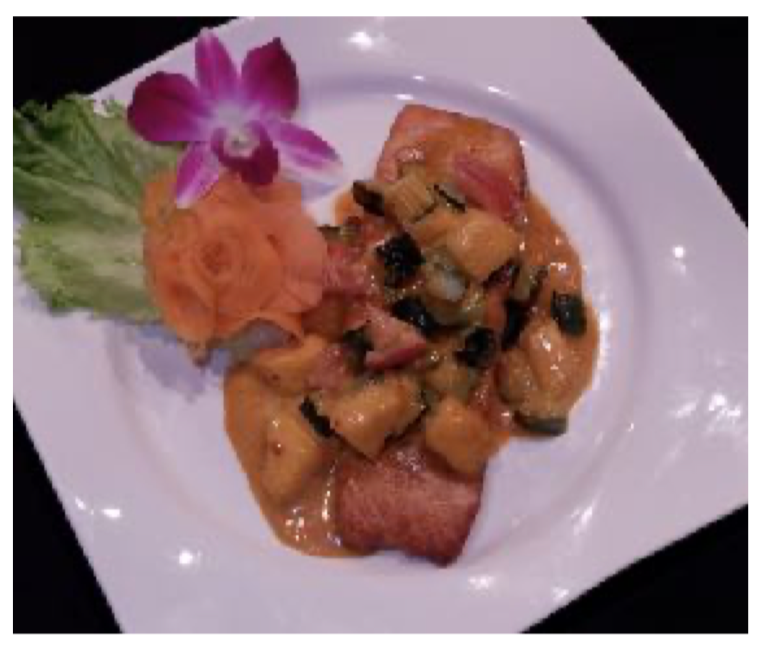
<p>Kaow Soi</p>

Kaow Soi

A mild coconut milk curry full of flavor, served with wheat noodles (lo mein) topped with spring mix, red onion and cilantro! Unique and delicious!
Vegan?
Can be made Gluten Free?
37
New cards
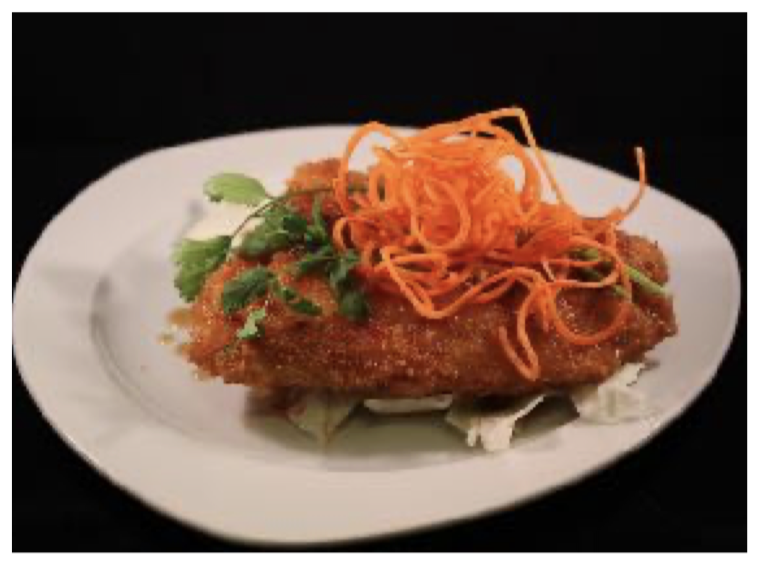
<p>Mango Salmon</p>

Mango Salmon

Extremely popular dish. Pan-seared 7-9 oz piece of salmon is packed with flavor and spices, mango, zucchini, and tomato chunks, poured over the crispy filet and served with a side of jasmine rice.

Gluten Free?
38
New cards
<p>Crispy Garlic Tilapia</p>

Crispy Garlic Tilapia

Tempura breaded and fried 7-9 oz whole tilapia, drizzled with a fried garlic sweet and sour sauce, served with jasmine rice.

NOT Vegan

NOT Gluten Free (batter)
39
New cards
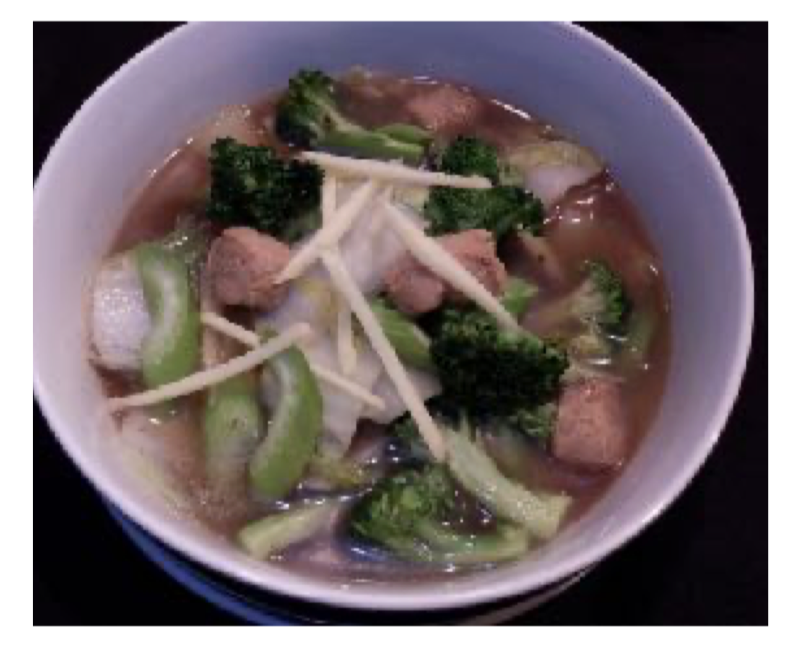
<p>Simply Green </p>

Simply Green

Simply refreshing sweet and sour broth with fresh ginger, celery, broccoli, and napa cabbage served with your choice of protein or vegetables. Served with jasmine rice.

Vegan?

Gluten Free?
40
New cards
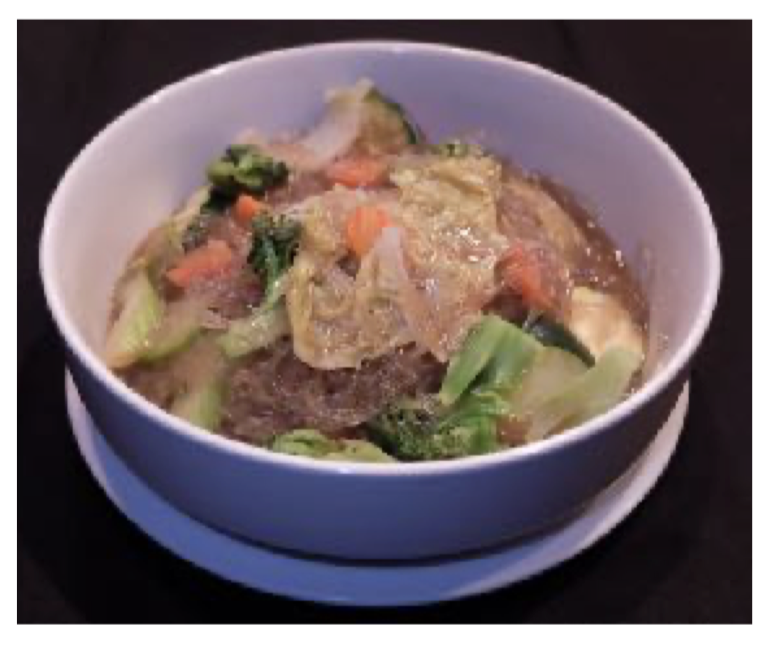
<p>Suki Heang</p>

Suki Heang

Served with sweet potato noodles, this broth is slightly sweet and sour with a miso base. Served with celery broccoli and napa cabbage.
41
New cards
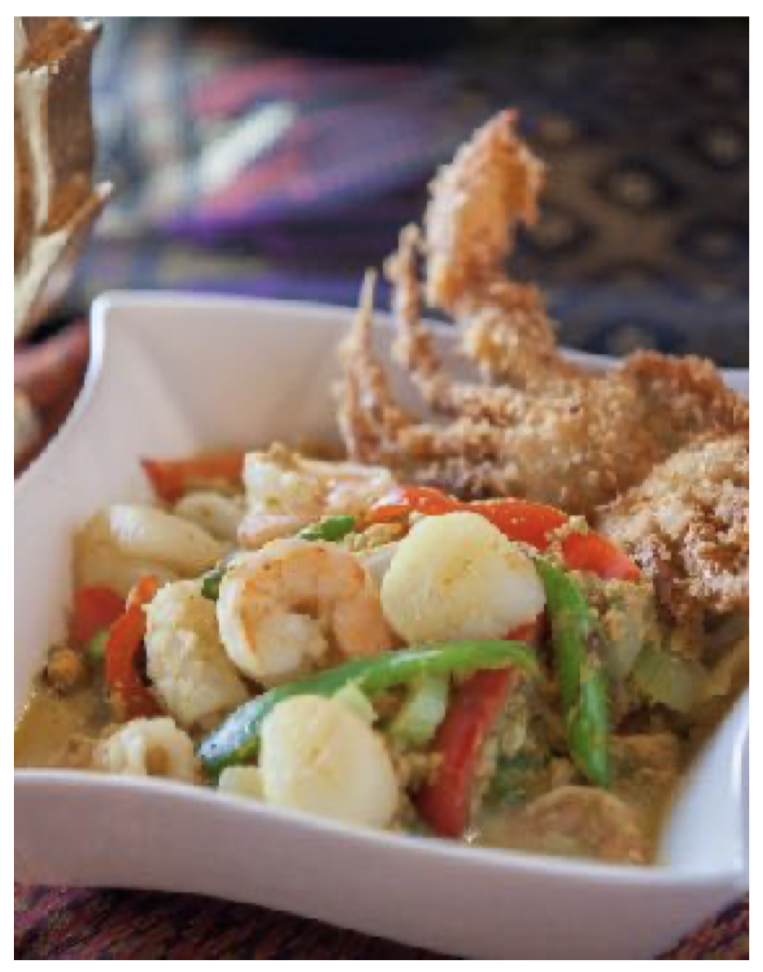
<p>Talay Jaa</p>

Talay Jaa

“Seafood” dish, consisting of scallops,

shrimp and calamari rings, stir-fried in a traditional curry spice sauce with cream and topped with a fresh tempura-battered soft shell crab.

NOT Vegan
NOT Gluten Free
42
New cards
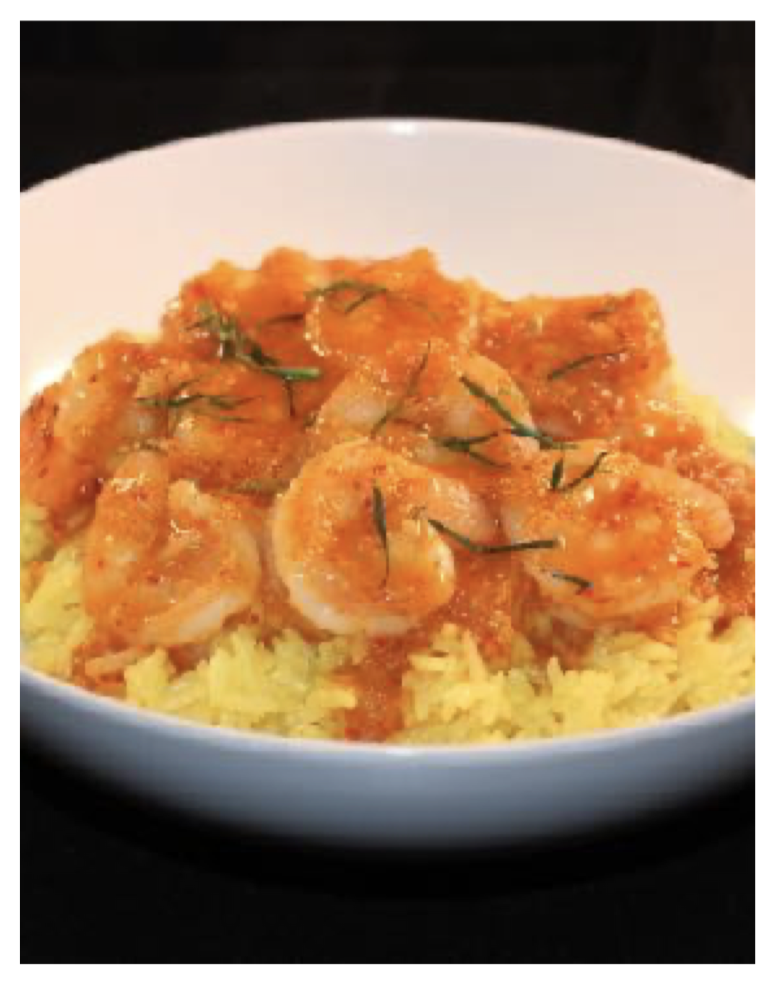
<p>Spiced Shrimp</p>

Spiced Shrimp

Turmeric-sweetened coconut rice topped with

shrimp cooked in a curry sauce and a sprinkle of kaffir lime leaves!

NOT Vegan
Gluten Free?
43
New cards
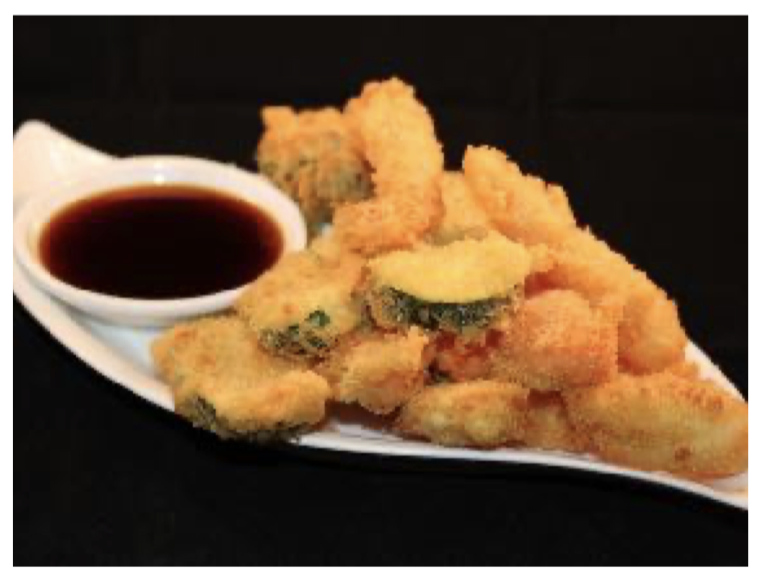
<p>Tempura Platter</p>

Tempura Platter

Carrots, zucchini, broccoli, and shrimp hand breaded with tempura batter, fried and served with our house dumpling sauce.

NOT Vegan (can be Vegetarian w/o shrimp)

NOT Gluten Free (batter)

44
New cards
<p>Edamame Pods</p>

Edamame Pods

Soybean pods are steamed and topped with salt.
45
New cards
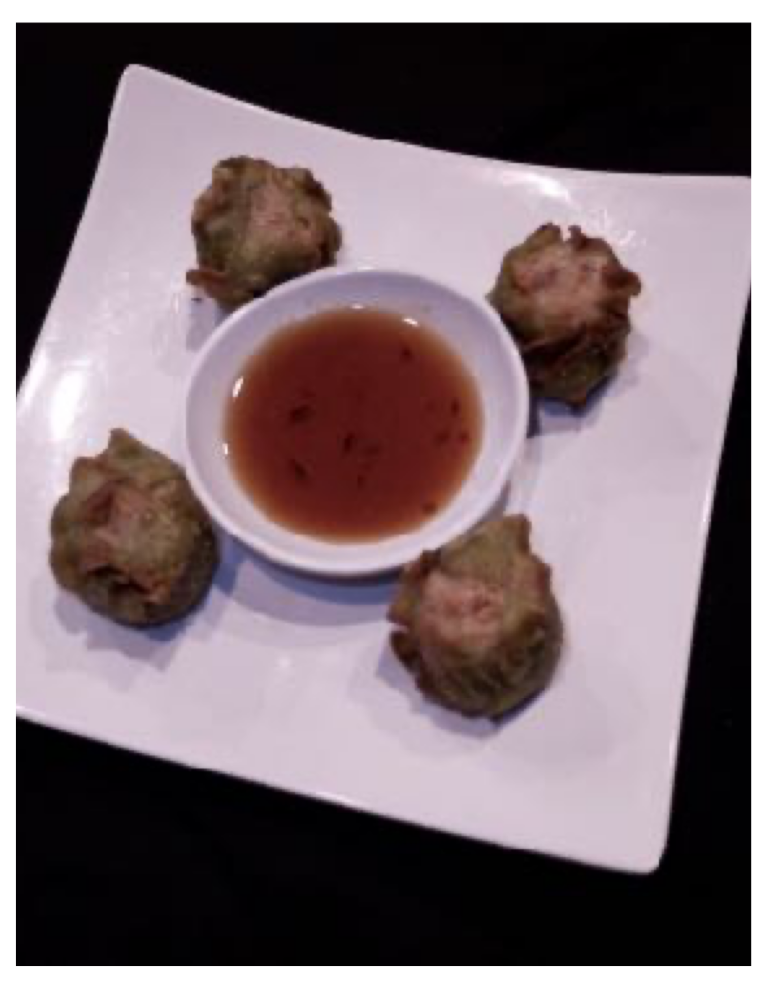
<p>Wasabi Dumpling</p>

Wasabi Dumpling

Wasabi, pork, and shrimp dumplings, flash-fried and served with dumpling sauce. A little spicy and cannot be altered(not made in-house)

NOT Vegan

NOT Gluten Free
46
New cards
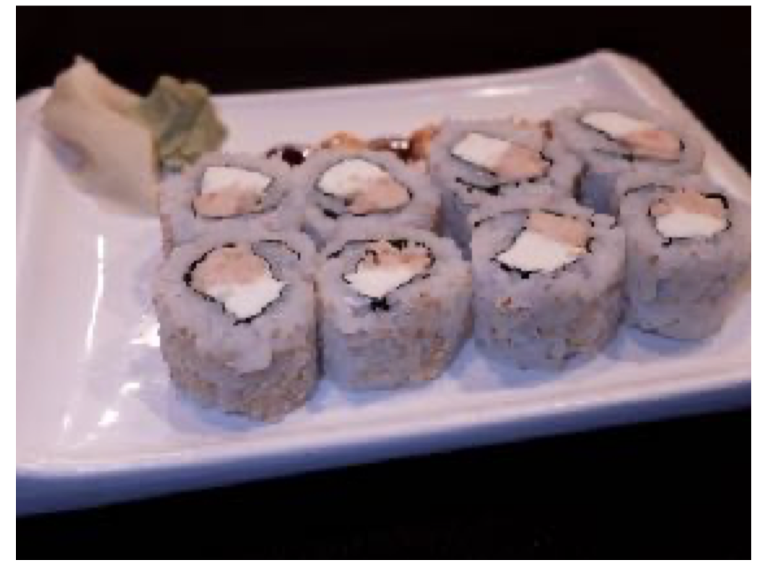
<p>Cream Cheese Roll</p>

Cream Cheese Roll

Sushi roll served with smoked salmon or regular fresh salmon and cream cheese.
NOT Vegan
Gluten Free?
47
New cards
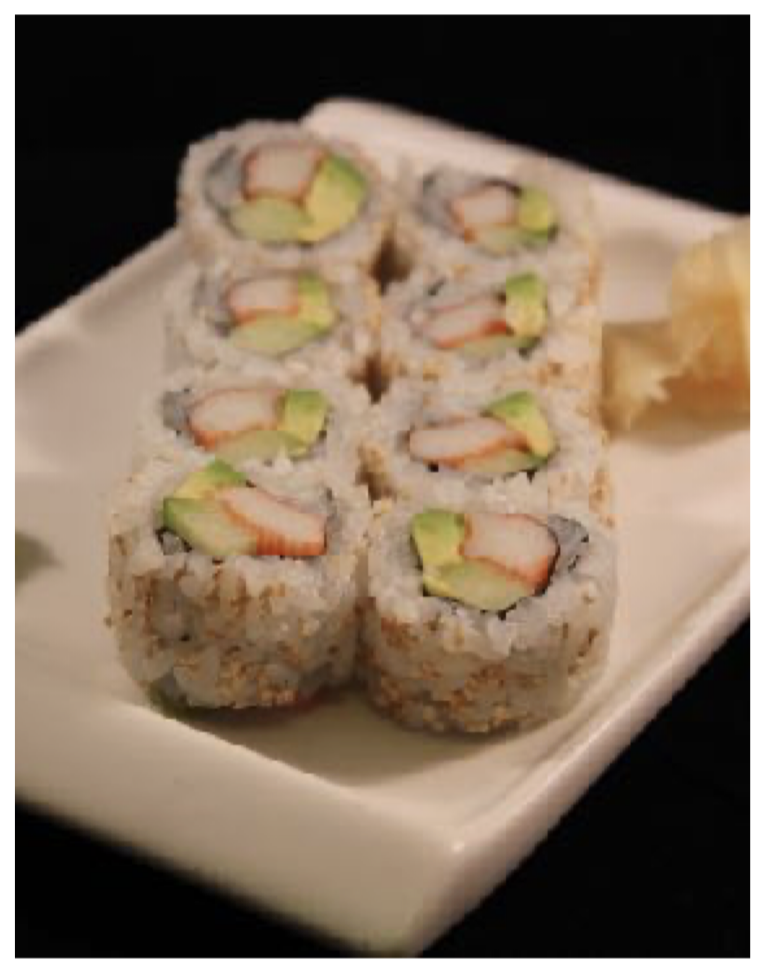
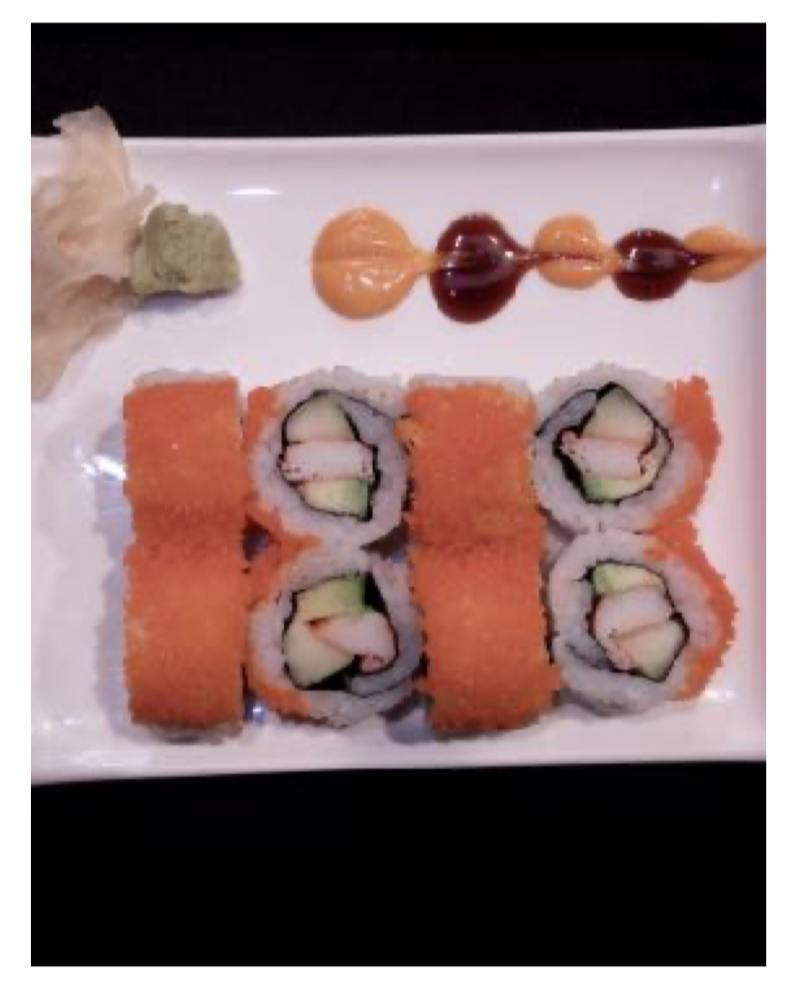
<p>California Roll</p>

California Roll

Sushi
Also known as Cali Roll. Simple sushi roll with imitation crab, cucumber, and avocado.
NOT Vegan
Gluten Free?
48
New cards
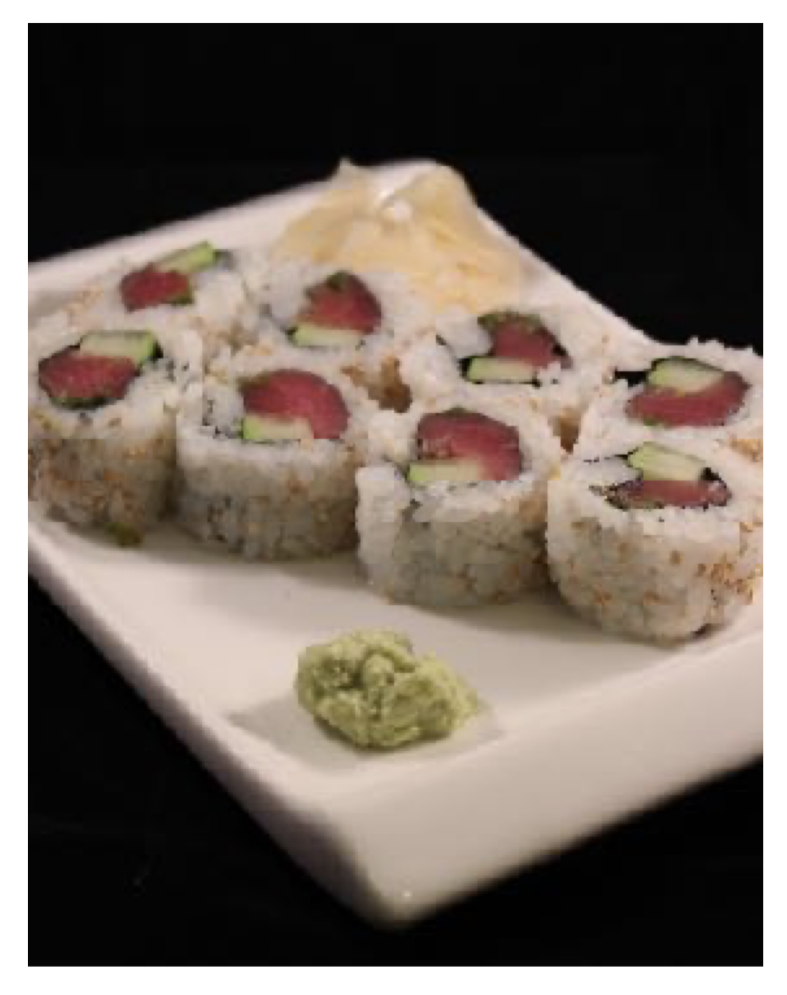
<p>California Deluxe</p>

California Deluxe

Same as the cali roll, just has caplin Roe (fish eggs) on top.
NOT Vegan
GLUTEN FREE?
49
New cards
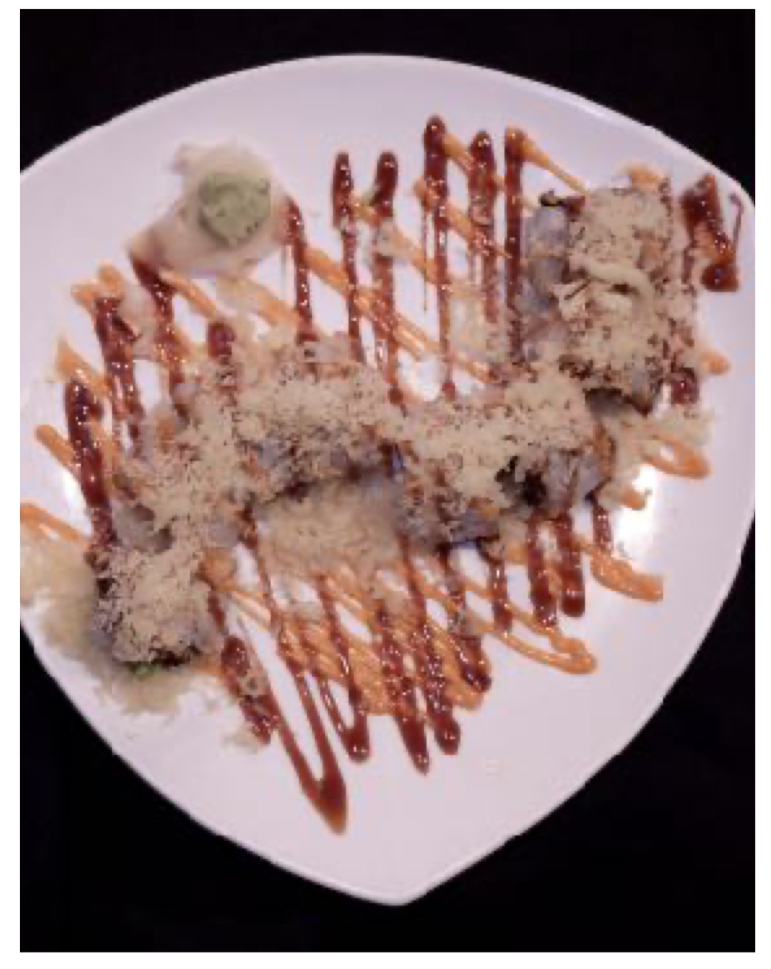
<p>Spicy Roll</p>

Spicy Roll

Fresh fish and cucumber and served with spicy mayo, which is not pictured in this picture. (red tuna or orange salmon or other choice of fresh fish, with cucumber, which makes it a spicy roll)

NOT Vegan
GLUTEN FREE?
50
New cards
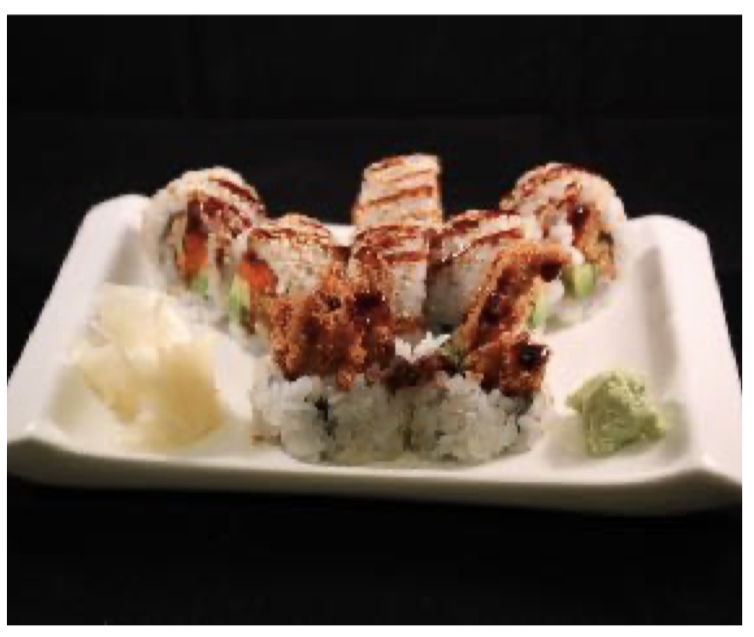
<p>Tempura Roll</p>

Tempura Roll

Tempura fried shrimp, avocado, and caplin roe. (fish eggs) Topped with eel sauce, spicy sauce, and SOMETIMES crunchies.
NOT Vegan
NOT Gluten Free
51
New cards
<p>Spider Roll</p>

Spider Roll

Tempura-battered soft-shell crab, avocado, and caplin roe. (fish eggs) Topped with eel sauce.
NOT Vegan
NOT Gluten Free
52
New cards
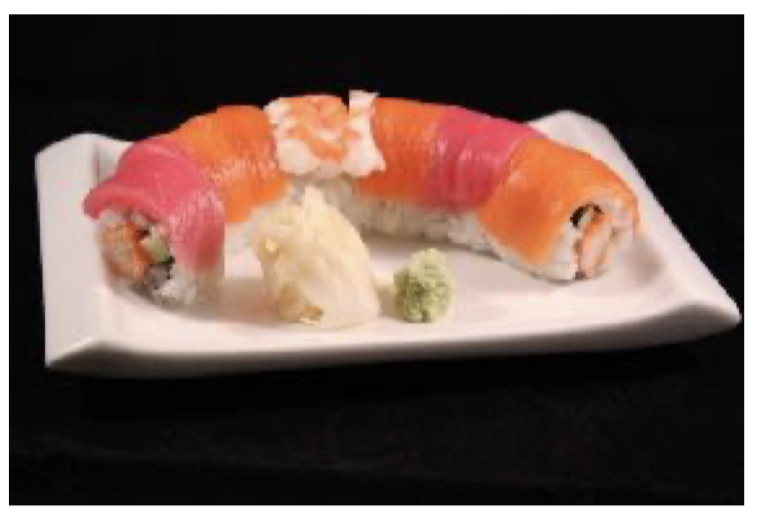
<p>Rainbow Roll</p>

Rainbow Roll

California roll topped with fresh fish. They can request all of one fish if preferred, but normally it’s a variety of fish.

NOT Vegan

Gluten Free?
53
New cards
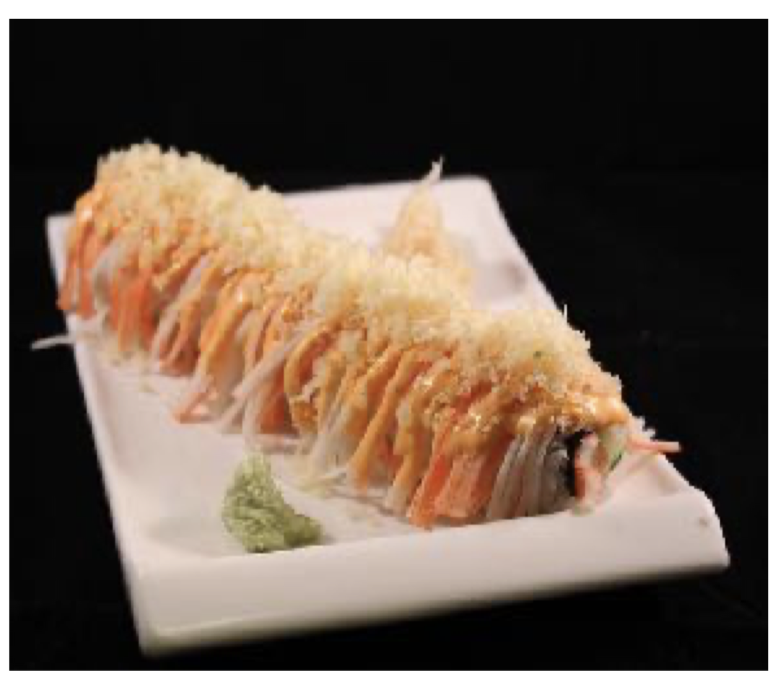
<p>Crunchy Crab</p>

Crunchy Crab

Cali roll topped with more crab, spicy sauce, and crunchies.

NOT Vegan
NOT Gluten Free
54
New cards
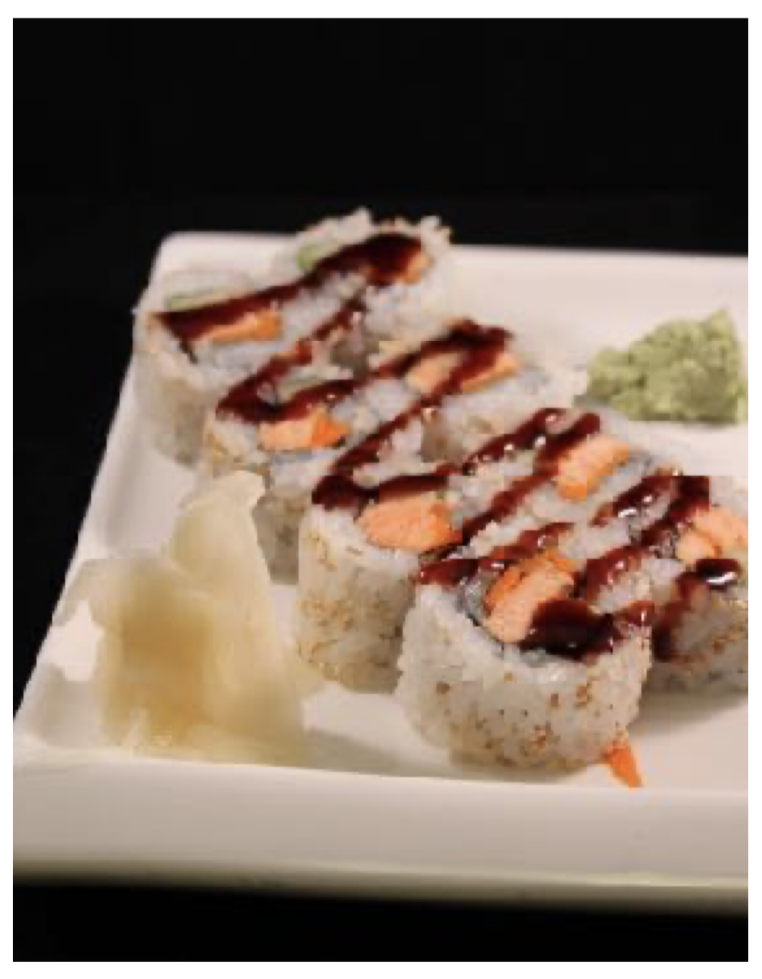
<p>Bourbon Salmon</p>

Bourbon Salmon

Cooked salmon with carrots and cucumber, topped with eel sauce.

NOT Vegan
Gluten Free?

55
New cards
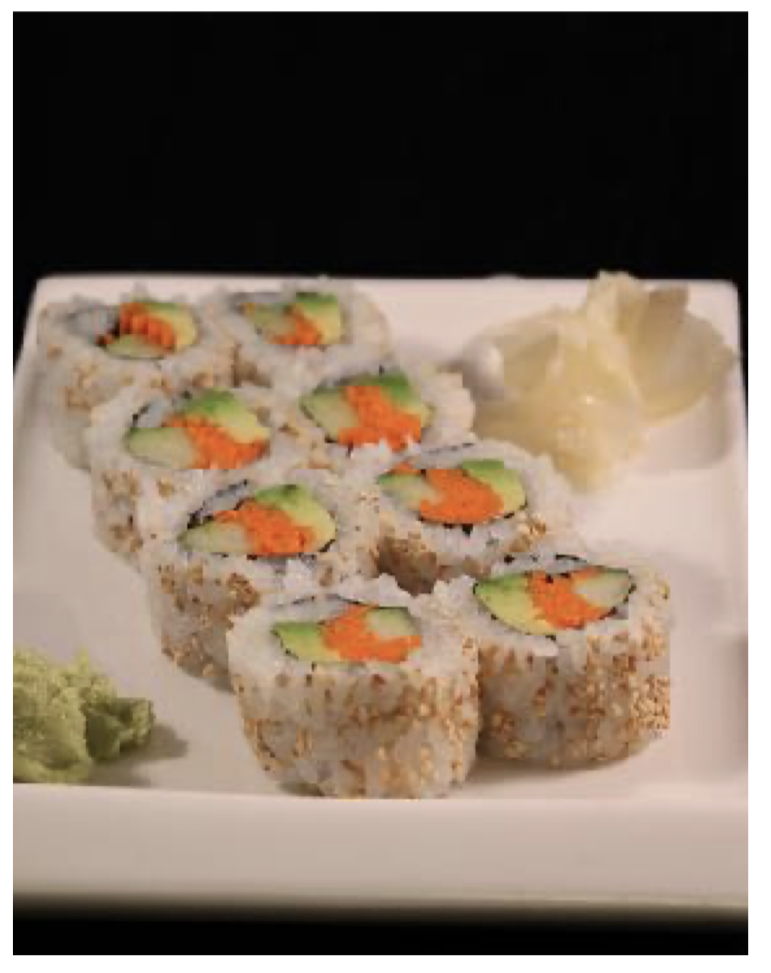
<p>Yum Yum Sushi</p>

Yum Yum Sushi

Backfin lump crab meat, carrots, and avocado with spicy sauce on top.

NOT Vegan

Gluten Free?
56
New cards
<p>Vegetable Roll</p>

Vegetable Roll

Carrot, cucumber, and avocado.

Vegan?

Gluten Free?
57
New cards
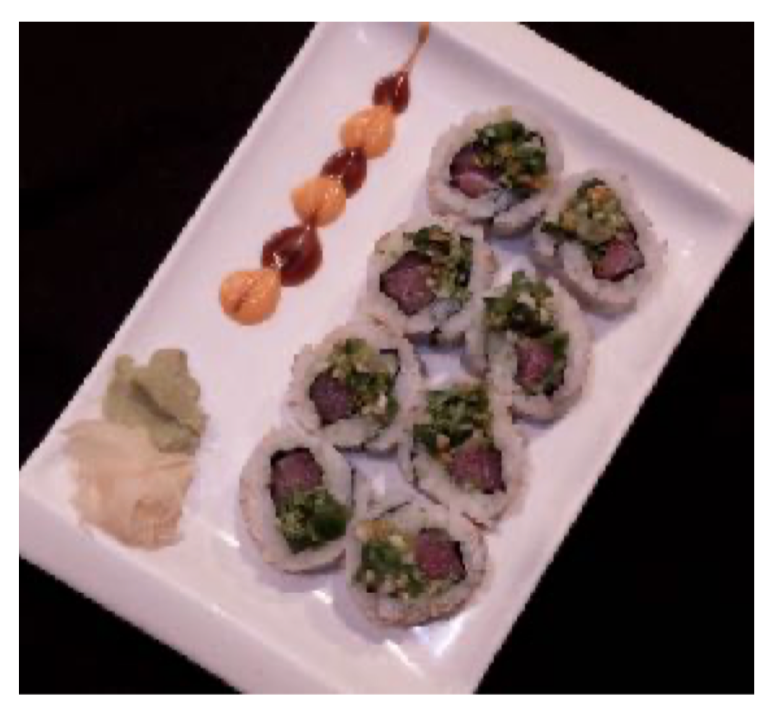
<p>Thai Spicy Tuna Sushi</p>

Thai Spicy Tuna Sushi

Just like a spicy tuna, except we use our Thai spicy green sauce.

NOT Vegan

Gluten Free?
58
New cards
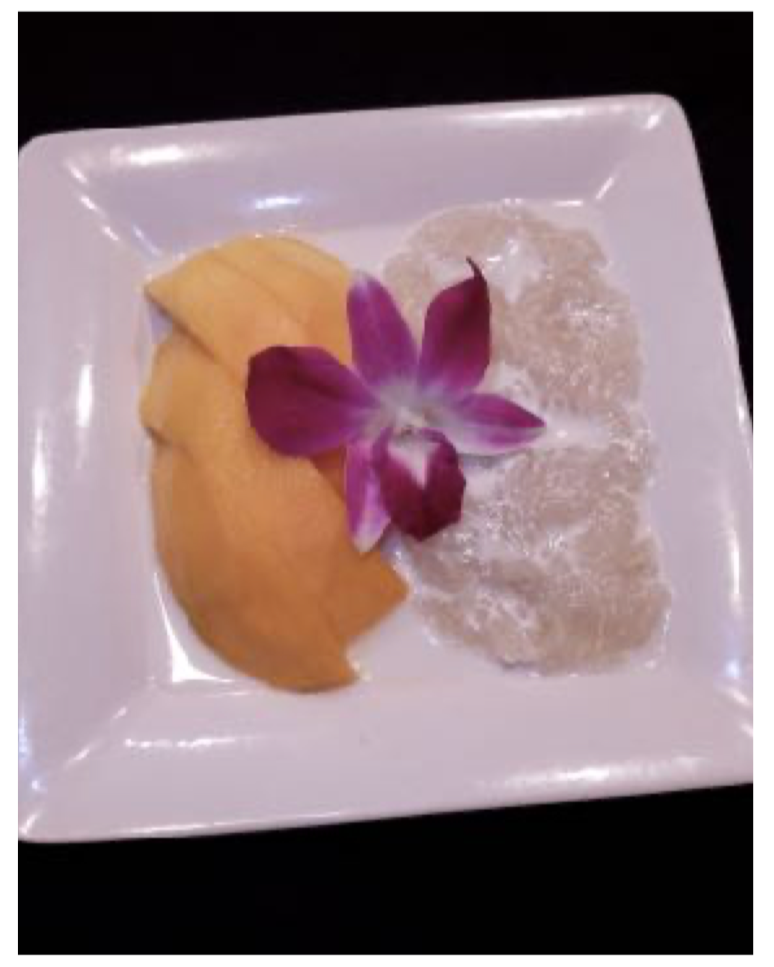
<p>Mango Sticky Rice</p>

Mango Sticky Rice

Dessert
Seasonal dessert while mangoes are fresh. Served with a sweet white sticky rice topped with coconut milk.

Vegan?

Gluten Free?

59
New cards
<p>Honey Banana</p>

Honey Banana

Dessert
Deep-fried honey banana with whipped cream.
Vegan?
NOT Gluten Free

60
New cards
<p>Black Sticky Rice</p>

Black Sticky Rice

Dessert

Thai pudding is similar to tapioca with rice in it, topped with sweetened coconut milk.

Vegan?

Gluten Free?

Explore top notes

Imperialism Rise in Nationalism • During the French and Industrial Revolution, nationalism continued to inspire nations to increase their political and economic power. • Nationalism became the ideal force in the political, economic, and cultural life in the world, becoming the first universal ideology-organizing all people into a nation state. Nationalism Defined • The strong belief that the interest of a particular nation-state is of primary importance. o Nation-State – a state where the vast majority shares the same culture and is conscious of it. It is an ideal in which cultural boundaries match up with political ones. • As an ideology, it is based on the idea that the individual’s loyalty and devotion to the nation-state surpass other individual/group interests. • Exalting one nation’s belief above all others and placing primary emphasis on promotion of its culture and interests, excluding the interests of others. Changing the World through a Nationalistic Vision • The French Revolution significantly changed the political world and how countries govern. • The Industrial Revolution significantly changed the economic world. • The Age of Imperialism (1870-1914) dramatically changed the political, economic, and social world. What is Imperialism? • Imperialism- The policy of extending the rule of authority of an empire or nation over foreign countries, or of acquiring and holding colonies and dependencies. Power and influence are done through diplomacy or military force. Reasons for Imperialism • There are 5 main motives for empires to seek to expand their rule over other countries or territories: 1. Exploratory • Imperial nations wanted to explore territory unknown to them. • The main purpose for this exploration of new lands was for resource acquisition, medical or scientific research. o Charles Darwin • Other reasons: o Cartography (map making) o Adventure 2. Ethnocentric • Europeans acted on the concept of ethnocentrism o Ethnocentrism- the belief that one race or nation is superior to others. • Ethnocentrism developed out of Charles Darwin’s “survival of the fittest” theory. Philosophers used the theory to explain why there were superior races and inferior races. o This became known as Social Darwinism. • Most imperial nations believed that their cultural values or beliefs were superior to other nations or groups. • Believed imperial conquest would bring successful culture to inferior people. 3. Religious • Imperial expansion promoted a religious movement of people setting out to convert new members of conquered territories. • With the belief that Christianity was superior, missionaries believed it was their duty to spread Christianity to the world. • Christian missionaries established churches, and in doing so, they spread Western culture values as well. • Typically, missionaries spread the imperial nation's language through education and religious interactions. 4. Political • Patriotism and Nationalism helped spur our imperial growth, thus creating competition against other supremacies. • It was a matter of national pride, respect, and security. • Furthermore, European rivalry spurred nations for imperial conquest. Since land equaled power, the more land a country could acquire the more prestige they could wield across the globe. • Empires wanted strategic territory to ensure access for their navies and armies around the world. • The empire believed they must expand, thus they needed to be defended. 5. Economic • With the Industrial Revolution taking place during the same time, governments and private companies contributed to find ways to maximize profits. • Imperialized countries provided European factories and markets with natural resources (old and new) to manufacture products. • Trading posts were strategically placed around imperialized countries to maximize and increase profits. o Such places as the Suez Canal in Egypt which was controlled by the British provided strategic choke hold over many European powers. o Imperial powers competed over the best potential locations for resources, markets, and trade. History of Imperialism • Ancient Imperialism 600 BCE-500 CE o Roman Empire, Ancient China, Greek Empire, Persian Empire, Babylonian Empire. • Middle Age Imperialism (Age of Colonialism-1400-1800s) o Great Britain, Spain, Portugal, France, Netherlands (Dutch), Russia. • Age of Imperialism 1870-1914 o Great Britain, Spain, Portugal, France, Germany, Belgium, Italy, Japan, United States, Ottoman Empire, Russia. • Current Imperialism...? o U.S. Military intervention (i.e. Middle East) o Russia’s Invasion of Ukraine. Imperialism Colonialism • Refers to political or economic control, either legally or illegally. • Refers to where one nation assumes control over the other. • Creating an empire, expanding into neighboring regions and expanding the dominance far outside its borders. • Where a country conquers and rules over other regions for exploiting resources from the conquered country for the conqueror's benefit. • Foreign government controls/governs a territory without significant settlement. • Foreign government controls/governs the territory from within the land being colonized. • Little to no new settlement established on fresh territory. • Movement to settle to fresh territory. Age of Colonialism WHEN? • Started around the late 1400s and ended around the late 1700s/early 1800s. WHY? • Primary Reason: European countries, wished to find a direct trade route to Asia (China & India) and the East Indies. o Quicker and relatively more effective than land routes over Asia. • Secondary Reason: Empire expansion (land power) WHO? • Countries involved: Great Britain, France, Spain, the Dutch & Portugal. • Individuals’ knowns as Mercantilists believed that maintaining imperialized territory and colonizing the region could serve as a source of wealth, while personal motives by rulers, explorers, and missionaries could therefore promote their own agenda. o This agenda being “Glory, God and Gold”. Mercantilism • Mercantilism was a popular and main economic system for many European nations during the 16th to 18th centuries. • The main goal was to increase a nation’s wealth by promoting government rule of a nation’s economy for the purpose of enhancing state power at the expense of rival national power. • It was the economic counterpart of political absolutism. Why did mercantilists want colonies? • Mercantilists believed that a country must have an excess of exports over imports. • By colonizing territory, it provided the nation with indispensable wealth of precious raw materials. • Therefore, the claimed territory served as a market and supplier of raw materials for the mother country. Which, in time, provided an excess of exports for the nation and thus created wealth. o Development of Trading Companies to support this economic system. Hudson Bay Company – (1670). Controlled primarily North America. o Dutch East Indie Trading Company (1682) o East Indian Trading Company (1600) o Royal African Trade Company (1672) WHERE? • European nations begun to colonize the America, India and the East Indies to create a direct trade route. • Great Britain was the leading power in India, Australia and North America, South Africa. • Spain colonized central and South America. • French held Louisiana, coastal land of Africa and French Guinea. • The Dutch built an empire in the East Indies. • The Portuguese was able to take control of present-day Brazil and the southern tip of South America and Japan. Age of Colonialism • As countries started to imperialize these regions, eventually the concept of colonization took hold: • This is what makes the Age of Colonialism extremely different! End of Colonialism • By 1800, colonialism became less popular • Why? o Revolutions (Spain, France & American) o The Napoleonic Wars o Struggle for nationalism and democracy. o Exhausted all money and energy to supervise their colonies. Waiting to wake again • Imperialism would stay quiet for close to 50 years before Great Britain and France’s economies revitalized. • The outbreak of the Industrial Revolution only encouraged and revitalized European nations to begin their conquest for new territory and resources. Age of Imperialism THE SCRAMBLE FOR AFRICA 1870-1914 Conditions Prior to Imperialism of Africa  European interest in exploiting Africa was minimal.  Their economic interests & profit in Africa primarily came through coastal trade that took place during the 1500-1700s.  The slave trade became the main source of European profit.  Furthermore, disease, political instability, lack of transportation and unpredictable climate all discouraged Europeans from seeking territory. Slave Trade & the Trans-Atlantic Slave Voyages  Forced labor was not uncommon during the 13-17th Centuries. Africans and Europeans had been trading goods and people across the Mediteranea for centuries.  This all changed from 1526 to 1867, as a new system of slavery was introduced that became highly “commercialized, racialized and inherited”  By 1690, the America and West Indies saw approximately 30,000 African people shipped from Africa. A century later, that number grew to 85,000 people per year.  By 1867, approximately 12.5 million people (about twice the population of Arizona) left Africa in a slave ship. What Changed? 1. End of the Slave Trade- Left a need for trade between Europe and Africa. 2. Innovation in technology- The steam engine and iron hulled boats allowed Europe 3. Discovery of new raw materials- Explorers located vast raw materials and resources and this only spurred imperialism with Europe in the wake of the Industrial Revolution. 4. Politics- Unification of Germany and Italy left little room to expand in Europe. Germany and Italy both needed raw materials to “catch up” with Britain and France so they looked to Africa. The Scramble for Africa  The scramble started in 1870.  Although some coastal land had previously been acquired before 1870, the need for territory quickly accelerated as European countries looked t get deeper into Africa.  Within 20 years, nearly all continents were placed under imperialistic rule. Who was Involved?  Great Britain  France  Germany  Italy  Portugal  Belgium  Spain (kind) Violent Affairs  Violence broke out multiple times when European nations looked to claim the same territory.  Germ Chancellor. Otto van Bismarck. Attempted to avert the possibility of violence against the European powers.  In 1884, Bismarck organized a conference in Berlin for the European nations. The Berlin Conference (1884-85)  The conference looked to set ground rules for future annexation of African territory by European Nations.  Annexation is the forcible acquisition and assertion of legal title over one state’s territory by another state, usually following military occupation of the territory.  From a distant perspective, it looked like it would reduce tensions among European nations and avert war.  At the heart of the meeting, these European countries negotiated their claims to African territory, made it official and then mapped their regions.  Furthermore, the leaders agreed to allow free trade among imperialized territory and some homework for negotiating future European claims in Africa was established. Further Path  After the conference, european powers continued to expand their claims in Africa so that by 1900. 90% of the African territory had been claimed. A Turn towards Colonization?  Upon the imperialization of African territory, European nations and little interest in African land unless it produced economic wealth.  Therefore, European governments put little effort and expertise into these imperialized regions.  In most cases, this emat a form of indirect rule. Thus, governing the natin without sufficient settlement and government from within the mother country. Some Exceptions  There were some exemptions through in Africa as colonization was a necessary for some regions i n Africa.  Some regions where diamonds and gold were present. Government looked to protectorate the regions and establish rule and settlement in the regions.  Protectorates: A state controlled and protected by another state for defense against aggression and other law violations. Would  Some examples include South Africa, Botswana, Zimbabwe and Congo. Conclusion  Although it may appear that the Berlin Conference averted war amid the African Scramble, imperialism eventually brought the world into worldwide conflict.  With the continued desire to create an empire by European nations. World War 1 would break out which can be linked to this quest at imperialism.
Updated 490d ago
note Note
Imperialism Rise in Nationalism • During the French and Industrial Revolution, nationalism continued to inspire nations to increase their political and economic power. • Nationalism became the ideal force in the political, economic, and cultural life in the world, becoming the first universal ideology-organizing all people into a nation state. Nationalism Defined • The strong belief that the interest of a particular nation-state is of primary importance. o Nation-State – a state where the vast majority shares the same culture and is conscious of it. It is an ideal in which cultural boundaries match up with political ones. • As an ideology, it is based on the idea that the individual’s loyalty and devotion to the nation-state surpass other individual/group interests. • Exalting one nation’s belief above all others and placing primary emphasis on promotion of its culture and interests, excluding the interests of others. Changing the World through a Nationalistic Vision • The French Revolution significantly changed the political world and how countries govern. • The Industrial Revolution significantly changed the economic world. • The Age of Imperialism (1870-1914) dramatically changed the political, economic, and social world. What is Imperialism? • Imperialism- The policy of extending the rule of authority of an empire or nation over foreign countries, or of acquiring and holding colonies and dependencies. Power and influence are done through diplomacy or military force. Reasons for Imperialism • There are 5 main motives for empires to seek to expand their rule over other countries or territories: 1. Exploratory • Imperial nations wanted to explore territory unknown to them. • The main purpose for this exploration of new lands was for resource acquisition, medical or scientific research. o Charles Darwin • Other reasons: o Cartography (map making) o Adventure 2. Ethnocentric • Europeans acted on the concept of ethnocentrism o Ethnocentrism- the belief that one race or nation is superior to others. • Ethnocentrism developed out of Charles Darwin’s “survival of the fittest” theory. Philosophers used the theory to explain why there were superior races and inferior races. o This became known as Social Darwinism. • Most imperial nations believed that their cultural values or beliefs were superior to other nations or groups. • Believed imperial conquest would bring successful culture to inferior people. 3. Religious • Imperial expansion promoted a religious movement of people setting out to convert new members of conquered territories. • With the belief that Christianity was superior, missionaries believed it was their duty to spread Christianity to the world. • Christian missionaries established churches, and in doing so, they spread Western culture values as well. • Typically, missionaries spread the imperial nation's language through education and religious interactions. 4. Political • Patriotism and Nationalism helped spur our imperial growth, thus creating competition against other supremacies. • It was a matter of national pride, respect, and security. • Furthermore, European rivalry spurred nations for imperial conquest. Since land equaled power, the more land a country could acquire the more prestige they could wield across the globe. • Empires wanted strategic territory to ensure access for their navies and armies around the world. • The empire believed they must expand, thus they needed to be defended. 5. Economic • With the Industrial Revolution taking place during the same time, governments and private companies contributed to find ways to maximize profits. • Imperialized countries provided European factories and markets with natural resources (old and new) to manufacture products. • Trading posts were strategically placed around imperialized countries to maximize and increase profits. o Such places as the Suez Canal in Egypt which was controlled by the British provided strategic choke hold over many European powers. o Imperial powers competed over the best potential locations for resources, markets, and trade. History of Imperialism • Ancient Imperialism 600 BCE-500 CE o Roman Empire, Ancient China, Greek Empire, Persian Empire, Babylonian Empire. • Middle Age Imperialism (Age of Colonialism-1400-1800s) o Great Britain, Spain, Portugal, France, Netherlands (Dutch), Russia. • Age of Imperialism 1870-1914 o Great Britain, Spain, Portugal, France, Germany, Belgium, Italy, Japan, United States, Ottoman Empire, Russia. • Current Imperialism...? o U.S. Military intervention (i.e. Middle East) o Russia’s Invasion of Ukraine. Imperialism Colonialism • Refers to political or economic control, either legally or illegally. • Refers to where one nation assumes control over the other. • Creating an empire, expanding into neighboring regions and expanding the dominance far outside its borders. • Where a country conquers and rules over other regions for exploiting resources from the conquered country for the conqueror's benefit. • Foreign government controls/governs a territory without significant settlement. • Foreign government controls/governs the territory from within the land being colonized. • Little to no new settlement established on fresh territory. • Movement to settle to fresh territory. Age of Colonialism WHEN? • Started around the late 1400s and ended around the late 1700s/early 1800s. WHY? • Primary Reason: European countries, wished to find a direct trade route to Asia (China & India) and the East Indies. o Quicker and relatively more effective than land routes over Asia. • Secondary Reason: Empire expansion (land power) WHO? • Countries involved: Great Britain, France, Spain, the Dutch & Portugal. • Individuals’ knowns as Mercantilists believed that maintaining imperialized territory and colonizing the region could serve as a source of wealth, while personal motives by rulers, explorers, and missionaries could therefore promote their own agenda. o This agenda being “Glory, God and Gold”. Mercantilism • Mercantilism was a popular and main economic system for many European nations during the 16th to 18th centuries. • The main goal was to increase a nation’s wealth by promoting government rule of a nation’s economy for the purpose of enhancing state power at the expense of rival national power. • It was the economic counterpart of political absolutism. Why did mercantilists want colonies? • Mercantilists believed that a country must have an excess of exports over imports. • By colonizing territory, it provided the nation with indispensable wealth of precious raw materials. • Therefore, the claimed territory served as a market and supplier of raw materials for the mother country. Which, in time, provided an excess of exports for the nation and thus created wealth. o Development of Trading Companies to support this economic system. Hudson Bay Company – (1670). Controlled primarily North America. o Dutch East Indie Trading Company (1682) o East Indian Trading Company (1600) o Royal African Trade Company (1672) WHERE? • European nations begun to colonize the America, India and the East Indies to create a direct trade route. • Great Britain was the leading power in India, Australia and North America, South Africa. • Spain colonized central and South America. • French held Louisiana, coastal land of Africa and French Guinea. • The Dutch built an empire in the East Indies. • The Portuguese was able to take control of present-day Brazil and the southern tip of South America and Japan. Age of Colonialism • As countries started to imperialize these regions, eventually the concept of colonization took hold: • This is what makes the Age of Colonialism extremely different! End of Colonialism • By 1800, colonialism became less popular • Why? o Revolutions (Spain, France & American) o The Napoleonic Wars o Struggle for nationalism and democracy. o Exhausted all money and energy to supervise their colonies. Waiting to wake again • Imperialism would stay quiet for close to 50 years before Great Britain and France’s economies revitalized. • The outbreak of the Industrial Revolution only encouraged and revitalized European nations to begin their conquest for new territory and resources. Age of Imperialism THE SCRAMBLE FOR AFRICA 1870-1914 Conditions Prior to Imperialism of Africa  European interest in exploiting Africa was minimal.  Their economic interests & profit in Africa primarily came through coastal trade that took place during the 1500-1700s.  The slave trade became the main source of European profit.  Furthermore, disease, political instability, lack of transportation and unpredictable climate all discouraged Europeans from seeking territory. Slave Trade & the Trans-Atlantic Slave Voyages  Forced labor was not uncommon during the 13-17th Centuries. Africans and Europeans had been trading goods and people across the Mediteranea for centuries.  This all changed from 1526 to 1867, as a new system of slavery was introduced that became highly “commercialized, racialized and inherited”  By 1690, the America and West Indies saw approximately 30,000 African people shipped from Africa. A century later, that number grew to 85,000 people per year.  By 1867, approximately 12.5 million people (about twice the population of Arizona) left Africa in a slave ship. What Changed? 1. End of the Slave Trade- Left a need for trade between Europe and Africa. 2. Innovation in technology- The steam engine and iron hulled boats allowed Europe 3. Discovery of new raw materials- Explorers located vast raw materials and resources and this only spurred imperialism with Europe in the wake of the Industrial Revolution. 4. Politics- Unification of Germany and Italy left little room to expand in Europe. Germany and Italy both needed raw materials to “catch up” with Britain and France so they looked to Africa. The Scramble for Africa  The scramble started in 1870.  Although some coastal land had previously been acquired before 1870, the need for territory quickly accelerated as European countries looked t get deeper into Africa.  Within 20 years, nearly all continents were placed under imperialistic rule. Who was Involved?  Great Britain  France  Germany  Italy  Portugal  Belgium  Spain (kind) Violent Affairs  Violence broke out multiple times when European nations looked to claim the same territory.  Germ Chancellor. Otto van Bismarck. Attempted to avert the possibility of violence against the European powers.  In 1884, Bismarck organized a conference in Berlin for the European nations. The Berlin Conference (1884-85)  The conference looked to set ground rules for future annexation of African territory by European Nations.  Annexation is the forcible acquisition and assertion of legal title over one state’s territory by another state, usually following military occupation of the territory.  From a distant perspective, it looked like it would reduce tensions among European nations and avert war.  At the heart of the meeting, these European countries negotiated their claims to African territory, made it official and then mapped their regions.  Furthermore, the leaders agreed to allow free trade among imperialized territory and some homework for negotiating future European claims in Africa was established. Further Path  After the conference, european powers continued to expand their claims in Africa so that by 1900. 90% of the African territory had been claimed. A Turn towards Colonization?  Upon the imperialization of African territory, European nations and little interest in African land unless it produced economic wealth.  Therefore, European governments put little effort and expertise into these imperialized regions.  In most cases, this emat a form of indirect rule. Thus, governing the natin without sufficient settlement and government from within the mother country. Some Exceptions  There were some exemptions through in Africa as colonization was a necessary for some regions i n Africa.  Some regions where diamonds and gold were present. Government looked to protectorate the regions and establish rule and settlement in the regions.  Protectorates: A state controlled and protected by another state for defense against aggression and other law violations. Would  Some examples include South Africa, Botswana, Zimbabwe and Congo. Conclusion  Although it may appear that the Berlin Conference averted war amid the African Scramble, imperialism eventually brought the world into worldwide conflict.  With the continued desire to create an empire by European nations. World War 1 would break out which can be linked to this quest at imperialism.
Updated 490d ago
note Note

Explore top flashcards

Unit 5: Genetics
Updated 375d ago
flashcards Flashcards (29)
La familia
Updated 784d ago
flashcards Flashcards (38)
CMS III Final: EM
Updated 255d ago
flashcards Flashcards (212)
2b: Cell structure
Updated 1171d ago
flashcards Flashcards (30)
deelsteppen
Updated 1065d ago
flashcards Flashcards (87)
PSYC 14
Updated 148d ago
flashcards Flashcards (64)
Unit 5: Genetics
Updated 375d ago
flashcards Flashcards (29)
La familia
Updated 784d ago
flashcards Flashcards (38)
CMS III Final: EM
Updated 255d ago
flashcards Flashcards (212)
2b: Cell structure
Updated 1171d ago
flashcards Flashcards (30)
deelsteppen
Updated 1065d ago
flashcards Flashcards (87)
PSYC 14
Updated 148d ago
flashcards Flashcards (64)