unit 5
 Call Kai
 Learn
Learn Practice Test
 Spaced Repetition
 Match
Match Flashcards
 Knowt Play
1/9

Earn XP
Description and Tags
indigenous america 1000 BCE-1980 CE
Name | Mastery | Learn | Test | Matching | Spaced | Call with Kai |
|---|
No analytics yet
Send a link to your students to track their progress
10 Terms
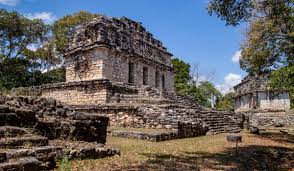
Yaxchilan - architectural complex + lintels
Chiapas, Mexico, Maya, 725 CE, limestone
Mayan city states were individually led by military kings, often at war w/ one another
temple complexes near each other and renovated old to create acropolises/plazas
lintels (with traces of pigment) depict the rituals of Shield Jaguar II and his wife, Lady K’abal
bloodletting - allows for humans to remain connected to the gods who created all things through their own blood which fed the gods
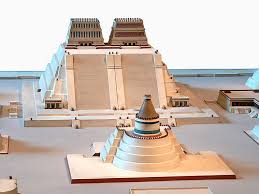
Templo Mayor
Tenochtitlan, Mexica (Mexico City, Aztecs) 1375-1520. Temple: Stone w/ stucco, Coyolxauhqui Stone: Volcanic Stone, Olmec Style Mask: Jadeite, Calendar Stone: Basalt
temple itself = main one for the city featuring leaders adding or restoring it
divides it into four axial coordinates reflecting the cosmos
top two temples dedicated to Tlaloc and Huitzilopochtli, gods of water/rain and sun/warfare
The Coyolxauhqui Stone = structure for sacrifice, as well as the mythology and humiliation of the goddess it depicts
The presence of the Sun Stone (Calendar Stone) alludes to mythologies of the suns and the motif of sacrifice to maintain flow of the cosmos
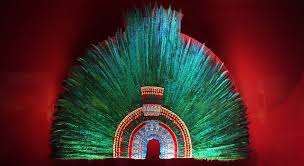
Ruler’s feather headdress (Motecuhzoma II?)
Mexica (Aztec), 1428-1520 CE, Feathers and gold
Quetzal + Cotinga feathers were one of the highest regarded mediums in Ancient American art
Actual ownership of the item is unknown, but it was most likely acquired by Hernan Cortes after his conquest of the Aztecs Empire
Feathers most likely acquired by tribute to the Aztec emperor and assembled as a symbol of both the leader’s strength as well as the Aztecs
The medium of feathers is more kinetic not static material such as cotton or other fabrics, GLOWING with the green and blues
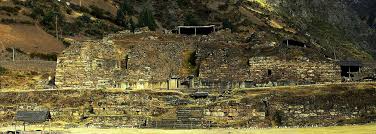
Chavin de Huantar
Northern highlands, Peru. Chavin Culture, 900-200 BCE, Stone complex, granite Lanzon stela and sculpture
Considered to be the Andean mother culture, the motifs and traditions of the Chavin will be seen in several other cultures in the region
The location was a pilgrimage site for many, as it was in the valley of two mountain ranges and at the convergence of two rivers, showing the influence of natural elements
Inside the temple are galleries of reliefs and sculptures. The purpose of these tunnels and sculptures is unknown, but is suspected to have an auditory element
One of the main sculptures is a relief of Lanzon (spear), a deity nicknamed for its digging stick like shape, suggesting its power in harvest and planting
Depicts a standing figure with large round eyes looking upward, large mouth with bared teeth and protruding fangs- mixing human and animal
The figure’s left hand rests pointing down, while the right is raised upward, encompassing the heavens and the earth
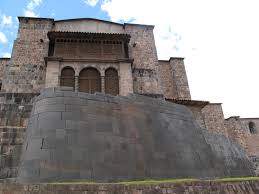
City of Cusco + Qorikancha
Central highlands, Peru, Inka, 1440 CE (Convent 1550-1650) - Andesite stone
Santo Domingo (Spanish colonial convent) + Walls at Saqsa Waman (Sacsayhuaman)
center of existence, the seat of Inka power and culture
Perfection of stone cutting - no mortar needed. allows movement during earthquakes
The Qorikancha was the most sacred site of their faith + house sun god Inti
The walls covered in sheets of gold to signify dedication to Inti, and reflected the sun’s rays
After being conquered, the temple was converted into a monastery and church
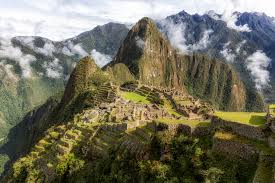
City of Machu Picchu
Central highlands, Peru, Inka, 1450-1540 CE, Granite
royal estate for the Sapa Inka, 3 day walk from capital of Cusco
Due to elevation, the use of terraces was implemented to allow for agricultural growth
maize had nutritional and religious benefits for the Inka
Water management for the site was highly advanced, as stone channels transported rainwater throughout the city
channel supplied the emperor’s bath
Like other Inka locations, the stone was mortar less
the Intihuatana stone allowed for the tracking of the sun - for Inti deity
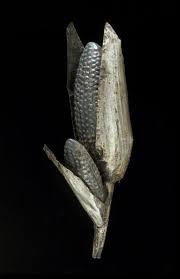
Maize Cobb
Inka, 1440-1533 CE. sheet metal/repousse, metal alloys
inside the Qorikancha in Cusco, as part of a metal garden to symbolize significance of produce to Inka people
connected Inka people to the cosmos/Inti & further united their culture+ divine right to rule Andes
hyper-realistic, attributed to sculpture
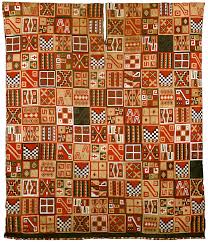
All- T’oqapu Tunic
Inka, 1450-1540 CE, camelid fiber and cotton (llama/alpaca fur)
textiles existed before ceramic- thus becoming more important medium
so well spun, 100 threads per/centimeter w/complex geometric cosmos motifs
worked on by multiple specialized artists (collecting, spinning, dying, weaving)
gender respect engaged w profession specialization
Aclla- women class who were most talented at weaving, kept cloistered in order to create textiles
red & blue dye represented the apex of resources needed to produce such items
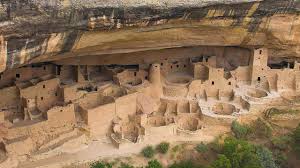
Mesa Verde cliff dwellings
Montezuma County, Colorado, Ancestral Puebloan (Anasazi), 450-1300 CE. sandstone
name refers to flat topped mountains in the area
over 600 of these structures carved into cliffside, most residential but some used for storage or ritual
picture shows Cliff Palace, known for protection from elements w houses that reach the natural roof
originally built out of Adobe
circular strictures called Kiva - for smoke pits, benches, small ceremonials (Siapapu)
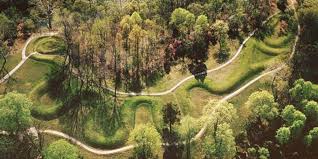
Great Serpent Mound
Adams County, south Ohio, Mississippian (eastern woodlands) 1070 CE, earthwork/effigy mound
mound building was common in Mississippi River Valley- many destroyed by expansion and farming
work conforms w geography
snake head points to the sunset of the summer solace and the tail to the sunrise of winter solstice
not funerary (no found burials)

