hunger, eating + health
 Studied by 0 people
 Call with Kai
 Learn
Learn Practice Test
 Spaced Repetition
 Match
Match Flashcards
 Knowt Play
1/45

There's no tags or description
Looks like no tags are added yet.
Name | Mastery | Learn | Test | Matching | Spaced | Call with Kai |
|---|
No analytics yet
Send a link to your students to track their progress
46 Terms
what is the cycle of hunger + eating due to
being a homeostatic mechanism → deviation from the optimum causes cravings/feelings of satiation to return the body to optimum
this is the set-point assumption → hunger + eating works similar to a thermostat-regulated heating system
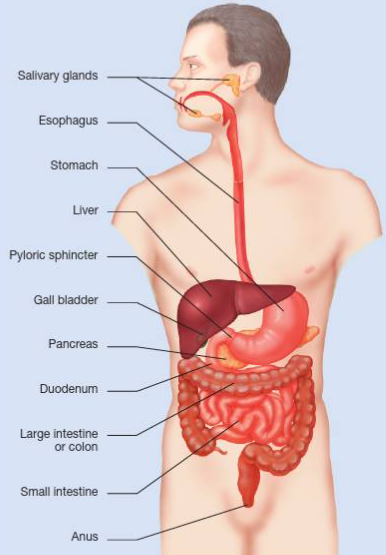
what are 9 organs in the gastrointestinal tract + how do they contribute to process of digestion
mouth + salivary glands → masticate + produce saliva, which lubricates + contains amylase which begins to break down food
oesophagus → transports food to stomach (set up for alkaline conditions, so acid reflux caused by drastic change in pH)
stomach → churns + breaks down food by use of acid digestive enzymes e.g. hydrochloric acid + pepsin
liver + gall bladder → adds further digestive enzymes into small intestine + bile to emulsify fats
pancreas → produces insulin + glucagon to store + release energy
small intestine → further digests food + absorbs nutrients
large intestine → removes water + packs waste
kidneys → filters out toxins for excretion
rectum/anus + bladder → stores + expels waste
what are 2 key pancreatic hormones involved in digestion + what do they do
insulin → converts carbohydrates e.g. glucose from the blood to storage as glycogen/proteins
glucagon → converts stored glycogen + proteins to carbohydrates e.g. glucose to use as fuel when stores are low
for what reasons does our dietary intake need to be complex
as we are omnivores → our diet includes a range of key elements that our bodies have evolved to process
there is lots of variation of dietary intake between species → e.g. number of stomachs
there is some variation of dietary intake within humans → e.g. dairy tolerance/allergies
what 4 core products does digestion produce + what storage mechanisms do they use
lipids/fats → stored as fats (energy-efficient store)
amino acids → stored as proteins in form of muscle tissue + neurotransmitters e.g. dopamine
glucose → stored as glycogen in muscles + liver (fast-release)
minerals/vitamins → stored in body structures e.g. bones/cells
why might some behavioural problems result from having an eating disorder
if someone isn’t getting sufficient amino acids from protein-rich foods, this may affect dopaminergic system due to lack of neurotransmitters → affects behavioural regulation
what 3 processes ensure eating needs are met
homeostasis/set point theory
hunger
craving
due to what 2 factors can regulatory eating processes go wrong
internal factors e.g. learning/emotions
environmental factors e.g. toxic environment
what is the evolutionary + biological perspective of eating mechanism, and what are the two main mechanisms involved
our body has developed to be able to balance our intake + output through homeostasis
homeostasis kicks in when our body’s set point is violated → e.g. if you are running out of energy, homeostasis provides signal that optimum must be reached again by inducing hunger
metabolism → chemical changes by which energy is made available for organism’s use; cephalic + fasting phases occur when body is hungry or satiated
what is the ‘toxic environment’
the ease of accessibility of high-calorie food + drinks in modern Western civilisation
how are 3 different parts of our body utilised to detect whether we are running low on nutrients/fuel
neurons in the hypothalamus are sensitive to shortage of glucose → hypothalamic regulatory nuclei
the liver is sensitive to shortages of glucose + lipids
the stomach sends the hormone ‘ghrelin’ to the brain if unstimulated + needing food
what factor can account for genetic aspect of eating behaviour
gene variation can cause over or under-release of the ghrelin hormone, associated with over + under-eating
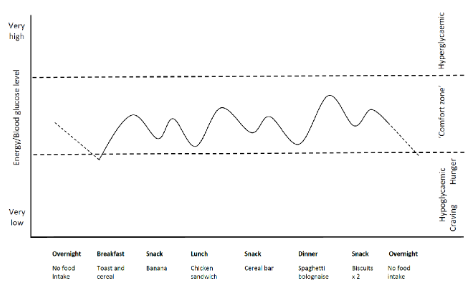
what does set-point theory predict occurs when the body is low on fuel
we experience both:
hunger → a motivational state, due to low levels of fatty acids/glucose
craving → an automatic behavioural/psychological state
the body corrects this by releasing glucagon to convert glycogen energy stores into glucose + taking in more food
what 4 signals in the body indicate satiety
adequate glucose + lipid levels detected in the brain + liver
stomach distension
behavioural signals e.g. high buccal activity (lots of chewing)
psychological signals e.g. high levels of sensory stimulation (taste + smell)
what external stimuli can produce feelings of satiety in the body
appetite-suppressant chemicals e.g. caffeine + amphetamines
means drinks with high levels of caffeine don’t provide much energy in actuality, but trick the brain by acting on dopaminergic system
what did previous research suggest was the part of the body responsible for satiety
proposed there was a ‘centre’ in the brain (within the hypothalamus) that dictated satiety by detecting that glucose levels were back to normal
how does more recent research propose the body reaches satiety (what 3 are involved)
proposes there is no one ‘centre’ but rather the process is more hormonally-controlled → by ghrelin, neuropeptide Y + serotonin
what hormone do fat tissues secrete + what effects does it have on satiety
if too much energy is going into fat tissues, leptin is released → has 2 main effects:
increases the body’s metabolic rate, meaning energy is expended faster
decreases food intake by desensitising the brain to hunger signals + inhibiting the effect of other hormones that drive eating, e.g. neuropeptide Y
what is the satiety cascade + what are its 4 stages
the stages in which the body registers that it has consumed enough. includes:
sensory → high stimulation
cognitive signals
post-ingestive → blood glucose rates increasing
post-absorptive → hormones e.g. leptin being released
what are the health complications with normative poor eating
causes poor nutrition + problems with the brain/body
what method was used in the Minnesota starvation experiment (Keys et al., 1950)
unethical experiment which studied the cognitive, social + emotional effects of starvation in 35 men who were coerced into either taking part or joining the army
men had to walk 22 miles a week, with the goal of losing 25% of their bodyweight
were afterwards given 3 months of rehabilitation in order to gain weight back
what were the 4 broad effects of starvation on participants in the Minnesota starvation experiment (1950)
physical effects → extremities formed extra fluid, sex drive decreased, hair fell out and coordination/balance was lost
cognitive effects → eating became ritualised + compulsive, and concentration decreased
social + emotional instability → relates to the tryptophan cycle (precursor to serotonin; emotional consequences if it isn’t ingested)
stunted physical + mental development
starvation effects also seen in anorexia nervosa have been based on these studies
what occurred in the rehabilitation stage of the Minnesota starvation experiment (1950)
over the course of 3 months, some participants initially dropped in weight even though food intake was increasing
some participants took 2 years to recover previous weight
men were generally found to weigh more + have more fat stores than before the experiment
what 3 nutritional deficits are associated with starvation
scurvy
rickets
Korsakoff’s amnesia → memory disorder caused by vitamin B1 deficiency
can starvation effects cross generations
yes → parents can pass on problematic + compensatory eating behaviours to their children, e.g. obesity observed in children of previously-starved mothers
what are health implications of obesity
linked to premature mortality, which can be contributed to by:
hypertension
type 2 diabetes
dyslipidemia
increased cancer risk
liver disease
reproductive + mood disorders
cardiovascular disease + hypertension
what specific problems is obesity linked to in children
can cause increase in experiences of bullying + school absence, which may contribute to experience of stigma + issues with self-esteem
what are 4 factors that draw us away from homeostasis
genetics → gene associated with leptin signaling may cause predisposition to preferring sweet/calorific foods
learned taste preferences + aversions
social learning + pressures → from family/peers
food industry producing high increase of calorific food → creates toxic environment
how does genetics incluence what foods we are likely to eat
genetic factors make us more likely to eat particular foods → other more ‘grown-up’ tastes (e.g. olives, acidic foods) are usually learned later
we are predisposed to enjoying high-energy + taste foods (ones that are sweet, salty + fatty) due to more likely containing nutrients
we are less likely to enjoy bitter foods due to their association with toxicity
what 4 factors are learned taste preferences + aversions influenced by
culture → foods common in one’s own culture are likely to be preferred
upbringing → foods experienced early in one’s upbringing tend to be more readily approached
conditioned taste aversions → powerful classical conditioning paradigm in which food associated with negative experience (e.g. being ill) makes you feel sick again in the future
satiety to specific foods, e.g. dye to having eaten it recently → keeps our diet varied
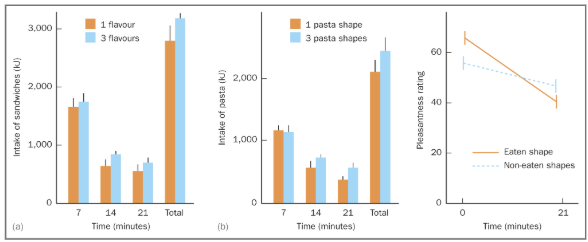
what is sensory-specific satiety + what is an associated experimental finding
refers to the decrease in pleasantness + consumption of a specific food after eating it to satiety
lab experiment found that being given food of different flavours/shapes (altering sensory properties) increased both food intake + ratings of pleasantness from participants
how does social learning change what we eat
social/observational learning influences us to eat in a number of ways influenced the people surrounding us. influences:
types of foods
speed of eating
amount eaten
this acts as a powerful cultural influence, as people adopt eating patterns that are considered normal/customary
what are 5 environmental factors that contribute to how much one eats
lighting → we tend to eat more in dim lighting
temperature → we tend to eat more when cold rather than hot
portion sizes → varying the size of the plate changes perception of how much one is eating
smell → both of food + environment itself
location/proximity of foods
what is the Malthusian hypothesis + how does it relate to the food industry
the rate of population increases linearly, so production of food also needs to be boosted → agriculture + food industry therefore ensures we do not starve due to an increasing population
why is the food industry currently regarded as a toxic place
currently sells processed, fatty + sugary foods in large quantities for relatively cheap → ensures profit margins
premium prices are placed on more ‘healthy’ foods which are often out of season
what is an example of the toxicity of the food industry
high fructose corn syrup (HFCS) → created due to overproduction of corn in 1970s US; was supplied cheaply for use in many different products
how is HFCS related to the toxicity of the food industry
its production + consumption has been directly related to obesity levels → has caused unwanted side effects e.g. fatty liver, decreased insulin sensitivity + gout precursors
what was the aim + method of Spurlock (2004)’s ‘super size me’ documentary
aimed to draw attention to the fact that the only meal options available in fast food outlets e.g. McDonalds were high-calorie
tested what the negative effects of eating 3 ‘super-size’ meals a day was on health were
what effects did Spurlock (2004) find + what was a limitation of this study
in 30 days he gained 11kg, had far above-average cholesterol, mood swings + liver problems → resulted in significant negative publicity for fast-food outlets, portion sizes changed + healthier options e.g. salads/wraps were introduced
limitation of the study was that it was subsequently revealed Spurlock had a significant alcohol problem → may have contributed to the liver function issues
what is Brownell’s ‘toxic environment’
describes the way in which human evolution + the modern Western environment are completely at odds → in our current environment, we can access as much food as we want, which happens to be highly processed due to the food industry
in what 2 ways does the ‘toxic environment’ relate to culture
in cultures where food is scarce, obesity is valued as a status symbol
in cultures where food is plentiful (e.g. in the current West), obesity is stigmatised as a sign of weakness
how does the ‘toxic environment’ theory propose that the way humans evolved impacts how we eat
points out that we evolved as hunter-gatherers → when food was scarce, homeostatic mechanisms benefited us by slowly releasing stored glucose/fats for energy
our genes mean give us a disposition to eat as much as we can when we can, so that we can live off of fat stores in leaner times
in evolution, high-energy food was only seasonally available → means high salt + sugar foods are often preferred
how does the ‘toxic environment’ theory propose the food we have accessible has changed in the past 60 years
the foods we are genetically-programmed to prefer eating are now in abundance → the food industry often packs as much sugar + salt into foods as possible to make them cheaper + more palatable
means more ‘liquid calories’ are accessible while healthier foods become more expensive + harder to obtain
how else does toxic environment theory propose culture has changed in recent years + how does this contribute to poor health/eating habits
exercise has generally decreased in the population, and more time is spent on screens, including viewing adverts for food + drinks
increased screen-time associated with dissociative effects → reduces self-control, including in regard to what we eat
less activity than previously → body is more likely to become inflamed due to needing to pass the nutrients it has stored → inflammation associated with depression
how has giving cooking lessons to people with PTSD helped to alleviate symptoms
has resulted in patients having a better diet → this reduces inflammation, which brings better psychological outcomes + a bettering of symptoms
 Note
Note  Flashcards (102)