understanding beneficial role of microbe
 Call Kai
 Learn
Learn Practice Test
 Spaced Repetition
 Match
Match Flashcards
 Knowt Play
1/42

There's no tags or description
Looks like no tags are added yet.
Name | Mastery | Learn | Test | Matching | Spaced | Call with Kai |
|---|
No analytics yet
Send a link to your students to track their progress
43 Terms
How do pathogens spread in the body during infection?
Pathogens invade the body, evade the immune system, and replicate to spread.
What types of diseases can microbes cause?
Infectious diseases.
What are examples of infectious diseases caused by microbes?
TB, influenza, HIV, COVID, food poisoning, sepsis, and hospital-acquired infections.
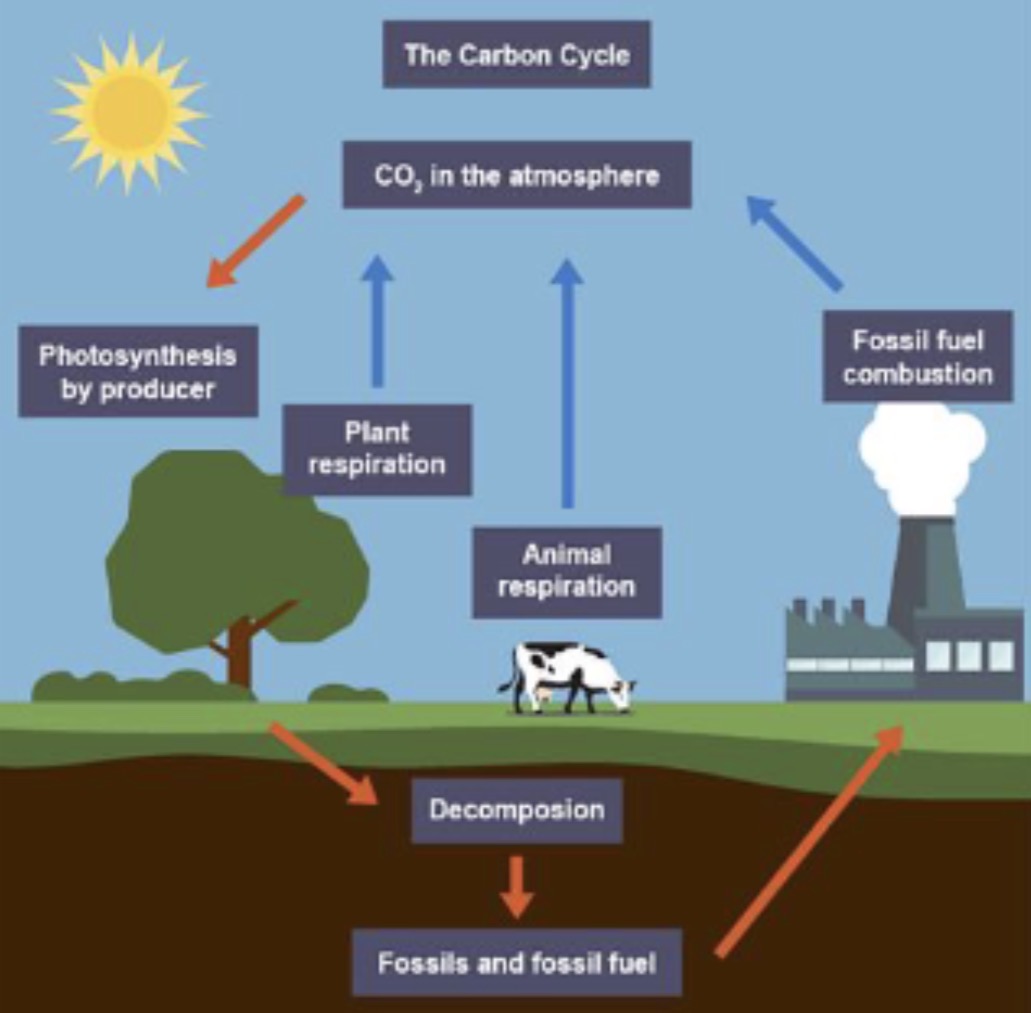
What is the carbon cycle?
The process by which carbon moves between the atmosphere, living organisms, and the Earth.
How do plants contribute to the carbon cycle?
Plants absorb carbon dioxide from the atmosphere through photosynthesis.
How do animals contribute to the carbon cycle?
Animals release carbon dioxide through respiration.
What role do decomposers play in the carbon cycle?
They break down dead organisms and return carbon to the environment.
How does the burning of fossil fuels affect the carbon cycle?
It releases stored carbon dioxide into the atmosphere.
How can microbes be used to improve food products?
Microbes can produce foods such as mycoprotein.
Which microorganism is used to produce mycoprotein?
Fusarium venenatum.
What role does fermentation play in food production?
Fermentation preserves food and enhances flavour.
How do microbes improve food safety and shelf life?
They make food safer and extend shelf life, reducing waste and supporting major global industries.
What does PCR stand for in biotechnology?
Polymerase Chain Reaction.
What is the purpose of PCR in biotechnology?
To amplify specific DNA sequences.
Which bacterium provides the heat-stable enzyme used in PCR?
Thermus aquaticus.
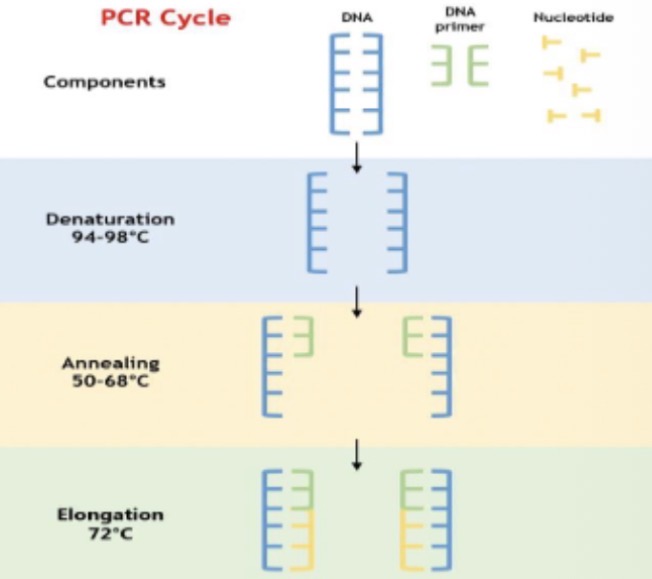
Describe process of PCR
DNA mixed with primer and free nuclear bases
Heat to 94-98
DNA split into individual strands - denatures
Cool to 58
DNA wants to stick back together
If reheat to 72
Polymerase comes alive and finds the primer and nuclear bases and elongates chain on DNA
What are the three main stages of PCR?
Denaturation, annealing, and elongation.
At what temperature does denaturation occur in PCR?
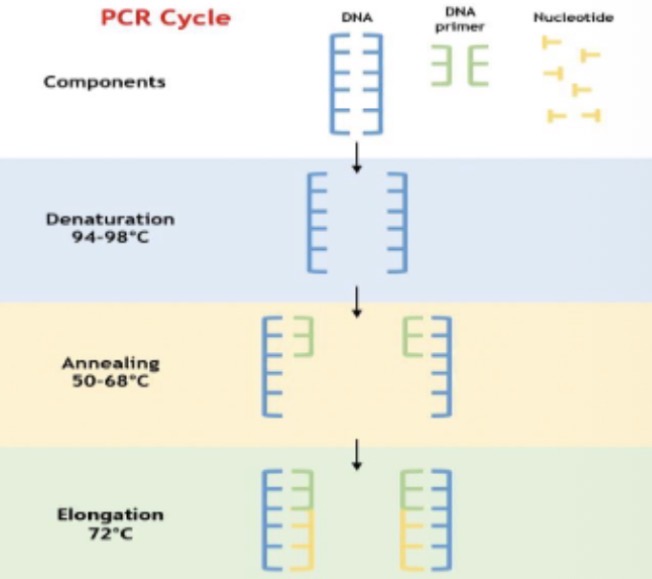
About 94–98°C.
What happens during the denaturation step of PCR?
The DNA double helix separates into single strands.
At what temperature does annealing occur in PCR?
About 50–68°C.
What happens during the annealing step of PCR?
Primers bind to complementary DNA sequences.
At what temperature does elongation occur in PCR?
About 72°C.
What happens during the elongation stage of PCR?
DNA polymerase extends the DNA strand to form a new copy.
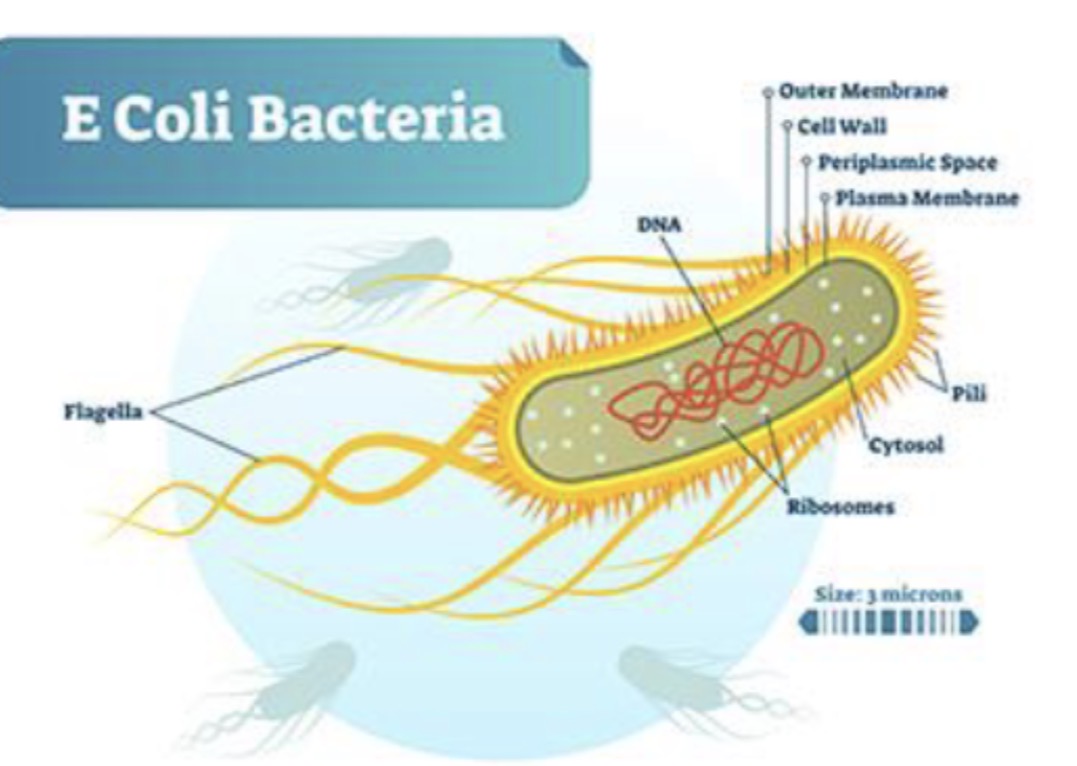
How diverse are E. coli bacteria strains?
There are hundreds of identified strains. Replicate in 20min
Approximately how many recognised E. coli serotypes exist?
Over 700 serotypes.
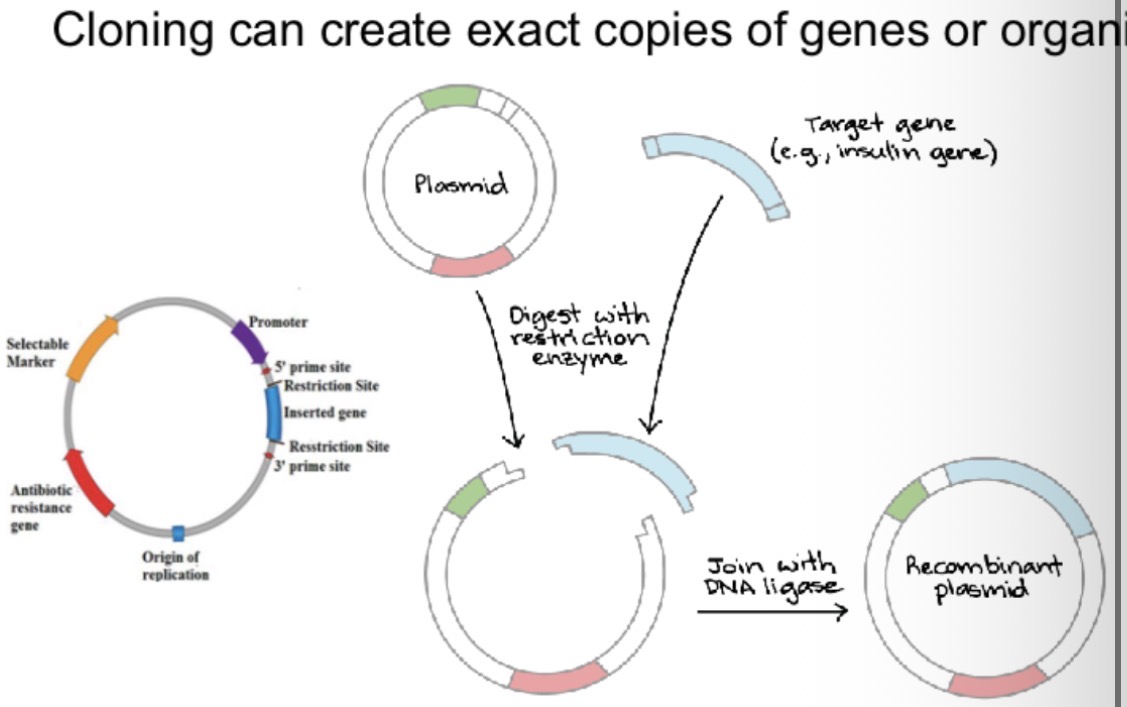
What is gene cloning used for in biotechnology?
To create exact copies of genes or organisms.
What is the first step in creating recombinant DNA using plasmids?
The plasmid is digested using a restriction enzyme.
What happens after the plasmid is cut during gene cloning?
A target gene (e.g., the insulin gene) is joined to the plasmid.
Which enzyme joins the target gene to the plasmid in gene cloning?
DNA ligase.
What is the product formed after inserting a gene into a plasmid?
A recombinant plasmid.
What is recombinant DNA technology?
A method that combines genetic material from different sources to create new and useful combinations.
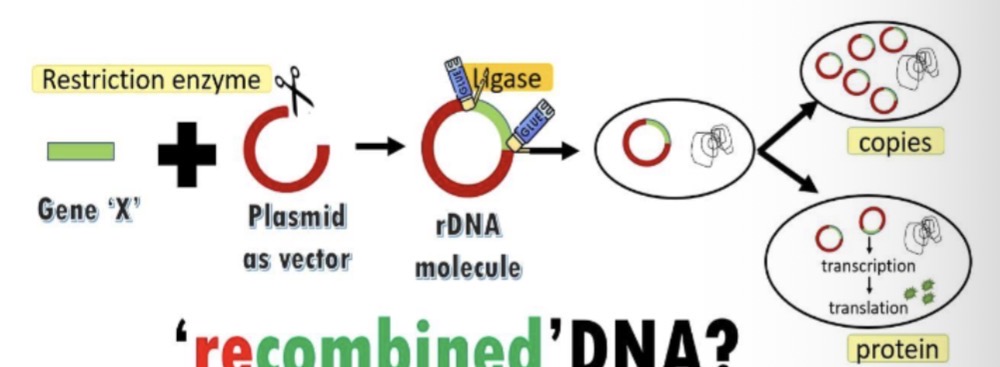
What fields commonly use recombinant DNA technology?
Medicine, agriculture, and biotechnology.
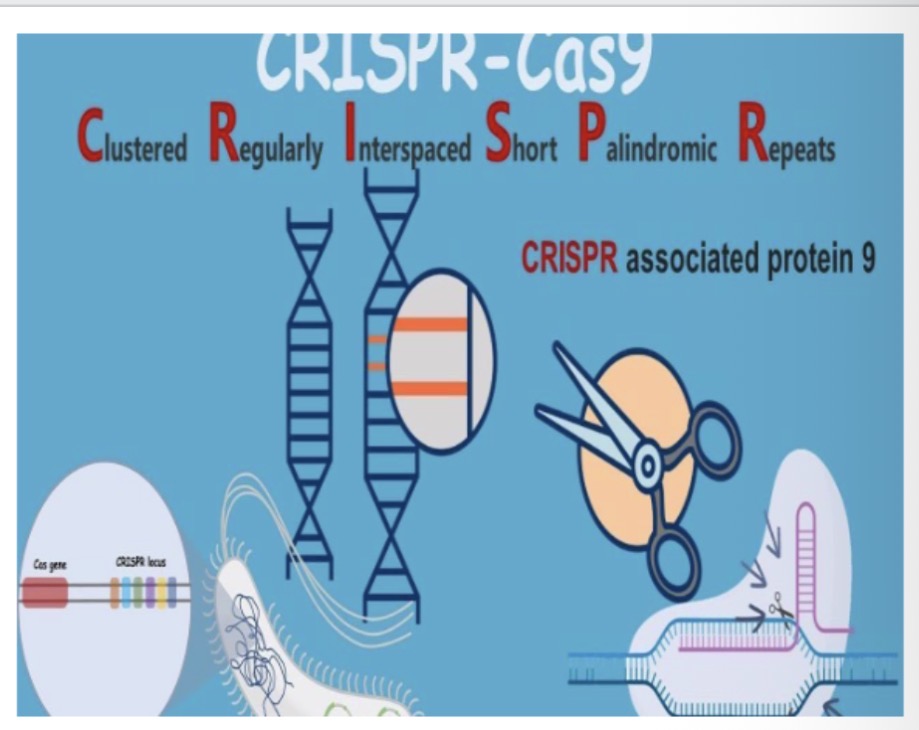
What is CRISPR-Cas9 used for in biotechnology?
Gene editing.
How does CRISPR-Cas9 target specific DNA sequences?
Guide RNA (gRNA) directs the Cas9 enzyme to a specific DNA sequence.
What role does the Cas9 enzyme play in CRISPR gene editing?
It acts as molecular scissors that cut both strands of the DNA double helix.
What happens after Cas9 cuts the DNA in CRISPR editing?
The cell repairs the damage, allowing genes to be disabled or new genetic information inserted.
What does the acronym CRISPR stand for?
Clustered Regularly Interspaced Short Palindromic Repeats.
How can microbes contribute to clean energy production?
By producing biofuels from algae and bacteria.
How are microbes involved in methane production?
Certain microorganisms produce methane during metabolism.
How can microbes help reduce waste?
By producing biodegradable plastics and treating wastewater using microbial communities.
How do microbes benefit agriculture?
Nitrogen-fixing bacteria reduce fertiliser use and microbes can act as pesticides.
What is bioremediation and how do microbes contribute to it?
Microbes break down pollutants such as oil spills, plastics, or toxins.
Why study tardigrades.
Think conditions
Extreme conditions:
+151oC
-272oC
300 x atmospheric pressure
Vaccine
Ultra violet radiation
Cosmic radiation
10yrs of deep freeze

