6 AP Art History Unit 2: Ancient Egypt History ID & Visual Analysis Flashcards
 Call Kai
 Learn
Learn Practice Test
 Spaced Repetition
 Match
Match Flashcards
1/8

Earn XP
Description and Tags
Ancient Egypt History ID & Visual Analysis Flashcards
Name | Mastery | Learn | Test | Matching | Spaced | Call with Kai |
|---|

9 Terms
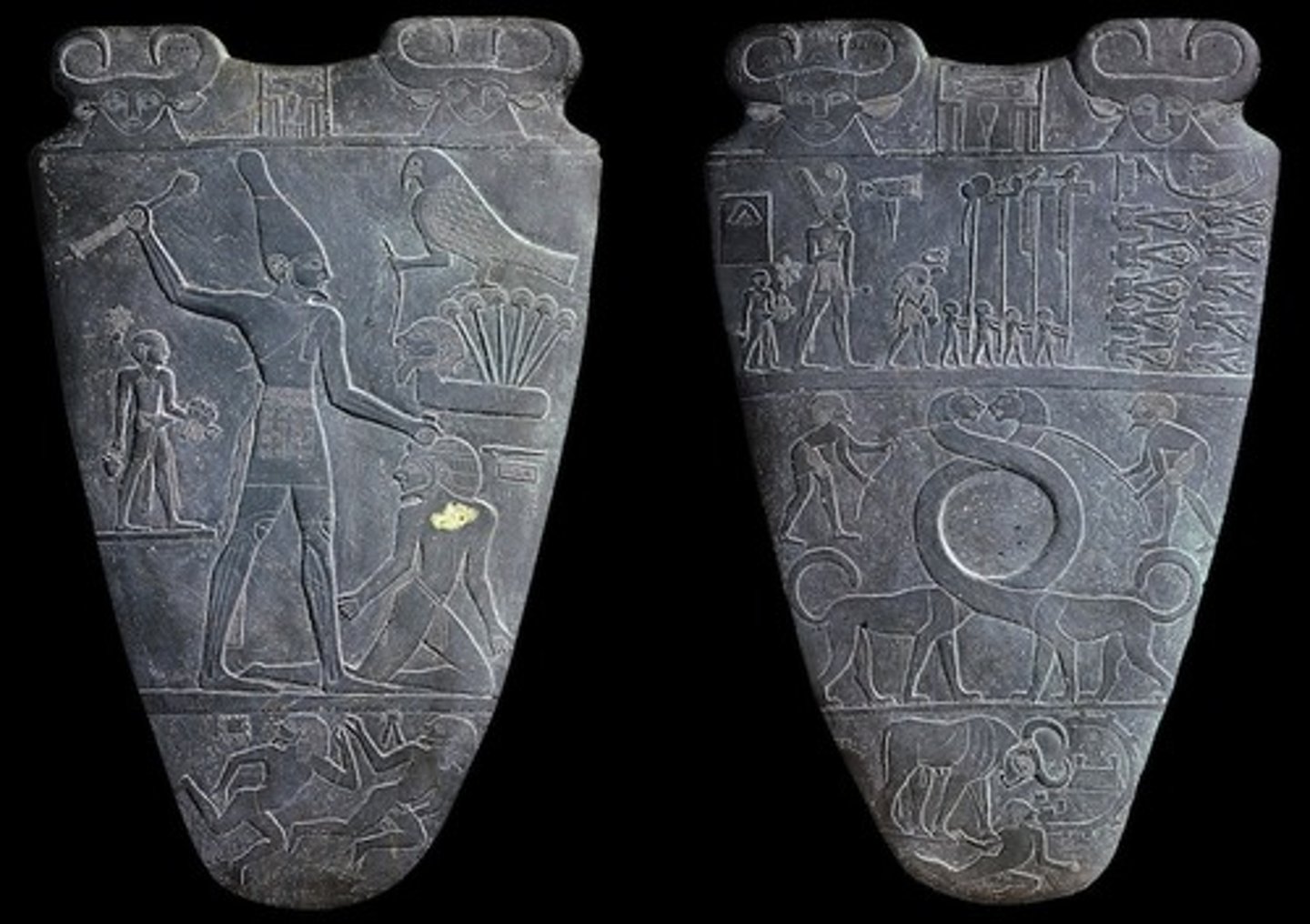
title & siting: artist & culture: style: date of creation: materials & technique: form & content:
title & siting: Palette of King Narmer, Hierankopolis (temple cache) artist & culture: unknown predynastic Egyptian style: predynastic Egyptian pharaohnic date of creation: circa 3000-2920 bce materials & technique: front and back, bas-relief greywacke (a type of sandstone) form & content: Hierarchy of scale, registration FRONT: Top Register cartouche (Narmer) and Bat or Horus (god of Egypt), Second Register —(larger) Narmer with sandal bearer viewing beheaded enemies, and wearing Red Crown (cobra, ujaeus) of lower Egypt and, composite view of human body (according to Egyptian pharaohnic canon: kilt, beard, wide shoulders, idealized form, composite view (in profile except for eye, chest, ear), hieroglyphics, figures on ground line; Center Register—serpopods (leopard w/ serpend neck) with necks intertwined (unification?); bottom register bull knocking down city fortress. BACK: (3 registers) Top Register cartouche (Narmer) and Bat or Horus (god of Egypt), Second Register - Narmer wearing White Crown (hedjet) of upper Egypt), smiting enemy with mace (the smiting pose a feature of continuity from pre-dynastic Egypt), and sandal bearer; Bottom Register of defeated enemies
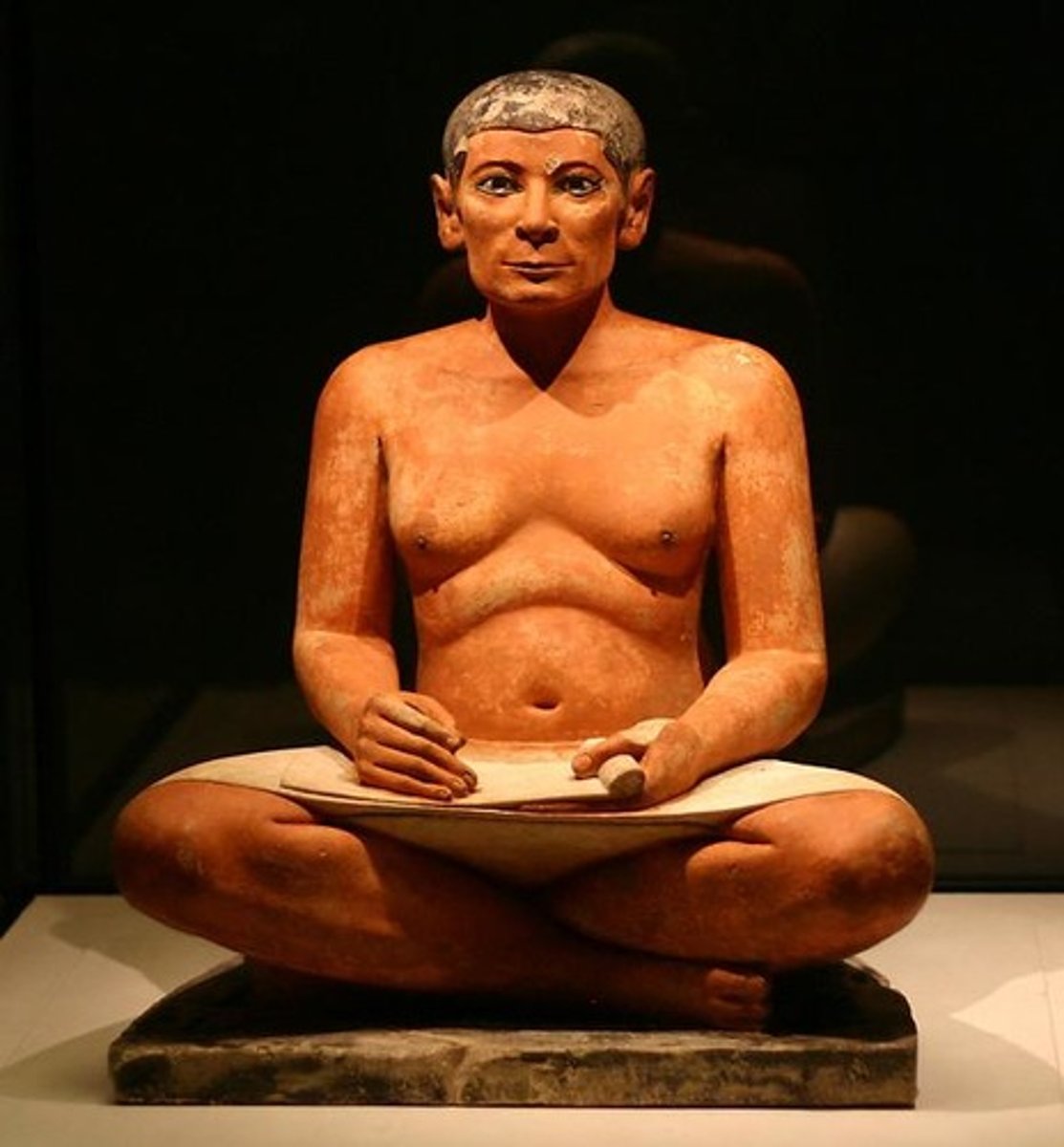
title & siting: artist & culture: style: date of creation: materials & technique: form & content:
title & siting: Seated Scribe, Saqqara, (necropolis, mastaba tomb) Egypt artist & culture: unknown, predynastic Egyptian style: old kingdom Egyptian, non-pharoahnic, naturalistic (rolls of fat, almost portrait-like naturalism) date of creation: 2620-2500 bce materials & technique: carved, painted limestone, wooden dowels glued with organic adhesive. Adhesive also used for carved iris of eye; sclera of eye is crystal form & content: scribe (papyrus and missing writing implement);
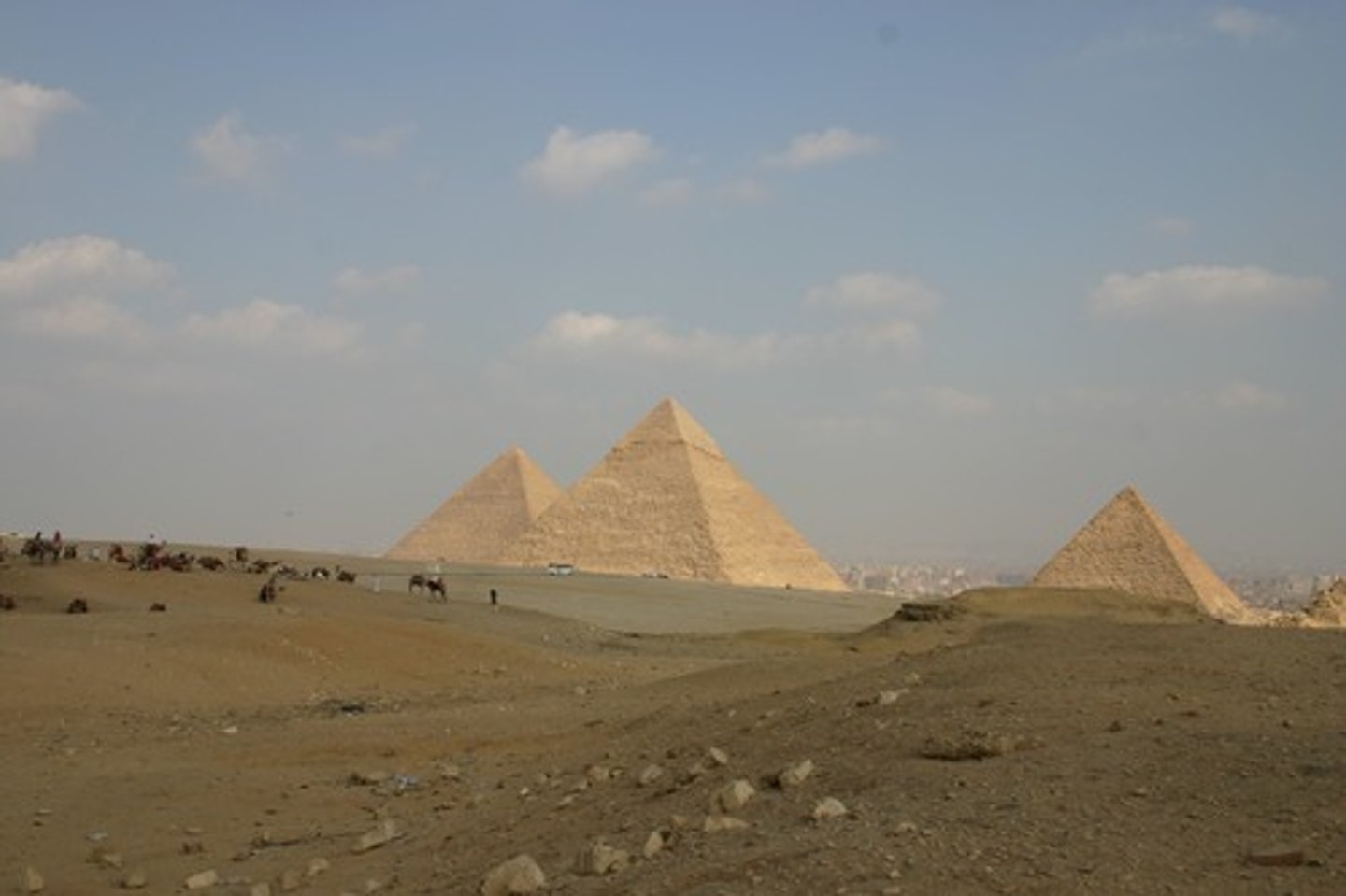
title & siting: artist & culture: style: date of creation: materials & technique: form & content:
title & siting: Great Pyramids and Sphinx (Great Pyramid of Khafre, Pyramids of Khufu, & Menkaure at mortuary complex on Giza Plateau) artist & culture: unknown Fourth Dynasty, Old Kingdom Egyptans style: Old Kingdom pharaohnic, date of creation: 2600-2500 bce materials & technique: White limestone casing blocks mortared with plaster (now missing), possibly gilded pyramidion (referencing benben) at top; cut and fit limestone, and red granite (from Aswan) form & content: 3 massive pyramids, including valley temple, causeway, funerary temple, boat pits and sphinx (cut from living limestone). THE GREAT PYRAMID OF KHUFU is the largest, and highly accurate. Unfinished underground chamber, and airfshafts, King’s and Queen’s chamber and Grand Gallery (corbelled passage; King’s chamber in red granite) PYRAMID OF KHAFRE AND GREAT SPHINX —burial chamber and two passageways; largest morturary temple; valley temple (preserved) granite and polished calcite, THE GREAT SPHINX painted limeston, is on the causeway from valley to mortuary/pyramid and thought to represent Khafre’s head with lion body; temple of the sphinx cult locate in front PYRAMID OF MENKUARE — most complicated interior of three pyramids
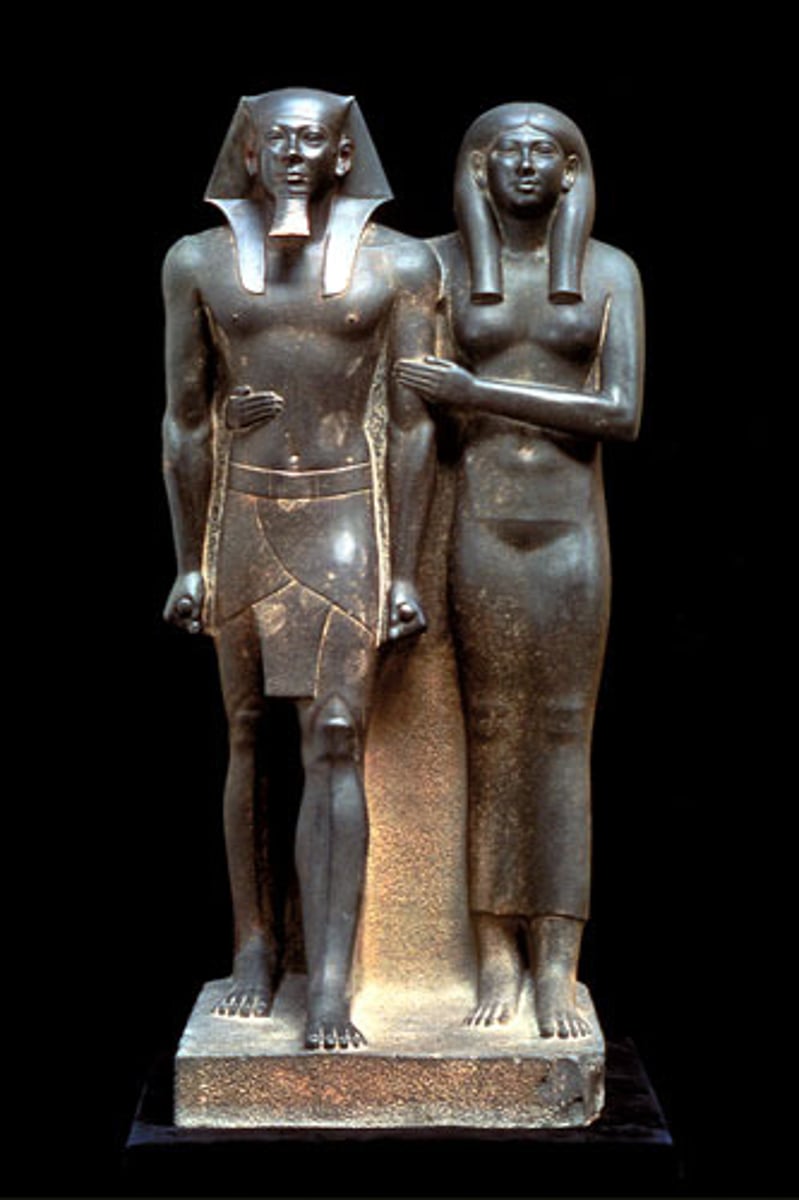
title & siting: artist & culture: style: date of creation: materials & technique: form & content:
title & siting: King Menkuare & Queen (Giza Plateau, Menkuare valley temple) artist & culture: unknown Fourth Dynasty, Old Kingdom Egyptans style: Old Kingdom pharaohnic/canonical date of creation: 2490-2472 bce materials & technique: painted, carved, polished greywacke form & content: frontally presented sculpture of Pharaoah Menkuare, with kilt, nemes headdress and pleated kilt, fists at sides gripping ritual objects; left foot of each figure forward, serene expressions, idealized, and also portraiture; figures at nearly equal height, female figure more frontally presented
title & siting: artist & culture: style: date of creation: materials & technique: form & content:
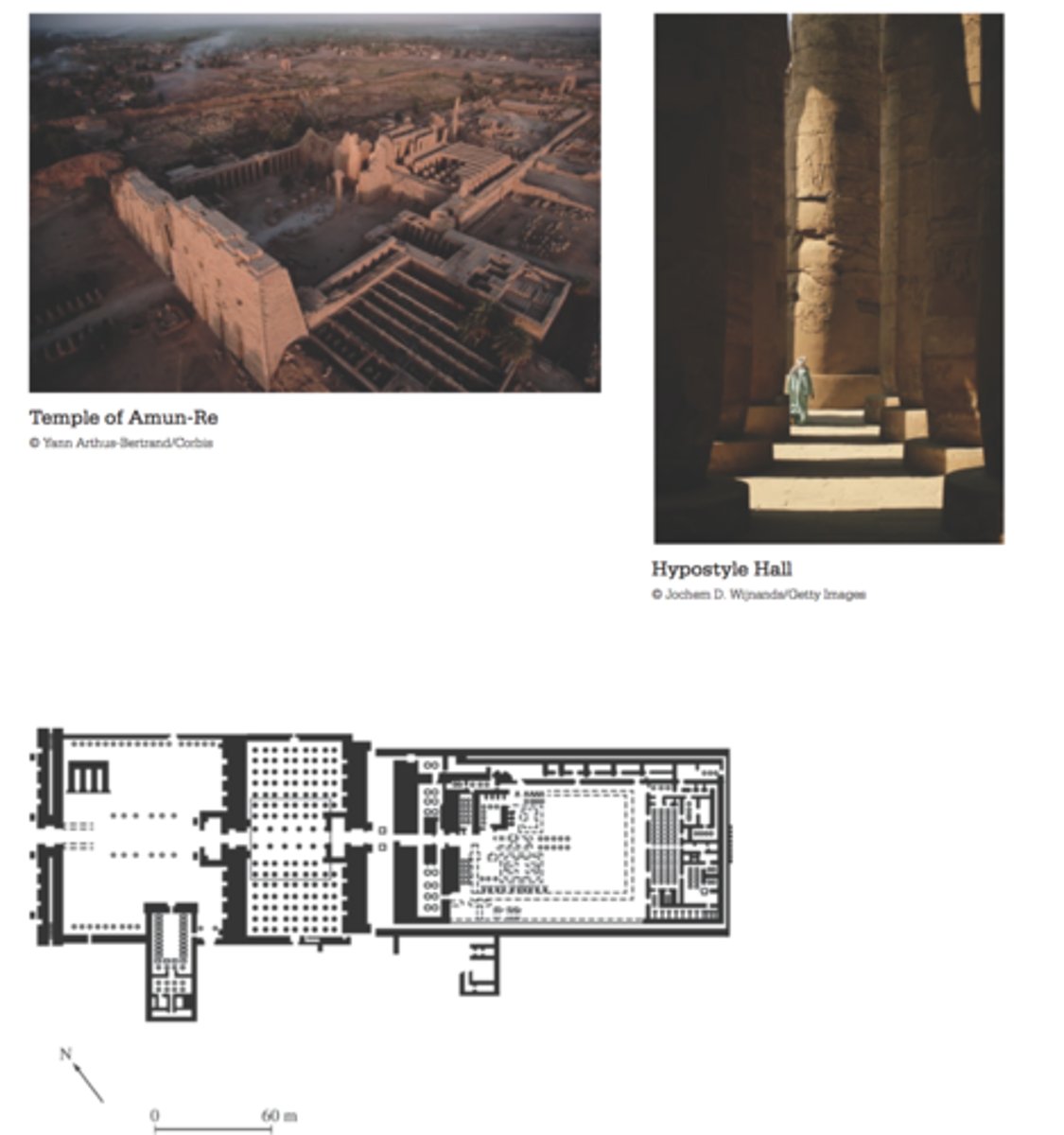
title & siting: Temple of Amun-Re & Hypostyle Hall (Karnak, Amun-Re precinct, near Luxor, between Nile and artifical lake) artist & culture: unknown New Kingdom artist, 18th and 19th dynasties style: New Kingdom architectural date of creation: 1550bce (temple) 1250bce (hypostyle hall0 materials & technique: cut sandstone and mud brick form & content: Pylon temple, axial plan (two, N-S and E-W), hypostyle halls of painted and carved, lotus, palm, and papyrus capitals of increasing size; annual flooding of Karnak (near temple) emphasizing the highest interior of hypostyle hall and clearestory allowing in light from above
title & siting: artist & culture: style: date of creation: materials & technique: form & content:
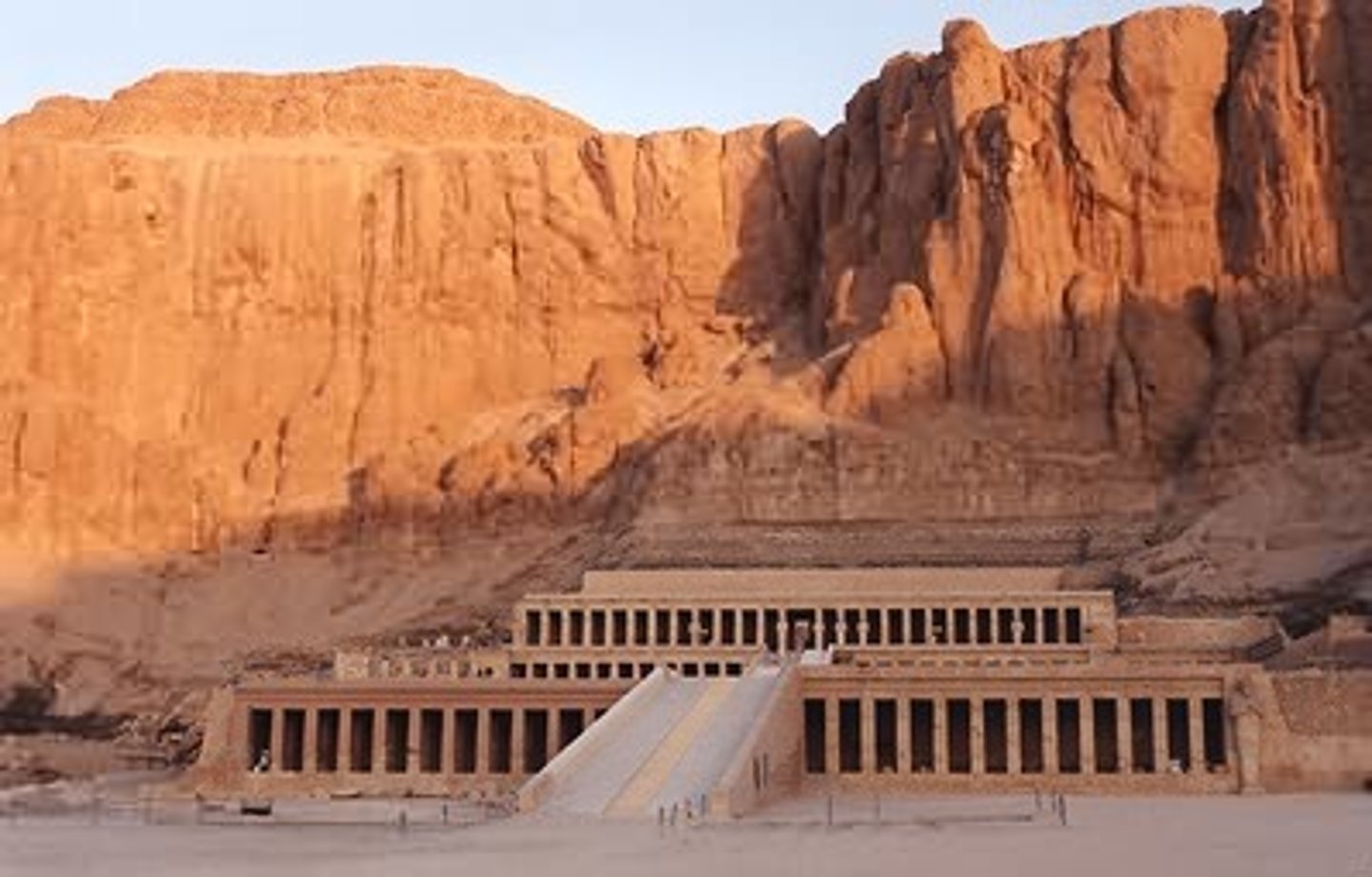
title & siting: Morturary Temple of Hatshepsut artist & culture: Senenmmut (possibly), New Kingdom 18th dynasty style: New Kingdom 18th dynasty date of creation: ca. 1473-1458 bce materials & technique: carved sandstone cut from living rock of cliff face and red granite form & content: a multi-level temple featuring colonnades, terraced gardens, and statues of Hatshepsut. The structure is designed to blend with the surrounding cliffs, with bas reliefs depicting her divine birth and trade expeditions. KNEELING FIGURE OF HATSHEPSUT votive figures making offering to Amun-Re; wearing nemes and white crown, beard, kilt, broad and feminized shoulders, breasts and serene, idealized features.
title & siting: artist & culture: style: date of creation: materials & technique: form & content:
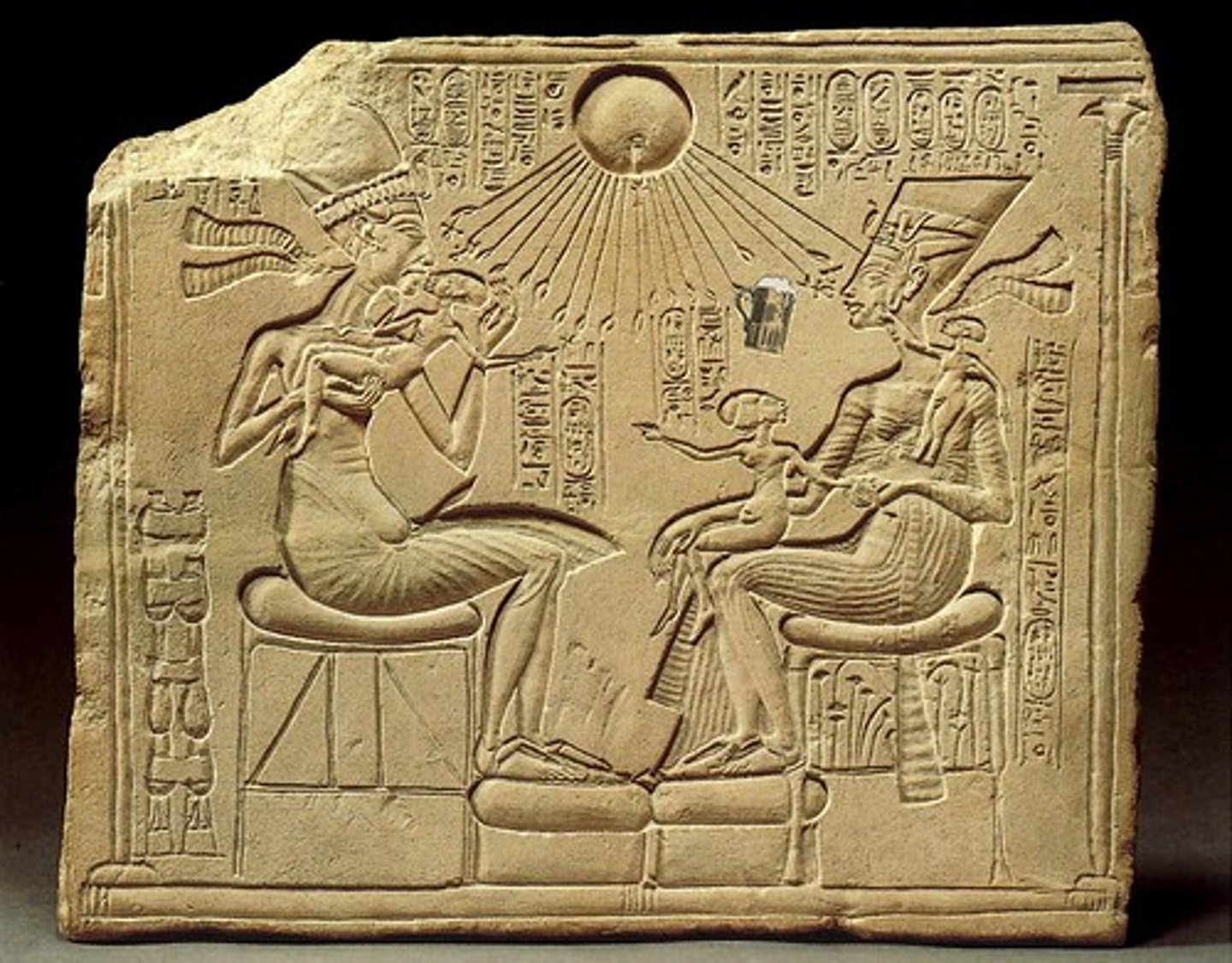
title & siting: Akhenaten, Nefertitit and Three Daughters (domestic shrine, Amarna) artist & culture: Unknown Amarna artist style: Amarna-style, New Kingdom, 18th dynasty date of creation: 1353-1335 bce materials & technique: carved, sunken relief, limestone form & content: Seated Akenaten holds oldest daughter, Nefertiti, seated facing at equal height) holds two younger daughters, rare depiction of family warmth/intimacy; curvilinear, elongated, epicene and idealized figuration; Aten sun-disc-god at top center emanating rays, ending in ankhs (symbol of life) and directed at main figures
title & siting: artist & culture: style: date of creation: materials & technique: form & content:
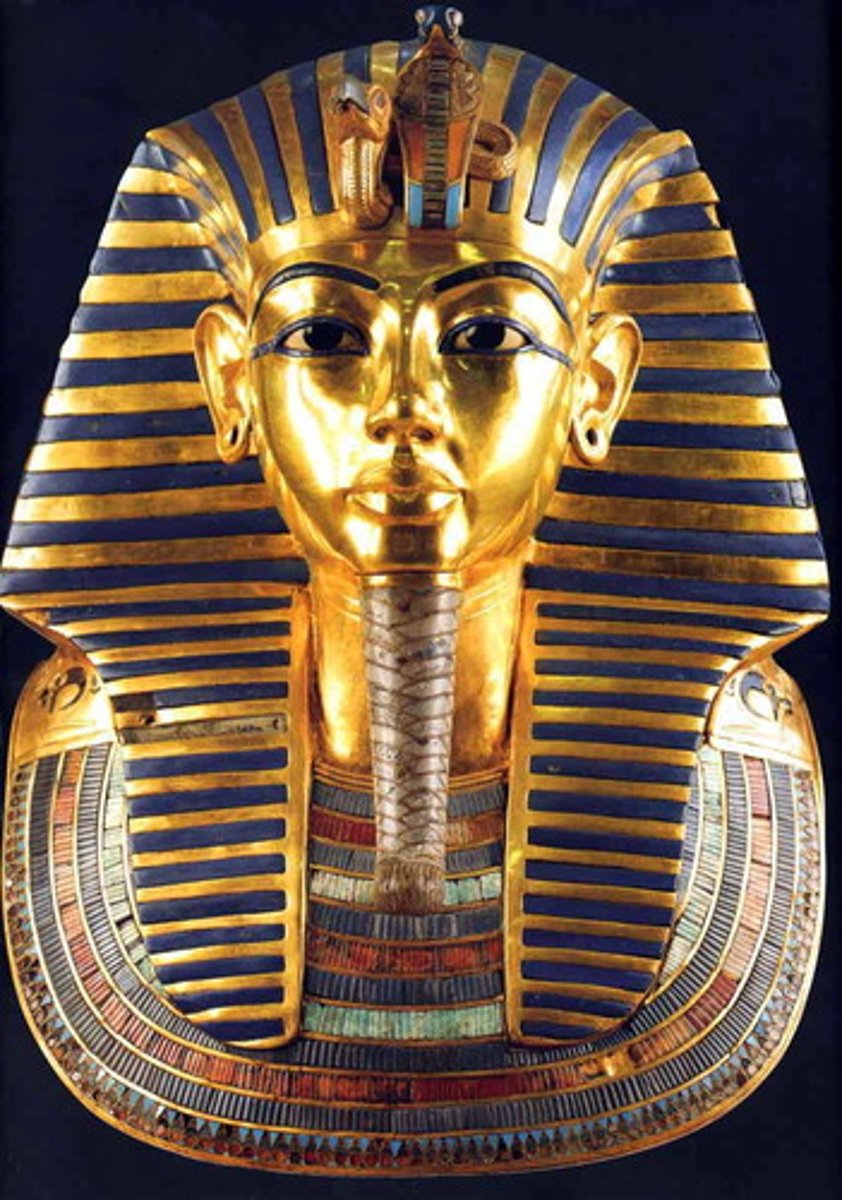
title & siting: Innermost coffin of King Tutankhamun’s tomb (Valley of Kings, near Luxor) artist & culture: New Kingdom, 18th dynasty style: New Kingdom, 18th dynasty date of creation: 1323bce materials & technique: gold, inlaid enamel, and semiprecious stones form & content: Gold coffin containing body of pharaoh; idealized features, crook and flail (Osiris)
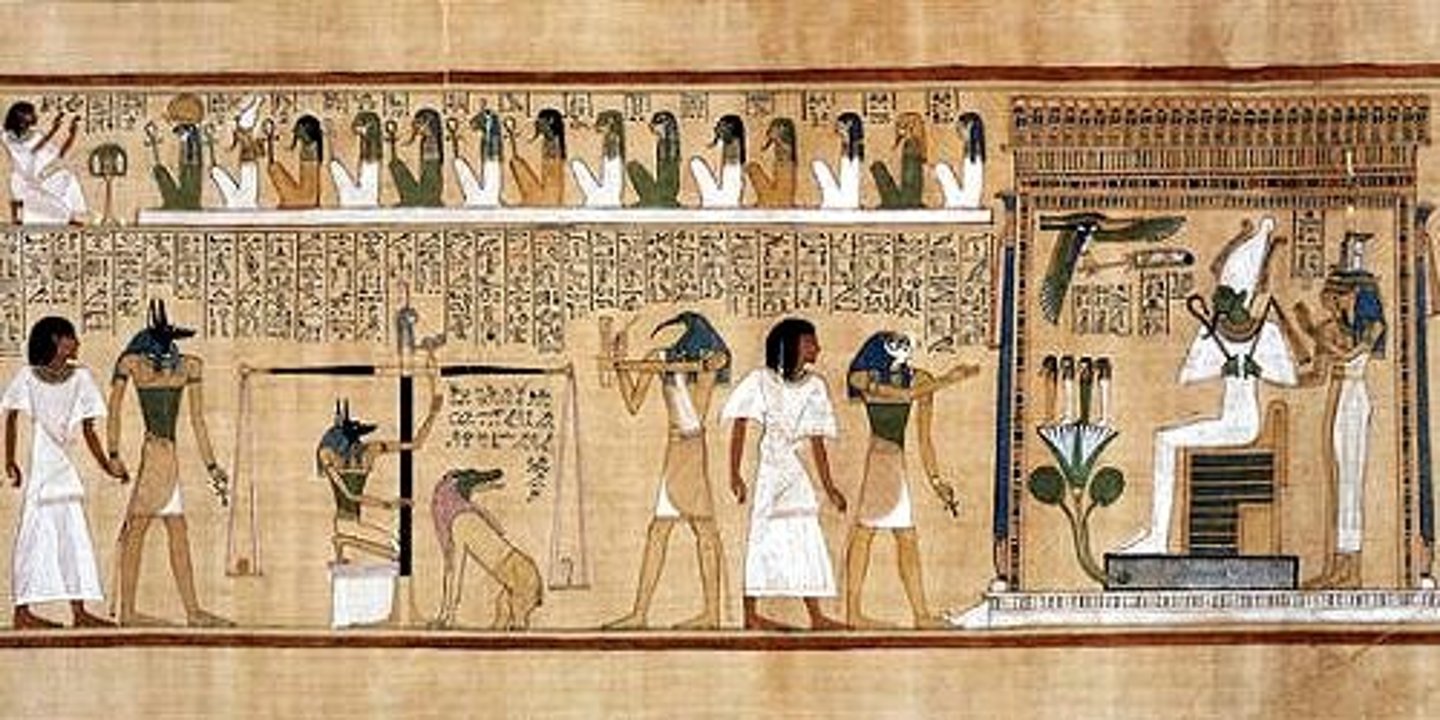
title & siting: artist & culture: style: date of creation: materials & technique: form & content:
title & siting: Hunefer’s Judegement in the Presence of Osiris from the Book of the Dead (Hunefer’s tomb) artist & culture: New Kingdom, 19th dynasty style: New Kingdom, 19th dynasty date of creation: 1275 bce materials & technique: illuminated manuscript (writing/painted papyrus; after pyramid and coffin texts) form & content: narrative registration Upper Register: read left to right depiction of scribe Hunefer with crouching deities claiming to have led a good life; Lower Register —Hunefer standing between Anubis (with Ankh) standing on left and kneeling on Hunefer’s right weighing Hunefer’s heard on a scale against the feather of Ma’at (heart is lighter) and will not be devoured by depicted Ammit (hippo-lion) and recorded by standing Thoth and then Horus and Osiris, Horus’ children and the eye of Horus and finally Isis and Nepthys again (furthest left leading Hunefer to judegement in the presence of Osiris)
 Note
Note  Flashcards (39)