employment
 Studied by 0 people
 Call with Kai
 Learn
Learn Practice Test
 Spaced Repetition
 Match
Match Flashcards
 Knowt Play
1/13

There's no tags or description
Looks like no tags are added yet.
Name | Mastery | Learn | Test | Matching | Spaced | Call with Kai |
|---|
No study sessions yet.
14 Terms
employment
being involved in a productive activity for which payment is received
unemployment
being without a job while willing and able to work
full employment
lowest level of unemployment
flexible labour force
a labourforce which adjusts quickly and smoothly to changed in market condition
labour Force survey definition
measure of employment and unemployment in the countrys population by means of a survey
how is it possible for unemployment to fall without an increase in employment
finding a job is not the only rsn by ppl become unemployed
some unemployed ppl may reach retirement age
some may go into full time education
some may emigrate
some may stop searching for work
how is it possible for unemployment and employment to increase
labour force grows faster than the number of jobs available
The labour force = all the people who want to work.
Jobs available = the number of people who can actually get a job.
If more people are looking for work faster than jobs are being made:
Some people get jobs → employment goes up.
Some people can’t find jobs → unemployment also goes up.
unemployment rate
percentage of yhe labour force who are willing and able to work but are without jobs
unemployment number upon labour foce × 100
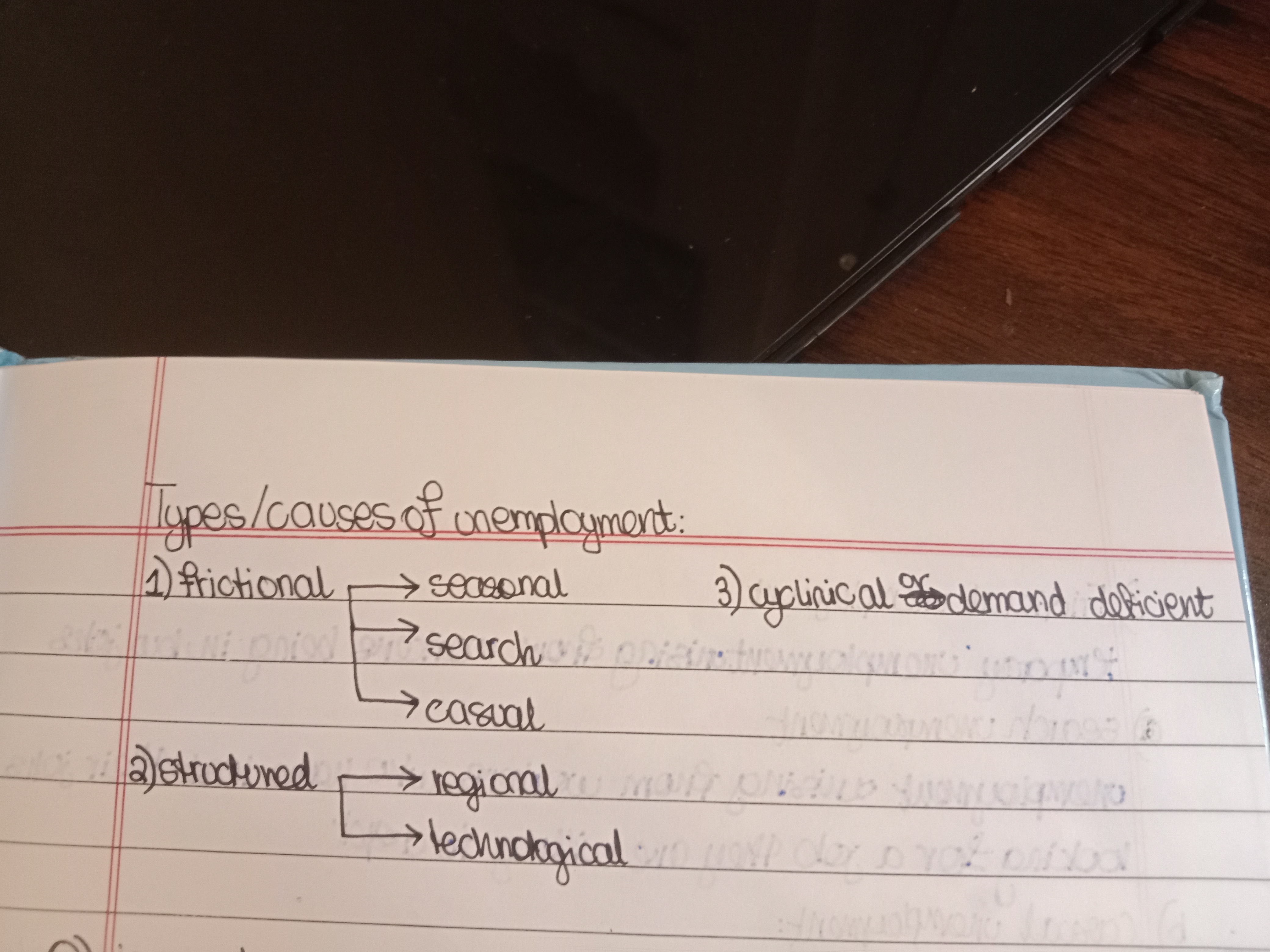
types/causes of unemployment
frictional unemployment: temporary unemployment arising from workers being in between jobs.
search unemployment: unemployment arising from workers who have lost their jobs looking for a job they are willing to accept.
casual unemployment: unemployment arising from workers regularly being between periods of employment
structural unemployment: unemployment caused by long-term changes in the pattern of demand and methods of production
regional unemployment: unemployment caused by a decline in job opportunities in a particular area of the country
technological unemployment: unemployment caused by workers being replaced by capital equipment
clincal unemployment: unemployment caused by a lack of aggregate demand
seasonal unemployment: unemployment caused by a fall in a particular industry
policies to reduce unemployment
Expansionary Monetary Policy
This is when the government, through the central bank, tries to increase the money supply and make borrowing cheaper to encourage spending and investment.
How it works:
Interest rates are lowered so people and businesses borrow more.
More borrowing → more spending → businesses produce more → they hire more workers → unemployment falls.
Effectiveness:
Works best for demand-deficient unemployment (when people can’t buy enough goods and services).
Less effective for structural unemployment (when workers’ skills don’t match jobs available).
Takes time to show results, as businesses need to expand and hire.
Expansionary Fiscal Policy
This is when the government spends more or reduces taxes to increase overall demand in the economy.
How it works:
Increased government spending on projects (roads, schools, hospitals) creates jobs directly.
Tax cuts leave people with more money to spend → demand for goods rises → firms hire more workers.
Effectiveness:
Very effective in reducing cyclical unemployment (caused by economic recessions).
Can lead to higher government debt if spending is too high.
Quick impact if implemented properly, but depends on efficient government planning
Increase in Quality and Quantity of Education and Training
This focuses on improving skills and employability of workers.
How it works:
People get trained in skills that are in demand (like IT, healthcare, engineering).
Education improves productivity, making workers more attractive to employers.
Helps workers move from industries that are shrinking (like agriculture) to growing sectors (like services).
Effectiveness:
Very effective for structural unemployment, where people don’t have the right skills.
Takes time and investment before results are visible.
Can reduce long-term unemployment and increase overall economic productivity
consequences on unemployed
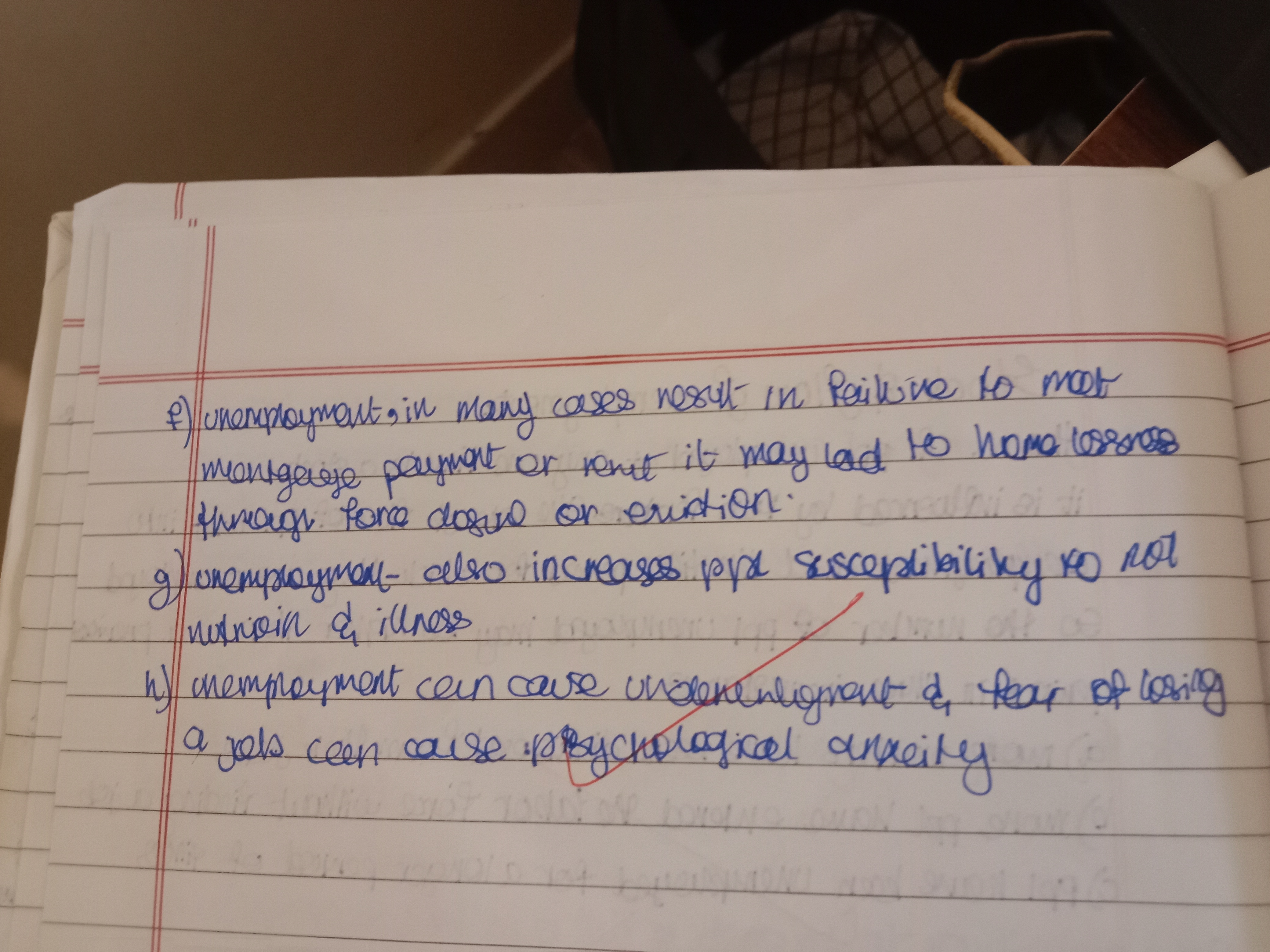
Loss of income: Without a job, individuals cannot earn money, which reduces their ability to buy goods and services.
Loss of skills (de-skilling): Long-term unemployment can make people’s skills outdated, making it harder to find work later.
Mental and physical health issues: Stress, depression, and anxiety are common. Poor health can also result from financial struggles.
Strain on family relationships: Financial pressure and stress can create tension and conflicts within families.
concequences on firms
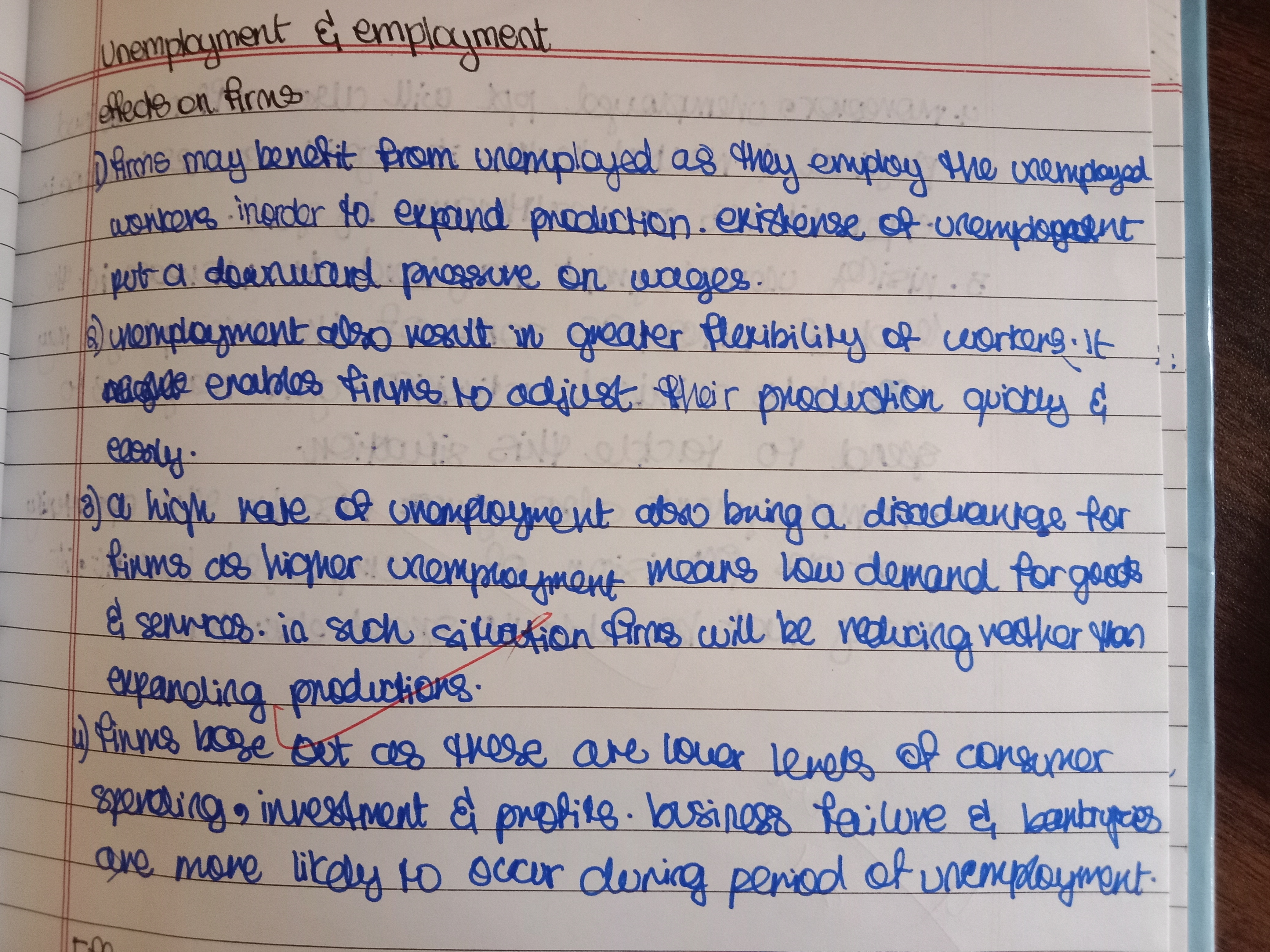
Reduced demand for products: Unemployed people buy less, so businesses may sell fewer goods and services.
Lower productivity: Firms may lose skilled workers if unemployment is high, making it harder to operate efficiently.
Higher training costs: If people are out of work for long, firms may need to spend more to train new employees.
Market instability: Unemployment can reduce overall consumer spending, affecting firms’ profits and growth.
concequence on economy
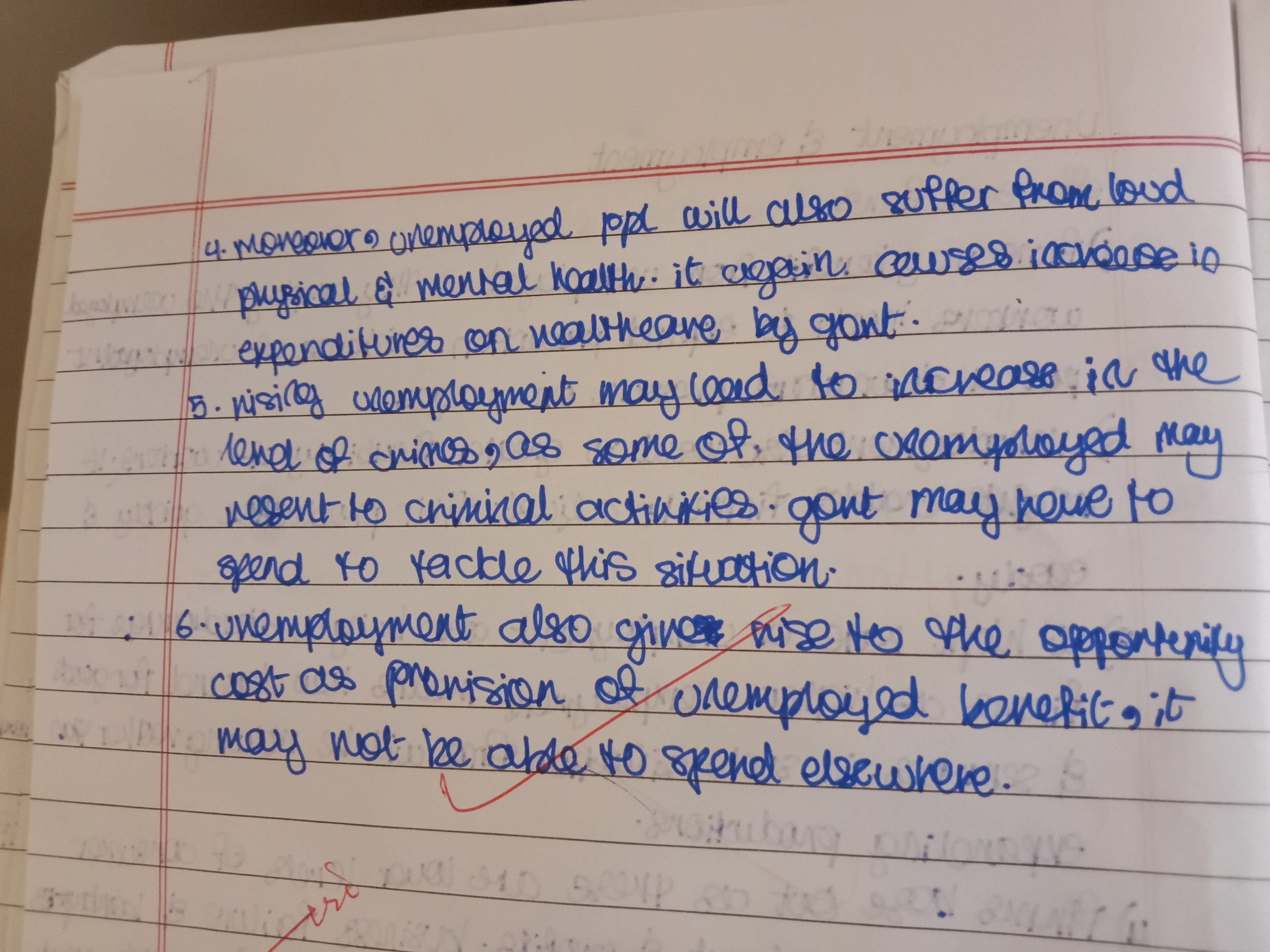
Wastage of human resources: Skilled and talented people remain unused, which is a loss for the economy.
Lower production and output: Fewer workers mean fewer goods and services are produced, reducing national output.
Reduced government revenue: With less income being earned, the government collects fewer taxes.
Higher government spending on welfare: More unemployment benefits and social support are needed, putting pressure on public finances.
Increased taxes for working individuals: To cover government expenses, taxes on employed people may rise.
stock and flow of unemployment
The stock of unemployment is the total number of people who are unemployed at a particular point in time
What Influences the Stock of Unemployment?
The stock depends on two main factors:
Rate of flow into unemployment:
This is how many people are losing their jobs or becoming unemployed during a period.
If more people lose jobs, the stock of unemployment rises.
Duration of unemployment:
This is how long people remain unemployed.
If people stay unemployed for longer periods, the stock increases, even if the same number of people are losing jobs.
Why Might the Stock of Unemployment Increase?
The total number of unemployed can rise in three situations:
More workers are dismissed from their jobs:
For example, during an economic recession, companies lay off workers, increasing unemployment.
More people enter the labour force without finding jobs:
New graduates or people who were not previously looking for work join the labour force but cannot immediately find a job.
People remain unemployed for longer periods:
When people can’t find jobs quickly, the number of unemployed accumulates over time
 Note
Note  Flashcards (45)