forensic anth exam 2
 Call Kai
 Learn
Learn Practice Test
 Spaced Repetition
 Match
Match Flashcards
 Knowt Play
1/94

There's no tags or description
Looks like no tags are added yet.
Name | Mastery | Learn | Test | Matching | Spaced | Call with Kai |
|---|
No analytics yet
Send a link to your students to track their progress
95 Terms
race
social construct in which meaning was given to clusters of phenotypes
(particularly skin color) and that were then linked to geographic regions and other
phenotypes; it is not biological; racial boxes are different across the globe based on the
region and history of that country, place, etc.
ethnicity
more specific and more often based upon self-identification, culture,
heritage, and group identity; People can identify with different racial groups but be of
the same ethnicity; like race though, ethnic categories and their;
definitions/descriptions, can vary depending on the region, country, etc.
nationality
legal category based upon location of birth and/or long-term residency
where some gains citizenship
ancestry
genetics and adaptations for environments; while it can be
tied to ethnicity, remember borders change, cultures change, countries develop and
disappear, etc.
American Association of Physical Anthropologists 2019
Racial categories do not provide an accurate picture of human biological variation but race as a social reality – as a way of structuring societies and experiencing the world – is very real
genetic variation
All humans are more than 99.9% the same genetically
There is more variation within a single ‘racial’ group than there is between ‘racial’
groups
There are no traits or phenotypes that can only be found in one population but not in
another
human diversity (variation)
due to climate/environmental factors - plasticity
why was the concept of race created + why does it persist?
Shift from Indentured servitude to Enslavement (mid 1600s)
White and Black indentured servants could “work” to “earn” their freedom
After a revolt/rebellion by enslaved and indentured servants (Bacon’s
Rebellion), Africans and individuals of African descent were designated as those
who would be enslaved for life and would not gain freedom. This started as a
way to prevent indentured servants and enslaved peoples from coming together
to fight those in power
rights to land
and ownership was limited to certain white people outside of lands still
stewarded by Native and Indigenous peoples. Labeling the indigenous people as
“Indian” created a distinction that separated them from the land owning whites.
This allowed for the seizure of land from indigenous peoples
explanation/support of social hierarchy
Entrenched classism cannot be fully separated from racism, and racism cannot
be fully separated from classism
White supremacist societal ideals on top of religious privilege
foundation of scientific racism
Linnaeus: ather of taxonomy developed 4 main “type” categories (later
people referred to as race) that associated negative traits, including behaviors, with people of color and Black peoples and positive traits and behaviors with European; he
based his descriptions on journals he read, drawings he saw, and the experiences of
others who traveled; stereotypes continue today
Morton: “measured” cranial capacity to associate intelligence with whiteness – bad
science with no foundation in reality; did not do so blindly, he knew where skulls were
from and removed those that did not support his claim —> eugenics
Blumenbach: correctly believed that the environment impacted variation, but still
associated negative traits with people of color and Black peoples and placed groups in a
hierarchy
Hrdlička: father of physical anthropology; propagated racial categories that became foundational to physical anthropology; physical anthropology started out of scientific racism and “othering”
important scientists who challenged racist ideals
Anténor Firmin: wrote papers on the equality of races and that variation was due to the environments; “mixing” was a good thing for our species’ survival as a whole
Franz Boas: father of the four field approach to anthropology, did research that showed a difference in cranial shape between Immigrants and their children, the environment showed a change in just one generation; there is much scientific racism in his work while he was still doing antiracist work, didn’t support racial discrimination, immigration exclusion, or Jim Crow Laws
Caroline Bond Day: did studies on her own family to discredit anti-miscegenation propaganda that said that mixed individuals would be unhealthy, unintelligent, or “wrong”
Montague Cobb: disproved the idea that Black and African-American individuals had lower intellect than White individuals; the impacts of race on communities of color
US Census codified race to categorize people
Census started for delegating representatives and votes, as well as “property” meaning
enslaved peoples
First real document that forced these labels onto people and legal documents. started
with just “white” and “black” and then expanded
Up to 1950 the census worker (enumerator) would choose your racial category for you
based one their knowledge and your appearance; 1960 first year you could self identify
Up to 1990 you could only choose one racial category, 2000 you could pick two, 2010
multiple and even write in.
Census led to all of the documents that ask for race and ethnicity today- job
applications, college, medical, licenses, etc.
why is race being used in forensic anthropology and biological anthropology?
to compare to known populations + approx ancestry to serve descendent’s family & narrow down the search/identify them
common methods
statistical analysis
non metric traits + inherited dental anomalies
isotopes
Stable isotope profiles found in body tissues
Can predict: unknown’s region or geographic origin, possible region of
birth, long-term residency, travel history, and diet
decedent approach
Think about the community that you are serving and how best to
communicate with them and what terminology they will be familiar
with. Your ultimate goal is to get the individual home to their families.
racial and ancestry categories are a short-hand that aid in recognition;
but remember the faults
characteristic used to determine ancestry
skull
teeth
distal femur
long bones
pelvis
foot bones
nose (whites, blacks, asians)
narrow, wide, medium
face/eye orbits (whites, blacks, asians)
angular, rectangular, rounded
vault/browridges (whites, blacks, asians)
heavy, small, small/projecting zygomatic bones/intermediate vault
jaws (whites, blacks, asians)
small, large, large
teeth (whites, blacks, asians)
spatulate, spatulate, shoveled
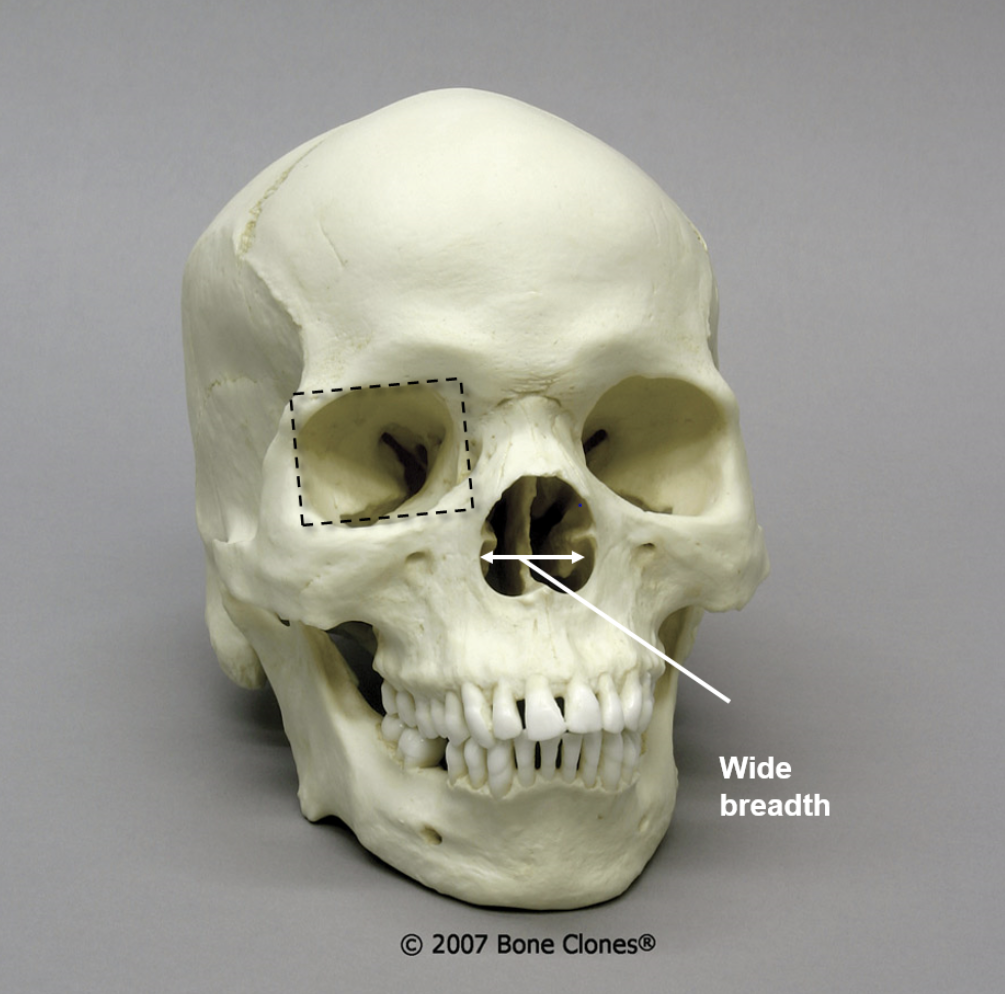
what is the ancestry of this skull?
black
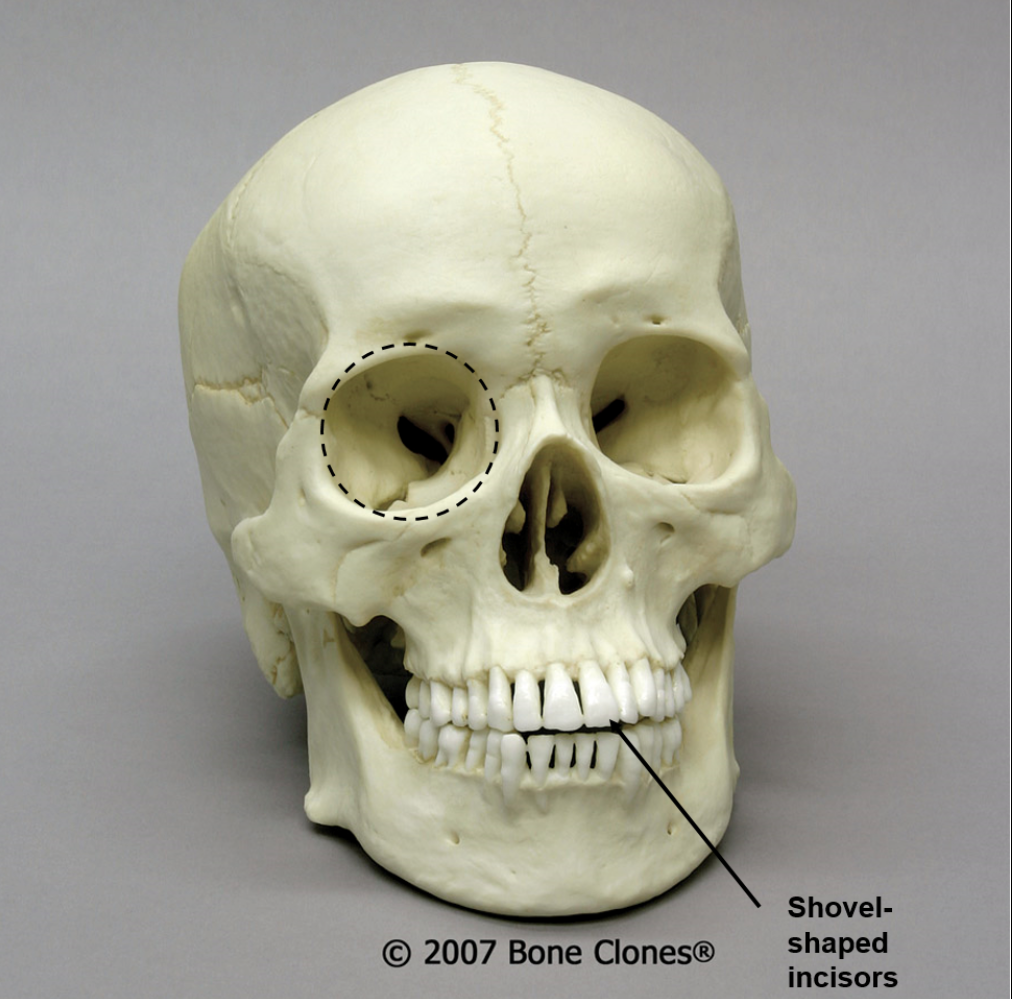
what is the ancestry of this skull?
asian
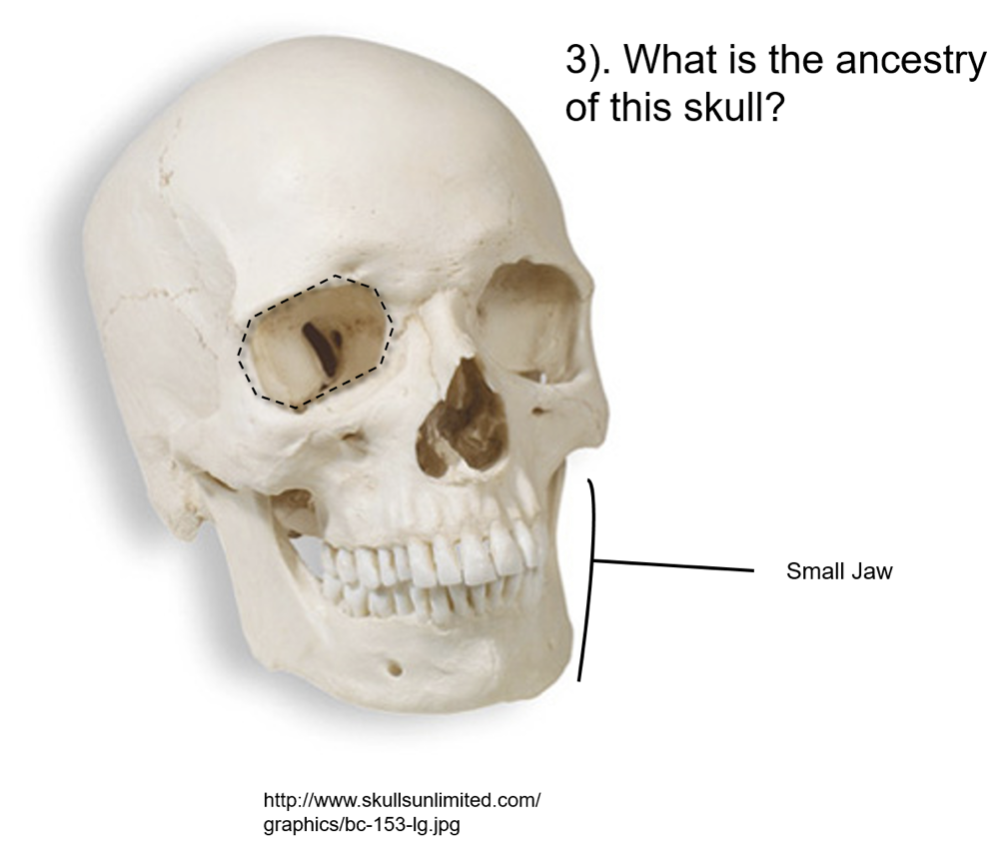
what is the ancestry of this skull?
white
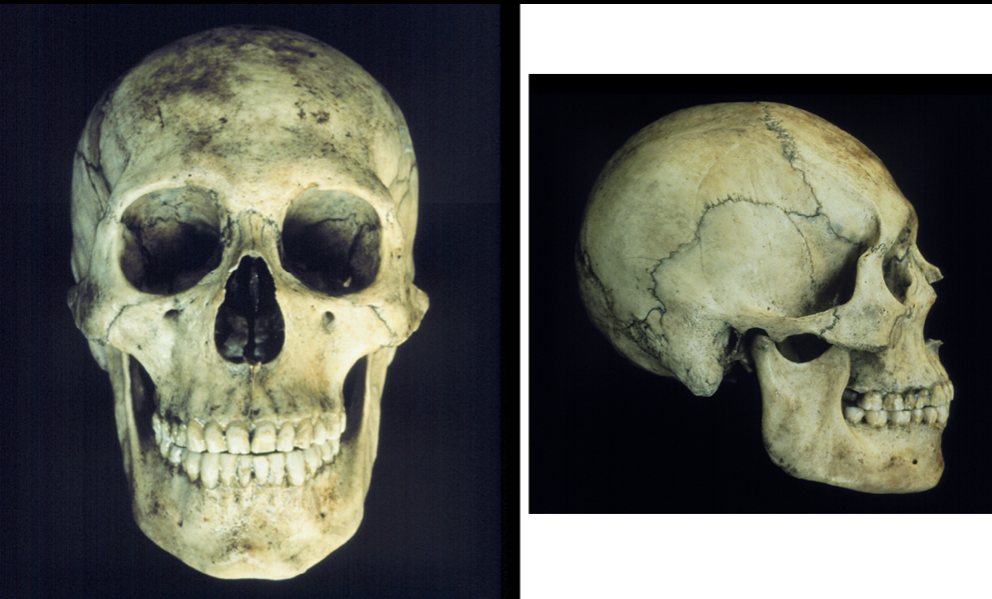
what is the ancestry of this skull?
asian
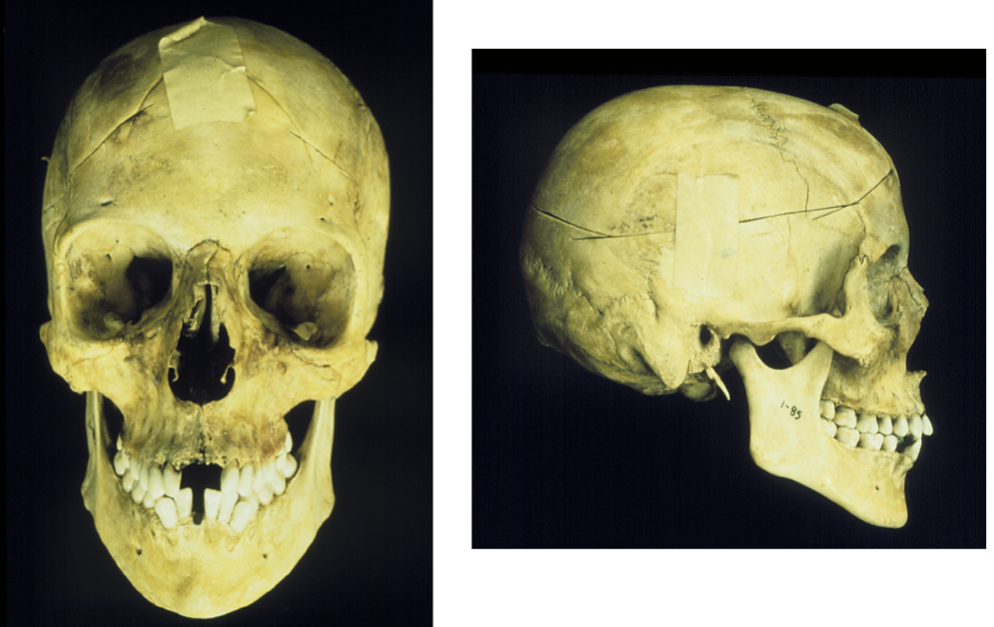
what is the ancestry of this skull?
white
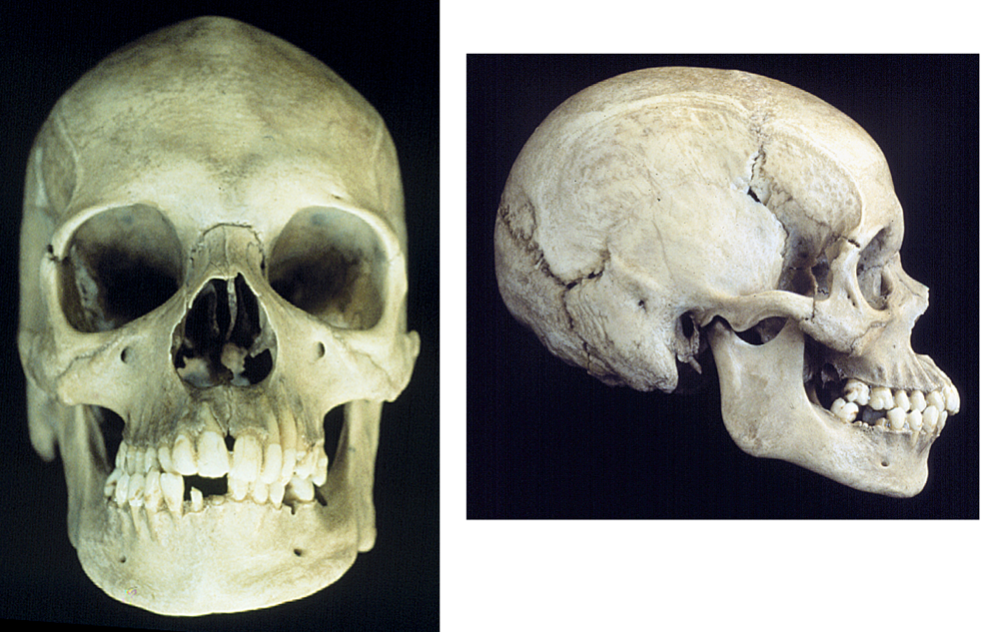
what is the ancestry of this skull?
black
craniometrics
multiply each cranial measurment with/ corresponding coefficients. add all 8 final values together
scientific measurement of the human skull, used to determine biological profiles including
sex, ancestral background, and approximate age. It aids in understanding human evolution and population migration, as well as forensic identification
cline
gradual, continuous change in a specific genetic or physical trait (phenotype) of a species across a geographical area, usually driven by environmental pressures rather than abrupt differences. It illustrates how species show progressive, rather than discrete, variations
what was the 1921 Tulsa race massacre
two-day assault (May 31 – June 1) by a white mob on the prosperous Black Greenwood District in Tulsa, Oklahoma, often called "Black Wall Street". Deputized white citizens burned over 35 square blocks, leaving thousands homeless and killing an estimated 300 people, marking one of the worst incidents of racial violence in US history.
What is the project revolving around the massacre? Purpose of the
project?
find + identify bodies. Ultimate success of memorials “with names attached to the individuals, with a thorough record of, as bad as it is, what their last moments were like.
tulsa race massacre type of violence (weaponry/use of transport)
coordinated white mob attack characterized by arson, widespread gun violence, and the alleged use of aircraft to terrorize residents
who is dr stubblefield?
interim director of the C.A. Pound Human Identification Laboratory at the University of Florida in Gainesville, is also a descendant of survivors of Tulsa race massacre
attributions of sex: adults vs subadults
low rates of success; virtually no difference b/w male and female skeletons before puberty
interpopulation groups
males of 1 population may resemble females of another
seriation: lay out skeletal elements looking for range of variation + pattern w/in population
innominate/pelvic girdle (os coxae) male vs female
greater sciatic notch
sub-pubic angle
ventral arc
inlet/outlet shape
preauricular sulcus
larger + heavier vs smaller + lighter
narrower + deeper vs wider
smaller + narrow vs wider
not present vs present
narrow vs wider
diminished in size vs more pronounced
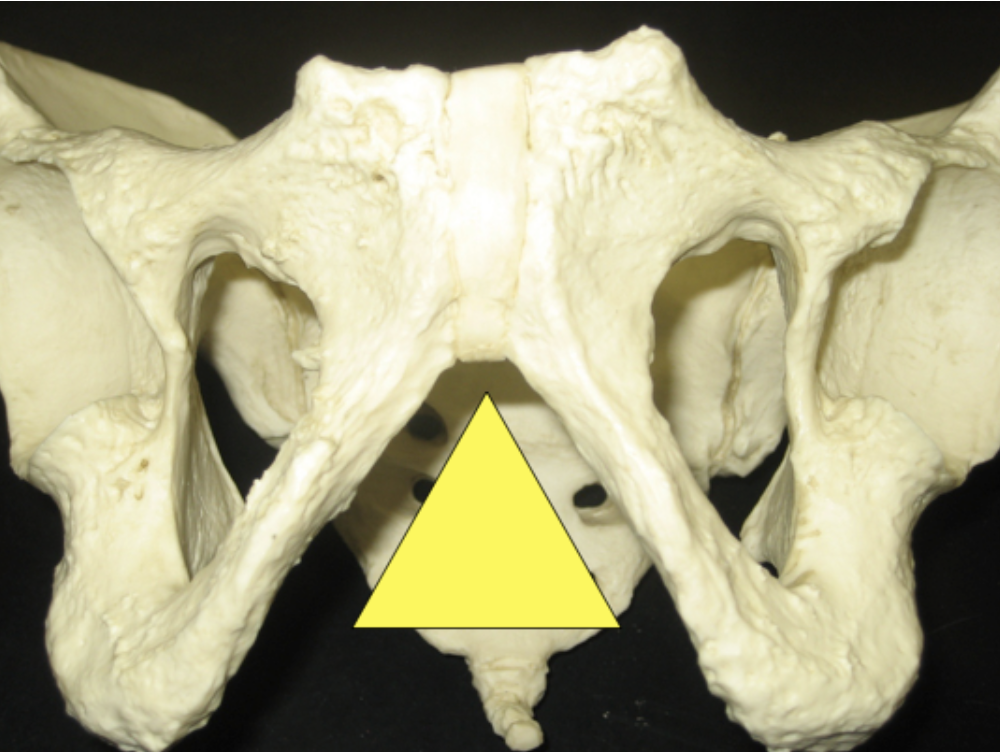
male or female?
male
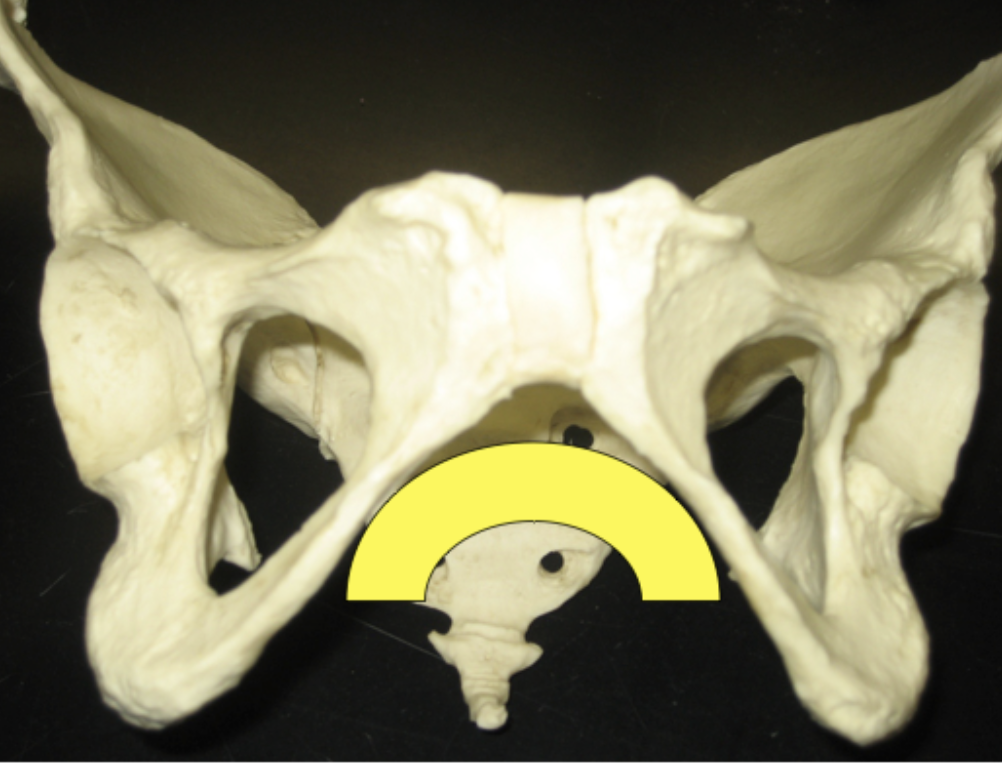
male or female?
female
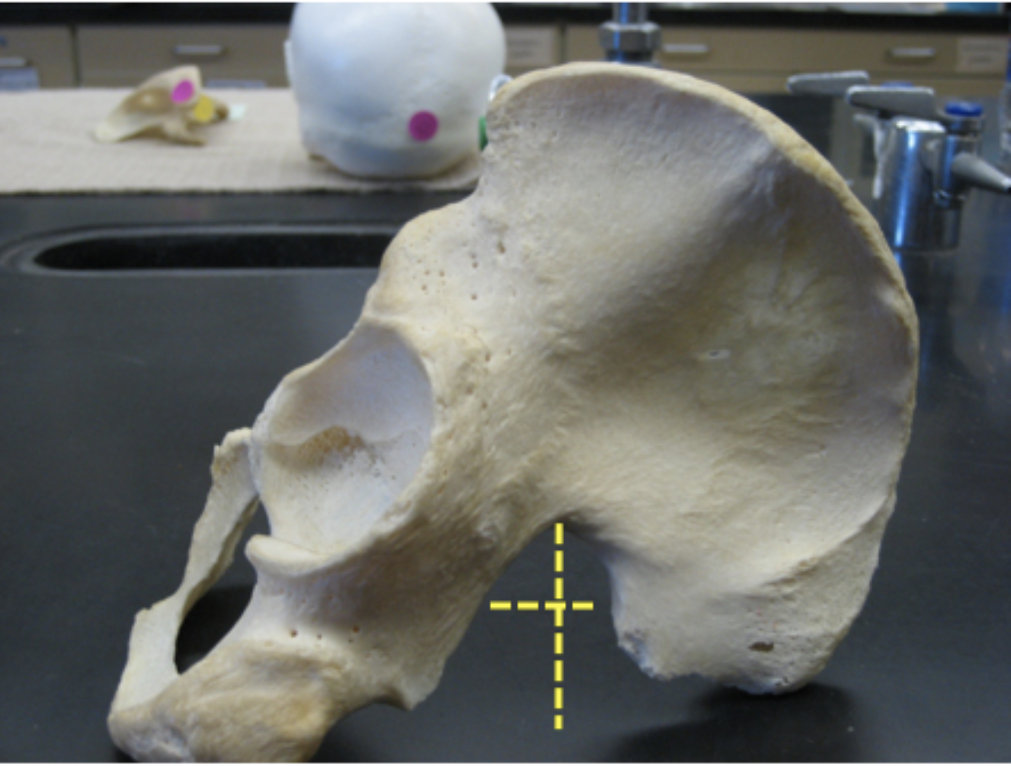
male or female?
male
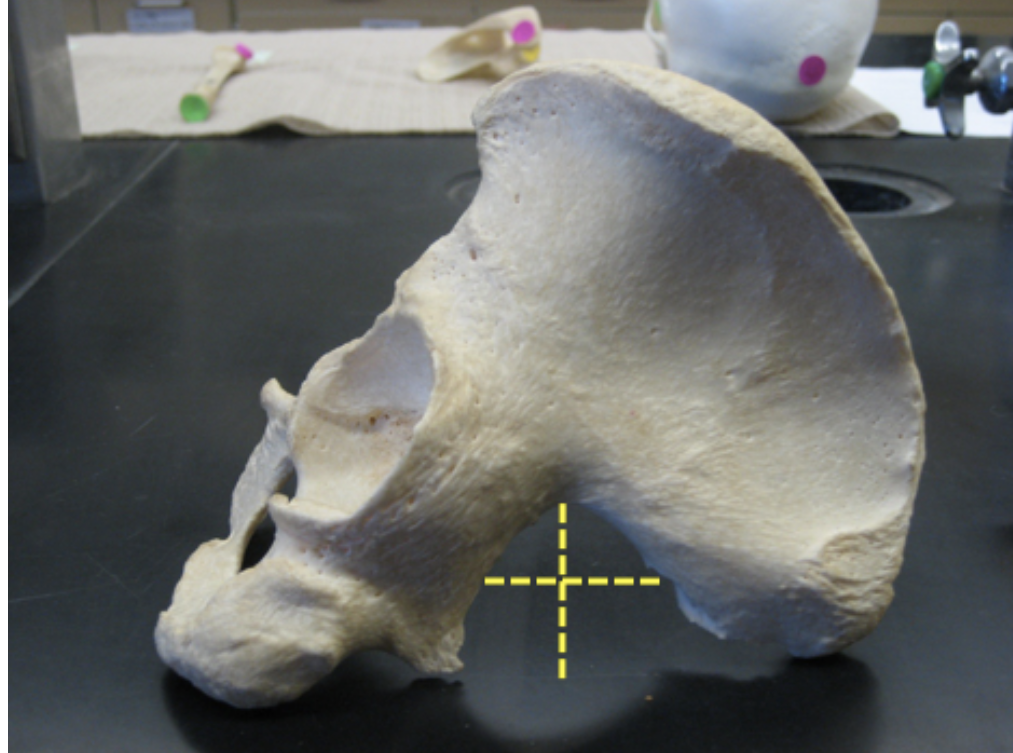
male or female?
female
male skull morphology
overall robusticity
Slope of forehead (frontal)
▪ Supra orbital tours/ridge (brow ridge)
▪ Glabella
▪ Supra orbital margin
▪ Mastoid process
▪ Temporal Line
▪ Occipital tours (and the nuchal crest)
▪ Mandible
Shape of chin (mental eminence)
• Ascending ramus
more
backward
more
more
thick/blunt
long
squarer
broader + prjected
higher, broader, more robust
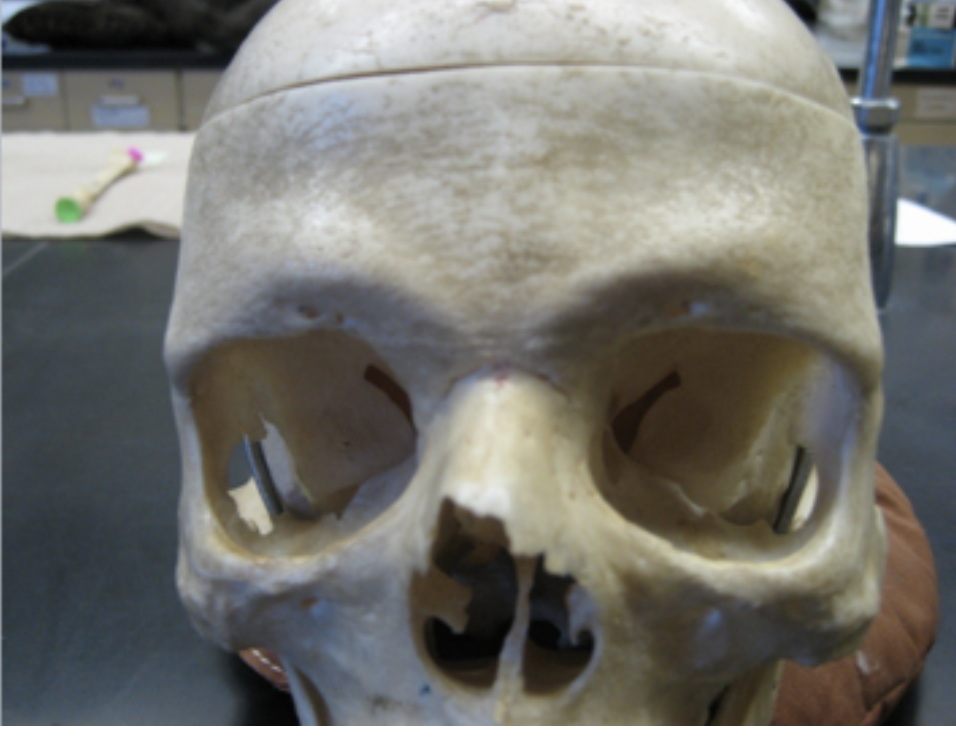
male or female?
male
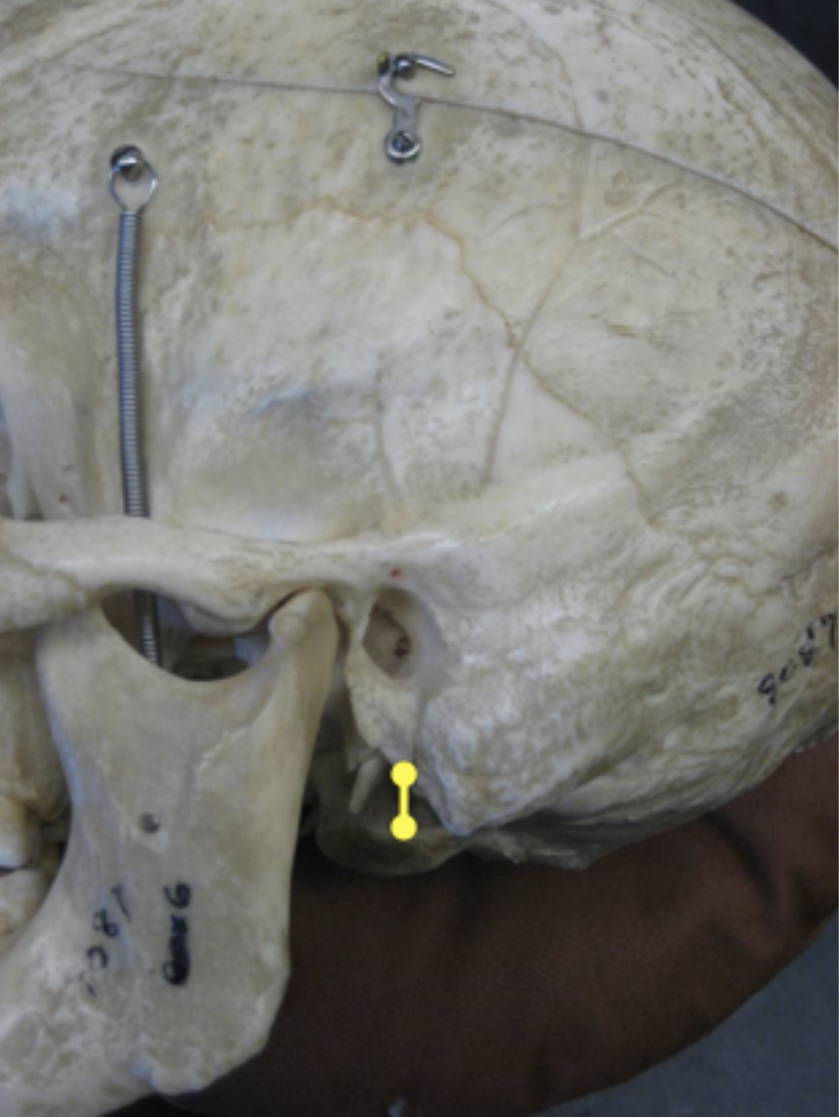
male or female?
male
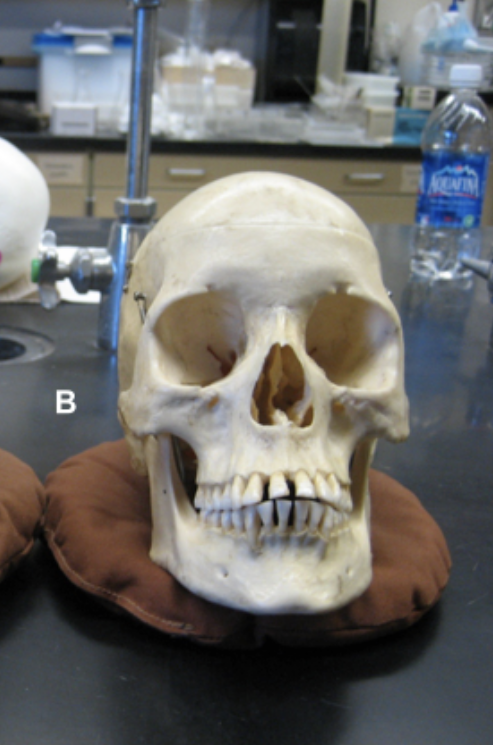
male or female?
female
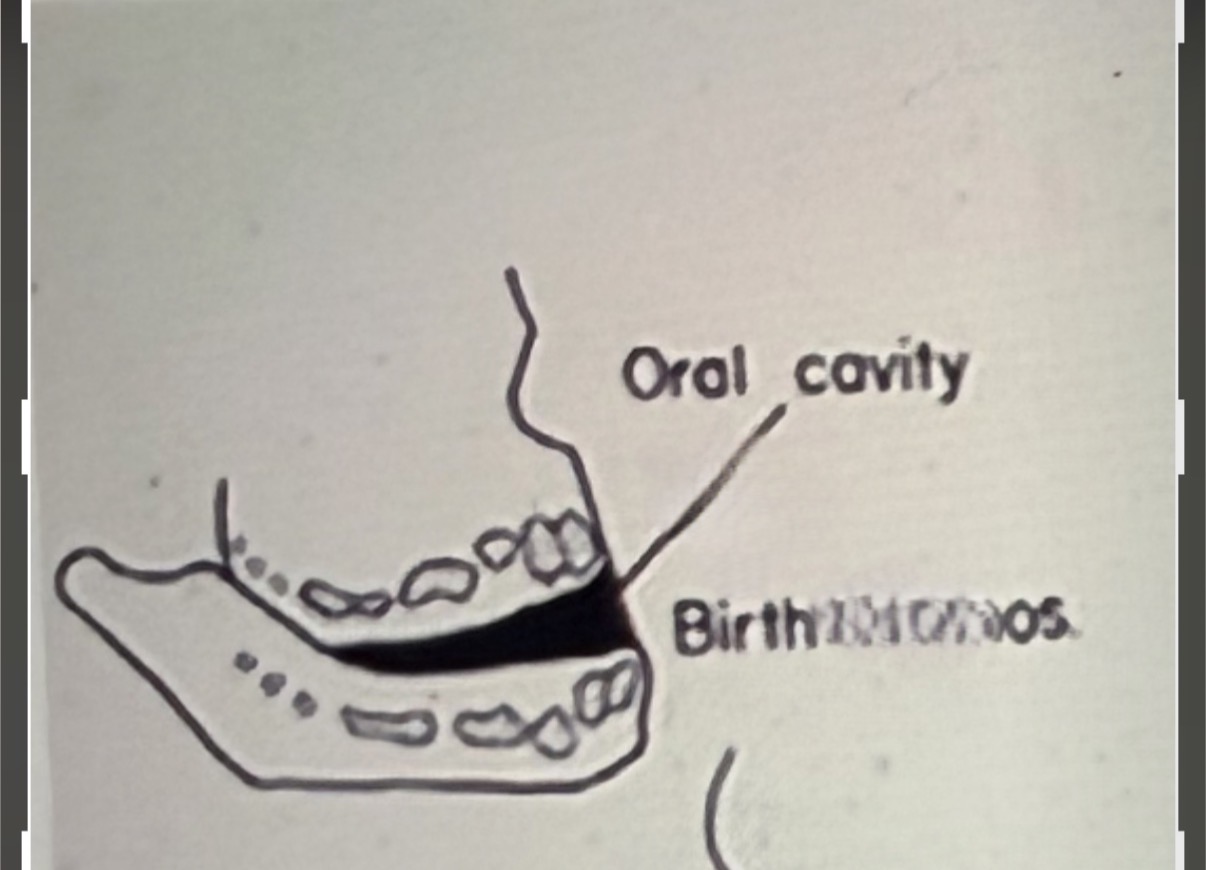
how old?
2 months
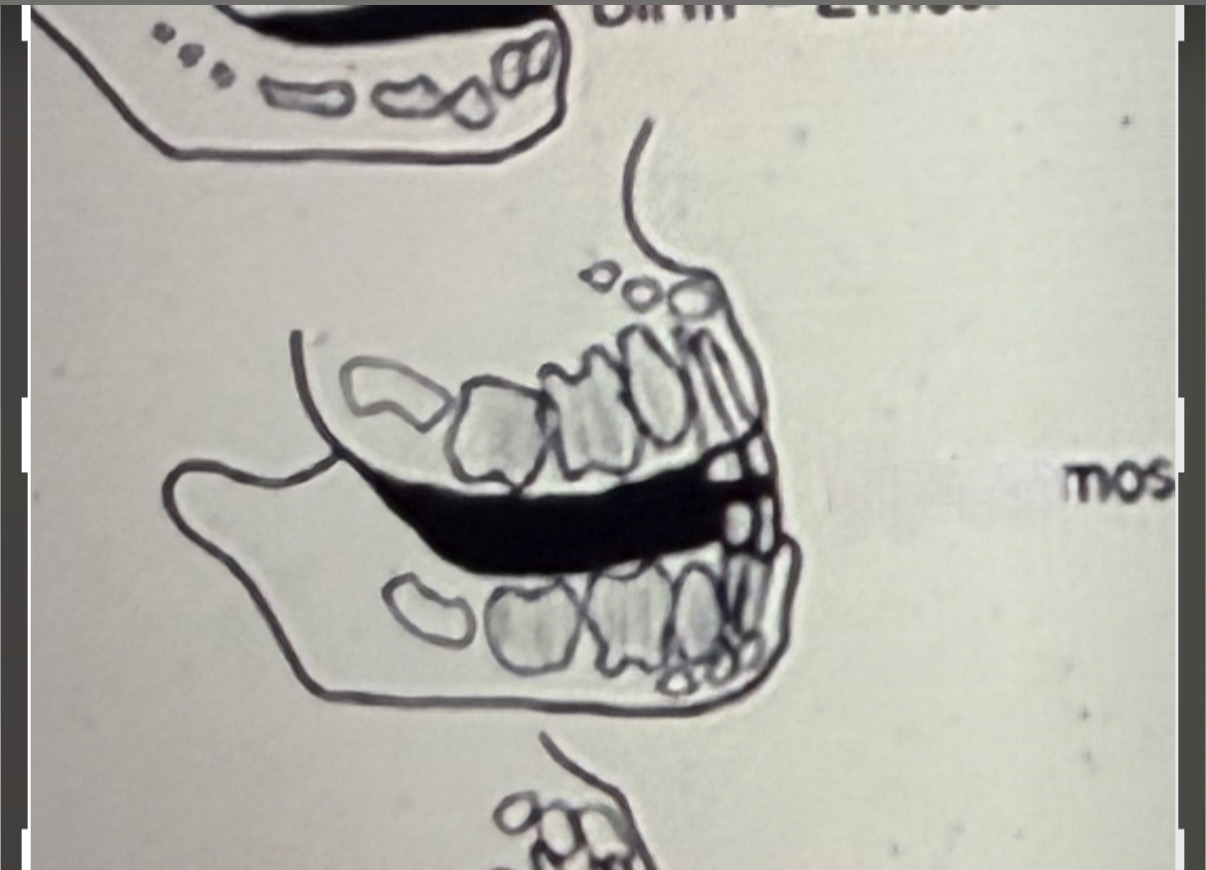
how old?
1 year
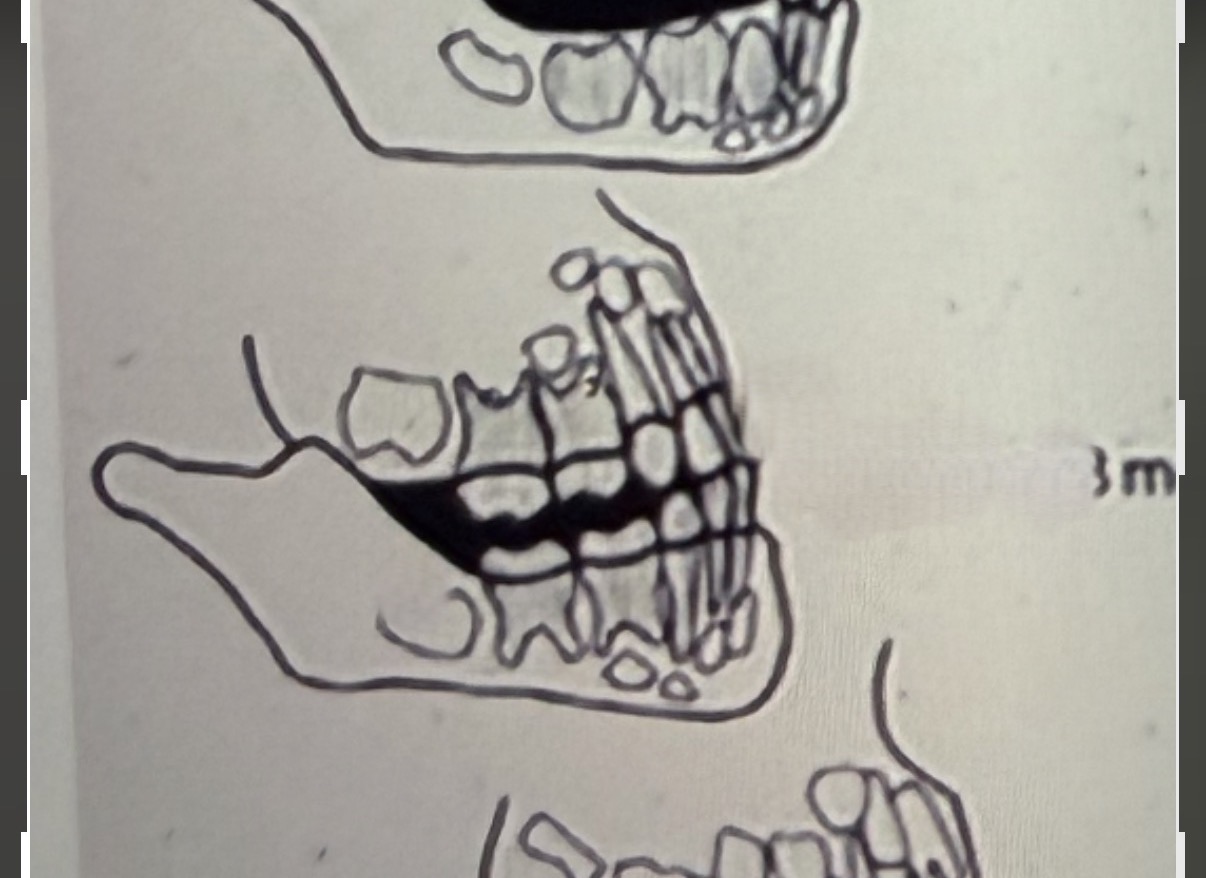
how old?
2 years
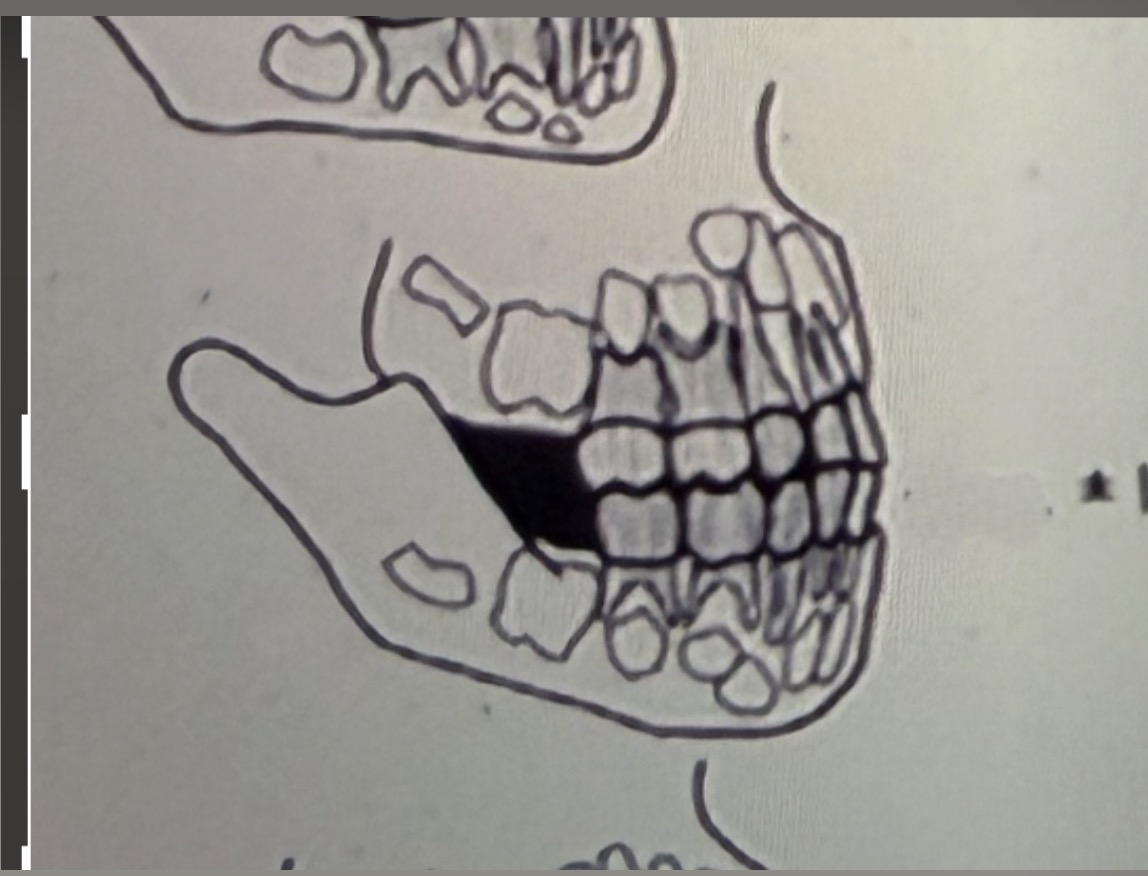
how old?
4 years
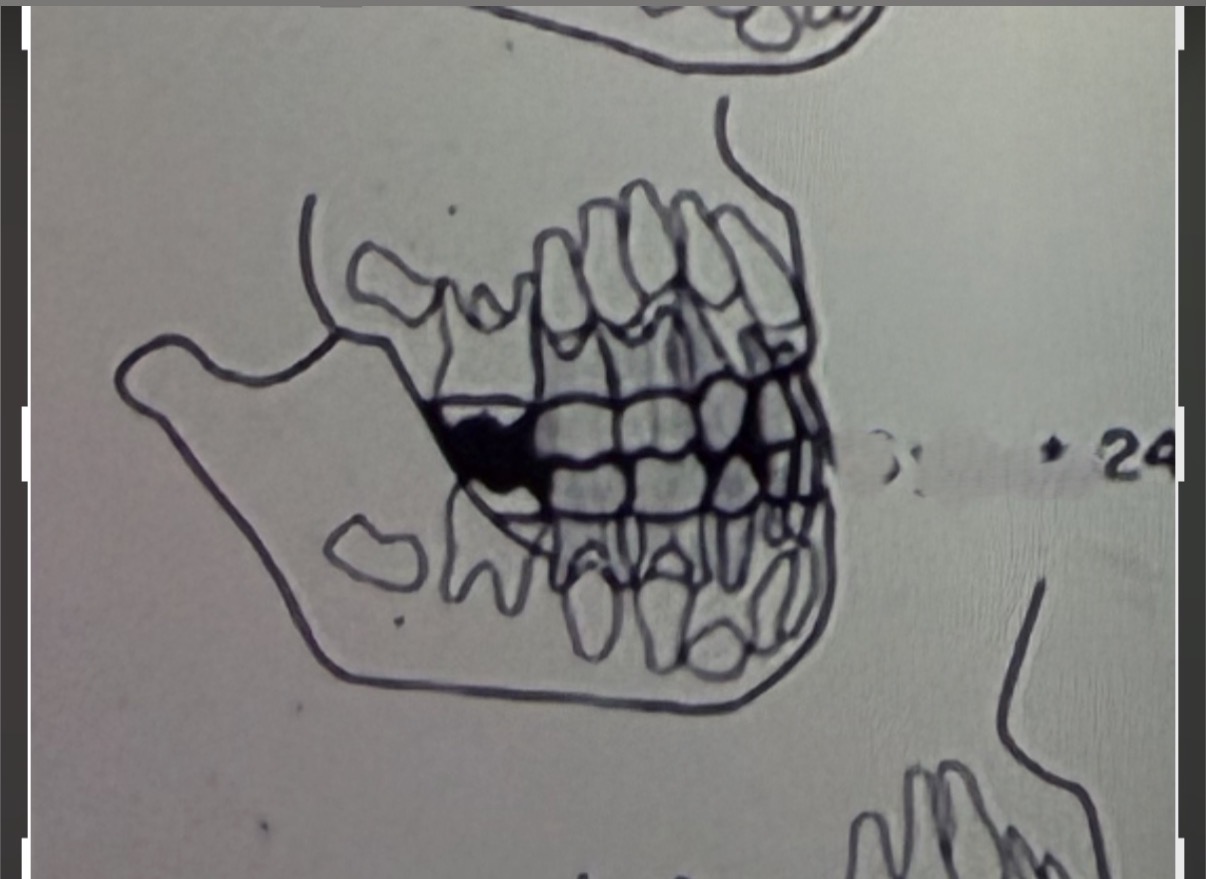
how old?
6 years
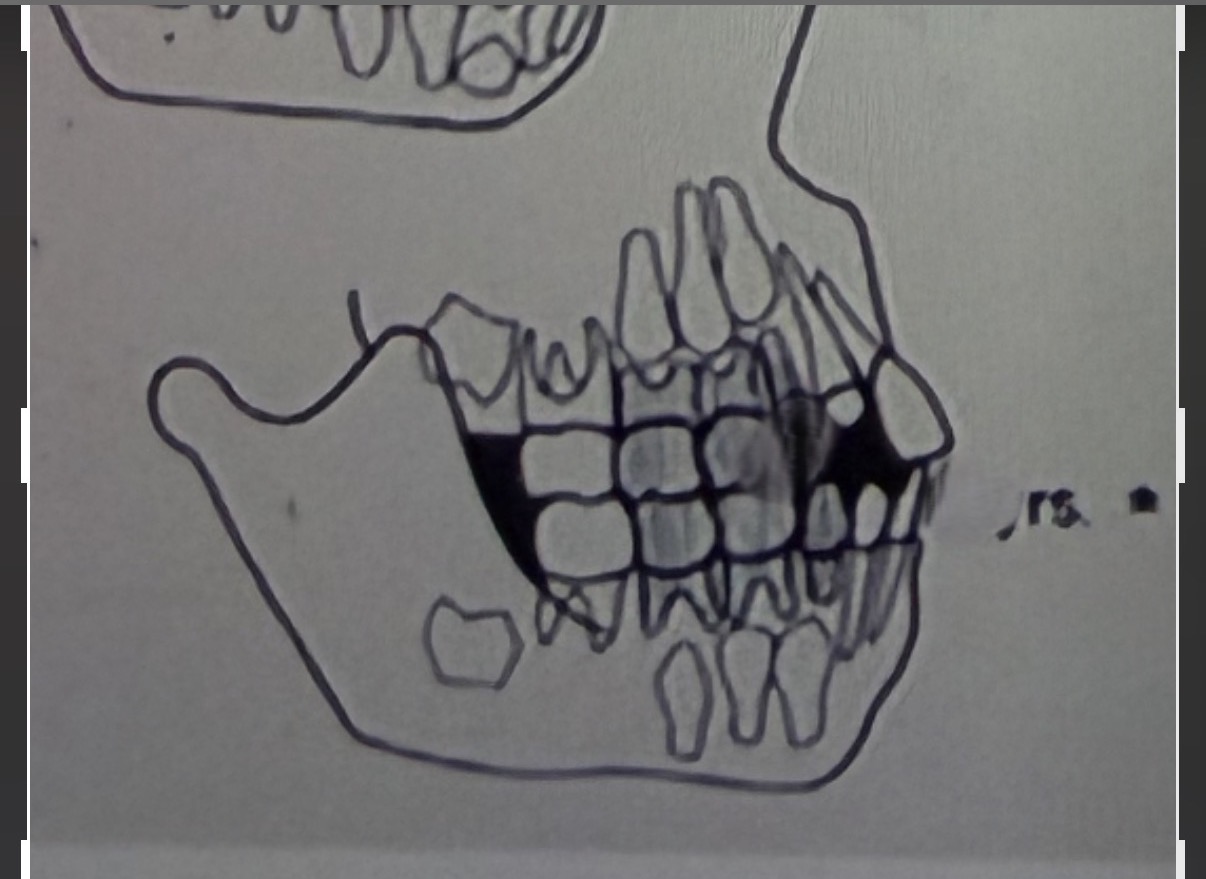
how old?
8 years
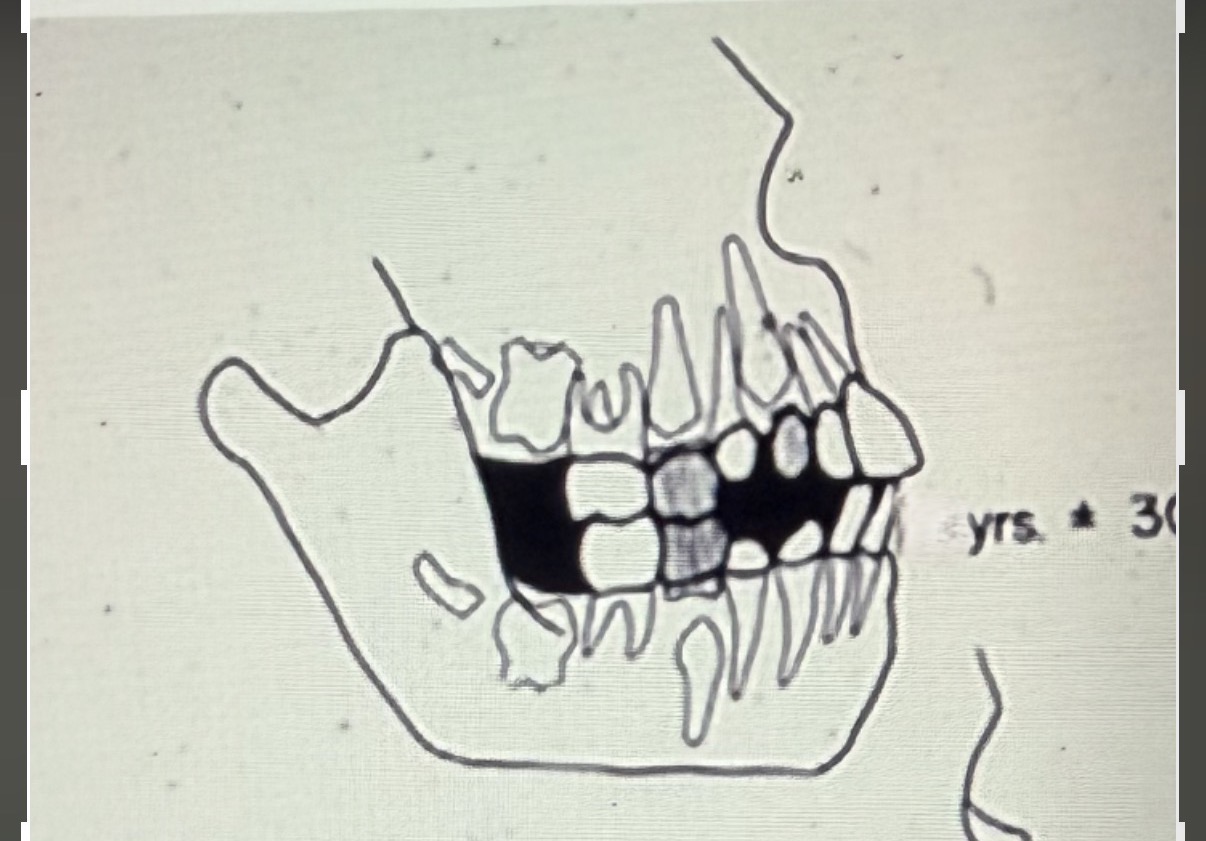
how old?
10 years
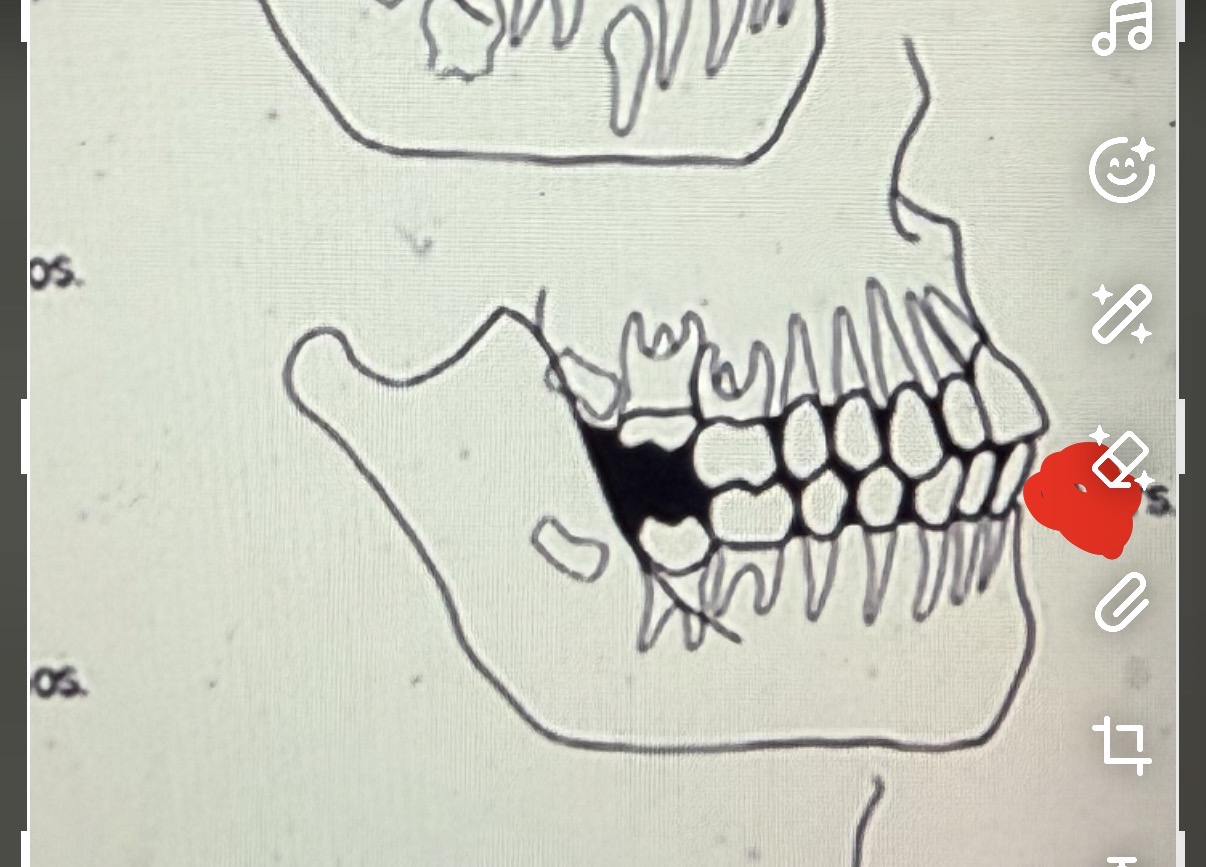
how old?
12 years
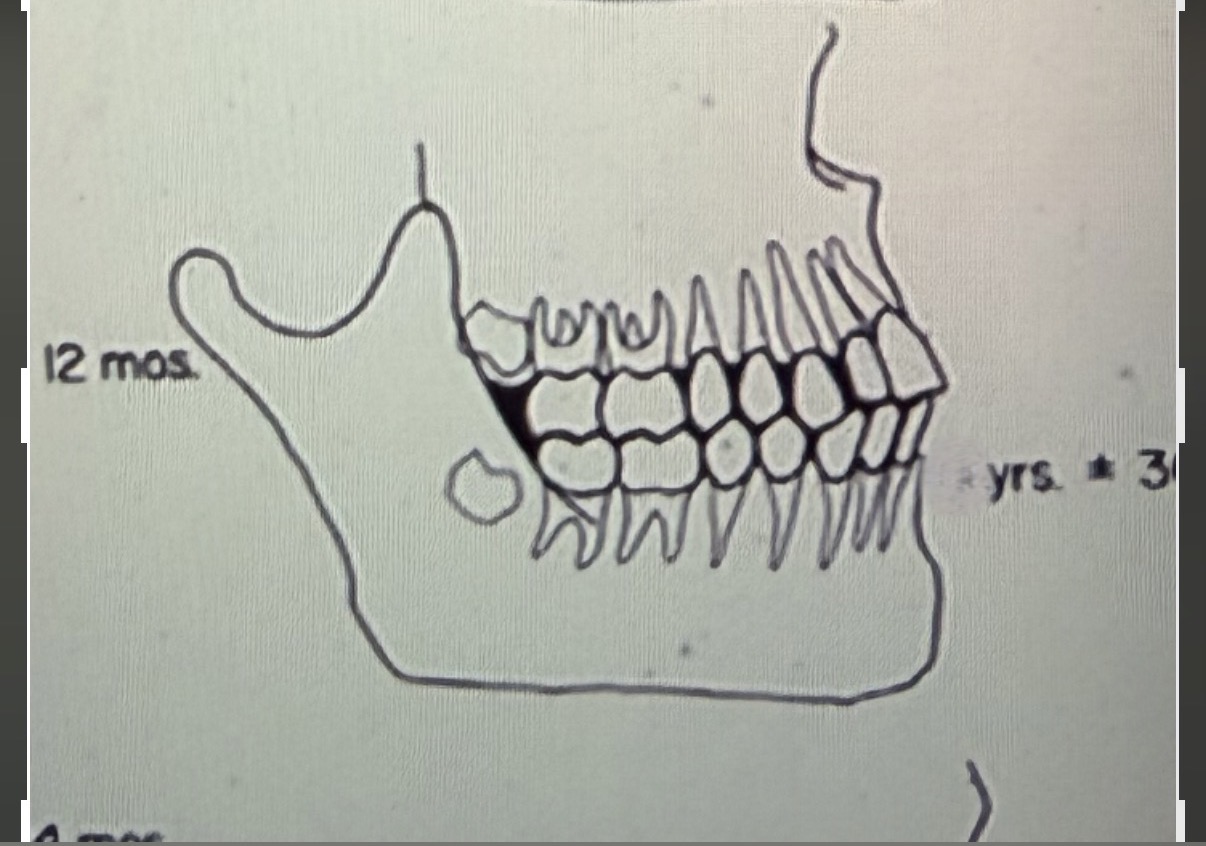
how old?
15 years
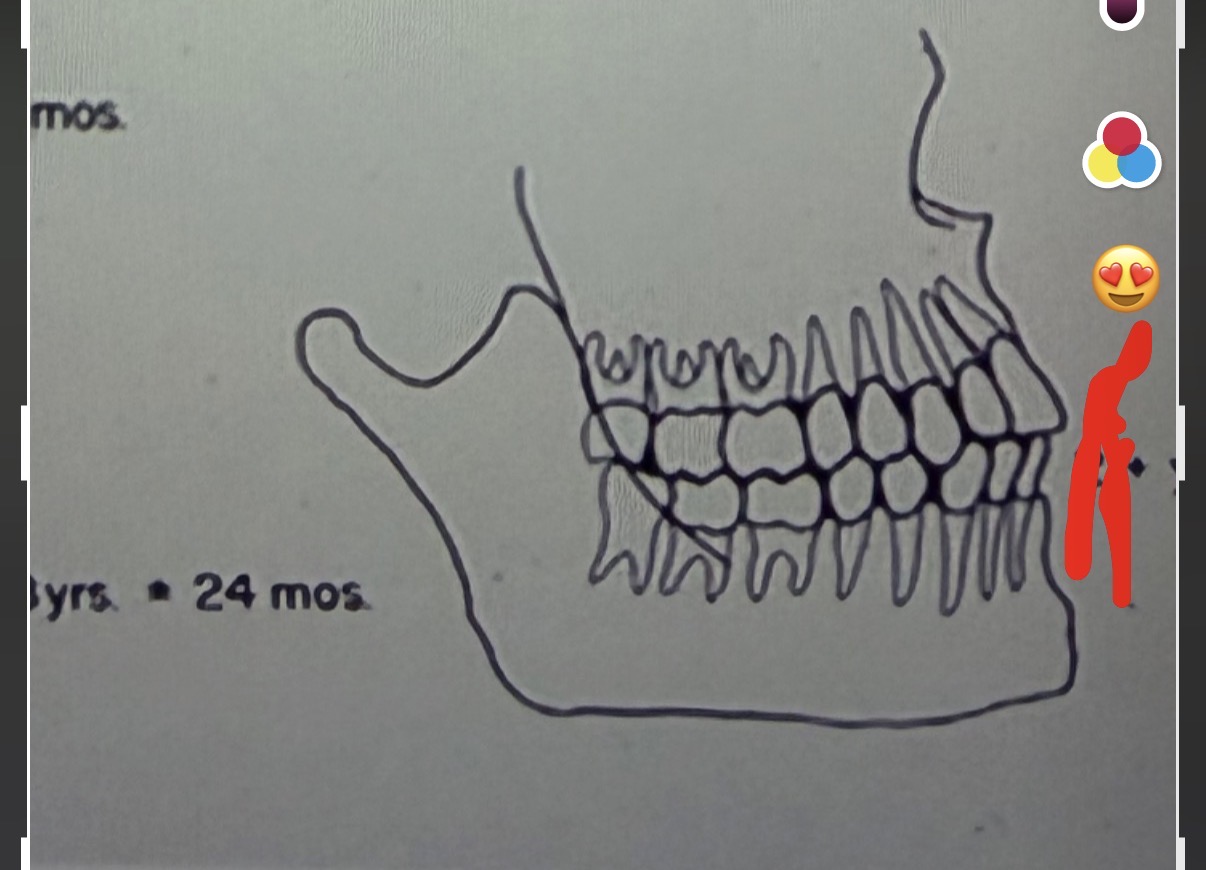
how old?
21+
ossification centers
11th gestation week: 806 centers
birth: 450 centers
adult: 206 bones
epiphyseal fusion
sequence of growth, termination and fusion of bones
stage 1: no union
stage 2: partial closure
stage 3: complete union
recent: line of demarcation
complete: no line
timing may vary but sequence is more stable
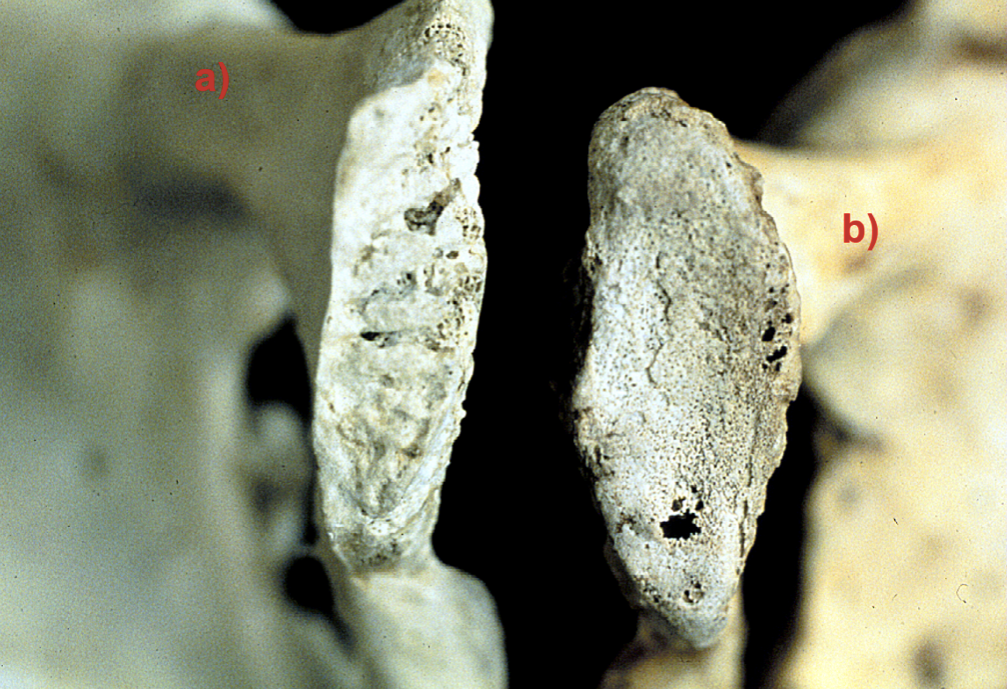
which pubic symphyses is younger?
a
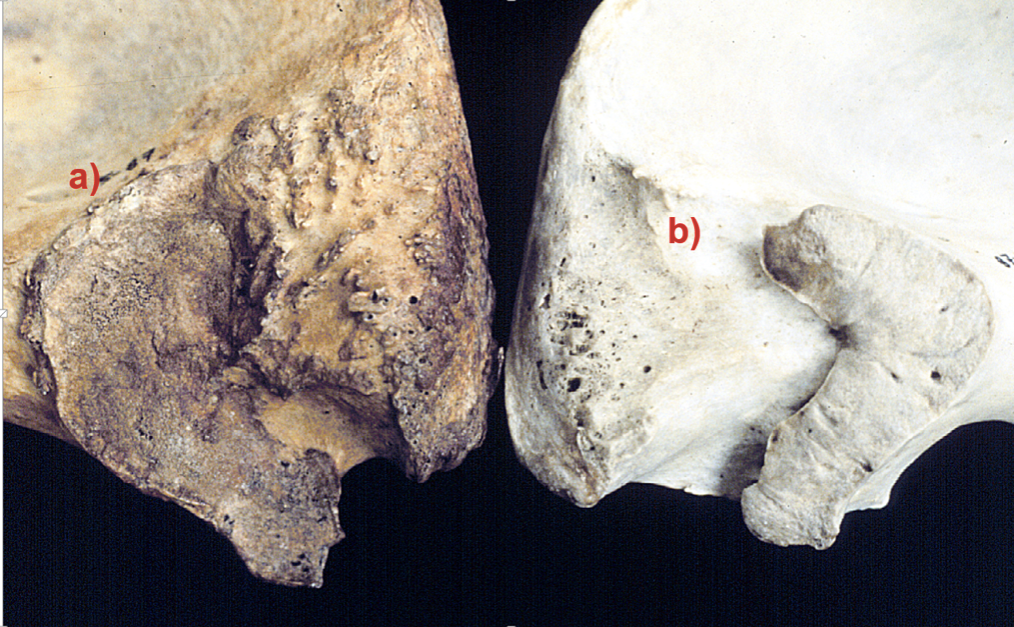
which auricular surface is older?
a
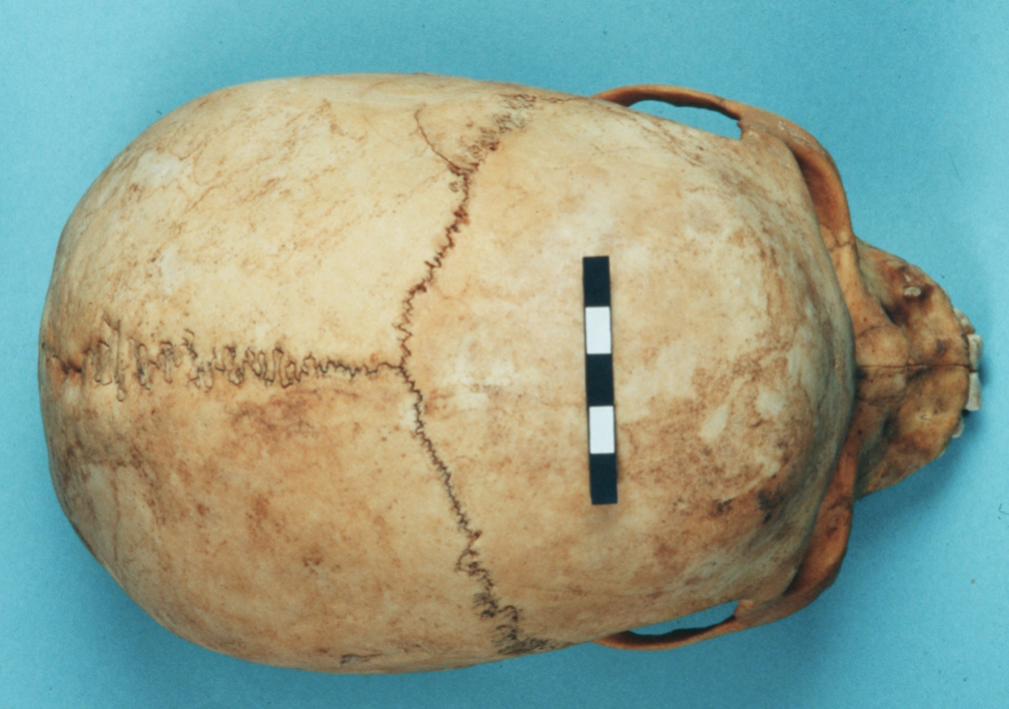
what is the score for the coronal and sagittal sutures sutures of this skull (0-3)?
0
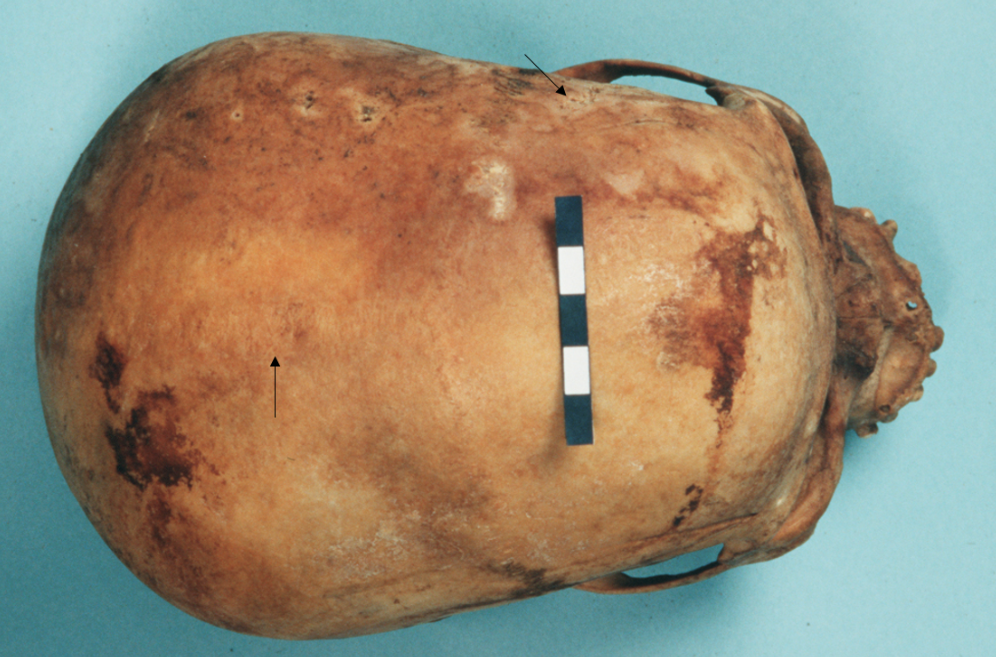
what is the score for the coronal and sagittal sutures sutures of this skull (0-3)?
2
antemortem
before death
skeletal indications of healing
first 13-14 days
groove adjacent to fracture
woven bone deposited
rounding of fracture margins
signs of amputation
osteophytic processes
resorptive pitting
perimortem
around the time of death
bones retain moisture + resilience
clean fractures w/ transmission of fractures rather than shattering
fracture margins sharp, radiating/fracture lines evident, fracture lines straight, color of fractured edges same as rest of bone
postmortem
after death
animal activity: eating, gnawing, chewing, crushing, diapering of remains
natural actions: freezing, thawing, fluvial action, abrasion, sun bleaching, root damage
mechanical activity
marine exposure: bleaching, loss of bone cortex, algae or barnacles deposited
human actions: excavation techniques, trophy or souvenir remains, attempts to remove identifying features by acid or other means, religious/cultural activity
bones have loss of moisture + resilience, distinguished by differences in coloration, brittle nature of fracture
fracture margins rough, no evidence of radiating fractures, fracture lines uneven + frequently discontinuous, color at fracture margin usually white
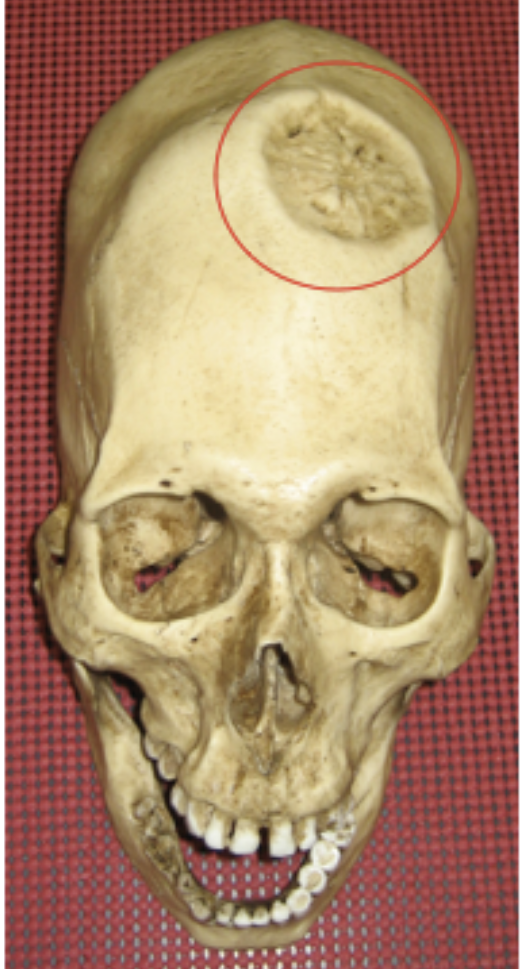
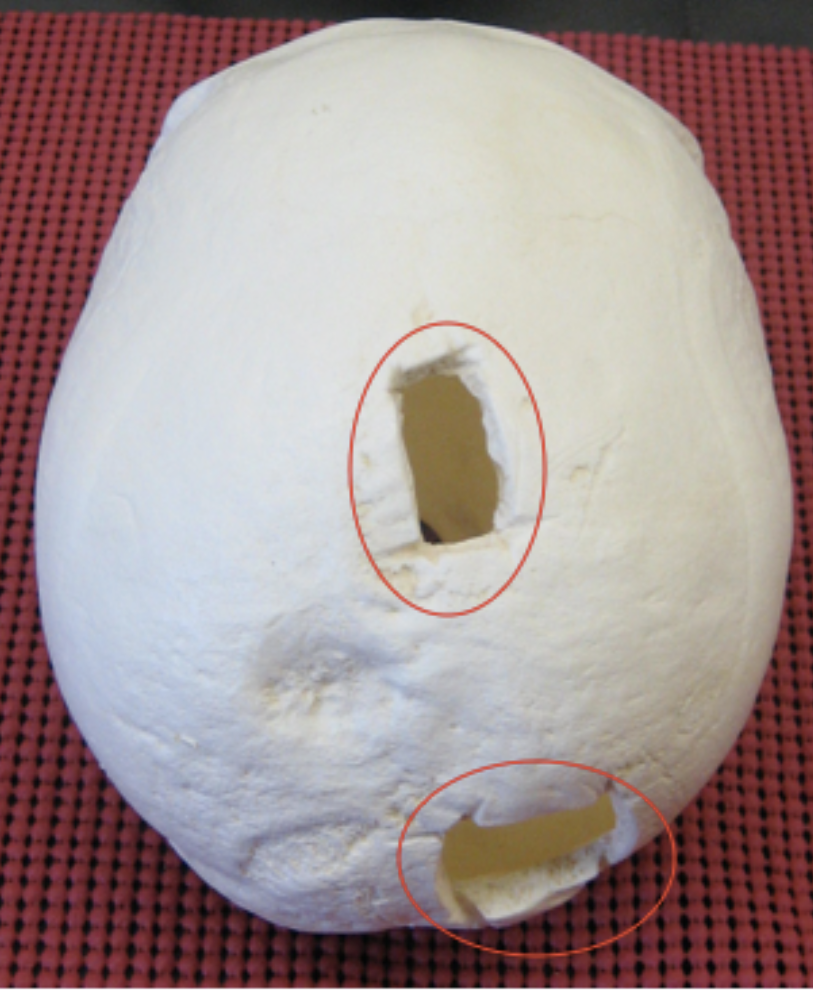
is this injury antemortem, perimortem, or postmortem?
antemortem
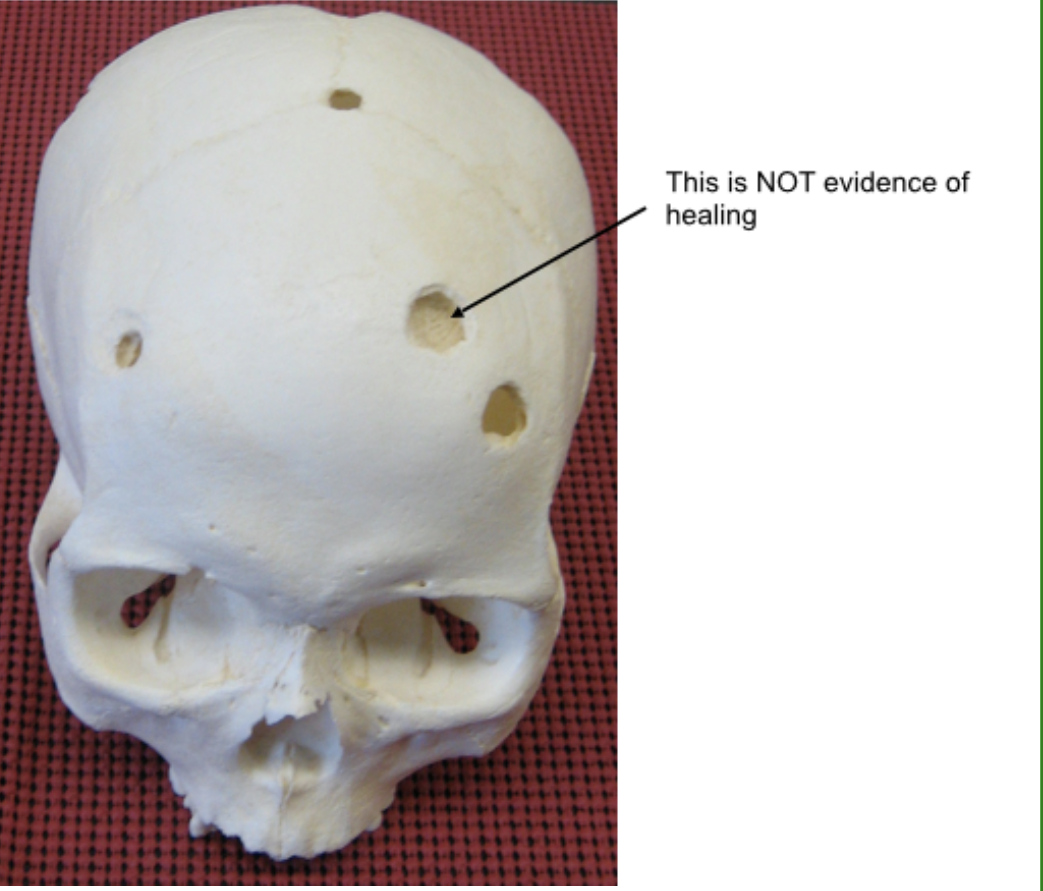
is this injury antemortem, perimortem, or postmortem?
perimortem
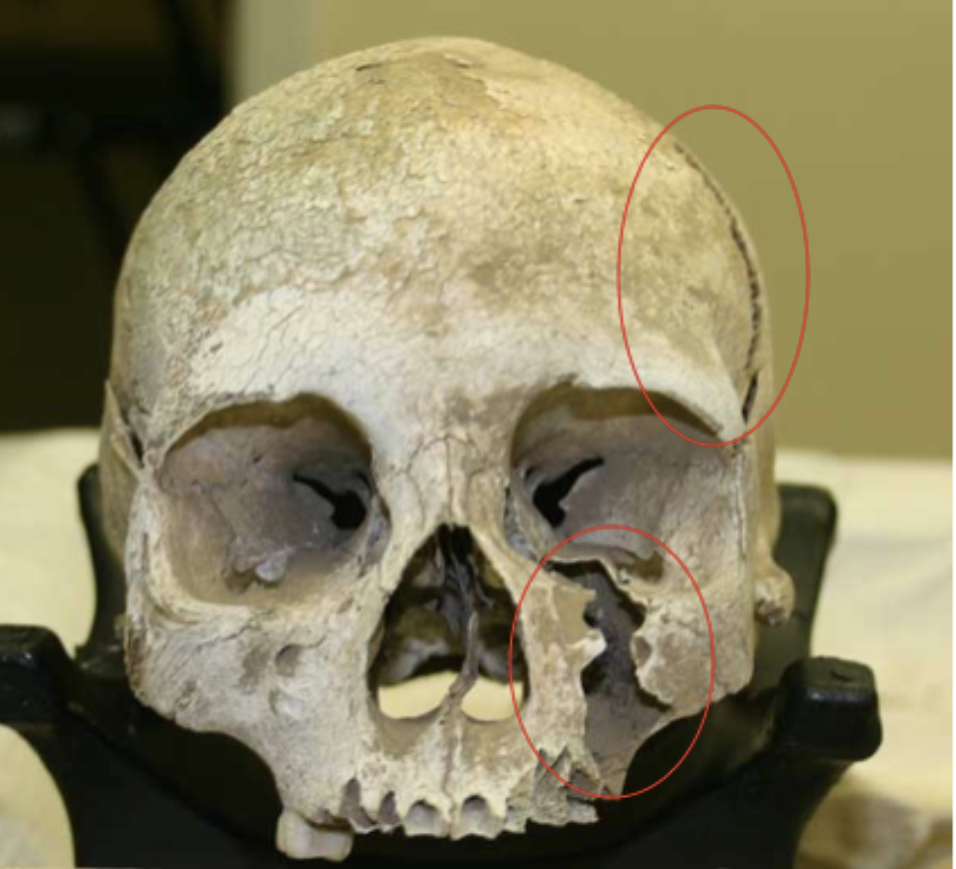
is this injury antemortem, perimortem, or postmortem?
perimortem
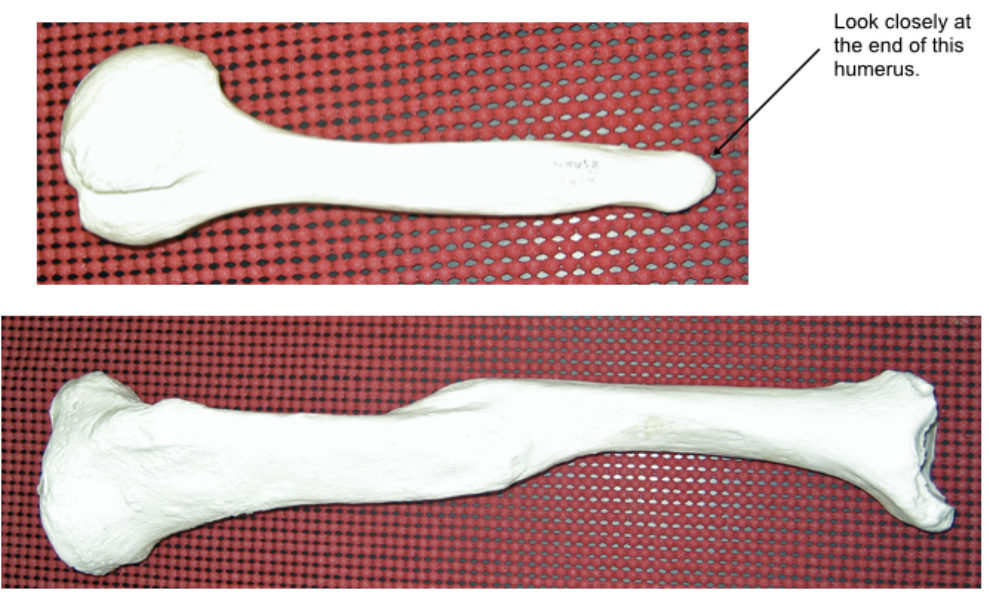
is this injury antemortem, perimortem, or postmortem?
postmortem
is this injury antemortem, perimortem, or postmortem?
antemortem
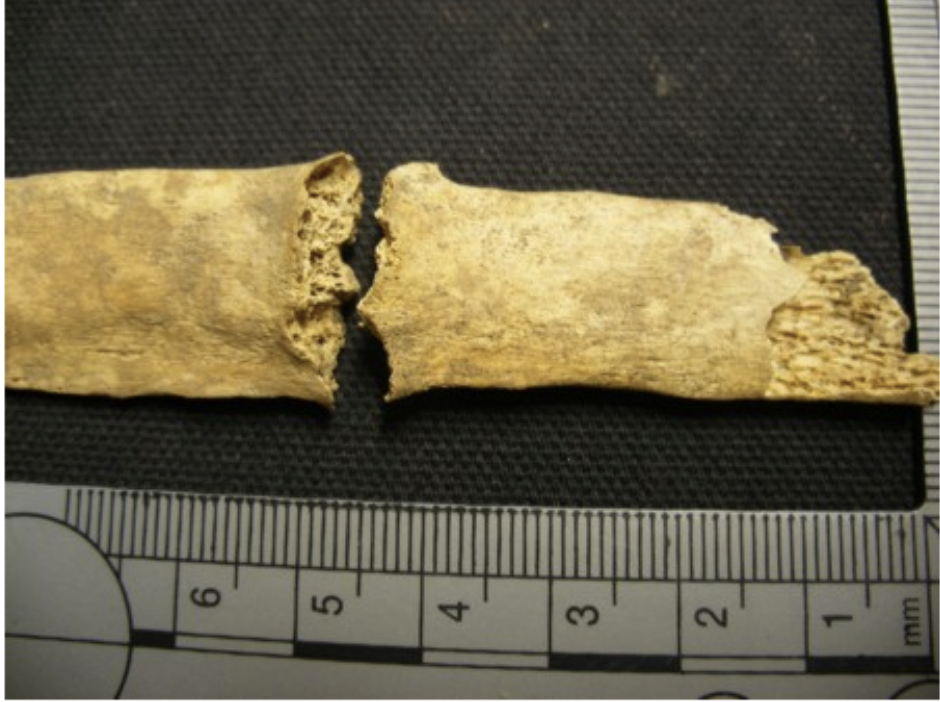
is this injury antemortem, perimortem, or postmortem?
perimortem
blunt force trauma
relatively low velocity impact over relatively broad area
includes blows from objects (sticks, rocks, pipes, etc), fists/feet, motor vehicle accidents, trains, planes
distinguished from gunshot trauma + sharp force trauma
sharp trauma
stabbing vs cutting
often torso/neck
cannot measure cut to get dimensions of blade
can distinguish single vs double bladed knives
projectile trauma
gunshot injuries
concentrated projectile w/ relatively high velocity
extent of damage depends on force of impact (speed/weight of bullet)
blast trauma + strangulation
no definable point of impact
multiple splinters of bone
decapitations + dismemberments
fracture of hyoid
entry wounds
cookie cutter appearance externally
clean edge in most cases
beveling as bullet leaves bone
exit wounds
external beveling
often more ragged appearance + may be larger
may not occur due to loss of force suffice to carry bullet out of body
tension vs compression
bone will pull apart leaving rough surface
breaks first
fracture first appears
bone will break at approximately 30 degree angle (oblique) leaving shattered surface
torsion/shearing
twisting- fracture surfaces + concomitant lines to spiral down long axis of bones
immobilization of one segment of bones
direct vs indirect
exact point of impact from concentrated, high energy force
ex. hammer blow
rough/jagged edges
happen at a distance from impact caused by bending twisting or compression
broken shoulder from falling on outstretched hand
oblique/spiral patterns
rules
linear fracture will to cross previously existing fracture (unhealed) or unfused suture
fracture will take path of least resistance by releasing energy down previous fracture/suture line
if fracture A reaches but does not cross fracture B, it more than likely happened after fracture B
radiating/linear fractures
make up 70% of skull fractures
initiated by stresses of outbidding the skull some distance from impact site
will usually point to impact site but may not reach it
usually extend to base of skull
may involve 1 table more than the other
will usually not cross earlier fracture
result from explosive release of energy
beat bullet to opposite side of skull
concentric (hoop) fractures
circular fracture lines that form around a central point of impact
high-velocity, blunt, or ballistic trauma, often indicating the point of impact.
greenstick fractures
incomplete break where the bone bends and cracks on one side only,
occur from trauma, typically a fall where a child lands on an outstretched hand, bending the bone
butterfly fractures
comminuted, high-energy bone fracture where two oblique fracture lines create a large, triangular (wedge-shaped) fragment, resembling a butterfly, between the main proximal and distal bone segments
from bending
car accidents/falls
compression fractures
bone failure due to crushing forces, resulting in reduced bone height, cortical shell collapse, or vertebral wedging
falls, accidents, blunt force
tension fractures
tiny, hairline cracks
repetitive impact
torsion fractures
coiled, twisting line wrapped around a bone, similar to a corkscrew
caused by rotating forces
comminuted fractures
bone breaks, splinters, or is crushed into three or more pieces.
Caused by high-energy trauma like car accidents or falls
burnt bone/temperatures
minimal heat: scorched/smoked appearance
less than 800 degrees celsius: incomplete incineration + slight shrinkage
greater than 800 degrees celsius: white to bluish fray in color + up to 25% shrinkage

what fracture?
butterfly

what trauma?
sharp

what trauma?
projectile

what trauma/fracture
sharp/radiating

what trauma?
blunt

what fractures?
radiating, concentric

what fractures?
transverse, complete, greenstick, comminuted

