Beyond Positivism: 18th and 19th Century Art in Europe
 Call Kai
 Learn
Learn Practice Test
 Spaced Repetition
 Match
Match Flashcards
 Knowt Play
1/10

There's no tags or description
Looks like no tags are added yet.
Name | Mastery | Learn | Test | Matching | Spaced | Call with Kai |
|---|
No analytics yet
Send a link to your students to track their progress
11 Terms
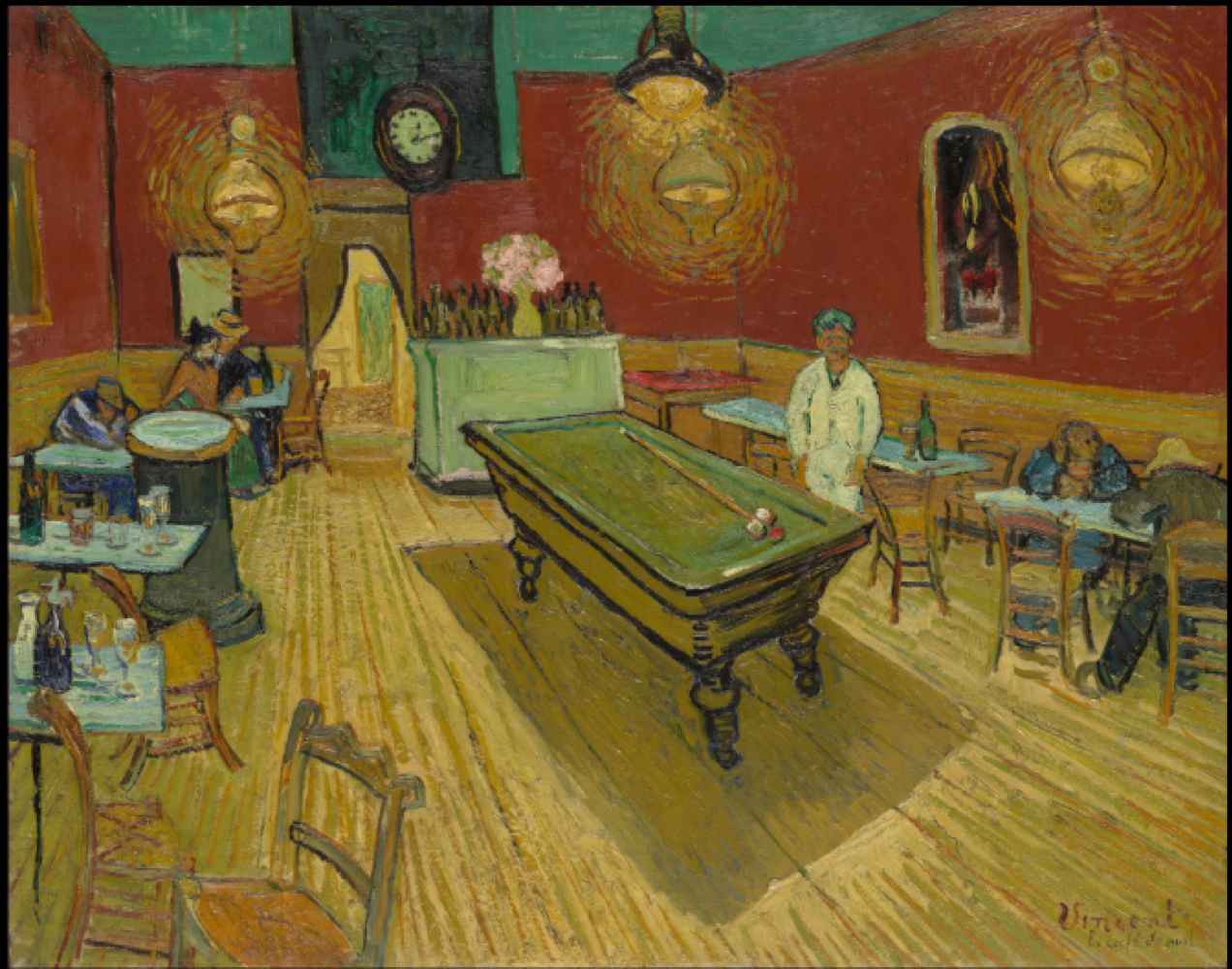
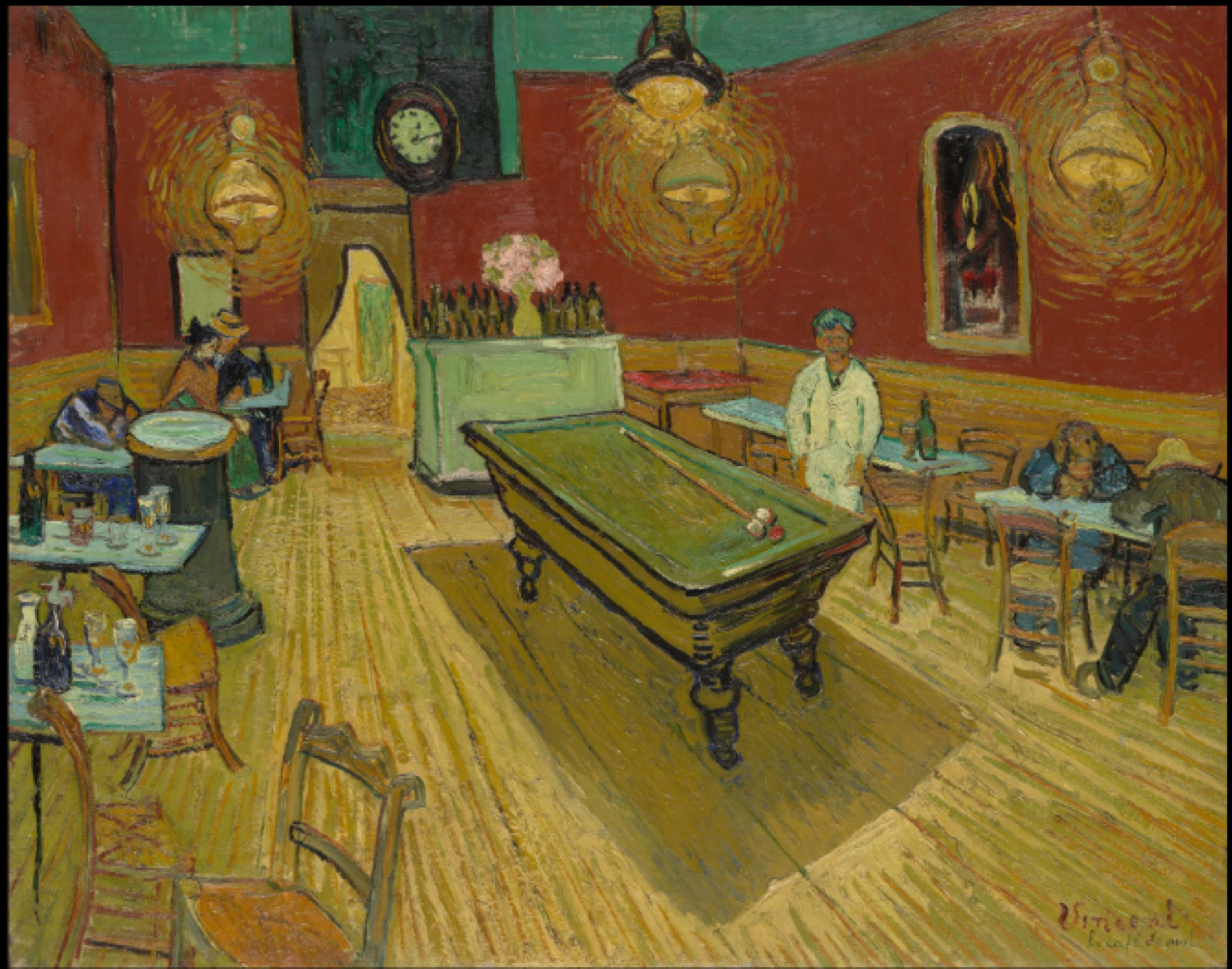
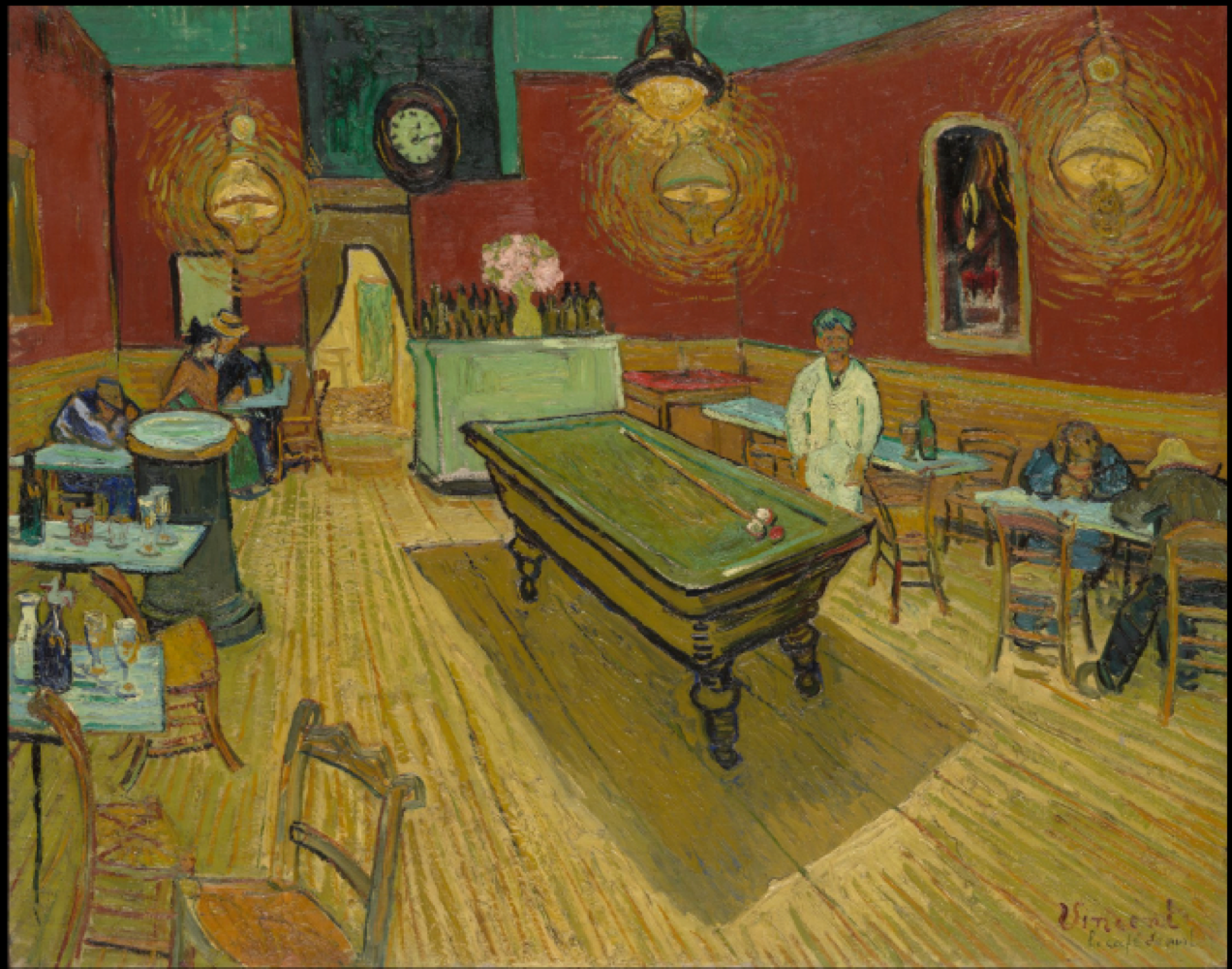
Vincent Van Gogh (1853-1890), Dutch
The Night Cafe, 1888 (New Haven, Yale University Art Gallery)
Describe the context before Van Gogh
Symbolist art Theory, Positivism, and artistic Utopia, new technique of painting: exotic colors, painters mark, and impressionism
Describe the early context of Van Gogh
searching and uncertainty in his life, early art: struggles of working class, went to France and saw remains of impressionist art, come to grips with world around him through painting: rooted in tangible world with artists state of compassion, intense color=psychological realism
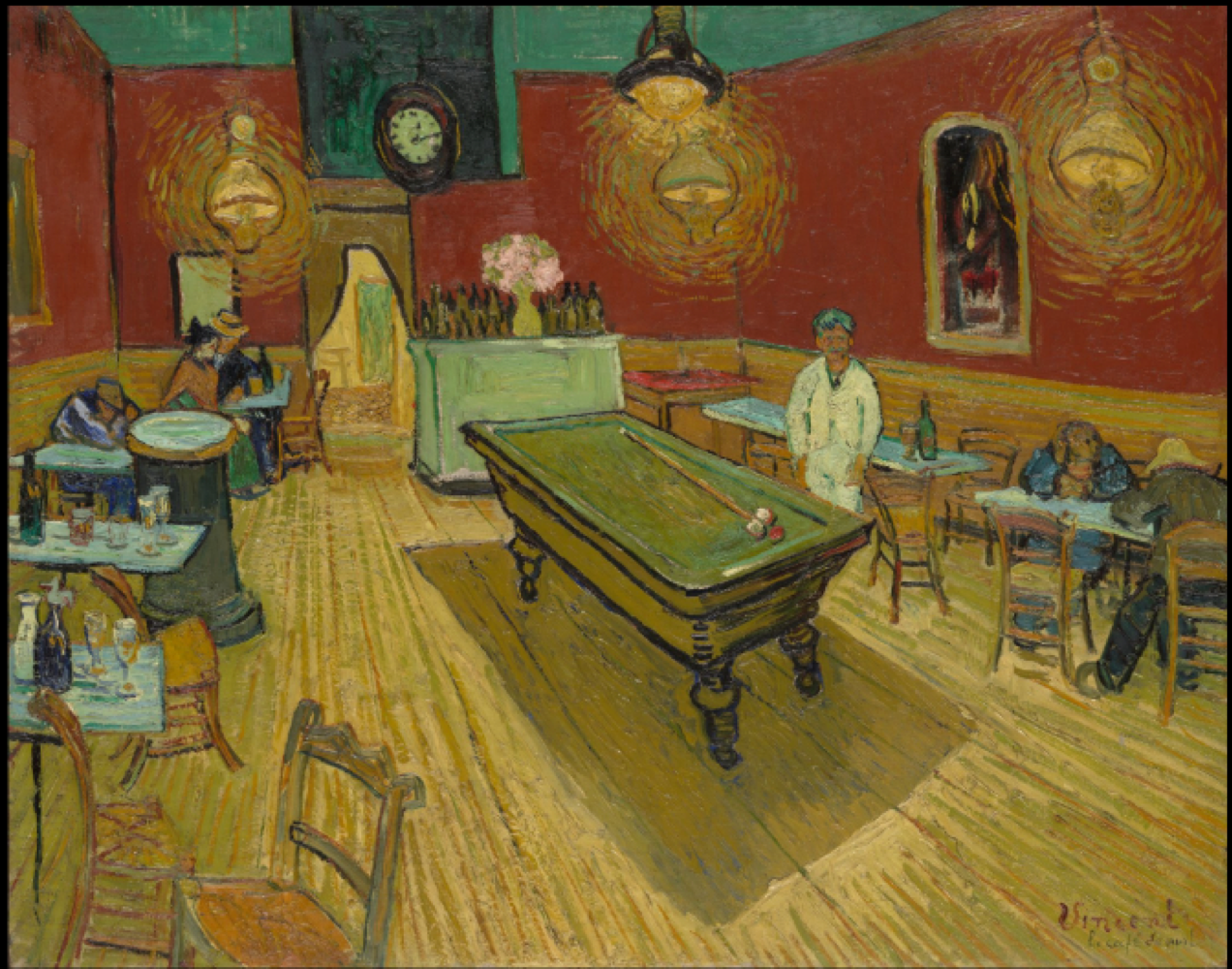
describe the overall composition in the night cafe painting and its significance
symbolist approach to modern painting, uneven lines converge to door and red walls= sense of anxiety, table is looming shadow, fiery glare, oppressive mood trapped in mundane setting, haphazard chairs, interrelated painting with bedroom scene= contrasting state of mind and psychological dialogue,
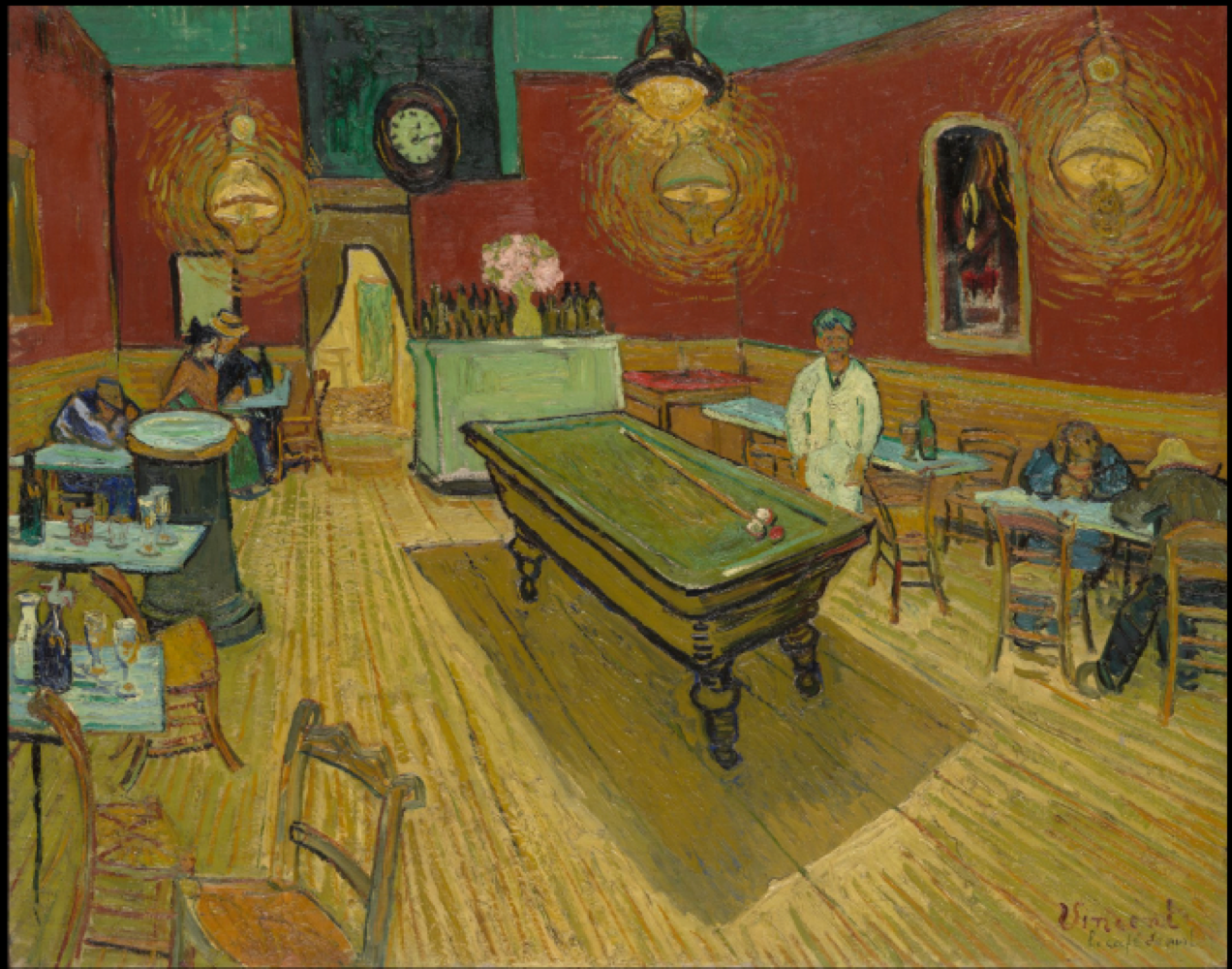
Describe the color and painting technique in night cafe and its significance
flaming palette, yellow and red=symbolic furnace where one can ruin oneself and desolation and discard, color=plight of irrational mind, floorboards clotted with pigment=sculpted into 3D
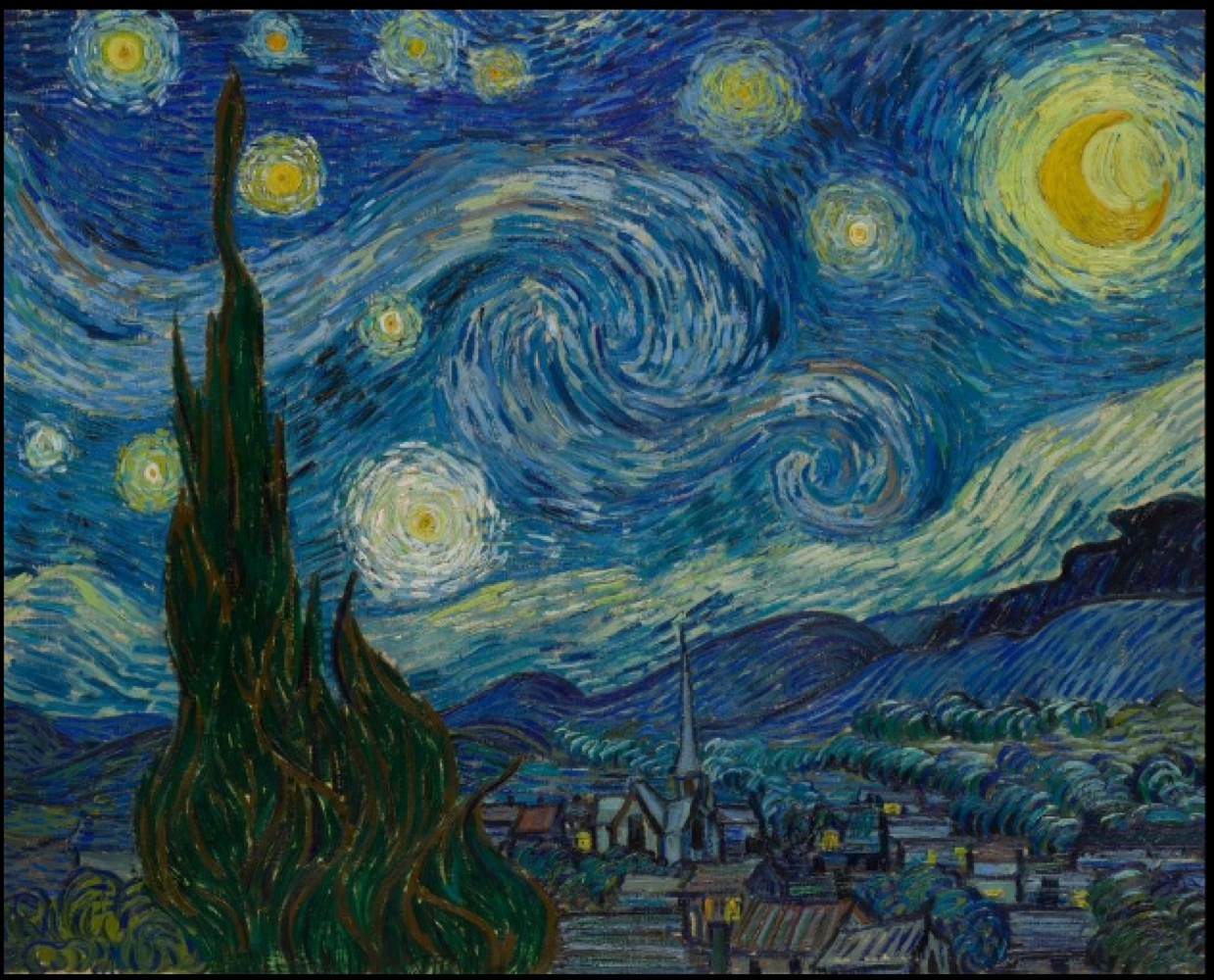
Vincent Van Gogh (1853-1890), Dutch
Starry Night, 1889 (New York, Museum of Modern Art)
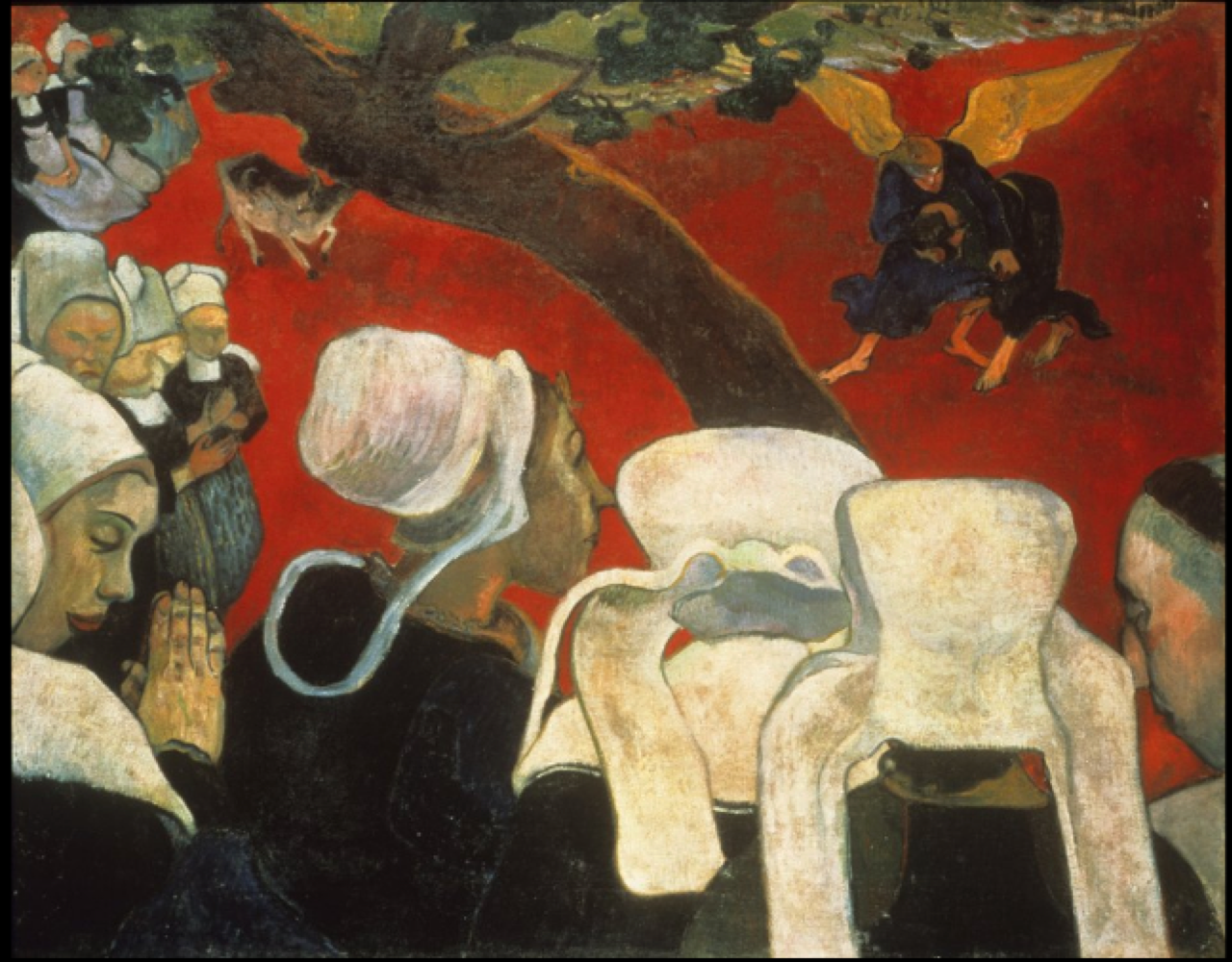
Paul Gauguin (1839-1903), French
Vision After the Sermon (Jacob and the Angel), 1888 (Edinburgh, National Gallery)
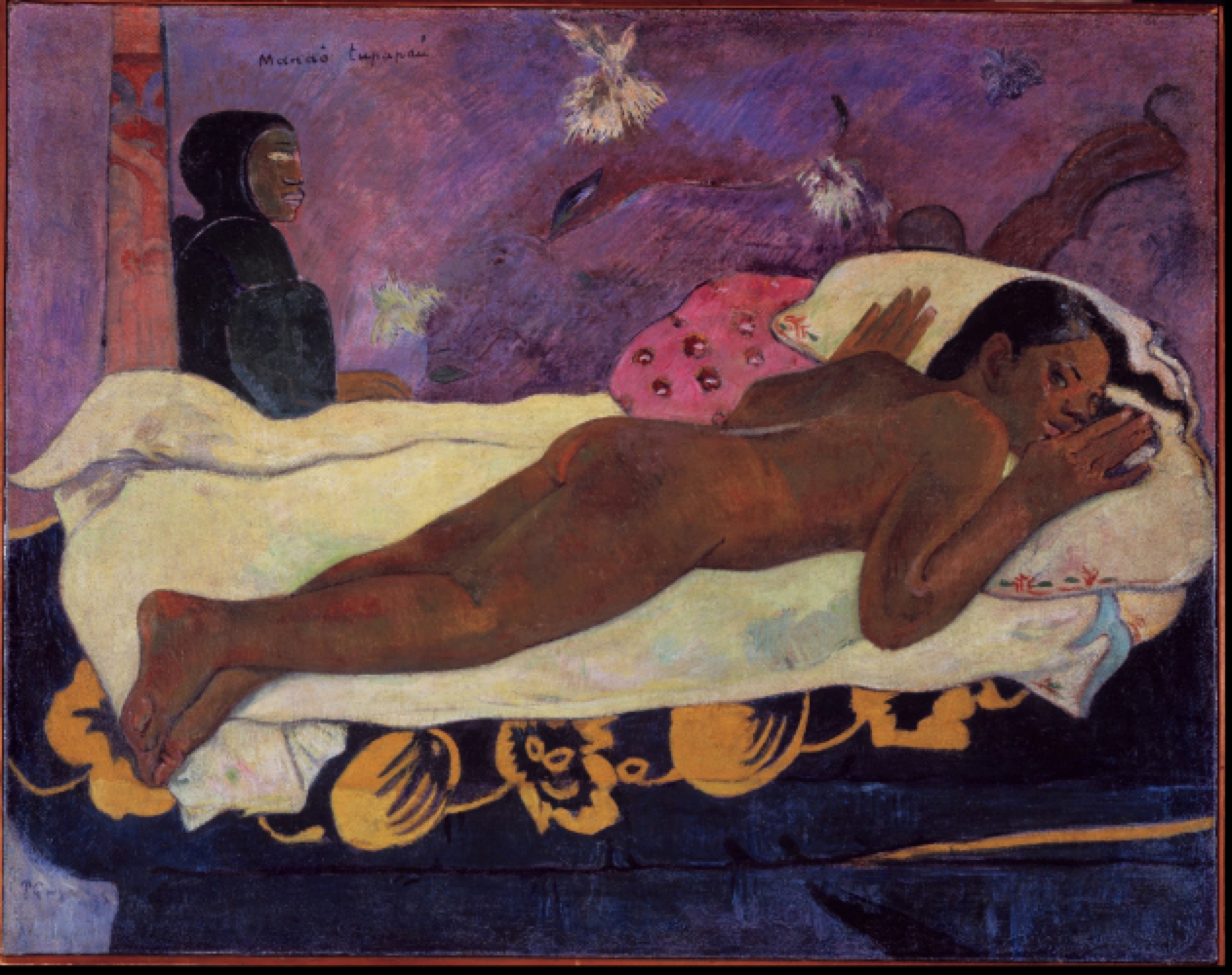
Paul Gauguin (1839-1903), French
Manao tupapau (Spirit of the Dead Keeps Watch), 1892 (Buffalo, Albright-Knox Gallery)
Edvard Munch (1863-1944), Norwegian
The Scream, 1893 (Oslo, National Museum)
Paul Cézanne (1839-1906), French
Mont Sainte-Victoire, 1885-1887 (New York, Metropolitan Museum of Art)
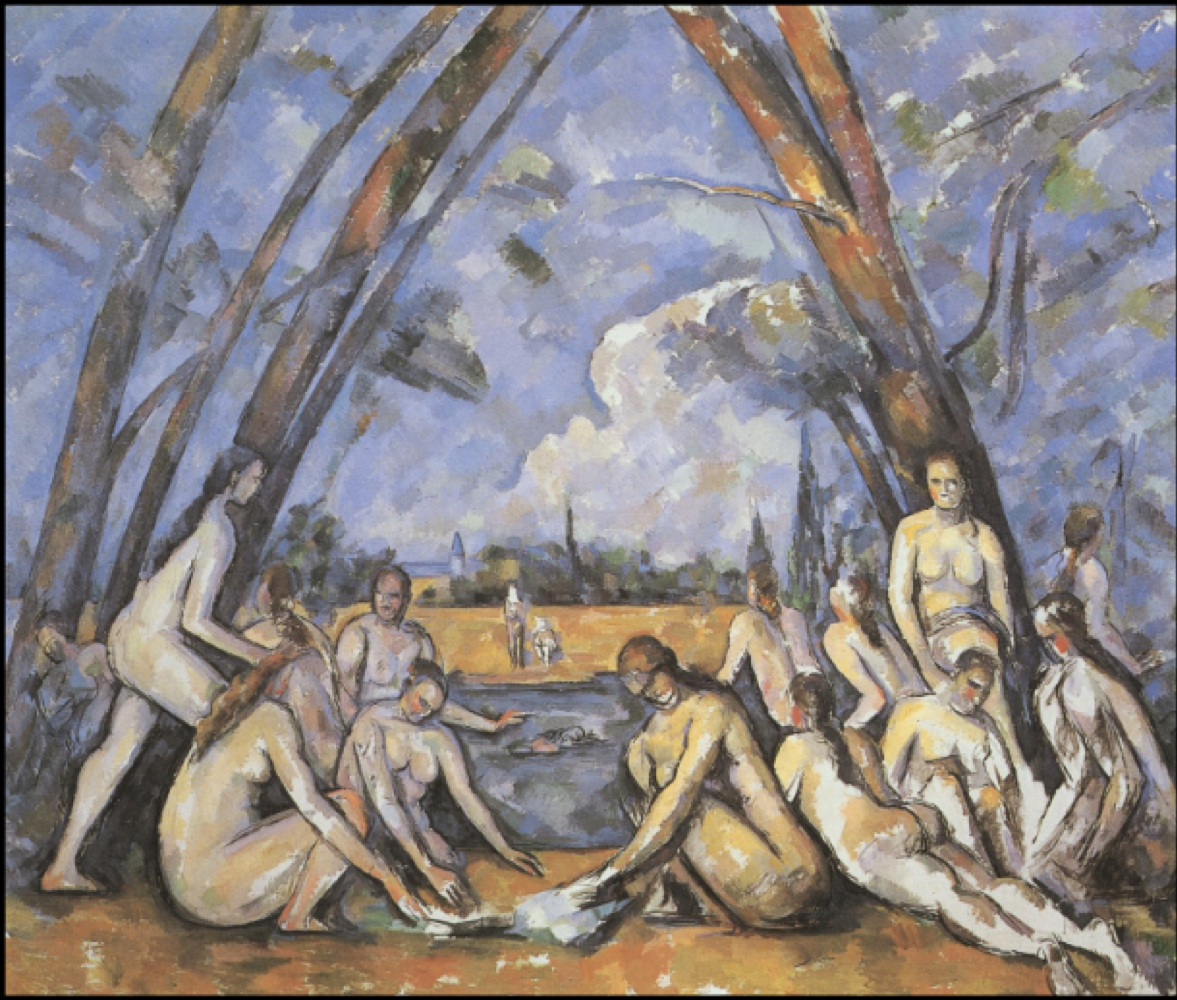
Paul Cézanne (1839-1906), French
The Large Bathers, 1905 (Philadelphia Museum of Art)

