1. Health Promotion and Disease Prevention
 Studied by 0 people
 Call Kai
 Learn
Learn Practice Test
 Spaced Repetition
 Match
Match Flashcards
 Knowt Play
1/57

There's no tags or description
Looks like no tags are added yet.
Name | Mastery | Learn | Test | Matching | Spaced | Call with Kai |
|---|
No study sessions yet.
58 Terms
Wellbeing
“is a positive state experienced by individuals and societies. Similar to health, it is a resource for daily life and is determined by social, economic and environmental conditions.” WHO 2021
the positive term used for health – viewed as opposite to disease
Wellbeing and disease often co-exist
Wellness
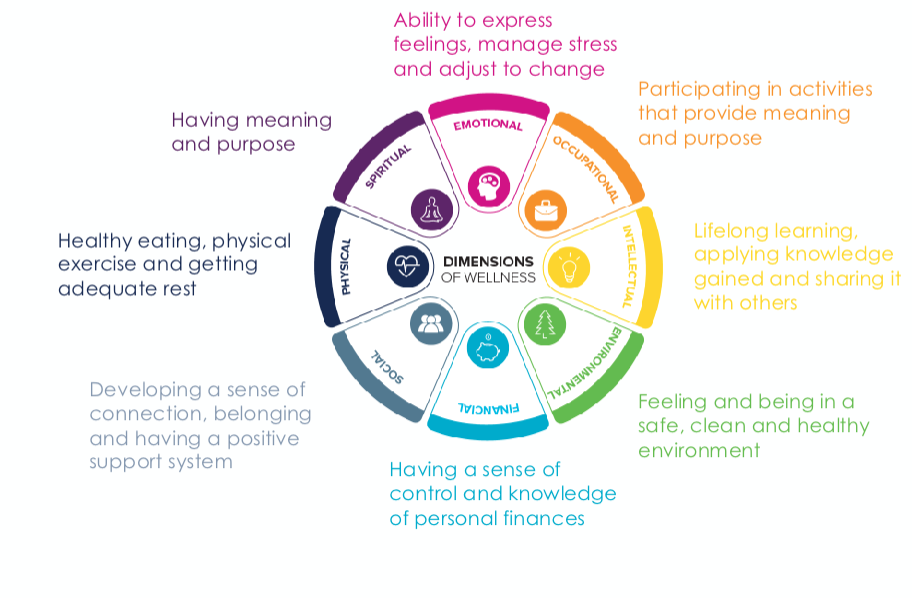
“the active pursuit of activities, choices and lifestyles that lead to a state of holistic health”.
Core Components of Individual Wellness
Health Promotion
The process of enabling people to increase control over and improve their health
more than individual and population education
empowers families and communities to improve their quality of life and achieve and maintain health and wellness
Emphasizes not only prevention of disease but the promotion of positive good health.
activating communities, policy makers, professionals and the public in favor of health supportive policies, systems and ways of living.
Health Promotion represents
a comprehensive social and political process, which includes actions for improving the skills and ability of individuals to increase control over the determinants of health, and actions towards changing social, environmental and economic conditions to address their impact on public and individual health.
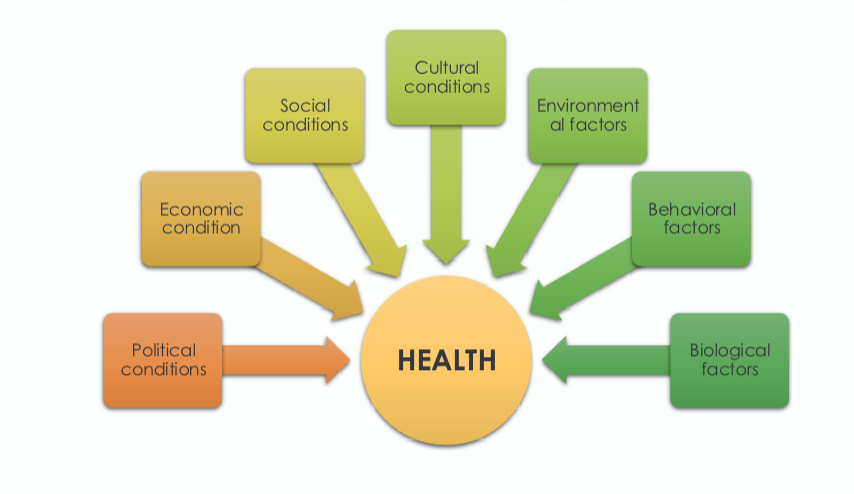
factors affecting health
*Health promotion aims at making all these conditions favorable for health.
goals of health promotion
Increase Awareness
Improve Health
Prevent Disease
Motivate Patients to take control of their health
Decrease Complications
Why do we need Health Promotion?
“Adds life to years, adds years to life”
Reduce inequalities in health
Reduces pressure on services
Makes healthier choices, easier choices
It is cost effective and efficient
prerequisites for health
Improvement in health requires a secure foundation in these basic prerequisites
peace
education
shelter
food
income
social justice + equity
sustainable resources
stable ecosyste
Key Action Areas for Health Promotion
build healthy public policy
create supportive environments
strengthen community actions
develop personal skills
reorient health services
Key Action Areas for Health Promotion: build healthy public policy
Health promotion policy combines diverse but complementary approaches including legislation, fiscal measures, taxation and organizational change.
coordinated action that leads to health, income and social policies that foster
greater equity.
The aim must be to make the healthier choice the easier choice.
Key Action Areas for Health Promotion: create supportive environments
Health promotion generates living and working conditions that are safe, stimulating, satisfying and enjoyable
Key Action Areas for Health Promotion: strengthen community actions
Health promotion works through concrete and effective community action in setting priorities, making decisions, planning strategies and implementing them to achieve better health
Key Action Areas for Health Promotion: develop personal skills
Health promotion supports personal and social development through providing information, education for health, and enhancing life skills
Key Action Areas for Health Promotion: reorient health services
The responsibility for health promotion in health services is shared among individuals, community groups, health professionals, health service institutions and governments.
This leads to a change of attitude and organization of health services which refocuses on the total needs of the individual as a whole person.
Strategies for Health Promotion
Advocacy
Enabling
Mediating
Strategies for Health Promotion: Advocacy
Advocacy in health promotion involves actively supporting policies and initiatives that create supportive environments and strengthen community action.
It means championing health equity by influencing decision- makers to prioritize health in all sectors, thereby enabling healthier choices and conditions for all
Strategies for Health Promotion: Enabling
Enabling empowers individuals and communities by providing access to information, resources, and opportunities that enhance their ability to take control over their health.
This strategy aligns with the Charter's emphasis on developing personal skills and fostering environments that support healthy living
Strategies for Health Promotion: Mediating
the process of bringing together diverse sectors, organizations, and
communities to coordinate efforts and resolve conflicts that may hinder health
promotion.
Acting as a mediator helps build partnerships and mobilize resources, reflecting the Charter's call for reorienting health services and strengthening
community action
Principles of Health Promotion
Targeting entire populations
Encouraging active participation
Collaborating across multiple sectors
Adapting to specific contexts:
Operating at various levels
Principles of Health Promotion: Targeting entire populations
Health promotion aims to improve the well-being of whole communities rather than focusing solely on individuals, ensuring broad and equitable
health benefits.
For example, nationwide vaccination programs aim to protect everyone,
including vulnerable groups like the elderly and children.
Principles of Health Promotion: Encouraging active participation
It involves engaging people directly in health initiatives, empowering them to take control of their health and contribute to decision-making processes.
For instance, community-led fitness groups or local health workshops encourage people to engage actively in maintaining their well-being
Principles of Health Promotion: Collaborating across multiple sectors
Effective health promotion requires cooperation between various sectors such as healthcare, education, government, and community organizations to address the diverse factors influencing health.
An example is a school nutrition program developed jointly by health departments, schools, and local farmers to improve children's diets.
Principles of Health Promotion: Adapting to specific contexts
Strategies are tailored to fit the unique cultural, social, and environmental conditions of different populations, making interventions more relevant and effective.
For example, smoking cessation campaigns might use culturally relevant
messaging and materials in different languages to reach diverse communities
Principles of Health Promotion: Operating at various levels
Health promotion activities occur at individual, community, and policy levels, creating a comprehensive approach that supports sustainable health improvements.
For example, anti-smoking efforts include individual counseling, community
smoke-free zones, and government tobacco taxes.
The Process of Health Promotion
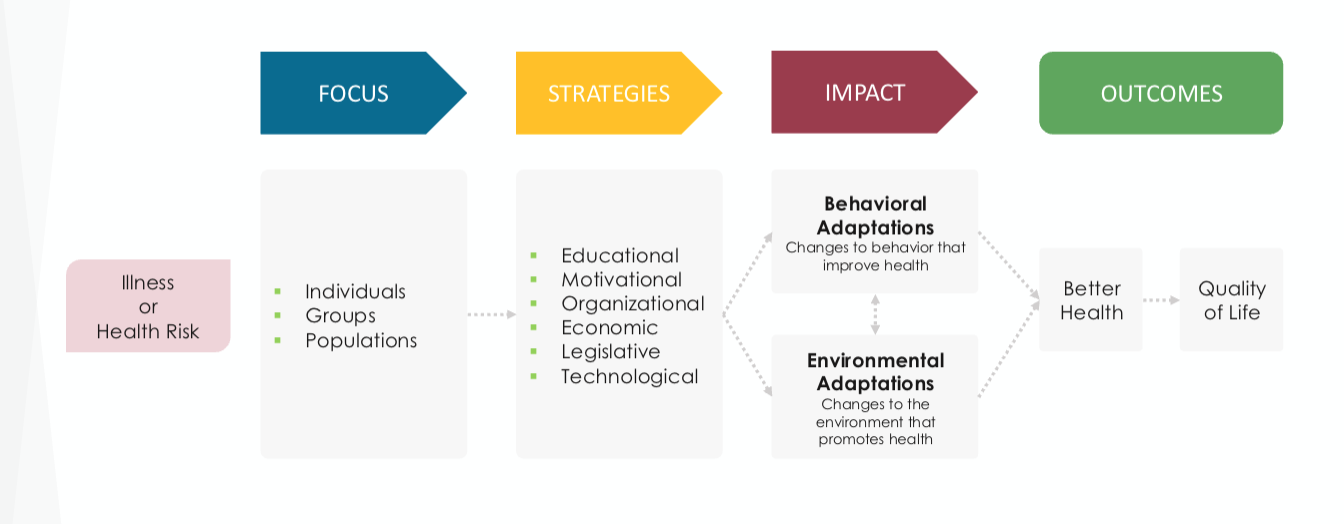
Approaches to Health Promotion: preventative medical
aims. methods, success criteria

Approaches to Health Promotion: behavioral
aims. methods, success criteria

Approaches to Health Promotion: educational
aims. methods, success criteria

Approaches to Health Promotion: empowerment
aims. methods, success criteria

Approaches to Health Promotion: social change
aims. methods, success criteria

Health Promotion Models
Health promotion models encourage people / populations to make healthy choices and motivating them to be consistent with their intentions based on
theories related to human behavior.
At the individual level, health promotion is generally implemented through strategies like patient education and counseling.
Top-Down Vs Bottom Up
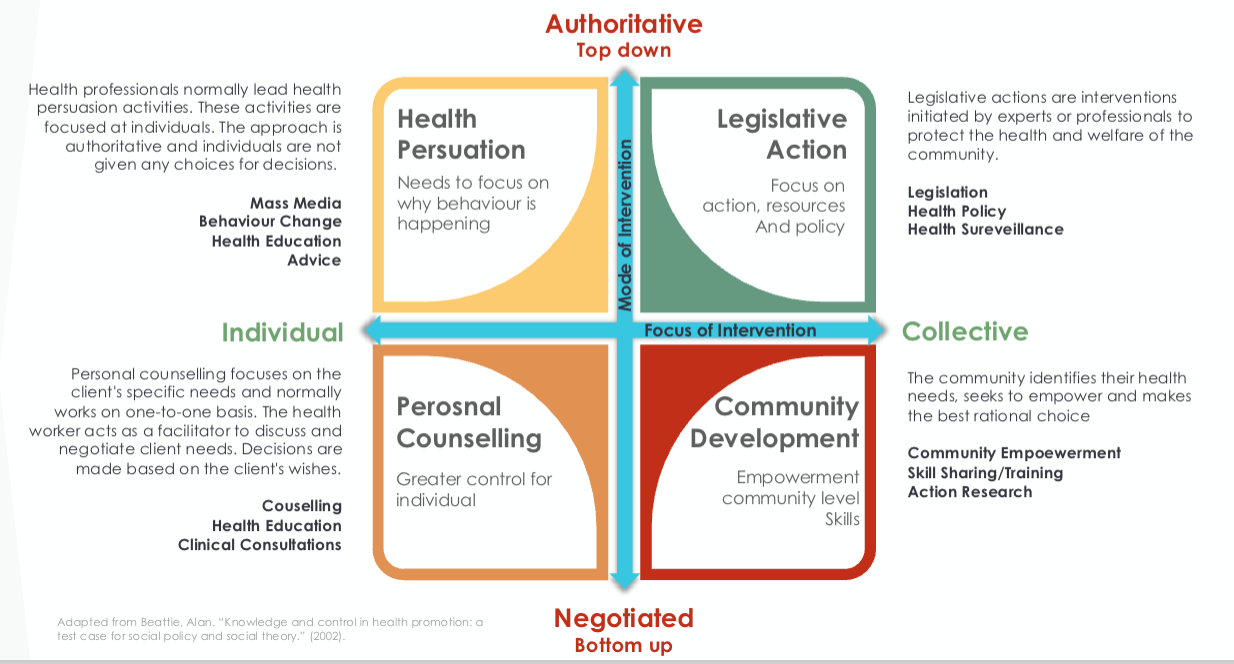
the one you use depends on the situation
Health Promotion Models
1. Health Promotion Model
2. Health Belief Model
3. Transtheoretical Model (Stages of Change)
4. Theory of Reasoned Action
5. Diffusion of Innovation Theory
Pender’s Health Promotion Model
based on the idea that people’s experiences affect their health outcomes
According to this theory, one would have to look at people’s lifestyles, psychological health, and social and cultural environment to understand most of their health-related decisions
For example, not eating fresh vegetables because one grew up not
consuming produce is a way of understanding why someone may
suffer from a severe condition like obesity.
Health Belief Model
The model focuses on individual beliefs about health conditions, which predict individual health-related behaviors.
The factors that influence health behaviors
Perceived susceptibility
Perceived severity
Perceived benefits
Cues to action
Self-efficacy
Perceived susceptibility
an individual perceived threat to sickness or disease.
Perceived severity
belief of consequence.
Perceived benefits
potential positive benefits of action
Cues to action
perceived barriers to action, exposure to factors that prompt action.
Self-efficacy
confidence in the ability to succeed.
transtheoretical model
a modern psychological framework for explaining the adoption and maintenance of purposeful health behaviors
transtheoretical model steps
Pre-contemplation: the patient does not intend to act yet despite knowing about the medical condition.
Contemplation: the patient is planning to act with intention.
Preparation: the patient establishes a course of action and sets a timed objective.
Action: the patient takes the course of action.
Maintenance: the patient focuses on not relapsing and maintaining a plan within their daily routines. For some individuals, this may last a few months, while for others, it could turn into a permanent state.
Termination: the patient is actively healthy and no longer
interested in returning to old behaviors
Theory of Reasoned Action
assumes that a person will act a certain way on a health issue depending on their willingness due to subjective norms.
The norms are usually the result of social and environmental surroundings and the person’s perceived control over that behavior.
Diffusion of Innovation Theory
This theory falls under community and organization participation models.
investigates how a new idea or health behavior is disseminated in a social structure or community and identifies what influences how quickly the idea or behavior is adopted
The adoption of new ideas depends on the type of innovation, communication channels, time and social system.
When Should the Models Be Applied?
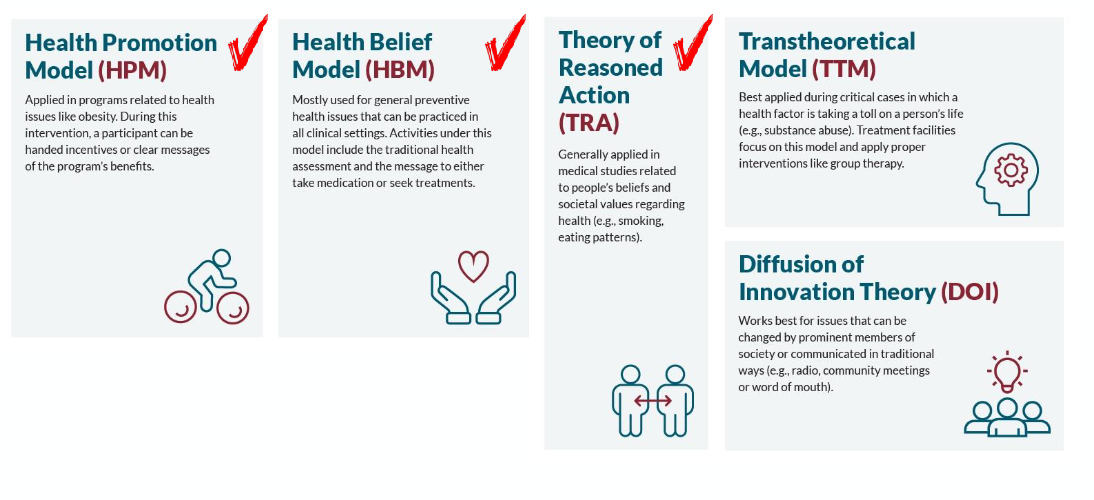
CHECK MARK FOR TTM NOT TRA
7th WHO Global Conference on Health Promotion (Nairobi, Kenya 2009)
This meeting marked a significant milestone in integrating oral health into broader health promotion strategies.
The conference underscored the crucial role of recognizing oral health as an integral part of overall health and well-being.
It also fostered collaborative efforts to address oral health disparities on a global scale.
Health Education
any combination of learning experiences designed to help individuals and communities improve their health by increasing knowledge, influencing motivation and improving
health literacy.
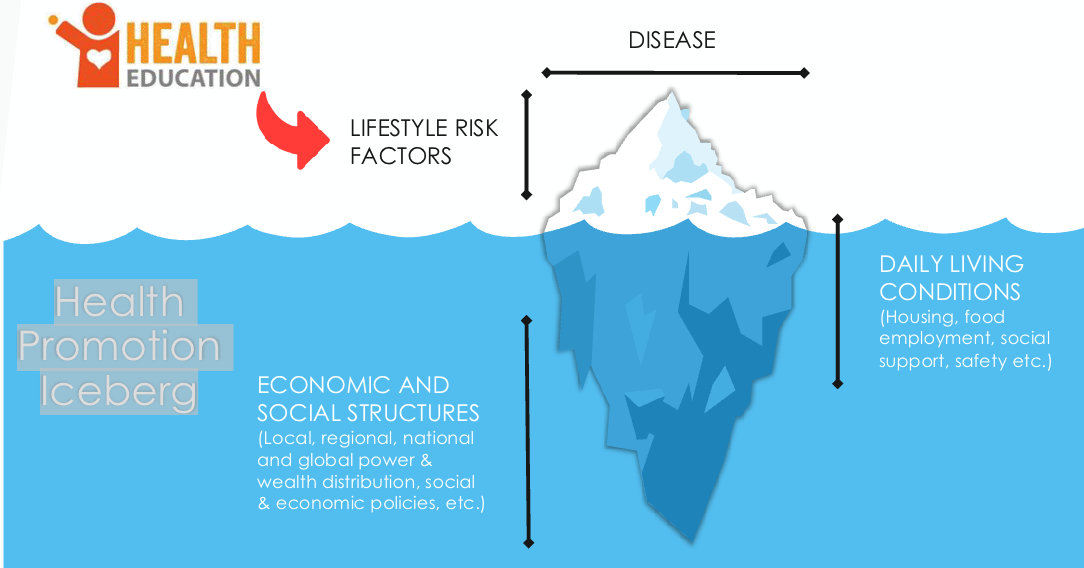
Health Promotion Iceberg
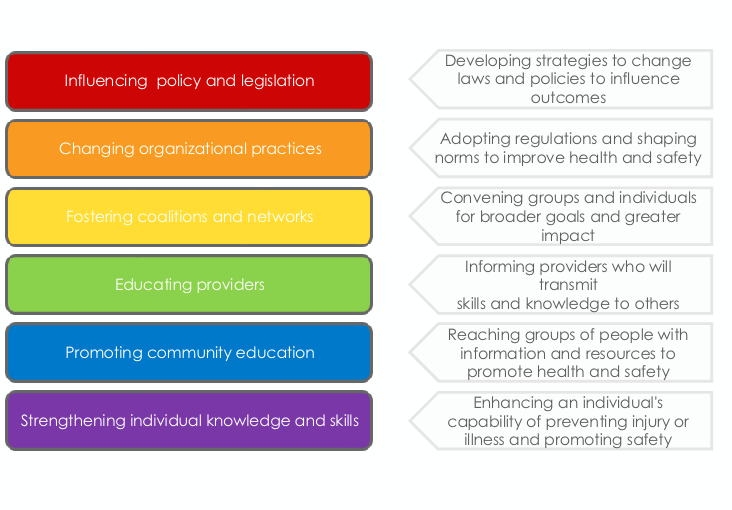
The Spectrum of Prevention
identifies multiple levels of intervention and helps providers move beyond the perception that prevention is JUST EDUCATION
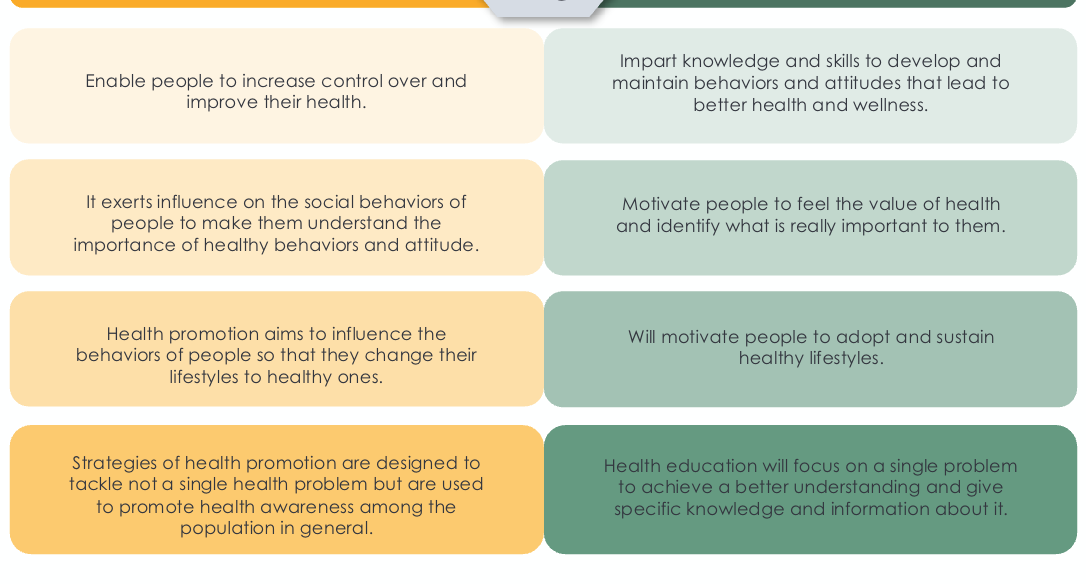
health promotion vs health education
Disease Prevention
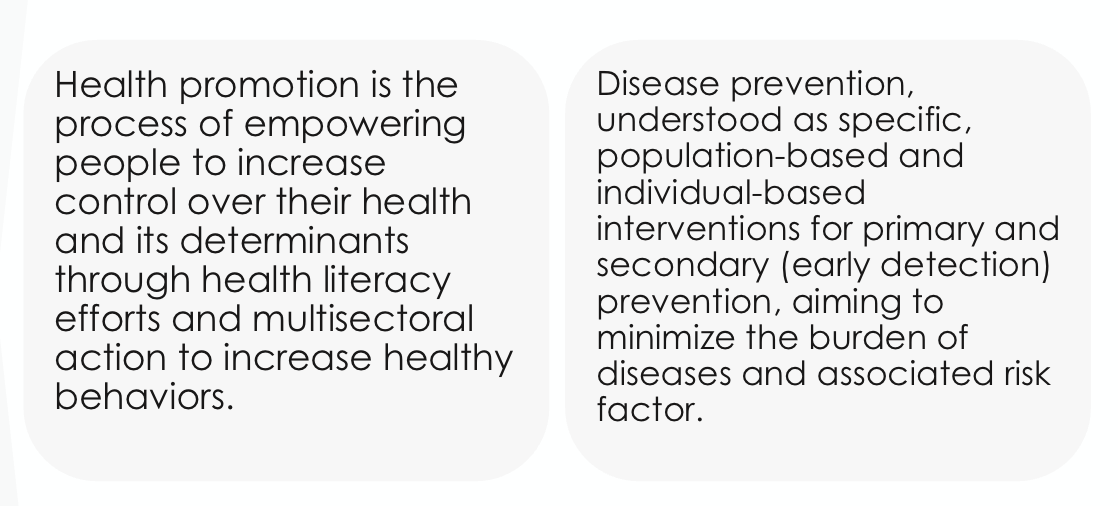
describes measures to reduce the occurrence of risk factors, prevent the occurrence of disease, to arrest its progress and reduce its consequences once established.
Health Promotion vs Disease Prevention
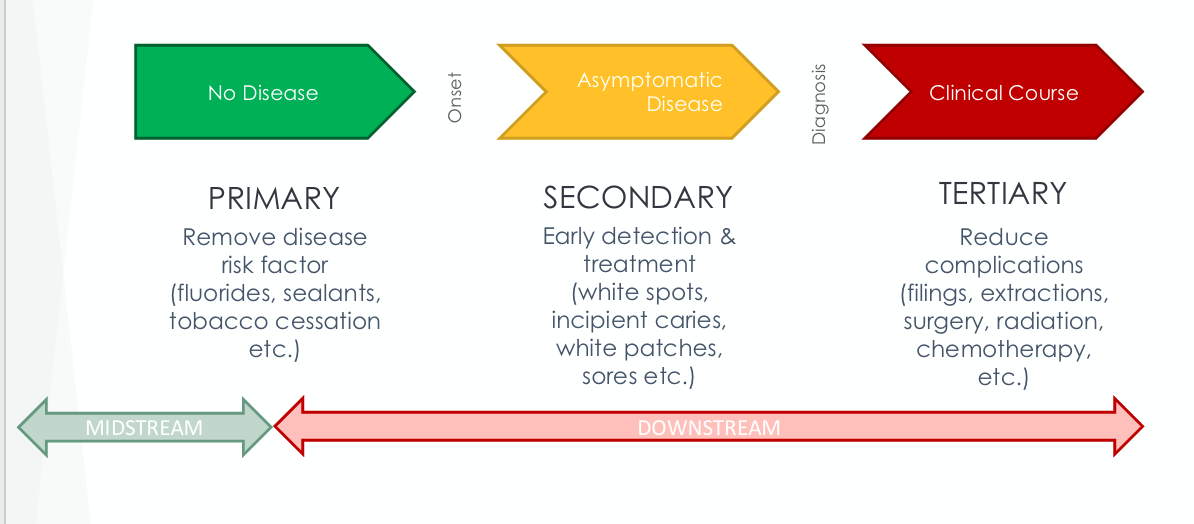
Levels of Disease Prevention
Summary
The scope of health promotion is varied and diverse and not limited to health education.
In order to address health issues, a wider range of health promotion approaches should be used that directly addresses the wider upstream determinants.
Approaches should be evaluated on the basis of key health promotion principles.
 Note
Note  Flashcards (38)