Operant conditioning
 Call Kai
 Learn
Learn Practice Test
 Spaced Repetition
 Match
Match Flashcards
 Knowt Play
1/26

There's no tags or description
Looks like no tags are added yet.
Name | Mastery | Learn | Test | Matching | Spaced | Call with Kai |
|---|
No analytics yet
Send a link to your students to track their progress
27 Terms
What is operant conditioning?
learning process through which behaviors are modified based on the consequences that follow them, increasing or decreasing the likelihood of those behaviors.
What is Thorndike’s law of effect?
effect states that behaviors that produce satisfying outcomes are more likely to be repeated, while those that produce discomfort are less likely to be repeated.
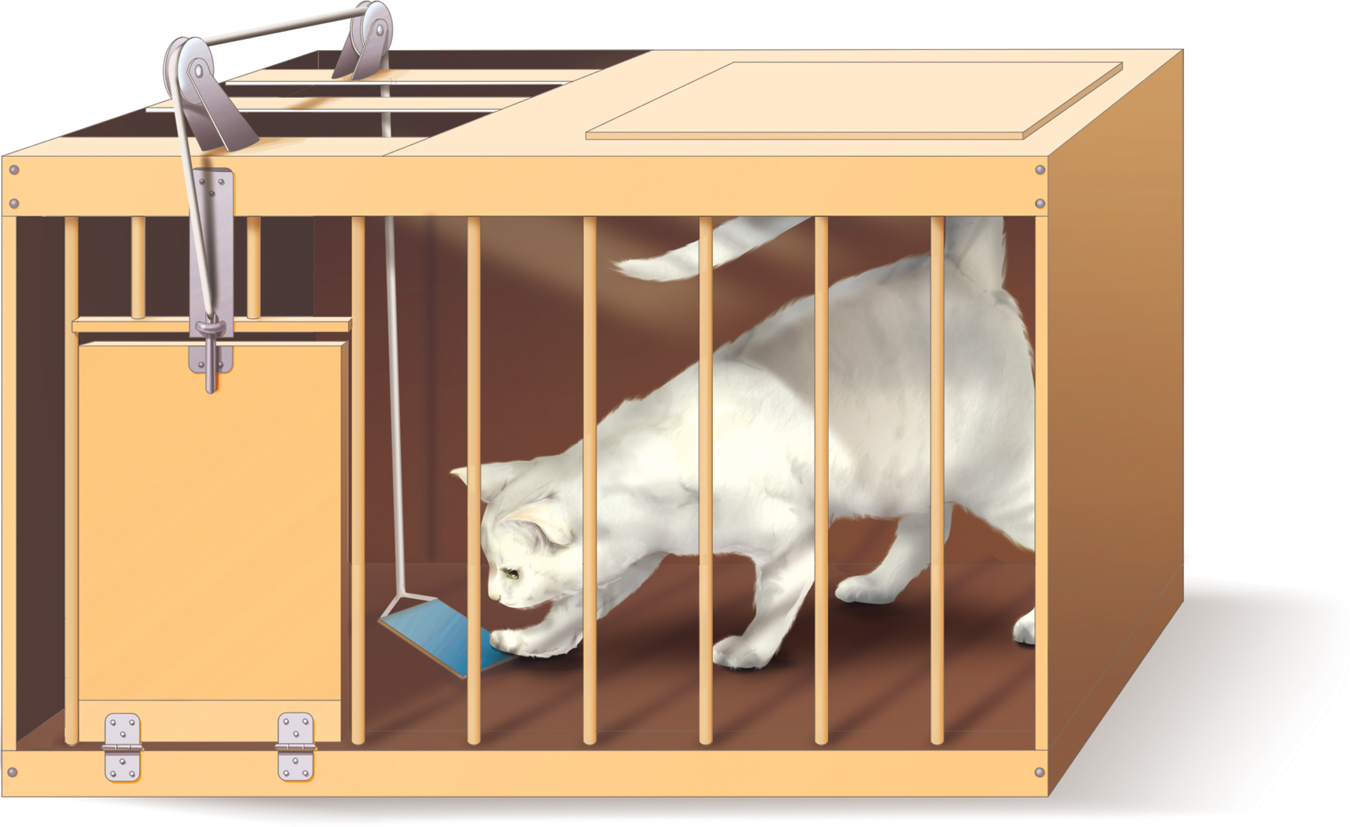
What was Thorndike’s puzzle box?
an apparatus used in experiments to observe how a cat would escape from it; the cat would learn to perform specific actions to escape and receive a reward.
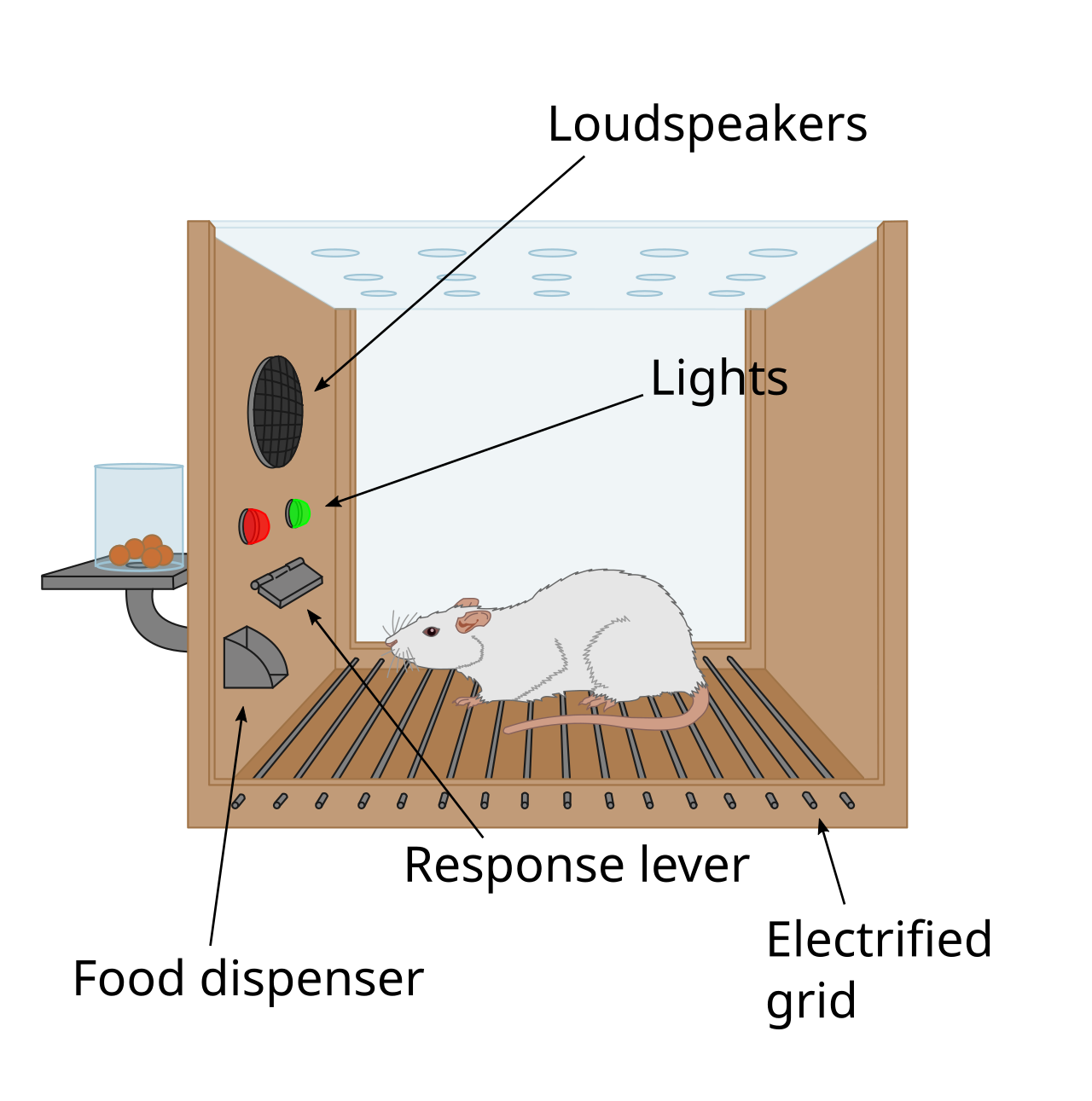
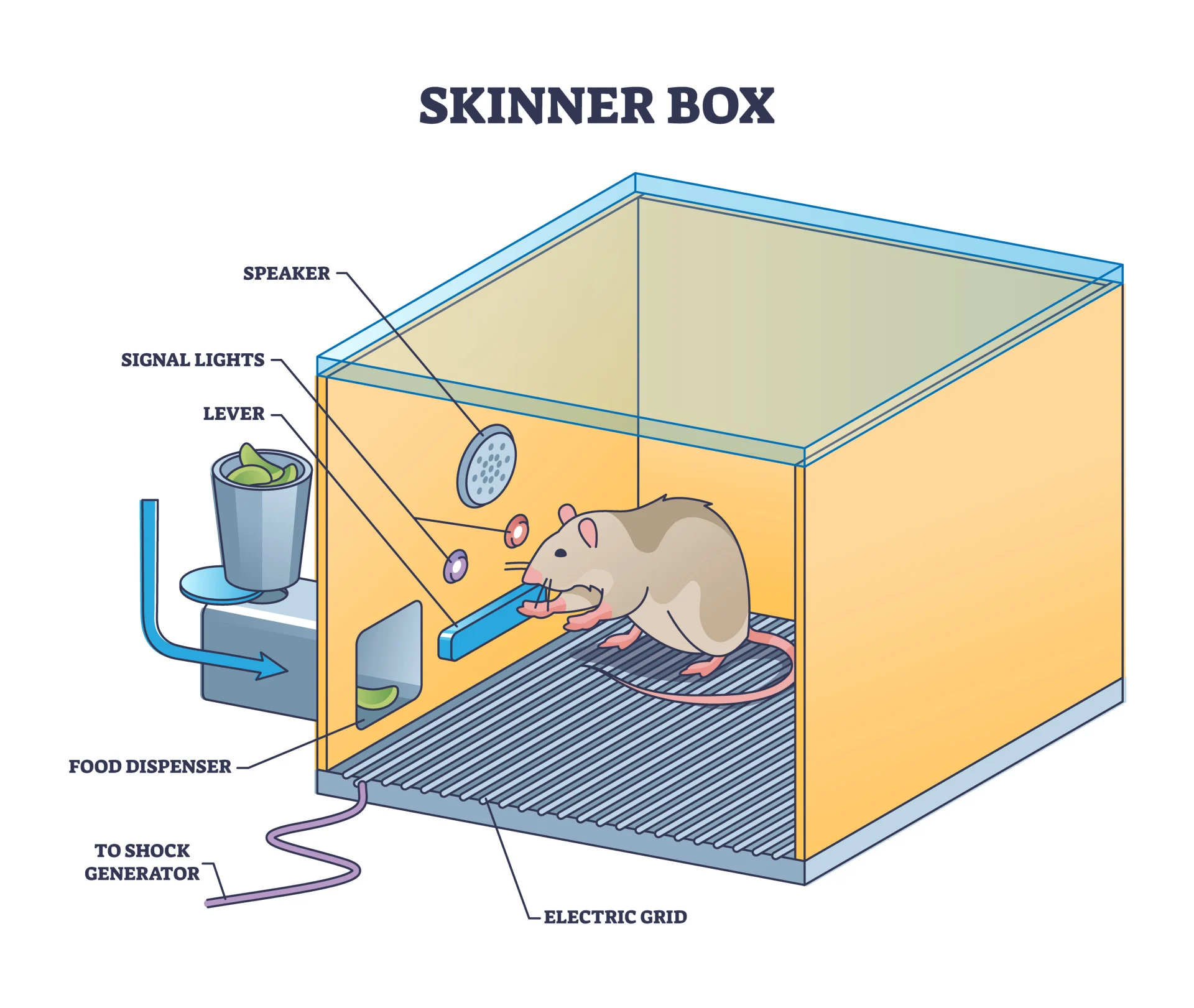
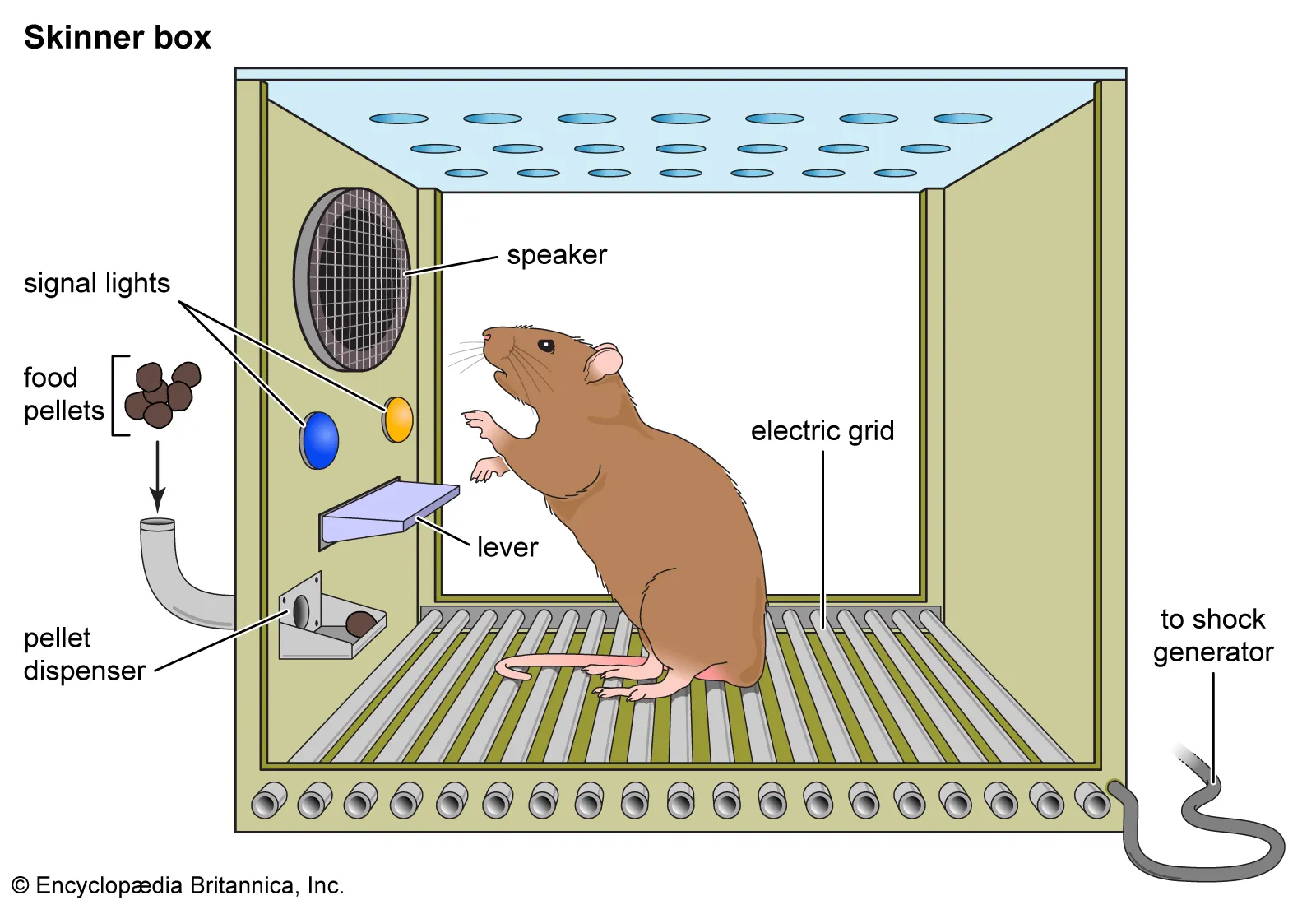
What is a Skinner box?
operant chamber, is an experimental setup containing a hungry animal that can press a bar to receive a food pellet as a reinforcement, thereby increasing the frequency of bar pressing.
What are reinforcements?
consequences of behavior that increase the probability that the behavior will occur again.
What are punishments?
consequences of behavior that decrease the probability that the behavior will occur again.
What is shaping?
involves reinforcing closer and closer approximations of the desired response until the target behavior is achieved.
What are successive approximations?
responses that are increasingly similar to the desired response being targeted for reinforcement.
What is positive reinforcement?
presentation of a pleasant stimulus after a behavior, which increases the probability of that behavior occurring again.
What is negative reinforcement?
removal of an unpleasant stimulus after a behavior, which increases the probability of that behavior occurring again.
What is positive punishment?
unpleasant stimulus follows a behavior, leading to a decrease in the probability of that behavior occurring again.
What is negative punishment?
removal of a pleasant stimulus after a behavior, decreasing the probability of that behavior happening again.
What is generalization in operant conditioning?
tendency to perform a behavior in different situations after it has been reinforced in a specific situation.
What is discrimination in operant conditioning?
ability to differentiate when a behavior will be reinforced in one situation and not in another.
What is extinction in operant conditioning?
a behavior diminishes after the reinforcer is withdrawn.
What is spontaneous recovery?
the reappearance of a previously extinguished behavior after a period of no reinforcement.
What are continuous consequences?
the same each time the behavior occurs.
What is intermittent (partial) reinforcement?
reinforcement involves providing consequences only some of the times the behavior occurs.
Which reinforcement schedule is better for learning?
reinforcement is typically better for learning than continuous reinforcement as it leads to stronger, more resistant behavior.
What are some problems with punishment?
Problems with punishment can include difficulty in identifying which behavior is being punished, the potential for fear of the punisher, not eliminating existing rewards for the behavior, and potential modeling of aggression.
What is intrinsic motivation?
pursuit of an activity for its own sake, deriving satisfaction from the activity itself.
What is extrinsic motivation?
when the pursuit of a goal is driven by external rewards.
What is the overjustification effect?
The overjustification effect occurs when excessive rewards lead to a decrease in intrinsic motivation for an activity.
Fixed ratio
fixed proportion responses emmited
Variable ratio
Reinforcement for response
Fixed Interval
reinforcement for responses after a fixed amount of time
Variable interval
reinforcement for responses after an amount of time that is not constant

