Lecture 2 - Molecules and Bonds

0.0(0)
studied byStudied by 0 people
0.0(0)
call with kaiCall with Kai
learnLearn
examPractice Test
spaced repetitionSpaced Repetition
heart puzzleMatch
flashcardsFlashcards
GameKnowt Play
Card Sorting

1/46

encourage image

There's no tags or description

Looks like no tags are added yet.

Name
Mastery
Learn
Test
Matching
Spaced
Call with Kai

No study sessions yet.

47 Terms

1
New cards

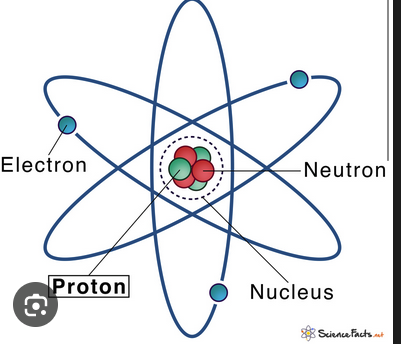
Proton

A subatomic particle with positive charge found in the nucleus.
<p>A subatomic particle with positive charge found in the nucleus.</p>
2
New cards

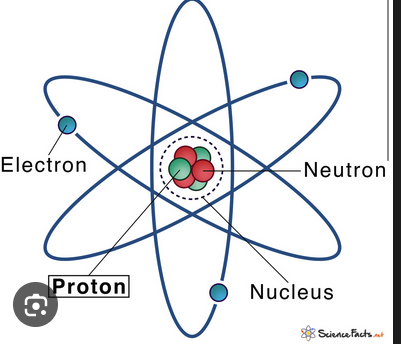
Neutron

A subatomic particle with neutral charge found in the nucleus.
<p>A subatomic particle with neutral charge found in the nucleus.</p>
3
New cards

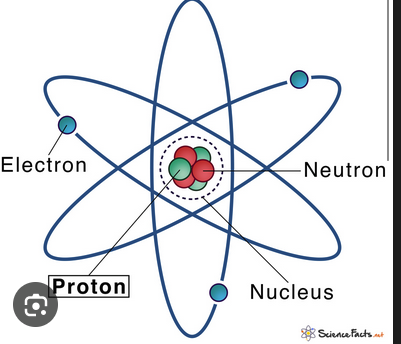
Electron

A subatomic particle with negative charge that orbits the nucleus in orbitals.
<p>A subatomic particle with negative charge that orbits the nucleus in orbitals.</p>
4
New cards

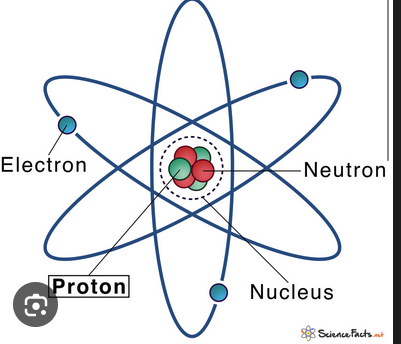
Nucleus

The central core of an atom containing protons and neutrons.
<p>The central core of an atom containing protons and neutrons.</p>
5
New cards

Valence electrons

The electrons in the outermost orbital that participate in chemical bond formation.
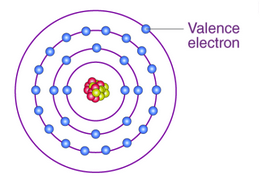
<p>The electrons in the outermost orbital that participate in chemical bond formation.</p>
6
New cards

VSEPR

Valence Shell Electron Pair Repulsion theory describing how electron pairs arrange in three-dimensional space.
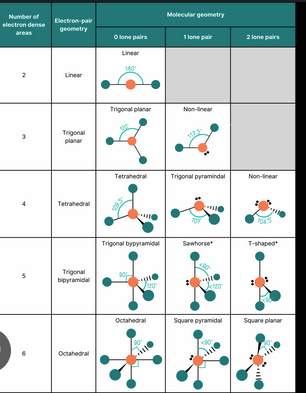
<p>Valence Shell Electron Pair Repulsion theory describing how electron pairs arrange in three-dimensional space.</p>
7
New cards

Orbitals

Regions of space around the nucleus where electrons are likely to be found, each with different energy levels.

8
New cards

Covalent bond

A strong bond formed by shared electrons between two atoms.
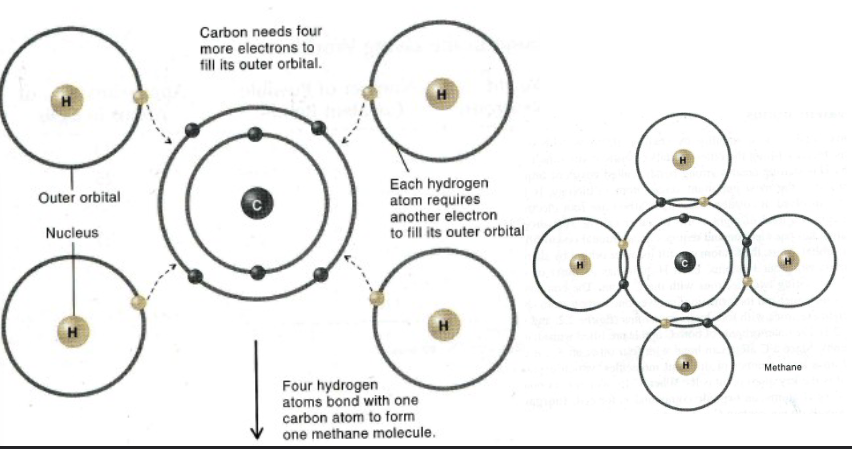
<p>A strong bond formed by shared electrons between two atoms.</p>
9
New cards

Nonpolar covalent bond

A covalent bond in which electrons are shared equally between atoms with similar electronegativity values.
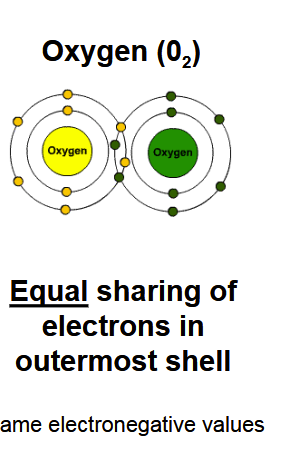
<p>A covalent bond in which electrons are shared equally between atoms with similar electronegativity values.</p>
10
New cards

Polar covalent bond

A covalent bond in which electrons are shared unequally between atoms with different electronegativity values, creating partial charges.
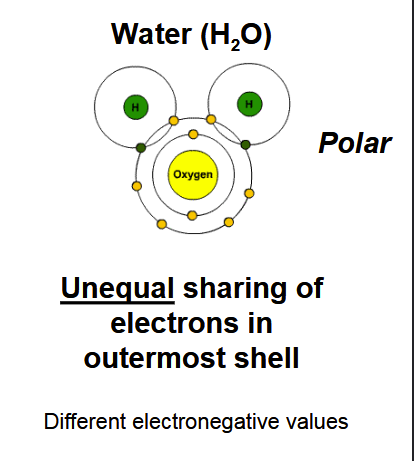
<p>A covalent bond in which electrons are shared unequally between atoms with different electronegativity values, creating partial charges.</p>
11
New cards

Electronegativity

The attraction of an atom for its electrons, unique to each element.

12
New cards

Ionic bond

A weak bond formed between oppositely charged ions through electrostatic attraction.
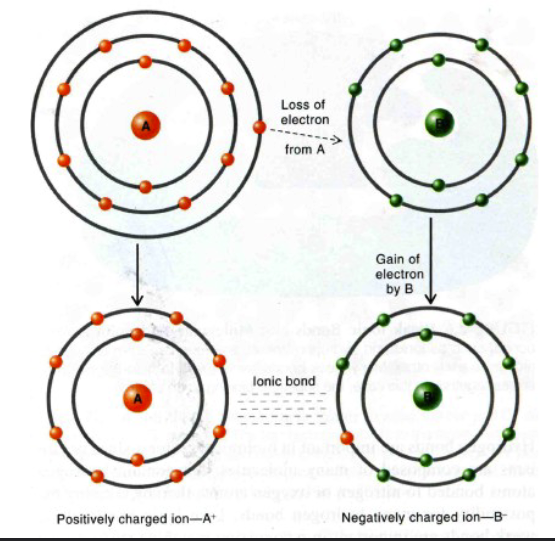
<p>A weak bond formed between oppositely charged ions through electrostatic attraction.</p>
13
New cards

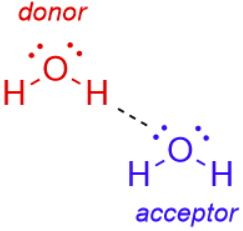
Hydrogen bond

A weak electrostatic interaction between a lone pair of electrons on an electronegative atom (acceptor) and a hydrogen (donor) bonded covalently to another strongly electronegative atom.

H with N or O, NEVER H with C
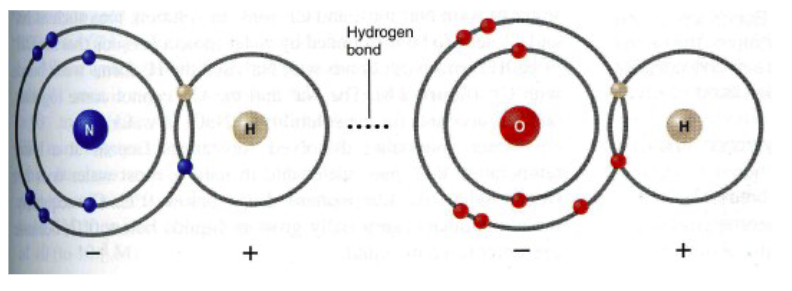
<p>A weak electrostatic interaction between a lone pair of electrons on an electronegative atom (acceptor) and a hydrogen (donor) bonded covalently to another strongly electronegative atom.</p><p>H with N or O, <strong>NEVER </strong>H with C</p>
14
New cards

hydrogen bond donor

A strongly electronegative atom (nitrogen or oxygen) covalently bonded to hydrogen that participates in hydrogen bonding.
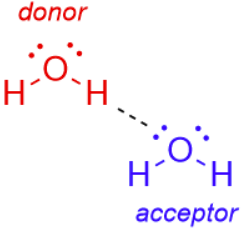
<p>A strongly electronegative atom (nitrogen or oxygen) covalently bonded to hydrogen that participates in hydrogen bonding.</p>
15
New cards

hydrogen bond acceptor

An electronegative atom with a lone pair of electrons that accepts a hydrogen bond.
<p>An electronegative atom with a lone pair of electrons that accepts a hydrogen bond.</p>
16
New cards

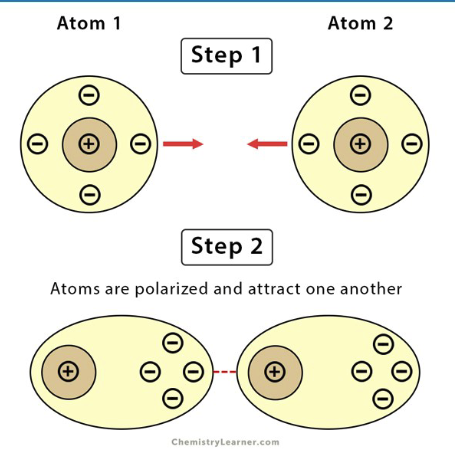
van der Waals interaction

A weak intermolecular force resulting from induced dipoles when atoms or molecules come within 5 nanometers of each other.
<p>A weak intermolecular force resulting from induced dipoles when atoms or molecules come within 5 nanometers of each other.</p>
17
New cards

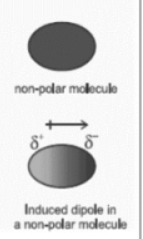
induced dipole

A temporary separation of charge in an atom or molecule caused by a nearby charged particle.
<p>A temporary separation of charge in an atom or molecule caused by a nearby charged particle.</p>
18
New cards

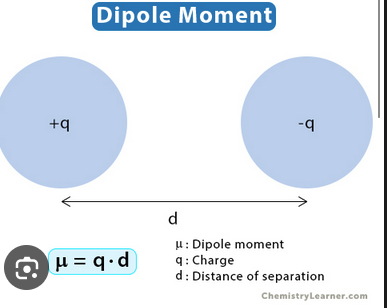
Dipole moment

The measure of separation of positive and negative charge in a molecule.
<p>The measure of separation of positive and negative charge in a molecule.</p>
19
New cards

Cohesion

The tendency of molecules to stick together via hydrogen bonds.
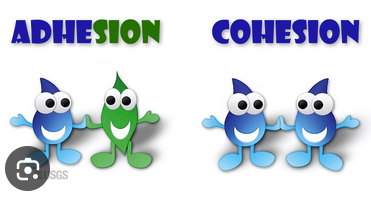
<p>The tendency of molecules to stick together via hydrogen bonds.</p>
20
New cards

Heat capacity

The amount of energy required to raise the temperature of a substance, high in water due to hydrogen bonding.

21
New cards

Water of hydration

water that is chemically combined with a substance to form a hydrate and can be expelled by heating
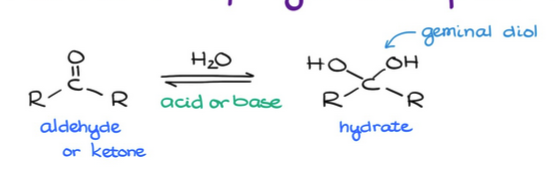
<p><span>water that is chemically combined with a substance to form a hydrate and can be expelled by heating</span></p>
22
New cards

hydrophobic effect

The tendency of nonpolar molecules to aggregate and exclude water by forcing water to form hydrogen bonds with itself around the nonpolar material.
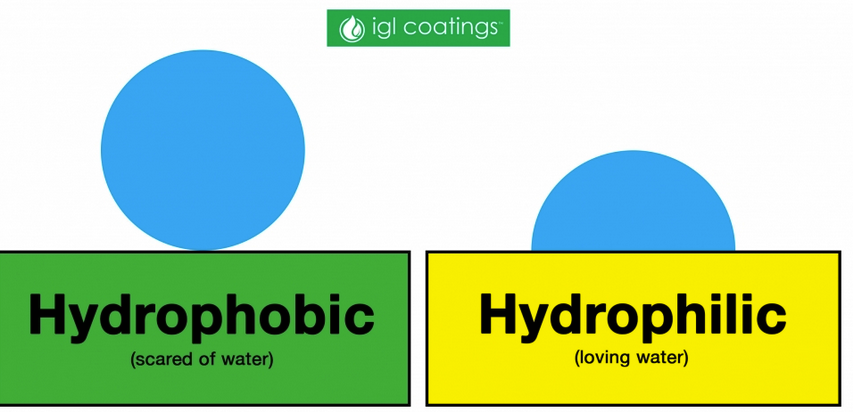
<p>The tendency of nonpolar molecules to aggregate and exclude water by forcing water to form hydrogen bonds with itself around the nonpolar material.</p>
23
New cards

amphipathic

Having both hydrophobic and hydrophilic properties, as in molecules with a nonpolar tail and polar head group.

24
New cards

micelle

A spherical structure formed by amphipathic molecules with hydrophobic ends pointing inward and hydrophilic ends pointing outward in water.
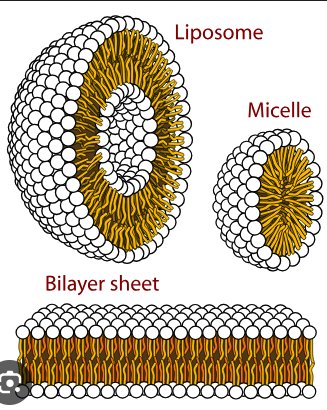
<p>A spherical structure formed by amphipathic molecules with hydrophobic ends pointing inward and hydrophilic ends pointing outward in water.</p>
25
New cards

membrane

A structure composed of a phospholipid bilayer and proteins that encloses the cell.

26
New cards

autohydration

The self-ionization of water forming hydronium ion and hydroxide ion.
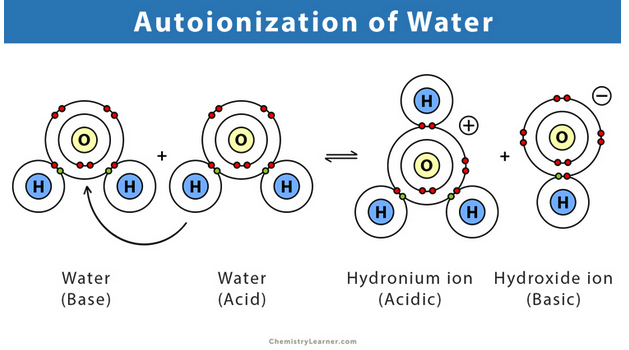
<p>The self-ionization of water forming hydronium ion and hydroxide ion.</p>
27
New cards

pH

The negative logarithm of hydrogen ion concentration that measures acidity or basicity.

28
New cards

pOH

The negative logarithm of hydroxide ion concentration related to pH by pH + pOH = 14.

29
New cards

acid

A chemical that donates hydrogen ions to a solution, lowering pH.
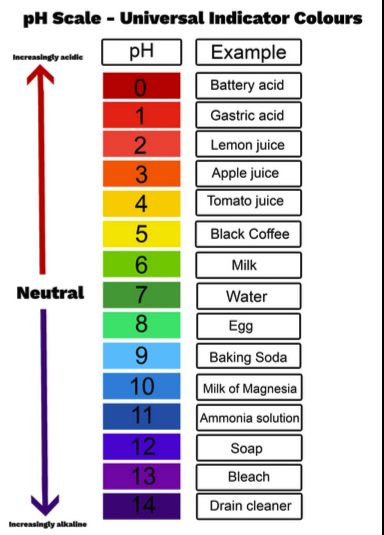
<p>A chemical that donates hydrogen ions to a solution, lowering pH.</p>
30
New cards

base

A chemical that donates hydroxide ions to a solution, raising pH.
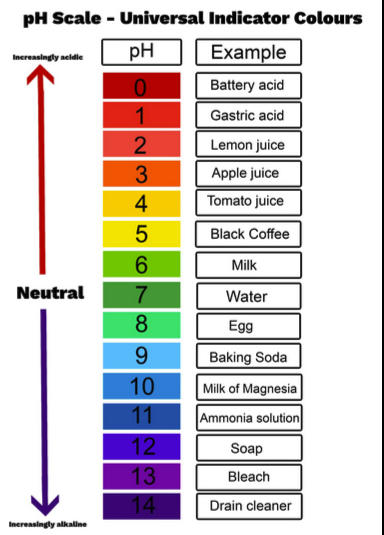
<p>A chemical that donates hydroxide ions to a solution, raising pH.</p>
31
New cards

neutral

A solution with pH 7 where hydrogen ion concentration equals hydroxide ion concentration.

32
New cards

Aufbau principle

The principle that electrons fill lower energy orbitals first when building up the electronic configuration of an atom.
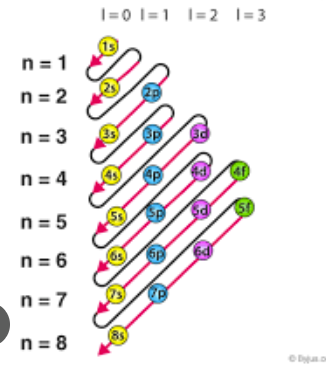
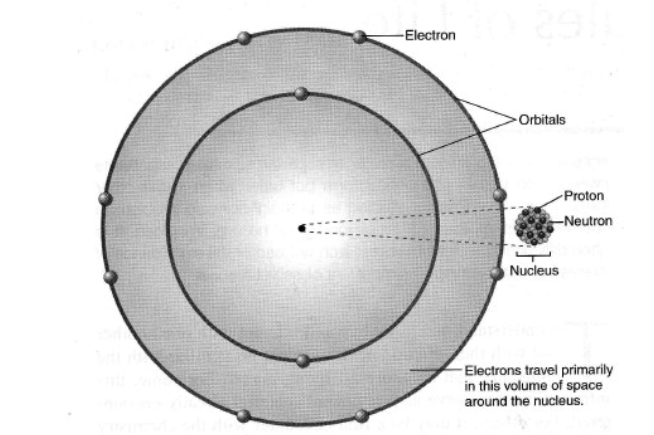
<p>The principle that electrons fill lower energy orbitals first when building up the electronic configuration of an atom.</p>
33
New cards
Know the basic structure of the atom.
By identifying that atoms consist of a nucleus containing protons and neutrons, with electrons arranged in orbitals of different energy levels orbiting the nucleus.
34
New cards
Know the subatomic particles.
By recognizing that protons have positive charge, neutrons have neutral charge, and electrons have negative charge.
35
New cards
Understand the Aufbau principle as it pertains to electron distribution.
By applying the principle that electrons fill lower energy orbitals first according to the building up method.
36
New cards
Understand how valence electrons participate in chemical bond formation.
By recognizing that valence electrons are the electrons in the outermost orbital that participate in bonding with other atoms.
37
New cards
Know the different types of chemical bonds.
By distinguishing between covalent bonds (nonpolar and polar), ionic bonds, hydrogen bonds, and van der Waals interactions.
38
New cards
Given the Periodic Table, be able to predict how many bonds an atom can form.
By determining that the number of electrons required to fill the outer orbital equals the number of possible covalent bonds.
39
New cards
Know what types of bonds are considered strong and weak based on electronegativity.
By recognizing that covalent bonds with electronegativity difference 0.0-2.0 are strong and ionic bonds with electronegativity difference 2.0-4.0 can be strong or weak, while hydrogen bonds and van der Waals are weak.
40
New cards
Be able to distinguish strong bonds from weak bonds based on charge interactions.
By identifying that strong bonds involve significant electron sharing or transfer while weak bonds involve electrostatic attractions between partial charges.
41
New cards
Be able to distinguish the types of weak bonds (ionic, hydrogen, hydrophobic / van der Waals).
By recognizing that ionic bonds form between oppositely charged ions, hydrogen bonds form between electronegative atoms and hydrogen, and van der Waals forces result from induced dipoles.
42
New cards
Know what elements can participate in hydrogen bonding.
By identifying that hydrogen bonding occurs when hydrogen is bonded covalently to nitrogen or oxygen, never with carbon.
43
New cards
Understand why dynamic living systems depend on weak bond interactions.
By explaining that many weak bonds together hold molecules in specific configurations while remaining flexible enough to be broken and reformed as needed.
44
New cards
Know how hydrogen bonding influences the properties of water: heat capacity, cohesion, density, hydration.
By describing that hydrogen bonds between water molecules create high heat capacity, cohesion between molecules, make solid ice less dense than liquid water, and allow water to dissolve polar molecules.
45
New cards
Be able to predict the behavior of hydrophilic, hydrophobic and amphipathic substances in water.
By recognizing that hydrophilic substances dissolve in water, hydrophobic substances do not dissolve and are avoided by water, and amphipathic substances have both hydrophobic and hydrophilic properties.
46
New cards
Understand how autohydration of water is related to pH.
By connecting the self-ionization of water producing hydronium ions and hydroxide ions to the pH scale and hydrogen ion concentration.
47
New cards
Be able to approximate the pH of various common materials.
By using the pH scale to estimate the pH of materials such as drain cleaner at pH 14, blood at pH 7.4, pure water at pH 7, and stomach acid at pH 1.