Intro to Wood Framing Construction
 Studied by 0 people
 Call Kai
 Learn
Learn Practice Test
 Spaced Repetition
 Match
Match Flashcards
 Knowt Play
1/46

There's no tags or description
Looks like no tags are added yet.
Name | Mastery | Learn | Test | Matching | Spaced |
|---|
No study sessions yet.
47 Terms
● Flexibility in design – Easy to modify and expand.
● Readily available materials – Wood is widely available and
renewable.
● Fast and efficient construction – Prefabrication methods
speed up building time.
● Renewable Resource: sustainable material when
harvested responsibly. Trees can be replanted.
● Lightweight yet Strong
● Ease of Workability: Can be cut, shaped, and joined
easily using basic tools
Benefits of Wood Framing Construction
● Susceptibility to Moisture & Decay
● Fire Hazard: Wood is combustible, so fire-resistant
treatments and safety measures must be implemented.
● Pest Infestation: Termites, carpenter ants, and other
pests can damage untreated wood.
● Dimensional Instability: Wood expands and contracts
with changes in moisture content.
● Code Restrictions: building codes limit the height and
use of wood in certain types of structures due to fire
safety concern
Limitations of Wood Framing Construction
Softwood
○ Derived from coniferous trees (e.g., pine, spruce, fir).
○ Grows faster, making it more readily available and cost-
effective.
○ Common grades: #1 and #2 structural lumber used for
framing.
Most common wood type in Construction
Hardwood
○ Comes from deciduous trees (e.g., oak, maple, birch).
○ Expensive and harder to work with compared to
softwoods.
Used more for finishes, flooring, and cabinetry than for structural framing.
Nominal size
refers to the rough-sawn dimensions before the lumber is finished
Actual dimension is ½” less than the nominal dimension
UP TO 6”. Above 6”, the actual dimension is ¾” less
than the nominal dimension
Dimensions of Wood after drying and planing
New Growth
Trees that have regrown after previous harvesting, typically within 40-100 years
Old Growth
Forests that have remained largely undisturbed for centuries, producing denser, more durable wood
Clear Cutting Harvesting
Removes all trees in an area; efficient but can cause habitat destruction if not managed properly
Selective Cutting Harvesting
Removes only certain trees, preserving the ecosystem and promoting natural regrowth
Shelterwood Cutting Harvesting
Gradually removes mature trees while allowing younger trees to grow
FSC (Forest Stewardship Council) and SFI (Sustainable Forestry Initiative)
Certifications that ensure ethical harvesting
Deforestation
The large-scale removal of forests, often for agriculture,
urban development, or logging
Loss of Biodiversity, Climate Change Contribution, Soil Erosion & Desertification, Disruption of Water Cycles
Environmental Effects of Deforestation
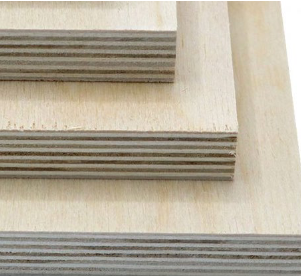
Plywood
Multiple thin layers (plies) glued together at alternating grain angles for strength. Used in subfloors, sheathing, and cabinetry
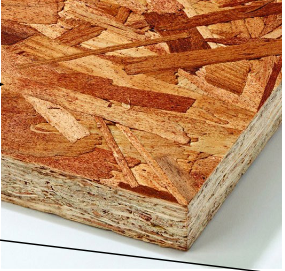
Oriented Strand Board (OSB)
Made from compressed wood strands and adhesives, widely used for sheathing and subfloors
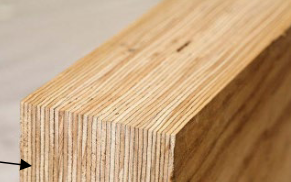
Laminated Veneer Lumber (LVL)
Engineered wood beams with high strength; used in headers and load-bearing applications
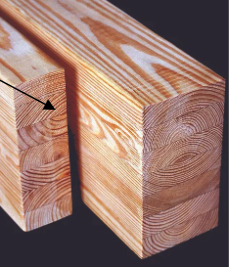
Glue-Laminated Timber (Glulam)
Large beams made from multiple layers of lumber bonded
together; used in exposed structural elements
Pressure Treated Wood
Infused with chemicals to resist decay, insects, and moisture damage. Used for outdoor applications, sill plates, and foundation contacts.
Fire-Retardant Wood
Chemically treated to reduce flammability, required in certain building code applications
Kiln Dried Wood
Dried in an oven to reduce moisture content and prevent shrinkage and warping. Essential for framing stability
Nails
common, framing, ring-shank Fastener
Screws
Fastener used in select structural applications
Joists
Horizontal structural members that support the floor. Spaced 16" on center
Beams & Girders
Large horizontal supports that transfer loads to foundation piers or walls.
Subflooring
Typical plywood provides a base for finished flooring
Bridging & Blocking
Increases stability and prevents joist movement
Studs
Vertical members spaced at 16" on center
Plates
Horizontal top and bottom members (top plate, bottom plate, and sometimes a double top plate)
Headers
Reinforced beams over doors and windows
Bracing
Diagonal supports for added structural stability (e.g., let-in bracing or metal straps)
Sheathing
Plywood or OSB attached to the exterior for rigidity
Balloon Framing
has continuous studs that run the height of the two-story wall. Creates a continuous wall cavity that runs from the first floor to the second floor. This cavity is a fire hazard because flames spread easily up the inside of the wall from one floor to the next
Platform Framing
has studs that run for one floor only, then the second floor is built as a platform. The platform acts as a fire-break to stop the spread of fire from floor to floor
Rafters
Traditional sloped members meeting at a ridge beam in a roof structure
Trusses
Prefabricated triangular frames that distribute loads efficiently in roof structures
OSB or plywood, provides support for roofing materials
Roof sheathing
Gable, Hip, Gambrel, and Shed
Common roof shapes in wood-frame construction
Joists or rafters
Ceiling below the roof
Wood frame construction
the most common building method for residential and light commercial structures in North America
Douglas Fir
Highly valued for its strength and stiffness. Top choice for structural framing, particularly in regions with heavy snow loads
Southern Yellow Pine
this wood is renowned for its strength, density, and resistance to decay. Is ideal for framing applications in humid or coastal areas
Spruce-Pine-Fir (SPF)
Lightweight and easy to work with, making it suitable for various framing applications
Slab-on-grade
concrete slab is poured directly on the ground, typically reinforced with steel rebar or wire mesh
-Cost effective and commonly for foundations in warmer climates or areas where ground doesn’t freeze
-Require moisture barrier under concrete and perimeter insulation in cold climates
Basement Foundation
involves excavating the space below ground level to create a basement, with foundation walls built on concrete footings
Crawl Space foundation
involves excavating a space beneath the house, creating a crawl space between the foundation floor and the house
How wood framing connects to foundation type
-Anchor sill plates using 1/2” anchor bolts embedded in concrete, space max 6’ apart
-An anchor bolt is a fastener used to secure the wooden framing to the concrete foundation. It plays a critical role in ensuring the stability and safety of a structure, especially lateral forces like wind and earthquakes
 Note
Note  Flashcards (66)