14. Nucleus and cell division

0.0(0)
studied byStudied by 0 people
0.0(0)
full-widthCall Kai
learnLearn
examPractice Test
spaced repetitionSpaced Repetition
heart puzzleMatch
flashcardsFlashcards
GameKnowt Play
Card Sorting

1/23

flashcard set

Earn XP

Description and Tags

exam 4

Study Analytics
Name
Mastery
Learn
Test
Matching
Spaced

No study sessions yet.

24 Terms

1
New cards

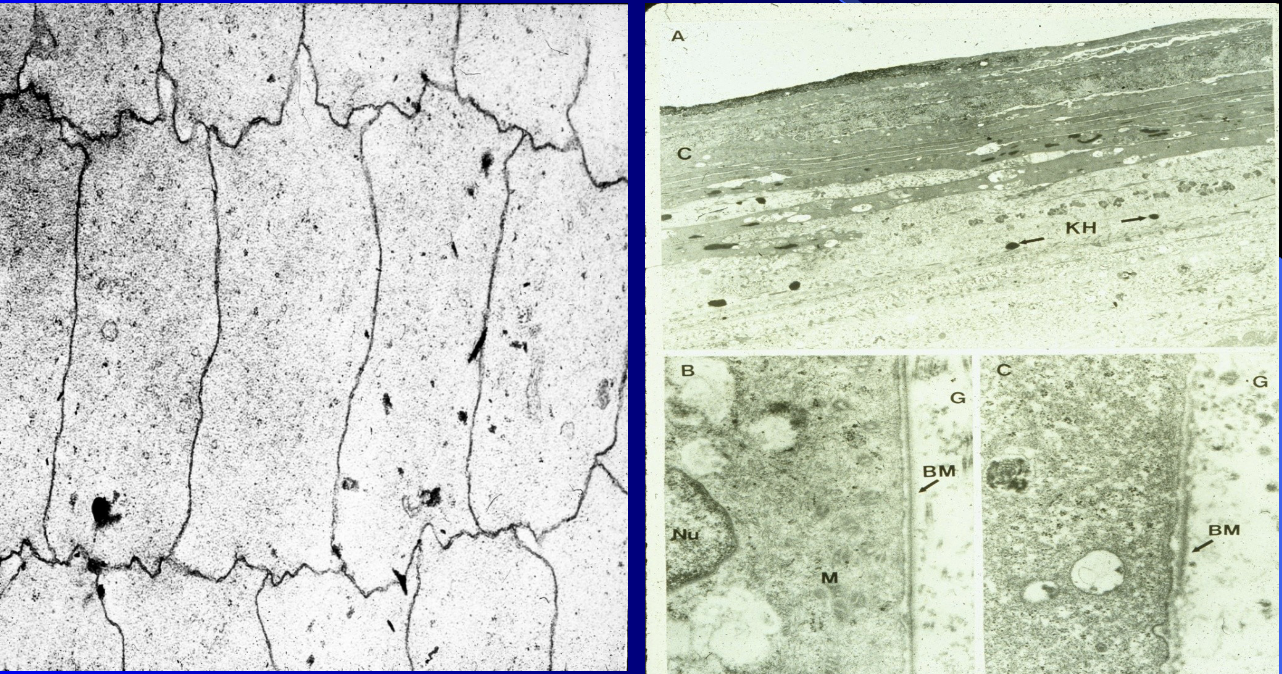
Some cells don’t have nuclei

  • some specialized cells in the body intentionally get rid of their nucleus and other internal components

  • the tight boundaries between cells and the lack of a nucleus in the mature cell type becomes clearer or more efficient for specific functions

ex: lens fibers
<ul><li><p>some specialized cells in the body intentionally get rid of their nucleus and other internal components</p></li><li><p>the tight boundaries between cells and the lack of a nucleus in the mature cell type becomes clearer or more efficient for specific functions</p></li></ul><p>ex: lens fibers</p>
2
New cards

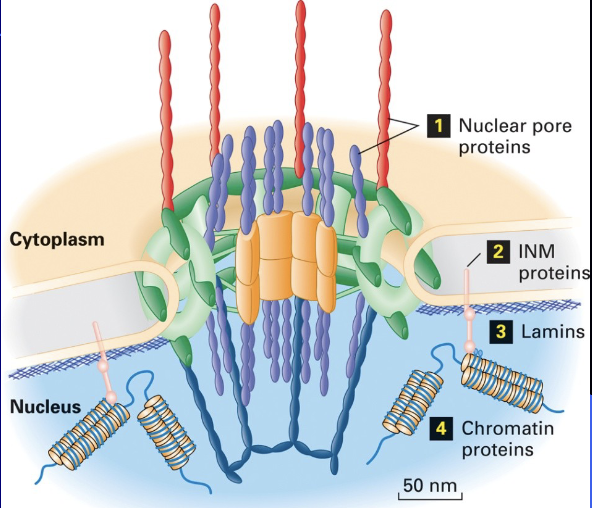
Nuclear pores

  • protein complexes that span the nuclear envelope, regulating the transport of molecules like proteins and RNA between the nucleus and the cytoplasm

  • act as selective gates, allowing small molecules to pass through freely while actively controlling the import of necessary proteins (like DNA and RNA polymerases) and the export of RNAs and other molecules

  • regulated traffic is vital for gene expression, protein synthesis, and overall cell function
<ul><li><p><span><span>protein complexes that span the nuclear envelope, regulating the transport of molecules like proteins and RNA between the nucleus and the cytoplasm</span></span></p></li><li><p><span><span>act as selective gates, allowing small molecules to pass through freely while actively controlling the import of necessary proteins (like DNA and RNA polymerases) and the export of RNAs and other molecules</span></span></p></li><li><p><span><span>r</span></span>egulated traffic is vital for gene expression, protein synthesis, and overall cell function</p></li></ul><p></p>
3
New cards

How Does Nucleoplasmin do it

  • acting as a histone chaperone that binds to histones, facilitating their transfer to DNA for nucleosome assembly and remodeling

  • It decondenses sperm chromatin by binding to and removing basic proteins, then exchanging them for histones

  • regulated by hyperphosphorylation, which enhances its ability to bind and shuttle histones

4
New cards

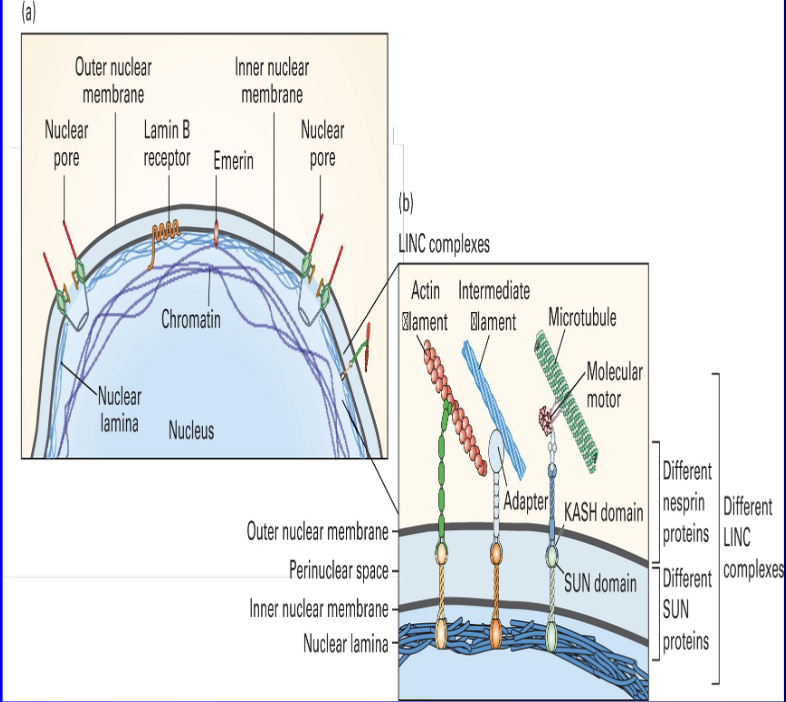
Lamins A, B and C

  • proteins that form mesh-like nuclear lamina supporting the nucleus

  • focuses on their dissolution and re-assembly during the cell cycle

  • showing how the MPF (Maturation/Mitosis Promoting Factor) enzyme phosphorylates Lamin tetramers

  • causing them to dissociate into dimers and enabling the nuclear envelope to break down during mitosis

5
New cards

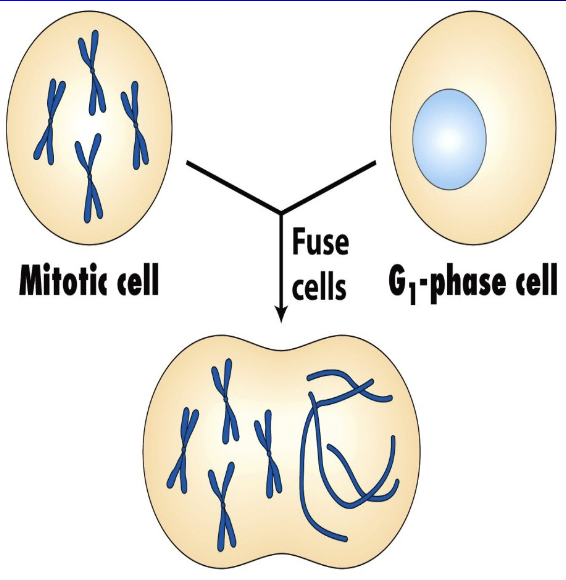
Cell Fusion of M and G1 Cell

  • MPF causes Nuclear Dissolution via Lamin Phosphorylation

  • Cell fusion causes Chromosome Condensation of the G1 Cell

ex: Hutchinson-Gilford Progeria Syndrome - Defects in Lamin A assembly is associated with Progeria, a precocious aging disease (treated with Lonafarnib is a farnesyltransferase inhibitor)
<ul><li><p><span style="color: rgb(255, 255, 255);"><span>MPF causes Nuclear Dissolution via Lamin Phosphorylation</span></span></p></li><li><p><span style="color: rgb(255, 255, 255);"><span>Cell fusion causes Chromosome Condensation of the G1 Cell</span></span></p></li></ul><p>ex: <span>Hutchinson-Gilford Progeria Syndrome - Defects in Lamin A assembly is associated with Progeria, a precocious aging disease (treated with Lonafarnib is a farnesyltransferase inhibitor)</span></p>
6
New cards

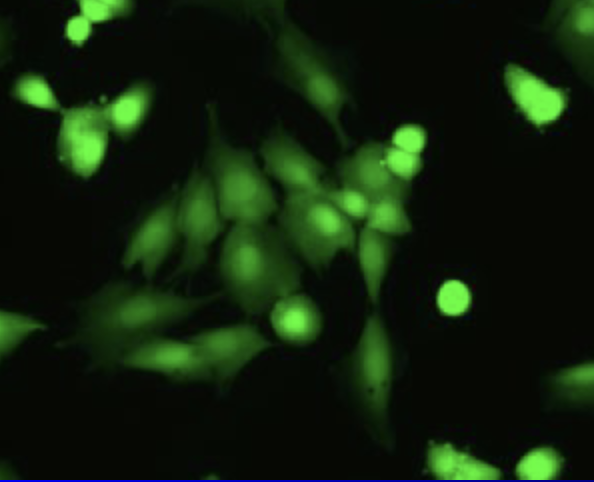
3T3 cells

  • Commonly used for cell cycle and
    oncogene studies because they are easy to convert from normal to cancer cells

    • Isolated from mouse embryo tissue

    • Made famous by Arthur Pardee

<ul><li><p><span style="color: rgb(255, 255, 255);"><span>Commonly used for cell cycle and</span></span><span style="color: rgb(255, 255, 255);"><br></span><span style="color: rgb(255, 255, 255);"><span>oncogene studies because they are easy to convert from normal to cancer cells</span></span></p><ul><li><p><span style="color: rgb(255, 255, 255);"><span>Isolated from mouse embryo tissue</span></span></p></li><li><p><span style="color: rgb(255, 255, 255);"><span>Made famous by Arthur Pardee</span></span></p></li></ul></li></ul><p></p>
7
New cards

Cell Synchrony

  • critical to elucidate the molecular basis of cell cycle transit

  • In a typical cell culture cells are going through different cell cycle phases at the same time

  • methods:

    a. Amino acid deprivation – all cells stall in G1

    b. Serum deprivation – all cells stall in G1

    c. Protein synthesis inhibitors – all cells stall in G1

    d. Microtubule inhibitors – all cells stall in M

    e. DNA synthesis inhibitors – all cells stall in S

8
New cards

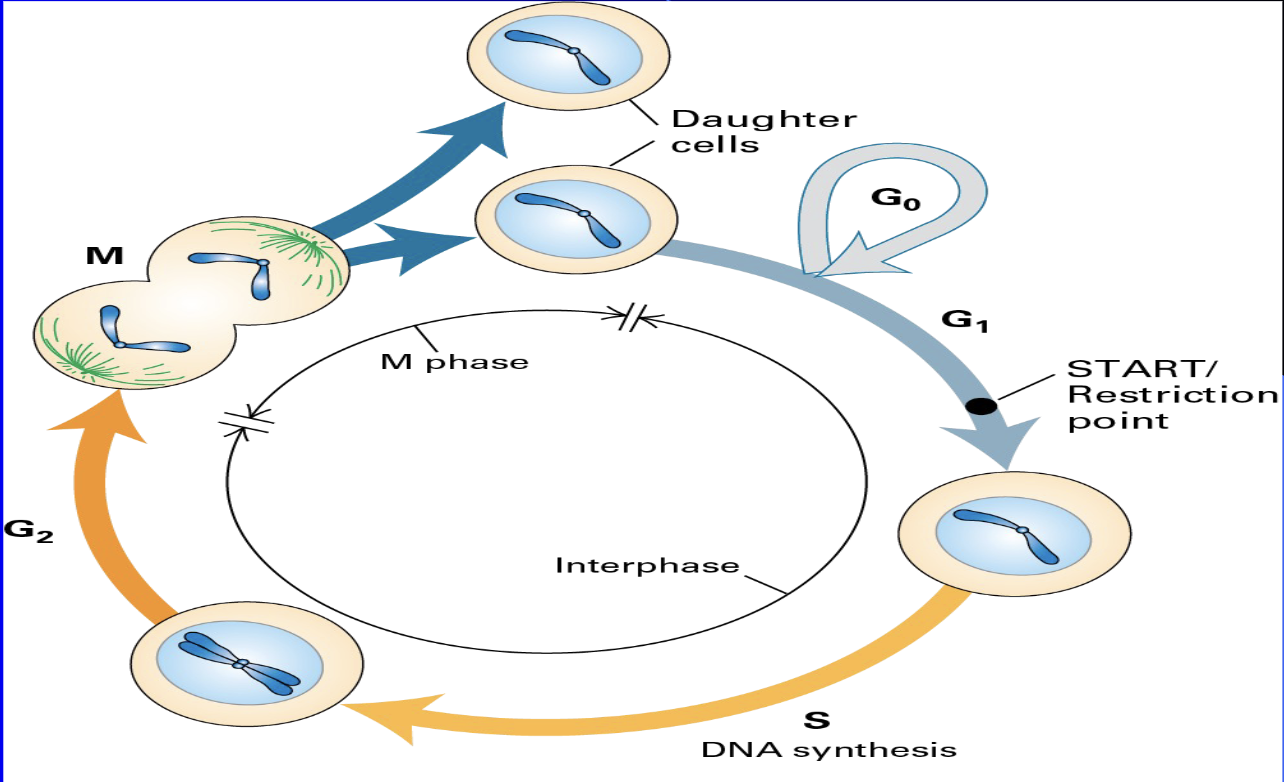
The cell cycle

  • Restriction Point (“Pardee Point” or “G1-S Checkpoint”)

    • a G1 irreversible go-no go point where growth factors are no longer required

    • cell is now committed to enter S . Called START in yeast
<ul><li><p><span><span>Restriction Point (“Pardee Point” or “G1-S Checkpoint”)</span></span></p><ul><li><p><span><span>a G1 irreversible go-no go point where growth factors are no longer required</span></span></p></li><li><p><span><span>cell is now committed to enter S . Called START in yeast</span></span></p></li></ul></li></ul><p></p>
9
New cards

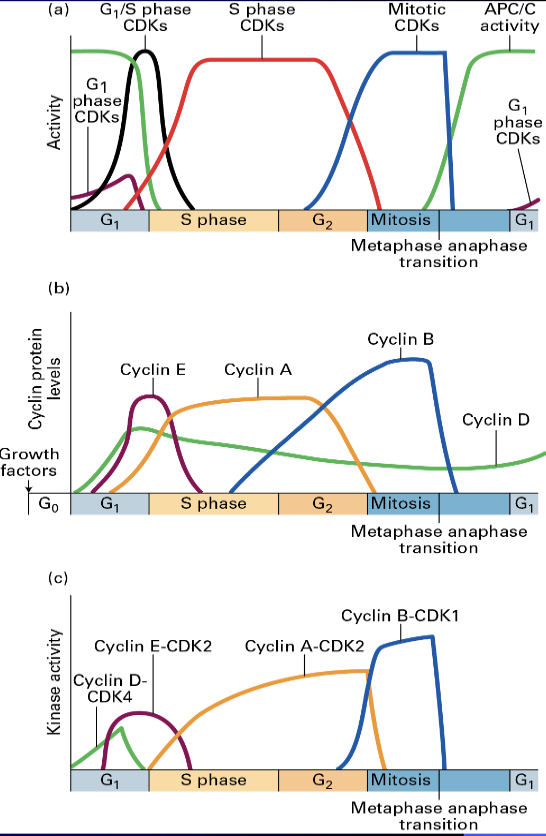
Cyclins

  • regulate the cell cycle by binding to and activating cyclin-dependent kinases (CDKs), which are enzymes that drive the cell cycle forward

ex: Classic Synchronized Sea Urchin Egg/Embryo
<ul><li><p><span><span>regulate the cell cycle by binding to and activating cyclin-dependent kinases (CDKs), which are enzymes that drive the cell cycle forward</span></span></p></li></ul><p>ex: <span><span>Classic Synchronized Sea Urchin Egg/Embryo</span></span></p><p></p>
10
New cards

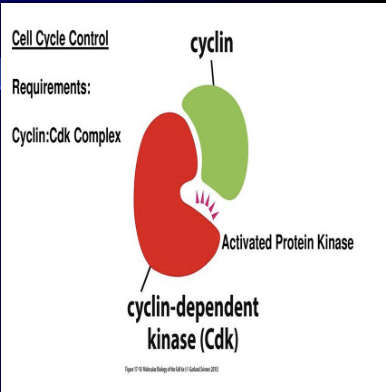
What is the Relationship Between Cyclins and CDKs and How are Their Activities Influenced?

  • Cyclins are proteins whose levels increase and decrease predictably during the cell cycle; they act like an "on/off" switch.

  • CDKs (Cyclin-Dependent Kinases) are enzymes that are always present but are inactive unless a Cyclin is attached to them

  • Their combined activity is controlled by making or destroying Cyclins, which then turns the CDK "worker" enzymes on or off to drive the cell through the next stage of division
<ul><li><p>Cyclins are proteins whose levels increase and decrease predictably during the cell cycle; they act like an "on/off" switch.</p></li><li><p>CDKs (Cyclin-Dependent Kinases) are enzymes that are always present but are inactive unless a Cyclin is attached to them</p></li><li><p>Their combined activity is controlled by making or destroying Cyclins, which then turns the CDK "worker" enzymes on or off to drive the cell through the next stage of division</p></li></ul><p></p>
11
New cards

Cyclin D

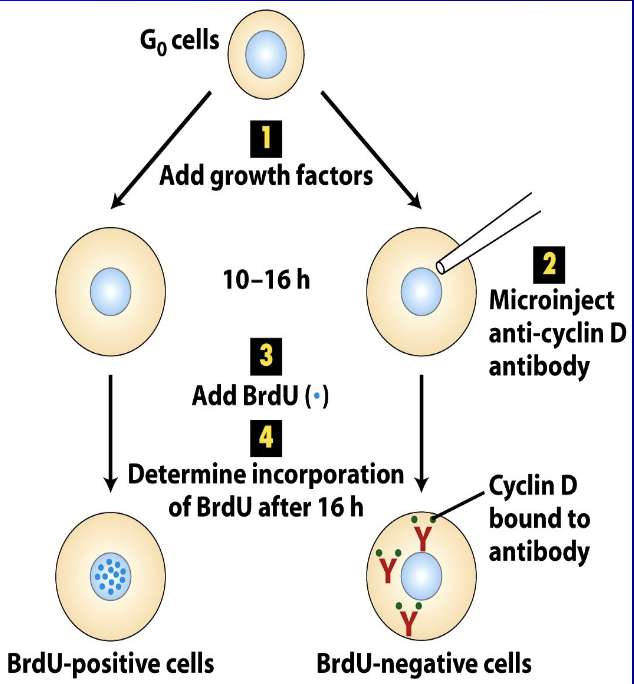
  • “control switch” that must be turned on for a cell to start copying its DNA (entering the S phase)

  • connecting with its partner enzymes, CDK4 and CDK6

  • triggers the next phase of the cell cycle by releasing a brake protein (Rb), allowing DNA replication to begin
<ul><li><p>“control switch” that must be turned on for a cell to start copying its DNA (entering the S phase)</p></li><li><p> connecting with its partner enzymes, CDK4 and CDK6</p></li><li><p> triggers the next phase of the cell cycle by releasing a brake protein (Rb), allowing DNA replication to begin</p></li></ul><p></p>
12
New cards

Are cell cycle transit times the same in
normal cells versus cancer cells?

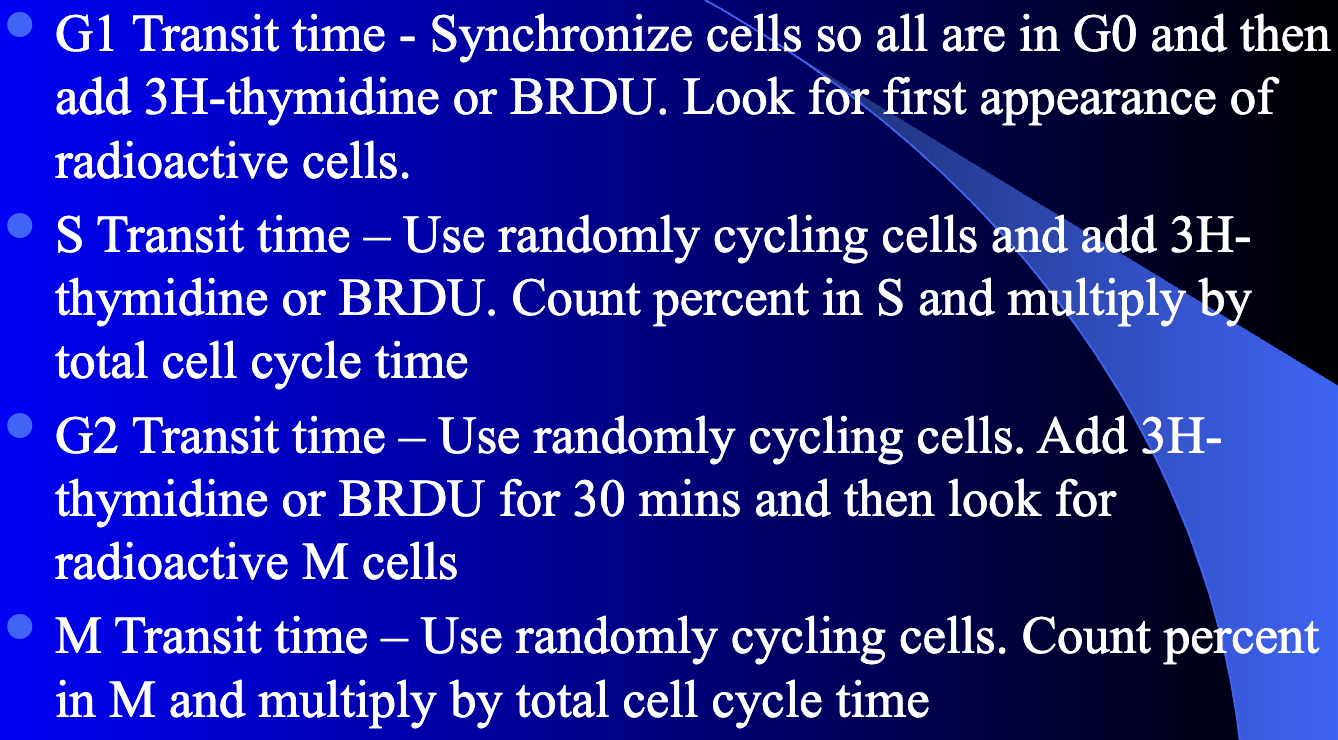
No difference
<p><span><span>No difference </span></span></p>
13
New cards

DNA Synthesis

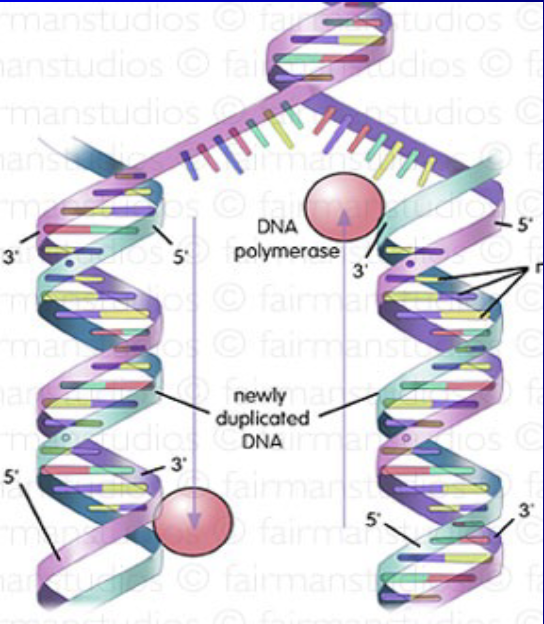
  • The double helix of the Parental strand is unwound and separated, and the enzyme DNA polymerase

  • then uses each old strand as a template to build a complementary Daughter strand

  • results in two new DNA molecules, each containing one original (parental) strand and one newly synthesized (daughter) strand
<ul><li><p>The double helix of the Parental strand is unwound and separated, and the enzyme DNA polymerase </p></li><li><p>then uses each old strand as a template to build a complementary Daughter strand</p></li><li><p> results in two new DNA molecules, each containing one original (parental) strand and one newly synthesized (daughter) strand</p></li></ul><p></p>
14
New cards

Replicon

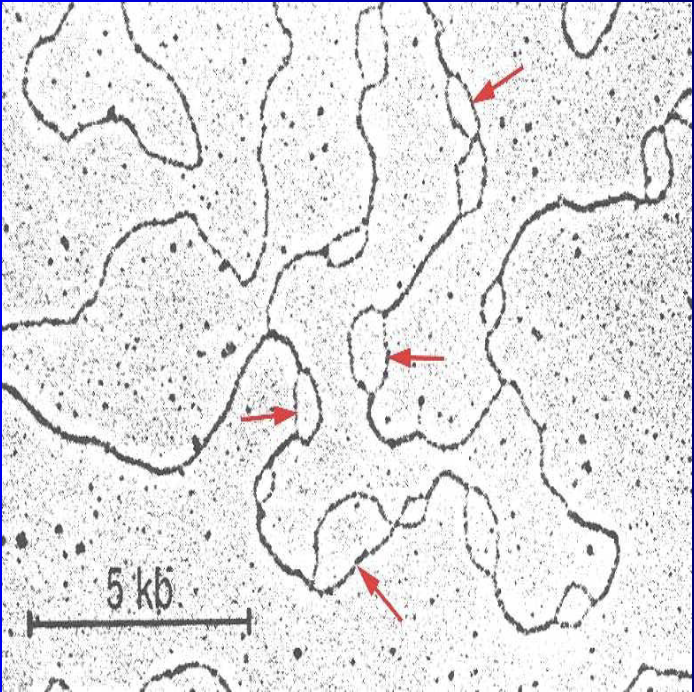
  • a segment of DNA that replicates from a single origin point

  • the "replication bubble" is the physical structure formed during this process

  • created by the enzyme helicase, which unwinds the DNA helix at the origin, exposing the single strands that serve as templates for new DNA synthesis at two opposite "replication forks"
<ul><li><p><span><span>a segment of DNA that replicates from a single origin point</span></span></p></li><li><p><span><span>the "replication bubble" is </span></span><mark data-color="unset" style="background-color: unset; color: inherit;">the physical structure formed during this process</mark></p></li><li><p><span><span>created by the enzyme </span></span><em>helicase</em><span><span>, which unwinds the DNA helix at the origin, exposing the single strands that serve as templates for new DNA synthesis at two opposite "replication forks"</span></span></p></li></ul><p></p>
15
New cards

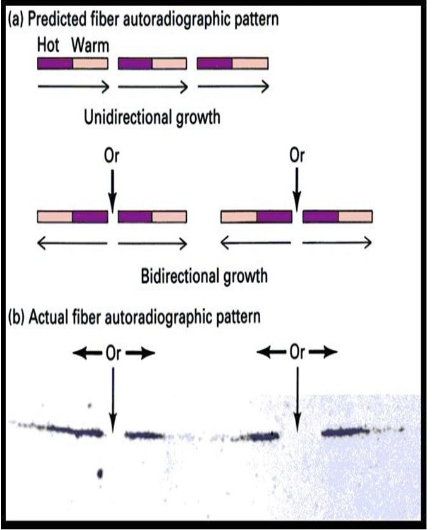
Fiber Autoradiography

  • a technique for analyzing DNA replication, which uses radioactive isotopes to create images of long, single DNA fibers to visualize replication forks and other replication events
<ul><li><p><span><span>a technique for analyzing DNA replication, which uses radioactive isotopes to create images of long, single DNA fibers to visualize replication forks and other replication events</span></span></p></li></ul><p></p>
16
New cards

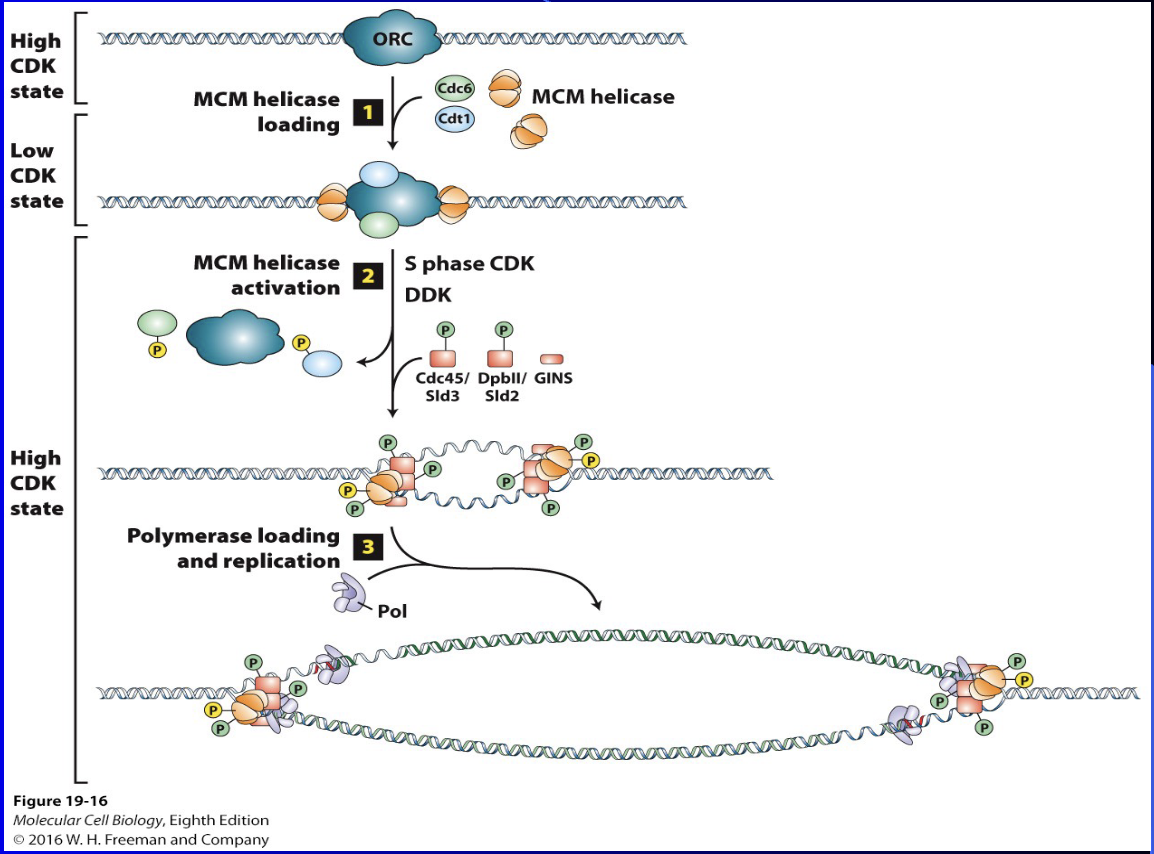
Replication Origins

  • specific sites on DNA where DNA replication begins, forming a bubble with two replication forks moving in opposite directions

ex: bacteria typically have a single origin, while eukaryotes have multiple
<ul><li><p><span><span>specific sites on DNA where DNA replication begins, forming a bubble with two replication forks moving in opposite directions</span></span></p></li></ul><p>ex: <span><span>bacteria typically have a single origin, while eukaryotes have multiple</span></span></p>
17
New cards

What Happens in G2?

  • Cell verifies that all of the DNA has been correctly duplicated and all DNA errors have been corrected

  • Chromosome condensation is initiated

  • Early organization of the cell cytoskeleton

  • Mitotic cyclin dependent kinases initiate
    activity

18
New cards

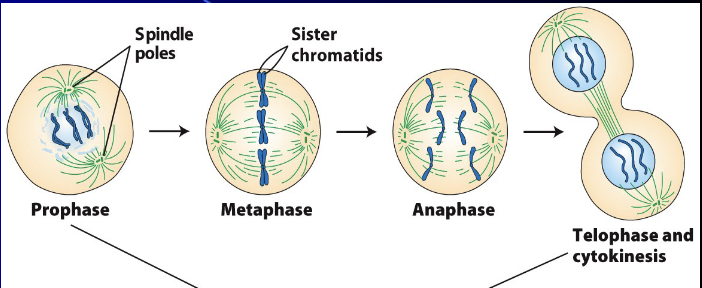
Mitosis

  • the process of cell division where a single cell divides into two genetically identical daughter cells

  • crucial for growth and replacing worn-out cells in organisms

  • chromosomes condense and become visible in prophase

  • they align at the cell's midline during metaphase

  • the duplicated chromosomes separate in anaphase

  • and finally, two new nuclei form at opposite ends of the cell in telophase
<ul><li><p><span><span>the process of cell division where a single cell divides into two genetically identical daughter cells</span></span></p></li><li><p><span><span>crucial for growth and replacing worn-out cells in organisms</span></span></p></li><li><p><span><span>chromosomes condense and become visible in prophase</span></span></p></li><li><p><span><span>they align at the cell's midline during metaphase</span></span></p></li><li><p><span><span>the duplicated chromosomes separate in anaphase</span></span></p></li><li><p><span><span>and finally, two new nuclei form at opposite ends of the cell in telophase</span></span></p></li></ul><p></p>
19
New cards

Key Cell Cycle Experiments

  • includes Lamin A, B and C

    • Lamin B Phosphorylation by MPF is required for nuclear dissolution

  • Maturation (promoting factor - MPF)

ex: frogs

  • Mitosis (Phase Factor - MPF)

    • Cyclin B ( one of the mitotic cyclins) and its CDK - it takes 2
<ul><li><p>includes <span><span>Lamin A, B and C </span></span></p><ul><li><p><span><span>Lamin B Phosphorylation by MPF is required for nuclear dissolution</span></span></p></li></ul></li><li><p><span>Maturation (promoting factor - MPF)</span></p></li></ul><p class="p1"><span>ex: frogs</span></p><ul><li><p><span>Mitosis (Phase Factor - MPF)</span></p><ul><li><p><span>Cyclin B ( one of the mitotic cyclins) and its CDK - it takes 2</span></p></li></ul></li></ul><p></p>
20
New cards

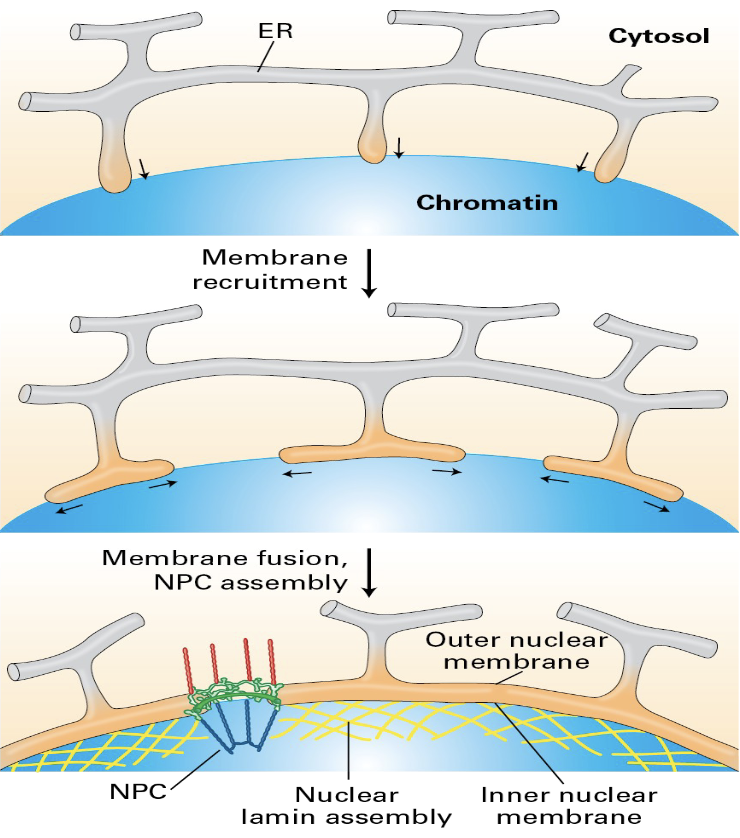
Reassembly of the Nuclear Envelope

  • a process that begins during telophase and involves the fusion of endoplasmic reticulum (ER) vesicles with chromosomes, the insertion of nuclear pore complexes (NPCs), and the assembly of the nuclear lamina

  • occurs after the nuclear envelope disassembles during mitosis to allow for cell division

  • The reforming envelope seals off the nucleus, creating a barrier between the nucleus and cytoplasm and allowing for the re-establishment of nuclear function.
<ul><li><p><span><span>a process that begins during telophase and involves the fusion of </span></span>endoplasmic reticulum (ER) vesicles<span><span> with chromosomes, the insertion of </span></span>nuclear pore complexes (NPCs)<span><span>, and the assembly of the </span></span>nuclear lamina</p></li><li><p><span><span>occurs after the nuclear envelope disassembles during mitosis to allow for cell division</span></span></p></li><li><p><span><span> The reforming envelope seals off the nucleus, creating a barrier between the nucleus and cytoplasm and allowing for the re-establishment of nuclear function.</span></span></p></li></ul><p></p>
21
New cards

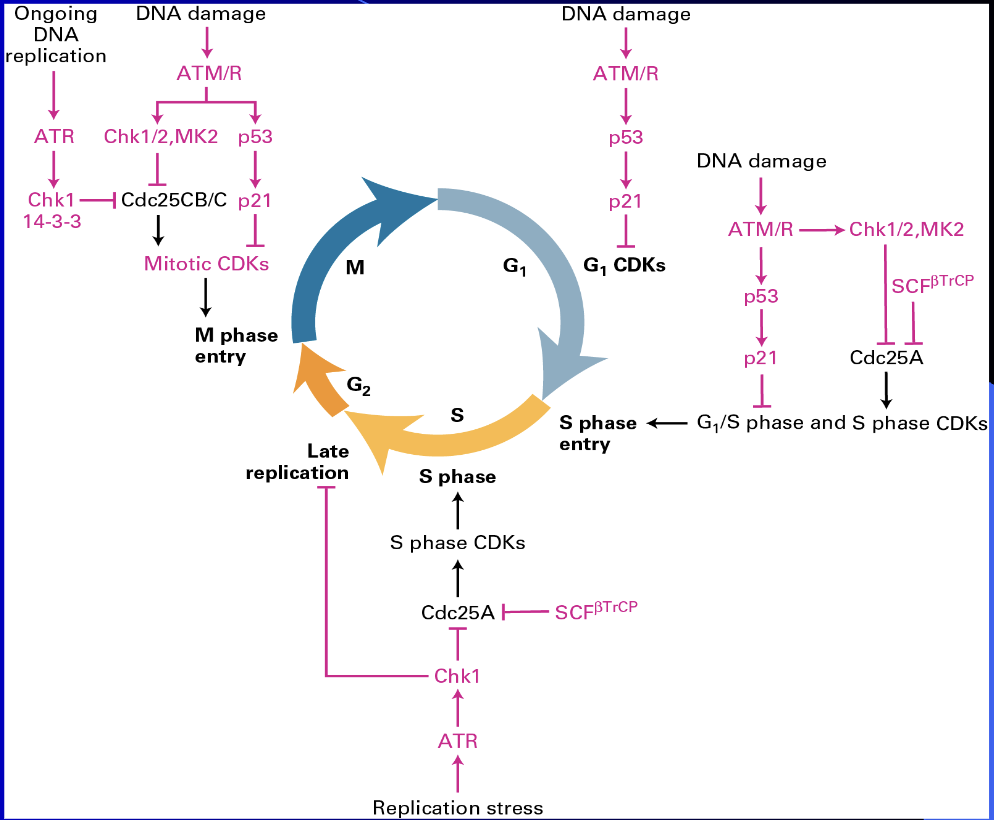
Checkpoint Controls

  • Tumor Suppressor Genes

  • discovered by Ruth Sager

<ul><li><p><span><span>Tumor Suppressor Genes</span></span></p></li><li><p><span><span>discovered by Ruth Sager</span></span></p></li></ul><p></p>
22
New cards

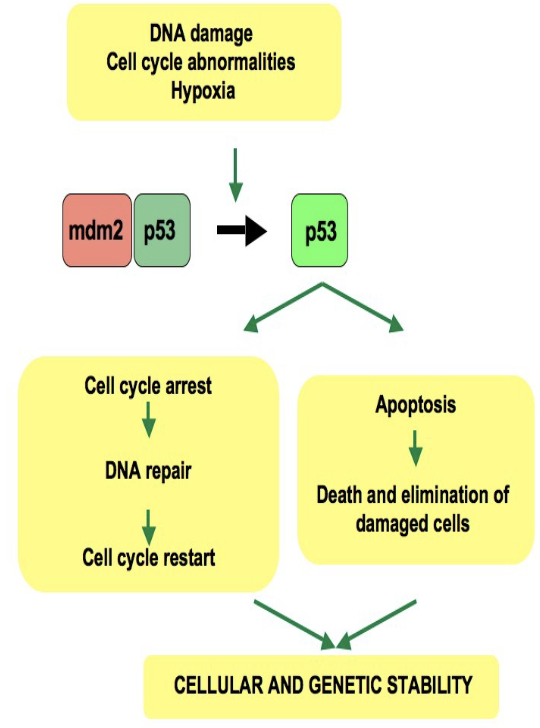
p53

  • “fix it or kill it”

  • regulates many cell activities

  • if defected, can not act as a tumor  suppressor leading to the uncontrolled proliferation of damaged cells and a significantly increased risk of developing cancer
<ul><li><p>“fix it or kill it”</p></li><li><p>regulates many cell activities</p></li><li><p><span>if defected, can not act as a tumor&nbsp; suppressor leading to the uncontrolled proliferation of damaged cells and a significantly increased risk of developing cancer</span></p></li></ul><p></p>
23
New cards

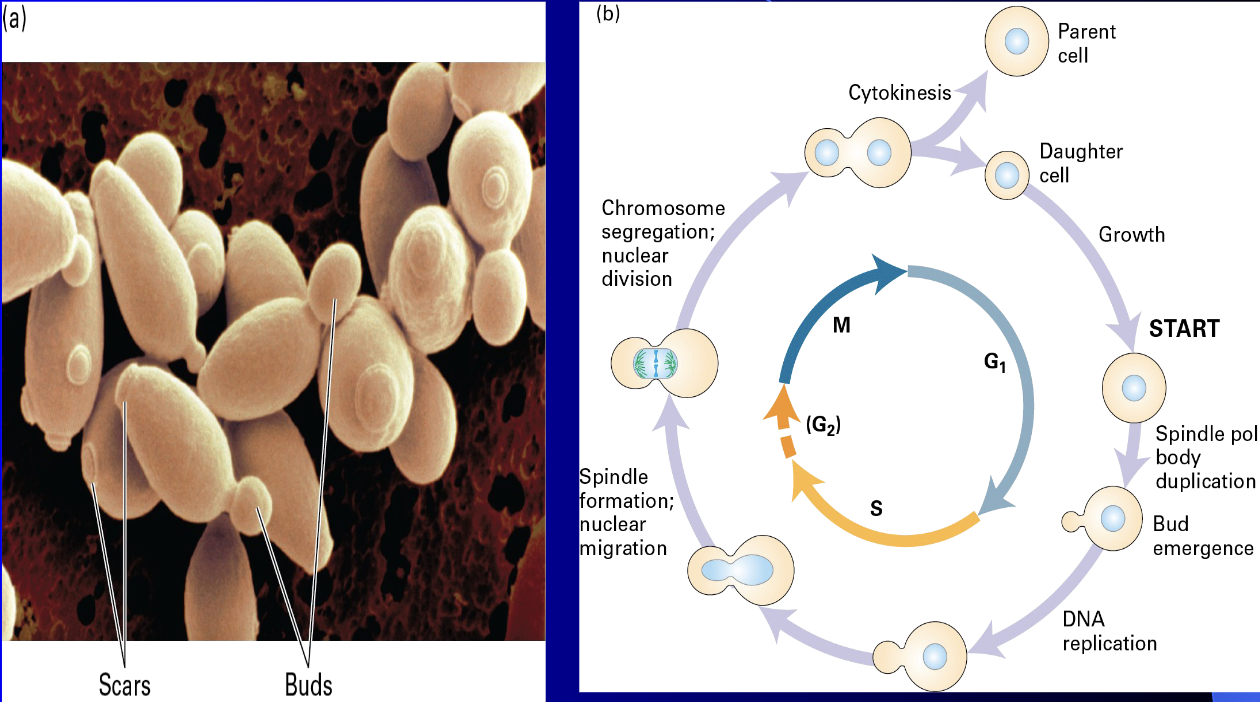
Budding Yeast and the Cell Cycle

  • a single-celled eukaryote that reproduces asexually through asymmetric division,

  • where a small daughter cell forms as an outgrowth (a bud) on the larger mother cell. Its cell cycle, like other eukaryotes,

  • consists of four main phases: G1 (growth and commitment to division), S (DNA replication), G2 (preparation for division), and M (nuclear division and separation of the mother and bud).

  • The formation of the bud is initiated around the same time the cell enters S phase, marking the crucial regulatory point known as START.
<ul><li><p>a single-celled eukaryote that reproduces asexually through asymmetric division, </p></li><li><p>where a small daughter cell forms as an outgrowth (a bud) on the larger mother cell. Its cell cycle, like other eukaryotes, </p></li><li><p>consists of four main phases: G1 (growth and commitment to division), S (DNA replication), G2 (preparation for division), and M (nuclear division and separation of the mother and bud). </p></li><li><p>The formation of the bud is initiated around the same time the cell enters S phase, marking the crucial regulatory point known as START.</p></li></ul><p></p>
24
New cards

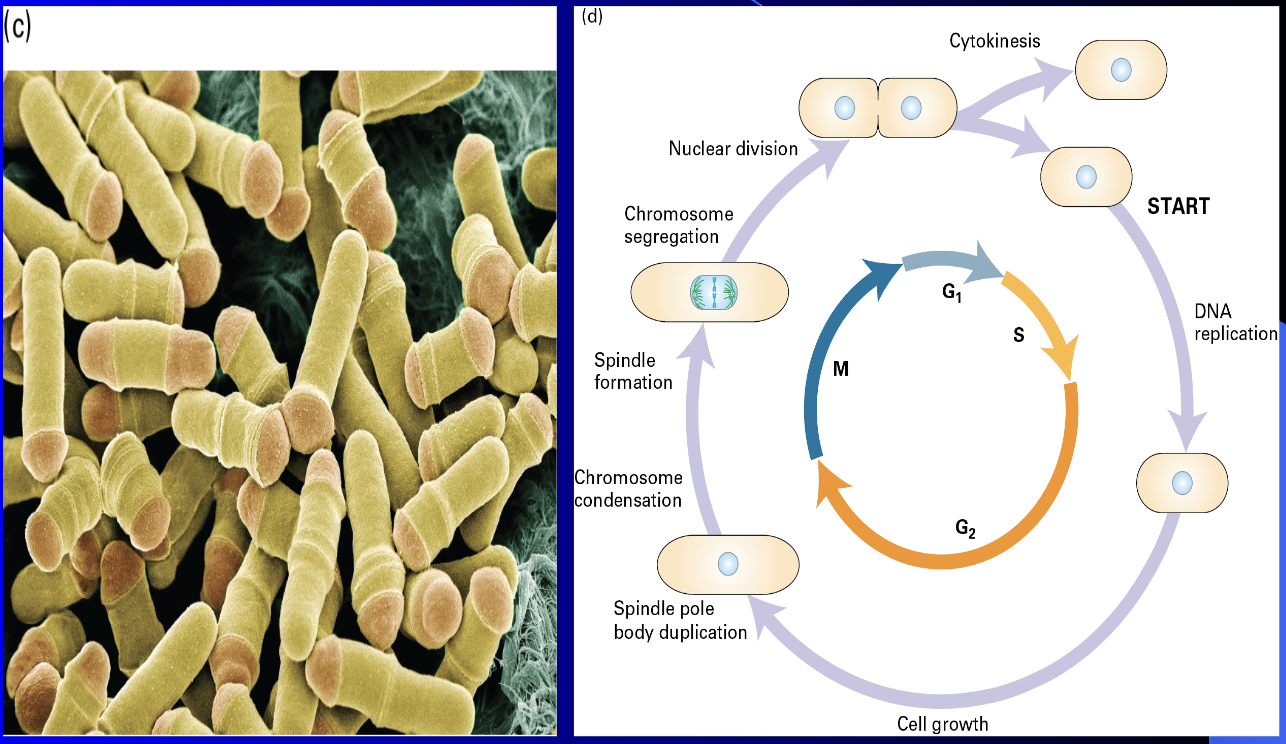
Fission Yeast and the cell cycle

  • a rod-shaped eukaryote that divides by medial fission, where an actomyosin contractile ring forms at the cell's center to cleave it into two equal-sized daughter cells

  • similar to other eukaryotes (G1, S, G2, M), but it spends the majority of its time in the G2 phase, which is the primary checkpoint regulating the cell's commitment to mitosis (M phase).

  • continues to elongate, stopping growth only during mitosis and division
<ul><li><p>a rod-shaped eukaryote that divides by medial fission, where an actomyosin contractile ring forms at the cell's center to cleave it into two equal-sized daughter cells</p></li><li><p>similar to other eukaryotes (G1, S, G2, M), but it spends the majority of its time in the G2 phase, which is the primary checkpoint regulating the cell's commitment to mitosis (M phase).</p></li><li><p>continues to elongate, stopping growth only during mitosis and division</p></li></ul><p></p>