The Nervous System
 Call Kai
 Learn
Learn Practice Test
 Spaced Repetition
 Match
Match Flashcards
 Knowt Play
1/23

There's no tags or description
Looks like no tags are added yet.
Name | Mastery | Learn | Test | Matching | Spaced | Call with Kai | Chat |
|---|
No analytics yet
Send a link to your students to track their progress
24 Terms
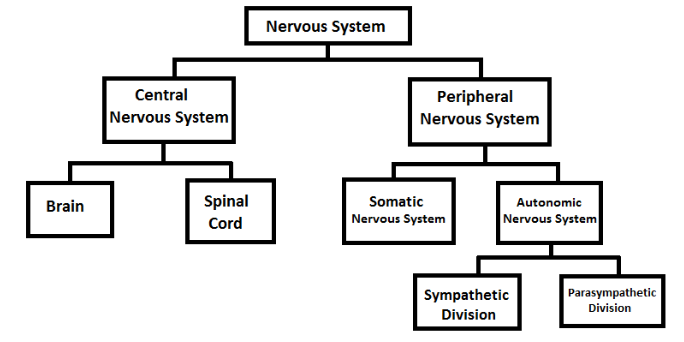
what is the nervous system
A specialised network of cells in the human body and is our primary internal communication system
function of the nervous system
- collect, process and respond to environmental info
- co-ordinate the working of different organs and cells in the body
what is the nervous system divided into
- Central Nervous System (CNS)
- Peripheral Nervous System (PNS)
what is the function of the CNS
control behaviour and regulate physiological processes
structure of the CNS
consists of the brain and spinal cord
function of the brain
Centre of conscious awareness
Maintain all life processes and physiological processes
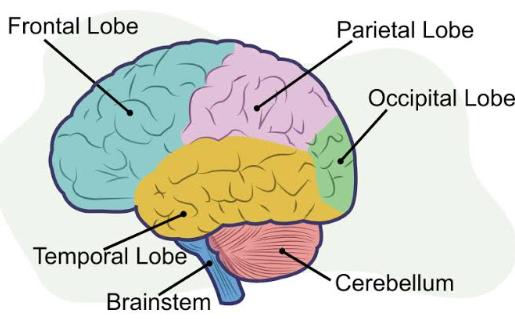
structure of the brain
cerebrum divided into 4 main lobes:
- frontal lobe
- temporal lobe
- parietal lobe
- occipital lobe
cerebellum sits beneath back of cerebrum
brain stem
frontal lobe
associated with higher order functions, including planning, abstract reasoning and logic
has Brocase area- deals with speech production
temporal lobe
Processes auditory information and language.
parietal lobe
integrates information from the different senses
occipital lobe
processes visual information
cerebellum
controls motor skills, balance and coordinating muscles
brain stem
connects brain and spinal cord and controls involuntary processes
function of spinal cord
relay info between brain and rest of body, control simple reflex actions
structure of spinal cord
connected to different parts of body by pairs of spinal nerves which connect with specific muscles and glands
circuits of nerve cells- perform simple reflexes
what is the Peripheral Nervous System (PNS)
Sends info to CNS from outside world, transmitting messages from CNS to muscles and bodily glands
all nerves outside CNS
what is the PNS divided into
somatic nervous system and autonomic nervous system
function of the somatic nervous system
Control voluntary response
transmit info from sense organs to the CNS and info from CNS to some effectors
structure of somatic nervous system
12 cranial nerve pairs and 31 spinal nerve pairs
includes both sensory and motor neurones
autonomic nervous system
- division of PNS
- motor neurone pathways to organs/glands
- regulates involuntary processes
- important in homeostasis
what is the autonomic nervous system divided into
sympathetic nervous system and parasympathetic nervous system
what is the sympathetic nervous system
the division of the autonomic nervous system that prepares body for action (fight or flight response)
what is the parasympathetic nervous system
the division of the autonomic nervous system that is responsible for rest and recovery (rest and digest)
differences between autonomic and somatic nervous system
- autonomic consists of two sub components, somatic only has 1
- somatic has sensory and motor pathways, autonomic only has motor pathways
- autonomic controls internal organs and glands whilst somatic controls muscles and movement