Pharmacokinetics (TOLS 1 - Basics of PK)
 Call Kai
 Learn
Learn Practice Test
 Spaced Repetition
 Match
Match Flashcards
 Knowt Play
1/29

There's no tags or description
Looks like no tags are added yet.
Name | Mastery | Learn | Test | Matching | Spaced | Call with Kai |
|---|
No analytics yet
Send a link to your students to track their progress
30 Terms
uses of pharmacokinetics
predict drug conc
calculate dosage regimen
quantitative assessment of effect of disease on drug disposition
determine drug-drug interaction mechanism
predict drug conc vs effect relationships
Pharmacokinetics
what the BODY does to the drug
ADME
pharmacodynamics
what the DRUG does to the body
ADME
absorption, distribution, metabolism, excretion
absorption
process where drug moves from site of admin to systemic circulation
distribution
reversible transfer of drug to or from site of measurement
what can influence distribution
tissue perfusion
protein and tissue binding
permeability of tissue to drug
metabolism
conversion of one chemical species to another
-> metabolism of parent drug = elimination
elimination
irreversible loss of drug from the site of measurement through metabolism or excretion
primary organs of elimination
liver and kidney
excretion
irreversible loss of drug in the chemically unaltered form
disposition
drug distribution from systemic circulation to all tissues including organs of elimination
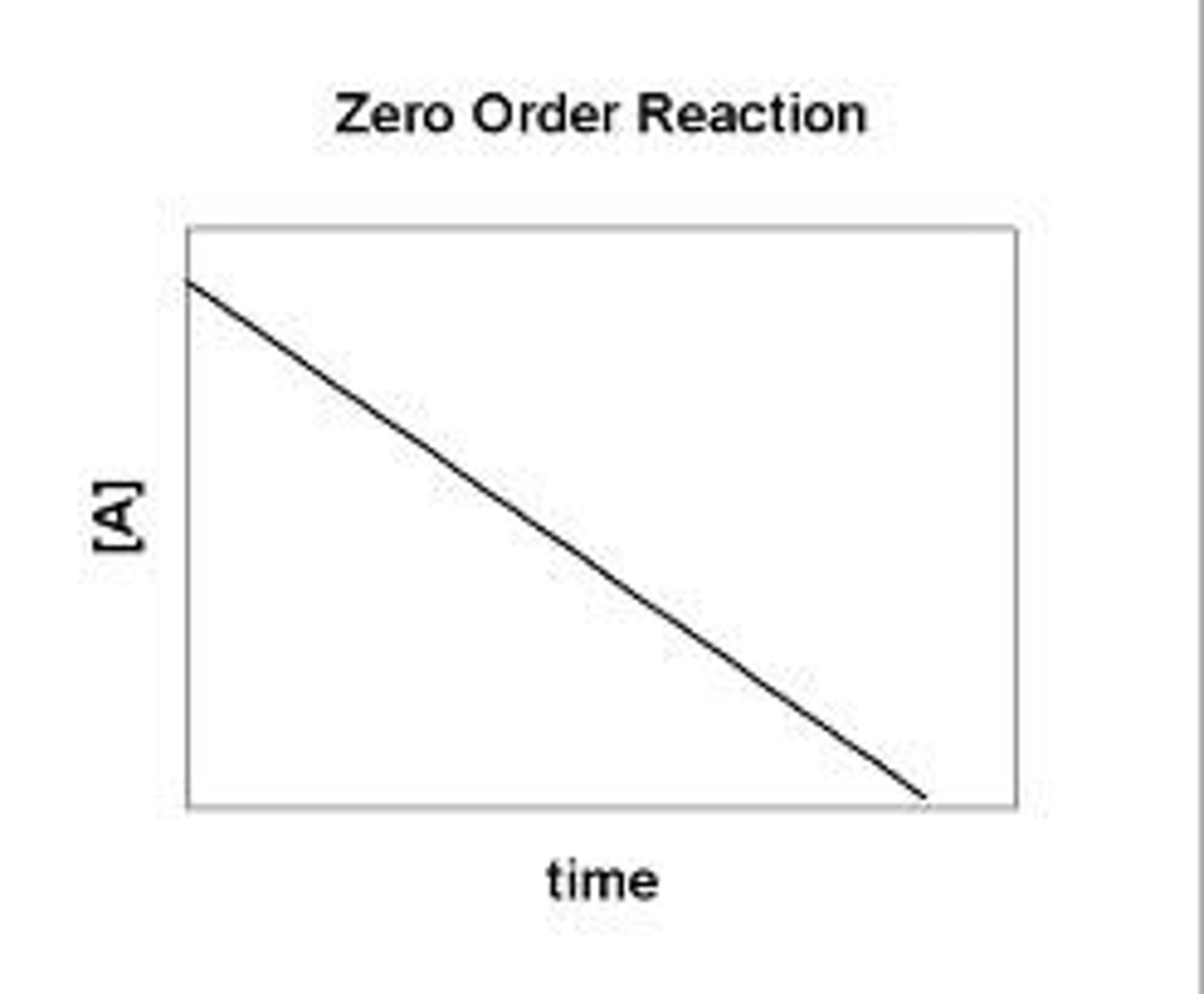
zero order
something is happening at a constant rate
not influenced by amount or conc of drug present
i.e. constant mass eliminated per unit time
first order reaction
rate changes with time depending on what is driving the process
rate changes but proportion of drug eliminated over time does not
i.e. rate = proportional to driving factor SO high conc = high elimination rate
zero order graph
conc vs time
-> get a straigh line
first order assumed conditions
instantaneous input + distribution
no: input, absorption or distribution phase
in first order kinetics why do we see decrease in conc over time
due to elimination
describe the first order kinetics graph
high conc at the start and therefore high elimination rate
as time goes on and elimination occurs we see a drop in concentrations
we see a slower elimination rate because of this
--> this can be described as an exponential decrease
in first order kinetics what do we get if we plot graph as log natural conc vs time
a straight line
compartment modelling
the use of hypothetical compartments to describe observed drug conc over time in the body
in compartments what are conc usually measured in
blood
plasma
when can a one compartment model be considered
if a drug is rapidly distributed to all tissues in the body
what determines the amount of drug in a one compartment at any time
rate of input into and elimination from the compartment
why may more than one compartment need to be added to the model
bcus often a drug will leave the central compartment through both elimination and distribution
in a multi compartment model how are distribution and elimination modelled
as first order processes
what does a compartment model determine
number of compartments which describe the drug distribution in the body
distribution kinetics between compartments
elimination from compartments
what do we need to know when looking at how the drug moves through the compartments
dose
conc of drug in blood
units of
- dose
- blood conc
- mass (mg)
- mass/volume
why do we need volume of distribution
dose measured in mass, conc measured in mass/volume
--> 2 different unit + need to connect in some way
volume of distribution
hypothetical volume used to link:
- the mass in the compartment at any time to conc measured at the time
Explore top notes

Explore top flashcards
